By the start of 2017, smartwatches were no longer novelties, but they still weren’t inevitabilities. Sales had cooled after early hype, platforms felt fragmented, and many buyers questioned whether a wrist computer was worth charging every night. What changed over the next twelve months wasn’t just better hardware, but clarity about what a smartwatch was actually for.
2017 forced the industry to grow up. The category began shedding experimental features that didn’t work on the wrist and doubling down on health, fitness, and daily usability, with software and silicon finally catching up to ambition. Looking back now, many of the expectations we have for modern smartwatches were quietly set in motion during this year.
The shift from apps to purpose
Before 2017, smartwatches were marketed like tiny smartphones, with app counts and developer promises doing most of the talking. In practice, slow performance, awkward interfaces, and short battery life made that vision frustrating on a 38–42mm screen worn all day. By 2017, manufacturers began acknowledging that the wrist demanded focus, not feature overload.
Apple’s watchOS updates emphasized glanceable information, fitness rings, and faster interactions rather than complex third‑party apps. Google’s Android Wear, later rebranded as Wear OS, began a similar retreat from phone-like ambitions, though with less cohesion. The industry started designing for moments, not menus, and that philosophical reset reshaped every product that followed.
🏆 #1 Best Overall
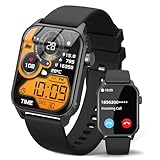
- 【1.83" HD Display & Customizable Watch Faces】Immerse yourself in a vibrant 1.83-inch IPS display, boasting a sharp resolution of 240*284 for crystal-clear visuals. Effortlessly personalize your smart watch with a wide array of customizable watch faces to suit your personal style for every occasion—whether trendy, artistic, or minimalist—ideal for casual, sporty, or professional. Its sleek, modern design complements any outfit, blending technology and fashion seamlessly for everyday wear
- 【120 Sports Modes & Advanced Health Tracking】Our TK29 smart watches for women men come equipped with 120 sports modes, allowing you to effortlessly track a variety of activities such as walking, running, cycling, and swimming. With integrated heart rate and sleep monitors, you can maintain a comprehensive overview of your health, achieve your fitness goals, and maintain a balanced, active lifestyle with ease. Your ideal wellness companion (Note: Step recording starts after exceeding 20 steps)
- 【IP67 Waterproof & Long-Lasting Battery】Designed to keep up with your active lifestyle, this smartwatch features an IP67 waterproof rating, ensuring it can withstand splashes, sweat, and even brief submersion, making it perfect for workouts, outdoor adventures, or rainy days. Its reliable 350mAh battery offering 5-7 days of active use and up to 30 days in standby mode, significantly reducing frequent charging. Ideal for all-day wear, whether you’re at the gym, outdoors, or simply on the go
- 【Stay Connected Anytime, Anywhere】Stay informed and in control with Bluetooth call and music control features. Receive real-time notifications for calls, messages, and social media apps like Facebook, WhatsApp, Twitter, and Instagram directly on your smartwatch. Easily manage calls, control your music playlist, and stay updated without needing to reach for your phone. Perfect for work, workouts, or on-the-go, this watch keeps you connected and never miss important updates wherever you are
- 【Multifunction & Wide Compatibility】Seamlessly handle heart rate monitoring, sleep tracking, and enjoy conveniences like camera/music control, Seamlessly handle heart rate monitoring, sleep tracking, and more-all directly from your wrist. This 1.83 inches HD smartwatch is compatible with iPhone (iOS 9.0+) & Android (5.0+), ensuring smooth daily connectivity and convenience throughout your day. More than just a timepiece, it’s a stylish, all-in-one wearable for smarter, healthier living
Health and fitness became the non-negotiable core
2017 marked the year health tracking stopped being a checkbox feature and became the reason to buy a smartwatch. Heart rate monitoring matured from novelty to expectation, GPS accuracy improved dramatically, and activity tracking became more nuanced, with better calorie estimation and workout detection. Devices were expected to work reliably during real exercise, not just count steps passively.
Apple Watch Series 3 refined continuous heart rate tracking and introduced a level of fitness polish competitors struggled to match. Fitbit, still independent at the time, doubled down on wellness metrics like resting heart rate trends and guided fitness, even as its smartwatch ambitions wavered. From this point on, any smartwatch that failed at health tracking was effectively irrelevant.
LTE and independence from the phone
The arrival of LTE in mainstream smartwatches was a quiet but profound shift in 2017. Apple Watch Series 3 Cellular didn’t make the iPhone optional, but it made absence survivable, allowing calls, messages, music streaming, and emergency access without carrying a phone. For the first time, the smartwatch felt like a companion rather than a mere extension.
Battery life remained a compromise, with LTE models often requiring daily charging under real-world use, but the psychological impact mattered. Smartwatches were no longer tethered tools; they were becoming personal devices in their own right. That change influenced everything from industrial design to pricing expectations in the years that followed.
Design maturity and comfort finally mattered
By 2017, smartwatch buyers were less forgiving of bulky cases, awkward lugs, and cheap-feeling materials. Devices had to be comfortable for 24-hour wear, including sleep tracking, workouts, and workdays, without screaming “tech gadget” on the wrist. Thinner cases, better strap options, and improved finishing became competitive advantages.
Apple refined its aluminum and stainless steel cases, Samsung leaned into circular designs with physical bezels on the Gear S3, and even budget models began paying attention to weight distribution and strap quality. Comfort, durability, and wearability moved from afterthoughts to selling points, aligning smartwatches closer to traditional watch expectations.
Clear winners, exposed weaknesses
Perhaps most importantly, 2017 clarified which companies truly understood the category. Apple emerged as the undisputed leader by combining silicon, software, and health features into a cohesive experience. Samsung proved there was room for alternative design philosophies, while Google’s platform struggles highlighted the cost of unclear direction.
Smaller players either specialized or faded, and consumers began choosing ecosystems rather than isolated products. The smartwatch market stopped being a speculative experiment and became a competitive, expectation-driven space. That transition, more than any single feature, is why 2017 stands as the year smartwatches found their footing.
The Defining Hardware Launches of 2017 (Apple Watch Series 3, Samsung Gear Sport & S3, Fitbit Ionic, Garmin’s Rise)
If platform direction and design maturity set the stage, it was hardware that ultimately made 2017 feel decisive. This was the year when flagship launches stopped hedging their bets and instead leaned hard into identity, whether that meant cellular independence, sport-first design, or unapologetic endurance.
Each major player shipped a product that clearly signaled what kind of smartwatch company it intended to be going forward, and those signals echoed for years.
Apple Watch Series 3: Independence becomes tangible
Apple Watch Series 3 didn’t radically change the exterior, but it fundamentally changed what the watch could do on its own. With optional LTE built into the aluminum and stainless steel cases, Apple made good on the promise hinted at by earlier generations: this was a device you could leave your phone behind with.
The cellular model introduced a ceramic-backed case for improved signal performance, a subtle but meaningful materials upgrade that also foreshadowed Apple’s later health-focused designs. Case sizes remained 38mm and 42mm, but internal changes mattered more than dimensions in daily use.
Powered by the new dual-core S3 chip and Apple’s W2 wireless module, Series 3 felt noticeably snappier than Series 2. App launches, Siri requests, and UI animations finally felt smooth enough to stop reminding users they were on a constrained device.
Battery life told a more complicated story. Apple rated it at 18 hours, but LTE use, streaming music, or navigation could drain it significantly faster, making daily charging non-negotiable for cellular owners.
Still, the real impact was psychological. Taking calls, receiving messages, and streaming Apple Music without an iPhone nearby reframed the Apple Watch as a primary device for short stretches of life, not just a companion screen.
Samsung Gear S3 and Gear Sport: Hardware confidence, platform isolation
Samsung entered 2017 with the Gear S3 already on shelves, but it remained one of the most watch-like smartwatches you could buy. Its 46mm case, stainless steel construction, and rotating physical bezel delivered a level of tactile satisfaction that few competitors matched.
The Gear S3 Frontier and Classic prioritized durability and presence, sometimes at the expense of comfort for smaller wrists. Weight and thickness were noticeable, but battery life of two to three days under real-world use softened that tradeoff.
Later in the year, Samsung refined the formula with the Gear Sport. Smaller, lighter, and designed with swimmers and gym users in mind, it featured a 42mm case, water resistance up to 5ATM, and better strap integration for all-day wear.
Both watches ran Samsung’s Tizen OS, which was fluid, intuitive, and optimized for the rotating bezel. The drawback remained ecosystem depth, as app selection lagged far behind Apple’s and compatibility was strongest with Android phones, especially Samsung’s own.
Samsung’s 2017 hardware proved the company understood industrial design and usability, even if software isolation limited its broader appeal.
Fitbit Ionic: A bold pivot that exposed growing pains
Fitbit Ionic was the company’s most ambitious product to date and its clearest attempt to move beyond fitness bands. With a squarish aluminum case, built-in GPS, continuous heart-rate tracking, and multi-day battery life, it aimed squarely at active users who wanted more than step counts.
The Ionic felt solid and lightweight on the wrist, though its sharp-edged design and thick bezels drew mixed reactions. Comfort during workouts was excellent, but it struggled to pass as an everyday watch in more formal settings.
Fitbit OS was simple and battery-efficient, delivering four to five days of use, but its app ecosystem was sparse at launch. Core fitness tracking was excellent, yet smartwatch features like notifications, music control, and third-party apps felt underdeveloped.
Despite these limitations, Ionic mattered because it marked Fitbit’s transition from tracker company to platform aspirant. It laid the groundwork for Fitbit’s later devices and made clear that health data, not apps, was its competitive center.
Garmin’s rise: Performance over polish
While consumer attention focused on Apple and Samsung, Garmin quietly dominated the performance segment in 2017. The launch of devices like the Fenix 5 series and Forerunner 935 showcased what purpose-built smartwatches could achieve when battery life and sensor accuracy came first.
These watches were unapologetically utilitarian. Polymer cases, transflective displays, and button-driven interfaces favored visibility and reliability over aesthetics, but athletes rewarded that honesty.
Multi-band GPS, advanced training metrics, weeks-long battery life in smartwatch mode, and deep sport profiles made Garmin watches indispensable for runners, cyclists, and triathletes. Comfort improved with lighter cases and better strap ergonomics, even as sizes remained substantial.
Garmin’s ecosystem lacked mainstream smartwatch polish, but it didn’t need it. In 2017, the company proved that specialization was not a weakness, but a sustainable strategy in a market increasingly defined by clear use cases.
Apple Watch Series 3 and the Mainstreaming of LTE on the Wrist
If Garmin proved that specialization could win, Apple responded in 2017 by pushing the smartwatch closer to independence. The Apple Watch Series 3 didn’t just refine the formula; it reframed expectations of what a mainstream smartwatch could do without a phone constantly nearby.
For the first time, LTE connectivity arrived in a watch that sold in the tens of millions. What had previously been a niche experiment became a default talking point for the category.
LTE as a practical feature, not a tech demo
Apple’s cellular implementation was notable because it largely faded into the background. Calls, messages, and data worked using the same number as the paired iPhone, without forcing users to manage a separate identity or interface.
The engineering trade-offs were clever and invisible. Apple turned the display itself into the LTE antenna, avoiding a bulky external band and keeping the 38mm and 42mm cases identical in size to Series 2.
Battery life inevitably took a hit, but not a fatal one. With LTE enabled intermittently, Series 3 still delivered a full day of mixed use, aligning with Apple’s existing daily charging rhythm rather than redefining it.
Design continuity and subtle signaling
Visually, Series 3 was nearly indistinguishable from its predecessor. The only tell was the red-accented Digital Crown on cellular models, a subtle marker that quickly became symbolic of untethered use.
Materials carried over cleanly across aluminum, stainless steel, and ceramic variants. Comfort remained excellent thanks to Apple’s thin case profile, refined lugs, and wide range of well-finished straps that suited both workouts and everyday wear.
This continuity mattered. LTE felt like a natural evolution, not a disruptive redesign that asked users to relearn how a watch should feel on the wrist.
watchOS 4 and the maturity of Apple’s platform
Series 3 launched alongside watchOS 4, which emphasized speed, clarity, and fitness insight over novelty. App launch times improved noticeably, animations were smoother, and the interface felt more confident in its priorities.
Activity tracking became more personalized, with smarter coaching prompts and better heart-rate visualizations. Music syncing was still phone-dependent at launch, but streaming over LTE arrived later, reinforcing the idea that the watch could stand alone during runs or errands.
Rank #2
![Apple Watch Series 11 [GPS 46mm] Smartwatch with Jet Black Aluminum Case with Black Sport Band - M/L. Sleep Score, Fitness Tracker, Health Monitoring, Always-On Display, Water Resistant](https://m.media-amazon.com/images/I/312K597M2uL._SL160_.jpg)
- HYPERTENSION NOTIFICATIONS — Apple Watch Series 11 can spot signs of chronic high blood pressure and notify you of possible hypertension.*
- KNOW YOUR SLEEP SCORE — Sleep score provides an easy way to help track and understand the quality of your sleep, so you can make it more restorative.
- EVEN MORE HEALTH INSIGHTS — Take an ECG anytime.* Get notifications for a high and low heart rate, an irregular rhythm,* and possible sleep apnea.* View overnight health metrics with the Vitals app* and take readings of your blood oxygen.*
- STUNNING DESIGN — Thin and lightweight, Series 11 is comfortable to wear around the clock — while exercising and even when you’re sleeping, so it can help track your key metrics.
- A POWERFUL FITNESS PARTNER — With advanced metrics for all your workouts, plus features like Pacer, Heart Rate Zones, training load, Workout Buddy powered by Apple Intelligence from your nearby iPhone,* and more. Series 11 also comes with three months of Apple Fitness+ free.*
Compatibility remained tightly controlled. Series 3 required an iPhone, and LTE functionality depended heavily on carrier support, which rolled out unevenly across regions throughout 2017.
Real-world independence and its limits
In daily use, LTE changed behavior more than workflows. Leaving the phone behind for a run, a quick trip to the store, or a walk with the dog suddenly felt realistic rather than aspirational.
Notifications, navigation pings, and quick replies worked reliably, but this was not full autonomy. Third-party apps were still constrained, and extended LTE use could drain the battery faster than most users expected.
Even so, the psychological shift was significant. The watch no longer felt like a peripheral; it felt like a companion.
Market impact and why Series 3 mattered
Apple Watch Series 3 outsold most competitors on its own, and the LTE variant quickly became a status feature rather than a niche upsell. By pricing cellular as an option rather than a separate product line, Apple normalized the idea that a smartwatch could have its own connection to the world.
Competitors took notice. Samsung, Google’s partners, and even traditional watch-adjacent brands began rethinking how independence fit into their roadmaps.
In hindsight, Series 3 marked the moment when smartwatches stopped being defined by what they borrowed from phones and started being judged by what they could do alone.
The Struggles and Reset of Android Wear (Rebranding to Wear OS, OEM Fatigue, and Missed Momentum)
If Apple Watch Series 3 represented forward motion through refinement, Android Wear in 2017 felt like a platform searching for a reason to exist. Momentum that once came from variety and openness had slowed, and the contrast with Apple’s increasingly self-assured approach was impossible to ignore.
What should have been Android Wear’s moment to capitalize on LTE, Google Assistant, and broad hardware choice instead became a year defined by hesitation, mixed signals, and a quiet admission that something fundamental wasn’t working.
A platform that stalled while the market moved
By 2017, Android Wear had been on the market for nearly three years, yet daily usability still lagged behind expectations. Performance was inconsistent, animations were often sluggish, and simple interactions like swiping through notifications or launching apps could feel laborious on older Snapdragon Wear 2100 hardware.
Battery life remained a core frustration. Most Android Wear watches struggled to deliver more than a day of real-world use, especially with always-on displays enabled, forcing compromises that undercut the promise of glanceable convenience.
While Apple focused on speed and fitness intelligence, Android Wear updates in 2017 felt incremental and unfocused. There was no equivalent to watchOS 4’s performance leap, and no clear narrative about what Android Wear did better than its rivals.
OEM fatigue and the cost of “choice”
Android Wear’s original strength was variety. In theory, consumers could choose from round or square cases, steel or aluminum, sporty or fashion-forward designs, all running the same software.
In practice, that variety masked deep fatigue among hardware partners. LG, once Google’s closest collaborator, exited the smartwatch market entirely in early 2017. Motorola had already stepped back, and Huawei slowed its wearable cadence as sales failed to meet expectations.
What remained were watches like the Huawei Watch 2 and Mobvoi’s Ticwatch line, competent but conservative devices that leaned heavily on fitness features to justify their existence. Build quality was often solid, with stainless steel cases, ceramic bezels, and comfortable silicone straps, but the experience rarely felt cohesive from hardware to software.
Without a clear hero product or strong marketing push, Android Wear watches blended into the background at retail, especially next to Apple Watch’s sharply defined identity.
Design ambition without software clarity
Design experimentation continued, but it lacked direction. Many Android Wear watches grew thicker to accommodate GPS, NFC, and larger batteries, resulting in bulky profiles that struggled on smaller wrists.
Displays were generally sharp OLED panels, but bezels remained prominent, undercutting the visual impact of round designs. Comfort was acceptable for workouts, yet all-day wear often highlighted weight distribution issues, especially on stainless steel models paired with dense link bracelets.
These were watches that looked good in press photos and spec sheets, but felt less refined in daily use. Small inconsistencies in haptics, crown-less navigation, and touch responsiveness compounded the sense that Android Wear hardware never quite matched its ambition.
The rebrand: Android Wear becomes Wear OS
Google’s decision to rebrand Android Wear as Wear OS was announced in early 2018, but the rationale was clearly rooted in 2017’s struggles. The name “Android Wear” had become a liability, suggesting phone dependence at a time when smartwatches were trying to feel more independent.
The rebrand signaled inclusivity, particularly for iPhone users, but it did little to address core problems overnight. Compatibility with iOS existed, yet functionality was limited, and the experience felt like an afterthought compared to Apple Watch’s deep integration.
More importantly, the rebrand acknowledged that the platform needed a reset, not just a refresh. Wear OS needed clearer priorities, better performance, and a renewed commitment from both Google and its partners.
Missed momentum in the age of LTE and voice assistants
Perhaps the most frustrating aspect of Android Wear in 2017 was what didn’t happen. Google Assistant was widely regarded as superior to Siri in natural language understanding, yet its smartwatch implementation felt constrained and underutilized.
LTE, which could have been a differentiator, barely materialized across the Android Wear ecosystem. Carrier partnerships were sparse, and no Android Wear watch in 2017 matched the cultural or functional impact of Apple Watch Series 3’s cellular debut.
This left Android Wear in an awkward middle ground. It wasn’t the best fitness watch, that title increasingly belonged to Garmin and Fitbit, and it wasn’t the most polished smartwatch, a space Apple was rapidly consolidating.
Why 2017 forced a reckoning
By the end of 2017, it was clear that Android Wear’s original strategy had run out of road. OEMs were tired, consumers were confused, and Google’s own commitment felt inconsistent.
The platform wasn’t dead, but it was no longer driving the conversation. While Apple pushed smartwatches toward independence and Samsung refined its own Tizen-based ecosystem, Android Wear stood still, watching the market redefine itself.
The rebrand to Wear OS would soon follow, but in 2017, Android Wear’s story was one of missed timing. In a year when smartwatches began to feel truly grown up, Google’s wearable platform was still searching for its identity.
Fitness and Health Take Center Stage: GPS, Heart Rate Accuracy, and the Push Beyond Step Counting
If Android Wear spent 2017 searching for relevance, fitness-focused wearables spent the year doubling down on purpose. As general-purpose smartwatch narratives stalled, health and activity tracking quietly became the most credible reason to wear something on your wrist every day.
This wasn’t about counting steps anymore. By 2017, GPS reliability, heart rate accuracy, and meaningful training metrics had become the dividing line between lifestyle gadgets and tools people trusted with their health.
GPS becomes table stakes, not a premium extra
Just a year earlier, built-in GPS still felt like a headline feature. In 2017, it became an expectation for any watch claiming serious fitness credentials.
Apple Watch Series 2 had normalized onboard GPS, and Series 3 carried that forward with better efficiency and faster locks, even as LTE grabbed the marketing spotlight. Real-world battery life during outdoor runs typically landed around five hours with GPS, which was acceptable for most casual runners but still lagged behind dedicated sports watches.
Garmin, meanwhile, treated GPS as a solved problem. The Forerunner 935 and Fenix 5 series delivered multi-constellation support, strong signal retention under tree cover, and battery life measured in days rather than workouts, reinforcing Garmin’s dominance among endurance athletes.
Heart rate accuracy becomes the new battleground
Wrist-based optical heart rate sensors had been controversial since their introduction, and 2017 was the year the industry started taking accuracy seriously. Consumers were no longer satisfied with vague calorie estimates or smoothed averages that fell apart during intervals.
Apple’s second-generation heart rate sensor, paired with watchOS 4, showed clear improvements during steady-state cardio and recovery tracking. While still imperfect during high-intensity interval training, it was good enough to support features like resting heart rate trends and recovery metrics that felt genuinely useful.
Garmin’s Elevate sensor matured in 2017, especially when paired with tighter straps and lighter case designs like the Forerunner 935’s polymer chassis. Fitbit’s Ionic, the company’s first true smartwatch, offered continuous heart rate tracking but drew criticism for lag and inconsistency during rapid intensity changes.
From activity tracking to training insight
What truly separated platforms in 2017 was not raw sensor hardware, but how data was interpreted. This was the year fitness tracking began to feel instructional rather than observational.
Garmin leaned heavily into Firstbeat analytics, bringing VO2 max estimates, training load, recovery time, and aerobic versus anaerobic effect to a broader audience. These weren’t perfect metrics, but they gave athletes context and direction, something step counts never could.
Rank #3

- Bluetooth Call and Message Alerts: Smart watch is equipped with HD speaker, after connecting to your smartphone via bluetooth, you can answer or make calls, view call history and store contacts through directly use the smartwatch. The smartwatches also provides notifications of social media messages (WhatsApp, Twitter, Facebook, Instagram usw.) So that you will never miss any important information.
- Smart watch for men women is equipped with a 320*380 extra-large hd full touch color screen, delivering exceptional picture quality and highly responsive touch sensitivity, which can bring you a unique visual and better interactive experience, lock screen and wake up easily by raising your wrist. Though “Gloryfit” app, you can download more than 102 free personalised watch faces and set it as your desktop for fitness tracker.
- 24/7 Heart Rate Monitor and Sleep Tracker Monitor: The fitness tracker watch for men has a built-in high-performance sensor that can record our heart rate changes in real time. Monitor your heart rate 26 hours a day and keep an eye on your health. Synchronize to the mobile phone app"Gloryfit", you can understand your sleep status(deep /light /wakeful sleep) by fitness tracker watch develop a better sleep habit and a healthier lifestyle.
- IP68 waterproof and 110+ Sports Modes: The fitness tracker provides up to 112+ sports modes, covering running, cycling, walking, basketball, yoga, football and so on. Activity trackers bracelets meet the waterproof requirements for most sports enthusiasts' daily activities, such as washing hands or exercising in the rain, meeting daily needs (note: Do not recommended for use in hot water or seawater.)
- Multifunction and Compatibility: This step counter watch also has many useful functions, such as weather forecast, music control, sedentary reminder, stopwatch, alarm clock, timer, track female cycle, screen light time, find phone etc. The smart watch with 2 hrs of charging, 5-7 days of normal use and about 30 days of standby time. This smart watches for women/man compatible with ios 9.0 and android 6.2 and above devices.
Apple took a different approach, focusing on behavioral nudges through Activity rings and watchOS 4’s new HIIT workout mode. It was less about training theory and more about consistency, reinforcing Apple Watch’s appeal to mainstream users who wanted motivation without homework.
Fitbit’s pivot from tracker to smartwatch
Fitbit Ionic represented one of the most important, if imperfect, product launches of 2017. It marked Fitbit’s attempt to move beyond bands and reclaim relevance in a market drifting toward full-featured watches.
With built-in GPS, swim tracking, and multi-day battery life, Ionic checked many of the right boxes on paper. In practice, its chunky aluminum case, limited app ecosystem, and slower interface reminded users that Fitbit’s real strength was still health data, not software polish.
Still, Fitbit’s focus on resting heart rate trends, cardio fitness scores, and sleep tracking hinted at a more holistic vision of health that would pay dividends in later years.
Swimming, recovery, and the rise of 24/7 wear
Another quiet shift in 2017 was how watches handled non-running activities. Swim tracking matured rapidly, with Apple Watch, Samsung Gear Sport, and Garmin all offering reliable lap counts, stroke detection, and water resistance suitable for daily wear.
Samsung’s Gear Sport, in particular, leaned into swimming and general wellness, pairing solid GPS with comfortable ergonomics and a lightweight case that encouraged all-day use. Its Tizen-based interface felt focused, even if its fitness ecosystem lagged behind Garmin’s depth.
Recovery and rest also gained attention. Continuous heart rate monitoring, resting heart rate baselines, and improved sleep tracking signaled a shift toward understanding what happens between workouts, not just during them.
Why fitness quietly defined the winners of 2017
By the end of the year, the pattern was clear. Platforms that treated fitness as a core function, not a feature checkbox, earned loyalty and credibility.
Apple proved that mainstream users cared about health insights when they were presented clearly and integrated seamlessly into daily life. Garmin reinforced its leadership among athletes by refining accuracy, battery life, and training tools rather than chasing smartwatch trends.
In a year when some platforms struggled to define their purpose, fitness and health offered clarity. More than LTE, apps, or voice assistants, it was trust in the data on your wrist that shaped how smartwatches evolved in 2017.
Design Language in 2017: From Chunky Tech Gadgets to Watches People Actually Wanted to Wear
As fitness and health matured into core pillars, something else became impossible to ignore: people were wearing these devices all day, not just for workouts. That reality forced manufacturers to confront an uncomfortable truth that had lingered since the Pebble era. If a smartwatch was going to live on the wrist 24/7, it had to look and feel like a watch first, not a miniature smartphone strapped to the arm.
2017 didn’t deliver a single revolutionary design moment, but it marked the year when aesthetics, proportions, and materials finally caught up with ambition. The industry began moving away from unapologetically chunky tech objects toward devices that blended into daily wardrobes, offices, and social settings without apology.
Apple Watch Series 3 and the normalization of the square case
Apple’s influence on smartwatch design was already entrenched by 2017, and Series 3 didn’t attempt to reinvent the formula. The rounded-square case, digital crown, and curved glass were instantly recognizable, but refinement mattered more than novelty at this stage.
At roughly 11.4mm thick, the Series 3 still wasn’t slim by traditional watch standards, yet improved case finishing, tighter tolerances, and better band integration made it feel intentional rather than clumsy. The ceramic-backed models and polished steel variants, in particular, pushed the Apple Watch further into lifestyle territory, especially when paired with leather loops or Milanese bracelets.
LTE forced Apple to add the now-infamous red dot to the crown, a subtle but telling reminder that connectivity was driving design compromises. Still, the overall package felt cohesive, comfortable, and undeniably wearable, which mattered more than chasing thinness at all costs.
Samsung’s circular stubbornness pays off
Samsung doubled down on the circular watch aesthetic in 2017, and it was the right call. The Gear S3, and later the Gear Sport, leaned heavily on traditional watch cues with rotating bezels, lugged cases, and standard strap widths that made customization easy.
The rotating bezel wasn’t just a design flourish; it became a defining ergonomic advantage. Navigating notifications and apps without smearing the display improved daily usability, and the physicality of the interaction reinforced the illusion that this was a watch, not a phone accessory.
The Gear Sport, in particular, struck a balance the S3 struggled with. Smaller, lighter, and rated for swimming, it finally felt comfortable enough for 24/7 wear while maintaining Samsung’s signature industrial design language.
Garmin learns restraint
Garmin entered 2017 with a reputation for functional but unapologetically bulky devices. While the Fenix line remained proudly rugged, products like the Vivoactive 3 signaled a shift toward cleaner lines and more approachable proportions.
At around 43mm with a slimmer profile than previous generations, the Vivoactive 3 was still unmistakably a Garmin, but it no longer screamed “sports watch” in every context. The minimalist bezel, neutral colorways, and lighter weight made it suitable for office wear, even if the polymer case and utilitarian finishing betrayed its performance-first DNA.
This wasn’t Garmin chasing fashion for its own sake. It was an acknowledgment that athletes also have lives beyond training, and that comfort and discretion mattered just as much as GPS accuracy and battery life.
Android Wear’s identity crisis made visible
If Apple, Samsung, and Garmin showed growing confidence in their design language, Android Wear exposed the cost of fragmentation. Watches like the LG Watch Sport and Huawei Watch 2 tried to pack LTE, GPS, NFC, and large batteries into wrist-friendly forms, and the result was predictably awkward.
The LG Watch Sport, in particular, became a cautionary tale. Its oversized case, thick profile, and protruding buttons made it feel more like a prototype than a consumer product, despite ticking every spec box Google wanted to promote.
Huawei’s Watch 2 fared slightly better, especially in its Classic variant, but even then, aggressive bezels and dense cases reminded users that Android Wear still lacked a coherent design philosophy. The software’s inconsistency only amplified the visual compromises.
Straps, materials, and the push toward personalization
One of the quieter but more important design shifts in 2017 was the emphasis on straps and materials. Quick-release mechanisms, standard lug widths, and expanding first-party strap catalogs acknowledged that personalization was no longer optional.
Apple continued to lead here, offering everything from fluoroelastomer sport bands to woven nylon and leather, while Samsung and Garmin leaned into silicone and fabric options optimized for sweat and water exposure. Even Fitbit, despite the Ionic’s polarizing shape, invested heavily in interchangeable bands to soften its industrial look.
Material choices also matured. Stainless steel, ceramic backs, Gorilla Glass, and improved coatings helped devices age better under daily wear, reducing the “cheap gadget” feel that plagued early smartwatches.
Why design finally mattered as much as features
By the end of 2017, it was clear that design was no longer a secondary concern to specs. As fitness tracking became reliable and platforms stabilized, the watch itself became the differentiator users interacted with every minute of the day.
Comfort, thickness, weight distribution, and how a watch slid under a cuff started influencing buying decisions just as much as battery life or app counts. The winners understood that a smartwatch failing the mirror test would never pass the long-term wear test.
2017 didn’t make smartwatches beautiful in a traditional horological sense, but it marked the year the industry stopped treating design as an afterthought. That shift laid the groundwork for the sleeker, more confident wearables that would define the years to come.
Battery Life, Performance, and the Reality of Everyday Usability in 2017
As design finally began to feel intentional, battery life and performance remained the less glamorous forces that ultimately defined day-to-day satisfaction. In 2017, smartwatches still lived or died not by how they looked in marketing shots, but by how reliably they survived a full day on a wrist.
This was the year many users stopped asking what a smartwatch could do and started asking whether it could be trusted to do it consistently. The answers varied sharply by platform.
The one-day problem most brands couldn’t escape
For most mainstream smartwatches in 2017, one day of battery life remained the uncomfortable norm. Apple Watch Series 3, Samsung Gear S3, LG Watch Sport, and Huawei Watch 2 all landed in the familiar 18–24 hour real-world range with notifications, fitness tracking, and occasional GPS use.
This wasn’t a spec-sheet failure so much as a usage reality. Always-on notifications, wrist-raise displays, background syncing, and heart-rate polling simply consumed more power than silicon and batteries of the time could offset.
The frustration wasn’t charging itself, but the mental overhead. Users had to think about battery management daily, often planning workouts, travel, or even sleep tracking around remaining percentage.
Apple’s quiet efficiency advantage
Apple didn’t win on raw battery life in 2017, but it did win on predictability. The Series 3 behaved consistently, draining at a steady, understandable rate that made it easier to trust.
watchOS optimizations, Apple’s tight control over hardware, and the S3 chip’s improved performance-per-watt meant fewer surprise drops. Even LTE models, while more demanding, degraded gracefully if cellular was used sparingly.
Performance gains mattered as much as endurance. App launches were faster, scrolling was smoother, and Siri responses felt immediate, reducing the friction that made earlier Apple Watches feel like accessories rather than tools.
Rank #4
![Apple Watch Series 11 [GPS 42mm] Smartwatch with Rose Gold Aluminum Case with Light Blush Sport Band - S/M. Sleep Score, Fitness Tracker, Health Monitoring, Always-On Display, Water Resistant](https://m.media-amazon.com/images/I/31J+F-pXaWL._SL160_.jpg)
- HYPERTENSION NOTIFICATIONS — Apple Watch Series 11 can spot signs of chronic high blood pressure and notify you of possible hypertension.*
- KNOW YOUR SLEEP SCORE — Sleep score provides an easy way to help track and understand the quality of your sleep, so you can make it more restorative.
- EVEN MORE HEALTH INSIGHTS — Take an ECG anytime.* Get notifications for a high and low heart rate, an irregular rhythm,* and possible sleep apnea.* View overnight health metrics with the Vitals app* and take readings of your blood oxygen.*
- STUNNING DESIGN — Thin and lightweight, Series 11 is comfortable to wear around the clock — while exercising and even when you’re sleeping, so it can help track your key metrics.
- A POWERFUL FITNESS PARTNER — With advanced metrics for all your workouts, plus features like Pacer, Heart Rate Zones, training load, Workout Buddy powered by Apple Intelligence from your nearby iPhone,* and more. Series 11 also comes with three months of Apple Fitness+ free.*
Android Wear’s performance ceiling
Android Wear in 2017 struggled to translate spec improvements into everyday smoothness. Qualcomm’s Snapdragon Wear 2100 was more efficient than its predecessor, but still underpowered, especially as Google pushed richer animations and background services.
Lag during notifications, delayed voice responses, and inconsistent app behavior undermined user confidence. Even when battery life was technically comparable to Apple Watch, the perception was worse because performance dips made every percentage point feel more precious.
This gap highlighted a growing truth: battery life and performance were inseparable in the user’s mind. A watch that felt slow was assumed to be inefficient, even if the numbers said otherwise.
Samsung’s balancing act between features and longevity
Samsung’s Gear S3 sat somewhere in the middle. Tizen was fluid, responsive, and visually polished, often outperforming Android Wear in animations and menu navigation.
Battery life, however, was only modestly better, typically stretching to a day and a half with restrained use. The larger case allowed for a bigger battery, but also encouraged heavier features like always-on displays and rich watch faces that quickly consumed it.
Samsung delivered a watch that felt powerful and complete, but not one that freed users from daily charging habits.
Fitness-first brands exposed a different trade-off
Garmin and Fitbit offered a glimpse of an alternative philosophy. Devices like the Garmin Fenix 5 and Fitbit Ionic prioritized multi-day endurance, sometimes stretching to five days or more with GPS used sparingly.
The trade-off was clear in everyday usability. Displays were simpler, app ecosystems thinner, and smartwatch features more restrained, but the freedom from nightly charging resonated deeply with active users.
These watches reinforced that battery life wasn’t just a spec, but a lifestyle choice. For runners, hikers, and travelers, longevity often mattered more than polish.
Charging rituals and ergonomic friction
2017 also exposed how charging solutions affected real-world satisfaction. Proprietary docks, misaligned pogo pins, and fragile magnetic chargers turned a daily necessity into a recurring annoyance.
Apple’s puck-style charger was inelegant but reliable. Samsung’s cradle was stable but bulky. Android Wear devices varied wildly, with some requiring precise placement that made bedside charging feel finicky.
These small ergonomic details compounded daily. A watch that was uncomfortable to charge felt inconvenient, even if battery life itself was acceptable.
Performance as a measure of trust
By the end of 2017, users had become less tolerant of stutters, freezes, and delayed responses. Smartwatches were no longer novelties; they were expected to behave like dependable instruments.
Smooth scrolling, instant notifications, and consistent battery drain patterns mattered more than peak specs. The best watches weren’t those that did the most, but those that interrupted the user the least.
This recalibration of expectations forced the industry to confront an uncomfortable reality. Until battery life and performance faded into the background, smartwatches would always feel like technology first and timepieces second.
Ecosystems and App Support: Winners, Losers, and the Beginning of Platform Lock-In
As performance and battery life became baseline expectations, software ecosystems quietly emerged as the real differentiator in 2017. What a smartwatch could do increasingly depended less on its hardware and more on which phone it was tethered to, and how deeply that relationship was enforced.
This was the year when smartwatches stopped pretending to be platform-agnostic accessories. Instead, they became extensions of larger operating systems, with app availability, update cadence, and feature parity shaped by corporate priorities rather than user choice.
watchOS tightens its grip, and benefits from it
Apple entered 2017 with a clear advantage, not because watchOS was the most flexible, but because it was the most coherent. With watchOS 3 already in the wild and watchOS 4 announced later in the year, Apple focused on speed, reliability, and first-party depth rather than raw app count.
Third-party apps were still uneven, but Apple’s own stack filled the gaps. Messages, Activity, Workout, Music, and increasingly capable notifications created a daily-use experience that felt complete without constant app hunting.
The trade-off was obvious and deliberate. The Apple Watch became functionally inseparable from the iPhone, locking users into iOS while rewarding them with smoother performance, better health integration, and faster updates than any rival could match.
Android Wear’s identity crisis deepens
Android Wear struggled in 2017 to define what kind of smartwatch platform it wanted to be. App discovery was poor, many marquee apps stagnated or disappeared, and performance varied wildly depending on hardware and software tuning.
Google’s own commitment felt hesitant. Major updates were slow to arrive, rebrands loomed, and features like Google Assistant worked inconsistently across devices, eroding user confidence.
For consumers, this meant uncertainty. Buying an Android Wear watch often felt like betting on future support rather than enjoying present capability, a sharp contrast to Apple’s more predictable ecosystem.
Samsung builds a walled garden, one app at a time
Samsung’s Tizen-based approach matured noticeably in 2017, even as it remained isolated. The Galaxy Watch Sport and Gear S3 benefited from smoother animations, better battery efficiency, and increasingly polished core apps.
App support, however, was still shallow. Big-name developers rarely prioritized Tizen, leaving Samsung to shoulder most of the ecosystem through first-party and regional partnerships.
What Samsung gained was control. Tizen watches worked best with Samsung phones, and while cross-compatibility existed, the experience subtly nudged users deeper into Samsung’s hardware ecosystem.
Fitness platforms double down on closed systems
Garmin and Fitbit made no apologies for their narrower app environments. In 2017, both brands treated apps as secondary to data accuracy, battery life, and sport-specific features.
Garmin Connect IQ offered customization and niche utility, but rarely aimed to replicate a full smartwatch experience. Fitbit’s app platform was even more restrained, with the Ionic marking an early attempt rather than a fully realized ecosystem.
These watches rewarded users who accepted their constraints. In exchange for fewer apps, owners gained consistency, long-term software support, and health data that felt purpose-built rather than bolted on.
The quiet erosion of cross-platform freedom
Perhaps the most important shift of 2017 was philosophical rather than technical. Cross-platform compatibility, once touted as a selling point, began to feel like a liability.
Features increasingly worked best, or only, within native ecosystems. iPhone users lost functionality on non-Apple watches, Android users faced compromises with Apple hardware, and switching platforms meant abandoning purchased apps, data histories, and familiar workflows.
This wasn’t accidental. Platform lock-in became a strategy, not a side effect, and smartwatches were an ideal enforcement tool due to their intimate role in daily life.
Apps mattered less, but ecosystems mattered more
By the end of the year, it was clear that raw app counts no longer defined success. Many users relied on notifications, fitness tracking, music control, and payments far more than downloadable apps.
What mattered was how seamlessly those features worked together. Consistency, reliability, and integration trumped novelty, and ecosystems that reduced friction gained trust.
2017 didn’t deliver the richest app marketplaces, but it established the rules that would govern them. From that point forward, choosing a smartwatch meant choosing a platform, and opting out was no longer easy.
Market Winners and Losers: Apple’s Dominance, Fitbit’s Gamble, Samsung’s Middle Ground, and Fossil’s Volume Play
If ecosystems were the real battleground of 2017, market performance revealed who understood that reality best. The year didn’t just separate strong products from weak ones; it exposed which companies had aligned hardware, software, and strategy around long-term lock-in rather than short-term feature checklists.
Some brands consolidated power by narrowing their focus. Others spread themselves thin, hoping breadth could compensate for softer platforms or unclear identities.
Apple: Turning ecosystem gravity into market dominance
Apple entered 2017 already leading the smartwatch market, but the Apple Watch Series 3 transformed that lead into something more structural. With optional LTE, faster performance, and watchOS 4 refinements, the Watch shifted from “iPhone accessory” toward semi-independent device without abandoning its tight iOS integration.
💰 Best Value
![Apple Watch Series 11 [GPS 42mm] Smartwatch with Jet Black Aluminum Case with Black Sport Band - S/M. Sleep Score, Fitness Tracker, Health Monitoring, Always-On Display, Water Resistant](https://m.media-amazon.com/images/I/31ybzrJZckL._SL160_.jpg)
- HYPERTENSION NOTIFICATIONS — Apple Watch Series 11 can spot signs of chronic high blood pressure and notify you of possible hypertension.*
- KNOW YOUR SLEEP SCORE — Sleep score provides an easy way to help track and understand the quality of your sleep, so you can make it more restorative.
- EVEN MORE HEALTH INSIGHTS — Take an ECG anytime.* Get notifications for a high and low heart rate, an irregular rhythm,* and possible sleep apnea.* View overnight health metrics with the Vitals app* and take readings of your blood oxygen.*
- STUNNING DESIGN — Thin and lightweight, Series 11 is comfortable to wear around the clock — while exercising and even when you’re sleeping, so it can help track your key metrics.
- A POWERFUL FITNESS PARTNER — With advanced metrics for all your workouts, plus features like Pacer, Heart Rate Zones, training load, Workout Buddy powered by Apple Intelligence from your nearby iPhone,* and more. Series 11 also comes with three months of Apple Fitness+ free.*
In daily use, the gains were practical rather than flashy. LTE enabled phone-free runs and errand trips, while improved activity coaching, heart rate tracking, and smoother animations made the Watch feel dependable rather than experimental.
Crucially, Apple avoided fragmenting its lineup. One case size family, consistent materials from aluminum to ceramic, familiar straps, and predictable software support reinforced buyer confidence and resale value. By the end of 2017, Apple wasn’t just selling the most smartwatches; it was defining what a modern smartwatch was supposed to be.
Fitbit: Betting the company on Ionic
Fitbit’s year was defined by a single, high-stakes launch. Ionic represented the company’s attempt to graduate from fitness trackers to full smartwatch contender, complete with GPS, NFC payments, onboard music, and a custom app platform.
From a hardware perspective, Ionic was competent but cautious. Battery life stretched multiple days, the lightweight aluminum case was comfortable for 24/7 wear, and fitness tracking remained best-in-class, but the square design polarized users and felt utilitarian rather than aspirational.
The larger issue was software ambition outpacing execution. Fitbit OS felt restrained, app selection was thin, and smart features lagged behind Apple and Samsung, leaving Ionic appealing primarily to loyal Fitbit users. In 2017, Ionic didn’t fail outright, but it exposed how hard it was to pivot from data-first wearables to ecosystem-driven smartwatches.
Samsung: Competent hardware, cautious positioning
Samsung spent 2017 refining rather than reinventing. The Gear S3 remained its flagship for much of the year, supported by Tizen OS, excellent AMOLED displays, physical rotating bezels, and build quality that rivaled traditional sports watches.
In real-world wear, Samsung’s watches were comfortable, durable, and visually confident. Battery life routinely exceeded Apple Watch, fitness features were solid if unspectacular, and the hardware felt premium across steel cases and integrated straps.
Yet Samsung never fully escaped the middle ground. Tizen apps were limited, iOS compatibility was constrained, and the experience felt best only for Android users already embedded in Samsung’s ecosystem. The Gear Sport hinted at a more fitness-focused future, but in 2017 Samsung played defense rather than dictating the category’s direction.
Fossil Group: Winning volume without owning the platform
Fossil approached 2017 with a radically different strategy: scale first, differentiation later. Across Fossil, Michael Kors, Diesel, Skagen, and other sub-brands, the company flooded the market with Android Wear watches targeting fashion-conscious buyers rather than platform loyalists.
Hardware execution was inconsistent but improving. Thinner cases, better materials, and more conventional watch proportions made Fossil’s watches easier to live with, even if battery life and performance lagged behind competitors using newer silicon.
Android Wear 2.0 helped stabilize the experience, but Fossil remained dependent on Google’s roadmap and limited app momentum. The strategy worked commercially, yet it underscored a core vulnerability: Fossil sold a lot of smartwatches without truly owning the user relationship or software destiny behind them.
A market shaped by alignment, not ambition
By the end of 2017, the winners were clear not because they tried the most ideas, but because they aligned incentives across hardware, software, and services. Apple tightened its grip, Samsung maintained relevance, Fossil scaled through branding, and Fitbit discovered the cost of jumping ecosystems midstream.
The smartwatch market didn’t reward experimentation for its own sake. It rewarded coherence, patience, and a clear understanding of who the watch was really for.
The Long-Term Impact of 2017 on Today’s Smartwatch Landscape
Looking back, 2017 now reads less like a year of flashy innovation and more like a structural reset. The decisions made that year quietly hardened the boundaries of the smartwatch market, defining which companies would own platforms, which would orbit them, and which would eventually fall away.
What emerged was not a single breakthrough, but a set of rules that still govern smartwatches today.
Platform ownership became non-negotiable
If there was one lesson 2017 burned into the industry, it was that owning the platform matters more than shipping hardware. Apple’s vertical control, from silicon to software to services, proved resilient under pressure, while Fitbit’s stumble with Ionic showed how risky it was to enter the smartwatch era without a mature ecosystem.
That divide still defines today’s landscape. Apple Watch thrives not because of raw specs, but because watchOS, Health, Fitness+, and iOS form a closed loop that competitors struggle to match.
Samsung eventually internalized this lesson as well. Its later pivot away from Tizen toward Wear OS co-developed with Google can be traced directly back to the limitations exposed in 2017.
The smartwatch stopped trying to replace the phone
By 2017, the industry quietly abandoned the fantasy of the smartwatch as a standalone computing device. LTE experiments existed, but most users valued reliability, speed, and battery life over independence.
This recalibration still shapes modern design priorities. Today’s watches emphasize glanceable information, background health tracking, and fast interactions rather than app-heavy workflows.
That shift explains why modern smartwatches feel more confident. They know what they are for, and just as importantly, what they are not.
Health and fitness moved from features to foundations
While 2017 didn’t deliver headline-grabbing medical breakthroughs, it cemented health tracking as the smartwatch’s core justification. Heart rate monitoring became standard, activity tracking matured, and GPS accuracy reached a level users could trust day-to-day.
This was the year health stopped being a bullet point and became the baseline expectation. Today’s advanced metrics, from ECG to skin temperature to sleep staging, all build on the reliability gains made during this period.
In hindsight, 2017 was when smartwatches earned the right to sit on wrists 24/7, not just during workouts or notifications.
Design matured, and novelty faded
Another lasting impact of 2017 was aesthetic restraint. Manufacturers began pulling back from overtly futuristic designs in favor of proportions, materials, and finishing that echoed traditional watches.
Cases got thinner, lugs became more conventional, and strap compatibility improved. Stainless steel, ceramic, and sapphire were no longer luxury outliers but mainstream options.
That design maturity is why today’s smartwatches feel less like gadgets and more like personal objects. Comfort, wearability, and long-term durability finally mattered as much as screen size.
Battery life became a trust issue, not a spec
By the end of 2017, consumers had learned to distrust optimistic battery claims. Real-world endurance became a deciding factor, especially as always-on sensors and brighter displays arrived.
This pressure reshaped development priorities. Apple optimized efficiency at the silicon and software level, Samsung leaned into larger batteries, and fitness-focused brands doubled down on multi-day endurance.
Modern buyers now assume overnight charging at minimum, and reward brands that consistently exceed it. That expectation was forged through the frustrations of this era.
The middle ground grew increasingly dangerous
Perhaps the most enduring lesson of 2017 is how unforgiving the middle of the market became. Devices that were neither the best smartwatch nor the best fitness watch struggled to justify themselves.
Fossil’s volume-driven success masked a long-term vulnerability, while Samsung’s solid hardware was constrained by software reach. Fitbit’s hybrid strategy satisfied few power users.
Today’s market reflects that sorting. Brands either commit to deep ecosystems or carve out focused niches. Generalist smartwatches without a clear platform advantage have largely disappeared.
Why 2017 still matters
In retrospect, 2017 didn’t redefine what smartwatches could do. It defined what they needed to be in order to survive.
The modern smartwatch, with its emphasis on health, polish, ecosystem integration, and daily comfort, is a direct descendant of the compromises and course corrections made during that year. The excess experimentation of earlier years gave way to discipline, and the category became more predictable, but also more durable.
For all its quietness, 2017 was the year smartwatches stopped searching for an identity and started committing to one. That commitment is why the category still exists, and why it finally feels grown up.