Abbott’s decision to bring Lingo to the UK is a signal that metabolic health has officially crossed from clinical care into mainstream wearables. For years, continuous glucose monitoring has been locked behind prescriptions and diabetes diagnoses, while consumers were left guessing how food, stress, sleep, and training actually affect their blood sugar. Lingo is Abbott saying that data once reserved for hospitals now belongs on the wrists and phones of everyday, non-diabetic users.
This launch matters because it reframes glucose from a medical problem to a performance and lifestyle metric. Just as heart rate variability escaped elite sports labs and landed in Garmin and Whoop dashboards, glucose is now being positioned as something you can actively train, manage, and improve. For UK consumers already comfortable with smartwatches and recovery scores, Lingo plugs into an existing appetite for deeper, more actionable health data.
What follows is not just a new gadget, but a test of whether biowearables can genuinely change behaviour rather than overwhelm users with charts. Abbott is betting that it can turn one of the most complex biomarkers in the body into something understandable, habit-forming, and useful in daily life.
From medical device to consumer biowearable
Lingo is built on Abbott’s FreeStyle Libre platform, one of the most clinically validated CGM systems in the world, but it is deliberately positioned outside diabetes care. In the UK, it is marketed as a wellness product, not a diagnostic tool, which removes the need for prescriptions while also setting clear limits on what it claims to do. That distinction matters, because it allows Abbott to speak directly to fitness enthusiasts and health-conscious users without crossing regulatory lines.
🏆 #1 Best Overall
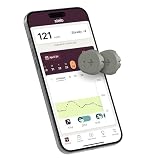
- ✅ For people NOT using insulin, ages 18 years and older
- ❌ Don’t use if: On insulin, on dialysis, or have problematic hypoglycemia
- YOUR SUCCESS, OUR COMMITMENT: If your biosensor fails before the 15-day wear time is up,[2] we will replace it for free. [3]
- PRODUCT SUPPORT: Provided by Stelo through SteloBot, which can be accessed via the Stelo app by going to Settings > Contact. SteloBot virtual support assistant is available 24/7, and live agent support available during regular business hours
- PERSONALIZED INSIGHTS: Understand your glucose patterns and how your glucose reacts to food, activity, and sleep
The hardware itself is familiar if you’ve seen Libre sensors before: a small, lightweight patch worn on the upper arm, designed for continuous wear over roughly 14 days. There is no screen, no buttons, and no haptic feedback, which keeps comfort high and friction low during sleep, training, and everyday movement. All interaction happens through the Lingo app, reinforcing that this is a software-led experience rather than a traditional medical device workflow.
Why glucose spikes are the new battleground
When Abbott talks about “fighting glucose spikes,” it is tapping into a growing body of evidence linking sharp post-meal glucose rises to energy crashes, cravings, and long-term metabolic stress, even in people without diabetes. Lingo doesn’t promise to diagnose insulin resistance or prevent disease, but it does visualise how specific foods, meal timing, exercise, and sleep patterns affect glucose stability. For users, that can turn abstract nutrition advice into immediate cause-and-effect feedback.
This is where Lingo diverges from standard fitness wearables. A smartwatch might tell you how many calories you burned after a run, but Lingo can show whether that same run blunted a glucose spike from lunch or helped stabilise levels overnight. The value isn’t the number itself, but the pattern recognition over days and weeks, which is something finger-prick tests and food diaries struggle to deliver.
Why the UK launch changes the competitive landscape
The UK has become one of the most competitive markets for health wearables, with Apple, Garmin, Fitbit, and Whoop all fighting for wrist space. Abbott entering this market with a sensor-based biowearable raises the bar for what “health tracking” actually means. Unlike optical heart rate or skin temperature, glucose is a biochemical signal, and that gives Lingo a depth that wrist-based devices can’t yet match.
It also puts pressure on rivals experimenting with non-invasive glucose estimation, which remains unreliable at consumer scale. By offering a proven sensor, long wear time, and a consumer-friendly app, Abbott is effectively setting a reference point for accuracy and usability. Whether users stick with Lingo long term or treat it as a short-term metabolic education tool, its UK arrival marks a shift toward more serious, biology-driven wearables rather than purely lifestyle metrics.
What Exactly Is Abbott Lingo? A Biowearable Built for People Without Diabetes
Seen in that context, Lingo isn’t Abbott dipping a toe into consumer tech so much as it is the company repackaging decades of clinical glucose expertise for a very different audience. This is not a diabetes product with the labels stripped off. It has been deliberately designed, from hardware to software, for people who are metabolically curious rather than clinically managed.
At its core, Lingo is a continuous glucose monitor, but almost everything around that core has been rethought to feel less like medical equipment and more like a modern wearable experience.
A sensor-first wearable, not a smartwatch add-on
Physically, Lingo is a small, circular adhesive sensor worn on the back of the upper arm, similar in footprint to Abbott’s FreeStyle Libre line. It sits flat against the skin, uses a short filament inserted just beneath the surface, and is designed to be worn continuously for up to 14 days per sensor.
There’s no screen, no buttons, and no haptic feedback. Lingo relies entirely on its companion smartphone app, which pulls glucose readings from the sensor via Bluetooth at regular intervals. That design choice is intentional, keeping the hardware minimal and the experience software-led.
In day-to-day wear, comfort and discretion matter more than aesthetics. The low-profile sensor tucks easily under sleeves, doesn’t interfere with sleep, and is water-resistant enough for showers and workouts, though it’s not something you’d want to knock repeatedly during contact sports.
Built on medical-grade accuracy, packaged for consumers
What separates Lingo from wellness experiments and startup biosensors is that Abbott already knows how to make accurate CGMs at scale. The sensing technology inside Lingo is closely related to what’s used in regulated medical devices, even if the product itself is not positioned as a diagnostic tool.
For users, this matters because glucose data is only useful if it’s trustworthy. Optical estimates and non-invasive promises have yet to prove reliable in real-world conditions, especially around meals and exercise. Lingo measures interstitial glucose directly, which means the trends and spikes you see are grounded in biochemistry rather than algorithmic guesswork.
That said, Abbott is careful with its framing. Lingo does not diagnose, treat, or manage disease, and it does not provide alerts for hypoglycaemia or hyperglycaemia. Instead, it focuses on education, pattern recognition, and behaviour change, which is why it can be marketed to people without diabetes in the UK.
The Lingo app: where the product really lives
If the sensor is the hardware, the Lingo app is the product. This is where Abbott clearly departs from the clinical CGM playbook and leans into consumer design.
Rather than overwhelming users with raw glucose curves, the app translates data into concepts like spikes, stability, and recovery. Meals, workouts, sleep, and stress can be logged or inferred, and the app highlights how those inputs affect glucose behaviour over hours rather than minutes.
The emphasis is less on chasing a “perfect number” and more on understanding which foods or habits consistently destabilise your glucose. For someone used to step counts and heart rate zones, this feels like a deeper, more personal layer of feedback, but one that still avoids medical jargon.
How Lingo differs from diabetes CGMs in everyday use
Although it shares DNA with Abbott’s medical devices, Lingo behaves very differently in practice. There are no alarms, no thresholds to manage, and no expectation that you’ll act immediately on a reading.
Medical CGMs are about safety and control. Lingo is about experimentation and learning. You eat a bowl of pasta, go for a walk, sleep poorly, or lift weights, and then you see how your body responds over time.
This distinction is important, because it shapes expectations. Lingo won’t tell you what you should eat, and it won’t flag a single high reading as a problem. Its value comes from repetition, comparison, and context, not moment-to-moment intervention.
Positioned against fitness wearables, not replacing them
Lingo is not trying to compete with your smartwatch. It doesn’t track steps, heart rate, VO2 max, or sleep stages on its own. Instead, it complements those devices by adding a biochemical layer they simply can’t access yet.
For athletes and fitness enthusiasts, this opens up interesting use cases. You can see how different training intensities affect glucose stability, whether fasted workouts actually smooth spikes, or how recovery days compare metabolically to high-load sessions.
In that sense, Lingo feels closer to a Whoop-style insight tool than a traditional medical monitor, but with data that’s fundamentally different in nature.
A lifestyle tool or a serious health investment?
Whether Lingo is genuinely useful depends on how you approach it. For users expecting instant optimisation or definitive answers, it may feel underwhelming. Glucose patterns are nuanced, and interpretation takes time.
For others, especially those interested in nutrition, energy management, and long-term metabolic health, Lingo offers something rare: direct feedback on how everyday choices play out inside the body. Used for a few months, it can act as a metabolic education tool. Used longer term, it becomes a way to keep habits honest.
That tension, between meaningful insight and lifestyle novelty, sits at the heart of what Lingo is trying to be. And it’s exactly why its arrival in the UK is being watched so closely across the wearable health space.
How Lingo Works Under the Skin: Sensor Tech, Wear Time, Accuracy and App Experience
To understand what Lingo is really offering, you have to look past the marketing language and down to the hardware doing the work. This is not a smartwatch-style optical trick or an algorithmic estimate. Lingo measures glucose directly, using the same underlying sensing principles Abbott has refined over years in clinical-grade systems.
That heritage matters, because it shapes everything from accuracy expectations to how the data should be interpreted day to day.
The sensor: interstitial glucose, not blood sugar
Lingo uses a small, coin-sized sensor worn on the back of the upper arm. A short, flexible filament sits just beneath the skin, sampling glucose levels in interstitial fluid rather than directly from the bloodstream.
This distinction is important. Interstitial glucose closely tracks blood glucose, but with a natural delay that typically sits around five to ten minutes. For lifestyle analysis and pattern recognition, that lag is largely irrelevant, but it does mean Lingo is not designed for real-time decision-making in the way medical CGMs are for insulin users.
Abbott has not reinvented the wheel here. Lingo’s sensor technology is closely related to the FreeStyle Libre platform, adapted for consumer use rather than clinical management.
Wear time, comfort and day-to-day practicality
Each Lingo sensor is designed to be worn continuously for up to 14 days. There is no charging, no user calibration, and no finger-prick setup. Once applied, it simply works in the background.
On the arm, the sensor sits low-profile and lightweight, closer in feel to a large coin than a bulky wearable. For most users, it disappears under clothing within a day or two. Showering, sweating, and normal exercise are all supported, though contact sports and heavy abrasion still require a bit of caution.
Adhesive longevity is generally good across the full wear period, but as with all skin-worn devices, outcomes vary depending on sweat, skin type, and training volume. Abbott includes guidance for keeping the sensor secure without turning it into a taped-on medical badge.
Accuracy expectations and what “good data” really means
Abbott does not position Lingo as a diagnostic tool, but the sensor performance sits in the same accuracy ballpark as modern CGMs. In technical terms, this typically means single-digit MARD performance under controlled conditions, which is considered very strong for continuous glucose sensing.
For everyday users, accuracy shows up less in individual numbers and more in trends. Lingo is most reliable when you focus on direction, magnitude, and repeatability rather than treating each reading as an absolute truth.
Eat the same breakfast three times and see three similar spikes. Train hard after poor sleep and notice greater variability. That consistency is where the data becomes meaningful, even if individual peaks vary by a small margin.
Sampling rate and data density
Lingo captures glucose data continuously throughout the day and night, building a dense timeline rather than isolated snapshots. This allows users to see not just spikes, but how long glucose stays elevated and how quickly it returns to baseline.
That time-above-baseline view is arguably more valuable than peak height alone. Two meals can produce the same maximum spike but very different recovery curves, and Lingo is designed to make that difference visible.
For users coming from fitness wearables, this level of biochemical resolution feels unfamiliar at first. It rewards patience and comparison rather than instant feedback.
The Lingo app: insight over alarms
The Lingo app is where Abbott makes its biggest philosophical departure from medical CGMs. There are no urgent alerts, no red-zone warnings, and no pressure to act on individual readings.
Instead, the interface focuses on patterns, context, and trends. Meals, workouts, sleep, and stress can be logged or inferred, allowing glucose responses to be viewed as part of a broader lifestyle picture.
Visualisations are clean and deliberately non-clinical. You are encouraged to explore how choices affect stability over hours, not chase a “perfect” number minute by minute.
Compatibility, connectivity and daily usability
Lingo connects directly to a compatible smartphone, with no separate reader device required. Data syncs automatically in the background, keeping the experience closer to a modern wearable app than a medical dashboard.
Rank #2

- HSA/FSA eligible. No prescription needed.
- 24/7 GLUCOSE TRACKING. See your glucose response to food, exercise, sleep, and other lifestyle factors via the Lingo app.
- OPTIMIZE YOUR NUTRITION. Discover which foods work for you and those that don't. The Lingo app shows you how specific meals and other factors impact your glucose, so you can learn from your insights and build healthier habits.
- NAVIGATE PREDIABETES WITH A NEW VIEW OF YOU. More time in healthy glucose range is linked to lower diabetes risk. Three out of four users with prediabetes say Lingo was effective in helping to achieve their health goals¹.
- HEALTHY GLUCOSE SUPPORTS HEART HEALTH. What you eat matters to your glucose and your heart. Keeping your glucose in a healthy range (70–140 mg/dL) more often can help protect your heart from heart disease²⁻⁴.
Battery life is a non-issue because the sensor is single-use, and phone drain is minimal thanks to low-energy Bluetooth communication. In practice, once the sensor is applied, Lingo asks very little of the user beyond occasional engagement with the app.
That low-friction experience is central to Lingo’s positioning. Abbott is clearly aiming for sustained curiosity rather than obsessive monitoring, which aligns with its broader message of metabolic learning rather than control.
From Medical CGMs to Lifestyle Biowearables: How Lingo Differs from FreeStyle Libre and Prescription Devices
Seen in context, Lingo makes more sense when you understand what it is not trying to be. Despite sharing DNA with Abbott’s clinical-grade glucose sensors, it is deliberately positioned away from the medicalised world of diabetes management.
The distinction matters, because continuous glucose monitoring has historically been built around risk, regulation, and intervention. Lingo reframes that same sensing capability as a learning tool, designed for people who are metabolically curious rather than metabolically compromised.
Same sensor heritage, different intent
At a hardware level, Lingo sits very close to Abbott’s FreeStyle Libre platform. The sensor still lives on the upper arm, still measures interstitial glucose rather than blood glucose, and still delivers frequent readings throughout the day and night.
Accuracy expectations are therefore anchored in medical-grade sensing, not consumer guesswork. Abbott would not be able to sell Lingo without that credibility, especially in a market like the UK where regulatory scrutiny around health data remains high.
Where things diverge is not the raw data, but what Abbott chooses to do with it. FreeStyle Libre exists to support treatment decisions, insulin dosing, and clinical oversight. Lingo exists to highlight patterns, stability, and behavioural cause-and-effect.
No prescription, no diagnosis, no clinical pressure
Prescription CGMs are tied to disease states. They are approved, reimbursed, and clinically interpreted within a framework that assumes glucose volatility is a problem to be managed aggressively.
Lingo removes that framing entirely. There is no requirement for a diabetes diagnosis, no clinician involved, and no expectation that the user needs to “fix” their glucose in real time.
That absence of clinical pressure is intentional. Abbott is clearly trying to avoid importing anxiety-driven behaviours into a population that does not need medical intervention, only better understanding.
Alerts versus awareness
One of the sharpest differences between Lingo and medical CGMs is what happens when glucose changes quickly. On FreeStyle Libre and similar prescription devices, alerts exist to warn users of hypoglycaemia or dangerous spikes.
Lingo avoids alarms altogether. There is no vibration, no push notification demanding action, and no colour-coded panic moment.
Instead, the system is designed to be reviewed retrospectively. You look back at meals, workouts, and sleep, and notice how your body responded over time rather than reacting to individual readings.
Fighting spikes without chasing numbers
Abbott’s marketing language around “fighting glucose spikes” could easily be misread as aggressive optimisation. In practice, Lingo is more interested in reducing volatility than lowering absolute values.
For non-diabetic users, occasional spikes are normal. What Lingo highlights is how frequently spikes occur, how high they go relative to baseline, and how long glucose remains elevated before recovering.
That focus subtly shifts user behaviour. Instead of asking “Is this food bad?”, the more useful question becomes “Does this combination, portion, or timing produce a smoother curve for me?”
Why FreeStyle Libre feels different to wear
Beyond software philosophy, there is also a psychological difference in daily wear. A prescription CGM carries medical weight, both literally and emotionally.
Lingo is lighter in tone and expectation. The sensor is still visible on the arm, but the absence of medical language in the app changes how it feels to live with day to day.
You are not “on a device” in the same way. You are wearing a biowearable for insight, closer in spirit to a fitness tracker than a medical aid.
Data depth versus data interpretation
Medical CGMs are designed to generate data that clinicians can interpret. Time in range, glucose variability, and event markers exist to support diagnosis and treatment planning.
Lingo simplifies those concepts without dumbing them down. You are still exposed to trends and recovery curves, but they are framed as personal feedback rather than clinical metrics.
This makes the experience more approachable for first-time CGM users, particularly those coming from smartwatches where health insights are already filtered and contextualised.
Regulatory boundaries shape the experience
The differences between Lingo and FreeStyle Libre are not just design choices. They are shaped by regulation.
By positioning Lingo as a lifestyle product rather than a medical device, Abbott avoids certain obligations, but also accepts limitations. Lingo cannot claim to diagnose, treat, or prevent disease, and it cannot give actionable medical advice.
That constraint arguably improves the product. It keeps expectations realistic and reinforces the idea that this is about self-education, not self-treatment.
Who should not use Lingo instead of a medical CGM
It is important to be clear about what Lingo does not replace. Anyone with diabetes, pre-diabetes under clinical supervision, or unexplained glucose symptoms should not see Lingo as an alternative to prescription monitoring.
The absence of alerts alone makes it unsuitable for people who need protection against dangerous lows or highs. Lingo is not designed to keep you safe in that sense.
Its value lies elsewhere, in helping healthy or borderline users understand metabolic responses before they become clinical problems.
A new category rather than a diluted medical device
Calling Lingo a “non-medical CGM” undersells what Abbott is attempting. It is better understood as a new category of biowearable that borrows medical-grade sensing but applies it through a consumer lens.
That distinction is what makes the UK launch significant. It signals confidence that everyday users are ready to engage with deeper biological data without clinical scaffolding.
Whether this becomes a lasting shift or a short-lived biohacking phase will depend on how useful people find those insights once the novelty fades. But Lingo’s differences from FreeStyle Libre make one thing clear: this is not a stripped-down medical device, it is a deliberate reimagining of what glucose data is for.
‘Going to War with Glucose Spikes’: What Glucose Spikes Really Are and Why They Matter
If Lingo’s positioning sounds unusually combative for a wellness wearable, that is intentional. “Glucose spikes” are the enemy Abbott wants everyday users to recognise, not as a disease state, but as a recurring physiological stressor that most people experience without ever seeing it.
Understanding what those spikes actually are, and why a non-medical biowearable is built around them, is key to deciding whether Lingo is genuinely useful or simply metabolic theatre.
What a glucose spike actually is
A glucose spike is a rapid rise in blood glucose levels, typically occurring after eating carbohydrate-rich or highly refined foods. It reflects how quickly glucose enters the bloodstream relative to how effectively insulin clears it.
In people without diabetes, these spikes usually resolve within a few hours. That resolution is precisely why they have been largely invisible outside of clinical research or athletic performance labs.
Continuous glucose monitoring changes that invisibility. Instead of a single fasting number or annual blood test, you see the shape, height, and duration of every post-meal rise, in near real time.
Why spikes matter even if you are “metabolically healthy”
For decades, glucose was treated as binary: normal or diabetic. Modern metabolic science is increasingly interested in variability, not just averages.
Frequent high spikes, even when fasting glucose is normal, are associated in population studies with insulin resistance, increased fat storage, systemic inflammation, and energy crashes. They are not diagnoses, but they are signals.
This is where Lingo’s consumer framing becomes relevant. The product is not telling you that you are sick; it is showing you how hard your body has to work to stay well.
The difference between glucose levels and glucose responses
Most people assume glucose monitoring is about absolute numbers. In lifestyle CGMs, the more meaningful metric is often the response curve.
Two people can eat the same bowl of pasta and see radically different spike heights and recovery times. Even the same person can respond differently depending on sleep, stress, exercise, and meal composition.
Lingo’s emphasis on “spikes” reflects this shift. It is less about chasing a perfect flat line and more about recognising patterns that repeat day after day.
Why wearables are uniquely suited to this problem
Glucose spikes are fleeting. A finger-prick test taken an hour too early or too late can miss them entirely.
Rank #3

- HSA/FSA eligible. No prescription needed.
- 24/7 GLUCOSE TRACKING. See your glucose response to food, exercise, sleep, and other lifestyle factors via the Lingo app.
- OPTIMIZE YOUR NUTRITION. Discover which foods work for you and those that don't. The Lingo app shows you how specific meals and other factors impact your glucose, so you can learn from your insights and build healthier habits
- NAVIGATE PREDIABETES WITH A NEW VIEW OF YOU. More time in healthy glucose range is linked to lower diabetes risk. Three out of four users with prediabetes say Lingo was effective in helping to achieve their health goals¹.
- HEALTHY GLUCOSE SUPPORTS HEART HEALTH. What you eat matters to your glucose and your heart. Keeping your glucose in a healthy range (70–140 mg/dL) more often can help protect your heart from heart disease²⁻⁴.
A biowearable sensor worn continuously, quietly sampling interstitial glucose throughout the day, captures those transient events without user effort. That passive collection is what turns glucose from a medical metric into a behavioural one.
In practical terms, this aligns glucose tracking with how people already use wearables: noticing trends, experimenting with habits, and adjusting routines rather than reacting to alarms.
Food, movement, and context matter more than macros alone
One of the more surprising insights for first-time CGM users is how poorly calorie counts or macro ratios predict glucose responses.
A white rice meal eaten after a brisk walk may produce a smaller spike than a “healthier” option eaten after poor sleep. Liquid carbohydrates often spike harder than solids. Fat and fibre can blunt peaks but sometimes prolong elevated levels.
Lingo’s war on spikes is really a war on oversimplification. It exposes the gap between nutritional theory and lived physiology.
The psychological shift: from willpower to feedback
Traditional dietary advice relies heavily on restraint and compliance. Glucose data replaces that with cause and effect.
When users see that a particular breakfast leads to a sharp rise followed by mid-morning fatigue, behaviour change becomes less abstract. The motivation is not guilt, but curiosity.
This feedback loop is where Lingo differentiates itself from generic wellness trackers. Steps and calories tell you what you did; glucose responses show you how your body interpreted it.
Where the spike narrative risks overshooting reality
Not every spike is harmful, and flattening glucose at all costs is neither realistic nor desirable. Exercise itself can raise glucose temporarily, especially during high-intensity efforts.
There is also a risk of users interpreting normal physiological responses as problems to be solved. Without clinical framing, data literacy becomes essential.
Abbott’s challenge in the UK market will be maintaining nuance. A product built around “fighting” spikes must also teach users when not to fight them.
Why this framing makes sense for a non-medical CGM
By focusing on spikes rather than thresholds, Lingo avoids making diagnostic claims while still offering actionable insight. It stays firmly in the realm of awareness, experimentation, and habit refinement.
This is also why the lack of real-time alerts, which would be unacceptable in a medical CGM, fits the concept here. The goal is reflection, not intervention.
Seen through that lens, Lingo’s war on glucose spikes is less about control and more about literacy. It gives everyday users a window into a system that has always been active, influential, and largely unseen.
Using Lingo Day to Day: Food, Exercise, Stress and Sleep Through a Glucose Lens
Once the spike narrative is understood as a learning tool rather than a threat model, Lingo’s real value shows up in ordinary routines. This is not a device you check obsessively minute to minute, but one that quietly reframes meals, workouts, and recovery after the fact.
The experience is less like wearing a smartwatch and more like running a long personal experiment. Over days rather than hours, patterns emerge that most people have never had the instrumentation to see.
Food: from macros to personal responses
Day to day, food logging is where Lingo earns its keep. Users tag meals in the app and then review glucose curves afterward, seeing not just peaks but duration above baseline.
What becomes obvious quickly is that textbook “healthy” meals can behave very differently depending on timing, portion size, and food order. A bowl of oats eaten alone may spike sharply, while the same oats after eggs and yoghurt may rise slower and fall cleaner.
Liquid calories are often the biggest surprise. Smoothies, fruit juices, and even seemingly benign protein shakes tend to produce faster and higher spikes than their solid equivalents.
Lingo does not count calories or prescribe targets. Instead, it encourages experimentation, swapping ingredients, changing meal order, or adjusting timing, and watching how the curve responds over the next two hours.
Exercise: when spikes are signals, not failures
Physical activity complicates the spike narrative in useful ways. High-intensity training can push glucose up temporarily as the liver releases fuel, even though the long-term effect is improved insulin sensitivity.
Lingo surfaces this clearly, showing short-lived rises during interval sessions or heavy strength work, followed by lower and more stable levels later in the day. For endurance exercise, the opposite often appears, with glucose drifting down during prolonged steady efforts.
This reframes post-workout fuelling decisions. Users can see whether they actually need fast carbohydrates after a session, or whether protein and slower carbs are sufficient to restore balance.
Importantly, Lingo avoids judging exercise-induced spikes. Without alerts or warnings, the data remains descriptive, allowing users to learn without second-guessing their training.
Stress: the invisible glucose driver
One of the most confronting insights for many users is how stress shows up metabolically. Poor meetings, tight deadlines, or even caffeine on an empty stomach can push glucose up without any food involved.
These stress-driven rises often look different from food spikes. They are flatter, longer, and harder to attribute unless the user recalls what was happening at the time.
Over a working week, this can reveal why some people struggle with energy crashes despite eating consistently. Lingo makes it clear that glucose is not just about nutrition, but about the nervous system.
For biohackers and productivity-focused users, this opens the door to testing breathing exercises, short walks, or caffeine timing and seeing if the curve changes.
Sleep: yesterday’s night, today’s glucose
Sleep quality does not just affect how glucose behaves overnight, but how it responds the following day. Short or fragmented sleep often leads to higher and more volatile responses to breakfast.
Lingo visualises this as a higher baseline before the first meal and exaggerated peaks afterward. Even without sleep stage tracking, the pattern is hard to miss over multiple days.
This is where Lingo pairs naturally with smartwatches. Users can correlate poor sleep scores from an Apple Watch or Garmin with rougher glucose days, reinforcing recovery as a metabolic input, not a luxury.
Living with the sensor: comfort, cadence, and friction
Physically, Lingo fades into the background quickly. The small adhesive sensor sits flush on the arm, is water-resistant enough for showers and workouts, and generally avoids the “medical device” feel that can be off-putting.
There is no screen and no haptic feedback, which keeps attention anchored in the app rather than the body. Battery life is sensor-bound rather than rechargeable, with each patch designed to last multiple days before replacement.
The app experience is deliberately slower than a fitness tracker dashboard. You review trends, not live readouts, which reduces anxiety and encourages reflection instead of reaction.
What daily use reveals over time
After a week or two, the novelty of watching lines rise and fall gives way to something more valuable. Users start predicting responses before checking the app, which is when behavioural change tends to stick.
This is also where Lingo distances itself from being a lifestyle gimmick. The insights compound, especially for people who train regularly, work cognitively demanding jobs, or are experimenting with nutrition strategies.
Used day to day, Lingo does not tell users what to eat, how to train, or when to rest. It simply shows, with clinical-grade sensing and consumer-friendly framing, how the body reacts when they do.
Lingo vs the Competition: How Abbott Stacks Up Against Levels, Nutrisense and Ultrahuman
By the time most UK users arrive at Lingo, they have already heard of continuous glucose monitoring through US-centric platforms like Levels and Nutrisense, or through newer hardware-first players like Ultrahuman. What matters here is not whether Abbott invented the category, but how deliberately it has chosen to reshape it for a broader, less clinical audience.
At a glance, all four promise insight into glucose behaviour without a diabetes diagnosis. In practice, they take meaningfully different positions on who the product is for, how intense the data experience should be, and how much responsibility is placed on the user to interpret what they see.
Abbott Lingo vs Levels: reflection versus optimisation
Levels is built around optimisation language. Its app is fast, data-dense, and explicitly focused on scoring meals, workouts, and daily decisions in near real time.
Lingo takes almost the opposite stance. There are no scores, no instant feedback loops, and no nudging alerts when glucose rises. Instead, Abbott slows the experience down, encouraging users to review patterns after the fact rather than manage them minute by minute.
This difference matters for daily wearability. Levels can feel like a performance dashboard that demands attention, which some users find motivating and others find exhausting. Lingo feels quieter, closer to a journal than a coach, which aligns with Abbott’s aim to reduce anxiety around glucose rather than gamify it.
From a hardware perspective, Levels relies on third-party medical CGMs, historically Abbott FreeStyle Libre sensors in the US. Lingo is vertically integrated, using Abbott’s own sensor tuned for consumer use, which simplifies onboarding and support in the UK market.
Rank #4

- [Complete Starter Kit] - CareSens N Diabetes Testing Kit includes 1 blood glucose meter, 100 blood sugar test trips, 1 lancing device, 100 lancets, and a traveling case to provide you with the most affordable and convenient way for blood sugar testing. Our blood sugar test kit saves up to 250 tests and has a battery life of 1000 tests.
- [Small Sample Size] - CareSens N Plus Blood Sugar Monitor requires only a small blood sample size of 0.5 μL, making finger pricking easy and painless. CareSens N Diabetes Test Strip is auto coded and automatically recognizes the batch code encrypted on CareSens N Blood Glucose Test Strip.
- [Fast Results] - CareSens N Blood Glucose Meter provides fast results in just 5 seconds, making blood sugar testing fast and convenient. Our Glucometer Kit comes with a handy traveling case that can hold all your diabetes testing kit so that you can measure your blood sugar at the comfort of your home or anywhere else.
- [Easy to use] – CareSens N Blood Glucose Monitor kit is very simple and easy-to-use, making blood sugar testing easy for all. Our lightweight Blood Sugar Monitor has a simple design to make diabetes testing easy-to-understand and hassle-free.
- [Customer Service] - CareSens N Diabetes Testing Kit has a dedicated customer service team to provide you the best service to any issues or problems you're having! Our goal is to help you Sense Ahead of your Diabetes and Care for those you love. Your satisfaction is our number one priority. If you have any questions or concerns about your glucometer with strips and lancets – please contact us at any time.
Lingo vs Nutrisense: medical heritage without medicalisation
Nutrisense sits closer to the clinical end of the consumer spectrum. Its value proposition leans heavily on dietitian access, structured programs, and frequent interpretation support.
For users who want guidance, accountability, and someone to translate the data into meal plans, Nutrisense has clear appeal. The trade-off is friction. Scheduled check-ins, more frequent notifications, and a sense of being managed rather than self-directed.
Lingo strips all of that away. There is no human coaching layer and no attempt to prescribe behaviour. Abbott’s bet is that its medical credibility as a device maker is enough, and that users would rather own the insight than outsource the interpretation.
In the UK context, this is a meaningful distinction. Lingo feels less like a telehealth service and more like a wearable extension of personal health literacy.
Lingo vs Ultrahuman: lifestyle ecosystem versus single signal focus
Ultrahuman approaches glucose as one input within a broader metabolic ecosystem. Its CGM integrates tightly with sleep tracking, recovery metrics, training load, and even its own smart ring hardware.
For athletes and quantified-self enthusiasts, this all-in-one model is compelling. Glucose becomes part of a dense web of signals that inform readiness, strain, and performance.
Lingo deliberately avoids this complexity. It does not attempt to compete with smart rings, watches, or training platforms. Instead, it assumes those devices already exist and positions itself as a clean glucose layer that can be mentally overlaid on top.
This separation reduces cognitive load. Rather than another app competing for daily attention, Lingo fits into gaps between meals, workouts, and sleep reviews, making it easier to sustain over weeks rather than days.
Sensor design, comfort, and real-world wearability
All four platforms use arm-worn sensors, but execution differs. Lingo’s patch is small, low-profile, and visually neutral, which matters for users wearing it outside gym environments.
There is no on-sensor display and no interaction beyond replacement, keeping the physical experience minimal. Adhesion and water resistance are designed for everyday life rather than extreme sport, but they hold up well to showers, desk work, and moderate training.
Battery life is defined by sensor lifespan rather than charging cycles, which removes another point of friction. Compared to platforms that emphasise constant checking, Lingo’s hardware disappears faster, which aligns with its software philosophy.
Software philosophy and data framing
The most important competitive difference is not accuracy, which is broadly comparable across modern CGMs, but framing. Levels and Ultrahuman foreground immediacy, Nutrisense foregrounds interpretation, and Lingo foregrounds understanding over time.
Glucose spikes are not flagged as failures or warnings. They are shown as part of a pattern, often contextualised by sleep, timing, or food combinations rather than isolated events.
For non-diabetic users, this framing reduces the risk of overcorrection. Instead of chasing flat lines, users learn what their normal variability looks like and where it becomes disruptive.
Who Lingo makes the most sense for
Lingo is not trying to be the most powerful or the most feature-rich option. It is trying to be the most sustainable.
For UK users who are curious about glucose but wary of turning food into a stressor, Abbott’s approach feels measured and mature. It is particularly well suited to people already using smartwatches or fitness platforms who want metabolic context without another optimisation engine competing for control.
Against its competitors, Lingo’s strength is not that it shows more data, but that it asks less of the user while still delivering insight that compounds over time.
Wearability, Comfort and Practicalities: Skin Adhesion, Discretion, Battery Life and UK Usability
Lingo’s hardware choices reinforce the philosophy outlined earlier: insight should accumulate quietly, not demand attention. For a product intended to sit on the body continuously for days, comfort and social invisibility matter as much as sensor accuracy.
Abbott’s experience in medical CGMs shows here, but Lingo is deliberately softened for a non-clinical audience. This is not a device that wants to feel like medical equipment, even if its core technology comes from that world.
Patch size, placement and day-to-day comfort
The Lingo sensor is a small, circular patch worn on the upper arm, broadly similar in footprint to the FreeStyle Libre line but with subtler branding and a lower visual profile. On slimmer arms it remains visible, but it reads more like a neutral adhesive patch than a conspicuous health device.
Weight is negligible once applied, and there is no external transmitter protruding from the skin. That matters more than it sounds, especially under fitted clothing or during sleep, where bulkier CGMs can catch, press, or create pressure points.
Insertion uses a single-use applicator and is quick, with most users reporting a brief pinch rather than sustained discomfort. After the first hour, awareness largely disappears unless the arm is leaned against a hard surface.
Skin adhesion and how it handles real life
Adhesion is tuned for everyday durability rather than extreme endurance sport. In practice, that means it holds up well through showers, light swimming, desk work, and moderate exercise without the need for overpatches.
Sweat resistance is adequate for gym sessions and outdoor runs, but heavy endurance training or repeated friction from backpacks can challenge the adhesive over multiple days. This is not unusual in the category, and Lingo sits comfortably in the middle of the pack rather than trying to over-engineer stickiness at the cost of skin comfort.
For users with sensitive skin, Abbott’s adhesive formulation tends to be better tolerated than some newer startups, though mild irritation can still occur after several days. Rotating arms and following proper removal guidance makes a noticeable difference.
Discretion and social acceptability
One of Lingo’s quiet advantages is how little it asks of the wearer socially. There is no on-sensor display, no lights, no taps or gestures, and no reason to interact with it in public.
From a distance, it does not immediately signal “medical device,” which lowers the barrier for users who are curious about glucose but hesitant to broadcast it. In the UK, where CGMs are still strongly associated with diabetes management, this discretion matters.
It also pairs naturally with smartwatches and fitness trackers without competing for wrist space or attention. Lingo lives on the arm, the insights live on the phone, and neither demands constant checking.
Water resistance and durability expectations
Lingo is rated for everyday water exposure rather than deep or prolonged immersion. Showers, rain, and short swims are well within its comfort zone.
What it is not designed for is repeated cold-water swimming, long sauna sessions, or aggressive contact sports. Abbott’s positioning is clear: this is a lifestyle metabolic tool, not a ruggedised adventure sensor.
For most UK users, this trade-off is sensible. The device survives typical weather, commuting, and workouts without fuss, and avoids the bulk that comes with more extreme durability claims.
Battery life defined by sensor lifespan
Unlike wrist wearables, Lingo has no rechargeable battery and no charging rituals. Battery life is synonymous with sensor lifespan, after which the patch is replaced.
This removes a major friction point common to smartwatches and rings. There is nothing to remember, nothing to top up overnight, and no degradation in performance toward the end of a day.
The practical downside is cost and waste, but from a usability perspective, it reinforces the “apply and forget” model that Lingo leans into. Once it is on, the hardware fades into the background.
App dependency and phone compatibility in the UK
All interaction happens through the Lingo app, available on iOS and Android, with UK-specific localisation baked in at launch. Units, food references, and guidance are aligned with UK norms rather than US-centric assumptions.
Bluetooth connectivity is stable in typical use, with data syncing passively in the background rather than demanding constant foreground app activity. Missed syncs are backfilled automatically when the phone reconnects.
Importantly, the app does not nag. Notifications are minimal by default, reinforcing the idea that glucose trends are something to review, not react to in real time.
Replacement cadence and supply practicalities
Sensor replacement is straightforward, with clear prompts when a patch is nearing the end of its usable life. The removal process is gentle, especially when done after a shower or with adhesive remover.
For UK buyers, availability and logistics matter. Abbott’s established distribution infrastructure gives Lingo an advantage over smaller competitors that rely on international shipping or limited stock drops.
Subscription options simplify continuity, but they also lock users into an ongoing relationship. For people experimenting short-term, the lack of frictionless single-sensor purchasing may feel restrictive.
Living with Lingo rather than managing it
Taken together, Lingo’s wearability choices reinforce its broader positioning. It is designed to be lived with, not managed.
Comfort is good rather than exceptional, durability is sufficient rather than extreme, and discretion is clearly prioritised. The hardware does not try to impress; it tries to disappear.
For UK users new to glucose monitoring, that may be Lingo’s most underrated strength. The easier it is to forget the sensor is there, the more likely the data becomes a background lens on daily habits rather than another metric demanding control.
Who Should (and Shouldn’t) Use Abbott Lingo: Athletes, Biohackers, Weight Managers and the Curious
Because Lingo is designed to fade into the background, its value depends less on technical bravado and more on mindset. This is a biowearable for people who want context, not control, and who are willing to observe patterns rather than chase perfect numbers.
Endurance athletes and serious trainers
For endurance athletes, Lingo’s appeal lies in understanding fuel timing rather than chasing peak glucose values. Long rides, runs, or multi-session training days expose how different carbohydrates, meal timing, and recovery snacks influence energy stability across hours, not minutes.
Unlike medical CGMs, Lingo does not push urgent alerts mid-session, which suits athletes who already rely on perceived exertion, power, or heart rate. Post-workout review becomes the real value, especially when comparing fasted sessions, gels versus whole foods, or evening training that bleeds into sleep quality.
That said, athletes expecting performance prescriptions may be disappointed. Lingo shows what happened to glucose; it does not tell you how to pace, when to eat, or how many grams of carbohydrate to take on your next long run.
Biohackers and quantified-self enthusiasts
Lingo fits naturally into the biohacker stack, particularly for users already tracking sleep, HRV, training load, and nutrition. Glucose becomes another layer of signal, helping validate or challenge assumptions about “clean eating,” intermittent fasting, or metabolic flexibility.
The sensor’s discreet form factor and low-maintenance app design make it easy to run experiments over weeks rather than days. This matters because glucose responses vary widely, and single meals rarely tell the full story.
However, Lingo rewards patience and statistical thinking. Users looking for dramatic, instant feedback loops may find the trend-based insights less exciting than more reactive platforms.
Weight managers and lifestyle improvers
For people focused on weight management, Lingo’s strength is behavioural rather than metabolic. Seeing how certain breakfasts lead to mid-morning crashes, or how evening snacking affects overnight stability, can quietly reshape habits without calorie counting.
The absence of food logging requirements lowers friction, which is crucial for long-term adherence. Instead of tracking everything, users learn which foods consistently work for them and which do not.
Lingo is not a weight-loss device, and it does not directly measure fat loss or metabolic health. Its value comes from nudging better choices through awareness, not from promising transformation.
The health-curious and first-time CGM users
For the simply curious, Lingo may be one of the least intimidating entry points into glucose monitoring. The app avoids medical language, the hardware is unobtrusive, and the experience feels closer to a lifestyle wearable than a clinical tool.
This makes it particularly suitable for UK users who want to understand modern nutrition debates without committing to a medicalised ecosystem. Used for a month or two, Lingo can answer common questions about meals, stress, sleep, and daily routines.
The risk is mistaking novelty for necessity. Once curiosity is satisfied, some users may struggle to justify ongoing subscriptions unless they actively apply what they learn.
Who should think twice before using Lingo
Lingo is not intended for people with diabetes or those who need real-time glucose management. Anyone requiring alerts, insulin guidance, or clinical decision support should be using a regulated medical CGM under professional supervision.
It may also be a poor fit for users prone to health anxiety or obsessive tracking. Even with Abbott’s restrained design, continuous data can become noise if every fluctuation feels meaningful.
Finally, budget-conscious users expecting long-term daily use should weigh the ongoing cost against the insights gained. Lingo delivers perspective, not permanence, and its value peaks when users are ready to learn, adjust, and eventually move on.
Is Abbott Lingo Genuinely Useful or Just the Next Health Trend? Market Impact and Verdict for UK Buyers
So where does this leave Lingo once the initial curiosity fades and the glucose graphs stop feeling novel? The answer sits somewhere between meaningful behaviour change and the risk of becoming another short-lived wellness subscription.
What makes Lingo different is not the sensor itself, which is proven Abbott hardware, but the framing. It deliberately strips CGM back to its behavioural essentials, positioning glucose as a feedback signal rather than a diagnosis.
What “going to war with glucose spikes” actually means day to day
In practical terms, Lingo’s anti-spike philosophy is about smoothing daily energy rather than chasing perfect numbers. Most users will quickly see that sharp rises often follow refined carbohydrates eaten alone, poor sleep, or high stress combined with sedentary time.
The app reframes success as stability, not suppression. A balanced meal that produces a gentle rise is treated as a win, even if glucose goes higher than baseline.
For UK users navigating busy workdays, commuting, and inconsistent meal timing, this can be more actionable than calorie targets or macro tracking. It encourages small adjustments, such as pairing carbs with protein, walking after dinner, or shifting breakfast composition.
How Lingo differs from medical CGMs and lifestyle competitors
Unlike prescription CGMs, Lingo avoids alarms, clinical thresholds, and language associated with risk. There are no urgent notifications, no time-in-range targets, and no expectation that the user must react in real time.
Compared to other consumer glucose platforms, Lingo’s restraint is its defining feature. Where some competitors lean into detailed charts, food databases, and aggressive optimisation, Lingo prioritises simplicity and pattern recognition.
This approach reduces cognitive load and makes it more compatible with everyday wear. It feels closer to a discreet biowearable than a medical device, even though the underlying technology is clinically credible.
Hardware comfort, wearability, and real-world usability
Physically, Lingo benefits from Abbott’s long experience in sensor miniaturisation. The patch-style sensor sits flat against the skin, works under clothing, and is unobtrusive enough for gym sessions, office wear, and sleep.
There is no screen, no button, and no visible tech to manage. Interaction happens entirely through the smartphone app, which supports modern iOS and Android devices commonly used in the UK.
Battery life is tied to sensor lifespan rather than daily charging, removing one of the biggest friction points seen in smartwatches. Once applied, it simply works in the background.
Software experience and data interpretation
Lingo’s software deliberately limits overanalysis. Trends are prioritised over raw numbers, and the app nudges users toward reflection rather than constant checking.
For many first-time CGM users, this is a strength. It reduces the temptation to micromanage meals or panic over short-term fluctuations that are physiologically normal.
The downside is that power users may want deeper data access after the learning phase. Lingo is designed to teach habits, not to become a permanent dashboard.
Market impact in the UK wearable landscape
Lingo’s UK launch matters because it normalises glucose awareness outside of diabetes care. Abbott’s brand recognition and regulatory credibility lower the trust barrier for mainstream consumers.
This positions Lingo as a bridge product, sitting between fitness wearables and medical devices. It expands the definition of what health tracking can include without crossing into clinical territory.
If successful, Lingo may push other wearable brands to integrate metabolic insights more responsibly, rather than racing toward ever more metrics with less context.
Cost, value, and the question of long-term use
The biggest question for UK buyers is not whether Lingo works, but how long it remains worth paying for. The insights tend to compound quickly, often within the first few weeks.
For many users, the ideal use case may be cyclical. A month or two of wear to recalibrate habits, followed by time off, then a return during periods of change such as new training plans or dietary shifts.
Viewed this way, Lingo is less like a smartwatch you wear indefinitely and more like a diagnostic lens you pick up when needed.
Who will benefit most from Lingo
Lingo makes the most sense for health-conscious users who enjoy learning how their body responds to lifestyle variables. It suits runners, gym-goers, shift workers, and professionals managing energy rather than weight alone.
It is also well suited to people sceptical of extreme diet culture but curious about personalised nutrition. Lingo offers feedback without ideology.
Those expecting dramatic transformation or medical insight will likely be disappointed. Lingo informs decisions; it does not make them.
Verdict: meaningful tool or passing trend?
Abbott Lingo is not a gimmick, but it is also not essential for everyone. Its usefulness depends on whether the user is ready to act on subtle feedback rather than chase dramatic metrics.
As a short- to medium-term learning tool, it is one of the most thoughtfully designed glucose wearables available to UK consumers. It respects the user’s attention, avoids fear-based messaging, and delivers insights that can quietly improve daily life.
For buyers who value understanding over obsession, Lingo represents a mature step forward in consumer health technology. Used with intention, it earns its place. Used passively, it risks becoming just another app on the phone, quietly reminding us that data alone never changes behaviour.