Abbott’s Lingo brand arriving in the US is one of those moments that sounds bigger than it is, unless you understand how FDA clearance actually works. For years, continuous glucose monitoring has been locked behind prescriptions and diabetes diagnoses, even as athletes, biohackers, and everyday health-focused users have been asking for access. Lingo, and specifically the new Rio CGM, is Abbott’s answer to that demand, but it comes with important caveats that shape what this product is and is not.
If you’re coming from Apple Watch, Garmin, Whoop, or Oura, this launch isn’t about replacing your wearable. It’s about adding a new layer of metabolic context that none of those platforms can measure directly today. Understanding what the FDA has cleared, and what Abbott is deliberately avoiding, is key to knowing whether Rio fits into your health stack or if it’s being oversold.
What FDA clearance actually covers
Abbott has received FDA clearance for Lingo as an over-the-counter continuous glucose monitoring system intended for people without diabetes. That distinction matters. This is not an FDA approval for diagnosing disease, adjusting insulin, or making medical treatment decisions. Instead, the clearance acknowledges that the device can safely and accurately measure interstitial glucose and present that data for general wellness and lifestyle insights.
From a regulatory standpoint, this places Lingo Rio closer to blood pressure cuffs sold at pharmacies than to prescription-grade CGMs like Dexcom G7 or Abbott’s own FreeStyle Libre used by people with diabetes. The FDA is essentially saying the hardware works, the data is reliable within defined limits, and the way it’s presented does not encourage medical decision-making.
🏆 #1 Best Overall
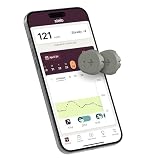
- ✅ For people NOT using insulin, ages 18 years and older
- ❌ Don’t use if: On insulin, on dialysis, or have problematic hypoglycemia
- YOUR SUCCESS, OUR COMMITMENT: If your biosensor fails before the 15-day wear time is up,[2] we will replace it for free. [3]
- PRODUCT SUPPORT: Provided by Stelo through SteloBot, which can be accessed via the Stelo app by going to Settings > Contact. SteloBot virtual support assistant is available 24/7, and live agent support available during regular business hours
- PERSONALIZED INSIGHTS: Understand your glucose patterns and how your glucose reacts to food, activity, and sleep
This is why Abbott can sell Rio without a prescription, market it directly to consumers, and integrate it into a lifestyle-focused app experience. It’s also why the language around the product is carefully controlled.
What FDA clearance does not mean
FDA clearance does not mean Rio is a medical device for diagnosing or managing diabetes, prediabetes, or hypoglycemia. Users are explicitly told not to use Lingo data to change medication, treat symptoms, or replace lab testing. If you’re looking for alerts that could wake you up at night for dangerous lows, this is not that product.
It also doesn’t mean unlimited data access or raw clinical metrics. Abbott is intentionally filtering and contextualizing glucose information to keep the experience aligned with general wellness claims. That’s a regulatory strategy as much as a product design choice.
For some users, especially those used to open data platforms or prescription CGMs, this will feel restrictive. For Abbott, it’s the tradeoff that makes nationwide consumer distribution possible.
Where the Rio CGM fits in Abbott’s lineup
Rio sits below FreeStyle Libre in medical authority but above anything currently offered by mainstream wearables. It uses Abbott’s proven sensor technology, worn on the back of the upper arm, with a slim, low-profile patch designed for multi-day wear. Comfort, discretion under clothing, and adhesion during workouts are clearly prioritized, reflecting its target audience.
Battery life and sensor lifespan are optimized for short-term use rather than continuous, month-after-month monitoring. This positions Rio as something you use in cycles: to learn how your body responds to meals, training blocks, stress, or sleep changes, rather than as a permanent implant in your health routine.
The companion app focuses on trends, patterns, and relative changes instead of clinical thresholds. You’ll see how certain foods spike you, how long it takes to return to baseline, and how exercise or sleep consistency alters your glucose variability over time.
Who Rio is actually for
Rio is designed for people who are metabolically curious, not medically dependent. That includes endurance athletes dialing in fueling strategies, strength trainers experimenting with carb timing, and health-conscious users trying to understand why energy crashes or brain fog happen when they do.
It’s also aimed at users who already trust Abbott as a medical brand but don’t want the friction of prescriptions, insurance claims, or clinician oversight. Compared to startups in the CGM wellness space, Abbott brings credibility, manufacturing scale, and sensor accuracy that smaller players struggle to match.
If you’re already managing diabetes or prediabetes under medical supervision, Rio is not a substitute for a prescription CGM. Abbott is very clear about that boundary, and crossing it would put the entire Lingo program at regulatory risk.
How this compares to prescription CGMs and consumer competitors
Against prescription CGMs, Rio trades depth for accessibility. You get fewer alerts, less granular control, and a more guided interpretation layer. In exchange, you get zero gatekeeping and a simpler user experience that doesn’t assume clinical knowledge.
Compared to other consumer-focused glucose monitors, Rio benefits from Abbott’s sensor accuracy and decades of experience in CGM calibration and manufacturing. Where competitors often lean heavily on coaching and interpretation to justify higher costs, Abbott is betting that reliable data plus smart framing is enough.
Importantly, Rio does not compete directly with smartwatches or rings. Apple Watch, Garmin, Whoop, and Oura still infer metabolic health indirectly through heart rate, HRV, sleep, and activity. Rio provides a missing input, one that could eventually integrate into those ecosystems rather than replace them.
What this launch signals for the future of wearables in the US
The FDA clearing Lingo sets a precedent that continuous biochemical sensing can live in the consumer space without becoming a medical device. That opens the door not just for glucose, but for future sensors measuring hydration, lactate, ketones, or even stress-related biomarkers.
For Abbott, Rio is a strategic beachhead. It familiarizes consumers with CGM hardware, builds trust in non-prescription use, and positions the company at the center of the next phase of health wearables where physiology, not just movement, becomes the core metric.
For users, it marks the first time glucose data becomes a lifestyle signal rather than a diagnosis. That shift is subtle, but it’s the reason this launch matters far beyond a single sensor on your arm.
Meet Rio: Abbott’s First US Consumer CGM and Why It’s Not ‘Just Another Libre’
Seen in the context of everything that came before, Rio is the logical next step in Abbott’s strategy rather than a sudden pivot. The company has spent years refining Libre into the world’s most widely used prescription CGM, and Lingo is the regulatory wrapper that finally allows that expertise to move into the US consumer space.
But Rio is not simply a Libre with the prescription removed. It’s a deliberately constrained, reinterpreted CGM built to behave like a lifestyle wearable, not a medical device, even though the sensor lineage is unmistakably Abbott.
What Rio actually is, in practical terms
Rio is a continuous glucose monitor cleared for over-the-counter sale in the US under Abbott’s Lingo platform. You apply a small adhesive sensor to the back of your upper arm, it continuously measures interstitial glucose, and it sends readings to a smartphone app.
There is no prescription, no clinician setup, and no diagnosis implied. Abbott positions it explicitly for adults interested in understanding how food, exercise, stress, and sleep affect their glucose patterns.
Physically, Rio closely resembles the latest-generation Libre sensors. It’s compact, low-profile, water-resistant for daily life and workouts, and designed to be worn continuously for multiple days without charging or interaction beyond scanning or syncing via your phone.
Why Abbott insists it’s not “just a Libre without a prescription”
From a hardware perspective, Rio is built on the same sensor science that underpins Libre. That’s unavoidable, and it’s a strength. Where the differentiation really happens is in software, feature gating, and intent.
Rio deliberately removes or limits features that would push it into medical territory. You don’t get aggressive hypoglycemia alerts, customizable clinical thresholds, or the kind of real-time alarms designed for insulin-dependent users.
Instead, glucose is presented as a trend-based signal. The emphasis is on patterns over time, post-meal responses, and relative changes rather than exact numeric targets that might prompt medical decision-making.
The Lingo app experience: guided, not granular
The Lingo app is the real product here. Abbott has invested heavily in interpretation layers that assume the user is curious, not clinically trained.
Rather than asking you to manage ranges and alarms, the app frames glucose data around everyday behaviors. Meals, workouts, stress, and sleep are contextualized against glucose responses with plain-language explanations.
This is a crucial difference from prescription CGMs, which assume a baseline understanding of diabetes management. Rio’s software tries to answer “what just happened?” rather than “what do I need to correct right now?”
What data you actually see, and what you don’t
Rio does provide continuous glucose readings, trend lines, and historical views. You can see how glucose rises after certain meals, how long it takes to return to baseline, and how activity blunts or amplifies those responses.
What you don’t get is full clinical control. Alerting is minimal or absent, data export is limited, and there’s no expectation that you’ll make medical decisions based on a single reading.
This is intentional. Abbott is walking a careful regulatory line where insight is encouraged but action is framed as lifestyle experimentation, not treatment.
Accuracy and credibility: where Abbott has a real edge
One reason Rio matters is who’s making it. Abbott has decades of experience building CGMs that physicians trust for insulin dosing decisions.
Even though Rio is not approved for medical use, it benefits from that same manufacturing discipline, sensor stability, and calibration science. For consumers, that translates to fewer wild swings, less noise, and more confidence that trends reflect reality.
Many consumer-facing glucose startups rely heavily on coaching and content to compensate for hardware limitations. Abbott can afford to let the data speak more quietly because the sensor itself does much of the work.
Comfort, wearability, and day-to-day use
As a wearable, Rio behaves more like a Whoop strap or Oura Ring than a medical patch. Once applied, it largely disappears into daily life.
The low-profile design fits under clothing, holds up during workouts, and doesn’t demand constant interaction. There’s no charging routine, no buttons, and no screen to manage.
For smartwatch users, this matters. Rio is designed to coexist with Apple Watch, Garmin, or Whoop rather than compete for wrist space or attention.
Who Rio is actually for, and who it isn’t
Rio is for metabolically curious users. Athletes experimenting with fueling strategies, biohackers optimizing meal timing, and health-conscious consumers who want feedback beyond calories and macros.
It’s also for people who suspect they may be on the edge of metabolic issues but aren’t diagnosed and don’t want to medicalize their lives prematurely.
It is not for people who need glucose alerts to stay safe, manage insulin, or make real-time treatment decisions. Abbott is explicit about this boundary, and it’s foundational to why Rio exists at all.
How Rio fits into the broader wearable ecosystem
Rio doesn’t replace your smartwatch. It fills a gap that no wrist-worn device can currently address directly.
Apple Watch, Garmin, Whoop, and Oura all infer metabolic health indirectly through proxies like heart rate variability, sleep quality, and training load. Rio measures a core metabolic signal directly.
The long-term value isn’t Rio as a standalone product, but Rio as a data source that could eventually integrate into broader health dashboards. Abbott is clearly positioning itself as the glucose layer in a multi-sensor future.
Why this launch is bigger than a single product
By launching Rio under Lingo, Abbott has effectively normalized the idea that continuous biochemical sensing can be consumer-grade in the US.
This reframes glucose from a disease marker to a behavioral feedback tool. That shift changes how people relate to their metabolism, and it sets expectations for what future wearables might measure.
Rio isn’t revolutionary because it measures glucose. It’s important because it changes who gets to see that data, how it’s explained, and what it’s allowed to mean.
Rank #2

- HSA/FSA eligible. No prescription needed.
- 24/7 GLUCOSE TRACKING. See your glucose response to food, exercise, sleep, and other lifestyle factors via the Lingo app.
- OPTIMIZE YOUR NUTRITION. Discover which foods work for you and those that don't. The Lingo app shows you how specific meals and other factors impact your glucose, so you can learn from your insights and build healthier habits.
- NAVIGATE PREDIABETES WITH A NEW VIEW OF YOU. More time in healthy glucose range is linked to lower diabetes risk. Three out of four users with prediabetes say Lingo was effective in helping to achieve their health goals¹.
- HEALTHY GLUCOSE SUPPORTS HEART HEALTH. What you eat matters to your glucose and your heart. Keeping your glucose in a healthy range (70–140 mg/dL) more often can help protect your heart from heart disease²⁻⁴.
Who the Rio CGM Is Really For: Metabolic Health, Fitness, and the Non-Diabetic User
Rio exists because Abbott is deliberately targeting a user group that traditional CGMs were never designed to serve. This is not a softened medical device repackaged for lifestyle marketing, but a purpose-built sensor for people who want metabolic insight without crossing into disease management.
Understanding who Rio is for means understanding the line Abbott is carefully drawing between health optimization and medical treatment.
The metabolically curious, not the medically dependent
Rio is designed for people who do not have diabetes and are not making treatment decisions based on glucose data. That distinction matters legally, clinically, and practically.
If you are experimenting with how meals, alcohol, sleep timing, stress, or exercise affect your glucose response, Rio gives you continuous feedback without framing that data as a medical signal. Abbott’s software language, visualizations, and lack of alerts are intentional safeguards to keep Rio on the consumer side of the regulatory boundary.
This makes Rio appealing to people who want to understand trends and patterns rather than chase numbers in real time.
Athletes optimizing fuel, recovery, and training load
For endurance athletes, CrossFitters, and hybrid trainers, glucose is increasingly seen as a performance variable rather than a health risk. Rio allows users to observe how different fueling strategies affect glucose stability during training blocks, long rides, or high-intensity sessions.
Unlike heart rate or power, glucose responds slowly and contextually. Rio’s value is not in second-by-second feedback, but in post-session analysis that helps athletes refine what and when they eat.
Because Rio is worn off-wrist and runs continuously for days without charging, it fits easily alongside Garmin, Apple Watch, or Whoop without adding friction to training routines.
Biohackers and early adopters who want real signals, not proxies
Most wearables estimate metabolic health indirectly through sleep scores, readiness metrics, or HRV trends. Rio measures a biochemical signal directly, which is why it appeals to users who are skeptical of black-box scoring.
For this audience, Rio is less about reassurance and more about experimentation. Users can run controlled self-tests, compare meals, and observe how glucose responds across multiple days without needing a prescription or clinical justification.
That directness is also why Abbott limits how the data is framed, keeping Rio informational rather than prescriptive.
People on the edge of metabolic issues, but not ready for a diagnosis
There is a large group of consumers who suspect insulin resistance, prediabetes, or metabolic inflexibility but do not meet diagnostic thresholds. Rio gives these users visibility without labeling them as patients.
This is a subtle but important psychological shift. Wearing Rio does not place someone into the healthcare system, trigger insurance workflows, or require clinician oversight.
For many users, that lowers the barrier to engaging with their health earlier, when behavior change is still realistic.
Who Rio is not for, and why that matters
Rio is not designed for people who rely on glucose alerts to stay safe. There are no hypoglycemia alarms, no insulin dosing guidance, and no clinical claims around disease management.
Abbott’s clarity here protects both the user and the product. By avoiding medical decision support, Rio stays accessible, easier to use, and aligned with its FDA clearance as a consumer-focused system.
If you need real-time alerts or actionable glucose thresholds, prescription CGMs like Libre or Dexcom remain the correct tools.
How Rio fits into a smartwatch-first lifestyle
Rio assumes you already live in a wearable ecosystem. It does not duplicate activity tracking, sleep monitoring, or recovery scoring, and it does not try to become a wrist device.
Instead, it acts as a silent sensor layer, collecting glucose data in the background while your smartwatch handles everything else. Battery life, comfort, and durability are tuned for continuous wear rather than daily interaction.
This division of labor is the point: Rio adds metabolic context without demanding attention, screen time, or behavioral change just to keep the device running.
Rio vs Prescription CGMs: Accuracy, Data Access, Alerts, and Clinical Trade-Offs
Once you accept that Rio is intentionally non-clinical, the comparison with prescription CGMs becomes less about which is “better” and more about what you give up in exchange for access, simplicity, and autonomy.
Abbott is not trying to replace Libre or Dexcom here. It is carving out a middle tier that sits between fingerstick meters and medical-grade continuous monitoring.
Accuracy: close enough for trends, not for treatment
At a sensor hardware level, Rio is built on Abbott’s mature CGM platform, and that matters. Abbott has spent years refining enzyme chemistry, sensor stability, and signal processing across Libre generations.
However, FDA clearance for Rio does not require the same performance claims as prescription CGMs. You should expect trend-level accuracy rather than treatment-grade precision.
Prescription CGMs are validated for insulin dosing decisions, with published MARD values and strict performance requirements across hypoglycemic and hyperglycemic ranges. Rio is cleared to show glucose patterns, not to guide medication or prevent acute events.
In real-world terms, Rio is accurate enough to show how your glucose responds to meals, workouts, sleep, and stress. It is not designed to be trusted when every milligram per deciliter matters.
Physiological lag and what it means for everyday users
Like all interstitial glucose sensors, Rio measures glucose in tissue fluid, not blood. That introduces a natural lag, typically around 5 to 10 minutes behind blood glucose.
Prescription CGMs compensate for this with predictive algorithms and alerts. Rio does not.
For lifestyle users, that lag is rarely a deal-breaker. If you are looking at post-meal spikes or overnight stability, the signal is still directionally useful.
But without alerts or predictive smoothing aimed at safety, Rio’s data is descriptive rather than anticipatory.
Data access: simplified by design
One of the clearest differences between Rio and prescription CGMs is how much data you actually see.
Prescription systems provide minute-by-minute readings, configurable time-in-range targets, downloadable clinical reports, and often data-sharing with caregivers or clinicians. They assume oversight and interpretation.
Rio intentionally narrows that firehose. Data is presented as patterns, ranges, and responses, not raw streams designed for clinical review.
This makes Rio easier to live with, especially for smartwatch-first users already juggling activity rings, recovery scores, and sleep metrics. The trade-off is reduced analytical depth for power users who want full data exports or third-party integrations.
No alerts, no alarms, no safety net
This is the most important distinction, and Abbott does not hide it.
Rio does not issue hypoglycemia or hyperglycemia alerts. There are no vibrations, no urgent notifications, and no thresholds you can set to wake you up at night.
Prescription CGMs are designed to intervene. They alert you before glucose drops too low or rises dangerously high, and they are often paired with insulin delivery systems.
Rio assumes you are stable, curious, and self-directed. If you need alerts to stay safe, Rio is the wrong tool.
Calibration, wear time, and daily usability
Like modern Libre sensors, Rio is factory-calibrated. There are no fingerstick calibrations required, and there is nothing you need to “manage” day to day.
Wear time and comfort are optimized for continuous use rather than interaction. The sensor is lightweight, low-profile, and designed to disappear under clothing.
Adhesive durability is tuned for showering, sweating, and workouts, but not for medical redundancy. If it falls off early, you replace it; you do not troubleshoot it with a clinician or supplier.
This consumer-grade expectation matters. Rio behaves more like a fitness wearable than a medical device, even though the underlying sensor technology comes from a clinical lineage.
Clinical trade-offs Abbott is deliberately making
By removing alerts, clinical claims, and treatment guidance, Abbott avoids placing Rio inside the healthcare system.
There are no prescriptions, no insurance billing, no diagnosis codes, and no implied medical responsibility. That dramatically lowers friction for users and for Abbott.
The cost is that Rio cannot promise safety-critical performance or clinical outcomes. It cannot tell you what to do, only what happened.
Rank #3

- HSA/FSA eligible. No prescription needed.
- 24/7 GLUCOSE TRACKING. See your glucose response to food, exercise, sleep, and other lifestyle factors via the Lingo app.
- OPTIMIZE YOUR NUTRITION. Discover which foods work for you and those that don't. The Lingo app shows you how specific meals and other factors impact your glucose, so you can learn from your insights and build healthier habits
- NAVIGATE PREDIABETES WITH A NEW VIEW OF YOU. More time in healthy glucose range is linked to lower diabetes risk. Three out of four users with prediabetes say Lingo was effective in helping to achieve their health goals¹.
- HEALTHY GLUCOSE SUPPORTS HEART HEALTH. What you eat matters to your glucose and your heart. Keeping your glucose in a healthy range (70–140 mg/dL) more often can help protect your heart from heart disease²⁻⁴.
This trade-off is not a limitation of technology. It is a product decision shaped by FDA classification, liability, and the reality of consumer behavior.
Why this matters for the future of consumer CGMs
Rio’s positioning signals where the US market is heading. Continuous glucose data is becoming a wellness input, not just a disease-management tool.
Prescription CGMs will remain essential for people with diabetes or complex metabolic conditions. They are irreplaceable in that role.
But Rio shows what happens when the same sensing capability is reframed for everyday users who want context, not control. That distinction will increasingly define how glucose monitoring fits into mainstream wearable ecosystems.
What Data You Get with Lingo & Rio: Glucose Trends, Insights, and App Experience
If Rio reframes CGM hardware as a wellness sensor, the Lingo app is where Abbott completes that shift. This is not a stripped-down medical dashboard, nor a raw data firehose for quantified-self obsessives.
Instead, Lingo focuses on pattern recognition, behavioral feedback, and short-term learning loops. The goal is to help you understand how your glucose responds to everyday life without turning you into your own endocrinologist.
Continuous glucose trends, not clinical numbers
At its core, Rio delivers continuous interstitial glucose readings throughout the day and night. These are sampled frequently, smoothed, and displayed as rolling trends rather than moment-to-moment decision points.
You will see your glucose curve rise after meals, fall during fasting periods, and shift in response to exercise, stress, or poor sleep. The emphasis is on shape, direction, and variability rather than precision thresholds.
Abbott deliberately avoids framing readings around medical targets like hypoglycemia or hyperglycemia cutoffs. There are no red-zone alarms or urgent warnings because Rio is not cleared or intended for safety-critical decisions.
Post-meal responses and metabolic patterns
One of Lingo’s strongest use cases is postprandial analysis. The app highlights how different meals affect your glucose rise, peak height, and return to baseline.
Rather than prescribing what you should eat, it helps you recognize which foods cause sharp spikes versus smoother curves for your own body. Over time, patterns emerge that are far more personal than generic nutrition advice.
This approach aligns closely with athletes, biohackers, and weight-conscious users who care about metabolic efficiency rather than disease management. It is insight-first, not instruction-first.
Behavior-linked insights without treatment guidance
Lingo connects glucose trends to logged behaviors like meals, workouts, sleep, and daily routines. These correlations are presented as observations, not recommendations.
For example, the app may surface that late-night eating delays glucose recovery, or that moderate exercise flattens spikes after certain meals. It will not tell you to take insulin, adjust medication, or seek medical care.
This distinction is subtle but critical. Abbott is providing interpretation tools, not clinical advice, which keeps Rio firmly in the consumer wellness category.
Scores, summaries, and simplified feedback
To avoid overwhelming users with raw graphs, Lingo layers in simplified metrics that summarize daily or weekly glucose stability. These may include variability indicators, consistency scores, or time-in-range-style concepts without medical framing.
The intent is to give you a sense of “how you’re doing” metabolically without anchoring that judgment to disease benchmarks. Think coaching cues rather than lab reports.
For smartwatch users accustomed to readiness scores or body battery-style metrics, this design philosophy will feel familiar.
App experience, ecosystem fit, and daily usability
The Lingo app is designed to be checked briefly, not monitored obsessively. Glucose data syncs automatically, updates in the background, and does not demand constant interaction.
There is no requirement to carry a reader or scan manually. Your phone becomes the passive hub, similar to how Whoop, Oura, or Garmin Connect operate.
While Lingo does not currently position itself as a full smartwatch ecosystem replacement, it fits naturally alongside Apple Watch, Garmin, or Whoop as an additional metabolic layer. You glance at it for insight, then move on with your day.
What you do not get, by design
There are no real-time alerts, no predictive warnings, and no clinical decision support. You cannot use Rio to dose insulin, prevent hypoglycemia, or manage diabetes safely.
You also should not expect medical-grade reporting or clinician-facing exports. Data ownership is consumer-focused, not healthcare-integrated.
These omissions are not oversights. They are the foundation of how Abbott secured US clearance for Lingo and Rio as a consumer wellness platform rather than a medical device ecosystem.
How Rio Fits into the Wearable Ecosystem: Apple Watch, Garmin, Whoop, Oura, and APIs
The most important thing to understand about Rio is that it is not trying to replace your smartwatch or fitness tracker. Abbott is positioning Lingo and Rio as a specialist metabolic layer that plugs into an existing wearable stack, not a new hub that demands exclusivity.
That design choice shapes everything from app behavior to data access, and it determines how well Rio plays with Apple Watch, Garmin, Whoop, and Oura rather than competing with them.
Apple Watch: the most natural pairing
For iPhone users, Apple Watch is the most seamless companion to Rio. Glucose data lives in the Lingo app, but Abbott supports Apple Health integration, allowing summarized glucose metrics to coexist with activity, heart rate, sleep, and nutrition data.
You should not expect a native Apple Watch app that streams live glucose values to your wrist. That would push Rio closer to a medical CGM experience, which Abbott is deliberately avoiding for regulatory reasons.
Instead, Apple Watch remains your real-time device for movement, workouts, and notifications, while Rio operates quietly in the background. The pairing works best for users who already rely on Apple’s rings, trends, and fitness summaries and want glucose context layered on top after the fact.
Garmin: post-workout metabolic insight, not training control
Garmin users tend to care deeply about performance metrics, recovery, and physiological load. Rio does not integrate directly into Garmin Connect, and there is no field you can add to a Garmin workout screen.
That said, glucose data can still complement Garmin’s ecosystem indirectly through Apple Health or exported datasets. The value shows up after training, not during it, when users can examine how long runs, cycling sessions, or strength workouts affect glucose stability over the following hours.
This makes Rio more of an analytical tool than a training input. It will not guide pacing or fueling in real time, but it can help endurance athletes and serious hobbyists understand how their training volume interacts with metabolic stress and recovery.
Whoop: overlapping philosophy, different signals
Whoop and Lingo share a similar design ethos. Both avoid screens, focus on long-term patterns, and emphasize behavioral insight over raw data streams.
Where Whoop looks at strain, recovery, and sleep as proxies for readiness, Rio adds a biochemical dimension that Whoop does not measure. The two systems currently operate in parallel rather than in a shared interface.
For users already comfortable checking Whoop once or twice a day, Rio fits naturally into that rhythm. You review your strain and recovery, then glance at glucose summaries to see whether nutrition timing, stress, or sleep disruption played a role.
Oura: sleep-first context for glucose stability
Oura users may find Rio especially interesting because of the strong relationship between sleep quality and glucose regulation. While there is no direct integration today, Apple Health can act as a bridge between the two platforms.
In practice, this allows users to correlate nights of poor sleep or elevated nighttime heart rate with next-day glucose variability. Rio does not call this out explicitly in clinical terms, but the patterns become obvious over time.
The combination suits users who think in trends rather than daily targets. Oura provides the circadian and recovery lens, while Rio highlights how those rhythms show up metabolically.
APIs, data access, and third-party potential
Abbott has historically been cautious with open APIs, especially around glucose data, and Rio follows that conservative approach. There is no developer platform that allows real-time glucose streaming into third-party apps or devices.
Data sharing today is primarily consumer-facing, routed through Apple Health rather than direct integrations. This keeps Abbott on the safe side of FDA expectations while still allowing power users to analyze trends alongside other health signals.
The trade-off is clear. Rio gains regulatory stability and mainstream accessibility, but advanced users looking for custom dashboards, training overlays, or automation will find the ecosystem more closed than platforms like Garmin or Apple.
What this says about Abbott’s long-term strategy
By keeping Rio peripheral rather than central, Abbott avoids direct competition with smartwatch platforms. Apple, Garmin, and Whoop remain the daily drivers; Rio is the specialist instrument you consult for metabolic insight.
This mirrors how heart rate variability, skin temperature, and blood oxygen entered consumer wearables years ago. They started as background signals, not primary controls, and gradually became part of broader health narratives.
If Abbott eventually expands APIs or deeper integrations, it will likely happen once consumer glucose monitoring is firmly normalized. For now, Rio’s role is intentionally narrow, stable, and additive rather than disruptive.
Battery Life, Wearability, and Real-World Use: What Living with Rio Is Actually Like
All of Abbott’s platform decisions up to this point set expectations for how Rio fits into daily life. It is designed to be worn continuously, checked frequently, and mostly forgotten in between, rather than managed like a gadget that demands attention.
Rank #4

- [Complete Starter Kit] - CareSens N Diabetes Testing Kit includes 1 blood glucose meter, 100 blood sugar test trips, 1 lancing device, 100 lancets, and a traveling case to provide you with the most affordable and convenient way for blood sugar testing. Our blood sugar test kit saves up to 250 tests and has a battery life of 1000 tests.
- [Small Sample Size] - CareSens N Plus Blood Sugar Monitor requires only a small blood sample size of 0.5 μL, making finger pricking easy and painless. CareSens N Diabetes Test Strip is auto coded and automatically recognizes the batch code encrypted on CareSens N Blood Glucose Test Strip.
- [Fast Results] - CareSens N Blood Glucose Meter provides fast results in just 5 seconds, making blood sugar testing fast and convenient. Our Glucometer Kit comes with a handy traveling case that can hold all your diabetes testing kit so that you can measure your blood sugar at the comfort of your home or anywhere else.
- [Easy to use] – CareSens N Blood Glucose Monitor kit is very simple and easy-to-use, making blood sugar testing easy for all. Our lightweight Blood Sugar Monitor has a simple design to make diabetes testing easy-to-understand and hassle-free.
- [Customer Service] - CareSens N Diabetes Testing Kit has a dedicated customer service team to provide you the best service to any issues or problems you're having! Our goal is to help you Sense Ahead of your Diabetes and Care for those you love. Your satisfaction is our number one priority. If you have any questions or concerns about your glucometer with strips and lancets – please contact us at any time.
That philosophy shows up most clearly in battery life, physical design, and the rhythms of real-world use.
Battery life: set it and live your life
Rio follows the disposable-sensor model Abbott has refined over multiple Libre generations. Each sensor is designed to last roughly two weeks, with no charging, no power management, and no user intervention once it is applied.
For consumers used to nightly charging rituals with watches and rings, this is a meaningful shift. Rio does not become another device competing for a USB port or mental bandwidth.
The practical upside is consistency. You get uninterrupted glucose data across workdays, weekends, travel, and sleep without having to plan around battery constraints.
Always-on sensing, without “device awareness” fatigue
Rio continuously measures interstitial glucose in the background and transmits readings to the Lingo app automatically. There is no need to scan the sensor manually or wake it up, which makes glucose data feel ambient rather than transactional.
In daily use, this means you check glucose when you want insight, not because the device demands attention. Over time, that reduces friction and increases adherence, especially for users who are not managing a medical condition.
The experience is closer to passive health tracking than to traditional fingerstick testing or early CGMs.
Form factor and on-body comfort
Physically, Rio uses a compact, low-profile sensor housing designed to sit flat against the skin. It is small enough to disappear under clothing and light enough that most users report forgetting it is there within a day.
Placement options are limited by design to ensure data quality and regulatory compliance, typically favoring the back of the upper arm. While that reduces customization, it improves consistency across users and minimizes accidental knocks.
The adhesive is engineered for multi-day wear, including exercise and showering, without requiring over-patches for most users.
Exercise, sweat, and daily durability
Rio is built to tolerate the realities of active use rather than ideal conditions. Sweat, movement, and temperature shifts during workouts do not interrupt data collection, and water exposure from showers or swimming is expected behavior, not an edge case.
For athletes, the value is not minute-by-minute optimization but post-session pattern recognition. You see how different intensities, fueling strategies, and recovery habits show up metabolically over hours, not just during the workout itself.
This aligns with Abbott’s decision to position Rio as a metabolic context tool rather than a performance coach.
Sleep, travel, and background tracking
Overnight wear is where Rio quietly earns its place. Continuous glucose data during sleep reveals delayed meal effects, late-night snacking consequences, and how stress or poor sleep correlates with morning glucose variability.
Travel adds another layer of insight. Time-zone shifts, disrupted meals, and inconsistent sleep routines show up clearly in glucose trends without requiring manual input.
Because the sensor runs independently of charging schedules or user interaction, data continuity remains intact even when routines fall apart.
Living with data, not alerts
Rio does not bombard users with urgent alarms or clinical thresholds. Instead, it emphasizes trends, ranges, and retrospective insight, which keeps the experience educational rather than anxiety-inducing.
For most users, this makes glucose data feel approachable. You learn which foods spike you, which meals sustain you, and how stress or recovery changes your baseline without feeling like you are “failing” a health metric.
That tone matters for long-term engagement, especially in a non-diabetic population.
What daily life with Rio feels like overall
In real-world use, Rio fades into the background while its data slowly reshapes behavior. You stop checking it obsessively and start noticing patterns that influence choices days later.
This is not a wearable you interact with dozens of times a day. It is a quiet sensor that accumulates context, waiting for you to connect the dots.
For Abbott, that restraint is intentional. For users willing to think in trends rather than instant feedback, living with Rio feels less like managing a medical device and more like adding a new layer of awareness to everyday life.
How Rio Compares to Other Consumer CGMs (Levels, Dexcom Stelo, Nutrisense, Veri)
Stepping back from daily life with Rio, the natural question is where it fits in a market that has quietly exploded over the past three years. “Consumer CGM” now covers everything from prescription-backed coaching programs to fully over-the-counter sensors, and the differences matter more than most marketing suggests.
Rio’s personality becomes clearer when you place it alongside the four names most US buyers are likely to cross-shop.
Rio vs Levels
Levels is not a CGM hardware company in the traditional sense. It is a software and coaching platform that layers metabolic analysis on top of a prescription Dexcom sensor, typically the G6 or G7, obtained through telehealth.
Compared to Levels, Rio is simpler and more self-contained. There is no clinician onboarding, no metabolic scorecards, and no attempt to quantify “good” or “bad” behavior through a single number.
Levels excels for users who want structured guidance, interpretive commentary, and habit nudging tied to meals and workouts. Rio, by contrast, is better suited to users who want raw continuity and pattern recognition without a coaching framework shaping how the data should be read.
From a regulatory standpoint, this difference is important. Levels still relies on prescription CGMs and medical labeling, while Rio sits in the emerging FDA-cleared consumer category that treats glucose as a wellness signal rather than a diagnostic one.
Rio vs Dexcom Stelo
Dexcom Stelo is Rio’s most direct philosophical competitor. Both are FDA-cleared for over-the-counter use, both are explicitly aimed at people without diabetes, and both avoid clinical alerts and urgent thresholds.
Where they diverge is tone and ecosystem strategy. Stelo feels like Dexcom deliberately simplifying its existing CGM playbook, offering shorter wear, limited alerts, and a stripped-down app that still carries Dexcom’s clinical DNA.
Rio feels purpose-built from the ground up for context-first tracking. Its software emphasizes retrospective insight over real-time decision-making, and its messaging is noticeably less medical, even when the underlying sensor technology comes from a deeply clinical lineage.
For users choosing between the two, the decision often comes down to whether they want a softened medical tool or a lifestyle sensor that happens to measure glucose. Stelo leans toward the former, Rio toward the latter.
Rio vs Nutrisense
Nutrisense occupies a middle ground between Levels and Rio. Like Levels, it uses prescription CGMs and includes access to dietitians and structured nutritional guidance, but it places heavier emphasis on meal logging and macronutrient feedback.
Compared to Nutrisense, Rio removes nearly all friction. There is no expectation of logging food in detail, no regular check-ins, and no performance pressure to optimize every spike.
Nutrisense works best for users actively trying to change diet under guidance, especially those who value accountability. Rio is better for users who want to observe first, reflect later, and make changes gradually without feeling monitored.
Cost structure also differs meaningfully. Nutrisense’s value is tied to ongoing coaching subscriptions, while Rio’s value is anchored in sensor access and long-term self-directed use.
Rio vs Veri
Veri is well known among European users and endurance athletes, particularly for its tight integration with wearables like Garmin and its emphasis on fueling strategies for performance. In the US, its availability and positioning have been more limited and often tied to Abbott Libre sensors.
Conceptually, Veri is the most performance-oriented option in this group. It encourages users to think about glucose in relation to training sessions, carbohydrate timing, and race-day fueling.
Rio takes almost the opposite approach. It is less interested in what your glucose does during a workout and more interested in what happens over the next six to twelve hours.
For athletes who want immediate feedback on gels, carb loading, and training stress, Veri remains compelling. For users curious about how training, sleep, stress, and meals interact metabolically across days, Rio’s slower, broader lens is often more revealing.
Hardware, wear, and daily usability
All of these platforms rely on proven sensor technology, but the day-to-day experience differs more than spec sheets suggest. Rio’s sensor is designed for low-interaction wear, with minimal need to open the app or respond to prompts.
That makes it closer in spirit to a passive wearable like Oura than to an active training tool like a Garmin watch. You wear it, forget it, and review patterns when it suits you.
For users already juggling a smartwatch, a fitness tracker, and multiple health apps, Rio’s restraint can be a relief rather than a limitation.
Who each platform is really for
Levels and Nutrisense are best viewed as metabolic education programs built on CGMs. They are ideal for users who want guidance, interpretation, and a sense of progression.
Dexcom Stelo is the cleanest on-ramp for users who want OTC access but still trust a clinically rooted brand and interface. It feels familiar to anyone who has used medical-grade health tech before.
Rio is for the user who wants glucose data to quietly coexist with the rest of their life. It is less about optimization and more about awareness, which aligns closely with how mainstream health wearables have evolved.
That positioning is not accidental. Abbott is clearly betting that glucose will follow the same path as heart rate and sleep tracking, moving from medical necessity to ambient signal.
In that landscape, Rio is not trying to be the smartest CGM. It is trying to be the easiest one to live with.
Pricing, Subscriptions, and Accessibility: Is Lingo the First Scalable CGM for the Mass Market?
Abbott’s entire strategy with Lingo becomes clearest when you look at pricing and access. Rio is not trying to compete with prescription CGMs on clinical reimbursement, nor with premium coaching platforms on depth of service. It is designed to be easy to buy, easy to keep using, and easy to stop using without friction.
That combination matters more than raw sensor accuracy if the goal is mainstream adoption.
OTC clearance changes the economics
With FDA over-the-counter clearance, Rio can be purchased directly by consumers without a prescription, insurance approval, or clinician involvement. That immediately removes the two biggest barriers that have historically kept CGMs confined to diabetes care and elite optimization circles.
For users, it also means transparent pricing. You are not navigating insurance formularies, coverage denials, or surprise pharmacy costs, which is critical for a product positioned as lifestyle technology rather than medical equipment.
This alone puts Lingo in a very different category from legacy CGMs, even before you look at the software experience.
How much does Rio actually cost?
At launch, Abbott is positioning Rio below the price of coached CGM programs like Levels and Nutrisense, and roughly in line with other emerging OTC options. Depending on bundle size and commitment length, Rio’s pricing works out to roughly the cost of a mid-tier fitness subscription, not a medical device lease.
In practical terms, that places Rio in the approximate $40–$60 per month range when averaged over time, with each sensor worn for around 14 days. There is no requirement to prepay for multiple months, and no penalty for stopping after a single cycle.
That flexibility is deliberate. Abbott is clearly testing whether glucose data can become something people dip into periodically, much like a sleep ring or body composition scan, rather than a permanent attachment.
Subscription model without subscription pressure
Unlike most CGM platforms, Lingo does not lock core functionality behind coaching tiers or premium analytics. The app experience is largely the same whether you use Rio for one month or six.
There is no “expert interpretation” upsell, no mandatory calls, and no escalating subscription ladder. What you pay for is the sensor and access to Abbott’s pattern-based insights, not an ongoing program.
For many users, especially those already paying for a smartwatch, fitness app, or recovery platform, that restraint may be the deciding factor.
Compatibility and everyday accessibility
Rio works with standard smartphones rather than requiring a dedicated receiver, and is designed to coexist with Apple Watch, Garmin, Whoop, and Oura rather than replace them. Battery life is effectively handled at the sensor level, with no daily charging or interaction required beyond occasional syncing.
The sensor itself is lightweight, discreet under clothing, and intended for continuous wear through sleep, work, and light activity. You do not need to scan it manually or respond to alerts unless you choose to.
That “set and forget” approach lowers the psychological cost of wearing a CGM, which has been an underappreciated barrier to adoption outside medical use.
Who can realistically afford to try it?
Rio is not inexpensive in absolute terms, but it is affordable enough to be experimental. That distinction matters.
Most people will not wear a CGM year-round at launch, and Abbott does not appear to expect them to. Instead, Rio is priced so that a curious user can run a 14- or 28-day experiment, learn something meaningful about their metabolism, and decide whether to revisit it later.
That usage pattern mirrors how mainstream consumers already engage with sleep labs, VO₂ max testing, and even DNA kits.
Why this might finally scale
Previous CGM platforms assumed long-term commitment and high engagement. Rio assumes casual curiosity and intermittent use.
By combining OTC access, modest monthly costs, minimal app demands, and a passive data philosophy, Abbott has removed enough friction to test whether glucose can become a background health signal rather than a constant project.
If CGMs are ever going to reach the scale of heart rate or sleep tracking, they will not get there through coaching programs or clinical gatekeeping. Rio is one of the first serious attempts to prove that a CGM can stand on its own as a consumer wearable, priced and packaged for real-world behavior rather than idealized optimization.
Why This Launch Matters: The Future of CGMs, Smartwatches, and Mainstream Metabolic Tracking in the US
What Abbott has done with Lingo and the Rio CGM is not just ship another sensor. It has quietly redrawn the boundary between medical devices and everyday wearables in the US, in a way that directly affects how Apple Watch, Garmin, Whoop, and Oura users think about metabolic health.
This matters because glucose has long been the most powerful health signal most people could not legally or practically access. That barrier has now meaningfully shifted.
US clearance changes the entire game
FDA clearance for an over-the-counter CGM is not a checkbox exercise. It signals that the agency is comfortable with non-diabetic consumers accessing continuous glucose data without physician oversight, prescriptions, or mandated coaching programs.
That regulatory shift matters more than any single product feature. It creates a legal and commercial foundation for glucose to become a consumer health metric alongside heart rate, sleep stages, and activity load.
Until now, US-based consumers were either locked out entirely or forced into medicalized workflows designed for diabetes management. Rio represents a new category: a regulated medical sensor explicitly positioned for general wellness use.
From medical device to background health signal
Traditional CGMs are built around alerts, alarms, calibration expectations, and intervention. Rio is built around observation.
By minimizing notifications, removing scanning rituals, and avoiding constant prompts to “fix” glucose, Abbott is treating glucose like a contextual data stream rather than an emergency metric. That philosophy aligns much more closely with how people already use smartwatches.
Just as resting heart rate quietly informs recovery or illness risk, glucose patterns can now sit in the background, informing nutrition timing, training responses, and energy crashes without demanding daily attention.
Why smartwatch ecosystems should pay attention
Rio does not compete with Apple Watch or Garmin hardware. It complements them.
Smartwatches excel at motion, heart rate, HRV, sleep, and training load. What they have always lacked is direct insight into how fuel actually enters and moves through the body. Glucose fills that gap.
The real future value is not a standalone CGM app, but glucose layered against workouts, sleep debt, stress, and recovery. Abbott’s decision to make Rio phone-centric and ecosystem-agnostic keeps that door open rather than forcing users into a closed platform.
A different audience than prescription CGMs
Rio is not for insulin dosing, diabetes treatment decisions, or medical management. Abbott is careful about that distinction, and users should be too.
This product is for athletes curious about fueling strategies, biohackers testing dietary responses, shift workers trying to understand energy crashes, and health-conscious users who want data-driven insight without turning life into a clinical experiment.
By designing for intermittent use rather than permanent wear, Abbott is acknowledging a truth the industry often ignores: most people want insight, not lifelong instrumentation.
Normalizing metabolic literacy
Heart rate tracking succeeded because it taught people what normal looks like for their own bodies. Glucose has the potential to do the same.
Seeing how sleep deprivation, stress, alcohol, late meals, or high-intensity training affect glucose variability builds metabolic literacy in a way static lab tests never could. That learning persists even after the sensor comes off.
Rio lowers the cost, friction, and intimidation factor enough that glucose education can happen at population scale rather than niche communities.
The signal this sends to the rest of the industry
Once one major manufacturer proves that OTC CGMs can be cleared, sold, and responsibly used at scale, the market does not go backward.
This launch pressures competitors, smartwatch platforms, and health apps to prepare for glucose as a first-class data type. It also forces clearer conversations about data interpretation, context, and user responsibility.
Most importantly, it reframes metabolic health as something you can observe and learn from, not something you only discover when it breaks.
Where this leaves consumers
For the first time in the US, curious, healthy users can legally and realistically run a short-term glucose experiment without entering the medical system. That alone is a structural change.
Rio will not replace smartwatches, nor will it instantly transform behavior. What it does is unlock a missing layer of human performance and health data, delivered quietly, passively, and on the user’s terms.
If glucose tracking is going to become mainstream, it will look far more like this than like the clinical CGMs of the past. Abbott’s Lingo launch does not just introduce a product. It establishes a blueprint for how metabolic tracking fits into everyday wearable life in the US.