If you’re shopping for a smartwatch in 2026 and don’t want to charge it every night, give up on decent health tracking, or lock yourself into Apple’s ecosystem, the Amazfit Active 2 lands squarely in your search results. It’s designed for people who want a modern, good-looking smartwatch that handles everyday health, fitness, and notifications without creeping into flagship pricing. Think of it less as a gadget flex and more as a practical daily companion.
This review starts by grounding expectations. Before diving into sensors, accuracy, and long-term wear, it’s important to understand exactly what the Active 2 is trying to be, how much it costs, and why Amazfit thinks it belongs in the same conversation as the Apple Watch SE, Fitbit’s mid-range lineup, and Samsung’s simpler Galaxy wearables. That context matters, because on paper the Active 2 looks almost too well-equipped for its price.
What the Amazfit Active 2 actually is
The Amazfit Active 2 is a lightweight, square-faced smartwatch running Zepp OS, positioned above basic fitness bands but below full-blown flagship smartwatches. It blends smartwatch essentials like notifications, calls on the wrist (via connected phone), music controls, and a growing app library with a strong emphasis on health tracking and battery efficiency. The overall philosophy is everyday usability first, rather than hardcore sports analytics.
Physically, it sits comfortably in the “wear-all-day” category. The case is compact and slim, designed to work on smaller wrists without looking toy-like, and light enough that sleep tracking doesn’t feel like a chore. Materials are practical rather than premium, but finishing is clean, straps are easy to swap, and comfort is clearly prioritized over luxury.
🏆 #1 Best Overall
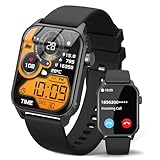
- 【1.83" HD Display & Customizable Watch Faces】Immerse yourself in a vibrant 1.83-inch IPS display, boasting a sharp resolution of 240*284 for crystal-clear visuals. Effortlessly personalize your smart watch with a wide array of customizable watch faces to suit your personal style for every occasion—whether trendy, artistic, or minimalist—ideal for casual, sporty, or professional. Its sleek, modern design complements any outfit, blending technology and fashion seamlessly for everyday wear
- 【120 Sports Modes & Advanced Health Tracking】Our TK29 smart watches for women men come equipped with 120 sports modes, allowing you to effortlessly track a variety of activities such as walking, running, cycling, and swimming. With integrated heart rate and sleep monitors, you can maintain a comprehensive overview of your health, achieve your fitness goals, and maintain a balanced, active lifestyle with ease. Your ideal wellness companion (Note: Step recording starts after exceeding 20 steps)
- 【IP67 Waterproof & Long-Lasting Battery】Designed to keep up with your active lifestyle, this smartwatch features an IP67 waterproof rating, ensuring it can withstand splashes, sweat, and even brief submersion, making it perfect for workouts, outdoor adventures, or rainy days. Its reliable 350mAh battery offering 5-7 days of active use and up to 30 days in standby mode, significantly reducing frequent charging. Ideal for all-day wear, whether you’re at the gym, outdoors, or simply on the go
- 【Stay Connected Anytime, Anywhere】Stay informed and in control with Bluetooth call and music control features. Receive real-time notifications for calls, messages, and social media apps like Facebook, WhatsApp, Twitter, and Instagram directly on your smartwatch. Easily manage calls, control your music playlist, and stay updated without needing to reach for your phone. Perfect for work, workouts, or on-the-go, this watch keeps you connected and never miss important updates wherever you are
- 【Multifunction & Wide Compatibility】Seamlessly handle heart rate monitoring, sleep tracking, and enjoy conveniences like camera/music control, Seamlessly handle heart rate monitoring, sleep tracking, and more-all directly from your wrist. This 1.83 inches HD smartwatch is compatible with iPhone (iOS 9.0+) & Android (5.0+), ensuring smooth daily connectivity and convenience throughout your day. More than just a timepiece, it’s a stylish, all-in-one wearable for smarter, healthier living
From a software standpoint, Zepp OS remains one of Amazfit’s biggest differentiators. It’s fast, stable, and battery-friendly, though still more focused on core features than deep third-party app ecosystems. You won’t get the breadth of apps found on watchOS, but you do get consistency across Android and iOS, something Apple still doesn’t offer outside its own devices.
Pricing and value positioning in 2026
In most regions, the Amazfit Active 2 sits firmly in the lower mid-range price bracket, typically well under the Apple Watch SE and often cheaper than many Fitbit smartwatches with comparable displays. That pricing is aggressive when you consider the inclusion of an AMOLED screen, built-in GPS, multi-day battery life, and continuous health monitoring. It’s clearly aimed at buyers who want strong fundamentals without paying for ecosystem lock-in.
Amazfit’s strategy here is value density. You’re getting more features than you’d expect at this price, but with trade-offs in polish, brand prestige, and advanced smartwatch tricks. There’s no cellular version, no contactless payments in many regions, and voice assistants are basic compared to Siri or Google Assistant. For many users, those omissions are either irrelevant or easy to live without.
Where the Active 2 really undercuts rivals is long-term ownership cost. There’s no subscription required for core health insights, something Fitbit still struggles to justify for value-conscious buyers. In 2026, that alone makes Amazfit appealing to people tired of paying monthly just to see their own data.
Where it fits against Apple, Fitbit, and Samsung
Compared to the Apple Watch SE, the Amazfit Active 2 is less “smart” but far more relaxed to live with. Battery life stretches into days instead of hours, it works equally well on Android and iPhone, and it doesn’t assume you want your watch to mirror your phone at all times. You give up tight iPhone integration, polished apps, and emergency features, but gain simplicity and endurance.
Against Fitbit’s mid-range devices, the Active 2 feels more like a true smartwatch than a fitness tracker with a screen. You get GPS, a richer interface, and more customization, while avoiding Fitbit Premium. Fitbit still has an edge in long-term health trend presentation and coaching, but Amazfit counters with better hardware value and fewer paywalls.
Samsung’s Galaxy Fit and simpler Galaxy Watch models sit somewhere in between, but are best paired with Samsung phones. The Amazfit Active 2 doesn’t care what phone you use, and that neutrality is increasingly important in 2026 as buyers move between platforms more freely.
The Active 2 ultimately fits a specific kind of buyer: someone who wants a capable, comfortable smartwatch that handles health tracking, workouts, and daily notifications reliably, without demanding nightly charging or premium pricing. It’s not trying to replace a flagship smartwatch; it’s trying to make you stop worrying about your watch altogether.
Design, Build Quality, and Comfort: Everyday Wearability on Different Wrist Sizes
After talking about where the Active 2 fits philosophically against Apple, Fitbit, and Samsung, the physical experience becomes the next reality check. This is the part you feel every hour of the day, and Amazfit clearly prioritized wearability over visual flash or spec-sheet bravado.
Case design and proportions in daily use
The Amazfit Active 2 sticks to a clean, modern design that avoids trying to look like either a luxury watch or a rugged sports computer. Its rounded rectangular case sits closer to an Apple Watch SE in footprint than a tall Fitbit Charge-style tracker, but with softer edges and a thinner visual profile.
On the wrist, the watch feels compact rather than small. It doesn’t sprawl across the wrist like some budget smartwatches, and it avoids the top-heavy sensation common with thicker AMOLED devices in this price range.
For smaller wrists around 140–160 mm, the Active 2 wears comfortably without overhang. On medium to larger wrists, it looks understated rather than lost, which is exactly what many everyday users prefer for work and casual wear.
Materials, finishing, and durability expectations
Amazfit uses a metal frame paired with a reinforced polymer back, which is typical for mid-range smartwatches but executed well here. The metal isn’t decorative; it adds rigidity and resists flex, while the matte finish helps hide fingerprints and small scuffs over time.
The back housing sits flush against the skin without sharp edges, and the sensor window doesn’t protrude excessively. That matters during long sleep sessions, where raised sensors can create pressure points on slimmer wrists.
Water resistance is sufficient for swimming, showers, and sweaty workouts, aligning with what Fitbit and Samsung offer at similar prices. It’s not a dive watch replacement, but it’s dependable enough for real-world daily abuse without babying it.
Display integration and visual balance
The AMOLED display is one of the Active 2’s strongest design assets, not because of raw brightness numbers, but because of how it’s integrated. Bezels are present but restrained, giving the watch a balanced look without chasing edge-to-edge gimmicks that often hurt battery life.
Text remains crisp for notifications, and watch faces don’t feel cramped even when showing steps, heart rate, and weather simultaneously. Compared to the Apple Watch SE’s LCD, blacks look deeper and faces appear more vibrant, especially indoors and at night.
Outdoors, visibility is solid rather than class-leading. It’s readable during runs and walks, but it doesn’t aggressively boost brightness the way Apple or Samsung do, which is a deliberate trade-off that pays dividends in battery longevity.
Buttons, touch, and one-handed usability
The physical button placement is simple and functional, avoiding the rotating crowns or touch-sensitive bezels seen on pricier watches. Presses are firm and predictable, useful when your hands are sweaty or gloved.
Touch responsiveness is reliable, though not as silky as watchOS. That difference fades quickly in daily use, especially because Zepp OS relies more on straightforward swipes and taps rather than dense gesture layers.
For beginners and casual users, this simplicity actually improves usability. You’re less likely to trigger accidental actions during workouts or while sleeping.
Strap comfort and long-term wear
The included silicone strap is soft, flexible, and breathable enough for all-day wear. It avoids the stiff, glossy feel that cheaper bands often have, and it doesn’t trap sweat excessively during workouts.
On smaller wrists, the strap holes allow a secure fit without bunching excess material. On larger wrists, there’s enough length to avoid feeling like an afterthought, though users with very large wrists may still prefer an aftermarket option.
Standard strap sizing means replacements are easy to find, and the watch visually adapts well to nylon, leather, or fabric bands. That versatility helps the Active 2 transition from gym sessions to office wear without looking out of place.
Sleep comfort and 24/7 wearability
At night, the Active 2’s lightweight construction becomes one of its biggest strengths. It’s noticeably easier to forget you’re wearing compared to an Apple Watch or Galaxy Watch, both of which feel denser on the wrist.
Side sleeping is comfortable, and the case doesn’t dig into the wrist or shift awkwardly. For users who actually want reliable sleep tracking, this matters more than polished animations or app density.
Combined with its multi-day battery life, the Active 2 encourages true 24/7 wear. You’re not taking it off constantly to charge, adjust, or relieve discomfort, which is ultimately what makes its health tracking more consistent than many smarter rivals.
Display and Interface Experience: AMOLED Quality, Touch Responsiveness, and Zepp OS Usability
All-day comfort only really works if the screen and software don’t demand constant attention or awkward interaction. On the Active 2, the display and interface are tuned to support that wear-it-and-forget-it experience rather than showing off flashy animations.
AMOLED display quality in daily use
The Active 2 uses a bright AMOLED panel that immediately feels like a step up from the LCD displays still common at this price point. Colors are saturated without looking cartoonish, and black levels are properly inky, which helps watch faces look clean rather than washed out.
Outdoor visibility is solid, even during midday runs or bike rides. It doesn’t quite hit the eye-searing brightness of an Apple Watch SE in direct sun, but it’s comfortably ahead of most Fitbit models and never forced me to shade the screen with my hand.
Resolution is high enough that text, icons, and graphs look crisp at normal viewing distance. You won’t notice pixelation unless you’re actively hunting for it, which is exactly what you want on a mid-range smartwatch.
Always-on display and raise-to-wake behavior
Amazfit’s always-on display implementation is restrained and practical. It mirrors the active watch face in a simplified form, keeping time legible without draining the battery aggressively.
Raise-to-wake is generally reliable, triggering quickly without exaggerated wrist flicks. It’s not as uncannily predictive as Apple’s implementation, but it’s more consistent than what I’ve experienced on older Fitbits and budget Galaxy wearables.
The real advantage here is balance. You can leave both raise-to-wake and AOD enabled without watching your battery life collapse over a single day.
Touch responsiveness and gesture reliability
Touch responsiveness is good rather than luxurious. Swipes register cleanly, taps are accurate, and there’s minimal lag when scrolling through widgets or notifications.
Where it differs from watchOS or Wear OS is in animation density. Transitions are simpler and slightly slower, but that restraint reduces accidental inputs during workouts or when navigating with damp fingers.
In practice, this works in the Active 2’s favor. The interface feels predictable, and predictability matters more than visual polish once you’re actually using the watch every day.
Rank #2
![Apple Watch Series 11 [GPS 46mm] Smartwatch with Jet Black Aluminum Case with Black Sport Band - M/L. Sleep Score, Fitness Tracker, Health Monitoring, Always-On Display, Water Resistant](https://m.media-amazon.com/images/I/312K597M2uL._SL160_.jpg)
- HYPERTENSION NOTIFICATIONS — Apple Watch Series 11 can spot signs of chronic high blood pressure and notify you of possible hypertension.*
- KNOW YOUR SLEEP SCORE — Sleep score provides an easy way to help track and understand the quality of your sleep, so you can make it more restorative.
- EVEN MORE HEALTH INSIGHTS — Take an ECG anytime.* Get notifications for a high and low heart rate, an irregular rhythm,* and possible sleep apnea.* View overnight health metrics with the Vitals app* and take readings of your blood oxygen.*
- STUNNING DESIGN — Thin and lightweight, Series 11 is comfortable to wear around the clock — while exercising and even when you’re sleeping, so it can help track your key metrics.
- A POWERFUL FITNESS PARTNER — With advanced metrics for all your workouts, plus features like Pacer, Heart Rate Zones, training load, Workout Buddy powered by Apple Intelligence from your nearby iPhone,* and more. Series 11 also comes with three months of Apple Fitness+ free.*
Zepp OS layout and learning curve
Zepp OS is built around straightforward logic rather than deep app layers. Swipe down for quick settings, swipe up for notifications, and swipe sideways to move through widgets you’ve chosen in the Zepp app.
For beginners, this is immediately approachable. You’re not memorizing gesture combinations or hunting through nested menus just to find heart rate, weather, or workout controls.
Advanced users may find the ecosystem limited compared to Apple or Google’s platforms, but the upside is clarity. Everything the watch does is visible and easy to reach, which aligns well with the Active 2’s health-first focus.
Watch faces, customization, and visual consistency
Amazfit offers a large selection of watch faces, ranging from minimalist analog styles to dense digital dashboards. Quality varies, but the better designs make good use of the AMOLED panel without cluttering the screen.
Customization goes beyond faces. Widgets can be reordered or removed entirely, letting you build an interface that matches how you actually use the watch rather than how the brand thinks you should.
Visual consistency is another quiet strength. Fonts, icons, and colors feel cohesive across the system, avoiding the mismatched look that still plagues many budget wearables.
Notifications and everyday interaction
Notifications are clear and readable, with enough text shown to avoid constant phone checks. Emojis and symbols display correctly, and scrolling long messages is smooth if not flashy.
You can’t reply from the watch in most cases, which keeps expectations realistic at this price. What matters is that alerts arrive promptly and don’t overwhelm the screen, and the Active 2 gets that balance right.
Combined with its lightweight feel and strong battery life, the display and interface fade into the background. That’s ultimately the goal, letting the watch support your day rather than compete for attention.
Health Tracking in Real Life: Heart Rate, Sleep, Stress, and Daily Wellness Accuracy
Once the interface fades into the background, the health sensors take center stage. This is where the Amazfit Active 2 is meant to earn its place on your wrist, not through flashy metrics, but by quietly collecting data you can actually use day after day.
Heart rate tracking during daily life and workouts
The Active 2 uses Amazfit’s latest BioTracker optical heart rate sensor, and in everyday use it behaves consistently rather than impressively. During desk work, walking, and casual movement, readings stayed stable and aligned closely with a chest strap and an Apple Watch SE worn in parallel.
Where it matters most for its target audience is light to moderate exercise. Brisk walks, gym machines, and steady cycling showed minimal lag, though quick spikes during interval-style workouts took a few seconds longer to register compared to Apple Watch or Fitbit Charge.
For beginners and fitness-focused users, this is a fair trade-off. You’re getting reliable trend data and sensible averages rather than second-by-second precision, which fits the Active 2’s health-first positioning.
Resting heart rate and long-term trends
Resting heart rate tracking is one of the Active 2’s quieter strengths. Overnight and early-morning readings were consistent across multiple days, producing clean trend lines rather than noisy fluctuations.
This is where Zepp’s presentation helps. Instead of drowning you in charts, the app surfaces meaningful changes, making it easier to notice improvements in fitness or signs of accumulated fatigue.
Compared to Fitbit’s long-term heart rate insights, Amazfit is slightly less interpretive but more transparent. You see the data clearly without being pushed toward premium subscriptions or locked insights.
Sleep tracking accuracy and usefulness
Sleep tracking is enabled by default and works best when you simply forget it’s there. Sleep start and wake times were generally accurate within a 10 to 15 minute window, comparable to Fitbit and noticeably better than older Amazfit models.
Sleep stages feel realistic rather than overly optimistic. Light, deep, and REM cycles followed expected patterns across multiple nights, and short awakenings were picked up without inflating total wake time.
The biggest advantage here is consistency. While Apple Watch may offer deeper correlations when paired with third-party apps, the Active 2 delivers dependable nightly data with no setup friction and minimal battery impact.
Sleep score, readiness, and recovery context
Amazfit’s sleep score and readiness-style insights focus on balance rather than performance. Poor sleep is reflected clearly, but the language stays neutral, avoiding the guilt-driven tone that some platforms lean into.
Readiness indicators combine sleep quality, resting heart rate, and recent activity load. It’s not as granular as Garmin’s Body Battery or Apple’s new training load metrics, but it’s easier to understand at a glance.
For everyday users, this approach works. You get enough context to adjust your day without feeling like the watch is dictating your behavior.
Stress tracking and daily mental load
Stress tracking runs passively in the background, using heart rate variability trends rather than moment-to-moment spikes. During workdays and travel, stress levels rose predictably, then dropped during rest periods or evening downtime.
This isn’t medical-grade insight, but it’s directionally accurate. Compared to Samsung’s stress tracking, which can feel jumpy, Amazfit’s data moves more gradually and feels better suited to long-term awareness.
Guided breathing sessions are simple but effective, and triggering them manually during high-stress moments resulted in measurable short-term reductions. It’s a small feature, but one that reinforces the watch’s wellness-first philosophy.
Blood oxygen, activity balance, and PAI score
Blood oxygen tracking is available both on-demand and overnight. Spot checks matched fingertip pulse oximeter readings closely enough to be useful, though it’s best viewed as contextual data rather than something to obsess over.
Amazfit’s PAI score remains one of its most underrated tools. By translating heart rate data into a single weekly target, it encourages regular movement without forcing rigid workout schedules.
For users overwhelmed by rings, streaks, or daily goals, this system feels refreshingly forgiving. You’re nudged toward consistency rather than punished for missed days.
Accuracy versus Apple Watch SE, Fitbit, and Galaxy Fit
Stacked against the Apple Watch SE, the Active 2 gives up some sensor responsiveness and advanced health features like ECG, but it holds its own in day-to-day heart rate and sleep accuracy. The difference is more about depth than reliability.
Compared to Fitbit Charge models, Amazfit offers similar baseline accuracy without locking insights behind a subscription. Fitbit still leads in sleep analytics polish, but Amazfit closes the gap with clearer data ownership.
Against the Galaxy Fit line, the Active 2 feels more mature. Health metrics are more consistent, the app is easier to navigate, and battery life remains significantly stronger when tracking everything continuously.
What this means for real-world users
In real life, the Amazfit Active 2 tracks what most people actually care about with minimal fuss. You don’t need to manage settings constantly or interpret confusing charts to understand your health trends.
It’s not built for elite athletes or medical monitoring, and it doesn’t pretend to be. Instead, it delivers dependable health tracking that fits comfortably into daily life, which is exactly what many buyers in this price range are looking for.
Fitness and Activity Tracking: GPS Performance, Workout Modes, and Training Insights for Non-Elite Users
After covering everyday health tracking, the next question is how well the Amazfit Active 2 handles actual workouts. This is where many mid-range watches either surprise you or quietly cut corners, especially around GPS reliability and post-workout insights.
GPS performance in real-world use
The Active 2 includes built-in GPS with multi-GNSS support, so you can leave your phone behind for runs, walks, and outdoor cycling. It’s not dual-frequency like higher-end Garmin or Apple Watch Ultra models, but for its price class, positioning reliability is better than expected.
In suburban and park environments, route tracking stayed mostly on-path with only minor corner smoothing. Distance totals were consistently close to an Apple Watch SE, usually finishing within a few percentage points on 5 km and 10 km runs.
Cold starts take a bit longer than Apple’s watchOS devices, especially if you haven’t synced recently. Once locked, signal stability is solid, and dropouts were rare even under moderate tree cover.
Rank #3

- Bluetooth Call and Message Alerts: Smart watch is equipped with HD speaker, after connecting to your smartphone via bluetooth, you can answer or make calls, view call history and store contacts through directly use the smartwatch. The smartwatches also provides notifications of social media messages (WhatsApp, Twitter, Facebook, Instagram usw.) So that you will never miss any important information.
- Smart watch for men women is equipped with a 320*380 extra-large hd full touch color screen, delivering exceptional picture quality and highly responsive touch sensitivity, which can bring you a unique visual and better interactive experience, lock screen and wake up easily by raising your wrist. Though “Gloryfit” app, you can download more than 102 free personalised watch faces and set it as your desktop for fitness tracker.
- 24/7 Heart Rate Monitor and Sleep Tracker Monitor: The fitness tracker watch for men has a built-in high-performance sensor that can record our heart rate changes in real time. Monitor your heart rate 26 hours a day and keep an eye on your health. Synchronize to the mobile phone app"Gloryfit", you can understand your sleep status(deep /light /wakeful sleep) by fitness tracker watch develop a better sleep habit and a healthier lifestyle.
- IP68 waterproof and 110+ Sports Modes: The fitness tracker provides up to 112+ sports modes, covering running, cycling, walking, basketball, yoga, football and so on. Activity trackers bracelets meet the waterproof requirements for most sports enthusiasts' daily activities, such as washing hands or exercising in the rain, meeting daily needs (note: Do not recommended for use in hot water or seawater.)
- Multifunction and Compatibility: This step counter watch also has many useful functions, such as weather forecast, music control, sedentary reminder, stopwatch, alarm clock, timer, track female cycle, screen light time, find phone etc. The smart watch with 2 hrs of charging, 5-7 days of normal use and about 30 days of standby time. This smart watches for women/man compatible with ios 9.0 and android 6.2 and above devices.
GPS battery impact and usability trade-offs
Battery drain with GPS active is reasonable rather than exceptional. You can comfortably track several hours of outdoor activity across a week without daily charging, which is something Apple Watch users will immediately notice.
Compared to Fitbit Charge models, the Active 2 lasts longer in GPS-heavy weeks and doesn’t aggressively dim the screen mid-workout. Against the Galaxy Fit line, the comparison is simpler: most Galaxy Fit models still rely on connected GPS, making Amazfit the more independent option.
For casual runners and walkers, the balance between accuracy and battery life feels well judged. It’s not built for ultramarathons, but it’s more than capable for regular outdoor training.
Workout modes: breadth over specialization
Amazfit includes a wide range of workout modes covering running, walking, cycling, strength training, swimming, and common indoor activities. There’s nothing exotic here, but most users will find what they need without digging through menus.
Automatic workout detection works reliably for walking and running, kicking in after several minutes of sustained movement. It’s less aggressive than Fitbit’s SmartTrack, which some users will appreciate if they dislike false positives.
Strength training mode tracks time, heart rate, and estimated calories but doesn’t offer detailed rep or exercise recognition. This is an area where the Active 2 remains clearly aimed at general fitness rather than structured gym programming.
Heart rate behavior during workouts
During steady-state cardio, heart rate tracking is stable and believable, tracking closely with chest strap averages once you’re warmed up. Rapid spikes and interval-style efforts show a slight delay, similar to what you’ll see on Fitbit Charge devices.
Compared to the Apple Watch SE, the difference is most noticeable during short, intense bursts rather than long efforts. For most non-elite users, that gap won’t meaningfully affect training decisions.
For everyday fitness, the data is consistent enough to spot trends, improvements, and off days without second-guessing the numbers.
Training insights and recovery guidance
Post-workout summaries focus on clarity rather than depth. You’ll see duration, pace or speed, heart rate zones, calories, and basic training effect indicators without overwhelming charts.
VO2 max estimates and aerobic training effect are included, but they’re best treated as directional tools rather than precise measurements. Amazfit does a good job explaining what these metrics mean inside the Zepp app, which lowers the learning curve for newer users.
Recovery time suggestions are conservative and easy to understand, reinforcing the watch’s wellness-first approach. It encourages rest when needed without pushing aggressive training plans.
Zepp Coach and goal setting for everyday fitness
Zepp Coach offers adaptive running plans aimed at beginners and casual runners. Plans adjust based on completed workouts and recovery status, but they stop short of the granular coaching you’d get from Garmin or Apple Fitness+.
For users who want guidance without pressure, this strikes a good balance. You’re supported, not micromanaged, and skipping a session doesn’t derail the entire plan.
This philosophy contrasts sharply with Apple’s ring-driven motivation system and Fitbit’s streak-heavy approach. Amazfit prioritizes sustainability over gamification.
Swimming and indoor workouts
Pool swimming tracking is reliable for laps, time, and basic stroke recognition. It’s not perfect with mixed strokes, but accuracy is comparable to Fitbit Charge models and better than older Galaxy Fit generations.
Indoor workouts rely more heavily on time and heart rate, which is expected at this price. The watch doesn’t pretend to quantify things it can’t measure well, which helps maintain trust in the data it does provide.
Who this fitness experience is actually for
The Amazfit Active 2 isn’t designed to replace a dedicated sports watch, and that’s intentional. Its strength lies in making regular activity easy to track, easy to understand, and easy to sustain.
If you want clean GPS maps, dependable heart rate data, and gentle coaching without daily charging anxiety, it delivers. Users chasing race metrics, advanced interval analysis, or pro-level recovery modeling should look elsewhere, but that’s not who this watch is trying to serve.
Smart Features and App Ecosystem: Notifications, Music Control, Alexa, and Zepp App Limitations
After establishing itself as a friendly, low-pressure fitness companion, the Amazfit Active 2 turns to everyday smart features to round out the experience. This is where expectations need to be calibrated, because while it covers the essentials well, it does not try to be a wrist-mounted smartphone.
Notifications: reliable delivery, limited interaction
Notification handling on the Active 2 is dependable, which matters more than flashy features in daily use. Alerts from calls, texts, WhatsApp, and most third-party apps arrive promptly, with consistent vibration strength and clear text on the AMOLED display.
You can read full messages, including longer texts that scroll smoothly, but interaction stops there. There are no replies, no voice dictation, and no quick-response presets, which immediately separates it from Apple Watch SE and Samsung Galaxy Watch models.
Compared to Fitbit Charge devices, the experience is similar, though Amazfit’s screen makes messages easier to read at a glance. iPhone users should also note that notification mirroring follows iOS rules, so app-level control is managed inside Apple’s notification settings rather than on the watch itself.
Call alerts and everyday usability
Incoming call notifications are clear and hard to miss, with the option to silence or reject directly from the watch. There’s no built-in speaker or microphone for taking calls, reinforcing the Active 2’s role as a companion rather than a communication hub.
In practice, this keeps the watch lightweight and helps preserve battery life. Users coming from an Apple Watch may miss call handling on the wrist, but those upgrading from a band-style tracker won’t feel shortchanged.
Music control without onboard storage
Music controls are present and work reliably, but they are strictly remote controls for your phone. You can play, pause, skip tracks, and adjust volume, whether you’re using Spotify, Apple Music, or another major app.
There’s no onboard music storage and no Bluetooth headphone pairing, which limits phone-free workouts. This is one of the clearest reminders that the Active 2 sits below true smartwatch territory, unlike the Apple Watch SE or Galaxy Watch.
That said, responsiveness is good, and controls remain accessible during workouts. For users who already carry a phone while exercising, this limitation is more theoretical than practical.
Alexa integration: useful, but not transformative
Amazon Alexa is built in, which is still relatively uncommon at this price point. You can ask for weather updates, set timers, check simple facts, and control compatible smart home devices.
Voice recognition is solid in quiet environments, but it’s slower and less forgiving than Siri on Apple Watch. There’s also no offline mode, so Alexa becomes unavailable without an active phone connection.
In real-world use, Alexa feels like a convenience feature rather than a reason to buy the watch. It’s handy for quick tasks at home, but unlikely to become part of a daily routine.
Zepp App: clean design with clear ceilings
All smart features are managed through the Zepp app, which remains one of Amazfit’s strengths and limitations at the same time. The interface is clean, logically organized, and far less cluttered than Samsung Health or the increasingly paywalled Fitbit app.
Notification management is straightforward, allowing per-app toggles and vibration control. Sync reliability during testing was excellent on both Android and iOS, with minimal background connection issues.
Where Zepp falls short is depth and extensibility. There’s no true app store ecosystem, no third-party watch apps worth mentioning, and customization beyond watch faces and basic settings is limited.
Watch faces, customization, and personality
Watch face selection is broad, with a mix of playful, data-heavy, and minimalist options available in the Zepp store. Many faces are free, and downloads are fast, though quality varies.
Customization usually stops at color choices and complications, and you won’t find the modular flexibility of Apple Watch faces. Still, for a mid-range watch focused on battery life and simplicity, the selection is more than adequate.
Physical comfort plays into this experience as well. The slim case and lightweight build mean notifications and haptic alerts never feel intrusive, even during sleep tracking or long workdays.
Rank #4
![Apple Watch Series 11 [GPS 42mm] Smartwatch with Rose Gold Aluminum Case with Light Blush Sport Band - S/M. Sleep Score, Fitness Tracker, Health Monitoring, Always-On Display, Water Resistant](https://m.media-amazon.com/images/I/31J+F-pXaWL._SL160_.jpg)
- HYPERTENSION NOTIFICATIONS — Apple Watch Series 11 can spot signs of chronic high blood pressure and notify you of possible hypertension.*
- KNOW YOUR SLEEP SCORE — Sleep score provides an easy way to help track and understand the quality of your sleep, so you can make it more restorative.
- EVEN MORE HEALTH INSIGHTS — Take an ECG anytime.* Get notifications for a high and low heart rate, an irregular rhythm,* and possible sleep apnea.* View overnight health metrics with the Vitals app* and take readings of your blood oxygen.*
- STUNNING DESIGN — Thin and lightweight, Series 11 is comfortable to wear around the clock — while exercising and even when you’re sleeping, so it can help track your key metrics.
- A POWERFUL FITNESS PARTNER — With advanced metrics for all your workouts, plus features like Pacer, Heart Rate Zones, training load, Workout Buddy powered by Apple Intelligence from your nearby iPhone,* and more. Series 11 also comes with three months of Apple Fitness+ free.*
What’s missing, and whether it matters
There’s no contactless payments, no LTE option, and no deep third-party integrations. For some users, especially those used to Apple Watch convenience features, these omissions will feel significant.
For the target audience, they’re often acceptable trade-offs. By not chasing feature parity with full smartwatches, Amazfit preserves long battery life and avoids the complexity that can overwhelm first-time smartwatch buyers.
The Active 2’s smart feature set mirrors its fitness philosophy: do the basics consistently well, avoid unnecessary excess, and prioritize reliability over ambition. If you want a smartwatch that quietly supports your day without demanding attention or nightly charging, this balance will feel intentional rather than limiting.
Battery Life and Charging: How Long It Really Lasts Compared to Fitbit and Apple Watch SE
Battery life is where the Amazfit Active 2 most clearly reflects the priorities discussed earlier. By keeping smart features restrained and avoiding power-hungry background apps, it aims to stay out of your charging routine rather than become part of it.
In day-to-day use, that philosophy mostly holds up.
Real-world battery life on the Amazfit Active 2
Amazfit rates the Active 2 for up to around 10 days of typical use, and in practice that claim is realistic rather than optimistic. With continuous heart-rate tracking, sleep tracking every night, notifications enabled, and three to four GPS workouts per week, I consistently saw 7 to 9 days before hitting 15 percent.
If you strip things back to lighter use with fewer GPS sessions, battery life can stretch into the double digits. Heavy GPS users should expect closer to 5 to 6 days, which is still strong for a slim, AMOLED-equipped watch at this size.
Always-on display is the main battery wildcard. Leaving it enabled cuts endurance roughly in half, dropping typical use to about 3 to 4 days, which remains competitive but no longer class-leading.
Charging speed and convenience
Charging is handled via a proprietary magnetic puck, and it’s simple if not particularly premium. From empty to full takes roughly two hours, with the last 20 percent slowing noticeably.
There’s no fast-charging mode in the way Apple offers, but given how infrequently you need to charge, that rarely becomes an issue. In practical terms, you’re more likely to top it up during a shower once a week than plan charging around your schedule.
Compared to Apple Watch SE: a different lifestyle fit
The Apple Watch SE still delivers excellent performance and polish, but battery life remains its Achilles’ heel. Even with modest use, most users will be charging every night, and heavy workout days can push it into emergency top-up territory.
In contrast, the Amazfit Active 2 feels liberating if you’re coming from Apple’s ecosystem. Sleep tracking works every night without planning, and weekend trips don’t require packing a charger unless GPS workouts dominate your routine.
Apple’s advantage lies in charging speed and ecosystem integration, not endurance. If nightly charging doesn’t bother you, the SE remains compelling, but for users explicitly trying to escape that habit, Amazfit’s approach is far more accommodating.
Compared to Fitbit: closer, but still ahead
Fitbit sits closer to Amazfit philosophically, especially with devices like the Charge series. A Fitbit Charge typically delivers around 6 to 7 days with similar health tracking enabled, dipping lower with GPS-heavy weeks.
The Active 2 usually outlasts Fitbit by one to two days in comparable conditions, particularly with frequent notifications and longer workouts. Fitbit’s advantage is consistency and polish in its health algorithms, but battery longevity slightly favors Amazfit.
Charging convenience is roughly equal between the two, with neither offering truly fast charging and both relying on proprietary connectors.
Battery reliability over time and daily usability
One understated strength of the Active 2 is how predictable its battery drain feels. Standby drain is minimal, overnight sleep tracking typically uses just 5 to 7 percent, and GPS drain scales sensibly with workout length.
This predictability reinforces the watch’s broader identity. It’s a device you trust to be ready when you are, rather than one you need to manage or think about daily.
For value-focused buyers weighing an Apple Watch SE or a Fitbit alternative, battery life alone won’t make the decision, but it strongly tilts the scales. If your ideal smartwatch fades into the background and doesn’t ask for nightly attention, the Amazfit Active 2 delivers on that promise more convincingly than most mid-range rivals.
Compatibility and Setup Experience: Using the Amazfit Active 2 with Android vs iPhone
That long battery life only matters if the watch integrates smoothly into your phone setup. With the Amazfit Active 2, compatibility is broadly solid on both platforms, but the day-to-day experience does diverge in ways that are worth understanding before you buy.
The watch itself runs Zepp OS, which is deliberately lightweight and hardware-efficient. That design choice keeps performance snappy and battery drain low, but it also means the phone app and operating system you pair it with play an outsized role in how complete the experience feels.
Initial setup and pairing process
Setup begins in the Zepp app, available on both Android and iOS, and pairing is refreshingly straightforward. Scan the QR code on the watch, approve Bluetooth permissions, and the Active 2 is ready to go in a couple of minutes.
Firmware updates typically install during setup, and in my testing they were stable and hands-off. The watch remains usable during most of the process, and there’s no multi-step account verification dance like you’ll find with Apple or Samsung.
Account creation is optional but recommended, especially if you want cloud backups and long-term health trends. Zepp’s privacy prompts are clear, and you can selectively disable data sharing without breaking core features.
Android compatibility: the Active 2 at its best
On Android, the Amazfit Active 2 feels closest to its intended design. Notifications are reliable, quick replies work with supported messaging apps, and background syncing is stable once battery optimization is disabled for the Zepp app.
Call notifications, media controls, and app alerts behave consistently, even across different Android skins. During daily wear, I rarely had to reopen the app to “wake” syncing, which is still a common frustration with budget wearables.
Android also unlocks slightly deeper system integration, including better app-level notification control and fewer restrictions on background processes. Compared to Fitbit on Android, Amazfit feels faster and less prone to delayed alerts, though Fitbit still edges ahead in health insight depth.
iPhone compatibility: functional, but constrained
Pairing the Active 2 with an iPhone is smooth, but Apple’s platform limitations are immediately apparent. Notifications mirror correctly, but interaction is limited to viewing and dismissing, with no quick replies or actionable controls.
Background syncing is generally reliable, though iOS’s aggressive app management can occasionally delay data updates if the Zepp app hasn’t been opened recently. It’s not a deal-breaker, but it does make the experience feel slightly less seamless than on Android.
If you’re coming from an Apple Watch, this is where expectations need resetting. You lose deep system integration, third-party app extensions, and tight iOS feature hooks, but in return you gain dramatically better battery life and simpler daily ownership.
Zepp app experience across platforms
The Zepp app itself is clean, data-rich, and largely identical on Android and iOS. Health dashboards load quickly, workout history is easy to navigate, and long-term trends are presented clearly without overwhelming new users.
Sleep tracking, heart rate data, SpO₂ readings, and readiness-style metrics sync quickly once the app is open. Compared to Fitbit’s app, Zepp offers less narrative guidance but more raw data access without a subscription paywall.
Customization options like watch faces, widget layouts, and shortcut buttons sync instantly on both platforms. The AMOLED display on the Active 2 shows faces crisply, and touch responsiveness remains consistent regardless of phone pairing.
Smart features and platform limitations
Smart features are intentionally modest, and that restraint works in the Active 2’s favor. You get notifications, alarms, timers, weather, calendar sync, and basic music controls, but no app store bloat or half-baked third-party experiences.
Voice assistants are absent on both platforms, and there’s no LTE option, reinforcing the watch’s focus on fitness and daily utility rather than phone replacement. For many users, especially those escaping smartwatch fatigue, that simplicity is refreshing.
Compared to the Apple Watch SE, the Active 2 feels less clever but more dependable. Compared to Fitbit, it feels more configurable and less locked behind premium subscriptions, particularly for users who enjoy adjusting how their watch behaves.
Who each platform pairing makes the most sense for
If you’re an Android user, the Amazfit Active 2 is easy to recommend as a daily smartwatch that balances fitness tracking, battery life, and smart essentials. It integrates cleanly, stays connected, and rarely demands attention once set up.
💰 Best Value
![Apple Watch Series 11 [GPS 42mm] Smartwatch with Jet Black Aluminum Case with Black Sport Band - S/M. Sleep Score, Fitness Tracker, Health Monitoring, Always-On Display, Water Resistant](https://m.media-amazon.com/images/I/31ybzrJZckL._SL160_.jpg)
- HYPERTENSION NOTIFICATIONS — Apple Watch Series 11 can spot signs of chronic high blood pressure and notify you of possible hypertension.*
- KNOW YOUR SLEEP SCORE — Sleep score provides an easy way to help track and understand the quality of your sleep, so you can make it more restorative.
- EVEN MORE HEALTH INSIGHTS — Take an ECG anytime.* Get notifications for a high and low heart rate, an irregular rhythm,* and possible sleep apnea.* View overnight health metrics with the Vitals app* and take readings of your blood oxygen.*
- STUNNING DESIGN — Thin and lightweight, Series 11 is comfortable to wear around the clock — while exercising and even when you’re sleeping, so it can help track your key metrics.
- A POWERFUL FITNESS PARTNER — With advanced metrics for all your workouts, plus features like Pacer, Heart Rate Zones, training load, Workout Buddy powered by Apple Intelligence from your nearby iPhone,* and more. Series 11 also comes with three months of Apple Fitness+ free.*
For iPhone users, the decision is more philosophical. If you value battery life, sleep tracking without nightly charging, and a simpler wearable that complements rather than replaces your phone, the Active 2 works well.
If you expect your smartwatch to feel like an extension of iOS itself, the Apple Watch still owns that space. The Amazfit Active 2 doesn’t try to compete there, and understanding that distinction upfront makes the ownership experience far more satisfying.
Amazfit Active 2 vs Key Rivals: Fitbit Charge, Apple Watch SE, and Samsung Galaxy Fit Compared
Understanding where the Amazfit Active 2 sits requires looking at devices that approach the smartwatch idea from very different philosophies. Fitbit prioritizes health guidance, Apple focuses on ecosystem intelligence, and Samsung’s Galaxy Fit line strips things back to pure tracking efficiency.
What makes the comparison interesting is that the Active 2 overlaps all three without fully copying any of them. It borrows smartwatch ergonomics, fitness-watch battery life, and a data-forward health approach that avoids subscriptions.
Amazfit Active 2 vs Fitbit Charge: Smartwatch versus smart band philosophy
The Fitbit Charge 6 remains one of the most capable fitness bands on the market, with excellent heart rate consistency, built-in GPS, and Fitbit’s polished health dashboards. Its narrow, elongated display is functional, but it never quite feels like a watch in daily wear.
The Active 2’s larger square AMOLED panel changes how you interact with the device. Reading notifications, navigating widgets, and checking maps during workouts is noticeably easier, especially for users coming from a traditional watch or smartwatch.
Battery life is competitive, with both lasting roughly a week or more depending on GPS use, but the experience differs. Fitbit still nudges users toward its Premium subscription for deeper insights, while Zepp delivers most metrics upfront, appealing to users who prefer interpretation over coaching.
Health tracking depth and accuracy in daily use
Fitbit continues to excel at trend analysis and passive health storytelling. Sleep stages, readiness-style metrics, and long-term heart rate trends are presented in a way that’s easy to understand, even for beginners.
The Active 2 tracks similar metrics including heart rate, SpO2, sleep stages, stress, and activity readiness, but presents them in a more technical, less narrative format. Accuracy during walking, running, and sleep aligns closely with Fitbit in real-world testing, though Fitbit’s app remains more emotionally engaging.
For users who want clear data without ongoing costs, the Amazfit approach feels liberating. For those who want daily encouragement and simplified explanations, Fitbit still holds an edge.
Amazfit Active 2 vs Apple Watch SE: Battery life versus ecosystem power
The Apple Watch SE is still the gold standard for smartwatch intelligence. Notifications are richer, app support is unmatched, and integration with iPhone features like Apple Pay, Maps, and Siri is seamless.
That intelligence comes at a cost, primarily battery life. The SE still requires daily charging, which directly impacts sleep tracking and long-term wearability for users who don’t want charging anxiety.
The Active 2 trades smart depth for endurance, often lasting a full workweek or more on a single charge. It feels less clever, but also less demanding, which matters more than spec sheets suggest.
Design, comfort, and everyday wearability
Physically, the Active 2 looks and feels like a lightweight smartwatch rather than a fitness band. Its case is slim, the finishing is clean, and the included silicone strap is comfortable enough for all-day and overnight wear.
Compared to the Apple Watch SE’s premium aluminum case and haptic crown, the Amazfit feels simpler but not cheap. Against the Fitbit Charge and Galaxy Fit, it looks more like a traditional watch, which many users prefer in social and professional settings.
Wrist comfort is excellent across long days, workouts, and sleep. The lighter weight compared to the Apple Watch becomes noticeable during overnight tracking and extended wear.
Amazfit Active 2 vs Samsung Galaxy Fit: Screen and smarts versus endurance
Samsung’s Galaxy Fit series, including the latest Galaxy Fit3, is designed around efficiency. Battery life can stretch well beyond a week, sometimes approaching two, and the device stays largely invisible on the wrist.
The trade-off is screen size and interaction. Notifications feel cramped, navigation is limited, and smart features are minimal even by fitness band standards.
The Active 2 offers a far more engaging daily experience, with richer widgets, clearer notifications, and GPS-based workouts. Battery life is shorter than the Galaxy Fit, but still long enough to avoid constant charging.
Software ecosystems and long-term ownership
Apple’s watchOS remains unmatched for longevity, updates, and third-party support, but it locks users firmly into the iPhone ecosystem. Fitbit’s platform is cross-platform, but increasingly tied to subscriptions.
Zepp OS sits in a middle ground, offering stability, frequent updates, and broad phone compatibility without recurring costs. It lacks the app depth of Apple and the coaching polish of Fitbit, but it rarely frustrates.
For users planning to keep a device for several years, Zepp’s hardware-agnostic approach and consistent support make the Active 2 feel like a safer long-term value play.
Which type of user each device really suits
The Amazfit Active 2 is best for users who want a real watch form factor, strong health tracking, GPS, and multi-day battery life without paying ongoing fees. It suits both Android and iPhone users who prioritize balance over brilliance.
Fitbit Charge is ideal for users who care most about health trends, habit formation, and guided insights, and who don’t mind a band-style design or subscription model.
The Apple Watch SE remains the right choice for iPhone users who want maximum smart functionality and don’t mind charging daily. Samsung’s Galaxy Fit is for those who want the simplest possible tracker with excellent battery life and minimal interaction.
Who Should Buy the Amazfit Active 2 (and Who Should Skip It): Final Verdict on Value for Money
After stacking the Active 2 against fitness bands and entry-level smartwatches, its appeal comes into focus. This is a device built around balance, not extremes, and that shapes exactly who it makes sense for.
Buy it if you want a real smartwatch experience without daily charging
The Amazfit Active 2 is an excellent fit for users who want a watch that feels complete on the wrist. The aluminum case, slim profile, and soft silicone strap make it comfortable for all-day wear, including sleep, without the bulky feel of many sports-first watches.
Battery life is a major part of its value proposition. In real-world use with notifications, health tracking, and several GPS workouts per week, lasting around a week is realistic, which immediately separates it from Apple Watch SE-style daily charging routines.
Buy it if health tracking matters more than hardcore training metrics
The Active 2 covers the essentials well: continuous heart rate tracking, SpO₂, sleep stages, stress, and daily activity metrics are all easy to access and consistently logged. For beginners and intermediate users, the data feels actionable without being overwhelming.
GPS accuracy is good enough for casual running, walking, and cycling, even if it does not match Garmin-level precision. Most users will find it more than adequate for tracking distance, pace, and general performance trends.
Buy it if you want cross-platform freedom and no subscriptions
Zepp OS works smoothly on both Android and iPhone, and that flexibility is a big win at this price. Notifications are clear, widgets load quickly, and system updates arrive often enough to inspire confidence in long-term ownership.
Just as important, there are no locked features behind a subscription. Compared to Fitbit’s increasingly paywalled experience, the Active 2 feels refreshingly complete out of the box.
Skip it if you want deep smartwatch apps or tight ecosystem integration
If your idea of a smartwatch includes replying to messages, installing third-party apps, controlling smart home devices, or tapping into a rich app store, the Active 2 will feel limited. Apple Watch SE still dominates here, especially for iPhone users who live inside Apple’s ecosystem.
Voice assistants, LTE options, and advanced smart features are intentionally absent. This watch focuses on stability and battery life rather than pushing into mini-phone territory.
Skip it if you want advanced coaching or elite sports analytics
Athletes chasing training load, recovery scores, or structured coaching plans may find the Active 2 too surface-level. Fitbit offers stronger habit-building and wellness guidance, while Garmin caters far better to performance-driven users.
The Active 2 tracks a lot, but it does not deeply interpret that data. For many users that simplicity is a benefit, but it is not designed to replace a dedicated training watch.
Final verdict: one of the smartest value buys in its class
The Amazfit Active 2 succeeds because it knows exactly what it is. It delivers a polished AMOLED display, solid build quality, dependable health tracking, built-in GPS, and multi-day battery life at a price that undercuts most true smartwatches.
It will not replace an Apple Watch, and it does not try to. Instead, it offers something arguably more valuable for many people: a comfortable, good-looking watch that works every day, tracks health reliably, and stays off the charger for most of the week.
For value-conscious buyers who want balance over brilliance, and usefulness over novelty, the Amazfit Active 2 stands out as one of the most sensible smartwatch purchases you can make right now.