Leaks around the Amazfit Active Max suggest this is not just a minor refresh, but a deliberate attempt by Amazfit to plug a noticeable gap in its current lineup. If you’ve been eyeing Amazfit for its aggressive pricing but feel caught between lifestyle-first models and bulky outdoor watches, the Active Max appears designed to sit right in that middle ground. This section breaks down what the Active Max actually is, how it relates to existing Amazfit families, and why its positioning matters before you decide whether to wait or buy now.
Based on early regulatory filings, retailer listings, and image leaks, the Active Max looks like a scaled-up, more performance-oriented evolution of the Active series rather than a rebadged GTR or T-Rex. The name alone signals intent: “Active” ties it to everyday fitness and wellness, while “Max” implies larger hardware, longer battery life, and fewer compromises for serious training. That framing is key to understanding where Amazfit wants this watch to land.
Positioning Between Lifestyle and Performance Models
In Amazfit’s current range, the Active and GTS lines skew toward lightweight, stylish smartwatches with strong health tracking but limited training depth. On the other end, the T-Rex and Falcon families focus on durability, outdoor sports, and extended GPS use, often at the expense of comfort and subtlety. Leaks indicate the Active Max is meant to bridge these worlds, offering a bigger display, more robust sensors, and longer endurance without the overtly rugged design language.
Physically, it appears closer to a GTR-style round case, but larger and thicker than the standard Active, likely to accommodate a higher-capacity battery. That suggests Amazfit is targeting users who want multi-day battery life with frequent GPS workouts, but still want something wearable at the office or while sleeping. This is a familiar strategy seen in watches like the Garmin Venu Sq versus Forerunner, or Fitbit Sense versus Charge.
🏆 #1 Best Overall
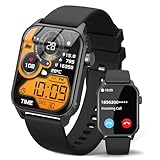
- 【1.83" HD Display & Customizable Watch Faces】Immerse yourself in a vibrant 1.83-inch IPS display, boasting a sharp resolution of 240*284 for crystal-clear visuals. Effortlessly personalize your smart watch with a wide array of customizable watch faces to suit your personal style for every occasion—whether trendy, artistic, or minimalist—ideal for casual, sporty, or professional. Its sleek, modern design complements any outfit, blending technology and fashion seamlessly for everyday wear
- 【120 Sports Modes & Advanced Health Tracking】Our TK29 smart watches for women men come equipped with 120 sports modes, allowing you to effortlessly track a variety of activities such as walking, running, cycling, and swimming. With integrated heart rate and sleep monitors, you can maintain a comprehensive overview of your health, achieve your fitness goals, and maintain a balanced, active lifestyle with ease. Your ideal wellness companion (Note: Step recording starts after exceeding 20 steps)
- 【IP67 Waterproof & Long-Lasting Battery】Designed to keep up with your active lifestyle, this smartwatch features an IP67 waterproof rating, ensuring it can withstand splashes, sweat, and even brief submersion, making it perfect for workouts, outdoor adventures, or rainy days. Its reliable 350mAh battery offering 5-7 days of active use and up to 30 days in standby mode, significantly reducing frequent charging. Ideal for all-day wear, whether you’re at the gym, outdoors, or simply on the go
- 【Stay Connected Anytime, Anywhere】Stay informed and in control with Bluetooth call and music control features. Receive real-time notifications for calls, messages, and social media apps like Facebook, WhatsApp, Twitter, and Instagram directly on your smartwatch. Easily manage calls, control your music playlist, and stay updated without needing to reach for your phone. Perfect for work, workouts, or on-the-go, this watch keeps you connected and never miss important updates wherever you are
- 【Multifunction & Wide Compatibility】Seamlessly handle heart rate monitoring, sleep tracking, and enjoy conveniences like camera/music control, Seamlessly handle heart rate monitoring, sleep tracking, and more-all directly from your wrist. This 1.83 inches HD smartwatch is compatible with iPhone (iOS 9.0+) & Android (5.0+), ensuring smooth daily connectivity and convenience throughout your day. More than just a timepiece, it’s a stylish, all-in-one wearable for smarter, healthier living
How It Differs From the Existing Amazfit Active
The standard Amazfit Active prioritizes slimness, light weight, and affordability, often appealing to casual runners and general wellness users. Leaked dimensions and renders of the Active Max point to a noticeably larger footprint, hinting at a display around the 1.43-inch mark and a case that favors endurance over minimalism. That extra size should translate directly into longer battery life and more consistent GPS performance, two common criticisms of smaller Amazfit models.
There are also indications that the Active Max may inherit higher-tier sensors, such as improved optical heart rate hardware and dual-band GPS, features typically reserved for GTR or Balance models. If confirmed, this would elevate it from a lifestyle watch with sports modes into something closer to a training-capable smartwatch. For buyers frustrated by choosing between comfort and capability, this distinction is crucial.
Where It Sits Against GTR, Balance, and T-Rex
Compared to the GTR series, the Active Max looks less fashion-driven and more utilitarian, with fewer premium materials but more emphasis on fitness practicality. Against the Amazfit Balance, which leans into body composition and lifestyle coaching, the Active Max appears more straightforward and sport-focused. It’s not trying to be a health lab on your wrist, but a reliable daily trainer.
Importantly, it does not appear positioned to replace the T-Rex line. The absence of extreme ruggedization cues suggests it’s not meant for mountaineers or military-grade abuse. Instead, it targets runners, gym users, and active commuters who want better battery life and GPS reliability than entry-level models without the bulk or cost of Amazfit’s toughest watches.
Intended Audience and Value Strategy
Everything about the Active Max points to value-driven performance, a hallmark of Amazfit’s strategy. The leaks suggest Amazfit is aiming at buyers considering mid-range Garmin or Fitbit devices but unwilling to pay premium prices. This is likely a watch for people who train several times a week, care about recovery and sleep data, and want a smartwatch that disappears on the wrist when not in use.
If Amazfit prices it aggressively, as it typically does, the Active Max could become one of the most compelling “wait and see” options in the sub-premium smartwatch segment. Its place in the lineup makes sense: bigger than Active, simpler than Balance, and far more wearable than T-Rex, all while keeping Amazfit’s reputation for long battery life front and center.
Design Leaks: Case Shape, Size Expectations, and Wearability Clues
If the hardware leaks define what the Active Max can do, the design leaks are where its intended everyday role becomes clearer. Early renders and regulatory images suggest Amazfit is deliberately threading the needle between sporty and discreet, avoiding both the jewelry-first look of the GTR and the overt toughness of the T-Rex. The result appears to be a watch designed to be worn all day, not just during workouts.
Case Shape and Overall Aesthetic
The leaked imagery points to a familiar Amazfit formula: a round case with softened edges and minimal visual clutter. Unlike the Active’s slimmer, lifestyle-oriented shell, the Active Max appears slightly thicker, hinting at a larger battery and more robust GPS hardware under the hood. This added depth looks functional rather than decorative, suggesting Amazfit prioritized internals over elegance.
Button layout also reinforces the sport-first intent. Leaks show two physical buttons on the right side, likely customizable for workouts and navigation, rather than a rotating crown or touch-heavy interface. That choice aligns with usability during runs or gym sessions, especially when sweaty hands make touchscreens unreliable.
Size Expectations and Wrist Fit
While Amazfit has not confirmed dimensions, the “Max” naming and side-by-side comparisons in leaks suggest a case diameter in the 46–47mm range. That would place it squarely between the 44mm Active and the larger GTR models, but likely with shorter lug-to-lug proportions to improve fit. For most wrists, especially those accustomed to modern fitness watches, this should land in the comfortable but substantial category.
Thickness is harder to pin down, but visual cues imply something around 10–11mm, thicker than the Active but notably slimmer than the T-Rex. That balance matters for daily wear, particularly for sleep tracking, where overly chunky watches quickly become intrusive. If these proportions hold, the Active Max may hit a sweet spot for users who want big-battery endurance without the wrist presence of a rugged tool watch.
Materials, Finishing, and Durability Signals
Leaks suggest a polymer or fiber-reinforced case rather than aluminum or steel, reinforcing the value-driven performance positioning discussed earlier. This is consistent with Amazfit’s approach to weight reduction and comfort, especially for longer training sessions. While it lacks the premium feel of metal, it typically translates into better shock resistance and lower fatigue on the wrist.
The bezel appears clean and understated, with no raised protective lip or aggressive texture. That further distances it from the T-Rex line and signals everyday durability rather than extreme adventure use. Expect water resistance suitable for swimming and sweat-heavy workouts, but not the visual or structural cues of a watch designed for rock faces or open-water expeditions.
Strap Design and Real-World Comfort
Strap leaks show a standard quick-release silicone band, likely 22mm, which opens the door to easy third-party replacements. The default strap appears ventilated and flexible, similar to Amazfit’s recent sport-focused releases, prioritizing breathability over style. This reinforces the idea that Amazfit expects users to wear the Active Max for long stretches, including sleep and recovery tracking.
Comfort-wise, the combination of a lightweight case, curved caseback, and soft strap suggests this watch is meant to “disappear” once it’s on. For runners and gym users, that’s often more important than materials or finishing. If Amazfit maintains its usual attention to weight distribution, the Active Max could end up feeling noticeably less intrusive than similarly sized Garmin or Wear OS competitors.
Design Clues About Positioning and Daily Use
Taken together, the design leaks paint a clear picture of intent. This is not a statement watch, nor is it a survival instrument. It’s a practical training companion designed to move seamlessly between workouts, workdays, and nights without demanding attention.
For buyers weighing whether to wait, these design choices matter as much as sensors or battery life. If you want a smartwatch that looks acceptable in casual settings, feels comfortable during sleep, and still supports serious fitness tracking, the Active Max’s leaked design suggests Amazfit is aiming directly at that middle ground.
Display and Build: Screen Tech, Glass, and Durability Signals
If the case and strap leaks hint at how the Active Max will feel on the wrist, the display details tell us how Amazfit expects it to be used day in and day out. This is where the “Active” branding carries real weight, especially for users who train outdoors, check metrics mid-workout, and expect clarity without babying the hardware.
AMOLED Screen: Size, Resolution, and Visibility Expectations
Leaks point to a large AMOLED panel, likely in the 1.7-inch range, continuing Amazfit’s recent push toward expansive, edge-to-edge displays. While exact resolution hasn’t surfaced, Amazfit’s track record suggests a dense enough pixel count to keep text and data fields crisp, rather than chasing luxury-watch aesthetics. This is very much a functional screen designed for glanceability during runs and strength sessions.
AMOLED also signals strong contrast and deep blacks, which matters for battery-efficient always-on display modes. Expect customizable watch faces that lean heavily on fitness data rather than ornamental design. Compared to Garmin’s MIP displays, this favors indoor visibility and color richness over extreme sunlight endurance, though Amazfit has steadily improved outdoor brightness in recent generations.
Touch-First Interface with Button Backup
The leaked renders show a touch-dominant interface supported by physical buttons, likely two on the case flank. That combination is important for real-world usability, especially when sweat, rain, or gloves make touch input unreliable. It also aligns the Active Max more closely with models like the Amazfit Balance rather than minimalist fitness bands.
This setup suggests Amazfit is optimizing the watch for daily smartwatch interaction as much as structured workouts. Navigating Zepp OS menus, checking notifications, and scrolling through health data should feel fluid, not like a compromise made for battery savings. For users coming from Fitbit or Apple Watch, this approach will feel immediately familiar.
Glass Protection: Practical Choices Over Premium Flex
One of the more telling leak details is the apparent absence of sapphire glass. Instead, the Active Max is expected to use tempered or chemically strengthened glass, consistent with Amazfit’s value-driven strategy. That choice keeps costs down and weight low, even if it sacrifices some scratch resistance compared to high-end Garmin or Apple Watch Ultra models.
In practical terms, this suggests Amazfit expects normal wear, not abuse. Gym equipment, desks, and daily knocks should be fine, but this isn’t a screen you’d want scraping against rock or metal regularly. For the target audience, that’s a reasonable trade-off, especially if it helps keep pricing well below premium sports watches.
Water Resistance and Structural Confidence
While official ratings haven’t been confirmed, the design strongly implies at least 5 ATM water resistance. That’s standard territory for swimming, showers, and sweat-heavy training, and it fits the Active Max’s positioning as a reliable daily fitness watch. There are no visible speaker grilles or design compromises that would hint at reduced sealing.
The lack of protruding elements also helps with long-term durability. A flatter bezel and flush display reduce snag points, which matters more than raw materials for everyday users. Over months of wear, that can mean fewer cosmetic issues and less irritation during sleep tracking.
What the Build Tells Us About Real-World Longevity
Taken as a whole, the display and build leaks reinforce the same message seen in the case and strap design. The Active Max is not chasing rugged prestige or luxury finishes. It’s built to be worn constantly, checked frequently, and largely forgotten until you need it.
For buyers deciding whether to wait, this is a crucial signal. If you want sapphire glass, oversized bezels, and a “tool watch” feel, this likely isn’t it. But if your priority is a large, clear screen, manageable weight, and durability that holds up to everyday training without driving up cost, the Active Max appears to be aligning closely with that brief.
Leaked Hardware Specs: Sensors, GPS, and Performance Platform
If the external design suggests a watch meant to disappear on the wrist, the leaked internal hardware points to where Amazfit is concentrating its real effort. Rather than chasing bleeding-edge components, the Active Max appears to focus on proven sensor tech, dependable GPS performance, and a platform tuned for long battery life over raw computing power.
This aligns closely with how Amazfit has approached recent releases. The company tends to iterate quietly on sensor accuracy and efficiency, even when the headline specs look conservative on paper.
Rank #2
![Apple Watch Series 11 [GPS 46mm] Smartwatch with Jet Black Aluminum Case with Black Sport Band - M/L. Sleep Score, Fitness Tracker, Health Monitoring, Always-On Display, Water Resistant](https://m.media-amazon.com/images/I/312K597M2uL._SL160_.jpg)
- HYPERTENSION NOTIFICATIONS — Apple Watch Series 11 can spot signs of chronic high blood pressure and notify you of possible hypertension.*
- KNOW YOUR SLEEP SCORE — Sleep score provides an easy way to help track and understand the quality of your sleep, so you can make it more restorative.
- EVEN MORE HEALTH INSIGHTS — Take an ECG anytime.* Get notifications for a high and low heart rate, an irregular rhythm,* and possible sleep apnea.* View overnight health metrics with the Vitals app* and take readings of your blood oxygen.*
- STUNNING DESIGN — Thin and lightweight, Series 11 is comfortable to wear around the clock — while exercising and even when you’re sleeping, so it can help track your key metrics.
- A POWERFUL FITNESS PARTNER — With advanced metrics for all your workouts, plus features like Pacer, Heart Rate Zones, training load, Workout Buddy powered by Apple Intelligence from your nearby iPhone,* and more. Series 11 also comes with three months of Apple Fitness+ free.*
Health Sensors: Familiar Hardware, Incremental Refinement
Leaks indicate the Active Max will use Amazfit’s latest-generation BioTracker optical sensor array, likely a refined version of the PPG module seen in the Active, Balance, and GTR Mini lines. That typically includes continuous heart rate monitoring, blood oxygen saturation, stress tracking, and HRV-derived recovery metrics.
What’s notable is what isn’t being rumored. There’s no credible evidence of ECG hardware, skin temperature sensing, or advanced medical-grade features, which firmly positions the Active Max below the Balance and well outside Apple or Fitbit’s regulatory-heavy health territory.
In practical terms, this suggests reliable everyday health tracking rather than clinical insights. For gym workouts, steady-state cardio, sleep tracking, and recovery trends, Amazfit’s current sensor stack has been consistent if not class-leading. Accuracy tends to be strongest during steady efforts and weakest during interval-heavy strength sessions, a trade-off typical of wrist-based optical sensors at this price.
Sleep, Recovery, and 24/7 Tracking Implications
Given the emphasis on comfort and low weight seen in the case design, the sensor suite makes sense for round-the-clock wear. The BioTracker platform supports advanced sleep staging, breathing quality, nap detection, and readiness-style scoring through Zepp Health’s algorithms.
This is where Amazfit often delivers strong value. While the metrics may not carry the same ecosystem depth as Garmin’s Body Battery or Apple’s Health integrations, they tend to be easy to interpret and useful for habit-level adjustments. For users who care more about consistency than medical validation, this hardware-software pairing is likely to be sufficient.
GPS and Positioning: Multi-Band Without the Premium Tax
One of the more encouraging leaks points to built-in multi-band GNSS support, covering the usual GPS, GLONASS, Galileo, BeiDou, and QZSS constellation mix. Whether this is true dual-frequency or a software-enhanced implementation remains unclear, but either would represent a step up from older single-band Amazfit models.
If confirmed, this would place the Active Max closer to mid-range Garmin Forerunner models in terms of raw positioning capability, at least on paper. Expect improved track stability in urban areas and tree cover compared to entry-level fitness watches, though probably not the same level of path precision seen on watches with larger antennas and higher power draw.
The case size hinted at in earlier leaks could actually work in the Active Max’s favor here. A slightly larger chassis allows for a more forgiving antenna layout, which can improve GPS reliability without hammering battery life.
Motion Sensors and Sport Tracking Breadth
Alongside GPS, the Active Max is expected to include the standard accelerometer, gyroscope, and ambient light sensors used across Amazfit’s lineup. These enable automatic workout detection, rep counting, stroke recognition for swimming, and indoor activity tracking.
There’s no sign of barometric altimeter hardware in the leaks so far, which would limit elevation accuracy for hikers and trail runners. If that omission holds, it reinforces the idea that this watch is aimed more at urban fitness and general training than serious mountain use.
For most users, though, that won’t be a deal-breaker. Treadmill runs, gym sessions, cycling, and outdoor jogs rely far more on consistent GPS and heart rate than absolute elevation data.
Performance Platform and Day-to-Day Responsiveness
Amazfit has not named the chipset in any leaks, but all indications point to a low-power, custom-tuned platform similar to what’s used in recent Zepp OS watches. This won’t compete with Apple’s S-series chips for speed, but it doesn’t need to.
In real-world use, this class of processor prioritizes smooth UI transitions, fast wake times, and stable background tracking. App loading times are typically acceptable rather than instant, and third-party app performance depends heavily on Zepp OS optimization rather than raw silicon muscle.
The upside is battery efficiency. Combined with the restrained sensor suite and AMOLED display behavior, the Active Max is expected to deliver multi-day battery life with GPS usage measured in days rather than hours. For users who don’t want nightly charging, that alone may outweigh any performance compromises.
How This Hardware Stack Positions the Active Max
Taken together, the leaked specs paint a clear picture. The Active Max is not designed to challenge Apple Watch Ultra or Garmin Fenix models on technical ambition. Instead, it looks engineered to sit comfortably above entry-level fitness trackers while undercutting mid-range sports watches on price.
For buyers currently weighing models like the Amazfit Active, GTR 4, or even older Garmin Venu devices, the hardware suggests a meaningful step forward in GPS reliability and battery balance without pushing into premium pricing. If these leaks hold, the real question won’t be whether the Active Max is powerful enough, but whether its sensor accuracy and GPS performance are good enough to justify waiting rather than buying an existing, well-reviewed alternative today.
Health and Fitness Tracking: What the Active Max Is Likely to Offer
If the hardware choices point to balance rather than brute force, the health and fitness feature set is where Amazfit typically tries to overdeliver. Based on leaks and the company’s recent trajectory, the Active Max is shaping up to be a capable all-rounder rather than a specialist tool for elite athletes.
The emphasis appears to be on dependable, always-on tracking that works quietly in the background, aligning with the Active Max’s positioning as a daily-wear smartwatch rather than a niche training computer.
Heart Rate, SpO2, and Core Biometrics
Leaks suggest the Active Max will use a revised version of Amazfit’s BioTracker optical sensor, likely similar to the BioTracker 4.0 found in models like the GTR 4 and Balance. That typically means continuous heart rate tracking, manual or sleep-based SpO2 readings, stress monitoring, and breathing rate analysis.
In practice, Amazfit’s recent sensors have been strong for steady-state activities like jogging, cycling, and gym workouts, but less consistent during rapid intensity changes. For interval training or HIIT, expect usable trends rather than lab-grade precision.
All signs point to 24/7 monitoring being enabled by default, with aggressive power management keeping battery drain in check. This aligns with the Active Max’s expected multi-day endurance and reinforces its appeal as a set-and-forget fitness companion.
Sleep Tracking and Recovery Insights
Sleep tracking is likely to be one of the Active Max’s stronger features, especially within the Zepp ecosystem. Based on existing Amazfit watches, users can expect automatic sleep detection, sleep stage breakdowns, nap tracking, and sleep breathing quality metrics.
Where Amazfit has been improving is in contextualizing that data. Readiness-style insights, sleep consistency scoring, and recovery recommendations are now common in Zepp OS, even if they stop short of the deeper training load analysis seen on Garmin’s higher-end models.
For users focused on lifestyle health and fatigue awareness rather than performance coaching, this level of insight should feel practical and easy to act on without becoming overwhelming.
GPS-Based Activities and Workout Modes
The previous section highlighted GPS reliability as a key differentiator, and that carries directly into fitness tracking. The Active Max is expected to support a wide range of outdoor activities including running, walking, cycling, and basic hiking, with dual-band GPS improving route accuracy in urban environments.
Amazfit typically offers over 150 sport modes, though many are variations on similar metrics. The real value lies in how cleanly the core activities are tracked, with consistent distance, pace, and heart rate data being far more important than sheer mode count.
Advanced metrics like VO2 max estimates, training effect, and recovery time are likely included, but they should be viewed as directional rather than definitive. This is not a watch aimed at structured marathon plans or ultra-endurance training.
Strength Training and Gym Use
For gym users, the Active Max should offer automatic rep counting, exercise recognition, and post-workout muscle group summaries, assuming Amazfit continues features seen in recent models. These tools are useful for logging sessions, though manual correction is often needed for complex routines.
The watch’s expected size and weight suggest it should remain comfortable under wrist wraps or gloves, an underrated factor for regular strength training. Button placement and touchscreen responsiveness during sweaty sessions will matter more than raw sensor specs here.
As with most smartwatches, serious lifters will still rely on external coaching or dedicated apps, but casual and intermediate users should find the Active Max more than sufficient for tracking progress.
Rank #3

- Bluetooth Call and Message Alerts: Smart watch is equipped with HD speaker, after connecting to your smartphone via bluetooth, you can answer or make calls, view call history and store contacts through directly use the smartwatch. The smartwatches also provides notifications of social media messages (WhatsApp, Twitter, Facebook, Instagram usw.) So that you will never miss any important information.
- Smart watch for men women is equipped with a 320*380 extra-large hd full touch color screen, delivering exceptional picture quality and highly responsive touch sensitivity, which can bring you a unique visual and better interactive experience, lock screen and wake up easily by raising your wrist. Though “Gloryfit” app, you can download more than 102 free personalised watch faces and set it as your desktop for fitness tracker.
- 24/7 Heart Rate Monitor and Sleep Tracker Monitor: The fitness tracker watch for men has a built-in high-performance sensor that can record our heart rate changes in real time. Monitor your heart rate 26 hours a day and keep an eye on your health. Synchronize to the mobile phone app"Gloryfit", you can understand your sleep status(deep /light /wakeful sleep) by fitness tracker watch develop a better sleep habit and a healthier lifestyle.
- IP68 waterproof and 110+ Sports Modes: The fitness tracker provides up to 112+ sports modes, covering running, cycling, walking, basketball, yoga, football and so on. Activity trackers bracelets meet the waterproof requirements for most sports enthusiasts' daily activities, such as washing hands or exercising in the rain, meeting daily needs (note: Do not recommended for use in hot water or seawater.)
- Multifunction and Compatibility: This step counter watch also has many useful functions, such as weather forecast, music control, sedentary reminder, stopwatch, alarm clock, timer, track female cycle, screen light time, find phone etc. The smart watch with 2 hrs of charging, 5-7 days of normal use and about 30 days of standby time. This smart watches for women/man compatible with ios 9.0 and android 6.2 and above devices.
Health Ecosystem, Data Syncing, and Compatibility
All health and fitness data will funnel through the Zepp app, which remains one of Amazfit’s biggest strengths and weaknesses. It offers deep historical data, customizable dashboards, and broad Android and iOS compatibility, but its insights are not as tightly polished as Apple Health or Garmin Connect.
That said, Zepp’s flexibility makes it appealing for users who want visibility without being locked into a single platform. Syncing with third-party services like Strava is expected, reinforcing the Active Max’s appeal to recreational runners and cyclists.
The overall picture suggests a watch that prioritizes consistency, comfort, and battery longevity over cutting-edge health innovation. For many buyers, especially those upgrading from older Amazfit models or basic fitness trackers, that may be exactly the right trade-off.
Battery Life and Charging: What the ‘Max’ Name Could Really Mean
Battery longevity is where Amazfit has historically differentiated itself, and based on the leaks so far, the Active Max appears designed to double down on that reputation. After discussing software depth and health tracking trade-offs, battery life becomes the clearest clue to who this watch is really for.
Rather than pushing cutting-edge sensors or a heavy app ecosystem, the “Max” branding strongly hints at extended endurance, especially for users who value consistency over daily charging.
Expected Battery Capacity and Day-to-Day Endurance
While no official battery capacity has leaked yet, supply-chain chatter points to a noticeably larger cell than the standard Amazfit Active. That would align with the slightly thicker case profile seen in early renders, suggesting Amazfit is prioritizing capacity over ultra-slim aesthetics.
In practical terms, that could translate to roughly 10–14 days of typical use with notifications, continuous heart-rate tracking, sleep monitoring, and several workouts per week. If accurate, that would place the Active Max closer to Garmin’s Venu Sq endurance than anything from Apple or Samsung.
Amazfit’s Zepp OS remains a key factor here, as it is far less resource-hungry than Wear OS or watchOS. The trade-off is a simpler app ecosystem, but the payoff is a watch that fades into the background instead of demanding frequent charging attention.
GPS Usage and the Cost of Going Outdoors
Battery claims often look best on paper until GPS enters the equation, and this is where expectations should be realistic. Leaks suggest standard single-band GPS rather than dual-band, which helps conserve power but limits precision in dense urban environments.
Continuous GPS tracking could reasonably land in the 20–25 hour range, assuming Amazfit follows patterns seen in the T-Rex and Balance series. That is more than enough for long runs, hikes, or weekend cycling trips, but it clearly positions the Active Max below true adventure watches built for multi-day expeditions.
For recreational athletes, this balance makes sense. The Active Max appears tuned for frequent but moderate outdoor use, not for ultrarunners who live with GPS permanently switched on.
Display Efficiency and Its Role in Battery Life
The leaked AMOLED panel raises valid questions about power draw, especially compared to transflective displays used by endurance-first brands. However, Amazfit has consistently optimized brightness scaling and aggressive screen-off behavior to offset AMOLED’s higher consumption.
Expect always-on display support to remain optional, with a significant battery penalty if enabled. With AOD disabled and wrist-raise gestures doing the heavy lifting, the Active Max should maintain its multi-day advantage without feeling visually compromised.
This also ties into comfort and wearability. A slightly thicker case to house a larger battery can still feel balanced on the wrist if weight distribution is handled well, something Amazfit has generally executed better than budget-focused rivals.
Charging Method, Speed, and Real-World Convenience
Leaks point to Amazfit sticking with its familiar magnetic pogo-pin charger rather than adopting wireless charging. While less premium on paper, this approach is typically faster and more reliable, especially for users who charge infrequently.
A full charge is expected to take around two hours, with a short top-up delivering several days of use. That matters more than raw charging speed when the watch only needs power once every week or two.
For users coming from daily-charge devices, this shift can meaningfully change how the watch fits into everyday life. Charging becomes an occasional task rather than a nightly ritual, reinforcing the idea that the “Max” label is more about endurance than excess features.
How the Active Max Could Stack Up Against Its Closest Rivals
If the leaked battery figures hold, the Active Max would sit in a compelling middle ground between fitness trackers and premium multisport watches. It should outlast Apple Watch and Pixel Watch models by a wide margin, while undercutting Garmin on price.
Compared to Fitbit’s Sense or Versa lines, Amazfit’s advantage remains raw longevity paired with GPS, though Fitbit still offers more refined health insights. For buyers weighing whether to wait or buy now, battery life alone could justify holding off if charging fatigue is already a pain point.
Ultimately, the “Max” name appears less about size or feature overload and more about stretching usability across days, workouts, and sleep cycles without interruption. For many fitness-focused users, that may be the most meaningful upgrade of all.
Software and Ecosystem: Zepp OS Features, App Support, and Compatibility
That battery-first philosophy naturally puts the software experience under a brighter spotlight. A watch that lasts for days only delivers real value if the interface stays responsive, the features feel cohesive, and the ecosystem doesn’t get in the way of everyday use.
Zepp OS on the Active Max: Familiar, Focused, and Power-Efficient
Leaks suggest the Active Max will ship with the latest iteration of Zepp OS, rather than a cut-down or transitional build. This matters, because Zepp OS has matured into one of the more efficient smartwatch platforms on the market, prioritising smooth performance and low power draw over flashy animations.
In day-to-day use on recent Amazfit models, Zepp OS feels closer to a refined fitness computer than a phone extension. Menus are quick to navigate, touch response is consistent even during sweaty workouts, and core features like workouts, health metrics, and notifications remain just a swipe away without visual clutter.
The emphasis on efficiency also explains how Amazfit sustains multi-day battery life while still offering always-on display modes, continuous heart rate tracking, and overnight sleep analysis. If the Active Max uses the same OS tuning seen on the T-Rex and Balance lines, endurance should feel predictable rather than variable.
Health, Fitness, and Training Tools Inside Zepp OS
From a fitness perspective, Zepp OS is where Amazfit quietly differentiates itself from mainstream smartwatches. Leaked documentation points to support for over 150 sports modes, including strength training with automatic rep counting, outdoor running with GPS mapping, and structured interval workouts.
Health tracking is expected to include continuous heart rate monitoring, blood oxygen measurements, stress tracking, and advanced sleep metrics with sleep stage breakdowns and recovery insights. While these metrics may not match Fitbit’s depth of interpretation or Garmin’s training readiness ecosystem, they are presented clearly and tend to be easy to act on.
For users who train frequently but don’t want to manage complex performance dashboards, this balance works well. Zepp OS prioritises trend awareness and consistency over granular coaching, which aligns with the Active Max’s endurance-driven positioning.
App Support and Watch Faces: Practical, Not Play Store Ambitions
Zepp OS includes access to a growing mini-app ecosystem, though expectations should remain realistic. This is not an Apple Watch or Wear OS device, and leaked materials do not suggest any shift toward full third-party app parity.
Most available apps focus on utility and fitness enhancements, such as hydration reminders, training tools, calculators, and simple navigation aids. Watch face support remains a strong point, with thousands of options available through the Zepp app, many designed to minimise battery drain while keeping key stats visible.
For buyers coming from more open platforms, the limitation may feel noticeable. For those focused on workouts, battery life, and readability, the trade-off often feels justified.
Rank #4
![Apple Watch Series 11 [GPS 42mm] Smartwatch with Rose Gold Aluminum Case with Light Blush Sport Band - S/M. Sleep Score, Fitness Tracker, Health Monitoring, Always-On Display, Water Resistant](https://m.media-amazon.com/images/I/31J+F-pXaWL._SL160_.jpg)
- HYPERTENSION NOTIFICATIONS — Apple Watch Series 11 can spot signs of chronic high blood pressure and notify you of possible hypertension.*
- KNOW YOUR SLEEP SCORE — Sleep score provides an easy way to help track and understand the quality of your sleep, so you can make it more restorative.
- EVEN MORE HEALTH INSIGHTS — Take an ECG anytime.* Get notifications for a high and low heart rate, an irregular rhythm,* and possible sleep apnea.* View overnight health metrics with the Vitals app* and take readings of your blood oxygen.*
- STUNNING DESIGN — Thin and lightweight, Series 11 is comfortable to wear around the clock — while exercising and even when you’re sleeping, so it can help track your key metrics.
- A POWERFUL FITNESS PARTNER — With advanced metrics for all your workouts, plus features like Pacer, Heart Rate Zones, training load, Workout Buddy powered by Apple Intelligence from your nearby iPhone,* and more. Series 11 also comes with three months of Apple Fitness+ free.*
Phone Compatibility, Notifications, and Daily Usability
As with other recent Amazfit releases, the Active Max is expected to support both Android and iOS through the Zepp companion app. Setup is typically straightforward, and cross-platform parity remains one of Amazfit’s quieter strengths compared to rivals that favour one ecosystem over the other.
Notification handling is likely to remain functional rather than interactive. Users can read messages, dismiss alerts, and receive call notifications, but responding directly from the watch remains limited, particularly on iOS.
In real-world use, this reinforces the Active Max’s identity as a fitness-first smartwatch. It works best when paired with a phone that stays in your pocket during workouts, hikes, or long days away from a charger.
How the Zepp Ecosystem Shapes the Active Max’s Value
Taken as a whole, the Zepp OS experience supports the idea that the Active Max is designed for consistency rather than novelty. The software is stable, the health tracking is comprehensive enough for most users, and the ecosystem avoids the battery-draining excesses seen on more app-heavy platforms.
For shoppers deciding whether to wait, the key question is whether this focused approach fits their habits. If you value long battery life, reliable fitness tracking, and cross-platform compatibility over app experimentation and smartwatch theatrics, the leaked software profile strengthens the case for holding out.
If, on the other hand, your smartwatch doubles as a wrist-based phone replacement, Zepp OS may still feel limiting. The Active Max appears comfortable with that trade-off, and the software choices suggest Amazfit is leaning into what it already does well rather than chasing competitors on their terms.
How the Active Max Could Compare to Amazfit Active, Balance, and T-Rex Models
With Zepp OS setting expectations around battery life and fitness focus, the more interesting question is where the Active Max could land inside Amazfit’s already crowded lineup. Based on leaked specs and positioning clues, it appears designed to bridge gaps that currently exist between the lightweight Active, the premium-leaning Balance, and the rugged T‑Rex series.
Rather than replacing any one model outright, the Active Max looks positioned as a convergence watch, borrowing traits from each while targeting users who want one device that can handle daily wear, structured training, and occasional outdoor abuse.
Active Max vs Amazfit Active: Size, Endurance, and Serious Training
The standard Amazfit Active has carved out a niche as an affordable, slim smartwatch for everyday fitness and health tracking. Its compact case, relatively modest battery life, and bright AMOLED display make it comfortable for all-day wear, but less ideal for multi-day activities or long GPS sessions.
Leaks suggest the Active Max moves decisively upmarket from that baseline. A larger case, potentially around the 46 mm range, paired with a higher-capacity battery would immediately separate it from the Active’s lifestyle-first orientation.
In practical terms, that likely means longer GPS endurance, more reliable navigation features, and fewer compromises for runners, cyclists, and hikers. For buyers who found the Amazfit Active appealing but underpowered, the Active Max could feel like the version that was missing from the lineup.
Active Max vs Amazfit Balance: Fitness-First vs Wellness-First
The Amazfit Balance currently sits as one of the brand’s most refined watches, prioritizing comfort, sleek design, and broader wellness tools. Its lighter build, premium materials, and emphasis on daily readiness scores and stress insights make it well-suited to office wear and 24/7 health tracking.
By contrast, the Active Max appears more performance-oriented in both design and intent. Leaks point toward a thicker case, reinforced construction, and a button layout better suited to sweaty workouts or gloved use, even if that means sacrificing some of the Balance’s dress-watch elegance.
For users choosing between the two, it may come down to priorities. The Balance favors subtlety, comfort, and holistic health, while the Active Max looks set to prioritize durability, battery headroom, and training reliability over aesthetic restraint.
Active Max vs T‑Rex Models: Rugged Enough Without Going Extreme
Amazfit’s T‑Rex line has always been about visual toughness and extreme durability, with military-grade certifications, oversized bezels, and designs that make no attempt to blend into formal settings. They are watches you notice immediately, for better or worse.
The Active Max seems to occupy a middle ground. Leaked images and descriptions suggest reinforced materials and higher water resistance, but without the exaggerated industrial styling that defines the T‑Rex identity.
That positioning matters for everyday wearability. If the Active Max delivers near–T‑Rex levels of durability while remaining slimmer and more neutral on the wrist, it could appeal to users who want outdoor confidence without committing to a full rugged aesthetic.
Battery Life and GPS Performance Across the Lineup
Battery life is where the Active Max could make its strongest case. The Amazfit Active typically lasts several days, the Balance stretches further depending on usage, and T‑Rex models are built for extended outdoor sessions.
Leaks suggest the Active Max aims closer to the T‑Rex end of that spectrum, especially for GPS-heavy activities. If confirmed, that would make it one of the more attractive options in Amazfit’s range for endurance athletes who still want AMOLED visuals rather than a transflective display.
Real-world performance will ultimately depend on GPS accuracy, sensor tuning, and how aggressively Zepp OS manages background tasks, but the hardware hints point toward fewer charging compromises than the slimmer models.
Comfort, Materials, and Daily Wear Considerations
Comfort is often where spec-heavy watches stumble, and this is an area where the Active Max will need to strike a careful balance. A larger case and bigger battery can easily translate to added weight, especially compared to the featherlight Amazfit Active.
Early indications suggest a focus on curved case edges, breathable silicone straps, and balanced weight distribution. If executed well, the Active Max could remain comfortable for sleep tracking and all-day wear, even with its more substantial footprint.
Compared to the T‑Rex, it should feel noticeably less bulky, and compared to the Balance, more secure during intense movement. That middle-ground ergonomics may end up being one of its quiet strengths.
Which Amazfit User the Active Max Seems Built For
Taken together, the leaks paint a picture of a watch aimed at users who have outgrown entry-level fitness trackers but do not want to jump into Garmin pricing or Apple’s ecosystem constraints. It appears tailored for people who train frequently, travel often, and value battery life as much as screen quality.
For existing Amazfit owners, the Active Max could make sense as an upgrade from the Active or GTS line, or as a subtler alternative to the T‑Rex. For Balance owners, it may feel less refined but more capable in demanding conditions.
Whether it earns a permanent place in the lineup will depend on pricing and how closely final hardware matches the leaks, but on paper, the Active Max looks positioned as one of Amazfit’s most strategically important releases in recent years.
Expected Price Range and Market Positioning vs Garmin, Fitbit, and Apple
With the hardware profile now taking shape, pricing becomes the decisive factor in whether the Active Max feels like a smart compromise or an awkward in‑betweener. Amazfit’s recent releases offer some useful clues, and the leaks point toward a strategy that leans heavily on undercutting the mainstream fitness giants rather than matching them feature for feature.
Projected Pricing Based on Amazfit’s Current Lineup
Based on leaked specifications and where it sits relative to the Balance and T‑Rex families, the Active Max is widely expected to land in the mid‑$180 to $250 range at launch. That would place it above the standard Active and GTS models, but comfortably below the Balance in most regions.
If Amazfit holds that line, the Active Max would likely ship with a premium silicone strap as standard, with optional nylon or leather alternatives priced separately. The case materials are expected to remain aluminum alloy rather than stainless steel or titanium, which helps keep both weight and cost down while still feeling solid in daily wear.
This pricing would also align with Amazfit’s typical pattern of aggressive early discounts within the first three to six months. Historically, that could bring real‑world street pricing closer to $160 to $200, which is where the value proposition becomes far more compelling.
💰 Best Value
![Apple Watch Series 11 [GPS 42mm] Smartwatch with Jet Black Aluminum Case with Black Sport Band - S/M. Sleep Score, Fitness Tracker, Health Monitoring, Always-On Display, Water Resistant](https://m.media-amazon.com/images/I/31ybzrJZckL._SL160_.jpg)
- HYPERTENSION NOTIFICATIONS — Apple Watch Series 11 can spot signs of chronic high blood pressure and notify you of possible hypertension.*
- KNOW YOUR SLEEP SCORE — Sleep score provides an easy way to help track and understand the quality of your sleep, so you can make it more restorative.
- EVEN MORE HEALTH INSIGHTS — Take an ECG anytime.* Get notifications for a high and low heart rate, an irregular rhythm,* and possible sleep apnea.* View overnight health metrics with the Vitals app* and take readings of your blood oxygen.*
- STUNNING DESIGN — Thin and lightweight, Series 11 is comfortable to wear around the clock — while exercising and even when you’re sleeping, so it can help track your key metrics.
- A POWERFUL FITNESS PARTNER — With advanced metrics for all your workouts, plus features like Pacer, Heart Rate Zones, training load, Workout Buddy powered by Apple Intelligence from your nearby iPhone,* and more. Series 11 also comes with three months of Apple Fitness+ free.*
Positioning Against Garmin’s Mid-Range Sports Watches
Against Garmin, the Active Max appears aimed squarely at watches like the Venu Sq, Venu 2 Sq, and lower‑end Forerunner models rather than the Forerunner 265 or Fenix lines. Garmin still holds an edge in advanced training metrics, multisport depth, and long-term software consistency, especially for serious runners and triathletes.
Where the Active Max pushes back is display quality and everyday usability. An AMOLED panel with long battery life is something Garmin still charges a premium for, and even then often compromises on endurance unless you step up to much higher price brackets.
For users who want reliable GPS, broad sport coverage, and week‑plus battery life without obsessing over VO2 max trends or race predictions, the Active Max could feel like a more relaxed, lifestyle‑friendly alternative. It will not replace a Forerunner for data‑driven athletes, but it may appeal to those who find Garmin’s ecosystem overly rigid or expensive.
How It Stacks Up Against Fitbit’s Sense and Versa Series
Fitbit’s Sense and Versa lines sit closer in price, but the experience they offer is fundamentally different. Fitbit still emphasizes health insights and passive wellness tracking over training flexibility, and its reliance on a subscription for full data access remains a sticking point for many buyers.
If the Active Max launches around the expected price, it undercuts the Sense while offering comparable health sensors, longer battery life, and no paywalled metrics. Zepp OS also tends to feel lighter and faster on the wrist, with fewer background processes draining the battery during sleep tracking and long workouts.
That said, Fitbit retains an advantage in sleep analysis polish and smartphone integration, particularly for users already invested in Google services. The Active Max is more likely to appeal to people who train regularly and want control over their data rather than guided wellness narratives.
Apple Watch Comparison: Different Audiences, Different Priorities
Comparisons with the Apple Watch are inevitable, but the overlap is narrower than the price alone might suggest. Even the Apple Watch SE typically costs more than the projected Active Max, while offering far shorter battery life and requiring daily or near‑daily charging.
The Active Max positions itself as a watch you wear continuously, including multi‑day travel, long hikes, and sleep tracking without anxiety. Apple’s strength remains in app depth, smartwatch features, and seamless iPhone integration, areas where Amazfit does not seriously compete.
For iPhone users who value endurance, durability, and fitness over notifications and third‑party apps, the Active Max could feel refreshingly practical. For anyone deeply embedded in Apple’s ecosystem, however, the trade‑offs in software sophistication may outweigh the battery gains.
Where the Active Max Fits in the Broader Market
Taken as a whole, the Active Max appears designed to occupy the increasingly important space between budget fitness trackers and full‑blown performance watches. It prioritizes battery life, screen quality, and everyday comfort over elite training analytics or luxury materials.
If Amazfit prices it too close to the Balance or Garmin’s AMOLED offerings, its appeal narrows quickly. But if it stays aggressive, the Active Max could emerge as one of the strongest value‑driven alternatives for users who want a capable, good‑looking watch without committing to higher prices or locked ecosystems.
Ultimately, its success will hinge on whether Amazfit can deliver reliable sensors, stable firmware, and consistent GPS performance at that price point. If the leaks translate cleanly into real‑world performance, the Active Max may end up undercutting its rivals not just on cost, but on practicality.
Is the Amazfit Active Max Worth Waiting For? Who Should Hold Off—and Who Shouldn’t
All of the leaks so far point to a watch that makes sense only if Amazfit executes cleanly on the fundamentals. Battery endurance, sensor reliability, GPS stability, and day‑to‑day comfort will matter far more here than any single headline feature.
With that in mind, whether the Active Max is worth waiting for depends less on brand loyalty and more on how you actually use a smartwatch.
You Should Wait If Battery Life and Comfort Matter More Than Apps
If you are frustrated by daily charging and want a watch you can wear continuously, the Active Max looks like a strong candidate. The leaked focus on multi‑day battery life, combined with an AMOLED display and a case that appears lighter and slimmer than older rugged Amazfit models, suggests a watch built for long stretches of real use rather than showcase specs.
This is especially relevant for users who track sleep, train frequently, or travel often. A watch that can handle workouts, overnight wear, and a weekend away without a charger meaningfully changes how you interact with it.
For Android users who want fitness depth without committing to Garmin pricing, waiting makes sense. The Active Max appears positioned as a practical, mid‑tier alternative that prioritizes wearability and endurance over advanced smartwatch features.
You Should Hold Off If You Need Elite Training Metrics or Smartwatch Power
If your training depends on advanced metrics like training readiness, adaptive coaching, or highly granular performance analysis, the leaks suggest the Active Max will fall short of what Garmin’s higher‑end watches provide. Amazfit’s analytics have improved, but they still emphasize breadth and accessibility rather than elite‑level insight.
Likewise, anyone who relies heavily on third‑party apps, voice assistants, mobile payments everywhere, or deep phone integration should not expect the Active Max to replace an Apple Watch or Wear OS device. Zepp OS remains focused and efficient, but it is intentionally limited.
If those features are essential to your daily workflow, buying an existing smartwatch now will likely bring more satisfaction than waiting.
You Should Be Cautious If Pricing Creeps Too High
Value is the hinge on which the Active Max succeeds or fails. If Amazfit keeps pricing meaningfully below the Balance and Garmin’s AMOLED rivals, the trade‑offs become easy to justify.
If it lands too close to premium territory, the compromises in materials, software depth, and brand perception become harder to overlook. At that point, spending slightly more for a Garmin, or slightly less for an existing Amazfit model, may be the smarter move.
Until pricing is confirmed, waiting carries some risk for buyers who need a watch immediately.
Who Should Buy Something Else Right Now
If you need a smartwatch today and your priorities are stable GPS, proven sensors, and predictable software updates, current models like the Amazfit Balance or Garmin Venu Sq line are safer bets. They may not be as exciting, but their strengths are well documented.
iPhone users who value seamless ecosystem features should also consider current Apple Watch models rather than holding out. The Active Max is unlikely to close that gap, no matter how competitive the hardware looks.
The Bottom Line
The Amazfit Active Max looks like a watch designed for people who want less friction, not more features. If the leaks translate into reliable battery life, comfortable all‑day wear, and dependable health tracking at an aggressive price, it could become one of Amazfit’s most sensible releases to date.
For patient buyers who value endurance, simplicity, and value over ecosystem lock‑in, waiting makes sense. For everyone else, especially those who prioritize advanced analytics or smartwatch power, there are already better‑established options on the market.
As with many Amazfit launches, the hardware promise is compelling. The final judgment will come down to execution, pricing, and whether the real‑world experience matches the practical ambition suggested by the leaks.