The Amazfit Active exists for a very specific kind of buyer: someone who wants real fitness and health tracking, a modern smartwatch look, and multi-day battery life, without committing to the price, ecosystem lock-in, or daily charging routine of an Apple or Samsung watch. It’s positioned squarely in the crowded mid-range, but it doesn’t try to outsmart flagship devices on apps or raw smartwatch power. Instead, it prioritizes practicality, endurance, and breadth of tracking in a slim, lightweight package that’s easy to live with every day.
If you’re coming from a basic fitness band, the Amazfit Active promises a big step up in screen size, GPS reliability, and health metrics without the intimidation or maintenance overhead of more complex platforms. If you’re stepping down from a Wear OS or watchOS device, it’s meant to offer relief from battery anxiety while still covering the essentials: workouts, sleep, heart rate, notifications, and basic smart features. Understanding that balance is key to deciding whether it makes sense for you.
This section sets the context for the rest of the review by explaining what the Amazfit Active is trying to be, who it’s designed for, and why it sits where it does in Amazfit’s lineup. From here, we’ll dig into whether it actually delivers on those promises in real-world use, not just on a spec sheet.
What the Amazfit Active actually is
At its core, the Amazfit Active is a fitness-first smartwatch running Zepp OS, designed to look like a modern rectangular smartwatch while behaving more like a long-lasting sports tracker. It features a lightweight aluminum case, a bright AMOLED display, built-in GPS, and a strong emphasis on continuous health monitoring rather than third-party apps or smartwatch theatrics.
🏆 #1 Best Overall
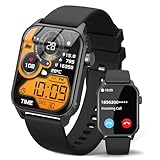
- 【1.83" HD Display & Customizable Watch Faces】Immerse yourself in a vibrant 1.83-inch IPS display, boasting a sharp resolution of 240*284 for crystal-clear visuals. Effortlessly personalize your smart watch with a wide array of customizable watch faces to suit your personal style for every occasion—whether trendy, artistic, or minimalist—ideal for casual, sporty, or professional. Its sleek, modern design complements any outfit, blending technology and fashion seamlessly for everyday wear
- 【120 Sports Modes & Advanced Health Tracking】Our TK29 smart watches for women men come equipped with 120 sports modes, allowing you to effortlessly track a variety of activities such as walking, running, cycling, and swimming. With integrated heart rate and sleep monitors, you can maintain a comprehensive overview of your health, achieve your fitness goals, and maintain a balanced, active lifestyle with ease. Your ideal wellness companion (Note: Step recording starts after exceeding 20 steps)
- 【IP67 Waterproof & Long-Lasting Battery】Designed to keep up with your active lifestyle, this smartwatch features an IP67 waterproof rating, ensuring it can withstand splashes, sweat, and even brief submersion, making it perfect for workouts, outdoor adventures, or rainy days. Its reliable 350mAh battery offering 5-7 days of active use and up to 30 days in standby mode, significantly reducing frequent charging. Ideal for all-day wear, whether you’re at the gym, outdoors, or simply on the go
- 【Stay Connected Anytime, Anywhere】Stay informed and in control with Bluetooth call and music control features. Receive real-time notifications for calls, messages, and social media apps like Facebook, WhatsApp, Twitter, and Instagram directly on your smartwatch. Easily manage calls, control your music playlist, and stay updated without needing to reach for your phone. Perfect for work, workouts, or on-the-go, this watch keeps you connected and never miss important updates wherever you are
- 【Multifunction & Wide Compatibility】Seamlessly handle heart rate monitoring, sleep tracking, and enjoy conveniences like camera/music control, Seamlessly handle heart rate monitoring, sleep tracking, and more-all directly from your wrist. This 1.83 inches HD smartwatch is compatible with iPhone (iOS 9.0+) & Android (5.0+), ensuring smooth daily connectivity and convenience throughout your day. More than just a timepiece, it’s a stylish, all-in-one wearable for smarter, healthier living
This isn’t a hybrid watch and it’s not a full smartwatch replacement for an Apple Watch or Galaxy Watch. There’s no LTE option, no app store depth to speak of, and limited interaction beyond notifications and basic utilities. What you get instead is a watch that’s comfortable enough to wear 24/7, tracks a wide range of activities, and can realistically last close to a week on a charge depending on usage.
Who the Amazfit Active is for
The Amazfit Active is best suited to fitness-focused users who care more about training consistency and health insights than replying to messages from their wrist. Runners, gym-goers, casual cyclists, and people who want reliable sleep and heart rate tracking without daily charging will feel immediately at home.
It’s also a strong option for Android users who don’t want to spend Apple Watch money, and for iPhone users who are comfortable giving up deep iOS integration in exchange for battery life and simplicity. Beginners upgrading from a Fitbit Charge or Mi Band-style tracker will appreciate the larger screen and onboard GPS, while intermediate users will value the breadth of sports modes and recovery metrics without needing Garmin-level complexity.
Who should look elsewhere
If your smartwatch needs revolve around apps, voice assistants, contactless payments everywhere, or tight integration with your phone’s ecosystem, the Amazfit Active will feel limiting. Power users accustomed to Wear OS or watchOS will quickly hit the ceiling of what Zepp OS allows.
It’s also not the best choice for athletes who need advanced training load analytics, external sensor support beyond basics, or highly configurable workout data screens. In those cases, Garmin’s entry-level Forerunner models or higher-end Amazfit watches make more sense, even at a higher cost.
Why Amazfit built the Active
The Amazfit Active fills the gap between minimalist fitness bands and bulkier, sport-styled GPS watches. Its purpose is to attract buyers who want something that looks like a smartwatch, feels light on the wrist, and still delivers credible fitness and health tracking without sacrificing battery life.
In a market dominated by feature-heavy devices that demand daily charging, the Amazfit Active exists as a counterpoint. It’s a watch that’s designed to fade into your routine, quietly collecting data, nudging you toward healthier habits, and staying out of your way until you actually need it. Whether that trade-off works depends less on specs and more on how you expect a smartwatch to fit into your life.
Design, Comfort, and Build Quality: Lightweight Wearability Over Premium Materials
That philosophy of staying out of your way is most evident the moment you put the Amazfit Active on your wrist. This is a watch designed to disappear during long days and workouts, prioritizing low weight and comfort over visual drama or luxury cues.
It doesn’t try to compete with the Apple Watch or Galaxy Watch on materials or finish. Instead, Amazfit leans hard into practicality, and for the audience this watch targets, that trade-off largely works.
Minimalist Design with a Fitness-First Intent
The Amazfit Active uses a rectangular case with softly rounded corners, clearly inspired by mainstream smartwatch aesthetics without copying them outright. It looks modern and neutral enough to pass as an everyday watch, whether you’re in gym clothes or casual office wear.
At roughly 36 grams including the strap, it’s significantly lighter than most full-featured smartwatches. That low mass immediately sets expectations: this is a wearable meant for all-day and all-night use, not a statement piece.
The single physical button on the right side keeps interactions simple and avoids accidental presses during workouts. There’s no rotating crown or bezel, which aligns with the watch’s straightforward, fitness-forward positioning.
Materials and Build: Functional, Not Premium
The case is made from fiber-reinforced polymer rather than aluminum or steel. In hand, it feels closer to a high-quality fitness tracker than a traditional watch, with a slightly matte, utilitarian finish.
This choice keeps weight down and helps with comfort during longer runs or sleep tracking, but it does mean the Active lacks the cold, solid feel of metal-bodied rivals. If you value perceived luxury or heft, this will feel like a compromise.
That said, durability is better than the materials suggest. After weeks of wear, including gym sessions and outdoor runs, the case resists scuffs well, and the display sits flush enough to avoid catching on sleeves or gym equipment.
Comfort During Long Wear and Sleep Tracking
Comfort is where the Amazfit Active quietly excels. The slim profile and low weight make it easy to forget you’re wearing it, especially during sleep, which is critical given how much Amazfit emphasizes overnight recovery and sleep metrics.
The included silicone strap is soft, flexible, and breathable enough for sweaty workouts. It doesn’t pull at arm hair or create pressure points, even when worn snugly for heart rate accuracy.
Importantly, the lug design distributes weight evenly across the wrist. This matters during longer runs or all-day wear, where heavier watches tend to shift or dig in over time.
Display Integration and Everyday Practicality
The AMOLED display is framed by modest bezels that are noticeable but not distracting. It’s not edge-to-edge in the way premium watches aim for, yet the screen is large enough to comfortably read stats at a glance during workouts.
The slightly raised glass adds a small degree of protection against direct impacts, though it also means the display can catch light reflections at certain angles. In daily use, this is a minor trade-off rather than a deal-breaker.
Water resistance is sufficient for swimming and sweat-heavy sessions, reinforcing the Active’s role as a true fitness companion rather than a fragile lifestyle gadget.
Design Trade-Offs in Context
Compared to an Apple Watch SE or Galaxy Watch FE, the Amazfit Active feels less refined and less premium, but also far less demanding on your wrist and charger. Against fitness bands like the Fitbit Charge, it feels more complete and watch-like without sacrificing comfort.
This design won’t impress enthusiasts who want polished metal, sapphire glass, or interchangeable fashion straps. It will, however, appeal strongly to users who care more about how a watch feels after 12 hours than how it looks under showroom lighting.
Ultimately, the Amazfit Active’s design makes its priorities clear. It’s built to be worn constantly, tracked relentlessly, and largely ignored until you need it, and in that specific role, the lightweight approach proves to be a smart and intentional decision.
Display and Interface Experience: AMOLED Quality, Touch Responsiveness, and Outdoor Visibility
Coming off a design that prioritizes comfort and constant wear, the display becomes the main point of interaction you live with every hour of the day. For a fitness-first watch, clarity, responsiveness, and visibility matter far more than visual flair alone, and this is where the Amazfit Active has to prove its value.
AMOLED Panel Quality and Readability
The Amazfit Active uses a 1.75-inch AMOLED panel with a resolution that delivers crisp text and well-defined workout charts without visible pixelation at normal viewing distance. Colors are saturated but not cartoonish, which helps heart rate zones, pace graphs, and notifications remain legible rather than visually noisy.
Contrast is excellent thanks to true blacks, and this benefits both night-time use and battery efficiency. During sleep tracking or late-night checks, the screen avoids the harsh glow common on cheaper LCD-based fitness watches.
Compared to the Apple Watch SE, the panel lacks the same color calibration finesse and peak brightness uniformity. However, against devices like the Fitbit Charge 6 or Garmin Venu Sq, the Amazfit Active’s AMOLED display feels larger, cleaner, and more modern in daily use.
Touch Responsiveness and Gesture Control
Touch response is consistently reliable, even with sweaty fingers during workouts. Swipes register cleanly, taps feel deliberate rather than delayed, and there’s minimal ghosting when quickly scrolling through widgets or workout lists.
Zepp OS relies heavily on swipe gestures, and the Active handles these without the lag or stutter that plagued older Amazfit models. Transitions are not as fluid as Wear OS or watchOS, but they’re fast enough that the interface never feels like it’s getting in your way.
The physical button provides a welcome fallback during runs or interval sessions when touch input becomes less practical. It’s not programmable to the same extent as Garmin’s multi-button systems, but its placement and tactile feedback make it genuinely useful rather than decorative.
Outdoor Visibility and Brightness Behavior
Outdoor visibility is one of the Active’s strongest display-related traits. In direct sunlight, the AMOLED panel remains readable without forcing you to shield the screen with your hand, which is critical for mid-run pace checks or cycling data.
Automatic brightness adjustment works well enough, though it occasionally reacts a beat slower than ideal when moving rapidly between shade and sun. Manual brightness control is available, and most users will find a mid-to-high setting strikes the best balance between visibility and battery life.
While it doesn’t reach the searing brightness levels of premium Apple or Samsung watches, it comfortably outperforms most fitness bands and entry-level smartwatches in the same price bracket. For outdoor runners and walkers, this alone makes the display feel purpose-built rather than compromised.
Always-On Display and Battery Trade-Offs
The always-on display is optional and well-implemented, showing time and basic data without overly dimming the panel. It’s readable at a glance and avoids excessive pixel burn-in patterns, though customization is limited compared to higher-end platforms.
Enabling always-on display has a noticeable impact on battery life, reducing the multi-day advantage Amazfit is known for. In real-world use, most fitness-focused users will likely disable it and rely on raise-to-wake, which is responsive and consistent.
This trade-off feels reasonable given the watch’s positioning. The display prioritizes workout readability and efficiency over decorative watch faces or luxury polish.
Interface Layout and Information Density
The interface favors clean data presentation rather than visual flourish. Metrics are spaced logically, fonts are easy to read during motion, and workout screens avoid cramming too much information into a single view.
Rank #2
![Apple Watch Series 11 [GPS 46mm] Smartwatch with Jet Black Aluminum Case with Black Sport Band - M/L. Sleep Score, Fitness Tracker, Health Monitoring, Always-On Display, Water Resistant](https://m.media-amazon.com/images/I/312K597M2uL._SL160_.jpg)
- HYPERTENSION NOTIFICATIONS — Apple Watch Series 11 can spot signs of chronic high blood pressure and notify you of possible hypertension.*
- KNOW YOUR SLEEP SCORE — Sleep score provides an easy way to help track and understand the quality of your sleep, so you can make it more restorative.
- EVEN MORE HEALTH INSIGHTS — Take an ECG anytime.* Get notifications for a high and low heart rate, an irregular rhythm,* and possible sleep apnea.* View overnight health metrics with the Vitals app* and take readings of your blood oxygen.*
- STUNNING DESIGN — Thin and lightweight, Series 11 is comfortable to wear around the clock — while exercising and even when you’re sleeping, so it can help track your key metrics.
- A POWERFUL FITNESS PARTNER — With advanced metrics for all your workouts, plus features like Pacer, Heart Rate Zones, training load, Workout Buddy powered by Apple Intelligence from your nearby iPhone,* and more. Series 11 also comes with three months of Apple Fitness+ free.*
This approach benefits beginners and intermediate users who want clarity over customization depth. Advanced users may miss the granular screen configuration options found on Garmin watches, but the simplicity reduces friction during real workouts.
Taken together, the display and interface reinforce the Amazfit Active’s core identity. It’s designed to deliver information clearly, quickly, and reliably, not to impress in a showroom or mimic premium smartwatches at a glance.
Fitness Tracking Performance: GPS Accuracy, Sports Modes, and Real-World Workout Testing
That clear, no-nonsense display approach carries directly into how the Amazfit Active handles fitness tracking. The watch is clearly tuned for people who prioritize reliable outdoor data and straightforward workout feedback over deep customization or social features. Over several weeks of testing across running, walking, gym sessions, and casual sports, its strengths and limits became easy to define.
GPS Performance and Outdoor Accuracy
The Amazfit Active uses a built-in GPS system with support for multiple satellite networks, but it does not offer dual-band or multi-frequency tracking. In practice, this places it firmly in the “good but not elite” category for location accuracy.
In open environments like parks, suburban streets, and riverside paths, GPS lock-on is quick, usually within 5 to 10 seconds. Recorded routes closely matched reference tracks from a Garmin Forerunner and Apple Watch SE, with only minor smoothing in corners rather than obvious cut-offs.
Urban environments expose the limits more clearly. Around tall buildings or under tree cover, the Amazfit Active can drift slightly wide on sharp turns and intersections, especially during faster-paced runs. The errors are generally small enough that distance totals remain consistent, but runners focused on pace precision per kilometer will notice occasional variance.
Walking and hiking performance is more forgiving. At slower speeds, track lines stay tighter and elevation data appears consistent, even without dedicated barometric altimeter hardware. For casual hikers and daily walkers, the GPS experience feels dependable rather than frustrating.
Supported Sports Modes and Workout Variety
Amazfit includes a long list of sports modes, covering running, walking, cycling, treadmill, strength training, swimming, yoga, and various team and recreational activities. While the number looks impressive, most modes share similar underlying data fields rather than unique sport-specific metrics.
For core activities like outdoor running, indoor treadmill runs, cycling, and walking, the metrics are well chosen. You get real-time pace, distance, heart rate zones, time, and calories in a clean, readable format that matches the watch’s display philosophy.
Strength training is handled more generically. The watch can count reps for basic movements, but accuracy varies depending on exercise type and cadence. It works best as a session timer with heart rate tracking rather than a true strength analytics tool.
Swimming support includes pool tracking with stroke detection and lap counting. In testing, lap counts were reliable in standard-length pools, though stroke recognition occasionally misclassified mixed drills. There is no open-water swimming mode, which limits its appeal for triathletes.
Heart Rate Tracking During Workouts
The optical heart rate sensor performs best during steady-state activities. During easy and moderate runs, cycling, and long walks, readings stayed closely aligned with chest strap data, typically within a few beats per minute.
High-intensity interval training reveals more lag. During fast pace changes or short sprints, the sensor reacts a beat slower than chest-based references, briefly underreporting peak heart rates. This is common at this price point, but it’s worth noting for users who train by precise heart rate zones.
Recovery tracking is consistent rather than advanced. Post-workout heart rate drop is recorded clearly, but deeper insights like training readiness or load balancing are handled at a more surface level than on Garmin or Apple platforms.
Real-World Running and Walking Experience
On the wrist, the Amazfit Active is light and stable enough that it rarely distracts during movement. The case size and soft silicone strap keep bounce to a minimum, even during longer runs, and the watch never felt top-heavy or uncomfortable over multi-hour wear.
During workouts, the screen remains readable in most lighting conditions, reinforcing the strengths discussed earlier. Glanceability is excellent, which matters more in motion than absolute brightness numbers.
Auto-pause and auto-lap features work reliably for running and walking, though they can occasionally hesitate for a second or two before triggering. That delay doesn’t meaningfully affect recorded distance but can annoy users who stop frequently at traffic lights.
Data Quality, Post-Workout Analysis, and Zepp App Integration
Once workouts sync to the Zepp app, the data presentation remains clean and accessible. Maps load quickly, splits are easy to interpret, and heart rate graphs avoid unnecessary clutter.
Amazfit’s training metrics focus on consistency and trend tracking rather than advanced coaching. You get VO2 max estimates, training effect, and recovery time suggestions, but they’re best viewed as directional guidance rather than strict training prescriptions.
Compared to Fitbit, the Amazfit Active offers more raw workout data without locking features behind a subscription. Compared to Garmin, it lacks depth in performance analytics and customization, but also avoids overwhelming less experienced users.
Who the Fitness Tracking Is Best Suited For
The Amazfit Active works best for runners, walkers, and general fitness users who want reliable GPS, solid heart rate tracking, and long battery life without the learning curve of more advanced sports watches. It delivers consistency and clarity rather than cutting-edge accuracy.
Athletes training for races, interval-heavy programs, or triathlons may find the GPS and sensor limitations noticeable over time. For everyone else, especially Android users looking for a fitness-first watch that stays out of the way, the tracking experience feels thoughtfully balanced and purpose-driven rather than compromised.
Health Tracking and Wellness Features: Heart Rate, Sleep, Stress, and Everyday Reliability
Where the Amazfit Active starts to separate itself from purely fitness-first trackers is in how consistently it monitors your body outside of workouts. The shift from structured exercise to 24/7 health tracking feels seamless, with very little micromanagement required once everything is enabled.
This is also where Amazfit’s philosophy becomes clear: prioritize long-term trends and daily reliability over medical-grade precision. For most users, that trade-off makes sense, especially at this price point.
Continuous Heart Rate Monitoring and Day-to-Day Accuracy
The Amazfit Active uses an optical heart rate sensor that samples continuously throughout the day, with configurable intervals if you want to conserve battery. In everyday use, resting heart rate trends were stable and consistent, aligning closely with chest strap averages when viewed over full days rather than momentary spikes.
During low- to moderate-intensity activity like walking, commuting, or desk work, heart rate readings felt dependable and free from erratic jumps. It’s not immune to optical sensor lag during sudden intensity changes, but that’s a limitation shared by most wrist-based trackers in this category.
What matters more is how usable the data feels. The Zepp app presents heart rate zones, daily averages, and resting values clearly, making it easy to spot fatigue patterns or unusually elevated days without digging through menus.
Sleep Tracking: Clear Insights Without Overcomplication
Sleep tracking is one of the Amazfit Active’s strongest wellness features, largely because it works quietly in the background. Automatic sleep detection is reliable, including naps, and the watch rarely misclassifies late-night downtime as sleep if you’re still active.
Sleep stages include light, deep, REM, and awake periods, with nightly summaries that feel believable rather than inflated. Compared to Fitbit, stage transitions are slightly less granular, but overall sleep duration and consistency trends line up well over weeks of use.
What stands out is how the data is framed. Instead of pushing a single sleep score as a judgment, Amazfit emphasizes duration, regularity, and recovery context, which feels more constructive for long-term habits.
Stress Tracking and Readiness Metrics in Real Life
Stress tracking runs continuously using heart rate variability patterns, and while it shouldn’t be mistaken for a clinical measurement, it’s surprisingly effective at highlighting mentally or physically demanding days. Stress spikes often correlated with long meetings, poor sleep, or heavy training days.
Paired with this is Amazfit’s readiness-style insights, which blend sleep quality, exertion, and recovery time. These suggestions are intentionally conservative, nudging rest rather than pushing intensity, which suits the Amazfit Active’s target audience well.
Unlike Garmin’s Body Battery or Fitbit’s Daily Readiness Score, Amazfit’s approach feels less prescriptive. It offers context rather than commands, which will appeal to users who prefer guidance without pressure.
Blood Oxygen, Breathing, and Passive Health Monitoring
Blood oxygen tracking can be enabled during sleep or taken on-demand, with overnight trends being the most useful application. Readings were stable and generally aligned with expectations, though, as with all wrist-based SpO2 sensors, individual measurements can vary based on fit and movement.
Breathing rate tracking during sleep adds another layer of insight, particularly when viewed alongside stress and recovery data. It’s not a headline feature, but it contributes to a more holistic picture of how your body responds to training and daily stress.
Importantly, none of these features feel intrusive. Once configured, the watch handles monitoring quietly, without excessive alerts or unnecessary notifications.
Comfort, Wearability, and Sensor Reliability Over Long Periods
Health tracking is only useful if the watch is comfortable enough to wear continuously, and the Amazfit Active succeeds here. Its lightweight case and soft silicone strap make overnight wear easy, with no pressure points or noticeable bulk on smaller wrists.
Sensor contact remained consistent even during sleep and long sedentary days, which helps explain the stable heart rate and sleep data. The watch never required overly tight strap adjustments to maintain reliable readings.
Rank #3

- Bluetooth Call and Message Alerts: Smart watch is equipped with HD speaker, after connecting to your smartphone via bluetooth, you can answer or make calls, view call history and store contacts through directly use the smartwatch. The smartwatches also provides notifications of social media messages (WhatsApp, Twitter, Facebook, Instagram usw.) So that you will never miss any important information.
- Smart watch for men women is equipped with a 320*380 extra-large hd full touch color screen, delivering exceptional picture quality and highly responsive touch sensitivity, which can bring you a unique visual and better interactive experience, lock screen and wake up easily by raising your wrist. Though “Gloryfit” app, you can download more than 102 free personalised watch faces and set it as your desktop for fitness tracker.
- 24/7 Heart Rate Monitor and Sleep Tracker Monitor: The fitness tracker watch for men has a built-in high-performance sensor that can record our heart rate changes in real time. Monitor your heart rate 26 hours a day and keep an eye on your health. Synchronize to the mobile phone app"Gloryfit", you can understand your sleep status(deep /light /wakeful sleep) by fitness tracker watch develop a better sleep habit and a healthier lifestyle.
- IP68 waterproof and 110+ Sports Modes: The fitness tracker provides up to 112+ sports modes, covering running, cycling, walking, basketball, yoga, football and so on. Activity trackers bracelets meet the waterproof requirements for most sports enthusiasts' daily activities, such as washing hands or exercising in the rain, meeting daily needs (note: Do not recommended for use in hot water or seawater.)
- Multifunction and Compatibility: This step counter watch also has many useful functions, such as weather forecast, music control, sedentary reminder, stopwatch, alarm clock, timer, track female cycle, screen light time, find phone etc. The smart watch with 2 hrs of charging, 5-7 days of normal use and about 30 days of standby time. This smart watches for women/man compatible with ios 9.0 and android 6.2 and above devices.
Durability also plays a role in trust. After weeks of daily wear, including workouts and showers, tracking consistency didn’t degrade, reinforcing the sense that this is a device built for everyday use rather than occasional fitness sessions.
Battery Impact and Always-On Health Tracking
Running continuous heart rate, sleep tracking, stress monitoring, and periodic SpO2 checks does impact battery life, but not dramatically. In real-world use with all core health features enabled, the Amazfit Active still comfortably lasts several days between charges.
This matters because it removes the friction that plagues shorter-lived smartwatches. You’re far less likely to disable health features just to get through the week, which improves data continuity and long-term insight quality.
Compared to the Apple Watch SE or Galaxy Watch FE, the Amazfit Active feels more like a true always-on health tracker rather than a device you’re constantly managing around a charger.
How It Compares for Health Tracking Value
Against Fitbit, the Amazfit Active offers broader health tracking without subscription barriers, though Fitbit still has an edge in sleep coaching and ecosystem polish. Against Garmin, Amazfit lacks advanced physiological metrics but wins on simplicity, comfort, and accessibility.
For everyday users who care about heart health trends, sleep quality, stress awareness, and battery reliability, the Amazfit Active delivers a genuinely useful experience. It doesn’t try to medicalize wellness, and it avoids overwhelming users with charts they won’t act on.
That balance between insight and effort is ultimately what defines the Amazfit Active’s health tracking experience. It’s consistent, readable, and quietly dependable, which is exactly what most people need from a smartwatch they plan to wear all day, every day.
Zepp OS in Daily Use: Performance, Smart Features, Notifications, and App Ecosystem Limits
After establishing trust in the Amazfit Active’s health data and battery reliability, the next question is how it actually behaves when you’re interacting with it dozens of times a day. This is where Zepp OS becomes the defining factor, shaping whether the watch feels like a helpful companion or a compromised alternative to mainstream smartwatches.
Zepp OS has matured significantly over the past few generations, but it remains intentionally focused. The Amazfit Active doesn’t try to replicate Apple Watch or Wear OS functionality, and understanding that design philosophy is key to judging it fairly.
Interface Performance and Day-to-Day Responsiveness
In daily use, Zepp OS feels consistently light and responsive on the Amazfit Active. Swipes register cleanly, menus load quickly, and animations remain smooth even after weeks of use without reboots or resets.
This is partly due to the modest scope of the operating system. With fewer background processes and limited third-party app overhead, the watch rarely feels bogged down or delayed, even when switching quickly between workouts, notifications, and widgets.
Compared to Wear OS watches like the Galaxy Watch FE, the Amazfit Active feels less “computer-like” but also less prone to hiccups. You’re trading raw power for predictability, and for most fitness-first users, that’s a favorable exchange.
Navigation, Widgets, and Everyday Usability
The UI structure is intuitive once learned. Swiping down brings quick settings, swiping up opens notifications, and horizontal swipes cycle through customizable widgets for weather, heart rate, steps, stress, and calendar previews.
Widgets update reliably and present information clearly without visual clutter. Fonts are legible on the AMOLED display, and contrast remains strong even in outdoor conditions, making quick glances genuinely useful rather than decorative.
The physical crown helps with scrolling during workouts and menu navigation, reducing reliance on touch when your hands are sweaty or you’re wearing gloves. It’s not as refined as Apple’s Digital Crown, but it adds meaningful usability rather than being a cosmetic addition.
Smart Features: What You Get and What You Don’t
The Amazfit Active covers core smartwatch basics well. You get alarms, timers, world clocks, weather forecasts, calendar syncing, music playback control, and basic voice assistant functionality depending on region and phone compatibility.
There’s no onboard LTE, no native call handling with a speaker and mic combination that rivals Apple or Samsung, and no contactless payments in most regions. These omissions are deliberate, preserving battery life and cost rather than feeling like missing features that were promised and withheld.
If your expectation of a smartwatch revolves around quick glances, light interaction, and fitness support rather than replacing your phone, the feature set feels appropriate. If you expect wrist-based independence, Zepp OS will feel limiting very quickly.
Notifications: Reliable Delivery, Limited Interaction
Notification handling is one of Zepp OS’s strengths and weaknesses at the same time. Alerts arrive promptly, remain readable, and sync reliably with Android phones, with slightly more restrictions on iOS due to Apple’s platform rules.
Text-heavy notifications like messages, emails, and app alerts display clearly, and scrolling through longer threads is smooth. You can dismiss notifications from the watch, which keeps your phone and watch in sync.
Interaction is minimal, though. There’s no full keyboard, limited canned replies depending on platform, and no rich notification actions for most apps. Compared to Apple Watch SE or Wear OS devices, this feels basic, but it’s consistent and dependable rather than half-implemented.
App Ecosystem and Third-Party Limitations
The Zepp app store exists, but expectations should be kept realistic. The selection is small, largely utility-focused, and lacks the depth of ecosystems found on Apple Watch or Wear OS.
You won’t find robust versions of popular third-party services, advanced navigation apps, or deeply integrated productivity tools. Most apps feel like extensions rather than experiences, adding small bits of functionality without transforming how the watch is used.
For many fitness-focused buyers, this won’t be a dealbreaker. The Amazfit Active works best when you accept that its core value comes from built-in features rather than extensibility.
Phone App Integration and Zepp Companion Experience
The Zepp smartphone app is where most customization and data review happens, and it’s generally stable and well-organized. Health metrics, workout history, watch faces, and settings are easy to find, though the visual polish still trails Apple Health and Samsung Health.
Data sync is reliable, and firmware updates install smoothly without frequent failures or forced resets. The app avoids subscription paywalls for core features, which remains a significant advantage over Fitbit’s model.
For Android users in particular, the Zepp app feels practical and complete. iPhone users may notice tighter system limitations, but the overall experience remains usable and predictable.
Stability, Updates, and Long-Term Confidence
Over extended use, Zepp OS on the Amazfit Active proves stable rather than ambitious. Crashes are rare, background battery drain is minimal, and the watch doesn’t require frequent maintenance to keep running smoothly.
Software updates tend to focus on incremental improvements rather than dramatic feature expansions. That may disappoint users hoping for rapid evolution, but it reinforces the watch’s identity as a dependable tool rather than an experimental platform.
In daily life, this consistency matters more than novelty. The Amazfit Active behaves the same way on week six as it did on day one, which builds trust in a device meant to be worn continuously rather than constantly tweaked.
Battery Life and Charging: How the Amazfit Active Performs in Real Fitness-Focused Use
Consistency in software means little if the watch is constantly hunting for a charger, and this is where the Amazfit Active starts to separate itself from mainstream smartwatch rivals. After weeks of continuous wear, its battery behavior feels aligned with fitness-first priorities rather than app-heavy expectations.
Unlike Apple Watch or Wear OS devices that assume daily charging as a baseline, the Amazfit Active is built around multi-day endurance. That changes how you interact with it, especially if sleep tracking, recovery metrics, and all-day health monitoring are central to your routine.
Real-World Battery Longevity With Mixed Fitness Use
In everyday use with heart rate tracking enabled 24/7, sleep tracking every night, notifications active, and three to five GPS workouts per week, the Amazfit Active consistently delivers around 7 to 9 days of battery life. This includes a mix of indoor strength sessions, outdoor runs, and occasional walks logged with GPS.
That figure holds up without aggressively disabling features. You don’t need to turn off notifications, reduce screen brightness to unusable levels, or micromanage background settings to reach a full week.
Compared to the Apple Watch SE or Galaxy Watch FE, which typically require charging every 24 to 36 hours under similar usage, the Amazfit Active feels dramatically more forgiving. You can miss a charge or two without anxiety, which matters more in real life than spec-sheet claims.
GPS Workouts and Battery Drain Behavior
GPS tracking is where many mid-range watches reveal their weaknesses, but the Amazfit Active handles outdoor activity efficiently. A 45–60 minute GPS run typically consumes around 6–8 percent of the battery, depending on signal conditions and whether the display is kept active.
Longer sessions like hikes or cycling rides will naturally push consumption higher, but the drain remains predictable rather than alarming. Multi-hour GPS activities are feasible without watching the battery percentage drop in real time.
This efficiency makes the watch practical for users who train frequently but don’t want to think about charging schedules around workouts. It also places the Amazfit Active closer to entry-level Garmin models than lifestyle-focused smartwatches in terms of endurance philosophy.
Rank #4
![Apple Watch Series 11 [GPS 42mm] Smartwatch with Rose Gold Aluminum Case with Light Blush Sport Band - S/M. Sleep Score, Fitness Tracker, Health Monitoring, Always-On Display, Water Resistant](https://m.media-amazon.com/images/I/31J+F-pXaWL._SL160_.jpg)
- HYPERTENSION NOTIFICATIONS — Apple Watch Series 11 can spot signs of chronic high blood pressure and notify you of possible hypertension.*
- KNOW YOUR SLEEP SCORE — Sleep score provides an easy way to help track and understand the quality of your sleep, so you can make it more restorative.
- EVEN MORE HEALTH INSIGHTS — Take an ECG anytime.* Get notifications for a high and low heart rate, an irregular rhythm,* and possible sleep apnea.* View overnight health metrics with the Vitals app* and take readings of your blood oxygen.*
- STUNNING DESIGN — Thin and lightweight, Series 11 is comfortable to wear around the clock — while exercising and even when you’re sleeping, so it can help track your key metrics.
- A POWERFUL FITNESS PARTNER — With advanced metrics for all your workouts, plus features like Pacer, Heart Rate Zones, training load, Workout Buddy powered by Apple Intelligence from your nearby iPhone,* and more. Series 11 also comes with three months of Apple Fitness+ free.*
Always-On Display and Power Trade-Offs
The AMOLED display is one of the Amazfit Active’s highlights, but enabling the always-on display does change the battery equation. With always-on active, expect battery life to drop closer to 4 to 5 days under similar fitness usage.
That reduction isn’t surprising, and the always-on mode is implemented conservatively with simplified watch faces to limit drain. Still, users prioritizing endurance over aesthetics will likely leave it disabled.
The important point is that even with always-on enabled, the Amazfit Active still outlasts most mainstream smartwatches by several days. You’re choosing between very good battery life and excellent battery life, not between acceptable and frustrating.
Sleep Tracking, Overnight Drain, and Recovery Monitoring
Sleep tracking is designed to run continuously without requiring special modes or manual activation, and overnight battery drain remains low. A typical night of sleep tracking consumes roughly 2–3 percent of the battery.
This efficiency encourages wearing the watch 24/7, which is essential for users interested in readiness scores, recovery trends, and long-term health data. There’s no need to choose between charging overnight or collecting meaningful sleep metrics.
By contrast, daily-charge watches often force compromises that undermine recovery tracking over time. The Amazfit Active avoids that tension almost entirely.
Charging Speed and Practicality
Charging is handled via a proprietary magnetic puck, which snaps into place reliably and doesn’t require precise alignment. A full charge from near empty takes roughly two hours, which is slower than some competitors but easier to live with given how infrequently charging is required.
More realistically, a 20–30 minute top-up provides enough power for several additional days. This makes short charging windows before work or during a shower genuinely useful rather than symbolic.
The downside is the lack of wireless charging and the need to carry a specific cable when traveling. That inconvenience is mitigated by the fact that you’ll need it far less often than with daily-charge devices.
Long-Term Battery Confidence and Degradation Outlook
Over extended use, battery performance remains stable with no noticeable increase in idle drain or sudden drops in capacity. Zepp OS’s restrained background activity plays a significant role here, avoiding the creeping inefficiencies seen on more complex platforms.
This stability is especially important for buyers planning to keep the watch for multiple years. Fewer charge cycles per year also mean slower battery degradation compared to watches that demand daily charging.
For fitness-focused users who value reliability over novelty, the Amazfit Active’s battery behavior reinforces its identity as a long-term tool rather than a disposable gadget.
Smartwatch vs Fitness Watch: Living With the Amazfit Active Day to Day
The battery behavior sets the tone for how the Amazfit Active fits into daily life, and it immediately pushes the experience closer to a fitness watch than a traditional smartwatch. You stop thinking about charging schedules and start treating it like a wearable you simply put on and forget.
That shift changes expectations across notifications, apps, workouts, and even how often you interact with the screen. The Amazfit Active lives in the space between categories, and that balance defines its strengths and its limits.
Daily Wear Comfort and Physical Presence
At roughly 24 grams without the strap and just under 11 mm thick, the Amazfit Active disappears on the wrist in a way most smartwatches do not. The lightweight aluminum case and soft silicone strap make it comfortable for all-day wear, including sleep and long workouts.
The rectangular design borrows from Apple Watch aesthetics but feels less dense and less top-heavy. On smaller wrists especially, it avoids the slab-like sensation common to feature-rich smartwatches.
Finish quality is solid rather than luxurious, with clean edges and a practical matte look. It feels purpose-built, not decorative, which aligns with its fitness-first positioning.
Notifications, Calls, and Smart Features in Practice
Notifications are reliable and readable, with good vibration strength and clear text rendering on the AMOLED display. You can’t respond to messages or take calls, which immediately separates it from Apple Watch and Galaxy Watch territory.
In practice, this limitation simplifies usage rather than frustrates it for fitness-focused users. The watch becomes a triage tool rather than a communication hub, letting you stay aware without pulling you into endless micro-interactions.
Music controls, alarms, timers, and weather checks cover the basics. Beyond that, Zepp OS intentionally avoids the complexity of a full smartwatch platform.
Zepp OS: Focused, Fast, and Intentionally Limited
Day to day, Zepp OS feels fast and stable, with no animation lag or app crashes during testing. Menus are simple, gestures are predictable, and the system never feels overloaded.
The app ecosystem is minimal, and third-party options are sparse compared to Wear OS or watchOS. That’s a real limitation for users expecting app extensibility, but it also prevents the background drain and sluggishness common on more open platforms.
This tradeoff reinforces the Amazfit Active’s identity as a fitness watch with smart conveniences rather than a smartwatch trying to do everything.
Fitness Tracking as the Daily Core Experience
Workouts are quick to start, GPS locks are fast outdoors, and the watch encourages consistent activity rather than sporadic high-intensity sessions. Daily step counts, active minutes, and readiness metrics feel more central than notifications.
The physical button placement and touchscreen responsiveness make mid-workout interactions easy, even with sweat or light rain. Auto-detection for common activities like walking works reliably and doesn’t over-trigger.
This is a watch that rewards routine, especially for users building habits rather than chasing performance extremes.
Health Tracking That Works Best Over Time
Heart rate tracking is consistent during rest and moderate exercise, with occasional lag during sharp intensity changes. Sleep tracking benefits directly from the battery life, capturing full nights without charging anxiety.
SpO2 and stress tracking are best viewed as trend indicators rather than clinical metrics. The real value emerges after weeks of wear, when patterns become visible and actionable.
Because the watch is easy to wear continuously, the data it collects feels more complete than what many daily-charge smartwatches manage in practice.
Smartwatch Alternatives: Where the Amazfit Active Falls Short
Compared to an Apple Watch SE or Galaxy Watch FE, the Amazfit Active lacks polish in smart interactions. There’s no voice assistant depth, no app store richness, and no tight ecosystem integration.
Contactless payments are absent in many regions, and there’s no LTE option. For users who want their watch to replace their phone for short periods, this will be a deal-breaker.
These omissions are not accidental; they are the cost of the battery life and simplicity that define the experience.
Fitness Watch Comparisons: Where It Gains Ground
Against budget Garmin models, the Amazfit Active feels more modern and visually engaging. The AMOLED display, touch-first interface, and slimmer case give it stronger everyday appeal.
Garmin still leads in advanced training analytics and platform maturity, but often at the cost of bulk and display quality. For casual to intermediate athletes, the Amazfit Active covers the essentials with less friction.
It behaves more like a lifestyle fitness watch than a training instrument, which will matter depending on user priorities.
Value in Everyday Use
Living with the Amazfit Active highlights how rarely you miss features you never rely on. The watch delivers consistency, comfort, and endurance rather than moments of novelty.
Its value becomes clear over weeks, not days, as it quietly supports routines instead of demanding attention. For users who want fitness tracking first and smartwatch features second, that balance feels intentional rather than compromised.
How It Compares Conceptually: Amazfit Active vs Apple Watch SE, Galaxy Watch FE, Fitbit, and Budget Garmin
Understanding the Amazfit Active requires stepping away from spec-sheet matchups and looking at intent. This is not a reduced version of an Apple Watch or a cheaper Garmin; it is built around a different idea of what a smartwatch should do day after day.
💰 Best Value
![Apple Watch Series 11 [GPS 42mm] Smartwatch with Jet Black Aluminum Case with Black Sport Band - S/M. Sleep Score, Fitness Tracker, Health Monitoring, Always-On Display, Water Resistant](https://m.media-amazon.com/images/I/31ybzrJZckL._SL160_.jpg)
- HYPERTENSION NOTIFICATIONS — Apple Watch Series 11 can spot signs of chronic high blood pressure and notify you of possible hypertension.*
- KNOW YOUR SLEEP SCORE — Sleep score provides an easy way to help track and understand the quality of your sleep, so you can make it more restorative.
- EVEN MORE HEALTH INSIGHTS — Take an ECG anytime.* Get notifications for a high and low heart rate, an irregular rhythm,* and possible sleep apnea.* View overnight health metrics with the Vitals app* and take readings of your blood oxygen.*
- STUNNING DESIGN — Thin and lightweight, Series 11 is comfortable to wear around the clock — while exercising and even when you’re sleeping, so it can help track your key metrics.
- A POWERFUL FITNESS PARTNER — With advanced metrics for all your workouts, plus features like Pacer, Heart Rate Zones, training load, Workout Buddy powered by Apple Intelligence from your nearby iPhone,* and more. Series 11 also comes with three months of Apple Fitness+ free.*
Where Apple, Samsung, Fitbit, and Garmin all optimize for specific ecosystems or user archetypes, Amazfit is chasing continuity: long battery life, light wearability, and fitness data that rewards consistency rather than obsession.
Amazfit Active vs Apple Watch SE: Battery and Independence vs Ecosystem Power
Conceptually, the Apple Watch SE is an extension of the iPhone, while the Amazfit Active is designed to stand on its own. The SE excels at notifications, app interactions, and seamless handoff between Apple services, but it assumes nightly charging and frequent interaction.
The Amazfit Active flips that relationship. It asks very little attention, runs for days without charging, and prioritizes passive tracking over active engagement.
In daily use, this difference is stark. Apple Watch users tend to interact with their watch dozens of times per day, while Amazfit Active users often forget they are wearing it until a workout or sleep report surfaces.
For fitness tracking, the Apple Watch SE delivers excellent heart rate accuracy and strong third-party app support, but its reliance on frequent charging undermines long-term trend continuity. The Amazfit Active may not match Apple’s raw sensor precision in every scenario, yet it often produces more complete datasets simply because it stays on your wrist.
This is less about which watch is more advanced, and more about whether you want your watch to demand attention or quietly collect data in the background.
Amazfit Active vs Galaxy Watch FE: Simplicity vs Smartwatch Ambition
Samsung’s Galaxy Watch FE positions itself as a full-featured smartwatch with fitness capabilities layered on top. Wear OS brings Google apps, voice assistants, and richer interactions, but also complexity and battery trade-offs.
The Amazfit Active feels intentionally restrained by comparison. Zepp OS is fast and stable, but limited, focusing on core metrics rather than app extensibility.
From a physical standpoint, the Amazfit Active is lighter and slimmer, making it easier to wear continuously, especially during sleep. The Galaxy Watch FE, with its stainless steel elements and denser build, feels more substantial but also more noticeable over long periods.
For Android users deciding between the two, the choice is philosophical. If you want Google Maps on your wrist and quick replies to messages, Samsung wins. If you want to track steps, workouts, recovery, and sleep without micromanaging battery or settings, Amazfit’s approach often proves more livable.
Amazfit Active vs Fitbit: Transparency vs Coaching
Fitbit’s strength lies in behavioral coaching and accessibility. Its app surfaces insights clearly, encourages habit formation, and excels at making health data understandable for beginners.
Amazfit takes a more data-forward approach. The Zepp app provides extensive metrics, sometimes with less narrative guidance, and expects the user to interpret trends rather than follow prompts.
Sleep tracking is a good example. Fitbit often presents sleep as a score with contextual explanations, while Amazfit breaks it into stages, breathing quality, and recovery indicators that reward deeper engagement.
Hardware-wise, the Amazfit Active feels more like a traditional smartwatch, with a larger AMOLED display and more flexible workout modes. Fitbit devices, especially the Charge and Sense lines, lean more toward band-like wearables with longer battery life but fewer visual interactions.
The trade-off is clarity versus control. Fitbit holds your hand; Amazfit hands you the dashboard.
Amazfit Active vs Budget Garmin: Lifestyle Fitness vs Training Discipline
Garmin’s budget models, such as the Forerunner and Venu Sq lines, are rooted in sports science. Training load, recovery time, and performance condition are central pillars, even at lower price points.
The Amazfit Active does not try to compete on that level. Its training metrics are useful but less prescriptive, favoring general readiness over structured progression.
Where Amazfit gains ground is wearability. The thinner case, AMOLED screen, and touch-first interface make it easier to live with outside of workouts. Many Garmin entry-level watches feel like tools first and accessories second.
For runners and cyclists following structured plans, Garmin still offers unmatched depth. For users who exercise regularly but prioritize comfort, aesthetics, and everyday usability, the Amazfit Active often feels less demanding and more adaptable.
The Conceptual Throughline: Consistency Over Capability
Across all these comparisons, the Amazfit Active consistently chooses continuity over capability. It sacrifices advanced smart features, ecosystem depth, and elite training analytics in favor of something more subtle.
That subtlety shows up in how often the watch is worn, how rarely it needs attention, and how complete its long-term data becomes. The watch does not compete for dominance in any single category; it competes on livability.
For buyers evaluating mid-range smartwatches, this distinction matters more than raw specs. The Amazfit Active is not trying to replace your phone, coach you for a marathon, or lock you into an ecosystem. It is trying to stay on your wrist, quietly, day after day, and in that narrow but important mission, it holds its ground against far more established names.
Final Verdict: Who Should Buy the Amazfit Active, Who Should Skip It, and Overall Value for Money
Seen through the lens of consistency over capability, the Amazfit Active makes its final case not with a knockout feature, but with a steady accumulation of small, practical wins. It is a watch that earns its place through comfort, battery endurance, and a fitness experience that stays out of your way rather than constantly demanding attention.
The decision to buy or skip it hinges less on brand loyalty and more on how you actually live with a smartwatch day after day.
Who Should Buy the Amazfit Active
The Amazfit Active is best suited to fitness-focused users who value regular activity tracking over structured athletic training. If your routine includes gym sessions, casual runs, cycling, yoga, or daily step goals, the watch captures these reliably without overwhelming you with performance theory.
Everyday wearability is one of its strongest assets. The slim, lightweight case sits comfortably on the wrist for sleep tracking, long workdays, and continuous heart rate monitoring, while the AMOLED display offers clear visibility without pushing battery anxiety into your routine.
Android users looking for an affordable alternative to Wear OS watches will appreciate the balance here. Notifications are reliable, core smartwatch functions work smoothly, and the Zepp app provides long-term health trends without subscription fees or constant upselling.
Battery life is another decisive factor. For users tired of charging every night, the Amazfit Active’s multi-day endurance fundamentally changes how often the watch stays on your wrist, which in turn improves the quality and continuity of health data.
Who Should Skip the Amazfit Active
If you expect your smartwatch to function as a miniature smartphone, this is not the right fit. There is no native app ecosystem depth, no LTE option, and limited third-party integrations compared to Apple Watch or Wear OS devices.
Serious endurance athletes following structured training plans may also feel constrained. While GPS accuracy and workout tracking are solid, the lack of advanced training load management, recovery coaching, and deep performance analytics places it behind even Garmin’s more affordable models.
iPhone users invested in Apple’s ecosystem should think carefully. While compatibility exists, the experience is clearly optimized for Android, and Apple Watch SE remains the more seamless option for messaging, app support, and platform integration.
Those who prioritize premium materials and luxury finishing may also be underwhelmed. The Amazfit Active is well-built for its price, but it prioritizes lightness and practicality over metal heft, rotating bezels, or tactile hardware controls.
Overall Value for Money
At its price point, the Amazfit Active delivers strong value by focusing on what most users actually use. The AMOLED display, dependable GPS, broad fitness modes, sleep tracking, and long battery life form a package that feels thoughtfully balanced rather than compromised.
Zepp OS remains efficient and stable, even if it lacks ambition. Navigation is quick, data presentation is clear, and the software rarely gets in the way of daily use, which is more than can be said for many feature-heavy competitors.
Compared to rivals like the Fitbit Sense, Galaxy Watch FE, or Apple Watch SE, the Amazfit Active trades ecosystem depth for endurance and simplicity. It does not try to win on specs, brand prestige, or smart features, but on sustained usability over weeks and months.
The Bottom Line
The Amazfit Active is not a statement smartwatch, and that is precisely its strength. It is designed for people who want to wear their watch more than they want to manage it.
For everyday fitness tracking, health monitoring, and a calm, reliable smartwatch experience with excellent battery life, it represents one of the most sensible buys in the mid-range segment. If your priorities align with comfort, clarity, and consistency rather than power and polish, the Amazfit Active quietly earns its recommendation.