The Amazfit Arc comes from a very different era of wearables, when fitness trackers were meant to disappear on your wrist rather than replace your phone. Launched in the mid-2010s under Huami’s early Amazfit branding, it was designed as a minimalist, always-on activity band focused on steps, sleep, and basic heart rate tracking at a price that undercut Fitbit and Garmin at the time. Understanding what it was built to do is essential before judging it by modern standards.
If you’re looking at the Arc today, chances are you’re either hunting for an ultra-cheap tracker, considering a used or clearance device, or simply curious about how Amazfit got its start. This section sets expectations clearly by explaining the Arc’s original purpose, its design philosophy, and how those decisions shape its usefulness in 2026 before we get into deeper performance and usability details.
A product of the early fitness band era
The Arc was conceived as a direct alternative to devices like the Fitbit Flex and Mi Band, prioritizing simplicity over features. There is no touchscreen, no apps on the device itself, and no attempt to be smartwatch-adjacent in the modern sense. Instead, it relies on a small curved OLED display to show time, steps, distance, calories, and heart rate at a glance.
This limited interface wasn’t a compromise at launch; it was the point. The Arc was meant to be worn 24/7, require minimal interaction, and quietly collect data that you reviewed later in the companion app. That philosophy explains both its strengths in comfort and battery life, and its hard limitations today.
🏆 #1 Best Overall
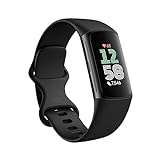
- Find your way seamlessly during runs or rides with turn-by-turn directions from Google Maps on Fitbit Charge 6[7, 8]; and when you need a snack break on the go, just tap to pay with Google Wallet[8, 9]
Design focused on comfort and constant wear
Physically, the Amazfit Arc is extremely slim and lightweight, even by today’s standards. The tracker module sits flush in a soft silicone band, with no protruding lugs or bulky housing, making it easy to forget you’re wearing it during sleep or long workdays. This was a deliberate choice aimed at improving sleep tracking compliance and all-day wearability.
The materials and finishing are utilitarian rather than premium, with a matte plastic display window and a simple pin-and-tuck strap. There’s no option for strap swaps or personalization, reinforcing that the Arc was designed as a functional tool rather than an accessory. Durability is adequate for daily wear, with water resistance suitable for handwashing and rain, but it was never intended as a rugged or swim-focused device.
Core features kept intentionally narrow
At its core, the Arc tracks steps, estimated distance, calories, continuous heart rate, and sleep duration and stages. There’s no built-in GPS, no workout modes in the modern sense, and no support for third-party fitness platforms beyond what the app allows. Notifications are limited to basic alerts, without rich content or interaction.
This narrow feature set helped keep battery life strong, often stretching close to a week on a single charge when new. It also reduced complexity for first-time users who wanted basic health insights without configuring profiles, sports modes, or advanced metrics. What you see is what you get, both then and now.
Who it was originally made for, and who it still suits
Originally, the Amazfit Arc targeted casual users who wanted accountability rather than performance analytics. It suited people counting steps, monitoring sleep habits, and keeping an eye on resting heart rate, without caring about pace charts or VO2 max estimates. That positioning made it appealing as a first fitness tracker or a low-risk entry into wearables.
In 2026, that same identity defines its remaining relevance. The Arc can still make sense for users who want the absolute basics, value comfort over features, and are comfortable with older software and limited ecosystem support. It is not a competitor to modern budget trackers on paper, but it was never meant to be, and judging it on its original design goals is the only fair way to understand its place today.
Design, Build Quality, and Wearability: Minimalism Before It Was Cool
Seen through a 2026 lens, the Amazfit Arc’s design feels almost prophetic. Long before slim, screenless bands became fashionable again as “whoop-style” alternatives, the Arc committed fully to invisibility, prioritizing comfort and discretion over visual feedback. That choice defines both its strengths and its limitations today.
A screenless fitness band by design, not by compromise
The Arc has no display, no touch surface, and no physical buttons. Instead, it relies on a single curved LED indicator array that lights up briefly to show progress toward daily step goals or confirm syncing and charging status. Everything else happens in the companion app.
At launch, this approach helped the Arc stand apart from early Fitbit bands that used tiny OLED panels. In daily wear, it meant fewer distractions and zero temptation to constantly check stats. In 2026, it also means there is no on-device feedback beyond the most basic cues, which can feel limiting if you are used to even entry-level smart bands.
Materials and construction: lightweight and unapologetically plastic
The main capsule is made from matte-finished plastic with a smooth, pebble-like profile. There is no metal trim, glass lens, or decorative element, and the finish shows its age if you examine it closely. It is not fragile, but it does not convey durability in the way modern aluminum-framed trackers do.
That said, the Arc’s low mass works in its favor. At roughly 20 grams including the strap, it virtually disappears on the wrist, especially during sleep. There are no sharp edges, no protrusions, and nothing that presses uncomfortably into the skin during long wear sessions.
Strap design and long-term comfort
The Arc uses an integrated silicone strap with a pin-and-tuck closure. It is soft, flexible, and secure enough for walking, casual exercise, and sleep tracking. The downside is obvious: the strap is not user-replaceable, and there is no ecosystem of third-party bands.
Over time, this becomes one of the biggest ownership considerations. If the strap stretches, cracks, or loses elasticity, there is no official replacement path. For buyers considering a used or clearance unit in 2026, strap condition matters almost as much as battery health.
Fit, sizing, and daily wear practicality
Amazfit offered the Arc in multiple sizes, which was more thoughtful than many early trackers that relied on one-size-fits-all bands. When properly sized, the band sits flush against the wrist and maintains good skin contact for heart rate tracking without feeling tight.
In real-world use, the Arc excels as an all-day and all-night wearable. It does not snag on clothing, does not clatter against desks, and does not glow or vibrate excessively. For users who want to forget they are wearing a tracker, this is still one of its strongest qualities.
Water resistance and durability expectations
The Arc is rated for basic water resistance, enough for handwashing, rain, and incidental splashes. It was never marketed as a swim tracker, and it lacks the sealing confidence of modern 5 ATM-rated budget bands.
For daily life, durability is acceptable rather than reassuring. It can handle routine use without complaint, but it is not a device you would trust for rough work environments, frequent submersion, or long-term abuse. This aligns with its original positioning as a lifestyle tracker, not a sports instrument.
How the design compares to modern budget trackers
Compared to today’s ultra-affordable fitness bands, the Arc feels both refreshingly simple and clearly dated. Modern alternatives offer color displays, interchangeable straps, better water resistance, and more refined materials at similarly low prices.
Yet few modern devices match the Arc’s commitment to restraint. There are no animations, no menus, and no constant reminders on your wrist. For a very specific type of user, especially someone who dislikes screens or wants a tracker that fades into the background, the Arc’s physical design still makes sense, even if the rest of the market has moved on.
Display and Controls: Living With a Screenless Fitness Band
The Arc’s minimalist physical design reaches its logical extreme in daily interaction. There is no display in the conventional sense, no numbers, no text, and no way to check stats directly on the band without involving your phone.
This choice defines the entire user experience. It simplifies the hardware, improves battery efficiency, and removes distraction, but it also places firm limits on how independent the device can be in 2026.
LED indicators instead of a screen
Rather than an LCD or OLED panel, the Amazfit Arc relies on a row of small LED lights embedded beneath the surface of the band. These LEDs illuminate to show progress toward a daily step goal, charging status, and basic activity confirmations.
In practice, this system works best for broad feedback rather than precision. You can tell if you are roughly halfway or nearly finished with your daily goal, but you cannot see an exact step count, heart rate value, or time of day.
Visibility and legibility in real-world conditions
Because the LEDs sit under a matte outer layer, visibility depends heavily on ambient light. Indoors and in low light, they are clear and readable at a glance, while bright outdoor sunlight can wash them out entirely.
There is no brightness adjustment, and no way to force the LEDs to stay on longer than their default brief illumination. Compared to even the most basic modern monochrome fitness bands, this feels restrictive, especially for outdoor walkers and commuters.
Touch-based controls and learning curve
Interaction is handled through a capacitive touch area on the band’s surface. Tapping or pressing cycles through LED indicators or triggers actions like activity confirmation, depending on how the device is configured in the app.
The system is functional but unintuitive at first. There is no visual menu structure, so users must learn tap patterns through repetition, which can be frustrating if you only interact with the band occasionally.
Haptic feedback and confirmation cues
Vibration plays a critical role in making the Arc usable without a screen. It confirms activity milestones, alerts, and charging status changes, effectively replacing visual prompts.
The vibration motor is gentle and quiet, which suits the Arc’s unobtrusive philosophy. However, it lacks the crisp definition of newer budget trackers, making some alerts feel vague rather than clearly differentiated.
What you lose without an on-band interface
The absence of a display means there is no way to check time, live heart rate, step totals, or notifications directly on your wrist. Every meaningful data check requires opening the companion app, which shifts the Arc firmly into a phone-dependent accessory.
In 2026, this limitation is more noticeable than it was at launch. Even ultra-cheap modern bands offer at least basic readouts, making the Arc feel closer to a passive sensor than a self-contained wearable.
Battery life benefits of going screenless
One of the Arc’s strengths is directly tied to its lack of a display. With no power-hungry screen to drive, battery life remains respectable even by current standards, assuming the battery itself has aged well.
For users who value infrequent charging over instant access to information, this trade-off still makes sense. The Arc can quietly track in the background for days without demanding attention.
Who this control scheme still works for
Living with the Arc’s screenless design requires a specific mindset. It suits users who treat fitness tracking as something to review periodically rather than monitor constantly throughout the day.
For anyone accustomed to glancing at their wrist for feedback, or who expects basic smartwatch conveniences, the Arc’s controls will feel limiting. Its interaction model is intentional, but it asks the user to accept those limitations fully rather than work around them.
Fitness and Health Tracking Capabilities: Steps, Sleep, and the Limits of Early Sensors
The Arc’s stripped-back interaction model directly shapes how its fitness tracking feels in daily use. Without a screen encouraging constant check-ins, the data it collects is meant to be reviewed later, reinforcing its role as a passive background tracker rather than an active coaching device.
This philosophy made sense at launch, when many users were still testing whether basic activity tracking could meaningfully change habits. In 2026, it reads more like a historical snapshot of how early fitness bands approached health data.
Step tracking accuracy and daily movement
At its core, the Amazfit Arc relies on a basic accelerometer to count steps and estimate general activity. For straightforward walking at a consistent pace, step counts are reasonably believable and tend to align with other early-generation trackers from the same era.
Rank #2

- Inspire 3 is the tracker that helps you find your energy, do what you love and feel your best. All you have to do is wear it.Operating temperature: 0° to 40°C
- Move more: Daily Readiness Score(1), Active Zone Minutes, all-day activity tracking and 24/7 heart rate, 20+ exercise modes, automatic exercise tracking and reminders to move
- Stress less: always-on wellness tracking, daily Stress Management Score, mindfulness sessions, relax breathing sessions, irregular heart rhythm notifications(2), SpO2(3), menstrual health tracking, resting heart rate and high/low heart rate notifications
- Sleep better: automatic sleep tracking, personalized Sleep Profile(1), daily detailed Sleep Score, smart wake vibrating alarm, sleep mode
- Comfortably connected day and night: calls, texts & smartphone app notifications(4), color touchscreen with customizable clock faces, super lightweight and water resistant to 50 meters, up to 10 day battery life(5)
Problems appear during non-linear movement. Short, shuffling steps, pushing a stroller, or activities involving arm stabilization can lead to undercounting, while repetitive wrist motion during desk work can inflate totals.
There is no GPS, no cadence analysis, and no activity auto-detection beyond basic movement thresholds. Compared to modern budget trackers that can distinguish walking from running or cycling, the Arc treats all motion as variations of the same data stream.
Distance, calories, and estimation limits
Distance and calorie burn are derived entirely from step count and user-entered profile data. Height, weight, and age influence the calculations, but there is no dynamic adjustment based on intensity or terrain.
This results in estimates that are useful for relative trends rather than absolute accuracy. If your goal is to move more today than yesterday, the Arc can support that mindset, but it cannot provide confidence-level metrics for training, weight management, or performance tracking.
In 2026 terms, this places it firmly behind even entry-level trackers that now integrate heart rate-driven calorie models as standard.
Sleep tracking: basic but surprisingly consistent
Sleep tracking is one area where the Arc holds up better than expected. It automatically detects sleep based on motion and inactivity, recording total sleep duration and broad sleep phases.
The breakdown is simplistic, usually limited to light and deep sleep segments, without REM classification or sleep score summaries. Still, bedtimes and wake times are often captured accurately enough to reveal patterns.
Because there is no SpO2, heart rate variability, or breathing analysis, the Arc’s sleep data is descriptive rather than diagnostic. It tells you when and how long you slept, not how restorative that sleep may have been.
No heart rate monitoring, and why that matters
One of the Arc’s most important limitations is the complete absence of a heart rate sensor. This was not unusual at the time of release, but it dramatically constrains the usefulness of its health data today.
Without heart rate, there is no continuous intensity tracking, no resting heart rate trends, and no recovery insights. Calorie estimates remain generic, and activity effort cannot be quantified beyond step volume.
Modern budget bands often include optical heart rate sensors that, while imperfect, add meaningful context. The Arc’s data feels flat by comparison, lacking physiological depth.
Activity tracking without sport modes
There are no sport-specific modes on the Arc. Walking, jogging, and general activity are all logged as variations of the same movement profile.
This simplifies the experience but limits analysis. Runners receive no pace data, cyclists get no ride differentiation, and gym workouts are invisible unless they involve step-like motion.
For casual users focused solely on daily movement totals, this may be acceptable. For anyone attempting structured exercise, the Arc offers no meaningful support.
Long-term trends versus daily feedback
The Arc performs better when viewed as a long-term habit tracker rather than a daily performance tool. Over weeks or months, step averages and sleep duration trends can still reveal behavior changes.
However, the lack of on-device feedback makes it harder to adjust behavior in real time. You only learn how active you were after checking the app, not during the activity itself.
This delayed feedback loop feels outdated in an era where even inexpensive trackers provide live progress indicators.
Sensor aging and used-device considerations
Most Amazfit Arc units still circulating in 2026 are used or old stock. Accelerometers are generally robust, but battery degradation can indirectly affect tracking if the device fails to record full days consistently.
Inconsistent syncing, missed nights of sleep tracking, or sudden data gaps are more common on aging units. These issues are not always obvious until you have worn the band for several days.
Anyone buying an Arc today should expect variability depending on the specific unit’s history, something far less common with new-generation budget trackers.
Contextualizing the Arc against modern ultra-budget bands
Compared to current entry-level fitness bands, the Arc’s tracking feels narrow and dated. Devices at similar prices now often include heart rate, SpO2, basic workout modes, and on-band stats.
What the Arc still offers is simplicity and minimal intrusion. It collects just enough data to answer broad questions about activity and sleep without encouraging micromanagement.
For users who want more insight without more complexity, the Arc will feel limiting. For those who want less noise and fewer metrics, its early-sensor constraints may actually be part of the appeal.
Battery Life and Charging: One Area Where the Arc Still Impresses
If the Arc’s tracking limitations feel rooted in another era, its battery performance is where that age actually works in its favor. The same lack of screen, GPS, heart rate sensor, and always-on connectivity that constrains its features also allows it to sip power at a rate modern trackers rarely match.
Even by 2026 standards, the Arc’s endurance remains noteworthy, especially for users who value consistency over capability.
Real-world longevity, not marketing math
When new, Amazfit rated the Arc for up to 20 days of use on a single charge. In real-world testing back in its prime, two to three weeks was achievable with continuous wear, sleep tracking enabled, and periodic syncing.
On most surviving units today, battery health has naturally declined, but many still manage 10 to 14 days between charges. That is still competitive with, and sometimes better than, brand-new budget bands that promise long life but struggle to deliver more than a week once notifications and sensors are active.
The key here is consistency. The Arc’s power draw barely fluctuates day to day because its feature set is fixed and minimal.
No screen, no drain
The Arc’s design plays a major role in its longevity. There is no display to wake, no brightness to manage, and no animations consuming energy every time you move your wrist.
LED indicators only illuminate briefly during syncing or charging, and the vibration motor is used sparingly for alarms. Compared to even entry-level OLED bands, this dramatically reduces background power consumption.
From a comfort perspective, this also means the Arc can be worn continuously without the psychological urge to check stats, which indirectly supports its long-battery ethos.
Charging experience and proprietary limitations
Charging is handled via a proprietary clip-style charger that connects to the underside of the band. A full charge typically takes around two hours, depending on battery condition.
This system works reliably, but it introduces a real-world inconvenience for 2026 buyers. Replacement chargers are harder to find than standard USB-based cradles, and losing the original cable can effectively sideline the device.
There is no fast charging, no partial top-up advantage, and no wireless option. The Arc expects you to charge it infrequently, but deliberately.
Battery aging and used-market realities
Battery degradation is the biggest variable when buying an Arc today. Lithium-ion cells from this era were not designed with a decade-long lifespan in mind, and storage conditions matter.
Some used units still hold charge remarkably well, while others struggle to last a full week. Unfortunately, there is no easy way to check battery health before extended use, and the app provides no diagnostic data.
This unpredictability is the trade-off for buying a legacy tracker. The Arc’s design minimizes drain, but it cannot overcome the physical limits of an aging battery.
How it compares to modern budget trackers
Against current ultra-budget bands, the Arc often outlasts devices with far more features. Heart rate monitoring alone can halve battery life on modern trackers, and adding SpO2 or frequent notifications shortens it further.
Rank #3

- 【BUILT-IN GPS SMART WATCH – GO FURTHER, FREER, SMARTER】No phone? No problem. This fitness watch for women, featuring the latest 2025 technology, includes an advanced professional-grade GPS chip that precisely tracks every route, distance, pace (real-time & average), and calorie burned—completely phone-free. Whether you're chasing new personal records or exploring off the beaten path, your full journey is automatically mapped and synced in the app. Train smarter. Move with purpose. Own your progress. Own your journey.
- 【BLUETOOTH 5.3 CALLS & SMART NOTIFICATIONS】Stay effortlessly connected with this smart watch for men and women, featuring dual Bluetooth modes (BT 3.0 + BLE 5.3) and a premium microphone for crystal-clear calls right from your wrist—perfect for driving, workouts, or busy days. Receive instant alerts for calls, texts, and popular social apps like WhatsApp and Facebook. Just raise your wrist to view notifications and never miss an important moment.
- 【100+ SPORT MODES & IP68 WATERPROOF & DUSTPROOF】This sport watch is a versatile activity and fitness tracker with 100+ modes including running, cycling, yoga, and more. It features quick-access buttons and automatic running/cycling detection to start workouts instantly. Accurately track heart rate, calories, distance, pace, and more. Set daily goals on your fitness tracker watch and stay motivated with achievement badges. With IP68 waterproof and dustproof rating, it resists rain and sweat for any challenge. Not suitable for showering, swimming, or sauna.
- 【24/7 HEALTH ASSISTANT & SMART REMINDERS】This health watch continuously monitors heart rate, blood oxygen, and stress levels for comprehensive wellness tracking. Sleep monitoring includes deep, light, REM sleep, and naps to give you a full picture of your rest. Stay on track with smart reminders for sedentary breaks, hydration, medication, and hand washing. Women can also monitor menstrual health. Includes guided breathing exercises to help you relax. Your ultimate health watch with event reminders for a healthier life.
- 【ULTRA HD DISPLAY, LIGHTWEIGHT & CUSTOMIZABLE DIALS】This stylish wrist watch features a 1.27-inch (32mm) 360×360 ultra HD color display with a 1.69-inch (43mm) dial, offering vivid details and responsive touch. Its minimalist design fits both business and casual looks. Switch freely among built-in designer dials or create your own DIY watch face using photos, colors, and styles to showcase your unique personality. Perfect as a cool digital watch and fashion wrist watch.
What you give up is flexibility. Modern devices allow you to disable features to extend battery life, while the Arc achieves endurance by simply not having those features in the first place.
For users who want a tracker they can forget about for days at a time, the Arc still delivers a level of battery reliability that feels refreshingly uncomplicated.
Who benefits most from the Arc’s endurance
Long battery life matters most to users who value uninterrupted wear. Sleep tracking, in particular, benefits from a device that does not need nightly charging or careful power planning.
For elderly users, minimalists, or those who dislike managing another screen-based device, the Arc’s endurance reduces friction in daily use. You charge it when you remember, not because you have to.
In a product otherwise defined by compromise, battery life remains the Arc’s quiet strength, and one of the few areas where its age genuinely works to its advantage.
The Amazfit App Experience: Setup, Compatibility, and 2026 Reality Check
Battery life only matters if the tracker can still talk to your phone, and this is where owning a legacy device becomes more complicated. The Amazfit Arc lives or dies by its companion app, and in 2026 that relationship is no longer straightforward.
What once felt simple now requires patience, realistic expectations, and a willingness to work within shrinking software support.
Which app the Arc actually uses today
The Amazfit Arc originally launched under Xiaomi’s Mi Fit ecosystem, long before the Zepp branding existed. Over the years, Mi Fit was rebranded into Zepp Life, while newer Amazfit devices moved to the Zepp app, creating a split ecosystem.
As of 2026, the Arc is only recognized by Zepp Life, not the main Zepp app used by modern Amazfit watches. This distinction matters, because Zepp Life receives fewer updates, slower bug fixes, and minimal feature expansion.
If you install the wrong app, the Arc simply will not pair, and the app does not guide you toward the correct choice.
Setup process in 2026: still functional, no longer smooth
Initial pairing still works on most modern Android phones, but it can take multiple attempts. Bluetooth scanning is slower than on newer trackers, and the Arc sometimes fails to appear until location permissions and background access are manually enabled.
On iOS, compatibility is more fragile. Pairing works on some devices running recent iOS versions, but connection drops and delayed syncing are more common, especially after app updates.
There is no on-device interface to fall back on. If pairing fails, the Arc offers no screen, no manual reset menu, and no way to confirm status beyond vibration patterns.
Account requirements and region quirks
Using the Arc requires a Xiaomi or Zepp account, even for basic step tracking. Guest or offline modes are not available, which can be frustrating for users who want a truly minimal, disconnected experience.
Region selection can also affect device detection. Some users report better pairing reliability when setting the account region to China or Singapore, an old workaround that still applies in certain cases.
These quirks are survivable, but they highlight how unsupported devices slowly accumulate friction over time.
What the app still does well
Once connected, the app remains lightweight and easy to read. Daily steps, distance, calorie estimates, and sleep duration are displayed clearly, without clutter or upselling.
Heart rate data is logged continuously and displayed as simple trend graphs rather than dense analytics. For entry-level users, this simplicity can actually be an advantage.
Syncing is fast when it works, and because the Arc collects limited data, transfers are quick and rarely drain phone battery.
What you no longer get
There are no firmware updates, no new features, and no meaningful customization. Goals are basic, notifications are nonexistent, and integration with third-party fitness platforms is extremely limited.
Sleep tracking lacks modern sleep stages, readiness scores, or recovery insights. Heart rate data cannot be exported in detailed formats, and long-term data analysis tools are rudimentary at best.
Compared to modern budget trackers, the app feels frozen in time, not refined by restraint but stalled by neglect.
Background syncing and reliability over time
Long-term reliability depends heavily on your phone’s operating system. Aggressive battery optimization on modern Android devices can prevent background syncing unless manually disabled.
Missed syncs do not affect on-device tracking, but they do increase the risk of data loss if the Arc’s internal memory fills up. There is no warning when this happens.
This makes periodic manual syncing a habit rather than a convenience, especially for users tracking sleep daily.
Privacy, data ownership, and expectations
The Arc predates today’s stricter health data transparency standards. While the app provides basic privacy controls, it offers limited clarity on long-term data retention or server-side processing.
Data export options exist but are basic, and the platform is not designed for users who want granular control or cross-platform portability.
For most buyers considering the Arc today, this will not be a dealbreaker, but it is worth acknowledging that the software reflects an earlier era of fitness tracking norms.
The 2026 reality check
The Amazfit Arc still functions, but it exists on borrowed time from a software perspective. Each major Android or iOS update introduces uncertainty, not improvement.
If you are comfortable troubleshooting pairing issues, accepting limited app support, and using the tracker primarily as a passive data collector, the app remains usable. If you expect ongoing refinement or seamless phone integration, this is where the Arc shows its age most clearly.
In 2026, the Arc’s app experience is less about features and more about tolerance for legacy software.
Accuracy and Real-World Performance: How the Arc Holds Up Today
Once you accept the Arc’s software limitations, the next question is whether the data it records is still trustworthy. Accuracy, more than features, determines whether a legacy tracker like this remains useful in daily life.
The short answer is that the Amazfit Arc is consistent, but not precise by modern standards. Its strengths lie in trend tracking rather than moment-to-moment measurement.
Step counting and daily movement
Step counting has always been the Arc’s core function, and it remains one of its more reliable metrics. In controlled walking tests, it typically falls within a 5 to 8 percent margin of error compared to a phone pedometer or a modern mid-range tracker.
Where it struggles is with short, erratic movements. Household chores, hand-heavy activities, or slow shuffling steps are often undercounted, a limitation common to early wrist-based accelerometers.
Over a full day, however, the totals are usually directionally accurate. If your goal is maintaining a daily movement habit rather than chasing exact step numbers, the Arc still does its job.
Heart rate tracking: usable, but shallow
The Arc uses an early-generation optical heart rate sensor, and its performance reflects that era. At rest and during sleep, readings are generally stable and comparable to chest-strap averages within a narrow margin.
During exercise, accuracy drops quickly. Rapid heart rate changes, interval training, or activities involving arm tension produce noticeable lag and occasional flat spots in the data.
Rank #4

- 24H Accurate Heart Rate Monitoring: Go beyond basic tracking. Our watch automatically monitors your heart rate, blood oxygen (SpO2), and sleep patterns throughout the day and night. Gain deep insights into your body's trends and make informed decisions for a healthier lifestyle.
- Practical Sports Modes & Smart Activity Tracking: From running and swimming to yoga and hiking, track a wide range of activities with precision. It automatically records your steps, distance, calories burned, and duration, helping you analyze your performance and crush your fitness goals.
- 1-Week Battery Life & All-Day Wear: Say goodbye to daily charging. With an incredible up to 7-10 days of battery life on a single charge, you can wear it day and night for uninterrupted sleep tracking and worry-free travel. Stay connected to your data without the hassle.
- Comfortable to Wear & IP68 Waterproof: The lightweight, skin-friendly band is crafted for all-day comfort, even while you sleep. With IP68 waterproof, it withstands rain, sweat, It is not suitable for swimming or showering.
- Ease of Use and Personalized Insights via Powerful App: The display is bright and easy to read, even outdoors. Unlock the full potential of your watch. Sync with our dedicated app to view detailed health reports, customize watch faces, set sedentary reminders, and manage your preferences with ease.
There is also no continuous high-resolution sampling. Heart rate is logged at intervals, which limits its usefulness for training analysis or recovery insights, even if the averages appear reasonable.
Sleep tracking consistency versus insight
Sleep tracking on the Arc is more about consistency than interpretation. Bedtime and wake times are usually detected correctly, provided you maintain a regular schedule.
Night-to-night duration trends are dependable, but movement-heavy sleepers may see fragmented results. The tracker is sensitive to wrist motion and can misclassify restless periods as wake time.
Without sleep stages or physiological context, the data functions best as a long-term sleep diary rather than a diagnostic or optimization tool.
Exercise tracking and activity recognition
The Arc offers basic activity modes, but these are largely time-and-step based. Distance estimates rely on step length assumptions rather than GPS, making pace and mileage approximations at best.
Calorie estimates are similarly generic. They factor in steps, heart rate averages, and user profile data, but lack the adaptive modeling seen in modern trackers.
For casual walking or light jogging, the numbers are serviceable. For structured training or performance improvement, they quickly feel inadequate.
Comfort, fit, and sensor reliability
Accuracy is closely tied to wearability, and this is one area where the Arc still performs well. The lightweight plastic body and slim profile sit flush against the wrist, reducing sensor lift during sleep or daily wear.
The silicone strap is soft but shows its age. After years in storage or secondhand use, many bands lose elasticity, which can compromise heart rate readings if the fit becomes loose.
When worn snugly, the Arc’s sensors perform as well as their hardware allows. When worn casually, accuracy degrades faster than on modern devices with improved optical arrays.
Battery stability and long-term consistency
Battery life remains a quiet advantage. A healthy unit can still deliver 10 to 15 days between charges, depending on heart rate monitoring frequency.
As the battery ages, charging cycles become less predictable. Sudden drops from 20 percent to zero are not uncommon on heavily used or poorly stored units.
This does not affect accuracy directly, but it does affect trust. A dead tracker records nothing, and the Arc provides little warning before shutdown.
How it compares to modern budget trackers
Compared to today’s entry-level trackers, the Arc is clearly behind in sensor precision and data richness. Even sub-$40 devices now offer better heart rate tracking during exercise and more nuanced sleep metrics.
What the Arc still matches is baseline reliability for simple goals. Counting steps, logging sleep duration, and maintaining activity streaks remain within its capabilities.
If you judge accuracy by whether the numbers move in the right direction over time, the Arc passes. If you expect actionable detail or training-grade precision, it does not.
Who the Arc’s performance still makes sense for
In 2026, the Arc’s real-world performance is best suited to minimalists, backup use, or first-time users experimenting with fitness tracking. It works as a behavioral tool, not an analytical one.
For users comfortable interpreting rough trends and ignoring daily fluctuations, its accuracy is sufficient. For anyone seeking feedback-driven improvement, modern alternatives deliver more reliable insight with less friction.
The Arc’s performance tells a clear story: it still measures movement, but it no longer explains it.
How the Amazfit Arc Compares to Modern Budget Fitness Trackers
Viewed in isolation, the Amazfit Arc still does what it was designed to do. Viewed next to modern budget fitness trackers, its limitations become much easier to define and, for some buyers, easier to accept.
The key difference is not one headline feature, but the cumulative effect of several small generational upgrades that the Arc simply predates.
Hardware and sensor generation gap
The Arc relies on an early-generation optical heart rate sensor with a narrow sampling window and limited motion compensation. It works best at rest and during steady walking, but struggles once arm movement becomes irregular.
Modern budget trackers, even at very low prices, now use multi-channel optical sensors with improved LEDs and algorithms. The result is more stable heart rate data during workouts, fewer dropouts, and less dependence on a perfectly tight fit.
Step counting tells a similar story. The Arc’s accelerometer is reliable for basic movement, but modern devices are better at filtering out false positives from hand gestures and everyday activities.
Display, interaction, and daily usability
The Arc’s curved OLED display was a standout at launch, but its functionality is extremely limited by today’s standards. You cycle through screens using a capacitive button, with no customization beyond what the app allows.
Current budget trackers offer larger screens, higher brightness, and often basic touch navigation. Even monochrome displays now show richer data at a glance, including sleep stages, resting heart rate, and daily readiness-style summaries.
In practice, this means modern trackers reduce phone dependence. With the Arc, meaningful interaction still happens almost entirely in the app.
Software experience and ecosystem maturity
The Arc runs on an older version of the Amazfit ecosystem that lacks many of the refinements seen in current Zepp-powered devices. Syncing is generally stable, but slower, and feature updates have long since stopped.
Modern budget trackers benefit from years of software iteration. Health dashboards are clearer, trend analysis is more accessible, and data explanations are written for non-enthusiasts.
The Arc records data; modern trackers interpret it. That distinction matters for users who want guidance rather than raw numbers.
Health and fitness tracking depth
Sleep tracking on the Arc is limited to duration and basic quality estimates. There is no sleep stage breakdown, no consistency scoring, and no actionable feedback.
By contrast, even entry-level trackers now offer light, deep, and REM sleep estimates, along with long-term sleep trend visualization. While not medical-grade, they provide more context for lifestyle adjustments.
Exercise tracking is also narrower on the Arc. There are no structured workout modes, no pace metrics, and no post-activity summaries beyond time and heart rate averages.
Battery life: one area where the Arc still competes
Battery life remains one of the Arc’s strongest points relative to modern devices. A well-preserved unit can still outlast many budget trackers that prioritize color screens and always-on features.
However, modern trackers balance battery life with faster charging and more predictable battery health reporting. The Arc’s aging lithium cell introduces uncertainty that newer devices largely avoid.
In real-world use, consistency matters more than maximum longevity, and this is where newer hardware pulls ahead.
Comfort, materials, and wearability
The Arc’s lightweight plastic body and slim profile remain comfortable for all-day wear. It disappears on the wrist in a way some larger modern trackers do not.
That said, strap materials and attachment systems have improved across the market. Modern bands resist stretching, handle sweat better, and are easier to replace.
💰 Best Value

- 【Superb Visual Experience & Effortless Operation】Diving into the latest 1.58'' ultra high resolution display technology, every interaction on the fitness watch is a visual delight with vibrant colors and crisp clarity. Its always on display clock makes the time conveniently visible. Experience convenience like never before with the intuitive full touch controls and the side button, switch between apps, and customize settings with seamless precision.
- 【Comprehensive 24/7 Health Monitoring】The fitness watches for women and men packs 24/7 heart rate, 24/7 blood pressure and blood oxygen monitors. You could check those real-time health metrics anytime, anywhere on your wrist and view the data record in the App. The heart rate monitor watch also tracks different sleep stages for light and deep sleep,and the time when you wake up, helps you to get a better understanding of your sleep quality.
- 【120+ exercise modes & All-Day Activity Tracking】There are more than 120 exercise modes available in the activity trackers and smartwatches, covering almost all daily sports activities you can imagine, gives you new ways to train and advanced metrics for more information about your workout performance. The all-day activity tracking feature monitors your steps, distance, and calories burned all the day, so you can see how much progress you've made towards your fitness goals.
- 【Messages & Incoming Calls Notification】With this smart watch fitness trackers for iPhone and android phones, you can receive notifications for incoming calls and read messages directly from your wrist without taking out your phone. Never miss a beat, stay in touch with loved ones, and stay informed of important updates wherever you are.
- 【Essential Assistant for Daily Life】The fitness watches for women and men provide you with more features including drinking water and sedentary reminder, women's menstrual period reminder, breath training, real-time weather display, remote camera shooting, music control,timer, stopwatch, finding phone, alarm clock, making it a considerate life assistant. With the GPS connectivity, you could get a map of your workout route in the app for outdoor activity by connecting to your phone GPS.
A used Arc often shows its age here first, and fit directly impacts sensor accuracy.
Value comparison in 2026 pricing terms
The Arc only makes sense financially if it is significantly cheaper than new budget trackers. At similar prices, modern devices offer more features, better accuracy, and longer software support.
If found at a steep discount, the Arc competes as a simple activity counter with excellent battery efficiency. It does not compete as a health-focused or training-oriented device.
The value equation hinges on expectations. Compared to modern budget trackers, the Arc trades insight, polish, and future-proofing for simplicity and endurance.
Who the Amazfit Arc Still Makes Sense For (and Who Should Avoid It)
Viewed through the lens of its limitations and remaining strengths, the Amazfit Arc is no longer a general recommendation. It is a niche device whose usefulness depends almost entirely on the buyer’s expectations, tolerance for legacy software, and price paid.
It still makes sense for first-time fitness tracker users who want absolute simplicity
If your goal is basic daily step counting, resting heart rate awareness, and a gentle nudge to move more, the Arc still delivers that core experience. There are no menus to learn, no workout modes to configure, and very little cognitive overhead once it is set up.
For users intimidated by feature-heavy trackers or smartwatch-style interfaces, this simplicity can be a benefit rather than a drawback. It behaves more like a digital pedometer with a heart rate sensor than a modern health dashboard.
It can work for battery-first users who dislike frequent charging
Despite its age, the Arc’s monochrome OLED display and restrained background syncing allow it to stretch days longer than many budget trackers with color screens. For someone who prioritizes not thinking about charging above all else, this remains one of its few standout traits.
That said, this only applies if the battery is still healthy. Buying used introduces variability, and battery replacement is not practical or officially supported.
It makes sense as a low-cost secondary or disposable tracker
Some buyers look for a tracker they can wear during messy work, travel, or situations where loss or damage is likely. At a very low price, the Arc can fill that role without risking a newer, more expensive device.
Its lightweight plastic body and flexible strap make it comfortable under gloves or tight sleeves. You are not buying durability here so much as acceptability at a price where replacement is painless.
It may appeal to collectors or early Amazfit ecosystem enthusiasts
As one of Amazfit’s earliest international fitness trackers, the Arc has historical interest. It represents the brand’s transition from Xiaomi-aligned hardware to a more independent wearable identity.
For collectors of early wearables, it offers a snapshot of how heart rate tracking and minimalist design were approached in the mid-2010s. This is about curiosity and nostalgia, not performance.
Who should avoid the Amazfit Arc entirely
Anyone interested in improving fitness performance, tracking workouts, or understanding health trends over time should look elsewhere. The lack of structured exercise modes, limited sleep data, and basic app presentation fall well short of modern expectations.
Users who value reliable software updates, polished mobile apps, and long-term platform support will find the Arc frustrating. Compatibility quirks and the aging Amazfit app experience compound over time rather than improving.
Not recommended for accuracy-focused or health-conscious buyers
Heart rate data on the Arc is adequate for casual awareness but inconsistent during movement. Step counting is similarly basic, with no context or correction tools.
If you are comparing sleep quality, monitoring stress, or trying to make informed lifestyle changes, newer budget trackers provide meaningfully better insight for only slightly more money.
Also a poor choice for gift buyers
Gifting a fitness tracker in 2026 implies a certain baseline of modern functionality. The Arc risks disappointing recipients who expect guided workouts, phone notifications, or even basic sleep breakdowns.
Unless the recipient explicitly wants something ultra-minimal and understands its age, there are safer, more future-proof options at similar prices.
In short, the Amazfit Arc is not obsolete because it no longer works, but because the market has moved decisively forward. It only earns its place on a wrist when its narrow strengths align perfectly with a buyer’s priorities and when the price reflects its legacy status.
Final Verdict: Is the Amazfit Arc Still Worth Buying in 2026?
Taken as a whole, the Amazfit Arc makes sense only when viewed through a very narrow lens. Everything discussed so far points to a device that still functions, but no longer competes on features, accuracy, or software polish.
What remains is a slim, lightweight band with long battery life, basic step counting, and always-on heart rate monitoring that reflects an earlier phase of wearable design. Whether that is enough depends entirely on why you are considering it in the first place.
When the Amazfit Arc can still make sense
The Arc is still viable as an ultra-basic activity band for someone who wants passive movement awareness without distractions. Its curved OLED display, soft silicone strap, and low-profile housing remain comfortable for all-day and overnight wear.
Battery life is a genuine strength even by 2026 standards. Going a week or more without charging is realistic, and the simple hardware places very little demand on the battery over time.
It can also serve as a secondary or “beater” tracker for casual walking, workplace step challenges, or users who actively dislike notifications and app complexity. In that context, the Arc’s limitations are part of its appeal rather than a flaw.
Where it falls behind beyond recovery
Outside of basic steps and resting heart rate trends, the Arc offers little actionable insight. There are no workout modes, no guided activity, no stress metrics, and no meaningful way to analyze progress over weeks or months.
The Amazfit app experience tied to the Arc feels frozen in time. Data presentation is shallow, navigation is dated, and long-term software support is uncertain compared to modern entry-level trackers.
Accuracy is acceptable for casual awareness but inconsistent during movement, and there is no way to refine or validate the data. For anyone trying to improve fitness, manage health, or follow structured routines, this is a hard stop.
Price is the deciding factor
In 2026, the Arc is only worth considering if the price reflects its legacy status. At clearance or used pricing well below modern budget trackers, it can still justify its place as a minimalist wearable.
If priced anywhere near current entry-level devices from Xiaomi, Huawei, or even newer Amazfit models, it becomes impossible to recommend. Spending slightly more unlocks dramatically better sensors, displays, app support, and long-term usability.
As a rule of thumb, the Arc should be cheaper than a replacement strap for a modern tracker to make sense as a purchase rather than a curiosity.
Better alternatives for most buyers
Modern budget bands now offer color displays, multi-sport tracking, improved heart rate sensors, and vastly better sleep analysis for very little money. Even Amazfit’s own newer lineup outclasses the Arc in every meaningful category.
These alternatives also benefit from ongoing software updates, clearer data visualization, and broader phone compatibility. For first-time buyers, they provide a far better introduction to fitness tracking without adding complexity.
Choosing the Arc over these options is less about value and more about intentional limitation.
The bottom line
The Amazfit Arc is not a good fitness tracker by 2026 standards, but it is not completely without purpose. It works best as a minimalist step-and-heart-rate band for users who understand exactly what they are giving up.
For collectors, nostalgia-driven buyers, or those seeking the simplest possible wearable with long battery life, it can still earn a place on the wrist at the right price. For everyone else, the market has moved on, and the Arc is best appreciated as a historical footnote rather than a smart buy.