The Amazfit Bip wasn’t created to impress enthusiasts or chase feature parity with Apple or Samsung. It was built for people who wanted a simple, lightweight smartwatch that behaved more like a digital watch with fitness perks than a miniature smartphone on the wrist. That original intent matters, because it explains both why the Bip feels oddly limited today and why it’s still oddly relevant in 2026.
If you’re researching the Amazfit Bip now, chances are you’ve seen the price and wondered how something this old keeps resurfacing on store listings. This section explains what the Bip was designed to do, what compromises were intentional rather than outdated, and why Amazfit and third‑party sellers continue to move units years after launch. Understanding that context makes it much easier to judge whether its strengths still line up with your needs.
A product built around battery life, not features
The defining design goal of the Amazfit Bip was extreme battery endurance at a time when most smartwatches struggled to last two days. Amazfit prioritized low-power components above all else, using a transflective color display instead of OLED and a modest processor that could idle aggressively. In real-world use, this allowed 20 to 30 days on a charge, even with notifications and basic fitness tracking enabled.
That decision shaped everything else. The always-on display remains visible in bright sunlight without waking the screen, and there’s no need for complex background services constantly syncing data. Even in 2026, very few full-featured smartwatches can replicate that kind of longevity without sacrificing something significant.
🏆 #1 Best Overall
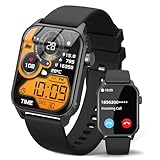
- 【1.83" HD Display & Customizable Watch Faces】Immerse yourself in a vibrant 1.83-inch IPS display, boasting a sharp resolution of 240*284 for crystal-clear visuals. Effortlessly personalize your smart watch with a wide array of customizable watch faces to suit your personal style for every occasion—whether trendy, artistic, or minimalist—ideal for casual, sporty, or professional. Its sleek, modern design complements any outfit, blending technology and fashion seamlessly for everyday wear
- 【120 Sports Modes & Advanced Health Tracking】Our TK29 smart watches for women men come equipped with 120 sports modes, allowing you to effortlessly track a variety of activities such as walking, running, cycling, and swimming. With integrated heart rate and sleep monitors, you can maintain a comprehensive overview of your health, achieve your fitness goals, and maintain a balanced, active lifestyle with ease. Your ideal wellness companion (Note: Step recording starts after exceeding 20 steps)
- 【IP67 Waterproof & Long-Lasting Battery】Designed to keep up with your active lifestyle, this smartwatch features an IP67 waterproof rating, ensuring it can withstand splashes, sweat, and even brief submersion, making it perfect for workouts, outdoor adventures, or rainy days. Its reliable 350mAh battery offering 5-7 days of active use and up to 30 days in standby mode, significantly reducing frequent charging. Ideal for all-day wear, whether you’re at the gym, outdoors, or simply on the go
- 【Stay Connected Anytime, Anywhere】Stay informed and in control with Bluetooth call and music control features. Receive real-time notifications for calls, messages, and social media apps like Facebook, WhatsApp, Twitter, and Instagram directly on your smartwatch. Easily manage calls, control your music playlist, and stay updated without needing to reach for your phone. Perfect for work, workouts, or on-the-go, this watch keeps you connected and never miss important updates wherever you are
- 【Multifunction & Wide Compatibility】Seamlessly handle heart rate monitoring, sleep tracking, and enjoy conveniences like camera/music control, Seamlessly handle heart rate monitoring, sleep tracking, and more-all directly from your wrist. This 1.83 inches HD smartwatch is compatible with iPhone (iOS 9.0+) & Android (5.0+), ensuring smooth daily connectivity and convenience throughout your day. More than just a timepiece, it’s a stylish, all-in-one wearable for smarter, healthier living
A smartwatch for non-enthusiasts
The Bip was aimed squarely at first-time smartwatch buyers and casual users who didn’t want a learning curve. The interface is simple, the button count is minimal, and there’s no app store to manage or permissions maze to navigate. You check the time, glance at notifications, track a walk or run, and move on with your day.
This simplicity is a feature, not a flaw, for many people. Compared to modern budget smartwatches that overload menus with half-baked features, the Bip’s limited scope can feel refreshingly predictable. What it does, it does consistently, even if it doesn’t do very much.
Hardware choices that aged better than expected
Physically, the Amazfit Bip remains surprisingly wearable. The 31-gram weight without the strap makes it one of the lightest smartwatch-like devices ever sold, and the polycarbonate case avoids the top-heavy feel common in cheap metal-look watches. At 9.5mm thick, it slides under sleeves easily and disappears on smaller wrists.
The 20mm silicone strap uses a standard quick-release system, which has helped the Bip survive years of fashion changes. Even today, replacement straps are cheap and abundant, making it easy to refresh the look without replacing the device. Water resistance at 3 ATM also holds up for everyday use, including rain and hand washing, even if it’s not meant for swimming workouts.
Why Amazfit keeps selling it in 2026
From a business perspective, the Bip is already paid for. Tooling, R&D, and software development costs were recouped years ago, so every unit sold now is almost pure margin. That makes it attractive for Amazfit to keep producing or licensing the design for emerging markets and entry-level segments.
There’s also a demand gap the Bip still fills. Not everyone wants a rechargeable-every-night smartwatch with voice assistants, subscriptions, and constant updates. The Bip sits closer to a digital Casio with GPS and notifications, and that niche hasn’t disappeared, even as the rest of the market has moved on.
Where its original vision clashes with modern expectations
The same choices that once made the Bip special also limit it in 2026. Fitness tracking is basic, with no structured training, limited sensor accuracy compared to modern optical heart rate monitors, and no advanced health metrics like SpO2 trends or sleep stage breakdowns you can trust clinically. GPS works, but lock times and track precision lag behind even budget watches released in the last two years.
The software experience feels frozen in time. Notifications are read-only, replies aren’t supported, and app syncing relies on an older version of the Zepp ecosystem that lacks the polish and stability of newer Amazfit devices. For Android users who expect deeper integration, this can feel restrictive rather than minimalist.
What the Amazfit Bip still represents today
In 2026, the Amazfit Bip isn’t competing with modern budget smartwatches on specs. It’s competing on philosophy. It represents an alternative approach to wearables where battery life, comfort, and simplicity matter more than feature lists and update cycles.
Whether that approach still makes sense depends entirely on what you want from a smartwatch. The Bip remains on sale because for a specific type of user, its original design goal hasn’t been replaced, just overshadowed.
Design, Comfort, and Everyday Wearability: How the Bip Holds Up Years Later
That philosophy-first approach becomes most obvious the moment you put the Amazfit Bip on your wrist. Its physical design was never meant to impress in a showroom, but to disappear during daily life, and that intent still defines how it feels to wear in 2026.
Case design and materials: utilitarian by intention
The Bip uses a lightweight polycarbonate case with a simple square silhouette and softly rounded corners. At roughly 31 grams including the strap, it feels closer to a classic resin digital watch than a modern smartwatch packed with metal, glass, and haptics.
There’s no premium finishing here. The matte plastic can show scuffs over time, especially on darker colorways, but it also doesn’t pick up fingerprints or feel precious in the way aluminum or stainless steel can.
Dimensions remain friendly even by today’s standards. The case measures about 41 x 34 mm and sits low on the wrist, making it especially comfortable for smaller wrists or users who find modern 44–47 mm smartwatches overwhelming.
Display choices that still make sense outdoors
The Bip’s transflective LCD is one of its most enduring design wins. It’s not vibrant or high-resolution by modern standards, but it remains exceptionally readable in direct sunlight, often outperforming AMOLED budget watches that rely on high brightness and aggressive auto-dimming.
This screen choice directly supports the Bip’s long battery life and always-on display behavior. You can glance at the time without wrist flicks, taps, or wake gestures, which reinforces the Casio-like experience Amazfit originally aimed for.
Indoors and at night, the display looks flat and muted. Backlight visibility is fine but unspectacular, and users accustomed to rich watch faces may find it visually dated within minutes.
Button-only navigation and physical interaction
Interaction is handled via a single physical button paired with touch input. The button itself is clicky and reliable, even years later, and it avoids the accidental presses that plague some flush-mounted smartwatch controls.
The lack of a rotating crown or multiple buttons limits navigation efficiency. Scrolling through menus or workout modes feels slower than on newer budget watches that offer more tactile control.
That simplicity does have a benefit. There’s almost nothing to learn, which suits first-time smartwatch users who just want basic interactions without gesture-heavy interfaces.
Comfort for all-day and all-night wear
Comfort is where the Bip continues to outperform many newer competitors. Its light weight, low profile, and flat caseback make it easy to forget you’re wearing, even during sleep tracking.
There are no sharp edges or protruding sensors pressing into the wrist. For users sensitive to bulk or who remove heavier watches at night, this alone can be a deciding factor.
The trade-off is sensor sophistication. The optical heart rate sensor is shallow and older-generation, which affects accuracy, but it does contribute to the watch’s unobtrusive feel.
Strap quality and long-term wear
The included silicone strap is basic but functional. It’s soft enough for workouts, dries quickly, and doesn’t trap sweat excessively, though it can feel stiff compared to modern fluoroelastomer bands.
Standard 20 mm lug spacing is a quiet advantage. You can easily swap in nylon, leather, or elastic straps, which helps refresh the Bip’s look and comfort without spending much.
After years of use, straps tend to fail long before the watch itself. Fortunately, replacements are cheap and widely available, reinforcing the Bip’s low-cost ownership appeal.
Durability and everyday resilience
With a modest water resistance rating suitable for rain, handwashing, and basic swimming, the Bip handles daily exposure without anxiety. It’s not designed for rough outdoor abuse, but it tolerates normal life well.
The plastic case won’t dent like metal, though it can scratch. The display lens is more vulnerable, lacking the hardened glass found on newer watches, so screen protectors are a sensible addition.
This is a watch you can wear while doing chores, commuting, or traveling without thinking about it. That ease of use aligns perfectly with the audience Amazfit still targets.
Aesthetic relevance in 2026
Visually, the Bip looks dated. Thick bezels, simple fonts, and limited watch face complexity place it firmly in the late-2010s wearable era.
For some users, that’s a downside. For others, especially those coming from traditional digital watches or fitness bands, it feels familiar rather than obsolete.
The Bip doesn’t try to pass as a luxury object or a mini smartphone. It looks like a tool, and that honesty is part of why its design still resonates with a narrow but loyal audience.
Display Technology Explained: The Transflective Screen Advantage (and Its Limits)
After talking about durability and long-term wear, the display is the next piece that explains why the Amazfit Bip feels so different from modern budget smartwatches. It doesn’t try to impress indoors or on a showroom table, but it excels in conditions where most cheap screens struggle.
What a transflective display actually is
The Bip uses a transflective LCD panel rather than OLED or standard backlit LCD. In simple terms, it reflects ambient light to make the screen visible, using the backlight only when needed.
Outdoors, especially in direct sunlight, this approach works remarkably well. The brighter the environment, the clearer the screen becomes, which is the opposite of how most entry-level AMOLED displays behave.
This is the same core technology used in dedicated sports watches from Garmin and Suunto. Its presence on a low-cost smartwatch is one of the Bip’s defining traits.
Sunlight readability and always-on behavior
In real-world use, the Bip is almost always readable outside without raising your wrist or triggering a backlight. Time, steps, and basic metrics remain visible at a glance, much like a traditional digital watch.
This passive visibility also enables an always-on display without meaningful battery drain. There’s no need for aggressive screen timeouts or gesture sensitivity, which makes the watch feel calm and predictable rather than reactive.
For walking, commuting, or casual fitness tracking, this is a genuine usability advantage that newer budget watches often sacrifice for visual flair.
Battery life: the hidden display win
The transflective screen is a major reason the Bip can run for weeks on a single charge. Because it relies on reflected light most of the time, the backlight activates far less frequently than on OLED-based competitors.
In everyday mixed use with notifications and light fitness tracking, battery life regularly lands in the multi-week range even in 2026. Many newer budget smartwatches struggle to last more than a few days under similar conditions.
Rank #2
![Apple Watch Series 11 [GPS 46mm] Smartwatch with Jet Black Aluminum Case with Black Sport Band - M/L. Sleep Score, Fitness Tracker, Health Monitoring, Always-On Display, Water Resistant](https://m.media-amazon.com/images/I/312K597M2uL._SL160_.jpg)
- HYPERTENSION NOTIFICATIONS — Apple Watch Series 11 can spot signs of chronic high blood pressure and notify you of possible hypertension.*
- KNOW YOUR SLEEP SCORE — Sleep score provides an easy way to help track and understand the quality of your sleep, so you can make it more restorative.
- EVEN MORE HEALTH INSIGHTS — Take an ECG anytime.* Get notifications for a high and low heart rate, an irregular rhythm,* and possible sleep apnea.* View overnight health metrics with the Vitals app* and take readings of your blood oxygen.*
- STUNNING DESIGN — Thin and lightweight, Series 11 is comfortable to wear around the clock — while exercising and even when you’re sleeping, so it can help track your key metrics.
- A POWERFUL FITNESS PARTNER — With advanced metrics for all your workouts, plus features like Pacer, Heart Rate Zones, training load, Workout Buddy powered by Apple Intelligence from your nearby iPhone,* and more. Series 11 also comes with three months of Apple Fitness+ free.*
For first-time smartwatch buyers or users coming from a basic digital watch, this endurance removes one of the biggest friction points of smart wearables.
Color, sharpness, and indoor compromises
The trade-off becomes obvious indoors. Colors look muted, contrast is limited, and the display lacks the visual punch people now expect from even inexpensive AMOLED panels.
Text and icons remain readable, but watch faces look flat and utilitarian. There’s little room for rich graphics, gradients, or dense data layouts without clarity suffering.
At close inspection, resolution and pixel density also feel dated. It’s functional, not immersive, and that distinction matters depending on expectations.
Backlight behavior and night visibility
In low light, the Bip relies on a manual or gesture-activated backlight. It works, but the illumination is uneven and cooler in tone than modern displays.
At night, the screen is visible without being overly bright, which some users prefer in bed or dark rooms. Others may find the activation delay less fluid compared to always-lit OLED screens.
This reinforces the Bip’s identity as a watch-first device rather than a miniature phone screen strapped to your wrist.
How it compares to newer budget smartwatches
Most current budget smartwatches prioritize AMOLED displays with vibrant colors and high contrast. They look better in ads, indoors, and on retail shelves.
What they often lose is outdoor legibility and battery longevity. Many require frequent charging and struggle in bright sunlight unless brightness is pushed high, further draining the battery.
The Bip takes the opposite approach. It favors legibility, efficiency, and consistency over visual impact, which still makes sense for a specific type of user.
Who this display still makes sense for in 2026
If you care about long battery life, clear outdoor visibility, and a watch that behaves predictably, the Bip’s screen remains genuinely appealing. It’s especially well-suited to walkers, commuters, and casual fitness users who spend time outside.
If you expect rich visuals, animated watch faces, or a display that looks impressive indoors, this will feel outdated quickly. In that case, newer budget models offer a more satisfying visual experience at the cost of endurance.
The transflective display isn’t a compromise born of cost-cutting. It’s a deliberate design choice that defines how the Amazfit Bip fits into daily life, for better and for worse.
Battery Life Reality Check: Multi-Week Endurance in Real-World Use
The transflective display’s efficiency isn’t just a visual choice; it underpins the Amazfit Bip’s defining strength. In everyday use, the Bip still delivers battery life that most modern budget smartwatches simply cannot match.
This is where the Bip stops feeling dated and starts feeling refreshing. You spend time wearing it, not managing it.
What “up to 30 days” actually looks like in practice
With notifications enabled, daily step tracking, sleep monitoring, and occasional heart rate checks, the Bip consistently lands in the 18 to 25 day range on a single charge. That’s not a lab figure or a best-case scenario; it’s what you see when the watch is used as intended.
If you’re lighter on notifications and don’t check heart rate often, pushing past three weeks is realistic. For many first-time smartwatch buyers, that alone changes how the device fits into daily life.
GPS usage: the main battery variable
The Bip’s built-in GPS is the biggest drain, and it behaves predictably. Expect roughly 8 to 10 hours of total GPS tracking before the battery is exhausted.
Translated into real-world use, that’s about five to seven 30-minute outdoor walks or runs per week while still comfortably clearing a week and a half between charges. Compared to newer AMOLED-based budget watches that may struggle to last four or five days with GPS use, the Bip remains remarkably efficient.
Notifications, syncing, and standby drain
Paired with an Android phone, notification delivery is stable and light on power consumption. The watch doesn’t attempt rich replies, images, or animations, which helps preserve battery life without sacrificing basic usefulness.
Overnight standby drain is minimal, often dropping just one to two percent during sleep tracking. This consistency is part of why the Bip feels more like a digital watch with smart features rather than a mini computer.
Charging speed and long-term battery health
The small battery charges quickly, typically reaching full in around two hours using the proprietary charger. There’s no fast charging, but it’s rarely missed when you’re charging twice a month instead of twice a week.
Long-term owners should temper expectations slightly. Units that are several years old may no longer hit the original multi-week figures, but even with natural battery degradation, most still outperform brand-new budget smartwatches in endurance.
Cold weather and outdoor reliability
Battery performance holds up well in colder conditions, aided by the low-power display and modest processor demands. Walkers and commuters using the Bip outdoors in winter will notice far less sudden drain than on OLED-heavy devices.
This reliability reinforces the Bip’s appeal as a practical, always-ready watch rather than something that needs frequent indoor top-ups.
How it stacks up against newer budget alternatives
Modern sub-$100 smartwatches often advertise seven to ten days of battery life, but that usually assumes reduced features or conservative usage. Turn on continuous heart rate monitoring, raise brightness, or add GPS workouts, and real-world endurance drops fast.
The Bip doesn’t try to compete on features. Instead, it delivers consistency, predictability, and freedom from charging anxiety, which still matters in 2026 more than spec sheets suggest.
Who benefits most from this kind of endurance
Casual fitness users, older buyers, and anyone who dislikes daily charging routines will immediately appreciate the Bip’s battery behavior. It’s also ideal for travel, long hikes, or simply forgetting where you left the charger.
If you enjoy interactive apps, rich health metrics, or always-on animations, you’ll accept shorter battery life as a trade-off. But if your priority is a smartwatch that quietly does its job for weeks at a time, the Amazfit Bip remains an outlier in the best possible way.
Fitness and Health Tracking Accuracy: GPS, Heart Rate, and Activity Data Compared to Modern Budget Watches
That exceptional battery life only matters if the data it preserves is trustworthy. With the Amazfit Bip, fitness tracking was always about efficiency over sophistication, and that philosophy shapes how accurate and useful its health metrics feel in 2026.
GPS accuracy: dependable, but clearly first-generation
The Bip’s built-in GPS was a standout feature at launch, and it still works reliably for basic outdoor tracking. Lock-on times are slower than modern budget watches, often taking 30–60 seconds in open areas, and longer if buildings or trees are nearby.
Once connected, route tracking is generally consistent for walking, jogging, and steady cycling. Distance totals usually land within 5–8 percent of phone-based GPS or newer watches from Redmi, Realme, or Amazfit’s own Bip U and Bip 3 lines.
Where the age shows is in path detail. Corners are often smoothed out, and urban runs can show mild drift, especially around tall buildings where modern multi-band GPS watches now hold a clear advantage.
For casual outdoor exercise, the data is good enough to understand pace, distance, and time trends. Runners focused on lap precision, interval accuracy, or mapping fidelity will notice the gap immediately.
Heart rate tracking: fine at rest, inconsistent under load
The optical heart rate sensor is functional but basic by today’s standards. Resting heart rate readings are generally stable and align reasonably well with chest straps or newer watches when you’re sitting, sleeping, or walking.
During workouts, accuracy becomes more variable. Steady-state activities like brisk walking or easy cycling are tracked acceptably, but higher-intensity efforts reveal lag and occasional dropouts.
Short bursts, hill climbs, or rapid pace changes often register late or underestimate peak heart rate. This is common for older optical sensors, especially on lightweight plastic watches with looser straps.
Compared to modern budget watches under $100, most now offer faster sampling, better motion compensation, and improved algorithms. Even inexpensive models from Xiaomi, Huawei, or CMF tend to produce more reliable exercise heart rate graphs.
Step counting and daily activity: conservative but consistent
Step tracking is one area where the Bip remains surprisingly solid. Counts are typically conservative, avoiding the inflated numbers seen on some cheaper modern trackers that mistake arm movement for walking.
Day-to-day trends are consistent, which matters more than absolute precision for most users. If you walk more this week than last, the Bip reflects that clearly.
That said, it lacks advanced activity recognition. It won’t automatically detect workouts with the same confidence as newer devices, and occasional manual start is still required for accurate logging.
Rank #3

- Bluetooth Call and Message Alerts: Smart watch is equipped with HD speaker, after connecting to your smartphone via bluetooth, you can answer or make calls, view call history and store contacts through directly use the smartwatch. The smartwatches also provides notifications of social media messages (WhatsApp, Twitter, Facebook, Instagram usw.) So that you will never miss any important information.
- Smart watch for men women is equipped with a 320*380 extra-large hd full touch color screen, delivering exceptional picture quality and highly responsive touch sensitivity, which can bring you a unique visual and better interactive experience, lock screen and wake up easily by raising your wrist. Though “Gloryfit” app, you can download more than 102 free personalised watch faces and set it as your desktop for fitness tracker.
- 24/7 Heart Rate Monitor and Sleep Tracker Monitor: The fitness tracker watch for men has a built-in high-performance sensor that can record our heart rate changes in real time. Monitor your heart rate 26 hours a day and keep an eye on your health. Synchronize to the mobile phone app"Gloryfit", you can understand your sleep status(deep /light /wakeful sleep) by fitness tracker watch develop a better sleep habit and a healthier lifestyle.
- IP68 waterproof and 110+ Sports Modes: The fitness tracker provides up to 112+ sports modes, covering running, cycling, walking, basketball, yoga, football and so on. Activity trackers bracelets meet the waterproof requirements for most sports enthusiasts' daily activities, such as washing hands or exercising in the rain, meeting daily needs (note: Do not recommended for use in hot water or seawater.)
- Multifunction and Compatibility: This step counter watch also has many useful functions, such as weather forecast, music control, sedentary reminder, stopwatch, alarm clock, timer, track female cycle, screen light time, find phone etc. The smart watch with 2 hrs of charging, 5-7 days of normal use and about 30 days of standby time. This smart watches for women/man compatible with ios 9.0 and android 6.2 and above devices.
Sleep tracking: basic insights without modern depth
Sleep tracking focuses on duration and broad sleep stages rather than detailed analysis. Bedtime and wake-up detection are usually accurate, and total sleep time aligns well with expectations.
Sleep stage breakdowns are simplistic and should be treated as directional rather than clinical. There’s no blood oxygen monitoring, no sleep score coaching, and no long-term trend insights beyond averages.
Modern budget watches now routinely include SpO2, sleep breathing metrics, and readiness-style summaries. The Bip’s approach feels dated, but it remains easy to understand and unobtrusive.
Activity profiles and workout data limitations
The Bip supports a limited set of activity modes, covering essentials like walking, running, cycling, and treadmill workouts. Metrics are focused on time, distance, pace, and heart rate rather than performance analysis.
There’s no VO2 max estimation, no training load, no recovery tracking, and no adaptive coaching. For first-time smartwatch users, this simplicity can be refreshing rather than restrictive.
Compared to newer budget watches, the feature gap is obvious. Many now include dozens of sport modes, guided workouts, and richer post-exercise summaries, even if their sensors aren’t dramatically better.
Software interpretation: Mi Fit and data presentation
Accuracy isn’t just about sensors; it’s also about how data is interpreted and displayed. The Bip relies on the Mi Fit or Zepp app, which remains stable but minimalistic.
Graphs are clear, syncing is reliable, and historical data is easy to browse. However, insights are shallow, with little context or guidance to help users improve fitness habits.
Modern companion apps have evolved into coaching platforms with trend analysis, health scores, and reminders. The Bip’s software feels more like a logbook than a personal trainer.
How it compares overall in 2026
Against modern budget smartwatches, the Amazfit Bip delivers acceptable accuracy for casual fitness tracking, but it no longer leads in sensor quality or data depth. GPS works, heart rate is usable with caveats, and daily activity tracking remains dependable.
What it offers instead is predictability. You know what the data represents, you know its limits, and you don’t have to manage constant recharging or complex settings to get it.
For users who want simple tracking without analysis paralysis, the Bip still does the job. For anyone seeking precise workout metrics or advanced health insights, newer budget watches justify their shorter battery life with clearly superior accuracy and interpretation.
Software, App Experience, and Notifications: Living With the Zepp Ecosystem in 2026
The limitations in fitness analysis flow directly into the broader software experience, because the Amazfit Bip lives and dies by its companion app. In 2026, that app is Zepp, and while it has evolved significantly for newer Amazfit hardware, the original Bip accesses only a slim slice of its capabilities.
This creates a slightly unusual experience: the app feels modern, but the watch itself operates within a much older software envelope. That contrast defines what daily life with the Bip feels like today.
Zepp app compatibility and setup in 2026
The Amazfit Bip still pairs reliably with both Android and iOS through the Zepp app. Initial setup is straightforward, and syncing remains stable, even on newer Android versions where some older wearables struggle with background permissions.
Account creation is mandatory, and data is cloud-synced by default. For privacy-conscious users, Zepp’s controls are serviceable but not granular, offering opt-outs rather than deep transparency into data handling.
Once connected, the Bip syncs quickly thanks to its small data footprint. Even with days of activity stored on the watch, sync times are measured in seconds rather than minutes.
Navigating the Zepp interface with an older watch
Zepp’s interface is clean, card-based, and easy to understand, even for non-enthusiasts. Steps, heart rate, sleep, and workouts each get their own dedicated sections with simple graphs and daily summaries.
Where the experience feels dated is in contextual depth. The app records what happened but rarely explains why it matters or what to do next, especially when paired with the Bip’s limited sensor set.
Newer Amazfit watches unlock readiness scores, stress tracking, and guided insights within the same app. Bip owners see placeholders and simplified views, which can feel like owning a car that only uses half the dashboard.
Watch-side software and daily interaction
On the watch itself, the Bip’s interface remains fast, responsive, and extremely efficient. The transflective display, low resolution by modern standards, is perfectly matched to the simple UI, making menus readable outdoors and animations unnecessary.
Navigation is button-driven with swipe gestures, and there is very little that can go wrong. There are no app installs, no background processes, and no software bloat, which directly contributes to the legendary battery life.
Firmware updates are now rare, and feature additions are effectively frozen. What you buy today is functionally identical to what users experienced years ago, for better or worse.
Notifications: functional, filtered, and frozen in time
Notification handling is one of the Bip’s most obvious limitations in 2026. You can receive alerts for calls, texts, and selected apps, but interaction stops at reading and dismissing.
Messages are displayed as plain text with no emojis rendered properly, no images, and no quick replies. Long messages are truncated, and notification grouping is basic at best.
On Android, notification mirroring is more flexible than on iOS, but reliability is similar across platforms. Alerts arrive consistently, they vibrate clearly, and they never overwhelm the watch or drain the battery.
Call handling and smart features
The Bip can alert you to incoming calls and show caller ID, but there is no microphone or speaker. You can’t answer calls, send responses, or interact beyond rejecting the call.
There is no voice assistant support, no music controls beyond basic play and pause, and no third-party app ecosystem. These omissions feel stark compared to even entry-level smartwatches released in the last two years.
At the same time, the absence of smart features keeps distractions low. The Bip behaves more like a digital watch with notifications than a wrist-mounted smartphone extension.
Watch faces, customization, and long-term usability
Customization is limited but surprisingly resilient. The Bip supports a wide range of third-party watch faces through Zepp and community tools, many of which are optimized for readability and battery efficiency.
You can change what data fields appear on the main screen, but deeper customization is locked out. There are no widgets, no complications in the modern sense, and no dynamic layouts.
Despite that, the watch remains usable over long periods because nothing about the software demands attention. It does not nag, coach, or prompt unless you explicitly enable alerts.
Stability, bugs, and aging software realities
One advantage of mature software is stability, and the Amazfit Bip benefits from this. Crashes are rare, syncing errors are uncommon, and battery drain caused by software bugs is virtually nonexistent.
The downside is stagnation. Bugs that do exist are unlikely to be fixed, and compatibility improvements will always prioritize newer Amazfit models.
In 2026, the Bip feels software-complete rather than software-supported. That distinction matters depending on whether you value reliability or ongoing improvement.
How the Zepp experience compares to modern budget rivals
Most current budget smartwatches lean heavily on their companion apps to deliver value. They offer daily readiness scores, adaptive goals, richer sleep analysis, and frequent nudges to engage with the ecosystem.
The Bip does none of that. Zepp becomes a passive record keeper rather than an active fitness or lifestyle platform when paired with this watch.
For users who want software that fades into the background, that simplicity can be a feature. For those expecting their smartwatch to evolve over time, the Amazfit Bip’s software experience will feel firmly anchored in the past.
Performance, Reliability, and Long-Term Ownership: Aging Hardware in Daily Use
With software expectations set, the next question is how the Amazfit Bip’s aging internals hold up when worn daily in 2026. This is where its strengths and weaknesses become more tangible, especially when compared to newer budget watches that feel faster but demand more attention.
Everyday performance: slow by modern standards, consistent by design
The Bip’s processor and memory were modest even at launch, and today the watch feels undeniably slow. Screen transitions have a slight delay, menus redraw visibly, and syncing after workouts takes longer than on current Amazfit or Redmi models.
That said, performance is predictable rather than frustrating. There are no sudden freezes, no runaway lag after updates, and no performance degradation over time because the software has effectively stopped changing.
Rank #4
![Apple Watch Series 11 [GPS 42mm] Smartwatch with Rose Gold Aluminum Case with Light Blush Sport Band - S/M. Sleep Score, Fitness Tracker, Health Monitoring, Always-On Display, Water Resistant](https://m.media-amazon.com/images/I/31J+F-pXaWL._SL160_.jpg)
- HYPERTENSION NOTIFICATIONS — Apple Watch Series 11 can spot signs of chronic high blood pressure and notify you of possible hypertension.*
- KNOW YOUR SLEEP SCORE — Sleep score provides an easy way to help track and understand the quality of your sleep, so you can make it more restorative.
- EVEN MORE HEALTH INSIGHTS — Take an ECG anytime.* Get notifications for a high and low heart rate, an irregular rhythm,* and possible sleep apnea.* View overnight health metrics with the Vitals app* and take readings of your blood oxygen.*
- STUNNING DESIGN — Thin and lightweight, Series 11 is comfortable to wear around the clock — while exercising and even when you’re sleeping, so it can help track your key metrics.
- A POWERFUL FITNESS PARTNER — With advanced metrics for all your workouts, plus features like Pacer, Heart Rate Zones, training load, Workout Buddy powered by Apple Intelligence from your nearby iPhone,* and more. Series 11 also comes with three months of Apple Fitness+ free.*
For basic tasks like checking the time, glancing at notifications, or starting a walk, the Bip remains functional. It simply asks for patience, not troubleshooting.
Display responsiveness and real-world readability
The transflective color LCD is one of the Bip’s most enduring assets. Touch response is less sensitive than modern AMOLED panels, but the display remains readable in bright sunlight where many cheap OLED watches struggle.
In daily use, the slower refresh rate actually reinforces the watch’s low-power philosophy. Animations are minimal, text is static, and nothing feels visually noisy.
Indoors or at night, the lack of deep contrast is noticeable, but the backlight remains even and consistent. For a watch meant to be glanced at rather than admired, the display still does its job well.
Fitness tracking accuracy over the long term
The Bip’s optical heart rate sensor is dated but serviceable for steady-state activities like walking, casual running, and cycling. Heart rate trends are generally accurate, but short spikes, interval training, and rapid pace changes expose its limitations.
GPS performance remains one of the watch’s highlights. Lock-on times are slower than modern multi-band systems, but once connected, route tracking is reliable and consistent for its class.
Over months of use, data consistency is more important than absolute precision, and the Bip delivers repeatable results. It is best treated as a trend-tracking tool rather than a performance analyzer.
Battery longevity: the Bip’s defining advantage
Battery life is where the Amazfit Bip still outperforms most of its competition. Even with GPS workouts, notifications enabled, and regular heart rate monitoring, two to three weeks of use remains realistic.
This longevity does not degrade quickly over time because the battery is rarely stressed. Shallow discharge cycles and low power draw help preserve capacity even years into ownership.
For long-term owners, this reduces one of the biggest frustrations with modern smartwatches: frequent charging. The Bip behaves more like a digital watch with features than a gadget that needs daily management.
Physical durability and wear over years of use
The lightweight polycarbonate case and aluminum bezel do not feel premium, but they age surprisingly well. Scratches accumulate, yet the watch remains structurally sound, with no flex or creaking over time.
The Gorilla Glass 3 screen resists deep damage better than expected, though it will show fine scratches without a protector. Buttons remain clicky even after years of use, a detail many cheap watches fail to maintain.
The included silicone strap is comfortable but often the first component to wear out. Fortunately, standard 20mm strap compatibility makes replacements cheap and easy.
Connectivity, syncing, and modern phone compatibility
Bluetooth stability remains solid with both Android and iOS, but syncing is slower than with newer devices. Large workout histories can take noticeable time to upload, especially after extended offline use.
Notification delivery is reliable, though limited in interaction. You can read messages, but you cannot reply, dismiss from the watch, or interact with apps beyond basic alerts.
As phone operating systems evolve, the Bip’s reliance on Zepp becomes a long-term risk. While it still works today, future OS-level changes could eventually reduce compatibility without warning.
Reliability versus relevance in long-term ownership
The Amazfit Bip is remarkably reliable because it asks very little of its hardware. No voice assistants, no app installations, and no background processes mean fewer failure points.
However, reliability does not equal relevance. Compared to newer budget watches offering AMOLED displays, richer health metrics, and smoother interfaces, the Bip feels frozen in time.
Long-term ownership only makes sense if your expectations align with what the Bip already is. It will not grow into something more capable, but it will keep doing the same simple tasks with minimal fuss.
How the Amazfit Bip Compares to Newer Budget Smartwatches
Viewed through a 2026 lens, the Amazfit Bip feels less like an aging gadget and more like a deliberate design from a different era. Newer budget smartwatches aim to impress on spec sheets, while the Bip continues to prioritize efficiency, visibility, and endurance above all else.
That philosophical gap shapes every comparison that follows.
Display technology and everyday visibility
The Bip’s transflective LCD remains its most distinctive trait. While modern budget watches almost universally use AMOLED panels with richer colors and higher resolution, they also rely on frequent wake-ups and higher power draw.
Outdoors, especially in bright sunlight, the Bip is still easier to read than many AMOLED budget watches without raising your wrist or increasing brightness. Indoors and at night, however, it looks dated, with muted colors and a clearly utilitarian presentation.
If you value always-on visibility without battery anxiety, the Bip still has an edge. If you care about visual polish, watch faces, and perceived modernity, newer options win decisively.
Battery life versus charging convenience
Battery life is where the Amazfit Bip continues to embarrass newer budget competitors. Even in 2026, many sub-$100 smartwatches struggle to exceed 7 to 10 days with notifications and fitness tracking enabled.
The Bip routinely delivers 20 to 30 days of real-world use, even with GPS workouts mixed in. That difference changes how you relate to the device, shifting it from something you manage to something you simply wear.
Newer watches charge faster and look better while doing it, but they still demand far more attention over time.
Health and fitness tracking depth
Modern budget smartwatches offer far richer health tracking than the Bip ever will. Continuous SpO2, stress tracking, body battery-style metrics, and more refined sleep staging are now standard even at low prices.
The Bip sticks to basics: steps, heart rate, basic sleep tracking, and GPS-based activity recording. Accuracy remains acceptable for casual fitness, but it lacks the context and insights newer watches provide.
For users who want trends and gentle accountability, the Bip is enough. For those actively trying to improve fitness or monitor health patterns, it feels limited almost immediately.
GPS performance and activity tracking
The built-in GPS was once a standout feature, and it still works reliably today. Lock-on times are slower than modern multi-band systems, and tracks can drift slightly in dense urban areas, but results are consistent.
Newer budget watches often include improved GNSS support and more sport profiles, especially for structured training. They also sync faster and visualize workouts more smoothly in companion apps.
For occasional runs or walks, the Bip remains serviceable. For frequent outdoor training, newer hardware is noticeably better.
Software experience and interface speed
The Bip’s interface is simple, static, and predictable. Animations are minimal, menus are straightforward, and nothing ever feels overloaded.
By contrast, newer budget watches feel closer to mini smartphones, with smoother scrolling, richer widgets, and more customization. That polish comes at the cost of complexity and, often, reliability over long periods.
If you want a watch that never surprises you, the Bip still delivers. If you want a watch that feels current and responsive, it shows its age quickly.
Build quality, comfort, and long-term wearability
At roughly 32 grams with the strap, the Bip remains lighter than most modern budget smartwatches. Larger AMOLED displays, metal cases, and bigger batteries have pushed competitors toward heavier builds.
For small wrists or all-day comfort, the Bip is still excellent. The plastic case lacks the perceived quality of newer aluminum-bodied watches, but it is also more forgiving during daily knocks.
Newer watches look better on the wrist. The Bip disappears, which some users still prefer.
Price positioning and real-world value
In many regions, the Amazfit Bip now sells at clearance-level pricing, often well below newer entry-level smartwatches. That pricing reframes its compromises as intentional trade-offs rather than shortcomings.
At similar prices, newer watches offer more features but demand more charging and attention. The Bip offers fewer features but dramatically lower maintenance.
💰 Best Value
![Apple Watch Series 11 [GPS 42mm] Smartwatch with Jet Black Aluminum Case with Black Sport Band - S/M. Sleep Score, Fitness Tracker, Health Monitoring, Always-On Display, Water Resistant](https://m.media-amazon.com/images/I/31ybzrJZckL._SL160_.jpg)
- HYPERTENSION NOTIFICATIONS — Apple Watch Series 11 can spot signs of chronic high blood pressure and notify you of possible hypertension.*
- KNOW YOUR SLEEP SCORE — Sleep score provides an easy way to help track and understand the quality of your sleep, so you can make it more restorative.
- EVEN MORE HEALTH INSIGHTS — Take an ECG anytime.* Get notifications for a high and low heart rate, an irregular rhythm,* and possible sleep apnea.* View overnight health metrics with the Vitals app* and take readings of your blood oxygen.*
- STUNNING DESIGN — Thin and lightweight, Series 11 is comfortable to wear around the clock — while exercising and even when you’re sleeping, so it can help track your key metrics.
- A POWERFUL FITNESS PARTNER — With advanced metrics for all your workouts, plus features like Pacer, Heart Rate Zones, training load, Workout Buddy powered by Apple Intelligence from your nearby iPhone,* and more. Series 11 also comes with three months of Apple Fitness+ free.*
The value equation depends less on specs and more on how much you want your watch to ask from you day after day.
Who Should Still Buy the Amazfit Bip – And Who Absolutely Shouldn’t
All of those trade-offs come into focus here. The Amazfit Bip is no longer a default recommendation, but for a narrow group of users, it still makes more sense than many newer, more capable watches.
You should still buy the Amazfit Bip if…
You want maximum battery life with minimal effort. In real-world use, the Bip can still last three to four weeks on a charge with notifications, daily step tracking, and occasional GPS activities, something almost no modern budget smartwatch can match in 2026.
You are a first-time smartwatch buyer who wants simplicity over features. The Bip behaves more like a digital watch with smart extras than a wrist computer, and that predictability lowers the learning curve dramatically.
You primarily care about steps, basic sleep tracking, and occasional outdoor walks or runs. For casual fitness tracking, the sensors are good enough, the GPS works reliably once locked, and the data is easy to understand without digging through menus.
You have small wrists or dislike bulky watches. The 41mm square case, slim profile, and featherweight plastic construction make it comfortable for all-day wear, including sleep, and it never feels top-heavy or intrusive.
You use Android and don’t care about rich smartwatch interactions. Notifications arrive reliably, music controls work, and alarms and timers are dependable, but the experience is intentionally limited.
You want a watch you can forget about. The transflective display is always readable outdoors, the software rarely glitches, and the watch never pressures you to engage with it beyond glancing at the time and stats.
You are buying at clearance pricing. At very low prices, the Bip stops competing with newer watches on features and instead competes on longevity, ease of use, and ownership cost.
You should not buy the Amazfit Bip if…
You expect modern smartwatch features. There is no voice assistant, no third-party app ecosystem, no contactless payments, no onboard music, and no meaningful smart replies.
You plan to train regularly or follow structured workouts. The limited sport profiles, basic metrics, and slower GPS acquisition fall behind even entry-level fitness watches released in the last few years.
You care about heart rate accuracy during high-intensity exercise. Like most older optical sensors, the Bip struggles with interval training, strength workouts, and rapid changes in effort.
You want a polished companion app experience. The app gets the job done, but data visualization, syncing speed, and long-term insights feel dated compared to newer Amazfit models and competitors.
You want a watch that looks like a watch. The plastic case, basic finishing, and utilitarian strap feel functional rather than refined, and there is little scope for elevating its appearance.
You are an iPhone user who expects tight platform integration. Notifications work, but the experience is clearly Android-first and lacks the smoothness iOS users are accustomed to.
You want future-proof software support. Updates are infrequent, features are frozen, and what you buy today is essentially what you will have for the rest of the watch’s life.
Edge cases where the Bip still makes sense
As a second watch, the Bip works well for travel, camping, or long trips where charging is inconvenient. Its battery endurance and always-on readability are genuinely useful in those scenarios.
For kids, seniors, or non-technical users, the Bip’s simplicity becomes a strength. There are fewer settings to break, fewer notifications to manage, and almost nothing that requires troubleshooting.
If you are intentionally stepping back from constant connectivity, the Bip offers time, movement tracking, and gentle nudges without turning your wrist into another screen demanding attention.
What it ultimately comes down to
Choosing the Amazfit Bip in 2026 is less about what it can do and more about what you want it not to do. It excels when expectations are narrow and fails quickly when they are not.
If your priorities align with battery life, comfort, and low-maintenance ownership, the Bip still holds a quiet advantage. If you want your watch to feel current, expressive, or deeply fitness-focused, this is not the device to compromise with.
Final Verdict: Is the Amazfit Bip Still a Smart Buy or a Budget Relic?
By the time you reach this point, the Amazfit Bip should feel less like a mystery product and more like a clearly defined tool with sharp edges. It is not a “bad” smartwatch, but it is undeniably a product of another era.
Whether it still makes sense depends entirely on how narrowly you define your needs and how tolerant you are of dated hardware and software.
The Amazfit Bip in 2026, honestly assessed
From a hardware perspective, the Bip’s strengths have not eroded with time. The lightweight plastic case, slim profile, and soft silicone strap still make it one of the most comfortable watches you can wear all day and forget about.
The transflective always-on display remains excellent outdoors, especially for walking, commuting, or travel. It prioritizes legibility over flair, and in bright conditions it often outperforms modern OLED screens that rely on backlight brightness.
Battery life is still the Bip’s defining achievement. Real-world use regularly stretches beyond three weeks, even with notifications and activity tracking enabled, which is something few modern smartwatches can approach.
Where age catches up fast
Fitness tracking accuracy is serviceable but limited by older sensors. Step counting is fine, GPS is slow to lock and less precise than current budget watches, and heart rate data is best treated as trend-based rather than training-grade.
The software experience is where the Bip feels most dated. Navigation is simple but basic, animations are minimal, and the companion app lacks the depth, polish, and long-term insight offered by newer Amazfit models and competitors.
There is also no meaningful path forward. Feature updates are effectively over, and what you buy today will not evolve in response to changing expectations or platforms.
How it stacks up against newer budget alternatives
Compared to modern entry-level watches like the Amazfit Bip U series, Redmi Watch, or Huawei Band-style hybrids, the original Bip loses ground in health tracking, screen quality, and smart features. Sleep analysis, blood oxygen tracking, guided workouts, and smoother app ecosystems are now common at similar prices.
What those newer devices cannot match is endurance. Most need charging every 7 to 10 days, and many rely on always-on displays that drain quickly when used as actual watches.
The Bip trades features for autonomy in a way that feels almost radical today, but that trade only makes sense if autonomy is your top priority.
Who should still buy the Amazfit Bip
If you want a watch that tells the time clearly, tracks basic movement, delivers notifications, and almost never needs charging, the Bip still delivers exactly that promise. It works especially well as a secondary watch, a travel companion, or a low-stress daily wearer.
It is also a strong option for first-time users who find modern smartwatches overwhelming. The Bip does less, but it does it consistently, and there is very little learning curve involved.
At the right price, it can still represent excellent value, provided expectations are grounded firmly in reality.
Who should look elsewhere
If you care about fitness accuracy, structured training, or health insights, the Bip will feel limiting almost immediately. Casual activity tracking is its ceiling, not its starting point.
If you want a watch that looks refined, customizable, or expressive, the plastic case and utilitarian design will not grow on you over time. This is a device built for function, not emotional appeal.
And if you expect regular updates, modern app design, or long-term platform support, there are better ways to spend your money today.
The bottom line
The Amazfit Bip is not a hidden gem waiting to be rediscovered, nor is it an obsolete failure best avoided. It is a highly specific solution that still works remarkably well within its narrow lane.
In 2026, the Bip is only a smart buy if you value battery life, simplicity, and comfort above everything else. For everyone else, the budget smartwatch market has moved on, and it is worth moving with it.