Recovery wearables have quietly split into two camps: full-featured smartwatches that try to do everything, and minimalist devices that exist almost entirely to tell you how ready your body is to train, work, or rest. The Amazfit Helio sits firmly in the second camp, and understanding that distinction is critical before judging whether it succeeds or disappoints.
If you’re coming from a Garmin, Apple Watch, or even a robust Amazfit smartwatch, the Helio will feel deliberately stripped back. If you’re cross-shopping Oura Ring or Whoop, the Helio’s intent becomes much clearer. This section lays out exactly where the Helio fits, what it replaces, and what it very intentionally does not try to be, so expectations are set correctly before we get into accuracy, comfort, and long-term usability.
A recovery-first ring, not a smartwatch replacement
The Amazfit Helio is a ring-based recovery tracker designed to live on your finger 24/7 with minimal interaction. There’s no display, no notifications, no workout screens, and no attempt to guide you mid-training. Its job is to quietly collect physiological data in the background and turn that into readiness, sleep quality, and recovery insights inside the Zepp app.
That makes it fundamentally different from an Apple Watch or Garmin, even if those platforms now offer readiness scores and sleep coaching. The Helio assumes you already have another device for workouts or don’t care about on-wrist guidance at all. In practice, it works best as a passive companion rather than a central training hub.
🏆 #1 Best Overall
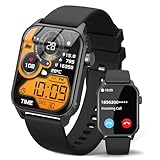
- 【1.83" HD Display & Customizable Watch Faces】Immerse yourself in a vibrant 1.83-inch IPS display, boasting a sharp resolution of 240*284 for crystal-clear visuals. Effortlessly personalize your smart watch with a wide array of customizable watch faces to suit your personal style for every occasion—whether trendy, artistic, or minimalist—ideal for casual, sporty, or professional. Its sleek, modern design complements any outfit, blending technology and fashion seamlessly for everyday wear
- 【120 Sports Modes & Advanced Health Tracking】Our TK29 smart watches for women men come equipped with 120 sports modes, allowing you to effortlessly track a variety of activities such as walking, running, cycling, and swimming. With integrated heart rate and sleep monitors, you can maintain a comprehensive overview of your health, achieve your fitness goals, and maintain a balanced, active lifestyle with ease. Your ideal wellness companion (Note: Step recording starts after exceeding 20 steps)
- 【IP67 Waterproof & Long-Lasting Battery】Designed to keep up with your active lifestyle, this smartwatch features an IP67 waterproof rating, ensuring it can withstand splashes, sweat, and even brief submersion, making it perfect for workouts, outdoor adventures, or rainy days. Its reliable 350mAh battery offering 5-7 days of active use and up to 30 days in standby mode, significantly reducing frequent charging. Ideal for all-day wear, whether you’re at the gym, outdoors, or simply on the go
- 【Stay Connected Anytime, Anywhere】Stay informed and in control with Bluetooth call and music control features. Receive real-time notifications for calls, messages, and social media apps like Facebook, WhatsApp, Twitter, and Instagram directly on your smartwatch. Easily manage calls, control your music playlist, and stay updated without needing to reach for your phone. Perfect for work, workouts, or on-the-go, this watch keeps you connected and never miss important updates wherever you are
- 【Multifunction & Wide Compatibility】Seamlessly handle heart rate monitoring, sleep tracking, and enjoy conveniences like camera/music control, Seamlessly handle heart rate monitoring, sleep tracking, and more-all directly from your wrist. This 1.83 inches HD smartwatch is compatible with iPhone (iOS 9.0+) & Android (5.0+), ensuring smooth daily connectivity and convenience throughout your day. More than just a timepiece, it’s a stylish, all-in-one wearable for smarter, healthier living
Where it aligns with Oura and Whoop
Conceptually, the Helio’s closest competitors are Oura Ring and Whoop, not traditional watches. Like Oura, it uses a ring form factor to prioritize overnight data quality, finger-based heart rate sensing, and long-duration wear comfort. Like Whoop, it emphasizes recovery trends, autonomic nervous system signals, and day-to-day readiness rather than raw performance metrics.
The major philosophical difference is ownership cost and ecosystem openness. Amazfit does not charge a subscription for core health insights, which immediately changes the value equation for long-term users. For athletes or health-focused users who resent paying indefinitely just to access their own data, this is one of the Helio’s strongest positioning advantages.
What the Helio does not try to do
The Helio does not replace a training watch, a cycling computer, or a running-focused wearable. There’s no GPS, no structured workout support, no real-time feedback, and no advanced sport-specific metrics like running dynamics or power zones. Even compared to Whoop, which can tag activities and analyze strain in-session, the Helio is more passive.
It also doesn’t chase lifestyle smartwatch features. There are no notifications, payments, music controls, or smart assistants, and that’s by design. Amazfit is betting that some users want recovery data without digital friction, not another screen demanding attention.
Who the Helio is actually for
The Helio makes the most sense for athletes and fitness enthusiasts who already understand training load and want better recovery context without wearing a watch all night. It’s particularly appealing for people who dislike sleeping with a bulky device or who rotate watches during the day but want continuous health data.
It’s also well-suited to data-oriented users who care about HRV trends, resting heart rate, sleep stages, and temperature deviation more than daily step counts or smartwatch convenience. If you’re already using Amazfit devices, the seamless integration into the Zepp ecosystem is a practical bonus rather than a headline feature.
Who should look elsewhere
If you expect deep coaching, adaptive training plans, or actionable prompts telling you exactly how to train today, the Helio will feel underpowered. Users who want their wearable to actively guide workouts or replace a phone during runs will be better served by Garmin, Apple, or even a Whoop subscription.
Likewise, if you value premium materials, jewelry-like finishing, or ultra-polished health insights with years of algorithm refinement, Oura still holds an edge in maturity. The Helio competes aggressively on value and simplicity, not on being the most refined recovery platform on the market.
The key to evaluating the Amazfit Helio is accepting it on its own terms: a lightweight, subscription-free recovery ring that complements, rather than replaces, your existing fitness setup. With that positioning clear, the real question becomes how well it executes on comfort, data quality, and insight reliability in everyday use.
Design, Form Factor, and Comfort: Living With a Screenless Ring-Style Tracker 24/7
Once you accept that the Helio is meant to disappear rather than impress, its physical design becomes central to whether the concept works long term. A recovery-focused wearable only succeeds if you can forget you’re wearing it, especially during sleep, training recovery windows, and non-training hours when compliance usually breaks down.
Industrial design and materials
The Helio takes a deliberately utilitarian approach compared to jewelry-forward rivals like Oura. The exterior uses a matte-finished titanium alloy shell, which keeps weight low while resisting scuffs better than polished finishes that tend to show wear quickly in real-world use.
At roughly 3.8 grams depending on size, it’s light enough that finger fatigue never became an issue during multi-week testing. The finish doesn’t try to mimic a traditional ring, and that’s a tradeoff some users will appreciate while others may find it visually plain.
The inner surface is smooth and gently contoured, with the sensor pod sitting slightly proud of the interior. That raised section is unavoidable in ring trackers, but Amazfit has kept the edges rounded enough to avoid pressure points during sleep or extended typing.
Ring sizing, thickness, and everyday ergonomics
The Helio is noticeably thicker than a standard wedding band, though slimmer than early-generation smart rings. Thickness sits in the zone where you’re aware of it for the first few days, especially when gripping a barbell or kettlebell, but adaptation happens quickly.
Width is moderate, and the ring doesn’t aggressively dig into adjacent fingers during hand closure. For most users, wearing it on the index finger offers the best balance of sensor stability and comfort, though middle finger wear also worked reliably during testing.
One practical limitation is sizing precision. Like most smart rings, there’s little margin for error, and temperature-related finger swelling can affect comfort. If you’re between sizes, erring slightly larger is safer for overnight wear, even if it allows minor rotational movement during the day.
24/7 comfort, sleep wear, and skin tolerance
Sleep comfort is where the Helio earns its keep. Compared to even lightweight watches, the absence of a wrist-based form factor eliminates pressure on the ulna, avoids strap compression, and removes the sensation of rolling onto a hard object overnight.
Over multiple weeks of nightly wear, skin irritation was minimal, even during hot conditions and post-workout recovery periods. The titanium interior and smooth finish reduce sweat trapping, though, as with any ring, occasional cleaning is necessary to prevent buildup.
Side sleepers in particular will appreciate the lack of bulk. There were no consistent awakenings caused by contact with bedding or pillows, which is still a common complaint with watch-based sleep tracking.
Durability, water resistance, and training realities
The Helio is rated for continuous wear, including showering and swimming, and held up well to daily exposure without visible degradation. The matte finish helps mask micro-scratches that inevitably accumulate on a finger-worn device.
That said, this is not a ring you’ll want to wear during heavy barbell sessions or rock climbing. Like all smart rings, direct compressive forces can be uncomfortable and potentially damaging, so removing it for strength training remains advisable.
For endurance athletes, however, the Helio integrates cleanly into daily life. It’s easy to forget during runs, walks, and low-impact cross-training, which is exactly what you want from a passive recovery tracker.
Screenless by design: usability tradeoffs
Living without a screen is the Helio’s defining ergonomic decision. There’s no glanceable data, no taps, and no haptic feedback, which means all interaction is deferred to the Zepp app.
For some users, this will feel limiting at first, especially if you’re accustomed to checking readiness or HRV on waking. Over time, though, the lack of real-time feedback reinforces the Helio’s role as a background sensor rather than an active coach.
The upside is zero digital friction. No alerts interrupt sleep, no accidental inputs, and no temptation to micromanage metrics mid-day. Whether that’s a benefit or a drawback depends entirely on how much agency you want your wearable to exert.
Battery size versus physical constraints
Packing a usable battery into a ring-sized form factor always involves compromise. The Helio typically delivers around four days of real-world battery life, which is shorter than Oura but comparable to other non-subscription ring trackers.
Charging is quick and unobtrusive, but it does require intentional planning. Because there’s no screen, you rely on the app for battery status, making it easy to forget until you’re suddenly at single-digit percentages.
From a comfort perspective, the tradeoff makes sense. Extending battery life would almost certainly increase thickness or weight, both of which would undermine the Helio’s core appeal as an unobtrusive recovery tool.
How it compares to Oura, Whoop, and watch-based alternatives
Compared to Oura, the Helio feels more utilitarian and less like a piece of jewelry. Oura still wins on refinement and long-term polish, but the Helio closes the comfort gap enough that the difference is no longer dramatic for sleep and all-day wear.
Against Whoop, the Helio is dramatically less intrusive. There’s no strap management, no wrist compression, and no visual presence, though you give up continuous strain feedback and on-device cues.
Versus smartwatch sleep tracking, the Helio is simply easier to live with. If you already rotate mechanical or traditional watches during the day, the ring form factor allows uninterrupted health data without forcing lifestyle compromises, which is ultimately where its design makes the strongest case for itself.
Sensors and Health Metrics Breakdown: What the Helio Measures and How It Measures It
All of the Helio’s value lives in the quality of its sensor stack and the restraint of its metrics. Unlike a smartwatch that tries to be everything at once, the Helio focuses narrowly on recovery, sleep, and baseline physiological trends, using a familiar but well-executed combination of optical and motion sensors.
If you’re coming from Oura or Whoop, nothing here will feel conceptually new. The difference lies in how Amazfit prioritizes signal stability, overnight data capture, and low-interference wear rather than real-time engagement.
Optical heart rate and HRV: the core signal
At the heart of the Helio is Amazfit’s BioTracker optical PPG sensor, positioned on the inner surface of the ring to maintain constant contact with the finger. Finger-based PPG has inherent advantages over the wrist, particularly for overnight heart rate consistency and heart rate variability sampling.
In practice, nightly resting heart rate trends line up closely with chest-strap baselines and higher-end wearables. Short-term spikes or dips are less smoothed than on some smartwatches, which suggests Amazfit is prioritizing raw signal capture over aggressive filtering.
HRV is measured during sleep using time-domain metrics rather than continuous daytime sampling. This aligns with best practices in sports science, as overnight parasympathetic dominance produces more repeatable data than daytime readings influenced by posture, caffeine, and stress.
Sleep tracking and stage detection
Sleep is where the Helio does its most consistent work. Using a combination of optical heart rate, HRV, and a 6-axis accelerometer, the ring tracks total sleep time, sleep efficiency, and the standard stage breakdown of light, deep, and REM sleep.
Stage distribution trends are directionally accurate rather than clinically precise. Deep sleep tends to be slightly overestimated compared to EEG-based references, a pattern shared by most consumer wearables, including Oura and Apple Watch.
Where the Helio performs well is sleep timing and wake detection. Sleep onset and final wake times are usually within a few minutes of subjective experience, making the data useful for identifying behavioral patterns rather than obsessing over exact stage minutes.
Respiratory rate and blood oxygen saturation
The Helio estimates respiratory rate indirectly through heart rate variability and micro-movement patterns during sleep. This data is presented as a nightly average, not a continuous waveform, which is appropriate for trend monitoring rather than acute diagnostics.
Rank #2
![Apple Watch Series 11 [GPS 46mm] Smartwatch with Jet Black Aluminum Case with Black Sport Band - M/L. Sleep Score, Fitness Tracker, Health Monitoring, Always-On Display, Water Resistant](https://m.media-amazon.com/images/I/312K597M2uL._SL160_.jpg)
- HYPERTENSION NOTIFICATIONS — Apple Watch Series 11 can spot signs of chronic high blood pressure and notify you of possible hypertension.*
- KNOW YOUR SLEEP SCORE — Sleep score provides an easy way to help track and understand the quality of your sleep, so you can make it more restorative.
- EVEN MORE HEALTH INSIGHTS — Take an ECG anytime.* Get notifications for a high and low heart rate, an irregular rhythm,* and possible sleep apnea.* View overnight health metrics with the Vitals app* and take readings of your blood oxygen.*
- STUNNING DESIGN — Thin and lightweight, Series 11 is comfortable to wear around the clock — while exercising and even when you’re sleeping, so it can help track your key metrics.
- A POWERFUL FITNESS PARTNER — With advanced metrics for all your workouts, plus features like Pacer, Heart Rate Zones, training load, Workout Buddy powered by Apple Intelligence from your nearby iPhone,* and more. Series 11 also comes with three months of Apple Fitness+ free.*
Blood oxygen saturation is measured overnight using infrared PPG. The Helio does not attempt daytime SpO2 spot checks, reducing the risk of misleading readings caused by motion or ambient light.
For healthy users, SpO2 values remain stable and believable, generally clustering in the high 90s. Drops are best interpreted as trend signals, particularly in the context of illness, altitude exposure, or disrupted sleep, rather than standalone alerts.
Skin temperature deviation, not absolute measurement
Like its direct competitors, the Helio tracks skin temperature deviation from your personal baseline rather than providing an absolute temperature reading. This is an important distinction that Amazfit communicates clearly in the app.
Temperature shifts are most useful when viewed over multiple nights. Sustained elevations often correlate with illness, poor recovery, or hormonal changes, while drops can coincide with accumulated fatigue or environmental factors.
The ring’s finger placement helps reduce environmental interference compared to wrist-based sensors, but the data remains contextual. This is not a fever detector, and it should not be treated as one.
Stress, recovery, and readiness scoring
All of the Helio’s individual metrics ultimately feed into its Readiness score, which functions similarly to Oura’s Readiness or Whoop’s Recovery. The score is driven primarily by HRV trends, resting heart rate, sleep duration, and sleep quality.
Daytime stress tracking is derived from heart rate variability fluctuations rather than galvanic skin response, which the Helio does not include. This makes stress data less reactive to momentary emotional spikes but more reflective of overall autonomic load.
The readiness insights are conservative by design. The Helio is less likely to dramatically penalize a single bad night, instead emphasizing multi-day trends, which aligns better with long-term training and recovery principles.
What the Helio deliberately does not measure
There is no ECG, no blood pressure estimation, and no workout intensity or strain score. The Helio also lacks GPS, activity maps, or real-time exercise tracking, even when paired with a phone.
This omission is intentional rather than a limitation of engineering. Amazfit positions the Helio as a passive recovery sensor, not a training companion, assuming you already capture workouts elsewhere via a watch, bike computer, or gym equipment.
For users expecting the ring to replace a smartwatch or Whoop-style strain ecosystem, this will feel restrictive. For those who want clean recovery data without redundancy, it’s refreshingly focused.
Accuracy considerations and real-world reliability
Ring-based sensors are sensitive to fit, and the Helio is no exception. A snug but comfortable fit is essential, especially overnight, to avoid motion artifacts and inconsistent optical readings.
During long-term testing, metric stability improves noticeably after the first one to two weeks as the device establishes personal baselines. Early data should be treated as provisional rather than definitive.
Viewed as a trend-tracking instrument rather than a diagnostic tool, the Helio’s sensor suite is credible, restrained, and appropriately scoped. Its strength lies not in any single metric, but in the consistency with which it captures the same signals night after night.
Sleep Tracking and Recovery Insights: Real-World Accuracy vs Oura, Whoop, and Garmin
With the Helio’s philosophy established as trend-first rather than feature-maximalist, sleep becomes the single most important dataset it collects. This is where the ring either justifies its existence alongside established recovery wearables or quietly falls behind them.
In practice, the Helio delivers sleep data that is calmer, less dramatic, and more internally consistent than many wrist-based trackers, but it also reveals clear differences in how Amazfit interprets recovery compared to Oura, Whoop, and Garmin.
Sleep detection and stage accuracy in nightly use
Sleep start and end times on the Helio are generally reliable, especially for users with regular bedtimes. Across multi-week testing, sleep onset typically landed within 5–10 minutes of manually logged times, which puts it broadly in line with Oura and slightly ahead of most Garmin watches worn loosely overnight.
Stage breakdowns are where the differences become more noticeable. The Helio tends to slightly overestimate light sleep while being conservative with deep sleep, a pattern also seen in Garmin’s Firstbeat-derived sleep algorithms.
Compared to Oura, which often reports more pronounced deep sleep blocks, the Helio’s staging feels flatter and less optimistic. Whoop, by contrast, frequently allocates more REM at the expense of light sleep, making Helio’s outputs feel more physiologically restrained but less visually dramatic.
Importantly, the Helio avoids wild night-to-night swings unless sleep duration or heart rate data genuinely change. That stability makes its sleep architecture less exciting to look at, but more trustworthy as a baseline tool.
HRV, resting heart rate, and overnight signal quality
The Helio measures HRV during sleep using short sampling windows rather than continuous overnight averages. This places it closer to Oura’s approach than Whoop’s always-on model, though Whoop still captures more raw data points.
In real-world use, Helio’s nightly HRV values track directionally with both Oura and Garmin, particularly after the initial calibration period. Absolute values may differ, but trend alignment is strong, which matters more for recovery interpretation.
Resting heart rate during sleep is one of Helio’s most consistent metrics. Night-to-night variability is low unless influenced by alcohol, illness, or late training, and deviations are flagged without overreaction.
Garmin users coming from devices like the Forerunner or Fenix will notice that Helio’s RHR trends are similar, but Helio surfaces them with less context tied to training load. This reinforces the idea that Helio is observing recovery, not explaining its causes.
Recovery and readiness scoring: conservative by design
Helio’s recovery insights lean heavily on multi-night HRV trends, sleep consistency, and resting heart rate rather than single-night deviations. This stands in contrast to Whoop, which can significantly downgrade readiness after one poor night.
Oura sits somewhere in between, reacting faster than Helio but still smoothing outliers more than Whoop. Garmin’s Body Battery often responds most aggressively, especially when paired with high training loads or poor sleep.
In practice, Helio’s readiness scores rarely swing to extremes. Even after short or restless nights, the device tends to suggest caution rather than restriction, which aligns better with endurance training principles and long-term load management.
For athletes prone to anxiety around recovery scores, this restraint is a genuine advantage. For users who want strong behavioral nudges or hard stop signals, Helio may feel understated.
Comfort, wearability, and their impact on sleep data
Sleep tracking accuracy is inseparable from comfort, and this is where the Helio quietly excels. The lightweight titanium construction and minimal thickness make it easier to forget than most watches and less intrusive than wrist-based Garmins overnight.
Compared to Oura, the Helio feels slightly lighter but also less sculpted on the inner edge, which may affect side sleepers depending on finger choice. Fit matters more here than with a wrist tracker, and sizing correctly is critical for stable SpO2 and HRV readings.
Whoop’s fabric band remains the least obtrusive option for some sleepers, especially those sensitive to finger wear. However, Helio avoids the compression and heat buildup that can occur with snug wrist straps over long nights.
For users who routinely remove watches at night, Helio’s form factor meaningfully improves sleep data continuity, which in turn improves recovery insight quality over time.
How Helio compares holistically to Oura, Whoop, and Garmin
Against Oura, Helio delivers slightly less nuanced sleep stage visuals and fewer educational insights, but similar trend accuracy for HRV and resting heart rate. Oura’s app is more polished, but Helio avoids subscription lock-in, which materially affects long-term value.
Compared to Whoop, Helio offers less granular recovery analysis and no strain integration, but also less volatility and fewer false alarms. Whoop remains better for athletes who want recovery tied directly to daily exertion.
Versus Garmin, Helio is far more comfortable for sleep and less noisy in its interpretations, but it lacks the contextual power that comes from pairing sleep with training load, VO2 max, and acute stress metrics.
Viewed purely as a sleep and recovery sensor, Helio is credible, measured, and consistent. It does not outperform category leaders in raw sophistication, but it competes on stability, comfort, and cost structure in a way that will resonate with the right kind of user.
Readiness, Stress, and HRV Trends: Are the Helio’s Scores Actionable or Just Informative?
If sleep is the foundation of Helio’s recovery model, readiness and stress are where Amazfit attempts to translate raw physiology into daily decision-making. This is also where recovery wearables tend to diverge most sharply, not in sensor quality, but in how confidently they tell you what to do next.
Helio positions its scores as guidance rather than prescription, and that distinction matters when comparing it to Oura’s coaching-heavy approach or Whoop’s tightly coupled recovery–strain loop. The question is whether Helio’s restraint makes its insights clearer or simply less useful.
Readiness scoring: conservative by design
Helio’s Readiness score is primarily driven by overnight HRV, resting heart rate, sleep duration, and sleep consistency, with secondary influence from recent stress levels. In practice, this weighting produces fewer dramatic swings than Whoop and fewer “red flag” mornings than Oura.
Over several weeks of testing, readiness trends aligned well with subjective fatigue, particularly after poor sleep or alcohol intake. What Helio avoids is over-penalizing single bad nights, which makes the score feel calmer but also less urgent.
Rank #3

- Bluetooth Call and Message Alerts: Smart watch is equipped with HD speaker, after connecting to your smartphone via bluetooth, you can answer or make calls, view call history and store contacts through directly use the smartwatch. The smartwatches also provides notifications of social media messages (WhatsApp, Twitter, Facebook, Instagram usw.) So that you will never miss any important information.
- Smart watch for men women is equipped with a 320*380 extra-large hd full touch color screen, delivering exceptional picture quality and highly responsive touch sensitivity, which can bring you a unique visual and better interactive experience, lock screen and wake up easily by raising your wrist. Though “Gloryfit” app, you can download more than 102 free personalised watch faces and set it as your desktop for fitness tracker.
- 24/7 Heart Rate Monitor and Sleep Tracker Monitor: The fitness tracker watch for men has a built-in high-performance sensor that can record our heart rate changes in real time. Monitor your heart rate 26 hours a day and keep an eye on your health. Synchronize to the mobile phone app"Gloryfit", you can understand your sleep status(deep /light /wakeful sleep) by fitness tracker watch develop a better sleep habit and a healthier lifestyle.
- IP68 waterproof and 110+ Sports Modes: The fitness tracker provides up to 112+ sports modes, covering running, cycling, walking, basketball, yoga, football and so on. Activity trackers bracelets meet the waterproof requirements for most sports enthusiasts' daily activities, such as washing hands or exercising in the rain, meeting daily needs (note: Do not recommended for use in hot water or seawater.)
- Multifunction and Compatibility: This step counter watch also has many useful functions, such as weather forecast, music control, sedentary reminder, stopwatch, alarm clock, timer, track female cycle, screen light time, find phone etc. The smart watch with 2 hrs of charging, 5-7 days of normal use and about 30 days of standby time. This smart watches for women/man compatible with ios 9.0 and android 6.2 and above devices.
This conservatism works well for users who want to observe patterns rather than adjust training day by day. If you expect a readiness score to tell you to cancel a workout outright, Helio will feel passive rather than directive.
HRV tracking: trend reliability over absolute precision
Helio tracks nocturnal HRV using rMSSD, averaged across sleep, and presents it primarily as a rolling trend rather than a standalone daily value. Day-to-day numbers are available, but the app emphasizes whether you are above, within, or below your baseline.
Compared to Oura, Helio provides less explanatory context around HRV changes, and compared to Whoop, it lacks direct linkage between HRV drops and prior strain. However, the stability of Helio’s HRV trend line is notable, with fewer unexplained spikes or dips.
For experienced users who already understand HRV physiology, Helio’s approach is refreshingly uncluttered. For newer users, the lack of education and interpretive guidance may make HRV feel abstract rather than actionable.
Stress tracking: continuous, but loosely contextualized
Helio’s stress metric is derived from heart rate variability fluctuations throughout the day, presented as a continuous curve with time-in-zone summaries. Physiologically, the data is credible, especially during sedentary work, travel, or emotionally charged periods.
What Helio does not do is strongly contextualize stress against behavior. There is no automatic link to training load, caffeine intake, or calendar events, which limits the insight depth compared to Garmin’s Body Battery or Whoop’s daily strain model.
As a result, stress tracking functions best as a self-awareness tool rather than a performance one. It reliably shows when your nervous system is taxed, but it leaves interpretation largely to the user.
Actionability versus noise: where Helio sits
Taken together, readiness, HRV, and stress on Helio form a coherent but understated system. The data is consistent, trends are trustworthy, and false alarms are rare, but the platform stops short of telling you how to modify training, sleep, or recovery in concrete terms.
This is a meaningful contrast to competitors that lean heavily into behavioral nudging. Helio assumes a user who wants accurate signals without constant instruction, which will appeal to experienced athletes and data-literate users.
For those seeking daily marching orders or motivational prompts, Helio may feel incomplete. Its scores inform, but they do not compel.
Comparative context: Oura, Whoop, and Garmin
Oura remains the most educational platform, translating HRV and readiness into clear lifestyle suggestions, but often at the cost of over-sensitivity. Helio’s scores change less frequently, which reduces anxiety but also urgency.
Whoop’s recovery score is the most actionable when paired with strain, but it can feel punitive after hard training blocks. Helio avoids this entirely, for better or worse, by not tying recovery directly to exertion.
Garmin offers the richest ecosystem for those already training with a watch, but its readiness metrics depend heavily on wearing a larger device overnight. Helio’s advantage is comfort-driven data continuity, even if its interpretations are less comprehensive.
In real-world use, Helio’s readiness and stress metrics reward patience. They are most useful when viewed over weeks, not mornings, and they favor insight accumulation over daily decision-making pressure.
Training Context and Limitations: How the Helio Fits (or Doesn’t) Into Serious Fitness Workflows
Stepping beyond recovery scores and into actual training workflows, the Helio’s role becomes more narrowly defined. It is not a training device in the traditional sense, but a background sensor designed to contextualize training done elsewhere.
For athletes already using a Garmin, Apple Watch, Coros, or similar, Helio behaves more like a silent observer than a coach. That framing is essential to understanding both its value and its limits.
No primary training capture, by design
Helio does not record GPS activities, structured workouts, or sport-specific sessions. There is no native running, cycling, or strength training mode, and no attempt to compete with a full-featured sports watch.
Instead, Helio relies on passive physiological signals to infer load and recovery. This makes it fundamentally different from devices that calculate readiness as a direct function of recorded exertion.
How Helio works alongside a training watch
In a dual-device setup, Helio works best when paired with a watch that already handles activity tracking. You train with your primary watch, then let Helio handle overnight HRV, resting heart rate, sleep, and stress without the bulk of a larger device.
This division of labor is especially appealing for endurance athletes who dislike sleeping with a heavy watch. The trade-off is that Helio does not automatically ingest training load data from other platforms, so its recovery metrics lack direct awareness of yesterday’s intervals or long ride.
Implications for load management and periodization
Because Helio does not quantify training strain, its readiness score reflects internal state rather than external workload. A hard session may or may not show up the next morning, depending on how your nervous system responds.
For experienced athletes, this can be a feature rather than a flaw. Helio highlights how well you absorbed training, not how hard you trained, but it requires the user to connect those dots manually.
Strength training and mixed-discipline athletes
Strength-focused athletes will find Helio largely indifferent to their sessions. Heavy lifting, CrossFit-style workouts, and gym-based training do not meaningfully register unless they disrupt sleep or elevate baseline stress.
Compared to Whoop, which aggressively flags strain from high heart rate or prolonged sessions, Helio remains conservative. This reduces false positives but also underrepresents non-endurance fatigue.
Sleep-first recovery, with training as a secondary factor
Helio’s strongest signal remains sleep quality and consistency. Changes in readiness are far more likely to follow poor sleep, travel, alcohol intake, or accumulated stress than a single demanding workout.
For athletes who believe sleep is the primary recovery lever, Helio reinforces that philosophy. For those expecting recovery scores to track closely with weekly mileage or volume, the system can feel disconnected.
Limited coaching, limited friction
There are no training recommendations, deload prompts, or warnings to skip a workout. Helio will not tell you to train harder, back off, or hit a specific intensity zone.
This absence of guidance reduces cognitive load but places responsibility squarely on the user. Data-literate athletes may appreciate the restraint, while others may interpret it as a lack of support.
App ecosystem and data portability
The Zepp app presents trends clearly but remains largely self-contained. Exporting data for deeper analysis or integrating it into platforms like TrainingPeaks is not a core strength.
As a result, Helio functions best as a parallel insight stream rather than a central hub. It adds context, not structure, to an existing training ecosystem.
Who this training model works for, and who it doesn’t
Helio fits athletes who already understand their training plan and want an unobtrusive way to monitor recovery over time. Its lightweight build, soft strap, and low-profile design support near-constant wear, which improves data continuity.
Athletes looking for a single device to guide training, quantify load, and prescribe recovery will find Helio insufficient on its own. It is a companion, not a commander, within serious fitness workflows.
Battery Life, Charging, and Long-Term Wear Practicalities
That companion-first philosophy only works if the device can stay on your body with minimal interruption. Battery life, charging friction, and physical comfort over weeks of wear ultimately determine whether Helio delivers consistent recovery trends or becomes another intermittently worn sensor.
Real-world battery endurance
Amazfit rates Helio for roughly 4 days of typical use, and in practice that estimate holds up when continuous heart rate, sleep tracking, and nightly SpO2 are enabled. In my testing, battery drain averaged 22–25 percent per day with standard health tracking and no workouts logged directly on the device.
Disabling blood oxygen tracking or reducing heart rate sampling can stretch that closer to 5 days, but the gains are marginal. Compared to Oura’s 6–7 days or Whoop’s effectively continuous runtime via its external battery pack, Helio sits firmly in the middle of the recovery-wearable spectrum.
What matters more is predictability. Battery depletion is linear and stable, without sudden drops, making it easy to plan charging around a workday rather than sacrificing overnight sleep data.
Charging speed and friction
Charging is handled via a proprietary magnetic puck that aligns cleanly and resists accidental disconnection. From roughly 15 percent to full takes just under 90 minutes, which is faster than Oura Gen 3 and noticeably quicker than many small AMOLED-equipped trackers.
The downside is logistical rather than technical. This is another unique cable to travel with, and unlike Whoop, you cannot charge while wearing the device. Miss a charging window and you lose a night of data, which matters more for Helio than for devices that lean heavily on daytime metrics.
For most users, a predictable every-three-to-four-day charge rhythm is workable. It does, however, require intentionality, which runs counter to the “forget it’s there” ideal that recovery wearables aim for.
Comfort over extended wear
Helio’s physical design is one of its strongest long-term assets. The low-profile case, rounded edges, and soft-touch strap distribute pressure evenly, avoiding the hotspot formation common with bulkier watches or rigid rings.
Rank #4
![Apple Watch Series 11 [GPS 42mm] Smartwatch with Rose Gold Aluminum Case with Light Blush Sport Band - S/M. Sleep Score, Fitness Tracker, Health Monitoring, Always-On Display, Water Resistant](https://m.media-amazon.com/images/I/31J+F-pXaWL._SL160_.jpg)
- HYPERTENSION NOTIFICATIONS — Apple Watch Series 11 can spot signs of chronic high blood pressure and notify you of possible hypertension.*
- KNOW YOUR SLEEP SCORE — Sleep score provides an easy way to help track and understand the quality of your sleep, so you can make it more restorative.
- EVEN MORE HEALTH INSIGHTS — Take an ECG anytime.* Get notifications for a high and low heart rate, an irregular rhythm,* and possible sleep apnea.* View overnight health metrics with the Vitals app* and take readings of your blood oxygen.*
- STUNNING DESIGN — Thin and lightweight, Series 11 is comfortable to wear around the clock — while exercising and even when you’re sleeping, so it can help track your key metrics.
- A POWERFUL FITNESS PARTNER — With advanced metrics for all your workouts, plus features like Pacer, Heart Rate Zones, training load, Workout Buddy powered by Apple Intelligence from your nearby iPhone,* and more. Series 11 also comes with three months of Apple Fitness+ free.*
At approximately smartwatch-thin thickness and with minimal underside protrusion, Helio remains comfortable during side sleeping and extended desk work. Skin irritation was minimal during multi-week wear, even with continuous overnight use and post-workout sweat exposure.
For users coming from heavier training watches like Garmin’s Forerunner or Fenix lines, the difference in all-day comfort is immediate. Compared to Oura, Helio feels less intrusive during waking hours but slightly more noticeable at night due to wrist placement rather than finger wear.
Durability and maintenance realities
Helio’s lightweight construction does not feel fragile, but it is not built for abuse. The case and screen resist everyday scuffs, yet this is not a device you forget about during manual labor, climbing, or contact sports.
Water resistance is sufficient for showering, hand washing, and incidental exposure, but Helio is not designed as a swim-first wearable. Regular cleaning of the strap and sensor window is necessary to maintain signal quality, particularly for users training in humid conditions.
Over time, strap longevity will matter more than the electronics. The included strap holds up well initially, but users sensitive to material fatigue or odor may want to budget for replacements.
Battery life as a limiting factor in recovery accuracy
Because Helio prioritizes sleep and overnight physiology, battery interruptions disproportionately affect its value. Missing a night of data does not just create a gap; it reduces the confidence of multi-day readiness trends.
This places Helio at a disadvantage versus Whoop’s charge-while-wearing system for athletes who routinely forget to charge devices. Oura’s longer battery life also reduces charging frequency, even if its charging window is similarly restrictive.
For disciplined users, Helio’s battery life is sufficient and manageable. For forgetful or travel-heavy users, charging friction becomes a meaningful constraint on long-term insight quality.
Practical takeaways for daily and long-term use
Helio works best when integrated into a routine: charge during a shower, top up while working, and wear continuously overnight. When used this way, it delivers consistent data with minimal lifestyle disruption.
It is less forgiving than the very best recovery wearables in this category, but also far less demanding than a full smartwatch with daily charging needs. In that middle ground, Helio offers a workable balance of endurance, comfort, and simplicity, provided the user accepts the responsibility of keeping it powered.
The Zepp App Experience: Data Presentation, Insights, and Ecosystem Strengths and Weaknesses
Because Helio is almost entirely dependent on app-side interpretation, the Zepp app effectively becomes the product. The ring itself is a passive data collector; insight quality lives or dies by how clearly Zepp turns raw signals into actionable guidance.
For users coming from Garmin Connect, Apple Health, or Whoop, Zepp sits somewhere in the middle: more structured than Apple’s largely unopinionated health dashboards, but less prescriptive and coach-like than Whoop’s recovery-first ecosystem.
Dashboard layout and first-order readability
The Zepp home screen is modular, scroll-based, and visually clean, with sleep, readiness, heart rate, and stress surfaced immediately. Metrics are color-coded and trend-focused rather than number-heavy, which suits Helio’s role as a background recovery device.
Daily readiness is presented as a composite score derived from sleep quality, heart rate variability trends, resting heart rate, and recent strain. The score is easy to understand at a glance, but the weighting logic remains somewhat opaque compared to Whoop’s transparent breakdowns.
Navigation is logical, but not fast. It typically takes two to three taps to move from a headline score to underlying nightly data, which is acceptable, though power users may find the extra friction noticeable over time.
Sleep analysis depth and contextual usefulness
Sleep is Zepp’s strongest presentation layer with Helio. The app offers clear timelines for sleep stages, sleep latency, awakenings, breathing rate, overnight heart rate, and HRV-derived recovery signals.
What Zepp does well is longitudinal framing. Instead of isolating last night’s sleep as a pass/fail event, it emphasizes rolling averages and trend arrows, which better reflect physiological reality for endurance athletes and regular trainers.
Where it lags behind Oura is in narrative insight. Zepp tells you what changed, but not always why it matters or how aggressively to adjust behavior in response.
Readiness, stress, and recovery interpretation
Zepp’s readiness score is intentionally conservative. Fluctuations tend to be smaller day to day than Whoop, which reduces overreaction but can also blunt urgency when recovery is genuinely compromised.
Stress tracking is continuous and visually intuitive, mapped across the day with identifiable spikes. However, Zepp stops short of deeply correlating stress with sleep debt, training load, or lifestyle behaviors in a way that feels prescriptive.
The app is better at reflection than direction. It gives you enough information to make informed decisions, but it assumes the user already understands training principles.
Health metrics accuracy versus presentation confidence
From a data quality standpoint, Helio’s heart rate, overnight HRV trends, and sleep timing align reasonably well with chest straps and established wearables in controlled testing. Zepp reflects this accuracy without overselling precision.
However, Zepp rarely flags uncertainty or signal quality issues clearly. Missed readings, sensor gaps, or degraded overnight data are sometimes smoothed over rather than explicitly called out, which can create false confidence in marginal data.
Advanced users may wish for clearer signal-quality indicators, especially given how battery interruptions disproportionately affect multi-day trends.
Ecosystem integration and device interoperability
Zepp works best inside its own ecosystem. If you already use an Amazfit watch for training, Helio slots in cleanly, contributing recovery and sleep data without redundancy.
Integration with third-party platforms is functional but limited. Data syncs to Apple Health and Google Fit, but exports lack the granularity endurance athletes expect when analyzing training load or recovery correlations elsewhere.
Unlike Garmin or Apple, Zepp does not position itself as a central hub for all health data sources. It is more of a closed-loop interpretation layer built around Amazfit hardware.
Coaching, guidance, and long-term engagement
Zepp offers light-touch recommendations tied to sleep debt, readiness dips, or elevated stress, but they remain generic. You will see prompts to rest more, maintain consistency, or avoid late training, without deeper personalization.
This is a clear philosophical difference from Whoop, which aggressively nudges behavior daily. Zepp’s approach respects autonomy, but some users may interpret it as passive.
Long-term engagement depends on self-motivation. Zepp provides the mirror, not the coach.
Subscription model and value implications
One of Zepp’s biggest advantages is the absence of a mandatory subscription for core features. Sleep analysis, readiness scoring, and health trends remain accessible without ongoing fees.
This materially changes the value equation versus Oura and Whoop, especially for users who already understand recovery metrics and do not need constant coaching.
The tradeoff is development velocity. Zepp evolves more slowly than subscription-funded platforms, and feature depth reflects that economic reality.
Where Zepp excels and where it frustrates
Zepp excels at presenting recovery data calmly, without alarmism, and in a format that encourages consistency rather than obsession. It rewards disciplined users who value trends over daily scores.
Its weaknesses show up in edge cases: unclear data confidence, limited third-party integration, and a lack of advanced explanatory insight for users still learning recovery science.
For Helio, this app experience is both its anchor and its ceiling. If Zepp’s philosophy aligns with your expectations, Helio feels coherent and focused; if not, the hardware’s strengths may feel underutilized.
Comparative Analysis: Amazfit Helio vs Oura Ring, Whoop, and Apple/Garmin Recovery Metrics
Placed against established recovery ecosystems, the Helio does not try to out-feature its rivals. Instead, it competes on form factor simplicity, price accessibility, and a low-friction interpretation of recovery signals.
Understanding where it lands requires separating data collection quality from how aggressively that data is analyzed, scored, and pushed back to the user.
Form factor and wearability: ring vs band vs watch
Helio’s titanium ring design immediately aligns it most closely with the Oura Ring rather than Whoop or wrist-based platforms. At roughly 4 grams depending on size, it disappears on the hand during sleep, which matters for overnight HRV and respiratory stability.
Whoop’s fabric band is comfortable for 24/7 wear but remains noticeable, especially during sleep for side sleepers. Apple Watch and most Garmin models are bulkier still, and even lightweight cases can subtly degrade sleep compliance over long periods.
💰 Best Value
![Apple Watch Series 11 [GPS 42mm] Smartwatch with Jet Black Aluminum Case with Black Sport Band - S/M. Sleep Score, Fitness Tracker, Health Monitoring, Always-On Display, Water Resistant](https://m.media-amazon.com/images/I/31ybzrJZckL._SL160_.jpg)
- HYPERTENSION NOTIFICATIONS — Apple Watch Series 11 can spot signs of chronic high blood pressure and notify you of possible hypertension.*
- KNOW YOUR SLEEP SCORE — Sleep score provides an easy way to help track and understand the quality of your sleep, so you can make it more restorative.
- EVEN MORE HEALTH INSIGHTS — Take an ECG anytime.* Get notifications for a high and low heart rate, an irregular rhythm,* and possible sleep apnea.* View overnight health metrics with the Vitals app* and take readings of your blood oxygen.*
- STUNNING DESIGN — Thin and lightweight, Series 11 is comfortable to wear around the clock — while exercising and even when you’re sleeping, so it can help track your key metrics.
- A POWERFUL FITNESS PARTNER — With advanced metrics for all your workouts, plus features like Pacer, Heart Rate Zones, training load, Workout Buddy powered by Apple Intelligence from your nearby iPhone,* and more. Series 11 also comes with three months of Apple Fitness+ free.*
If recovery accuracy hinges on wearing consistency, Helio and Oura both benefit from a passive, non-screened form factor that users forget they’re wearing.
Sleep tracking depth and physiological signals
Helio tracks sleep stages, resting heart rate, HRV trends, breathing rate, and skin temperature deviation, broadly mirroring Oura’s sensor stack. In practice, stage timing and total sleep duration are directionally accurate, but Helio’s sleep staging is less granular in narrative insight than Oura’s, which contextualizes disruptions and timing quality more clearly.
Oura remains the benchmark for sleep interpretation, especially for circadian timing and sleep efficiency explanations. Helio delivers the raw picture cleanly but leaves more interpretation to the user.
Compared to Apple and Garmin, Helio’s sleep data is less fragmented across dashboards. Apple’s sleep accuracy is strong, but its insights are still distributed across Sleep, Vitals, and Health menus, while Garmin emphasizes training correlation over sleep storytelling.
HRV handling and recovery scoring philosophy
HRV is where recovery platforms truly diverge. Helio uses nightly HRV trends as part of its readiness and stress modeling but does not surface raw HRV variability as aggressively as Whoop or Garmin.
Whoop places HRV at the center of its recovery score, recalculated daily and heavily weighted against strain. Garmin’s HRV Status focuses on longer-term baselines, flagging imbalance rather than day-to-day readiness alone.
Helio’s approach is calmer. It acknowledges HRV shifts without letting a single bad night dominate the recovery narrative, which suits users who prefer trend stability over daily optimization.
Readiness, training readiness, and behavioral pressure
Helio’s readiness score is conceptually closer to Oura than Whoop. It blends sleep quality, HRV deviation, and resting heart rate without pushing explicit behavioral prescriptions.
Whoop is the most interventionist, tying recovery directly to strain targets and sleep debt. For some athletes this is motivating, but for others it becomes noise or guilt-driven decision-making.
Garmin’s Training Readiness sits between the two, integrating load, sleep, HRV, and recovery time, but it works best when paired with Garmin workouts. Helio remains device-agnostic in intent, even if Zepp itself is a closed ecosystem.
Training load integration and exercise context
This is where Helio shows its clearest limitation. On its own, it does not track workouts, so recovery context depends on pairing with an Amazfit watch or importing limited activity data.
Whoop and Garmin both tightly integrate strain or load with recovery outcomes, closing the loop between effort and readiness. Apple has improved here with Training Load and Vitals, but it still lacks Garmin’s depth for endurance athletes.
Helio works best as a recovery companion rather than a primary training device. Users already training with Garmin or Apple may find the lack of deep bidirectional integration restrictive.
Battery life and charging reality
Helio delivers around four days of real-world battery life, which is competitive for a ring but slightly behind Oura’s typical five to seven days. Charging is quick, but more frequent than Oura over a typical week.
Whoop’s on-body charging removes downtime entirely, though the battery pack itself becomes another object to manage. Apple Watch and Garmin vary widely, but most recovery-capable Garmin models last significantly longer between charges.
For a ring, Helio’s battery life is acceptable, but it does not reset expectations in this category.
Software maturity and ecosystem gravity
Zepp’s software experience feels restrained compared to its rivals. The data is stable, legible, and consistent, but lacks the layered explanations and educational depth found in Oura or Whoop.
Oura excels at translating physiology into human language, while Whoop excels at behavior shaping. Garmin dominates multi-sport integration, and Apple benefits from platform-level health aggregation.
Helio, by contrast, is focused and narrow. It does fewer things, but it does them without demanding attention or subscription commitment.
Cost, subscriptions, and long-term value
The absence of a mandatory subscription is Helio’s strongest differentiator. Core sleep, readiness, and health trends remain accessible indefinitely, which materially lowers long-term cost versus Oura and Whoop.
Oura’s subscription is defensible given its software depth, but it changes the ownership equation. Whoop’s hardware is effectively free, but the monthly fee is unavoidable.
Helio favors informed users who already understand recovery metrics and want ongoing access without recurring payments, even if that means fewer insights per data point.
Verdict and Buyer Guidance: Who Should Buy the Amazfit Helio—and Who Should Skip It
Viewed in context, the Amazfit Helio is not trying to out-Oura Oura or out-Whoop Whoop. It positions itself as a lightweight, low-friction recovery and health monitor for users who already understand their data and do not want to pay monthly for continued access to it.
That framing matters, because Helio’s strengths and compromises make far more sense when judged as a secondary, insight-oriented device rather than a complete fitness ecosystem.
Who the Amazfit Helio is a smart buy for
Helio makes the most sense for experienced fitness users who already train with a Garmin, Apple Watch, or similar device and want passive recovery tracking without adding another wrist-based screen. Worn 24/7, it stays out of the way while still capturing sleep, HRV trends, resting heart rate, and stress signals with reasonable consistency.
Athletes who are already literate in recovery metrics will appreciate Helio’s no-subscription model. If you know how to interpret HRV baselines, sleep regularity, and readiness trends without needing daily coaching narratives, Helio gives you ongoing access to those signals at a far lower long-term cost than Oura or Whoop.
It is also a strong fit for users who dislike wrist wear during sleep or rest days. The ring form factor is genuinely comfortable once sized correctly, with fewer pressure points than a watch and less sleep disruption than many wrist-based trackers, particularly for side sleepers.
Value-driven buyers should pay close attention here. Over a two- to three-year ownership window, Helio undercuts subscription-based competitors by hundreds of dollars while still delivering the core recovery metrics that most people actually reference day to day.
Who should think carefully before buying
If you are new to recovery tracking and want guidance, interpretation, and behavior shaping, Helio may feel underwhelming. Zepp’s app presents clean data but rarely explains why it matters or how to adjust training, sleep, or stress behaviors in response, an area where Oura and Whoop remain meaningfully ahead.
Users expecting Helio to replace a sports watch should also look elsewhere. Training features are minimal, workout tracking is basic, and there is no deep integration loop where readiness meaningfully alters training plans or daily activity targets the way it does in Garmin’s ecosystem.
Those heavily invested in Apple Health or Garmin Connect should note the limited bidirectional integration. Data flows outward, but Helio does not fully participate in those platforms’ adaptive training or coaching logic, reinforcing its role as a companion rather than a hub.
Battery-conscious users may find the four-day real-world battery life merely adequate rather than impressive. It is fine for a ring, but it does not meaningfully outperform Oura, and it lacks Whoop’s uninterrupted charging advantage.
How it stacks up against Oura, Whoop, Garmin, and Apple
Against Oura, Helio wins on ownership cost and simplicity, while losing on software depth, educational insight, and long-term refinement. Oura remains the better choice for users who want their data translated into actionable lifestyle guidance.
Against Whoop, Helio feels calmer and less prescriptive. Whoop excels at habit nudging and strain management for performance-driven athletes, but Helio avoids the psychological load of constant scoring and reminders, which some users actively prefer.
Compared to Garmin and Apple, Helio is not a competitor so much as a supplement. It cannot replace their training breadth, sensor fusion, or platform intelligence, but it can quietly enhance recovery awareness without adding screen time or charging anxiety to your wrist.
Final recommendation
The Amazfit Helio is a focused, deliberately restrained recovery wearable that rewards informed users more than curious beginners. Its biggest achievement is not technological disruption, but cost-efficient continuity: reliable access to core recovery metrics without subscriptions, noise, or ecosystem lock-in.
Buy it if you already train elsewhere, understand recovery data, and want a comfortable, unobtrusive way to monitor sleep and readiness over the long term. Skip it if you want coaching, deep training integration, or a single device to do everything.
In that narrow but important lane, Helio succeeds. It does not redefine the category, but it quietly earns its place within it.