Smart rings are no longer novelty sleep trackers, and the Amazfit Helio Ring is a clear signal that performance-focused wearables are shrinking in size while expanding in ambition. Built by a brand already trusted by endurance athletes for GPS watches and training analytics, Helio is designed to disappear on your finger while quietly collecting physiological data that’s difficult to capture accurately from the wrist during real training and recovery.
For athletes who already train with a watch, chest strap, or bike computer, Helio isn’t trying to replace those tools. It’s designed to complement them by filling in the gaps: continuous recovery metrics, sleep quality, readiness indicators, and stress signals that matter between sessions rather than during intervals. This section breaks down exactly what Helio is, what it tracks, and why its form factor changes how and when athletes can extract meaningful data.
A performance-oriented smart ring, not a lifestyle accessory
The Amazfit Helio Ring is a minimalist titanium smart ring built around 24/7 biometric monitoring, prioritizing recovery and physiological load rather than on-screen interaction. There’s no display, no notifications, and no attempt to act like a tiny smartwatch, which is precisely the point. At roughly a few millimeters thick and weighing only a couple of grams depending on size, it’s designed to be worn continuously without interfering with grip, barbell work, sleep, or daily movement.
Unlike many consumer-focused smart rings that lean heavily into wellness trends, Helio is positioned squarely for athletes who already understand metrics like HRV, resting heart rate, and training readiness. The industrial design reflects this intent, with a durable titanium shell, subtle matte finishing, and water resistance suitable for sweat-heavy training blocks and overnight wear. Comfort and durability take priority over fashion, making it a practical tool rather than a statement piece.
🏆 #1 Best Overall

- 【Check the Size Before Purchase】 Before buying the prxxhri Smart Ring, we strongly suggest that you refer to the size chart and carefully measure the circumference of your finger. This will ensure you get the most comfortable wearing experience and easily avoid any unnecessary returns or exchanges.
- 【Real-time Accurate Sleep & Fitness Monitoring】 prxxhri smart ring tracks your sleep quality and daily activities in real time. With advanced sensors, it provides precise data about your sleep cycle, helping you optimize rest and recovery. Whether you are tracking steps, calories or exercise performance, this smart ring can provide you with the most accurate insights to support your fitness goals and enhance your overall health.It is a good choice for family and friends.
- Health Monitoring】The prxxhri ring features advanced 4.0 sensors that automatically measure your heart rate, and blood pressure every 30 min when worn. It provides continuous health tracking and comprehensive wellness management all day.
- 【3-5 Day Battery Life】 With a 3-5 day battery life, the prxxhri smart ring ensures continuous health monitoring without frequent charging. When used with the smart charging case, the usage time can even exceed 20 days. Whether you are tracking sleep patterns or fitness activities, you can count on long-lasting performance without constant interruptions.
- 【80-meter Waterproof, Suitable for Various Scenarios】 The prxxhri Smart Ring has excellent waterproof performance, with a waterproof depth of up to 80 meters. Whether it's for daily wear, an intense workout session or a pleasant swimming time, it can handle it with ease. What's more, even if you have sensitive skin, you can still enjoy an extremely comfortable wearing experience when wearing this ring.
The sensors and metrics that matter for athletic performance
At the core of Helio is a multi-sensor array combining optical heart rate, blood oxygen saturation, skin temperature trends, and motion tracking. Worn on the finger, these sensors benefit from stronger blood flow and less movement noise than the wrist, which can improve consistency for resting heart rate, overnight HRV, and sleep-stage analysis. For athletes, that means cleaner recovery signals rather than flashy workout graphs.
Helio continuously tracks sleep duration, sleep stages, overnight heart rate, HRV trends, breathing rate, and temperature deviations, feeding into readiness and recovery insights within the Zepp app ecosystem. These metrics are not about real-time coaching mid-run or mid-ride, but about answering the harder questions: how well you absorbed yesterday’s training, whether accumulated fatigue is creeping in, and when it might be smarter to back off rather than push.
Where Helio fits alongside smartwatches and training gear
The Helio Ring is not designed to replace an Amazfit T-Rex, Garmin Forerunner, or COROS watch, and athletes shouldn’t expect onboard GPS or workout displays. Instead, it acts as a background data collector, capturing the recovery and health signals that watches often struggle to measure accurately during sleep or off-wrist time. For athletes who remove their watch at night or during strength sessions, Helio keeps the data stream uninterrupted.
Its real value emerges when paired with a primary training device. Workouts tracked on a watch provide the external load, while Helio supplies the internal response and recovery context. This dual-device approach mirrors how serious athletes already combine power meters, heart rate straps, and training software, using each tool where it performs best.
How it compares to other smart rings on the market
Compared to established smart rings, Helio leans more heavily into performance analytics and less into lifestyle features. There’s no focus on contactless payments, smart alerts, or productivity tools, which allows battery life to stretch comfortably across multiple days depending on usage. Charging is infrequent enough that athletes can wear it through heavy training weeks without constantly managing power.
The Zepp platform also gives Helio an advantage for users already invested in Amazfit’s ecosystem, with unified dashboards and trend analysis across devices. While some competing rings excel in consumer wellness polish or app aesthetics, Helio’s strength lies in how directly it speaks to training adaptation, fatigue management, and long-term physiological trends.
Who the Amazfit Helio Ring makes the most sense for
Helio is best suited to endurance athletes, strength-focused lifters, and hybrid trainers who already understand that performance gains happen during recovery, not just workouts. It’s especially compelling for athletes who dislike sleeping with a watch, want cleaner overnight data, or need a low-profile device that won’t interfere with grip-intensive training.
For casual users looking for notifications or all-in-one convenience, Helio may feel intentionally limited. For athletes who want a silent, durable, always-on recovery tracker that works alongside serious training hardware, it fills a very specific and increasingly important role in the modern wearable ecosystem.
Design, Materials, and Wearability for Training and Recovery
If Helio’s data-first philosophy makes sense on paper, its physical design is where that intent becomes practical. Everything about the ring prioritizes staying out of the way during training, recovery, and sleep, rather than acting as a visible or interactive gadget.
Minimalist form factor built for continuous wear
The Helio ring follows a clean, unbranded silhouette that looks closer to a traditional band than a piece of electronics. There’s no display, haptic motor, or external indicator to interrupt its surface, which helps it disappear during long training blocks.
That restraint matters for athletes who already juggle multiple devices. Helio is meant to be forgotten once it’s on, collecting data quietly while the athlete focuses on training execution and recovery habits.
Materials chosen for durability, not decoration
Amazfit uses a titanium-based outer shell for Helio, prioritizing strength-to-weight ratio over visual flair. Titanium’s resistance to corrosion and skin irritation makes it well suited for sweat-heavy endurance sessions, daily showers, and overnight wear without needing removal.
The internal sensor housing is fully sealed, protecting optical sensors and electronics from moisture and debris. This construction supports consistent readings across weeks of use, even when training environments shift from gym floors to open water or humid outdoor conditions.
Weight, thickness, and real-world comfort
Helio’s low mass is one of its biggest advantages over wrist-based wearables. On the finger, the weight is distributed naturally, reducing pressure points and eliminating the pendulum effect that can occur with watches during running or dynamic movements.
Thickness is kept conservative for a smart ring, helping avoid knuckle interference during gripping movements. For most users, it feels closer to a wedding band than a piece of tech, which is critical for maintaining compliance over long training cycles.
Grip-heavy training and gym usability
Smart rings often live or die by how they behave under load, and Helio is clearly designed with this in mind. Its smooth exterior avoids sharp edges that dig into the finger during barbell lifts, kettlebell work, or pull-focused movements.
That said, athletes lifting at very high intensities may still choose to remove it for maximal lifts or use tape, just as they would with any ring. For the majority of strength sessions, though, Helio remains far less intrusive than a watch or chest strap.
Sleep comfort and overnight recovery tracking
Helio’s strongest wearability advantage shows up at night. The absence of a screen, vibration motor, or bulky housing makes it easier to tolerate during side sleeping or restless movement.
This comfort translates directly into better data consistency. Athletes who routinely remove watches at night are far more likely to keep Helio on, resulting in cleaner HRV, resting heart rate, and sleep-stage trends across consecutive days.
Water resistance and day-to-day resilience
Designed for true 24/7 wear, Helio handles sweat, rain, and submersion without concern. Showering, swimming, and post-workout recovery routines don’t require removal, which helps prevent gaps in physiological data.
That resilience supports the ring’s role as a background recovery tracker rather than a device that demands frequent attention. The less often it comes off, the more valuable its long-term trend data becomes.
Sizing, fit accuracy, and sensor contact
As with any smart ring, proper sizing is critical for reliable readings. Helio relies on consistent skin contact for optical heart rate and SpO₂ measurements, making a snug but not restrictive fit essential.
Amazfit’s sizing approach encourages choosing a finger with minimal size fluctuation throughout the day. When fit is correct, sensor stability remains strong during sleep and most training scenarios, supporting accurate recovery metrics over time.
Design philosophy aligned with performance use
Helio doesn’t attempt to replace a watch visually or functionally, and that’s reflected in every design choice. The absence of interaction surfaces reinforces its role as a passive data collector rather than a command center.
For athletes already comfortable managing training through watches, bike computers, or coaching platforms, Helio’s physical design complements that ecosystem. It delivers durability, comfort, and unobtrusive wearability, which are exactly the traits needed for meaningful recovery tracking at scale.
Core Sensor Suite: How the Helio Ring Captures Performance Data
Helio’s unobtrusive physical design only works because its internal sensor stack is purpose-built for continuous physiological monitoring. Rather than chasing breadth, Amazfit has focused on the signals that matter most for endurance performance, recovery, and long-term load management.
The result is a ring that prioritizes signal stability and trend accuracy over flashy real-time metrics. That philosophy shapes every sensor choice inside the Helio.
Optical heart rate and HRV: the foundation of recovery tracking
At the core of Helio’s performance tracking is a multi-channel optical heart rate sensor using green and infrared LEDs. Positioned on the inner band of the ring, it maintains consistent contact with the underside of the finger, where capillary density is higher than the wrist.
This placement improves signal quality during sleep and low-movement periods, which is critical for resting heart rate and heart rate variability analysis. HRV is sampled during overnight windows when parasympathetic activity is highest, allowing Helio to generate recovery and readiness insights with less noise than daytime readings.
Unlike sport watches that prioritize second-by-second heart rate during workouts, Helio’s strength lies in capturing baseline cardiovascular trends. For athletes training with external devices, that separation of roles actually improves data clarity.
Blood oxygen saturation for altitude and respiratory context
Helio includes SpO₂ monitoring using infrared light, primarily leveraged during sleep and recovery periods. While not designed for continuous daytime tracking, these overnight oxygen saturation readings add context for altitude exposure, respiratory strain, and illness detection.
For endurance athletes training at elevation or traveling between environments, SpO₂ trends can highlight adaptation stress or incomplete recovery. When paired with HRV and resting heart rate, these metrics help explain why performance may feel suppressed even when training load remains unchanged.
As with most smart rings, SpO₂ accuracy depends heavily on fit and finger temperature. Helio performs best when worn on a finger with stable circulation and minimal nocturnal movement.
Skin temperature sensing for physiological trend detection
Helio uses a skin temperature sensor to track deviations from an individual baseline rather than absolute body temperature. These nightly measurements are especially useful for identifying early signs of overreaching, illness, or hormonal shifts.
Small upward trends in skin temperature, when combined with suppressed HRV, often precede perceived fatigue. This makes the metric more valuable for prevention than diagnosis, giving athletes an early warning system before performance drops.
Temperature data also supports sleep-stage algorithms and recovery scoring within the Zepp ecosystem. It is not a medical-grade thermometer, but it is a meaningful piece of the broader physiological picture.
Rank #2

- 【Size Before You Buy】Before purchasing Milavan, we recommend ordering our sizing kit to try on. If you prefer not to use the kit, please refer to the size chart and measure your finger circumference for a more comfortable fit
- 【Health Monitoring】The slim ring features advanced 4.0 sensors that automatically measure your heart rate, blood oxygen, and blood pressure every 30 min when worn. It provides continuous health tracking and comprehensive wellness management all day
- 【Intelligent Sleep Tracker】The fitness ring automatically monitors your sleep quality. It can record deep & light sleep duration, eye movement, and wakefulness. You can view various indicators anytime in the app and adjust your lifestyle based on reports
- 【8 Sports Modes Tracking】Such as Running, Cycling, Skipping Rope, Walking, Hiking, Yoga, Dancing, and Golf. The smart ring automatically tracks the workout route, sport time, steps, heart rate, speed, calories burned, and distance in the app
- 【Sport & Fitness Stylish Partner】Upgraded to a slim 2mm thickness with a specially polished inner surface,making it comfortably suited for most sports.Activate sports modes to receive data from the app, helping you achieve more effective guidance
Motion sensing for sleep architecture and daily load
A compact accelerometer tracks movement patterns throughout the day and night. In Helio’s case, motion data is less about counting steps and more about interpreting sleep stages, restlessness, and periods of inactivity.
During sleep, micro-movements help distinguish between light, deep, and REM phases when combined with heart rate variability. During waking hours, motion data supports energy expenditure estimates and contextualizes recovery metrics without pushing Helio into full activity tracker territory.
There is no GPS, barometer, or sport-specific motion profiling onboard. That omission is deliberate, reinforcing Helio’s role as a recovery-focused companion rather than a standalone training recorder.
Sensor fusion and the role of Zepp analytics
Individually, Helio’s sensors are familiar. Their value emerges through fusion within Amazfit’s Zepp platform, where heart rate, HRV, temperature, SpO₂, and motion data are interpreted together over time.
This multi-sensor approach allows Helio to flag meaningful deviations rather than day-to-day noise. Readiness scores, recovery insights, and sleep analysis rely on trend consistency more than absolute precision, which plays directly to the strengths of a ring worn continuously.
For athletes already using Amazfit watches or third-party training platforms, Helio’s data slots in as a background signal layer. It fills the gaps watches leave behind, especially overnight, without duplicating functions better handled elsewhere.
Where Helio’s sensor approach fits in the broader wearable landscape
Compared to smartwatches, Helio sacrifices real-time performance metrics in favor of cleaner baseline data. Compared to competing smart rings, its sensor suite is competitive rather than experimental, with an emphasis on reliability over novelty.
This makes Helio particularly attractive to endurance athletes, strength trainees, and multi-sport users who already trust watches or bike computers for sessions. The ring’s sensors are optimized for what those devices struggle to capture consistently: recovery, adaptation, and physiological drift across weeks and months.
Helio doesn’t attempt to do everything. Its sensor suite is tuned to do a few things exceptionally well, and for performance-focused users, that restraint is its biggest advantage.
Athletic Performance Metrics Explained: From HRV to Training Load
With Helio positioned as a background physiological monitor rather than a session tracker, its performance value comes from how it quantifies adaptation, fatigue, and recovery over time. These are metrics that shape training decisions indirectly, influencing when to push, when to maintain, and when to back off.
Rather than flooding the user with real-time numbers, Helio focuses on trend-based insights that become more meaningful the longer it is worn.
Heart rate variability as a recovery signal
HRV is the cornerstone of Helio’s athletic relevance. Measured primarily during sleep when the autonomic nervous system is least disrupted, Helio tracks nightly HRV trends rather than isolated readings.
In practice, this helps athletes identify accumulated fatigue, stress load, or insufficient recovery before it shows up as poor training performance. A downward HRV trend paired with normal resting heart rate often points to early overreaching, while concurrent drops in HRV and rises in resting HR can signal deeper systemic fatigue.
Because the ring sits at the finger, where blood flow is strong and consistent during sleep, HRV capture is less prone to movement artifacts than wrist-based wearables.
Resting heart rate and overnight cardiac drift
Helio continuously logs resting heart rate across sleep stages, building a baseline that reflects cardiovascular efficiency. Changes in this baseline, especially when sustained across multiple nights, are often more informative than daily training heart rates.
For endurance athletes, a creeping increase in overnight resting heart rate can indicate under-recovery, dehydration, or illness onset. Strength athletes may see similar patterns during high-volume blocks or aggressive caloric deficits.
Helio’s value lies in presenting these changes as deviations from personal norms, not as absolute performance judgments.
Sleep architecture and recovery quality
Sleep tracking on Helio goes beyond duration, emphasizing consistency, fragmentation, and time spent in restorative stages. Deep and REM sleep proportions are analyzed alongside heart rate and HRV to contextualize recovery quality.
An athlete hitting adequate sleep hours but showing reduced deep sleep and suppressed HRV may still be under-recovered. Helio highlights these mismatches clearly, reinforcing that sleep quantity alone is not a sufficient recovery metric.
Because the ring is lightweight and lacks a display, it tends to be worn more consistently overnight than watches, improving longitudinal sleep data reliability.
Skin temperature trends and physiological stress
Helio measures relative skin temperature changes rather than absolute body temperature. This distinction matters, as deviations from an individual’s baseline are more useful for performance monitoring.
Sustained temperature elevations can align with inflammatory responses, illness, or heat stress from heavy training blocks. Drops below baseline may reflect insufficient fueling, hormonal disruption, or environmental influences.
When paired with HRV and resting heart rate, temperature trends add another layer of context rather than acting as a standalone alarm.
Blood oxygen saturation and respiratory stability
SpO₂ tracking on Helio is most relevant overnight, where drops can signal breathing irregularities, altitude exposure, or compromised recovery. For endurance athletes training at elevation or traveling frequently, this metric helps explain unexpected fatigue or suppressed HRV.
While not a diagnostic tool, consistent SpO₂ deviations combined with poor sleep and elevated resting heart rate form a clear recovery red flag. Helio surfaces these patterns quietly, without overemphasizing single-night anomalies.
Readiness scoring and daily training context
All of Helio’s raw physiological data ultimately feeds into Zepp’s readiness scoring. This composite metric reflects recovery status based on HRV, sleep quality, resting heart rate, temperature trends, and recent strain.
For athletes, readiness is most useful when interpreted alongside planned training, not as a binary go-or-no-go signal. A moderate readiness score before an easy aerobic session may be acceptable, while the same score ahead of high-intensity intervals warrants caution.
Helio’s restraint here is important, offering guidance without prescribing training behavior.
Training load interpretation through ecosystem integration
Helio does not calculate training load independently. Instead, it contextualizes load data imported from Amazfit watches or third-party platforms by showing how the body is responding physiologically.
When paired with an Amazfit smartwatch, Zepp aligns recorded workouts with Helio’s recovery metrics, allowing athletes to see whether training stress is producing positive adaptation or accumulating fatigue. This division of labor plays to each device’s strengths, with the watch handling sessions and the ring monitoring recovery.
For users relying on platforms like TrainingPeaks or Strava, Helio still adds value as a passive recovery lens layered over existing load metrics.
What these metrics mean in real-world training
Taken together, Helio’s performance metrics are less about optimizing a single workout and more about managing weeks and months of training. They are particularly effective for endurance athletes balancing volume, strength athletes navigating recovery between heavy sessions, and hybrid athletes juggling multiple stressors.
Helio is not designed to replace a watch or chest strap during training. Its role is to quietly inform smarter decisions outside of workouts, where recovery quality ultimately determines performance progression.
Recovery, Sleep, and Readiness Scoring for Endurance Athletes
If Helio’s daytime role is to contextualize training stress, its real value emerges overnight. This is where the ring’s form factor, sensor placement, and passive data capture combine to give endurance athletes a clearer picture of how well their bodies are absorbing work.
Rather than competing with watches on workout features, Helio positions recovery and sleep as the foundation of long-term performance management.
Sleep tracking built for physiological consistency
Sleep is the primary window where Helio gathers its most actionable data. Worn on the finger, the ring benefits from stable skin contact and strong peripheral blood flow, which improves the consistency of heart rate, HRV, and SpO₂ measurements compared to wrist-based devices that can shift during the night.
Rank #3
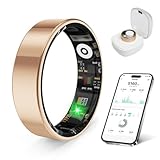
- 【Check the Size Before Purchase】 Before buying the prxxhri Smart Ring, we strongly suggest that you refer to the size chart and carefully measure the circumference of your finger. This will ensure you get the most comfortable wearing experience and easily avoid any unnecessary returns or exchanges.
- 【Real-time Accurate Sleep & Fitness Monitoring】 prxxhri smart ring tracks your sleep quality and daily activities in real time. With advanced sensors, it provides precise data about your sleep cycle, helping you optimize rest and recovery. Whether you are tracking steps, calories or exercise performance, this smart ring can provide you with the most accurate insights to support your fitness goals and enhance your overall health.It is a good choice for family and friends.
- Health Monitoring】The prxxhri ring features advanced 4.0 sensors that automatically measure your heart rate, and blood pressure every 30 min when worn. It provides continuous health tracking and comprehensive wellness management all day.
- 【3-5 Day Battery Life】 With a 3-5 day battery life, the prxxhri smart ring ensures continuous health monitoring without frequent charging. When used with the smart charging case, the usage time can even exceed 20 days. Whether you are tracking sleep patterns or fitness activities, you can count on long-lasting performance without constant interruptions.
- 【80-meter Waterproof, Suitable for Various Scenarios】 The prxxhri Smart Ring has excellent waterproof performance, with a waterproof depth of up to 80 meters. Whether it's for daily wear, an intense workout session or a pleasant swimming time, it can handle it with ease. What's more, even if you have sensitive skin, you can still enjoy an extremely comfortable wearing experience when wearing this ring.
Helio tracks total sleep time, sleep stages, awakenings, breathing rate, overnight heart rate trends, and blood oxygen saturation. For endurance athletes, the value is not just stage breakdowns, but how stable or disrupted these metrics remain across heavy training weeks, travel, or altitude exposure.
Sleep stage accuracy is less about perfect labeling and more about trend fidelity. Helio excels at showing whether sleep quality is improving, stagnating, or degrading under rising training load, which is often more useful than a single night’s score.
HRV and resting metrics as recovery signals
Heart rate variability sits at the center of Helio’s recovery model. By capturing HRV during the deepest, least disturbed phases of sleep, the ring establishes a rolling baseline that reflects autonomic nervous system balance.
For endurance athletes, downward HRV trends paired with elevated resting heart rate or respiratory rate often precede subjective fatigue. Helio surfaces these changes early, giving athletes a chance to adjust volume, intensity, or recovery strategies before performance declines.
Temperature deviation tracking adds another layer. While not a medical-grade thermometer, Helio’s skin temperature trends are effective at flagging accumulated stress, illness onset, or poor adaptation to recent training blocks.
Readiness scoring in the context of endurance training
All of this overnight data ultimately feeds into Zepp’s readiness score, which acts as a synthesis rather than a standalone judgment. The score blends HRV, sleep quality, resting heart rate, temperature deviation, and recent physiological strain into a single daily snapshot.
For experienced athletes, readiness works best as a directional signal. A suppressed score after a long run block or stage race often confirms what the body is already hinting at, while a rebound score can validate a return to quality work.
Importantly, Helio avoids framing readiness as a rigid traffic-light system. It provides context, not commands, which respects the reality that endurance training often requires pushing through controlled fatigue.
How Helio complements watches and training platforms
Helio’s recovery metrics become more powerful when paired with an Amazfit smartwatch or third-party training platforms. The ring does not attempt to calculate training load itself, but instead shows how the body responds to load captured elsewhere.
When workouts logged on an Amazfit watch are viewed alongside Helio’s sleep and HRV trends, patterns become easier to spot. Productive blocks show stable or rebounding recovery markers, while overreaching reveals itself through creeping declines even before performance drops.
For athletes already using platforms like Strava or TrainingPeaks, Helio acts as a passive recovery overlay. It does not replace structured training analysis, but it adds a physiological reality check that spreadsheets and power curves cannot capture alone.
Real-world usability for long training cycles
Comfort and durability matter when a device is worn 24/7, especially through high-volume weeks. Helio’s lightweight titanium construction and low-profile design make it unobtrusive during sleep, strength sessions, and daily life.
Battery life, typically lasting multiple days between charges, supports uninterrupted recovery tracking without nightly charging rituals. This consistency is crucial for readiness scoring, which relies on stable long-term baselines rather than isolated data points.
For endurance athletes managing months of progressive overload, Helio fits best as a quiet background tool. It does not demand attention during workouts, but steadily informs better decisions between them, where adaptation truly happens.
How the Helio Ring Fits Into the Amazfit & Zepp Ecosystem
Viewed in isolation, Helio is a capable recovery-focused smart ring. Its real value, however, emerges when it is placed inside Amazfit’s broader hardware and software stack, where passive physiological data and active training data are designed to inform each other rather than compete.
The Helio Ring is not positioned as a standalone training device. Instead, it acts as a continuous background sensor that deepens the context around workouts captured elsewhere in the Amazfit and Zepp environment.
Zepp App as the Central Nervous System
Everything Helio captures flows into the Zepp app, which acts as the unifying interface for rings, watches, and connected health data. Sleep stages, resting heart rate, HRV trends, blood oxygen, and skin temperature deviation are merged into the same dashboards used by Amazfit watches.
This matters because Zepp does not silo ring data into a separate experience. Recovery scores, readiness insights, and long-term trends appear alongside training history, making it easier to interpret how the body is responding over days and weeks rather than single nights.
For athletes already familiar with Zepp’s layout, Helio feels additive rather than disruptive. There is no new learning curve, just more depth layered onto existing metrics.
Division of Labor Between Ring and Watch
Amazfit’s ecosystem is built around a clear hardware hierarchy. Watches handle GPS tracking, structured workouts, training load, pace, power, and sport-specific metrics, while Helio focuses on what happens outside the session.
This division plays to the strengths of a ring form factor. Continuous heart rate sampling during sleep, stable HRV capture, and all-night SpO2 tracking are often more reliable from the finger than the wrist, especially for athletes with lean arms or wrist movement during sleep.
Rather than duplicating workout tracking, Helio intentionally stays out of the way during training. This avoids sensor redundancy and battery drain while keeping recovery data clean and uninterrupted.
Readiness, Recovery, and Long-Term Adaptation
Within the Zepp ecosystem, Helio’s data primarily feeds readiness and recovery-oriented features. These include daily readiness scores, sleep quality assessments, and longitudinal HRV baselines that are influenced by cumulative stress rather than a single hard workout.
When paired with an Amazfit watch, the ecosystem gains a cause-and-effect loop. Training load and intensity are logged by the watch, while Helio reflects how well the athlete absorbs that load across sleep cycles and rest days.
This makes the system particularly effective for endurance athletes managing high volume, where adaptation often hinges on recovery quality rather than raw training stimulus.
Compatibility and Platform Reach
Helio uses the same Zepp app infrastructure as Amazfit watches, supporting both iOS and Android without platform-specific feature gaps. Data sync is automatic, and there is no need to manually switch profiles or devices within the app.
For athletes using third-party platforms, Zepp can export workouts and health data to services like Strava, allowing Helio-derived insights to coexist with external training analysis. While recovery metrics themselves do not directly sync into platforms like TrainingPeaks, they remain accessible as a parallel decision-making layer.
This keeps Helio from locking users into a closed ecosystem while still rewarding those who stay within Amazfit’s hardware lineup.
Subscription Model and Feature Access
Unlike some competing smart rings, Helio’s core metrics are accessible without forcing users into an aggressive subscription paywall. Advanced insights and guided features may expand under Zepp’s premium offerings, but baseline recovery tracking remains functional out of the box.
For performance-focused users, this lowers the long-term cost of ownership. The value proposition centers on hardware longevity and consistent data collection rather than recurring fees for basic physiological access.
This approach aligns Helio more closely with Amazfit’s watch philosophy, where value and capability are emphasized over lifestyle branding.
Where Helio Strengthens Amazfit’s Ecosystem Identity
Amazfit has historically leaned toward performance value rather than fashion or luxury positioning. Helio reinforces that identity by prioritizing sensor accuracy, comfort, and continuous wear over aesthetic experimentation.
The lightweight titanium construction and low-profile shape complement Amazfit watches rather than compete with them visually or functionally. It feels like an extension of the system, not a parallel product line chasing a different audience.
For athletes already invested in Amazfit hardware, Helio completes the ecosystem by covering the hours when watches are most likely to be removed, ensuring that recovery data remains uninterrupted even when training data pauses.
Smart Ring vs Smartwatch: Where the Helio Excels (and Where It Doesn’t)
Viewed as an extension of Amazfit’s performance ecosystem rather than a replacement for a training watch, Helio’s strengths become clearer when directly compared to what a smartwatch is designed to do. The ring covers the physiological foundations of performance, while watches remain the primary tools for execution, navigation, and real-time control.
Understanding that division of labor is key to deciding whether Helio belongs in your setup.
Rank #4
- 【Check the Size Before Purchase】 Before buying the prxxhri Smart Ring, we strongly suggest that you refer to the size chart and carefully measure the circumference of your finger. This will ensure you get the most comfortable wearing experience and easily avoid any unnecessary returns or exchanges.
- 【Real-time Accurate Sleep & Fitness Monitoring】 prxxhri smart ring tracks your sleep quality and daily activities in real time. With advanced sensors, it provides precise data about your sleep cycle, helping you optimize rest and recovery. Whether you are tracking steps, calories or exercise performance, this smart ring can provide you with the most accurate insights to support your fitness goals and enhance your overall health.It is a good choice for family and friends.
- Health Monitoring】The prxxhri ring features advanced 4.0 sensors that automatically measure your heart rate, and blood pressure every 30 min when worn. It provides continuous health tracking and comprehensive wellness management all day.
- 【3-5 Day Battery Life】 With a 3-5 day battery life, the prxxhri smart ring ensures continuous health monitoring without frequent charging. When used with the smart charging case, the usage time can even exceed 20 days. Whether you are tracking sleep patterns or fitness activities, you can count on long-lasting performance without constant interruptions.
- 【80-meter Waterproof, Suitable for Various Scenarios】 The prxxhri Smart Ring has excellent waterproof performance, with a waterproof depth of up to 80 meters. Whether it's for daily wear, an intense workout session or a pleasant swimming time, it can handle it with ease. What's more, even if you have sensitive skin, you can still enjoy an extremely comfortable wearing experience when wearing this ring.
Continuous Recovery Tracking vs Session-Based Training
Helio excels at collecting uninterrupted physiological data across sleep, rest, and low-intensity daily movement. Finger-based PPG allows stable heart rate variability and resting heart rate capture during periods when wrist-based devices are often removed or compromised.
Smartwatches, by contrast, are optimized for active sessions where GPS, barometric altitude, pace, power, and structured workouts matter. Helio does not attempt to compete here, and that restraint is part of its clarity.
For endurance athletes, this makes Helio a recovery-first device rather than a training recorder.
Comfort, Wearability, and Compliance
At a fraction of the weight and thickness of even the lightest performance watches, Helio disappears on the hand after a few minutes of wear. The smooth titanium shell, rounded interior, and lack of protruding sensors reduce pressure points during sleep and long sedentary periods.
Watches, even well-designed ones, introduce strap tension, case bulk, and wrist rotation that can affect overnight comfort. That friction often leads to inconsistent sleep tracking, which undermines recovery metrics over time.
Helio’s greatest advantage may simply be that users are more likely to wear it continuously.
Sensor Placement and Data Quality Tradeoffs
Finger placement offers advantages for optical heart rate and HRV consistency due to higher capillary density and reduced motion during sleep. This helps Helio deliver stable nightly recovery trends and baseline metrics with minimal signal dropout.
However, the same placement limits Helio’s ability to accurately track dynamic heart rate during high-impact or grip-intensive activities. Smartwatches, while imperfect, still perform better during runs, rides, and interval sessions when movement patterns are predictable.
Helio is optimized for stillness and subtlety, not intensity.
Display, Feedback, and In-the-Moment Awareness
The absence of a screen is both Helio’s defining feature and its clearest limitation. There are no alerts, no live heart rate checks, no pace glances, and no mid-workout feedback.
Smartwatches remain indispensable for athletes who rely on real-time data to pace efforts, follow workouts, or navigate unfamiliar routes. Helio assumes decisions happen before or after training, not during it.
This makes Helio better suited to reflective performance management rather than active coaching.
Battery Life and Charging Behavior
Without a display or GPS, Helio can stretch its battery across multiple days with minimal performance compromise. Charging becomes infrequent and predictable, reinforcing its role as a background device rather than a daily interaction point.
Smartwatches demand more frequent charging, especially when GPS and music playback are involved. That tradeoff is accepted because of the functionality they provide.
Helio’s endurance supports consistency, which is critical for longitudinal recovery analysis.
Durability and Training Environment Suitability
Helio’s titanium construction offers excellent resistance to corrosion and daily wear, making it well-suited to sleep, travel, and non-contact training environments. Its low profile also reduces the chance of accidental impacts.
In weightlifting, climbing, or contact sports, however, a ring introduces risk to both the finger and the device. In these scenarios, watches are easier to remove quickly and pose fewer safety concerns.
Helio works best when training conditions are predictable and controlled.
Data Scope and Athletic Context
Helio focuses on core physiological signals: heart rate trends, HRV, sleep staging, breathing rate, and readiness-style recovery indicators. It does not attempt to contextualize effort with external load metrics.
Smartwatches provide that external context through distance, elevation, power, cadence, and structured workout data. Without those inputs, Helio’s insights are interpretive rather than prescriptive.
For athletes who already understand their training load, Helio adds depth rather than direction.
Value as a Complement, Not a Replacement
The Helio smart ring makes the most sense alongside a performance-focused smartwatch rather than instead of one. It fills the data gaps that watches leave behind, particularly overnight and during off-wrist hours.
Replacing a smartwatch with Helio would mean sacrificing training control, navigation, and live feedback. Using both creates a more complete physiological picture without overloading the wrist.
That complementary role defines Helio’s position in the broader wearable landscape.
Helio Ring vs Competing Smart Rings: Oura, RingConn, and Ultrahuman
Positioning Helio against other leading smart rings clarifies what it is, and just as importantly, what it is not. All four rings target passive health tracking, but their priorities diverge sharply once you look at performance depth, software philosophy, and ecosystem integration.
Helio’s identity is shaped by Amazfit’s long-standing focus on endurance sport data, which gives it a different center of gravity than lifestyle-first competitors.
Helio vs Oura: Performance Bias vs Lifestyle Recovery
Oura remains the reference point for smart rings, largely because it popularized readiness scoring and sleep analytics. Its insights are polished, accessible, and well-suited to general wellness and stress awareness.
Helio tracks similar core metrics such as heart rate trends, HRV, sleep stages, and respiratory rate, but frames them through a more athletic lens. Recovery data in Helio is designed to sit alongside structured training from an Amazfit watch, rather than stand alone as a daily decision-maker.
The subscription model is another dividing line. Oura locks most advanced insights behind a recurring fee, while Helio operates without ongoing costs, which matters for athletes already paying for coaching platforms or training software.
Helio vs RingConn: Ecosystem Depth vs Minimalism
RingConn appeals to users who want straightforward health tracking without friction. Its ring is light, comfortable, and its app presents data cleanly, but interpretation remains high level.
Helio offers a broader physiological narrative, especially when paired with other Amazfit devices. Trends in HRV, resting heart rate, and sleep consistency are easier to contextualize over long training blocks rather than viewed in isolation.
Battery life between the two is broadly comparable, both lasting roughly a week or more depending on usage. The difference lies less in endurance and more in what the data is ultimately used for.
Helio vs Ultrahuman: Athletic Recovery vs Metabolic Focus
Ultrahuman positions its ring around metabolic health, circadian rhythm alignment, and performance timing. Its platform shines when used as part of a broader system that may include glucose tracking and lifestyle optimization tools.
Helio takes a narrower but deeper approach, concentrating on recovery signals that endurance athletes already understand. It does not attempt to guide nutrition timing or stimulant use, instead reinforcing consistency, sleep quality, and autonomic balance.
For athletes who want fewer behavioral nudges and more physiological continuity, Helio’s restraint can feel refreshing rather than limiting.
Build Quality, Comfort, and Real-World Wearability
All four rings use titanium construction, but Helio’s finish leans toward understated durability rather than jewelry-like refinement. Its low-profile shape prioritizes overnight comfort and long-term wear over visual presence.
💰 Best Value

- 【Your Daily Activity Partne】 The Smart Ring for Men Women combines activity tracking, movement monitoring, and sleep pattern observation in one lightweight design. The activity tracker ring keeps you informed about daily movement rhythms and rest cycles, while precisely logging steps, energy expenditure, and distance covered.
- 【Comprehensive Health Monitoring】Stay on top of your health with integrated heart rate, blood oxygen, and blood pressure monitoring. The built-in automatic sleep tracker monitors your sleep patterns and offers a detailed sleep quality analysis, including deep sleep, light sleep, and wake-up time, helping you develop healthy sleeping habits.
- 【Fitness Activity Tracker】The fitness rings for women men automatically tracks various activities, it serves as a comprehensive fitness tracker, keep your fitness goals on track by monitoring your steps, sport time, heart rate, calories burned, distance throughout the day, and activity levels. The fitness ring helps you stay motivated and and active.
- 【Comprehensive Fitness Tracking Smart Ring】Monitor your daily steps, distance traveled, and calories burned with high precision. The smart ring also records exercise data across various activities such as running, cycling, jump rope, walking, hiking, yoga, golf, and dance, providing detailed insights to help you achieve your fitness goals.
- 【Waterproof & Durable Design】 The Fitness Health Tracker Ring With IP68 waterproof certification, wear it worry-free during handwashing, showers, or shallow swimming. Whether at the gym or on-the-go, this health tracker ring delivers reliable performance.Yehlo
Sizing accuracy and interior contouring are critical for data quality, and Helio performs best when worn snugly during sleep and rest periods. Like all smart rings, it is less suitable for strength training or high-impact sports where finger safety becomes a concern.
In daily wear, Helio fades into the background, which aligns with its role as a silent data collector rather than an interactive device.
Software Philosophy and Athlete Integration
Helio’s strongest advantage emerges inside the Zepp ecosystem. When combined with an Amazfit watch, ring data fills physiological gaps that wrist-based sensors miss, especially overnight and during non-training hours.
Oura, RingConn, and Ultrahuman all function primarily as standalone platforms. Their data can be exported or synced, but they are not designed to actively reinforce a separate training device in the same way.
For athletes already committed to structured workouts, GPS tracking, and power-based training, Helio’s ability to disappear into the background while enhancing recovery analysis is its defining edge.
Battery Life, Durability, and Real-World Usability During Training Blocks
For athletes considering Helio as a long-term recovery companion rather than a novelty tracker, battery stability and physical resilience matter as much as sensor accuracy. This is where the ring’s design philosophy becomes especially clear: it is optimized for consistency across weeks of training, not constant interaction.
Battery Life in Continuous Recovery Monitoring
Amazfit positions Helio as a multi-day device rather than a week-long outlier, and that framing aligns with its sensor density and sampling strategy. In real-world use with continuous heart rate, HRV, blood oxygen, and sleep tracking enabled, battery life typically lands in the several-day range rather than pushing toward a full week.
For endurance athletes running structured training blocks, this cadence is workable but demands routine. Most users will settle into a predictable charging rhythm every few days, often syncing it with a rest day or post-session recovery window rather than risking overnight data gaps.
Importantly, Helio’s battery demands do not increase during workouts in the same way a smartwatch’s would. Because it is not handling GPS, display wake-ups, or on-device workout recording, its power draw remains stable even during heavy training weeks.
Charging Experience and Data Continuity
Helio uses a dedicated charging dock rather than a case-based system, reinforcing its identity as a home-base recovery tool. A full recharge is relatively quick, but the necessity of removing the ring means athletes need to be intentional about when they top it up.
During high-volume blocks, the risk is not battery anxiety but forgotten charging. Missing even one overnight window can break trends in HRV or sleep consistency, which matters more to Helio’s analytics than absolute daily values.
Athletes who already charge an Amazfit watch regularly will find it easier to mentally bundle Helio into the same routine. Those coming from ultra-long battery rings may need to recalibrate expectations around maintenance.
Durability, Water Resistance, and Training Environment Exposure
Helio’s titanium shell prioritizes impact resistance and long-term wear over decorative finishing. It is designed to survive sweat saturation, repeated hand washing, and daily abrasion without demanding special care.
Water resistance is sufficient for swimming, showering, and wet-weather training, which makes it viable for triathletes and open-water swimmers as a passive recovery tracker. That said, its value remains highest outside of active sessions, where wrist-based sensors still dominate for performance capture.
As with all rings, finger safety remains the limiting factor. Helio is best removed for strength training, CrossFit-style workouts, climbing, or any activity involving loaded grips, regardless of its structural toughness.
Comfort Over Long Training Cycles
Extended training blocks amplify small comfort issues, and this is where Helio’s low-profile geometry earns its keep. The inner contouring minimizes pressure points during sleep, even when hands swell after long endurance sessions or heat exposure.
Overnight wear is the priority use case, and Helio excels here by avoiding sharp edges or excessive thickness. Athletes who struggle with watch-based sleep tracking often find rings easier to tolerate across consecutive nights.
Daytime wear is largely invisible once sized correctly, though finger swelling during long runs or rides can make temporary removal feel prudent. This is less a flaw and more a physiological reality of endurance training.
Usability as Part of a Broader Training System
Helio’s real-world usability improves when it is not asked to do everything. Paired with an Amazfit watch, it fills in recovery and readiness data without competing for attention or battery resources.
During demanding training blocks, this separation of roles becomes a strength. The watch handles effort and execution, while the ring quietly captures the physiological cost of that work when the athlete stops moving.
For athletes who value uninterrupted recovery data across weeks rather than flashy daily interaction, Helio’s balance of battery life, durability, and comfort supports exactly that kind of long-term consistency.
Who the Amazfit Helio Ring Is Best For — And Who Should Look Elsewhere
By this point, Helio’s role should be clear: it is not trying to replace a sports watch, but to quietly strengthen the recovery and readiness side of an athlete’s training system. Whether that approach makes sense depends less on raw fitness level and more on how you structure your data capture across the day.
Endurance Athletes Who Prioritize Recovery Quality
Helio is best suited to runners, cyclists, triathletes, and hybrid endurance athletes who already log structured training but want more consistent insight into how their body is responding. Its strengths lie in overnight heart rate, HRV trends, sleep staging, breathing rate, and temperature-related signals that reflect accumulated stress.
For athletes training five to seven days per week, these background metrics often matter more than another GPS track. Helio excels when worn every night, turning recovery into a measurable input rather than a subjective guess.
Amazfit Watch Owners Looking to Reduce Wrist Wear
Helio makes the most sense inside the Amazfit ecosystem, where it complements rather than competes with a wrist-based device. An Amazfit watch handles workouts, pacing, and on-the-move metrics, while the ring fills the recovery gaps without doubling battery drain or demanding constant interaction.
This division of labor is especially useful during heavy training blocks, travel, or race taper periods. It allows athletes to take the watch off at night without sacrificing continuity in physiological data.
Athletes Who Struggle With Sleep Tracking on Watches
Some athletes simply do not tolerate watches during sleep, especially during hot conditions, altitude exposure, or multi-day training camps. Helio’s low-profile titanium construction and smooth inner contour make it far easier to wear consistently across consecutive nights.
Consistency matters more than perfection in recovery metrics. If a ring increases adherence, it often produces better long-term insights than a theoretically superior sensor left on the bedside table.
Data-Oriented Users Who Value Trends Over Daily Scores
Helio is best for athletes who understand that readiness metrics are directional, not absolute. Its value comes from multi-week HRV baselines, sleep debt accumulation, and correlations between training load and recovery signals.
If you enjoy reviewing trends in Zepp rather than reacting emotionally to a single readiness number each morning, Helio fits that mindset well. It rewards patience and context rather than impulse-driven adjustments.
Who Should Look Elsewhere: Strength and Grip-Heavy Athletes
Helio is not well suited to powerlifters, CrossFit athletes, climbers, or anyone whose training revolves around loaded grips or hand contact. Even with a durable titanium shell, finger safety dictates removing the ring during these sessions, which breaks data continuity.
If most of your training happens in the gym rather than on the road or trail, a watch or chest strap-based system will be more practical and less intrusive.
Who Should Look Elsewhere: Athletes Wanting Real-Time Performance Feedback
Helio does not provide live pacing, interval guidance, or in-session metrics. Athletes who rely on real-time heart rate, power, or lap-based feedback during workouts will still need a watch or bike computer front and center.
Used alone, Helio can feel underpowered for performance-driven users. Its value emerges only when it is allowed to specialize in recovery rather than execution.
Who Should Look Elsewhere: Minimalists Wanting One Device to Do Everything
If your goal is a single wearable that tracks workouts, sleep, notifications, and daily activity with no compromises, a smartwatch remains the better fit. Smart rings inherently trade interaction and versatility for comfort and battery efficiency.
Helio assumes you are comfortable with a multi-device setup. If that feels like unnecessary complexity, its advantages may not outweigh the added layer.
Final Take: A Purpose-Built Tool for Serious Training Systems
The Amazfit Helio Ring is not a lifestyle accessory pretending to be a fitness device. It is a purpose-built recovery tracker designed for athletes who already train with intent and want better visibility into how their body absorbs that work.
For the right user, Helio becomes quietly indispensable, delivering consistent, low-friction recovery data without demanding attention. Choose it as a specialist, not a replacement, and it fits naturally into a modern performance-focused wearable ecosystem.