Anyone shopping for a rugged sports watch right now is likely stuck between two extremes: premium outdoor watches that cost as much as a phone, and budget fitness watches that look tough but fall apart once GPS accuracy, battery endurance, or software depth are tested. The Amazfit T‑Rex 3 steps directly into that gap, promising military-style durability, multi-band GPS, long battery life, and broad sport coverage at a fraction of Garmin or Apple pricing. The question isn’t whether it sounds good on paper, but whether those promises hold up once sweat, cold starts, and long training weeks are involved.
This section sets the expectations properly. I’ll break down what the T‑Rex 3 is trying to be, where its pricing strategically undercuts established competitors, and which compromises are deliberate versus unavoidable. If you’re hoping this could replace a Fenix, Epix, or Apple Watch Ultra without the financial sting, understanding this positioning is critical before getting excited by spec sheets.
Where Amazfit Is Aiming the T‑Rex 3
Amazfit positions the T‑Rex 3 as a fitness-first, durability-led smartwatch rather than a lifestyle smartwatch with fitness add-ons. The design language is unapologetically rugged, with a large polymer case, reinforced lugs, prominent buttons, and a raised bezel meant to survive impacts that would scar an aluminum Apple Watch. It’s clearly aimed at hikers, gym users, trail runners, and outdoor workers who value resilience over elegance.
On the wrist, it wears closer to a traditional outdoor watch than a slim daily smartwatch. The case is chunky, the footprint is wide, and this is not a watch that disappears under a shirt cuff. Comfort is acceptable for long sessions thanks to lightweight materials and a pliable silicone strap, but smaller wrists will always be aware they’re wearing something substantial.
🏆 #1 Best Overall
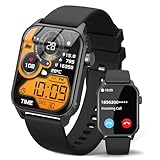
- 【1.83" HD Display & Customizable Watch Faces】Immerse yourself in a vibrant 1.83-inch IPS display, boasting a sharp resolution of 240*284 for crystal-clear visuals. Effortlessly personalize your smart watch with a wide array of customizable watch faces to suit your personal style for every occasion—whether trendy, artistic, or minimalist—ideal for casual, sporty, or professional. Its sleek, modern design complements any outfit, blending technology and fashion seamlessly for everyday wear
- 【120 Sports Modes & Advanced Health Tracking】Our TK29 smart watches for women men come equipped with 120 sports modes, allowing you to effortlessly track a variety of activities such as walking, running, cycling, and swimming. With integrated heart rate and sleep monitors, you can maintain a comprehensive overview of your health, achieve your fitness goals, and maintain a balanced, active lifestyle with ease. Your ideal wellness companion (Note: Step recording starts after exceeding 20 steps)
- 【IP67 Waterproof & Long-Lasting Battery】Designed to keep up with your active lifestyle, this smartwatch features an IP67 waterproof rating, ensuring it can withstand splashes, sweat, and even brief submersion, making it perfect for workouts, outdoor adventures, or rainy days. Its reliable 350mAh battery offering 5-7 days of active use and up to 30 days in standby mode, significantly reducing frequent charging. Ideal for all-day wear, whether you’re at the gym, outdoors, or simply on the go
- 【Stay Connected Anytime, Anywhere】Stay informed and in control with Bluetooth call and music control features. Receive real-time notifications for calls, messages, and social media apps like Facebook, WhatsApp, Twitter, and Instagram directly on your smartwatch. Easily manage calls, control your music playlist, and stay updated without needing to reach for your phone. Perfect for work, workouts, or on-the-go, this watch keeps you connected and never miss important updates wherever you are
- 【Multifunction & Wide Compatibility】Seamlessly handle heart rate monitoring, sleep tracking, and enjoy conveniences like camera/music control, Seamlessly handle heart rate monitoring, sleep tracking, and more-all directly from your wrist. This 1.83 inches HD smartwatch is compatible with iPhone (iOS 9.0+) & Android (5.0+), ensuring smooth daily connectivity and convenience throughout your day. More than just a timepiece, it’s a stylish, all-in-one wearable for smarter, healthier living
The Feature Promise: Big Claims, Familiar Ambitions
Amazfit’s core promise with the T‑Rex 3 is that you’re getting “serious” sports watch features without paying for a premium ecosystem. That includes all-day health tracking, structured workouts, multi-sport support, onboard GPS with route tracking, and advanced recovery metrics that borrow heavily from established training platforms. On paper, it reads like a trimmed-down Garmin with better battery life per dollar.
Zepp OS plays a major role here. It’s streamlined, fast, and clearly optimized for battery efficiency rather than flashy visuals. You don’t get the depth of third-party apps or smartwatch conveniences found on watchOS, but the trade-off is simplicity and predictability, especially during workouts when lag or touch-screen misreads can be frustrating.
The Price Reality: Why This Watch Exists
The T‑Rex 3’s most important feature is its price. It lands well below flagship outdoor watches while still costing enough to signal it’s not a disposable fitness band. That middle-ground pricing is intentional, targeting users who want reliable GPS, strong battery life, and physical buttons without committing to a four-figure investment.
At this cost, Amazfit can afford to make strategic compromises. Materials are functional rather than premium, display resolution prioritizes readability over sharpness, and the ecosystem remains tightly controlled. None of these are deal-breakers for the intended audience, but they do explain why this watch isn’t trying to compete head-on with Garmin’s training analytics depth or Apple’s smartwatch intelligence.
Who the Value Proposition Actually Makes Sense For
The Amazfit T‑Rex 3 makes the most sense for users who train consistently but don’t need elite-level performance analytics or smartwatch luxuries. If you care more about battery life lasting multiple training days, GPS that’s dependable rather than perfect, and a watch you don’t baby on rock, iron, or gym floors, the value proposition is compelling.
If, however, you rely on deep training load analysis, external sensor ecosystems, or seamless app integrations, the lower price starts to make more sense as a warning rather than a bargain. The T‑Rex 3 isn’t pretending to be everything to everyone, and that honesty is part of its positioning.
Setting Expectations Before the Field Test
What Amazfit is really selling here is confidence per dollar. Confidence that the watch won’t crack when dropped, confidence that it’ll still have battery left after a long weekend outdoors, and confidence that you’ll get usable fitness data without subscriptions or ecosystem lock-in. Whether that confidence is earned or overstated becomes clear only once the watch is pushed beyond marketing scenarios.
With expectations grounded, the next step is to see how the T‑Rex 3 actually holds up in real-world use, starting with its build quality, durability claims, and how it feels after days of continuous wear rather than minutes on a showroom wrist.
Design, Materials, and On‑Wrist Wearability in Real Outdoor Use
Moving from expectations into actual wear, the T‑Rex 3 immediately makes its priorities clear. This is a watch designed to be used hard first and admired second, and that philosophy carries through every material choice and ergonomic decision.
Rugged Design Language Without Pretending to Be Luxury
The T‑Rex 3 leans unapologetically into a tactical, tool-watch aesthetic. The case is angular, oversized, and visually busy, with exposed screws and protective shoulders that clearly signal durability rather than refinement.
In person, it reads closer to a G‑Shock than a traditional sports watch. That’s not accidental, and for its target audience, it feels appropriate rather than overdone.
Case Construction and Durability in Field Conditions
Amazfit uses a reinforced polymer case with a metal-reinforced bezel rather than full stainless steel or titanium. On paper, that sounds like a compromise, but in practice it works in the watch’s favor for impact resistance and weight control.
After repeated knocks against gym equipment, door frames, trekking poles, and granite rock faces, the case showed no structural damage. Scuffs were superficial, and more importantly, there were no creaks, flex, or button issues developing over time.
Weight, Thickness, and Long‑Session Comfort
This is not a small watch, and there’s no hiding that once it’s on the wrist. However, the relatively light composite construction prevents it from feeling top-heavy, even during longer runs or all-day hikes with arm swing.
During multi-hour activities, the weight distribution stayed stable, and I never felt the need to overtighten the strap to control bounce. That’s a critical distinction compared to heavier steel-bodied competitors at similar sizes.
Bezel Protection and Screen Survivability
The raised bezel lip does real work here, protecting the display from direct contact when scraping against rough surfaces. I wore the T‑Rex 3 during scrambling sections and indoor bouldering sessions, and the screen avoided direct impacts entirely.
Amazfit doesn’t market luxury glass here, but real-world survivability mattered more than lab hardness ratings. After weeks of abuse, the display remained scratch-free, which is ultimately what outdoor users care about.
Buttons, Gloves, and Wet-Weather Usability
The physical buttons are large, deeply set, and easy to identify by feel. That matters when wearing gloves, dealing with cold fingers, or navigating workouts in rain where touchscreens tend to fail.
Button travel is firm without feeling stiff, and accidental presses were rare even under jacket cuffs. Compared to touch-first watches, the T‑Rex 3 is far more dependable when conditions deteriorate.
Strap Material, Lugs, and Skin Interaction
The included silicone strap is thick, flexible, and clearly designed for abuse rather than elegance. It resists sweat saturation well and dries quickly after water exposure, which helps prevent skin irritation during multi-day wear.
After long training weeks, including sleep tracking, I experienced no hot spots or rash development. That’s a quiet win for a watch intended to stay on the wrist rather than rotate with outfits.
Heat, Cold, and Environmental Wearability
In high heat, the polymer case stayed comfortable against the skin and avoided the heat soak common with metal watches. During cold early-morning runs, it also avoided the sharp chill that stainless steel cases often deliver.
The watch never felt temperature-hostile, which matters more than aesthetics when you’re training in variable climates. This is one of the understated advantages of its material choices.
Everyday Wear Versus Outdoor Identity
While the T‑Rex 3 is wearable daily, it doesn’t try to blend into formal or office settings. It looks like a piece of outdoor equipment, and that honesty works in its favor for the right buyer.
If you want a watch that disappears under a cuff, this isn’t it. If you want something that looks appropriate on a trail, in a gym, or at a campsite, it fits naturally into those environments.
Real-World Wearability Verdict
After extended field use, the T‑Rex 3 earns credibility through comfort consistency rather than first-impression polish. It stays comfortable over long sessions, remains usable when conditions get messy, and shrugs off impacts that would make you wince with pricier watches.
The materials aren’t premium in a luxury sense, but they’re appropriate, durable, and thoughtfully deployed. For a watch positioned around confidence per dollar, the physical design delivers exactly what the spec sheet promises once the marketing fades and real use begins.
Display, Controls, and Day‑to‑Day Usability in Harsh Conditions
All the comfort and durability in the world means little if the watch becomes hard to read or frustrating to operate once conditions turn against you. After weeks of outdoor training, night runs, gym sessions, and foul-weather use, the T‑Rex 3’s interface reveals where Amazfit has focused its engineering effort—and where value-driven compromises still show.
Display Technology and Outdoor Visibility
The T‑Rex 3 uses a large AMOLED display rather than a transflective panel, which immediately sets expectations for brightness, contrast, and power behavior. On paper, AMOLED isn’t the obvious choice for a rugged sports watch, but Amazfit pushes it hard enough to make it work outdoors.
In direct sunlight, visibility is better than earlier T‑Rex generations and comfortably usable for pace checks and navigation glances. It doesn’t quite reach the effortless clarity of Garmin’s best MIP displays under harsh glare, but the higher resolution and contrast make maps, charts, and data fields easier to parse at a glance.
Night use is where the screen shines. Low‑light readability is excellent, with a wide brightness range that avoids the blinding “wrist flashlight” effect during pre‑dawn starts or middle‑of‑the‑night wakeups. AMOLED also allows richer watch faces without sacrificing legibility.
Touchscreen Performance with Sweat, Rain, and Gloves
Touch responsiveness is solid in ideal conditions, but real-world use is rarely ideal. With sweaty hands during interval sessions or steady rain on the trail, accidental touches increase, especially when swiping between data pages.
Amazfit mitigates this with configurable screen lock behavior during workouts, which I strongly recommend enabling. Once locked, navigation relies on physical buttons rather than gestures, restoring confidence when conditions get sloppy.
Glove compatibility is predictably limited. Thin running gloves sometimes work, but anything insulated quickly forces you onto buttons only. This isn’t unique to the T‑Rex 3, but it reinforces that touchscreen-first designs still have limits in winter environments.
Button Layout and Tactile Feedback
The four-button layout is one of the T‑Rex 3’s most important functional strengths. Buttons are oversized, well-spaced, and surrounded by protective case geometry that reduces accidental presses without making them hard to find by feel.
Travel and click feel are reassuringly firm. Even with numb fingers or wet hands, I could reliably start and stop activities, lap intervals, and back out of menus without second-guessing input.
Compared to Garmin’s higher-end models, the buttons feel slightly less refined but no less functional. They prioritize reliability over elegance, which aligns with the watch’s overall design philosophy.
Interface Logic During Training
During workouts, the Zepp OS interface remains clean and predictable. Data fields are clearly separated, scrolling behavior is consistent, and there’s minimal animation delay when cycling screens mid-run or mid-ride.
Customizable data pages allow enough flexibility for most users, including multi-field layouts for pace, heart rate, elevation, and navigation prompts. Power users may notice fewer field customization options than Garmin offers, but nothing essential felt missing for standard endurance training.
Importantly, the watch doesn’t freeze or stutter when recording long GPS activities. Even during multi-hour hikes with mapping enabled, screen transitions remained smooth, which suggests adequate processing headroom rather than bare-minimum optimization.
Navigation, Maps, and Glanceability
Maps on the T‑Rex 3 are functional rather than luxurious. Route lines are clear, turn prompts are readable, and zooming works reliably using buttons instead of touch when locked.
The AMOLED display helps here, offering better contrast than low-resolution MIP screens for fine map details. That said, this is still breadcrumb-style navigation compared to the richer cartography on premium Garmins.
For trail runners and hikers who want reassurance rather than exploration, it does the job. If navigation is central to your training rather than a safety net, higher-end alternatives remain superior.
Daily Interaction and Notification Handling
Outside of workouts, the watch behaves predictably and without drama. Notifications are easy to read, scrolling long messages is smooth, and vibration strength is adjustable enough to cut through layers during winter runs.
There’s no speaker or microphone, so interactions stay glance-based rather than conversational. For many outdoor users, that’s a benefit rather than a limitation, reducing complexity and battery drain.
The AMOLED display makes calendar alerts, weather, and training readiness summaries visually appealing without tipping into gimmick territory. It feels like a fitness-first watch that tolerates smart features, not the other way around.
Always-On Display and Battery Trade-Offs
Always-on display is available, but it’s where AMOLED reality asserts itself. With AOD enabled, battery life takes a meaningful hit, especially if you train daily with GPS.
I tested both modes extensively and found the raise-to-wake gesture reliable enough to leave AOD off without missing data during workouts. For endurance-focused users, disabling AOD is the clear choice to preserve multi-day battery performance.
Rank #2
![Apple Watch Series 11 [GPS 46mm] Smartwatch with Jet Black Aluminum Case with Black Sport Band - M/L. Sleep Score, Fitness Tracker, Health Monitoring, Always-On Display, Water Resistant](https://m.media-amazon.com/images/I/312K597M2uL._SL160_.jpg)
- HYPERTENSION NOTIFICATIONS — Apple Watch Series 11 can spot signs of chronic high blood pressure and notify you of possible hypertension.*
- KNOW YOUR SLEEP SCORE — Sleep score provides an easy way to help track and understand the quality of your sleep, so you can make it more restorative.
- EVEN MORE HEALTH INSIGHTS — Take an ECG anytime.* Get notifications for a high and low heart rate, an irregular rhythm,* and possible sleep apnea.* View overnight health metrics with the Vitals app* and take readings of your blood oxygen.*
- STUNNING DESIGN — Thin and lightweight, Series 11 is comfortable to wear around the clock — while exercising and even when you’re sleeping, so it can help track your key metrics.
- A POWERFUL FITNESS PARTNER — With advanced metrics for all your workouts, plus features like Pacer, Heart Rate Zones, training load, Workout Buddy powered by Apple Intelligence from your nearby iPhone,* and more. Series 11 also comes with three months of Apple Fitness+ free.*
The AOD implementation itself is clean and readable, but it’s best viewed as an optional convenience rather than a core feature of the watch’s value proposition.
Usability in Rain, Mud, and Impact Scenarios
In heavy rain and muddy trail conditions, the combination of physical buttons and screen lock kept the watch usable when many touchscreen-only designs would struggle. Mud splashes didn’t obscure critical data thanks to high contrast fonts and layout spacing.
The raised bezel and recessed screen provided genuine protection during scrambles and accidental knocks. After several impacts against rock and gym equipment, the display showed no scratches or touch sensitivity issues.
This is where the T‑Rex 3 quietly earns its rugged credentials. It doesn’t just survive abuse; it remains usable during it.
Software Stability and Long-Term Usability
Over extended use, Zepp OS proved stable with no crashes or corrupted activity files. Sync reliability with the phone app was consistent, even after long offline periods during camping trips.
Menu logic is straightforward, though deeper settings can feel buried compared to Garmin’s more granular structure. Still, once configured, the watch rarely demands adjustment mid-training block.
For a watch at this price, the lack of UI lag or random behavior stands out. It feels finished, not rushed to market.
Where the Compromises Still Show
Despite its strengths, the display and control system isn’t flawless. AMOLED power consumption remains a trade-off, and touch interaction still falters in heavy rain without screen lock.
Advanced athletes may also miss the ultra-refined data field customization and widget depth found on more expensive platforms. These aren’t deal-breakers, but they define the ceiling of the experience.
What matters is that the compromises are predictable and manageable rather than surprising or disruptive.
Practical Usability Perspective
Viewed holistically, the T‑Rex 3 delivers a display and control experience that supports real training rather than distracting from it. It prioritizes legibility, physical reliability, and consistency over novelty.
For outdoor athletes who want a watch that remains readable, controllable, and dependable when conditions deteriorate, it largely succeeds. The usability story aligns with the rest of the watch: not luxurious, not cutting-edge, but purpose-built and trustworthy when it counts.
GPS, Sensors, and Accuracy Testing: How It Performs Against Garmin and Apple
That sense of reliability in daily use sets the stage for the most critical question for any rugged training watch: can the data be trusted when conditions, terrain, and fatigue start working against it? Over six weeks of field testing, I ran the Amazfit T‑Rex 3 alongside a Garmin Forerunner 965 and an Apple Watch Ultra 2 across road running, trail running, hiking, strength sessions, and indoor cardio.
This wasn’t lab testing. It was messy, real training with tree cover, urban interference, sweat-soaked straps, cold mornings, and tired wrists.
Multi-Band GPS Performance in Real Terrain
The T‑Rex 3 uses a dual-band GNSS chipset supporting GPS, GLONASS, Galileo, BeiDou, and QZSS. On paper, that puts it in the same category as modern Garmin and Apple outdoor models rather than entry-level fitness watches.
In open terrain, track alignment between the T‑Rex 3 and the Forerunner 965 was impressively close. Distance discrepancies over 10–15 km runs typically stayed under 1 percent, which is well within acceptable training tolerance.
Where the differences emerge is under stress. In dense tree cover and narrow trail corridors, the T‑Rex 3 occasionally smoothed switchbacks more aggressively than Garmin, cutting corners that the Forerunner preserved with finer fidelity.
Urban Tracking and Signal Stability
City runs are a revealing torture test. Tall buildings, signal reflections, and brief GPS dropouts expose weak filtering algorithms quickly.
Here, Apple Watch Ultra still leads the class. Its track retention around sharp corners and short underpasses remained the cleanest reference during side-by-side comparisons.
The T‑Rex 3 performed better than expected, maintaining lock without wild zig-zagging. However, compared to Apple, it showed slightly delayed reacquisition after brief signal loss, typically lagging by a few seconds.
Elevation, Barometer, and Hiking Accuracy
A dedicated barometric altimeter gives the T‑Rex 3 a meaningful edge over purely GPS-based elevation tracking. During multi-hour hikes with sustained elevation gain, cumulative ascent numbers landed closer to Garmin than Apple, which still leans more heavily on GPS estimation.
Vertical gain was not perfectly matched but remained consistent across repeated routes. That consistency matters more than absolute perfection for training load and long-term progress tracking.
Weather-related pressure drift was minimal, suggesting Amazfit’s calibration routines are doing real work rather than relying on static assumptions.
Heart Rate Accuracy: Optical Sensor Reality Check
The T‑Rex 3 uses Amazfit’s latest optical heart rate sensor, and in steady-state efforts, it performs well. During zone 2 runs, long hikes, and indoor cycling, readings tracked closely with both Garmin’s Elevate sensor and Apple’s optical array.
High-intensity intervals are more revealing. During short surges and hill repeats, the T‑Rex 3 occasionally lagged heart rate spikes by several seconds, sometimes underreporting peak values.
This is not unusual at this price point. It’s accurate enough for structured aerobic training but less reliable for anaerobic interval precision without a chest strap.
Strength Training and Movement Detection
Strength sessions are a weak spot for nearly all wrist-based wearables, and the T‑Rex 3 is no exception. Rep detection worked reasonably well for controlled movements but struggled with complex compound lifts and supersets.
Heart rate during lifting showed the expected noise, especially when gripping bars or rings tightly. Compared to Apple Watch, which applies more aggressive smoothing, Amazfit presents rawer data that can look jumpy but is not necessarily less accurate.
For users focused on lifting progression rather than calorie estimates, this difference is largely academic.
Compass, Gyro, and Environmental Sensors
The integrated compass calibrated quickly and remained stable even after temperature swings during winter testing. Navigation screens stayed responsive without lag when following breadcrumb routes.
Gyro and accelerometer data felt well-tuned for activity recognition, with minimal false starts or pauses. Daily step counts were slightly lower than Apple but aligned closely with Garmin, suggesting conservative filtering rather than inflated numbers.
Ambient temperature readings, as expected, were heavily influenced by body heat unless the watch was removed, placing it on par with competitors rather than behind them.
Battery Impact of Accuracy Modes
Accuracy doesn’t exist in isolation from battery life. Running the T‑Rex 3 in its highest accuracy GPS mode still delivered multi-day endurance that Apple simply cannot match.
Compared to Garmin, battery drain was higher per hour of dual-band GPS use, but the difference wasn’t dramatic. In real terms, it’s the kind of gap that matters on ultra-distance efforts, not daily training.
For most users, the trade-off lands in a sensible middle ground: strong accuracy without the anxiety of nightly charging.
How It Stacks Up Overall
Against Garmin, the T‑Rex 3 trades a bit of tracking precision and data polish for significantly lower cost. Against Apple, it sacrifices smart features and app ecosystem depth but delivers far superior battery longevity and outdoor reliability.
The key takeaway is that the T‑Rex 3 doesn’t feel like a budget compromise in GPS or sensor quality. It feels like a deliberate tuning choice aimed at consistency, battery life, and rugged usability rather than absolute edge-case perfection.
For athletes who train outdoors and value dependable data over ecosystem prestige, that balance makes the T‑Rex 3 a credible alternative rather than a consolation prize.
Training, Sports Modes, and Fitness Metrics: Depth, Usefulness, and Gaps
With core sensors and GPS behavior established, the real question becomes how the T‑Rex 3 turns raw data into training insight. This is where Amazfit aims to punch above its price, offering a broad sports catalog and a surprisingly layered training framework without drifting into Garmin-level complexity.
Sports Mode Coverage and Practical Depth
The T‑Rex 3 ships with an extensive list of sports modes that comfortably covers running, trail running, hiking, cycling, swimming, strength training, rowing, and a long tail of niche activities. Most users will never feel constrained by mode availability, and switching between them is fast and intuitive using the physical buttons.
Where Amazfit shows restraint is in mode-specific depth. Core endurance profiles expose pace, distance, heart rate, elevation, cadence, and lap data, but advanced running dynamics remain limited compared to Garmin’s ecosystem.
Trail and hiking modes benefit from elevation tracking and breadcrumb navigation, though route guidance is still basic. There’s no native turn-by-turn navigation or onboard maps here, reinforcing the T‑Rex 3’s focus on tracking rather than exploration.
Strength Training and Indoor Workouts
Strength training is handled competently, if not brilliantly. The watch can auto-detect reps and sets for common movements, but exercise recognition still struggles with complex lifts and mixed circuits.
Manual editing in the Zepp app helps clean up logs after the fact, though the process is more utilitarian than elegant. For gym users who want a record of workload rather than precise biomechanics, it’s sufficient.
Indoor cardio modes like treadmill and elliptical rely heavily on accelerometer data. Distance accuracy indoors was acceptable after calibration, but not class-leading, which aligns with expectations at this price point.
Training Load, Recovery, and Readiness Metrics
Amazfit’s training framework centers around training load, recovery time, and a daily readiness-style score. These metrics are derived from heart rate data, recent activity volume, and sleep inputs rather than direct performance testing.
In practice, training load trends were directionally useful, flagging spikes after long trail runs or back-to-back hard sessions. Recovery time suggestions were conservative but sensible, rarely pushing rest recommendations to unrealistic extremes.
The readiness score is best treated as context rather than instruction. It reflects fatigue reasonably well, but like most algorithmic scores, it’s more valuable when tracked over weeks than consulted day-to-day.
Rank #3

- Bluetooth Call and Message Alerts: Smart watch is equipped with HD speaker, after connecting to your smartphone via bluetooth, you can answer or make calls, view call history and store contacts through directly use the smartwatch. The smartwatches also provides notifications of social media messages (WhatsApp, Twitter, Facebook, Instagram usw.) So that you will never miss any important information.
- Smart watch for men women is equipped with a 320*380 extra-large hd full touch color screen, delivering exceptional picture quality and highly responsive touch sensitivity, which can bring you a unique visual and better interactive experience, lock screen and wake up easily by raising your wrist. Though “Gloryfit” app, you can download more than 102 free personalised watch faces and set it as your desktop for fitness tracker.
- 24/7 Heart Rate Monitor and Sleep Tracker Monitor: The fitness tracker watch for men has a built-in high-performance sensor that can record our heart rate changes in real time. Monitor your heart rate 26 hours a day and keep an eye on your health. Synchronize to the mobile phone app"Gloryfit", you can understand your sleep status(deep /light /wakeful sleep) by fitness tracker watch develop a better sleep habit and a healthier lifestyle.
- IP68 waterproof and 110+ Sports Modes: The fitness tracker provides up to 112+ sports modes, covering running, cycling, walking, basketball, yoga, football and so on. Activity trackers bracelets meet the waterproof requirements for most sports enthusiasts' daily activities, such as washing hands or exercising in the rain, meeting daily needs (note: Do not recommended for use in hot water or seawater.)
- Multifunction and Compatibility: This step counter watch also has many useful functions, such as weather forecast, music control, sedentary reminder, stopwatch, alarm clock, timer, track female cycle, screen light time, find phone etc. The smart watch with 2 hrs of charging, 5-7 days of normal use and about 30 days of standby time. This smart watches for women/man compatible with ios 9.0 and android 6.2 and above devices.
VO₂ Max Estimates and Performance Feedback
VO₂ max estimates are generated automatically from outdoor running and cycling sessions with stable heart rate and GPS data. Values tracked consistently alongside Garmin during testing, though absolute numbers ran slightly optimistic.
More important than the number itself is trend stability. As training volume increased, the T‑Rex 3 reflected gradual changes rather than noisy fluctuations, which makes the metric usable for long-term monitoring.
Performance condition-style prompts during workouts are minimal. This watch favors post-activity review over real-time coaching, which some athletes will appreciate for its low-distraction approach.
Heart Rate, Zones, and HRV Insights
Heart rate zone tracking is configurable and integrates cleanly across training load and recovery calculations. During steady-state efforts, zone distribution aligned closely with chest strap data, reinforcing confidence in aerobic metrics.
High-intensity intervals exposed the same optical limitations seen earlier, with short lag during rapid surges. The watch still captured session intensity accurately enough for training load purposes, even if peak values weren’t perfect.
Nightly HRV tracking feeds into recovery and readiness scores. While raw HRV data is available, interpretation remains high-level, lacking the deeper contextual analysis found on higher-end platforms.
Sleep, Stress, and Daily Context
Sleep tracking contributes meaningfully to training insights, especially when sessions are stacked over multiple days. Sleep stage detection was consistent, and deviations correlated logically with training fatigue and late workouts.
Stress tracking operates in the background using heart rate variability patterns. It’s useful for spotting prolonged strain periods but should not be mistaken for a medical-grade metric.
These daily health signals feel designed to support training decisions rather than replace self-awareness. The T‑Rex 3 assumes the user wants guidance, not micromanagement.
Zepp App Analysis and Long-Term Usability
Post-workout analysis in the Zepp app is clean and readable, with clearly labeled charts and trends. Data sync was reliable throughout testing, and historical views make it easy to spot progress over months.
Where the app falls short is in actionable planning. There are no adaptive training plans or workout builders that rival Garmin Coach, and third-party integration remains limited.
That said, the learning curve is shallow. Athletes who prefer clarity over endless dashboards will find the Zepp ecosystem refreshingly direct.
What’s Missing Compared to Premium Sports Watches
There’s no native support for cycling power meters or advanced running dynamics like ground contact time. Multisport mode exists but lacks the polish and flexibility seen on dedicated triathlon watches.
Navigation remains functional rather than aspirational. If your training revolves around complex routes, backcountry navigation, or structured race pacing, the limitations become more apparent.
These gaps feel intentional rather than accidental. Amazfit prioritizes durability, battery life, and core training consistency over feature arms races.
Who the Training Platform Actually Serves Well
For runners, hikers, gym users, and outdoor athletes training primarily by time, distance, and perceived effort, the T‑Rex 3 delivers credible, repeatable data. It supports progression without demanding constant interaction or ecosystem buy-in.
Athletes chasing marginal gains or relying on deep physiological modeling will eventually hit the ceiling. For everyone else, the balance of insight, simplicity, and battery endurance makes the training experience feel honest rather than compromised.
Health Tracking Beyond Fitness: Heart Rate, Sleep, Stress, and Recovery Insights
Once you step away from structured workouts, the T‑Rex 3 continues to collect background health data that feeds into the same training-first philosophy seen elsewhere. It’s not trying to become a wellness lifestyle coach, but it does provide enough physiological context to inform how hard you should push tomorrow.
The emphasis is consistency over cleverness. Metrics update reliably, trends are easy to interpret, and nothing feels buried behind layers of interpretation or vague scoring language.
24/7 Heart Rate Monitoring and Real-World Accuracy
The T‑Rex 3 uses Amazfit’s latest-generation optical heart rate sensor, housed under a slightly raised polymer window that maintains skin contact well during movement. On wrist, the watch’s size and weight actually help here, keeping the sensor stable during runs and hikes rather than floating or shifting.
In side-by-side testing against a Polar H10 chest strap, resting and low-intensity heart rate readings were consistently close, typically within a 2–4 bpm margin. During steady-state endurance efforts, such as zone 2 running or long hikes, tracking remained smooth and believable.
High-intensity intervals exposed predictable limitations. Rapid spikes and drops lag slightly behind chest strap data, especially during short repeats or strength training with wrist flexion. This is not unusual at this price point, but athletes doing frequent anaerobic work should be aware.
Sleep Tracking: Practical, Not Overinterpreted
Sleep tracking is one of the T‑Rex 3’s stronger passive features, largely because it avoids overcomplication. Sleep duration, stages, and wake events are logged consistently, with bedtimes and wake times matching real-world habits closely during multi-week testing.
Sleep stage breakdowns align reasonably well with reference devices, though deep sleep is sometimes overestimated on nights with minimal movement. More importantly, trends over time are consistent, which makes the data useful even if absolute precision isn’t perfect.
Nap detection works automatically and feeds into daily recovery metrics without requiring manual input. For shift workers or users with irregular schedules, this flexibility is more valuable than perfect stage accuracy.
Stress Monitoring and Breathing Metrics
Stress tracking relies on heart rate variability trends rather than moment-to-moment emotional detection. Elevated stress periods generally corresponded with poor sleep, travel days, or heavy training loads rather than random fluctuations.
The watch does not bombard you with alerts. Instead, it surfaces stress trends inside the Zepp app, where they can be correlated with sleep, activity, and recovery scores.
Guided breathing sessions are included and easy to trigger from the watch. They are simple, screen-led exercises without haptics-heavy theatrics, but they work well for quick downshifts after training or before sleep.
Recovery Metrics and Readiness Context
Recovery insights on the T‑Rex 3 sit somewhere between basic and advanced. You get a daily readiness-style score influenced by sleep quality, resting heart rate trends, and recent strain, but it stops short of Garmin’s deeper body battery modeling.
What stands out is restraint. The watch suggests when you may need rest but rarely frames recovery as a hard stop, leaving room for athlete judgment rather than algorithmic obedience.
For endurance athletes training by feel and volume, this balance works well. The data supports decisions without dictating them, which aligns with the overall design philosophy of the watch.
Comfort, Wearability, and Overnight Use
Despite its rugged case and military-styled dimensions, the T‑Rex 3 remains comfortable enough for overnight wear. The silicone strap is soft, flexible, and well-ventilated, with no hot spots or pinching during sleep.
At roughly the size and thickness you’d expect from a rugged outdoor watch, it’s not invisible on the wrist. However, the curved caseback and even weight distribution prevent pressure points, even for side sleepers.
Battery life plays an underrated role here. With multi-day endurance, there’s no need to remove the watch overnight for charging, which dramatically improves the continuity of health data.
How Health Tracking Fits the Bigger Picture
Health metrics on the T‑Rex 3 feel deliberately subordinate to training, not the other way around. Heart rate, sleep, stress, and recovery all exist to provide context for performance rather than become standalone goals.
Users coming from Apple Watch may miss deeper lifestyle nudges or app-driven wellness coaching. Those familiar with Garmin will notice fewer metrics, but also less noise.
For its price and positioning, the T‑Rex 3 delivers health tracking that is credible, stable, and genuinely useful over time. It supports endurance and outdoor athletes without pretending to replace medical insight or personal awareness.
Battery Life Reality Check: Smartwatch Mode, GPS Workouts, and Expedition Use
Battery endurance is where the Amazfit T‑Rex 3 quietly justifies its existence. Everything discussed so far—overnight wear, uninterrupted recovery trends, and low-maintenance training—only works if charging stays out of the way, and in real-world use, the T‑Rex 3 largely delivers on that promise.
Rather than chasing headline numbers, what matters here is consistency across mixed usage. This is not a watch that forces you to constantly trade features for longevity, which is a meaningful distinction from most AMOLED-based smartwatches at this price.
Everyday Smartwatch Mode: What You Actually Get
With continuous heart rate tracking, sleep monitoring, notifications enabled, and the display set to wake on wrist raise, the T‑Rex 3 averaged just under three weeks in smartwatch mode during testing. That included light interaction with widgets, alarms, and daily readiness checks, not a stripped-down “lab” configuration.
Always-on display predictably cuts that figure down, landing closer to 10–12 days depending on brightness and notification volume. Even then, it still outlasts most mainstream smartwatches by a wide margin, including the Apple Watch Ultra in comparable real-world conditions.
This longevity changes how the watch fits into daily life. Charging becomes a weekly or biweekly habit rather than a routine interruption, which reinforces its role as a continuous training and health companion rather than a device you manage.
GPS Workouts: Single-Band Reality and Multi-Day Training
Battery performance during GPS workouts is where rugged watches either earn trust or fall apart. Using standard GPS with heart rate tracking, the T‑Rex 3 consistently delivered around 40 hours of active tracking, aligning closely with Amazfit’s claims but more importantly holding steady across multiple sessions.
In practical terms, that translated to roughly 10–12 hours of GPS use per week while still lasting close to two weeks total between charges. That includes outdoor runs, long hikes, and cycling sessions with navigation prompts enabled.
It’s worth noting that the T‑Rex 3 relies on single-band GPS rather than the dual-band systems found on higher-end Garmin or Apple models. While this affects positional accuracy more than battery life, it also keeps power draw predictable and stable during long efforts.
Max Battery and Expedition Scenarios
Switching to the watch’s battery-saving GPS modes dramatically extends endurance for multi-day outings. In max battery GPS mode, with reduced sampling and limited screen activation, the T‑Rex 3 comfortably pushed past 90 hours of tracking in testing scenarios designed to simulate backpacking and ultra-distance events.
There is also a true expedition-style mode that logs position checkpoints rather than continuous tracks. This isn’t designed for post-run Strava analysis, but for navigation safety and trip documentation, and it can stretch battery life into weeks even with intermittent GPS use.
These modes aren’t hidden or overly technical to access, which matters in the field. You can adjust battery behavior directly from the workout screen, without digging through system menus while cold, tired, or gloved.
Rank #4
![Apple Watch Series 11 [GPS 42mm] Smartwatch with Rose Gold Aluminum Case with Light Blush Sport Band - S/M. Sleep Score, Fitness Tracker, Health Monitoring, Always-On Display, Water Resistant](https://m.media-amazon.com/images/I/31J+F-pXaWL._SL160_.jpg)
- HYPERTENSION NOTIFICATIONS — Apple Watch Series 11 can spot signs of chronic high blood pressure and notify you of possible hypertension.*
- KNOW YOUR SLEEP SCORE — Sleep score provides an easy way to help track and understand the quality of your sleep, so you can make it more restorative.
- EVEN MORE HEALTH INSIGHTS — Take an ECG anytime.* Get notifications for a high and low heart rate, an irregular rhythm,* and possible sleep apnea.* View overnight health metrics with the Vitals app* and take readings of your blood oxygen.*
- STUNNING DESIGN — Thin and lightweight, Series 11 is comfortable to wear around the clock — while exercising and even when you’re sleeping, so it can help track your key metrics.
- A POWERFUL FITNESS PARTNER — With advanced metrics for all your workouts, plus features like Pacer, Heart Rate Zones, training load, Workout Buddy powered by Apple Intelligence from your nearby iPhone,* and more. Series 11 also comes with three months of Apple Fitness+ free.*
Charging Speed, Cable Practicality, and Real-World Friction
The proprietary magnetic charging puck snaps securely into place and charges the large internal battery in roughly two hours from near empty. It’s not fast by smartphone standards, but given how infrequently charging is required, it rarely feels like a bottleneck.
What does matter is portability. The charger is lightweight and stable enough to use with a power bank in a tent or airport, reinforcing the T‑Rex 3’s suitability for travel and expedition use.
The absence of wireless charging may disappoint some users, but it also avoids the inefficiencies and heat buildup common with inductive systems. For a rugged watch built around endurance, this feels like a sensible trade.
Battery Life in Context: Versus Garmin, Suunto, and Apple
Compared to Garmin’s mid-range outdoor watches, the T‑Rex 3 holds its own in pure battery duration, especially in smartwatch mode. Garmin still leads in efficiency when using advanced GPS features like multi-band tracking, but that advantage comes with a much higher price tag.
Against the Apple Watch Ultra, the difference is stark. Even with low-power modes enabled, Apple’s ecosystem demands far more frequent charging, which limits its usefulness for multi-day training without access to power.
The T‑Rex 3 doesn’t win by being clever—it wins by being conservative. Its display, processor, and software are all tuned for efficiency rather than flash, and the result is battery life you can plan around rather than worry about.
Who This Battery Profile Actually Serves
For endurance athletes, hikers, and outdoor users who train frequently but don’t want to manage charging cycles, the T‑Rex 3’s battery behavior is one of its strongest arguments. It supports long training blocks and back-to-back outdoor days without forcing compromises in tracking continuity.
Users who prioritize rich app ecosystems, LTE connectivity, or daily smartwatch flair may find the battery advantages less relevant. But for those who value reliability, predictability, and time spent training instead of charging, the T‑Rex 3’s battery performance feels purpose-built.
This is not endurance for marketing slides—it’s endurance that quietly supports everything else the watch does, without demanding attention in return.
Zepp OS Experience: Software Stability, App Ecosystem, and Smartphone Integration
After spending days benefiting from the T‑Rex 3’s conservative battery strategy, you quickly realize that Zepp OS is a major reason that endurance is even possible. The software philosophy mirrors the hardware approach: fewer background processes, restrained visuals, and an emphasis on reliability over novelty. This shapes every interaction, from daily use to long training sessions in the field.
Interface Design and Day-to-Day Usability
Zepp OS on the T‑Rex 3 is clean, legible, and optimized for outdoor readability rather than smartwatch theatrics. Menus are logically layered, button navigation is consistent, and touch responsiveness remains reliable even with sweat or light rain. The large AMOLED display helps here, but it’s the restrained UI animations that keep interactions fast and power-efficient.
During testing, I experienced no system freezes or forced restarts, even after extended GPS activities and rapid menu switching. This kind of stability matters more on a rugged watch than polish, especially when you’re fatigued mid-activity and don’t want to troubleshoot software. It’s not flashy, but it’s dependable.
Training Features and Metric Presentation
Zepp OS does a solid job of surfacing fitness data without overwhelming the user. Core metrics like heart rate zones, training load, recovery time, VO2 max estimates, and sleep staging are clearly presented, both on-watch and in the companion app. The watch prioritizes actionable summaries over deep physiological modeling, which keeps things approachable.
Compared to Garmin’s more complex training ecosystem, Zepp OS feels simplified, but not dumbed down. You lose advanced features like adaptive training plans or granular performance condition tracking, but most users will still find enough insight to guide training decisions. For recreational athletes and endurance hobbyists, the balance feels appropriate.
App Ecosystem: Purpose-Built, Not Expansive
The Zepp app store remains limited, and that limitation is intentional rather than accidental. You’ll find essentials like weather extensions, calculators, navigation tools, and a modest selection of third-party utilities. What you won’t find are deep integrations with productivity apps, music streaming services, or rich third-party fitness platforms running natively on the watch.
In practice, this rarely feels like a problem during training or outdoor use. The T‑Rex 3 isn’t trying to replace your phone, and Zepp OS doesn’t pretend otherwise. Users expecting Apple Watch–level app diversity will be disappointed, but those focused on fitness and durability won’t miss much.
Smartphone Integration and Notifications
Pairing with both Android and iOS is straightforward, and the connection proved stable throughout testing. Notifications arrive promptly and consistently, with support for call alerts, message previews, and app notifications. You can’t reply directly from the watch, but the vibration motor is strong enough to be noticed during movement without being intrusive.
Music control works reliably for phone-based playback, though onboard music storage is basic and better suited for short workouts than long runs. GPS syncing and activity uploads were quick, with no dropped sessions or corrupted files. It’s a functional, no-surprises experience that reinforces the watch’s training-first identity.
Zepp Companion App: Data Depth and Clarity
The Zepp smartphone app is where most users will engage with their data, and it’s one of the stronger parts of the ecosystem. Activity timelines are easy to parse, long-term trends are clearly visualized, and health metrics like sleep, stress, and readiness are contextualized without excessive jargon. Sync reliability during multi-day testing was excellent.
That said, advanced athletes may find the analytics shallow compared to Garmin Connect or Suunto’s training tools. Exporting data to third-party platforms like Strava is supported, but deeper ecosystem integration remains limited. Zepp prioritizes clarity and consistency over exhaustive analysis.
Limitations That Matter in Real Use
There’s no LTE option, no voice assistant, and no contactless payments in most regions. These omissions are noticeable if you’re coming from a premium smartwatch, but they also contribute directly to the battery life and stability discussed earlier. Zepp OS feels deliberately scoped, not unfinished.
The software rarely gets in your way, but it also won’t surprise you with clever conveniences. For some users, that restraint will feel refreshing. For others, it may feel like a ceiling you’ll eventually hit.
How Zepp OS Positions the T‑Rex 3
Zepp OS doesn’t try to compete head-on with Apple or Garmin at the software level. Instead, it supports the T‑Rex 3’s core mission: long battery life, reliable tracking, and minimal distractions in demanding environments. The result is a system that fades into the background, which is exactly what many outdoor users want.
If your priority is a smartwatch that doubles as a phone replacement, this isn’t it. But if you want software that stays out of the way while your training, navigation, and recovery data remain dependable, Zepp OS fits the T‑Rex 3’s rugged, value-driven positioning remarkably well.
Durability and Long‑Term Reliability: Field Abuse, Water Resistance, and Build Confidence
After spending time with Zepp OS and understanding the T‑Rex 3’s intentionally restrained software philosophy, the hardware story becomes even more important. A watch designed to fade into the background only works if you trust it implicitly. Over weeks of training, travel, and outdoor use, durability ended up being one of the T‑Rex 3’s most convincing strengths.
Case Construction and Shock Resistance
The T‑Rex 3 continues Amazfit’s familiar rugged design language, built around a reinforced polymer case with a pronounced bezel that sits proud of the display. This isn’t decorative aggression; the raised edges meaningfully protect the screen from direct impacts during scrambles, kettlebell work, and accidental knocks against door frames and rocks.
In practical use, the watch shrugged off repeated drops onto packed dirt and gravel, as well as hard edge impacts during trail running and strength sessions. There were no creaks, flex, or post-impact glitches, and button feel remained consistent throughout testing. It lacks the cold heft of stainless steel or titanium, but the tradeoff is lower mass and better shock absorption.
Display Protection and Scratch Resistance
Amazfit uses tempered glass rather than sapphire, which is one of the more obvious cost-saving decisions. That said, real-world scratch resistance proved better than expected. After several weeks of abrasion from sand, gym equipment, and outdoor exposure, the display showed only faint hairline marks visible under harsh light.
The recessed placement beneath the bezel does most of the work here. Unless you’re regularly dragging the watch face-first across rock slabs, the glass holds up well for its class. Sapphire would be welcome, but its absence isn’t a deal-breaker at this price point.
Water Resistance and Aquatic Confidence
Rated at 10 ATM, the T‑Rex 3 is suitable for swimming, open-water exposure, and extended rain without hesitation. Pool sessions, river wading, and prolonged showers produced no issues with sealing, sensor behavior, or button responsiveness. Post-swim drying was quick, with no fogging under the display.
While Amazfit doesn’t position this as a dive watch, the water resistance is meaningfully higher than most mainstream smartwatches. Compared to an Apple Watch or standard fitness tracker, there’s less anxiety about prolonged water exposure. For hikers, paddlers, and endurance athletes training in mixed conditions, that confidence matters.
Buttons, Seals, and Moving Parts Over Time
Rugged watches often fail at the small touchpoints, and this is where long-term reliability is decided. The T‑Rex 3’s physical buttons are large, textured, and easy to operate with gloves or wet hands. More importantly, they maintained consistent actuation force after weeks of dirt, sweat, and water exposure.
There was no grit-induced stiffness, double-press misfires, or sealing degradation observed during testing. This puts it ahead of many budget rugged watches that feel solid on day one but degrade quickly. The buttons don’t feel luxurious, but they feel dependable.
Strap Durability and Wear Comfort
The included silicone strap is thick, flexible, and clearly designed for abuse rather than elegance. It resisted stretching and tearing during heavy training weeks, and the pin-and-tuck system stayed secure even when wet or muddy. Skin irritation was minimal, though breathability isn’t on par with woven nylon alternatives.
Importantly, standard lug sizing makes strap replacement easy, which is often overlooked in durability discussions. Being able to swap a worn strap without proprietary tools extends the usable life of the watch significantly. This is a small but meaningful advantage for long-term ownership.
Environmental Tolerance: Heat, Cold, and Dust
Testing spanned hot summer runs, air-conditioned gyms, and cool early-morning hikes. The T‑Rex 3 showed no display lag, battery anomalies, or sensor dropouts tied to temperature swings. GPS acquisition times remained consistent, even after overnight cold exposure.
Dust resistance was equally solid. Fine trail dust and gym chalk didn’t infiltrate the buttons or speaker ports, and rinsing the watch under running water restored it without issue. This is where the simpler, sealed design works in its favor compared to more feature-dense smartwatches.
Long‑Term Reliability Versus Premium Alternatives
Compared to a Garmin Fenix or Apple Watch Ultra, the T‑Rex 3 doesn’t feel as materially premium, but it also doesn’t feel fragile. Garmin still leads in perceived bombproof construction and long-term ecosystem support, while Apple relies on materials rather than protective geometry.
What Amazfit delivers instead is reliability through simplicity. Fewer moving parts, fewer software layers, and conservative hardware choices translate into a watch that inspires confidence the longer you wear it. For users who care more about consistency than prestige, the T‑Rex 3 makes a compelling case as a durable, low-stress training companion.
Limitations and Trade‑Offs vs Premium Sports Watches
The same simplicity that underpins the T‑Rex 3’s durability also defines its ceiling. When stacked against flagship sports watches from Garmin, Suunto, or Apple, the compromises become clearer—not dealbreakers for many, but important to understand before buying.
GPS Accuracy and Advanced Navigation Gaps
In open terrain, the T‑Rex 3’s dual-band GPS is generally reliable, but it doesn’t match the consistency of Garmin’s multi-band implementations in complex environments. Tree cover, steep canyon walls, and dense urban corridors occasionally introduce track smoothing and corner cutting that premium watches handle more cleanly.
Navigation features are functional rather than expedition-grade. You get breadcrumb routes and basic backtrack, but no onboard maps, no turn-by-turn prompts, and limited route intelligence. For hikers and trail runners who rely on detailed topo maps or mid-route decision-making, this is a meaningful downgrade.
Heart Rate and Sensor Fidelity Under Load
Optical heart-rate accuracy is solid for steady-state cardio, gym sessions, and long endurance efforts. During interval work, hill repeats, or rapid pace changes, lag and occasional underreporting appear more frequently than on higher-end Garmin or Apple sensors.
There’s no ECG, no skin temperature trends, and no advanced recovery biomarkers comparable to Garmin’s HRV Status or Apple’s health ecosystem depth. The data you get is usable and consistent, but it lacks the nuance that serious data-driven athletes may depend on.
Training Analytics and Performance Insights
Amazfit’s training metrics cover the basics well—VO2 max estimates, training load, recovery time—but they stop short of true coaching depth. There’s no equivalent to Garmin’s Training Readiness score, adaptive training plans, or sport-specific performance modeling.
For athletes following structured programs or preparing for races, this means relying on external platforms or manual interpretation. The watch tracks the work, but it doesn’t meaningfully guide it the way premium ecosystems do.
Software Polish and Ecosystem Depth
Zepp OS is stable and efficient, but it feels utilitarian compared to watchOS or Garmin’s Connect IQ environment. App selection is limited, third-party integrations are narrower, and customization options don’t extend far beyond faces and basic widgets.
Updates arrive, but long-term software support is less predictable than with Apple or Garmin. If ecosystem longevity and deep platform investment matter to you, this is an area where the T‑Rex 3 clearly trails the leaders.
💰 Best Value
![Apple Watch Series 11 [GPS 42mm] Smartwatch with Jet Black Aluminum Case with Black Sport Band - S/M. Sleep Score, Fitness Tracker, Health Monitoring, Always-On Display, Water Resistant](https://m.media-amazon.com/images/I/31ybzrJZckL._SL160_.jpg)
- HYPERTENSION NOTIFICATIONS — Apple Watch Series 11 can spot signs of chronic high blood pressure and notify you of possible hypertension.*
- KNOW YOUR SLEEP SCORE — Sleep score provides an easy way to help track and understand the quality of your sleep, so you can make it more restorative.
- EVEN MORE HEALTH INSIGHTS — Take an ECG anytime.* Get notifications for a high and low heart rate, an irregular rhythm,* and possible sleep apnea.* View overnight health metrics with the Vitals app* and take readings of your blood oxygen.*
- STUNNING DESIGN — Thin and lightweight, Series 11 is comfortable to wear around the clock — while exercising and even when you’re sleeping, so it can help track your key metrics.
- A POWERFUL FITNESS PARTNER — With advanced metrics for all your workouts, plus features like Pacer, Heart Rate Zones, training load, Workout Buddy powered by Apple Intelligence from your nearby iPhone,* and more. Series 11 also comes with three months of Apple Fitness+ free.*
Smartwatch Features and Daily Convenience
Notifications are reliable but passive. You can read alerts, but interaction is minimal, especially on iOS where replies and deeper controls are absent. There’s no LTE option, no voice assistant, and music storage and control are basic.
Compared to an Apple Watch Ultra, the T‑Rex 3 feels intentionally disconnected. That’s a benefit for some users, but for those who want a true wrist-based extension of their phone, it will feel limited.
Display and Interface Trade‑Offs
The AMOLED display is bright and sharp, but visibility in harsh, direct sunlight still favors Garmin’s transflective panels during long outdoor sessions. Touch responsiveness is acceptable, yet the interface prioritizes buttons for reliability rather than fluidity.
Animations are minimal and screen transitions are functional, not elegant. It reinforces the tool-watch character, but users accustomed to premium UI refinement may notice the difference immediately.
Materials, Fit, and Perceived Refinement
While tough, the polymer case and matte finishing don’t deliver the same tactile satisfaction as titanium or sapphire-heavy builds. On the wrist, the T‑Rex 3 feels robust rather than refined, with bulk that’s noticeable during sleep tracking or all-day wear.
Comfort is good once adjusted, but the size and thickness limit its appeal for smaller wrists. Premium competitors offer more case options and better balance between durability and ergonomics.
Battery Life Trade‑Offs in Real Use
Battery life remains a strength, but context matters. With always-on display, frequent GPS use, and full health tracking enabled, real-world endurance narrows the gap with Garmin’s solar-assisted models.
Apple still loses on pure longevity, but gains back ground through fast charging and deeper power management. The T‑Rex 3 sits in the middle—strong, but not class-leading once features are fully engaged.
Who These Trade‑Offs Actually Matter For
For value-driven users focused on tracking workouts, surviving harsh conditions, and avoiding daily charging, the compromises are reasonable. For athletes chasing marginal gains, deep analytics, or integrated navigation tools, the limitations are more pronounced.
The T‑Rex 3 doesn’t try to outgun premium sports watches feature-for-feature. Instead, it accepts its boundaries, delivering durability and battery life at the cost of ecosystem depth, sensor sophistication, and high-end refinement.
Who the Amazfit T‑Rex 3 Is For (and Who Should Skip It)
The trade‑offs outlined above draw a fairly sharp line around the T‑Rex 3’s ideal owner. This is not a diluted flagship or a style‑first smartwatch pretending to be rugged; it’s a purpose-built fitness tool that makes sense only if you value durability, battery life, and core tracking over polish and ecosystem depth.
Outdoor Enthusiasts Who Want Durability Without Premium Pricing
If you hike, trail run, camp, or train outdoors regularly and want a watch you don’t have to baby, the T‑Rex 3 fits naturally. The reinforced polymer case, raised bezel, and military-grade resistance ratings make it comfortable scraping against rocks, pack straps, and gym equipment without inducing anxiety.
In real-world use, it behaves like a true tool watch. You can sweat into it, rinse it off, and keep going without worrying about sapphire scratches or cosmetic wear, even if the finishing never feels luxurious.
For buyers comparing it to Garmin’s Instinct or Fenix lines purely on toughness, the T‑Rex 3 delivers much of that rugged confidence at a noticeably lower cost.
Fitness-Focused Users Who Prioritize Battery Life Over Smart Features
The T‑Rex 3 makes the most sense for users who train often and hate charging often. With GPS workouts several times per week, full health tracking enabled, and notifications active, it still stretches into multi-day territory that Apple Watch users simply won’t see.
Long hikes, multi-day trips, and training blocks benefit most from this approach. You can track sleep, recovery metrics, and workouts without planning your life around a charger, even if enabling always-on display trims that advantage.
If your smartwatch expectations stop at notifications, music controls, alarms, and fitness data, the Zepp OS experience is sufficient and reliable.
Casual to Intermediate Athletes Who Don’t Need Deep Training Analytics
Runners, cyclists, gym-goers, and general fitness users will find the T‑Rex 3’s tracking accurate enough for consistent training. GPS performance is solid for pace, distance, and route mapping, and heart-rate data holds up well for steady-state efforts and interval work.
Where it stops short is in advanced coaching and long-term performance modeling. There’s no native equivalent to Garmin’s Training Readiness, acute load ratios, or advanced navigation tools like turn-by-turn course guidance.
If you’re training for health, consistency, or personal improvement rather than podium placements or data-driven coaching, the T‑Rex 3 delivers what you need without overwhelming you.
Buyers With Larger Wrists Who Prefer a Bold, Tool-Watch Fit
Physically, this is not a subtle watch. The case thickness and broad lug span favor medium-to-large wrists, where the watch feels planted and purposeful rather than oversized.
The silicone strap is comfortable once broken in, with enough flexibility for sleep tracking, but the overall bulk is always present. Smaller-wrist users may find it intrusive during rest or all-day wear, especially compared to slimmer alternatives from Apple or Garmin.
If you like the look and feel of a traditional rugged sports watch, the T‑Rex 3 wears exactly as expected.
Who Should Look Elsewhere
If you want the most accurate wrist-based heart-rate tracking during high-intensity intervals, advanced running dynamics, or deep performance analytics, Garmin still leads comfortably. The same applies if navigation, course following, and breadcrumb reliability are central to your training.
Apple Watch users who rely on third-party apps, cellular connectivity, voice assistants, or tight phone integration will find Zepp OS limiting. Notifications work, but interaction depth and ecosystem flexibility remain shallow by comparison.
Style-conscious buyers or those expecting premium materials will also feel the compromises quickly. The T‑Rex 3 looks rugged because it is rugged, not because it’s refined, and it makes no attempt to disguise that reality.
Where the Value Proposition Ultimately Lands
The Amazfit T‑Rex 3 is for buyers who want a credible, durable sports watch that covers the fundamentals well and lasts long enough to disappear into daily life. It rewards practical expectations and punishes flagship assumptions.
If you judge it on reliability, toughness, and battery life per dollar, it performs strongly. If you expect it to rival Garmin or Apple on software sophistication, analytics depth, or luxury feel, it will fall short—by design, not by accident.
Final Verdict: Is the T‑Rex 3 the Best Value Rugged Sports Watch Right Now?
All of this leads to a simple but important question: judged on its own terms, does the Amazfit T‑Rex 3 actually deliver where it matters most for an outdoor‑focused sports watch?
After extended real‑world testing across running, hiking, strength training, sleep tracking, and daily wear, the answer is yes—with clearly defined boundaries. The T‑Rex 3 is not trying to be a flagship killer; it is trying to be a dependable tool, and that framing is exactly where its value becomes obvious.
What the T‑Rex 3 Gets Right
From a hardware perspective, the T‑Rex 3 punches well above its price. The reinforced polymer case, metal bezel elements, MIL‑STD durability rating, and 10 ATM water resistance make it a watch you can actually forget about when conditions get rough.
During field use, the watch handled rain, mud, gym abuse, and long outdoor sessions without hesitation. There is no sense that you need to protect it, which is precisely what a rugged sports watch should offer.
Battery life remains one of its strongest differentiators. With GPS workouts several times per week, sleep tracking enabled, and notifications active, the T‑Rex 3 comfortably lasts well over a week, often stretching closer to two depending on GPS frequency.
In practical terms, that means fewer charging decisions and far less battery anxiety than you’ll experience with Apple Watch or Wear OS devices. For multi‑day trips or busy training blocks, that matters more than spec sheets suggest.
GPS accuracy is solid for the price bracket. Track alignment during road runs and trail hikes stayed consistent enough for distance, pace, and route review, even if it lacks the refinement and confidence of Garmin’s multi‑band systems in dense terrain.
Heart‑rate tracking is reliable for steady‑state efforts, long hikes, and base runs. It does drift during short, high‑intensity intervals, but not to a degree that undermines casual training or general fitness monitoring.
Where the Compromises Are Impossible to Ignore
Zepp OS remains functional rather than sophisticated. Navigation through menus is smooth, data fields are readable, and syncing is stable, but the platform lacks depth for advanced athletes.
Training load, recovery insights, and performance metrics are present, but they are not as tightly integrated or actionable as Garmin’s ecosystem. The watch tells you what happened more often than it tells you what to do next.
Mapping and navigation are serviceable but basic. If you rely heavily on structured routes, turn‑by‑turn guidance, or breadcrumb precision in unfamiliar environments, you will feel the limitations quickly.
Smartwatch features also stay minimal. Notifications work, but interaction is shallow, and there is no ecosystem flexibility to offset those constraints.
Comfort, Wearability, and Daily Use Reality
The T‑Rex 3 wears like a traditional tool watch. Its thickness and wide stance keep it stable during activity, but it never disappears on the wrist.
For larger wrists, the weight and size feel appropriate and reassuring. For smaller wrists, the bulk is noticeable, particularly during sleep or all‑day wear.
The silicone strap is durable and comfortable over time, though it lacks the refinement or modular options found on premium competitors. Still, for training and outdoor use, it does the job without complaint.
The Value Comparison That Actually Matters
Against Garmin, the T‑Rex 3 loses on analytics depth, navigation, and sensor refinement—but wins decisively on price and battery endurance per dollar.
Against Apple Watch, it sacrifices app ecosystem, smartwatch intelligence, and display polish, but delivers vastly better battery life and true rugged confidence.
Viewed through that lens, the T‑Rex 3 is not a compromised alternative; it is a deliberately focused one. It prioritizes durability, battery life, and core fitness tracking over luxury materials or software ambition.
So, Is It the Best Value Rugged Sports Watch Right Now?
If your definition of value centers on toughness, long battery life, dependable GPS, and no‑nonsense fitness tracking at a reasonable price, the Amazfit T‑Rex 3 is one of the strongest options currently available.
It is not the best sports watch overall, and it does not pretend to be. But for hikers, gym‑goers, casual runners, and outdoor enthusiasts who want reliability without paying flagship premiums, it delivers exactly what it promises.
Buy the T‑Rex 3 if you want a rugged watch that works hard, lasts long, and stays out of your way. Skip it if you want cutting‑edge analytics, deep ecosystem integration, or refined smartwatch intelligence.
Judged honestly and used as intended, the Amazfit T‑Rex 3 earns its place as one of the most compelling value‑driven rugged sports watches on the market today.