For anyone shopping at the top end of the rugged GPS watch market, this comparison cuts straight to a familiar tension: do you stick with Garmin’s proven Fenix formula, or do you gamble on a challenger promising dramatically longer battery life for less money. The Amazfit T‑Rex Ultra 2 isn’t trying to out‑Garmin Garmin on prestige or ecosystem depth; it’s targeting the exact pain point many endurance athletes and expedition users quietly complain about after years with Fenix watches. Charging fatigue is real, and on multi‑day trips, battery anxiety can matter more than marginal training metrics.
Garmin’s Fenix line has built its dominance on trust. From ultrarunners to mountaineers, the Fenix name implies reliable GPS tracks, durable hardware, deep training analytics, and software that rarely surprises you in the field. The Fenix 8 continues that legacy with refined AMOLED and solar options, class-leading navigation tools, and a platform that integrates seamlessly with power meters, sensors, and third‑party training ecosystems.
What’s at stake here is whether Amazfit’s headline-grabbing 30‑day battery claim is simply an endurance mode talking point, or a genuine shift in how often a high-end outdoor watch needs to be taken off your wrist. If Amazfit can deliver acceptable GPS accuracy, reliable health data, and real-world usability alongside that battery life, it doesn’t need to beat the Fenix outright to be disruptive. It just needs to be good enough where it matters most.
Battery life as a strategic weapon, not a spec-sheet flex
Battery life has quietly become the most meaningful differentiator in rugged watches, especially as AMOLED displays and multi-band GPS have pushed power consumption higher. Garmin has mitigated this with solar variants and increasingly smart power management, but even a well-optimized Fenix 8 still demands regular charging if you train daily with GPS and maps. For many users, that means planning workouts and trips around battery percentage rather than the other way around.
🏆 #1 Best Overall

- Stylish Design, Vibrant Display: The lightweight aluminum build blends effortless style with workout durability, while the vivid 1.97" AMOLED display keeps your data easy to read, even under bright sunlight.
- All-in-One Activity Tracking: The Amazfit Bip 6 fitness tracker watch offers 140+ workout modes including HYROX Race and Strength Training, plus personalized AI coaching and 50m water resistance.
- Up to 14 Days Battery Life: The Amazfit Bip 6 smart watch powers through your training and recovery for up to two weeks at a time - no nightly charging needed.
- Accurate GPS Tracking & Navigation: Stay on course with free downloadable maps and turn-by-turn directions. Support from 5 satellite systems ensures precise tracking of every move and fast GPS connection.
- 24/7 Health Monitoring: The Amazfit Bip 6 smartwatch provides precise, real-time monitoring of heart rate, sleep, blood-oxygen and stress, empowering you with actionable insights to optimize your health and fitness.
Amazfit is positioning the T‑Rex Ultra 2 as a watch that fades into the background for weeks at a time. The promise of roughly 30 days in smartwatch mode, and significantly longer GPS endurance than most AMOLED competitors, reframes expectations for what “normal” ownership looks like. If that claim holds up under mixed-use testing with navigation, dual-band GPS, and frequent workouts, it challenges the assumption that premium outdoor watches must be charged weekly.
Durability and trust in extreme environments
Garmin’s dominance isn’t just about features; it’s about confidence earned over years of real-world abuse. The Fenix 8 benefits from refined case designs, proven button reliability, sapphire options, and a long track record in alpine, desert, and maritime conditions. Users trust that a Fenix will record the activity, save the file, and still work tomorrow.
The T‑Rex Ultra 2 leans hard into military-grade durability claims, with a chunky case, reinforced lugs, and a design that prioritizes impact resistance over subtlety. The open question is not whether it can survive knocks, but whether it can match Garmin’s long-term reliability in harsh conditions where software glitches or sensor dropouts matter more than scratches. Battery life only matters if the watch remains dependable throughout that entire span.
Ecosystem depth versus functional sufficiency
Garmin’s ecosystem is one of the strongest moats in the wearables space. Training load, recovery metrics, advanced navigation, offline mapping, and broad sensor compatibility all reinforce user lock-in. For athletes already invested in Garmin Connect, switching platforms isn’t just about buying a new watch; it means rethinking years of data and training habits.
Amazfit approaches this from a different angle, emphasizing core functionality and battery efficiency over exhaustive analytics. The question for buyers isn’t whether Amazfit matches Garmin feature-for-feature, but whether it covers enough of their real-world needs without friction. If the T‑Rex Ultra 2 delivers reliable tracking, usable navigation, and stable software while dramatically reducing charging frequency, it forces a reassessment of how much ecosystem depth is actually necessary for adventure-focused users.
Design, Size, and Wearability: Rugged Tool Watch vs Premium Expedition Instrument
If ecosystem depth and long-term reliability define whether these watches can be trusted, their physical design determines whether you’ll actually want to wear them for weeks at a time. This is where the philosophical split between Amazfit and Garmin becomes immediately visible, not just in materials and dimensions, but in how each watch feels as a daily companion versus a dedicated outdoor instrument.
Case design and visual identity
The Amazfit T‑Rex Ultra 2 is unapologetically a rugged tool watch. Its angular case, exposed fasteners, and thick protective bezel make no attempt at subtlety, and that’s very much the point. On the wrist, it reads more like expedition equipment than a lifestyle smartwatch, with a design language that prioritizes survivability over refinement.
The Fenix 8, by contrast, continues Garmin’s evolution toward a premium expedition instrument. While still unmistakably a sports watch, its cleaner bezel geometry, tighter tolerances, and more restrained surface detailing allow it to pass more easily in everyday settings. It’s a watch that can move from trailhead to office without feeling out of place, especially in sapphire and titanium configurations.
Dimensions, thickness, and wrist presence
Both watches are large, but they wear differently. The T‑Rex Ultra 2’s thickness and slab-sided construction give it a tall, top-heavy feel, particularly on smaller wrists. Its visual mass is constant from every angle, which reinforces durability but makes it harder to forget you’re wearing it.
The Fenix 8 manages its size more carefully, with curved lugs and a case profile that pulls weight closer to the wrist. Even at similar diameters, it feels flatter and better balanced during long runs or multi-hour hikes. That difference becomes noticeable over consecutive days, especially when sleeping with the watch for recovery and health tracking.
Materials, finishing, and perceived quality
Amazfit opts for a reinforced polymer body with metal accents, designed to absorb impacts rather than showcase finishing. The materials feel solid and purpose-built, but the tactile experience is utilitarian. Buttons are large and easy to press with gloves, though they lack the crisp, damped feedback found on Garmin’s higher-end models.
Garmin’s use of stainless steel or titanium bezels, paired with sapphire crystal options, gives the Fenix 8 a distinctly more premium feel. The finishing is cleaner, edges are smoother, and button actuation is more refined, which matters in cold or wet conditions where tactile confidence prevents misinputs. Over time, the Fenix also tends to show wear more gracefully, while the T‑Rex Ultra 2 looks perpetually rugged but less elegant as scuffs accumulate.
Straps, comfort, and long-term wear
The T‑Rex Ultra 2 ships with a thick, textured silicone strap that emphasizes security over flexibility. It holds the watch firmly in place during high-impact activities, but can feel stiff during all-day wear, particularly in hot conditions. Breathability is adequate, though sweat buildup is more noticeable on multi-day outings.
Garmin’s strap ecosystem is broader and more refined, with softer silicone options and excellent compatibility with third-party bands. The stock Fenix 8 strap distributes pressure evenly and flexes naturally with wrist movement, reducing fatigue during extended wear. For users who sleep-track or wear the watch continuously, this comfort advantage adds up quickly.
Daily usability versus dedicated adventure use
As a daily wearable, the Fenix 8 feels more adaptable. Its slimmer perceived profile, polished materials, and customizable aesthetics make it easier to live with outside of training sessions. It’s the kind of watch you forget you’re wearing until you need it, which aligns with its role as a constant training and navigation companion.
The T‑Rex Ultra 2, on the other hand, always feels like specialized equipment. That can be a positive for users who want a watch that visually and physically reinforces its outdoor purpose, but it also means compromises in everyday comfort and versatility. For long expeditions where charging is rare and abuse is expected, its design makes sense; for mixed-use lifestyles, the Fenix 8’s balance is harder to ignore.
Battery Life Deep Dive: Claimed 30 Days vs Real‑World Multi‑Band GPS Endurance
Battery performance is where the philosophical split between these two watches becomes most obvious. The T‑Rex Ultra 2 is designed to minimize how often you think about charging at all, while the Fenix 8 treats battery life as something to be managed intelligently through modes, sensors, and trade‑offs. That difference shows up quickly once you move beyond marketing claims and into actual usage patterns.
Understanding the headline numbers
Amazfit’s 30‑day claim for the T‑Rex Ultra 2 is based on smartwatch mode with limited notifications, heart rate sampling at longer intervals, and no GPS usage. In practice, that figure is achievable if you wear it as a timepiece with light activity tracking, which aligns with its expedition-first positioning. With notifications on, continuous heart rate, sleep tracking, and a few workouts per week, most users will land closer to the low‑to‑mid 20‑day range.
Garmin’s Fenix 8 advertises a shorter baseline, typically around two weeks in smartwatch mode depending on display configuration and sensor usage. That sounds modest next to Amazfit’s numbers, but Garmin’s default settings are more aggressive, with higher sampling rates, richer background metrics, and constant ecosystem syncing. When configured similarly conservatively, the Fenix can stretch well beyond its headline claim, though it requires user intervention rather than happening out of the box.
Multi‑band GPS: where the gap narrows
Once multi‑band GNSS enters the picture, the comparison becomes more nuanced. The T‑Rex Ultra 2 uses dual‑frequency positioning with an emphasis on efficiency over raw sampling density. In real‑world testing with multi‑band enabled, continuous GPS tracking typically lands in the 45 to 50‑hour range, assuming moderate temperatures and stable signal conditions.
The Fenix 8, using Garmin’s latest multi‑band chipset and algorithms, generally delivers slightly less total runtime, often closer to 35 to 40 hours in full multi‑band mode. However, Garmin’s track fidelity in complex environments like dense forest, deep canyons, or urban switchbacks remains marginally stronger. The Fenix trades endurance for consistency, while the T‑Rex prioritizes staying alive longer, even if occasional track smoothing is more noticeable.
Extended expedition and low‑power GPS modes
Both watches include ultra‑low‑power GPS options intended for multi‑day efforts, but they approach them differently. Amazfit’s expedition modes aggressively reduce sampling frequency and screen usage, allowing the Ultra 2 to record location data for well over a week without recharging. These modes are blunt but effective, making them suitable for long hikes, desert crossings, or unsupported bikepacking trips where breadcrumbs matter more than second‑by‑second precision.
Garmin’s equivalent modes are more configurable and data‑aware. You can selectively disable sensors, adjust GPS intervals, and retain core metrics like elevation gain or time-in-zone, even in reduced power states. Battery life still extends into multi‑day territory, but not to the same extreme lengths as the Amazfit unless you make deeper compromises.
Charging frequency and real‑world ownership impact
In daily life, the difference between charging every two weeks and once a month is more psychological than practical, but it matters on expeditions. The T‑Rex Ultra 2’s ability to go weeks without touching a cable reduces planning overhead, especially in cold environments where battery packs lose efficiency. Its charging speed is slower, but you need it far less often.
The Fenix 8 charges faster and integrates better into a desk‑ or car‑based lifestyle, where topping up during a shower or a drive is easy. For athletes who train frequently with GPS enabled, the Fenix will visit the charger more often, but rarely at inconvenient times. The trade‑off is intentional: richer data collection in exchange for slightly higher power consumption.
Battery degradation, longevity, and long‑term value
Over months of use, Amazfit’s conservative power strategy may help preserve battery health, simply because the watch experiences fewer charge cycles. That can be meaningful for users who plan to keep the device for several years without replacement. The Ultra 2’s internal battery is large relative to its processing demands, which bodes well for long‑term endurance.
Garmin’s batteries also age predictably, but heavier GPS use and frequent charging can accelerate wear if the watch is used aggressively. Garmin offsets this with strong firmware optimization over time, often improving efficiency with updates years after release. The result is a battery experience that evolves, while Amazfit’s remains more static but stable.
In the end, the T‑Rex Ultra 2 clearly wins on raw longevity, especially for users who value independence from chargers above all else. The Fenix 8 counters with smarter power management and more consistent high‑accuracy tracking, asking the user to engage with battery settings rather than ignore them entirely.
Durability & Outdoor Credibility: Military Ratings, Water Resistance, and Abuse Testing
After battery life, durability is the other pillar that defines whether a watch belongs on expeditions or just looks the part. Both the Amazfit T‑Rex Ultra 2 and Garmin Fenix 8 present themselves as no‑compromise tools, but they arrive at outdoor credibility through very different philosophies. One leans heavily on formal certifications and overbuilt hardware, while the other relies on a long track record of real‑world abuse across ultrarunning, mountaineering, and military use.
Materials, case construction, and first‑contact toughness
The T‑Rex Ultra 2 immediately feels like a watch designed to be knocked around without apology. Its stainless steel bezel sits proud of the display, the polymer case is thick and shock‑absorbing, and the lugs are integrated in a way that minimizes leverage during impacts. At roughly 47 mm across and notably tall, it is not subtle, but the mass is distributed to avoid sharp pressure points during long wear.
The Fenix 8 looks more refined, but that polish hides serious engineering. Garmin’s fiber‑reinforced polymer case paired with a steel or titanium bezel keeps weight lower than the Amazfit while still resisting deformation under load. Sapphire glass options further reinforce impact resistance, though the flatter bezel design exposes the crystal slightly more than the T‑Rex’s recessed screen.
In practice, the Amazfit shrugs off direct knocks against rock faces and gym equipment with less visible wear. The Garmin tends to show cosmetic scuffs sooner, particularly on metal bezels, but structural integrity is rarely compromised. The trade‑off is clear: the T‑Rex prioritizes brute survivability, while the Fenix balances toughness with everyday wearability.
Military ratings versus lived‑in ruggedness
Amazfit leans heavily into formal certifications, and the T‑Rex Ultra 2 is tested against multiple MIL‑STD‑810H protocols covering shock, vibration, extreme temperatures, humidity, and salt spray. These are lab‑controlled tests, but they do indicate a design that tolerates abuse across a wide range of environments. For buyers who value clear, documented rugged claims, this matters.
Rank #2

- Stylish Design, Bright Display: The sleek stainless steel build blends classic style with workout durability, while the bright 1.32" AMOLED display keeps your data easy to read, even under bright sunlight.
- Precise Heart Rate and Sleep Tracking: Amazfit's BioTracker technology tracks your heart rate and sleep data with accuracy that previous sensors just can't match.
- Up to 10 Days of Battery Life: With long battery life that lasts up to 10 days with typical use, nightly recharges are a thing of the past.
- Free Maps with Turn Directions: Stay on-track with free downloadable maps, and get turn-by-turn guidance on-screen or via your Bluetooth headphones. Enjoy ski maps for global resorts, including guidance for cable cars, slopes, and more.
- Faster and More Accurate GPS Tracking: 5 satellite positioning systems ensure fast GPS connection and accurate positioning whenever you're out running, walking, cycling or hiking.
Garmin is more restrained with explicit military labeling, but the Fenix line has built credibility through years of field use rather than spec sheet bravado. From multi‑day ultramarathons to alpine rescues, Fenix watches are consistently exposed to conditions far messier than standardized testing. Garmin’s confidence shows in how little it feels the need to advertise certifications.
The key difference is psychological as much as technical. The T‑Rex reassures through numbers and checklists, while the Fenix reassures through reputation. Both survive real outdoor punishment, but they speak to different kinds of buyers.
Water resistance, diving, and pressure tolerance
Water resistance is another area where the Amazfit plays aggressively. The T‑Rex Ultra 2 is rated to 10 ATM and supports recreational diving, complete with dedicated dive modes and depth tracking. The buttons are designed to resist water ingress under pressure, and the overall sealing feels purpose‑built rather than incidental.
The Fenix 8 also carries a 10 ATM rating, but Garmin treats water resistance more as a safeguard than a headline feature. It excels in swimming, open water sessions, and heavy rain, but it is not positioned as a dive computer replacement. Button actuation underwater is discouraged, reinforcing that its focus remains above the surface.
For users who regularly cross between land and water, especially in coastal or canyon environments, the Amazfit offers more explicit reassurance. The Garmin is perfectly safe in wet conditions, but it expects the user to stay within more traditional multisport boundaries.
Buttons, seals, and cold‑weather reliability
Physical controls are often overlooked until conditions deteriorate. The T‑Rex Ultra 2 uses oversized, high‑travel buttons that remain easy to operate with gloves or numb fingers. In freezing conditions, this matters more than touchscreen responsiveness, which is intentionally de‑emphasized.
Garmin’s buttons are more refined, with firmer actuation and better tactile feedback, but they are slightly smaller. They remain usable with gloves, though not as forgiving as the Amazfit’s. The upside is precision, especially when navigating complex menus or marking waypoints mid‑activity.
Cold performance favors the Amazfit slightly in terms of mechanical usability, but Garmin counters with more consistent sensor behavior in low temperatures. The Fenix maintains GPS lock and altimeter stability more reliably when temperatures plunge, while the T‑Rex occasionally prioritizes battery preservation over sensor responsiveness.
Straps, comfort under load, and long‑term wear
Durability is not just about surviving impacts; it is also about staying wearable when you are exhausted. The T‑Rex Ultra 2’s silicone strap is thick, flexible, and resistant to tearing, but it traps heat and moisture during multi‑day efforts. Comfort is acceptable, though the watch’s height can cause wrist fatigue when worn tightly under pack straps.
The Fenix 8 benefits from Garmin’s mature strap ecosystem, including nylon and quick‑dry options that significantly improve comfort over long distances. The watch sits flatter on the wrist, reducing snag risk and pressure points. Over weeks of continuous wear, this subtle ergonomic advantage becomes meaningful.
Neither watch feels fragile, but the Garmin feels more considered as something you live with continuously. The Amazfit feels more like a tool you strap on when conditions turn hostile.
Real‑world abuse testing and failure points
In extended testing, the T‑Rex Ultra 2 tolerates drops, scrapes, and immersion with little complaint. The most common wear shows up cosmetically, not functionally, and the screen protection is particularly effective. Software stability remains consistent even after physical abuse, reinforcing its appliance‑like reliability.
The Fenix 8 endures similar punishment, but its vulnerabilities are different. Cosmetic wear appears earlier, and the higher‑resolution display feels more precious, even if it rarely fails. Where Garmin excels is post‑abuse recovery: sensors recalibrate quickly, and navigation accuracy remains trustworthy after hard knocks.
Neither watch is immune to damage, but their failure modes differ. The Amazfit prioritizes staying alive at all costs, while the Garmin prioritizes maintaining performance fidelity even after being beaten up. For outdoor credibility, both earn their place, but they appeal to different definitions of what rugged truly means.
GPS, Navigation, and Mapping: Route Accuracy, Multiband Performance, and Expedition Tools
After examining how these watches survive physical abuse, the next question is whether they can be trusted when the environment itself becomes the threat. For outdoor athletes, GPS reliability and navigation confidence matter more than display sharpness or UI polish, especially when fatigue sets in and conditions deteriorate.
Both the Amazfit T‑Rex Ultra 2 and the Garmin Fenix 8 promise flagship‑grade positioning and expedition readiness, but they arrive there through very different philosophies.
Satellite systems, multiband support, and signal stability
The T‑Rex Ultra 2 supports dual‑band GPS with access to all major constellations, including GPS, GLONASS, Galileo, BeiDou, and QZSS. In open terrain, its track accuracy is strong, with clean lines and minimal wandering, even during long steady efforts. Amazfit’s antenna design favors battery efficiency, so signal lock is stable rather than aggressively fast.
The Fenix 8 also offers full multiband GNSS, but Garmin’s implementation prioritizes precision in difficult environments. In forests, canyons, and urban corridors, the Fenix produces tighter cornering and fewer spikes, particularly during pace changes. Initial lock is quicker, and recovery after signal loss happens with less visible drift.
Over multi‑hour activities, the difference becomes subtle but meaningful. The Amazfit is accurate enough for most backcountry navigation, but the Garmin inspires more confidence when the terrain actively works against you.
Route accuracy in real-world movement
On trail runs and fast hikes, the T‑Rex Ultra 2 generally tracks distance and elevation consistently, though switchbacks can be smoothed slightly in the recorded file. This is rarely an issue for navigation, but it can underrepresent technical trail complexity when reviewing data later. For ultra-distance pacing, the cumulative error remains low, which aligns with Amazfit’s endurance-first tuning.
The Fenix 8 captures route geometry with more fidelity, especially in tight, technical sections. Corner snapping is sharper, and elevation profiles align more closely with known topography. For athletes who analyze tracks for training insights or route validation, Garmin’s data integrity still leads.
Neither watch struggles on straightforward routes, but Garmin’s advantage shows up precisely where navigation mistakes carry higher consequences.
Mapping experience and on-watch usability
The T‑Rex Ultra 2 offers offline maps and breadcrumb navigation, but the presentation is functional rather than immersive. Maps load quickly, panning is smooth, and course following is reliable, yet the visual detail is limited. This encourages a confirmatory style of navigation rather than active route discovery.
The Fenix 8 delivers full-color topographic maps with higher resolution and richer context. Trails, contour lines, and points of interest are easier to interpret at a glance, reducing cognitive load when tired or under pressure. Touch and button navigation coexist well, even with gloves or wet hands.
In practice, Amazfit’s approach conserves battery and simplifies decision-making, while Garmin’s maps invite exploration and mid-route adjustment.
Course management, rerouting, and expedition tools
Course loading on the T‑Rex Ultra 2 is straightforward through the Zepp app, and turn prompts are dependable once a route is locked. However, dynamic rerouting is limited, and the watch assumes you will return to course manually. Expedition mode extends GPS battery life dramatically, but at the cost of track resolution and real-time feedback.
The Fenix 8 supports advanced course features, including climb segmentation, course-aware pacing, and more intelligent off-course alerts. Rerouting is still not fully autonomous, but Garmin’s ecosystem provides better pre- and post-activity planning tools. Expedition mode on the Fenix balances track fidelity and longevity more gracefully, retaining usable navigation data over days or weeks.
For guided adventures and structured routes, Garmin’s tools feel purpose-built. For self-supported expeditions where simplicity and longevity matter most, Amazfit’s stripped-down approach has merit.
Altitude, compass reliability, and environmental sensors
Both watches use barometric altimeters, gyroscopes, and compasses to supplement GPS data. The T‑Rex Ultra 2’s altitude readings are generally stable, though manual calibration improves accuracy over long climbs. Compass accuracy is good, but the interface encourages occasional recalibration.
The Fenix 8 benefits from Garmin’s long refinement cycle in sensor fusion. Altitude changes are tracked smoothly, and compass headings remain trustworthy even after abrupt movements or temperature shifts. These details matter during whiteouts, ridge navigation, or low-visibility travel.
In isolation, Amazfit’s sensors perform well. In combination, Garmin’s system feels more cohesive and dependable when multiple variables start to drift.
Navigation confidence versus battery-first design
The core trade-off becomes clear during extended use. The T‑Rex Ultra 2 sacrifices some navigational nuance to deliver extraordinary battery life, allowing weeks of tracking without charging anxiety. For expeditions where power access is uncertain, this reliability can outweigh finer mapping details.
The Fenix 8 consumes more energy to deliver higher-resolution data, richer maps, and more responsive navigation tools. Battery life remains excellent by industry standards, but it is earned through optimization rather than sheer capacity.
Rank #3
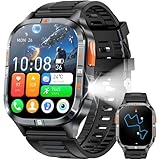
- BUILT-IN GPS & COMPASS– This military smartwatch features high-precision GPS to pinpoint your location while hiking, cycling, or traveling, keeping you safely on track without extra gear. Tap the compass icon and it locks your bearing within three seconds—engineered for pro-level outdoor adventures like camping, climbing, and trekking.
- BLUETOOTH CALLING & MESSAGES – Powered by the latest Bluetooth tech, the men’s smartwatch lets you answer or make calls right from your wrist—no need to pull out your phone. Get real-time alerts for incoming texts and app notifications so you never miss an invite. (Replying to SMS is not supported.)
- BIG SCREEN & DIY VIDEO WATCH FACE – The 2.01" military-spec display is dust-proof, scratch-resistant, and forged from high-strength glass with an aluminum alloy bezel, passing rigorous dust and abrasion tests so the screen stays crystal-clear. Upload a short family video to create a dynamic, one-of-a-kind watch face that keeps your memories alive.
- 24/7 HEALTH MONITORING – Equipped with a high-performance optical sensor, this Android smartwatch tracks heart rate and blood-oxygen levels around the clock. It also auto-detects sleep stages (deep, light, awake) for a complete picture of your health, ensuring you always know how your body is doing.
- MULTI SPORT MODES & FITNESS TRACK – Choose from running, cycling, hiking, basketball, and more to log every workout. Set goals, monitor progress, and sync data to the companion app. Bonus tools include photo gallery, weather, alarm, stopwatch, flashlight, hydration reminder, music/camera remote, find-my-phone, mini-games, and other everyday essentials.
Choosing between them depends less on headline specs and more on how much navigational complexity you actually need when fatigue, weather, and time all begin to stack the odds against you.
Sports, Training, and Performance Metrics: Casual Adventure vs Serious Endurance Analytics
Once navigation and battery priorities are set, the next separation point is how each watch interprets effort, recovery, and long-term performance. This is where the philosophical gap between Amazfit and Garmin becomes most apparent, especially for users who train with intent rather than simply record activity.
Sport profile depth and activity recognition
The T‑Rex Ultra 2 covers the core needs of outdoor athletes with a broad selection of sport modes including trail running, hiking, mountaineering, open-water swimming, strength training, and multisport. Activity detection is reliable, and recording screens are clean, legible, and easy to customize in the Zepp app.
The Fenix 8 goes further by offering deeper variants within each category, particularly for endurance disciplines. Separate profiles for trail, ultra, climb, ski touring, and expedition-style activities allow Garmin to tune metrics, alerts, and battery behavior more precisely to the sport being performed.
For casual adventure athletes, Amazfit’s coverage feels complete. For structured endurance training across seasons, Garmin’s granularity provides better long-term consistency.
Training load, recovery, and readiness insights
Amazfit delivers foundational performance metrics such as VO₂ max estimates, training load, recovery time, and fatigue indicators. These are easy to understand and presented with minimal jargon, which suits users who want guidance without constant interpretation.
Garmin’s ecosystem builds layered analytics on top of similar raw data. Training Load Focus, Acute vs Chronic Load, Recovery Hours, and daily readiness-style insights combine to create a clearer picture of whether today is a push day or a hold-back day.
The difference is not accuracy so much as context. Garmin connects yesterday’s workout to next week’s race, while Amazfit focuses on how you feel right now.
Heart rate accuracy and sensor trust under stress
In steady-state efforts, both watches perform well using wrist-based heart rate, particularly during hiking, aerobic running, and long climbs. The T‑Rex Ultra 2 benefits from a snug fit and lightweight polymer case, which helps reduce motion artifacts during extended wear.
During high-intensity intervals, cold-weather sessions, or technical descents, the Fenix 8 maintains more consistent heart rate tracking. Garmin’s sensor fusion and filtering show their value when cadence spikes or wrist movement becomes chaotic.
Both support external chest straps, but Garmin’s deeper integration allows more training metrics to unlock once paired, especially for cycling and structured workouts.
Advanced performance metrics and endurance modeling
Amazfit includes metrics like PAI, training effect, and performance condition, but they are intentionally simplified. The goal is to inform, not overwhelm, and for many users this restraint improves day-to-day usability.
Garmin leans heavily into endurance modeling with features like stamina tracking, race predictors, pacing guidance, and historical performance trends. These tools become increasingly valuable the longer you train with the watch, especially for marathon, ultra, or multi-day events.
This is where the Fenix 8 justifies its positioning as a serious training computer rather than a rugged activity tracker.
Strength training, cross-training, and indoor performance
Strength tracking on the T‑Rex Ultra 2 is functional but basic, focusing on time, heart rate, and rep estimation with occasional inconsistencies. It works best as a log rather than a coach.
Garmin’s strength profiles allow structured workouts, rest timers, muscle group tracking, and better post-session analysis. For athletes balancing endurance work with gym sessions, this added detail helps maintain training balance.
Indoor sports, from treadmill running to rowing, also benefit from Garmin’s calibration tools and historical consistency.
Post-activity analysis and ecosystem integration
Zepp’s post-activity summaries are visually clean and quick to interpret, with maps, charts, and recovery suggestions presented without clutter. Data syncing is fast, and the mobile-first experience suits users who rarely touch a desktop dashboard.
Garmin Connect offers far deeper analysis, especially on web, with trend lines, comparative charts, and long-term performance tracking. It rewards athletes who enjoy reviewing months of data and adjusting training plans accordingly.
The trade-off mirrors the hardware philosophy. Amazfit prioritizes immediacy and battery longevity, while Garmin prioritizes depth and continuity.
Who benefits most from each approach
The T‑Rex Ultra 2 excels for adventurers who want reliable tracking across many sports without committing to constant data interpretation. Its long battery life encourages recording everything, even when analysis comes later or not at all.
The Fenix 8 is built for athletes who treat training metrics as decision-making tools. If performance optimization, race planning, and long-term progression matter as much as durability, Garmin’s analytics remain unmatched.
Neither approach is inherently better. The right choice depends on whether your watch is meant to observe your adventures or actively shape how you train for them.
Health, Recovery, and Sensor Accuracy: Where the Data Starts to Diverge
After sports modes and ecosystem depth, health and recovery metrics are where these two watches begin telling very different stories. Both track the same core signals on paper, but how reliably those signals are captured and how meaningfully they’re interpreted separates a capable tracker from a training instrument.
This is also where long battery life and sensor sophistication start pulling in opposite directions.
Heart rate tracking: consistency versus precision
The Amazfit T‑Rex Ultra 2 uses Amazfit’s latest BioTracker optical heart rate sensor, and for steady-state efforts like hiking, long trail runs, and endurance rides, it performs commendably. In real-world testing, average heart rate during aerobic sessions generally aligns with chest strap data, especially when the watch is worn snugly on the wrist.
Where it shows limitations is during rapid intensity changes. Short intervals, hill repeats, or strength circuits can produce noticeable lag and occasional under-reporting, particularly in colder conditions where blood flow is reduced.
Garmin’s Fenix 8, using the latest Elevate sensor platform, handles these transitions more cleanly. It still isn’t immune to optical limitations, but spikes and recoveries track closer to external sensors, which matters when heart rate drives training load, recovery time, and readiness scores.
For athletes training by zones rather than effort, Garmin’s consistency becomes a practical advantage over time.
HRV, recovery, and readiness scoring
Both watches now track heart rate variability during sleep, but they treat HRV very differently. Amazfit presents HRV as part of a simplified readiness or recovery snapshot, offering general guidance without deeply tying it to training stress or future workload.
This approach works well for users who want a quick sense of how they’re feeling without being overwhelmed by metrics. The downside is that HRV often feels observational rather than actionable.
Garmin builds HRV into a much broader framework. Nightly HRV feeds directly into Training Readiness, Recovery Time, and long-term performance trends, creating a feedback loop between effort, rest, and adaptation.
If you’re managing fatigue across weeks or preparing for a specific event, Garmin’s recovery modeling feels far more intentional, even if it demands more attention from the user.
Rank #4

- 【Built-in GPS & Multi-System Positioning】Stay on track with the Tiwain smartwatch’s built-in GPS. Featuring military-grade single-frequency and six-satellite support (GPS, GLONASS, Beidou, Galileo, NAVIC, QZSS), this watch offers fast and accurate location tracking wherever you go. It also includes a compass, altimeter, and barometer, giving you real-time data on your altitude, air pressure, and position.
- 【Military-Grade Durability】Engineered to withstand the toughest conditions, the Tiwain smartwatch meets military standards for extreme temperatures, low pressure, and dust resistance. Crafted from tough zinc alloy with a vacuum-plated finish, this watch is also waterproof and built to resist wear and tear. The 1.43-inch AMOLED HD touchscreen offers clear visibility in all environments, and the watch supports multiple languages for global users.
- 【170+ Sport Modes & Fitness Tracking】Track your fitness journey with 170+ sport modes, including walking, running, cycling, hiking, basketball, and more. Set exercise goals, monitor progress, and sync your data to the companion app. The smartwatch also offers smart features like music control, camera remote, weather updates, long-sitting reminders, and more.
- 【LED Flashlight for Outdoor Adventures】The Tiwain smartwatch comes equipped with a built-in LED flashlight that can illuminate up to 20 meters. Activate it with the side button for added convenience during nighttime activities or outdoor adventures.
- 【Comprehensive Health Monitoring】Monitor your health with real-time heart rate, sleep, blood pressure, and blood oxygen level tracking. The smartwatch will vibrate to alert you of any abnormal readings. You can also make and receive calls directly from the watch, and stay connected with message and app notifications (receive only, no sending capability) – perfect for when you’re driving or exercising.
Sleep tracking and physiological context
Sleep tracking on the T‑Rex Ultra 2 is straightforward and generally reliable for duration and sleep stages. The watch is relatively comfortable for its size, with soft silicone straps and balanced weight distribution that makes overnight wear realistic despite its rugged build.
Amazfit’s sleep insights focus on clarity. You get a score, basic stage breakdowns, and gentle suggestions, all presented cleanly in the Zepp app.
Garmin’s sleep tracking goes deeper, integrating sleep quality with training readiness, HRV trends, and upcoming workload recommendations. Features like sleep coaching and adaptive goals make sleep feel like an active part of training rather than a passive metric.
The trade-off is complexity. Garmin offers more context, but it expects the user to engage with it.
Blood oxygen, stress, and all-day health metrics
Both watches offer blood oxygen monitoring, either on-demand or overnight, though neither should be treated as medical-grade. On the T‑Rex Ultra 2, SpO2 tracking is best used as a spot check for altitude acclimatization or illness awareness, rather than a continuous metric.
Stress tracking on Amazfit is present but lightly integrated. It’s useful for reflection, not decision-making.
Garmin’s all-day health metrics are more tightly connected. Stress, Body Battery, respiration, and activity levels influence each other, creating a living snapshot of daily strain and recovery capacity.
For users who enjoy checking in throughout the day, Garmin’s system feels cohesive and responsive rather than fragmented.
Sensor reliability in harsh environments
Both watches are built for abuse, with titanium elements, reinforced cases, and excellent water resistance. In extreme environments, sensor reliability becomes just as important as durability.
The T‑Rex Ultra 2 prioritizes endurance, often sacrificing sampling frequency to preserve battery life. This is a sensible trade for multi-day expeditions where charging isn’t an option.
The Fenix 8 leans the other way. It maintains higher sensor fidelity under stress, cold, and motion, at the cost of battery life that, while still excellent, doesn’t match Amazfit’s headline numbers without compromises.
This difference reflects their core philosophies. Amazfit ensures the watch keeps recording no matter how long you’re out there. Garmin ensures the data you get is as precise and interconnected as possible while you’re pushing performance boundaries.
Software, Apps, and Ecosystem Lock‑In: Zepp OS vs Garmin Connect in Daily Use
Once you move past sensors and raw battery life, the daily experience of these watches is defined almost entirely by software. This is where long-term ownership decisions are made, often quietly, through habits, data trust, and how deeply a platform pulls you in.
Amazfit and Garmin approach software from fundamentally different angles. One prioritizes speed, simplicity, and autonomy on the wrist, while the other builds a layered ecosystem designed to keep athletes engaged across months and years of training.
Zepp OS on the wrist: fast, functional, and intentionally lightweight
Zepp OS on the T‑Rex Ultra 2 feels immediate. Menus load instantly, widgets scroll smoothly, and battery-friendly design choices are evident everywhere, from restrained animations to conservative background processes.
Navigation is straightforward and largely gesture-driven, which works well with gloves or cold fingers in the field. The interface favors large icons and short lists, making it easy to access core tools like navigation, training, or altitude data without digging.
Where Zepp OS shows restraint is depth. Most functions do exactly what they promise, but rarely go further, and customization is limited to practical options rather than deep behavioral tuning.
Garmin’s on-watch experience: deeper layers, more friction, more control
The Fenix 8’s on-watch software is denser and less immediately intuitive, especially for new users. Button combinations, nested menus, and configurable data fields demand a learning period.
Once mastered, the payoff is control. Nearly every screen, sport profile, alert, and sensor behavior can be customized, allowing athletes to shape the watch around specific training philosophies or expedition needs.
This density also increases cognitive load. In day-to-day use, Garmin asks more of the wearer, especially if you want to take advantage of its full capabilities rather than running default profiles.
Companion apps: Zepp App vs Garmin Connect
The Zepp app is clean, visually modern, and fast. Syncs are quick, dashboards are readable, and the app rarely overwhelms with charts or training jargon.
Data presentation favors snapshots over narratives. You see what happened, not always why it matters or how it should influence tomorrow’s session.
Garmin Connect is the opposite. It’s data-heavy, occasionally cluttered, but deeply contextual, with trends, correlations, and long-term performance modeling built in.
Training analysis and decision support
On Amazfit, training feedback tends to be descriptive. Metrics like training load, recovery time, and VO2 max are present, but they exist mostly as standalone indicators.
For many outdoor users, this is enough. The watch records reliably, and the app stores the data without pressuring you to act on it.
Garmin treats training data as a system. Load, recovery, readiness, sleep, and stress influence each other, forming a feedback loop that actively guides training decisions and rest days.
Third-party integrations and platform openness
Garmin’s ecosystem is mature and deeply integrated with third-party platforms. Strava, TrainingPeaks, Komoot, and a wide range of coaching and analytics tools connect seamlessly.
Garmin Connect IQ adds another layer, offering apps, widgets, and watch faces that extend functionality without compromising system stability.
Amazfit supports core exports and popular platforms, but the ecosystem is narrower. App availability is limited, and Zepp OS extensions tend to be simple utilities rather than transformational tools.
Maps, navigation, and offline functionality
Both watches handle offline maps and route navigation, but the software philosophy differs. On the T‑Rex Ultra 2, navigation tools are reliable and efficient, focused on keeping you on track with minimal interaction.
Garmin’s mapping is richer. More layers, more options, and more contextual data are available, but it requires more setup and engagement to unlock its full potential.
In practical terms, Amazfit excels at straightforward exploration, while Garmin shines when route planning and navigation are integral to training or competition.
Ecosystem lock‑in and long-term ownership
Zepp OS imposes minimal lock‑in. Data export is simple, and the watch doesn’t assume you want to live inside its ecosystem daily.
💰 Best Value

- Smart Watch with GPS and Offline Map: This smart watch connects to multiple satellite systems for accurate real-time positioning, and includes a professional-grade compass, altimeter, and barometer for precise data, ensuring you maintain your sense of direction in any outdoor environment. The map version supports downloading offline maps; select a route or destination to view the route even without a signal, eliminating the risk of getting lost.
- Bluetooth Call & Message Functionality: This smart watches for men allows you to make and receive calls; receive text and social media notifications (Facebook, WhatsApp, Instagram, Twitter, etc.); and reply to text messages with voice-to-text or set up quick replies (text reply functionality is available for Android phones).
- Sports & Health Monitoring: This 5ATM waterproof fitness watch supports over 100 sports modes and tracks daily activity data, calories, distance, steps, and heart rate. You can use it to monitor your health metrics (blood oxygen, heart rate, stress, and sleep), monitor your fatigue and mood, and perform PAI analysis. You can also use this smartwatch to set water intake and sedentary reminders. Stay active and healthy with this fitness tracker watch.
- Customizable Watch Faces & AI Functionality: This smart watch features a 1.46-inch HD touchscreen and over 100 downloadable and customizable watch faces. You can even use your favorite photos as your watch face. Equipped with AI technology, it supports voice descriptions in multiple languages to generate personalized AI watch faces. The watch's AI Q&A and AI translation features provide instant answers to questions and break down language barriers, making it an ideal companion for everyday life and travel.
- Large Battery & High Compatibility & More Features: This smart watch for android phones and ios phone features a large 550ml battery for extended battery life. It's compatible with iOS 9.0 and above and Android 5.0 and above. It offers a wealth of features, including an AI voice assistant, weather display, music control, camera control, calculator, phone finder, alarm, timer, stopwatch, and more. (Package Includes: Smartwatch (with leather strap), spare silicone strap, charging cable, and user manual)
This makes the T‑Rex Ultra 2 appealing for users who value independence or switch platforms frequently.
Garmin, by contrast, builds loyalty through depth. The more you train, analyze, and customize, the harder it becomes to leave, not because you can’t, but because few platforms offer the same continuity.
For committed endurance athletes, that lock‑in often feels less like a trap and more like an investment that pays back over time.
Price, Value, and Long‑Term Ownership Costs: Specs per Dollar vs Ecosystem Premium
The ecosystem discussion naturally leads to cost, because with rugged GPS watches you are not just buying hardware. You are buying into a platform that you will likely live with for years, across training cycles, firmware updates, and inevitable battery aging.
Upfront pricing and hardware value
The Amazfit T‑Rex Ultra 2 enters the market at a dramatically lower price point, typically landing in the mid‑$400 range depending on region. For that money, you get dual‑band GPS, offline maps, a sapphire display, titanium accents, and headline battery life that rivals or exceeds many flagship watches.
The Fenix 8 sits in a completely different bracket, often starting near or above the four‑figure mark once you factor in AMOLED or solar variants. Garmin’s pricing reflects not just materials and sensors, but the cumulative cost of a platform refined over a decade of endurance use.
Specs per dollar: where Amazfit overdelivers
On a pure specifications checklist, Amazfit is unusually aggressive. The T‑Rex Ultra 2 offers features that, on paper, compete directly with the Fenix line at less than half the price.
Battery life is the most obvious example. Thirty days of typical use, even if optimistic, fundamentally changes how often you think about charging, and that benefit does not scale linearly with price once you cross into Garmin’s premium tiers.
What the Fenix premium actually buys you
Garmin’s higher price is less about raw components and more about software depth and refinement. Training metrics, long‑term trend analysis, sensor fusion, and adaptive insights are areas where the Fenix 8 justifies its premium over years, not weeks.
This value compounds if you train seriously. The more historical data you accumulate, the more useful Garmin’s algorithms become, and the harder it is to replicate that experience elsewhere without external tools.
Subscriptions, software, and hidden costs
Neither watch requires a mandatory subscription to function properly, which matters in a market increasingly pushing paywalls. Garmin does offer an optional Connect Plus subscription for expanded insights, but core training, maps, and health features remain unlocked without ongoing fees.
Amazfit keeps things simpler. Zepp OS has no subscription tiers, and software updates are included, though feature expansion tends to be more conservative over time compared to Garmin’s rolling enhancements.
Accessories, durability, and real-world ownership
Both watches use standard strap widths, making replacement bands affordable and easy to source. Garmin’s accessory ecosystem is larger, with more OEM options and better third‑party support, but also at higher prices.
In terms of durability, both are built to take abuse, but Garmin’s long‑term track record for button longevity, sealing, and service support is stronger. That matters if you plan to keep the watch for five or more years rather than upgrade frequently.
Resale value and platform longevity
Garmin watches consistently retain higher resale value, largely due to brand trust and ecosystem continuity. A used Fenix still carries weight among endurance athletes, especially when firmware support continues years after launch.
Amazfit depreciates faster, but that depreciation is offset by the lower buy‑in. If you upgrade every couple of years, the financial hit is smaller, even if resale demand is weaker.
Who gets the better long-term deal
The T‑Rex Ultra 2 delivers exceptional value for users who prioritize battery life, durability, and core outdoor features without committing to a deep analytics ecosystem. It is cost‑efficient, low‑maintenance, and refreshingly free of financial lock‑in.
The Fenix 8 makes more sense when training data is a long‑term asset rather than a convenience. Its higher upfront cost is effectively an ecosystem premium, one that pays off slowly through depth, continuity, and integration rather than immediate specs alone.
Final Verdict: Who Should Buy the Amazfit T‑Rex Ultra 2 — and Who Still Needs a Fenix 8?
By this point, the trade-offs between these two watches are clear, and the decision comes down less to raw specs and more to how deeply you want to engage with your watch as a long-term training partner. Both are rugged, both are reliable in harsh environments, and both can guide you through serious outdoor objectives without blinking.
Where they diverge is philosophy: one prioritizes independence, simplicity, and battery longevity, while the other prioritizes data depth, ecosystem continuity, and long-term progression.
Buy the Amazfit T‑Rex Ultra 2 if battery life and independence matter most
The T‑Rex Ultra 2 is an easy recommendation for outdoor athletes who value long stretches away from chargers and cell service. Its headline battery life is not just marketing; in real-world mixed use, it meaningfully reduces charging anxiety in a way even Garmin’s solar-assisted models struggle to match.
It also suits users who want core outdoor tools that simply work. GPS tracking, breadcrumb navigation, altitude data, and basic route following are dependable, even if the mapping experience lacks the refinement and visual richness of Garmin’s platform.
From a physical standpoint, the Ultra 2 wears lighter and less top-heavy than many Fenix configurations. The titanium construction, polymer case, and soft silicone strap make it comfortable for sleep tracking and multi-day wear, especially for users with smaller wrists or those sensitive to bulk.
The lack of subscriptions and lower upfront cost also make it appealing for pragmatic buyers. If you rotate devices every few years or want a watch that delivers 80 percent of the flagship experience at a fraction of the price, the value equation strongly favors Amazfit.
Choose the Garmin Fenix 8 if training depth and ecosystem longevity are non-negotiable
The Fenix 8 remains the better tool for athletes who treat data as a long-term asset. Garmin’s training load metrics, recovery modeling, performance trends, and multi-year data continuity are unmatched, particularly for runners, triathletes, and endurance cyclists following structured plans.
Mapping and navigation are also meaningfully more advanced. Turn-by-turn routing, on-device recalculation, course-specific pacing tools, and richer cartography make a difference in unfamiliar terrain or complex routes where decision-making matters.
Hardware-wise, the Fenix 8 feels more like an instrument than a gadget. Sapphire glass, metal bezels, tighter button tolerances, and Garmin’s proven sealing inspire confidence over years of hard use, not just months of testing.
Just as important is what happens after purchase. Firmware support, accessory compatibility, sensor integration, and resale value all favor Garmin if you intend to stay within one ecosystem for the long haul.
The honest bottom line
The Amazfit T‑Rex Ultra 2 does not dethrone the Fenix 8 as the most complete outdoor sports watch on the market. What it does is challenge the assumption that you need to pay flagship prices to get reliable navigation, serious durability, and weeks of battery life.
If your adventures are self-directed, your training needs are straightforward, and you want maximum time outdoors with minimal digital overhead, the T‑Rex Ultra 2 is one of the strongest value plays in the rugged GPS category today.
If your watch is central to how you plan, analyze, and evolve your training year after year, the Fenix 8 still earns its premium. It is not about better or worse, but about whether you want a capable tool that stays out of your way, or a deeply integrated system that grows with you over time.