For years, Amazfit has punched above its weight on hardware value, battery life, and sports depth, while stopping just short of the medical-grade features that define the top tier of smartwatches. ECG and blood pressure monitoring are the line that separates “very good fitness wearable” from “serious health device,” and crossing it fundamentally changes how the brand is perceived. This isn’t just another sensor add-on; it’s Amazfit signaling that it wants to compete in the same health conversation as Apple and Samsung, not merely undercut them on price.
For users, the timing matters as much as the features themselves. ECG and blood pressure are no longer novelty metrics, but expected pillars for anyone tracking cardiovascular health, managing hypertension risk, or simply wanting early warning signs that go beyond heart rate trends. What Amazfit is attempting here is to combine those medical-adjacent capabilities with the long battery life, lighter cases, and broader device compatibility that have historically been its strongest selling points.
Just as importantly, this move reframes Zepp Health from being a hardware-centric smartwatch maker into a platform company with regulatory ambition. ECG and blood pressure force tighter software validation, stricter regional approvals, and a more disciplined approach to data interpretation, which will ripple across the entire Zepp ecosystem.
ECG and blood pressure change Amazfit’s category, not just its spec sheet
ECG is the gateway feature that legitimizes a smartwatch as a cardiovascular monitoring tool rather than a fitness tracker with extras. Detecting irregular heart rhythms like atrial fibrillation requires clean signal capture, stable skin contact, and algorithms that can survive regulatory scrutiny. For Amazfit, delivering ECG means its sensor stack, casing design, and software pipeline have matured to a level that was previously reserved for premium competitors.
🏆 #1 Best Overall
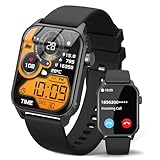
- 【1.83" HD Display & Customizable Watch Faces】Immerse yourself in a vibrant 1.83-inch IPS display, boasting a sharp resolution of 240*284 for crystal-clear visuals. Effortlessly personalize your smart watch with a wide array of customizable watch faces to suit your personal style for every occasion—whether trendy, artistic, or minimalist—ideal for casual, sporty, or professional. Its sleek, modern design complements any outfit, blending technology and fashion seamlessly for everyday wear
- 【120 Sports Modes & Advanced Health Tracking】Our TK29 smart watches for women men come equipped with 120 sports modes, allowing you to effortlessly track a variety of activities such as walking, running, cycling, and swimming. With integrated heart rate and sleep monitors, you can maintain a comprehensive overview of your health, achieve your fitness goals, and maintain a balanced, active lifestyle with ease. Your ideal wellness companion (Note: Step recording starts after exceeding 20 steps)
- 【IP67 Waterproof & Long-Lasting Battery】Designed to keep up with your active lifestyle, this smartwatch features an IP67 waterproof rating, ensuring it can withstand splashes, sweat, and even brief submersion, making it perfect for workouts, outdoor adventures, or rainy days. Its reliable 350mAh battery offering 5-7 days of active use and up to 30 days in standby mode, significantly reducing frequent charging. Ideal for all-day wear, whether you’re at the gym, outdoors, or simply on the go
- 【Stay Connected Anytime, Anywhere】Stay informed and in control with Bluetooth call and music control features. Receive real-time notifications for calls, messages, and social media apps like Facebook, WhatsApp, Twitter, and Instagram directly on your smartwatch. Easily manage calls, control your music playlist, and stay updated without needing to reach for your phone. Perfect for work, workouts, or on-the-go, this watch keeps you connected and never miss important updates wherever you are
- 【Multifunction & Wide Compatibility】Seamlessly handle heart rate monitoring, sleep tracking, and enjoy conveniences like camera/music control, Seamlessly handle heart rate monitoring, sleep tracking, and more-all directly from your wrist. This 1.83 inches HD smartwatch is compatible with iPhone (iOS 9.0+) & Android (5.0+), ensuring smooth daily connectivity and convenience throughout your day. More than just a timepiece, it’s a stylish, all-in-one wearable for smarter, healthier living
Blood pressure is an even bigger leap because it’s one of the most misunderstood smartwatch metrics. No consumer smartwatch measures blood pressure directly; instead, it estimates it using pulse transit time and optical signals, typically requiring periodic calibration with a traditional cuff. By adding blood pressure, Amazfit is stepping into a space where expectations must be carefully managed, but the payoff is enormous for users who want trend data and daily context rather than clinical readings.
Together, these features elevate Amazfit devices from being excellent training companions to becoming all-day health monitors that users are more likely to wear consistently. That consistency is critical, because long-term data trends are where ECG and blood pressure insights actually become useful.
How this stacks up against Apple and Samsung in real-world use
Apple Watch set the benchmark for ECG by pairing single-lead readings with a frictionless user experience and broad regulatory clearance, while Samsung pushed blood pressure estimation earlier in many markets through aggressive calibration requirements. Amazfit sits somewhere between the two, with a chance to differentiate on comfort, battery life, and Android-first flexibility rather than trying to out-Apple Apple.
Battery life is a key practical advantage here. Where Apple Watch typically requires daily charging and Samsung hovers around one to two days, Amazfit’s multi-day and sometimes multi-week endurance means ECG and blood pressure tracking can coexist with sleep tracking, continuous heart rate monitoring, and GPS workouts without forcing lifestyle compromises. For many users, that trade-off matters more than having the most polished ECG PDF export.
There’s also a broader device strategy at play. Amazfit is far more likely to roll these features across multiple models at different price points, rather than locking them to a single flagship. If ECG and blood pressure arrive on lighter, thinner cases with comfortable straps and sport-friendly designs, Amazfit could quietly undercut the incumbents on daily wearability.
Zepp Health’s regulatory strategy is the real story
ECG and blood pressure are meaningless without regulatory clearance, and this is where Zepp Health’s intentions become clear. Securing approvals across different regions requires localized algorithms, clinical validation, and careful feature gating, which explains why availability may roll out gradually rather than globally overnight. This is less about delay and more about building a sustainable health platform that regulators are willing to trust.
Zepp’s software layer becomes central here. The Zepp app must not only present data clearly, but also frame it responsibly, with disclaimers, education, and prompts that avoid turning wellness metrics into medical panic. Expect conservative thresholds, clear guidance on when to seek professional advice, and tight integration with existing heart rate, SpO2, and sleep data rather than standalone readings.
This regulatory-first approach also suggests future expansion. Once ECG and blood pressure are established, it becomes easier to iterate toward features like irregular rhythm notifications, longitudinal hypertension insights, and deeper cardiovascular trend analysis across months rather than days.
What users should realistically expect from accuracy and availability
Accuracy will be good enough for trend awareness, not diagnosis. ECG readings should reliably flag rhythm irregularities when taken correctly, but they won’t replace clinical multi-lead tests, and blood pressure estimates will depend heavily on proper calibration and consistent wear. Users expecting cuff-level precision will be disappointed, while those looking for directional insight and early warning signs will find real value.
Availability will almost certainly vary by region and device. Some models may support ECG but not blood pressure, or require firmware updates and country-specific activation, depending on local regulations. This fragmentation is frustrating, but it’s also the price of doing regulated health features properly rather than shipping half-baked metrics.
For Amazfit owners, the bigger implication is confidence. Once ECG and blood pressure are part of the platform, the watch on your wrist isn’t just counting steps or tracking workouts, it’s participating in your long-term health narrative, and that fundamentally changes how the device earns its place in daily life.
What Amazfit Is Actually Launching: ECG, Blood Pressure, and the Sensors Behind Them
With expectations now grounded in regulatory reality, it’s important to be precise about what Amazfit is bringing to market and how these features actually work on the wrist. This is not a single switch being flipped across the lineup, but a layered rollout combining new sensors, revised hardware designs, and software features that only make sense together.
At its core, Amazfit is moving from general wellness tracking into regulated cardiovascular monitoring, and that shift starts with the physical sensors embedded in the watch itself.
ECG: Single-Lead, On-Demand, and Hardware-Dependent
Amazfit’s ECG implementation follows the now-established smartwatch playbook pioneered by Apple and refined by Samsung. It is a single-lead ECG system that requires both the rear optical sensor array and an electrical contact on the watch body, typically integrated into the crown or bezel.
To take a reading, users place a finger from the opposite hand on that contact, completing a closed electrical circuit across the chest. This allows the watch to record the heart’s electrical signals over a short, controlled window, usually around 30 seconds, rather than passively monitoring in the background.
From a hardware perspective, this means ECG will only appear on specific Amazfit models with the necessary electrodes and internal shielding. Existing watches without these components cannot gain ECG via software updates alone, regardless of firmware maturity or app support.
In practical terms, users should expect ECG to be an intentional, on-demand measurement rather than something that runs continuously. The primary output will be rhythm classification, such as sinus rhythm versus potential atrial fibrillation indicators, presented with clear disclaimers rather than definitive diagnoses.
Blood Pressure: Optical Estimation, Not a Cuff Replacement
Blood pressure is the more complex and more easily misunderstood addition. Amazfit is not launching a cuff-based solution or a strap-tightening mechanism like some experimental devices, but instead relying on optical sensor data combined with pulse wave analysis.
This approach estimates blood pressure by analyzing subtle changes in blood flow timing and vessel behavior, using photoplethysmography data already captured by the heart rate sensor. To work at all, it requires an initial calibration against a traditional cuff-based reading, which then becomes the baseline for future estimates.
Accuracy hinges on consistency. The watch must be worn at the same tightness, on the same wrist, and ideally at similar times of day for trends to be meaningful. Sudden posture changes, workouts, or loose straps will degrade reliability quickly.
Compared to Apple, which still does not offer blood pressure readings, and Samsung, whose blood pressure feature is heavily restricted by region, Amazfit’s move is ambitious. However, expectations need to be calibrated toward trend tracking and directional changes over time, not spot-check accuracy suitable for medication decisions.
The Sensor Stack: BioTracker Evolution and Hardware Refinement
Underpinning both features is the latest generation of Zepp Health’s BioTracker sensor platform. This is not just a higher-resolution optical sensor, but a redesigned stack that improves light penetration, reduces motion artifacts, and enables more consistent signal capture across different skin tones and wrist sizes.
Expect multi-wavelength LEDs, improved photodiode placement, and refined algorithms that fuse heart rate, SpO2, stress, and sleep data into a more coherent physiological picture. ECG and blood pressure do not exist in isolation; they are contextualized by resting heart rate trends, overnight recovery metrics, and long-term cardiovascular load.
From a wearability standpoint, this also influences case design. ECG-capable Amazfit watches tend to be slightly thicker to accommodate sensor spacing and insulation, with smoother casebacks and more deliberate strap ergonomics to encourage proper skin contact during measurements.
Battery life remains a competitive advantage. Unlike Apple Watch, which often trades longevity for performance, Amazfit’s on-demand approach allows ECG and blood pressure features to coexist with multi-day battery life, making daily wear more realistic for users who don’t want nightly charging.
Software Delivery: Zepp App as the Gatekeeper
All of this hardware only becomes meaningful through the Zepp app, which acts as both interpreter and gatekeeper. ECG and blood pressure features are expected to be locked behind device compatibility checks, firmware versions, and regional approvals before users ever see them.
Within the app, readings are likely to be framed conservatively, with educational overlays explaining what the data can and cannot indicate. Historical views will emphasize trends across weeks and months, rather than encouraging frequent spot checks that could fuel anxiety.
This is where Amazfit differentiates itself from more consumer-electronics-driven competitors. The experience is designed less around instant gratification and more around longitudinal insight, aligning with Zepp Health’s broader ambition to be taken seriously by regulators, clinicians, and long-term users alike.
The result is a platform that feels deliberate rather than flashy. ECG and blood pressure are not headline gimmicks here; they are carefully constrained tools meant to earn trust over time, provided users understand both their power and their limits.
How Zepp Health Plans to Make It Work: Algorithms, Calibration, and the Zepp Platform
If hardware and battery life set the boundaries, algorithms determine whether ECG and blood pressure features are credible or merely decorative. This is where Zepp Health’s strategy becomes more interesting, because it leans less on raw sensor novelty and more on data modeling built across years of large-scale wearable usage.
Zepp Health has quietly amassed one of the larger non-Apple physiological datasets in the consumer wearable space, drawn from Amazfit, Zepp, and legacy Huami users worldwide. That long-term, multi-population data pool underpins how ECG waveforms and pulse transit time signals are interpreted, filtered, and ultimately translated into user-facing metrics.
ECG: Single-Lead by Design, Contextual by Necessity
Amazfit’s ECG implementation follows the now-familiar single-lead model, using electrodes embedded in the caseback and bezel or button to complete a closed circuit across the chest and arms. From a hardware standpoint, this places it in the same category as Apple Watch and Samsung Galaxy Watch, rather than aspiring to clinical multi-lead complexity.
The real differentiation lies in signal handling. Zepp Health’s ECG algorithms focus heavily on noise suppression and waveform consistency, prioritizing reliable rhythm classification over edge-case detection. In practical terms, this means atrial fibrillation screening and irregular rhythm alerts are the primary use cases, rather than broad diagnostic claims.
Importantly, ECG results are not presented in isolation. Within the Zepp app, ECG traces are cross-referenced against resting heart rate baselines, activity levels, and sleep-derived recovery states, helping reduce false positives triggered by motion, stress, or post-exercise measurements.
Rank #2
![Apple Watch Series 11 [GPS 46mm] Smartwatch with Jet Black Aluminum Case with Black Sport Band - M/L. Sleep Score, Fitness Tracker, Health Monitoring, Always-On Display, Water Resistant](https://m.media-amazon.com/images/I/312K597M2uL._SL160_.jpg)
- HYPERTENSION NOTIFICATIONS — Apple Watch Series 11 can spot signs of chronic high blood pressure and notify you of possible hypertension.*
- KNOW YOUR SLEEP SCORE — Sleep score provides an easy way to help track and understand the quality of your sleep, so you can make it more restorative.
- EVEN MORE HEALTH INSIGHTS — Take an ECG anytime.* Get notifications for a high and low heart rate, an irregular rhythm,* and possible sleep apnea.* View overnight health metrics with the Vitals app* and take readings of your blood oxygen.*
- STUNNING DESIGN — Thin and lightweight, Series 11 is comfortable to wear around the clock — while exercising and even when you’re sleeping, so it can help track your key metrics.
- A POWERFUL FITNESS PARTNER — With advanced metrics for all your workouts, plus features like Pacer, Heart Rate Zones, training load, Workout Buddy powered by Apple Intelligence from your nearby iPhone,* and more. Series 11 also comes with three months of Apple Fitness+ free.*
Blood Pressure: Cuffless, Calibrated, and Constrained
Blood pressure is where expectations need the most recalibration. Amazfit’s approach relies on cuffless estimation, typically derived from pulse transit time and optical heart signal timing rather than direct pressure measurement.
This method is inherently model-driven, which is why Zepp Health emphasizes calibration. Users should expect an initial setup process requiring one or more reference readings from a traditional cuff, with periodic recalibration to maintain accuracy over time.
Unlike Huawei, which aggressively markets always-on blood pressure trends, Zepp Health appears more conservative. Blood pressure readings are expected to be on-demand rather than continuous, framed as reference estimates rather than medical-grade measurements, and often restricted to resting conditions to minimize variability.
Why Calibration Is Central to the User Experience
Calibration is not a one-time hurdle but a recurring part of the system’s integrity. Factors like arterial stiffness, temperature, hydration, and even strap tightness can materially affect cuffless blood pressure estimates, especially over weeks and months of daily wear.
Zepp Health’s platform design reflects this reality. The Zepp app is expected to prompt recalibration intelligently, triggered by detected signal drift or long gaps between reference readings, rather than relying on fixed time intervals alone.
From a usability standpoint, this introduces friction compared to simpler fitness metrics. But it also signals intent: Zepp Health would rather inconvenience users slightly than allow silently degraded accuracy, a stance that aligns closely with regulatory expectations.
The Zepp Platform as a Regulatory Filter
The Zepp app is not just a companion; it is the enforcement layer. Device eligibility, firmware requirements, user education, and regional feature availability are all mediated through the platform, allowing Zepp Health to comply with country-specific approvals without fragmenting hardware SKUs.
This mirrors Apple’s region-by-region ECG rollout strategy, though Zepp Health applies it more broadly across its lineup. An Amazfit watch may physically support ECG or blood pressure, but features will remain dormant until local regulatory conditions are met and software gates are opened.
For users, this can be frustrating in the short term. For the platform, it creates a clear separation between capability and authorization, which is essential if Zepp Health wants to expand beyond wellness branding into medically adjacent territory.
How This Compares to Apple and Samsung
Apple’s strength lies in vertical integration and clinical partnerships, while Samsung leans heavily on aggressive feature marketing backed by regional approvals. Zepp Health occupies a middle ground, pairing comparatively affordable hardware with a slower, more methodical validation process.
In day-to-day use, Amazfit’s ECG and blood pressure features are unlikely to feel as instant or as tightly integrated into the operating system as Apple Watch equivalents. However, battery life, lighter cases, and less intrusive measurement workflows may make them more sustainable for long-term wear.
For users who care about trends, compliance, and multi-day comfort rather than medical theatrics, this trade-off is deliberate. Zepp Health is not trying to replace clinical tools; it is trying to build a health-aware wearable ecosystem that can scale globally without collapsing under regulatory pressure.
What Users Should Realistically Expect
Accuracy will depend as much on user behavior as on algorithms. Proper fit, consistent wear, calm measurement conditions, and willingness to recalibrate are all prerequisites for meaningful data, particularly for blood pressure.
Availability will be staggered, with flagship Amazfit models receiving support first and older devices potentially excluded despite similar sensors. This is less about artificial segmentation and more about ensuring processing headroom, sensor stability, and regulatory alignment.
Most importantly, ECG and blood pressure within the Zepp ecosystem are designed to inform, not alarm. They are tools for pattern recognition and long-term awareness, embedded in a platform that values restraint as much as innovation.
Regulatory Reality Check: FDA, CE Marks, and Where Features Will (and Won’t) Be Available
All of this ambition ultimately collides with regulation, and that is where Amazfit’s ECG and blood pressure roadmap becomes far more selective than the marketing might suggest. These features are not simply toggled on by firmware; they exist inside tightly controlled medical-device frameworks that vary sharply by region.
Zepp Health’s recent language signals a shift from wellness-first disclaimers toward formal medical validation. That transition brings credibility, but it also introduces delays, regional fragmentation, and device-level restrictions that users need to understand upfront.
FDA: The Longest Pole in the Tent
In the United States, ECG and blood pressure estimation fall under FDA oversight as regulated medical functions, not lifestyle features. That means Zepp Health must pursue either 510(k) clearance or a De Novo pathway, depending on how the algorithms are classified and what predicate devices the company references.
ECG is the more straightforward of the two. Single-lead wrist-based ECG has a well-established regulatory precedent thanks to Apple, Samsung, and Fitbit, making approval largely a matter of validation quality, clinical data, and post-market controls rather than novel science.
Blood pressure is far more complex. Cuffless, optical blood pressure estimation is still treated cautiously by regulators, often requiring calibration workflows, usage constraints, and explicit labeling around accuracy limits, especially for hypertensive users.
CE Marking and Europe’s More Fragmented Reality
Europe may appear simpler on paper, but the reality under the EU Medical Device Regulation is more demanding than the old CE process many remember. Software-based health features now face stricter clinical evidence requirements, ongoing surveillance obligations, and clearer differentiation between wellness and medical intent.
For Amazfit, this likely means ECG approval arriving in select EU markets before blood pressure, with functionality gated by country-level interpretation rather than a single pan-European switch. Some regions may see ECG live months earlier than others, even on identical hardware.
The upside is that once approved, CE-marked features tend to remain stable. Zepp Health’s conservative rollout strategy suggests it wants fewer reversals and less feature clawback, even if that slows initial expansion.
Asia-Pacific, China, and Emerging Markets
Outside the US and EU, availability becomes even more uneven. In China, domestic regulatory pathways differ significantly, and Amazfit has historically moved faster there with advanced health metrics, often framed as health monitoring rather than diagnostic tools.
In markets across Southeast Asia, Latin America, and parts of the Middle East, ECG and blood pressure may appear as limited or “research-oriented” features first. These versions typically emphasize trend tracking, require frequent calibration, and include stricter in-app disclaimers.
For users traveling between regions, this can lead to the same watch behaving differently depending on location, account settings, and firmware region locks. That inconsistency is frustrating, but it is a direct consequence of compliance rather than artificial restriction.
Device Eligibility and Why Sensors Alone Aren’t Enough
Even within approved regions, not every Amazfit watch with the right sensors will qualify. Regulatory submissions are device-specific, meaning case materials, electrode placement, strap conductivity, processor stability, and battery behavior all factor into approval.
This explains why newer flagships with refined electrode geometry, tighter case tolerances, and more predictable battery discharge curves will receive ECG and blood pressure first. Older models may remain excluded despite similar optical sensors, simply because re-certifying them would be inefficient or risky.
From a wearability perspective, this also reinforces why Amazfit emphasizes lighter cases, comfortable straps, and multi-day battery life. Regulatory-grade measurements assume consistent daily wear, not occasional spot checks on a watch that lives on a charger.
What This Means in Practical Terms for Buyers
If you are buying an Amazfit watch specifically for ECG or blood pressure, region matters as much as hardware. A watch purchased today may physically support the features but remain inactive until local approvals are granted, sometimes months later.
Users in the US and EU should expect ECG to arrive first, with blood pressure following selectively and with stricter usage instructions. In other regions, availability may be faster but framed more conservatively, with stronger emphasis on trends rather than absolute values.
This is the cost of Zepp Health’s decision to move slowly and correctly. The company is choosing regulatory durability over headline speed, which ultimately determines whether these features remain usable long-term or disappear after a compliance audit.
How Amazfit’s Approach Compares to Apple Watch and Samsung Galaxy Watch
Once you place Amazfit’s ECG and blood pressure push alongside Apple and Samsung, it becomes clear that Zepp Health is not trying to win the same race. The destination is similar, but the pacing, priorities, and assumptions about how people actually wear their watches are fundamentally different.
Apple Watch: Clinical Credibility Through Ecosystem Control
Apple’s ECG play has always been about end-to-end control. From electrode placement in the Digital Crown to tight integration with iOS, HealthKit, and FDA-cleared workflows, Apple built its ECG feature to behave like a regulated medical accessory that happens to live inside a consumer product.
Rank #3

- Bluetooth Call and Message Alerts: Smart watch is equipped with HD speaker, after connecting to your smartphone via bluetooth, you can answer or make calls, view call history and store contacts through directly use the smartwatch. The smartwatches also provides notifications of social media messages (WhatsApp, Twitter, Facebook, Instagram usw.) So that you will never miss any important information.
- Smart watch for men women is equipped with a 320*380 extra-large hd full touch color screen, delivering exceptional picture quality and highly responsive touch sensitivity, which can bring you a unique visual and better interactive experience, lock screen and wake up easily by raising your wrist. Though “Gloryfit” app, you can download more than 102 free personalised watch faces and set it as your desktop for fitness tracker.
- 24/7 Heart Rate Monitor and Sleep Tracker Monitor: The fitness tracker watch for men has a built-in high-performance sensor that can record our heart rate changes in real time. Monitor your heart rate 26 hours a day and keep an eye on your health. Synchronize to the mobile phone app"Gloryfit", you can understand your sleep status(deep /light /wakeful sleep) by fitness tracker watch develop a better sleep habit and a healthier lifestyle.
- IP68 waterproof and 110+ Sports Modes: The fitness tracker provides up to 112+ sports modes, covering running, cycling, walking, basketball, yoga, football and so on. Activity trackers bracelets meet the waterproof requirements for most sports enthusiasts' daily activities, such as washing hands or exercising in the rain, meeting daily needs (note: Do not recommended for use in hot water or seawater.)
- Multifunction and Compatibility: This step counter watch also has many useful functions, such as weather forecast, music control, sedentary reminder, stopwatch, alarm clock, timer, track female cycle, screen light time, find phone etc. The smart watch with 2 hrs of charging, 5-7 days of normal use and about 30 days of standby time. This smart watches for women/man compatible with ios 9.0 and android 6.2 and above devices.
That control comes with trade-offs. Apple Watch battery life remains measured in hours rather than days, which means users must consciously plan wear time if they want consistent data. ECG on Apple Watch is also explicitly episodic; it is excellent for capturing atrial fibrillation during a moment of concern, but it is not designed for passive, long-duration cardiac monitoring without user initiation.
Blood pressure highlights Apple’s conservatism even more. Despite years of rumors, Apple has not shipped cuffless blood pressure readings, largely because it refuses to launch until confidence thresholds, validation models, and regulatory comfort align. Apple would rather wait than deploy a feature framed primarily around trends, and that restraint defines its health identity.
Samsung Galaxy Watch: Feature Velocity with Regional Caveats
Samsung takes a more aggressive approach than Apple, especially outside the US. ECG and blood pressure have been available on Galaxy Watch models for years, but often gated by country, carrier, and Samsung Health Monitor availability.
Unlike Apple, Samsung leans heavily on initial calibration and user responsibility. Blood pressure readings require regular cuff-based calibration, and accuracy depends on compliance with those instructions. The upside is broader availability and earlier access; the downside is variability in real-world reliability and a fragmented experience depending on region and phone compatibility.
From a hardware standpoint, Galaxy Watch models balance comfort and capability well, but battery life typically ranges from one to three days depending on size and usage. That puts Samsung closer to Apple than Amazfit when it comes to charging habits, which directly affects how consistently health features are used rather than how impressive they look on a spec sheet.
Amazfit and Zepp Health: Designing for Daily Wear First
Amazfit’s strategy sits in a different lane altogether. Instead of assuming nightly charging and episodic measurements, Zepp Health is designing ECG and blood pressure around watches that are worn continuously for days at a time.
Multi-day battery life, lighter cases, polymer or titanium constructions, and soft, breathable straps are not lifestyle features here; they are foundational to the health model. A cuffless blood pressure estimate that tracks trends over weeks is only meaningful if the watch is actually on your wrist, including during sleep and low-activity periods when cardiovascular patterns emerge.
This is also why Amazfit is willing to frame blood pressure more cautiously. Where Samsung markets numerical readings and Apple waits for near-clinical parity, Amazfit appears more comfortable positioning blood pressure as a longitudinal signal. That aligns with Zepp Health’s platform strengths in trend analysis, readiness scoring, and long-term health baselines rather than point-in-time diagnostics.
Software Platforms: Zepp OS Versus HealthKit and Samsung Health
On the software side, Apple Health remains the gold standard for medical record integration, physician-facing exports, and regulatory polish. Samsung Health sits between consumer wellness and regulated features, sometimes awkwardly segmented by companion apps and region locks.
Zepp Health’s platform is more analytics-driven than medical-record-driven. ECG traces, blood pressure trends, heart rate variability, and sleep metrics are synthesized into readiness and fatigue models that prioritize interpretation over raw data volume. For fitness-oriented users and endurance athletes, this approach often feels more actionable day to day.
Compatibility also matters. Amazfit’s Android and iOS parity avoids some of the ecosystem lock-in seen with Apple Watch, while sidestepping Samsung’s reliance on Galaxy phones for full feature access. That broader compatibility makes regulatory rollouts messier, but it also widens the addressable audience once approvals land.
Accuracy Expectations and Realistic Trade-Offs
None of these watches replace medical devices, but they make different promises. Apple aims for clinical alignment, Samsung pushes feature access with disclaimers, and Amazfit emphasizes consistency and trend fidelity.
In practical terms, Amazfit users should expect ECG readings that are reliable for rhythm assessment when used properly, and blood pressure insights that are most valuable over time rather than as isolated numbers. The benefit is fewer interruptions, less charging anxiety, and a watch that fits into daily life instead of dictating it.
This is why Zepp Health’s slower, region-by-region rollout matters. It is not about being late; it is about ensuring that once ECG and blood pressure appear on an Amazfit watch, they stay there, function predictably, and align with how the hardware is actually worn in the real world.
Supported Watches and Hardware Requirements: Who Gets ECG and BP, and Who Doesn’t
The careful tone around accuracy and regulation naturally leads to the harder question: which Amazfit watches are actually capable of supporting ECG and blood pressure once Zepp Health flips the switch. Unlike step counts or sleep tracking, these features are not software upgrades that can be back-ported indiscriminately.
ECG and cuffless blood pressure demand specific sensor layouts, electrical pathways, and processing headroom. As a result, Zepp Health is drawing clearer hardware lines than it has for most previous health features.
The Non-Negotiable Hardware: Electrodes, Sensors, and Silicon
ECG requires more than an optical heart rate sensor. The watch needs at least two electrical contact points, typically one on the case or crown and another on the rear sensor array, allowing a closed-loop measurement across the chest when a finger touches the electrode.
Most older Amazfit models simply do not have this physical architecture. Even if their optical sensors are competent for heart rate and SpO₂, they cannot be retrofitted to capture ECG traces through firmware alone.
Blood pressure estimation is less visually obvious but just as demanding. Zepp Health relies on high-fidelity PPG sensors, precise timing data, and calibration routines tied to arterial stiffness models, which require newer sensor generations and more consistent skin contact during wear.
Likely Supported Models: Newer Flagships First
Based on hardware disclosures, teardown analysis, and Zepp Health’s own regulatory filings, ECG and blood pressure are expected to debut on Amazfit’s recent flagship-tier watches rather than the broader catalog.
The Amazfit Balance is the most obvious candidate. Its sensor stack, physical design, and positioning as a health-forward lifestyle watch align directly with ECG use, and its lightweight case and balanced ergonomics make the stationary measurement posture more practical in daily use.
Select variants of the GTR and GTS 4 series may also qualify, depending on regional SKUs. These watches introduced upgraded BioTracker sensors and more powerful chipsets, but not every model includes the necessary electrode configuration, which means support may differ by market even within the same product family.
What Gets Left Out: Budget, Older, and Sport-Focused Models
Many popular Amazfit watches will not receive ECG or blood pressure, even if they remain excellent fitness trackers. This includes older generations like the GTR 3, GTS 3, and most Bip models, where battery efficiency and price positioning took priority over medical-grade sensor layouts.
Rugged and sport-focused watches such as T-Rex variants are also less certain candidates. While durable and comfortable for long training sessions, their case designs and button-heavy ergonomics are not ideal for consistent ECG contact or controlled blood pressure measurements.
This is a trade-off Zepp Health appears comfortable making. Rather than dilute the feature across unsuitable hardware, it is prioritizing predictable performance on a narrower set of watches.
Regional and Regulatory Gating Still Applies
Even if a watch has the right hardware, ECG and blood pressure will not appear everywhere at once. Regulatory clearance is tied to specific hardware models, firmware versions, and countries, meaning identical watches can behave very differently depending on where they are activated.
This mirrors Apple and Samsung’s approach, but with less ecosystem leverage to smooth over delays. Amazfit users should expect staggered rollouts, temporary geo-locks, and occasional feature pauses as approvals are expanded or revised.
The upside is stability. Once enabled in a given region, these features are less likely to be pulled or reworked mid-cycle, reinforcing Zepp Health’s emphasis on long-term trust rather than rapid headlines.
What This Means for Buyers Right Now
For prospective buyers, ECG and blood pressure should be viewed as deciding factors only when choosing among Amazfit’s newest health-centric models. If these metrics matter, it is worth prioritizing confirmed hardware readiness over discounts on older stock.
For existing owners, the reality is more nuanced. Software updates will continue to improve analytics, readiness scoring, and trend interpretation, but ECG and blood pressure are hard boundaries defined by physical design, not goodwill.
In that sense, Amazfit’s approach is refreshingly honest. These features are not positioned as universal perks, but as capabilities earned through specific hardware choices, worn consistently, and supported cautiously as Zepp Health steps deeper into regulated health territory.
Accuracy Expectations in the Real World: Fitness Insight vs Medical-Grade Reality
All of this hardware selectivity and regulatory caution leads to the most important question for buyers: how accurate will Amazfit’s ECG and blood pressure features actually be when worn day to day. The answer sits firmly in the space between lifestyle insight and clinical instrumentation, much like Apple Watch and Samsung Galaxy Watch before it.
Zepp Health is not trying to turn Amazfit watches into diagnostic tools. It is positioning them as early-warning systems and long-term trend trackers, and accuracy expectations need to be framed accordingly.
ECG: Comparable Signals, Narrower Scope
Amazfit’s ECG implementation is expected to be a single-lead system, matching the technical approach used by Apple Watch and Samsung Galaxy Watch. This means it can reliably detect rhythm irregularities like atrial fibrillation, but it cannot provide the multi-lead context used in cardiology clinics.
Rank #4
![Apple Watch Series 11 [GPS 42mm] Smartwatch with Rose Gold Aluminum Case with Light Blush Sport Band - S/M. Sleep Score, Fitness Tracker, Health Monitoring, Always-On Display, Water Resistant](https://m.media-amazon.com/images/I/31J+F-pXaWL._SL160_.jpg)
- HYPERTENSION NOTIFICATIONS — Apple Watch Series 11 can spot signs of chronic high blood pressure and notify you of possible hypertension.*
- KNOW YOUR SLEEP SCORE — Sleep score provides an easy way to help track and understand the quality of your sleep, so you can make it more restorative.
- EVEN MORE HEALTH INSIGHTS — Take an ECG anytime.* Get notifications for a high and low heart rate, an irregular rhythm,* and possible sleep apnea.* View overnight health metrics with the Vitals app* and take readings of your blood oxygen.*
- STUNNING DESIGN — Thin and lightweight, Series 11 is comfortable to wear around the clock — while exercising and even when you’re sleeping, so it can help track your key metrics.
- A POWERFUL FITNESS PARTNER — With advanced metrics for all your workouts, plus features like Pacer, Heart Rate Zones, training load, Workout Buddy powered by Apple Intelligence from your nearby iPhone,* and more. Series 11 also comes with three months of Apple Fitness+ free.*
In controlled conditions, single-lead ECG accuracy is already well understood. When the watch is worn snugly, the user is still, and skin contact is stable, readings are typically consistent enough to flag abnormalities that warrant follow-up.
Where Amazfit may differ is in software interpretation rather than signal capture. Apple’s advantage lies in years of clinical validation and massive ECG datasets, while Samsung benefits from deep integration with Android health records. Zepp Health is newer to this regulatory tier, which means results may feel more conservative, with more inconclusive readings and fewer definitive flags in early releases.
Blood Pressure: Trends First, Numbers Second
Cuffless blood pressure is where expectations need the most recalibration. Like Samsung, Amazfit’s blood pressure tracking relies on pulse transit time models that must be regularly calibrated using a traditional cuff.
This immediately limits its use case. Users who skip calibration, wear the watch loosely, or take readings during activity should expect drift and variability, sometimes by a meaningful margin.
In practice, this feature is best understood as directional rather than absolute. It can surface long-term changes, highlight consistently elevated patterns, and reinforce adherence to healthier habits, but it should not be trusted for medication decisions or acute monitoring. Apple’s continued avoidance of blood pressure numbers underscores just how difficult this problem remains.
The Role of Fit, Materials, and Daily Wear
Accuracy in both ECG and blood pressure is heavily influenced by physical design. Amazfit’s health-focused models typically favor lighter cases, flatter casebacks, and silicone or fluoroelastomer straps that maintain even pressure across the wrist.
This improves sensor contact, but it also introduces trade-offs in comfort and style. Users coming from metal bracelets or loosely worn fashion-oriented watches may need to adjust habits, wearing the watch higher and tighter on the wrist during measurements.
Battery life also plays an indirect role. Amazfit’s advantage here is longevity, allowing users to wear the watch continuously without skipping nights or health sessions. More consistent wear leads to better baselines, which is critical for interpreting borderline readings.
Motion, Skin Tone, and Environmental Reality
No wrist-based health system escapes real-world noise. Motion artifacts, sweat, temperature changes, and even skin tone can affect optical sensors, especially during blood pressure estimation.
Zepp Health’s algorithms are designed to reject low-confidence readings rather than force precision. This may frustrate users who expect instant results, but it ultimately improves trustworthiness by avoiding false certainty.
Compared to Apple and Samsung, Amazfit is likely to err on the side of fewer readings rather than noisier ones, at least initially. That restraint aligns with its regulatory strategy, even if it makes the feature feel less “always on.”
What Accuracy Means for Everyday Users
For most users, the real value of Amazfit’s ECG and blood pressure features will emerge over weeks, not moments. Trends, deviations from personal norms, and repeated irregular flags matter far more than any single measurement.
This is where Zepp Health’s broader platform comes into play. By tying cardiovascular metrics into readiness scores, sleep quality, and training load, the company can contextualize health data rather than presenting it in isolation.
The result is a system that rewards consistency and attention rather than urgency. Users who approach these tools as part of a long-term health picture will get far more value than those looking for medical-grade certainty on the wrist.
Battery Life, Wearability, and Everyday Usability with Always-On Health Tracking
All of this only works if the watch stays on the wrist. After discussing accuracy, algorithms, and regulatory restraint, the practical question becomes simpler and more decisive: can users actually wear an ECG- and blood-pressure-enabled Amazfit all day, every day, without friction?
This is where Zepp Health’s long-standing focus on efficiency, rather than raw compute power, becomes a strategic advantage rather than a footnote.
Battery Life as a Health Feature, Not a Spec Sheet Flex
Amazfit’s multi-day battery life is not just a convenience advantage over Apple Watch and Samsung Galaxy Watch; it fundamentally changes how health tracking is used. When users are not rationing features to make it through the day, always-on sensors stop feeling optional.
With ECG and blood pressure features in the mix, battery endurance becomes even more critical. These measurements depend on consistency over weeks, and devices that need daily charging inevitably create blind spots in the data.
Zepp Health has historically traded peak performance for efficiency, using lower-power chipsets, tightly controlled background processes, and conservative always-on display behavior. The result is watches that can realistically sustain continuous heart rate monitoring, overnight SpO₂ sampling, sleep tracking, and periodic cardiovascular measurements without forcing lifestyle changes.
Always-On Displays and the Cost of Continuous Sensing
Always-on displays are often blamed for battery drain, but in practice, sensor activity is the bigger energy cost. Amazfit’s approach has typically been to keep AODs minimalist, with reduced refresh rates and limited color use, while prioritizing sensor uptime.
This matters for ECG and blood pressure because these features work best when the system already has a rich baseline of heart rate variability, resting heart rate, and sleep-stage data. The watch does not need to prompt constant manual readings if the background context is already strong.
Compared to Apple’s brighter, information-dense AOD or Samsung’s more smartphone-like interface, Amazfit’s displays feel restrained. That restraint is intentional, and it directly supports longer continuous wear without thermal buildup or aggressive battery decay.
Wearability: Fit, Materials, and Long-Term Comfort
Health-focused wearability is less about aesthetics and more about tolerability. Amazfit watches tend to be lighter than their Apple and Samsung counterparts, often using aluminum or fiber-reinforced polymer cases rather than steel.
That weight reduction matters during sleep, workouts, and extended wear, especially when tighter fit is required for ECG and blood pressure measurements. A lighter case reduces pressure points and wrist fatigue when worn higher and snugger.
Strap choice also plays a role. Silicone and fluoroelastomer straps, while less luxurious than metal bracelets, maintain consistent skin contact and tolerate sweat better. For users prioritizing health tracking over fashion, this trade-off supports more reliable data and fewer interruptions.
Everyday Usability Across Sleep, Training, and Work
The real test of always-on health tracking is whether it integrates seamlessly into daily routines. Amazfit’s software tends to be less interruptive, with fewer alerts and prompts competing for attention.
This quieter experience pairs well with long battery life. Users can sleep with the watch, train with it, go to work, and repeat the cycle without planning charging windows around health features.
Apple and Samsung still offer deeper app ecosystems and more third-party integrations, but that power often comes at the cost of endurance. Amazfit’s proposition is different: fewer distractions, fewer compromises, and a device that fades into the background while collecting meaningful health data.
What This Means for Real-World Adoption
For ECG and blood pressure features to matter, they must survive real life. Charging fatigue, comfort issues, and usability friction are the reasons many users abandon advanced health tracking after the novelty fades.
By prioritizing battery life and wearability, Zepp Health is quietly addressing the biggest barrier to meaningful long-term health insights. These watches are not designed to impress in a store demo; they are designed to stay on the wrist when it actually counts.
As Amazfit rolls out ECG and blood pressure support, the hardware philosophy behind those features may prove just as important as the sensors themselves.
What This Means for Amazfit’s Position in the Smartwatch Market
The emphasis on wearability, battery life, and quiet software sets the context for what comes next. ECG and blood pressure are not just feature checkboxes for Amazfit; they are a bid to change how the brand is perceived in a market dominated by Apple, Samsung, and a handful of medically adjacent players.
If Zepp Health executes this correctly, Amazfit stops being framed as a “good value fitness watch” and starts competing in conversations about serious health monitoring.
From Value Brand to Health-Centric Alternative
Historically, Amazfit has occupied a price-performance niche, offering strong hardware, long battery life, and broad fitness tracking at prices well below Apple Watch and Galaxy Watch. What it lacked was clinical credibility.
💰 Best Value
![Apple Watch Series 11 [GPS 42mm] Smartwatch with Jet Black Aluminum Case with Black Sport Band - S/M. Sleep Score, Fitness Tracker, Health Monitoring, Always-On Display, Water Resistant](https://m.media-amazon.com/images/I/31ybzrJZckL._SL160_.jpg)
- HYPERTENSION NOTIFICATIONS — Apple Watch Series 11 can spot signs of chronic high blood pressure and notify you of possible hypertension.*
- KNOW YOUR SLEEP SCORE — Sleep score provides an easy way to help track and understand the quality of your sleep, so you can make it more restorative.
- EVEN MORE HEALTH INSIGHTS — Take an ECG anytime.* Get notifications for a high and low heart rate, an irregular rhythm,* and possible sleep apnea.* View overnight health metrics with the Vitals app* and take readings of your blood oxygen.*
- STUNNING DESIGN — Thin and lightweight, Series 11 is comfortable to wear around the clock — while exercising and even when you’re sleeping, so it can help track your key metrics.
- A POWERFUL FITNESS PARTNER — With advanced metrics for all your workouts, plus features like Pacer, Heart Rate Zones, training load, Workout Buddy powered by Apple Intelligence from your nearby iPhone,* and more. Series 11 also comes with three months of Apple Fitness+ free.*
ECG and blood pressure shift that equation. These features carry regulatory, algorithmic, and liability implications that casual fitness metrics do not, and simply attempting them signals a higher level of platform ambition.
For users, this means Amazfit is no longer just competing on cost or endurance, but on whether it can deliver health insights that are trusted, repeatable, and responsibly framed.
How Amazfit Now Stacks Up Against Apple and Samsung
Apple remains the benchmark for ECG maturity, regulatory reach, and ecosystem integration. Its ECG feature is deeply embedded into iOS health workflows, physician-facing exports, and long-term trend analysis, albeit with limited battery life and premium pricing.
Samsung offers both ECG and cuffless blood pressure in more regions than most competitors, but accuracy depends heavily on frequent calibration with a traditional cuff and relatively short charging cycles. Many users simply stop using the features over time.
Amazfit’s counter-position is not clinical dominance, but sustainability. If its devices can deliver acceptable accuracy with far less charging friction and better sleep compliance, it creates a compelling alternative for users who value consistency over ecosystem depth.
The Strategic Role of Zepp Health’s Platform
Zepp Health’s advantage lies in vertical integration. It controls the hardware design, sensor fusion, firmware, algorithms, and the Zepp app experience, allowing tighter optimization between comfort, power consumption, and data quality.
This is particularly important for blood pressure estimation, which relies on optical signals, pulse transit time, and long-term trend modeling rather than one-off spot checks. These systems improve with continuous wear and stable baselines.
The quieter, less notification-heavy Zepp OS experience reinforces this strategy. By minimizing interruptions, Zepp Health increases the likelihood that users will wear the watch long enough for health metrics to become meaningful.
Regulatory Reality and Feature Availability
ECG and blood pressure are not global, one-switch features. Availability will depend on regulatory approvals that vary by country, with the US, EU, and parts of Asia all following different pathways.
Users should expect staged rollouts, device-specific eligibility, and possible limitations at launch. Not every Amazfit model will support both features, and older hardware may be excluded due to sensor or processing constraints.
This slower expansion is not a weakness; it is a sign that Zepp Health is playing a longer game. Rushed rollouts have hurt credibility in the past, and cautious deployment protects both users and the brand.
Accuracy Expectations and Real-World Use
These features are not diagnostic tools, and Amazfit is unlikely to position them as such. ECG will primarily screen for irregular rhythms like atrial fibrillation, while blood pressure estimates will focus on trends rather than absolute clinical readings.
For users managing hypertension or heart conditions, these metrics should complement, not replace, medical devices. Their value lies in early signals, pattern recognition, and prompts for follow-up, not definitive answers.
Where Amazfit could excel is longitudinal consistency. A watch that is comfortable, lightweight, and lasts over a week on a charge is far more likely to capture useful trends than a more powerful device that spends half its time off-wrist.
Who This Actually Appeals To
This move will resonate most with health-conscious users who are not locked into Apple’s ecosystem and who find daily charging unacceptable. Android users, in particular, gain access to advanced health metrics without committing to Samsung’s shorter battery life or higher prices.
It also appeals to endurance athletes, shift workers, and frequent travelers who prioritize sleep tracking and continuous wear. For them, ECG and blood pressure become additive benefits rather than the sole reason to buy.
Fashion-focused buyers or those seeking deep app ecosystems will still gravitate elsewhere, but Amazfit is clearly not chasing that audience.
A Subtle but Meaningful Market Repositioning
Rather than directly challenging Apple on polish or Samsung on features-per-spec, Amazfit is carving out a lane built on practicality. Long battery life, lighter cases, and fewer interruptions are no longer just convenience perks; they are foundational to health tracking that actually gets used.
If Zepp Health can maintain accuracy, earn regulatory trust, and communicate limitations transparently, Amazfit becomes something rarer in the smartwatch space: a health-focused device that respects the realities of daily wear.
That repositioning may not dominate headlines, but over time, it could prove far more durable.
What Users Should Expect Next from Zepp Health’s Health Ecosystem
With Amazfit’s repositioning now clear, the more important question is how Zepp Health turns promising sensors into a credible, long-term health platform. The next phase is less about flashy launches and more about steady expansion, regulatory groundwork, and software maturity that rewards consistent wear.
A Staggered, Region-by-Region Rollout
ECG and blood pressure features will not arrive everywhere at once, and that is intentional rather than evasive. Zepp Health is expected to follow the same regulatory path taken by Apple and Samsung, securing approvals market by market, starting with regions that recognize CE medical certification before pursuing broader FDA clearance.
For users, this means availability will depend on geography, device model, and firmware version rather than a single global switch. Early adopters should expect phased access, with some features initially gated behind beta programs or limited device lists.
Selective Device Support, Not Blanket Enablement
Not every Amazfit watch will suddenly gain ECG or blood pressure tracking. These features require specific electrode layouts, sensor stability, and case designs that can maintain consistent skin contact without compromising comfort or battery life.
Expect support to focus on higher-end models with stainless steel or reinforced polymer cases, snug lugs, and controlled tolerances, rather than ultra-thin or fashion-first designs. Zepp Health’s strength has always been real-world wearability, and enabling advanced health metrics without undermining comfort or seven-to-ten-day battery life remains a non-negotiable constraint.
Accuracy Framed Around Trends, Not Diagnosis
In practical terms, users should expect ECG readings comparable to single-lead consumer devices, optimized for spotting rhythm irregularities rather than producing hospital-grade traces. Blood pressure estimates will rely on calibration and machine learning models, making them best suited for tracking changes over time rather than replacing a cuff.
This places Amazfit closer to Samsung’s current approach than Apple’s more conservative ECG positioning, but with clearer emphasis on longitudinal insights. The value is in noticing deviation, persistence, and correlation with sleep, stress, and activity, not in one-off numbers.
Deeper Integration Inside the Zepp App
The real shift will happen inside Zepp Health’s software, not on the watch face. Expect ECG and blood pressure to feed into broader health dashboards alongside sleep stages, respiratory rate, HRV, and training load, creating a more unified picture rather than siloed metrics.
If executed well, this could become a differentiator against Apple Health’s data sprawl and Samsung Health’s occasional redundancy. Zepp’s opportunity lies in clarity, showing users what changed, why it might matter, and when it is worth paying attention.
Battery Life as a Strategic Advantage
Unlike Apple Watch and Galaxy Watch, which trade daily charging for computational headroom, Amazfit continues to optimize for continuous wear. That matters more as health tracking becomes less about spot checks and more about passive, uninterrupted data collection.
Users should expect ECG and blood pressure features that are invoked intentionally rather than running constantly in the background. This preserves battery life while still enabling meaningful health snapshots, reinforcing Amazfit’s appeal to travelers, endurance athletes, and anyone who dislikes charging rituals.
A Platform That Grows Quietly, Not Dramatically
Zepp Health is unlikely to chase app-store scale or third-party medical integrations in the short term. Instead, growth will come through incremental sensor validation, improved algorithms, and clearer communication around what the data can and cannot tell you.
That quieter approach may feel underwhelming next to Apple’s event-driven updates, but it aligns with Amazfit’s core promise. A health ecosystem that works best when worn consistently does not need constant attention, just reliable progress.
In the end, users should expect Amazfit’s ECG and blood pressure push to feel less like a revolution and more like a maturation. If Zepp Health delivers accuracy within stated limits, maintains battery-first design, and earns regulatory trust over time, the payoff is simple but meaningful: health tracking that fits into real life, rather than demanding to be the center of it.