When Apple is said to be “accelerating” work on new products, that phrasing is rarely accidental and almost never means a device is suddenly close to shipping. In Apple’s world, acceleration usually reflects internal prioritization shifts: headcount reallocations, prototype tracks moving from exploratory to productized, and features being pulled into nearer-term platform roadmaps. For readers trying to decide whether AI pendants, smart glasses, or redesigned AirPods are imminent realities or distant experiments, the distinction matters.
The recent reporting lands at an interesting moment for Apple’s wearables narrative. Apple Watch hardware has matured, AirPods updates have skewed incremental, and Apple Intelligence has placed unprecedented pressure on the company to prove it can deliver ambient, context-aware AI without compromising battery life, comfort, or privacy. Against that backdrop, “accelerating” reads less like hype and more like Apple acknowledging that existing form factors may not be sufficient on their own.
This section breaks down where the reporting is coming from, how Apple historically signals real product momentum, and which elements deserve skepticism. The goal is not to predict launch dates, but to understand what has plausibly changed inside Apple—and what hasn’t.
Where the “Acceleration” Language Comes From
Most of the language around acceleration traces back to supply-chain analysts and long-tenured Apple reporters with visibility into internal project codes and staffing shifts rather than finished hardware. This is important because Apple rarely leaks through dramatic prototype sightings; it leaks through organizational behavior. When teams are consolidated, projects gain executive sponsors, or silicon roadmaps are adjusted, those signals surface months or years before a product exists.
🏆 #1 Best Overall
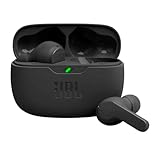
- JBL Deep Bass Sound: Get the most from your mixes with high-quality audio from secure, reliable earbuds with 8mm drivers featuring JBL Deep Bass Sound
- Comfortable fit: The ergonomic, stick-closed design of the JBL Vibe Beam fits so comfortably you may forget you're wearing them. The closed design excludes external sounds, enhancing the bass performance
- Up to 32 (8h + 24h) hours of battery life and speed charging: With 8 hours of battery life in the earbuds and 24 in the case, the JBL Vibe Beam provide all-day audio. When you need more power, you can speed charge an extra two hours in just 10 minutes.
- Hands-free calls with VoiceAware: When you're making hands-free stereo calls on the go, VoiceAware lets you balance how much of your own voice you hear while talking with others
- Water and dust resistant: From the beach to the bike trail, the IP54-certified earbuds and IPX2 charging case are water and dust resistant for all-day experiences
Historically, similar wording appeared well before Apple Watch transitioned from exploratory wearable research to a shipping product, and again when Vision Pro moved from an R&D moonshot into a formal platform with a public SDK. In both cases, “accelerated” did not mean imminent availability, but it did mean the project had survived internal skepticism and earned sustained investment.
In this context, acceleration suggests Apple is no longer treating AI wearables as optional side bets. It implies these devices are being actively evaluated as extensions of Apple Intelligence rather than curiosities competing with the iPhone or Apple Watch.
Acceleration Does Not Mean a New Product Category Is Locked
One critical misconception is assuming acceleration equals commitment to ship a specific device like an AI pendant. Apple routinely accelerates multiple competing form factors simultaneously, knowing full well that most will never leave the lab. The company is famous for killing projects late if they fail usability, battery, or integration tests, regardless of sunk cost.
An AI pendant, for example, faces brutal constraints. It must deliver always-available intelligence with near-zero interaction friction, yet operate on a battery small enough to remain comfortable and unobtrusive throughout a full day of wear. Heat dissipation, microphone quality, durability against sweat and impact, and the social acceptability of a body-worn microphone are non-trivial challenges Apple will not compromise on.
Acceleration here likely means Apple is testing whether AI-first interaction models can coexist with its standards for industrial design, materials, and real-world wearability. That is a very different signal from Apple confirming a product category is guaranteed.
Why Smart Glasses Are Back on the Table
Smart glasses have cycled in and out of Apple’s internal focus for over a decade, repeatedly stalling on battery density, display quality, and user acceptance. What has changed is not display technology alone, but Apple’s belief that AI-driven context could justify the form factor even before full augmented reality arrives.
Acceleration in this case likely reflects software readiness rather than hardware breakthroughs. Apple Intelligence’s emphasis on on-device processing, visual understanding, and contextual suggestions maps cleanly onto glasses that can see what you see without demanding constant interaction. Even without displays, audio-forward or camera-assisted glasses could complement AirPods and Apple Watch rather than replace them.
That said, Apple’s tolerance for bulky frames, limited battery life, or awkward daily usability remains extremely low. If smart glasses cannot be worn comfortably for hours, paired seamlessly with iPhone and AirPods, and charged without friction, Apple will slow or shelve them regardless of AI promise.
Revamped AirPods Are the Most Credible Near-Term Signal
Among the three product areas, AirPods stand out as the least speculative. Apple already ships tens of millions annually, controls the silicon, and has proven it can add sensors, adaptive audio, and health-related features without compromising comfort or battery life. Accelerating work here likely means AI features are being pulled forward into the AirPods roadmap rather than waiting for entirely new categories.
This could include more advanced voice context awareness, improved spatial audio intelligence, or health-adjacent sensing layered onto existing designs. Importantly, AirPods already sit in the ear all day for many users, making them an ideal delivery mechanism for ambient AI that does not demand visual attention.
Unlike pendants or glasses, AirPods do not require users to adopt a new social norm. That alone makes accelerated development here a far more credible commercial signal, even if the changes appear evolutionary rather than revolutionary.
Reading Apple’s Signals With Appropriate Skepticism
Apple accelerates internally far more often than it ships externally. For every Apple Watch or AirPods success story, there are countless projects that informed platform strategy without becoming products. Acceleration tells us Apple believes AI wearables are strategically important; it does not tell us which physical expressions will survive Apple’s own quality bar.
The real signal to watch is not leaked renders or accessory rumors, but platform behavior. When Apple begins baking AI-first interaction assumptions into iOS, watchOS, and audio frameworks in ways that feel overbuilt for current hardware, that is when acceleration turns into inevitability.
Until then, the reporting should be read as confirmation that Apple is actively testing how far it can push AI beyond screens. Whether that future arrives as a pendant, glasses, or simply much smarter AirPods remains deliberately unresolved—and very on-brand for Apple.
Why Apple Is Exploring New AI Wearables Beyond the Apple Watch
If acceleration is the internal signal, the motivation becomes clearer when you look at where the Apple Watch is starting to strain. The Watch remains Apple’s most successful wearable, but it was architected first as a wrist-based extension of the iPhone, not as an always-on AI interface. As Apple’s ambitions shift from notifications and health tracking toward ambient intelligence, the wrist is no longer an uncontested home.
The Apple Watch Is Reaching Interaction Saturation
The Apple Watch has steadily grown thicker, brighter, and more capable, but those gains come with tradeoffs. A small touch display, brief interaction windows, and strict battery constraints limit how conversational or proactive the device can realistically become. Even with on-device silicon advances, the Watch still assumes short glances, not continuous dialogue.
Voice already hints at this ceiling. Siri on the Watch works best for quick commands, not nuanced, multi-step AI interactions that require context, memory, and follow-up. Pushing the Watch further in that direction risks compromising comfort, battery life, or the simplicity that makes it wearable all day.
Ambient AI Favors Presence Over Screens
Apple’s reported interest in pendants and glasses reflects a broader shift in how AI is expected to behave. Ambient AI works best when it can listen, see, and understand context without demanding explicit engagement. A wrist device, by definition, is not always oriented toward the world or the user’s voice.
A pendant worn on the chest or glasses aligned with the eyes offers better spatial awareness, more consistent microphone placement, and in the case of glasses, direct visual context. These form factors are less about replacing the Watch and more about relocating AI to where perception naturally happens.
Battery Life and Thermals Are Strategic Constraints
AI workloads are energy-hungry, especially when they involve continuous listening or on-device inference. The Apple Watch’s slim case and skin-contact requirements severely limit thermal headroom. Any meaningful leap in AI capability risks turning into a battery life regression or a comfort problem.
Larger or differently worn devices give Apple more flexibility. A pendant can house a bigger battery and dissipate heat without being strapped tightly to the skin. Glasses can distribute components across the frame, allowing for sensors and compute that would be impractical on the wrist.
Health and Context Are Diverging Use Cases
The Watch excels at physiological data. Heart rate, motion tracking, temperature trends, and now sleep and recovery are areas where the wrist remains ideal. But contextual intelligence, understanding what you are doing, seeing, or hearing in the moment, is a different problem set.
Apple appears to be exploring a separation of concerns. The Watch continues as a health and fitness instrument, while other wearables handle environmental awareness and AI interaction. That division allows each product to specialize rather than forcing one device to be everything.
Social Acceptability Still Matters to Apple
One reason the Watch succeeded where other wearables failed is social normalization. Glasses and pendants introduce new challenges here, which is why Apple is reportedly cautious and iterative. The company is likely testing not just hardware, but whether users will tolerate cameras, microphones, and AI presence in more visible forms.
AirPods sidestep much of this tension, but they lack visual context. Glasses restore that context, while pendants minimize visual intrusion. Exploring all three suggests Apple has not yet decided which compromise users will accept.
The Watch Remains Central, Just No Longer Alone
None of this implies the Apple Watch is being sidelined. Instead, it signals a transition from a single hero wearable to a distributed system. In that model, the Watch handles health, AirPods handle audio and voice, and new devices fill the contextual gaps AI demands.
Acceleration across multiple form factors suggests Apple is less interested in a singular breakthrough product and more focused on discovering the right combination. The future of Apple’s AI wearables is likely modular, overlapping, and deliberately redundant, designed to fade into daily life rather than dominate it.
The AI Pendant: What Apple Is Likely Testing, and Why This Category Still Matters
Seen in the context of Apple’s move toward a distributed wearable system, the AI pendant starts to make more sense. It is not a replacement for the Watch or AirPods, but an experiment in relocating sensors and AI interaction to a part of the body that is always forward-facing, acoustically exposed, and less constrained by size.
Apple accelerating work here suggests internal prototypes are no longer theoretical. This is the phase where the company stress-tests whether the category can earn a place alongside the Watch, not as a novelty, but as a functional extension of Apple Intelligence.
Why a Pendant Solves Problems the Wrist Cannot
A pendant sits at chest level, which is a dramatically better vantage point for environmental context. Microphones capture more natural audio, inertial sensors can better infer posture and movement, and forward-facing cameras or depth sensors gain a clearer understanding of what the user is actually looking at.
From an engineering perspective, it also relaxes some of the Watch’s hardest constraints. A pendant can be thicker, heavier, and thermally looser without compromising comfort, opening room for more capable on-device processing, larger batteries, and higher-quality sensor arrays.
What Apple Is Likely Testing in Hardware
Early Apple pendant concepts are unlikely to be minimalist jewelry in the traditional sense. Expect something closer to a compact puck or pill-shaped module, probably aluminum or stainless steel for durability and thermal management, with a matte or ceramic-treated finish to reduce visual flash.
Battery life is likely a core focus. Unlike a Watch that users tolerate charging daily, a pendant would need multi-day endurance to justify its existence, likely achieved through aggressive duty cycling, low-power AI cores, and constant reliance on nearby iPhone compute when available.
Sensors and Capabilities That Actually Matter
The most credible use case is not constant video capture, but intermittent visual sampling. Short, user-initiated camera bursts for object recognition, translation, or memory recall align far better with Apple’s privacy posture than always-on recording.
Audio, however, is unavoidable. Beamforming microphones for ambient understanding, conversation capture, and voice-first AI queries are almost certainly central. Combined with motion and proximity sensors, Apple can build a surprisingly rich contextual model without crossing into overt surveillance.
The Software Experience: Invisible Until Needed
Apple’s pendant would almost certainly operate without a screen. Interaction flows would live across Siri voice prompts, subtle haptics, and handoff to the iPhone, Watch, or AirPods depending on context.
This is where Apple’s ecosystem advantage matters. A pendant can quietly listen, infer intent, and then surface information on the best available display, rather than forcing the user to look down or interrupt what they are doing.
Why Previous AI Pendants Failed, and Why Apple Might Not
Recent AI pendants from startups failed for predictable reasons: limited battery life, cloud dependence, awkward latency, and unclear daily value. They felt like demos, not tools.
Apple’s approach appears fundamentally different. By embedding the pendant into an existing mesh of devices, Apple reduces friction, avoids overpromising autonomy, and treats the pendant as a sensor and inference node rather than a standalone product.
Rank #2

- 【Sports Comfort & IPX7 Waterproof】Designed for extended workouts, the BX17 earbuds feature flexible ear hooks and three sizes of silicone tips for a secure, personalized fit. The IPX7 waterproof rating ensures protection against sweat, rain, and accidental submersion (up to 1 meter for 30 minutes), making them ideal for intense training, running, or outdoor adventures
- 【Immersive Sound & Noise Cancellation】Equipped with 14.3mm dynamic drivers and advanced acoustic tuning, these earbuds deliver powerful bass, crisp highs, and balanced mids. The ergonomic design enhances passive noise isolation, while the built-in microphone ensures clear voice pickup during calls—even in noisy environments
- 【Type-C Fast Charging & Tactile Controls】Recharge the case in 1.5 hours via USB-C and get back to your routine quickly. Intuitive physical buttons let you adjust volume, skip tracks, answer calls, and activate voice assistants without touching your phone—perfect for sweaty or gloved hands
- 【80-Hour Playtime & Real-Time LED Display】Enjoy up to 15 hours of playtime per charge (80 hours total with the portable charging case). The dual LED screens on the case display precise battery levels at a glance, so you’ll never run out of power mid-workout
- 【Auto-Pairing & Universal Compatibility】Hall switch technology enables instant pairing: simply open the case to auto-connect to your last-used device. Compatible with iOS, Android, tablets, and laptops (Bluetooth 5.3), these earbuds ensure stable connectivity up to 33 feet
Privacy, Social Comfort, and the Slow Rollout Problem
Apple is acutely aware that chest-mounted cameras and microphones trigger discomfort. That is likely why any initial pendant would emphasize opt-in capture, visible status indicators, and strict local processing guarantees.
The company is probably testing not just technical feasibility, but behavioral tolerance. How often do users actually invoke contextual AI? How visible is too visible? Those answers determine whether this becomes a shipping product or remains a behind-the-scenes research effort.
Why This Category Still Matters, Even If It Never Ships
Even if Apple never releases an AI pendant as a consumer product, the work is not wasted. The learnings feed directly into smart glasses, AirPods, and future Watch designs, refining how Apple distributes intelligence across the body.
The pendant is best understood as a probe into the limits of ambient AI. It tests how much context is enough, how much visibility users accept, and where the balance lies between assistance and intrusion. That makes it one of the most strategically important experiments Apple is running in wearables right now.
Apple Smart Glasses: Long-Term AR Vision vs Near-Term AI Companion Glasses
If the AI pendant represents Apple testing ambient intelligence without a screen, smart glasses are where that intelligence eventually wants to live. This is the most natural next step after the pendant discussion, because glasses solve the same problem with higher social acceptability and far greater output potential.
But Apple’s smart glasses story actually splits into two very different products. One is the long-promised, still-distant true AR glasses vision. The other is a much nearer-term pair of AI companion glasses that look closer to eyewear than a computer.
The Original Apple Glasses Dream: Full AR, Still Years Away
Apple’s long-term goal has never been subtle. True AR glasses that overlay spatial content onto the real world, replace constant phone checks, and integrate tightly with Apple Watch, AirPods, and the broader ecosystem.
Vision Pro made that ambition concrete, but also exposed the gap. A headset with dual micro-OLED displays, external battery pack, and visible bulk is not something you wear all day, no matter how impressive the technology.
Shrinking that experience into glasses-sized hardware is a materials science problem more than a software one. Display brightness, waveguide efficiency, thermals, battery density, and weight distribution all remain unresolved at consumer scale.
Even optimistic supply-chain signals suggest true Apple AR glasses are not imminent. Think late-decade, not next product cycle, and only after Vision Pro iterates into something lighter, cheaper, and more power-efficient.
The Shift in Strategy: AI-First Glasses Before AR-First Glasses
What’s changed recently is not Apple’s ambition, but its sequencing. Instead of waiting for perfect AR hardware, Apple appears to be accelerating work on glasses that deliver intelligence without immersive visuals.
These AI companion glasses would not project full 3D interfaces. Instead, they would rely on audio, subtle visual indicators, and tight handoff to other Apple displays.
This mirrors the pendant logic, but in a form factor people already accept socially. Glasses sit at eye level, naturally host microphones, and can house discreet cameras without triggering the same reactions as chest-mounted hardware.
The goal is not replacement, but augmentation. Glasses become a context-aware sensor and interface layer, not the primary screen.
What Near-Term Apple Smart Glasses Likely Do
Expect functionality to feel conservative by Apple standards, but deeply integrated. Always-on microphones for voice interaction, paired with on-device inference where possible, and fast escalation to iPhone or cloud models when needed.
Audio output would almost certainly rely on bone conduction or directional open-ear speakers, preserving situational awareness. Apple has years of experience tuning this balance through AirPods transparency and adaptive audio modes.
A small outward-facing camera is plausible, but its role would be limited. Think visual context for AI queries, object recognition, or environmental cues, not continuous recording or livestreaming.
Battery life will define the product. Apple will target all-day wear, even if that means functionality that feels modest compared to Vision Pro. Six to eight hours of active use with standby extension via aggressive power management is a realistic baseline.
Why Apple Is Taking Social Acceptability So Seriously
Smart glasses live or die on trust. Google Glass failed not because of poor technology, but because it made people uncomfortable.
Apple understands this better than any company entering the space. Visible recording indicators, hardware kill switches, and strict limits on background capture are not optional features, they are prerequisites.
Design will matter as much as software. Lightweight frames, familiar materials, and neutral aesthetics that resemble premium eyewear rather than tech hardware are essential.
This is also where Apple’s retail and fashion experience becomes a quiet advantage. If these glasses feel like something you would buy alongside prescription lenses, adoption barriers drop dramatically.
How Glasses Fit Into Apple’s Wearables Hierarchy
Apple does not want smart glasses to replace the Apple Watch or AirPods. It wants them to redistribute tasks.
The Watch remains the glanceable, haptic, health-focused device. AirPods stay dominant for private audio, calls, and immersive listening. Glasses sit above both as the environmental awareness layer.
In practice, this means glasses notice things, AirPods explain them, and the Watch confirms or nudges you with taps and notifications. The iPhone and Mac remain the heavy-lift displays.
This division of labor explains why Apple is comfortable shipping “incomplete” glasses first. Their value comes from orchestration, not standalone capability.
Why This Isn’t a Meta or Ray-Ban Clone
Comparisons to Meta’s Ray-Ban smart glasses are inevitable, but misleading. Meta’s product prioritizes capture and sharing. Apple’s will prioritize inference and discretion.
Where Meta emphasizes cameras and social output, Apple emphasizes microphones, context, and controlled responses. Less “record what I see,” more “understand what I’m doing.”
This also aligns with Apple’s privacy posture. Processing visual and audio data locally where possible, and clearly signaling when data leaves the device, reinforces user trust in a way competitors struggle to match.
Timeline Expectations: What “Accelerating” Really Means
Acceleration does not mean imminent launch. It means Apple is confident enough in the category to allocate more resources, run broader internal trials, and push prototypes closer to consumer viability.
A developer preview or limited release could still be multiple years away. Apple may also choose to seed the technology quietly, folding features into AirPods or Watch first.
The important signal is intent. Apple now sees smart glasses not as a moonshot AR endpoint, but as a stepping stone product that can ship, learn, and iterate.
Why Smart Glasses Matter More Than the Pendant
Compared to the AI pendant, smart glasses have a clearer path to mass adoption. They solve the same contextual AI problem, but in a form factor users already wear daily.
They also scale better. Prescription support, fashion partnerships, and accessory upgrades create a sustainable product line rather than a single experimental device.
Most importantly, glasses create a visible endpoint for Apple’s ambient AI strategy. They show users where all this distributed intelligence is heading, even if the full AR vision remains on the horizon.
In that sense, smart glasses are not a detour from Apple’s AR ambitions. They are the bridge that makes them plausible.
Revamped AirPods as Apple’s Most Immediate AI Wearable Opportunity
If smart glasses are the visible bridge to Apple’s ambient AI future, AirPods are the foundation already under millions of users’ ears. Unlike a pendant or glasses, AirPods require no behavior change, no fashion recalibration, and no new social norms. They are already Apple’s most successful wearable after Apple Watch, and they sit at the perfect intersection of microphones, context, and continuous use.
This is why reports of Apple “accelerating” AI work land most credibly in AirPods first. Not as a radical redesign, but as a quiet transformation of what AirPods do when you are not actively listening to music or taking a call.
Why AirPods Are the Natural Home for Apple’s Ambient AI
AirPods already function as always-available sensors. They capture voice, environment, and motion data, and they do so from a position that is acoustically ideal and socially invisible.
Rank #3
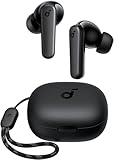
- Powerful Bass: soundcore P20i true wireless earbuds have oversized 10mm drivers that deliver powerful sound with boosted bass so you can lose yourself in your favorite songs.
- Personalized Listening Experience: Use the soundcore app to customize the controls and choose from 22 EQ presets. With "Find My Earbuds", a lost earbud can emit noise to help you locate it.
- Long Playtime, Fast Charging: Get 10 hours of battery life on a single charge with a case that extends it to 30 hours. If P20i true wireless earbuds are low on power, a quick 10-minute charge will give you 2 hours of playtime.
- Portable On-the-Go Design: soundcore P20i true wireless earbuds and the charging case are compact and lightweight with a lanyard attached. It's small enough to slip in your pocket, or clip on your bag or keys–so you never worry about space.
- AI-Enhanced Clear Calls: 2 built-in mics and an AI algorithm work together to pick up your voice so that you never have to shout over the phone.
From Apple’s perspective, this is an unmatched hardware advantage. Unlike Watch, which is constrained by screen interactions and wrist-based ergonomics, AirPods can operate hands-free and eyes-free without demanding attention.
They also align perfectly with Apple’s preference for distributed intelligence. AirPods can offload heavy inference to iPhone, Watch, or future edge processors, while remaining lightweight, comfortable, and power-efficient.
From Voice Commands to Contextual Awareness
The most meaningful shift would be moving AirPods beyond explicit Siri commands. Instead of “Hey Siri, remind me,” the system could infer intent from conversation, location, and routine.
Imagine AirPods quietly recognizing that you are discussing travel plans, then surfacing itinerary reminders later without being asked. Or detecting stress or urgency in your voice and adjusting notification behavior accordingly.
This is not speculative science fiction. Apple already analyzes speech patterns, movement, and habits across devices; AirPods are simply the missing sensory layer that makes ambient inference practical.
Health, Hearing, and the AI Multiplier Effect
Health features are another accelerant. With hearing health already expanding through Adaptive Audio, Conversation Boost, and hearing protection, AI can turn AirPods into continuous auditory health monitors.
Subtle changes in speech cadence, breathing patterns, or environmental exposure could feed into broader health models shared with Apple Watch. Over time, this creates a more holistic view of wellbeing than wrist-based sensors alone can offer.
Critically, this happens without turning AirPods into medical devices overnight. Apple can ship incremental features, learn from real-world usage, and expand capabilities through software rather than disruptive hardware resets.
Hardware Changes That Actually Matter
A revamped AirPods platform does not require dramatic visual changes. Comfort, weight distribution, and long-term wearability remain paramount, especially if Apple expects users to keep AirPods in for hours without audio playback.
Battery life will be the quiet constraint. Always-on microphones and background inference must be balanced carefully, likely through aggressive on-device filtering and smarter wake states rather than constant processing.
Materials and durability also matter more than ever. Sweat resistance, skin contact tolerance, and heat management become non-negotiable if AirPods are to function as ambient companions rather than occasional accessories.
Positioning Against Humane, Rabbit, and Others
Where dedicated AI wearables struggle is redundancy. Asking users to carry or wear yet another device for AI access is a high bar, especially when phones and watches already exist.
AirPods avoid this trap entirely. They are not an extra device; they are an upgrade to something users already depend on daily.
This is where Apple’s ecosystem advantage compounds. AirPods-enhanced AI does not compete with iPhone or Watch; it amplifies them, turning fragmented interactions into a continuous, low-friction experience.
Timeline Reality: Evolution, Not a Big Reveal
Unlike smart glasses or a pendant, revamped AI-driven AirPods do not need a headline-grabbing launch event. Apple can introduce features gradually, framed as audio, health, or Siri improvements rather than a new product category.
Some capabilities may arrive with new hardware revisions, especially if additional microphones or sensors are required. Others could roll out via firmware updates tied to iOS and watchOS releases.
This measured pace fits Apple’s playbook. AirPods will likely become Apple’s most advanced AI wearable long before most users realize that is what has happened.
How These Devices Fit Into Apple’s Broader On-Device AI and Privacy Strategy
Viewed together, the pendant, smart glasses, and AI-forward AirPods are less about chasing a new interface and more about extending Apple’s long-running bet on ambient, on-device intelligence. This is the same philosophy that shaped Apple Watch health features and Face ID years ago, now pushed into always-worn form factors.
Apple is not trying to make AI louder or more visible. It is trying to make it quieter, more contextual, and harder to notice until it is missing.
On-Device First, Cloud Only When Necessary
The most important throughline is that these wearables only make sense if inference happens locally. An AI pendant that streams raw audio to the cloud would be a privacy nightmare, not a product Apple could realistically ship at scale.
Expect a tiered processing model. Wake-word detection, environmental classification, voice isolation, and basic intent parsing will almost certainly run on-device using low-power neural engines, with only higher-level, anonymized queries escalating to Apple’s Private Cloud Compute stack.
This mirrors what Apple has already previewed with Apple Intelligence: the device decides what can be handled locally, and the cloud only sees what it absolutely must, stripped of identifiers and session history.
Why Apple Silicon Is the Real Enabler
None of this works without Apple’s silicon advantage. The same efficiency gains that let Apple Watch run heart rhythm analysis continuously now enable always-on audio and visual sensing without destroying battery life.
A pendant or AirPods-class device likely uses a derivative of the S-series or H-series chips, tuned for ultra-low power inference. Smart glasses, by contrast, will need a more complex division of labor, with lightweight local processing paired to an iPhone-class brain for heavier tasks.
This architecture keeps heat, weight, and battery size within acceptable limits. It also avoids the bulk and discomfort that have doomed many first-generation AI wearables in real-world use.
Privacy as a Product Feature, Not a Footnote
Apple’s privacy stance is not just philosophical; it is practical market positioning. Wearables that listen and observe passively live or die on trust, especially when they are worn on the body for 10 to 14 hours a day.
Local data stays local by default. Audio buffers are processed ephemerally, not stored. Visual data from glasses is more likely used for scene understanding than recording, with clear hardware indicators when cameras are active.
This is the same playbook Apple used with Apple Watch health data: heavy emphasis on encryption, user control, and transparency, paired with aggressive limits on third-party access.
Contextual AI Depends on the Ecosystem, Not a Single Device
Individually, none of these products replaces the iPhone or Apple Watch. Their power comes from acting as distributed sensors feeding a shared understanding of the user’s context.
AirPods know what you hear and say. Glasses know what you see. A pendant could understand motion, posture, or environmental shifts. Apple Watch already knows your physiology, routines, and activity patterns.
Because Apple controls the full stack, this context can be fused on-device without exposing raw data externally. That is something fragmented Android ecosystems and startup-led AI wearables struggle to replicate.
Why This Strategy Avoids the “Creepy” Trap
Many AI wearables fail because they ask users to accept too much, too quickly. Always-listening microphones and always-seeing cameras feel invasive when the value proposition is vague.
Apple’s approach is incremental. AirPods gain intelligence first, framed as better Siri, better audio awareness, or subtle health insights. Glasses and pendants follow only once users are already comfortable with ambient assistance.
By the time more radical form factors arrive, the underlying behaviors will feel familiar. That is not accidental; it is risk management at a platform level.
What This Means for Buyers and Early Adopters
For consumers, the key takeaway is that these devices are not standalone AI gadgets. They are extensions of Apple’s existing wearables strategy, optimized for comfort, battery longevity, and long-term daily wear rather than novelty.
Early versions may feel limited compared to cloud-heavy AI tools, but they will also feel safer, more reliable, and more integrated. Over time, that trade-off is likely to favor Apple, especially as regulations and user expectations tighten around data handling.
This is not Apple racing to build an AI assistant you talk to. It is Apple quietly embedding intelligence into the devices you already wear, until interacting with AI becomes less about commands and more about presence.
Key Technologies That Make This Acceleration Possible (Silicon, Sensors, and Software)
Apple’s acceleration here is not about a single breakthrough. It is the compound effect of silicon that has finally become efficient enough, sensors that have matured quietly over a decade, and a software stack now capable of turning ambient data into usable intelligence without leaning on the cloud.
Taken together, these layers explain why products that once felt speculative are suddenly moving toward shipping reality.
Rank #4

- Powerful Deep Bass Sound: Kurdene true wireless earbuds have oversized 8mm drivers ,Get the most from your mixes with high quality audio from secure that deliver powerful sound with boosted bass so you can lose yourself in your favorite songs
- Ultra Light Weight ,Comfortable fit: The Ear Buds Making it as light as a feather and discreet in the ear. Ergonomic design provides a comfortable and secure fit that doesn’t protrude from your ears especially for sports, workout, gym
- Superior Clear Call Quality: The Clear Call noise cancelling earbuds enhanced by mics and an AI algorithm allow you to enjoy clear communication. lets you balance how much of your own voice you hear while talking with others
- Bluetooth 5.3 for Fast Pairing: The wireless earbuds utilize the latest Bluetooth 5.3 technology for faster transmission speeds, simply open the lid of the charging case, and both earphones will automatically connect. They are widely compatible with iOS and Android
- Friendly Service: We provide clear warranty terms for our products to ensure that customers enjoy the necessary protection after their purchase. Additionally, we offer 24hs customer service to address any questions or concerns, ensuring a smooth shopping experience for you
Custom Silicon That Prioritizes Efficiency Over Raw Power
At the heart of Apple’s wearable push is a shift in how it designs chips for small, always-on devices. The S-series in Apple Watch, the H-series in AirPods, and the R1 in Vision Pro all emphasize sustained low-power operation, sensor fusion, and neural processing rather than benchmark-chasing CPU performance.
This matters enormously for form factors like glasses or a pendant, where battery capacity is measured in fractions of a Watch Ultra cell. Apple’s neural engines are now efficient enough to handle speech parsing, sound classification, and basic vision tasks locally, without waking a power-hungry main processor.
The result is intelligence that feels continuous rather than bursty. Instead of a device that “thinks” only when summoned, Apple can support background awareness that lasts all day without turning heat, weight, or battery life into dealbreakers.
Sensor Fusion Is Now a Solved Problem Inside Apple’s Ecosystem
Apple Watch has spent years quietly perfecting sensor fusion: combining accelerometers, gyroscopes, heart rate, temperature, and GPS into coherent interpretations of motion, activity, and health. That same expertise now scales outward to other wearables.
AirPods already blend microphones, motion sensors, and spatial awareness to support features like adaptive transparency and conversational awareness. Glasses would extend this to vision, while a pendant could track posture, gait, or environmental context without needing a display at all.
Crucially, Apple does not treat each device as an island. Data from multiple wearables can reinforce each other, improving accuracy while allowing individual sensors to run at lower power. This is how Apple can promise subtle intelligence without demanding heavy hardware on every product.
Audio and Vision Processing Has Reached Wearable-Ready Maturity
Audio is the most underappreciated pillar of Apple’s AI strategy. AirPods are already capable of identifying speech patterns, background noise types, and spatial cues in real time, all while sitting in the ear comfortably for hours.
That same processing stack becomes foundational for glasses and pendants, where microphones will often be more important than cameras. Understanding what you are hearing, who is speaking, and when you are engaged matters more than constantly recording what you see.
On the vision side, Apple has been deliberate. Rather than pushing full AR overlays immediately, it has focused on object recognition, scene understanding, and contextual cues that can run intermittently. This makes glasses more plausible as lightweight, all-day wear rather than a mini Vision Pro strapped to your face.
On-Device AI as a Design Constraint, Not a Marketing Bullet
Apple’s insistence on on-device processing is not just about privacy positioning. It forces discipline in model size, latency, and power consumption, which directly shapes what kinds of AI features are feasible in wearables.
Smaller, faster models are better suited to glanceable, ambient interactions. They excel at classification, prediction, and pattern recognition, which aligns with Apple’s goal of AI that assists quietly instead of demanding attention.
This is why expectations need to be calibrated. These devices will not deliver open-ended, chatbot-style intelligence. What they will offer is contextually aware assistance that feels instant, reliable, and always available, even when your iPhone is in your pocket or offline.
Software Platforms That Already Expect Multiple Wearables Per User
Perhaps the most overlooked enabler is that Apple’s software stack already assumes users wear more than one device. watchOS, iOS, and audioOS are designed to hand off tasks seamlessly, prioritize the most appropriate interface, and avoid redundant alerts.
Siri, despite its public struggles, is deeply embedded across these platforms in ways that competitors still lack. Accelerating work on AirPods, glasses, and a pendant gives Apple more entry points for the same assistant, without forcing users to relearn behaviors.
For developers, this opens the door to context-aware apps that respond differently depending on which sensors are active. For users, it means AI that adapts to how you are dressed, moving, and interacting, not just what screen you are staring at.
Manufacturing and Materials Catching Up to the Vision
Finally, there is the unglamorous but critical question of build quality. Apple now has years of experience making tiny devices that survive sweat, skin contact, drops, and daily wear without feeling disposable.
Lightweight alloys, advanced polymers, ceramic finishes, and compact battery designs all make new form factors more viable. Comfort, weight distribution, and long-term wearability are no longer experimental variables; they are known quantities Apple can design around.
This is why acceleration now feels credible. The technology stack is no longer the bottleneck. The challenge has shifted to deciding which combinations of silicon, sensors, and software are ready to be trusted on the body, every day, without friction.
Real-World Use Cases: How AI Pendants, Glasses, and AirPods Would Actually Be Used
If Apple is accelerating anything, it is not a single product category but a shift in how assistance is delivered across the body. These devices only make sense when viewed as situational tools, each optimized for moments when the Apple Watch or iPhone is either unavailable, inappropriate, or inefficient.
The real question is not what these wearables can do in isolation, but when you would naturally choose them without thinking about it.
The AI Pendant: Passive Awareness and Zero-Interaction Moments
An Apple AI pendant would likely be used when hands, eyes, and even voice are partially occupied. Think commuting, cooking, walking a dog, or moving through a busy environment where pulling out a phone or tapping a watch feels disruptive.
Its value would come from always-on sensors and long battery life rather than rich interaction. A lightweight pendant made from aluminum or ceramic, with subtle haptics and a microphone array, could quietly log context, detect patterns, and surface information later through the iPhone or Watch.
In practice, this looks less like issuing commands and more like ambient capture. It might remember where you parked, note who you spoke to, detect that you skipped lunch, or recognize a recurring errand route without being asked.
Battery life would need to be measured in days, not hours, and comfort would be non-negotiable. A device that tugs on clothing, swings while walking, or overheats against the skin fails instantly, no matter how clever the AI.
Smart Glasses: Micro-Information at the Speed of Vision
Apple’s smart glasses are best understood as glanceable displays, not replacements for the iPhone or Vision Pro. Their strength would be delivering tiny fragments of information precisely when visual context matters.
Navigation cues while walking, turn-by-turn directions while cycling, live translation of signs, or subtle reminders triggered by what you are looking at are all plausible. The display would likely be monocular, low-resolution, and intentionally limited to preserve battery life and avoid visual fatigue.
Materials and weight distribution will matter more than raw specs. Glasses that exceed 40–50 grams or apply uneven pressure quickly become uncomfortable over long wear, especially for users already wearing prescription lenses.
Crucially, glasses would shine in short, frequent interactions. A two-second glance to confirm a meeting room or identify an incoming message is where they outperform watches and phones, not in prolonged reading or browsing.
Revamped AirPods: Voice as the Primary Interface Again
AirPods are already Apple’s most successful wearable AI interface, even if that framing is rarely used. Accelerating their development suggests Apple sees voice as central, provided it is reliable, fast, and discreet.
In daily use, this means issuing quick queries, setting reminders mid-conversation, or receiving spoken summaries without breaking eye contact. Improved microphones, on-device processing, and better contextual awareness would reduce the need to repeat commands or use specific phrasing.
Comfort and battery endurance remain critical. Longer stems or slightly larger housings could be justified if they deliver noticeably better call quality and all-day wear without pressure points.
AirPods also have an advantage pendants and glasses lack: social acceptability. Speaking softly into your earbuds is already normalized, making them the least awkward way to interact with AI in public.
How These Devices Work Together, Not Compete
The most realistic scenario is not choosing one of these devices, but letting the system decide which one speaks up. A pendant captures context, glasses display quick visuals, AirPods deliver voice feedback, and the Apple Watch remains the fallback for confirmation and control.
For example, the pendant detects you are running late, AirPods quietly notify you, glasses show the fastest route, and the Watch asks for confirmation to message someone. No single device carries the entire interaction.
This layered approach also spreads battery load and reduces the need for any one device to be always active. It aligns with Apple’s existing philosophy of task handoff rather than all-in-one convergence.
What These Use Cases Are Not
None of these devices are likely to replace smartphones or become constant conversational companions. Expect fewer open-ended prompts and more tightly scoped, situational responses.
They will also not appeal equally to everyone. Users already satisfied with Apple Watch and AirPods may see marginal gains, while those who value hands-free awareness or visual cues may find them transformative.
The success of these products will hinge less on headline features and more on how often they solve small problems without being noticed. If Apple gets that balance right, these wearables will fade into daily routines in the same way the Watch did, quietly indispensable only after living with them.
Timelines and Likely Launch Order: What Comes First, What’s Still Years Away
Once you view these devices as a coordinated system rather than isolated products, the rollout order becomes easier to read. Apple tends to ship the least socially disruptive, most familiar form factors first, using them to validate software behaviors before pushing into riskier hardware.
💰 Best Value

- 【Revolutionary Smart Touchscreen Case】 Our wireless earbuds feature a revolutionary charging case with a responsive touchscreen, integrating 10+ smart functions. Effortlessly skip tracks, adjust volume, locate misplaced earbuds, or control your phone's camera remotely—all from the case itself. It’s your ultimate, portable control hub designed for a smarter, more convenient lifestyle.
- 【Smart ANC Noise Control & Transparency】 Seamlessly adapt to your environment. With Hybrid Active Noise Cancellation (ANC), these Bluetooth earbuds block up to 40dB of ambient noise for immersive listening. Switch to Transparency Mode with a tap to let in important surroundings, keeping you aware and safe. These wireless ear buds intelligently blend you into your world.
- 【40-Hour Power & Fast Charging】 Conquer battery anxiety. These earbuds offer up to 8 hours of playtime, extending to a massive 40 hours with the compact charging case. A 10-minute quick charge delivers 2 hours of music. The battery percentage on the case keeps you perfectly informed of your power status, ensuring your music and your wireless ear buds always ready for the day.
- 【40-Hour Power & Fast Charging】 Conquer battery anxiety. These earbuds offer up to 8 hours of playtime, extending to a massive 40 hours with the compact charging case. A 10-minute quick charge delivers 2 hours of music. The battery percentage on the case keeps you perfectly informed of your power status, ensuring your music and your wireless ear buds always ready for the day.
- 【All-Day Comfort & Stable Connection】 Built for all-day wear and seamless connectivity. The ultra-lightweight earbuds provide a secure, comfortable fit that lasts for hours. With an IPX7 waterproof rating, they withstand intense workouts. Bluetooth 5.3 ensures a rock-solid wireless connection with ultra-low latency (55 ms), making these bluetooth headphones perfect for lag-free gaming and calls.
Acceleration here does not mean everything arrives at once. It means Apple is compressing internal development loops so that software maturity, silicon readiness, and industrial design converge faster than they did for earlier wearables like Apple Watch or Vision Pro.
Revamped AirPods: First Out of the Gate
Of the three, updated AirPods are the closest to market and the lowest-risk launch. Apple already refreshes AirPods on a predictable cadence, and adding deeper on-device intelligence, better microphones, and context-aware Siri behaviors fits cleanly into that cycle.
Expect the changes to feel evolutionary in hardware but significant in daily use. Improved beamforming, longer stems for better voice pickup, and slightly larger housings could enable more aggressive always-listening features without killing battery life, while maintaining the comfort and weight users expect for all-day wear.
From a software standpoint, AirPods are the ideal test bed for ambient AI. They already integrate tightly with iPhone, Apple Watch, and macOS, and they avoid the social friction of talking to a visible new device. A late-2026 or early-2027 window feels realistic, aligned with broader Siri and Apple Intelligence upgrades rather than as a standalone AI product launch.
The AI Pendant: Earlier Than You Think, But Still a Niche Play
The pendant sits in a more ambiguous middle ground. It is simpler than smart glasses from an engineering perspective, but far riskier from a market acceptance standpoint.
Hardware-wise, a pendant does not need displays, advanced optics, or ultra-compact waveguides. It needs excellent microphones, a capable low-power processor, reliable connectivity to nearby Apple devices, and a battery that can last a full waking day without becoming bulky or uncomfortable against the chest.
That makes a limited launch plausible as early as 2027, potentially framed as an optional accessory rather than a mainstream product. Think of it less like an iPhone-scale launch and more like early AirPods Max or even the original HomePod: technically impressive, intentionally constrained in audience.
Apple could also soft-launch the pendant through enterprise, accessibility, or developer programs first. That would allow it to refine contextual awareness, privacy boundaries, and real-world comfort before committing to broader consumer distribution.
Smart Glasses: The Long Game, Not the Next Big Thing
Smart glasses remain the furthest out, despite the attention they attract. The technical hurdles are still substantial, especially for a company that prioritizes finish, comfort, and battery life over shipping first.
To meet Apple’s standards, glasses need to look normal, weigh close to traditional eyewear, handle sweat and daily abuse, and run for many hours without a bulky battery pack. They also need displays that are readable outdoors without being distracting, paired with intuitive controls that do not rely on constant voice input.
Even with accelerated development, a true Apple-style smart glasses product is unlikely before 2028 or later. Earlier developer-focused or limited-functionality versions are possible, but Apple has historically avoided shipping visibly compromised consumer hardware just to claim a category.
It is also worth remembering that Vision Pro exists precisely to buy Apple time here. By developing spatial interfaces, eye tracking, and contextual UI in a headset first, Apple can eventually distill those learnings into glasses without forcing immature technology onto users.
Why Apple Is Staggering These Launches
The order is not about ambition, but about dependency. AirPods can ship as soon as Apple Intelligence is reliable enough to feel helpful instead of intrusive. The pendant depends on that intelligence being trustworthy in the background, making decisions without constant confirmation.
Smart glasses depend on both working flawlessly. A visual interface that surfaces the wrong information at the wrong time is far more disruptive than a mistimed audio cue.
This staggered approach also lets Apple tune comfort and wearability across categories. Lessons about microphone placement, skin contact, heat management, and battery drain learned from AirPods and pendants directly inform what is feasible in glasses.
What “Accelerated” Actually Means for Buyers
For consumers, acceleration should be read as tighter spacing between generations, not an imminent flood of new devices. The earliest benefits will show up in software behaviors shared across existing hardware, especially AirPods and Apple Watch.
If you are deciding what to buy in the next year, nothing here makes current Apple wearables obsolete. Instead, they are becoming the foundation for features that will gradually unlock as Apple rolls out more ambient, context-aware intelligence.
The real shift happens not when a pendant or pair of glasses launches, but when these devices stop demanding attention. That transition will be incremental, and Apple appears willing to take the time to get it right, even if that means some of the most hyped hardware remains years away.
Should Apple Users Care Now? What This Roadmap Means for Buyers in 2026 and Beyond
Taken together, Apple’s accelerated work on AirPods, a potential AI pendant, and smart glasses is less about any single device and more about reshaping how the Apple ecosystem behaves around you. The practical question for buyers is not whether these products exist yet, but whether their direction should change what you buy, skip, or hold onto over the next few upgrade cycles.
For most Apple users, the answer is nuanced rather than urgent.
If You’re Buying Apple Wearables in 2026
If you are shopping for Apple Watch, AirPods, or even Vision Pro-adjacent accessories in 2026, this roadmap should not paralyze your buying decisions. Apple’s current wearables are not dead ends; they are the training ground for the intelligence layer these future devices rely on.
Apple Watch, in particular, remains the most mature expression of Apple’s ambient computing ambitions. Its sensor stack, from optical heart rate and ECG to temperature and motion tracking, continues to feed Apple Intelligence with context about your body and routines, and that investment will carry forward regardless of whether you ever wear a pendant or glasses.
From a hardware standpoint, expect incremental gains rather than sudden irrelevance. Battery life will still be measured in days at best, comfort will continue to favor lighter cases and softer bands, and durability will remain conservative compared to rugged fitness watches. What will change is how much the software does without being asked.
AirPods Are the First Real Inflection Point
Revamped AirPods matter sooner than any rumored pendant or glasses because they fit into existing behavior with almost no friction. You already wear them for hours, they already sit near your voice, and they already manage microphones, spatial audio, and on-device processing efficiently.
For buyers, this means AirPods in the next two generations are likely to age better than previous models. Even if physical design changes are modest, improvements in conversational awareness, battery efficiency during always-on listening, and tighter Siri and Apple Intelligence integration will arrive via software updates long after purchase.
If you are choosing between replacing AirPods now or waiting, the calculus depends on your tolerance for iteration. Current models are still excellent in comfort, sound quality, and transparency mode, but future versions will increasingly feel less like audio accessories and more like passive interfaces. That shift favors patience if your existing pair is still serviceable.
The Pendant Is Optional by Design
The rumored AI pendant, if it ships at all, is not meant to replace Apple Watch or AirPods. It exists for users who want deeper context without additional screen time or wrist interaction, and that immediately makes it a niche product rather than a mainstream one.
For buyers, this means you should not plan around it. Apple is likely to treat the pendant as a low-volume, high-experimentation device, prioritizing comfort, materials, and battery life over visual flair. Think lightweight composites, subtle finishes, and wearability that fades into clothing rather than a statement accessory.
If it succeeds, its influence will be indirect. Features proven safe and useful on a pendant will migrate to other devices, especially AirPods and Watch, without requiring you to adopt an entirely new form factor.
Smart Glasses Are a Long-Term Bet, Not a 2026 Purchase
Apple’s smart glasses ambitions matter strategically, but they should not meaningfully affect buying decisions in the near term. Even with accelerated development, the constraints around optics, heat dissipation, battery density, and all-day comfort remain unsolved at consumer scale.
When glasses do arrive, they will likely prioritize subtle visual cues, navigation hints, and glanceable information over full augmented reality. Materials, weight balance, and lens quality will matter more than field-of-view or resolution, because real-world wearability will determine adoption.
For now, Vision Pro serves as the experimental lab, not the consumer template. Buyers should view glasses as a 2028 or later consideration, not a reason to delay current purchases.
What This Means for Upgrade Timing and Value
The most important takeaway is that Apple’s wearables roadmap is becoming more software-defined. Hardware refreshes will still matter, especially for battery health and sensor improvements, but value will increasingly come from how long a device continues to gain new behaviors.
This favors buying well-built devices with strong battery longevity and comfort, even if they cost more upfront. An Apple Watch that fits well and lasts through a full day of heavy use, or AirPods that remain comfortable during long listening sessions, will benefit most from future intelligence upgrades.
It also means resale cycles may stretch. Devices that once felt outdated after two years may now remain relevant longer as Apple Intelligence matures across the ecosystem.
The Bottom Line for Apple Users
Apple accelerating work on AI wearables does not signal an imminent disruption of what you already own. It signals a slow pivot toward devices that demand less attention while understanding more about context, intent, and environment.
For buyers in 2026 and beyond, the smart move is not to wait for speculative hardware, but to invest in the parts of the ecosystem Apple is clearly doubling down on: AirPods, Apple Watch, and the software layer that connects them. The real transformation will not arrive with a dramatic product launch, but with the quiet moment when your devices start helping without asking, and without getting in the way.
That is the future Apple is building toward, and it is arriving gradually, not all at once.