Every few months, blood glucose tracking resurfaces as the next Apple Watch breakthrough, usually backed by vague supply-chain whispers or a patent filing stretched far beyond its original intent. This time feels different, not because Apple has suddenly solved non‑invasive glucose sensing, but because reports point to an internal, working app being actively tested by Apple employees. That subtle shift—from concept to software-in-use—signals a more mature, systems-level effort that deserves closer scrutiny.
What matters here isn’t whether your next Apple Watch will replace a medical-grade continuous glucose monitor. It’s what a “secret” glucose app suggests about Apple’s long-term health strategy, how the company is validating sensor data internally, and why software experimentation often precedes any visible hardware breakthrough. Understanding this distinction helps set realistic expectations and cuts through the hype that has clouded this topic for nearly a decade.
Software Tests Are Apple’s Quietest, Strongest Signal
Apple rarely tests consumer-facing health apps internally unless the underlying data pipeline is already producing something usable. The company’s pattern with ECG, blood oxygen, and wrist temperature followed the same arc: years of sensor R&D, then internal apps designed to explore trends, edge cases, and user interpretation long before public launch. A glucose-focused app test implies Apple is stress-testing how glucose-related signals might be contextualized, not just whether they can be detected at all.
This is especially important because glucose data is meaningless without interpretation. Spikes, baselines, and variability only become useful when tied to meals, activity, sleep, and time of day. An internal app allows Apple to experiment with UI, alerts, confidence thresholds, and false-positive handling—areas that matter just as much as raw sensor accuracy for real-world usability on a small wrist-worn display.
🏆 #1 Best Overall
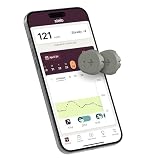
- ✅ For people NOT using insulin, ages 18 years and older
- ❌ Don’t use if: On insulin, on dialysis, or have problematic hypoglycemia
- YOUR SUCCESS, OUR COMMITMENT: If your biosensor fails before the 15-day wear time is up,[2] we will replace it for free. [3]
- PRODUCT SUPPORT: Provided by Stelo through SteloBot, which can be accessed via the Stelo app by going to Settings > Contact. SteloBot virtual support assistant is available 24/7, and live agent support available during regular business hours
- PERSONALIZED INSIGHTS: Understand your glucose patterns and how your glucose reacts to food, activity, and sleep
Why This Isn’t Just Another CGM Replacement Fantasy
Existing glucose solutions rely on minimally invasive sensors that sample interstitial fluid every few minutes, delivering clinically actionable data for people with diabetes. Apple’s approach, at least in its early form, is almost certainly not competing head-on with those systems. The more plausible near-term goal is trend awareness, risk signaling, or metabolic insights for non-diabetic users rather than insulin-dosing precision.
That distinction changes everything. A wellness-oriented glucose feature could prioritize battery life, passive background tracking, and long-term patterns over minute-by-minute accuracy. It also fits better with Apple Watch constraints: all-day wearability, comfort on a wide range of wrists, skin contact variability, and the need to preserve battery life alongside GPS, heart rate, and sleep tracking.
The Regulatory Reality Apple Can’t Ignore
Glucose is one of the most regulated health metrics Apple could attempt to surface. Even framing data as “informational” rather than diagnostic requires careful language, validation studies, and regional regulatory alignment. An internal app lets Apple explore how to present uncertainty, confidence ranges, and disclaimers without triggering premature regulatory commitments.
This also explains the secrecy. Apple learned from the blood oxygen saga that regulatory landscapes can shift mid-flight, affecting feature availability by region and even hardware revisions. Testing privately gives Apple room to iterate without promising timelines it can’t control, especially when FDA clearance or international equivalents could add years to deployment.
What This Tells Us About Apple Watch’s Health Trajectory
The existence of a glucose-related app test reinforces that Apple sees the Watch less as a gadget and more as a long-term health platform. Each new sensor or derived metric builds on the previous ones, leveraging improvements in optical systems, silicon, machine learning, and thermal management. Glucose tracking, even in a limited form, would sit at the intersection of all these disciplines.
For users, the key takeaway is patience paired with perspective. This isn’t a launch leak or a guarantee tied to the next Apple Watch generation. It’s evidence that Apple is deep in the hardest phase of health innovation: turning noisy biological signals into something trustworthy, understandable, and wearable every day without compromising comfort, durability, or battery life.
What Apple Is Actually Testing: Software, Algorithms, and Internal Validation
If Apple is indeed running a secret glucose-related app internally, the most important detail is what it is not testing. This is unlikely to be a near-finished consumer feature or a replacement for medical-grade continuous glucose monitors. Instead, the evidence points toward Apple validating the software layer that would sit on top of future sensing hardware, long before that hardware is ready for public use.
This phase is about learning how glucose-related data behaves on a wrist-worn device that must remain comfortable, durable, and reliable through sweat, motion, temperature changes, and imperfect skin contact. In other words, Apple is testing whether the idea can survive real-world wear, not lab conditions.
A Software-First Approach to a Hardware-Heavy Problem
Apple’s health strategy has increasingly leaned toward extracting more value from existing sensor systems through software and machine learning. Heart rate variability, cardio fitness, wrist temperature trends, and sleep staging all arrived years after the underlying sensors were already on users’ wrists.
A glucose-focused internal app fits this same pattern. It likely ingests raw optical data from Apple Watch photodiodes, along with contextual signals like skin temperature, heart rate, motion, and time of day. The goal is not a single reading, but pattern recognition over days and weeks.
This also explains why Apple can test such an app without new hardware being publicly visible. The Watch’s optical stack, powered by custom silicon and tightly controlled firmware, already generates more data than users ever see. Internal software can explore whether glucose-related correlations are statistically meaningful before Apple commits to specialized sensors.
Algorithms Over Instant Readouts
Non-invasive glucose tracking is fundamentally an algorithm problem disguised as a sensor problem. Light absorption, scattering, blood perfusion, hydration, and skin tone all influence optical readings, and none of these variables behave consistently across users.
Apple’s internal testing is likely focused on machine learning models trained to separate glucose-related signals from noise. This would involve massive internal datasets, repeated calibration against known glucose values, and constant model adjustment as conditions change throughout the day.
Crucially, this approach favors trend accuracy over point accuracy. Apple does not need to match finger-stick precision to deliver value; it needs to detect directional change, long-term patterns, and deviations from a user’s baseline in a way that remains stable during daily wear.
Internal Validation Before External Claims
Before Apple can even think about regulators, it needs confidence that its own models are internally consistent. That means testing across different wrist sizes, skin types, ages, metabolic profiles, and usage patterns, including workouts, sleep, illness, and stress.
An internal app allows Apple to run silent validation studies among employees without making public promises. Engineers can compare Watch-derived estimates against traditional glucose measurements, flag failure cases, and understand where the system breaks down.
This stage is also where Apple learns how often the data is wrong, not just when it is right. Understanding false confidence is critical, especially for a metric as sensitive as glucose, where misinterpretation could lead users to change behavior unnecessarily.
Designing the User Experience Around Uncertainty
One of the most underappreciated challenges is how glucose data should be shown, if it is shown at all. Apple has already demonstrated caution with metrics like wrist temperature, which appears as a deviation from baseline rather than an absolute number.
The glucose app test likely experiments with similar presentation strategies. Think ranges, trend arrows, confidence bands, or background insights rather than a prominent numeric value on the watch face.
This is where Apple’s software culture matters. The Watch must remain glanceable, non-alarming, and compatible with all-day battery life, even while processing complex background models. Any interface that encourages obsessive checking or misinterpretation would run counter to Apple’s health philosophy.
Why This Isn’t About Replacing Medical Devices
Nothing about this internal testing suggests Apple is trying to compete directly with Dexcom or Abbott in the near term. Those systems rely on invasive or minimally invasive sensors with known biochemical pathways and regulatory approval for treatment decisions.
Apple’s likely target is a different category entirely: metabolic awareness for the general population. That means lifestyle context, long-term trends, and early signals rather than clinical-grade precision.
This distinction matters for expectations. A future Apple Watch glucose feature, born from these internal tests, would complement existing health tracking like activity rings, sleep, and heart health, not replace medical care or diabetes management tools.
The Quiet Signal of Long-Term Commitment
The existence of a secret app test tells us Apple is past the speculative phase. Companies do not build internal software, validation pipelines, and employee studies unless they believe the problem is solvable, even if the solution is years away.
At the same time, this phase also exposes how far Apple still has to go. If software and algorithms are being stress-tested now, it implies hardware, regulatory clearance, and public rollout remain distant milestones.
For Apple Watch users, this is best read as a signal of direction rather than destination. Apple is laying the groundwork to understand glucose as a wearable signal, learning how it behaves on a wrist designed for comfort, durability, and all-day use, before deciding whether it belongs in the product at all.
How This Differs from Today’s Glucose Monitoring: CGMs, Finger Pricks, and Why Apple’s Approach Is Radical
To understand why Apple’s internal glucose app testing is such a big deal, you have to contrast it with how glucose is measured today. The gap between current medical systems and what Apple is attempting explains both the excitement and the skepticism surrounding this effort.
Finger Pricks: Direct, Accurate, and Fundamentally Manual
Traditional finger-prick testing measures capillary blood glucose directly using a disposable strip and a drop of blood. It is chemically straightforward, clinically trusted, and relatively inexpensive, but it demands intentional action multiple times a day.
For Apple Watch users accustomed to passive, background health tracking, this model is the opposite of the Watch’s philosophy. It interrupts daily life, offers no continuous trend context, and provides data points rather than patterns.
Finger-prick systems also sit firmly in the medical domain, tied to prescriptions, regulatory labeling, and explicit treatment decisions. There is no realistic path for Apple Watch to replace this approach without crossing regulatory boundaries Apple has historically avoided.
CGMs: Continuous Data, But at a Physical Cost
Continuous glucose monitors like Dexcom and Abbott’s FreeStyle Libre are a technological leap beyond finger pricks. They use a tiny filament inserted under the skin to measure glucose in interstitial fluid every few minutes, offering rich trend data and alerts.
That continuity comes with trade-offs. CGMs require adhesives, regular sensor replacement, calibration routines, and acceptance of something living on your body full time, which many non-diabetics simply will not adopt.
Battery life, comfort, and durability constraints also differ dramatically from a smartwatch. CGMs are purpose-built medical devices, not multi-day, wrist-based computers juggling notifications, workouts, sleep tracking, and always-on displays.
Apple’s Approach: Non-Invasive, Wrist-Based, and Algorithm-Heavy
What makes Apple’s effort radical is that it aims to infer glucose trends without breaking the skin at all. Instead of sampling blood or interstitial fluid, Apple is believed to be experimenting with optical techniques, potentially involving advanced spectroscopy, combined with machine learning models trained on large internal datasets.
This is a fundamentally different problem. Light-based sensing at the wrist must contend with skin tone variation, hydration levels, temperature, motion, ambient light leakage, and sensor placement inconsistencies caused by strap tension and wrist anatomy.
Rank #2

- HSA/FSA eligible. No prescription needed.
- 24/7 GLUCOSE TRACKING. See your glucose response to food, exercise, sleep, and other lifestyle factors via the Lingo app.
- OPTIMIZE YOUR NUTRITION. Discover which foods work for you and those that don't. The Lingo app shows you how specific meals and other factors impact your glucose, so you can learn from your insights and build healthier habits.
- NAVIGATE PREDIABETES WITH A NEW VIEW OF YOU. More time in healthy glucose range is linked to lower diabetes risk. Three out of four users with prediabetes say Lingo was effective in helping to achieve their health goals¹.
- HEALTHY GLUCOSE SUPPORTS HEART HEALTH. What you eat matters to your glucose and your heart. Keeping your glucose in a healthy range (70–140 mg/dL) more often can help protect your heart from heart disease²⁻⁴.
Unlike CGMs, where chemistry does much of the work, Apple’s solution lives or dies by signal processing, calibration models, and software interpretation. That explains why a “secret app” exists at all: Apple needs a controlled interface to collect data, compare it against reference measurements, and iteratively refine how glucose signals appear over time.
From Numbers to Signals: A Shift in What “Tracking” Means
Current glucose systems deliver explicit numeric readings because they are designed for treatment decisions. Apple’s internal testing suggests a very different output philosophy, one focused on directional changes, relative elevations, and long-term metabolic patterns.
This aligns with how Apple Watch already handles heart rate variability, VO2 max, and sleep stages. The Watch rarely presents raw sensor data in isolation; it contextualizes it within trends, baselines, and personalized insights.
For users, this means a future Apple Watch glucose feature would likely feel more like a coaching signal than a medical dashboard. You might see correlations with meals, workouts, or sleep quality rather than a number you are expected to act on immediately.
Latency, Accuracy, and the Reality of the Wrist
Even CGMs suffer from physiological lag because interstitial glucose trails blood glucose by several minutes. A non-invasive wrist-based system introduces additional layers of delay and noise, making real-time accuracy a major technical hurdle.
Apple’s testing phase likely focuses less on absolute precision and more on consistency. Can the Watch reliably detect when glucose trends upward after meals, downward after exercise, or behaves unusually over weeks or months?
That kind of reliability is essential for all-day usability. The Apple Watch must remain comfortable, maintain battery life, and work across different bands, materials, and wearing styles without demanding perfect placement or user intervention.
Regulatory Distance Is a Feature, Not a Bug
By positioning this as metabolic awareness rather than glucose measurement, Apple sidesteps the most restrictive regulatory requirements. The moment a device claims to guide insulin dosing or diagnose conditions, the approval bar rises dramatically.
Apple’s history with ECG and blood oxygen shows a clear pattern: introduce features conservatively, frame them as informational, and expand capabilities slowly as confidence and validation increase.
This cautious approach also protects users. A wrist-based estimate presented without proper context could easily be misunderstood, especially by people unfamiliar with glucose physiology.
Why This Would Redefine the Apple Watch Health Stack
If Apple succeeds, glucose becomes another passive signal layered into the Watch’s existing health model. Activity rings, sleep tracking, heart metrics, and nutrition-related trends would suddenly have metabolic context tying them together.
That is why this effort matters even without clinical-grade accuracy. For the first time, millions of people could gain visibility into how daily habits affect glucose dynamics without changing devices, routines, or comfort.
The radical part is not just the sensor challenge. It is the idea that glucose, long treated as a medical-only metric, could become a mainstream wellness signal, quietly tracked on a wrist designed for everyday wear rather than clinical intervention.
The Sensor Challenge: Why Non‑Invasive Glucose Tracking Is One of Health Tech’s Hardest Problems
Understanding why Apple is still quietly testing, rather than announcing, glucose features requires grappling with just how hostile the wrist is as a sensing environment. Unlike heart rate or blood oxygen, glucose is not something the body makes easy to read from the surface.
What Apple is attempting sits at the intersection of physics, biology, materials science, and real-world wearability. Each of those layers introduces problems that compound rather than cancel out.
Why Glucose Is So Difficult to Sense Without Breaking the Skin
Traditional glucose monitoring works because it samples interstitial fluid or blood directly. Even modern continuous glucose monitors rely on a tiny filament inserted under the skin, measuring chemical reactions rather than light or motion.
A wrist-worn device has no such access. It must infer glucose levels indirectly, typically by shining specific wavelengths of light into tissue and analyzing how that light is absorbed, scattered, or reflected back.
The problem is that glucose is a weak optical signal. Water, skin, fat, muscle, blood oxygen, and even sweat all interfere, often overwhelming the glucose signal entirely.
Optical Spectroscopy Meets the Messiness of Real Bodies
Most non-invasive approaches, including those rumored around Apple, rely on variants of optical spectroscopy, such as near-infrared or short-wave infrared light. In lab conditions, these methods can detect glucose concentration changes under tightly controlled setups.
On a wrist, those conditions do not exist. Skin tone, tattoos, arm hair, hydration, temperature, and even how tightly the watch is worn can all shift readings.
This is why consistency matters more than spot accuracy. Apple is likely less interested in telling you a specific glucose number and more focused on detecting directional change that remains stable across daily wear.
Motion, Fit, and the Apple Watch Reality
Unlike a medical sensor glued to the body, the Apple Watch is designed to move. It slides during workouts, loosens during sleep, and sits differently depending on band type, wrist shape, and comfort preference.
Every one of those variables introduces noise. A solo loop worn snugly behaves very differently from a metal bracelet worn loose, especially when sweat, heat, and motion enter the equation.
Apple has spent years refining sensor fusion to compensate for motion artifacts in heart rate and SpO2. Glucose multiplies that challenge because the signal is far subtler and slower to change.
Battery Life Is a Hidden Constraint
Glucose sensing is not just about detecting light, but about processing massive amounts of raw data. Continuous or near-continuous optical scanning drains power quickly, especially if multiple wavelengths are involved.
The Apple Watch already balances always-on display, background health tracking, workouts, notifications, and cellular connectivity within a one-day battery target. Any glucose feature must coexist with that reality.
This likely explains why Apple’s testing appears app-based and experimental. Before any sensor ships, Apple needs confidence that meaningful insights can be delivered without turning the Watch into a nightly charging obligation.
Calibration Without Finger Pricks
Even invasive CGMs require periodic calibration or validation. A non-invasive system has no obvious ground truth reference unless the user also performs finger-prick tests.
Apple’s likely approach is population-scale calibration. By aggregating anonymized data across thousands of users and correlating it with known physiological patterns, algorithms can learn what glucose trends typically look like in different bodies.
That approach favors long-term trend detection over immediate precision. It also fits Apple’s strengths in machine learning, on-device processing, and privacy-preserving analytics.
Why This Is Taking Years, Not Months
Dozens of startups have promised non-invasive glucose tracking over the past two decades. Most failed because their systems worked in demos but collapsed under everyday conditions.
Apple’s advantage is not that it has discovered magic physics. It is that it can afford to wait, iterate quietly, and integrate sensors, silicon, software, and industrial design as one system.
The secret app test signals that Apple is still validating foundational assumptions. Before anything reaches users, it must survive real wrists, real movement, real sweat, real sleep, and real battery constraints, not just controlled trials or marketing slides.
In that context, patience is not caution. It is the only viable path toward making glucose awareness something that actually belongs on a wrist meant to be worn all day, every day.
Apple Watch Hardware Implications: New Sensors, Power Draw, and Wearability Trade‑Offs
If the secret app testing is Apple probing feasibility at the software layer, the next pressure point is hardware. Translating glucose insight from algorithms into a shipping Apple Watch feature would inevitably reshape the sensor stack, power budget, and even how the Watch feels on the wrist.
Rank #3

- HSA/FSA eligible. No prescription needed.
- 24/7 GLUCOSE TRACKING. See your glucose response to food, exercise, sleep, and other lifestyle factors via the Lingo app.
- OPTIMIZE YOUR NUTRITION. Discover which foods work for you and those that don't. The Lingo app shows you how specific meals and other factors impact your glucose, so you can learn from your insights and build healthier habits
- NAVIGATE PREDIABETES WITH A NEW VIEW OF YOU. More time in healthy glucose range is linked to lower diabetes risk. Three out of four users with prediabetes say Lingo was effective in helping to achieve their health goals¹.
- HEALTHY GLUCOSE SUPPORTS HEART HEALTH. What you eat matters to your glucose and your heart. Keeping your glucose in a healthy range (70–140 mg/dL) more often can help protect your heart from heart disease²⁻⁴.
Apple’s history suggests it will not bolt on a single-purpose sensor. Instead, any glucose-related capability would need to earn its place alongside heart rate, SpO₂, temperature, ECG, motion sensing, and ambient light, all while preserving the Watch’s identity as an all-day wearable rather than a medical gadget.
What New Sensors Might Actually Be Required
Non-invasive glucose estimation typically relies on optical spectroscopy, using specific wavelengths of light to infer glucose-related changes in tissue. The Apple Watch already uses green, red, and infrared LEDs for heart rate and blood oxygen, but glucose research often explores additional near-infrared bands and more precise photodiode arrays.
That implies either new emitters, more sensitive receivers, or both. Adding wavelengths increases complexity inside the sensor module, which is already one of the densest components in the Watch, sharing space with temperature sensors, electrical contacts for ECG, and the rear crystal.
There is also the question of sensor geometry. Glucose signals are subtle, meaning longer illumination times or deeper tissue penetration may be required. That could push Apple toward redesigned optical paths, thicker rear crystals, or revised sensor spacing, all of which ripple into case thickness and internal layout.
Power Draw: The Silent Constraint
Battery life remains the Apple Watch’s most unforgiving limitation. Apple has optimized the platform around roughly 18 to 36 hours, depending on model and usage, and users have been trained to expect daily charging, not constant power anxiety.
Glucose sensing, especially if continuous or semi-continuous, is power-hungry. Multiple LEDs firing at different wavelengths, higher sampling rates, and heavier on-device processing all compete with workouts, always-on display refreshes, background health scans, notifications, and cellular radios.
This is where Apple’s app-based testing becomes telling. By simulating glucose inference using existing sensors and selectively increasing sampling in controlled windows, Apple can map how much battery headroom actually exists. The results likely inform whether glucose insights can run opportunistically, such as during rest or sleep, rather than continuously throughout the day.
Why Silicon and Co-Processors Matter
Any future glucose feature would lean heavily on Apple’s custom silicon strategy. The S-series SiP already includes neural engines, image signal processors, and low-power controllers designed to offload work from the main CPU.
For glucose tracking, that matters. Extracting signal from noise in optical data is computationally expensive, especially when factoring in motion correction, skin tone variation, ambient temperature, and perfusion changes. Doing this efficiently requires dedicated pipelines that can run at milliwatt-scale power levels.
It would not be surprising if Apple quietly reserves glucose ambitions for a new silicon generation, where sensor fusion and machine learning can run more frequently without collapsing battery life. This mirrors how on-device ECG and temperature sensing only arrived once the silicon stack could support them reliably.
Impact on Case Size, Weight, and Materials
Every new sensor competes for volume. The Apple Watch has grown incrementally over the years, but comfort remains central to its success, particularly for sleep tracking and all-day wear.
A thicker sensor array could push Apple toward slightly deeper cases or denser stacking of components. That raises trade-offs around weight distribution, wrist feel, and how the Watch sits during workouts, where stability directly affects data quality.
Materials also come into play. Ceramic and sapphire already serve functional roles beyond aesthetics, offering RF transparency and optical clarity. Future sensor designs may demand tighter tolerances or different crystal compositions to optimize light transmission while maintaining durability against sweat, lotions, and daily abrasion.
Strap Fit, Skin Contact, and Real-World Wearability
Glucose estimation is highly sensitive to skin contact. Loose fits, micro-movements, and inconsistent pressure can all degrade signal quality, especially during activity.
This places renewed emphasis on strap design and fit guidance. Apple may need to refine band recommendations, introduce new materials with better elasticity or breathability, or even rethink how the Watch encourages proper wear during calibration periods.
There is a delicate balance here. Push too hard on fit requirements, and the Watch becomes fussy or uncomfortable. Loosen them, and the data becomes unreliable. Apple’s challenge is to invisibly guide behavior through software nudges and industrial design rather than medical-style instructions.
Durability, Sweat, and Environmental Noise
Real wrists are hostile environments. Sweat chemistry varies, ambient temperatures fluctuate, and users expose their Watches to water, sunscreen, dust, and impact.
Any glucose-related sensor must maintain consistency across those variables for years, not weeks. That raises durability standards beyond what a lab prototype might tolerate, particularly for optical components that can drift over time.
Apple’s conservative rollout pattern suggests it will not ship until long-term stability is proven. A glucose feature that degrades subtly after a year would undermine trust not just in that metric, but in the broader health platform.
Why Hardware May Lag Software by Several Generations
The secret app test hints that Apple is decoupling software learning from hardware readiness. By extracting insight from today’s sensors, Apple can refine models, identify failure modes, and understand user variability before committing to irreversible hardware decisions.
This also sets expectations. Even if Apple announces glucose-related insights in software first, truly meaningful improvements may depend on future Watch models with revised sensor stacks and power systems.
For users, that means patience and realism. The path from experimental app to everyday feature runs through silicon roadmaps, sensor reliability, comfort, and battery life, not just clever algorithms. Apple appears willing to let hardware catch up on its own timeline, rather than forcing the Watch to carry technology it is not yet physically ready to support.
Accuracy vs. Insight: What Apple Is Likely Aiming to Measure (and What It Won’t Replace)
Coming off Apple’s cautious stance on durability and long-term sensor stability, it becomes clearer what the company is optimizing for. The goal is not to win a spec-sheet battle against medical devices, but to extract reliable patterns from imperfect signals without crossing regulatory lines too early.
That distinction between absolute accuracy and directional insight is central to understanding what Apple’s secret glucose-related app is likely doing behind the scenes.
Trends Over Numbers: A Familiar Apple Health Strategy
Apple’s health features consistently prioritize trends, deviations, and personal baselines rather than single-point measurements. Heart rate variability, VO₂ max estimates, and even wrist temperature all follow this playbook.
Applied to glucose, that suggests Apple is far more interested in how your body responds to meals, sleep, stress, and exercise over time than in reporting a precise milligrams-per-deciliter value. A rising or falling pattern, detected repeatedly under similar conditions, can be useful without claiming clinical precision.
This approach also aligns with the realities of wrist-based sensing. Even if optical or spectroscopic signals correlate with glucose, the noise floor is too high for Apple to responsibly present it as a diagnostic number.
Why This Won’t Replace a CGM (and Isn’t Trying To)
Continuous glucose monitors work because they sample interstitial fluid directly with a filament under the skin. They are calibrated, regulated, and designed for users who depend on actionable accuracy, often multiple times per hour.
An Apple Watch, by contrast, sits on the skin surface, deals with motion, sweat, strap tension, and variable blood perfusion, and must preserve all-day battery life. Even with advanced modeling, it cannot replicate the signal fidelity of an invasive or minimally invasive sensor.
Apple knows this. Positioning a Watch feature as a CGM replacement would immediately trigger regulatory scrutiny and user expectations it cannot yet meet. Instead, the Watch is far more likely to frame glucose-related insights as contextual wellness data, not medical guidance.
Metabolic Response as the Real Target
The most compelling use case for Apple is not glucose levels themselves, but metabolic response patterns. How sharply does your body react after a carb-heavy meal. How long does it take to return to baseline after exercise. Does poor sleep correlate with exaggerated responses the next day.
These are questions that can be answered with relative changes, even if the absolute values remain fuzzy. Over weeks and months, that data becomes personal, comparable against your own history rather than a population standard.
This is also where Apple’s ecosystem strength matters. Pairing glucose-related signals with activity rings, workout intensity, sleep stages, and even environmental context creates a multi-dimensional picture no standalone sensor can provide.
Managing Expectations Through Software Language
How Apple labels and explains this data will be as important as the sensing itself. Expect carefully chosen language that emphasizes estimation, trends, and correlations rather than measurement.
We’ve seen this before with wrist temperature, which is presented as nightly deviations, not degrees you can act on in isolation. A glucose-related feature would likely follow a similar UI philosophy, designed to inform reflection, not prompt immediate action.
Rank #4

- [Complete Starter Kit] - CareSens N Diabetes Testing Kit includes 1 blood glucose meter, 100 blood sugar test trips, 1 lancing device, 100 lancets, and a traveling case to provide you with the most affordable and convenient way for blood sugar testing. Our blood sugar test kit saves up to 250 tests and has a battery life of 1000 tests.
- [Small Sample Size] - CareSens N Plus Blood Sugar Monitor requires only a small blood sample size of 0.5 μL, making finger pricking easy and painless. CareSens N Diabetes Test Strip is auto coded and automatically recognizes the batch code encrypted on CareSens N Blood Glucose Test Strip.
- [Fast Results] - CareSens N Blood Glucose Meter provides fast results in just 5 seconds, making blood sugar testing fast and convenient. Our Glucometer Kit comes with a handy traveling case that can hold all your diabetes testing kit so that you can measure your blood sugar at the comfort of your home or anywhere else.
- [Easy to use] – CareSens N Blood Glucose Monitor kit is very simple and easy-to-use, making blood sugar testing easy for all. Our lightweight Blood Sugar Monitor has a simple design to make diabetes testing easy-to-understand and hassle-free.
- [Customer Service] - CareSens N Diabetes Testing Kit has a dedicated customer service team to provide you the best service to any issues or problems you're having! Our goal is to help you Sense Ahead of your Diabetes and Care for those you love. Your satisfaction is our number one priority. If you have any questions or concerns about your glucometer with strips and lancets – please contact us at any time.
This also protects users from false confidence. A number that looks medical invites medical decisions. An insight framed as a pattern encourages curiosity and behavior change without overreach.
The Regulatory Line Apple Is Avoiding—for Now
By stopping short of diagnostic claims, Apple can iterate faster and learn from a broader user base. The secret app test strongly suggests internal validation, user variability studies, and model refinement are happening long before any public promise is made.
Crossing into regulated territory would slow that process dramatically and lock Apple into hardware and algorithms that may still be evolving. For a company that refreshes its Watch annually and supports it for years, that risk calculus matters.
For users, the takeaway is subtle but important. If and when glucose-related insights arrive on Apple Watch, they will likely feel understated, even conservative. That restraint is not a lack of ambition, but a deliberate step toward building trust in a category where overpromising has derailed many before.
Regulatory Reality Check: FDA Approval, Medical Claims, and Apple’s Health Strategy
If Apple’s internal glucose app hints at technical confidence, the regulatory landscape explains why the company is still moving quietly. Blood glucose is not just another wellness metric; it sits squarely in territory that regulators treat as medically consequential, with real risk if misunderstood or misused.
This is where Apple’s long-term health strategy becomes clearer. The company is not racing to be first with non-invasive glucose, but to be credible when it finally speaks publicly.
Why Glucose Changes the FDA Equation
Unlike heart rate or activity tracking, glucose data can directly influence medication, diet, and clinical decisions. In the US, any feature that claims to measure or diagnose blood glucose levels is almost certainly a regulated medical device under FDA rules.
That triggers requirements for clinical validation, defined accuracy thresholds, post-market surveillance, and clear labeling about intended use. It also limits how quickly Apple could update algorithms, models, or even sensor behavior once approved.
For a platform that thrives on annual hardware refreshes and continuous software iteration, that rigidity is a major constraint.
Wellness Insights vs Medical Devices
Apple has already shown how it navigates this line. ECG and irregular rhythm notifications required FDA clearance and come with carefully scoped language, onboarding screens, and usage caveats baked into the software experience.
By contrast, features like wrist temperature trends, VO₂ max estimates, and sleep stages live firmly in the wellness category. They offer context and patterns, not diagnoses, and they evolve quietly with watchOS updates.
A first-generation glucose-related feature is far more likely to resemble the latter. Think trend awareness tied to lifestyle factors rather than a numerical readout that competes with continuous glucose monitors worn on the arm or abdomen.
The Strategic Value of Staying Unregulated—for Now
Remaining outside formal medical claims gives Apple room to learn. It allows the company to test across different skin tones, body types, activity levels, and daily routines without freezing its technology in time for regulatory filings.
It also enables deeper integration with the broader Apple Watch experience. Battery life, sensor fusion, comfort, and all-day wearability matter more when a feature runs passively in the background, not as a medical tool that demands constant attention.
From a product perspective, this keeps glucose insights aligned with how people actually wear the Watch: on the wrist all day, through workouts, sleep, and daily stress, not as a dedicated clinical device.
How Apple’s Language Will Shape User Behavior
Apple’s legal and health teams understand that wording is not cosmetic; it defines how a feature is perceived and used. Expect phrasing that emphasizes associations between activity, sleep, nutrition timing, and glucose-related signals rather than actionable thresholds.
The Health app UI will likely reinforce this by showing relative changes over time, contextual overlays with workouts or meals, and comparisons against personal baselines instead of universal targets. This mirrors how Apple treats fitness load, recovery, and temperature deviations today.
That approach reduces the risk of users making medical decisions based on incomplete or misunderstood data, while still delivering meaningful insight for behavior change.
Why Full FDA Approval Is Still a Long Game
Even if Apple’s internal testing shows promise, non-invasive glucose sensing remains one of the hardest problems in consumer health tech. Accuracy must hold not just in controlled conditions, but across sweat, motion, temperature shifts, and imperfect wear.
Achieving clinical-grade performance on the wrist, with a device optimized for comfort, slim dimensions, and day-long battery life, raises the bar even higher. The Watch cannot simply add bulk or power-hungry components without compromising real-world usability.
That suggests a phased strategy: wellness insights first, credibility next, and regulated medical claims only when the hardware, software, and evidence align.
What This Means for Apple Watch Users
For early adopters, the key is expectation management. Any near-term glucose-related feature will not replace finger-prick tests or medical CGMs, nor will it provide numbers you can act on in isolation.
Its value will be cumulative and contextual. Over weeks and months, patterns tied to workouts, sleep quality, stress, and daily routines may become visible in ways no single-purpose medical device can offer.
Apple’s restraint here is intentional. By prioritizing trust, consistency, and ecosystem integration over headline-grabbing claims, the company is laying groundwork for a future where glucose awareness feels native to the Apple Watch experience, not bolted on as a risky promise.
Timeline Expectations: When Blood Glucose Features Could (Realistically) Reach Apple Watch Users
Given Apple’s cautious framing so far, the most important signal from the secret app testing is not speed, but sequencing. Apple appears to be laying groundwork for a multi-year rollout that prioritizes user trust, hardware feasibility, and regulatory defensibility over rushing a headline feature into shipping watches.
Understanding that sequence helps reset expectations about what “blood glucose on Apple Watch” will actually look like at each stage.
Near Term (Next 1–2 Watch Generations): Glucose Awareness Without Numbers
The earliest realistic appearance of glucose-related features is as a wellness-only signal layered into the existing Health app experience. This could arrive quietly via watchOS rather than being marketed as a headline sensor, similar to how wrist temperature and cardio recovery metrics were introduced.
In this phase, users should expect trend-based insights rather than readings. Think directional changes, variability over time, and correlations with meals, workouts, sleep, or stress, all framed against a personal baseline.
From a hardware perspective, this approach aligns with Apple’s current sensor stack. It avoids adding bulky optical modules, preserves the Watch’s thin profile and all-day battery life, and works across existing materials like aluminum, stainless steel, and titanium cases without compromising comfort or durability.
Mid Term (2–4 Years Out): Confidence Building and Feature Expansion
If early wellness signals prove stable across Apple’s massive user base, the next phase would likely focus on refinement rather than reinvention. That means better algorithms, tighter integration with nutrition logging, and clearer visualizations that help users understand how daily choices affect metabolic responses.
At this stage, Apple may begin explicitly positioning glucose trends as part of broader metabolic health, alongside VO2 max, resting heart rate, and sleep consistency. The goal would be habit formation and long-term behavior change, not medical intervention.
This is also where hardware evolution could quietly matter. Incremental improvements to photonics, sensor placement, and power efficiency could boost signal quality without changing the Watch’s external dimensions or strap compatibility, preserving real-world wearability for 24/7 use.
Long Term (4–7+ Years): Medical Claims Only If the Evidence Is Unavoidable
A true, FDA-cleared blood glucose feature with actionable thresholds is a fundamentally different challenge. It would require clinical-grade accuracy across diverse skin tones, wrist sizes, motion profiles, and environmental conditions, all on a device designed for comfort and daily wear.
Apple has shown with ECG and AFib history that it will pursue regulation only when the data is overwhelming and the user experience can be tightly controlled. Blood glucose is a harder problem than either, and the regulatory burden is correspondingly higher.
If Apple ever reaches this stage, it will almost certainly be opt-in, heavily caveated, and restricted to specific regions at launch. Even then, it is unlikely to replace medical CGMs, instead complementing them for a subset of users who fall into monitored risk categories.
Why Apple’s Timeline Is Slower Than the Hype Cycle
Many startups promise non-invasive glucose monitoring within months because they are not constrained by scale, legal exposure, or ecosystem trust. Apple operates under the opposite incentives, where a single misstep could undermine the credibility of its entire health platform.
The Watch must work on millions of wrists, during workouts, in the shower, while sleeping, and across years of software updates. Adding a feature that drains battery, increases false positives, or encourages unsafe self-diagnosis would be a net negative, no matter how impressive the technology looks in a lab.
This is why Apple’s internal testing, including secret apps and employee pilots, should be read as validation work rather than a pre-launch countdown. It signals commitment, not imminence.
What Users Should Watch for as Real Signals of Progress
More telling than rumors will be subtle software changes. New Health app categories tied to metabolic patterns, expanded food logging prompts, or APIs that let third-party apps correlate nutrition with physiological response would all point to Apple preparing the ecosystem.
On the hardware side, modest battery gains, improved sensor calibration during motion, or changes in rear crystal materials could hint at better optical performance without explicitly mentioning glucose. Apple tends to solve infrastructure problems first, then reveal the payoff later.
For now, the realistic expectation is not a single breakthrough moment, but a gradual evolution where glucose awareness becomes another quiet, deeply integrated layer of the Apple Watch health story.
Who This Feature Is Really For: Diabetics, Pre‑Diabetics, and Everyday Wellness Tracking
Seen in that light, Apple’s glucose ambitions make more sense when you stop thinking about a single “killer feature” and start thinking about segmentation. This is not a one‑size‑fits‑all sensor, and Apple knows the risks of positioning it that way.
Diagnosed Diabetics: Context, Not Replacement
For people already managing Type 1 or insulin‑dependent Type 2 diabetes, the Apple Watch is extremely unlikely to replace dedicated continuous glucose monitors. CGMs are medical devices with invasive sensors, proven accuracy, and regulatory approval that a wrist‑worn optical system cannot yet match.
Where an Apple Watch feature could matter is in context layering. Passive trend awareness, correlations with sleep, stress, activity, and heart rate variability, and gentle alerts when patterns drift could add value alongside a CGM without asking users to trust the Watch for dosing decisions.
In practical terms, this audience would benefit only if Apple treats glucose as a background signal inside the Health app rather than a foreground metric on the watch face. Anything more prominent risks false confidence, especially during workouts, when motion, sweat, and band tightness already challenge optical sensors.
Pre‑Diabetics and At‑Risk Users: The Most Likely Early Beneficiaries
If there is a group Apple is quietly optimizing for, it is users in the grey zone between healthy and clinically diabetic. Pre‑diabetics, people with insulin resistance, metabolic syndrome, or strong family history are often underserved by today’s tools.
These users are typically not prescribed CGMs, yet they are motivated to understand how food, alcohol, stress, and exercise affect their bodies. Even imperfect trend data, when framed carefully, could help surface patterns over weeks rather than minutes.
This is also where Apple’s software strengths matter more than raw sensor precision. A watch that nudges you after repeated late‑night spikes, or highlights improved stability after consistent workouts, fits Apple’s long‑term behavior‑change philosophy without crossing into medical diagnosis.
Everyday Wellness Users: Metabolic Awareness Without Numbers Obsession
For the broader Apple Watch audience, glucose tracking would likely arrive abstracted and de‑emphasized. Think ranges, stability scores, or “metabolic response” insights rather than real‑time glucose values.
This mirrors how Apple already handles VO2 max, walking steadiness, and cardiorespiratory fitness. Most users never see the raw data, but they still benefit from trends surfaced in plain language.
From a hardware standpoint, this also aligns with everyday wearability. A feature that works passively, doesn’t demand tighter straps, doesn’t drain battery faster, and doesn’t require lifestyle changes is far more compatible with a watch worn 23 hours a day across different band materials, wrist sizes, and usage patterns.
Why Apple Is Unlikely to Market This as a Headline Feature
Perhaps the most telling signal is how Apple would not sell this. Blood glucose is too sensitive, too personal, and too regulated to be a flashy keynote demo.
Instead, expect quiet onboarding screens, careful disclaimers, and deep Health app integration that emphasizes education over alerts. Apple’s success with this feature will depend less on how impressive the technology is, and more on how responsibly it shapes user behavior over years of daily wear.
What Apple’s Glucose Push Signals About the Future of Apple Watch Health Features
Seen in context, Apple’s quiet glucose experimentation is less about a single sensor breakthrough and more about a shift in how the Apple Watch defines health value. The company is signaling that the next phase of Watch health features will prioritize longitudinal insight, behavior change, and software-led interpretation over raw physiological readouts.
This direction has implications far beyond glucose itself, touching how Apple approaches future sensors, regulatory strategy, and even how the Watch fits into daily life on the wrist.
From Discrete Measurements to Continuous Health Narratives
Apple has steadily moved away from one-off measurements toward continuous health stories built over weeks and months. Glucose trend detection fits this perfectly, acting as a background signal that becomes meaningful only when correlated with sleep, activity, heart rate variability, and nutrition.
Rather than asking users to react to momentary spikes, Apple appears focused on surfacing patterns that encourage small, sustainable changes. This mirrors how the Watch already treats resting heart rate shifts, cardio fitness declines, or irregular sleep consistency.
It also explains why Apple can tolerate imperfect precision at first. For narrative health features, consistency and repeatability matter more than clinical-grade accuracy.
Software Is Becoming the Primary Health Sensor
The reported internal app testing underscores how Apple increasingly treats software as the core health innovation layer. Sensors provide inputs, but the real differentiation happens in data fusion, trend modeling, and user-facing interpretation inside the Health app.
This approach allows Apple to iterate faster without redesigning the Watch’s physical dimensions, materials, or battery system. A passively running feature that doesn’t demand tighter bands, additional calibration rituals, or noticeable battery drain fits the Watch’s comfort-first design ethos across aluminum, stainless steel, and titanium cases alike.
Over time, this software-first strategy could make new health capabilities feel like natural WatchOS updates rather than reasons to buy a specific hardware generation.
A Deliberate Step Away From Medical Device Positioning
Apple’s glucose push also reinforces its careful boundary-setting with medical regulation. By avoiding numeric glucose readouts or treatment guidance, Apple can remain firmly in the wellness category while still offering meaningful insights.
This is a critical distinction from CGMs, which are prescription devices designed for therapy decisions and insurance reimbursement. Apple is not trying to replace them, and the internal testing suggests the company understands the regulatory risk of even appearing to do so.
The likely result is a feature framed around metabolic awareness, not blood sugar management. That framing gives Apple room to innovate without triggering the highest regulatory burdens or exposing users to false confidence.
What This Means for Future Apple Watch Sensors
If glucose trend tracking succeeds in a limited, abstracted form, it sets a precedent for how Apple may approach other hard-to-measure biomarkers. Blood pressure, hydration, stress chemistry, and even hormone-related signals could follow a similar path.
Instead of waiting for perfect noninvasive measurements, Apple can deploy directional indicators backed by education and trend analysis. The Watch becomes less of a diagnostic instrument and more of a personal health compass.
This philosophy also aligns with real-world wearability. Features that work reliably across different wrist shapes, skin tones, band tightness, and daily movement patterns are more valuable than lab-perfect sensors that fail under everyday conditions.
Realistic Expectations for Users and Timelines
For users, the biggest takeaway is patience and restraint. Even if Apple introduces glucose-related features in the coming years, they will almost certainly be limited in scope, slow to evolve, and intentionally conservative.
Accuracy will likely improve gradually through algorithm refinement rather than dramatic hardware leaps. Battery life, comfort, and all-day wear will remain non-negotiable priorities, meaning no add-on modules or dramatic changes to case thickness or strap design.
Most importantly, this will not be a feature you “use” actively. Like sleep tracking or background heart health monitoring, its value will come from quiet accumulation and occasional, well-timed insights.
A Clear Signal of Apple Watch’s Long-Term Health Identity
Ultimately, Apple’s glucose ambitions reveal a company doubling down on health as a lifelong, ambient experience rather than a clinical toolset. The Apple Watch is evolving into a device that watches your patterns, not your moments.
If Apple gets this right, glucose trend awareness won’t feel revolutionary on day one. Instead, it will slowly become one of those features users miss only after it’s gone, woven into the daily rhythm of wearing a Watch that feels less like a gadget and more like a long-term health partner.