Most Apple Watch owners know the rings move, workouts record, and calories add up, but far fewer understand what the watch is actually measuring versus what it’s estimating. That confusion is usually why people feel unsure whether their effort “counts,” why calories seem inconsistent, or why two workouts that feel identical produce different results. This section pulls back the curtain on the hardware and software working together on your wrist.
Once you understand which sensors are involved, how Apple turns raw signals into fitness metrics, and where assumptions come into play, the Activity and Workout apps make far more sense. You’ll be able to trust some numbers, question others, and adjust your settings and behavior to get cleaner, more meaningful data.
Everything that follows is about foundations. Before you worry about optimizing workouts or closing rings more efficiently, you need to know what the Apple Watch is truly tracking, what it infers, and how your body, movement patterns, and habits shape the data you see every day.
The sensor stack inside every modern Apple Watch
At its core, the Apple Watch is a sensor fusion device, not a simple pedometer. It combines motion sensors, optical heart rate tracking, GPS, and contextual inputs like user profile data to build a model of your activity throughout the day. No single sensor tells the full story on its own.
🏆 #1 Best Overall
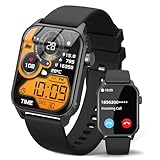
- 【1.83" HD Display & Customizable Watch Faces】Immerse yourself in a vibrant 1.83-inch IPS display, boasting a sharp resolution of 240*284 for crystal-clear visuals. Effortlessly personalize your smart watch with a wide array of customizable watch faces to suit your personal style for every occasion—whether trendy, artistic, or minimalist—ideal for casual, sporty, or professional. Its sleek, modern design complements any outfit, blending technology and fashion seamlessly for everyday wear
- 【120 Sports Modes & Advanced Health Tracking】Our TK29 smart watches for women men come equipped with 120 sports modes, allowing you to effortlessly track a variety of activities such as walking, running, cycling, and swimming. With integrated heart rate and sleep monitors, you can maintain a comprehensive overview of your health, achieve your fitness goals, and maintain a balanced, active lifestyle with ease. Your ideal wellness companion (Note: Step recording starts after exceeding 20 steps)
- 【IP67 Waterproof & Long-Lasting Battery】Designed to keep up with your active lifestyle, this smartwatch features an IP67 waterproof rating, ensuring it can withstand splashes, sweat, and even brief submersion, making it perfect for workouts, outdoor adventures, or rainy days. Its reliable 350mAh battery offering 5-7 days of active use and up to 30 days in standby mode, significantly reducing frequent charging. Ideal for all-day wear, whether you’re at the gym, outdoors, or simply on the go
- 【Stay Connected Anytime, Anywhere】Stay informed and in control with Bluetooth call and music control features. Receive real-time notifications for calls, messages, and social media apps like Facebook, WhatsApp, Twitter, and Instagram directly on your smartwatch. Easily manage calls, control your music playlist, and stay updated without needing to reach for your phone. Perfect for work, workouts, or on-the-go, this watch keeps you connected and never miss important updates wherever you are
- 【Multifunction & Wide Compatibility】Seamlessly handle heart rate monitoring, sleep tracking, and enjoy conveniences like camera/music control, Seamlessly handle heart rate monitoring, sleep tracking, and more-all directly from your wrist. This 1.83 inches HD smartwatch is compatible with iPhone (iOS 9.0+) & Android (5.0+), ensuring smooth daily connectivity and convenience throughout your day. More than just a timepiece, it’s a stylish, all-in-one wearable for smarter, healthier living
The accelerometer measures movement in multiple directions thousands of times per second. This is what allows the watch to detect steps, arm swing, cadence changes, posture shifts, and even micro-movements when you stand up or sit down. It is the backbone of Move and Stand ring tracking.
The gyroscope adds rotational awareness, helping the watch distinguish between walking, running, cycling, and non-exercise movements. Together with the accelerometer, it allows Apple’s algorithms to recognize activity patterns rather than just raw motion. This is why pushing a stroller or walking with hands in pockets can sometimes affect accuracy.
Heart rate as the anchor for effort and intensity
The optical heart rate sensor is the most influential input for calorie burn and workout intensity. It uses green LEDs and photodiodes to measure blood flow changes under your skin, sampling continuously during workouts and periodically throughout the day. When heart rate data is clean, calorie estimates improve dramatically.
Apple does not simply multiply heart rate by time. Your age, sex, height, weight, and resting heart rate all feed into a personalized metabolic model. This is why two people doing the same workout can see very different calorie totals.
Fit matters as much as technology here. A loose band, cold skin, tattoos, or excessive wrist movement can degrade signal quality. In real-world testing, tightening the band slightly during workouts often improves consistency more than changing any setting in the app.
GPS, pace, and distance: when location data matters
For outdoor workouts, GPS becomes a major contributor to accuracy. It tracks distance, pace, elevation changes, and route shape independently of arm movement. This is especially important for running, walking, cycling, and hiking.
When GPS is active, the watch cross-checks motion data against location changes. If your stride shortens or lengthens, the algorithm adapts over time. This is why outdoor calibration walks and runs improve indoor treadmill estimates later.
Indoors, the watch relies entirely on motion and learned stride patterns. Treadmill pace, incline, and distance displayed on gym machines are not automatically synced unless manually entered. The watch is estimating, not reading the treadmill’s data.
Calories: active, resting, and the misunderstood Move ring
The Move ring represents active calories, not total daily energy expenditure. Active calories are those burned above your baseline metabolic rate through movement and exercise. Your body burns resting calories all day regardless of activity, but those do not count toward the ring.
Apple calculates active calories using a combination of heart rate, movement intensity, duration, and your personal profile. A brisk walk with elevated heart rate may earn more Move calories than a slow jog with poor sensor contact. Effort matters more than labels.
This is why strength training, yoga, or functional workouts can feel demanding but show lower calorie totals. Heart rate spikes are shorter, and motion patterns are less repetitive, making estimates more conservative. That does not mean the workout was ineffective.
Exercise minutes and why intensity thresholds exist
The Exercise ring tracks minutes where your activity reaches at least a brisk-walk equivalent intensity. This threshold is dynamic and tied to heart rate and motion, not just movement alone. Slow walking may count one day and not another depending on fatigue, recovery, and baseline fitness.
During workouts, all minutes typically count as Exercise regardless of intensity dips. Outside of workouts, the watch is more selective. This prevents casual movement from inflating exercise totals.
For beginners, this can feel discouraging. In reality, it nudges users toward sustained, meaningful effort rather than constant low-level activity.
The Stand ring and posture detection limitations
The Stand ring is based on wrist position and subtle movement changes rather than true spinal posture. If your arm hangs down and moves for at least one minute during the hour, it usually counts. Standing perfectly still may not.
This explains why desk workers sometimes miss Stand hours even when upright, and why pacing while on a call often triggers it easily. It’s a behavioral reminder, not a medical posture assessment.
Despite its simplicity, the Stand ring plays an important role in breaking up sedentary time. From a health perspective, frequent movement interruptions matter more than perfect posture detection.
Workout recognition versus manual workout selection
The Apple Watch can auto-detect certain workouts, but manual selection still matters. Choosing a workout type tells the algorithm which motion and heart rate patterns to prioritize. This directly affects calorie estimates and effort scoring.
If you lift weights without starting a workout, the watch may undercount both Exercise minutes and calories. If you select the wrong workout type, such as choosing walking for a high-intensity circuit, the data model becomes less accurate.
Think of workout selection as context-setting for the sensors. The more accurately you describe what you’re doing, the better the watch interprets the signals it receives.
Why trends matter more than any single workout
No wearable produces lab-grade measurements in uncontrolled environments. Apple’s strength lies in consistency and longitudinal tracking rather than absolute precision. The watch is best at showing changes over weeks and months, not judging one perfect session.
If your resting heart rate trends downward, walking pace improves at the same heart rate, or recovery stabilizes, the system is working. Minor daily fluctuations are normal and expected.
Understanding this foundation helps you shift focus from chasing perfect numbers to using the Activity and Workout apps as tools for awareness, motivation, and gradual progress.
The Activity App Explained: Move, Exercise, and Stand Rings Demystified
Once you understand how the Watch interprets motion, heart rate, and context over time, the Activity app starts to make much more sense. The three rings are not three versions of the same thing. Each ring tracks a different behavior Apple believes supports long-term health when practiced consistently.
Rather than measuring fitness directly, the Activity app measures habits. It rewards energy expenditure, sustained effort, and regular movement spread across the day. That distinction explains many of the quirks users notice in daily use.
The Move ring: active calories, not steps
The red Move ring tracks active calories burned, meaning energy used above your baseline resting metabolism. This includes workouts, brisk walking, chores, fidgeting, and any movement that raises energy expenditure beyond resting levels. Steps are recorded elsewhere, but they do not directly close the Move ring.
Calorie estimates are calculated using heart rate, accelerometer data, GPS when available, and your personal profile. Height, weight, age, and sex all influence the model, which is why accurate profile setup matters more here than with simple step counters. Two people doing the same walk can close very different portions of the Move ring.
Because heart rate plays a central role, calibration improves accuracy. Outdoor walks or runs with GPS allow the watch to learn your stride length and movement efficiency. Over time, this reduces calorie inflation during casual movement and undercounting during purposeful exercise.
Setting a Move goal that actually fits your life
Apple encourages an adaptive Move goal, offering weekly suggestions based on recent activity. This can be motivating, but it is not mandatory. A goal that feels achievable on most days is more effective than an aggressive number you regularly abandon.
For active users, a higher Move goal reinforces daily training consistency. For beginners or those returning from injury, a lower goal reduces burnout and keeps the feedback loop positive. The ring does not care how you earn calories, only that you move with intention.
It is also normal for Move totals to vary widely day to day. A long run might close the ring by noon, while a rest day requires deliberate effort. The system is designed to reflect real life, not enforce identical output every day.
The Exercise ring: minutes that count as effort
The green Exercise ring tracks minutes of activity performed at or above a brisk intensity threshold. This threshold is individualized, based on your fitness level and recent heart rate patterns. What counts as exercise for one user may not register for another.
A slow walk may close Exercise minutes for a beginner, while an experienced runner needs a faster pace or incline. This adaptive behavior is intentional. The goal is relative effort, not universal intensity.
Exercise minutes can come from workouts or from everyday movement. A fast commute, climbing stairs, or playing with kids can all contribute if heart rate and motion meet the criteria. This is why Exercise minutes sometimes appear even when no workout was started.
Why strength training behaves differently
Strength training highlights one of the Exercise ring’s limitations. Lifting weights often includes pauses, slow movements, and static holds that do not elevate heart rate continuously. As a result, Exercise minutes may accumulate slowly despite high perceived effort.
This does not mean the workout was ineffective. It reflects how the watch defines sustained cardiovascular load. Selecting a Strength Training workout improves calorie estimation, but Exercise minutes will still favor active intervals over rest.
For mixed training styles, such as circuits or CrossFit-style sessions, Exercise minutes typically track more generously. The combination of movement and heart rate better matches the algorithm’s expectations.
The Stand ring: movement spread across the day
The blue Stand ring tracks how many hours in which you stood and moved for at least one minute. The watch looks for a change in wrist position combined with subtle motion. It does not verify posture, spinal alignment, or weight-bearing stance.
This explains why pacing counts and standing still may not. It also explains why some users “stand” while sitting upright and moving their arms. The goal is behavioral interruption of prolonged inactivity, not anatomical correctness.
By default, the Stand goal is 12 hours per day. This target encourages regular movement without demanding constant activity. For many users, especially desk workers, it becomes the most behavior-shaping ring of the three.
How the rings work together, not in competition
Each ring targets a different health behavior. Move rewards overall energy output, Exercise rewards sustained effort, and Stand rewards frequency of movement. Closing all three does not require intense training, but it does require intentional daily activity.
It is common to close Move without closing Exercise, or to close Exercise while missing Stand hours. These patterns reveal how your day is structured. Over time, they highlight opportunities to move more efficiently or more evenly.
Rather than chasing perfect rings every day, experienced users watch how often they close them across a week. Consistency matters more than streaks, and flexibility matters more than rigid targets.
Customizing goals and expectations
All three rings can be adjusted to better match your lifestyle. Move and Exercise goals can be increased or decreased directly from the watch or iPhone. Stand hours can be lowered for users with limited mobility or unconventional schedules.
Custom goals are not cheating. They are calibration tools. A ring that reflects your reality is more useful than one that constantly feels out of reach.
As fitness improves or life circumstances change, goals should evolve. The Activity app works best when it grows with you, rather than judging you by a static standard.
What the Activity app does not measure
The rings do not measure performance, strength gains, or athletic skill. They do not account for sleep quality, recovery status, or training periodization. Those insights live elsewhere in the Apple ecosystem or require interpretation beyond raw numbers.
What the Activity app excels at is awareness. It shows how much you move, how often you push yourself, and how consistently you break up sedentary time. Used correctly, it becomes a behavioral compass rather than a scorecard.
Understanding the intent behind each ring transforms them from confusing circles into practical feedback tools. Once that foundation is clear, the Workout app becomes far more powerful as a companion rather than a separate system.
Calories, Active Energy, and Basal Burn: How Apple Watch Calculates Energy Use
Once you understand what each ring is trying to encourage, the next layer of confusion is almost always calories. The Activity and Workout apps talk about energy in several different ways, and Apple deliberately separates them to avoid turning fitness into a single oversimplified number.
Calories on Apple Watch are not a reward system. They are an estimate of how much energy your body uses, broken into parts that help explain where that effort comes from across your day.
Active energy vs total calories
The Move ring tracks active energy, which Apple defines as calories burned above your resting baseline. This includes walking, workouts, household movement, and any activity that raises your energy expenditure beyond simply being alive.
Total calories, shown in the Fitness app on iPhone and within workout summaries, combine active energy with resting energy. Resting energy is sometimes referred to as basal burn, and it represents the calories your body uses to maintain basic functions like breathing, circulation, and temperature regulation.
This distinction matters because two people can close the same Move ring while having very different total calorie burns. A smaller, lighter person may burn fewer total calories overall while still hitting the same active energy goal.
What basal burn actually represents
Basal burn is Apple’s estimate of your resting metabolic rate spread across the day. It is calculated using your age, sex, height, weight, and heart rate trends, combined with population-level metabolic models.
You do not need to move to accumulate basal calories. They accrue continuously, whether you are sleeping, sitting, or standing still.
This is why the Fitness app can show thousands of calories burned even on low-activity days. Most of that energy would have been used regardless of whether you wore the watch or exercised at all.
How Apple Watch estimates active calories
Active energy is where the Apple Watch’s sensors come into play. Motion data from the accelerometer and gyroscope detect movement patterns, while heart rate provides physiological context about effort.
During walking, running, and many outdoor workouts, GPS adds speed and distance data to refine estimates. For indoor workouts, the watch relies more heavily on arm motion, cadence, and heart rate response.
Apple’s algorithms are conservative by design. If your heart rate does not rise meaningfully or your movement is minimal, active calorie burn increases slowly, even if the activity feels tiring in a non-cardiovascular way.
Rank #2
![Apple Watch Series 11 [GPS 46mm] Smartwatch with Jet Black Aluminum Case with Black Sport Band - M/L. Sleep Score, Fitness Tracker, Health Monitoring, Always-On Display, Water Resistant](https://m.media-amazon.com/images/I/312K597M2uL._SL160_.jpg)
- HYPERTENSION NOTIFICATIONS — Apple Watch Series 11 can spot signs of chronic high blood pressure and notify you of possible hypertension.*
- KNOW YOUR SLEEP SCORE — Sleep score provides an easy way to help track and understand the quality of your sleep, so you can make it more restorative.
- EVEN MORE HEALTH INSIGHTS — Take an ECG anytime.* Get notifications for a high and low heart rate, an irregular rhythm,* and possible sleep apnea.* View overnight health metrics with the Vitals app* and take readings of your blood oxygen.*
- STUNNING DESIGN — Thin and lightweight, Series 11 is comfortable to wear around the clock — while exercising and even when you’re sleeping, so it can help track your key metrics.
- A POWERFUL FITNESS PARTNER — With advanced metrics for all your workouts, plus features like Pacer, Heart Rate Zones, training load, Workout Buddy powered by Apple Intelligence from your nearby iPhone,* and more. Series 11 also comes with three months of Apple Fitness+ free.*
Why workouts often show higher calorie accuracy
Starting a workout tells the watch to sample sensors more frequently and apply activity-specific models. A brisk walk logged as a workout will almost always show higher active calories than the same walk left untracked.
This does not mean the watch is cheating during workouts. It means the system has more data and more context, allowing it to better interpret effort rather than guessing from background movement alone.
For activities like cycling, rowing, or elliptical training, using the correct workout type dramatically improves calorie estimates compared to generic movement tracking.
Strength training and the calorie gap
Traditional strength training is one area where users often feel under-credited. Lifting weights involves short bursts of effort, static holds, and recovery periods that do not always elevate heart rate in a steady way.
Apple Watch tracks these sessions using heart rate variability, motion patterns, and time under tension, but it cannot directly measure muscular load. The result is often a lower active calorie number than expected.
This does not mean the workout was ineffective. Strength training produces adaptations that are not well reflected by immediate calorie burn, including increased muscle mass and long-term metabolic changes.
The role of calibration and personal data
Calorie estimates improve as the watch learns how your body responds to movement. Regular outdoor walks or runs with GPS help calibrate stride length, pace efficiency, and heart rate response.
Keeping your health profile accurate is critical. Incorrect weight, height, or age will skew both basal and active calorie estimates in predictable ways.
Wearing the watch snugly, especially during workouts, improves heart rate accuracy and reduces dropped readings that can suppress calorie totals.
Why calorie numbers vary day to day
Even with identical workouts, calorie burn can change based on fatigue, hydration, temperature, stress, and sleep. Apple Watch reflects these differences because your heart rate response is part of the calculation.
This variability is a feature, not a flaw. It helps explain why some days feel harder or easier than others, even when the activity looks the same on paper.
Comparing calorie burns across weeks makes more sense than obsessing over single sessions. Trends matter more than isolated numbers.
Using calorie data without letting it control you
The Move ring is built around active energy because it reflects behavior you can influence directly. Total calories are informative, but they are not a goal to chase.
For weight management, calorie data is most useful when paired with consistency, nutrition awareness, and realistic expectations. The watch shows output, not intake, and it does not judge balance.
Experienced users treat calorie estimates as directional feedback. They help you understand patterns, workload, and recovery needs, rather than serving as a precise metabolic ledger.
The Workout App Walkthrough: Choosing the Right Workout and Why It Matters
Once calorie behavior makes sense, the next lever you control is the Workout app itself. What you select before you start moving directly affects how the watch interprets effort, tracks sensors, and assigns credit toward your Activity rings.
This is where many users unknowingly leave accuracy on the table. The Workout app is not just a timer; it is a classification system that tells the Apple Watch what kind of physiological signals to prioritize.
What actually happens when you tap a workout
Every workout type loads a different tracking profile behind the scenes. That profile determines how heart rate is sampled, whether GPS is used continuously or intermittently, how motion data is weighted, and how calories are estimated.
For steady cardio workouts like outdoor running or cycling, pace, distance, and heart rate drive most of the calculation. For mixed or stop-start activities, the watch leans more heavily on heart rate trends and movement patterns.
Choosing the closest match matters because the algorithms are tuned for specific effort signatures. When the workout type and your actual activity disagree, calorie burn, pace data, and even ring credit can drift.
Outdoor vs indoor workouts and why GPS changes everything
Outdoor workouts use GPS to measure distance, speed, elevation changes, and route shape. This data anchors calorie estimates because the watch knows how fast and how far you actually moved.
Indoor workouts cannot rely on GPS, so the watch estimates distance and pace using arm motion, stride length, and heart rate. This works well once calibrated but is more sensitive to form changes, treadmill accuracy, and hand placement.
If you run outdoors regularly, those sessions help calibrate indoor runs and walks. Skipping outdoor workouts entirely often leads to inflated or inconsistent indoor distance readings.
The difference between specific workouts and “Other”
The “Other” workout is designed as a catch-all for activities that do not fit predefined categories. It assumes a brisk, full-body effort and often assigns calories generously to avoid undercounting.
This makes “Other” useful for unpredictable movement like obstacle courses or playground workouts. It also makes it a poor choice for low-intensity or highly specific activities.
Using “Other” for strength training, yoga, or casual movement can inflate Move ring credit and distort long-term trends. Over time, this makes it harder to compare workouts meaningfully.
Strength training: traditional vs functional
The Strength Training workout is optimized for repeated bouts of muscular effort with rest periods. It expects heart rate spikes followed by drops and does not penalize you for standing still between sets.
Functional Strength Training assumes more continuous movement, often involving balance, core work, and transitions. It typically records slightly higher active calories because motion stays elevated.
Neither option tracks reps, sets, or load without third-party apps. Their main job is to correctly classify the physiological pattern so calorie estimates and recovery insights remain realistic.
High-intensity workouts and heart rate behavior
HIIT workouts emphasize sharp heart rate changes rather than sustained output. The watch samples heart rate more frequently to capture peaks and recovery intervals.
This matters because average heart rate alone can underrepresent how hard intervals actually feel. Capturing those spikes improves calorie estimates and post-workout analysis.
If your workout includes planned intervals with short rest, selecting HIIT is usually more accurate than choosing a generic cardio option.
Mindful cooldowns, yoga, and recovery-focused workouts
Yoga, Pilates, and Mind & Body workouts prioritize heart rate variability and slow, controlled movement. These workouts contribute to Exercise minutes but usually add fewer active calories.
That lower calorie number is expected and appropriate. These sessions support flexibility, balance, and recovery rather than cardiovascular load.
Using a high-intensity workout type for yoga may close rings faster, but it undermines the purpose of tracking different kinds of stress on your body.
Why Exercise ring credit depends on workout choice
The Exercise ring measures minutes of activity at or above a brisk intensity threshold. During workouts, Apple Watch relaxes that threshold slightly because it knows you are intentionally training.
Different workouts apply different intensity assumptions. A brisk walk and a leisurely yoga session are treated very differently, even if they last the same amount of time.
Choosing the right workout ensures Exercise minutes reflect true exertion rather than inflated time spent moving slowly.
Auto-detection, prompts, and when to trust them
Apple Watch can detect common workouts like walking, running, swimming, and cycling. When it prompts you to start, it backfills data to the moment it detected movement.
Auto-detection is conservative by design. It waits for consistent motion and heart rate changes before triggering, which means short or stop-start workouts may never prompt.
For planned workouts, starting manually is always more accurate. Auto-detection is best treated as a safety net, not a primary tracking method.
Pausing, segmenting, and marking effort changes
Pausing a workout stops time, calorie accumulation, and distance tracking. This is especially important during long breaks that would otherwise dilute pace and effort data.
Some workouts allow segments or splits, either manually or automatically. These help you analyze how performance changes across intervals or terrain.
Using these tools turns the Workout app from a passive recorder into an active training log.
Water workouts and touch limitations
Swimming and water workouts lock the screen to prevent accidental input. Metrics are optimized for stroke detection, lap counting, and duration rather than continuous heart rate.
Heart rate sampling is less frequent in water due to sensor limitations. Calorie estimates rely more on stroke efficiency and movement patterns.
This is one area where absolute precision matters less than consistency. Comparing swims against your own history is far more useful than chasing exact numbers.
Battery life and workout selection trade-offs
GPS-heavy workouts consume more battery, especially on longer sessions. Outdoor runs, hikes, and cycling sessions place the highest demand on the watch.
Indoor workouts and strength training are less power-hungry. This matters for long training days or when using older models with reduced battery health.
Knowing this helps you plan workouts strategically without sacrificing tracking quality.
How workout choice affects long-term trends
Apple Watch builds fitness trends from repeated patterns. Consistently choosing the same workout type for the same activity improves the quality of those insights.
Switching between similar workouts randomly introduces noise. A run tracked as “Outdoor Walk” one day and “Outdoor Run” the next skews pace, calorie, and cardio fitness data.
Treat workout selection like labeling data. Clear labels lead to clearer insights.
When precision matters and when it doesn’t
For structured training, rehabilitation, or performance goals, accuracy compounds over time. Small classification errors can mislead recovery estimates and workload balance.
For general activity and habit building, being roughly correct is usually enough. Closing rings consistently matters more than perfect labeling.
The key is intention. Know when you are training and when you are simply moving, and let the Workout app reflect that distinction.
Heart Rate, Zones, Pace, and Effort: Understanding Core Workout Metrics
Once you’ve chosen the right workout and accepted the trade-offs around battery life and precision, the next layer is understanding what the numbers actually mean while you’re moving. These metrics are not decoration on the screen; they are how Apple Watch interprets effort, intensity, and training load over time.
The key is learning which metrics deserve your attention during a workout and which are better reviewed afterward. Trying to react to everything in real time often leads to confusion rather than better training.
Heart rate: the foundation metric
Heart rate is the backbone of Apple Watch workout tracking. Calories, cardio fitness estimates, recovery trends, and training intensity all build outward from heart rate data.
Apple Watch measures heart rate using optical sensors that read blood flow at the wrist. During steady, rhythmic activities like running or cycling, accuracy is typically strong, especially when the watch is worn snugly and positioned slightly above the wrist bone.
Rank #3

- Bluetooth Call and Message Alerts: Smart watch is equipped with HD speaker, after connecting to your smartphone via bluetooth, you can answer or make calls, view call history and store contacts through directly use the smartwatch. The smartwatches also provides notifications of social media messages (WhatsApp, Twitter, Facebook, Instagram usw.) So that you will never miss any important information.
- Smart watch for men women is equipped with a 320*380 extra-large hd full touch color screen, delivering exceptional picture quality and highly responsive touch sensitivity, which can bring you a unique visual and better interactive experience, lock screen and wake up easily by raising your wrist. Though “Gloryfit” app, you can download more than 102 free personalised watch faces and set it as your desktop for fitness tracker.
- 24/7 Heart Rate Monitor and Sleep Tracker Monitor: The fitness tracker watch for men has a built-in high-performance sensor that can record our heart rate changes in real time. Monitor your heart rate 26 hours a day and keep an eye on your health. Synchronize to the mobile phone app"Gloryfit", you can understand your sleep status(deep /light /wakeful sleep) by fitness tracker watch develop a better sleep habit and a healthier lifestyle.
- IP68 waterproof and 110+ Sports Modes: The fitness tracker provides up to 112+ sports modes, covering running, cycling, walking, basketball, yoga, football and so on. Activity trackers bracelets meet the waterproof requirements for most sports enthusiasts' daily activities, such as washing hands or exercising in the rain, meeting daily needs (note: Do not recommended for use in hot water or seawater.)
- Multifunction and Compatibility: This step counter watch also has many useful functions, such as weather forecast, music control, sedentary reminder, stopwatch, alarm clock, timer, track female cycle, screen light time, find phone etc. The smart watch with 2 hrs of charging, 5-7 days of normal use and about 30 days of standby time. This smart watches for women/man compatible with ios 9.0 and android 6.2 and above devices.
High-intensity intervals, rapid arm movement, and strength training introduce more variability. In those cases, short spikes or drops are normal and matter less than overall trends across the session.
Why wrist fit and comfort matter more than specs
Sensor performance depends heavily on how the watch sits on your wrist. A loose band, sweat pooling under the case, or frequent repositioning can degrade readings more than the difference between Apple Watch models.
Sport Bands and Sport Loops tend to perform best for heart rate because they allow even pressure and micro-adjustments. Heavier metal cases and link bracelets look great day to day but are less ideal for high-sweat workouts unless tightened carefully.
Comfort is not just about feel. A watch that stays put delivers cleaner data with fewer dropouts.
Heart rate zones: intensity translated into meaning
Heart rate zones turn raw beats per minute into understandable intensity levels. Apple Watch uses five zones, ranging from easy recovery to near-maximal effort.
By default, zones are calculated automatically using age-based formulas and your observed heart rate data. These auto zones work well for most users but can be manually adjusted in the Watch app if you know your true maximum or resting heart rate.
Zones matter most for structured training. Spending time in Zone 2 supports aerobic base building, while repeated Zone 4 and 5 efforts drive performance gains but require more recovery.
How zones appear during and after workouts
During a workout, the watch shows your current zone and time spent in each zone. This helps you pace yourself without constantly checking pace or speed.
Afterward, the Fitness app breaks down how long you stayed in each zone and how intensity changed over time. This view is far more valuable than a single average heart rate number.
If you always train hard but never see lower-zone time, fatigue tends to accumulate quietly. Zones make that imbalance visible.
Pace: speed with context
Pace is most relevant for outdoor running, walking, and certain cycling workouts. It reflects how fast you are moving per unit of distance, usually displayed as time per mile or kilometer.
Apple Watch uses GPS combined with motion sensors to calculate pace. On newer models with dual-frequency GPS, pace stability improves in cities, under trees, and on winding routes.
Instant pace fluctuates naturally. Average pace, split pace, and trend over time tell a more honest story of performance.
Why pace is less useful without heart rate
Pace alone cannot tell you how hard your body is working. Heat, hills, fatigue, and terrain all affect effort at the same speed.
A slower pace at a lower heart rate can indicate improved efficiency. A faster pace with an unusually high heart rate may signal poor recovery or overreaching.
This is why Apple Watch presents pace and heart rate together. One explains performance, the other explains cost.
Effort and perceived exertion: the missing metric
Apple Watch does not directly measure perceived exertion, but it infers effort through heart rate behavior, pace drift, and workout duration. Over time, the system learns how your body responds to different intensities.
Two workouts with identical distance and pace can register very differently if heart rate patterns diverge. That difference feeds into calorie burn, recovery needs, and trend analysis.
Listening to your own perception still matters. If a workout feels hard but the metrics say otherwise, fatigue, stress, or sleep quality may be influencing the data.
Calories: output, not reward
Active calorie estimates are derived primarily from heart rate and movement data. They reflect energy expenditure, not fitness quality or workout effectiveness.
Higher heart rate usually means higher calorie burn, but chasing calories often leads to inefficient training. A calm, well-paced session can be more beneficial than a frantic one with a bigger calorie number.
Treat calories as context. They help explain energy use across the day, not validate effort.
When to trust the numbers and when to zoom out
During a workout, use metrics to guide pacing and prevent mistakes like starting too fast. After the workout, look for patterns across weeks rather than obsessing over single sessions.
Heart rate zones, pace trends, and effort consistency matter most when they repeat. One strange reading rarely means anything on its own.
Apple Watch works best as a long-term observer. The more consistently you wear it and train with intention, the more meaningful these metrics become.
Indoor vs Outdoor Workouts, GPS, and Calibration: Improving Accuracy Over Time
All the metrics discussed so far depend on one underlying factor: how well Apple Watch understands your movement in the real world. This is where the distinction between indoor and outdoor workouts becomes more than a label, and where GPS and calibration quietly shape the accuracy of everything from pace to calories.
Understanding how Apple Watch measures distance and speed in different environments helps explain why two similar workouts can produce different results, and what you can do to tighten that gap over time.
What actually changes between indoor and outdoor workouts
When you start an outdoor workout like Outdoor Walk, Outdoor Run, or Outdoor Cycle, Apple Watch activates GPS alongside motion sensors and heart rate tracking. Distance, pace, and route are measured directly from satellite positioning, then cross-checked against your arm swing and stride patterns.
Indoor workouts remove GPS from the equation entirely. Distance and pace are estimated using the accelerometer, gyroscope, and your historical movement profile, which is built over time from outdoor sessions.
This is why outdoor workouts tend to feel more “anchored” to reality, while indoor workouts rely more heavily on calibration and pattern recognition.
Why GPS matters more than just mapping your route
GPS does more than draw a line on a map after your workout. It provides Apple Watch with an external reference for how fast you’re moving, how long your stride is, and how your arm motion correlates with actual speed.
These GPS-backed sessions are used to train Apple Watch’s internal model of your gait. That model is then applied when GPS is unavailable, such as on a treadmill or indoor track.
If you rarely do outdoor walks or runs, indoor distance and pace estimates may feel off. The watch simply hasn’t had enough real-world data to learn your movement accurately.
Calibration: what it is and why it improves everything
Calibration is Apple Watch learning how your body moves at different speeds and intensities. It looks at stride length, arm swing rhythm, acceleration patterns, and how those change when you walk slowly, walk briskly, or run.
Apple recommends performing regular outdoor walks or runs of at least 20 minutes, ideally at varied paces, with good GPS reception. Flat, open areas away from tall buildings or dense trees produce the cleanest data.
Once calibrated, improvements show up everywhere. Indoor distance becomes more believable, pace smoothing improves, calorie estimates stabilize, and even Activity ring behavior becomes more consistent day to day.
Treadmills, indoor tracks, and why pace can feel “wrong”
On a treadmill, Apple Watch has no direct way to know belt speed. It estimates pace based on your arm movement and calibrated stride length, then compares that to heart rate response.
If treadmill pace and watch pace disagree, the treadmill is not automatically correct. Many gym treadmills drift over time, especially at higher speeds.
You can manually adjust distance after a treadmill workout on the iPhone, which subtly feeds back into future estimates. Doing this occasionally, rather than obsessively, can help long-term accuracy.
Indoor cycling and workouts without distance
Indoor cycling workouts do not record distance because Apple Watch cannot reliably estimate wheel speed without an external sensor. Instead, effort is judged through heart rate, cadence-like arm motion patterns, and duration.
This is why indoor cycling can feel “under-rewarded” in terms of distance or pace but still contributes meaningfully to Active Calories and Exercise minutes.
The same logic applies to strength training, HIIT, yoga, and functional workouts. These rely almost entirely on heart rate and movement intensity rather than spatial tracking.
Environmental factors that affect GPS accuracy
Tall buildings, tunnels, heavy tree cover, and narrow streets can cause GPS signal reflection or dropouts. When this happens, Apple Watch leans more heavily on motion sensors until the signal stabilizes.
You may notice pace spikes, zigzagging routes, or slightly inflated distance in dense urban areas. Over the course of a longer workout, these usually average out, but short sessions are more sensitive.
Wearing the watch snugly, with good skin contact, also matters. Optical heart rate accuracy influences calorie burn and effort classification, especially when GPS data becomes noisy.
Battery life, GPS modes, and accuracy trade-offs
Apple Watch dynamically balances GPS accuracy and battery usage, particularly on longer workouts. Newer models with dual-frequency GPS handle this better, especially in cities, while older models may smooth data more aggressively to conserve power.
Low Power Mode reduces GPS sampling and heart rate frequency, which can noticeably affect pace stability and calorie estimates. It’s useful for very long days, but not ideal if accuracy is your priority.
If workout data matters more than battery on a given day, start with a full charge and avoid Low Power Mode during the session.
How accuracy improves quietly over weeks, not workouts
Calibration does not reset after a single run, nor does it perfect itself overnight. Apple Watch builds confidence gradually, comparing repeated patterns across different speeds, terrains, and fatigue states.
This long-view approach aligns with how Apple presents trends rather than one-off judgments. Small errors matter less as consistency increases.
If you feel your indoor workouts are unreliable, the fix is rarely hidden in a setting. It’s usually solved by spending more time moving outdoors, letting the watch learn you the same way a coach would: patiently, through repetition.
Setting Goals That Make Sense: Customizing Rings, Workout Targets, and Notifications
Once the Apple Watch has learned how you move, the next step is telling it what actually matters to you. This is where many users go wrong, chasing perfect rings instead of setting goals that fit their body, schedule, and training reality.
The Activity and Workout apps are flexible by design. Used well, they adapt to your life rather than forcing you into a generic fitness template.
Understanding what the rings are really asking of you
The Move ring is not a fitness score; it’s an energy target. It reflects active calories burned above your resting metabolism, influenced by heart rate, movement intensity, body metrics, and workout duration.
The Exercise ring measures minutes of elevated effort, not just formal workouts. A brisk walk, a fast commute, or a physically demanding job can all count if your heart rate rises enough.
The Stand ring is a behavioral prompt, encouraging regular movement breaks. It’s less about fitness and more about countering long periods of inactivity, especially for desk-based users.
Why the default Move goal often misses the mark
Apple’s initial Move goal is estimated during setup, but it’s intentionally conservative. For some people it’s too easy, turning the ring into a daily checkbox rather than motivation.
For others, especially beginners or those returning from injury, it can be unrealistically high. Missing the Move ring repeatedly trains frustration, not consistency.
The right Move goal should feel achievable most days, challenging on busy ones, and adjustable as your fitness changes. It’s a dial, not a badge of honor.
How to set a Move goal that matches your life
A practical approach is to look at your recent averages in the Fitness app on iPhone. Scroll through the past two to three weeks and note your typical active calorie range on normal days.
Rank #4
![Apple Watch Series 11 [GPS 42mm] Smartwatch with Rose Gold Aluminum Case with Light Blush Sport Band - S/M. Sleep Score, Fitness Tracker, Health Monitoring, Always-On Display, Water Resistant](https://m.media-amazon.com/images/I/31J+F-pXaWL._SL160_.jpg)
- HYPERTENSION NOTIFICATIONS — Apple Watch Series 11 can spot signs of chronic high blood pressure and notify you of possible hypertension.*
- KNOW YOUR SLEEP SCORE — Sleep score provides an easy way to help track and understand the quality of your sleep, so you can make it more restorative.
- EVEN MORE HEALTH INSIGHTS — Take an ECG anytime.* Get notifications for a high and low heart rate, an irregular rhythm,* and possible sleep apnea.* View overnight health metrics with the Vitals app* and take readings of your blood oxygen.*
- STUNNING DESIGN — Thin and lightweight, Series 11 is comfortable to wear around the clock — while exercising and even when you’re sleeping, so it can help track your key metrics.
- A POWERFUL FITNESS PARTNER — With advanced metrics for all your workouts, plus features like Pacer, Heart Rate Zones, training load, Workout Buddy powered by Apple Intelligence from your nearby iPhone,* and more. Series 11 also comes with three months of Apple Fitness+ free.*
Set your Move goal slightly above that average, not at your best day. This keeps the ring meaningful without requiring perfect conditions or heroic effort.
Revisit the goal seasonally or when your routine changes. Training for a race, starting a new job, or recovering from illness are all valid reasons to adjust without guilt.
Exercise ring targets: time versus intent
The default 30-minute Exercise goal is rooted in public health guidelines, not performance training. It’s a solid baseline, but it doesn’t scale automatically with fitness level.
If you already train most days, closing the Exercise ring early can make the rest of the day feel irrelevant. Increasing the goal to 45 or 60 minutes restores its usefulness as a pacing tool.
For beginners, keeping it at 30 but focusing on consistency matters more than intensity. Apple Watch rewards sustained effort over sporadic high-output days.
Stand goals and when to stop obsessing over them
The Stand ring is binary by design: you either moved that hour or you didn’t. It doesn’t care how active you were before or after.
If your day involves long travel, meetings, or recovery, missing Stand hours is not a failure. The ring is there to remind, not judge.
Some experienced users intentionally ignore Stand on certain days. That’s a sign of understanding the system, not gaming it.
Customizing workout goals inside the Workout app
Beyond the rings, each workout type can have its own target. Time, distance, calories, and pace alerts can all be set before you start.
This is especially useful for structured sessions. A time goal keeps easy runs easy, while a calorie goal can help manage effort during cross-training or indoor sessions.
On newer Apple Watch models, real-time alerts are subtle but effective, tapping your wrist when you drift off target without breaking focus.
Using notifications as coaching, not noise
Activity notifications work best when they reinforce behavior you actually want. Too many prompts turn into background irritation.
Turn on reminders that align with your goals, such as Move progress or workout start suggestions at predictable times. Disable streak pressure if it makes rest days feel wrong.
Weekly summaries are worth keeping. They show trends over time, which is how Apple Watch is meant to be read, much like a training log rather than a daily scorecard.
Rest days, recovery, and goal flexibility
Apple Watch does not automatically schedule rest days, but it fully supports them if you let it. Lowering your Move goal temporarily is better than forcing artificial activity.
Closing rings seven days a week is not a requirement for progress. Many coaches would argue it’s counterproductive for long-term adaptation.
The real value of customization is permission: permission to train hard when it counts, and to back off when your body needs it, without fighting your watch.
When goals should change as your watch ages with you
As calibration improves and fitness increases, the same goals will feel easier. That’s a sign to adjust upward, not to dismiss the system.
Conversely, life changes, injuries, or aging may call for recalibration downward. Apple Watch doesn’t lose value when goals shrink; it gains relevance.
The most successful Apple Watch users aren’t the ones with perfect streaks. They’re the ones whose rings still mean something years later, because they took the time to make them make sense.
From Rings to Results: Using Trends, Awards, and Weekly Summaries for Real Progress
Once your goals make sense and notifications are dialed in, the Apple Watch experience shifts from daily ring-closing to long-term pattern recognition. This is where Trends, Awards, and Weekly Summaries quietly do the most important work.
They are not motivational fluff. Used correctly, they turn raw activity data into feedback you can actually train with.
Understanding Trends: your long-view fitness dashboard
Trends live in the Fitness app on iPhone, not on the watch itself, which is a deliberate choice. They are designed for reflection, not real-time decision making.
Apple analyzes rolling 90-day averages for metrics like Move calories, Exercise minutes, Stand hours, walking and running distance, cardio fitness (VO₂ max estimates), resting heart rate, and walking pace. When your recent performance meaningfully deviates from your longer baseline, Apple flags it as a trend.
What Apple Watch trends are actually telling you
An upward Move or Exercise trend does not automatically mean improved fitness. It often reflects increased training volume, lifestyle activity, or changes in routine.
The most valuable trends are the ones tied to efficiency rather than effort. Improvements in walking pace, cardio fitness, or lower resting heart rate while Move calories stay stable usually indicate real adaptation.
If trends are flat, that is not failure. It often means your goals and activity levels are well matched to your current fitness, which is exactly where consistency lives.
When trends go down and why that matters
Downward trends are not warnings so much as context. They often appear during illness, travel, high stress, or intentional recovery phases.
This is where Apple Watch quietly supports smarter training behavior. Seeing a temporary dip in Exercise minutes or distance validates rest rather than guilting you into forcing activity.
If multiple trends decline together for more than a few weeks, that is your signal to reassess goals, sleep, nutrition, or workload, not to chase rings harder.
Awards: motivation with guardrails
Awards get dismissed as gamification, but Apple is careful with how they are deployed. Most awards celebrate consistency, milestones, or personal records rather than comparison with others.
Monthly challenges are adaptive. They scale based on your recent behavior, which means they are meant to stretch you slightly, not break you.
If an award feels unrealistic or poorly timed, it is safe to ignore. Missing a badge does not affect trends, health metrics, or long-term insights.
Using awards without letting them hijack your training
Treat awards like optional prompts, not obligations. They work best when they nudge variety or consistency you already want.
For example, a challenge encouraging extra Exercise minutes can help during a maintenance phase. A distance-based challenge may be inappropriate during strength cycles or injury recovery.
The moment awards push you to train in ways that conflict with your goals, they stop being helpful and can be safely deprioritized.
Weekly summaries: the quiet training log
Weekly summaries are one of the most underappreciated features of Apple Watch. They arrive without fanfare, but they provide exactly what many beginners lack: perspective.
Each summary compares the current week to the previous one, highlighting changes in activity, workouts, and trends. This comparison matters far more than any single day.
Read weekly summaries the way a coach would review a log. Look for patterns, not scores.
How to actually read a weekly summary
If Exercise minutes are up but energy feels low, volume may be increasing too fast. If Move calories drop while walking pace improves, efficiency is rising.
A week with fewer workouts but higher cardio fitness estimates often reflects better recovery. A week with more activity and worse sleep metrics suggests imbalance.
The summary is not telling you what to do. It is showing you what happened so you can decide what comes next.
Connecting Trends and Weekly Summaries to real decisions
Trends show direction. Weekly summaries show momentum. Together, they inform adjustments that rings alone cannot.
This is how Apple Watch supports periodization without ever using the word. Push when trends are rising and recovery markers are stable. Hold or back off when they flatten or fall.
Over months and years, this feedback loop is what turns an Apple Watch from a pedometer into a training companion.
Why this system works long-term
Apple Watch does not demand perfection. It rewards attention.
By separating daily motivation (rings), medium-term feedback (weekly summaries), and long-term adaptation (trends), Apple avoids the trap of turning fitness into a daily pass-fail test.
If you let these layers work together, progress becomes something you observe and guide, not something you chase one ring at a time.
Common Confusions and Misconceptions: Why Your Numbers Look ‘Wrong’ (and Usually Aren’t)
Once you start paying attention to trends and weekly summaries, a new frustration often appears: the numbers still don’t always line up with how hard you feel you worked. Calories seem low, Exercise minutes don’t match workout length, and rings behave in ways that feel inconsistent.
This is the point where many users assume something is broken. In reality, this is where understanding how Apple Watch measures activity becomes essential.
“I worked out for 45 minutes. Why did I only get 28 minutes of Exercise?”
Exercise minutes are not a timer. They are a threshold-based metric tied to movement intensity relative to your personal baseline.
Apple Watch credits Exercise when your heart rate, motion, and pace reach roughly the level of a brisk walk or higher for at least a minute. If intensity dips below that threshold, the clock pauses, even if the workout is still running.
This is why strength training, yoga, Pilates, and stop-and-go workouts often produce fewer Exercise minutes than their duration suggests. Rest periods, setup time, and low heart rate phases count toward workout time but not necessarily Exercise.
This is not a flaw. It is Apple separating time spent training from time spent moving at an intensity that improves cardiovascular fitness.
“My calorie burn seems way too low compared to gym machines or other watches”
Calorie estimates are not universal facts. They are models, and Apple’s model is intentionally conservative.
Apple Watch calculates active calories using your age, sex, height, weight, heart rate, and movement data. Gym machines typically assume a generic body and often inflate numbers to feel rewarding.
If you switch from another brand or rely on treadmill readouts, Apple Watch can feel underwhelming at first. Over time, its consistency matters more than the absolute number.
For training, the trend of calories burned under similar conditions is far more useful than any single session’s total.
“Why does my Move ring change even on rest days?”
The Move ring tracks active calories across your entire day, not just workouts. Walking the dog, carrying groceries, standing while cooking, and pacing during phone calls all count.
On a rest day, this background movement can still close or nearly close your Move ring, especially if your target is set conservatively. This does not mean you failed to rest.
💰 Best Value
![Apple Watch Series 11 [GPS 42mm] Smartwatch with Jet Black Aluminum Case with Black Sport Band - S/M. Sleep Score, Fitness Tracker, Health Monitoring, Always-On Display, Water Resistant](https://m.media-amazon.com/images/I/31ybzrJZckL._SL160_.jpg)
- HYPERTENSION NOTIFICATIONS — Apple Watch Series 11 can spot signs of chronic high blood pressure and notify you of possible hypertension.*
- KNOW YOUR SLEEP SCORE — Sleep score provides an easy way to help track and understand the quality of your sleep, so you can make it more restorative.
- EVEN MORE HEALTH INSIGHTS — Take an ECG anytime.* Get notifications for a high and low heart rate, an irregular rhythm,* and possible sleep apnea.* View overnight health metrics with the Vitals app* and take readings of your blood oxygen.*
- STUNNING DESIGN — Thin and lightweight, Series 11 is comfortable to wear around the clock — while exercising and even when you’re sleeping, so it can help track your key metrics.
- A POWERFUL FITNESS PARTNER — With advanced metrics for all your workouts, plus features like Pacer, Heart Rate Zones, training load, Workout Buddy powered by Apple Intelligence from your nearby iPhone,* and more. Series 11 also comes with three months of Apple Fitness+ free.*
It means Apple Watch is measuring total energy output, not training load. Recovery and activity can coexist, and the rings do not attempt to separate them.
“Why does the same workout burn fewer calories than it used to?”
This is one of the most misunderstood signals Apple Watch provides, and it is often good news.
As fitness improves, your body becomes more efficient. You may run at the same pace with a lower heart rate or lift the same weight with less overall strain.
Apple Watch reflects that efficiency by estimating fewer calories for the same external work. This is adaptation, not lost effort.
If calorie burn drops while pace, power, or perceived effort stays stable, your training is working.
“Why does my pace or distance feel off?”
GPS accuracy depends on environment, calibration, and context.
Outdoor runs and walks improve calibration over time, especially if you allow the watch to use GPS without your iPhone. Indoor workouts rely more heavily on stride length estimation, which can drift if your gait changes with fatigue or incline.
Wrist placement matters more than many realize. A loose band, especially on smaller wrists, can reduce both heart rate accuracy and motion tracking.
Apple Watch is most accurate when worn snugly, slightly above the wrist bone, with occasional outdoor workouts to recalibrate indoor estimates.
“Why did I close my rings on a day that felt easy?”
Rings are effort-agnostic. They respond to output, not how hard that output felt.
A long, low-intensity walk can close Exercise and Move rings without feeling taxing, especially if your goals are set below your current fitness level. This is not cheating the system.
It is a signal that your goals may need adjustment to remain motivating. Rings should feel achievable but meaningful, not automatic.
“Why do my numbers change after a workout is already saved?”
Post-workout processing refines data using additional heart rate samples, motion smoothing, and contextual information. Small changes in calories, pace, or heart rate zones after saving are normal.
This is similar to how GPS tracks snap to roads after the fact. The watch is improving accuracy, not rewriting history.
If changes are large or frequent, it may indicate inconsistent heart rate readings, often caused by band fit, skin dryness, tattoos, or extreme cold.
“Why doesn’t Apple Watch match how I feel?”
No wearable can measure fatigue, motivation, soreness, or stress directly. Apple Watch measures inputs and outputs, not internal experience.
This is why weekly summaries and trends matter. They help contextualize numbers against how you actually feel.
When the data and your perception disagree, treat that as information. It often signals the need for better recovery, nutrition, sleep, or goal calibration rather than a tracking failure.
Understanding what Apple Watch is actually good at
Apple Watch excels at consistency, longitudinal tracking, and behavior awareness. It is less concerned with dramatic single-session metrics.
Its sensors, aluminum or stainless steel case, lightweight form factor, and all-day comfort encourage continuous wear, which is why its activity data becomes more reliable over time than devices worn only for workouts.
Battery life is designed around daily charging, not multi-day gaps. That design choice supports constant background tracking, which is the foundation of its Activity system.
The mindset shift that unlocks the system
If you treat Apple Watch like a scoreboard, the numbers will frustrate you. If you treat it like a logbook, they become useful.
The Activity and Workout apps are not asking you to prove effort every day. They are quietly collecting evidence of patterns.
Once you stop expecting perfection from individual metrics and start reading them in context, most “wrong” numbers reveal exactly what they were meant to show.
Power-User Tips: Getting Better Data, Smarter Training, and Long-Term Fitness Insights
Once you understand that Apple Watch is a long-term logbook rather than a daily performance judge, the next step is learning how to feed it better inputs and read its outputs more intelligently.
These tips are not about hacking the rings. They are about improving data quality, aligning the watch with how you actually train, and extracting insights that remain useful months and years down the line.
Dial in fit, wear habits, and sensor conditions
The single biggest upgrade most users can make is improving heart rate reliability. A snug fit, worn slightly higher on the wrist during workouts, reduces motion noise and improves optical sensor contact.
Sport Bands, Sport Loops, and Alpine-style fabric straps tend to outperform loose leather or metal bracelets during exercise. Comfort matters here, because consistent all-day wear is what allows the Activity app to establish accurate baselines.
Cold weather, dry skin, tattoos, and sweat pooling can all interfere with readings. Warming up, tightening the band slightly, or wiping the sensor mid-workout can make a meaningful difference.
Calibrate once, then recalibrate intentionally
Outdoor walk and run calibration teaches Apple Watch your stride length, pace, and arm swing. This happens automatically during GPS-enabled workouts, but it works best when you walk or run at a natural pace for at least 20 minutes.
If your fitness changes significantly due to weight loss, injury recovery, or switching shoes, recalibration helps. You can reset calibration data in the Watch app on iPhone and start fresh.
This matters because calorie estimates, pace accuracy, and distance tracking all depend on this foundation.
Choose the workout type that best matches reality
Workout labels affect how Apple Watch interprets movement and heart rate patterns. Using “Other” for everything gives you time credit but sacrifices accuracy.
If an activity has a specific mode, use it. Strength Training, HIIT, Outdoor Run, Indoor Cycle, and Functional Strength each apply different motion filters and calorie models.
For hybrid sessions, it is better to switch workout types mid-session than to force everything into one category. That extra tap pays off later when reviewing trends.
Stop chasing calorie precision and start using comparisons
Calorie burn is an estimate, not a metabolic test. What matters is not whether today’s workout was 482 or 515 calories, but how it compares to similar sessions over time.
Look for patterns: same run, same pace, lower heart rate; same workout duration, less effort. These are signals of improved fitness that matter far more than single numbers.
The Move ring is best used as a consistency tool, not a measurement of worth or intensity.
Use heart rate zones as effort anchors, not targets
Heart rate zones help contextualize effort, especially for cardio training. They are most useful when reviewed after the workout, not chased during it.
If most of your easy runs drift into higher zones, that is feedback about pacing, recovery, or accumulated fatigue. If hard sessions never reach higher zones, it may signal under-recovery or conservative effort.
Zones work best when paired with perceived exertion. When the watch and your body agree, confidence in the data grows.
Customize rings to match training phases
The default rings assume a general lifestyle goal, not a structured training plan. During heavy training blocks, raising Move or Exercise goals can reinforce momentum.
During recovery weeks, injury rehab, or life stress, lowering goals is not cheating. It is aligning the system with reality so the data remains meaningful.
The smartest long-term users adjust goals seasonally, not daily.
Read trends weekly, not workouts obsessively
Daily metrics are noisy. Weekly and monthly views smooth that noise into usable insight.
Look at trends in resting heart rate, cardio fitness estimates, exercise minutes, and total activity volume. These reflect adaptation, recovery, and lifestyle changes far better than any single session.
Apple Watch shines here because its lightweight design, comfortable materials, and water resistance encourage near-constant wear.
Pair Activity data with sleep and recovery context
Workout performance rarely exists in isolation. Sleep duration, sleep consistency, and overnight heart rate trends often explain why workouts feel easy or brutal.
When activity rings stall despite effort, sleep and stress are usually the missing variables. Apple Watch cannot diagnose recovery, but it can highlight correlations if you look across systems.
This is where the watch becomes a health companion rather than a fitness gadget.
Use awards and streaks as feedback, not pressure
Awards and streaks are motivational tools, not obligations. They are best treated as reflections of behavior, not goals in themselves.
Breaking a streak is not failure. It is data that life intervened, recovery was needed, or priorities shifted.
Long-term fitness success comes from adaptability, not perfection.
Export your thinking, not just your data
The most powerful insights often come from combining Apple Watch data with your own notes. A simple training journal or notes app can capture how sessions felt, what sleep was like, or external stressors.
Over time, this creates a narrative layer that numbers alone cannot provide. The watch supplies the evidence; you supply the meaning.
What power use really looks like
Power use is not squeezing every decimal of accuracy from the sensors. It is wearing the watch consistently, choosing appropriate workout modes, and reviewing trends with patience.
Apple Watch’s value lies in its balance of comfort, durability, and software integration. Its aluminum, stainless steel, or titanium case is designed for everyday wear, not occasional use, and the Activity system rewards that philosophy.
Used this way, the Activity and Workout apps stop being about closing rings and start becoming a quiet record of how your body adapts over time.
When you trust the long view, the numbers stop arguing with you. They start explaining what is actually happening.