Apple Watch Ultra arrived as Apple’s most decisive answer yet to Garmin, Suunto, and the wider world of rugged sports watches, and two generations in, the positioning is clearer than ever. Ultra isn’t just a bigger Series Watch; it’s a different promise around durability, endurance, and confidence in extreme environments, wrapped in Apple’s uniquely polished software ecosystem. If you’re reading this, you’re likely trying to work out whether the Ultra you own is already “good enough,” or whether Apple has left enough on the table to justify waiting for Ultra 3.
Understanding where Apple Watch Ultra 3 needs to go first requires a sober look at where Ultra and Ultra 2 still excel, and where they quietly fall short. These watches remain best-in-class for many users, but they also reveal the pressure points that Apple now has to address as competitors push harder on battery life, training depth, and hardware specialization.
What Apple Watch Ultra Still Does Exceptionally Well
The original Ultra and Ultra 2 remain among the most comfortable large-format smartwatches you can wear daily. At 49mm with a flat sapphire crystal, titanium case, and pronounced crown guards, the footprint sounds intimidating on paper, but the case geometry, weight distribution, and strap system make it far more wearable than many 47–51mm Garmin or Coros models. For users with medium to large wrists, it disappears surprisingly quickly outside of sleep.
Apple’s display technology continues to be a defining strength. The 3000-nit OLED panel on Ultra 2 is not just about peak brightness; it’s about contrast, touch responsiveness in wet conditions, and readability at extreme angles. In snowfields, open water, or direct desert sun, the Ultra display is still the reference point for smartwatch legibility.
🏆 #1 Best Overall
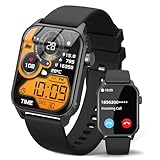
- 【1.83" HD Display & Customizable Watch Faces】Immerse yourself in a vibrant 1.83-inch IPS display, boasting a sharp resolution of 240*284 for crystal-clear visuals. Effortlessly personalize your smart watch with a wide array of customizable watch faces to suit your personal style for every occasion—whether trendy, artistic, or minimalist—ideal for casual, sporty, or professional. Its sleek, modern design complements any outfit, blending technology and fashion seamlessly for everyday wear
- 【120 Sports Modes & Advanced Health Tracking】Our TK29 smart watches for women men come equipped with 120 sports modes, allowing you to effortlessly track a variety of activities such as walking, running, cycling, and swimming. With integrated heart rate and sleep monitors, you can maintain a comprehensive overview of your health, achieve your fitness goals, and maintain a balanced, active lifestyle with ease. Your ideal wellness companion (Note: Step recording starts after exceeding 20 steps)
- 【IP67 Waterproof & Long-Lasting Battery】Designed to keep up with your active lifestyle, this smartwatch features an IP67 waterproof rating, ensuring it can withstand splashes, sweat, and even brief submersion, making it perfect for workouts, outdoor adventures, or rainy days. Its reliable 350mAh battery offering 5-7 days of active use and up to 30 days in standby mode, significantly reducing frequent charging. Ideal for all-day wear, whether you’re at the gym, outdoors, or simply on the go
- 【Stay Connected Anytime, Anywhere】Stay informed and in control with Bluetooth call and music control features. Receive real-time notifications for calls, messages, and social media apps like Facebook, WhatsApp, Twitter, and Instagram directly on your smartwatch. Easily manage calls, control your music playlist, and stay updated without needing to reach for your phone. Perfect for work, workouts, or on-the-go, this watch keeps you connected and never miss important updates wherever you are
- 【Multifunction & Wide Compatibility】Seamlessly handle heart rate monitoring, sleep tracking, and enjoy conveniences like camera/music control, Seamlessly handle heart rate monitoring, sleep tracking, and more-all directly from your wrist. This 1.83 inches HD smartwatch is compatible with iPhone (iOS 9.0+) & Android (5.0+), ensuring smooth daily connectivity and convenience throughout your day. More than just a timepiece, it’s a stylish, all-in-one wearable for smarter, healthier living
GPS performance is another area where Apple quietly closed the gap with dedicated sports brands. Dual-frequency GPS on Ultra and Ultra 2 delivers route tracking accuracy that is finally comparable to Garmin’s multiband systems in urban canyons and dense forests. For runners, hikers, and cyclists who care about clean tracks rather than just distance totals, this was a turning point for Apple Watch credibility.
Health and safety features remain unmatched in their breadth. Fall detection, crash detection, emergency SOS via cellular, and the siren aren’t marketing extras; they are genuinely useful tools that no rival integrates as seamlessly with everyday smartwatch use. Combined with watchOS’s health ecosystem, Ultra remains the most holistic device for users who want one watch for training, daily life, and personal safety.
Where Ultra and Ultra 2 Start to Feel Constrained
Battery life is the most obvious limitation, and it’s the one Ultra owners feel most acutely over time. Even with Ultra 2’s efficiency gains and low power mode enhancements, real-world usage still means one to two days for most active users, or roughly 12–15 hours of GPS-heavy activity. That’s workable, but it’s not liberating in the way a 5–10 day endurance watch can be on multi-day trips.
Training depth is another friction point for serious athletes. Apple’s metrics are clean, well-presented, and accurate, but they remain relatively shallow compared to Garmin’s training load, recovery time, body battery, and long-term performance modeling. Third-party apps fill some gaps, but relying on them fragments the experience and adds cost and complexity.
The hardware sensor suite, while solid, is no longer clearly ahead. Heart rate accuracy is excellent for steady-state efforts but still inconsistent for intervals or cold-weather workouts, especially compared to chest straps or Garmin’s latest optical sensors. There’s also growing awareness that Apple has not meaningfully expanded Ultra’s sensor array since launch, despite rivals experimenting with skin temperature trends, advanced recovery metrics, and multi-sport-specific sensors.
Even durability, while strong, has caveats. The flat sapphire is robust but not invincible, and the titanium case shows wear faster than some expected, particularly on the raised edges. Ultra still feels premium, but owners who treat it as a true expedition tool notice cosmetic aging sooner than with some more utilitarian competitors.
Ultra 2: A Meaningful Iteration, Not a Leap
Ultra 2 improved key areas without redefining the category. The S9 SiP delivered snappier performance, on-device Siri processing, and better efficiency, all of which improve daily usability. The brighter display meaningfully enhanced outdoor use, and the second-generation UWB chip unlocked more precise iPhone finding.
What Ultra 2 did not do was reset expectations around endurance, sensors, or training intelligence. For original Ultra owners, the upgrade case was thin unless display brightness or performance mattered deeply. For buyers new to the Ultra line, Ultra 2 is unquestionably the better choice, but it also solidified the sense that Apple is iterating cautiously.
This incremental approach has consequences. As Garmin, Coros, and Suunto continue to extend battery life and deepen sports analytics, Apple’s software-first advantages are no longer enough on their own for the most demanding users.
The Upgrade Pressure Building Beneath the Surface
Ultra owners are now at an inflection point. The hardware is still excellent, but expectations have risen faster than Apple’s update cadence. Features that once felt ambitious, like 36-hour battery life or basic multi-band GPS, are now table stakes in the rugged smartwatch space.
At the same time, Apple has cultivated a user base that expects meaningful generational progress. Ultra was sold as a no-compromise device, and with Ultra 2 reinforcing the same core limitations, pressure is building for Apple Watch Ultra 3 to move beyond polish and into capability expansion.
That pressure doesn’t come from spec sheets alone. It comes from real-world usage: charging anxiety on long weekends, reliance on third-party apps for training insight, and the feeling that Apple’s most rugged watch is still playing it safe. Ultra 3 doesn’t need to become a Garmin clone, but it does need to answer these pain points convincingly if Apple wants to retain serious outdoor and endurance athletes in its ecosystem.
Apple Watch Ultra 3 Release Timing and Positioning: What Apple’s Update Cycle Tells Us
Given the mounting pressure on Apple to move the Ultra line forward in a more substantive way, the obvious next question is when Apple is likely to respond. Apple’s historical release cadence, combined with how Ultra 2 was positioned, offers some useful clues about both timing and intent.
Apple’s September Rhythm—and Why Ultra Is Different
Apple Watch launches remain tightly anchored to September, alongside the iPhone, and there’s little reason to expect the Ultra line to break from that pattern. Both Ultra and Ultra 2 debuted at fall events, framed as halo products that showcase Apple’s best materials, largest case, and most ambitious positioning.
Where Ultra differs is cadence. The original Ultra arrived in 2022 as a clean-sheet product, while Ultra 2 followed just one year later with what amounted to a refinement cycle rather than a rethink. That creates uncertainty around whether Apple intends the Ultra to follow the annual update rhythm of the standard Series models or a slower, capability-driven schedule.
Why Ultra 2 Felt Like a Bridge, Not a Destination
Ultra 2’s update profile is a critical signal. Apple expended its headline gains on silicon efficiency, display brightness, and interaction improvements, while leaving battery life, sensors, and training depth largely unchanged. That’s not how Apple typically refreshes a product it considers fully “in market.”
In practice, Ultra 2 reads like a stopgap: a way to keep the Ultra competitive in 2023 while aligning it with the S9 platform and watchOS features like on-device Siri. That makes Ultra 3 feel less like an optional iteration and more like the moment Apple needs to justify the Ultra name again.
2025 vs. 2026: Parsing the Credible Windows
Based on Apple’s behavior and supply chain patterns, a fall 2025 launch for Apple Watch Ultra 3 remains the most plausible scenario. Skipping a year would allow Apple to introduce genuinely new hardware rather than another polish pass, particularly if changes involve battery chemistry, sensor additions, or internal layout revisions that require longer development cycles.
A 2026 release is possible, but riskier. Garmin, Coros, and Suunto are not standing still, and Apple’s rugged positioning would erode if Ultra owners are asked to wait three to four years for a meaningful leap. For a watch sold on adventure credibility, stagnation is far more damaging than delayed refinement.
How Apple Is Likely to Position Ultra 3
Ultra 3 is unlikely to chase mass-market appeal. Apple already has the Series line and SE to cover volume, and Ultra’s titanium case, flat sapphire display, and oversized digital crown signal a deliberately niche product. The challenge is defending its premium against competitors that now offer longer battery life, deeper recovery metrics, and multi-week endurance at similar or lower prices.
Expect Apple to double down on Ultra as the “ultimate Apple Watch,” not by mimicking Garmin’s feature list, but by integrating hardware and software more tightly. That could mean sensors that enable new health or training experiences in watchOS, endurance gains that reduce charging anxiety, or connectivity upgrades that enhance safety and independence in remote environments.
What the Update Cycle Suggests About Apple’s Priorities
Apple’s cautious iteration so far suggests it views Ultra as strategically important but not yet fully realized. The company appears unwilling to compromise on industrial design, comfort, or ecosystem consistency, even if that means lagging in raw endurance metrics. Ultra 3 is the point where that restraint will be tested.
If Apple sticks to its typical cadence and delivers Ultra 3 in the next major cycle, it signals confidence that the platform is ready to evolve beyond refinement. If it delays, it implies deeper architectural changes are underway—and that Apple knows incremental updates are no longer enough for the audience it set out to win.
Design and Hardware Rumors: Case, Materials, Display Brightness, and Physical Controls
If Ultra 3 is where Apple proves the platform is ready to mature, the physical design is the most visible test. Apple nailed the core Ultra formula on day one, which makes meaningful change harder, but not optional. The question is whether Apple treats the exterior as settled—or finally evolves it to better serve long-duration, high-stress use.
Case Size, Shape, and Titanium Execution
So far, there are no credible reports pointing to a dramatic change in case dimensions. The 49mm footprint appears locked in, largely because it enables the large battery, flat sapphire, and oversized controls that define the Ultra experience.
What is more plausible is refinement rather than reinvention. Apple could shave weight through subtle internal reengineering or altered titanium wall thickness, improving comfort on smaller wrists without compromising durability. Ultra remains one of the most wearable large sports watches on the market, but long trail days and multi-hour sleep tracking still expose its mass compared to polymer-bodied rivals from Garmin and Coros.
Material-wise, titanium is almost certainly staying, but finish changes are rumored. A darker, more matte treatment—something closer to bead-blasted tool titanium than the current natural tone—would reduce glare, hide scratches better, and visually reinforce Ultra’s rugged positioning. This would align Apple more closely with traditional expedition watch design while preserving its clean industrial language.
Durability, Water Resistance, and Repairability
Apple is unlikely to chase higher depth ratings or shock certifications on paper. The current 100-meter water resistance and EN13319 dive compliance already exceed what most owners will test, and Apple tends to prioritize real-world reliability over spec-sheet escalation.
That said, Ultra 3 is a prime candidate for quieter durability upgrades. Stronger gasket materials, improved button sealing, and better resistance to fine dust and salt intrusion would address long-term wear issues reported by heavy outdoor users. These changes rarely leak, but they matter far more than headline numbers.
Repairability is another under-discussed angle. A redesigned internal layout that simplifies battery replacement or reduces display fragility would significantly improve Ultra’s long-term value. For a watch positioned as an expedition tool, longevity matters as much as first-year performance.
Display Technology and Brightness Expectations
The display is one area where incremental gains would have outsized impact. Ultra 2’s 3,000-nit peak brightness already leads the smartwatch category, but brightness alone does not solve all visibility problems.
Rumors point to further improvements in sustained brightness under direct sunlight, not just brief peaks. This would directly benefit navigation, interval training, and dive modes, where consistent legibility matters more than headline nits. Apple may also improve polarizer efficiency or reduce reflectivity, which would enhance clarity without increasing power draw.
There is also speculation around a more power-efficient LTPO stack. If Apple can reduce display consumption during always-on use, it could quietly extend real-world battery life—one of Ultra’s most persistent weaknesses relative to dedicated sports watches.
Flat Sapphire and Touch Responsiveness
The flat sapphire crystal is expected to remain unchanged, and for good reason. It is one of Ultra’s defining advantages over curved OLED designs, offering superior scratch resistance and fewer accidental touches during water or glove use.
What could improve is touch responsiveness in extreme conditions. Apple has already made strides with water lock and glove detection, but cold-weather and rain-heavy interactions still lag behind physical-button-driven competitors. Hardware-level tuning, rather than software alone, may be required to close that gap.
Physical Controls: Digital Crown, Action Button, and What’s Missing
Ultra’s control layout is widely praised, yet still imperfect. The oversized Digital Crown is excellent with gloves, and the Action Button is genuinely useful, but two controls remain limiting for serious athletes.
There are rumors—still speculative—that Apple has tested additional programmable inputs, possibly capacitive or pressure-sensitive. A second Action Button on the opposite side would dramatically improve usability during workouts, allowing lap marking, screen changes, or navigation controls without contorting the wrist.
Even without adding buttons, Apple could refine haptics and tactile feedback. Stronger, more differentiated vibration patterns tied to button presses would improve confidence during high-motion activities like trail running or climbing, where visual confirmation is not always possible.
Rank #2
![Apple Watch Series 11 [GPS 46mm] Smartwatch with Jet Black Aluminum Case with Black Sport Band - M/L. Sleep Score, Fitness Tracker, Health Monitoring, Always-On Display, Water Resistant](https://m.media-amazon.com/images/I/312K597M2uL._SL160_.jpg)
- HYPERTENSION NOTIFICATIONS — Apple Watch Series 11 can spot signs of chronic high blood pressure and notify you of possible hypertension.*
- KNOW YOUR SLEEP SCORE — Sleep score provides an easy way to help track and understand the quality of your sleep, so you can make it more restorative.
- EVEN MORE HEALTH INSIGHTS — Take an ECG anytime.* Get notifications for a high and low heart rate, an irregular rhythm,* and possible sleep apnea.* View overnight health metrics with the Vitals app* and take readings of your blood oxygen.*
- STUNNING DESIGN — Thin and lightweight, Series 11 is comfortable to wear around the clock — while exercising and even when you’re sleeping, so it can help track your key metrics.
- A POWERFUL FITNESS PARTNER — With advanced metrics for all your workouts, plus features like Pacer, Heart Rate Zones, training load, Workout Buddy powered by Apple Intelligence from your nearby iPhone,* and more. Series 11 also comes with three months of Apple Fitness+ free.*
Speaker, Siren, and External Hardware Tweaks
The loudspeaker introduced with Ultra has proven more useful than expected, particularly for safety features and quick calls in exposed environments. Ultra 3 could bring higher output or better directional tuning, making the siren more effective in wind or dense terrain.
Microphone quality is another candidate for improvement. Cleaner voice capture in adverse conditions would benefit emergency calls, dictation, and Siri reliability, reinforcing Ultra’s role as a standalone safety device rather than a phone accessory.
None of these changes would alter Ultra’s silhouette, but together they would signal a shift from impressive first-generation hardware to a more purpose-honed instrument—one designed not just to survive extreme environments, but to operate more intelligently within them.
Performance and Internals: New Chip Expectations, On‑Device AI, and Why It Matters for Ultra Users
If physical controls and external hardware define how you interact with the Ultra, the silicon inside determines how far Apple can push everything else. After two generations of broadly similar performance characteristics, Ultra 3 feels like the moment where internal upgrades need to become more visible to power users.
The current Ultra 2’s S9 SiP is efficient and responsive, but it is already being stretched by brighter displays, dual‑frequency GPS, offline maps, and increasingly complex workout metrics. Ultra users tend to stack features simultaneously, and that workload exposes limits faster than it does on mainstream Apple Watches.
Next‑Generation SiP: S10 or a Dedicated Ultra Variant
The most credible expectation is a new S‑series chip, widely assumed to be S10, with modest CPU gains but a more meaningful efficiency uplift. Apple has historically prioritized sustained performance and battery stability over raw speed in wearables, and Ultra users benefit disproportionately from that philosophy.
A smaller process node would matter less for app launch times and more for consistency during long activities. Multi‑hour GPS tracking, offline navigation, continuous heart rate sampling, and brighter always‑on displays all compete for power, and any reduction in background drain directly translates to confidence on the trail or in the water.
There is also a growing argument for an Ultra‑specific SiP configuration. Even a lightly differentiated chip with additional thermal headroom or expanded memory bandwidth could allow Apple to tune performance profiles for endurance scenarios rather than short, wrist‑glance interactions.
Memory and Storage: The Quiet Bottleneck
RAM and internal storage rarely headline Apple Watch coverage, but they increasingly shape the Ultra experience. Offline maps, third‑party navigation apps, and locally cached workouts push the current hardware closer to its limits than Apple typically acknowledges.
An increase in RAM would improve multitasking reliability during workouts, especially when switching between navigation, music, and training views. It would also reduce background app reloads, which remain a frustration when you’re mid‑activity and relying on consistent data visibility.
More internal storage would unlock practical benefits for Ultra owners who travel or train away from connectivity. Larger offline map regions, more downloaded podcasts or music, and richer workout history all support the Ultra’s positioning as a semi‑independent device rather than a satellite for the iPhone.
On‑Device AI: More Than a Buzzword for the Ultra
On‑device AI is the most transformative internal upgrade Ultra 3 could bring, provided Apple applies it with discipline. This is not about flashy generative features on a tiny screen, but about real‑time decision‑making that works without a network.
For athletes and explorers, on‑device intelligence could enable smarter workout prompts that adapt mid‑session, not hours later in Fitness summaries. Pace guidance that accounts for elevation, fatigue trends, and temperature in real time would move Apple closer to Garmin’s more contextual training tools.
Safety is where local AI processing matters most. Faster pattern recognition for falls, dives, or abnormal vitals, processed entirely on the watch, reduces reliance on connectivity and lowers response latency when conditions are already compromised.
Why AI Performance Ties Directly to Battery Life
Ultra users are often skeptical of AI promises because they fear battery penalties. That concern is justified, and it’s why Apple’s chip efficiency strategy matters more than raw machine‑learning capability.
If Apple can shift more intelligence onto low‑power neural engines instead of general CPU cycles, Ultra 3 could deliver smarter features without sacrificing endurance. This is particularly relevant for overnight recovery tracking and multi‑day expeditions, where every percentage point matters more than marginal interface polish.
A well‑executed AI architecture could even improve battery life indirectly. Smarter sampling rates, predictive sensor activation, and adaptive display behavior based on context would make the Ultra feel more autonomous and less like a device constantly asking for energy.
Competitive Pressure from Garmin and Beyond
Garmin’s latest Fenix and Enduro models already lean heavily on device‑side analytics, offering training readiness, stamina estimates, and adaptive guidance with minimal cloud dependence. Apple has the silicon expertise to match or exceed this, but Ultra 3 needs to prove it in the field, not just in keynote slides.
The difference Apple can exploit is integration. When hardware, software, and silicon are designed together, even subtle gains in responsiveness and reliability become noticeable during demanding use, especially in poor weather or low‑signal environments.
For Ultra owners considering an upgrade, internals may be the deciding factor. A brighter display or louder speaker is welcome, but a faster, smarter, more efficient core is what determines whether Ultra 3 feels like a refinement or a genuine leap forward in capability.
Battery Life and Charging: The Single Biggest Ultra 3 Opportunity
If smarter on-device processing is the foundation, battery life is the constraint that defines whether those gains matter outside the lab. Ultra owners don’t judge endurance in abstract hours; they judge it by whether the watch survives a long weekend, an ultramarathon, or a cold-weather expedition without anxiety.
Right now, the Ultra line is good by Apple standards and merely adequate by rugged-watch standards. Ultra 2’s rated 36 hours, or up to 72 in Low Power Mode, still trails Garmin’s multi-day GPS tracking and weeks-long smartwatch longevity, especially once cellular, dual-frequency GPS, and continuous heart rate are in play.
What the Rumors Say So Far
Credible leaks around Ultra 3 battery life are, tellingly, quiet. There’s no strong indication of a radical capacity increase, and Apple historically avoids headline-grabbing milliamp-hour disclosures in favor of efficiency claims tied to new silicon.
The most realistic expectation is incremental endurance through a next-generation S-series chip, likely built on a more efficient process with a stronger emphasis on low-power neural and sensor hubs. That aligns with Apple’s recent pattern: modest real-world gains that compound across multiple subsystems rather than a single breakthrough.
There’s also quiet speculation about subtle internal re-packaging. Even a small volumetric gain inside the 49mm titanium case, achieved through denser components or redesigned antenna layouts, could translate into meaningful extra hours without changing the watch’s dimensions or comfort on the wrist.
Why Ultra Battery Life Feels Worse Than the Numbers Suggest
On paper, Ultra compares reasonably to mainstream smartwatches. In practice, its audience uses it harder and longer, with far fewer compromises.
Dual-frequency GPS, extended workout sessions, always-on display at high brightness, background altitude tracking, and frequent cellular check-ins all stack quickly. Add cold temperatures, which degrade lithium-ion performance, and Ultra can feel surprisingly mortal for a watch marketed around endurance and exploration.
This is where Apple’s efficiency story has to move beyond averages. Ultra 3 needs to be designed for worst-case scenarios, not just typical days, because that’s when its buyers rely on it most.
Charging Speed Matters as Much as Total Endurance
Charging is the other half of the battery conversation, and it’s an area where Apple can deliver tangible quality-of-life improvements. Ultra 2 already charges faster than earlier Apple Watches, but it still feels slow compared to the way Ultra users top up between activities.
A more aggressive fast-charging curve, even if limited to the first 50 or 60 percent, would dramatically change how the watch fits into expedition routines. Being able to add a full day of use during a short breakfast stop or gear reset is often more valuable than squeezing out an extra theoretical day.
There’s also room to improve charging reliability in the field. A more tolerant charging coil, better alignment through thick cases or protective docks, and improved behavior with third-party battery packs would all play directly to Ultra’s outdoor positioning.
What Apple Should Steal From Garmin, Carefully
Garmin’s advantage isn’t just battery size; it’s workload prioritization. Features like expedition modes, reduced sampling during steady-state activities, and display behavior tuned for glanceability allow Garmin watches to stretch limited power across extreme durations.
Apple has equivalents in Low Power Mode, but they still feel blunt. Ultra 3 should introduce activity-aware power profiles that adjust sensor fidelity, GPS polling, and background sync dynamically, without forcing users to choose between “full features” and “survival mode.”
This is where Apple’s vertical integration can shine. If watchOS understands what kind of activity you’re doing, how long it’s likely to last, and what energy remains, battery management becomes proactive rather than reactive.
The Solar Question and Other Long Shots
Solar charging is often raised in Ultra 3 wishlists, largely because Garmin has normalized it. Realistically, Apple is unlikely to adopt visible solar rings or compromise display quality for marginal gains.
That said, Apple could explore less obvious approaches, such as supplemental energy harvesting for standby tasks or ultra-low-power timekeeping, without marketing it as “solar.” Even small contributions that slow idle drain would be meaningful during multi-day wear.
More plausible is incremental progress across many small fronts: display driver efficiency, improved OLED materials, smarter background sync, and tighter integration between the modem and location services. None of these make headlines alone, but together they determine whether Ultra 3 feels like a true expedition watch or still a very capable smartwatch with limits.
Why This Is the Upgrade Trigger for Ultra Owners
For current Ultra and Ultra 2 owners, battery life is often the reason to hesitate on new features. New sensors, brighter displays, and smarter software are appealing, but not if they shorten time off the charger.
Rank #3

- Bluetooth Call and Message Alerts: Smart watch is equipped with HD speaker, after connecting to your smartphone via bluetooth, you can answer or make calls, view call history and store contacts through directly use the smartwatch. The smartwatches also provides notifications of social media messages (WhatsApp, Twitter, Facebook, Instagram usw.) So that you will never miss any important information.
- Smart watch for men women is equipped with a 320*380 extra-large hd full touch color screen, delivering exceptional picture quality and highly responsive touch sensitivity, which can bring you a unique visual and better interactive experience, lock screen and wake up easily by raising your wrist. Though “Gloryfit” app, you can download more than 102 free personalised watch faces and set it as your desktop for fitness tracker.
- 24/7 Heart Rate Monitor and Sleep Tracker Monitor: The fitness tracker watch for men has a built-in high-performance sensor that can record our heart rate changes in real time. Monitor your heart rate 26 hours a day and keep an eye on your health. Synchronize to the mobile phone app"Gloryfit", you can understand your sleep status(deep /light /wakeful sleep) by fitness tracker watch develop a better sleep habit and a healthier lifestyle.
- IP68 waterproof and 110+ Sports Modes: The fitness tracker provides up to 112+ sports modes, covering running, cycling, walking, basketball, yoga, football and so on. Activity trackers bracelets meet the waterproof requirements for most sports enthusiasts' daily activities, such as washing hands or exercising in the rain, meeting daily needs (note: Do not recommended for use in hot water or seawater.)
- Multifunction and Compatibility: This step counter watch also has many useful functions, such as weather forecast, music control, sedentary reminder, stopwatch, alarm clock, timer, track female cycle, screen light time, find phone etc. The smart watch with 2 hrs of charging, 5-7 days of normal use and about 30 days of standby time. This smart watches for women/man compatible with ios 9.0 and android 6.2 and above devices.
Ultra 3 doesn’t need to beat Garmin on spec-sheet longevity to win this audience. It needs to feel more predictable, more resilient, and more forgiving when pushed hard, especially far from outlets.
If Apple can deliver even a 15 to 25 percent real-world endurance gain, paired with faster and more flexible charging, Ultra 3 would cross an important psychological threshold. At that point, battery life stops being a caveat and starts becoming a reason to upgrade.
Health and Fitness Sensors: Credible Rumors vs Wishlist (Blood Pressure, Sleep, Recovery, and Beyond)
Battery life sets the ceiling for everything else, and that reality frames every sensor rumor around Ultra 3. Apple can add capabilities, but only if they fit within a power budget that still makes sense for multi-day wear, cold environments, and long workouts.
This is why the most believable health upgrades aren’t flashy new chips bolted on top, but refinements that extract more signal from sensors Apple already understands deeply.
Blood Pressure: The Long-Awaited, Still-Uncertain Breakthrough
Blood pressure remains the single most requested health feature Apple has yet to ship, and it’s also the most misunderstood. The most credible reporting suggests Apple is still working toward trend-based hypertension detection rather than true systolic and diastolic readings.
If Ultra 3 gets any blood pressure feature, expect alerts for elevated trends over time, similar in philosophy to atrial fibrillation notifications. That would align with Apple’s regulatory-first approach and avoid the accuracy pitfalls of cuffless spot readings.
For Ultra users, this still matters. Long-term blood pressure trends correlate strongly with endurance performance, recovery quality, and overtraining, even if you never see a single mmHg number on the watch.
Sleep Tracking: From Passive Logging to Actionable Insight
Apple’s sleep tracking is accurate but still conservative in presentation. Ultra 3 is rumored to build on existing sleep stage detection rather than reinvent it, likely by improving overnight heart rate variability, respiratory rate, and skin temperature fusion.
Sleep apnea detection has already arrived on other Apple Watch models via watchOS, and Ultra 3 could lean harder into this with clearer severity trends and better longitudinal views. For heavier, rugged cases like the Ultra, comfort and strap design matter here, and Apple’s fabric and trail bands already make overnight wear more realistic than it first appears.
What’s missing is interpretation. Garmin and others already push readiness-style insights tied directly to sleep debt, and Ultra 3 feels like the right place for Apple to close that gap without overwhelming casual users.
Recovery Metrics: Where Ultra 3 Could Finally Feel “Athlete-Grade”
Recovery is where Apple still trails dedicated training watches, not because of sensor quality, but because of how cautiously it surfaces conclusions. Heart rate variability is collected reliably, yet rarely elevated to a first-class metric.
A credible evolution for Ultra 3 is a native recovery or readiness score that blends HRV, resting heart rate, sleep quality, recent training load, and temperature deviation. This wouldn’t require new hardware, only the confidence to summarize complex data into a single daily signal.
For Ultra owners juggling diving, trail running, strength training, and everyday life, this kind of synthesis would dramatically improve decision-making without forcing users into third-party apps.
Heart Rate Accuracy, Motion, and Real-World Wear
No major heart rate sensor overhaul is rumored, but incremental improvements matter more than spec changes. Better motion artifact rejection during downhill running, skiing, and interval work would pay dividends for Ultra’s adventure audience.
Apple’s advantage here is tight integration between accelerometers, gyros, and optical sensors. If Ultra 3 refines how those systems cross-check each other, accuracy gains can happen invisibly, without sacrificing battery life or comfort.
This is also where strap choice intersects with data quality. Expect Apple to continue tuning algorithms specifically around its sport-focused bands rather than assuming a generic fit.
Temperature, SpO2, and the Regulatory Reality
Skin temperature sensing has quietly become one of Apple’s most useful health signals, especially for illness detection and recovery context. Ultra 3 is unlikely to add new temperature hardware, but could improve daytime interpretation rather than limiting insights to overnight baselines.
Blood oxygen monitoring remains complicated by regulatory and legal constraints in certain regions. Even if Ultra 3 hardware supports SpO2 universally, software availability may continue to vary by market.
From a user standpoint, consistency matters more than novelty. Clear communication about what works, where, and why will be just as important as the sensor itself.
Metabolic Health and the Glucose Question
Non-invasive glucose monitoring remains firmly in wishlist territory. Despite ongoing research, there’s no credible indication that Ultra 3 will deliver blood sugar readings in any form.
What Apple could do instead is expand metabolic context using existing data: post-exercise recovery trends, sleep disruption patterns, and heart rate responses to meals logged manually. These indirect signals aren’t replacements for glucose data, but they can still guide healthier behavior.
For Ultra users who already wear the watch continuously, this kind of subtle metabolic insight fits Apple’s philosophy better than chasing moonshot sensors prematurely.
Mental Fitness, Stress, and Cognitive Load
Stress tracking is another area where Apple has the raw data but underplays the conclusion. Ultra 3 could improve stress and cognitive load detection by combining HRV suppression, breathing patterns, and activity density across the day.
This matters for expedition-style use as much as office life. Mental fatigue often precedes physical mistakes, especially in navigation-heavy or technical environments.
Surfacing these insights carefully, without constant nudges, would preserve Apple’s restrained user experience while still offering meaningful value.
Why Sensors Alone Won’t Sell Ultra 3
Ultra owners don’t upgrade for one headline metric. They upgrade when health data becomes more trustworthy, more contextual, and easier to act on without micromanagement.
If Ultra 3 delivers modest sensor refinements paired with smarter interpretation and better battery-aware sampling, it will feel like a generational step even without breakthrough hardware. That balance, more than any single health feature, is what would justify the upgrade for serious users.
Outdoor, Dive, and Navigation Features: How Ultra 3 Could Close the Gap With Garmin and Suunto
If health sensors justify the Ultra’s everyday credibility, outdoor and navigation features are what justify its name. This is the area where Apple has made visible progress since the first Ultra, yet still trails Garmin and Suunto in depth, autonomy, and expedition reliability.
Ultra 3 doesn’t need to become a niche adventure computer, but it does need to feel less dependent on the iPhone and less fragile in edge-case environments. Closing that gap is less about adding one killer feature and more about tightening dozens of small but meaningful behaviors outdoors.
Offline Mapping That Actually Feels Offline
Apple’s introduction of offline maps in watchOS was a step forward, but current implementation still feels cautiously limited. Coverage is inconsistent, route recalculation can lag, and elevation context remains underdeveloped compared to Garmin’s TopoActive or Suunto’s contour-rich mapping.
Ultra 3 could meaningfully improve this by expanding map tile storage, supporting clearer contour intervals, and allowing true point-to-point rerouting without iPhone fallback. For hikers and trail runners, the difference between “map visible” and “map trustworthy” is enormous.
A more proactive mapping engine that highlights upcoming elevation gain, water sources, and trail junctions directly on the wrist would push Apple closer to expedition-grade usefulness without overwhelming casual users.
Navigation Autonomy and Waypoint Intelligence
Backtrack has been one of the Ultra’s quiet successes, especially for users who don’t want to manage routes manually. The limitation is that it remains reactive rather than strategic.
Garmin and Suunto users rely heavily on waypoint-based navigation, bearing guidance, and off-course alerts that work for hours without intervention. Ultra 3 could narrow that gap by offering smarter waypoint creation on-device, clearer bearing visuals, and vibration-based alerts that don’t require visual confirmation mid-movement.
The Action button still feels underutilized here. Context-aware behavior, such as a long press to mark a waypoint or trigger a bearing lock while wearing gloves, would significantly improve real-world navigation ergonomics.
Multi-Band GPS Accuracy Versus Endurance Reality
Apple’s dual-frequency GPS is already excellent in challenging terrain, often matching Garmin’s best hardware in urban canyons and tree cover. The problem isn’t accuracy, it’s how long users can trust that accuracy to last.
Ultra 3 needs more granular GPS power modes that go beyond today’s low power toggle. Adaptive sampling based on speed, terrain complexity, and route confidence could preserve battery life without turning tracks into vague approximations.
Garmin’s Expedition modes exist for a reason. Even if Apple avoids that language, Ultra users need confidence that a 12-hour hike or multi-day trek won’t force compromises halfway through.
Rank #4
![Apple Watch Series 11 [GPS 42mm] Smartwatch with Rose Gold Aluminum Case with Light Blush Sport Band - S/M. Sleep Score, Fitness Tracker, Health Monitoring, Always-On Display, Water Resistant](https://m.media-amazon.com/images/I/31J+F-pXaWL._SL160_.jpg)
- HYPERTENSION NOTIFICATIONS — Apple Watch Series 11 can spot signs of chronic high blood pressure and notify you of possible hypertension.*
- KNOW YOUR SLEEP SCORE — Sleep score provides an easy way to help track and understand the quality of your sleep, so you can make it more restorative.
- EVEN MORE HEALTH INSIGHTS — Take an ECG anytime.* Get notifications for a high and low heart rate, an irregular rhythm,* and possible sleep apnea.* View overnight health metrics with the Vitals app* and take readings of your blood oxygen.*
- STUNNING DESIGN — Thin and lightweight, Series 11 is comfortable to wear around the clock — while exercising and even when you’re sleeping, so it can help track your key metrics.
- A POWERFUL FITNESS PARTNER — With advanced metrics for all your workouts, plus features like Pacer, Heart Rate Zones, training load, Workout Buddy powered by Apple Intelligence from your nearby iPhone,* and more. Series 11 also comes with three months of Apple Fitness+ free.*
Dive Features: Capable Hardware, Conservative Software
The Ultra’s depth rating and Oceanic+ partnership established it as a legitimate recreational dive computer, not a novelty. That credibility also exposes its limitations.
Dive mode remains heavily subscription-dependent and somewhat isolated from the rest of watchOS. Ultra 3 could benefit from deeper integration, such as surface interval tracking, better post-dive recovery context, and clearer thermal exposure insights tied to water temperature.
Apple doesn’t need to replace dedicated technical dive computers, but making the Ultra feel more complete for repeat recreational divers would strengthen its value proposition without adding new sensors.
Environmental Awareness Beyond Raw Sensors
The Ultra already measures altitude, depth, water temperature, and compass direction. What it lacks is synthesis.
Garmin excels at turning environmental data into actionable warnings, whether it’s storm alerts, altitude acclimation status, or heat strain indicators. Ultra 3 could take a similar step by contextualizing pressure trends, temperature shifts, and elevation changes into subtle guidance rather than raw numbers.
This aligns with Apple’s broader philosophy. The watch shouldn’t lecture, but it should quietly signal when conditions are changing faster than the user might notice.
Durability Is More Than Materials
Titanium, sapphire, and ceramic already give the Ultra physical credibility, and there’s little reason to expect major changes in dimensions or materials for Ultra 3. Comfort and weight distribution are already competitive for a 49mm case, especially with the Alpine and Trail loops.
Where Apple can still improve is software resilience. Better handling of long-duration workouts, fewer background app suspensions, and more predictable behavior in extreme temperatures would matter more than shaving grams off the case.
Garmin’s advantage has never been polish; it’s predictability under stress. If Ultra 3 can feel just as dependable when things go wrong, not just when everything works, it will finally earn equal footing with the outdoor specialists.
watchOS and Software Exclusives: Features That Could Be Locked to Ultra 3 Hardware
If Ultra 3 is going to meaningfully separate itself from the standard Apple Watch line, software exclusives will matter as much as silicon. Apple has increasingly used hardware capability as justification for selective watchOS features, and the Ultra line is the most defensible place to continue that strategy.
The key is restraint. Ultra owners generally tolerate exclusivity when it feels functionally earned, not artificially gated.
Extended-Duration Workouts and Background Reliability
One of the Ultra’s quiet strengths is endurance, yet watchOS still behaves as if every workout is a 45-minute run. Long hikes, ultra events, multi-day treks, and extended dives all expose the system’s tendency to pause background processes, refresh data inconsistently, or deprioritize sensors to preserve battery.
Ultra 3 could introduce a true long-duration activity mode that changes how watchOS manages memory, sensor polling, and app persistence. This wouldn’t be a UI feature so much as an operating profile that assumes the watch will be active for 8, 12, or even 24 hours without interruption.
Apple could credibly lock this to Ultra 3 if it’s paired with a new S-series chip, more RAM, or a redesigned power controller. Garmin users already expect this behavior; Apple users still work around it.
Advanced Environmental Trend Modeling
The Ultra already captures plenty of environmental data, but watchOS treats most of it as passive reference information. Ultra 3 could move beyond snapshots into trend-based modeling that runs continuously in the background.
This could include pressure trend analysis for storm proximity, altitude change velocity for overexertion warnings, or temperature exposure tracking that factors wind and immersion time rather than raw readings. None of these require new sensors, but they do require sustained background computation and confidence thresholds Apple wouldn’t want triggering on smaller watches.
If Apple frames this as predictive safety rather than alerts, it aligns neatly with the Ultra’s identity without cluttering the experience.
True Offline Mapping and Route Intelligence
Offline maps on Apple Watch have improved, but they’re still largely dependent on iPhone proximity and preloaded data that lacks context once you deviate from the plan. Ultra 3 could introduce a more autonomous mapping stack designed for remote use.
Think on-watch rerouting when you leave a trail, elevation-aware turn warnings, and automatic breadcrumb fallback if GPS signal degrades. This would push closer to what Garmin offers with TopoActive maps, but executed in Apple’s quieter, more visual style.
Storage, processing power, and battery draw make this a plausible Ultra-only feature, especially if Apple wants to avoid degrading the experience on smaller watches.
Expanded Action Button Logic and Context Awareness
The Action button remains underutilized, not because it’s flawed, but because watchOS limits how smart it can be. Ultra 3 could introduce conditional behaviors tied to activity state, environment, or duration.
For example, the same press could mark waypoints during a hike, trigger a lap during a run, and toggle a dive screen underwater, all without manual reassignment. That requires deeper system-level awareness than current Ultra models expose to the user.
Apple has historically rolled out input innovations slowly. Ultra 3 feels like the right moment to let the Action button behave more like a tool than a shortcut.
Recovery and Load Metrics That Span Multiple Days
Apple’s fitness metrics remain daily in nature, which clashes with how endurance athletes actually train. Ultra 3 could debut multi-day load, recovery, and readiness indicators that persist independently of daily rings.
This would allow watchOS to contextualize poor sleep after a long climb, or elevated heart rate variability following a cold-water dive, without resetting at midnight. The Ultra audience is far more likely to value cumulative strain over streaks.
Apple may justify this exclusivity through enhanced sensor sampling or on-device trend analysis, even if the raw data already exists elsewhere.
Dive and Water Sports Software That Feels Native
Apple’s partnership approach to diving works, but it fragments the experience. Ultra 3 could bring more dive-adjacent features directly into watchOS without replacing Oceanic+.
Surface interval tracking, repetitive dive warnings, and thermal exposure summaries tied into Fitness and Health would make the Ultra feel more coherent for regular divers. These features don’t require new depth ratings, just better integration.
Keeping this Ultra-only would be less about limitation and more about respecting that smaller Apple Watches aren’t built for repeated underwater use.
Emergency and Safety Features With Greater Autonomy
Crash Detection and Emergency SOS are already strong, but Ultra 3 could expand safety logic for remote environments. This might include delayed check-ins during long workouts, automatic escalation if movement ceases outside cellular range, or smarter fall detection thresholds tuned for backpacks and poles.
These features would lean heavily on the Ultra’s larger battery, dual-frequency GPS, and potentially upgraded antennas. They also align with the watch’s role as a backup device when the iPhone isn’t practical or available.
For users who actually venture beyond coverage, this kind of software matters more than another watch face.
Why Apple Will Be Careful With Exclusivity
Apple knows Ultra buyers pay a premium not just for hardware, but for longevity. Locking too much behind Ultra 3 risks alienating Ultra and Ultra 2 owners who expect years of meaningful updates.
The most likely outcome is selective exclusivity tied to features that depend on sustained performance, autonomy, or reliability under stress. When exclusivity feels earned by capability, not marketing, the Ultra line makes sense.
If Apple gets that balance right, Ultra 3’s software may be its most important upgrade, even if it’s the least visible on day one.
Connectivity, Safety, and Satellite Tech: What’s Realistic After Ultra 2
If software autonomy is the philosophical direction of the Ultra line, connectivity is the hard constraint that defines how far Apple can realistically push it. Ultra 2 already carries the best radios Apple has ever put in a watch, but real-world backcountry use exposes the remaining gaps quickly.
The question for Ultra 3 isn’t whether Apple adds more connectivity buzzwords, but whether it meaningfully reduces dependence on the iPhone without breaking battery life, size, or regulatory reality.
Satellite Messaging: Expansion, Not Reinvention
Satellite connectivity is the most obvious rumor magnet, largely because Apple has already crossed the hardest threshold. Emergency SOS via satellite on iPhone, and now basic satellite messaging in select regions, proves Apple has the partnerships and infrastructure in place.
💰 Best Value
![Apple Watch Series 11 [GPS 42mm] Smartwatch with Jet Black Aluminum Case with Black Sport Band - S/M. Sleep Score, Fitness Tracker, Health Monitoring, Always-On Display, Water Resistant](https://m.media-amazon.com/images/I/31ybzrJZckL._SL160_.jpg)
- HYPERTENSION NOTIFICATIONS — Apple Watch Series 11 can spot signs of chronic high blood pressure and notify you of possible hypertension.*
- KNOW YOUR SLEEP SCORE — Sleep score provides an easy way to help track and understand the quality of your sleep, so you can make it more restorative.
- EVEN MORE HEALTH INSIGHTS — Take an ECG anytime.* Get notifications for a high and low heart rate, an irregular rhythm,* and possible sleep apnea.* View overnight health metrics with the Vitals app* and take readings of your blood oxygen.*
- STUNNING DESIGN — Thin and lightweight, Series 11 is comfortable to wear around the clock — while exercising and even when you’re sleeping, so it can help track your key metrics.
- A POWERFUL FITNESS PARTNER — With advanced metrics for all your workouts, plus features like Pacer, Heart Rate Zones, training load, Workout Buddy powered by Apple Intelligence from your nearby iPhone,* and more. Series 11 also comes with three months of Apple Fitness+ free.*
What’s realistic for Ultra 3 is not full satellite calling or unrestricted messaging, but limited, watch-initiated satellite check-ins. Think preset messages, breadcrumb pings, or delayed “I’m OK” signals that send once the watch detects prolonged out-of-range conditions.
The Ultra’s larger case, flat sapphire, and improved antenna geometry make it a better candidate than standard Apple Watches, but physics still matters. Any satellite feature would likely be slow, power-hungry, and tightly constrained, positioned as a safety layer rather than a communication replacement.
Cellular Reliability Over Raw Speed
Ultra owners rarely complain about LTE performance in cities; complaints spike in fringe coverage zones. Hiking valleys, coastal cliffs, and forested trails expose the limitations of small antennas and aggressive power management.
Ultra 3 could focus on stronger signal retention rather than faster modems. Incremental antenna refinements, better band switching logic, and more persistent low-signal connections would matter more than headline 5G claims on a watch-sized battery.
Garmin’s LTE experiments have shown that reliability beats bandwidth for outdoor users. Apple doesn’t need to out-spec smartphones here, just outlast dead zones long enough to matter.
Smarter GPS and Position Awareness
Dual-frequency GPS already puts Ultra 2 near the top of consumer wearables, especially in urban canyons and dense terrain. The next step isn’t accuracy alone, but context.
Ultra 3 could combine GNSS confidence levels with motion data to flag unreliable positioning during activities, or automatically increase sampling during exposed sections of a route. This would be particularly useful for trail runners, climbers, and offshore paddlers where small errors compound quickly.
Battery-aware GPS scaling, where precision increases only when needed, would reinforce Apple’s emphasis on intelligent efficiency rather than brute-force tracking.
Safety Features That Understand Environment, Not Just Impact
Crash Detection and Fall Detection work best in predictable scenarios. The outdoors is not predictable, and Ultra 3 has an opportunity to shift safety logic from sudden events to situational awareness.
Extended immobility detection during workouts, exposure-aware alerts in extreme temperatures, or elevation-based fatigue warnings would all align with how Ultra is actually used. These features don’t require new sensors, just better interpretation of existing data streams.
This is where Apple’s health platform quietly outpaces rugged competitors. When safety logic ties into Health trends, workout history, and recovery metrics, alerts feel contextual rather than alarmist.
Offline Maps and Data Caching That Finally Feel Intentional
Offline maps exist today, but they still feel like a compromise rather than a design goal. Ultra 3 could make offline-first navigation a core mode, not a fallback.
Preloading routes with elevation profiles, water sources, waypoints, and emergency exits would reduce the need for constant connectivity. More importantly, it would let users trust the watch as a primary reference instead of a mirrored accessory.
Competitors like Garmin and Suunto still dominate here, not because their hardware is better, but because their software assumes disconnection by default. Apple closing that gap would change how Ultra is perceived overnight.
Why Apple Won’t Rush Full Independence
Despite the ambition, Apple will remain conservative. True phone replacement requires not just radios, but battery headroom, thermal management, and regulatory approvals across dozens of regions.
Ultra 3’s most likely gains are additive and selective: more ways to stay safe, more moments where the watch holds its own, and fewer situations where losing your iPhone feels catastrophic. That restraint is intentional, not a lack of vision.
For Ultra buyers, the real upgrade isn’t cutting the cord completely. It’s knowing that when connectivity fades, the watch becomes more capable, not less.
Who Should Upgrade (and Who Shouldn’t): Ultra 3 vs Ultra, Ultra 2, and Rugged Smartwatch Rivals
All of the rumored Ultra 3 improvements point in the same direction: fewer edge cases where the watch feels fragile, dependent, or overly optimistic about connectivity. That framing matters, because Ultra has never been about year-over-year specs so much as trust in adverse conditions.
Whether Ultra 3 is a must-upgrade depends less on raw performance and more on how often you operate beyond cellular coverage, predictable workouts, or short outings. The differences become clearer when you break it down by current ownership and use case.
If You’re on the Original Apple Watch Ultra
Original Ultra owners are the most obvious candidates to upgrade, even if Ultra 3 ends up being evolutionary rather than radical. Two full hardware generations likely means a noticeably more efficient chipset, improved on-device processing for maps and safety logic, and potentially meaningful battery gains under load.
watchOS features like offline maps, advanced route guidance, and situational alerts already push the first Ultra hard, especially during long workouts. Ultra 3 should feel less constrained when running those features simultaneously, with fewer compromises around screen-on time, GPS accuracy, or background processing.
If your Ultra is primarily a daily smartwatch that occasionally hikes, the upgrade is optional. If it’s a tool you rely on for navigation, training blocks, or multi-day adventures, Ultra 3 should feel like a refinement that removes friction you’ve learned to work around.
If You’re on Apple Watch Ultra 2
Ultra 2 owners sit in a more nuanced position. The S9-based performance, brighter display, and on-device Siri already make Ultra 2 feel far from obsolete, especially for fitness tracking and everyday use.
Unless Ultra 3 introduces a genuinely new capability, such as dramatically better offline navigation, a step-change in battery endurance, or more autonomous safety features, Ultra 2 users won’t feel forced to upgrade. The core experience is already strong, and most rumored gains sound like polish rather than reinvention.
That said, Ultra 2 owners who push the watch to its limits are the exception. If you frequently stack GPS navigation, long-duration workouts, cellular usage, and safety features in remote areas, even incremental efficiency gains can translate into real-world reliability.
If You’re Coming from a Standard Apple Watch or Apple Watch Series Model
For Series 8, 9, or even Series 10 users, Ultra 3 represents a fundamentally different category, not just a bigger case. The jump in battery life, thermal headroom, GPS stability, speaker volume, and durability is immediately noticeable once you leave urban environments.
Ultra’s titanium case, flat sapphire display, and larger digital crown aren’t luxury touches. They directly improve usability with gloves, wet hands, and repeated impacts, while also making the watch more comfortable over long sessions despite its size.
If your activities include trail running, long cycling days, diving, or backcountry travel, Ultra 3 will feel like a purpose-built instrument rather than an adapted smartwatch. If you mainly train indoors or stick to short, connected workouts, the size and cost may outweigh the benefits.
How Ultra 3 Likely Stacks Up Against Garmin and Suunto
Garmin and Suunto still dominate in one critical area: endurance-first design. Multi-day GPS tracking, solar-assisted battery life, and offline navigation that assumes zero connectivity remain their strongest advantages.
Ultra 3 is unlikely to match a Fenix or Enduro for week-long expeditions without charging. Apple’s priorities remain broader, balancing health tracking, smart features, and usability alongside outdoor performance.
Where Ultra 3 has the opportunity to win is context. Apple’s strength isn’t raw battery capacity, but how health trends, recovery data, safety logic, and navigation interact. When alerts are informed by your training history and current fatigue, not just thresholds, the experience feels smarter even if the hardware isn’t as extreme.
Who Shouldn’t Upgrade to Ultra 3
If your Ultra or Ultra 2 already meets your needs and you rarely find yourself offline, low on battery, or wishing the watch could do more without your iPhone, Ultra 3 won’t transform your experience. Incremental gains won’t justify the cost for primarily urban, connected users.
Likewise, if your priority is multi-week endurance, expedition mapping, or solar-assisted autonomy, Garmin and Suunto still offer better value for that specific mission profile. Ultra 3 will narrow the gap, not eliminate it.
Ultra has always been about versatility with a rugged bias, not maximal ruggedness at all costs. If that balance doesn’t align with how you use a watch, the upgrade calculus stays simple.
The Bottom Line
Ultra 3 is shaping up as a confidence upgrade rather than a headline-grabber. It’s about making the watch feel more dependable when conditions are unpredictable, not radically changing what it is.
For original Ultra owners and users pushing the limits of what watchOS currently allows outdoors, the upgrade should feel justified and tangible. For Ultra 2 owners and casual adventurers, patience may be the smarter move.
If Apple delivers on smarter offline behavior, more intentional navigation, and context-aware safety, Ultra 3 won’t just compete better with rugged rivals. It will further define a category where intelligence matters as much as endurance.