Choosing between the Apple Watch Ultra and the Garmin Fenix 7 isn’t really about specs on a checklist. It’s about deciding which philosophy better fits how you train, how you live, and how much you want your watch to act like a tiny computer versus a dedicated performance instrument.
Both sit at the very top of the multisport watch market, both are expensive, and both can track a huge range of activities. Yet in daily use, they feel fundamentally different on the wrist, in the way they guide training, and in how much they depend on the rest of your tech ecosystem.
Understanding this split early matters, because once you grasp what each watch is designed to prioritize, the right choice often becomes obvious. One is built to extend your smartphone and simplify daily life, the other is built to survive long training blocks, harsh environments, and weeks away from a charger.
Smartwatch-first: Apple Watch Ultra
The Apple Watch Ultra starts from the assumption that your watch is part of a larger digital lifestyle. It is deeply embedded in the Apple ecosystem, designed to work best when paired with an iPhone, AirPods, Apple Maps, Apple Music, and Apple Health.
🏆 #1 Best Overall

- Stylish Design, Vibrant Display: The lightweight aluminum build blends effortless style with workout durability, while the vivid 1.97" AMOLED display keeps your data easy to read, even under bright sunlight.
- All-in-One Activity Tracking: The Amazfit Bip 6 fitness tracker watch offers 140+ workout modes including HYROX Race and Strength Training, plus personalized AI coaching and 50m water resistance.
- Up to 14 Days Battery Life: The Amazfit Bip 6 smart watch powers through your training and recovery for up to two weeks at a time - no nightly charging needed.
- Accurate GPS Tracking & Navigation: Stay on course with free downloadable maps and turn-by-turn directions. Support from 5 satellite systems ensures precise tracking of every move and fast GPS connection.
- 24/7 Health Monitoring: The Amazfit Bip 6 smartwatch provides precise, real-time monitoring of heart rate, sleep, blood-oxygen and stress, empowering you with actionable insights to optimize your health and fitness.
Day to day, the Ultra behaves like a powerful wrist computer. Notifications are rich and actionable, calls and messages feel natural, third-party apps are abundant, and features like voice dictation, Siri, and Apple Pay are baked into the experience rather than feeling bolted on.
From a sports science perspective, Apple’s focus is on broad health visibility rather than deep training prescription. You get excellent heart-rate tracking, reliable dual-frequency GPS, ECG, blood oxygen, sleep stages, and increasingly sophisticated trends via Apple Health, but interpretation is left to the user or third-party apps. It’s flexible, but not prescriptive.
Battery life reinforces this philosophy. The Ultra stretches far beyond standard Apple Watches, but it is still designed around daily or every-other-day charging. Multi-day expeditions are possible with compromises, not the default assumption.
Performance-first: Garmin Fenix 7
The Garmin Fenix 7 is designed from the opposite direction. It assumes you care more about training load, recovery, navigation, and battery endurance than smart features, and everything flows from that priority.
On the wrist, the Fenix feels more like a rugged instrument than a miniature phone. Buttons matter as much as the touchscreen, menus are data-dense, and nearly every feature revolves around structured training, long-term performance tracking, or outdoor navigation.
Garmin’s training ecosystem is one of the deepest available without external software. Metrics like Training Readiness, HRV status, load focus, recovery time, race predictions, and body battery are continuously synthesized into actionable guidance. You don’t just see data; you’re told how hard to train and when to back off.
Battery life is central, not a compromise. Depending on the size and solar option, the Fenix 7 can last weeks in smartwatch mode and many days with heavy GPS use, making it suitable for ultramarathons, multi-day hikes, and backcountry travel without anxiety about charging.
Ecosystem dependence vs independence
The Apple Watch Ultra is inseparable from the iPhone. Without one, it loses much of its value, and even with cellular models, the experience assumes you’re firmly inside Apple’s ecosystem. For iPhone users, this integration is seamless and often delightful.
The Fenix 7, by contrast, is platform-agnostic. It works nearly the same with Android or iOS, and most of its core features live on the watch itself. You can leave your phone behind for days and still get the full intended experience.
This distinction matters if you ever switch phones, travel off-grid, or simply want a watch that stands alone as a training tool rather than a companion device.
Everyday lifestyle vs long-term durability
Apple designed the Ultra to bridge ruggedness with lifestyle wear. The titanium case is well-finished, the display is bright and polished, and it transitions easily from gym to office to casual wear. Comfort is excellent, but its size and square shape still signal “smartwatch” immediately.
The Fenix 7 leans unapologetically utilitarian. Sizes range from manageable to very large, bezels are prominent, and the aesthetic prioritizes legibility and protection. It wears best if you value function over subtlety, especially with silicone or nylon straps built for sweat and abrasion.
Both are durable, water-resistant, and well-built, but their design language reflects their priorities: one wants to blend into modern life, the other wants to survive it.
What this philosophy split means for your choice
If your watch needs to be a daily digital hub that also tracks workouts extremely well, the Apple Watch Ultra’s smartwatch-first approach makes sense. If your training, adventures, or endurance goals define how you use a watch, the Garmin Fenix 7’s performance-first mindset is hard to beat.
This philosophical divide sets the tone for everything that follows, from battery expectations to navigation confidence. Once you’re clear on which mindset matches your habits, the rest of the comparison becomes much easier to interpret.
Design, Build, and Wearability: Titanium, Size, Buttons, and Everyday Comfort
The philosophical split between smartwatch-first and performance-first becomes most obvious the moment you put these watches on your wrist. Design isn’t just about looks here; it directly affects how confidently you interact with the watch during workouts, how comfortable it feels over long days, and whether you want to keep it on when training is over.
Apple and Garmin both use premium materials and claim extreme durability, but they arrive at very different interpretations of what a “rugged” watch should feel like in daily life.
Case materials and overall construction
The Apple Watch Ultra uses a 49 mm aerospace-grade titanium case with a flat sapphire crystal and raised protective edges around the display. The finishing is clean and refined, closer to a high-end consumer product than a tool watch, and tolerances feel extremely tight. It looks intentional rather than industrial.
The Garmin Fenix 7 also relies on titanium in its higher-end variants, paired with either sapphire solar or Gorilla Glass depending on configuration. Its case design is thicker, more layered, and overtly functional, with exposed lugs, pronounced bezel markings, and visible fasteners. It feels like equipment first, wearable second.
In real-world abuse, both handle knocks, sweat, saltwater, and dust with ease. The difference is aesthetic confidence: the Ultra tries to hide its toughness behind polish, while the Fenix advertises it openly.
Size, thickness, and how they wear on the wrist
Despite its large 49 mm footprint, the Apple Watch Ultra wears flatter than expected thanks to its squared-off shape and relatively slim profile. Weight is well-distributed, and the curved underside helps it sit comfortably even during sleep or long workdays. That said, it still dominates smaller wrists visually.
The Fenix 7 lineup gives you more size flexibility, ranging from the smaller 7S to the very large 7X. Even the standard Fenix 7 feels thicker and heavier than the Ultra, especially with sapphire models. The circular case spreads weight more traditionally, but the height can catch on sleeves or backpack straps.
For all-day wear, especially outside of training, the Ultra generally disappears more easily. The Fenix is never subtle, and that’s part of the appeal for athletes who want a watch that always feels present and ready.
Buttons, touchscreens, and control reliability
Control schemes are one of the most practical differences between these two watches. The Apple Watch Ultra relies heavily on its touchscreen, supported by the Digital Crown and the customizable Action Button. In dry conditions, this works beautifully, with fluid scrolling and intuitive gestures.
In rain, cold, or with gloves on, the experience becomes more mixed. Apple has improved button functionality for workouts, but touch input remains central to navigation. For technical activities, you’re sometimes aware that the interface was designed for fingers, not harsh environments.
The Fenix 7 uses a five-button layout that covers every function without touching the screen. The touchscreen exists mainly for maps and menus, not core control. This makes the watch predictable and reliable in mud, snow, sweat, or while moving fast.
If you value absolute input consistency during intense or hostile conditions, Garmin’s approach still feels unmatched. If you value speed, elegance, and ease of use in daily life, Apple’s system feels more modern.
Display protection and visibility
Apple’s flat sapphire crystal is extremely scratch-resistant and contributes to the Ultra’s clean, slab-like aesthetic. Combined with its exceptionally bright OLED display, readability is excellent in direct sunlight and indoor settings alike. The downside is glare at certain angles and the psychological feeling of a large exposed surface.
The Fenix 7’s display is dimmer and more utilitarian, especially on non-OLED models, but it’s optimized for constant visibility rather than visual impact. The recessed bezel offers extra protection, and the display remains readable without aggressive brightness.
For quick glances and urban use, the Ultra wins on clarity and vibrancy. For long days outdoors where battery preservation and glare control matter more, the Fenix’s screen design makes practical sense.
Straps, skin contact, and long-term comfort
Apple’s band ecosystem is vast, and the Ultra-specific straps are purpose-built for different use cases. The Trail Loop is exceptionally comfortable for all-day wear, the Alpine Loop feels secure for climbing and hiking, and the Ocean Band is stiff but confidence-inspiring in water. Swapping bands is fast and seamless.
Garmin’s QuickFit system is equally versatile, though the default silicone straps are clearly sport-first. They’re durable, sweat-resistant, and secure, but not as soft or lifestyle-friendly out of the box. Nylon and third-party options improve comfort significantly.
For sleep tracking and continuous wear, the Ultra generally feels gentler on the skin. The Fenix is comfortable enough for 24/7 use, but you’re always aware you’re wearing a serious training instrument.
Everyday wear versus training identity
Ultimately, wearability is where these two watches quietly reveal their true priorities. The Apple Watch Ultra is designed to be worn all the time, not just when you’re training. It looks appropriate in more settings and feels like a natural extension of a modern digital lifestyle.
The Garmin Fenix 7 feels like a commitment. It’s incredibly comfortable for workouts, expeditions, and long endurance days, but it never tries to disappear. That constant presence reinforces its role as a performance tool rather than a lifestyle accessory.
Neither approach is objectively better, but one will align more naturally with how you live. The right choice depends on whether you want your watch to adapt to your day, or your day to adapt to your watch.
Ecosystem Lock-In and Device Compatibility: iPhone Dependency vs. Platform Flexibility
That contrast in identity carries straight into how these watches fit into the rest of your digital life. Beyond comfort and aesthetics, the decision quickly becomes about what devices you already use, and how much freedom you want to keep in the future.
Rank #2

- Stylish Design, Bright Display: The sleek stainless steel build blends classic style with workout durability, while the bright 1.32" AMOLED display keeps your data easy to read, even under bright sunlight.
- Precise Heart Rate and Sleep Tracking: Amazfit's BioTracker technology tracks your heart rate and sleep data with accuracy that previous sensors just can't match.
- Up to 10 Days of Battery Life: With long battery life that lasts up to 10 days with typical use, nightly recharges are a thing of the past.
- Free Maps with Turn Directions: Stay on-track with free downloadable maps, and get turn-by-turn guidance on-screen or via your Bluetooth headphones. Enjoy ski maps for global resorts, including guidance for cable cars, slopes, and more.
- Faster and More Accurate GPS Tracking: 5 satellite positioning systems ensure fast GPS connection and accurate positioning whenever you're out running, walking, cycling or hiking.
Apple Watch Ultra: Deep integration, zero compromise on iPhone dependence
The Apple Watch Ultra only works with an iPhone, and there’s no way around that. Setup, updates, backups, app management, and long-term usability all require a relatively recent iPhone, and switching to Android effectively strands the watch.
For iPhone users, though, the integration is unmatched. Notifications are richer and more interactive, calls and messages feel native, Apple Pay works everywhere the iPhone does, and features like Handoff, Find My, and iCloud sync happen invisibly in the background.
This tight coupling extends into health and training data. Apple Health acts as the central hub, pulling in metrics from the watch and distributing them to third-party apps like TrainingPeaks, Strava, Athlytic, or WorkOutDoors with minimal friction.
From a daily usability standpoint, the Ultra behaves less like an accessory and more like a remote control for your phone. Music control, podcasts, navigation prompts, smart home actions, and app notifications are all optimized around Apple’s broader ecosystem.
The downside is long-term flexibility. If you’re the kind of user who switches platforms every few years, or wants a watch that survives a phone upgrade to Android, the Ultra becomes a dead end despite its premium build and high upfront cost.
Garmin Fenix 7: Broad compatibility and long-term independence
The Fenix 7 works with both iOS and Android, and that immediately changes the ownership equation. You can switch phones without replacing the watch, and core functionality remains intact regardless of platform.
Garmin Connect serves as the primary software environment, and it’s platform-agnostic by design. Training load, recovery metrics, sleep, body battery, and long-term performance trends live in Garmin’s cloud, not your phone’s operating system.
Notification handling is more limited than Apple’s approach, especially on iOS, where replies and deep interactions are restricted. That said, the Fenix was never designed to be a communication hub, and most serious athletes won’t miss those features during training or outdoor use.
Where this flexibility shines is longevity. Garmin supports its watches for years with firmware updates, new training features, and expanded metrics, often long after the hardware is no longer cutting-edge by smartwatch standards.
For users who value stability, data continuity, and independence from phone upgrade cycles, the Fenix feels like a safer long-term investment.
App ecosystems and third-party flexibility
Apple’s App Store gives the Ultra access to a massive library of third-party apps, many of which dramatically expand training and navigation capabilities. Apps like WorkOutDoors, Slopes, or Dive+ can transform how the Ultra behaves in specific sports.
That flexibility comes at a cost: fragmentation. Advanced training often relies on stitching together multiple apps, subscriptions, and data views rather than relying on a single cohesive platform.
Garmin takes the opposite approach. The Connect IQ store exists, but most users rely on Garmin’s native tools rather than third-party apps, because so much is already built in at the system level.
For athletes who want a single, unified training environment with minimal setup, Garmin’s ecosystem feels more self-contained. For users who enjoy customization and experimentation, Apple’s approach offers more creative freedom.
Data ownership, exporting, and long-term training history
Both platforms allow data export, but the experience differs. Apple Health acts as a data broker, making it easy to share workouts across apps, but long-term analysis often depends on third-party tools rather than Apple’s own interfaces.
Garmin’s strength is historical depth. Years of training data, race results, VO2 max trends, and recovery metrics are presented consistently over time, making it easier to track progression across seasons and even careers.
For endurance athletes who plan training years ahead, that continuity matters. The Fenix feels built for long-term athletic development, while the Ultra excels at blending fitness into a broader digital lifestyle.
Choosing based on your existing tech, not just your sport
If your life already revolves around an iPhone, AirPods, a MacBook, and Apple services, the Ultra fits so naturally that its limitations may never surface. It enhances what you already use, and the ecosystem friction is virtually zero.
If you value platform flexibility, plan to keep your watch longer than your phone, or prioritize training data over smart features, the Fenix 7’s independence becomes a major advantage. It asks less of your digital loyalty and gives more control back to the athlete.
This isn’t just about compatibility; it’s about philosophy. One watch assumes you’re all-in on a digital ecosystem, the other assumes you’ll build your training life first and let everything else adapt around it.
Fitness, Training, and Performance Metrics: Casual Fitness vs. Serious Endurance Coaching
That difference in ecosystem philosophy carries directly into how each watch approaches fitness and training. The Apple Watch Ultra and Garmin Fenix 7 may both track workouts, but they are solving very different problems once you move beyond basic activity logging.
Activity tracking vs. structured training systems
The Apple Watch Ultra is excellent at capturing what you do. It tracks steps, calories, heart rate, GPS routes, and workout duration with strong sensor accuracy, then feeds that data into Apple Health for broad lifestyle context.
What it does not do natively is tell you what to do next. There are no built-in multi-week training plans, no adaptive workouts based on fatigue, and no system-level guidance tying today’s run to tomorrow’s recovery.
The Fenix 7, by contrast, is designed around prescription as much as recording. Garmin Coach plans, daily suggested workouts, and adaptive training recommendations are integrated at the OS level, not layered on through apps.
Training load, recovery, and readiness
Garmin’s advantage becomes most obvious once volume and intensity increase. Metrics like Training Load, Acute Load, Training Status, Recovery Time, HRV Status, and Training Readiness work together to contextualize effort across days and weeks.
These aren’t just numbers on a dashboard. A hard interval session meaningfully changes what the watch recommends the next morning, and poor sleep or elevated stress directly alters training guidance.
Apple offers fragments of this picture but not the full system. You can see resting heart rate trends, cardio fitness estimates, and HRV samples, but interpretation is largely left to the user or third-party apps.
VO2 max, race prediction, and performance modeling
Both watches estimate VO2 max, but Garmin builds a broader performance model around it. Race time predictions, performance condition during workouts, and long-term aerobic vs. anaerobic balance are continuously updated as you train.
For runners and cyclists targeting specific distances or events, this modeling becomes genuinely useful. It helps answer whether fitness is improving, stagnating, or declining relative to past seasons.
On the Apple Watch Ultra, VO2 max exists mostly as a health metric rather than a coaching tool. It informs general fitness trends but rarely influences how the watch behaves or what it suggests next.
Sport-specific depth and multisport support
The Fenix 7 supports an enormous range of activities with sport-specific metrics baked in. Trail running, ski touring, open-water swimming, rowing, cycling power, and triathlon modes all include tailored data fields and post-workout analysis.
For multisport athletes, transitions, lap logic, sensor pairing, and pacing tools are mature and reliable. The watch feels built by people who understand race logistics and training cycles.
Apple’s Ultra has improved significantly here, especially for running and diving, but depth still varies by sport. Advanced metrics often require third-party apps, which can fragment the experience across interfaces and subscriptions.
Heart rate, sensors, and real-world accuracy
Both watches use optical heart rate sensors that perform well in steady-state efforts. In interval training or cold conditions, Garmin’s tighter integration with chest straps and cycling power meters gives it an edge for serious training.
The Fenix 7 treats external sensors as first-class citizens. Data is stable, battery impact is minimal, and pairing persists reliably across sessions.
Apple supports external sensors too, but the experience is more app-dependent. For athletes already using power meters or structured indoor setups, Garmin’s consistency reduces friction over time.
Daily fitness vs. athletic identity
The Apple Watch Ultra excels at keeping fitness visible without dominating your life. Activity Rings, gentle reminders, and integrated health tracking encourage consistency rather than intensity.
Rank #3
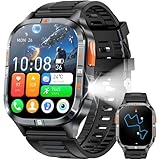
- BUILT-IN GPS & COMPASS– This military smartwatch features high-precision GPS to pinpoint your location while hiking, cycling, or traveling, keeping you safely on track without extra gear. Tap the compass icon and it locks your bearing within three seconds—engineered for pro-level outdoor adventures like camping, climbing, and trekking.
- BLUETOOTH CALLING & MESSAGES – Powered by the latest Bluetooth tech, the men’s smartwatch lets you answer or make calls right from your wrist—no need to pull out your phone. Get real-time alerts for incoming texts and app notifications so you never miss an invite. (Replying to SMS is not supported.)
- BIG SCREEN & DIY VIDEO WATCH FACE – The 2.01" military-spec display is dust-proof, scratch-resistant, and forged from high-strength glass with an aluminum alloy bezel, passing rigorous dust and abrasion tests so the screen stays crystal-clear. Upload a short family video to create a dynamic, one-of-a-kind watch face that keeps your memories alive.
- 24/7 HEALTH MONITORING – Equipped with a high-performance optical sensor, this Android smartwatch tracks heart rate and blood-oxygen levels around the clock. It also auto-detects sleep stages (deep, light, awake) for a complete picture of your health, ensuring you always know how your body is doing.
- MULTI SPORT MODES & FITNESS TRACK – Choose from running, cycling, hiking, basketball, and more to log every workout. Set goals, monitor progress, and sync data to the companion app. Bonus tools include photo gallery, weather, alarm, stopwatch, flashlight, hydration reminder, music/camera remote, find-my-phone, mini-games, and other everyday essentials.
It works especially well for people balancing workouts with work stress, travel, and family life. The watch adapts to you rather than asking you to adapt to a training plan.
The Fenix 7 assumes training is central to your routine. Its metrics, alerts, and daily prompts are built for athletes who want objective feedback and are willing to adjust behavior around performance data.
Which watch actually helps you improve
If improvement means moving more, staying active, and maintaining general cardiovascular health, the Apple Watch Ultra is more than sufficient. It removes barriers, feels comfortable on the wrist all day, and integrates fitness seamlessly into daily life.
If improvement means measurable gains in endurance, race performance, or long-term athletic development, the Fenix 7 offers tools Apple simply does not prioritize. It treats fitness as a discipline, not a feature.
This distinction is less about which watch is “better” and more about how seriously you want your watch to challenge your training decisions.
Outdoor Sports, Navigation, and Adventure Use: Mapping, GPS Accuracy, and Expedition Features
The philosophical split between these two watches becomes clearest once you leave pavement and cell service behind. Both can track outdoor activity reliably, but they approach navigation, route planning, and long-duration adventure from very different assumptions about how far and how long you intend to go.
Mapping and on-watch navigation
The Garmin Fenix 7 is built around maps in a way few wearables are. Full-color, topographic maps are stored locally, searchable by point of interest, and usable entirely offline, including turn-by-turn navigation on trails, roads, and courses you’ve created or synced from platforms like Komoot or Strava.
Zooming and panning maps with the touchscreen or buttons works smoothly, and the ability to re-route or backtrack mid-activity feels genuinely expedition-ready. The map is not an accessory; it is a core interface, designed to be referenced repeatedly during long outings.
The Apple Watch Ultra supports mapping, but the experience is more fragmented. Apple Maps works well in supported regions, and third-party apps like Gaia GPS, AllTrails, and WorkOutDoors can provide detailed offline maps, but functionality depends heavily on which app you choose and how it is configured.
For casual navigation or following a preloaded route, the Ultra performs well. For complex multi-day navigation or frequent off-trail decision-making, the reliance on third-party software introduces friction that Garmin largely avoids.
GPS accuracy and satellite performance
Both watches use dual-frequency GPS, and in open terrain their raw accuracy is excellent. Tracks are clean, elevation data is stable, and distance errors are minimal for most users.
The difference emerges in challenging environments. Dense forests, steep valleys, and urban canyons tend to expose Apple’s tendency to prioritize battery and system resources over continuous positioning, while the Fenix 7 maintains steadier lock and cleaner tracks over long sessions.
Garmin also offers more granular control over satellite modes, allowing users to trade battery life for accuracy when conditions demand it. Apple largely automates these decisions, which simplifies use but removes agency for users who want to optimize for specific environments.
Battery life in real-world outdoor use
Battery strategy defines how ambitious your adventures can realistically be. The Fenix 7 offers weeks of smartwatch use and dozens of hours of GPS tracking, with expedition modes extending that even further by reducing fix frequency and screen usage.
Multi-day hikes, ultra-distance events, and back-to-back long activities are not edge cases for the Fenix; they are expected use scenarios. Solar variants further reinforce this identity, especially for users who spend extended time outdoors.
The Apple Watch Ultra dramatically improves on standard Apple Watch battery life, but it still operates on a daily charging mindset. A long day hike or single ultra-distance event is fine, but multi-day trips require careful power management or external charging.
Buttons, gloves, and harsh-condition usability
Garmin’s five-button layout remains one of its biggest strengths outdoors. Every function is accessible without touch input, which matters when wearing gloves, dealing with rain, or navigating in cold conditions where touchscreens struggle.
The Apple Watch Ultra adds an Action button and improves button feel compared to standard models, but the interface still leans heavily on the touchscreen. It is usable in harsh conditions, but not optimized for them in the same way.
This distinction becomes obvious during winter sports, mountaineering, or wet trail running, where Garmin’s interface feels purpose-built rather than adapted.
Expedition, safety, and environmental features
The Fenix 7 includes native expedition tracking modes, barometric storm alerts, advanced altitude acclimation metrics, and long-term performance tracking designed for prolonged exposure to changing conditions. These features are integrated at the system level and require minimal setup.
Apple counters with strong safety tools like Emergency SOS via satellite, crash detection, and a loud emergency siren, which are genuinely valuable in remote situations. However, these features focus on incident response rather than ongoing expedition management.
In short, Garmin helps you plan, execute, and analyze the adventure itself. Apple focuses more on what happens if something goes wrong along the way.
Diving, water sports, and environmental durability
The Apple Watch Ultra is rated for recreational diving and integrates tightly with dive apps, making it surprisingly capable for snorkelers and casual divers. Its titanium case, sapphire display, and water resistance are confidence-inspiring for mixed-use lifestyles.
The Fenix 7 is not a dive computer, but it excels across surface water sports, including open-water swimming, paddling, and sailing, with better battery endurance and more detailed activity metrics over long sessions.
Both watches are extremely durable, but Garmin’s thicker bezel, recessed screen design, and conservative interface feel more aligned with prolonged abrasion and rough handling.
Who each watch serves outdoors
The Apple Watch Ultra works best for users who occasionally venture far from civilization but still want a single device that handles work, communication, health, and adventure without switching mental modes. It is capable, reassuring, and easy to live with.
The Garmin Fenix 7 is for people who plan their weekends, vacations, and training blocks around outdoor objectives. Its navigation depth, battery endurance, and expedition tools assume that getting lost, tired, or far from power is part of the experience rather than an exception.
Health, Safety, and Wellness Tracking: Daily Insights vs. Medical-Grade Convenience
Once you step away from navigation and performance metrics, the philosophical split between Apple and Garmin becomes even clearer. Both the Apple Watch Ultra and Garmin Fenix 7 track your body around the clock, but they prioritize very different definitions of “health.” One is optimized for daily wellbeing and early warning signals, the other for long-term physiological management tied to training load and recovery.
Heart health, oxygen, and baseline monitoring
The Apple Watch Ultra delivers one of the most clinically oriented health tracking packages available in a consumer wearable. Continuous heart rate monitoring is paired with on-demand ECG readings, blood oxygen sampling, and high and low heart rate alerts that run quietly in the background. For many users, especially those with underlying concerns, this passive safety net is a major differentiator.
Garmin tracks heart rate and blood oxygen as well, but the framing is performance-first rather than medical-adjacent. SpO₂ trends are used to inform altitude acclimation, sleep quality, and recovery readiness rather than flagged as standalone health events. You get more context over time, but fewer moments where the watch explicitly tells you something may be wrong.
Sleep, stress, and recovery intelligence
Garmin’s sleep tracking feeds directly into its broader training ecosystem. Sleep stages, overnight heart rate variability, respiration, and stress are combined into metrics like Body Battery, Training Readiness, and Recovery Time. The result is a system that constantly nudges you toward or away from hard efforts based on how well your body is actually coping.
Apple’s sleep tracking is cleaner and more lifestyle-focused. It emphasizes consistency, time asleep, and trends over weeks rather than training implications. While recent watchOS updates have improved sleep stage accuracy, the Ultra still stops short of turning sleep into actionable endurance guidance without relying on third-party apps.
Wellness features and daily habit formation
Apple excels at turning health data into habits. Activity rings, stand reminders, mindfulness prompts, and gentle nudges to close gaps in your day make the Apple Watch Ultra feel like a wellness coach that never gets in the way. The haptics are subtle, the interface is polished, and the feedback loop is easy to understand even if you are not a data-driven athlete.
Garmin’s approach is more utilitarian. The Fenix 7 surfaces far more metrics, but expects the user to engage with them intentionally. If you enjoy checking morning reports, interpreting HRV trends, and adjusting training based on readiness scores, Garmin’s ecosystem feels empowering rather than overwhelming.
Safety features and real-world reassurance
Apple’s safety toolkit is unmatched for incident response. Fall detection, crash detection, Emergency SOS, location sharing, and the Ultra’s loud emergency siren all work together to create a strong sense of reassurance in daily life. These features require minimal user intervention and are especially valuable for solo runners, cyclists, and commuters.
Garmin focuses more on preventative and expedition-aware safety. LiveTrack, incident detection during activities, and weather and storm alerts are deeply tied to movement and environment rather than everyday scenarios. It is effective, but less comprehensive if your primary concern is something happening outside of a workout or adventure context.
Comfort, wearability, and 24/7 use
The Apple Watch Ultra is large, but its flat caseback, refined finishing, and excellent strap options make it surprisingly comfortable for constant wear. The bright display, responsive touch interface, and tight iPhone integration encourage you to keep it on overnight, which directly benefits health tracking consistency.
Rank #4

- 【Built-in GPS & Multi-System Positioning】Stay on track with the Tiwain smartwatch’s built-in GPS. Featuring military-grade single-frequency and six-satellite support (GPS, GLONASS, Beidou, Galileo, NAVIC, QZSS), this watch offers fast and accurate location tracking wherever you go. It also includes a compass, altimeter, and barometer, giving you real-time data on your altitude, air pressure, and position.
- 【Military-Grade Durability】Engineered to withstand the toughest conditions, the Tiwain smartwatch meets military standards for extreme temperatures, low pressure, and dust resistance. Crafted from tough zinc alloy with a vacuum-plated finish, this watch is also waterproof and built to resist wear and tear. The 1.43-inch AMOLED HD touchscreen offers clear visibility in all environments, and the watch supports multiple languages for global users.
- 【170+ Sport Modes & Fitness Tracking】Track your fitness journey with 170+ sport modes, including walking, running, cycling, hiking, basketball, and more. Set exercise goals, monitor progress, and sync your data to the companion app. The smartwatch also offers smart features like music control, camera remote, weather updates, long-sitting reminders, and more.
- 【LED Flashlight for Outdoor Adventures】The Tiwain smartwatch comes equipped with a built-in LED flashlight that can illuminate up to 20 meters. Activate it with the side button for added convenience during nighttime activities or outdoor adventures.
- 【Comprehensive Health Monitoring】Monitor your health with real-time heart rate, sleep, blood pressure, and blood oxygen level tracking. The smartwatch will vibrate to alert you of any abnormal readings. You can also make and receive calls directly from the watch, and stay connected with message and app notifications (receive only, no sending capability) – perfect for when you’re driving or exercising.
The Fenix 7 feels more like an instrument than an accessory. Its thicker profile and button-heavy interface are ideal during training and outdoor use, but some users remove it at night or during work hours. That trade-off can impact wellness data continuity, though many endurance athletes accept it as part of the performance-first design.
Which philosophy fits your definition of health
If health means awareness, early detection, and seamless integration into everyday life, the Apple Watch Ultra is hard to beat. It prioritizes convenience, clarity, and peace of mind, even when you are not actively thinking about fitness.
If health means managing fatigue, adapting training stress, and understanding how your body responds over months and seasons, the Garmin Fenix 7 offers deeper insight. It assumes you want to engage with your data and use it as a tool, not just a dashboard.
Battery Life and Charging Reality: One-Day Smartwatch vs. Multi-Week Tool Watch
Battery life is where the philosophical gap between these two watches becomes impossible to ignore. The Apple Watch Ultra treats charging as a daily habit baked into a connected lifestyle, while the Garmin Fenix 7 is designed to disappear from your charging routine for days or even weeks at a time. Neither approach is inherently better, but they demand very different expectations from the wearer.
Apple Watch Ultra: designed around daily charging
In real-world use, the Apple Watch Ultra typically delivers around 36 hours with notifications, sleep tracking, and a workout or two per day. Push it harder with GPS workouts, cellular use, music streaming, or frequent screen-on time, and that margin tightens quickly. For most users, this still means charging once every day, usually during a shower or while getting ready in the morning.
Low Power Mode extends battery life to roughly 60 to 72 hours by limiting background features, reducing GPS sampling, and dialing back the always-on display. It is useful for travel or a short outdoor trip, but it also strips away much of what makes the Apple Watch feel effortless. This is a contingency mode, not how the Ultra is meant to be used all the time.
Charging speed partially offsets the short runtime. The Ultra charges quickly via Apple’s magnetic puck, reaching roughly 80 percent in about an hour under good conditions. That speed makes daily charging feel manageable, but it still requires consistent access to power and a willingness to think about battery every day.
Garmin Fenix 7: endurance-first power management
The Garmin Fenix 7 family operates on a completely different timeline. Depending on size, you can expect roughly 11 to 18 days in smartwatch mode for the standard models, with the Fenix 7X pushing beyond three weeks, and even longer if you opt for solar-assisted variants. For many users, charging becomes a biweekly or even monthly task rather than a daily concern.
GPS-heavy training is where the Fenix truly separates itself. Multi-band GPS, continuous heart rate, navigation, and long workouts still allow for dozens of hours of recording, often 40 to 70 hours depending on settings and model. This is the kind of battery headroom that enables ultramarathons, multi-day hikes, and backcountry trips without external power.
Charging is slower and less elegant than Apple’s solution, relying on Garmin’s proprietary cable and taking a couple of hours for a full top-up. That inconvenience rarely matters because charging is so infrequent. In practice, many users simply forget about battery life until the watch reminds them weeks later.
Solar, power profiles, and user control
Garmin’s power management system is granular and athlete-focused. You can adjust GPS sampling rates, sensor usage, screen behavior, and backlight intensity through predefined or custom power profiles. This allows experienced users to trade precision for longevity in a deliberate and predictable way.
Solar models add incremental gains rather than miracles. In bright conditions, solar charging meaningfully slows battery drain during long outdoor sessions, especially on the larger Fenix 7X. It does not replace charging, but it extends usable time in scenarios where outlets are unavailable.
Apple’s power strategy is far more automated and opaque. You get fewer levers to pull, and most users never touch them. That simplicity aligns with the smartwatch-first experience, but it also limits flexibility when you need to stretch battery life beyond a day or two.
How battery life changes daily behavior
With the Apple Watch Ultra, battery life shapes habits. You plan charging around sleep tracking, workouts, and workdays, and you are always aware of remaining percentage. For users embedded in the iPhone ecosystem, that trade-off is often acceptable because the watch delivers constant connectivity and polish in return.
The Fenix 7 changes how you think about wearing a watch. You put it on and forget about power, even when training hard or traveling. That freedom is especially valuable for endurance athletes and outdoor users who prioritize reliability over convenience features.
Choosing based on tolerance, not numbers
If charging nightly feels normal and you value fast top-ups, a bright display, and always-on connectivity, the Apple Watch Ultra’s battery life is a limitation you can comfortably live with. It asks for routine, not sacrifice.
If the idea of managing battery every day sounds like friction, or if your training and adventures regularly exceed a single charge window, the Garmin Fenix 7’s endurance becomes a decisive advantage. It is less about headline numbers and more about removing battery anxiety from your watch entirely.
Smartwatch Features and Lifestyle Use: Apps, Notifications, Music, and Payments
Battery behavior sets the boundaries for lifestyle features, and this is where the philosophical gap between these two watches becomes most obvious. Once endurance is no longer the limiting factor, the question shifts to how deeply the watch integrates into your digital life versus how quietly it stays out of the way.
App ecosystem and software depth
The Apple Watch Ultra is, at its core, a full smartwatch that happens to be extremely rugged. WatchOS gives you direct access to a vast third-party app ecosystem, ranging from messaging platforms and smart home controls to airline apps, banking tools, and niche fitness services. Many of these apps are genuinely useful on-wrist, not just mirrored phone extensions.
The Fenix 7 approaches apps with restraint. Garmin’s Connect IQ store offers data fields, widgets, watch faces, and a smaller set of standalone apps, but the emphasis is on extending training, navigation, or utility rather than replacing your phone. You can customize the experience, but it always feels secondary to performance tracking.
In daily use, this difference is stark. The Apple Watch Ultra can function as a lightweight phone replacement for short stretches, especially with cellular models. The Fenix 7 feels more like an advanced instrument that occasionally taps into smart features when needed.
Notifications and communication
Notifications are where Apple’s ecosystem advantage is most obvious. The Apple Watch Ultra handles notifications with rich previews, inline replies, dictation, emoji, and contextual actions that actually save time. If you live in iMessage, use email heavily, or rely on quick responses throughout the day, the experience is seamless and polished.
The Fenix 7 supports notifications reliably, but interaction is limited. On Android, you can send canned replies; on iPhone, you cannot respond at all. Notifications are there to inform, not to facilitate conversation, and Garmin’s interface makes that expectation clear.
From a comfort standpoint, both watches wear differently during long days of alerts. The Ultra’s flatter back and softer straps make frequent interaction pleasant, but constant buzzing can increase battery awareness. The Fenix 7’s physical buttons and muted vibration encourage a more passive relationship with notifications.
Music, media, and audio control
The Apple Watch Ultra excels as a media companion. You can stream Apple Music, Spotify, or podcasts directly over cellular, sync playlists offline, and control playback with a responsive touchscreen. Paired with Bluetooth earbuds, it supports phone-free runs and workouts with minimal friction.
Garmin supports offline music storage and playback through services like Spotify, Deezer, and Amazon Music, but there is no streaming without a phone. Syncing playlists requires planning, and the interface is functional rather than elegant. Once music is loaded, however, playback is stable and battery-efficient.
For athletes who want spontaneous listening without carrying a phone, Apple’s approach feels liberating. For those who plan sessions in advance and prioritize battery longevity, Garmin’s implementation is sufficient and predictable.
Payments and everyday convenience
Apple Pay on the Apple Watch Ultra is fast, widely accepted, and deeply integrated into daily routines. Transit access, retail payments, and in-app purchases work exactly as expected, often replacing the need to carry a wallet during workouts or errands. The reliability of Apple Pay becomes easy to take for granted.
Garmin Pay is supported on the Fenix 7, but availability depends heavily on your bank and region. Where it works, it is secure and convenient, but acceptance is less universal and setup can be more finicky. For many users, it becomes an occasional convenience rather than a daily habit.
Material choices subtly reinforce these roles. The Ultra’s titanium case, sapphire display, and polished finishing feel designed for public-facing, everyday wear. The Fenix 7’s rugged polymer or titanium builds prioritize durability and weight savings, even if they look more utilitarian in casual settings.
Living with each watch day to day
The Apple Watch Ultra integrates tightly into modern digital life. It rewards frequent interaction, thrives on connectivity, and feels like a natural extension of an iPhone, even if that comes at the cost of daily charging and constant awareness of power.
The Fenix 7 supports lifestyle features without demanding attention. Its smart functions are intentionally limited, but they coexist comfortably with multi-day battery life and a training-first mindset. You wear it continuously, not because it does more, but because it asks for less.
Durability, Reliability, and Long-Term Ownership: Diving, Trails, and Years of Abuse
All the convenience features discussed so far matter far less if the watch cannot survive how you actually train and travel. This is where the Apple Watch Ultra and Garmin Fenix 7 reveal their deepest philosophical differences, not in specs alone, but in how they age after months and years of real-world use.
Case construction, materials, and impact resistance
The Apple Watch Ultra uses a 49mm titanium case with a flat sapphire crystal and raised bezel lip, a combination designed to protect the display from direct edge impacts. In daily wear, the case resists scratches well, but the satin titanium finish can show scuffs over time, especially if worn against rock, metal gym equipment, or climbing harnesses.
The Fenix 7 is offered in several constructions, from fiber-reinforced polymer with a steel bezel to full titanium with sapphire glass. The polymer models flex slightly under impact, which actually helps absorb shock on trails or during falls, while the sapphire variants prioritize scratch resistance over weight savings.
In long-term testing, the Fenix tends to look rougher cosmetically but remain structurally unfazed. The Ultra often looks cleaner longer, but when it does take a hit, the marks are more visible and harder to ignore.
Buttons, controls, and reliability under stress
Apple’s Ultra introduces a large Digital Crown with guards and an oversized Action Button, making it far more glove-friendly than standard Apple Watches. Touch input remains excellent, but wet conditions, heavy rain, and cold fingers still expose the limits of a touchscreen-first interface.
💰 Best Value

- Smart Watch with GPS and Offline Map: This smart watch connects to multiple satellite systems for accurate real-time positioning, and includes a professional-grade compass, altimeter, and barometer for precise data, ensuring you maintain your sense of direction in any outdoor environment. The map version supports downloading offline maps; select a route or destination to view the route even without a signal, eliminating the risk of getting lost.
- Bluetooth Call & Message Functionality: This smart watches for men allows you to make and receive calls; receive text and social media notifications (Facebook, WhatsApp, Instagram, Twitter, etc.); and reply to text messages with voice-to-text or set up quick replies (text reply functionality is available for Android phones).
- Sports & Health Monitoring: This 5ATM waterproof fitness watch supports over 100 sports modes and tracks daily activity data, calories, distance, steps, and heart rate. You can use it to monitor your health metrics (blood oxygen, heart rate, stress, and sleep), monitor your fatigue and mood, and perform PAI analysis. You can also use this smartwatch to set water intake and sedentary reminders. Stay active and healthy with this fitness tracker watch.
- Customizable Watch Faces & AI Functionality: This smart watch features a 1.46-inch HD touchscreen and over 100 downloadable and customizable watch faces. You can even use your favorite photos as your watch face. Equipped with AI technology, it supports voice descriptions in multiple languages to generate personalized AI watch faces. The watch's AI Q&A and AI translation features provide instant answers to questions and break down language barriers, making it an ideal companion for everyday life and travel.
- Large Battery & High Compatibility & More Features: This smart watch for android phones and ios phone features a large 550ml battery for extended battery life. It's compatible with iOS 9.0 and above and Android 5.0 and above. It offers a wealth of features, including an AI voice assistant, weather display, music control, camera control, calculator, phone finder, alarm, timer, stopwatch, and more. (Package Includes: Smartwatch (with leather strap), spare silicone strap, charging cable, and user manual)
Garmin’s five-button layout on the Fenix 7 remains one of its greatest strengths for serious outdoor use. Every function can be accessed without touch input, which matters during winter training, open-water transitions, or muddy trail races where screens become unreliable.
Over years of use, physical buttons tend to outlast touch surfaces when exposed to grit, salt, and repeated pressure. Garmin’s buttons are stiff by design, but that stiffness contributes to their longevity rather than detracting from it.
Water resistance, diving, and environmental sealing
The Apple Watch Ultra is rated to 100 meters and certified to EN13319 for recreational diving, with native support for depth tracking and third-party dive computers. For scuba divers and frequent swimmers, it offers legitimate underwater capability rather than just splash resistance.
The Fenix 7 carries a 10 ATM rating as well, but Garmin explicitly positions it for surface swimming rather than diving with tanks. Its water sealing is excellent for open water, pool training, and repeated exposure to sweat and rain, but it lacks native dive-focused software integration.
Saltwater exposure highlights another difference. Garmin’s designs have long been tested in ultra-endurance and expedition environments, while Apple’s Ultra requires more disciplined rinsing and care to preserve seals and speaker performance over time.
Battery longevity and degradation over years
Daily or near-daily charging is part of owning the Apple Watch Ultra, and lithium battery degradation becomes noticeable after a few years. Apple supports battery replacements, but the watch is effectively designed around a shorter hardware lifecycle aligned with iOS updates.
The Fenix 7’s multi-day to multi-week battery life reduces charge cycles dramatically, which slows long-term degradation. Many users comfortably keep a Fenix for five years or more without meaningful battery anxiety, even if software features eventually plateau.
This difference shapes ownership expectations. The Ultra feels more like a high-end smartphone accessory that evolves quickly, while the Fenix behaves more like a tool that gradually becomes familiar rather than obsolete.
Software stability, updates, and aging gracefully
Apple delivers frequent watchOS updates with new features, health metrics, and UI refinements, but those updates also increase system complexity. Over time, older hardware can feel less responsive, and battery demands may increase as features accumulate.
Garmin updates its watches more conservatively, focusing on bug fixes, sensor improvements, and incremental training features. The interface rarely changes dramatically, which helps older Fenix models remain predictable and stable even years after release.
For long-term owners, this stability can be comforting. The watch you train with today behaves much the same two years from now, without surprise changes to core workflows.
Straps, comfort, and wear-related fatigue
Apple’s strap ecosystem is extensive, well-finished, and easy to swap, with a strong emphasis on comfort and aesthetics. However, proprietary attachments mean replacements are often more expensive, and third-party durability varies widely.
Garmin uses standard quick-release bars, making it easy to replace worn straps cheaply or switch to nylon, silicone, or leather depending on use. For endurance athletes, breathable nylon straps often outlast silicone and improve comfort during multi-hour sessions.
Over long periods, strap comfort affects whether you wear the watch 24/7 or leave it on the desk. Garmin’s lighter builds and strap flexibility often win here, especially for sleep tracking and continuous wear.
Serviceability, resale, and long-term value
Apple’s service network is extensive, predictable, and expensive once out of warranty. Resale value remains relatively strong, but it is closely tied to software support and battery health.
Garmin watches depreciate more slowly among endurance athletes, especially higher-end Fenix models with sapphire glass. While official service options are more limited, the watches are less dependent on frequent repairs in the first place.
Ultimately, durability is not just about surviving a fall or a swim. It is about whether the watch still fits your training and lifestyle years later, and whether it feels like a trusted instrument or a device you are planning to replace.
Which One Should You Buy? Clear Recommendations by Athlete Type and Lifestyle
After weighing durability, software philosophy, comfort, and long-term ownership, the decision comes down to intent. These two watches solve different problems, even though they often appear on the same shortlist.
Think less about which one is “better” and more about which one matches how you actually train, recover, and live with a watch on your wrist every day.
If you are an iPhone-first user who trains regularly but lives in the Apple ecosystem
Choose the Apple Watch Ultra if your phone is always an iPhone and you want your watch to behave like a seamless extension of it. Notifications, calls, music control, third-party apps, and Apple Pay all feel frictionless, and nothing else matches that level of ecosystem integration.
For fitness, the Ultra covers running, cycling, swimming, gym work, and casual outdoor adventures very well. GPS accuracy is excellent, heart rate performance is strong, and Apple’s health tracking for sleep, HRV trends, and recovery signals is easy to understand, even if it is less explicitly performance-oriented.
Battery life remains the main compromise. If charging every one to two days fits naturally into your routine, the Ultra offers a highly refined daily experience with enough sports capability for most non-ultra-distance athletes.
If you are a serious endurance athlete training by metrics, not motivation
Choose the Garmin Fenix 7 if training structure, load management, and long-term progression matter more than smartwatch polish. Garmin’s ecosystem is built around performance data, from Training Readiness and Acute Load to VO2 max trends and race pacing tools.
The Fenix 7 excels when workouts stack back-to-back, long sessions are common, and battery anxiety is not acceptable. Multi-band GPS, physical buttons, and predictable menus remain reliable when fatigue sets in or conditions deteriorate.
This is not a watch that tries to entertain you. It is a training instrument first, and for runners, cyclists, triathletes, and endurance-focused athletes, that clarity is a strength rather than a limitation.
If you spend serious time outdoors, off-grid, or navigating unfamiliar terrain
The Garmin Fenix 7 is the safer recommendation for hikers, mountaineers, backcountry skiers, and expedition-style users. Offline maps, breadcrumb navigation, multi-day battery life, and solar-assisted charging options make it far more self-sufficient.
Physical button control matters in cold weather, rain, and gloves, where touchscreens struggle. The Fenix’s thicker case, sapphire glass options, and conservative power management inspire confidence far from chargers and cell service.
The Apple Watch Ultra is capable for day adventures and coastal or trail navigation, but it remains tethered to charging habits and a more touchscreen-dependent interface.
If you want one watch for training, work, travel, and social life
This is where the Apple Watch Ultra quietly pulls ahead for many users. Despite its size, it wears flatter and feels more refined in everyday settings, especially with Apple’s softer straps and cleaner UI.
Notifications are richer, third-party apps are more useful, and small conveniences like dictation, timers, calendar handling, and smart home controls add up over weeks of use. It feels less like gear and more like a personal device.
If your workouts matter but do not define your identity, the Ultra integrates into daily life with fewer compromises.
If you value long-term ownership and minimal surprises
Garmin’s slower, steadier software updates favor consistency. The Fenix 7 you buy today will behave largely the same years down the line, with gradual improvements rather than major workflow changes.
Battery longevity over time also favors Garmin, both in day-to-day endurance and long-term degradation. For users who keep watches for many years, this predictability matters more than flashy new features.
Apple offers faster innovation, but it comes with a shorter perceived lifecycle. Many owners eventually upgrade not because the watch fails, but because the ecosystem nudges them forward.
The short version
Choose the Apple Watch Ultra if you want the best smartwatch experience available, train regularly but not obsessively, and live fully inside the Apple ecosystem. It rewards daily wear, convenience, and versatility, even if it asks for frequent charging.
Choose the Garmin Fenix 7 if your training drives your buying decision, battery life is non-negotiable, and you value consistency over polish. It is less charming, but more dependable when performance is the priority.
Both are excellent at what they were designed to be. The right choice is the one that disappears into your routine and supports your goals without friction, not the one with the longest feature list on paper.