Choosing between Apple Watch and Whoop 4.0 usually starts with a simple question that quickly becomes complicated: do you want a device that does everything reasonably well, or one that does a few things obsessively well. Both sit on your wrist, both track health data, and both promise better decisions, yet they are built around fundamentally different ideas of what “fitness” actually means in daily life. Understanding that philosophical split is far more important than comparing spec sheets.
Apple Watch is designed as a general-purpose smartwatch that happens to be very good at fitness and health tracking. Whoop 4.0 is designed as a recovery and performance coach that happens to be worn on the wrist. This difference shapes everything from how often you charge it, to how you interpret your data, to whether the device feels like a tool you consult or a companion you live with all day.
This section breaks down those core philosophies before diving into features and metrics later. By the end, you should already have a strong sense of which direction aligns with your training style, tolerance for data, and expectations from a wearable.
Smartwatch First vs Recovery System First
Apple Watch treats fitness as one pillar of a broader digital lifestyle. Notifications, calls, apps, music control, payments, and even third-party productivity tools all coexist with workouts and health tracking. The result is a device that integrates seamlessly into iPhone-centric daily life, often replacing phone interactions rather than narrowing focus to training alone.
🏆 #1 Best Overall
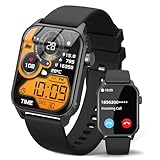
- 【1.83" HD Display & Customizable Watch Faces】Immerse yourself in a vibrant 1.83-inch IPS display, boasting a sharp resolution of 240*284 for crystal-clear visuals. Effortlessly personalize your smart watch with a wide array of customizable watch faces to suit your personal style for every occasion—whether trendy, artistic, or minimalist—ideal for casual, sporty, or professional. Its sleek, modern design complements any outfit, blending technology and fashion seamlessly for everyday wear
- 【120 Sports Modes & Advanced Health Tracking】Our TK29 smart watches for women men come equipped with 120 sports modes, allowing you to effortlessly track a variety of activities such as walking, running, cycling, and swimming. With integrated heart rate and sleep monitors, you can maintain a comprehensive overview of your health, achieve your fitness goals, and maintain a balanced, active lifestyle with ease. Your ideal wellness companion (Note: Step recording starts after exceeding 20 steps)
- 【IP67 Waterproof & Long-Lasting Battery】Designed to keep up with your active lifestyle, this smartwatch features an IP67 waterproof rating, ensuring it can withstand splashes, sweat, and even brief submersion, making it perfect for workouts, outdoor adventures, or rainy days. Its reliable 350mAh battery offering 5-7 days of active use and up to 30 days in standby mode, significantly reducing frequent charging. Ideal for all-day wear, whether you’re at the gym, outdoors, or simply on the go
- 【Stay Connected Anytime, Anywhere】Stay informed and in control with Bluetooth call and music control features. Receive real-time notifications for calls, messages, and social media apps like Facebook, WhatsApp, Twitter, and Instagram directly on your smartwatch. Easily manage calls, control your music playlist, and stay updated without needing to reach for your phone. Perfect for work, workouts, or on-the-go, this watch keeps you connected and never miss important updates wherever you are
- 【Multifunction & Wide Compatibility】Seamlessly handle heart rate monitoring, sleep tracking, and enjoy conveniences like camera/music control, Seamlessly handle heart rate monitoring, sleep tracking, and more-all directly from your wrist. This 1.83 inches HD smartwatch is compatible with iPhone (iOS 9.0+) & Android (5.0+), ensuring smooth daily connectivity and convenience throughout your day. More than just a timepiece, it’s a stylish, all-in-one wearable for smarter, healthier living
Whoop 4.0 strips all of that away by design. There is no screen, no notifications, no apps on the device itself, and no attempt to replace your phone. Its sole purpose is to collect physiological data continuously and interpret it through a recovery and strain framework, leaving interaction almost entirely inside the companion app.
How Each Defines “Progress”
Apple Watch frames progress around activity completion and performance metrics. Rings encourage daily movement consistency, workouts emphasize pace, heart rate zones, calories, and time, and trends build gradually through Apple Health. It rewards doing something today, even if today looks very different from yesterday.
Whoop defines progress through readiness and adaptation. Strain, recovery, and sleep are interlinked, and performance is judged by how well effort aligns with physiological capacity. The system is less concerned with checking boxes and more focused on whether your body is actually prepared to handle more load.
Health Metrics: Breadth vs Interpretation
Apple Watch casts a wide net across health data. Heart rate, ECG, blood oxygen, sleep stages, temperature trends, mobility metrics, and fall detection coexist in a single ecosystem, often with medical framing. The watch gives you raw numbers, alerts, and long-term trends, leaving interpretation largely up to the user or third-party apps.
Whoop narrows the dataset but goes much deeper in analysis. Heart rate variability, resting heart rate, respiratory rate, sleep consistency, and strain are continuously modeled into daily guidance. Instead of presenting isolated metrics, Whoop focuses on what those metrics mean for training and recovery decisions right now.
Battery Life as a Design Statement
Apple Watch battery life reflects its multifunction role. Daily charging is the norm, with most models lasting around a day depending on usage, workouts, and display settings. Fast charging softens the inconvenience, but charging becomes a habitual part of ownership.
Whoop’s multi-day battery life, typically four to five days, reinforces its always-on philosophy. The wearable is meant to stay on through sleep, workouts, showers, and rest days without interruption. Even charging is designed to happen while wearing it, minimizing gaps in data collection.
Subscription Model vs Hardware Ownership
Apple Watch requires a higher upfront hardware cost but no mandatory subscription for core functionality. Fitness+ and third-party services are optional layers, not prerequisites, and the watch remains fully usable even without ongoing payments. This appeals to users who want predictable costs and long-term ownership value.
Whoop flips that equation entirely. The hardware is effectively bundled into a monthly or annual subscription, and without it, the device loses purpose. In return, software updates, new analytics, and ongoing algorithm improvements are central to the value proposition rather than optional extras.
Everyday Wearability and Comfort
Apple Watch is a visible, tactile object with a screen, case materials ranging from aluminum to stainless steel, and a vast strap ecosystem. It feels like a watch, with weight, dimensions, and finishing that matter for comfort and aesthetics across work, training, and social settings.
Whoop prioritizes low-profile comfort above all else. The lightweight sensor and fabric straps are designed to disappear under clothing and during sleep, reducing awareness and irritation. This makes it particularly appealing for 24/7 wear, especially for users sensitive to bulk or nighttime discomfort.
Ecosystem Lock-In and Compatibility
Apple Watch is inseparable from the iPhone ecosystem. Setup, updates, app support, and feature depth all depend on iOS, and there is no Android compatibility. For iPhone users, this tight integration feels effortless; for everyone else, it is a hard stop.
Whoop is platform-agnostic by comparison. It works equally with iOS and Android, and the experience is largely identical across devices. This flexibility matters for users who switch phones frequently or prefer not to be locked into a single tech ecosystem.
Who Each Philosophy Serves Best
Apple Watch suits users who want one device to manage communication, lifestyle, safety, and fitness in a polished, familiar form. It works especially well for people balancing general health, casual to structured training, and everyday convenience.
Whoop is built for users who see training and recovery as a system to be optimized. Athletes who already understand effort, load, and adaptation often find its singular focus clarifying rather than limiting. The difference is not about which device is better, but which mindset you want reinforcing your decisions every day.
Hardware and Wearability: Screened Smartwatch vs Screenless Performance Band
The philosophical split outlined earlier becomes most tangible when you put these devices on your wrist. Apple Watch presents itself as a traditional wristwatch evolved into a computer, while Whoop 4.0 intentionally removes the watch concept altogether. That single design choice cascades into differences in comfort, durability, charging habits, and how often the device asks for your attention.
Form Factor and Physical Presence
Apple Watch uses a rectangular case with a prominent display, available in multiple sizes and materials depending on generation. Aluminum models are light and sport-focused, while stainless steel adds weight, polish, and a more traditional watch feel that some users prefer for all-day wear.
Whoop 4.0 is a slim sensor housed in a fabric band with no display, buttons, or visible interface. On the wrist, it feels closer to a compression strap than a watch, prioritizing minimal bulk over visual presence.
Materials, Finish, and Durability
Apple Watch cases are well-finished and tightly sealed, with water resistance suitable for swimming and daily exposure. The glass display, however, is always exposed, making scratches and impacts a long-term consideration, especially for athletes training with barbells or outdoor equipment.
Whoop’s sensor is fully enclosed within the strap, with no glass surface to damage. This design is more forgiving during contact sports, lifting, or sleep, where accidental knocks are common and visual wear is irrelevant.
Comfort Over Long Wear Cycles
Because Apple Watch is designed to be interacted with, it maintains a certain thickness and weight that remains noticeable during sleep. Many users adapt quickly, but others find nighttime wear uncomfortable enough to remove it, limiting recovery and sleep data continuity.
Whoop is optimized specifically for uninterrupted 24/7 wear. The soft fabric straps and low-profile sensor reduce pressure points, making it easier to forget you are wearing it, even overnight.
Straps, Adjustability, and Placement
Apple Watch benefits from one of the largest strap ecosystems in wearables, including sport bands, leather straps, metal bracelets, and third-party options. This variety allows users to tailor comfort and style, but most straps still anchor the device firmly to the wrist.
Whoop’s straps are functional rather than decorative, designed to maintain consistent skin contact for optical sensors. Beyond the wrist, Whoop can also be worn on the bicep using compatible bands, which can improve heart rate accuracy during high-movement activities.
Screen vs No Screen: Attention and Interaction
The Apple Watch screen is central to its identity, enabling notifications, workout controls, apps, and real-time metrics. This constant accessibility is powerful, but it also encourages frequent glances and interactions throughout the day.
Whoop’s lack of a screen is intentional, shifting all data interaction to the smartphone app. By removing on-wrist feedback, it reduces distraction and reframes the device as a passive data collector rather than an interactive companion.
Battery Size and Charging Implications
Apple Watch’s display and processing power demand daily charging for most users. This creates natural gaps in data collection, often overnight or during rest periods, unless charging is carefully scheduled.
Whoop’s hardware is built around endurance rather than immediacy. Its multi-day battery life supports continuous wear, and the external battery pack allows charging without removing the strap, preserving uninterrupted tracking.
Weight Distribution and Movement Awareness
During high-intensity or repetitive movements, Apple Watch can shift on the wrist depending on strap choice and fit. Some athletes notice this during kettlebell work, gymnastics, or longer endurance sessions.
Whoop’s lighter sensor and fabric band tend to move less once adjusted correctly. This stability supports consistent data capture during varied training modalities without requiring frequent readjustment.
Aesthetic Versatility vs Visual Disappearance
Apple Watch occupies visual space in the same way a conventional watch does, which can be a benefit or drawback depending on context. It can look appropriate in professional settings with the right strap, but it is never invisible.
Whoop is designed to disappear under sleeves and during social or professional situations. For users who do not want their wearable to signal technology use or interrupt personal style, this invisibility is part of its appeal.
What the Hardware Choice Signals About Use
Apple Watch hardware supports a wide range of roles: timepiece, notification hub, fitness tracker, and safety device. Its physical design reinforces the idea that it is something to be checked, tapped, and relied upon throughout the day.
Whoop’s hardware strips away everything except sensing and comfort. By removing the screen and minimizing presence, it reinforces the recovery-first mindset, where insights are reviewed deliberately rather than consumed continuously.
Health Metrics and Sensor Accuracy: What Each Tracks—and How the Data Is Used
The hardware philosophies outlined above directly shape how health data is collected, interpreted, and ultimately acted upon. Apple Watch and Whoop both rely on advanced optical sensors and accelerometers, but they pursue fundamentally different definitions of what “useful” health data looks like in daily life and training.
Where Apple Watch treats health metrics as part of a broad personal computing experience, Whoop treats them as raw inputs for a tightly controlled performance and recovery model. Understanding this distinction is essential, because the value of the data depends as much on how it is framed as how accurately it is measured.
Core Sensors and Physiological Signals
Both platforms rely primarily on photoplethysmography (PPG) to measure heart rate and heart rate variability, supported by accelerometers, gyroscopes, and temperature-related sensors. Apple Watch supplements this with electrical heart sensors for ECG, blood oxygen monitoring via red and infrared LEDs, and skin temperature trend tracking during sleep on recent models.
Whoop 4.0 focuses on continuous optical heart rate, HRV, respiratory rate, blood oxygen saturation, and skin temperature deviation. It deliberately avoids ECG and spot-check features, prioritizing consistency and overnight signal quality over on-demand measurements.
In practical terms, Apple Watch offers more individual health checks, while Whoop emphasizes longitudinal trends. Apple gives you more ways to look at your body in the moment; Whoop gives you fewer metrics, but pushes you to care about how they evolve together.
Heart Rate Accuracy in Training Contexts
During steady-state cardio like running or cycling, both devices perform well, with Apple Watch historically benchmarking strongly against chest straps in moderate conditions. Its snug fit, rigid caseback, and refined algorithms support reliable heart rate capture during rhythmic movement.
Whoop’s accuracy improves as intensity stabilizes, but it can lag during short bursts or rapid transitions, such as interval training or mixed-modality workouts. This is partly due to its softer band and lower sampling emphasis on moment-to-moment display, which prioritizes averaged physiological load over instant feedback.
For athletes who rely on real-time heart rate zones during training, Apple Watch offers clearer immediacy. Whoop, by contrast, treats heart rate as a background signal that feeds post-session analysis rather than in-session decision-making.
Heart Rate Variability: Snapshot vs Context
HRV is one of the most meaningful differentiators between the two platforms. Apple Watch measures HRV opportunistically throughout the day and during sleep, surfacing raw values in the Health app without strong editorial interpretation.
Whoop builds its entire recovery model around a single, consistent HRV reading taken during deep sleep. This controlled timing reduces noise and allows Whoop to anchor daily readiness, strain recommendations, and behavioral guidance to a stable baseline.
Apple gives advanced users freedom to interpret HRV however they choose. Whoop assumes most users want a clear answer to a single question: how prepared is my body today?
Rank #2
![Apple Watch Series 11 [GPS 46mm] Smartwatch with Jet Black Aluminum Case with Black Sport Band - M/L. Sleep Score, Fitness Tracker, Health Monitoring, Always-On Display, Water Resistant](https://m.media-amazon.com/images/I/312K597M2uL._SL160_.jpg)
- HYPERTENSION NOTIFICATIONS — Apple Watch Series 11 can spot signs of chronic high blood pressure and notify you of possible hypertension.*
- KNOW YOUR SLEEP SCORE — Sleep score provides an easy way to help track and understand the quality of your sleep, so you can make it more restorative.
- EVEN MORE HEALTH INSIGHTS — Take an ECG anytime.* Get notifications for a high and low heart rate, an irregular rhythm,* and possible sleep apnea.* View overnight health metrics with the Vitals app* and take readings of your blood oxygen.*
- STUNNING DESIGN — Thin and lightweight, Series 11 is comfortable to wear around the clock — while exercising and even when you’re sleeping, so it can help track your key metrics.
- A POWERFUL FITNESS PARTNER — With advanced metrics for all your workouts, plus features like Pacer, Heart Rate Zones, training load, Workout Buddy powered by Apple Intelligence from your nearby iPhone,* and more. Series 11 also comes with three months of Apple Fitness+ free.*
Sleep Tracking Depth and Methodology
Apple Watch tracks sleep stages, duration, respiratory rate, blood oxygen, and wrist temperature trends when Sleep Focus is enabled. The data is accurate and granular, but its usefulness depends heavily on user discipline, particularly around charging habits and bedtime routines.
Whoop tracks sleep automatically and continuously, with no modes to enable and no screens to interact with. Its sleep staging is less visually detailed than Apple’s, but it places greater emphasis on sleep consistency, debt, and performance impact rather than stage percentages alone.
In effect, Apple Watch tells you what happened during sleep. Whoop tells you what that sleep means for today’s training capacity.
Blood Oxygen and Temperature Trends
Apple Watch allows users to view blood oxygen readings directly, either manually or passively overnight. While these measurements are not medical-grade, they can highlight altitude adaptation, respiratory stress, or illness when viewed over time.
Whoop integrates SpO2 and skin temperature deviation quietly into its recovery algorithm. Rather than presenting these metrics for standalone interpretation, Whoop uses changes from baseline to flag potential strain, travel fatigue, or early signs of illness.
This reflects a broader difference in data philosophy: Apple exposes more numbers, Whoop exposes more conclusions.
Movement, Load, and Training Stress
Apple Watch uses active calorie burn, exercise minutes, and cardio fitness estimates to quantify workload. It supports a wide range of sport profiles and integrates tightly with third-party training platforms, making it flexible for structured plans and external analysis.
Whoop calculates strain using a proprietary cardiovascular load model that combines heart rate intensity and duration across the entire day. Training sessions, manual labor, stress, and even poor sleep all contribute to a single daily strain score.
Apple separates workouts from life. Whoop deliberately blurs that line, treating total physiological stress as the variable that matters most.
Data Transparency and User Control
Apple Health functions as a data warehouse, allowing users to export raw metrics, connect multiple apps, and decide how deeply they want to engage. For data-literate users, this openness is a strength, but it also demands effort and interpretation.
Whoop is far more prescriptive. Users cannot export raw data easily, and the system discourages external analysis in favor of its own scoring models and coaching insights.
This makes Whoop easier to live with, but harder to question. Apple is less opinionated, but also less directive.
Sensor Placement, Comfort, and Signal Quality
Apple Watch’s rigid case and fixed sensor position create consistent contact when properly fitted, but comfort can suffer during sleep or long recovery periods, especially for side sleepers or those with smaller wrists. Strap choice plays a significant role in both comfort and data quality.
Whoop’s low-profile sensor and fabric band distribute pressure more evenly and can be worn on the wrist, bicep, or in specialized garments. This flexibility often improves overnight signal quality and long-term adherence, particularly for athletes focused on recovery metrics.
Accuracy is not just about sensors; it is about whether the device is worn consistently enough to collect meaningful data.
How the Insights Actually Shape Behavior
Apple Watch excels at prompting action in the moment. Stand reminders, activity rings, and workout alerts nudge users toward movement and engagement throughout the day.
Whoop shapes behavior through restraint. Its recovery scores often recommend doing less, not more, reinforcing the idea that adaptation happens during rest, not effort.
The result is two valid but very different feedback loops: Apple Watch encourages activity through visibility and reminders, while Whoop encourages discipline through measured limitation.
Training, Recovery, and Coaching Insights: Activity Rings vs Whoop Strain and Recovery
Those behavioral differences become most obvious once training load and recovery enter the picture. Apple Watch and Whoop 4.0 are both capable of tracking workouts and physiological stress, but they frame that information through fundamentally different coaching philosophies.
Apple Watch treats training as something you actively initiate and review. Whoop treats training as something that accumulates continuously, whether you label it or not.
Apple Watch Activity Rings: Volume, Consistency, and Momentum
Apple’s Activity Rings are built around three simple outputs: Move calories, Exercise minutes, and Stand hours. Together, they emphasize consistency and daily volume rather than readiness or long-term adaptation.
From a sports science perspective, this is a blunt but effective tool. Rings reward showing up, stacking movement, and avoiding prolonged inactivity, which aligns well with general health guidelines and habit formation.
Where Apple Watch becomes more training-capable is inside structured workouts. Heart rate zones, pace, power (on supported activities), cadence, and GPS-based metrics give runners and cyclists solid session-level feedback, especially when paired with third-party apps.
The limitation is that Apple does not natively connect today’s effort to tomorrow’s readiness. You can close your rings on consecutive days with little system-level resistance, even if sleep quality, HRV, or resting heart rate suggest accumulating fatigue.
Whoop Strain: A Continuous Model of Physiological Load
Whoop’s Strain score reframes activity as a 24-hour accumulation of cardiovascular stress. Instead of counting steps or minutes, it quantifies how hard your body worked relative to your recent baseline.
This approach captures not just workouts, but also manual labor, travel stress, poor sleep, and even long periods of elevated heart rate during daily life. For athletes, this offers a more holistic picture of total load rather than isolated sessions.
Strain is scaled from 0 to 21 and is individualized, meaning the same workout can score differently depending on your conditioning and recovery status. Over time, this makes it easier to recognize when similar training produces higher-than-usual stress, a common early sign of overreaching.
The trade-off is opacity. You see the score, but not the full calculation, which can be frustrating for users who want to interrogate the model rather than accept it.
Recovery Scoring: Readiness Versus Retrospective Insight
Recovery is where Whoop clearly differentiates itself. Each morning, it generates a Recovery score based primarily on HRV, resting heart rate, sleep performance, and respiratory rate trends.
That score is explicitly forward-looking. It tells you how prepared your body is to handle strain today and suggests an appropriate target range rather than a fixed goal.
Apple Watch collects much of the same underlying data, including HRV and resting heart rate, but it presents them as trends rather than a synthesized readiness signal. The interpretation is left to the user or to third-party apps like Athlytic, Training Today, or Gentler Streak.
For experienced athletes, Apple’s approach allows flexibility and cross-validation. For everyone else, Whoop’s single recovery number is easier to act on, even if it simplifies a complex physiological reality.
Coaching Feedback: Prescriptive Guidance vs Open Interpretation
Whoop functions like a quiet coach that constantly recalibrates expectations. Low recovery days come with clear guidance to reduce intensity, prioritize sleep, or focus on mobility rather than chasing performance.
This can be powerful for athletes prone to overtraining or for those in high-stress lifestyles where recovery is often ignored. The system reinforces restraint as a skill, not a weakness.
Apple Watch provides far less direct coaching out of the box. It tells you what happened, not what to do next, unless you deliberately opt into third-party coaching platforms or structured training plans.
The upside is autonomy. The downside is that many users default to chasing streaks and closed rings rather than responding intelligently to fatigue signals.
Training Context, Hardware Design, and Wearability
Hardware design subtly shapes how these insights are used. Apple Watch’s brighter display, physical controls, and robust case make it better suited for interactive training sessions where you want real-time feedback on pace, intervals, or zones.
However, its size, weight, and need for daily charging can reduce consistency during sleep tracking, which weakens recovery insights over time. Comfort varies significantly depending on case size and strap material, especially during overnight wear.
Whoop’s minimalist sensor, lack of screen, and multi-day battery life make it easier to wear continuously. This improves longitudinal recovery data, even if it sacrifices real-time training interaction and on-device metrics.
In practice, Apple Watch feels like a training tool you actively use, while Whoop feels like an instrument quietly measuring the cost of everything you do.
Which System Works Better Depends on the Athlete
If your priority is motivation, versatility, and rich workout metrics during training, Apple Watch aligns better with an action-driven mindset. It rewards movement and engagement, even if it occasionally encourages doing more than your body is ready for.
If your priority is managing load, avoiding burnout, and aligning training with recovery capacity, Whoop’s strain and recovery model offers clearer guardrails. It trades transparency and versatility for consistency and behavioral discipline.
Neither system is inherently more accurate. They are optimized for different definitions of success, and understanding that distinction is far more important than chasing any single metric.
Battery Life, Charging, and 24/7 Tracking Practicality
Battery life is where the philosophical split between Apple Watch and Whoop becomes impossible to ignore. One is designed around daily interaction and frequent recharging, the other around uninterrupted data capture with charging woven into wear rather than scheduled around it.
For athletes trying to reconcile training ambition with recovery awareness, this difference directly affects data completeness. Missed sleep, skipped HRV nights, or gaps in resting heart rate trends quietly undermine the insights both platforms claim to deliver.
Rank #3

- Bluetooth Call and Message Alerts: Smart watch is equipped with HD speaker, after connecting to your smartphone via bluetooth, you can answer or make calls, view call history and store contacts through directly use the smartwatch. The smartwatches also provides notifications of social media messages (WhatsApp, Twitter, Facebook, Instagram usw.) So that you will never miss any important information.
- Smart watch for men women is equipped with a 320*380 extra-large hd full touch color screen, delivering exceptional picture quality and highly responsive touch sensitivity, which can bring you a unique visual and better interactive experience, lock screen and wake up easily by raising your wrist. Though “Gloryfit” app, you can download more than 102 free personalised watch faces and set it as your desktop for fitness tracker.
- 24/7 Heart Rate Monitor and Sleep Tracker Monitor: The fitness tracker watch for men has a built-in high-performance sensor that can record our heart rate changes in real time. Monitor your heart rate 26 hours a day and keep an eye on your health. Synchronize to the mobile phone app"Gloryfit", you can understand your sleep status(deep /light /wakeful sleep) by fitness tracker watch develop a better sleep habit and a healthier lifestyle.
- IP68 waterproof and 110+ Sports Modes: The fitness tracker provides up to 112+ sports modes, covering running, cycling, walking, basketball, yoga, football and so on. Activity trackers bracelets meet the waterproof requirements for most sports enthusiasts' daily activities, such as washing hands or exercising in the rain, meeting daily needs (note: Do not recommended for use in hot water or seawater.)
- Multifunction and Compatibility: This step counter watch also has many useful functions, such as weather forecast, music control, sedentary reminder, stopwatch, alarm clock, timer, track female cycle, screen light time, find phone etc. The smart watch with 2 hrs of charging, 5-7 days of normal use and about 30 days of standby time. This smart watches for women/man compatible with ios 9.0 and android 6.2 and above devices.
Apple Watch: High Functionality, High Energy Demand
Apple Watch prioritizes a bright OLED display, a fast processor, and constant background activity, all of which come at a cost. In real-world use, most models deliver roughly 18 to 36 hours depending on case size, display settings, cellular use, and workout frequency.
This means daily charging is not a recommendation, but a requirement. Even users who stretch into a second day often do so by disabling always-on display, limiting background apps, or avoiding longer GPS sessions.
The practical consequence is timing. Many users charge overnight, which removes sleep tracking entirely, or squeeze in short top-ups during showers or desk time, hoping the battery survives through the night. Over weeks and months, this friction reduces sleep data consistency, especially for people with irregular schedules or late training sessions.
From a hardware perspective, the larger case, glass display, and metal construction also play a role. While the watch feels solid and premium on the wrist during the day, its weight and bulk can make overnight wear more noticeable, particularly for lighter sleepers or those using sport bands that trap heat.
Whoop 4.0: Battery Designed Around Continuity
Whoop approaches the problem from the opposite direction. With no display, no on-device apps, and minimal user interaction, power consumption stays low enough to support four to five days of continuous wear.
The defining feature is the slide-on battery pack, which charges the sensor while you keep wearing it. In practice, this turns charging into a passive background task rather than a behavioral interruption.
This design choice directly supports Whoop’s recovery-first model. Sleep, resting heart rate, HRV, and respiratory rate remain unbroken, even during travel, multi-day training blocks, or long competitions where charging access is limited.
Physically, the sensor’s low profile and fabric strap system improve overnight comfort. There is less wrist pressure, no screen glow, and fewer tactile cues reminding you that you are wearing a device, which increases adherence over time.
24/7 Tracking: Consistency Beats Capability
On paper, Apple Watch can measure more things more often. In practice, those measurements only matter if they are captured consistently across days and weeks.
Whoop’s battery system removes decision points. You never have to choose between charging and sleeping, or between tracking a late workout and having enough battery left for recovery metrics the next morning.
Apple Watch users who deliberately build charging routines around short windows can achieve strong 24/7 coverage, but it requires discipline. Miss a charge, take an unexpected long workout, or forget a travel cable, and the data breaks.
This is not a flaw in engineering so much as a reflection of priorities. Apple Watch assumes frequent user engagement and access to power. Whoop assumes you want the device to disappear and keep measuring no matter what your day looks like.
Travel, Training Camps, and Long-Term Wear
These differences become more pronounced during travel or high-volume training phases. Airport days, early wake-ups, and long workouts compound battery stress on Apple Watch, often forcing compromises around sleep tracking or GPS use.
Whoop handles these scenarios with far less cognitive load. The charging pack can be topped up once and reused over several days, keeping the sensor alive without restructuring routines.
Over months, this reliability changes behavior. Athletes are more likely to trust trends when they know the data is complete, not selectively missing during the most stressful periods when recovery insight matters most.
What Battery Reality Says About Each Platform
Apple Watch’s battery life reflects its role as a general-purpose device. It trades endurance for interactivity, visual feedback, and ecosystem depth, accepting that power access is part of the deal.
Whoop’s battery life reflects its singular focus. Everything about the hardware is optimized to support uninterrupted physiological monitoring, even if that means giving up screens, apps, and real-time feedback.
Choosing between them is less about which lasts longer and more about which model fits your life. If you want a device you actively use and manage, Apple Watch’s battery is a manageable trade-off. If you want recovery data that never blinks out, Whoop’s charging approach is not just convenient, it is foundational to how the system works.
Smartwatch Features and Everyday Usability: Notifications, Apps, and Lifestyle Integration
Battery philosophy sets expectations, but everyday usability is where the Apple Watch and Whoop truly diverge. One is designed to be interacted with dozens of times per day, the other to be largely ignored while it works in the background.
Understanding this distinction is critical, because it affects not just what you see on your wrist, but how the device fits into work, social life, training logistics, and even personal boundaries around technology.
Notifications and Communication
Apple Watch functions as a full notification hub. Calls, messages, calendar alerts, third-party apps, navigation prompts, and even real-time delivery updates all arrive on the wrist with haptic feedback and visual context.
Crucially, Apple lets users respond. You can dictate replies, tap out quick responses, answer calls, or dismiss notifications discreetly, which changes how often you reach for your phone.
Whoop offers no notifications at all. There is no vibration for messages, no alerts for meetings, and no attempt to replicate phone functions, which is a deliberate design choice rather than a limitation.
For some users, this absence is liberating. For others, especially those used to triaging communication from their wrist, it feels like a step backward in daily convenience.
Apps, Ecosystem Depth, and Software Flexibility
Apple Watch runs watchOS, giving access to a mature app ecosystem that spans fitness, productivity, navigation, payments, music control, smart home management, and travel. The App Store depth means the watch can evolve with user needs rather than being locked into a fixed feature set.
Integration with the Apple ecosystem is seamless. iPhone pairing is mandatory, but once connected, data flows smoothly through Apple Health, Fitness, Maps, Wallet, and third-party platforms like Strava, TrainingPeaks, and MyFitnessPal.
Whoop operates as a closed system. There are no on-device apps, no third-party extensions, and no customization beyond strap choices and basic settings inside the companion app.
Its integrations exist at the data level rather than the interface level. You can export or sync metrics to platforms like TrainingPeaks or Apple Health, but interaction always happens on the phone, never on the wrist.
Display, Interaction, and Physical Experience
Apple Watch is built around its display. The always-on screen (on newer models) provides time, complications, workout metrics, and glanceable information, with touch and crown-based navigation enabling frequent interaction.
From a hardware standpoint, it feels like a finished consumer device. Materials range from aluminum to stainless steel and titanium, with precise case finishing, water resistance suitable for swimming, and an enormous range of straps that affect comfort, style, and formality.
Whoop has no display at all. The hardware is a slim, lightweight sensor housed in a fabric or rubber strap, designed to sit flush against the skin and disappear under clothing.
Comfort over long periods is one of Whoop’s strongest traits. There are no pressure points from a case, no accidental touches, and no visual reminder that you are wearing technology, which matters for sleep, manual labor, or uniformed work environments.
Payments, Navigation, and Daily Convenience
Apple Watch replaces or supplements several everyday tools. Apple Pay works reliably for contactless payments, transit passes can be stored on the wrist, and turn-by-turn navigation is genuinely useful when walking or cycling in unfamiliar areas.
Music and podcast control adds another layer of independence from the phone, particularly during workouts or commutes. With cellular models, Apple Watch can even function untethered for short periods.
Whoop does none of this. There are no payments, no navigation prompts, no media controls, and no standalone functionality.
That simplicity reduces friction but also limits Whoop strictly to the role of a physiological monitoring tool, not a digital assistant or lifestyle device.
Lifestyle Integration and Cognitive Load
Apple Watch increases engagement. It asks for attention through rings, reminders, notifications, and prompts, which can be motivating or overwhelming depending on personality and workload.
For users who want their wearable to actively shape behavior throughout the day, this constant feedback loop is a strength. It reinforces movement, structure, and accountability beyond training sessions.
Whoop reduces cognitive load. You wear it, live your life, and review insights when it suits you, typically in the morning or after key training sessions.
This passive model aligns well with athletes who already manage complex schedules and do not want another interactive screen competing for attention. It also suits users intentionally trying to reduce digital noise without sacrificing health data.
What Everyday Usability Reveals About Each Device
Apple Watch is a lifestyle-first smartwatch that happens to be a capable fitness and health tracker. Its value compounds the more you rely on notifications, apps, and ecosystem features throughout the day.
Whoop is a recovery-first performance tracker that intentionally avoids becoming a smartwatch. Its value increases when consistency, long-term trends, and minimal interaction matter more than convenience features.
The choice is not about which device is more advanced, but which one matches how you want technology to show up in your life. If your wrist is an extension of your phone, Apple Watch feels indispensable. If your wrist is simply a place to collect data while you focus elsewhere, Whoop’s restraint is exactly the point.
Ecosystem Compatibility and Platform Lock-In: iPhone, Apple Health, and Whoop’s Closed Loop
Once you step back from screens and sensors, the real dividing line between Apple Watch and Whoop 4.0 is not hardware, but ecosystem philosophy. Each device assumes a very different relationship between your data, your phone, and the wider health and fitness platforms you may already rely on.
This is where long-term satisfaction is often decided, especially for users who train consistently, experiment with multiple apps, or expect their wearable to evolve alongside their goals.
Rank #4
![Apple Watch Series 11 [GPS 42mm] Smartwatch with Rose Gold Aluminum Case with Light Blush Sport Band - S/M. Sleep Score, Fitness Tracker, Health Monitoring, Always-On Display, Water Resistant](https://m.media-amazon.com/images/I/31J+F-pXaWL._SL160_.jpg)
- HYPERTENSION NOTIFICATIONS — Apple Watch Series 11 can spot signs of chronic high blood pressure and notify you of possible hypertension.*
- KNOW YOUR SLEEP SCORE — Sleep score provides an easy way to help track and understand the quality of your sleep, so you can make it more restorative.
- EVEN MORE HEALTH INSIGHTS — Take an ECG anytime.* Get notifications for a high and low heart rate, an irregular rhythm,* and possible sleep apnea.* View overnight health metrics with the Vitals app* and take readings of your blood oxygen.*
- STUNNING DESIGN — Thin and lightweight, Series 11 is comfortable to wear around the clock — while exercising and even when you’re sleeping, so it can help track your key metrics.
- A POWERFUL FITNESS PARTNER — With advanced metrics for all your workouts, plus features like Pacer, Heart Rate Zones, training load, Workout Buddy powered by Apple Intelligence from your nearby iPhone,* and more. Series 11 also comes with three months of Apple Fitness+ free.*
Apple Watch as an Extension of the iPhone and Apple Health
Apple Watch is inseparable from the iPhone. Setup, updates, backups, app installs, and data management all flow through iOS, and there is no Android compatibility at any level.
For iPhone users, this lock-in feels less like a restriction and more like frictionless integration. Health data from the watch automatically feeds into Apple Health, where it becomes accessible to hundreds of third-party apps spanning training, recovery, nutrition, sleep, and medical monitoring.
This matters because Apple Health functions as a neutral data hub rather than a single interpretation engine. Heart rate variability, sleep stages, workouts, blood oxygen, temperature trends, and cardio fitness are stored as raw or lightly processed data that other platforms can analyze in their own way.
Training apps like TrainingPeaks, Strava, Athlytic, Gentler Streak, and countless others can read from Apple Health, write back to it, or both. That flexibility allows athletes to change software without abandoning historical data or being forced into a single methodology.
From a daily usability standpoint, Apple Watch also benefits from deep OS-level privileges. Notifications, background syncing, location services, and Bluetooth accessory support are all native, stable, and fast, which is why the watch feels less like a peripheral and more like a core part of the phone.
The downside is that this freedom comes with responsibility. Apple gives you data, not decisions. If you want readiness scores, recovery guidance, or training load insights, you either need to interpret the data yourself or rely on third-party subscriptions layered on top of the watch.
Whoop’s Closed Loop: One Platform, One Interpretation
Whoop takes the opposite approach. All meaningful interaction happens inside the Whoop app, and the device is designed to feed a single analytics engine rather than a broader ecosystem.
While Whoop can write limited data to Apple Health, the flow is largely one-directional and intentionally constrained. You cannot meaningfully replace the Whoop app with another training or recovery platform while keeping the same depth of insight.
This is not an accident. Whoop’s value proposition depends on controlling how data is processed, scored, and presented. Metrics like Strain, Recovery, and Sleep are not raw outputs but composite scores built from proprietary models.
For many athletes, this is a strength. You do not need to decide which app to trust or how to weigh competing metrics. The system tells you how recovered you are, how hard you trained, and how well you slept, using consistent logic day after day.
The trade-off is reduced flexibility. If Whoop’s interpretation does not align with your training philosophy, or if you want deeper customization, there is no alternative layer to fall back on. You are opting into Whoop’s worldview, not just its hardware.
Platform Independence vs Platform Dependence
Although Whoop requires a smartphone, it is less dependent on the phone as a device. The band itself has no screen, no app launcher, and no notifications to manage, which reduces behavioral dependence even as software dependence increases.
Apple Watch is the reverse. It is functionally dependent on the iPhone but offers far greater independence in how data is used once collected. You can change apps, workflows, and priorities without changing hardware.
This distinction becomes clearer over time. Apple Watch tends to evolve through software updates that add sensors, metrics, and integrations, expanding what the watch can be within the same ecosystem. Whoop evolves by refining algorithms and adding new insights, but always within its own closed loop.
Neither approach is inherently better, but they serve different personalities. Tinkerers, multi-app users, and athletes who like to experiment with training frameworks tend to thrive in Apple’s open data environment. Users who want clarity, consistency, and minimal decision-making often prefer Whoop’s singular lens.
Long-Term Lock-In and Switching Costs
Ecosystem lock-in is not just about phones, but about data history. With Apple Watch, your historical health data remains accessible even if you stop using the watch or switch to another Apple-compatible device.
With Whoop, your data remains available only as long as you maintain an active subscription. Cancel the membership, and the hardware becomes inert, with no alternative mode or data access path.
This has practical implications. Apple Watch involves higher upfront hardware cost but no mandatory subscription. Whoop spreads cost over time and ties continued access directly to ongoing payment.
For users who value ownership and long-term data continuity across platforms, Apple’s model feels safer. For users who value insight delivery over data ownership, Whoop’s subscription model feels justified.
Choosing the Ecosystem That Matches Your Goals
At an ecosystem level, Apple Watch is a platform you build on. It adapts to different training styles, app preferences, and life stages, but asks you to be an active participant in shaping the experience.
Whoop is a system you commit to. It simplifies decision-making, narrows focus to recovery and load management, and removes the temptation to constantly optimize the tools themselves.
Understanding this difference is critical. You are not just choosing a wearable, but choosing how much control, flexibility, and interpretation you want over your health and performance data every day.
Subscriptions, Pricing, and Long-Term Value: Upfront Cost vs Ongoing Membership
Once you understand the ecosystem philosophy, the cost structure becomes the clearest expression of that difference. Apple Watch and Whoop 4.0 are not just priced differently; they ask you to commit in fundamentally different ways over time.
This is less about which device is cheaper on day one and more about how value accumulates, or erodes, the longer you wear it.
Apple Watch Pricing: Pay Once, Own the Hardware
Apple Watch follows a traditional consumer electronics model. You pay a higher upfront cost for the hardware, and the core health and fitness features remain fully usable without any mandatory subscription.
Depending on the model, pricing typically spans from entry-level SE models to premium stainless steel or Ultra variants. Materials, display brightness, GPS accuracy, battery size, and durability scale with price, but the underlying software experience remains largely the same.
Crucially, Apple does not lock essential health metrics behind a paywall. Activity rings, heart rate tracking, ECG, blood oxygen, sleep tracking, training load via third-party apps, and long-term Health app data are included at no additional cost.
Optional subscriptions exist, such as Apple Fitness+, but they are additive rather than required. If you cancel them, the watch does not lose core functionality or historical data access.
From a long-term ownership perspective, this makes Apple Watch feel closer to a traditional timepiece or tool. You may upgrade every few years, but the device never stops working because you stopped paying.
Whoop Pricing: Hardware as a Gateway to Membership
Whoop inverts this model completely. The hardware itself is either heavily subsidized or bundled into the membership, but it has no independent value without an active subscription.
Pricing is structured as a monthly, annual, or multi-year membership, with longer commitments lowering the effective monthly cost. Over time, this recurring fee becomes the primary financial consideration, not the strap or sensor module.
The upside is predictability. Every Whoop user has access to the full feature set, including recovery scores, strain targets, sleep coaching, and algorithm updates, regardless of when they joined or which hardware revision they are using.
The downside is dependency. If the subscription ends, the device stops functioning entirely. There is no basic mode, no data export workflow that preserves usability, and no offline or reduced-function fallback.
In practical terms, you are not buying a wearable. You are renting continuous access to Whoop’s interpretation layer.
Two-Year and Five-Year Cost Reality
Short-term comparisons can be misleading. Over a single year, Whoop often appears competitively priced, especially compared to higher-end Apple Watch models.
Over two to three years, costs converge. Over five years, Whoop almost always becomes the more expensive option, even before accounting for potential Apple Watch resale value or trade-in programs.
Apple Watch owners may choose to upgrade hardware, but that decision is elective. Whoop users must continue paying simply to maintain status quo functionality.
For users who keep devices longer than average, or who value predictable ownership costs, Apple’s model tends to age better financially.
Value Delivery: Features vs Interpretation
Where Whoop justifies its subscription is not raw data collection, but ongoing interpretation. The membership funds continuous algorithm refinement, behavioral coaching features, and a consistent recovery narrative that evolves without user intervention.
Apple Watch, by contrast, delivers raw capability. Sensors are excellent, data quality is high, but insight quality depends heavily on how much effort you invest in apps, settings, and interpretation.
This creates a subtle trade-off. Apple Watch gives you more tools for the money, but asks more of you cognitively. Whoop gives you fewer tools, but more guidance per dollar spent, assuming you agree with its training philosophy.
Neither approach is inherently better. They simply monetize different types of value.
Psychological Cost and Commitment
There is also a behavioral dimension to subscriptions that rarely gets discussed. A recurring fee creates accountability, but also pressure to justify the expense through consistent use.
Some athletes find this motivating. Others experience fatigue, especially during injury, off-seasons, or life phases where training volume drops.
Apple Watch carries no such pressure. You can ignore it for weeks, use it only as a watch, or repurpose it for non-fitness tasks without feeling like you are wasting money.
💰 Best Value
![Apple Watch Series 11 [GPS 42mm] Smartwatch with Jet Black Aluminum Case with Black Sport Band - S/M. Sleep Score, Fitness Tracker, Health Monitoring, Always-On Display, Water Resistant](https://m.media-amazon.com/images/I/31ybzrJZckL._SL160_.jpg)
- HYPERTENSION NOTIFICATIONS — Apple Watch Series 11 can spot signs of chronic high blood pressure and notify you of possible hypertension.*
- KNOW YOUR SLEEP SCORE — Sleep score provides an easy way to help track and understand the quality of your sleep, so you can make it more restorative.
- EVEN MORE HEALTH INSIGHTS — Take an ECG anytime.* Get notifications for a high and low heart rate, an irregular rhythm,* and possible sleep apnea.* View overnight health metrics with the Vitals app* and take readings of your blood oxygen.*
- STUNNING DESIGN — Thin and lightweight, Series 11 is comfortable to wear around the clock — while exercising and even when you’re sleeping, so it can help track your key metrics.
- A POWERFUL FITNESS PARTNER — With advanced metrics for all your workouts, plus features like Pacer, Heart Rate Zones, training load, Workout Buddy powered by Apple Intelligence from your nearby iPhone,* and more. Series 11 also comes with three months of Apple Fitness+ free.*
This flexibility matters more than most spec sheets acknowledge.
Which Model Delivers Better Long-Term Value?
Apple Watch offers stronger long-term value for users who prioritize ownership, data continuity, and adaptability across changing goals. It rewards curiosity, patience, and a willingness to assemble your own health and training stack.
Whoop delivers better value for users who want a single, coherent recovery system and are comfortable paying continuously for interpretation rather than tools. It works best when training consistency is high and recovery guidance is central to decision-making.
The real decision is not about price alone. It is about whether you want to own a versatile instrument, or subscribe to a service that tells you what to do with it.
Who Each Wearable Is Really For: Casual Fitness, Serious Training, and Data-Driven Recovery
The trade-offs around ownership versus guidance become much clearer when you stop thinking in terms of features and start thinking in terms of user identity. These devices are not just measuring different things; they are designed for fundamentally different relationships with training, health, and daily life.
Casual Fitness and Everyday Health Tracking
Apple Watch is the more natural fit for casual fitness users who want health awareness without restructuring their routines around training metrics. Activity rings, step counts, basic heart rate trends, sleep duration, and workout summaries are presented in a way that encourages movement without demanding interpretation.
The hardware supports this role well. Slim case options, a wide range of materials from aluminum to stainless steel, and endless third-party straps make it comfortable as an all-day watch rather than a dedicated fitness device.
Whoop is far less forgiving in this category. Its lack of a screen, time display, or smart features means it contributes nothing unless you engage with the app, and its recovery-centric language can feel excessive for users who simply want to stay active and sleep a bit better.
Structured Training Without Full Performance Obsession
For recreational runners, cyclists, gym-goers, and team sport athletes who train several times per week, Apple Watch remains the more flexible tool. Native workouts and third-party platforms like TrainingPeaks, Strava, or Athlytic let you choose how deep you want to go on any given week.
Battery life is the main limiter here. Daily charging is manageable for most users, but multi-day endurance events or heavy GPS usage require planning, which slightly undermines its reliability as a training-first device.
Whoop begins to make more sense once training frequency increases and consistency becomes a priority. Automatic activity detection, 24/7 heart rate tracking, and a battery system designed to be charged while worn remove friction, even if the device itself feels more like equipment than a watch.
Serious Training and Load Management
Whoop is clearly optimized for athletes who care about how today’s training affects tomorrow’s readiness. Strain scores, recovery percentages, and sleep performance are not optional dashboards but the core of the experience, reinforcing a feedback loop between effort and rest.
The strength of this system is coherence. You are not choosing metrics or building dashboards; you are accepting Whoop’s interpretation of cardiovascular strain, autonomic stress, and recovery capacity as a unified model.
Apple Watch can match or exceed Whoop’s raw sensor quality in many areas, but it does not impose a training philosophy. Serious athletes often succeed with it, but only after layering apps, adjusting permissions, and committing to regular data review.
Data-Driven Recovery and Behavioral Coaching
This is where Whoop is most clearly differentiated. HRV trends, resting heart rate baselines, respiratory rate, and sleep stages are continuously contextualized, with daily recommendations that nudge behavior rather than simply report outcomes.
The device itself disappears physically, aided by lightweight materials and fabric bands designed for 24/7 wear. Over time, this makes recovery feel like an ongoing process rather than a post-workout consideration.
Apple Watch treats recovery as optional knowledge. You can access HRV, sleep quality, and trends, but the system rarely tells you what to do with them unless you deliberately seek interpretation through apps or personal expertise.
Lifestyle Integration and Long-Term Wearability
Apple Watch remains unmatched as a lifestyle device. Notifications, music control, payments, navigation, safety features, and deep iPhone integration make it valuable even on days when fitness is irrelevant.
This versatility also supports changing life phases. Injury, illness, work stress, or reduced training volume do not diminish its usefulness, preserving its value over years rather than seasons.
Whoop’s value is more conditional. It excels when training, recovery, and self-optimization are central priorities, but it offers little outside that context, which can make long-term commitment feel binary rather than flexible.
The Quiet Question of Identity
Choosing between Apple Watch and Whoop is less about which device is better and more about which role you want a wearable to play. Apple Watch assumes you are a person first and an athlete sometimes.
Whoop assumes you are always an athlete, even on rest days. If that framing feels motivating rather than restrictive, the device aligns naturally with your mindset.
Final Decision Guide: Should You Choose Apple Watch or Whoop 4.0?
By this point, the divide between Apple Watch and Whoop should feel less technical and more philosophical. Both collect high-quality physiological data, but they interpret your role differently and shape your behavior in distinct ways.
This final guide distills those differences into practical decision paths, so you can choose the device that aligns with how you actually live, train, and recover.
Choose Apple Watch If You Want a Wearable That Adapts to You
Apple Watch is the better choice if you want one device to cover health, fitness, communication, and everyday convenience without forcing a singular identity. It fits seamlessly into normal life, whether you are training five days a week or barely exercising at all.
From a hardware perspective, it is a fully realized watch: a solidly finished aluminum, stainless steel, or titanium case, precise haptics, a bright high-resolution display, and a vast range of straps that affect comfort, aesthetics, and use cases. It wears like a watch first and a sensor platform second, which matters for long-term ownership.
Fitness and health tracking are broad rather than prescriptive. You get heart rate, HRV, sleep stages, activity rings, ECG (on supported models), blood oxygen, and safety features like fall detection and crash detection. The data is there, but interpretation is largely left to you or third-party apps.
Battery life remains the primary trade-off. Daily charging is still the norm, which makes true 24/7 physiological continuity more fragile, especially for sleep tracking consistency.
Apple Watch also assumes you are embedded in the Apple ecosystem. If you use an iPhone, Apple Pay, Apple Music, Maps, and Siri, the value compounds quickly. If you do not, the experience collapses entirely.
Choose Apple Watch if:
– You want one device that handles fitness, health, communication, and safety
– You value a screen, apps, and smart features as much as training metrics
– Your training load fluctuates with work, stress, or life changes
– You prefer owning hardware outright with optional software subscriptions
– You want flexibility rather than constant performance evaluation
Choose Whoop 4.0 If Recovery and Training Load Drive Your Decisions
Whoop 4.0 is built for people who want their wearable to function as a coach, not a companion device. It does not ask whether you trained today, but whether you should have.
The hardware is intentionally minimal. A small, screenless sensor made from lightweight composite materials disappears on the wrist, bicep, or integrated garments. Comfort is exceptional for sleep and continuous wear, and the lack of a display removes distractions entirely.
Where Whoop excels is in longitudinal insight. HRV, resting heart rate, respiratory rate, sleep consistency, and strain are continuously analyzed against your own baseline, not generic population norms. The daily recovery score is not just a number, but a behavioral signal tied to sleep debt, alcohol intake, late meals, and training stress.
Battery life supports this philosophy. Multi-day endurance with on-wrist charging means you rarely break the data stream, which improves trend accuracy over weeks and months.
The trade-off is scope. There are no notifications, no payments, no music control, and no emergency features. Whoop is not a watch replacement; it is a dedicated physiological monitoring platform.
The subscription model is central to the value proposition. You are not buying hardware so much as paying for ongoing analysis, algorithm updates, and coaching logic. If you stop subscribing, the system largely stops making sense.
Choose Whoop 4.0 if:
– Training quality and recovery optimization are daily priorities
– You want clear guidance on when to push and when to back off
– You value long-term trends more than individual workout stats
– You prefer minimal hardware and distraction-free wear
– You are comfortable with an ongoing subscription tied to insight, not features
What About Advanced or Hybrid Users?
Some experienced athletes attempt to use Apple Watch as a Whoop alternative by layering apps for HRV, readiness, sleep scoring, and training load. This can work, but it requires deliberate setup, data literacy, and tolerance for fragmented experiences.
Conversely, pairing Whoop with a traditional watch or even another smartwatch is common among athletes who want recovery insights without sacrificing aesthetics or daily functionality. This dual-device approach is effective but adds cost and complexity.
The key question is not whether one device can replicate the other, but whether you want to manage your system or be managed by it.
The Bottom Line
Apple Watch is the best choice for people who want a powerful, polished smartwatch that happens to be very good at health and fitness. It supports training, but it does not define you by it.
Whoop 4.0 is the better choice for people who want their wearable to challenge habits, regulate intensity, and frame daily decisions around recovery. It excels when performance is a constant thread, not an occasional interest.
Neither device is objectively superior. The right choice depends on whether you want a wearable that fits around your life, or one that quietly reshapes it.