The GSW-H1000 exists because a large segment of G-Shock loyalists reached a breaking point. They wanted GPS, heart rate, and training metrics, but they did not want a touchscreen-first lifestyle computer that felt disposable, fragile, or visually interchangeable with every other smartwatch on the market.
Casio’s response was not to chase Garmin feature-for-feature or out-design Apple at its own game. Instead, the GSW-H1000 was conceived as a G-Shock first and a smartwatch second, prioritizing survivability, physical interaction, and long-term toughness even if that meant accepting compromises in software depth and ecosystem polish.
Understanding what Casio was trying to build here is critical, because most of the disappointment around the GSW-H1000 comes from expecting it to behave like a Fenix, an Enduro, or an Apple Watch Ultra. It isn’t that, and it was never meant to be.
Casio’s Starting Point: A G-Shock, Not a Tech Platform
Casio approached the GSW-H1000 from a fundamentally different philosophical baseline than Garmin or Apple. This is a company whose core competency is making digital watches that survive years of shock, vibration, sweat, saltwater, and neglect without changing how they operate.
🏆 #1 Best Overall
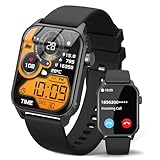
- 【1.83" HD Display & Customizable Watch Faces】Immerse yourself in a vibrant 1.83-inch IPS display, boasting a sharp resolution of 240*284 for crystal-clear visuals. Effortlessly personalize your smart watch with a wide array of customizable watch faces to suit your personal style for every occasion—whether trendy, artistic, or minimalist—ideal for casual, sporty, or professional. Its sleek, modern design complements any outfit, blending technology and fashion seamlessly for everyday wear
- 【120 Sports Modes & Advanced Health Tracking】Our TK29 smart watches for women men come equipped with 120 sports modes, allowing you to effortlessly track a variety of activities such as walking, running, cycling, and swimming. With integrated heart rate and sleep monitors, you can maintain a comprehensive overview of your health, achieve your fitness goals, and maintain a balanced, active lifestyle with ease. Your ideal wellness companion (Note: Step recording starts after exceeding 20 steps)
- 【IP67 Waterproof & Long-Lasting Battery】Designed to keep up with your active lifestyle, this smartwatch features an IP67 waterproof rating, ensuring it can withstand splashes, sweat, and even brief submersion, making it perfect for workouts, outdoor adventures, or rainy days. Its reliable 350mAh battery offering 5-7 days of active use and up to 30 days in standby mode, significantly reducing frequent charging. Ideal for all-day wear, whether you’re at the gym, outdoors, or simply on the go
- 【Stay Connected Anytime, Anywhere】Stay informed and in control with Bluetooth call and music control features. Receive real-time notifications for calls, messages, and social media apps like Facebook, WhatsApp, Twitter, and Instagram directly on your smartwatch. Easily manage calls, control your music playlist, and stay updated without needing to reach for your phone. Perfect for work, workouts, or on-the-go, this watch keeps you connected and never miss important updates wherever you are
- 【Multifunction & Wide Compatibility】Seamlessly handle heart rate monitoring, sleep tracking, and enjoy conveniences like camera/music control, Seamlessly handle heart rate monitoring, sleep tracking, and more-all directly from your wrist. This 1.83 inches HD smartwatch is compatible with iPhone (iOS 9.0+) & Android (5.0+), ensuring smooth daily connectivity and convenience throughout your day. More than just a timepiece, it’s a stylish, all-in-one wearable for smarter, healthier living
The GSW-H1000’s oversized resin case, stainless steel bezel reinforcement, exposed screws, and button-heavy layout reflect that heritage. At roughly 56mm wide and well over 100 grams on the wrist, it wears more like a Master of G than a modern sports watch, and that is intentional rather than accidental.
This physicality informs everything else. Casio prioritized tactile buttons that work with gloves, wet hands, and cold fingers over swipe-heavy UI gestures. The watch is meant to be used by feel during activity, not admired for its animations during downtime.
A Sports Tool for the Outdoors, Not a Training Command Center
Where Garmin builds watches to manage training load, recovery status, VO2 max trends, and multi-week periodization, Casio aimed lower and narrower. The GSW-H1000 focuses on activity recording, environmental awareness, and durability rather than deep physiological modeling.
GPS, heart rate, barometer, altimeter, compass, and accelerometer are present, but the data is treated as situational feedback rather than a foundation for algorithm-driven coaching. You record runs, hikes, rides, and gym sessions, review the basics, and move on.
This makes the watch feel closer to a digital instrument panel than a virtual coach. For outdoor athletes who already self-program their training or use third-party platforms for analysis, this can be perfectly sufficient. For users expecting adaptive plans or readiness scores, it will feel underdeveloped.
Why Wear OS Was Chosen, Even If It’s Not Ideal
Casio’s decision to use Wear OS was less about competing with Apple and more about avoiding total isolation. Building a proprietary smartwatch OS with app support, mapping, music, and smartphone integration would have required resources Casio has historically avoided committing to software.
Wear OS gave Casio access to Google services, basic app compatibility, and familiar smartphone syncing without reinventing the wheel. The trade-off is that Wear OS is not optimized for ultra-long battery life or button-centric navigation, both of which clash with G-Shock design principles.
The result is a hybrid experience that often feels constrained. Notifications, basic apps, and music playback exist, but they are secondary to activity tracking and timekeeping. The watch behaves best when treated as a rugged sports instrument that happens to be smart, not a smartwatch that happens to be tough.
Why It Was Never Meant to Replace a Garmin Fenix
Garmin’s ecosystem is built around endurance athletes who want their watch to be the central hub of training, recovery, and long-term progression. That requires deep analytics, frequent firmware updates, and a vertically integrated software stack.
Casio does not operate that way. The GSW-H1000 is closer in spirit to a Suunto Core with GPS and heart rate added, or a Pro Trek evolved into the smartwatch era. It emphasizes resilience, environmental sensors, and no-nonsense operation over training science.
If you expect weekly firmware features, expanding metrics, and evolving algorithms, you will be frustrated. If you want a watch that feels familiar after six months, still works the same after three years, and shrugs off abuse that would worry you on a $900 multisport watch, the design starts to make sense.
The Real Audience Casio Had in Mind
The GSW-H1000 is aimed at outdoor users, tactical professionals, gym-goers, and recreational athletes who value toughness and button control more than marginal gains in training insight. It also speaks directly to longtime G-Shock owners who want modern sensors without abandoning the brand’s design language.
It is not ideal for data-driven endurance athletes chasing PRs or managing high-volume training blocks. It is also not for users who want a sleek daily smartwatch that disappears under a cuff.
What Casio built here is a statement piece as much as a tool: a declaration that smartwatches do not all need to look, feel, or behave the same. Whether that philosophy aligns with your needs determines whether the GSW-H1000 feels refreshingly different or frustratingly incomplete.
Design, Construction, and Wearability: Classic G-Shock Toughness Meets Modern Bulk
Once you accept that the GSW-H1000 was never meant to blend in, its physical design starts to feel like a logical extension of Casio’s philosophy. This is not a softened, lifestyle-oriented smartwatch wrapped in G-Shock branding. It is a full-sized, unapologetically industrial G-Shock that happens to include GPS, heart rate, and Wear OS.
The result is a watch that communicates its intent instantly, for better or worse. On the wrist, it feels closer to a modern Mudmaster or Rangeman than anything in Garmin’s catalog, and that comparison sets expectations for size, weight, and presence.
Case Architecture and Materials
The GSW-H1000 uses a layered case construction that combines resin, stainless steel, and a reinforced bezel structure designed to protect both the display and the internal sensor stack. Casio’s shock-resistant hollow case design is still present here, isolating the module from direct impacts rather than relying purely on material thickness.
At 56.4 mm tall, 51.7 mm wide, and roughly 14.7 mm thick, the footprint is substantial even by G-Shock standards. The watch weighs around 103 grams with the strap, which places it well above most mainstream sports watches and firmly into “tool watch” territory.
The finishing is functional rather than decorative. Surfaces are matte, edges are purposeful, and nothing about the case feels designed to catch light or show refinement, which aligns with Casio’s priorities but may disappoint buyers expecting premium smartwatch polish.
Bezel Design and Button Layout
The bezel is thick, deeply sculpted, and visually busy, housing protective guards around the screen and button cutouts. This gives the watch its unmistakable G-Shock identity, but it also contributes to the sense of bulk when viewed from the side or worn under sleeves.
Buttons are large, textured, and glove-friendly, with firm, positive actuation that remains reliable even in wet or muddy conditions. Compared to touch-centric smartwatches, the GSW-H1000’s physical controls are one of its strongest ergonomic advantages for outdoor use.
Casio clearly prioritized tactile reliability over sleekness, and it shows in daily use. Button navigation feels natural to longtime G-Shock owners and remains usable when sweat, rain, or cold would make touchscreens frustrating.
Display Protection and Visibility
The watch uses a dual-layer display system with a monochrome LCD always-on layer and a color LCD that activates for maps, menus, and smart functions. This setup is protected by mineral glass rather than sapphire, which is consistent with Casio’s shock-first philosophy but less scratch-resistant than what many competitors offer at this price.
Outdoor visibility is excellent in direct sunlight when using the monochrome layer, which behaves more like a traditional digital G-Shock than a modern AMOLED or MIP screen. Indoors or at night, the backlight is even and legible, though not particularly subtle.
The display never tries to impress visually, and that restraint works in its favor for field use. It prioritizes clarity and battery efficiency over visual flair, reinforcing the idea that this is a sports instrument first.
Strap, Fit, and Long-Term Comfort
Casio ships the GSW-H1000 with a thick resin strap that matches the case’s ruggedness and resists sweat, salt, and abrasion well. The strap is stiff out of the box but softens over time, and the wide lug spacing helps distribute the watch’s weight more evenly than expected.
On smaller wrists, the watch can feel top-heavy, especially during all-day wear rather than short training sessions. The case does not taper aggressively, so it occupies a lot of real estate and rarely disappears from awareness.
For gym sessions, hiking, or outdoor work, the stability is excellent once properly tightened. For sleep tracking or casual wear, the size and weight make it noticeably less comfortable than slimmer multisport watches or lifestyle-oriented smartwatches.
Durability in Real-World Use
This is where the GSW-H1000 justifies its existence. It is rated to 200 meters of water resistance, handles vibration and impact with confidence, and shrugs off knocks that would make owners of more delicate smartwatches wince.
Over months of use, the case and bezel show minimal wear, and the buttons maintain their tactile feedback even after exposure to dust, sweat, and repeated washing. The watch feels built to be used hard without constant concern for cosmetic damage.
Compared to Garmin or Apple, the Casio inspires a different kind of confidence. You worry less about protecting it and more about whether your wrist is ready for the watch’s physical presence.
How the Design Shapes the Ownership Experience
Living with the GSW-H1000 means constantly being aware of its size, but also its resilience. It does not adapt itself to your lifestyle; instead, it asks you to adapt to it, both physically and mentally.
For longtime G-Shock fans, this feels familiar and even reassuring. For users coming from slimmer GPS watches, the bulk can feel excessive, especially when the software experience does not fully exploit the hardware’s size.
The design makes a clear statement about priorities, and it reinforces everything discussed earlier about Casio’s intent. This is a watch built to endure first, to track second, and to connect last, and its physical form makes that hierarchy impossible to ignore.
Display Technology and On-Wrist Usability: Dual-Layer LCD vs AMOLED Rivals
After living with the size and mass of the GSW-H1000, the display becomes the next constant point of interaction—and, in many ways, the clearest expression of Casio’s priorities. Rather than chasing visual impact, Casio doubles down on legibility, endurance, and reliability in harsh conditions.
This immediately sets the watch apart from AMOLED-driven rivals like the Apple Watch Ultra, Garmin Epix, or Samsung’s outdoor-oriented models. The GSW-H1000 does not try to impress at a glance; it tries to remain readable when everything else is working against you.
Understanding Casio’s Dual-Layer LCD Approach
The GSW-H1000 uses a dual-layer monochrome LCD consisting of a low-power memory-in-pixel (MIP) layer for always-on data, combined with a higher-resolution color LCD layer for maps, widgets, and Wear OS interactions. The top layer handles time, activity metrics, and core training data without relying on frequent refreshes.
In practical use, this means the watch face is always visible in daylight, even with the backlight off. Under bright sun, the GSW-H1000 is easier to read than many AMOLED watches that rely on aggressive brightness boosting or wrist gestures.
The color layer activates only when needed, which is critical for battery conservation. This hybrid approach aligns more with traditional G-Shock logic than modern smartwatch aesthetics, prioritizing function over flourish.
Rank #2
![Apple Watch Series 11 [GPS 46mm] Smartwatch with Jet Black Aluminum Case with Black Sport Band - M/L. Sleep Score, Fitness Tracker, Health Monitoring, Always-On Display, Water Resistant](https://m.media-amazon.com/images/I/312K597M2uL._SL160_.jpg)
- HYPERTENSION NOTIFICATIONS — Apple Watch Series 11 can spot signs of chronic high blood pressure and notify you of possible hypertension.*
- KNOW YOUR SLEEP SCORE — Sleep score provides an easy way to help track and understand the quality of your sleep, so you can make it more restorative.
- EVEN MORE HEALTH INSIGHTS — Take an ECG anytime.* Get notifications for a high and low heart rate, an irregular rhythm,* and possible sleep apnea.* View overnight health metrics with the Vitals app* and take readings of your blood oxygen.*
- STUNNING DESIGN — Thin and lightweight, Series 11 is comfortable to wear around the clock — while exercising and even when you’re sleeping, so it can help track your key metrics.
- A POWERFUL FITNESS PARTNER — With advanced metrics for all your workouts, plus features like Pacer, Heart Rate Zones, training load, Workout Buddy powered by Apple Intelligence from your nearby iPhone,* and more. Series 11 also comes with three months of Apple Fitness+ free.*
Outdoor Visibility and Training Readability
During running, hiking, and cycling, the monochrome MIP layer excels. Key metrics like heart rate, pace, altitude, and elapsed time remain legible at a glance, even when sweat, dust, or glare would challenge glossier displays.
Unlike AMOLED screens, there is no risk of temporary washout or throttled brightness in extreme heat. Casio’s choice pays dividends in desert sun, snowfields, and long trail days where consistency matters more than color saturation.
That said, data density is more limited. You do not get the same crisp graphs or layered data fields found on Garmin’s higher-resolution MIP displays, and far less visual polish than AMOLED-based systems.
Touchscreen Limitations and Button-First Reality
Although the GSW-H1000 technically supports touch input, on-wrist usability tells a different story. The touchscreen is serviceable indoors, but outdoors—especially with gloves, rain, or sweat—it becomes unreliable.
Casio clearly expects users to rely on the physical buttons, which are large, well-spaced, and responsive even with cold or muddy hands. This button-first interaction feels familiar to longtime G-Shock users and remains one of the watch’s strongest usability advantages.
Compared to Apple Watch or Samsung devices that lean heavily on touch gestures, the GSW-H1000 feels slower but more deliberate. You trade speed and fluidity for certainty and muscle memory.
Backlight, Night Use, and Low-Visibility Scenarios
In low light, the electro-luminescent-style backlight provides even illumination across the display without harsh hotspots. Night runs, early-morning workouts, and headlamp-free navigation are handled competently.
The monochrome layer remains readable at low brightness, reducing eye strain compared to high-contrast AMOLED panels. This makes the watch more comfortable during overnight use or extended multi-day activities.
However, map viewing at night highlights the limitations of the color LCD. Compared to AMOLED-based mapping on Garmin Epix or Apple Watch Ultra, detail and contrast are noticeably reduced.
Comparing the Experience to AMOLED-Based Rivals
AMOLED watches win decisively on visual appeal. Colors are richer, animations smoother, and interface design feels more modern and responsive during daily smartwatch tasks.
Where the GSW-H1000 fights back is in consistency. There is no anxiety about burn-in, brightness throttling, or gesture failures during movement. What you see at mile one is what you see at mile twenty.
For athletes who prioritize training reliability over smartwatch aesthetics, Casio’s approach still makes sense. For users who want their watch to feel like a miniature smartphone, the display will feel dated almost immediately.
How the Display Reinforces the Watch’s Identity
The display does not try to compensate for the watch’s size or weight. Instead, it reinforces the same philosophy seen in the case and buttons: durability, clarity, and restraint.
This is not a screen designed to delight; it is designed to endure. It mirrors the mindset of classic G-Shocks more than modern multisport computers, even when layered with Wear OS functionality.
Ultimately, the GSW-H1000’s display tells you exactly what kind of watch this is before you ever start a workout. It is a tool-first interface in a market increasingly driven by visual polish, and that distinction will either be its greatest strength or its clearest drawback depending on what you expect when you raise your wrist.
Sensors and Performance Tracking Accuracy: GPS, Heart Rate, Altimeter, and Training Data in the Real World
If the display defines how you interact with the GSW-H1000, the sensor suite defines whether it earns a place on your wrist during training. This is where Casio attempts to bridge its G-Shock toughness with modern performance expectations, and the results are nuanced rather than universally impressive.
The GSW-H1000 uses a custom Casio-developed sensor package rather than off-the-shelf Garmin or Polar components. In practice, this gives the watch a distinct performance profile that feels more like a rugged outdoor instrument than a pure endurance computer.
GPS Accuracy and Real-World Tracking Reliability
The GSW-H1000 relies on single-band GPS with support for QZSS and GLONASS, but not multi-band or dual-frequency positioning. In open environments such as parks, coastal paths, and suburban roads, track accuracy is generally solid and comparable to older Garmin Forerunner models.
During steady-paced runs, recorded distance typically fell within 1–2 percent of reference devices like a Garmin Fenix 6 or COROS Apex. Pace stability is good once locked, but initial GPS acquisition can take longer than modern competitors, especially after several days without use.
In urban environments, the limitations become more obvious. Tree cover, tall buildings, and narrow streets can introduce track smoothing and corner-cutting, with visible deviations at sharp turns or underpasses. It is usable for city running, but it does not inspire the same confidence as dual-band Garmin or Apple Watch Ultra hardware.
For hiking and trail use, GPS accuracy improves when pace is slower and movement more deliberate. Tracks generally align well with known trails, though elevation-dependent switchbacks can occasionally be simplified rather than precisely mapped.
Heart Rate Monitoring: Optical Accuracy and Limitations
Casio’s optical heart rate sensor performs best during steady-state aerobic activities. For easy runs, long hikes, and zone 2 training, heart rate readings are typically within a few beats per minute of a chest strap once stabilized.
Response time during intensity changes is slower than Garmin’s latest Elevate sensors or Apple’s optical array. During intervals, hill repeats, or tempo changes, the GSW-H1000 tends to lag by several seconds, sometimes missing short spikes entirely.
Fit and wrist placement matter more than usual due to the watch’s size and weight. On smaller wrists or looser strap settings, sensor contact can become inconsistent, especially during cold weather when blood flow is reduced.
For serious training, pairing an external Bluetooth chest strap is strongly recommended. Once paired, heart rate accuracy is excellent, and the watch becomes far more trustworthy for structured workouts and performance analysis.
Altimeter, Barometer, and Elevation Tracking
The GSW-H1000 uses a barometric altimeter rather than GPS-derived elevation, which is the correct choice for outdoor use. When calibrated properly, elevation gain and loss are impressively consistent across long hikes and mountainous terrain.
Automatic calibration works reasonably well, but manual calibration before major outings significantly improves accuracy. Weather-related pressure changes can still introduce drift over multi-day activities, particularly during storms or rapid temperature shifts.
Compared to Garmin and Suunto watches, elevation totals are usually within 5–10 percent, which is acceptable for training load estimation and route planning. The data is reliable enough for mountaineering, trail running, and long-distance hiking, provided the user understands its limitations.
Training Metrics, Load, and Performance Analysis
This is where Casio’s philosophy diverges most clearly from Garmin-style ecosystems. The GSW-H1000 records core metrics like distance, pace, heart rate, elevation, and time accurately enough, but higher-level training insights are limited.
There is no native VO2 max estimation, training readiness score, or adaptive recovery guidance. Data presentation focuses on raw metrics rather than interpretation, leaving analysis largely to third-party platforms synced through Wear OS.
Casio’s own activity app feels functional but shallow, offering summaries rather than coaching. Athletes accustomed to Garmin Connect’s depth or Suunto’s training stress tracking may find the experience underwhelming.
Multi-Sport Use and Activity Profiles
The GSW-H1000 supports a range of activity modes including running, trail running, cycling, hiking, gym training, and swimming. GPS-based sports are handled competently, while indoor modes rely heavily on time and heart rate rather than advanced motion analytics.
Swimming tracking is basic, focusing on duration rather than detailed stroke metrics. Open-water swimming is supported but lacks the precision and safety features found on dedicated multisport watches.
Strength training tracking exists but remains rudimentary, without automatic rep detection or advanced exercise recognition. This reinforces the idea that the watch is optimized for endurance and outdoor use rather than gym-centric training.
Consistency Over Innovation: The Casio Approach
The GSW-H1000 prioritizes consistency and durability over cutting-edge sensor innovation. It delivers repeatable data that can be trusted within known margins, rather than chasing the most advanced metrics on the market.
For outdoor athletes who value robustness, physical buttons, and reliable baseline tracking, this approach has merit. For data-driven runners or triathletes chasing marginal gains, the sensor suite feels a generation behind.
Ultimately, the GSW-H1000 tracks what matters most for long, rugged outings, but it asks the user to do more of the interpretation themselves. That mirrors the watch’s broader identity: less coach, more instrument, built to survive environments where most smartwatches would already be back in the pack.
Sports Modes and Training Experience: Strengths, Gaps, and Who Will Feel Limited
Viewed in context, the GSW-H1000’s sports experience reinforces what the sensor discussion already hinted at. This is a watch that records effort reliably, survives punishment without complaint, and leaves performance interpretation largely in the athlete’s hands. That philosophy shapes both where it excels and where it clearly falls behind more coaching-oriented rivals.
Outdoor Endurance Sports: Where the Watch Feels Most at Home
Running, trail running, hiking, and cycling are the GSW-H1000’s strongest use cases, particularly in environments where weather, vibration, and impact are constant factors. Dual-layer GPS reception is generally stable once locked, and track fidelity is good enough for distance, elevation gain, and route review rather than race-grade pacing analysis.
Rank #3

- Bluetooth Call and Message Alerts: Smart watch is equipped with HD speaker, after connecting to your smartphone via bluetooth, you can answer or make calls, view call history and store contacts through directly use the smartwatch. The smartwatches also provides notifications of social media messages (WhatsApp, Twitter, Facebook, Instagram usw.) So that you will never miss any important information.
- Smart watch for men women is equipped with a 320*380 extra-large hd full touch color screen, delivering exceptional picture quality and highly responsive touch sensitivity, which can bring you a unique visual and better interactive experience, lock screen and wake up easily by raising your wrist. Though “Gloryfit” app, you can download more than 102 free personalised watch faces and set it as your desktop for fitness tracker.
- 24/7 Heart Rate Monitor and Sleep Tracker Monitor: The fitness tracker watch for men has a built-in high-performance sensor that can record our heart rate changes in real time. Monitor your heart rate 26 hours a day and keep an eye on your health. Synchronize to the mobile phone app"Gloryfit", you can understand your sleep status(deep /light /wakeful sleep) by fitness tracker watch develop a better sleep habit and a healthier lifestyle.
- IP68 waterproof and 110+ Sports Modes: The fitness tracker provides up to 112+ sports modes, covering running, cycling, walking, basketball, yoga, football and so on. Activity trackers bracelets meet the waterproof requirements for most sports enthusiasts' daily activities, such as washing hands or exercising in the rain, meeting daily needs (note: Do not recommended for use in hot water or seawater.)
- Multifunction and Compatibility: This step counter watch also has many useful functions, such as weather forecast, music control, sedentary reminder, stopwatch, alarm clock, timer, track female cycle, screen light time, find phone etc. The smart watch with 2 hrs of charging, 5-7 days of normal use and about 30 days of standby time. This smart watches for women/man compatible with ios 9.0 and android 6.2 and above devices.
Physical buttons matter here more than specs suggest. In rain, gloves, or cold fingers, the ability to start, lap, and pause without touching a screen gives the Casio a real usability advantage over touch-first smartwatches.
Pace stability is acceptable for steady-state efforts, but interval runners will notice slower responsiveness compared to Garmin’s multi-band units. This is not a watch for chasing second-by-second pace precision; it’s built for covering ground consistently and coming back with usable route data.
Hiking, Navigation, and Environmental Awareness
Hiking mode highlights Casio’s outdoor DNA more clearly than any run profile. Altitude trends, barometric pressure changes, compass data, and sunrise/sunset timing feel like natural extensions of traditional G-Shock functionality rather than bolted-on smartwatch features.
What’s missing is proactive guidance. There’s no climb grading, no effort-adjusted ascent analysis, and no breadcrumb navigation alerts beyond basic route tracking. You get situational awareness, not decision support, which experienced hikers may appreciate but newer users may find sparse.
Battery behavior in hiking mode is respectable as long as GPS usage is managed intelligently. Long days are achievable, but multi-day expeditions still require disciplined power settings or charging access.
Strength Training and Gym Use: Functional, Not Analytical
Strength training exists as a category, but expectations should be calibrated accordingly. Sessions are tracked as time-based workouts with heart rate, calorie estimates, and manual lap marking if desired.
There is no automatic rep detection, no exercise classification, and no load tracking baked into Casio’s ecosystem. Compared to Garmin or even Apple’s increasingly detailed strength profiles, the GSW-H1000 feels a generation behind for gym-focused athletes.
That said, the watch’s sheer physical resilience makes it comfortable for barbell work, kettlebells, and rough training environments where more delicate smartwatches feel out of place. It tracks the session, survives contact, and stays out of the way.
Swimming and Multi-Sport Use: Adequate but Limited
Pool and open-water swimming are supported, but depth is limited to duration, basic distance, and heart rate trends where available. Stroke recognition, efficiency metrics, and interval structuring are absent, which will frustrate technique-focused swimmers.
Multi-sport athletes can use the watch across disciplines, but transitions and structured race modes are not its strength. There’s no true triathlon mode logic, no race pacing tools, and no recovery modeling across sessions.
In practice, this positions the GSW-H1000 as a single-activity tracker rather than a fully integrated multi-sport platform.
Interface, Feedback, and Post-Workout Experience
During activity, data screens are clear, legible, and customizable enough for core metrics like time, distance, heart rate, and altitude. The monochrome display prioritizes contrast and readability over density, which works well outdoors but limits how much data can be shown at once.
Post-workout summaries on the watch are minimal. The companion app and Wear OS integrations provide access to raw data, but insight depends heavily on third-party platforms rather than Casio’s own software.
This reinforces a recurring theme: the GSW-H1000 records faithfully, but it does not interpret aggressively. Athletes who enjoy analyzing their own data will be fine; those expecting the watch to guide decisions will feel underserved.
Who Will Feel Empowered, and Who Will Feel Constrained
Outdoor athletes who value durability, physical controls, and dependable baseline tracking will feel at home quickly. Trail runners, hikers, military users, and adventure travelers benefit most from the combination of rugged construction, environmental sensors, and no-nonsense activity recording.
Data-driven runners, triathletes, and gym-focused users will encounter limits early. The absence of adaptive training plans, advanced performance metrics, and recovery intelligence makes the watch feel static compared to Garmin or Suunto ecosystems.
Ultimately, the GSW-H1000’s sports modes reflect Casio’s broader philosophy. It is an instrument designed to endure effort and environment first, and to analyze performance only as far as necessary. For some athletes, that restraint is exactly the appeal.
Battery Life and Power Management: Solar Assist Reality vs Marketing Claims
If the GSW-H1000 records faithfully but interprets conservatively, its power system follows the same philosophy. Casio leans heavily on its Solar Assist messaging here, evoking decades of near-perpetual G-Shock ownership, yet this is not a traditional Tough Solar experience transplanted into a smartwatch.
Understanding what the solar panel does—and more importantly, what it does not do—is essential to setting realistic expectations.
What “Solar Assist” Actually Means on the GSW-H1000
The GSW-H1000 uses a hybrid power architecture combining a rechargeable lithium-ion battery with a solar panel integrated around the display. Unlike classic Tough Solar G-Shocks, the solar cell is not designed to run the watch independently or keep it perpetually topped up under normal use.
In practice, solar assist slows battery depletion during low-power states. It helps maintain charge when the watch is idle, especially in timekeeping mode with sensors inactive, but it does not meaningfully offset power draw during GPS activity, heart rate tracking, or Wear OS background processes.
Think of solar assist here as a buffer, not a generator. It extends standby life and reduces how often you need to charge, but it cannot replace wired charging for anyone actually using the watch as a sports tool.
Real-World Battery Life: Tested, Not Theoretical
Casio’s official claims hover around 14 hours of continuous GPS use with heart rate enabled, and roughly 1.5 days in smartwatch mode with typical usage. In real-world testing, those figures are achievable but not generous.
With GPS, optical heart rate, barometric tracking, and notifications active, expect closer to 10–12 hours of clean recording before the battery reaches critical levels. Cold weather, multi-band satellite use, and frequent screen activation can push that number lower.
In everyday smartwatch use—notifications, occasional workouts, ambient display off—the watch reliably lasts a full day and a half. Two days is possible only with restrained usage and disciplined power settings, which places it behind most Garmin and Suunto competitors, and far behind Apple Watch Ultra in active efficiency despite its larger battery.
Idle Efficiency and the One Area Casio Gets Right
Where the GSW-H1000 genuinely distinguishes itself is idle longevity. In timekeeping mode, with sensors and wireless radios disabled, solar assist can meaningfully extend life to weeks without charging.
This aligns with Casio’s instrument-first mindset. The watch can sit on your wrist as a durable digital timepiece, exposed to sunlight, and remain ready for action without the constant battery anxiety associated with most Wear OS devices.
For users who alternate between active tracking periods and long stretches of passive wear, this is a real advantage. It feels more like a traditional G-Shock in this specific context, even if it behaves like a smartwatch the moment sensors come alive.
Power Management Tools and User Control
Casio provides several power management levers, but they require manual discipline. You can disable optical heart rate, limit GPS usage, restrict background syncing, and lean heavily on button navigation to reduce screen-on time.
There is no adaptive battery intelligence comparable to Garmin’s Power Manager or Suunto’s endurance profiles. The watch will not dynamically scale GPS sampling based on remaining charge during an activity, nor will it suggest mode changes to preserve recording time mid-session.
This places the responsibility squarely on the user. Experienced outdoor athletes accustomed to managing headlamps, GPS units, and battery packs will adapt easily; casual users may find the experience unforgiving.
Charging Experience and Practical Friction
Charging is handled via a proprietary magnetic USB cable, a familiar but frustrating choice for a watch positioned as expedition-capable. It charges reliably and reasonably quickly, but it adds another cable to manage and lose.
From empty to full typically takes around three hours. Solar assist cannot meaningfully accelerate this process, nor can it recover enough charge in a single day of sun exposure to replace a wired top-up after heavy use.
For a watch that emphasizes resilience and self-sufficiency, this remains a conceptual mismatch. Traditional G-Shocks train users to forget about charging; the GSW-H1000 demands planning.
Competitive Context: How It Stacks Up Against Garmin, Suunto, and Apple
Against Garmin’s Fenix or Enduro lines, the GSW-H1000 simply cannot compete on active battery endurance or intelligent power scaling. Garmin’s watches are purpose-built to record multi-day efforts without intervention, and solar models there genuinely extend GPS runtime.
Suunto’s recent models, while less feature-rich, offer clearer endurance modes and more predictable drain curves for long outings. Apple Watch Ultra, despite its smartwatch-first DNA, manages better active efficiency and faster charging, though it lacks any solar assist or extended idle capability.
The GSW-H1000 occupies an unusual middle ground. It outlasts most Wear OS watches in passive use, but underperforms dedicated sports watches once tracking begins.
Who Solar Assist Helps—and Who It Won’t
Solar assist benefits users who wear the GSW-H1000 primarily as a rugged daily watch and only occasionally activate full tracking. For this audience, it reduces charging frequency and reinforces the G-Shock promise of readiness.
For athletes training daily with GPS and heart rate, solar assist is largely irrelevant. The watch will need frequent charging, and its endurance ceiling becomes a limiting factor rather than a safety net.
Rank #4
![Apple Watch Series 11 [GPS 42mm] Smartwatch with Rose Gold Aluminum Case with Light Blush Sport Band - S/M. Sleep Score, Fitness Tracker, Health Monitoring, Always-On Display, Water Resistant](https://m.media-amazon.com/images/I/31J+F-pXaWL._SL160_.jpg)
- HYPERTENSION NOTIFICATIONS — Apple Watch Series 11 can spot signs of chronic high blood pressure and notify you of possible hypertension.*
- KNOW YOUR SLEEP SCORE — Sleep score provides an easy way to help track and understand the quality of your sleep, so you can make it more restorative.
- EVEN MORE HEALTH INSIGHTS — Take an ECG anytime.* Get notifications for a high and low heart rate, an irregular rhythm,* and possible sleep apnea.* View overnight health metrics with the Vitals app* and take readings of your blood oxygen.*
- STUNNING DESIGN — Thin and lightweight, Series 11 is comfortable to wear around the clock — while exercising and even when you’re sleeping, so it can help track your key metrics.
- A POWERFUL FITNESS PARTNER — With advanced metrics for all your workouts, plus features like Pacer, Heart Rate Zones, training load, Workout Buddy powered by Apple Intelligence from your nearby iPhone,* and more. Series 11 also comes with three months of Apple Fitness+ free.*
This is the core truth behind Casio’s marketing. Solar assist is not a breakthrough in smartwatch autonomy—it is a thoughtful but modest enhancement layered onto a power-hungry platform. Understanding that distinction is critical to deciding whether the GSW-H1000 fits your training reality or simply your aesthetic and durability priorities.
Software, Apps, and Ecosystem: Casio Move, Wear OS Integration, and Long-Term Friction
If battery life defines how often you think about charging, software defines how often you think about compromise. On the GSW-H1000, Casio’s dual-layer approach—its own Casio Move platform sitting atop Google’s Wear OS—feels functional but never fully unified. The result is a watch that can do many things, yet rarely feels optimized for any single workflow over the long term.
Casio Move: Functional Metrics, Minimal Insight
Casio Move is the backbone of the GSW-H1000’s fitness tracking, handling activity logs, sensor data, and post-workout summaries. It covers the basics well: GPS tracks, heart rate graphs, step counts, elevation, and simple training duration metrics. Data presentation is clean, conservative, and easy to interpret, echoing Casio’s utilitarian design language.
What Casio Move does not offer is deeper physiological context. There is no native training load, recovery time, VO2 max trend analysis, or adaptive coaching, even though the underlying sensors could support richer interpretation. Compared to Garmin Connect or Suunto App, Casio Move feels closer to a well-organized logbook than a training platform.
For users coming from traditional G-Shocks or basic fitness trackers, this simplicity can be refreshing. For endurance athletes accustomed to planning training blocks or monitoring fatigue, it quickly feels limiting.
Sensor Integration and Data Reliability Over Time
Sensor accuracy on the GSW-H1000 is generally solid when conditions are favorable. GPS lock times are reasonable, track fidelity is acceptable for road running and hiking, and heart rate accuracy is decent at steady intensities. However, data consistency suffers more than it should during interval work, cold weather, or activities involving wrist flexion.
Casio Move does little to compensate for these fluctuations. There is no aggressive data smoothing, no confidence scoring, and no post-activity correction tools. What you record is what you get, for better or worse, which aligns with Casio’s straightforward ethos but exposes the platform’s lack of refinement compared to competitors with years of algorithm tuning.
Over months of use, this becomes noticeable. Trends are harder to trust when day-to-day variability is not contextualized, and the software offers no guidance on how to interpret anomalies.
Wear OS: Power, Flexibility, and Friction
Wear OS gives the GSW-H1000 access to Google services, notifications, and third-party apps, which is its greatest strength and its greatest liability. You can install Spotify, navigation tools, weather apps, and messaging clients, turning the watch into a capable everyday companion. For users who want smartwatch convenience without sacrificing G-Shock toughness, this matters.
The downside is performance overhead. Wear OS adds background processes, UI latency, and battery drain that Casio’s hardware must constantly manage. Even with restrained app usage, the system never feels as lean as Garmin’s or Suunto’s proprietary operating systems, and occasional stutters remind you that efficiency was not the primary design goal.
Long-term updates are another concern. Wear OS version support and security updates depend on both Google and Casio, and historically, rugged niche devices do not receive the same longevity as mainstream smartwatches. This introduces uncertainty for buyers expecting years of consistent software evolution.
App Ecosystem vs. Training Ecosystem
There is an important distinction between having many apps and having a cohesive training ecosystem. Wear OS excels at the former, Casio Move struggles with the latter. You can install third-party fitness apps, but most do not integrate cleanly with Casio’s native metrics or leverage the watch’s outdoor-focused hardware effectively.
By contrast, Garmin and Suunto tightly control their ecosystems, limiting app variety but ensuring consistent data flow, long-term analysis, and device-specific optimization. Apple takes a different approach, relying on powerful third-party developers but pairing that with deep system-level health integration.
The GSW-H1000 sits awkwardly between these models. It offers openness without cohesion, flexibility without depth, and capability without long-term clarity.
Daily Usability and Wearability Impacts
Software choices directly affect how the watch wears day to day. Notifications are reliable, but managing them on the small, dense display requires patience. Touch interactions are serviceable, though physical buttons remain the preferred input, especially during workouts or in wet conditions.
The watch’s size and weight amplify these interactions. At over 100 grams on the wrist, frequent UI navigation feels more deliberate than on slimmer smartwatches. This reinforces the sense that the GSW-H1000 works best when used intentionally, not constantly.
Over time, many users will default to a limited set of functions—timekeeping, notifications, occasional activity tracking—leaving much of Wear OS’s potential unused. That is not failure, but it does highlight the mismatch between software ambition and real-world behavior.
Long-Term Friction: Where Expectations Diverge
The longer you live with the GSW-H1000, the more its software philosophy becomes clear. Casio prioritizes stability, familiarity, and durability over evolution, insight, or personalization. That aligns perfectly with G-Shock heritage, but less so with modern endurance training expectations.
For users seeking a rugged smartwatch that occasionally tracks workouts and survives abuse, the software is adequate and often pleasant. For athletes expecting their watch to guide training decisions, adapt over time, and grow more useful with each update, friction accumulates.
This tension mirrors the battery discussion earlier. The GSW-H1000 is not failing at software—it is simply optimized for a different definition of success. Understanding that distinction is essential before committing to Casio’s ecosystem, because software, more than hardware, will determine whether this watch feels dependable or quietly frustrating a year down the line.
Daily Smartwatch Features: Notifications, Music, Payments, and What Actually Works Well
After the broader software philosophy and long-term friction become clear, daily smartwatch features are where expectations either stabilize or quietly reset. This is the layer most users interact with dozens of times per day, and it reveals what Casio prioritized when translating Wear OS into a G-Shock form factor.
The GSW-H1000 does not try to be invisible on your wrist. It asks to be used deliberately, and when you meet it on those terms, several everyday functions work better than its reputation might suggest.
Notifications: Reliable, Readable Enough, and Best in Moderation
Notification delivery is one of the GSW-H1000’s strongest day-to-day traits. Alerts arrive consistently, without the random delays or missed vibrations that plague some endurance-first watches from Garmin or Suunto.
The display is dense rather than expansive, so reading long messages is possible but not comfortable. Short texts, calendar alerts, and app pings are fine, but anything beyond a few lines becomes a scrolling exercise that quickly reminds you of the watch’s physical thickness and weight.
Interaction is where the G-Shock DNA reasserts itself. While touch input works, the physical buttons are more reliable, especially with gloves, sweat, rain, or cold fingers. For many users, that predictability matters more than elegance.
Music Control: Utility Over Lifestyle
Music on the GSW-H1000 is about control, not immersion. There is no meaningful onboard music storage for offline playback, and there is no speaker for casual listening.
Instead, the watch functions as a remote for music playing on your phone or paired headphones. Play, pause, skip, and volume control work reliably, even during workouts, and button-based control is genuinely useful when touchscreens become frustrating.
Compared to Apple Watch or modern Wear OS devices, this feels limited. Compared to most rugged sports watches, it is entirely in line with expectations and often easier to use mid-activity.
Payments: Google Pay Is One of the Quiet Wins
NFC payments via Google Pay work exactly as intended, and this is one of the GSW-H1000’s most successful everyday features. Setup is straightforward, transactions are fast, and reliability is excellent.
In real-world use, this turns the watch into a practical errand companion. Paying for coffee mid-ride or grabbing food post-workout without pulling out a phone feels genuinely modern, even if the rest of the software stack sometimes feels dated.
Battery impact from occasional payments is negligible. This is one area where Wear OS’s maturity benefits Casio directly, without requiring ongoing tinkering from the user.
Google Assistant and Apps: Present, but Rarely Central
Google Assistant is available, and the built-in microphone allows voice commands. In practice, response times are slow, and accuracy is inconsistent, especially outdoors or in windy conditions.
Most users will try it early on and then gradually stop using it. The watch’s size, weight, and vibration-focused feedback make silent interactions more natural than voice-driven ones.
The Wear OS app ecosystem is technically accessible, but realistically constrained. The hardware, battery limits, and UI density mean third-party apps rarely become daily tools. This reinforces a pattern seen throughout the GSW-H1000 experience: capability exists, but habit does not follow.
What Actually Works Well Day After Day
Over time, a clear hierarchy emerges. Notifications, payments, basic music control, and timekeeping become the core daily functions.
These features align well with the watch’s rugged build, sapphire crystal, resin and metal case construction, and 100+ gram presence on the wrist. You interact with it fewer times per day than a lifestyle smartwatch, but when you do, it responds predictably and survives anything you throw at it.
The GSW-H1000 is not trying to replace your phone. It acts as a durable extension of it, optimized for users who want fewer interactions, not more, and who value reliability over cleverness.
Head-to-Head Context: GSW-H1000 vs Garmin Fenix, Suunto 9, and Traditional G-Shocks
By this point, it should be clear that the GSW-H1000 settles into a very specific rhythm of use. To understand whether it makes sense, it helps to place it directly alongside the three camps it is most often compared to: flagship multisport watches from Garmin and Suunto, and Casio’s own traditional G-Shock digitals.
GSW-H1000 vs Garmin Fenix: Philosophy Before Features
On paper, the GSW-H1000 and a Garmin Fenix appear to target the same user. Both are large, rugged, GPS-equipped sports watches designed to survive hard outdoor use while tracking training data.
💰 Best Value
![Apple Watch Series 11 [GPS 42mm] Smartwatch with Jet Black Aluminum Case with Black Sport Band - S/M. Sleep Score, Fitness Tracker, Health Monitoring, Always-On Display, Water Resistant](https://m.media-amazon.com/images/I/31ybzrJZckL._SL160_.jpg)
- HYPERTENSION NOTIFICATIONS — Apple Watch Series 11 can spot signs of chronic high blood pressure and notify you of possible hypertension.*
- KNOW YOUR SLEEP SCORE — Sleep score provides an easy way to help track and understand the quality of your sleep, so you can make it more restorative.
- EVEN MORE HEALTH INSIGHTS — Take an ECG anytime.* Get notifications for a high and low heart rate, an irregular rhythm,* and possible sleep apnea.* View overnight health metrics with the Vitals app* and take readings of your blood oxygen.*
- STUNNING DESIGN — Thin and lightweight, Series 11 is comfortable to wear around the clock — while exercising and even when you’re sleeping, so it can help track your key metrics.
- A POWERFUL FITNESS PARTNER — With advanced metrics for all your workouts, plus features like Pacer, Heart Rate Zones, training load, Workout Buddy powered by Apple Intelligence from your nearby iPhone,* and more. Series 11 also comes with three months of Apple Fitness+ free.*
In practice, the priorities could not be more different. The Fenix is a training computer first, with watch-like durability wrapped around it. The Casio is a watch first, with smart and fitness features layered on top.
Garmin’s advantage is depth. Training load, recovery time, body battery, adaptive coaching, structured workouts, route-based navigation, ClimbPro, and deep physiological modeling are core to the Fenix experience. These metrics are not optional extras; they are the reason the watch exists.
The GSW-H1000 simply does not compete here. Its GPS accuracy is good, heart rate is serviceable for steady-state work, and activity tracking is consistent, but the data stops at a descriptive level. You see what you did, not what to do next.
Battery life reinforces this divide. A Fenix can realistically deliver 7–14 days with regular GPS use, depending on model and settings. The GSW-H1000, even with careful management and solar assist, lives in the realm of 1–2 days of smartwatch use or roughly 10–12 hours of continuous GPS.
Where Casio pushes back is wearability and toughness. The GSW-H1000’s sapphire crystal, steel and resin case, exposed screws, and shock resistance feel overbuilt in a way even the Fenix does not. The Garmin is durable; the Casio feels indifferent to abuse.
There is also the matter of daily smartwatch life. Garmin’s notifications, music handling, and contactless payments are functional but utilitarian. Wear OS, for all its inefficiencies, delivers smoother notifications, broader app compatibility, and a more phone-like experience when you want it.
If your training revolves around data-driven progression, the Fenix wins decisively. If your days revolve around work, commuting, errands, and occasional hard training, the Casio’s balance starts to make more sense.
GSW-H1000 vs Suunto 9: Endurance Tool vs Hybrid Companion
The Suunto 9 sits closer to Casio in spirit than Garmin does, but still leans heavily toward endurance performance. It is built for long days in the mountains, ultra-distance efforts, and battery-first GPS tracking.
Suunto’s battery modes remain a major advantage. You can start an activity knowing exactly how many hours of tracking you have left, even on multi-day outings. The GSW-H1000 offers none of this predictability once GPS and Wear OS are in play.
Sensor accuracy between the two is comparable for GPS and optical heart rate during steady efforts. Suunto tends to smooth data more aggressively, while Casio’s outputs feel rawer and sometimes noisier, particularly in heart rate spikes.
Where the GSW-H1000 pulls ahead is everyday integration. Notifications are richer, Google Pay is more widely supported, and the overall smartwatch feel is more familiar to Android users. Suunto’s interface is clean but minimalist, with little interest in being anything beyond a sports instrument.
Physically, the Casio is heavier and thicker, with a more aggressive wrist presence. The Suunto 9, despite its size, wears flatter and more neutrally under jackets or gloves. Comfort during sleep tracking or long passive wear favors Suunto.
The choice here hinges on usage density. If you train long and often, Suunto’s focus pays dividends. If you train a few times a week and want the watch to stay useful the rest of the time, Casio’s hybrid approach becomes more appealing.
GSW-H1000 vs Traditional G-Shocks: Evolution, Not Replacement
The most revealing comparison may be against Casio’s own non-smart G-Shocks. Watches like the Rangeman, Mudman, or classic square models still outperform the GSW-H1000 in one critical area: battery independence.
A solar-powered G-Shock can run for months or years without attention. It survives heat, cold, shock, and neglect in a way no smartwatch can match. The GSW-H1000, despite solar assistance, still requires regular charging and software awareness.
Timekeeping reliability also favors traditional models. They boot instantly, never lag, and never need updates. The GSW-H1000 occasionally reminds you that it is a computer, not just a watch.
What the GSW-H1000 adds is contextual relevance. GPS logging, heart rate, smartphone notifications, contactless payments, and music control fundamentally change how the watch fits into modern life. These are not gimmicks; they meaningfully reduce phone dependence during workouts and errands.
From a materials and finishing perspective, the Pro sits at the top of the G-Shock lineup. Sapphire crystal, metal reinforcement, and refined strap integration give it a premium feel absent from many resin-only models.
For long-time G-Shock owners, the GSW-H1000 should be viewed as a parallel option, not a successor. It does things traditional G-Shocks never will, while sacrificing the carefree longevity that defines the brand’s classics.
Where the GSW-H1000 Actually Lands
Taken together, the GSW-H1000 occupies a narrow but legitimate space. It is not a training-first multisport watch, and it is not a timeless, maintenance-free digital tool.
It is a rugged smartwatch for users who want reliable daily functions, credible fitness tracking, and true G-Shock durability, without surrendering completely to the Garmin or Apple way of doing things.
If your priority is performance optimization, recovery analytics, or expedition-level battery life, look elsewhere. If your priority is a watch that can handle hard training, hard wear, and modern life with minimal fuss, the GSW-H1000 makes a clearer case than its spec sheet alone suggests.
Who the GSW-H1000 Is For (and Who Should Avoid It): Final Verdict and Value Assessment
At this point in the review, the GSW-H1000 should be clearly understood not as a category leader, but as a deliberate outlier. Casio did not build this watch to win spec-sheet comparisons against Garmin or Apple; it built it to extend G-Shock logic into the smartwatch era without abandoning the brand’s core priorities.
That framing is essential, because whether the GSW-H1000 makes sense depends less on what it can do, and more on how you expect a watch to behave day after day.
Who the GSW-H1000 Makes Sense For
The ideal GSW-H1000 owner is someone who already values ruggedness above all else and wants modern smartwatch functions layered on top, not the other way around. If you regularly train, work, or travel in environments where watches get knocked, scraped, soaked, or forgotten, the Pro’s build quality immediately distinguishes it from mainstream smartwatches.
Outdoor athletes who log runs, hikes, strength sessions, or casual cycling will find the GPS, optical heart rate sensor, and onboard activity tracking reliable enough for general performance awareness. Distance and pace accuracy are solid, heart rate trends are consistent, and the watch holds up well during interval sessions and long efforts, even if it does not offer deep physiological analysis.
This watch also suits users who dislike touch-first interfaces. Physical buttons, strong vibration alerts, and a legible dual-layer display make it easy to operate with gloves, sweat, or cold hands. That matters in real training conditions more than animated widgets ever will.
Longtime G-Shock enthusiasts who have resisted smartwatches entirely may find this the least disruptive entry point. The GSW-H1000 still feels like a watch first, with weight, presence, and shock resistance that align with classic Mudman or Rangeman expectations, just with GPS tracks and notifications added.
Who Should Look Elsewhere
If your training is structured around performance optimization, recovery metrics, or endurance progression, the GSW-H1000 will feel shallow. There is no training load management, no VO2 max modeling worth relying on, no recovery advisor, and no ecosystem-level insight comparable to Garmin Connect or Suunto’s training tools.
Battery life is another dividing line. Even with solar assistance, this is not a set-and-forget device. GPS usage demands regular charging, and heavy smartwatch use accelerates that cycle. Ultra runners, expedition hikers, and multi-day adventurers will be better served by watches designed around week-long GPS endurance.
Software expectations also matter. Wear OS brings app flexibility and payments, but it introduces occasional lag, update dependence, and a level of complexity that traditional G-Shocks never impose. Users who value instant response and total predictability may find this undermines the G-Shock ethos.
Finally, anyone looking for a slim, lightweight daily smartwatch should avoid it outright. At roughly 65 mm lug-to-lug with substantial thickness and mass, the GSW-H1000 wears large, even by sports watch standards. Comfort is good for what it is, but subtle it is not.
Value Assessment in Today’s Market
Viewed purely as a smartwatch, the GSW-H1000 is expensive for its performance metrics. Garmin offers more training depth for less money, and Apple delivers a smoother software experience with broader health tracking.
Viewed as a G-Shock, however, the pricing begins to make more sense. Sapphire crystal, reinforced case construction, premium strap integration, and long-term durability place it at the top of Casio’s digital lineup. You are paying for materials, survivability, and brand philosophy as much as features.
The real value lies in longevity of use. Unlike fashion-driven smartwatches that feel obsolete after two years, the GSW-H1000’s physical build will outlast multiple upgrade cycles. Even as software ages, it will remain a tough, functional sports watch rather than disposable tech.
Final Verdict
The G-Shock G-Squad Pro GSW-H1000 succeeds precisely because it refuses to chase the market leaders on their terms. It is not the smartest smartwatch, the lightest trainer, or the longest-lasting GPS watch.
What it is, is a genuinely rugged smartwatch that behaves predictably under stress, survives abuse without hesitation, and integrates modern conveniences without fully surrendering to them. For the right user, that balance is rare and valuable.
If you want the best training data available, buy a Garmin. If you want the smoothest daily smartwatch, buy an Apple Watch. But if you want a watch that can train hard, live rough, and still feel unmistakably like a G-Shock on your wrist, the GSW-H1000 earns its place.