Casio didn’t approach the Pro Trek Smart WSD-F20 as a smartwatch that happens to work outdoors. It was conceived in reverse: a serious outdoor instrument that reluctantly agreed to run Wear OS so it could exist in the modern app-driven world. Understanding that inversion is critical to judging this watch fairly, because many of its strengths and frustrations stem directly from that design philosophy.
If you’re coming from Garmin, Suunto, or even Casio’s own non-smart Pro Trek line, the WSD-F20 sits in an awkward but fascinating middle ground. It promises real mapping, real GPS navigation, and real durability, while also offering notifications, apps, and Android compatibility. What Casio was really attempting here was not to chase Apple or Samsung, but to give outdoors-first users just enough “smart” without compromising survivability.
Casio’s intent: a digital Pro Trek with a touchscreen, not a lifestyle smartwatch
The WSD-F20 was built to feel familiar to long-time Casio users who trust Pro Trek and G-Shock in hostile environments. The oversized 58mm resin case, chunky buttons, and prominent bezel are not stylistic indulgences; they are functional decisions rooted in glove use, impact resistance, and visual clarity in poor conditions. On-wrist, it feels closer to a GPS handheld strapped down than a sleek daily wearable.
Casio prioritized toughness and outdoor readability over elegance or compactness. The dual-layer display system, combining a color LCD with a monochrome low-power panel, exists specifically to preserve always-on visibility and stretch battery life when deep in the backcountry. This was never meant to disappear under a jacket cuff or blend into an office setting.
🏆 #1 Best Overall
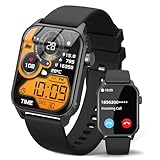
- 【1.83" HD Display & Customizable Watch Faces】Immerse yourself in a vibrant 1.83-inch IPS display, boasting a sharp resolution of 240*284 for crystal-clear visuals. Effortlessly personalize your smart watch with a wide array of customizable watch faces to suit your personal style for every occasion—whether trendy, artistic, or minimalist—ideal for casual, sporty, or professional. Its sleek, modern design complements any outfit, blending technology and fashion seamlessly for everyday wear
- 【120 Sports Modes & Advanced Health Tracking】Our TK29 smart watches for women men come equipped with 120 sports modes, allowing you to effortlessly track a variety of activities such as walking, running, cycling, and swimming. With integrated heart rate and sleep monitors, you can maintain a comprehensive overview of your health, achieve your fitness goals, and maintain a balanced, active lifestyle with ease. Your ideal wellness companion (Note: Step recording starts after exceeding 20 steps)
- 【IP67 Waterproof & Long-Lasting Battery】Designed to keep up with your active lifestyle, this smartwatch features an IP67 waterproof rating, ensuring it can withstand splashes, sweat, and even brief submersion, making it perfect for workouts, outdoor adventures, or rainy days. Its reliable 350mAh battery offering 5-7 days of active use and up to 30 days in standby mode, significantly reducing frequent charging. Ideal for all-day wear, whether you’re at the gym, outdoors, or simply on the go
- 【Stay Connected Anytime, Anywhere】Stay informed and in control with Bluetooth call and music control features. Receive real-time notifications for calls, messages, and social media apps like Facebook, WhatsApp, Twitter, and Instagram directly on your smartwatch. Easily manage calls, control your music playlist, and stay updated without needing to reach for your phone. Perfect for work, workouts, or on-the-go, this watch keeps you connected and never miss important updates wherever you are
- 【Multifunction & Wide Compatibility】Seamlessly handle heart rate monitoring, sleep tracking, and enjoy conveniences like camera/music control, Seamlessly handle heart rate monitoring, sleep tracking, and more-all directly from your wrist. This 1.83 inches HD smartwatch is compatible with iPhone (iOS 9.0+) & Android (5.0+), ensuring smooth daily connectivity and convenience throughout your day. More than just a timepiece, it’s a stylish, all-in-one wearable for smarter, healthier living
Who Casio was targeting, and who it clearly wasn’t
The ideal WSD-F20 user is an Android phone owner who spends long days hiking, trekking, or off-grid exploring and values maps over metrics. This watch is for people who care more about seeing a trail contour line than tracking sleep stages or closing activity rings. It assumes the wearer is comfortable managing battery modes, offline maps, and occasional software friction in exchange for navigational confidence.
Casio was not chasing runners, triathletes, or fitness-first users. There is no native performance training ecosystem here to rival Garmin Connect, no recovery metrics, and no serious attempt to optimize for daily health tracking. If your priority is structured workouts or week-long battery life without compromise, Casio was comfortable letting you look elsewhere.
Mapping as the core feature, not an accessory
Unlike many smartwatches of its era, the WSD-F20 treats mapping as a primary function rather than a bonus. The integration with apps like ViewRanger and the ability to preload offline maps was a deliberate nod to hikers who rely on visual terrain context, not just breadcrumb trails. Casio understood that for navigation-focused users, a full-color map can be more valuable than a dozen abstract stats screens.
This focus also explains why the watch feels heavier and more power-hungry than simpler GPS watches. Rendering maps, maintaining GPS lock, and driving a large display all come at a cost, and Casio accepted those trade-offs rather than stripping features back. The result is a watch that excels when actively navigating, but demands conscious power management to do so.
Wear OS as a necessary compromise, not a selling point
Casio’s decision to use Wear OS was pragmatic rather than enthusiastic. It provided app access, Google services, and basic smartwatch expectations without Casio having to build an operating system from scratch. At the same time, Wear OS limitations heavily influenced battery life, performance consistency, and long-term software relevance.
The WSD-F20 works best when you treat Wear OS as a supporting layer, not the reason to buy the watch. Notifications, occasional app use, and simple interactions are fine, but this is not a fluid, buttery smartwatch experience even by the standards of its launch era. Casio assumed its core audience would tolerate that, as long as the watch delivered when miles from the trailhead.
A watch built for a narrow, intentional audience
The WSD-F20 was never meant to win spec-sheet battles or appeal to casual smartwatch buyers. Casio was targeting a specific type of outdoor user who values durability, map-based navigation, and brand trust over polish or longevity in daily wear. That narrow focus explains both why the watch still has devoted fans and why it feels outdated or impractical to others.
Understanding this positioning frames the rest of the review clearly. The WSD-F20 succeeds or fails entirely based on whether your priorities align with Casio’s original intent, not on how well it imitates mainstream smartwatches.
Design, Case Construction, and Wearability in the Field
Seen through the lens of Casio’s narrow target audience, the WSD-F20’s design makes immediate sense. This is not a smartwatch trying to disappear on the wrist, but a navigation instrument that happens to be wearable. Everything about the case prioritizes visibility, protection, and physical control over elegance or daily comfort.
Case dimensions and first impressions
The WSD-F20 is unapologetically large, measuring roughly 61.7 mm tall, 53.8 mm wide, and nearly 18 mm thick. On paper those numbers are intimidating, and on smaller wrists the watch will dominate your forearm rather than sit neatly on it. Casio clearly assumed this watch would be worn over base layers, jacket cuffs, or gloves rather than paired with casual clothing.
Weight reinforces that impression. At around 92 grams without the strap and just over 100 grams on the wrist, it is noticeably heavier than most modern GPS watches. The upside is that the mass feels purposeful and evenly distributed, not top-heavy or awkward during movement.
Materials and structural durability
Casio uses a reinforced resin case with a raised metal bezel designed to protect the display from direct impacts. The construction meets MIL‑STD‑810G shock resistance standards and carries a 50‑meter water resistance rating, which is sufficient for heavy rain, river crossings, and snow but not intended for prolonged swimming. In real-world use, the case shrugs off scrapes, rock contact, and pack strap abrasion with the indifference Casio is known for.
The bezel protrudes enough to shield the screen when scraping against stone or ice, a detail that matters far more on the trail than it does in product photos. The overall finish is utilitarian and matte, avoiding glossy surfaces that would quickly show wear or reflect sunlight at awkward angles.
Display integration and protective design
The physical design is closely tied to Casio’s dual-layer display system. Beneath the color LCD sits a monochrome, low-power LCD that can remain visible in direct sunlight even when the main screen is off. This allows Casio to build a thicker, more robust case without sacrificing legibility, a trade-off that becomes obvious during long days outdoors.
The display is recessed slightly below the bezel lip, adding passive protection without relying on fragile coatings. While the screen resolution and brightness feel dated by modern smartwatch standards, the physical integration prioritizes survivability and glance readability over visual polish.
Buttons, controls, and glove usability
Unlike touch-first smartwatches, the WSD-F20 leans heavily on physical buttons. The oversized side buttons are spaced widely enough to be used with gloves, cold fingers, or wet hands, and each has a firm, confidence-inspiring click. This matters when zooming maps, marking waypoints, or waking the screen in freezing conditions where touchscreens become unreliable.
Button placement is intuitive for outdoor tasks, minimizing accidental presses while wearing a pack or bending the wrist. The downside is that the case feels even bulkier as a result, but this is a deliberate compromise rather than a design oversight.
Strap, fit, and long-duration comfort
The stock resin strap is stiff out of the box but softens with use. It is wide, durable, and well-suited to resisting sweat, dirt, and repeated flexing, though it lacks the breathability of modern nylon or fabric bands. The lug system is proprietary, limiting third-party strap options without adapters.
Comfort over long hikes is acceptable rather than exceptional. The watch stays stable during movement, but its size and thickness can cause pressure points during all-day wear, especially on narrower wrists or when worn tightly for GPS accuracy.
How it wears during actual outdoor use
In the field, the WSD-F20 feels more at home than it does in daily life. Over a jacket sleeve or base layer, the bulk becomes less noticeable, and the large display is easier to reference without lifting the wrist awkwardly. The weight also helps the watch stay planted during scrambling or pole use rather than rotating around the wrist.
As a daily wearable, it is cumbersome and visually dominant. As a trail companion built to be checked dozens of times a day for navigation context, the design suddenly feels logical, even conservative, in its priorities.
Design trade-offs and long-term practicality
Casio made no attempt to chase slimness or fashion trends with the WSD-F20. The result is a watch that ages slowly in terms of physical durability but quickly in perceived refinement. Compared to modern adventure watches that balance ruggedness with comfort, the Pro Trek Smart feels overbuilt in some areas and under-refined in others.
That said, the physical design remains one of its strongest assets for users who value reliability over subtlety. If your adventures involve rock, weather, gloves, and long navigation sessions, the WSD-F20’s construction serves its purpose with clear intent.
Dual-Layer Display Technology: LCD + AMOLED in Real Outdoor Use
If the case and weight explain why the WSD-F20 feels purpose-built, the dual-layer display explains how Casio expects you to actually use it outdoors. This is not a conventional smartwatch screen chasing color saturation or thinness, but a functional system designed to balance visibility, power consumption, and constant reference in demanding conditions.
The Pro Trek Smart uses a stacked display: a full-color AMOLED panel underneath, and a monochrome, low-power LCD layer on top. In theory it sounds complex, but in practice it is one of the most defining aspects of the watch’s real-world usability.
How the dual-layer system actually works
The monochrome LCD layer is always visible and requires very little power. It shows time, basic activity data, compass direction, altitude, or simple markers without waking the AMOLED display at all. This is the screen you glance at dozens of times an hour while hiking or navigating.
When you interact with the watch, launch maps, or need detailed information, the AMOLED panel activates beneath the LCD. The transition is not flashy, but it is deliberate, prioritizing continuity rather than visual drama.
Casio’s intent is clear: the watch should behave more like an outdoor instrument than a phone on your wrist. You are never fully “off” the watch face, even when conserving battery.
Readability in sunlight, snow, and shade
In direct sunlight, the LCD layer is the hero. It remains legible when many AMOLED-only watches wash out or require brightness boosts that hammer battery life. On exposed ridgelines or above treeline, the WSD-F20 is easier to read at a glance than most Wear OS competitors of its era.
In snow or high-glare environments, the monochrome display continues to perform consistently. There is no color contrast to fight reflections, just clean black-on-gray information that behaves predictably.
The AMOLED panel, by comparison, looks dated by modern standards but remains functional. Colors are adequate rather than vibrant, and resolution is fine for maps without feeling sharp. It is not a display you admire; it is a display you use.
Always-on functionality without constant battery drain
This is where the dual-layer approach pays off most clearly. With the LCD layer active, the watch behaves like a digital outdoor watch rather than a smartwatch. Time, compass bearing, and basic navigation context are available without lighting up a power-hungry panel.
During long hikes, this dramatically reduces the need to wake the AMOLED display. In practical terms, it allows the WSD-F20 to last through extended days when used as a reference tool rather than a constantly interacted-with screen.
It also changes user behavior. You stop tapping and swiping out of habit and start glancing, orienting, and moving on, which feels more appropriate for outdoor navigation.
Mapping and navigation on the AMOLED layer
When maps are engaged, the AMOLED layer becomes essential. Topographic detail, trail lines, and location markers are readable enough for route checking and situational awareness, though not at the level of modern Garmin AMOLED adventure watches.
Rank #2
![Apple Watch Series 11 [GPS 46mm] Smartwatch with Jet Black Aluminum Case with Black Sport Band - M/L. Sleep Score, Fitness Tracker, Health Monitoring, Always-On Display, Water Resistant](https://m.media-amazon.com/images/I/312K597M2uL._SL160_.jpg)
- HYPERTENSION NOTIFICATIONS — Apple Watch Series 11 can spot signs of chronic high blood pressure and notify you of possible hypertension.*
- KNOW YOUR SLEEP SCORE — Sleep score provides an easy way to help track and understand the quality of your sleep, so you can make it more restorative.
- EVEN MORE HEALTH INSIGHTS — Take an ECG anytime.* Get notifications for a high and low heart rate, an irregular rhythm,* and possible sleep apnea.* View overnight health metrics with the Vitals app* and take readings of your blood oxygen.*
- STUNNING DESIGN — Thin and lightweight, Series 11 is comfortable to wear around the clock — while exercising and even when you’re sleeping, so it can help track your key metrics.
- A POWERFUL FITNESS PARTNER — With advanced metrics for all your workouts, plus features like Pacer, Heart Rate Zones, training load, Workout Buddy powered by Apple Intelligence from your nearby iPhone,* and more. Series 11 also comes with three months of Apple Fitness+ free.*
The screen size helps here. The WSD-F20’s large footprint allows maps to breathe, making it easier to follow trails without constant zooming. That benefit partially offsets the lower resolution and older panel technology.
However, prolonged map use quickly reminds you that this is still a Wear OS device. Battery drain increases sharply, and the display becomes something you manage rather than forget about.
Interaction trade-offs and visual compromises
The LCD layer limits how expressive the always-on display can be. You are not getting rich complications, dynamic widgets, or customizable faces in the way modern smartwatches offer. What you get instead is clarity and consistency.
The AMOLED layer, while serviceable, feels like the weakest part of the visual experience today. Viewing angles are fine, but brightness and contrast fall short compared to current-generation outdoor watches.
That said, the display system aligns perfectly with the watch’s physical design philosophy. Just as the case favors protection over elegance, the screen favors function over aesthetics.
Who benefits most from this display approach
If your outdoor use involves frequent checks of direction, altitude, or time rather than constant map interaction, the dual-layer display is genuinely advantageous. It encourages efficient use and rewards restraint with better endurance.
For users expecting smartwatch-level visuals or fluid touch interaction, it will feel dated and occasionally frustrating. The WSD-F20 does not try to be visually impressive; it tries to be dependable.
In real outdoor use, that distinction matters. The dual-layer display is not a gimmick, but a clear expression of Casio’s priorities, and it remains one of the most thoughtfully executed features of the Pro Trek Smart despite the watch’s age.
GPS, Sensors, and Mapping Performance: Navigation Where It Matters
The display philosophy only makes sense when paired with capable navigation hardware, and this is where the Pro Trek Smart WSD-F20 starts to justify its bulk and compromises. Casio did not build this watch to be a notification hub that occasionally tracks a walk; it was designed to be a navigation instrument that happens to run Wear OS.
In real outdoor use, the GPS, sensor suite, and mapping experience form the core of the WSD-F20’s value proposition, especially for hikers and trekkers who prioritize situational awareness over athletic metrics.
GPS accuracy and real-world tracking reliability
The WSD-F20 uses standalone GPS with GLONASS support, and acquisition times are generally solid for a watch of its generation. Cold starts typically lock within 30–60 seconds in open terrain, with longer waits under dense canopy or in steep valleys.
Once locked, track accuracy is respectable rather than class-leading. On established trails, recorded paths closely follow the route, though tight switchbacks and forested sections can show mild smoothing and corner-cutting compared to modern multi-band GPS watches.
Where the WSD-F20 performs well is consistency. It rarely drops signal entirely, and long hikes produce continuous tracks without gaps, which is more important for navigation review than chasing perfect breadcrumb precision.
Altitude, barometer, and compass: Casio’s traditional strengths
Casio’s outdoor heritage shows most clearly in the sensor package. The triple sensor system includes a barometric altimeter, barometer, and digital compass, all of which are accessible directly from Casio’s native apps.
Altitude readings are stable over time, especially when the barometer is calibrated manually at a known elevation. During multi-hour hikes, elevation gain and loss trends align well with topographic expectations, even if absolute altitude can drift without recalibration.
The compass is responsive and reliable, though it requires periodic calibration like most digital compasses. For quick bearing checks or map orientation, it works well enough to reduce reliance on a physical compass in fair conditions.
Offline maps and route awareness in the field
Mapping remains one of the WSD-F20’s standout features, even years after launch. Through Casio’s Location Memory app and compatible third-party apps, you can preload offline maps directly to the watch for use without phone connectivity.
These maps are not as visually rich or layered as modern Garmin or Suunto offerings, but they are functional. Trails, contour lines, and landmarks are legible enough for route confirmation, especially when paired with the large screen.
In practice, the watch excels at answering simple but critical questions: Am I still on the trail? Is this the correct turn? How far am I from the next waypoint? It is less suited to complex route planning on-wrist, which is better handled before the hike.
Interaction speed and Wear OS limitations outdoors
Navigation performance is inseparable from software behavior, and this is where the WSD-F20 shows its age. Map panning and zooming are slower than on modern watches, and touch input can feel laggy, particularly when battery-saving modes are active.
Physical buttons help mitigate this. Assignable shortcuts allow quick access to compass, location data, and maps without relying solely on the touchscreen, which is a genuine advantage in cold or wet conditions.
That said, Wear OS remains a weak link for extended outdoor navigation. App stability is generally acceptable, but background activity management and occasional slowdowns remind you that this is not a purpose-built outdoor OS like Garmin’s.
Battery impact during navigation-heavy use
Active GPS and mapping place immediate strain on the battery. Continuous GPS tracking with map display can drain the watch within a single long day if not managed carefully.
Casio’s Extended Mode helps by switching to the monochrome LCD and limiting background processes, allowing basic GPS tracking and sensor data to run for multiple days. The trade-off is reduced interaction and minimal visual feedback.
For multi-day trips, the WSD-F20 works best as a check-in device rather than a constantly active navigator. Thoughtful use, combined with a power bank or solar charger, is essential if you plan to rely on it beyond a day hike.
How it compares to modern adventure watches
Against current Garmin Fenix or Epix models, the WSD-F20 falls behind in GPS precision, battery efficiency, and mapping sophistication. Multi-band GNSS, adaptive power modes, and smoother interfaces have moved the category forward significantly.
Where the Casio still holds ground is in its hybrid approach. The ability to run full offline maps, Android apps, and a true always-on LCD gives it a different feel from fitness-first adventure watches.
For users who value map visibility and sensor access over performance metrics and battery optimization, the WSD-F20 remains surprisingly competent, provided its limitations are understood and accepted.
Battery Life Trade-Offs: Smartwatch Power vs Expedition Reality
Casio’s hybrid philosophy reaches its most consequential compromise when battery life enters the equation. The WSD-F20 is not trying to match the week-long endurance of a Fenix-class watch, and understanding that upfront reframes the experience from frustration to managed expectation.
This is a smartwatch that asks you to think like an expedition planner rather than a passive wearer. Power becomes a resource to allocate, not a given.
Three operating modes, three very different realities
The WSD-F20 lives or dies by how you use its power modes. In full Smart mode, with Wear OS active, color maps enabled, Wi‑Fi syncing, and notifications flowing, battery life rarely stretches beyond a day and a half.
Timepiece mode shuts almost everything down, reverting the watch to a simple digital display with basic timekeeping. It can last close to a month here, but this is effectively survival mode rather than functional navigation.
Extended Mode sits in the middle and defines the watch’s outdoor identity. The monochrome LCD takes over, GPS logging continues at set intervals, and sensors remain active, allowing multi-day tracking at the cost of interaction and visual richness.
GPS, mapping, and the cost of situational awareness
Active GPS with maps displayed is where the WSD-F20 burns energy fastest. Continuous tracking while panning maps or checking position frequently can drain the battery within 8 to 10 hours, especially if the color screen stays active.
Reducing map interaction extends runtime significantly. Using GPS passively for breadcrumb tracking while relying on the LCD screen for time and sensor checks can stretch Extended Mode to two or even three days under favorable conditions.
Rank #3

- Bluetooth Call and Message Alerts: Smart watch is equipped with HD speaker, after connecting to your smartphone via bluetooth, you can answer or make calls, view call history and store contacts through directly use the smartwatch. The smartwatches also provides notifications of social media messages (WhatsApp, Twitter, Facebook, Instagram usw.) So that you will never miss any important information.
- Smart watch for men women is equipped with a 320*380 extra-large hd full touch color screen, delivering exceptional picture quality and highly responsive touch sensitivity, which can bring you a unique visual and better interactive experience, lock screen and wake up easily by raising your wrist. Though “Gloryfit” app, you can download more than 102 free personalised watch faces and set it as your desktop for fitness tracker.
- 24/7 Heart Rate Monitor and Sleep Tracker Monitor: The fitness tracker watch for men has a built-in high-performance sensor that can record our heart rate changes in real time. Monitor your heart rate 26 hours a day and keep an eye on your health. Synchronize to the mobile phone app"Gloryfit", you can understand your sleep status(deep /light /wakeful sleep) by fitness tracker watch develop a better sleep habit and a healthier lifestyle.
- IP68 waterproof and 110+ Sports Modes: The fitness tracker provides up to 112+ sports modes, covering running, cycling, walking, basketball, yoga, football and so on. Activity trackers bracelets meet the waterproof requirements for most sports enthusiasts' daily activities, such as washing hands or exercising in the rain, meeting daily needs (note: Do not recommended for use in hot water or seawater.)
- Multifunction and Compatibility: This step counter watch also has many useful functions, such as weather forecast, music control, sedentary reminder, stopwatch, alarm clock, timer, track female cycle, screen light time, find phone etc. The smart watch with 2 hrs of charging, 5-7 days of normal use and about 30 days of standby time. This smart watches for women/man compatible with ios 9.0 and android 6.2 and above devices.
This reinforces the idea that the WSD-F20 works best when maps are consulted deliberately rather than constantly. It rewards restraint and penalizes casual scrolling.
Cold weather performance and real-world degradation
In cold environments, battery performance drops noticeably. Sub-zero temperatures accelerate drain in Smart mode, and even Extended Mode sees reduced longevity unless the watch is kept insulated under a jacket sleeve.
The large case does help slightly by providing more internal thermal mass than slimmer smartwatches. Still, this is not a watch you want exposed on your wrist all day during winter treks without a backup plan.
Charging in the field also becomes slower in cold conditions, compounding the issue if you rely on power banks.
Charging logistics and expedition planning
Casio uses a proprietary magnetic charging cradle, which is secure but adds another item to your kit. Unlike USB‑C or solar-assisted watches, there is no redundancy if the cable is forgotten or damaged.
A 10,000 mAh power bank can recharge the WSD-F20 multiple times, but this shifts weight and planning back onto the user. For overnight hikes this is manageable, but on longer routes it becomes a logistical consideration rather than an afterthought.
This contrasts sharply with modern adventure watches designed to minimize charging frequency rather than accommodate it.
Perspective against modern adventure expectations
Compared to current Garmin or Suunto offerings, the WSD-F20’s battery life feels dated. Adaptive GPS sampling, multi-band efficiency, and sunlight-readable AMOLED panels have changed what users expect from an outdoor watch.
What Casio offers instead is flexibility. You choose when to spend power on maps, apps, and interaction, and when to retreat into a low-consumption tracking role.
For users willing to manage that balance consciously, the WSD-F20 can still support real adventures. It simply refuses to pretend that smartwatch convenience comes without an energy cost.
Wear OS on the Trail: Apps, Usability, and Platform Limitations
All of the battery trade-offs discussed earlier ultimately tie back to one core reality: the Pro Trek Smart WSD-F20 is, at heart, a Wear OS watch adapted for the outdoors, not a ground-up adventure platform. That distinction shapes how it behaves on the trail, how useful its apps are, and where friction inevitably appears.
Wear OS as a navigation layer, not a native outdoor OS
Wear OS gives the WSD-F20 access to Google Maps, third-party mapping apps, messaging, notifications, and basic smart features. On paper, this is far more flexible than the closed ecosystems used by most dedicated adventure watches.
In practice, Wear OS was never designed for sustained, off-grid navigation. Maps work best when preloaded and consulted briefly rather than used as a constantly active guide, reinforcing the deliberate, power-conscious usage model described earlier.
Casio’s own Pro Trek app partially bridges this gap by handling track recording, waypoint marking, and sensor data more efficiently than generic Wear OS apps. It feels purpose-built, but it still sits on top of an OS that prioritizes smartphone-style interaction over expedition efficiency.
App availability versus app suitability
The Play Store opens the door to apps like ViewRanger, Komoot, and even basic fitness trackers. This flexibility remains one of the WSD-F20’s strongest differentiators compared to locked-down platforms from Garmin or Suunto.
However, many Wear OS apps assume frequent interaction, touch input, and reliable connectivity. On a muddy trail or while wearing gloves, that assumption breaks down quickly.
The large 1.32-inch display helps mitigate this by offering readable maps and larger touch targets, but the experience still demands more attention and dexterity than button-driven adventure watches. This reinforces the idea that the WSD-F20 is better suited to intentional map checks rather than continuous turn-by-turn guidance.
Touchscreen-first usability in real terrain
Casio supplemented the touchscreen with three physical buttons, and they matter far more outdoors than in daily smartwatch use. Button navigation allows basic scrolling and selection without relying entirely on touch, especially in wet or cold conditions.
That said, Wear OS remains fundamentally touch-oriented. Swiping between screens, zooming maps, and managing notifications all require fine motor input that can feel awkward on exposed ridgelines or during active movement.
The sheer size of the watch works both for and against usability. The thick, resin-reinforced case and mineral glass inspire confidence against impacts, but the height and weight can make one-handed interaction feel cumbersome during technical sections.
Notifications, connectivity, and mental load
One underappreciated limitation of Wear OS in the backcountry is cognitive, not technical. Notifications, even when limited, introduce distractions that dedicated outdoor watches intentionally avoid.
The WSD-F20 can be configured to minimize alerts, but doing so requires discipline and setup before the trip. Left unchecked, the watch behaves like a ruggedized smartphone extension rather than a single-purpose tool.
When paired with a phone, connectivity-dependent features work well. Once disconnected, the OS gracefully degrades, but certain apps lose functionality entirely, reminding you that Wear OS was designed with constant pairing in mind.
Performance and aging platform realities
The WSD-F20’s Snapdragon Wear processor was adequate at launch but feels dated today. App loading times, map rendering, and general responsiveness lag behind modern Wear OS devices, especially after extended uptime.
Casio’s optimization helps keep core functions stable, but multitasking or rapid app switching can expose stutters. This is less noticeable when the watch is used sparingly, but it becomes apparent during frequent interaction.
Software support is another reality check. Wear OS updates for older hardware are limited, and newer outdoor-focused apps increasingly target more recent chipsets and screen technologies.
Where Wear OS still makes sense outdoors
Despite its limitations, Wear OS gives the WSD-F20 a unique identity. It excels as a hybrid tool for users who want occasional navigation, sensor data, and smartwatch convenience without committing to a fully closed ecosystem.
For hikers who plan routes in advance, rely on manual map checks, and value app flexibility over automation, the platform can still work surprisingly well. It rewards those who understand its constraints and plan around them.
The WSD-F20 does not hide Wear OS’s weaknesses in the wild. Instead, it exposes them clearly, asking the user to decide whether flexibility and familiarity outweigh efficiency and endurance.
Durability, Water Resistance, and Long-Term Reliability
The realities of Wear OS performance naturally raise a second question: if the software demands patience, does the hardware at least justify that compromise over time? This is where the Pro Trek Smart WSD-F20 begins to feel more traditionally Casio, leaning heavily on physical resilience rather than digital longevity.
Case construction and impact resistance
The WSD-F20 is unapologetically large at roughly 61.7 x 57.7 x 15.3 mm, and that bulk is not decorative. The resin case is reinforced with a stainless steel bezel, designed to absorb edge impacts that would crack or scuff slimmer smartwatch housings.
Casio certified the watch to MIL-STD-810G standards for shock resistance, and in real-world use it behaves accordingly. Knocks against rock faces, trekking poles, and vehicle doors tend to leave cosmetic marks rather than functional damage, reinforcing its tool-watch intent.
The sapphire crystal is a critical part of this equation. It resists scratches far better than the Gorilla Glass used on many Wear OS competitors, making it particularly well-suited to sandy, rocky, and abrasive environments where wrist contact is unavoidable.
Water resistance and environmental sealing
Casio rates the WSD-F20 to 50 meters of water resistance, which translates well for outdoor use but not for serious aquatic activity. Rainstorms, river crossings, snow, and washing off trail grime pose no issue, and the physical buttons remain responsive when wet.
This rating is sufficient for hiking, trekking, and general adventure travel, but it lacks the margin preferred by divers or frequent open-water swimmers. Compared to dedicated outdoor watches offering 100 meters or more, the WSD-F20 sits firmly in the land-focused category.
Rank #4
![Apple Watch Series 11 [GPS 42mm] Smartwatch with Rose Gold Aluminum Case with Light Blush Sport Band - S/M. Sleep Score, Fitness Tracker, Health Monitoring, Always-On Display, Water Resistant](https://m.media-amazon.com/images/I/31J+F-pXaWL._SL160_.jpg)
- HYPERTENSION NOTIFICATIONS — Apple Watch Series 11 can spot signs of chronic high blood pressure and notify you of possible hypertension.*
- KNOW YOUR SLEEP SCORE — Sleep score provides an easy way to help track and understand the quality of your sleep, so you can make it more restorative.
- EVEN MORE HEALTH INSIGHTS — Take an ECG anytime.* Get notifications for a high and low heart rate, an irregular rhythm,* and possible sleep apnea.* View overnight health metrics with the Vitals app* and take readings of your blood oxygen.*
- STUNNING DESIGN — Thin and lightweight, Series 11 is comfortable to wear around the clock — while exercising and even when you’re sleeping, so it can help track your key metrics.
- A POWERFUL FITNESS PARTNER — With advanced metrics for all your workouts, plus features like Pacer, Heart Rate Zones, training load, Workout Buddy powered by Apple Intelligence from your nearby iPhone,* and more. Series 11 also comes with three months of Apple Fitness+ free.*
Long-term sealing has proven solid in practice. Units that have seen years of exposure to dust, cold, and moisture generally fail due to battery aging rather than water ingress, which speaks well of Casio’s gasket design and assembly quality.
Buttons, controls, and glove usability
Unlike many touchscreen-first smartwatches, the WSD-F20 relies heavily on physical buttons, and this pays dividends outdoors. The buttons are large, well-spaced, and provide positive feedback even when wearing gloves or operating in cold conditions.
Over time, these buttons tend to hold up better than capacitive alternatives. There is little evidence of mushiness or failure after extended use, and the mechanical simplicity aligns well with the watch’s rugged positioning.
The touchscreen remains usable for map interaction, but it is clearly secondary in harsh conditions. Casio’s control layout acknowledges this reality, prioritizing reliability over visual elegance.
Strap durability and long-wear comfort
The stock resin strap is thick, stiff at first, and unmistakably utilitarian. It softens with use and resists cracking better than silicone straps commonly found on consumer smartwatches.
Comfort is subjective, but weight is unavoidable here. At roughly 92 grams without accessories, the WSD-F20 is noticeable on the wrist, especially during long days, though the wide strap helps distribute pressure evenly.
Importantly, the strap and lugs tolerate repeated removal and reattachment without developing play or looseness. This matters for users who frequently clean gear or swap straps for different conditions.
Battery aging and hardware longevity
Lithium-ion battery degradation is the WSD-F20’s most significant long-term vulnerability. After several years, reduced capacity becomes noticeable, especially given the already modest battery life when GPS and mapping are in use.
Charging relies on exposed pogo pins, which are convenient but demand care. Dirt, sweat, and corrosion can interfere with charging if not cleaned periodically, making basic maintenance part of ownership rather than an optional habit.
Despite this, core sensors such as GPS, compass, altimeter, and barometer tend to remain accurate over time. Casio’s sensor calibration and hardware stability hold up well, even as the surrounding software ecosystem moves on.
Reliability versus obsolescence
From a purely physical standpoint, the WSD-F20 ages better than many early smartwatches. The case, crystal, buttons, and seals are built to outlast the software that runs on them.
The irony is that long-term reliability here is less about hardware failure and more about relevance. As Wear OS evolves and app support narrows, the watch increasingly becomes a durable shell housing a slowly freezing platform.
For users who value physical toughness and can live within fixed capabilities, the WSD-F20 remains dependable. Its body is prepared for years outdoors, even if its digital future is firmly anchored in the past.
Day-to-Day Smartwatch Experience vs Dedicated Outdoor Watches
Living with the WSD-F20 every day exposes the tension at the heart of its design. It is built like a Pro Trek but behaves like an early-generation smartwatch, and those two identities are not always in sync.
As a daily smartwatch
In routine daily use, the WSD-F20 feels closer to a rugged Android accessory than a modern lifestyle watch. Notifications arrive reliably, but interaction is slow by current standards, with noticeable delays when waking the screen, scrolling, or opening apps.
Wear OS functionality remains serviceable for basics like call alerts, messages, calendar reminders, and weather. However, voice input, app syncing, and third-party app performance depend heavily on an older Wear OS environment that no longer benefits from meaningful optimization or updates.
Size and weight also define the daily experience. At over 90 grams with a thick resin case and wide strap, it is impossible to forget on the wrist, especially when typing, sleeping, or wearing fitted jackets.
Comfort and wearability outside the trail
For casual wear, the WSD-F20 prioritizes security over subtlety. The wide lugs, flat caseback, and stiff strap keep the watch stable, but they also limit flexibility and wrist articulation during desk work or driving.
Sleeve clearance is minimal, and the watch tends to catch on cuffs and backpack straps alike. This is not a watch that blends into daily life; it asserts its presence constantly.
Compared to lighter adventure watches like a Garmin Instinct or Suunto Vertical, the Casio feels more like equipment than an accessory. That distinction matters when the watch is worn continuously rather than selectively.
Battery behavior in everyday use
Battery life shapes how the WSD-F20 is used day to day. With GPS and mapping disabled, it can survive roughly a day and a half as a smartwatch, but that requires restraint with screen-on time and app usage.
Using the dual-layer display helps, allowing the monochrome LCD to show time and sensor data without waking the OLED. This feature preserves power well, but it also reinforces how much the watch relies on workarounds to offset its power limitations.
Dedicated outdoor watches with transflective displays and simpler operating systems routinely deliver multiple days or weeks of runtime. In comparison, the WSD-F20 demands more frequent charging even before outdoor features are activated.
Everyday navigation versus expedition navigation
For spontaneous navigation, the WSD-F20 excels in ways traditional outdoor watches cannot. Full-color offline maps, pinch-to-zoom, and familiar map interfaces make quick route checks intuitive, especially in urban or mixed environments.
This strength becomes less compelling in extended outdoor use. Continuous GPS tracking, map rendering, and sensor logging drain the battery quickly, turning multi-day trips into battery management exercises rather than navigation problems.
Dedicated outdoor watches trade visual richness for endurance. Breadcrumb tracks, basic mapping, and low-power GPS modes may look primitive, but they are reliable when power access disappears.
Fitness tracking and health features
As a fitness tracker, the WSD-F20 is adequate but unremarkable. Step counting, activity tracking, and heart rate monitoring function as expected, but the experience lacks the depth and polish found in purpose-built training platforms.
There is no advanced recovery data, training load analysis, or ecosystem-driven coaching. Data exists, but it does not accumulate into meaningful long-term insights without external apps, many of which are no longer actively maintained.
Garmin, Polar, and Suunto watches feel purpose-built here, offering cohesive fitness systems that improve with use. The Casio remains more of a sensor hub than a training partner.
Software stability versus feature stagnation
Day-to-day reliability is generally solid once the watch is configured and left alone. Crashes are rare, and core functions like sensors and offline maps remain dependable.
The limitation is not instability but stagnation. Features do not evolve, integrations do not improve, and compatibility gradually narrows as phone operating systems move forward.
Dedicated outdoor watches feel conservative, but they are often supported for longer periods with firmware updates that refine performance rather than expand scope. The WSD-F20 is frozen in time, functional but increasingly isolated.
Which experience feels more honest
As a smartwatch, the WSD-F20 asks for patience and compromise. It delivers convenience and mapping flexibility, but only if the user accepts bulk, short battery life, and aging software.
Dedicated outdoor watches ask for fewer daily concessions. They may feel limited as smart devices, but they are consistent, efficient, and predictable in how they integrate into everyday routines.
The Casio sits between these worlds, excelling in moments when rich maps and rugged hardware matter, and feeling out of place when used as a constant, always-on companion.
💰 Best Value
![Apple Watch Series 11 [GPS 42mm] Smartwatch with Jet Black Aluminum Case with Black Sport Band - S/M. Sleep Score, Fitness Tracker, Health Monitoring, Always-On Display, Water Resistant](https://m.media-amazon.com/images/I/31ybzrJZckL._SL160_.jpg)
- HYPERTENSION NOTIFICATIONS — Apple Watch Series 11 can spot signs of chronic high blood pressure and notify you of possible hypertension.*
- KNOW YOUR SLEEP SCORE — Sleep score provides an easy way to help track and understand the quality of your sleep, so you can make it more restorative.
- EVEN MORE HEALTH INSIGHTS — Take an ECG anytime.* Get notifications for a high and low heart rate, an irregular rhythm,* and possible sleep apnea.* View overnight health metrics with the Vitals app* and take readings of your blood oxygen.*
- STUNNING DESIGN — Thin and lightweight, Series 11 is comfortable to wear around the clock — while exercising and even when you’re sleeping, so it can help track your key metrics.
- A POWERFUL FITNESS PARTNER — With advanced metrics for all your workouts, plus features like Pacer, Heart Rate Zones, training load, Workout Buddy powered by Apple Intelligence from your nearby iPhone,* and more. Series 11 also comes with three months of Apple Fitness+ free.*
How the WSD-F20 Compares Today: Garmin, Suunto, and Casio’s Own G-Shock Alternatives
Placed against today’s outdoor watch landscape, the WSD-F20 feels less like a failed experiment and more like a branch that the category chose not to follow. Its strengths remain clear, but so do the reasons competitors moved in different directions.
Against Garmin: endurance and ecosystem versus visual mapping
Garmin’s modern outdoor watches, from the Fenix and Epix lines to the more compact Instinct series, approach navigation with efficiency rather than visual richness. Breadcrumb tracks, turn prompts, and simplified topo maps prioritize battery life and clarity over cartographic detail.
The WSD-F20 still outclasses most Garmin models in raw map presentation. Full-color offline maps with pinch-to-zoom feel closer to a handheld GPS or smartphone, which remains valuable for route discovery and terrain interpretation.
The trade-off is stark in the field. A Fenix can record multi-day activities with GPS and sensors active, while the WSD-F20 demands deliberate power management and frequent charging, even with dual-layer display tricks engaged.
Garmin’s advantage grows over time. Training load, acclimation metrics, recovery insights, and long-term firmware support create a watch that improves with ownership, while the Casio remains largely static once configured.
Against Suunto: navigation focus without smartwatch ambition
Suunto’s outdoor watches sit closer to traditional expedition tools than smart devices. Navigation is functional and reliable, but intentionally restrained, emphasizing routes, bearings, and elevation rather than visual exploration.
Compared directly, the WSD-F20 feels more engaging during planning and wayfinding. Viewing real topographic layers, trail names, and terrain shading on the wrist changes how you interact with unfamiliar environments.
Battery endurance again defines the separation. Suunto’s GPS modes are predictable and conservative, often lasting several days of hiking without intervention, whereas the Casio rewards immersion at the cost of autonomy.
Software philosophy also diverges. Suunto continues refining a narrow set of features through its app ecosystem, while the WSD-F20’s Wear OS foundation offers flexibility but little forward momentum.
Casio versus Casio: Pro Trek Smart against G-Shock Move and Rangeman DNA
Casio’s own lineup highlights how differently the company now views outdoor wearables. G-Shock Move models and Rangeman-inspired designs favor extreme durability, long battery life, and sensor reliability over interactive displays.
The WSD-F20 feels physically aligned with G-Shock values. Its thick case, mineral crystal, reinforced lugs, and water resistance inspire confidence, even if the finishing leans utilitarian rather than refined.
Where they diverge is purpose. G-Shock models prioritize survivability and simplicity, often running for months, while the WSD-F20 prioritizes information density and situational awareness at the cost of daily practicality.
Comfort also tells a story. The Pro Trek Smart wears large and top-heavy, especially during sleep or extended daily use, whereas modern G-Shocks distribute weight more evenly and disappear more easily on the wrist.
Smartwatch capability versus outdoor reliability
Compared to Garmin and Suunto, the WSD-F20 still behaves more like a smartwatch that happens to be rugged. Notifications, app support, and touch interaction feel familiar, even if they are increasingly dated.
The problem is longevity. Modern outdoor watches sacrifice app ecosystems to ensure consistency, while the Casio’s reliance on Wear OS ties its future to a platform that has largely moved on.
Compatibility gaps now appear more frequently, especially with newer Android versions and declining third-party app support. Competitors feel intentionally limited but stable, while the WSD-F20 feels capable but abandoned.
Value in today’s market
At original retail pricing, the WSD-F20 struggled to justify its compromises. At today’s discounted levels, it becomes a more nuanced proposition for a specific type of user.
For hikers who prioritize map readability over metrics, and who treat the watch as a tool rather than a daily wearable, the Casio still offers something few modern devices replicate. For anyone seeking an all-in-one training companion with years of support ahead, Garmin and Suunto make the safer, more future-proof case.
The WSD-F20 no longer competes on balance. It competes on character, and whether that character aligns with how you explore outdoors now.
Verdict: Does the Casio Pro Trek Smart WSD-F20 Still Make Sense in 2026?
Looking at the WSD-F20 through a 2026 lens, it is clear that this watch now exists outside the mainstream upgrade cycle. It no longer competes head-to-head with modern Garmin, Suunto, or even newer Casio outdoor offerings on raw capability or long-term software relevance.
What it does offer is a very specific interpretation of outdoor navigation that still resonates if your priorities align. The question is no longer whether it is objectively good, but whether its strengths map to how you actually spend time outdoors today.
As an outdoor tool, it still delivers one key advantage
The Pro Trek Smart WSD-F20 remains one of the most readable wrist-mounted mapping tools Casio has ever produced. The dual-layer display, large physical footprint, and color topo maps make on-wrist navigation feel immediate and confidence-inspiring, especially when following trails or orienting in unfamiliar terrain.
In real-world hiking and trekking scenarios, this clarity matters more than step counts or training load graphs. If your outdoor use centers on route awareness rather than performance metrics, the F20 still feels purpose-built in a way many modern watches do not.
Battery life is the defining compromise
Even by smartwatch standards, the WSD-F20 demands deliberate power management. Multi-day hikes require aggressive use of timepiece mode, disciplined GPS sessions, and acceptance that constant mapping comes at a steep energy cost.
Compared to modern adventure watches that quietly log for days or weeks, this remains the hardest limitation to justify. The Casio can support adventure, but only if you adapt your habits around it rather than expecting it to adapt to you.
Wear OS age shows more in 2026 than ever
Software is where time has been least forgiving. Wear OS support for this generation has effectively plateaued, and while core functions still work, the experience feels frozen rather than evolving.
Compatibility quirks, slower syncing, and diminishing third-party app relevance all reinforce the sense that this is a finished product, not a growing platform. It remains usable, but it no longer feels supported in the way modern buyers typically expect.
Comfort and wearability limit its role as a daily watch
Physically, the WSD-F20 is unapologetically large and heavy. On the trail this reinforces durability and screen legibility, but in everyday wear it becomes a constant presence on the wrist.
Sleeping with it, wearing it under jackets, or treating it as a 24/7 health tracker quickly exposes its bulk. This is a tool watch in the purest sense, not a lifestyle smartwatch trying to blend in.
Who the WSD-F20 still makes sense for
The Casio Pro Trek Smart WSD-F20 still makes sense for hikers and explorers who value on-device maps above all else and are comfortable working within limitations. It suits users who treat the watch as an occasional expedition instrument rather than a daily companion.
At current secondhand or clearance pricing, it can be a compelling niche purchase for those who already understand its trade-offs. In that context, its durability, screen, and mapping still feel uniquely Casio.
Who should look elsewhere
If you want long battery life, structured training tools, reliable health tracking, or guaranteed software longevity, this is not the right watch in 2026. Modern Garmin, Suunto, and even Coros models are more balanced, more efficient, and better supported long-term.
Likewise, if you expect seamless smartphone integration or fast, fluid performance, the WSD-F20 will feel dated quickly. Its strengths are narrow, and outside them it struggles to keep up.
Final assessment
The Casio Pro Trek Smart WSD-F20 is no longer a safe recommendation, but it remains an interesting one. It is a watch defined by character rather than balance, excelling in mapping visibility and rugged presence while conceding battery life, comfort, and software relevance.
In 2026, it makes sense only if you buy it with clear intent and realistic expectations. For the right kind of outdoor user, it can still be a trusted navigation companion, but it is no longer the versatile adventure smartwatch it once aspired to be.