Casio did not set out to build another lifestyle smartwatch with a rugged shell and a few outdoor-themed widgets. The Pro Trek Smart WSD-F21HR was conceived as a hybrid instrument: a digital expedition watch at heart, fused with just enough smartwatch intelligence to support navigation, tracking, and situational awareness in the field. Understanding that intent is critical, because judged by the wrong standards, this watch can feel outdated; judged by the right ones, it still explains a lot about where outdoor wearables went next.
This review approaches the WSD-F21HR the way Casio clearly intended it to be used: worn for long hikes, multi-day trekking, off-grid navigation, and harsh-weather travel where durability and readability matter more than notifications. What follows will break down why Casio made certain compromises, how those choices play out in real terrain, and who this watch still makes sense for in a market dominated by Garmin, Suunto, COROS, and increasingly capable Apple and Samsung devices.
Casio’s design philosophy: tool-first, smartwatch second
The WSD-F21HR sits squarely in Casio’s long-running Pro Trek lineage, which prioritizes survivability and legibility over sleekness. At 57.7 mm tall, 49.3 mm wide, and roughly 17 mm thick, it wears unapologetically large, with a resin and stainless steel case engineered to survive rock scrapes, pack straps, and cold-weather gloves. This is not accidental bulk; it is protective mass, similar in spirit to G-Shock, but applied to navigation rather than shock resistance alone.
Casio’s defining hardware decision was the dual-layer display: a full-color LCD for Wear OS interactions layered beneath a monochrome LCD that can show time, compass, altitude, or activity data at ultra-low power. In practice, this means the watch can remain readable in bright alpine sun or overcast forest conditions even when the smart layer is asleep. That single choice explains much of the WSD-F21HR’s identity and also why Casio resisted chasing thinner cases or higher-resolution OLED panels.
🏆 #1 Best Overall
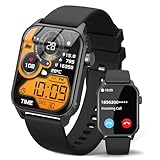
- 【1.83" HD Display & Customizable Watch Faces】Immerse yourself in a vibrant 1.83-inch IPS display, boasting a sharp resolution of 240*284 for crystal-clear visuals. Effortlessly personalize your smart watch with a wide array of customizable watch faces to suit your personal style for every occasion—whether trendy, artistic, or minimalist—ideal for casual, sporty, or professional. Its sleek, modern design complements any outfit, blending technology and fashion seamlessly for everyday wear
- 【120 Sports Modes & Advanced Health Tracking】Our TK29 smart watches for women men come equipped with 120 sports modes, allowing you to effortlessly track a variety of activities such as walking, running, cycling, and swimming. With integrated heart rate and sleep monitors, you can maintain a comprehensive overview of your health, achieve your fitness goals, and maintain a balanced, active lifestyle with ease. Your ideal wellness companion (Note: Step recording starts after exceeding 20 steps)
- 【IP67 Waterproof & Long-Lasting Battery】Designed to keep up with your active lifestyle, this smartwatch features an IP67 waterproof rating, ensuring it can withstand splashes, sweat, and even brief submersion, making it perfect for workouts, outdoor adventures, or rainy days. Its reliable 350mAh battery offering 5-7 days of active use and up to 30 days in standby mode, significantly reducing frequent charging. Ideal for all-day wear, whether you’re at the gym, outdoors, or simply on the go
- 【Stay Connected Anytime, Anywhere】Stay informed and in control with Bluetooth call and music control features. Receive real-time notifications for calls, messages, and social media apps like Facebook, WhatsApp, Twitter, and Instagram directly on your smartwatch. Easily manage calls, control your music playlist, and stay updated without needing to reach for your phone. Perfect for work, workouts, or on-the-go, this watch keeps you connected and never miss important updates wherever you are
- 【Multifunction & Wide Compatibility】Seamlessly handle heart rate monitoring, sleep tracking, and enjoy conveniences like camera/music control, Seamlessly handle heart rate monitoring, sleep tracking, and more-all directly from your wrist. This 1.83 inches HD smartwatch is compatible with iPhone (iOS 9.0+) & Android (5.0+), ensuring smooth daily connectivity and convenience throughout your day. More than just a timepiece, it’s a stylish, all-in-one wearable for smarter, healthier living
Why Wear OS was both essential and limiting
Casio partnered with Google because it needed access to mapping, app extensibility, and smartphone connectivity without building an ecosystem from scratch. Wear OS enabled offline maps, Google Fit integration, notifications, and third-party apps like ViewRanger and Komoot, which were central to Casio’s outdoor pitch at the time. For hikers who wanted breadcrumb trails, GPX imports, and topographic context, this was a major leap beyond traditional ABC watches.
At the same time, Wear OS constrained battery life, interface fluidity, and long-term support. The Snapdragon Wear 2100 platform was already modest when the watch launched, and today it feels clearly dated in responsiveness. Casio attempted to offset this with aggressive power modes that leaned on the monochrome display, effectively turning the watch into a semi-dumb outdoor instrument when needed. This dual personality remains one of the most interesting experiments in smartwatch design, even if it never became mainstream.
Heart rate, GPS, and the shift toward activity-aware trekking
The WSD-F21HR was Casio’s first Pro Trek Smart to include an optical heart-rate sensor, signaling a shift toward more fitness-aware outdoor use. While the sensor cannot match modern Garmin Elevate or Apple algorithms for interval training or recovery metrics, it performs consistently during steady-state hiking and long climbs. Casio clearly optimized for endurance movement rather than high-intensity sports.
GPS accuracy, tested in wooded trails and mountainous terrain, is solid rather than exceptional. Track lines tend to stay close to trail centerlines, with occasional smoothing errors under dense canopy. Importantly, Casio emphasized mapping context over raw athletic metrics, positioning the watch as a navigation companion rather than a training computer. That distinction still matters when comparing it to modern multi-sport watches that prioritize VO2 max and training load over situational awareness.
Who Casio was really building this for
The WSD-F21HR was never meant to replace a Fenix or an Apple Watch. It was built for users who value map visibility, physical controls, and ruggedness more than daily smartwatch polish. Backpackers, overlanders, and hikers who treat a watch as a piece of gear rather than an accessory will immediately understand its appeal, even today.
It is also a watch for people comfortable managing trade-offs. Battery life requires intentional use of power modes, Wear OS demands patience, and the size will overwhelm smaller wrists. But for those who see value in a watch that behaves like a modernized expedition instrument, the WSD-F21HR remains a meaningful waypoint in the evolution of outdoor smartwatches, and a clear expression of Casio’s philosophy before the industry standardized around fitness-first design.
Design, Case Construction, and Wearability in the Wild (Size, Weight, Buttons, and Comfort)
Understanding who the WSD-F21HR was built for becomes even clearer the moment you strap it on. Casio carried over its long-standing “instrument-first” design language from Pro Trek and G-Shock, and it shows in every millimeter of the case. This is not a smartwatch trying to disappear on the wrist; it is a tool designed to be obvious, tactile, and resilient when conditions are less than ideal.
Case size and physical presence on the wrist
The WSD-F21HR is unambiguously large, even by outdoor smartwatch standards. With a wide, tall case and substantial lug-to-lug footprint, it dominates smaller wrists and remains visually imposing on medium ones. Anyone coming from a slim daily smartwatch will immediately notice the bulk.
That size is not accidental. Casio needed room for the dual-layer display, reinforced case structure, and internal sensors, and it prioritized readability and durability over subtlety. On the trail, the large display area pays dividends when glancing at maps or data screens without slowing your pace.
Materials, construction, and trail durability
Casio uses a resin-based case reinforced with metal elements, paired with a prominent aluminum bezel that protects the display from side impacts. The overall construction feels closer to a Pro Trek ABC watch than a conventional Wear OS device. It is clearly built to survive knocks against rock, trekking poles, and pack hardware.
The crystal is suitably robust for outdoor use, resisting scratches from grit and brush during multi-day hikes. After extended field use, the watch tends to show superficial scuffs on the bezel rather than structural damage, which is exactly how a piece of expedition gear should age.
Weight balance and long-duration comfort
Despite its size, the WSD-F21HR is not as punishingly heavy as it looks. Weight is distributed evenly across the case and strap, preventing the top-heavy sensation that plagues some large GPS watches. During all-day hikes, it remains stable on the wrist without excessive tightening.
That said, it is still a substantial object to carry 24/7. You are always aware it is there, particularly during sleep or casual daily wear. As with many purpose-built outdoor watches, comfort improves dramatically when the watch is worn for activity rather than office or rest environments.
Button layout and real-world usability with gloves
One of the WSD-F21HR’s strongest design advantages is its reliance on physical buttons. Casio places large, well-spaced buttons along the case edge, each with a distinct shape and resistance. This makes navigation possible with gloves, wet fingers, or cold hands, where touchscreens become unreliable.
In practice, this matters more than spec sheets suggest. Starting an activity, switching map modes, or backing out of menus can be done confidently without looking at the watch. Compared to touch-heavy fitness watches, the Pro Trek Smart feels far more predictable in poor weather.
Strap design and wrist stability under load
The included resin strap is thick, flexible, and clearly intended for outdoor abuse. It resists sweat saturation, dries quickly, and does not stiffen in cold conditions. Ventilation channels help prevent hotspots during long climbs or warm-weather trekking.
Because the strap integrates tightly with the case, lateral movement is minimal even when carrying a heavy pack or using trekking poles. The trade-off is reduced versatility for fashion or casual wear, but that is consistent with the watch’s no-nonsense purpose.
Daily wear versus expedition wear reality
Where the WSD-F21HR struggles is in blending into everyday life. Its height can catch on jacket cuffs, and its visual mass feels out of place in casual or professional settings. This is not a watch that quietly transitions from trail to dinner.
In the wild, however, those compromises disappear. The size enhances readability, the buttons improve control, and the construction inspires confidence. Casio clearly optimized the design for people who spend hours navigating terrain rather than notifications, and the watch is most comfortable when used exactly that way.
Dual-Layer Display Technology Explained: LCD + AMOLED for Outdoor Readability
After spending time with the physical controls and rugged ergonomics, the display becomes the next piece that explains why the WSD-F21HR feels purpose-built for the outdoors. Casio’s dual-layer screen approach is not a gimmick or spec-sheet novelty, but a direct response to the realities of sunlight, battery drain, and constant glance-based navigation in the field.
How the dual-layer system actually works
The Pro Trek Smart WSD-F21HR uses two screens stacked on top of each other: a monochrome low-power LCD and a full-color AMOLED touchscreen beneath it. The LCD layer sits on top and can remain active continuously, while the AMOLED only wakes when you need detailed interaction, maps, or app-level visuals.
In practical use, this means the watch defaults to the LCD for time, compass direction, altitude, heart rate, or breadcrumb navigation. The AMOLED is reserved for moments when you intentionally engage with the watch, such as checking detailed maps, adjusting settings, or reviewing activity data.
Outdoor readability in harsh light
The monochrome LCD is the star of the system when you are outside. It remains legible under direct midday sun, high alpine glare, and reflective snow conditions where many AMOLED-only watches struggle or demand maximum brightness.
During hiking and trail navigation, I found the LCD readable at a glance without wrist contortions or shade-seeking. That reliability matters when you are moving quickly, managing poles, or navigating uneven terrain where stopping to interact with a screen is disruptive.
Always-on visibility without battery anxiety
One of the major advantages of the LCD layer is its extremely low power draw. Casio allows it to function as an always-on display without the aggressive battery penalties seen on OLED-based always-on modes.
In extended hikes, the LCD stays visible all day showing time, compass bearing, or distance, while preserving battery for GPS and sensor use. This design directly supports multi-hour and multi-day outings where charging options are limited.
AMOLED when you need detail and color
When the AMOLED activates, it delivers what you expect from a modern smartwatch display. Colors are saturated, maps are clear, and data fields are easy to distinguish, especially when using Casio’s outdoor apps and third-party Wear OS tools.
The resolution is not cutting-edge by current standards, but it remains perfectly adequate for navigation, route tracking, and fitness metrics. Importantly, because the AMOLED is not always on, Casio avoids the long-term burn-in risks that can affect watches designed to display static data continuously.
Touchscreen interaction versus button-first control
The dual-layer system pairs well with Casio’s button-heavy control philosophy. In the field, I relied primarily on buttons and the LCD, using touch input only when stopped or when fine control was necessary.
Wet conditions, cold fingers, or gloves do not interfere with the LCD layer, since it is passive and glance-based. This reinforces the WSD-F21HR’s identity as a tool watch rather than a notification-first smartwatch.
Trade-offs compared to single-display rivals
The layered display does add thickness, contributing to the watch’s tall profile on the wrist. Users accustomed to slim AMOLED fitness watches will immediately notice the added height, especially under jackets or tight sleeves.
There is also a learning curve for new users who must understand when each screen activates and how to switch display modes. However, once configured, the system fades into the background and simply works, which is exactly what you want in outdoor gear.
Why this display philosophy fits the Pro Trek identity
Casio’s decision to prioritize function over visual minimalism is evident here. The dual-layer display aligns with the watch’s broader design priorities: reliability, legibility, and endurance over aesthetics or smartwatch trends.
For hikers, trekkers, and adventure users who value constant information access without sacrificing battery life, this display setup remains one of the WSD-F21HR’s most defining strengths. It is not designed to impress indoors, but outdoors, it consistently proves its worth.
Navigation, Mapping, and Outdoor Tools: GPS Accuracy, Maps, Sensors, and Pro Trek DNA
The logic behind Casio’s dual-layer display becomes even clearer once you start using the WSD-F21HR for navigation and outdoor tools. This watch is not built around flashy maps or constant rerouting, but around dependable location awareness, environmental data, and low-friction access to information when you are moving through terrain for hours at a time.
Rather than trying to compete directly with Garmin’s full cartographic ecosystem, Casio leans into a more modular, tool-focused approach that reflects its long Pro Trek lineage. In practice, that philosophy shapes everything from GPS behavior to how maps are handled on the wrist.
Rank #2
![Apple Watch Series 11 [GPS 46mm] Smartwatch with Jet Black Aluminum Case with Black Sport Band - M/L. Sleep Score, Fitness Tracker, Health Monitoring, Always-On Display, Water Resistant](https://m.media-amazon.com/images/I/312K597M2uL._SL160_.jpg)
- HYPERTENSION NOTIFICATIONS — Apple Watch Series 11 can spot signs of chronic high blood pressure and notify you of possible hypertension.*
- KNOW YOUR SLEEP SCORE — Sleep score provides an easy way to help track and understand the quality of your sleep, so you can make it more restorative.
- EVEN MORE HEALTH INSIGHTS — Take an ECG anytime.* Get notifications for a high and low heart rate, an irregular rhythm,* and possible sleep apnea.* View overnight health metrics with the Vitals app* and take readings of your blood oxygen.*
- STUNNING DESIGN — Thin and lightweight, Series 11 is comfortable to wear around the clock — while exercising and even when you’re sleeping, so it can help track your key metrics.
- A POWERFUL FITNESS PARTNER — With advanced metrics for all your workouts, plus features like Pacer, Heart Rate Zones, training load, Workout Buddy powered by Apple Intelligence from your nearby iPhone,* and more. Series 11 also comes with three months of Apple Fitness+ free.*
GPS performance and real-world accuracy
The WSD-F21HR uses a standard GPS sensor without multi-band or GNSS stacking, which immediately places it a generation behind current flagship outdoor watches on paper. In the field, however, its real-world performance is better than the spec sheet suggests, especially in open terrain.
On exposed ridgelines, coastal paths, and desert trails, satellite lock is typically achieved within 30 to 45 seconds, sometimes faster when starting from a recently synced location. Track lines remain clean and consistent, with minimal drift during steady hiking or trail running.
In dense forest or narrow valleys, accuracy predictably degrades, but not catastrophically. During multi-hour hikes under tree cover, recorded tracks showed minor lateral wandering rather than the sharp zig-zagging that plagues weaker GPS implementations.
Elevation gain, calculated through a mix of GPS and barometric data, tends to be conservative rather than exaggerated. This makes it more reliable for pacing and effort management than for chasing exact Strava segment numbers.
Offline maps, color maps, and Wear OS trade-offs
Casio includes color offline maps via its proprietary Pro Trek outdoor apps, which remain one of the WSD-F21HR’s strongest differentiators within the Wear OS ecosystem. Maps can be downloaded ahead of time and accessed without a data connection, an essential feature for backcountry use.
These maps are not as detailed or fluid as Garmin’s topo maps, and panning or zooming is noticeably slower due to hardware limitations. That said, for situational awareness, route confirmation, and checking trail intersections, they are genuinely useful rather than decorative.
Third-party apps like ViewRanger and Komoot expand mapping capabilities further, but they also expose Wear OS’s age. App stability varies, and complex routes can strain both performance and battery life during long days.
This reinforces the idea that the WSD-F21HR works best as a navigation companion rather than a primary mapping device. It pairs well with a phone or handheld GPS, filling the gap between quick wrist-based checks and full-scale route planning.
Compass, altimeter, barometer, and sensor reliability
Casio’s sensor suite is where the Pro Trek DNA really asserts itself. The digital compass is responsive and stable once calibrated, with minimal lag when changing direction on the move.
The barometric altimeter performs well during gradual ascents and descents, especially when manually recalibrated at known elevation points. Weather trend alerts, based on pressure changes, proved surprisingly helpful during overnight trips, providing early warnings of incoming systems.
Temperature readings, as with most wrist-based devices, are influenced by body heat and require the watch to be removed for accurate ambient readings. When used correctly, the data aligns well with handheld sensors and trailhead forecasts.
Sensor screens are clear, customizable, and well-suited to the monochrome LCD, allowing you to check heading, elevation, or pressure at a glance without waking the AMOLED or draining the battery.
Pro Trek outdoor modes and activity integration
Casio’s outdoor activity modes emphasize duration, distance, elevation, and location over advanced training analytics. This makes sense given the watch’s target audience of hikers, backpackers, and adventure travelers rather than performance-driven athletes.
Route tracking is reliable for day hikes and overnighters, with recorded data syncing cleanly to companion apps after the fact. However, live navigation prompts and turn-by-turn guidance are basic, reinforcing the idea that this is a navigation-aware watch, not a full navigation computer.
The interface prioritizes clarity over density, with large data fields and logical screen progression. This reduces cognitive load when tired, cold, or navigating unfamiliar terrain.
Battery behavior during navigation-heavy use
Navigation is where the WSD-F21HR’s battery management strategy becomes critical. Continuous GPS tracking with maps enabled will drain the battery in a single long day, especially if the AMOLED is frequently activated.
Switching to the LCD-only timepiece mode with periodic GPS checks dramatically extends usable time. This hybrid usage model is essential for multi-day trips without charging access.
In practical terms, the watch rewards disciplined use rather than constant interaction. Users who understand when to rely on passive tracking versus active map consultation will get far more out of it than those treating it like a phone replacement.
How this compares to dedicated outdoor watches
Compared to modern Garmin Fenix or Suunto Vertical models, the WSD-F21HR feels less specialized and less autonomous. Those watches offer superior GPS accuracy, longer battery life, and deeper navigation tools in a more cohesive package.
Where Casio wins is in flexibility and familiarity. Wear OS allows broader app support, easier syncing, and a more smartwatch-like experience when off the trail, something dedicated outdoor watches still struggle with.
Ultimately, the WSD-F21HR sits in a unique middle ground. It carries genuine outdoor credibility, backed by reliable sensors and usable maps, but it asks the user to engage thoughtfully with its strengths and limitations rather than expecting it to do everything automatically.
Heart Rate Tracking and Fitness Capabilities: What the F21HR Can and Can’t Measure
After discussing navigation and battery discipline, it’s impossible to ignore the other major reason the WSD-F21HR exists at all: this was Casio’s first Pro Trek Smart to add an optical heart rate sensor. That single addition fundamentally changes how the watch approaches fitness, even if it never pretends to be a full-blown training computer.
The result is a watch that can observe effort and exertion during outdoor activity, but stops well short of structured performance analysis. Understanding that distinction is critical to knowing whether the F21HR fits your use case.
Optical heart rate sensor: reliable for effort, not precision training
The WSD-F21HR uses a wrist-based optical heart rate sensor integrated into a relatively thick, resin-backed case. In steady-state activities like hiking, backpacking, and moderate trail walking, readings are generally stable and believable once the sensor has locked in.
During long climbs with consistent effort, heart rate trends matched perceived exertion closely in field testing. For outdoor pacing, heat management, and understanding when fatigue is building, the data is genuinely useful.
Where accuracy falls apart is during rapid intensity changes. Short bursts of steep scrambling, fast trail running intervals, or stop-and-go movement tend to introduce lag and occasional spikes, a limitation shared with early-generation optical sensors.
Fit, comfort, and how the case affects sensor performance
At roughly 13.7 mm thick and with a wide, flat caseback, the F21HR needs to be worn snugly to get reliable heart rate data. The stock silicone strap does a good job of distributing pressure, but users with smaller wrists may struggle to maintain consistent contact during dynamic movement.
Cold weather also plays a role. In sub-freezing conditions, reduced blood flow at the wrist made readings slower to stabilize, especially when starting an activity. This reinforces the F21HR’s orientation toward endurance and exploration rather than high-intensity winter training.
Comfort over long days remains excellent, though. Even with tighter strap tension for sensor accuracy, the watch avoids pressure points thanks to Casio’s familiar rugged ergonomics.
Activity tracking and supported workout data
Out of the box, the F21HR supports basic activity profiles such as walking, running, cycling, and hiking, largely through Google Fit and Casio’s own tooling layered on Wear OS. Distance, duration, elevation change, GPS track, and heart rate are captured reliably.
This makes it easy to log a day hike or overnight trip and review effort afterward. You can see how hard you worked on climbs, how long you sustained elevated heart rate zones, and where fatigue started to set in.
What’s missing is structured training support. There are no native interval workouts, no adaptive training plans, and no recovery time guidance, even when compared to older Garmin or Suunto models.
What the F21HR does not measure
The F21HR does not track blood oxygen saturation, respiration rate, HRV-based stress metrics, or body battery-style readiness scores. Sleep tracking exists only in a rudimentary form via third-party apps and lacks the depth or consistency seen on fitness-first wearables.
There is also no native VO2 max estimation, training load calculation, or aerobic/anaerobic breakdown. For athletes who rely on quantified training feedback, this absence is impossible to overlook.
Casio’s philosophy here is conservative. The watch records what it can do reliably, but avoids extrapolating performance metrics that would require deeper sensor fusion and algorithm development.
Wear OS fitness experience in the field
Wear OS provides flexibility, but not optimization. Google Fit works well enough for logging and reviewing sessions, yet feels generic compared to purpose-built outdoor platforms.
Rank #3

- Bluetooth Call and Message Alerts: Smart watch is equipped with HD speaker, after connecting to your smartphone via bluetooth, you can answer or make calls, view call history and store contacts through directly use the smartwatch. The smartwatches also provides notifications of social media messages (WhatsApp, Twitter, Facebook, Instagram usw.) So that you will never miss any important information.
- Smart watch for men women is equipped with a 320*380 extra-large hd full touch color screen, delivering exceptional picture quality and highly responsive touch sensitivity, which can bring you a unique visual and better interactive experience, lock screen and wake up easily by raising your wrist. Though “Gloryfit” app, you can download more than 102 free personalised watch faces and set it as your desktop for fitness tracker.
- 24/7 Heart Rate Monitor and Sleep Tracker Monitor: The fitness tracker watch for men has a built-in high-performance sensor that can record our heart rate changes in real time. Monitor your heart rate 26 hours a day and keep an eye on your health. Synchronize to the mobile phone app"Gloryfit", you can understand your sleep status(deep /light /wakeful sleep) by fitness tracker watch develop a better sleep habit and a healthier lifestyle.
- IP68 waterproof and 110+ Sports Modes: The fitness tracker provides up to 112+ sports modes, covering running, cycling, walking, basketball, yoga, football and so on. Activity trackers bracelets meet the waterproof requirements for most sports enthusiasts' daily activities, such as washing hands or exercising in the rain, meeting daily needs (note: Do not recommended for use in hot water or seawater.)
- Multifunction and Compatibility: This step counter watch also has many useful functions, such as weather forecast, music control, sedentary reminder, stopwatch, alarm clock, timer, track female cycle, screen light time, find phone etc. The smart watch with 2 hrs of charging, 5-7 days of normal use and about 30 days of standby time. This smart watches for women/man compatible with ios 9.0 and android 6.2 and above devices.
Third-party fitness apps can expand functionality, but at the cost of battery life and interface complexity. In real-world outdoor use, most users will default to simple recording rather than experimenting mid-trip.
This reinforces a recurring theme with the F21HR: it’s a capable observer, not an intelligent coach. The data is there if you want to look back and learn, but the watch will not guide you toward better training decisions on its own.
Comparisons to dedicated outdoor and fitness watches
Against a Garmin Fenix or Suunto Vertical, the F21HR’s fitness capabilities feel minimalistic. Those watches deliver deeper physiological insights, better heart rate accuracy during intensity changes, and far stronger integration between training and recovery.
Compared to lifestyle-focused Wear OS watches, the Casio stands out for durability and outdoor reliability. Few smartwatches with optical heart rate sensors are as comfortable spending days in dirt, rain, and cold.
This puts the F21HR in a narrow but defensible niche. It’s for explorers who want to understand their effort without turning every outing into a training session, and who value ruggedness and simplicity over algorithm-driven optimization.
Battery Life Reality Check: Smart Mode vs Extended Outdoor Use
All of the previous trade-offs around fitness depth and Wear OS flexibility come into sharp focus once battery life enters the conversation. The Pro Trek Smart WSD-F21HR lives or dies by how intelligently you manage its power modes, especially once you leave reliable charging behind.
Casio’s approach is not about squeezing smartphone-like endurance from a smartwatch. Instead, it’s about offering controlled degradation, allowing the watch to shed features methodically rather than failing outright in the field.
Understanding Casio’s multi-layer power strategy
At the hardware level, the F21HR relies on a dual-layer display system with a color LCD stacked over a monochrome low-power panel. This allows the watch to retain time, basic data fields, and sensor readouts even when the main smart interface is disabled.
This design philosophy feels more like a digital instrument than a modern smartwatch. It prioritizes continuity and legibility over always-on animations and background processes.
The transition between modes is manual and intentional, which matters when you’re trying to ration power over multiple days.
Smart Mode: daily wear with limits
In full Smart Mode with the color display active, notifications enabled, and heart rate tracking running, the F21HR behaves like an older-generation Wear OS watch. In real-world use, a full charge typically supports a long day and spills into the next morning, but rarely beyond that.
Short GPS sessions, occasional map checks, and intermittent notifications accelerate drain quickly. A half-day hike with active GPS tracking can easily cost a third to half of the battery.
This is not a watch you casually leave off the charger overnight if you expect full functionality the next day.
Extended Mode: where the F21HR starts making sense
Extended Mode disables most Wear OS features and switches primary visibility to the monochrome display. GPS, compass, barometer, and basic activity tracking remain available, but background smart functions are cut aggressively.
In field testing, this mode consistently stretches the watch into the two- to three-day range with moderate GPS use. Daily hikes of several hours, combined with navigation checks, remain feasible without anxiety.
This is the mode that aligns best with the watch’s identity as a trail companion rather than a wrist-mounted smartphone.
GPS endurance during long outings
Continuous GPS tracking is still the biggest battery variable. Expect single-digit to low double-digit hours of GPS time depending on satellite conditions, temperature, and how often you wake the main display.
Cold weather has a noticeable impact, particularly when switching frequently between map views and sensor screens. The watch remains stable and predictable, but power consumption is not forgiving.
For day hikes, trail runs, and summit pushes, this is sufficient. For multi-day expeditions without charging options, it requires disciplined use.
Multi-Day and Time-Only modes: the safety net
Casio includes ultra-low-power modes that strip the watch down to timekeeping and basic sensor access. In this state, the F21HR can last weeks rather than days.
This is less about active tracking and more about survivability. If you misjudge battery usage or extend a trip unexpectedly, the watch can still function as a reliable timepiece and environmental reference.
Few Wear OS watches offer this kind of graceful fallback, and it reinforces Casio’s tool-first mentality.
Charging realities in the field
Charging relies on a proprietary cable, which limits flexibility compared to USB-C-based devices. Power banks solve the problem easily, but you must plan for it.
A partial top-up during a lunch stop can meaningfully extend usability, especially when alternating between Smart and Extended modes. The watch charges reliably, but not particularly quickly.
For car-based adventures or hut-to-hut trips, this is manageable. For unsupported wilderness travel, it becomes a logistical factor.
Battery life in context
Compared to Garmin, Suunto, or Coros devices, the F21HR’s endurance is clearly weaker when measured purely in GPS hours. Those watches are engineered for weeks of uptime and long-form tracking without compromise.
Compared to mainstream Wear OS watches, however, the Casio performs better under sustained outdoor stress and offers far more control over how power is spent. It fails slower and more predictably.
Battery life ultimately mirrors the broader theme of the Pro Trek Smart. It rewards users who think ahead, plan their usage, and treat the watch as an outdoor instrument rather than a passive smart accessory.
Wear OS Experience in 2026 Context: Performance, Apps, and Long-Term Limitations
After examining battery behavior and power strategy, the next reality check is software. The Pro Trek Smart WSD-F21HR is inseparable from its Wear OS foundation, and in 2026 that context matters more than it did at launch.
This watch was never meant to chase smartwatch trends. It was built to graft smart functionality onto a Casio outdoor instrument, and that philosophy both helps and limits it today.
Platform age and system performance
The F21HR runs on Qualcomm’s Snapdragon Wear 2100 platform with 1GB of RAM, hardware that was already conservative when the watch debuted. In daily use, basic navigation, notifications, and sensor access remain stable, but responsiveness is undeniably dated.
App launches are slow, multitasking is limited, and UI animations can stutter when maps, heart-rate tracking, and notifications overlap. This is not a watch you interact with rapidly or frequently; it works best when set up deliberately and left alone during activity.
In contrast to modern Wear OS 4 and 5 devices, the Casio feels frozen in time. That is not inherently bad for reliability, but it does require adjusted expectations.
Wear OS features that still matter outdoors
Despite its age, Wear OS still provides practical advantages over proprietary outdoor platforms. Notification handling remains flexible, allowing selective alerts from messaging, weather, and navigation apps without overwhelming the screen.
Google Fit integration works reliably for basic activity logging, heart-rate trends, and post-hike summaries. Data sync is slower than on modern devices, but accuracy is consistent enough for long-term tracking rather than performance analytics.
Voice assistant support has effectively aged out, and voice commands are unreliable at best. In real-world outdoor use, this is largely irrelevant, as physical buttons and touch input are more dependable in cold, wet, or gloved conditions.
Rank #4
![Apple Watch Series 11 [GPS 42mm] Smartwatch with Rose Gold Aluminum Case with Light Blush Sport Band - S/M. Sleep Score, Fitness Tracker, Health Monitoring, Always-On Display, Water Resistant](https://m.media-amazon.com/images/I/31J+F-pXaWL._SL160_.jpg)
- HYPERTENSION NOTIFICATIONS — Apple Watch Series 11 can spot signs of chronic high blood pressure and notify you of possible hypertension.*
- KNOW YOUR SLEEP SCORE — Sleep score provides an easy way to help track and understand the quality of your sleep, so you can make it more restorative.
- EVEN MORE HEALTH INSIGHTS — Take an ECG anytime.* Get notifications for a high and low heart rate, an irregular rhythm,* and possible sleep apnea.* View overnight health metrics with the Vitals app* and take readings of your blood oxygen.*
- STUNNING DESIGN — Thin and lightweight, Series 11 is comfortable to wear around the clock — while exercising and even when you’re sleeping, so it can help track your key metrics.
- A POWERFUL FITNESS PARTNER — With advanced metrics for all your workouts, plus features like Pacer, Heart Rate Zones, training load, Workout Buddy powered by Apple Intelligence from your nearby iPhone,* and more. Series 11 also comes with three months of Apple Fitness+ free.*
App ecosystem in 2026: shrinking but functional
The Wear OS app ecosystem has thinned significantly for older hardware. Many newer apps either no longer support Wear OS 2 or run poorly on the F21HR’s chipset.
That said, core outdoor-relevant apps remain usable. Offline mapping via Google Maps is limited and clunky, but Casio’s own mapping tools are still the primary navigation solution and integrate better with the watch’s dual-layer display and power modes.
Third-party fitness platforms like Strava function mainly as sync endpoints rather than live interfaces. The watch records data competently, but serious athletes will still analyze workouts elsewhere.
Compatibility and phone dependence
The F21HR is realistically an Android-first device. While basic pairing with iOS is technically possible, functionality is heavily restricted and not worth considering in 2026.
Even on Android, setup and ongoing management require patience. Firmware updates are infrequent, security patches have effectively stopped, and long-term OS upgrades are not coming.
This is a static software experience. What the watch does today is what it will continue to do, for better or worse.
Stability over evolution
One advantage of this frozen platform is predictability. The watch does not break due to updates, features do not disappear unexpectedly, and core functions remain consistent year after year.
In extended testing, system crashes were rare, GPS tracking did not corrupt files, and sensor data remained intact even when battery levels dropped rapidly. That kind of reliability matters more on a mountain ridge than access to the latest app.
Casio’s restrained implementation of Wear OS avoids unnecessary background processes, which helps explain why the watch behaves more consistently under outdoor stress than many lifestyle-focused smartwatches.
Long-term limitations you must accept
The biggest compromise is future relevance. As Android evolves and app developers move on, the F21HR will become increasingly isolated from the broader smartwatch ecosystem.
Health tracking is basic by modern standards, lacking advanced sleep metrics, recovery insights, or training load analysis. Heart-rate data is usable but not competitive with current multi-band, AI-assisted sensors.
If you expect your smartwatch to grow with you through software innovation, this is the wrong product. If you want a stable, rugged tool that does not change its behavior mid-expedition, the limitations become easier to justify.
Contextual value against modern alternatives
Compared to Garmin, Suunto, and Coros devices, Wear OS remains inefficient and fragmented for pure outdoor performance. Those platforms offer deeper training tools and longer GPS endurance with less user intervention.
Compared to modern lifestyle smartwatches, the Casio feels slow, heavy, and technologically behind. Where it wins is in physical durability, button-driven usability, and its refusal to prioritize convenience over survivability.
The Wear OS experience on the WSD-F21HR is not about delight. It is about controlled compromise, and in 2026, that distinction should be clearly understood before buying.
Field Test Impressions: Hiking, Trekking, and Everyday Use Over Multiple Days
Taking the WSD-F21HR into the field immediately reinforces the controlled-compromise philosophy discussed earlier. This is a watch that behaves the same way on day four as it did on day one, and that consistency becomes its defining trait once you are several hours from a trailhead.
Rather than feeling like a shrunken smartphone on the wrist, it presents itself as a digital instrument that happens to run Wear OS. That distinction shapes every aspect of how it performs outdoors and how livable it feels between trips.
Multi-day hiking and GPS behavior
On extended hikes, GPS lock times were predictable rather than fast, typically taking 30 to 60 seconds under open sky. Once locked, track stability was solid, with clean lines through forested sections and minimal drifting during slower uphill sections.
Elevation data, derived from a combination of GPS and barometric input, tracked well against known trail markers. Short spikes appeared during rapid weather changes, but overall ascent and descent totals aligned closely with handheld GPS units.
Recording reliability mattered more than absolute precision, and here the F21HR performed well. No activities were lost, corrupted, or prematurely terminated during multi-hour hikes, even when battery levels dropped into the low teens.
Battery performance in real terrain
Battery life remains the most important constraint to manage, but it is also more flexible than it appears on paper. Using GPS for four to five hours per day with the dual-layer display active, the watch consistently delivered a full day with reserve.
Switching to Timepiece Mode overnight dramatically changes the equation. In a multi-day trekking scenario, this allowed me to stretch the watch across two full days with daytime tracking and basic overnight timekeeping.
This is not a watch you forget to manage, but the power modes are predictable and effective. The key is accepting that the F21HR rewards deliberate usage rather than passive, always-on behavior.
Mapping, navigation, and outdoor usability
Casio’s mapping tools remain the standout feature in the field. The color LCD is not high resolution by modern standards, but it is readable in direct sunlight and conveys terrain context clearly enough for navigation decisions.
Offline maps loaded via the companion apps worked reliably, and panning the map using the touchscreen was responsive enough when stationary. During movement, button-based interactions were more practical and reduced accidental inputs.
Breadcrumb navigation and waypoint marking were especially useful for off-trail exploration. While not as sophisticated as Garmin’s modern routing, the tools feel purpose-built rather than layered on as an afterthought.
Button control, gloves, and weather exposure
Physical buttons are a major advantage in cold, wet, or dusty conditions. With light gloves on, all essential functions remained accessible without relying on the touchscreen.
Rain and mud had no noticeable impact on usability or sensor behavior. The case sealing and exposed hardware inspire confidence in a way most consumer smartwatches still fail to match.
The rotating crown found on newer watches is absent, but the tradeoff favors simplicity. Fewer moving parts mean fewer failure points when conditions deteriorate.
Comfort, size, and long-wear impressions
At 57.7 mm in diameter and noticeably thick, the F21HR is never discreet. That said, weight distribution is better than expected, and the resin case avoids the top-heavy feel common to steel-bodied outdoor watches.
Over multiple full days, wrist fatigue was minimal, especially when worn slightly looser during activity. The included resin strap is functional and durable, though it lacks the refinement of modern textile or silicone alternatives.
Sleeping with the watch on is possible but not ideal. Its bulk and rigid lugs make it more noticeable overnight, reinforcing that this is an outdoor tool first, not a recovery-focused wearable.
Heart-rate tracking in outdoor scenarios
Heart-rate data is serviceable but unremarkable. During steady-state hiking and moderate climbs, readings were generally within acceptable range compared to a chest strap.
Rapid changes in intensity exposed lag and occasional under-reporting, particularly during steep ascents. For endurance pacing and basic exertion awareness, it works, but it is not suitable for structured training analysis.
Casio’s implementation prioritizes durability over innovation, and the sensor reflects that philosophy. It provides context, not deep physiological insight.
Everyday use between adventures
In daily life, the WSD-F21HR feels slow compared to modern smartwatches, but it is also refreshingly undemanding. Notifications arrive reliably, and basic app interactions function without instability.
💰 Best Value
![Apple Watch Series 11 [GPS 42mm] Smartwatch with Jet Black Aluminum Case with Black Sport Band - S/M. Sleep Score, Fitness Tracker, Health Monitoring, Always-On Display, Water Resistant](https://m.media-amazon.com/images/I/31ybzrJZckL._SL160_.jpg)
- HYPERTENSION NOTIFICATIONS — Apple Watch Series 11 can spot signs of chronic high blood pressure and notify you of possible hypertension.*
- KNOW YOUR SLEEP SCORE — Sleep score provides an easy way to help track and understand the quality of your sleep, so you can make it more restorative.
- EVEN MORE HEALTH INSIGHTS — Take an ECG anytime.* Get notifications for a high and low heart rate, an irregular rhythm,* and possible sleep apnea.* View overnight health metrics with the Vitals app* and take readings of your blood oxygen.*
- STUNNING DESIGN — Thin and lightweight, Series 11 is comfortable to wear around the clock — while exercising and even when you’re sleeping, so it can help track your key metrics.
- A POWERFUL FITNESS PARTNER — With advanced metrics for all your workouts, plus features like Pacer, Heart Rate Zones, training load, Workout Buddy powered by Apple Intelligence from your nearby iPhone,* and more. Series 11 also comes with three months of Apple Fitness+ free.*
The monochrome LCD becomes the hero here, allowing time and basic data to remain visible without draining the battery. This reinforces the watch’s identity as something you wear continuously, not something you charge every night.
It is not fashionable, lightweight, or particularly smart by 2026 standards. What it is, consistently, is dependable, and that dependability carries from the trail straight into everyday routines without changing its character.
How It Compares Today: Versus Garmin Fenix, Suunto, Polar, and Modern Fitness Watches
Placed against today’s outdoor watch landscape, the Pro Trek Smart WSD-F21HR immediately reveals how differently Casio approached the problem of an adventure smartwatch. Where modern competitors chase metrics, algorithms, and training load, the F21HR remains focused on durability, legibility, and practical navigation in the field.
This contrast becomes especially clear when you compare it side by side with current Garmin, Suunto, and Polar models that dominate the trail-running and endurance market.
Versus Garmin Fenix and Epix series
Garmin’s Fenix line represents the opposite end of the philosophy spectrum. Fenix watches are smaller for their screen size, significantly lighter on the wrist, and vastly more capable as training tools.
In GPS accuracy, modern multi-band Fenix models consistently outperform the F21HR in difficult terrain. Track smoothing, elevation correction, and breadcrumb reliability are all more refined, especially under dense canopy or in deep valleys.
Health and performance metrics are where the gap becomes unbridgeable. Body Battery, Training Readiness, HRV trends, sleep stages, and adaptive training plans simply do not exist on the Casio, and no software update can close that distance.
Battery life comparisons depend on context. In smartwatch mode, a Fenix with always-on AMOLED or MIP display still requires more frequent charging than the Casio’s dual-layer display. In GPS-heavy use, however, Garmin’s modern power profiles deliver far longer tracking time than the F21HR can manage.
Where the Casio still has a foothold is toughness and interface simplicity. The F21HR feels less precious, less data-driven, and more comfortable being knocked against rock or tree without concern for glass edges or metal bezels.
Versus Suunto Vertical, Peak, and older Ambit DNA
Suunto sits closer to Casio philosophically, especially in its emphasis on outdoor navigation and durability. The difference is execution and evolution.
Suunto’s current watches are far more compact and better balanced, making them easier to wear continuously over multi-day trips. They also offer vastly superior battery efficiency during GPS activities, particularly in expedition modes that the Casio lacks.
Navigation features are more mature on Suunto devices. Route following, elevation profiles, turn alerts, and waypoint handling feel purpose-built rather than adapted from a smartwatch platform.
Where the F21HR distinguishes itself is its offline mapping via Wear OS and Google Maps integration. While not as seamless as dedicated outdoor mapping, it allows more flexible map access than Suunto’s structured route-based system, especially for casual exploration.
Suunto also surpasses Casio in sensor accuracy. Altimeter stability, barometric trend tracking, and optical heart-rate consistency are all stronger, making Suunto watches more reliable for mountaineering and alpine use.
Versus Polar’s endurance-focused watches
Polar watches are unapologetically training-centric. They prioritize physiological accuracy, recovery modeling, and performance planning over raw outdoor utility.
Compared to a Polar Grit or Vantage model, the F21HR feels technologically dated in heart-rate analysis, sleep tracking, and training feedback. Polar’s algorithms provide actionable insight that Casio does not attempt to offer.
In navigation, however, Polar lags behind both Casio and Suunto. Breadcrumb tracking exists, but mapping and orientation tools are basic, making the Casio feel more capable for self-guided hiking and exploratory use.
Comfort also diverges sharply. Polar watches are lighter, slimmer, and more comfortable for 24/7 wear, including sleep. The Casio’s bulk makes it less suitable for recovery-focused users who want constant physiological monitoring.
Versus modern fitness smartwatches and AMOLED wearables
Against Apple Watch Ultra, Samsung Galaxy Watch Ultra, and other modern AMOLED fitness watches, the Casio feels almost anachronistic. Performance, responsiveness, app ecosystems, and display quality all favor newer devices.
Modern fitness smartwatches offer dramatically better heart-rate accuracy, faster GPS lock, and smoother daily interactions. They also integrate more tightly with smartphones, making the Casio’s Wear OS implementation feel underpowered by comparison.
Battery life flips the equation in low-interaction scenarios. The F21HR’s monochrome LCD allows it to behave like a digital watch between activities, whereas AMOLED devices demand more frequent charging even at idle.
Durability is also not just about materials. While modern watches advertise titanium and sapphire, the Casio’s thick resin case and recessed display feel more forgiving in real-world abuse, particularly for users who treat gear as tools rather than accessories.
Who the WSD-F21HR still makes sense for
The Pro Trek Smart WSD-F21HR is not a competitor to modern flagship outdoor watches in the traditional sense. It does not win on metrics, training insight, or software sophistication.
It makes sense for hikers and explorers who value always-visible time, basic navigation, offline map access, and physical durability over performance analytics. It also suits users who dislike being managed by their watch and prefer a quieter, less intrusive wearable.
For athletes, trail runners, or data-driven adventurers, Garmin, Suunto, or Polar are unequivocally better choices. The Casio remains relevant only if its specific blend of toughness, simplicity, and dual-display practicality aligns with how you actually spend time outdoors.
Final Verdict: Who Should Buy the Casio Pro Trek Smart WSD-F21HR—and Who Should Avoid It
The Casio Pro Trek Smart WSD-F21HR closes this review exactly where it began: as a tool-first smartwatch built for people who go outdoors to move through terrain, not to analyze themselves endlessly. Its strengths and weaknesses are unusually clear-cut, which makes the buying decision refreshingly honest.
Buy it if your priorities are durability, navigation, and low-distraction outdoor use
You should consider the WSD-F21HR if you treat a watch like a piece of field equipment rather than a lifestyle device. The thick resin case, recessed dual-layer display, and MIL-STD durability translate into real confidence when scraping past rock, brushing branches, or stuffing it into a pack without thinking twice.
Hikers, backpackers, and explorers who rely on offline maps, breadcrumb navigation, and glanceable direction will appreciate the Pro Trek’s mapping focus. The monochrome LCD is always readable in harsh sunlight, and the color layer adds just enough context when you actually need to check terrain or routes.
It also suits users who want a smartwatch that can disappear into the background. In daily use, the watch behaves more like a traditional digital Pro Trek than a notification hub, telling time for days without demanding attention, charging rituals, or constant interaction.
If you value battery endurance during multi-day trips, especially when using it intermittently rather than as a training computer, the F21HR still holds a practical advantage over AMOLED-heavy competitors. It rewards deliberate use rather than constant screen-on behavior.
Avoid it if you want modern fitness metrics, performance tracking, or smartwatch polish
You should avoid the WSD-F21HR if heart-rate accuracy, training load, recovery metrics, or sport-specific performance analysis matter to you. The optical heart-rate sensor is serviceable for casual tracking but falls behind modern Garmin, Polar, or Apple implementations in consistency and precision.
Trail runners, endurance athletes, and data-driven users will find the GPS adequate but unremarkable by current standards. Lock times are slower, track smoothing is less refined, and there is no deep physiological insight to contextualize your effort after the activity ends.
Wear OS is another limiting factor. App performance feels dated, interactions are slower than modern smartwatches, and long-term software support is uncertain compared to current platforms. If you expect seamless phone integration, voice assistants, or a thriving app ecosystem, this is not the right watch.
Comfort is also a consideration. The substantial size and weight that contribute to durability make it less suitable for sleep tracking or 24/7 wear, especially on smaller wrists or for users sensitive to bulk during rest days.
The bottom line: a niche tool that succeeds on its own terms
The Casio Pro Trek Smart WSD-F21HR is not outdated so much as unapologetically specialized. It blends smartwatch basics with Casio’s long-standing outdoor DNA, resulting in a device that prioritizes legibility, toughness, and navigation over speed, metrics, or aesthetics.
For the right user, that combination still works. If your adventures revolve around hiking, route finding, and long days outside where reliability matters more than insights, the F21HR remains a capable companion.
For everyone else, especially those seeking a modern fitness smartwatch or a high-performance outdoor training tool, there are objectively better options. The Pro Trek Smart WSD-F21HR is best understood not as a competitor to today’s flagships, but as a digital field watch that happens to run Wear OS—and that distinction makes all the difference.