CES has quietly become the most important show of the year for wearables, not because it launches the biggest consumer hits, but because it reveals where the category is actually headed. By the time Apple, Samsung, Garmin, and Google unveil their headline devices later in the year, many of the underlying ideas have already appeared in prototype form on the CES show floor. CES 2026 matters because it’s where platform shifts surface before they’re polished into products.
For wearables, this isn’t about chasing thinner bezels or one more workout mode. It’s about changes to how health data is collected, interpreted, and shared across devices, and who controls that experience. Smart rings, AI-driven health platforms, sensor startups, and medical-adjacent wearables are now driving innovation faster than traditional smartwatch refresh cycles.
What you should be watching at CES 2026 is less about specific models and more about signals: new sensing capabilities, software frameworks, battery and materials breakthroughs, and partnerships that reshape how wearables fit into daily life. These shifts will define what your next smartwatch or ring can realistically do, and what kind of health insights it can offer over the next 12 to 24 months.
From devices to platforms and ecosystems
CES is where wearable tech stops behaving like standalone hardware and starts acting like part of a broader health platform. Expect to see watches, rings, patches, and smart scales designed to work together, sharing data through unified dashboards rather than isolated companion apps. This matters because the real value of wearables now comes from longitudinal tracking, not individual metrics.
🏆 #1 Best Overall
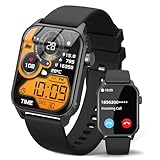
- 【1.83" HD Display & Customizable Watch Faces】Immerse yourself in a vibrant 1.83-inch IPS display, boasting a sharp resolution of 240*284 for crystal-clear visuals. Effortlessly personalize your smart watch with a wide array of customizable watch faces to suit your personal style for every occasion—whether trendy, artistic, or minimalist—ideal for casual, sporty, or professional. Its sleek, modern design complements any outfit, blending technology and fashion seamlessly for everyday wear
- 【120 Sports Modes & Advanced Health Tracking】Our TK29 smart watches for women men come equipped with 120 sports modes, allowing you to effortlessly track a variety of activities such as walking, running, cycling, and swimming. With integrated heart rate and sleep monitors, you can maintain a comprehensive overview of your health, achieve your fitness goals, and maintain a balanced, active lifestyle with ease. Your ideal wellness companion (Note: Step recording starts after exceeding 20 steps)
- 【IP67 Waterproof & Long-Lasting Battery】Designed to keep up with your active lifestyle, this smartwatch features an IP67 waterproof rating, ensuring it can withstand splashes, sweat, and even brief submersion, making it perfect for workouts, outdoor adventures, or rainy days. Its reliable 350mAh battery offering 5-7 days of active use and up to 30 days in standby mode, significantly reducing frequent charging. Ideal for all-day wear, whether you’re at the gym, outdoors, or simply on the go
- 【Stay Connected Anytime, Anywhere】Stay informed and in control with Bluetooth call and music control features. Receive real-time notifications for calls, messages, and social media apps like Facebook, WhatsApp, Twitter, and Instagram directly on your smartwatch. Easily manage calls, control your music playlist, and stay updated without needing to reach for your phone. Perfect for work, workouts, or on-the-go, this watch keeps you connected and never miss important updates wherever you are
- 【Multifunction & Wide Compatibility】Seamlessly handle heart rate monitoring, sleep tracking, and enjoy conveniences like camera/music control, Seamlessly handle heart rate monitoring, sleep tracking, and more-all directly from your wrist. This 1.83 inches HD smartwatch is compatible with iPhone (iOS 9.0+) & Android (5.0+), ensuring smooth daily connectivity and convenience throughout your day. More than just a timepiece, it’s a stylish, all-in-one wearable for smarter, healthier living
At CES 2026, more brands will emphasize interoperability with Android, iOS, and cloud-based health services rather than proprietary lock-in. For users, this means better continuity when switching devices, clearer ownership of personal health data, and fewer dead-end ecosystems that become obsolete after two years. Platform maturity, not novelty, is becoming the differentiator.
Smart rings and passive wearables take center stage
Smart rings are no longer a niche curiosity, and CES 2026 will reinforce that shift. Rings, bands, and discreet health trackers are increasingly positioned as complements to smartwatches rather than replacements, offering continuous tracking with multi-day or even multi-week battery life. Comfort, skin contact quality, and materials like titanium and ceramic are now as critical as sensor accuracy.
CES is where new ring makers test ideas like cuff-less blood pressure estimation, improved sleep staging, and stress detection through combined temperature and heart rate variability data. Even if these features don’t ship immediately, CES sets expectations for what mainstream devices will attempt next. For buyers, it signals whether rings are ready to be primary health trackers or still best used alongside a watch.
AI shifts wearables from data collectors to interpreters
The biggest wearable leap at CES 2026 won’t be a new sensor, but how data is interpreted. AI-driven health insights are moving beyond daily readiness scores into adaptive coaching, anomaly detection, and personalized trend analysis. Instead of telling you what happened, wearables are starting to explain why it happened and what to do next.
CES is where startups showcase on-device and cloud-based models that analyze weeks or months of data across sleep, activity, stress, and recovery. The focus is less on raw accuracy claims and more on actionable clarity. If done right, this reduces app fatigue and makes wearables feel genuinely helpful rather than overwhelming.
Medical-grade ambition without medical-grade friction
Regulatory realities mean CES won’t suddenly deliver FDA-cleared consumer wearables for every condition, but the ambition is unmistakable. Expect to see more hybrid devices that sit between wellness and clinical monitoring, targeting early detection rather than diagnosis. Think respiratory tracking, metabolic indicators, and cardiovascular trend monitoring designed for everyday wear.
These products matter because they influence what established brands will pursue next. When sensor startups demonstrate reliable measurements in compact, wearable form factors, smartwatch and ring makers take notice. CES 2026 will show how close consumer wearables are to offering medically meaningful insights without sacrificing comfort, battery life, or usability.
Why this CES shapes buying decisions long after January
Most of what appears at CES 2026 won’t be available to buy immediately, but it will shape what launches later in the year. Features teased here often resurface refined in fall smartwatch releases or next-generation rings with better battery life, slimmer profiles, and more mature software. Watching CES closely helps set realistic expectations for what upgrades are worth waiting for.
For consumers, this means CES isn’t just noise or vaporware. It’s an early look at which wearable categories are accelerating, which are stagnating, and which health promises are becoming credible. Understanding these shifts now makes it easier to decide whether to upgrade this year, wait for the next cycle, or invest in an emerging platform that’s clearly gaining momentum.
Smart Rings Go Mainstream: Oura, Samsung, Circular, Ultrahuman, and the Next Wave
As CES increasingly emphasizes passive, continuous health tracking over screens and notifications, smart rings feel like the most natural extension of the trends already shaping wearables. They embody the push toward comfort-first hardware, longer battery life, and insights that quietly accumulate in the background rather than demanding daily interaction. CES 2026 is poised to mark the moment smart rings stop feeling like a niche alternative and start looking like a mainstream category.
What’s changing isn’t just awareness, but credibility. Rings are now delivering sleep, recovery, temperature, and cardiovascular trend data that many users trust more than wrist-based wearables, especially overnight. The show floor in January will reflect that shift, with fewer “concept” rings and more mature platforms focused on refinement, ecosystem integration, and clinical ambition.
Oura: From category pioneer to platform player
Oura enters CES 2026 from a position of strength, but also pressure. As the brand that effectively defined the modern smart ring, its challenge now is differentiation in a market catching up quickly on hardware. Expect Oura to emphasize software evolution, deeper trend analysis, and expanded health modeling rather than radical industrial redesign.
Battery life and comfort remain central to Oura’s appeal, and incremental gains there matter more than flashy features. Subtle changes to sensor placement, thermal tracking accuracy, and internal antenna design are more likely than visible design shifts. If Oura previews anything significant at CES, it will likely be platform-facing, such as expanded API access, improved integrations with fitness ecosystems, or more proactive health insights that move beyond daily readiness scores.
There’s also growing interest in how far Oura can push cardiovascular and metabolic indicators without crossing regulatory lines. CES 2026 may offer hints at respiratory or glucose-adjacent research initiatives, framed carefully as trend monitoring rather than diagnostics. For existing users, this signals whether the subscription continues to justify itself through deeper, more personalized insight.
Samsung’s Galaxy Ring: Ecosystem gravity in action
Samsung’s entry into smart rings has already altered the competitive landscape, and CES 2026 will likely reinforce how seriously it’s taking the category. Unlike most ring makers, Samsung can lean on massive ecosystem advantages, tying the Galaxy Ring tightly into Samsung Health, Galaxy Watch, and broader Android services. At CES, the focus will be on how seamlessly the ring fits into that ecosystem rather than on raw sensor novelty.
Expect refinements around battery efficiency, sizing options, and durability rather than dramatic hardware changes. Samsung’s materials and finishing will continue to prioritize everyday wearability, with lightweight titanium builds and understated aesthetics that don’t scream “tech.” The real story is software, particularly how the ring complements a smartwatch instead of competing with it.
CES demos are likely to emphasize hybrid use cases, where the ring handles sleep and recovery while the watch focuses on workouts and notifications. This division of labor plays directly into the fatigue many users feel with 24/7 smartwatch wear. If Samsung shows clearer benefits to owning both, it could normalize multi-device wearable setups over the next year.
Circular, Ultrahuman, and the push toward user control
Smaller players like Circular and Ultrahuman are using CES to challenge assumptions set by larger brands. Circular continues to differentiate through modularity and repairability, positioning its ring as a longer-term investment rather than a sealed, disposable device. CES 2026 will likely bring updates around sensor upgrades, improved battery modules, and more polished software experiences.
Ultrahuman, by contrast, is doubling down on performance-oriented health tracking. Its focus on metabolic health, stress, and recovery resonates with users who treat wearables as training tools rather than lifestyle accessories. At CES, expect Ultrahuman to highlight faster data sync, tighter integrations with fitness platforms, and more actionable feedback tied to nutrition and training load.
Both brands are also more willing to experiment with user-facing controls and transparency. This includes clearer explanations of how scores are calculated and more granular access to raw or semi-raw data. For advanced users frustrated by black-box metrics, this approach is becoming a meaningful differentiator.
Design maturity: thinner profiles, better fit, real-world comfort
Across the category, CES 2026 will reflect a collective understanding that smart rings live or die by comfort. Thinner cross-sections, smoother inner contours, and better weight distribution are now table stakes. Expect more emphasis on ring sizing accuracy, including improved sizing kits and fit guidance designed to reduce returns and long-term discomfort.
Materials matter more than ever. Titanium alloys, improved coatings, and scratch-resistant finishes are becoming standard as users wear rings continuously through workouts, sleep, and daily life. Water resistance and durability won’t headline booths, but they’ll be quietly improved, especially as rings are used more for recovery and health tracking than step counting.
Battery life remains a key selling point, and CES announcements will likely focus on incremental gains rather than breakthroughs. Four to seven days is emerging as the realistic sweet spot, with faster charging and more predictable drain being just as important as raw longevity. For many users, reliability now outweighs headline numbers.
The next wave: what new entrants are signaling
Beyond the familiar names, CES will host a growing number of startups treating rings as sensor hubs rather than consumer gadgets. Some will focus narrowly on sleep, fertility, or cardiovascular trends, while others position rings as companions to clinical monitoring programs. Not all of these will succeed, but they influence where the category goes next.
Expect to see experimentation with novel sensors, such as improved skin temperature arrays, hydration proxies, or enhanced PPG configurations designed to reduce motion artifacts. Most of these will be framed as research-backed wellness tools, carefully avoiding medical claims while hinting at future regulatory pathways. CES remains the safest place to test those waters.
What matters most is that these newcomers validate the ring as a serious health form factor. Even when products don’t reach consumers, their sensor tech and data models often find their way into larger brands within a year or two. CES 2026 will quietly shape the smart rings people actually buy in late 2026 and 2027.
Next-Gen Smartwatches at CES: Battery Breakthroughs, Displays, and Sensor Stacks
If smart rings represent the quiet, ambient side of health tracking, smartwatches remain the category where manufacturers are most willing to show their engineering ambition. CES has never been the place for Apple or Samsung’s headline launches, but it is where the underlying technologies that define the next generation of watches tend to surface first. For CES 2026, expect smartwatch announcements to focus less on reinvention and more on solving long-standing pain points around battery life, display efficiency, and sensor reliability.
The throughline connecting these updates is maturity. Smartwatches are no longer proving their usefulness; they are refining how comfortably and consistently they can be worn every day, across sleep, training, and work.
Battery life: real gains, not miracle claims
Battery remains the single biggest limiter of smartwatch adoption, and CES 2026 will reflect an industry that finally accepts incremental progress as the real win. Rather than bold multi-week claims, most brands will talk about squeezing an extra day or two from existing form factors while keeping always-on displays and continuous health tracking enabled.
Expect to see wider use of stacked lithium-polymer cells, improved power management ICs, and more aggressive sensor duty cycling. These changes don’t sound flashy, but in practice they can turn a frustrating 36-hour watch into a reliable two- to three-day device, which is the difference between charging anxiety and genuine daily wearability.
Hybrid approaches will also gain visibility. Several manufacturers are likely to show watches that blend low-power co-processors with main SoCs, allowing basic health tracking, notifications, and timekeeping to run independently when the primary chip sleeps. This architecture is already used quietly by established brands, but CES is where smaller players will highlight it as a differentiator.
Display tech: brighter, smarter, and easier on the battery
Displays are another area where CES traditionally punches above its weight. For 2026, the focus shifts from raw brightness to efficiency and legibility in real-world conditions, especially outdoors and during workouts.
MicroLED will continue to be discussed, but realistically it remains a showcase technology rather than a shipping solution for mainstream smartwatches. More relevant are advances in LTPO OLED and hybrid OLED-memory displays that dynamically drop refresh rates to near-static levels when showing watch faces or glanceable data. These panels materially reduce power draw without sacrificing the smoothness users expect during scrolling or workouts.
Form factor experimentation will also return. Expect more square and rectangular displays optimized for data density, alongside subtly curved glass designs aimed at improving swipe ergonomics. Thinner bezels are still a selling point, but comfort and accidental touch rejection are becoming equally important, especially as watches grow slightly larger to accommodate batteries and sensor arrays.
Sensor stacks: accuracy over novelty
The sensor story at CES 2026 is less about adding new metrics and more about making existing ones trustworthy. Heart rate, blood oxygen, skin temperature, and motion tracking are already table stakes; what’s changing is how consistently these sensors perform across different skin tones, wrist sizes, and activity types.
Expect to see multi-wavelength PPG systems featured prominently, with additional LEDs and photodiodes used to reduce motion artifacts and improve signal quality during high-intensity exercise. Some brands will also highlight redesigned sensor housings that sit flatter against the wrist, improving comfort while reducing light leakage.
Temperature sensing will continue its slow evolution. Rather than headline features, CES announcements will frame temperature data as a contextual input for recovery, illness detection, or menstrual health, often processed overnight rather than in real time. The emphasis will be on trends and deviations, not absolute numbers, which aligns better with regulatory realities and user expectations.
Health platforms and AI processing move closer to the wrist
One of the more subtle shifts at CES 2026 will be where data processing happens. With on-device AI accelerators becoming more common in wearable chipsets, some smartwatch demos will showcase local analysis of sleep stages, training load, or stress patterns without constant cloud dependence.
This matters for both privacy and responsiveness. Faster insights delivered directly on the watch, even in airplane mode or during workouts, improve perceived usefulness and reduce battery drain from background syncing. CES is where these capabilities will be framed as platform-level advantages rather than isolated features.
Interoperability will also be a recurring theme. Expect more watches positioned as companions to rings, chest straps, or even medical-grade devices, with the smartwatch acting as the central display and control surface. Compatibility with Android remains the dominant focus at CES, but cross-platform data export and API access will be emphasized for users who care about long-term health records.
Rank #2
![Apple Watch Series 11 [GPS 46mm] Smartwatch with Jet Black Aluminum Case with Black Sport Band - M/L. Sleep Score, Fitness Tracker, Health Monitoring, Always-On Display, Water Resistant](https://m.media-amazon.com/images/I/312K597M2uL._SL160_.jpg)
- HYPERTENSION NOTIFICATIONS — Apple Watch Series 11 can spot signs of chronic high blood pressure and notify you of possible hypertension.*
- KNOW YOUR SLEEP SCORE — Sleep score provides an easy way to help track and understand the quality of your sleep, so you can make it more restorative.
- EVEN MORE HEALTH INSIGHTS — Take an ECG anytime.* Get notifications for a high and low heart rate, an irregular rhythm,* and possible sleep apnea.* View overnight health metrics with the Vitals app* and take readings of your blood oxygen.*
- STUNNING DESIGN — Thin and lightweight, Series 11 is comfortable to wear around the clock — while exercising and even when you’re sleeping, so it can help track your key metrics.
- A POWERFUL FITNESS PARTNER — With advanced metrics for all your workouts, plus features like Pacer, Heart Rate Zones, training load, Workout Buddy powered by Apple Intelligence from your nearby iPhone,* and more. Series 11 also comes with three months of Apple Fitness+ free.*
Design, materials, and everyday wear
While health tech drives headlines, physical design still determines whether a smartwatch earns wrist time. CES 2026 will feature a noticeable push toward lighter cases using titanium, fiber-reinforced polymers, and refined aluminum alloys. Finishing is improving, with fewer prototypes that look or feel disposable.
Dimensions matter here. Expect many watches to sit in the 42mm to 46mm range, with thinner profiles and better weight distribution making larger cases more comfortable than older designs. Strap systems will get quieter upgrades too, with quicker release mechanisms, improved breathability, and materials designed for 24-hour wear rather than just workouts.
Value positioning will be clearer than in past years. Instead of trying to undercut Apple or Garmin directly, CES brands are more likely to target specific users: multi-day battery seekers, outdoor athletes, or health-first wearers who don’t need app stores and LTE. For buyers, this segmentation makes CES a useful preview of which smartwatch niches will see meaningful competition in 2026.
In context, the smartwatch category at CES is less about spectacle and more about refinement. The technologies shown here won’t all ship immediately, but they set expectations for what mainstream watches should deliver by late 2026: longer battery life without compromises, displays that work with you rather than against you, and sensors you can trust enough to act on their data.
AI-Powered Health Monitoring: From Raw Metrics to Predictive, Actionable Insights
If hardware refinement is the visible story at CES 2026, AI-driven health interpretation is the quiet shift happening underneath. After years of collecting heart rate, SpO₂, sleep stages, and activity data, wearables are finally moving beyond dashboards and trend lines. The emphasis now is on turning continuous passive sensing into guidance users can actually act on day to day.
This transition matters because sensor accuracy has largely plateaued. What differentiates devices in 2026 won’t be whether they can measure something, but whether they can explain what that measurement means in context, across weeks or months of wear.
From retrospective stats to forward-looking health signals
Expect CES demos to lean heavily on predictive modeling rather than historical summaries. Instead of telling you that last night’s sleep score was poor, upcoming platforms aim to flag when your recovery trajectory suggests an elevated injury risk, illness onset, or cognitive fatigue window before symptoms are obvious.
This is where AI models trained on large, anonymized datasets intersect with personal baselines. Watches and rings are getting better at recognizing subtle deviations in resting heart rate variability, skin temperature, respiratory rate, and movement quality, then mapping those changes to probable outcomes rather than vague warnings.
Importantly, many of these insights will be probabilistic, not diagnostic. Brands are being careful to frame predictions as risk signals or readiness indicators rather than medical claims, especially given tightening regulatory scrutiny in the US and EU.
Health coaching that adapts to how you actually live
The next evolution of health coaching is personalization at the behavioral level, not just the biometric one. At CES 2026, expect to see AI systems that learn how you respond to stress, training load, caffeine, alcohol, or late meals, then adjust recommendations accordingly.
Instead of generic advice like “get more sleep,” the feedback becomes situational: suggesting an earlier bedtime only on days when your nervous system hasn’t recovered, or dialing back intensity when long-term fatigue accumulates even if today’s metrics look fine. The watch becomes less of a judge and more of a translator between your physiology and your schedule.
These systems will also lean more on passive nudges. Subtle haptic prompts, glanceable watch face indicators, or ring-based cues are replacing notification-heavy coaching that users tend to disable after a few weeks.
Smart rings and the rise of invisible health tracking
Smart rings are central to this AI health shift, and CES 2026 is likely to reinforce their role as continuous background sensors rather than feature-packed gadgets. Their value lies in comfort, consistency, and high adherence, which is exactly what AI models need to detect meaningful long-term patterns.
Expect more ring-watch pairings positioned as complementary systems. The ring handles overnight recovery, temperature trends, and baseline cardiovascular data, while the watch adds contextual inputs like GPS load, workouts, and on-wrist interaction. The AI layer sits above both, fusing data streams into a single health narrative.
Battery life is a key enabler here. Multi-day rings and week-long watches allow models to work with uninterrupted datasets, which improves prediction quality far more than adding yet another sensor.
Mental health, stress, and cognitive load step forward
CES 2026 will also show a more mature approach to stress and mental wellness tracking. Rather than simplistic stress scores, platforms are moving toward identifying patterns of cognitive overload, emotional fatigue, and recovery debt across workdays and weekends.
This is driven by better interpretation of HRV, breathing irregularity, micro-movements, and contextual data like calendar load or screen time integration. Some systems will flag when your baseline is drifting toward chronic stress, even if individual days don’t look extreme.
The goal isn’t therapy on the wrist, but awareness at the right moment. Short breathing sessions, movement prompts, or schedule adjustments are being positioned as preventive tools rather than reactive fixes.
Regulation-aware AI and the push for clinical credibility
A notable undercurrent at CES will be how brands talk about compliance and validation. With regulators paying closer attention to algorithm-driven health claims, expect more transparency around how AI models are trained, validated, and updated over time.
Some companies will highlight partnerships with academic institutions or healthcare providers, while others focus on FDA or CE pathways for specific features like arrhythmia detection or sleep apnea screening. Even when features aren’t regulated, the language around them is becoming more careful and precise.
For consumers, this is a positive shift. It makes it easier to distinguish between wellness insights designed to guide habits and features that have genuine clinical backing.
What to watch for on the CES show floor
The most telling demos won’t be flashy sensor reveals, but longitudinal stories. Pay attention to brands that show six months of evolving health insights, not just a single-day snapshot or a polished scorecard.
Also watch how much control users have over their data. Platforms that allow exporting raw and interpreted health signals, or integrating with third-party services, signal confidence in their AI rather than locking users into opaque ecosystems.
By CES 2026, AI-powered health monitoring is no longer about promising a smarter future. It’s about proving that wearables can earn trust by delivering insights that feel timely, accurate, and genuinely helpful in the flow of everyday life.
Medical-Grade vs Consumer Health Tech: FDA Clearances, CE Marks, and What to Trust
As AI-driven insights become more sophisticated and longitudinal, the line between wellness guidance and medical claims is no longer theoretical. By CES 2026, that distinction is one of the most important things separating genuinely trustworthy wearables from devices that simply feel advanced.
After years of loose language around “health intelligence,” brands are being forced to show where their features sit on the regulatory spectrum. Understanding those boundaries will be critical for anyone trying to make sense of what’s being demoed on the show floor.
What “medical-grade” actually means in wearables
In wearable tech, medical-grade does not mean the device replaces a doctor or a clinical monitor. It means that a specific feature has been reviewed and cleared or approved for a defined medical purpose under regulatory frameworks like the FDA in the US or CE marking under the EU’s Medical Device Regulation.
A smartwatch might be a consumer product overall, but an individual capability, such as ECG recording, atrial fibrillation detection, or sleep apnea risk screening, can be regulated as a medical device. Everything else on that same watch may remain firmly in wellness territory.
At CES 2026, expect brands to be very precise about this distinction. Claims will increasingly be framed as “FDA-cleared for detection” or “CE-marked as a Class IIa medical device” rather than vague statements about diagnostic power.
FDA clearance vs FDA approval: why wording matters
Most wearable health features discussed at CES fall under FDA clearance, not approval. Clearance typically means the company has demonstrated that its feature is substantially equivalent to an existing, legally marketed medical device.
Approval is a much higher bar, usually reserved for novel medical technologies, and is rare in consumer wearables. If a brand implies FDA approval without explicitly stating it, that’s a red flag rather than a flex.
For CES 2026, watch for companies highlighting the specific regulatory pathway used, including predicate devices and intended use. Brands that volunteer this level of detail tend to be more confident in their data and less reliant on marketing gloss.
CE marks, MDR, and why Europe is often stricter
In Europe, CE marking under the Medical Device Regulation has become significantly more demanding than it was even a few years ago. Software-driven health features now require deeper clinical evidence, post-market surveillance plans, and clearer risk communication.
This is why some features appear in Europe months or years later than in the US, or arrive with narrower functionality. When a wearable launches with both FDA clearance and CE marking for the same feature, that’s a strong signal of maturity.
CES exhibitors targeting global audiences will increasingly reference dual-region compliance. It’s not just about selling internationally, but about signaling that the underlying algorithms can withstand multiple regulatory interpretations.
The gray zone: wellness insights that feel medical
Many of the most compelling features at CES 2026 will sit deliberately outside formal regulation. Stress scores, recovery metrics, readiness indicators, and AI-generated health nudges are typically positioned as lifestyle or wellness tools.
The challenge is that these features often influence behavior in ways similar to medical advice. A prompt suggesting reduced training load or improved sleep hygiene may not be regulated, but it still carries weight with users.
Trust here comes from transparency rather than certification. Look for brands that explain how metrics are calculated, what data feeds them, and where their limitations lie, instead of hiding behind proprietary language.
Smart rings and the credibility gap
Smart rings are a perfect case study in the medical vs consumer divide. Their form factor offers excellent comfort, stable skin contact, and strong overnight wearability, which makes them ideal for continuous health monitoring.
At the same time, many ring makers are startups without the regulatory budgets of smartwatch giants. As a result, they often focus on validated sensors like SpO2 and temperature trends, while avoiding regulated claims altogether.
Rank #3

- Bluetooth Call and Message Alerts: Smart watch is equipped with HD speaker, after connecting to your smartphone via bluetooth, you can answer or make calls, view call history and store contacts through directly use the smartwatch. The smartwatches also provides notifications of social media messages (WhatsApp, Twitter, Facebook, Instagram usw.) So that you will never miss any important information.
- Smart watch for men women is equipped with a 320*380 extra-large hd full touch color screen, delivering exceptional picture quality and highly responsive touch sensitivity, which can bring you a unique visual and better interactive experience, lock screen and wake up easily by raising your wrist. Though “Gloryfit” app, you can download more than 102 free personalised watch faces and set it as your desktop for fitness tracker.
- 24/7 Heart Rate Monitor and Sleep Tracker Monitor: The fitness tracker watch for men has a built-in high-performance sensor that can record our heart rate changes in real time. Monitor your heart rate 26 hours a day and keep an eye on your health. Synchronize to the mobile phone app"Gloryfit", you can understand your sleep status(deep /light /wakeful sleep) by fitness tracker watch develop a better sleep habit and a healthier lifestyle.
- IP68 waterproof and 110+ Sports Modes: The fitness tracker provides up to 112+ sports modes, covering running, cycling, walking, basketball, yoga, football and so on. Activity trackers bracelets meet the waterproof requirements for most sports enthusiasts' daily activities, such as washing hands or exercising in the rain, meeting daily needs (note: Do not recommended for use in hot water or seawater.)
- Multifunction and Compatibility: This step counter watch also has many useful functions, such as weather forecast, music control, sedentary reminder, stopwatch, alarm clock, timer, track female cycle, screen light time, find phone etc. The smart watch with 2 hrs of charging, 5-7 days of normal use and about 30 days of standby time. This smart watches for women/man compatible with ios 9.0 and android 6.2 and above devices.
At CES 2026, pay close attention to which ring brands are pursuing formal clearances versus those doubling down on longitudinal trend analysis. Both approaches can be valid, but they serve very different types of users.
Hardware quality still matters for regulated features
Regulatory clearance is not just about software. Sensor placement, materials, optical quality, and mechanical stability all affect signal accuracy.
A smartwatch with a polished stainless steel case, well-contoured lugs, and a comfortable strap that maintains consistent skin contact will often outperform a cheaper device using similar sensors. The same applies to ring thickness, inner surface finishing, and size accuracy in smart rings.
At CES, when a brand talks about medical-grade results, examine the physical design as closely as the algorithms. Comfort, fit, and real-world wearability are part of the clinical story, even if they’re rarely highlighted on spec sheets.
Battery life, data continuity, and clinical relevance
One underappreciated aspect of trust is whether a device can actually collect the data it claims to analyze. A wearable with aggressive AI features but limited battery life may miss critical overnight or multi-day patterns.
Medical relevance often depends on continuity. Features like arrhythmia detection, respiratory trend analysis, or sleep-disordered breathing screening require consistent wear, stable firmware, and minimal charging disruption.
Brands at CES 2026 that emphasize multi-day battery life, low-power AI processing, and reliable background tracking are implicitly addressing this challenge, even if they don’t frame it in clinical terms.
AI validation and the problem of silent updates
As discussed earlier, AI models are now central to health interpretation. The regulatory question is no longer just whether an algorithm works, but how it evolves over time.
Some FDA-cleared features require manufacturers to notify regulators when models are updated, while others allow controlled iteration within predefined boundaries. This is where transparency becomes crucial for long-term trust.
At CES, watch for companies that explain how their AI is monitored post-launch, how bias is addressed, and whether updates are communicated to users. Silent changes to health algorithms without disclosure undermine credibility, even if the results improve.
How consumers should interpret claims on the CES floor
For buyers and enthusiasts, the most reliable signal is specificity. Vague promises about “clinical accuracy” or “hospital-level insights” mean very little without context.
Trust brands that clearly separate regulated features from wellness insights, explain intended use, and acknowledge limitations. Skepticism is warranted when every metric is presented as equally authoritative.
CES 2026 will showcase some genuinely impressive health technology. Knowing which claims are backed by regulators, which are supported by validation studies, and which are simply well-designed lifestyle tools will determine whether those innovations actually improve your daily health tracking or just add noise to your wrist or finger.
Beyond the Wrist and Ring: Smart Patches, Hearables, and Passive Health Sensors
If continuous data and regulatory clarity are becoming the real battlegrounds for wearables, it’s no surprise that CES 2026 will push further beyond devices you consciously put on and take off. The next wave of health tech is about reducing friction even more, shifting from active wearables to systems that quietly observe, interpret, and contextualize health signals in the background.
This category doesn’t replace smartwatches or rings so much as it fills their blind spots. For metrics that benefit from constant skin contact, stable positioning, or near-zero user interaction, patches, hearables, and ambient sensors are increasingly the better tool for the job.
Smart health patches move from pilots to products
Smart patches have been circling CES for years, but 2026 looks like the show where several finally feel consumer-ready rather than experimental. Advances in flexible electronics, low-power chipsets, and medical-grade adhesives are enabling patches that can stay on the body for five to fourteen days without skin irritation or signal drift.
Expect to see patches focused on ECG, respiration rate, temperature trends, and hydration indicators, often positioned for the chest, upper arm, or torso where motion artifacts are lower than the wrist. Battery life is typically measured in days rather than hours, and most rely on intermittent Bluetooth sync rather than continuous streaming to preserve power.
The more interesting shift is software. Many upcoming patches are designed to work as companions to existing wearables, feeding high-fidelity baseline data into the same health platforms users already rely on. At CES 2026, watch for brands that clearly explain how patch data integrates with Apple Health, Google Health Connect, or proprietary dashboards instead of trapping users in siloed apps.
From adhesive comfort to real-world wearability
Comfort is the make-or-break factor for patches, and companies are finally talking about it with the same seriousness once reserved for watch straps and ring sizing. Medical silicone adhesives, breathable substrates, and ultra-thin sensor housings are becoming standard talking points, not afterthoughts.
The best designs aim to disappear under clothing and remain comfortable during sleep, exercise, and showers. Water resistance ratings, sweat tolerance, and edge lift over multi-day wear are now practical considerations that CES demos increasingly address head-on rather than glossing over.
Value will also be judged differently here. Consumers are more accepting of subscription pricing for patches, especially when disposables are involved, but transparency around replacement costs and data access will be critical for trust.
Hearables evolve into serious health monitors
Hearables are quietly becoming one of the most underestimated health categories heading into CES 2026. The ear offers stable skin contact, proximity to the core body temperature, and a relatively motion-isolated environment compared to wrists or fingers.
Beyond hearing enhancement, expect to see earbuds and ear-worn devices emphasizing heart rate variability, blood oxygen trends, stress markers, and even blood pressure estimation using in-ear photoplethysmography and acoustic sensors. Battery life remains a constraint, but incremental gains and smarter duty cycling are allowing meaningful overnight or multi-hour passive tracking.
Compatibility matters here more than ever. Devices that seamlessly switch between audio, calls, and health monitoring without forcing the user into mode changes will stand out. So will hearables that work across Android and iOS ecosystems without feature lockouts.
The rise of passive and ambient health sensing
Perhaps the most futuristic corner of CES 2026 will involve health sensing that doesn’t require wearing anything at all. Radar-based sleep tracking, camera-assisted respiration monitoring, and environmental sensors designed to contextualize health data are moving from novelty to serious adjunct tools.
These systems are not positioned as diagnostic devices, but as background layers that explain why your wearable data looks the way it does. Poor sleep metrics paired with room air quality data or overnight breathing irregularities captured passively can provide insights a wrist-based device alone cannot.
Privacy will be a defining issue. Brands that clearly articulate on-device processing, limited data retention, and opt-in controls will have a significant credibility advantage over those relying on vague reassurances.
Why these devices matter for the bigger health picture
What ties patches, hearables, and passive sensors together is not form factor, but intent. They are built to capture continuity, context, and compliance, the same pillars regulators and clinicians care about but consumer wearables often struggle to maintain.
At CES 2026, the most compelling announcements in this category won’t be the flashiest demos. They’ll be the ones that show how these quieter devices integrate with watches, rings, and apps to create a more complete, less interrupted picture of health over weeks and months rather than moments.
For consumers, this signals a shift in how to think about wearable ecosystems. The future isn’t choosing one device to do everything, but understanding which tools work best together, and which companies are designing with that reality in mind rather than forcing everything onto your wrist.
Sleep, Stress, and Recovery 2.0: What’s Actually Improving in Real-World Use
As passive sensing and multi-device ecosystems mature, sleep and recovery are becoming the clearest beneficiaries. CES 2026 won’t be about discovering new sleep stages or inventing another readiness score, but about making those metrics more reliable, less noisy, and easier to act on without obsessing over dashboards.
The most meaningful changes are happening under the hood. Algorithms are shifting away from single-night judgments toward rolling baselines that better reflect how real people live, travel, train, and occasionally sleep badly without it becoming a crisis.
From nightly scores to trend-aware recovery models
One of the biggest quiet improvements we expect to see is how recovery is calculated over time. Brands are increasingly weighting multi-day HRV trends, sleep consistency, and autonomic balance rather than penalizing users for one short or restless night.
This matters in real-world use because it reduces false negatives. A late dinner, a flight, or a stressful workday no longer tanks your recovery score if the broader context suggests resilience rather than breakdown.
Expect CES announcements to highlight adaptive baselines that recalibrate after illness, travel, or training blocks. This is especially relevant for smart rings and lighter watches, where users tend to wear the device 24/7 and expect the software to understand long-term patterns, not just ideal behavior.
Sleep tracking gets better at acknowledging uncertainty
Sleep staging accuracy is reaching a plateau, but transparency is improving. Several platforms are moving toward confidence ranges or probabilistic sleep-stage models rather than presenting every graph as definitive truth.
In practice, this reduces overinterpretation. Users are less likely to chase marginal differences in REM or deep sleep when the interface emphasizes consistency, timing, and duration as the primary levers that actually move outcomes.
We also expect better integration between wrist-based data and ambient or bedside sensors discussed earlier. When motion, respiration, and environment agree, confidence goes up; when they don’t, the system increasingly flags ambiguity instead of forcing a clean but misleading result.
Stress tracking shifts from alerts to pattern recognition
Stress detection is evolving from reactive nudges to contextual understanding. Rather than pinging users every time HRV dips, newer models look for recurring stress signatures tied to meetings, commutes, workouts, or sleep debt.
At CES 2026, watch and ring brands are likely to emphasize stress mapping over time of day and day of week. This turns stress from a momentary warning into something closer to a behavioral mirror, highlighting where change is actually possible.
Rank #4
![Apple Watch Series 11 [GPS 42mm] Smartwatch with Rose Gold Aluminum Case with Light Blush Sport Band - S/M. Sleep Score, Fitness Tracker, Health Monitoring, Always-On Display, Water Resistant](https://m.media-amazon.com/images/I/31J+F-pXaWL._SL160_.jpg)
- HYPERTENSION NOTIFICATIONS — Apple Watch Series 11 can spot signs of chronic high blood pressure and notify you of possible hypertension.*
- KNOW YOUR SLEEP SCORE — Sleep score provides an easy way to help track and understand the quality of your sleep, so you can make it more restorative.
- EVEN MORE HEALTH INSIGHTS — Take an ECG anytime.* Get notifications for a high and low heart rate, an irregular rhythm,* and possible sleep apnea.* View overnight health metrics with the Vitals app* and take readings of your blood oxygen.*
- STUNNING DESIGN — Thin and lightweight, Series 11 is comfortable to wear around the clock — while exercising and even when you’re sleeping, so it can help track your key metrics.
- A POWERFUL FITNESS PARTNER — With advanced metrics for all your workouts, plus features like Pacer, Heart Rate Zones, training load, Workout Buddy powered by Apple Intelligence from your nearby iPhone,* and more. Series 11 also comes with three months of Apple Fitness+ free.*
Importantly, this also reduces alert fatigue. Devices that only surface stress insights when there is a clear, repeatable pattern feel more supportive and less intrusive, which directly impacts long-term wear compliance.
Recovery guidance becomes quieter and more personalized
Actionable insights are becoming subtler. Instead of prescribing rest days or breathwork sessions outright, platforms are experimenting with softer guidance like adjusted training load ranges, bedtime windows, or reminders to protect sleep after high-strain days.
This approach respects user autonomy while still offering value. For experienced athletes and health-focused users, it feels less like coaching and more like calibration, especially when recommendations are tied to trends rather than single metrics.
We also expect tighter integration with third-party training platforms and calendar data. Recovery advice that understands your upcoming commitments or scheduled workouts is far more useful than generic suggestions delivered in isolation.
Smart rings and lighter wearables lead the recovery charge
Form factor matters here. Smart rings and slim watches with strong battery life are emerging as the preferred tools for sleep and recovery because they disappear during wear.
CES 2026 will likely reinforce this split in roles. Larger, feature-rich watches focus on training, navigation, and communication, while rings and minimalist trackers specialize in overnight data quality, comfort, and uninterrupted multi-day tracking.
Materials, internal fit, and sensor placement are becoming differentiators. Expect brands to talk less about raw specs and more about how design changes reduce motion artifacts, improve skin contact, and maintain accuracy across different sleeping positions and hand sizes.
Why this generation finally feels more trustworthy
What ties these improvements together is restraint. The best sleep and recovery systems coming into CES 2026 are doing less interpretation per night, but more understanding over time.
By combining passive sensors, ambient context, and adaptive algorithms, wearables are getting closer to how humans actually experience health. Not perfect, not clinical, but consistent enough to guide better decisions without creating anxiety.
For buyers, this means the right question is no longer which device has the most sleep metrics. It’s which ecosystem demonstrates patience, transparency, and respect for long-term behavior, because that’s where sleep, stress, and recovery tracking finally starts to feel useful rather than performative.
Wearable Platforms and Ecosystems: Google, Apple, Samsung, and Cross-Device Health Data
If sleep and recovery are finally becoming trustworthy at the device level, the next pressure point is what happens to that data once it leaves your wrist or finger. CES 2026 is shaping up to be less about headline-grabbing sensors and more about how the major platforms stitch fragmented health signals into something coherent across watches, rings, phones, earbuds, and even laptops.
This is where Google, Apple, and Samsung quietly matter more than any single hardware launch. Their platforms determine whether long-term trends feel cumulative or disposable, and whether adding a second device improves insight or just adds noise.
Google and Wear OS: From hardware catch-up to data orchestration
Google’s challenge heading into CES 2026 is no longer sensor parity. Pixel Watch hardware, Fitbit algorithms, and Wear OS battery efficiency have largely stabilized into a credible foundation, even if multi-day endurance still trails lighter competitors.
What we expect to see emphasized is Health Connect evolving from a passive data repository into an active mediator. Rather than just syncing steps and sleep between apps, Google is likely to push contextual prioritization, deciding which device owns which metric based on wear time, confidence scoring, and signal quality.
In practical terms, this could mean a smart ring owning overnight HRV and temperature, a Pixel Watch handling workouts and GPS, and earbuds contributing stress or fatigue markers during calls. The user experience only works if Wear OS makes that invisible, with no duplicate alerts or conflicting readiness scores.
Battery life remains the weak point. Expect Google-aligned partners to talk more openly about mixed-device strategies, implicitly acknowledging that no single Wear OS watch is meant to be worn 24/7 without compromise.
Apple: Platform signals without a CES presence
Apple won’t be on the CES show floor, but its influence will be everywhere. HealthKit, watchOS, and Apple’s privacy-first framing continue to set expectations for how cross-device health data should behave, even for brands outside the Apple ecosystem.
Heading into 2026, the most important Apple signal is restraint. Apple Watch has accumulated an enormous sensor stack, but the platform has been conservative about turning raw metrics into prescriptive advice, especially around sleep, stress, and recovery.
Competitors are watching closely. Apple’s approach suggests that long-term baselines, device confidence, and user trust matter more than daily scores, and that philosophy is increasingly echoed across the industry.
If Apple expands deeper into rings or passive wearables over the next cycle, the real story won’t be the form factor. It will be how seamlessly those devices hand off responsibility without users needing to think about which one they’re wearing.
Samsung and the multi-device health stack
Samsung enters CES 2026 with a different advantage: scale across product categories. Galaxy Watch, Galaxy Ring, phones, tablets, and even TVs give Samsung a uniquely broad canvas for health data aggregation.
What’s been missing is clarity. Samsung Health has improved in depth and presentation, but cross-device logic still feels more additive than intelligent, especially when multiple wearables are worn in the same day.
CES is where we expect Samsung to talk more concretely about role-based devices. Rings for sleep and recovery, watches for training and communication, and phones acting as the arbiter that reconciles conflicting data streams.
Materials and comfort matter here. Galaxy Ring’s success will depend less on raw sensor specs and more on internal fit, edge finishing, and how well it disappears during sleep compared to a watch with a 45mm case and protruding sensors.
Cross-device health data becomes the product
Across all platforms, the real shift is philosophical. The product is no longer the watch, ring, or tracker, but the longitudinal health record they collectively maintain.
CES 2026 will likely surface more discussion around confidence scoring, sensor weighting, and data decay. Older data that no longer reflects current behavior should matter less, while consistent wear across months should matter more.
For users, this has direct buying implications. Mixing devices within a single ecosystem will increasingly deliver better results than chasing the best standalone hardware, especially for sleep, stress, and recovery.
Interoperability, regulation, and the limits of openness
Regulatory pressure is also shaping these platforms. As health features inch closer to medical relevance, companies must be explicit about what is wellness guidance versus regulated insight.
Expect more platform-level transparency controls at CES. Users will see clearer explanations of how data is processed, which devices influence specific metrics, and where algorithmic interpretation stops.
True cross-platform interoperability remains limited. Google is the most open, Apple the most controlled, and Samsung somewhere in between. CES 2026 won’t resolve that tension, but it will make clear which ecosystems are designing for long-term trust rather than short-term feature checklists.
What this means for buyers watching CES 2026
The takeaway isn’t to wait for a perfect all-in-one wearable. It’s to evaluate ecosystems on how gracefully they handle imperfection.
The best platforms coming into 2026 assume you won’t wear the same device every hour of every day. They’re designed to absorb gaps, prioritize comfort, and reward consistency over intensity.
As recovery and sleep tracking mature, platform intelligence becomes the deciding factor. CES 2026 will reward readers who look past individual launches and focus on which ecosystem is quietly building a health record they’ll still trust years down the line.
Battery Life, Charging, and Materials: The Unsexy Tech That Will Define 2026 Winners
If platforms are now designed to tolerate gaps in wear, battery life and physical comfort are what determine whether those gaps exist in the first place. CES 2026 won’t be defined by headline-grabbing sensors as much as by how long devices last, how easily they recharge, and whether users forget they’re wearing them.
This is where wearables quietly win or lose. Not in demos, but at 2 a.m. when a ring is still tracking sleep, or on day four of a trip when a watch doesn’t need a charger.
Battery life is no longer about capacity, but efficiency
Raw battery size is hitting practical limits, especially for smart rings and compact watches. The real advances heading into CES 2026 are in power management, sensor duty cycling, and on-device inference that reduces radio usage.
Expect more talk around adaptive sampling. Devices that dynamically adjust heart rate, SpO2, skin temperature, and motion tracking based on context will stretch multi-day battery life without compromising trend accuracy. This is already visible in higher-end Garmin and Polar watches, and it’s now trickling into mainstream smartwatches and rings.
Smart rings, in particular, are approaching a meaningful plateau. Four to seven days is becoming the baseline expectation, not a luxury spec. Any ring still struggling to clear three days by 2026 will feel outdated, regardless of how advanced its health metrics appear on paper.
Charging is becoming frictionless, or at least less annoying
Charging experiences are finally improving after years of neglect. CES 2026 should bring more alignment around magnetic alignment standards, faster trickle charging, and fewer proprietary cables.
For watches, expect continued experimentation with partial wireless charging and pogo-pin hybrids that prioritize reliability over theoretical convenience. Apple’s puck-style approach remains the benchmark for ease, even if it isn’t the fastest, while others are focusing on charging enough for a full night’s sleep in under 15 minutes.
💰 Best Value
![Apple Watch Series 11 [GPS 42mm] Smartwatch with Jet Black Aluminum Case with Black Sport Band - S/M. Sleep Score, Fitness Tracker, Health Monitoring, Always-On Display, Water Resistant](https://m.media-amazon.com/images/I/31ybzrJZckL._SL160_.jpg)
- HYPERTENSION NOTIFICATIONS — Apple Watch Series 11 can spot signs of chronic high blood pressure and notify you of possible hypertension.*
- KNOW YOUR SLEEP SCORE — Sleep score provides an easy way to help track and understand the quality of your sleep, so you can make it more restorative.
- EVEN MORE HEALTH INSIGHTS — Take an ECG anytime.* Get notifications for a high and low heart rate, an irregular rhythm,* and possible sleep apnea.* View overnight health metrics with the Vitals app* and take readings of your blood oxygen.*
- STUNNING DESIGN — Thin and lightweight, Series 11 is comfortable to wear around the clock — while exercising and even when you’re sleeping, so it can help track your key metrics.
- A POWERFUL FITNESS PARTNER — With advanced metrics for all your workouts, plus features like Pacer, Heart Rate Zones, training load, Workout Buddy powered by Apple Intelligence from your nearby iPhone,* and more. Series 11 also comes with three months of Apple Fitness+ free.*
Smart rings are where charging innovation matters most. Smaller docks, better orientation tolerance, and clearer charge indicators are becoming table stakes. Brands that still require finicky placement or offer vague LED feedback will struggle as the category matures.
Materials are the silent driver of long-term wearability
As wear time increases, materials matter more than specs. CES 2026 will highlight a shift toward titanium alloys, ceramic composites, and hardened resins that balance durability with comfort.
Titanium is no longer reserved for premium watches. It’s becoming standard in upper-midrange devices because it reduces weight without sacrificing strength. Ceramic backs and coatings are also gaining traction for their skin-friendliness and resistance to micro-scratches, especially on rings worn 24/7.
Finishing is improving too. Matte surfaces, softened edges, and better case ergonomics reduce irritation during sleep and exercise. These details don’t photograph well, but they directly influence whether users maintain consistent wear over months.
Straps, sizing, and real-world comfort finally get respect
Interchangeable straps are no longer enough. CES 2026 devices will increasingly ship with multiple strap options or at least better out-of-box sizing guidance, acknowledging that wrist shape, skin sensitivity, and activity level vary widely.
We’re also seeing more breathable, antimicrobial materials and refined clasp mechanisms that avoid pressure points. For watches pushing 45mm and above, lug curvature and thickness are under scrutiny as brands try to balance battery gains with daily comfort.
Smart rings are facing similar scrutiny around thickness and inner contouring. Even a half-millimeter reduction can dramatically change overnight comfort, and brands that invest here are seeing higher long-term adherence.
Sustainability and repairability move from marketing to expectation
Battery longevity isn’t just about days between charges, but years of usable life. CES 2026 will bring more discussion around battery health management, slower degradation curves, and clearer replacement policies.
Regulatory pressure in the EU and parts of Asia is pushing brands toward better repairability and recycling programs. Watches with sealed, non-serviceable batteries may still exist, but transparency around lifespan and end-of-life handling is becoming non-negotiable.
Materials sourcing is also under quiet scrutiny. Recycled metals, conflict-free supply chains, and lower-impact manufacturing won’t dominate keynotes, but they will increasingly influence buying decisions for informed users.
Why this matters more than any single health feature
All the platform intelligence discussed earlier depends on one thing: consistent wear. Battery anxiety, uncomfortable materials, or annoying charging routines erode that consistency faster than missing features ever could.
CES 2026 winners won’t necessarily be the devices with the most sensors. They’ll be the ones users trust enough to wear every day, forget about at night, and rely on for years.
In a market obsessed with AI and insights, the most important breakthroughs remain stubbornly physical. Power, comfort, and materials are the foundation everything else quietly depends on.
What to Watch on the CES Show Floor: Signals That Predict the Next 12 Months of Wearables
By the time CES doors open, most of the truly important wearable shifts are already underway. The show floor doesn’t just reveal products, it exposes priorities through demos, partner booths, and the questions brands are prepared to answer.
For CES 2026, the clearest signals won’t come from a single hero device. They’ll come from repeated patterns across smartwatches, rings, sensors, and software platforms that point to how wearables will actually be used over the next year.
Quiet hardware revisions that signal platform maturity
Expect fewer radical redesigns and more “looks the same, feels better” updates across watch and ring categories. Thinner cases, slightly smaller footprints, and marginal weight reductions will be framed as refinements, but they’re foundational.
Pay attention to thickness numbers and underside geometry rather than headline specs. A smartwatch dropping from 14.5mm to 13.8mm, or a ring shaving 0.4mm internally, often matters more to daily comfort than a new metric.
Materials will also tell a story. More titanium alloys, ceramic coatings, and skin-contact polymers designed to manage sweat and heat indicate brands optimizing for 24/7 wear rather than short activity bursts.
Battery strategies beyond raw endurance claims
Battery life claims at CES should be read between the lines. The more interesting conversations will be about charging behavior, battery health tracking, and degradation management over multiple years.
Look for watches that trade peak brightness or always-on refresh rates for predictable multi-day endurance. Rings and health bands emphasizing consistent overnight tracking over aggressive daytime sampling are signaling a shift toward long-term adherence.
If a brand openly discusses replacement programs, battery serviceability, or software-managed charge ceilings, that’s a strong indicator they expect users to keep the device for several upgrade cycles.
Smart rings moving from novelty to segmentation
CES 2026 will make it clear that smart rings are no longer a single category. Some brands are positioning rings as sleep-first companions to watches, while others are pushing them as primary health trackers for non-watch wearers.
Watch for ring sizing systems, return policies, and fit guidance. Companies confident in long-term use are investing heavily here, knowing poor fit kills retention faster than missing features.
Sensor placement and inner contouring will quietly differentiate serious health rings from lifestyle experiments. The best demos will focus on comfort during sleep, typing, and weight training, not just step counts.
AI health features framed as guidance, not diagnosis
After a year of aggressive AI claims, CES 2026 messaging is likely to be more restrained and more credible. The strongest platforms will emphasize trends, risk flags, and behavioral nudges rather than definitive conclusions.
Pay attention to how insights are explained. Brands that show uncertainty ranges, confidence levels, or longitudinal baselines are building systems meant for real-world variability.
Regulatory awareness will be visible in language choices. If a company carefully separates wellness insights from medical claims, it’s likely preparing for broader geographic rollout and longer-term trust.
Software demos that reveal real usability
On the show floor, watch how long it takes a rep to surface meaningful data in their app. If insights are buried under menus or require manual interpretation, that friction will carry into daily use.
Cross-device integration will matter more than standalone apps. Platforms that fluidly combine data from watches, rings, scales, and third-party services are positioning themselves as health hubs rather than gadget vendors.
Compatibility discussions are also telling. Brands that speak clearly about Android, iOS, and ecosystem trade-offs tend to have fewer surprises after launch.
Health metrics shifting toward context and recovery
CES 2026 won’t introduce dozens of brand-new sensors, but it will reframe how existing ones are used. Heart rate variability, skin temperature, respiratory rate, and motion data are increasingly interpreted together.
Look for recovery-focused narratives rather than performance maxing. Wearables emphasizing readiness, sleep consistency, and strain management reflect a broader move toward sustainable health tracking.
If a demo highlights rest days, illness detection, or training load reduction, it’s aligned with how users actually live, not just how they exercise.
Partnerships and booth placement as early indicators
Who shares booth space matters. Sensor suppliers, AI platform vendors, and healthcare partners appearing repeatedly across brands suggest where the industry is consolidating.
Keep an eye on medical device companies quietly exhibiting adjacent to consumer wearables. That proximity often precedes regulatory crossover or future hybrid products.
Similarly, brands emphasizing insurance, employer wellness, or clinical pilots are signaling ambitions beyond retail shelves.
What all of this means for buyers in 2026
The biggest takeaway from CES 2026 won’t be a single must-have feature. It will be a clearer picture of which brands are designing for years of use rather than months of excitement.
Devices that prioritize comfort, battery longevity, transparent software, and realistic health insights are setting themselves up for long-term relevance. Everything else risks becoming another short-lived experiment.
For anyone considering a wearable upgrade in the next 12 months, CES is less about what launches now and more about which philosophies feel durable. The brands getting those fundamentals right are the ones worth watching well beyond the show floor.