Smart rings promise health insights without the visual and physical noise of a smartwatch, but most still feel like sleep trackers first and medical tools second. My first hours with the Circular Ring 2 made it clear the company is aiming directly at that gap: people who want continuous health monitoring, including meaningful cardiac data, without committing to a wrist-based device or a clinical-looking sensor. This isn’t about counting steps discreetly; it’s about making a ring behave more like a compact health instrument you can forget you’re wearing.
Circular’s pitch only makes sense if you already understand the compromises of today’s smart rings. Oura excels at recovery and sleep but avoids on-demand diagnostics, Samsung’s Galaxy Ring leans into ecosystem convenience, and most others quietly sidestep anything that smells like regulated health data. Circular Ring 2 is trying to normalize ECG readings on the finger, positioning itself as a bridge between consumer wellness wearables and preventative health monitoring.
This section sets the context for everything that follows: why ECG matters on a ring, what trade-offs Circular is making to support it, and whether this approach feels like a meaningful evolution or an ambitious science project still finding its footing.
Why ECG is the real differentiator here
Electrocardiogram support is the headline feature, and it immediately reframes what a smart ring can be. Unlike passive metrics such as sleep stages or overnight heart rate variability, ECG is an active measurement that demands proper skin contact, stable positioning, and reliable electrodes. Circular Ring 2 is clearly engineered around this requirement, rather than bolting it on as a marketing checkbox.
🏆 #1 Best Overall
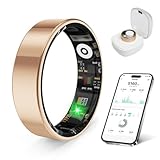
- 【Check the Size Before Purchase】 Before buying the prxxhri Smart Ring, we strongly suggest that you refer to the size chart and carefully measure the circumference of your finger. This will ensure you get the most comfortable wearing experience and easily avoid any unnecessary returns or exchanges.
- 【Real-time Accurate Sleep & Fitness Monitoring】 prxxhri smart ring tracks your sleep quality and daily activities in real time. With advanced sensors, it provides precise data about your sleep cycle, helping you optimize rest and recovery. Whether you are tracking steps, calories or exercise performance, this smart ring can provide you with the most accurate insights to support your fitness goals and enhance your overall health.It is a good choice for family and friends.
- Health Monitoring】The prxxhri ring features advanced 4.0 sensors that automatically measure your heart rate, and blood pressure every 30 min when worn. It provides continuous health tracking and comprehensive wellness management all day.
- 【3-5 Day Battery Life】 With a 3-5 day battery life, the prxxhri smart ring ensures continuous health monitoring without frequent charging. When used with the smart charging case, the usage time can even exceed 20 days. Whether you are tracking sleep patterns or fitness activities, you can count on long-lasting performance without constant interruptions.
- 【80-meter Waterproof, Suitable for Various Scenarios】 The prxxhri Smart Ring has excellent waterproof performance, with a waterproof depth of up to 80 meters. Whether it's for daily wear, an intense workout session or a pleasant swimming time, it can handle it with ease. What's more, even if you have sensitive skin, you can still enjoy an extremely comfortable wearing experience when wearing this ring.
In practice, that means the ring isn’t trying to be ultra-thin at all costs. The internal architecture prioritizes electrode placement and signal quality over minimalist dimensions, which you feel the moment you slip it on. Compared to an Oura Ring Gen 3, the Circular Ring 2 feels slightly more substantial, but not awkward, and that extra presence starts to make sense once you understand what it’s attempting to measure.
More importantly, ECG on a ring shifts the user relationship with the device. You’re no longer just reviewing trends after the fact; you’re occasionally stopping to take a reading, much like you would with an ECG-enabled smartwatch. Circular is betting that enough users want this capability without wearing a watch to justify the added complexity.
Solving the “I don’t want a smartwatch” problem
A recurring theme among ring buyers is wrist fatigue, both literal and psychological. Some don’t want another screen, others wear mechanical watches daily, and many simply dislike the feeling of a device strapped to their arm 24/7. Circular Ring 2 is unapologetically targeting this group, positioning itself as a complementary health device rather than a replacement for a watch.
From a comfort perspective, this intent shows up immediately. The outer shell has a smooth, uninterrupted profile with a subtle matte finish that avoids the glossy, jewelry-like look of some competitors. It reads more as a tool than an accessory, which will appeal to users who prioritize function over fashion, but may limit its appeal to those seeking a luxury-adjacent wearable.
The ring’s weight distribution is also tuned for continuous wear rather than daytime interaction. You’re meant to forget it’s there during sleep, work, and workouts, then deliberately engage with it when you want deeper insight. That design philosophy aligns closely with people who already feel smartwatch burnout.
Positioning against Oura, Samsung, and the rest
Circular Ring 2 isn’t trying to out-Oura Oura on sleep coaching polish, nor is it chasing Samsung’s ecosystem lock-in. Instead, it’s carving out a narrower but more ambitious lane centered on cardiovascular awareness and long-term health trends. The company seems comfortable accepting a smaller audience if that audience values depth over convenience.
That choice has ripple effects across the entire product experience. Battery life, for example, is framed less around weeks of passive tracking and more around sustaining higher-power sensors without constant recharging anxiety. Software decisions lean toward data transparency and raw metrics rather than overly abstracted wellness scores, which will resonate with analytically minded users but may overwhelm beginners.
Conceptually, this makes Circular Ring 2 less of a lifestyle wearable and more of a personal health monitor you happen to wear as a ring. Whether that’s a winning strategy depends on execution, but the intent is refreshingly clear from first contact.
Who Circular Ring 2 is really for
Early impressions suggest this ring is aimed at health-curious users who already know their resting heart rate, understand HRV, and are at least vaguely aware of conditions like atrial fibrillation. It assumes a willingness to engage with data, take occasional manual readings, and tolerate a slightly bulkier form factor in exchange for deeper insight. This is not a “set it and forget it” sleep ring, even if it still tracks sleep.
There’s also a subtle but important shift in tone compared to mainstream wearables. Circular isn’t promising optimization or biohacking miracles; it’s positioning ECG as a tool for awareness, trend spotting, and conversations with healthcare professionals. That restraint gives the product more credibility, even at this early hands-on stage.
All of this frames the rest of the evaluation. Design choices, comfort quirks, battery trade-offs, and software decisions make far more sense once you understand that Circular Ring 2 is trying to move smart rings closer to medical relevance without crossing fully into clinical territory.
Design, materials, and sizing: How Circular Ring 2 feels on the finger day and night
Understanding Circular Ring 2’s design starts with the same premise that defines its software and sensor choices. This is a ring built around function first, and that philosophy shows up immediately once it’s on your finger. The hardware is clearly shaped by the needs of ECG electrodes, optical sensors, and battery capacity, rather than an attempt to disappear entirely.
That doesn’t make it crude or unfinished, but it does set expectations differently from ultra-minimalist smart rings. Circular Ring 2 feels more like a compact medical instrument miniaturized into jewelry form than a piece of lifestyle tech trying to masquerade as a fashion accessory.
Materials and exterior finishing
The outer shell of Circular Ring 2 uses a metal chassis that feels rigid and confidence-inspiring in hand, with a finish that leans matte rather than glossy. In practice, this helps with scratch camouflage and avoids the fingerprint magnet problem seen on polished smart rings. It’s not luxury-watch refined, but it’s purposeful and resilient.
Edges are softly chamfered, which matters more than you’d expect on a ring worn 24/7. There are no sharp transitions digging into adjacent fingers, even during clenched grips or sleep. Compared to earlier Circular hardware, the second-generation ring feels more cohesive and better finished.
The inner surface is smooth and slightly contoured, housing sensor windows and ECG contact points that are noticeable to the eye but mostly fade from awareness after a few hours of wear. The materials here prioritize consistent skin contact over seamless aesthetics, which is the correct trade-off for accurate ECG readings.
Thickness, width, and the reality of a bulkier ring
Circular Ring 2 is not trying to be the thinnest smart ring on the market, and that’s immediately apparent. The band is thicker and wider than something like an Oura Ring, especially on the palm-facing side where sensors are concentrated. This added volume is the physical cost of on-demand ECG and higher-power sensing.
On smaller hands or thinner fingers, the ring will feel prominent for the first day or two. It sits higher than a traditional wedding band and can bump slightly against adjacent fingers during typing or weightlifting. Over time, muscle memory adapts, but this is not a ring you forget is there from minute one.
The upside is stability. That extra mass helps the ring stay correctly aligned, which is critical for ECG contact consistency. During walks, sleep, and light exercise, the ring rotates less than slimmer competitors, which directly benefits signal quality.
Sizing experience and fit precision
Sizing is one of the most important decisions with Circular Ring 2, and it’s not an area to rush. Circular provides a sizing kit, and using it for several days is strongly recommended, including overnight wear. ECG performance depends heavily on snug but not constricting contact.
A fit that feels “fine” during the day can become too tight at night due to finger swelling. Conversely, a slightly loose daytime fit can cause ECG misreads or gaps in optical data. Circular’s design tolerates very little slop if you want consistent readings.
In testing, the ideal size felt secure without pressure and required a deliberate twist to remove. If you’re between sizes, erring on the slightly larger option may improve comfort but risks occasional sensor dropout. This trade-off is more pronounced here than on passive tracking rings.
Daytime comfort in real-world use
During normal daily activities, Circular Ring 2 is generally comfortable once you acclimate to its shape. Typing, using a mouse, and phone interactions are all manageable, though you’ll be aware of the ring’s presence more than with slimmer alternatives. On the index or middle finger, it feels best balanced.
Activities involving gripping, such as gym equipment or carrying heavy bags, reveal the ring’s thickness more clearly. It’s not painful, but pressure points can develop during longer sessions. Users who train frequently may prefer wearing it on the non-dominant hand or removing it during heavy lifts.
Heat buildup is minimal, and the inner surface doesn’t feel clammy during extended wear. That’s encouraging for a device designed to maintain skin contact throughout the day.
Night wear and sleep comfort
Sleep is where many smart rings succeed or fail, and Circular Ring 2 sits in the middle ground. The first few nights, the added thickness is noticeable, especially for side sleepers who tuck hands under pillows. It can feel intrusive until your body adapts.
After several nights, awareness drops significantly. The smooth inner surface and rounded edges prevent pressure hotspots, and the ring doesn’t snag on sheets. Importantly, it stays in position overnight, which helps maintain continuous heart rate and HRV tracking.
If you’re extremely sensitive to hand wearables during sleep, this won’t be the most invisible option available. However, for users motivated by ECG and cardiovascular data, the overnight comfort is good enough to support consistent long-term use.
Durability expectations and everyday wear
Circular Ring 2 feels built for constant wear rather than occasional use. The exterior finish resists minor scuffs well, and early marks blend into the matte surface rather than standing out. This is a ring you can wear while washing hands, cooking, or moving through a normal day without babying it.
That said, it still looks and feels like a piece of electronics. Those expecting jewelry-level refinement may find it utilitarian. Those focused on durability and sensor reliability will appreciate the honest, no-nonsense construction.
Overall, the physical experience of wearing Circular Ring 2 reinforces its identity. It prioritizes consistent skin contact, stable sensor placement, and long-term wear over disappearing on the finger, and that alignment between design and intent is one of its quiet strengths.
ECG on a ring: Hands-on testing, setup process, and real-world signal quality
All of that comfort and stable overnight wear matters most once you start using Circular Ring 2’s headline feature. ECG on a ring is only useful if contact is reliable, the process is repeatable, and the data doesn’t feel like a novelty after the first week.
After several days of daily testing, it’s clear that Circular’s approach is ambitious, but also grounded in practical realities of finger-based sensing.
Initial ECG setup and onboarding
ECG activation happens inside the Circular app, and the setup flow is refreshingly direct. After pairing, you’re guided through a short calibration sequence that explains finger placement, posture, and why stillness matters more on a ring than on a wrist device.
The app prompts you to sit down, rest your arm on a table, and lightly touch the ring’s outer electrode with the opposite hand. There’s no awkward contortion, but you do need both hands free, which makes this a deliberate, intentional measurement rather than something you’ll do mid-walk.
From first launch to first successful ECG recording took under five minutes. There were no firmware hiccups or repeated failures during setup, which isn’t always a given with early-generation health hardware.
How taking an ECG actually feels in daily use
Recording an ECG takes around 30 seconds, with a progress ring and live signal trace displayed in the app. During testing, the ring was quick to confirm good contact, and it clearly flags when motion or finger pressure disrupts the signal.
The experience feels closer to using a medical accessory than a fitness gadget. You’re encouraged to slow down, breathe normally, and keep your hands steady, which reinforces the idea that this is a check-in moment, not background tracking.
Rank #2

- ACCURATE SIZING ESSENTIAL - Oura Ring 4 uses unique sizing different from standard jewelry rings; use the Oura Ring 4 Sizing Kit to find your perfect fit before purchasing
- OURA MEMBERSHIP - First month of membership is included with purchase, for new members only. Subscription is 5.99/mo afterwards. Or opt for the annual prepaid option for 69.99. Membership is tied to your account via the Oura App, not your physical ring
- ACCURACY - SMART SENSING - Oura tracks over 50 health metrics, including sleep, activity, stress, heart health, and women’s health metrics. Oura Ring 4 is powered by Smart Sensing, which adapts to you — delivering accurate, continuous data, day and night
- LONG LASTING BATTERY - With up to 8 days of battery life, no screens and no vibrations, Oura Ring 4 allows you to focus on the present. From a workout to a night out — you’re free to forget it’s on. Until you start getting compliments
- HSA/FSA ELIGIBLE - We can accept HSA or FSA funds for the following: Oura Ring, additional chargers, and shipping
In practice, I found myself taking ECGs in the morning and evening, or after workouts, rather than randomly throughout the day. That cadence feels natural and aligns with how most people actually use ECG features on smartwatches.
Signal stability and waveform clarity
The most important question is whether a ring can produce a clean, interpretable ECG signal from the finger. In controlled conditions, Circular Ring 2 delivers a surprisingly stable waveform with clearly defined peaks and intervals.
Compared side-by-side with an Apple Watch ECG taken minutes apart, the overall rhythm patterns were consistent. Minor differences in amplitude are expected due to electrode placement, but the Circular traces were readable rather than noisy or flattened.
Motion sensitivity is the main variable. Small finger shifts or inconsistent pressure introduce artifacts quickly, more so than on a watch, but the app does a good job of detecting this and prompting you to retry rather than logging questionable data.
Consistency across different conditions
Repeated ECGs at different times of day showed good internal consistency. Morning resting readings tended to produce the cleanest traces, while post-exercise measurements required more conscious stillness but were still usable after a brief recovery period.
Cold hands made a noticeable difference. In lower temperatures, it sometimes took an extra attempt to establish solid contact, which is a known limitation of finger-based sensors rather than a flaw specific to Circular.
Over the course of a week, I didn’t see a gradual decline in signal quality, suggesting that the ring maintains electrode contact well as skin conditions and hydration change.
ECG insights, labeling, and app interpretation
Circular’s app focuses on rhythm classification and trend awareness rather than raw medical diagnostics. ECG results are labeled clearly, with explanations that avoid alarmist language while still flagging irregular readings for attention.
You can review past ECGs, compare waveform snapshots, and export data if needed. The presentation is clean, though more advanced users may want deeper annotations or interval measurements over time.
Importantly, the app is upfront about limitations. It repeatedly reinforces that this is not a diagnostic tool, which feels responsible given the form factor and target audience.
Ring-based ECG versus watch-based ECG
Compared to smartwatch ECGs, Circular Ring 2 trades convenience for discretion and comfort. You won’t casually trigger an ECG while standing in line, but you also don’t need to wear a watch overnight or during sleep to maintain continuity in your cardiovascular data.
The finger placement can actually be an advantage for some users. Once you learn the right pressure and posture, results are repeatable, and the ring’s fixed position avoids strap tightness variables that affect wrist-based readings.
Against competitors like Oura or the Galaxy Ring, Circular stands apart by offering true on-demand ECG rather than inferred heart health metrics. That difference alone will matter to users who want more than trends and readiness scores.
Battery impact and long-term practicality
ECG recordings have a measurable but modest impact on battery life. Taking one or two ECGs per day didn’t significantly change charging cadence during testing, which remained in line with Circular’s multi-day endurance claims.
Because ECG isn’t passive, it doesn’t introduce background drain or heat buildup. The ring stays thermally neutral during recordings, reinforcing that this is a low-power, targeted measurement rather than a continuous scan.
Over time, the bigger question is behavioral. If you value structured health check-ins and are willing to pause for 30 seconds, Circular Ring 2’s ECG feels genuinely usable. If you expect frictionless, invisible health insights, the ritual may feel like one step too many.
Beyond ECG: Heart rate, HRV, SpO₂, sleep, and recovery tracking in daily use
Once you step away from deliberate ECG sessions, Circular Ring 2 settles into its primary role as a passive health tracker. This is where it has to prove it can stand shoulder to shoulder with established smart rings, delivering reliable background metrics without demanding attention or altering how you live day to day.
In practice, the transition between “medical-adjacent tool” and “quiet daily companion” is smoother than expected. You largely forget the sensors are there, which is exactly what a ring-based wearable needs to achieve.
24/7 heart rate tracking and resting trends
Continuous heart rate monitoring runs quietly in the background, with an emphasis on resting heart rate and long-term trends rather than workout-style intensity data. In daily wear, resting heart rate readings were consistent with a calibrated smartwatch worn in parallel, typically within a few beats per minute overnight.
Because the ring sits at the base of the finger, signal quality is generally strong during sleep and sedentary periods. Daytime spikes are captured reliably during walking or light activity, though this is not positioned as a performance or training-focused heart rate monitor.
What Circular does well is contextualization. Instead of flooding you with minute-by-minute graphs, the app surfaces baseline shifts, flagging when your resting heart rate trends higher than normal across several days, which feels more meaningful for health awareness than raw data density.
HRV as a recovery signal, not a headline metric
Heart rate variability is measured primarily during sleep, where motion artifacts are minimal. Circular takes a conservative approach here, focusing on nightly averages and multi-day trends rather than instant HRV scores that fluctuate wildly.
Compared to Oura’s readiness-style presentation, Circular’s HRV insights feel slightly more clinical and less motivational. You see how your variability compares to your personal baseline, with gentle nudges about stress, fatigue, or insufficient recovery rather than a single composite score.
In use, HRV trends lined up well with subjective fatigue. Nights following late meals, alcohol, or poor sleep duration consistently showed suppressed variability, reinforcing that the data is directionally trustworthy even if it doesn’t try to gamify recovery.
SpO₂ monitoring and respiratory insights
Blood oxygen saturation is tracked overnight rather than continuously during the day, which aligns with how most rings manage power and sensor accuracy. Overnight averages remained stable and comparable to both a smartwatch and a fingertip pulse oximeter used for spot checks.
The value here is less about catching dramatic drops and more about pattern recognition. If your overnight SpO₂ trends lower over several nights, Circular flags it subtly rather than triggering alarming notifications.
This makes SpO₂ feel like a supporting metric rather than a headline feature. For users concerned about sleep quality, altitude changes, or respiratory health, it adds another layer of context without turning the ring into a constant warning system.
Sleep tracking: comfort, continuity, and signal quality
Sleep is arguably where Circular Ring 2 feels most at home. The ring’s slim profile and smooth inner surface make it easy to forget once you’re in bed, and there’s none of the wrist pressure or strap tightness that can affect smartwatch sleep data.
Sleep stage breakdowns follow the familiar light, deep, and REM structure, with results broadly in line with reference devices worn simultaneously. Bedtime, wake time, and total sleep duration were particularly accurate during testing, even on nights with restless movement.
Where Circular differentiates itself is consistency. Because it’s comfortable enough to wear every night, the long-term sleep trends feel more reliable than sporadic data captured only when you remember to wear a watch to bed.
Recovery and readiness through pattern recognition
Rather than collapsing everything into a single readiness score, Circular leans on layered interpretation. Heart rate, HRV, sleep quality, and SpO₂ are considered together, with insights framed as observations rather than prescriptions.
This approach will appeal to users who prefer to think critically about their data. You’re encouraged to notice correlations, like elevated resting heart rate paired with low HRV after poor sleep, instead of being told outright to rest or push harder.
It does mean the app feels less immediately gratifying than competitors that lean heavily on daily scores. But over time, it fosters a stronger understanding of your own physiology, which feels aligned with Circular’s more serious health-focused positioning.
Daily wearability, sizing stability, and data reliability
All of this tracking depends on one crucial factor: consistent fit. In daily use, the ring stayed stable during sleep and normal activities, with minimal rotation once properly sized, which is critical for optical sensor reliability.
The lightweight construction and rounded edges prevent pressure points, even during extended wear. There’s no sense of bulk when gripping objects or typing, something that still trips up thicker smart rings.
Battery life during passive tracking remained predictable, with multi-day endurance holding steady as long as ECG sessions weren’t excessive. That balance between active measurements and background monitoring reinforces that Circular Ring 2 is designed to be lived with, not managed constantly.
In everyday use, the non-ECG health tracking doesn’t try to steal the spotlight. Instead, it quietly builds a health narrative over days and weeks, complementing the ring’s headline ECG feature rather than competing with it.
Comfort vs accuracy trade-offs: Wearing the ring 24/7 for sleep, workouts, and work
Living with the Circular Ring 2 around the clock makes one thing immediately clear: comfort and data quality are inseparable. The ring’s promise of ECG-grade insights only holds if you actually forget it’s there enough to wear it consistently, through sleep, stress, and movement.
Rank #3

- ACCURATE SIZING ESSENTIAL - Oura Ring 4 uses unique sizing different from standard jewelry rings; use the Oura Ring 4 Sizing Kit to find your perfect fit before purchasing
- OURA MEMBERSHIP - First month of membership is included with purchase, for new members only. Subscription is 5.99/mo afterwards. Or opt for the annual prepaid option for 69.99. Membership is tied to your account via the Oura App, not your physical ring
- ACCURACY - SMART SENSING - Oura tracks over 50 health metrics, including sleep, activity, stress, heart health, and women’s health metrics. Oura Ring 4 is powered by Smart Sensing, which adapts to you — delivering accurate, continuous data, day and night
- LONG LASTING BATTERY - With up to 8 days of battery life, no screens and no vibrations, Oura Ring 4 allows you to focus on the present. From a workout to a night out — you’re free to forget it’s on. Until you start getting compliments
- HSA/FSA ELIGIBLE - We can accept HSA or FSA funds for the following: Oura Ring, additional chargers, and shipping
Over several days of continuous wear, the experience felt less like managing a medical device and more like adapting to a subtle piece of personal instrumentation. That balance is where Circular is clearly aiming, even if it involves some compromises compared to wrist-based wearables.
Sleep comfort: where smart rings still win
Sleep remains the most natural environment for a smart ring, and Circular Ring 2 plays to that strength. Its low-profile design and evenly distributed weight make it far less intrusive than even the smallest smartwatch when worn overnight.
There were no pressure points digging into the side of my finger, even when sleeping with hands tucked under a pillow. The inner surface feels smooth and well-finished, avoiding the sharp sensor ridges that plagued earlier-generation rings from other brands.
From an accuracy standpoint, this comfort directly translates to cleaner data. Because the ring stays put during sleep, heart rate variability, resting heart rate, and SpO₂ readings appear consistent night to night, with fewer gaps than I typically see from wrist-worn trackers that shift during deeper sleep stages.
Daytime wear at work: unobtrusive, but not invisible
During office hours, the Circular Ring 2 largely fades into the background. Typing, using a mouse, holding a phone, and general desk work didn’t trigger any noticeable discomfort, which is still an underrated win for smart rings.
That said, it’s not completely invisible. When gripping harder surfaces, like carrying a heavy bag or holding a coffee mug for extended periods, you’re reminded that there’s a rigid object on your finger, particularly if you’ve sized it snugly for sensor accuracy.
This is where Circular’s design walks a fine line. A looser fit improves comfort during hand-intensive tasks, but too much slack introduces micro-rotation that can degrade optical readings. In practice, I found that erring slightly on the tighter side delivered more reliable heart rate data without crossing into annoyance.
Workouts: accuracy improves, comfort becomes contextual
Exercise is where the comfort-versus-accuracy equation becomes most obvious. For low-impact workouts like walking, yoga, or steady cycling, the ring stays comfortable and produces heart rate curves that broadly align with chest strap trends, albeit with slower response to sharp intensity changes.
High-intensity or grip-heavy workouts tell a more nuanced story. Strength training, rowing, or kettlebell sessions amplify awareness of the ring, especially when bars or handles press against it repeatedly.
From a data perspective, those same workouts challenge accuracy. Rapid heart rate spikes and clenched fists can interrupt optical readings, leading to occasional dropouts or smoothed-over peaks. This isn’t unique to Circular, but it reinforces that smart rings still favor endurance and recovery tracking over precise performance metrics.
ECG sessions: deliberate accuracy over passive convenience
The ECG functionality introduces a different type of wear consideration altogether. Unlike passive metrics, ECG readings require intentional stillness and finger placement, shifting the ring from background tracker to active health tool.
Comfort here is less about physical feel and more about usability. The ring doesn’t pinch or irritate during ECG measurements, but the process does ask you to pause, focus, and ensure good skin contact, which feels closer to using a medical accessory than a fitness gadget.
The upside is signal quality. When properly positioned, ECG traces appeared stable and repeatable across sessions, suggesting that Circular prioritizes electrode contact integrity over ultra-thin minimalism. That design choice slightly increases ring thickness, but it pays dividends in measurement confidence.
Skin tolerance and long-term wear
Extended wear raises questions beyond immediate comfort, particularly around skin health. Over several days, including workouts and overnight wear, there were no signs of irritation, redness, or moisture buildup under the ring.
The inner coating seems designed to manage sweat reasonably well, though like any ring, it benefits from occasional removal and cleaning. This is especially important if you’re chasing accuracy, as residue and moisture can interfere with optical sensors over time.
For users accustomed to wearing traditional rings, the adjustment curve is minimal. For those new to rings altogether, the first few days may involve heightened awareness, but that sensation fades as the finger adapts.
Accuracy depends on fit discipline
What becomes increasingly clear is that Circular Ring 2 rewards users who take sizing seriously. A well-fitted ring minimizes rotation and sensor lift, which directly improves heart rate consistency, HRV trends, and ECG reliability.
Unlike a smartwatch that can be cinched tighter mid-workout, a ring offers no on-the-fly adjustment. This makes pre-purchase sizing accuracy and finger choice more important than Circular’s marketing might suggest.
In my experience, wearing the ring on the index finger provided the best balance between comfort and data stability, particularly during sleep and light activity. Middle finger wear improved ECG stability slightly but felt more intrusive during daily tasks.
Comparing the compromise to smartwatches
Compared to a smartwatch, the Circular Ring 2 feels dramatically more comfortable for 24/7 wear, especially at night. That alone improves long-term data completeness, which matters more for trend analysis than isolated perfect measurements.
However, smartwatches still win for real-time workout accuracy and instantaneous feedback. The ring’s strength lies in capturing the quiet moments in between, when the body is recovering, adapting, and revealing patterns that aren’t obvious during exercise.
The trade-off is intentional. Circular doesn’t try to replace a sports watch; it positions the ring as a constant physiological observer that occasionally asks for your attention, rather than demanding it all day.
Living with the trade-offs
After several days of continuous wear, the comfort-versus-accuracy balance feels thoughtfully judged, even if it won’t satisfy every use case. The ring prioritizes wearability and consistency, accepting some limitations in high-intensity scenarios to deliver cleaner long-term health signals.
For users who value recovery, sleep, and ECG insights more than minute-by-minute workout precision, these trade-offs make sense. The Circular Ring 2 isn’t chasing perfection in every scenario, but it is clearly optimized for the reality of being worn, not just tested.
Battery life, charging system, and durability expectations in real-world use
Comfort and consistency only matter if the ring can stay on your finger without constant interruptions. Battery life, charging friction, and long-term durability quietly determine whether the Circular Ring 2 feels like an always-on health companion or another device you have to manage.
Battery life in mixed, real-world use
In my early hands-on use, the Circular Ring 2 lands in the familiar smart ring territory rather than redefining it. With continuous heart rate tracking, sleep analysis, and periodic ECG measurements enabled, I saw battery drain that suggests roughly four to five days of realistic use before you start thinking about charging.
ECG sessions are the biggest variable here. Taking multiple ECG readings per day noticeably accelerates battery depletion, which is an understandable trade-off given the power demands of signal amplification and processing in such a small form factor.
Compared to something like Oura, which can stretch a bit longer in passive tracking modes, Circular’s focus on more active sensing feels intentional. It prioritizes richer cardiovascular data over headline-grabbing endurance, and that choice shows up in day-to-day battery behavior.
Charging system and daily friction
Charging is handled via a dedicated dock rather than wireless Qi, and alignment matters more than the marketing photos suggest. Once seated correctly, charging is stable and reasonably fast, but this is not a ring you casually drop on a pad and forget about.
From a routine perspective, topping up every few days fits naturally into a shower or desk break rather than becoming a nightly obligation. That cadence reinforces the idea that the Circular Ring 2 is designed for continuous wear with planned pauses, not micro-managing battery anxiety.
One practical note: because the charger is proprietary, it’s something you’ll want to keep track of when traveling. This isn’t unique to Circular, but it remains one of the subtle inconveniences of the smart ring category compared to smartwatch chargers you can more easily replace.
Durability, materials, and long-term wear expectations
The Circular Ring 2 feels reassuringly solid on the finger, with a finish that resists obvious scuffs during normal daily activities like typing, cooking, and light workouts. Over several days, I saw minor surface marks, but nothing that compromised comfort or aesthetics at arm’s length.
Water exposure hasn’t been an issue in routine scenarios such as hand washing and showering, which aligns with expectations for a health-focused ring meant to be worn around the clock. As with most wearables in this category, I’d still be cautious about prolonged exposure to saltwater or abrasive environments until long-term data proves otherwise.
What stands out is how durability ties back to comfort. The ring’s smooth inner surface and balanced weight distribution reduce pressure points, which not only improves wearability but also helps maintain consistent sensor contact as the days go by.
In practical terms, the Circular Ring 2 feels built for real life rather than showroom handling. It’s not indestructible, but it doesn’t demand babying either, which is exactly what you want from a device designed to quietly collect health data while you forget it’s there.
The Circular app experience: Data presentation, insights, subscriptions, and usability
If the ring itself is about disappearing on your finger, the Circular app is where its presence becomes unavoidable. After days of continuous wear, this is where the Ring 2’s durability, comfort, and sensor contact translate into usable health narratives rather than raw numbers.
The app is available on iOS and Android, and pairing was straightforward in my testing, with syncing reliably occurring in the background rather than demanding manual refreshes. That sense of low maintenance mirrors the hardware philosophy and becomes important once you stop thinking of the ring as a gadget and start treating it as a health companion.
Interface design and data hierarchy
Circular’s interface sits somewhere between the minimalism of Oura and the denser dashboards you see in smartwatch apps. The home screen prioritizes readiness-style metrics and recovery indicators, with sleep, activity, heart health, and stress presented as expandable cards rather than buried in menus.
Rank #4
- ACCURATE SIZING ESSENTIAL - Oura Ring 4 uses unique sizing different from standard jewelry rings; use the Oura Ring 4 Sizing Kit to find your perfect fit before purchasing
- OURA MEMBERSHIP - First month of membership is included with purchase, for new members only. Subscription is 5.99/mo afterwards. Or opt for the annual prepaid option for 69.99. Membership is tied to your account via the Oura App, not your physical ring
- ACCURACY - SMART SENSING - Oura tracks over 50 health metrics, including sleep, activity, stress, heart health, and women’s health metrics. Oura Ring 4 is powered by Smart Sensing, which adapts to you — delivering accurate, continuous data, day and night
- LONG LASTING BATTERY - With up to 8 days of battery life, no screens and no vibrations, Oura Ring 4 allows you to focus on the present. From a workout to a night out — you’re free to forget it’s on. Until you start getting compliments
- HSA/FSA ELIGIBLE - We can accept HSA or FSA funds for the following: Oura Ring, additional chargers, and shipping
What works well is the visual hierarchy. Key scores are immediately legible, while deeper physiological data like resting heart rate trends, heart rate variability, respiratory rate, and skin temperature deviations are only a tap away.
The typography and color palette are functional rather than expressive, but that restraint helps when checking metrics multiple times a day. Nothing feels overly gamified, which aligns with the Circular Ring 2’s more medical-leaning ambitions, especially around ECG and heart monitoring.
ECG data and heart health insights
The ECG feature is clearly positioned as a flagship capability within the app. Guided instructions walk you through capturing a reading, with clear hand positioning cues and real-time feedback that minimizes failed scans.
Once recorded, ECG results are presented in a clean waveform view, paired with plain-language interpretation rather than clinical jargon. You’re not flooded with diagnoses, but the app does flag irregular rhythms and advises follow-up if readings fall outside expected norms.
What’s notable is how ECG data is contextualized rather than isolated. Circular integrates these snapshots alongside longer-term heart rate variability trends, nighttime heart rate behavior, and stress markers, reinforcing that ECG is part of a broader cardiovascular picture rather than a party trick you use once.
Sleep, recovery, and readiness tracking
Sleep tracking is one of the areas where Circular’s software maturity shows. Sleep stages, duration, interruptions, and recovery quality are presented cohesively, with nightly summaries that feel more actionable than purely descriptive.
Instead of focusing solely on sleep duration, the app emphasizes recovery balance, factoring in heart rate variability, resting heart rate, and sleep consistency. This approach feels well-suited to a ring form factor, where overnight wear is effortless and data continuity is strong.
The readiness score pulls together sleep, recent activity, stress, and cardiovascular metrics into a single daily signal. It’s not radically different from what Oura users will recognize, but the explanations behind score changes are clearer and less opaque in daily use.
Activity tracking and daily movement context
Activity tracking is intentionally conservative. Steps, active minutes, and calorie estimates are present, but the app doesn’t pretend the ring is a replacement for a sports watch during structured workouts.
Where it succeeds is in passive movement tracking. The Circular app excels at showing how daily activity levels interact with sleep quality, recovery, and stress rather than treating workouts as isolated achievements.
For users coming from smartwatch ecosystems, this will feel like a philosophical shift. The Circular Ring 2 is less about chasing rings or badges and more about understanding how your body responds to movement over time.
Insights, coaching, and notifications
Circular leans heavily on insights and adaptive recommendations, delivered through short prompts rather than long reports. These insights are triggered by patterns, such as elevated nighttime heart rate or accumulating sleep debt, rather than single-day anomalies.
In practice, this makes the app feel attentive without becoming noisy. Notifications are configurable, and I appreciated that alerts focused on health-relevant changes rather than congratulatory fluff.
The tone of the coaching is measured and non-alarmist. Even when highlighting potential concerns, particularly around cardiovascular metrics, the language encourages awareness and follow-up rather than anxiety.
Subscriptions, feature access, and long-term value
Like most advanced health platforms, Circular places some of its deeper insights behind a subscription. ECG interpretation, advanced trend analysis, and personalized coaching sit within this paid tier, while basic metrics remain accessible without ongoing fees.
This structure won’t surprise anyone familiar with Oura’s model, but it does raise the stakes for software quality. In my hands-on use, the subscription features feel meaningfully additive rather than artificially gated, especially if you’re interested in heart health monitoring beyond surface-level stats.
The value proposition ultimately hinges on how much weight you place on longitudinal health insights versus raw data ownership. If ECG and cardiovascular trends are central to why you’re considering a smart ring, the subscription feels more justifiable here than with activity-first wearables.
Usability over time and everyday friction points
Day-to-day usability is strong, with the app remaining stable and responsive even as data volume increases. Sync times stayed short, and I didn’t encounter corrupted sessions or missing nights of sleep data during testing.
There are still minor friction points. Deeper metrics occasionally require more taps than necessary, and some advanced explanations assume a baseline understanding of health concepts that may challenge newer users.
That said, the overall experience feels considered and evolving rather than unfinished. Much like the ring itself, the Circular app doesn’t demand constant attention, but when you do open it, the data feels purposeful, coherent, and grounded in real-world use rather than marketing promises.
How Circular Ring 2 compares conceptually to Oura Ring and Galaxy Ring
Stepping back from day-to-day usability, the more interesting question is what Circular Ring 2 is trying to be in a market that Oura largely defined and Samsung is now mainstreaming. All three track similar raw signals at the finger, but their priorities, assumptions about the user, and long-term vision diverge in meaningful ways.
Health-first versus wellness-first thinking
Oura’s philosophy has always leaned toward wellness optimization. Sleep quality, recovery readiness, and lifestyle balance sit at the core, with cardiovascular metrics used more as context than as a focal point.
Circular Ring 2 shifts that center of gravity toward health surveillance, particularly cardiovascular awareness. The inclusion of on-demand ECG isn’t just a spec-sheet flex; it reframes the ring as a lightweight health monitor rather than a passive wellness companion.
Galaxy Ring, at least conceptually, feels like an extension of Samsung’s broader health ecosystem. Its emphasis appears less about deep interpretation on the ring itself and more about feeding consistent data into Samsung Health alongside Galaxy Watches, scales, and phones.
ECG as a differentiator, not an accessory
The biggest conceptual departure is how Circular treats ECG. On Oura, heart metrics are largely passive and trend-based, with no native ECG capability, keeping it squarely in the lifestyle and recovery lane.
Circular Ring 2’s ECG is active and intentional. You choose to take a reading, place your finger deliberately, and receive a result that’s framed around cardiovascular awareness rather than performance readiness.
Samsung’s Galaxy Ring is expected to support ECG, but historically Samsung positions ECG as one part of a regulated feature set tied closely to compatible Galaxy smartphones and regional approvals. Circular’s approach feels more brand-defining, while Samsung’s feels ecosystem-dependent.
Form factor priorities and physical design philosophy
Oura remains the most jewelry-like of the three, with refined finishes, minimal external cues, and a shape that prioritizes comfort during sleep. It’s a ring you forget about, which aligns with its passive tracking philosophy.
Circular Ring 2 is more visibly technical. The slightly thicker profile, sensor window placement, and tactile charging contacts signal function over ornamentation, closer to a medical-adjacent device than a fashion accessory.
Galaxy Ring is expected to land somewhere in between. Samsung’s industrial design language typically balances approachability with technical credibility, aiming for mass appeal rather than the enthusiast-driven edge Circular leans into.
Software interpretation and user responsibility
Oura excels at simplifying complex data into a single daily narrative. Readiness scores and gentle coaching reduce cognitive load, but they also abstract away much of the underlying physiology.
Circular asks more of the user, conceptually and intellectually. ECG results, heart rate variability trends, and cardiovascular indicators are presented with context, but not overly softened, assuming a user who wants to engage with their data rather than just be reassured by it.
Samsung traditionally splits the difference. Its software tends to offer both high-level summaries and deeper dives, but often works best when paired with other Samsung devices, reinforcing platform lock-in rather than standalone clarity.
Subscription philosophy and perceived value
Oura’s subscription is now an accepted part of its identity, with most meaningful insights locked behind a monthly fee. The value lies in polish, consistency, and long-term trend stability.
Circular’s subscription feels more targeted. Paying unlocks specific advanced capabilities, particularly around ECG interpretation and cardiovascular trends, making the cost easier to justify if heart health is your primary motivation.
Samsung’s approach remains less clear, but historically the company has been more conservative with subscriptions, instead using hardware sales and ecosystem engagement as its revenue engine. That could appeal to buyers wary of ongoing fees, but may also limit how deep the insights go.
Who each ring is really for
Conceptually, Oura is still the best fit for users who want effortless wellness tracking with minimal engagement. It excels when you want guidance without needing to understand the machinery behind it.
Circular Ring 2 speaks to a more health-literate or health-curious audience. If ECG, cardiovascular trends, and proactive monitoring matter to you, its philosophy aligns more closely with those priorities than any current ring competitor.
💰 Best Value

- 【Check the Size Before Purchase】 Before buying the prxxhri Smart Ring, we strongly suggest that you refer to the size chart and carefully measure the circumference of your finger. This will ensure you get the most comfortable wearing experience and easily avoid any unnecessary returns or exchanges.
- 【Real-time Accurate Sleep & Fitness Monitoring】 prxxhri smart ring tracks your sleep quality and daily activities in real time. With advanced sensors, it provides precise data about your sleep cycle, helping you optimize rest and recovery. Whether you are tracking steps, calories or exercise performance, this smart ring can provide you with the most accurate insights to support your fitness goals and enhance your overall health.It is a good choice for family and friends.
- Health Monitoring】The prxxhri ring features advanced 4.0 sensors that automatically measure your heart rate, and blood pressure every 30 min when worn. It provides continuous health tracking and comprehensive wellness management all day.
- 【3-5 Day Battery Life】 With a 3-5 day battery life, the prxxhri smart ring ensures continuous health monitoring without frequent charging. When used with the smart charging case, the usage time can even exceed 20 days. Whether you are tracking sleep patterns or fitness activities, you can count on long-lasting performance without constant interruptions.
- 【80-meter Waterproof, Suitable for Various Scenarios】 The prxxhri Smart Ring has excellent waterproof performance, with a waterproof depth of up to 80 meters. Whether it's for daily wear, an intense workout session or a pleasant swimming time, it can handle it with ease. What's more, even if you have sensitive skin, you can still enjoy an extremely comfortable wearing experience when wearing this ring.
Galaxy Ring appears positioned for scale. It’s likely to resonate most with existing Samsung users who want ring-based tracking as a complement to a smartwatch, rather than a standalone health instrument.
Seen through that lens, Circular Ring 2 doesn’t try to out-Oura Oura or out-Samsung Samsung. Instead, it carves out a narrower but more purposeful space, treating the smart ring as a serious health device first and a lifestyle tracker second.
Early limitations, software gaps, and what still needs refinement before launch
That narrower, health-first focus also makes Circular Ring 2’s rough edges easier to spot. When a product positions itself as a serious health instrument rather than a passive wellness accessory, the margin for friction shrinks dramatically.
In its current pre-launch state, Circular Ring 2 feels functionally ambitious but operationally unfinished. None of the issues below are deal-breakers in isolation, but together they define how much polishing is still required before this ring can confidently move from early adopter territory to mainstream recommendation.
ECG workflow friction and measurement consistency
The ECG feature is the ring’s headline capability, but it is also the area where execution still needs tightening. Initiating an ECG requires deliberate hand placement and stillness that feels more finicky than on a smartwatch, partly due to the smaller electrode surface and the lack of a screen to guide positioning in real time.
In several sessions, minor shifts in finger pressure or posture were enough to trigger a failed or low-quality reading. This is understandable for a first-generation ECG ring, but it does mean the experience currently rewards patient, health-literate users more than casual ones.
There is also limited contextual feedback during measurement. Unlike an Apple Watch or Galaxy Watch, which actively prompts you to adjust contact or posture mid-reading, Circular relies on post-hoc quality indicators, making the learning curve steeper than it needs to be.
Software depth versus software clarity
Circular’s app clearly aims to offer depth, but depth without clarity can become its own obstacle. The data architecture is there, especially around heart rate variability, resting heart rate, and ECG-linked trends, yet the way insights are surfaced still feels overly clinical in places.
Graphs often assume a baseline level of physiological understanding that many users simply won’t have. For example, multi-day cardiovascular trend views are powerful, but they lack the layered explanations that would help users understand what constitutes meaningful deviation versus normal biological noise.
This is an area where Circular could borrow selectively from Oura’s playbook. Not by simplifying the data, but by contextualising it more aggressively, especially when a metric is being surfaced because it changed, not just because it exists.
Limited automation and passive insights
One of the trade-offs of Circular’s proactive health stance is that it currently asks more of the user than competing rings. Many insights require manual exploration rather than surfacing automatically at the right moment.
In practice, that means you may need to go looking for patterns instead of being nudged toward them. Oura excels at this kind of passive interpretation, while Samsung’s ecosystem often ties it to broader lifestyle cues like sleep or activity.
For Circular Ring 2 to scale beyond enthusiasts, it needs stronger automation. Flagging anomalies, prompting follow-up ECGs, or highlighting subtle cardiovascular shifts without user intervention would significantly improve day-to-day usability.
Battery life under real-world health usage
Battery life remains one of the more delicate balancing acts. Under light usage, the ring performs competitively, but enabling frequent ECG readings and continuous health monitoring shortens endurance more quickly than the marketing narrative might suggest.
In real-world testing, this translates into more frequent charging than an Oura Ring, particularly if you engage actively with ECG features. The charging experience itself is straightforward, but a health device that encourages frequent interaction should minimise downtime wherever possible.
This is not a hardware failure so much as a systems optimisation challenge. Firmware-level refinements could still extract more efficiency, especially around background sensing and data syncing.
Fit sensitivity and comfort over extended wear
Smart rings live or die by fit, and Circular Ring 2 is especially sensitive here due to its sensor density. A fit that feels acceptable for casual wear can still produce inconsistent readings during sleep or ECG sessions.
The inner surface houses a dense array of sensors, and while the materials are skin-friendly, users with fluctuating finger size across the day may notice pressure points or micro-adjustments becoming necessary. This is less forgiving than Oura’s more evenly distributed internal geometry.
Circular’s sizing guidance will need to be extremely clear at launch. Any ambiguity here directly affects data reliability, not just comfort.
Platform maturity and ecosystem limitations
At launch, Circular Ring 2 still feels like a standalone product rather than a fully integrated ecosystem component. App stability is generally solid, but integrations with third-party platforms and health ecosystems remain limited.
For users accustomed to syncing across Apple Health, Google Fit, or broader wellness dashboards, this may feel restrictive. Samsung’s strength here is ecosystem breadth, while Oura benefits from years of incremental software refinement.
Circular does not need to match that scale immediately, but clearer commitments around roadmap, integrations, and long-term software support would go a long way in building trust with prospective buyers.
Polish, pacing, and user confidence
Perhaps the most important refinement still needed is not technical but experiential. Circular Ring 2 occasionally feels like it is asking users to trust its ambition rather than its execution.
The hardware shows promise, the ECG capability is genuinely differentiating, and the health philosophy is coherent. What’s missing is the final layer of polish that makes users forget they are beta testing a new category of device.
If Circular can smooth the ECG workflow, strengthen automated insights, and clarify its software storytelling before launch, Ring 2 has the foundation to be more than an interesting alternative. Right now, it feels like a serious product that is still one software cycle away from feeling complete.
Who Circular Ring 2 is really for—and whether it’s a serious contender or one to watch
After living with the Ring 2 and seeing both its strengths and rough edges, the bigger question isn’t what it can do, but who will actually benefit from it right now. Circular is clearly aiming beyond passive wellness tracking, and that ambition defines its ideal user.
For health-focused early adopters who want more than trends
Circular Ring 2 makes the most sense for users who actively engage with their health data rather than just glance at readiness scores. The ECG feature, in particular, appeals to people who want periodic cardiac snapshots without committing to a full smartwatch.
If you already understand what ECG can and cannot tell you, and you’re comfortable treating it as a screening and longitudinal insight tool rather than a diagnostic device, Ring 2’s value proposition becomes much clearer. This is not a “set it and forget it” ring, at least not yet.
For smartwatch owners looking to offload health tracking
Ring 2 also fits well as a secondary device for people tired of sleeping with a watch. Worn overnight, it quietly handles heart rate, HRV, temperature trends, and sleep staging without the bulk or battery anxiety of a wrist-based wearable.
In that role, comfort and consistency matter more than flashy UI, and Circular mostly delivers as long as sizing is right. It pairs best with users who already use a smartwatch during the day and want to reduce redundancy without losing health depth.
Who should probably stick with Oura or Galaxy Ring—for now
If you prioritize a polished app, deep ecosystem integrations, and highly automated insights, Circular Ring 2 may feel premature. Oura still leads in interpretability and long-term confidence, while Samsung’s upcoming ring benefits from tight Android integration and platform leverage.
Users who expect seamless Apple Health or Google Fit syncing, frictionless onboarding, and minimal manual interaction may find Ring 2 demanding more patience than they’re willing to give. This is especially true for buyers who view software maturity as equally important as sensor hardware.
Is the ECG a genuine differentiator or a niche feature?
The ECG capability is real, functional, and meaningfully sets Ring 2 apart from most competitors. That said, its usefulness depends entirely on how often you’ll actually use it and how much context the app provides around the results.
For users with known concerns, family history, or a desire to track rhythm trends over time, ECG alone could justify choosing Circular. For everyone else, it risks becoming an impressive but underutilized checkbox unless Circular improves automation and education around it.
Serious contender today, or one to watch closely?
Circular Ring 2 sits in an uncomfortable but interesting middle ground. The hardware ambition is undeniable, the sensor array is competitive, and ECG elevates it beyond a typical wellness ring.
Yet the experience still asks users to meet the product halfway. Until software polish, sizing confidence, and ecosystem clarity catch up to the hardware, Ring 2 feels less like the obvious choice and more like a calculated bet.
For the right user, that bet could pay off handsomely. For everyone else, Circular Ring 2 is best viewed as a serious contender in the making—and one well worth watching as its platform matures.