Women have been tracking their cycles for decades, but most of that data still lives in a gray zone of estimates, averages, and retrospective logging. Even the most advanced wearables on the market today infer hormonal states indirectly, using temperature shifts, heart rate variability, or sleep patterns as proxies rather than measuring hormones themselves. Clair is positioning its first wearable as a direct response to that gap, arguing that women deserve real hormonal insight without needles, lab visits, or monthly test strips.
The company’s core claim is straightforward but ambitious: the reason women’s health wearables plateau at “cycle awareness” is because they lack continuous hormone data. Clair says it is building a device that can non-invasively monitor key reproductive hormones on the body, in real time or near-real time, and translate that information into actionable guidance around fertility, cycle phases, and broader hormonal health. If true, that would move women’s wearables from educated guessing into a new category of physiological sensing.
Why current wearables still guess at hormones
Most popular wearables marketed toward women rely on secondary signals. Skin temperature trends, resting heart rate, respiration, and sleep architecture can correlate with estrogen and progesterone fluctuations, but correlation is not measurement. Algorithms can predict ovulation windows or luteal phase onset, yet they often struggle with irregular cycles, postpartum changes, PCOS, perimenopause, or hormonal contraception.
Blood-based hormone tests, meanwhile, provide accuracy but not continuity. Finger-prick kits and lab panels offer snapshots, not streams, and they introduce friction, cost, and compliance issues that make long-term tracking unrealistic for many users. Clair’s premise is that women are stuck choosing between convenience and precision, and that existing wearables have optimized for the former at the expense of the latter.
🏆 #1 Best Overall

- EMPOWER PERIMENOPAUSE TEST - Take charge of your hormones with this at-home kit tracking FSH, LH, PdG & E1G. Get a clear view of hormonal shifts in your late 30s & 40s, aka perimenopause. Identify options for relief from symptoms like insomnia, mood swings, tension, fatigue, bloating, irregular cycles, hot flashes, hair loss & vaginal dryness—common during perimenopause. Feel more like yourself with insight into what’s happening inside your body.
- E1G TESTING RESULTS - Track changes in your estrogen levels with E1G testing using our menopause test kit at home to personalize your solutions. During perimenopause, estrogen levels may spike up contributing to symptoms like bloating, and then as you approach menopause, estrogen levels may drop significantly resulting in hot flashes, mood swings, joint pain, and vaginal dryness.
- MEASURE YOUR PDG LEVEL - Our Empower Perimenopause at-home test measures PdG, a key marker of progesterone. Reduced progesterone levels are often the first hormonal shift in early perimenopause and manifests in the first symptoms many women 35+ experience, such as waking up at 2-3am, fatigue, tension, short luteal phase, and heavier and more frequent periods.
- TRACK YOUR FSH LEVELS - Understand your ovarian reserve and transition into menopause. Our kit includes 3 FSH tests to monitor fluctuations to help you navigate this important phase with confidence. Increasing FSH levels may indicate movement towards the menopause transition.
- TEST YOUR LH LEVELS - Get insights into ovulation patterns and hormonal balance during perimenopause. The LH test empowers you to stay informed about your body’s natural rhythms. LH levels may increase as your body tries harder to ovulate each cycle and you progress towards menopause.
What Clair says it is measuring, and how
Clair has not disclosed every technical detail publicly, but the company states its wearable is designed to detect hormonal biomarkers through the skin using non-invasive sensing techniques rather than blood or saliva. The hormones it references most prominently are estrogen and progesterone, the two primary drivers of the menstrual cycle, fertility, and many cycle-linked symptoms including mood, energy, sleep quality, and thermoregulation.
At a high level, the approach appears to combine advanced biosensing with signal processing and machine learning models trained on hormonal patterns. Rather than outputting raw hormone concentrations like a lab report, Clair is expected to translate signals into phase-based insights, trend changes, and alerts. This positions the device closer to a continuous metabolic or glucose monitor in concept, but without puncturing the skin.
How this differs from temperature rings and cycle apps
Clair is explicitly distancing itself from basal body temperature tracking, even when enhanced by rings or wrist wearables. Temperature rises after ovulation has already occurred, making it a lagging indicator for fertility planning. Clair’s claim is that by sensing hormones directly, it can identify fertile windows earlier and more precisely, including cycle-to-cycle variation that temperature-only models may miss.
Compared to cycle-tracking apps, the difference is even more pronounced. Apps depend heavily on user input and historical averages, which can break down during stress, illness, travel, or hormonal transitions. Clair is arguing for physiology-first tracking, where the body leads and the software follows, not the other way around.
Accuracy, validation, and the reality check
The largest unanswered question is accuracy. Non-invasive hormone sensing is scientifically challenging, and small signal changes can be influenced by skin properties, hydration, sensor placement, and environmental factors. Clair has indicated that clinical validation is underway, but as of launch, the device should be viewed as an emerging technology rather than a medically diagnostic tool.
Regulatory status matters here. Unless Clair pursues clearance as a medical device, its insights will likely remain categorized as wellness guidance rather than clinical-grade measurement. For users, that means the wearable may be most useful for trend awareness and personal pattern recognition, not for diagnosing hormonal disorders or replacing physician-ordered tests.
Who this wearable is really for, at least initially
Clair’s promise will resonate most with women who already feel constrained by today’s tracking tools: those trying to conceive, managing irregular cycles, or seeking deeper understanding of how hormones affect daily performance and wellbeing. It is less likely to replace blood tests for those under active medical care, and it may frustrate users expecting lab-level precision from day one.
What Clair is claiming to solve is not just a technical limitation, but a design blind spot in the wearables industry. By centering hormones as primary data rather than inferred outcomes, it is challenging the assumption that women’s health must be approximated. Whether this becomes a genuine breakthrough or remains an early-stage promise will depend on how well the technology holds up outside controlled testing and into real wrists, real cycles, and real life.
The Clair Wearable at a Glance: Form Factor, Wearability, and Everyday Use
If Clair’s credibility ultimately hinges on physiological accuracy, its success in daily life depends just as much on whether women actually want to wear it continuously. The company has clearly designed the hardware to disappear into routine, rather than announce itself as another high-tech health gadget demanding attention.
Form factor: discreet by design
Clair is not a smartwatch, nor is it trying to be one. The device takes the form of a slim, wrist-worn band with a sensor module that sits flush against the underside of the wrist, closer in spirit to an Oura Ring or Whoop than an Apple Watch.
The housing is compact and lightweight, designed to avoid the bulk and visual dominance that often turn health wearables into short-term experiments rather than long-term companions. There is no screen, no notifications, and no attempt to double as a timepiece, which reinforces Clair’s positioning as a background health monitor rather than an all-day digital interface.
Materials and finishing appear deliberately understated. Early units use a matte polymer or ceramic-like sensor pod paired with a soft-touch strap, prioritizing skin comfort and sensor stability over jewelry aesthetics. This is a wearable meant to be forgotten once it is on.
Comfort, skin contact, and long-term wear
Because Clair’s hormone-sensing approach depends on subtle physiological signals, consistent skin contact is non-negotiable. The band is designed to be worn snugly but not tightly, similar to how optical heart-rate sensors require steady contact without restricting circulation.
Clair is intended for 24/7 wear, including sleep, which places extra emphasis on edge rounding, weight distribution, and strap flexibility. The low-profile sensor bump reduces pressure points when the wrist is flexed or resting against a mattress, a common failure point for bulkier wearables.
For users sensitive to skin irritation, especially during hormonal shifts that affect skin reactivity, strap material matters. Clair’s use of hypoallergenic materials and minimal metal exposure suggests an awareness of this issue, though long-term comfort will ultimately vary by individual and climate.
Battery life and charging rhythm
Without a display or constant user interaction, Clair benefits from a simpler power profile than smartwatches. Battery life is quoted in multiple days rather than hours, aligning more closely with Whoop-style wearables than with Apple Watch-class devices.
Charging is handled through a small magnetic dock, designed to be quick and infrequent rather than a daily chore. In practice, this means users can top up during a shower or while getting ready, reducing the likelihood that gaps in wear will disrupt hormone trend data.
This charging rhythm matters more here than with step or sleep tracking. Hormonal patterns unfold over days and weeks, and missing chunks of data can reduce the usefulness of cycle-level insights.
Water resistance and real-world durability
Clair is built to tolerate everyday life, not just controlled conditions. The wearable is water-resistant enough for hand washing, showers, and workouts, though it is not positioned as a dedicated swim tracker.
Sweat, temperature changes, and humidity are all part of the sensing challenge for non-invasive hormone monitoring, and the enclosure is designed to protect the sensors without sealing them off from the physiological signals they need to read. This balance between protection and permeability is subtle, and one that will only truly be proven through extended real-world use.
Software experience and passive use philosophy
The hardware is only half the experience. Clair’s app is where insights surface, but interaction is intentionally passive. Users are not expected to log symptoms obsessively, time ovulation tests, or manually annotate every mood shift unless they want to.
Data syncs automatically, and the app presents hormone-related trends, phase transitions, and longer-term patterns rather than real-time dashboards. This design reinforces Clair’s core promise: physiology first, interpretation second.
Compatibility is focused on iOS at launch, with Android support planned, reflecting the same early-adopter trajectory seen with many health wearables. Clair does not attempt to replace existing fitness platforms but instead positions itself as a complementary layer alongside smartwatches, rings, or cycle apps users already trust.
How it fits into everyday routines
Perhaps the most telling aspect of Clair’s design is what it does not ask of the user. There are no daily blood tests, no consumables to reorder, and no requirement to remember where you are in your cycle before the device can function.
For women already juggling smartwatches, rings, and health apps, Clair is designed to add depth without adding friction. It sits quietly in the background, collecting data through workdays, workouts, sleep, and stress, with the goal of revealing hormonal context that other wearables cannot see on their own.
Whether that context proves accurate enough to be transformative is still an open question. But from a form factor and wearability standpoint, Clair has clearly learned from the successes and failures of the wearables that came before it.
How Clair’s Non‑Invasive Hormone Tracking Technology Works (At a High Level)
To understand what Clair is attempting, it helps to reset expectations around what “hormone tracking” means in a wearable context. Clair is not directly measuring hormone molecules the way a blood draw or saliva test would. Instead, it infers hormonal fluctuations by continuously sensing physiological signals that are known to change in response to shifting estrogen, progesterone, and related endocrine activity.
From direct hormone testing to physiological inference
Traditional hormone testing relies on snapshots: a blood vial, a saliva strip, a urine test taken at a specific moment. Clair flips that model by collecting thousands of data points per day and using pattern recognition to estimate where the body sits hormonally over time.
The core idea is that hormones act as system-wide regulators. When estrogen or progesterone rises or falls, they influence temperature regulation, cardiovascular tone, autonomic nervous system balance, skin properties, and metabolic rhythms, all of which can be sensed non-invasively at the skin.
The sensor stack: reading hormone-driven body signals
Clair’s wearable integrates a multi-sensor array designed to capture subtle, hormone-sensitive physiological changes rather than overt fitness metrics. This includes continuous skin temperature trends, heart rate variability patterns, resting heart rate shifts, and electrodermal activity linked to stress and autonomic response.
Skin temperature plays a particularly important role, as progesterone-driven thermogenic effects after ovulation are well documented in reproductive physiology. Rather than relying on a single nightly temperature reading, Clair tracks temperature dynamics across the full day-night cycle to detect sustained phase shifts.
Why context matters more than any single signal
None of these signals are unique to hormones on their own. Exercise, illness, sleep disruption, alcohol, and stress can all influence temperature or heart rate variability, which is why Clair’s approach depends on long-term baselining rather than day-to-day comparisons.
By establishing an individual baseline over multiple cycles, the system looks for coordinated changes across several metrics that move together in hormone-consistent ways. This multi-signal agreement is what allows the software to assign probabilistic confidence to cycle phases rather than making absolute claims from a single sensor input.
Which hormones Clair is designed to model
At launch, Clair’s models are focused primarily on estrogen and progesterone dynamics across the menstrual cycle. These two hormones drive ovulation timing, luteal phase length, and many of the energy, sleep, and mood changes users care about most.
Clair is not claiming to quantify exact hormone concentrations in nanograms or picograms. Instead, it estimates relative rises, falls, and transitions, such as the estrogen surge leading up to ovulation or the progesterone-dominant luteal phase that follows.
Machine learning trained on longitudinal female physiology
The interpretive layer sits in Clair’s algorithms, which are trained on longitudinal datasets rather than population averages. This is critical, because hormonal expression varies widely between individuals even when cycle length appears similar on paper.
Over time, the system adapts to each user’s unique rhythms, learning what a follicular phase looks like for that specific body rather than relying on a generic 28-day template. This personalization is where Clair aims to differentiate itself from calendar-based period apps and static prediction engines.
How this differs from existing wearables
Most smartwatches and rings treat menstrual tracking as a secondary feature layered onto fitness data. They may flag likely ovulation windows or predict period start dates, but they are not built around hormone modeling as the primary objective.
Rank #2

- Ultra-Accurate Semi-Quantitative FSH:Our FSH test strips measure 0–50 mIU/mL, providing more precise results than standard menopause test kits for women for better insight into hormone levels.
- For Fertility & Menopause Tracking:Ideal for women trying to conceive or with irregular periods and premenopausal symptoms. Use this perimenopause test kit at home to check your menopause test anytime.
- Results You Can Act On:High FSH may indicate reduced ovarian reserve or menopause. Track trends and consult your doctor with confidence using our hormone test kit for women.
- Fast, Easy & Private Testing:Just dip, wait 10 minutes, and read. Get accurate results quickly—no clinic visit required, all in the privacy of your home.
- Track Hormone Changes Over Time:Use regularly to observe hormone patterns. This empowers you to manage fertility goals or menopause progression with confidence.
Clair’s hardware, sensor placement, and software logic are all optimized around endocrine signals first, with activity and sleep serving as contextual modifiers rather than the main output. This inversion of priorities is subtle, but it changes how data is collected, interpreted, and presented.
How it compares to at-home hormone tests
Urine and saliva hormone tests offer biochemical specificity but require active participation, recurring purchases, and precise timing. They also provide isolated data points that can miss broader trends or atypical cycles.
Clair trades molecular precision for continuity and convenience. The value proposition is not replacing lab tests, but offering a persistent hormonal narrative that evolves across weeks and months without user intervention.
Accuracy, confidence ranges, and what Clair does not claim
Clair is careful to frame its outputs as estimates with confidence ranges rather than definitive diagnoses. Hormonal inference is inherently probabilistic, and the company positions the device as an informational and awareness tool, not a medical diagnostic.
This distinction matters for users managing conditions like PCOS, endometriosis, or perimenopause, where hormonal patterns may be irregular or atypical. Clair may surface useful trends, but it is not positioned as a substitute for clinical evaluation or lab-based testing.
Regulatory and clinical validation status
At launch, Clair is categorized as a wellness wearable rather than a regulated medical device. While the company references internal validation work and ongoing research partnerships, it has not yet published large-scale, peer-reviewed clinical trial results demonstrating hormone-level equivalence to blood testing.
This places Clair in familiar territory for early-stage health wearables: scientifically grounded, plausibly useful, but still in the process of earning long-term clinical credibility. How transparently the company shares validation data over time will be critical for trust.
Who this technology is realistically for
Clair is best suited for women who want deeper hormonal context without the burden of active testing. It appeals to those already comfortable with wearables and health data, but who feel underserved by step counts and generic cycle predictions.
For users seeking exact hormone numbers for fertility treatment or medical decision-making, Clair may feel insufficient. For those looking to understand how their energy, sleep, stress, and recovery map onto their hormonal rhythms, it offers a new layer of insight that existing wearables do not yet provide.
Which Hormones Clair Aims to Track—and Why They Matter
Building on its emphasis on trend-level insight rather than point-in-time lab values, Clair focuses on a small set of hormones that shape day-to-day physiology across the menstrual cycle. These are not obscure biomarkers, but the same hormonal drivers clinicians reference when explaining shifts in mood, sleep quality, energy, appetite, and fertility.
Rather than presenting isolated readings, Clair’s approach is to model how these hormones rise, fall, and interact over time, using continuous physiological signals as indirect indicators. Understanding which hormones are in scope helps clarify both the device’s potential and its limits.
Estrogen: the rhythm setter for energy, mood, and cognition
Estrogen, particularly estradiol, is central to how many women experience the first half of their cycle. Rising estrogen levels are associated with improved mood, sharper cognition, higher pain tolerance, and often better perceived workout performance.
Clair aims to infer estrogenic phases by observing patterns in resting heart rate, heart rate variability, skin temperature, and sleep architecture. Subtle changes in these signals tend to correlate with the follicular phase and the estrogen peak leading into ovulation, even if they cannot specify absolute hormone concentrations.
For users, this can translate into context around why energy feels more abundant one week and more fragile the next. It also helps explain why stress resilience, focus, and motivation may fluctuate independently of sleep duration or training load.
Progesterone: the quiet driver of recovery, sleep, and temperature
Progesterone dominates the post-ovulation, or luteal, phase and is often responsible for changes that feel less intuitive. Elevated progesterone is linked to higher baseline body temperature, increased respiratory rate during sleep, and, for many women, a greater sense of fatigue or emotional sensitivity.
Clair leverages overnight skin temperature trends and respiratory metrics to model progesterone-dominant phases. These signals are already used in fertility awareness methods, but Clair’s contribution is automating their interpretation and integrating them with broader recovery data.
Understanding progesterone patterns can help users reframe why sleep may feel less restorative or workouts more taxing in the days before a period. Rather than attributing these shifts to poor habits, the data can normalize them as hormonally mediated.
Luteinizing hormone and ovulatory timing: inferred, not measured
Luteinizing hormone, or LH, is the trigger for ovulation, but it is also the hormone Clair is most careful about discussing. Unlike blood or urine tests, a wearable cannot directly detect the short-lived LH surge.
Instead, Clair attempts to identify ovulatory windows by combining downstream physiological effects, such as temperature inflection points and changes in autonomic nervous system balance. This makes its ovulation insights probabilistic rather than definitive.
For fertility awareness or cycle understanding, this can still be useful, particularly over multiple cycles. For those actively trying to conceive or avoid pregnancy with precision, it underscores why Clair positions itself as complementary rather than a replacement for ovulation test strips.
Cortisol: contextualizing stress rather than diagnosing it
While not a reproductive hormone, cortisol plays an outsized role in how hormonal cycles are experienced. Chronic stress can blunt estrogen signals, disrupt ovulation, and worsen premenstrual symptoms.
Clair does not claim to measure cortisol directly, but it incorporates stress-related markers such as heart rate variability, resting heart rate, and sleep fragmentation. Over time, these inputs help build a picture of how stress load may be interacting with the user’s cycle.
This is particularly relevant for women who feel their cycles become irregular during intense work periods, heavy training blocks, or emotional stress. The value lies in pattern recognition, not in labeling someone as having “high cortisol.”
Why Clair limits its hormonal scope
Notably absent are promises to track a long list of hormones like testosterone, FSH, or thyroid hormones. This restraint is deliberate and scientifically prudent.
Each additional hormone adds complexity, uncertainty, and the risk of false confidence. By focusing on the hormones most tightly coupled to observable physiological changes, Clair increases the likelihood that its insights remain interpretable and actionable.
For users, this means fewer flashy metrics but a clearer narrative. The device is less about chasing biochemical precision and more about understanding how hormonal cycles manifest in everyday lived experience.
Accuracy, Validation, and the Science Question: What’s Proven vs What’s Inferred
All of this careful scope-setting leads to the unavoidable question that defines every new health wearable launch: how much of this is clinically proven, and how much is an informed inference layered on top of physiological signals.
Clair’s credibility hinges less on whether it can “measure hormones” and more on how rigorously it can demonstrate that its signals track meaningfully with known hormonal transitions over time.
What Clair is actually validating
Clair is not attempting to validate absolute hormone concentrations the way a lab assay would. Instead, its validation work focuses on correlation and timing: whether its sensor-derived patterns consistently align with cycle phases confirmed by gold-standard references.
According to the company, internal studies compare Clair’s inferred estrogen and progesterone phase shifts against basal body temperature charts, luteinizing hormone test strips, and cycle-day-confirmed blood draws in a subset of participants. The goal is agreement in directionality and timing, not numeric equivalence.
This distinction matters because a wearable can be useful without ever reporting hormone levels in pg/mL. What it must do reliably is identify transitions, trends, and deviations across cycles.
Non-invasive sensing and the limits of physiology
Clair’s sensing stack relies on optical photoplethysmography, temperature sensors, and electrodermal activity, all worn continuously on the wrist. These technologies are well-established individually, but none can isolate hormones directly.
Instead, they capture downstream effects: progesterone’s thermogenic impact, estrogen’s influence on vascular tone, and autonomic shifts that accompany different cycle phases. These relationships are supported by decades of endocrinology literature, but they are indirect by definition.
That indirectness introduces noise. Illness, alcohol, disrupted sleep, travel, and training load can all distort the same signals hormones influence.
Accuracy over time, not in a single night
One of Clair’s strongest scientific positions is its emphasis on longitudinal accuracy rather than daily precision. The system is designed to learn a user’s baseline across multiple cycles, allowing it to distinguish personal patterns from short-term anomalies.
This mirrors what we’ve seen with temperature-based fertility wearables and sleep trackers: single-night readings are fragile, but multi-week trends can be surprisingly robust. Clair’s accuracy claims are therefore framed around consistency across cycles, not point-in-time certainty.
For users expecting immediate clarity in the first week, this may feel underwhelming. For those willing to invest time, the payoff is a more individualized model rather than a generic cycle template.
What’s published, what’s pending
At launch, Clair’s validation data sits in an in-between space common to early-stage health wearables. The company references internal studies and pilot cohorts, but large-scale, peer-reviewed publications are still forthcoming.
Rank #3

- 6-IN-1 HEALTH TEST KIT: P, E, TSH, FSH, LH and Visceral Fat Measurement.
- SINGLE SAMPLE OF BLOOD, EASY TO USE: Collect a single sample of blood with a painless at home finger prick test. Then send your sample back to a 3rd party CAP and CLIA accredited lab in the pre-paid envelope provided.
- FAST ACCURATE RESULTS: Receive your results on the Choose Health App in 5-10 days.
- PERSONALIZED RECOMMENDATIONS: The recommendations provided are backed by clinical evidence and personalized to your results, your current diet, exercise, and lifestyle habits.
- (Product only sold and useable in the United States)
This does not invalidate the technology, but it does place it closer to Oura’s early temperature work than to regulated medical diagnostics. Clair is transparent about this gap, positioning itself as a wellness and educational tool rather than a clinical decision-maker.
Until independent studies are published, users should treat Clair’s insights as informative signals, not medical facts.
Regulatory status and what it implies
Clair is not FDA-cleared or CE-marked as a medical device, and it does not seek to diagnose, treat, or prevent disease. This regulatory posture allows faster iteration but also sets boundaries on how its data should be used.
In practical terms, this means Clair can guide conversations with clinicians but should not replace blood work, ultrasound, or formal fertility assessments. It also means accuracy standards are framed around consumer wellness expectations, not clinical thresholds.
For many users, this is an acceptable tradeoff. For others, particularly those managing infertility or endocrine disorders, it’s an important limitation to understand upfront.
How Clair compares to existing wearables
Most mainstream wearables already collect pieces of the same raw data Clair uses, but they stop short of translating it into hormone-aware narratives. Clair’s differentiation lies in its modeling layer, not in radically new sensors.
Compared to smartwatches or rings, Clair sacrifices breadth of features in favor of depth in cycle interpretation. You are not buying a general fitness device with hormone tracking bolted on; you are buying a hormone-first wearable that happens to track sleep and stress.
Whether that tradeoff is worth it depends on how much value the user places on hormonal context versus all-in-one convenience.
Proven science, inferred insights
The science that hormones influence temperature, cardiovascular dynamics, and autonomic balance is well-established. What remains inferred is the precision with which a wrist-worn device can map those influences back to specific hormonal states in diverse real-world conditions.
Clair does not hide this uncertainty, and that honesty is one of its strengths. Its insights are best understood as probabilistic guidance informed by physiology, not definitive biochemical readings.
For a category long dominated by either simplistic period predictions or invasive testing, that middle ground may be exactly where meaningful progress begins.
How Clair Compares to Existing Solutions: Oura, Whoop, Apple Watch, and At‑Home Hormone Tests
Seen in context, Clair is not trying to out-feature mainstream wearables or replace lab diagnostics. Its ambition is narrower and, in some ways, more challenging: to turn familiar physiological signals into a hormone-aware daily narrative that most existing products only gesture toward.
Understanding where it fits means looking closely at what today’s leading tools actually deliver, and where they stop.
Clair vs Oura Ring: Similar signals, different intent
Oura is often the closest comparison because it already incorporates cycle-aware features. Its ring tracks skin temperature deviation, heart rate, heart rate variability, respiratory rate, and sleep stages with impressive consistency, all from a compact titanium form factor that most users forget they are wearing.
Where Oura diverges is interpretation. Its cycle insights primarily focus on period prediction, fertile window estimation, and tagging temperature shifts around ovulation, rather than attempting to model broader hormonal states across the entire cycle.
Clair uses many of the same underlying signals, but its software layer is built specifically to infer estrogen and progesterone dominance phases, transitions, and variability. The result is less about predicting a date on a calendar and more about explaining why sleep, mood, stress tolerance, or recovery may feel different this week versus last.
Battery life and comfort are roughly comparable in day-to-day use, but Clair trades Oura’s general wellness versatility for a much narrower hormone-first lens. For users already satisfied with Oura’s cycle tracking as a secondary feature, Clair may feel redundant. For those who want hormonal context front and center, Oura can feel like it stops just short.
Clair vs Whoop: Recovery analytics versus reproductive physiology
Whoop’s strength has always been performance physiology. Its strap-based design prioritizes continuous cardiovascular monitoring, delivering detailed insights into strain, recovery, and autonomic balance, particularly for athletes or highly active users.
While Whoop has added menstrual cycle tracking, those features largely contextualize training readiness rather than exploring hormonal dynamics in their own right. The cycle becomes a modifier, not the main subject.
Clair flips that hierarchy. Physical activity and recovery metrics exist to support hormone interpretation, not the other way around. A drop in HRV or elevated resting heart rate is framed as a potential luteal-phase effect or estrogen shift rather than a generic recovery penalty.
In practical terms, Whoop remains better suited to users whose primary question is “How hard should I train today?” Clair is for users asking “What is my hormonal state, and how might it be shaping how I feel and function right now?”
Clair vs Apple Watch: Platform power versus specialization
Apple Watch is unmatched in breadth. With optical heart rate sensors, wrist temperature tracking on newer models, blood oxygen, ECG capability, and deep integration into iOS health records, it collects more health data than almost any consumer wearable.
The limitation is not hardware, but focus. Apple’s cycle tracking tools are intentionally conservative, emphasizing period prediction, retrospective ovulation estimates, and irregular cycle alerts rather than speculative hormone modeling. This restraint reflects Apple’s regulatory posture and mass-market responsibility.
Clair, by contrast, is willing to operate in that interpretive gray zone. It layers meaning onto subtle physiological changes that Apple surfaces but rarely explains, particularly outside the fertile window.
For users who want one device to handle communication, fitness, safety, and health, Apple Watch remains hard to beat. For those willing to wear a secondary or alternative device solely to understand hormonal patterns, Clair offers a depth Apple has so far chosen not to pursue.
Clair vs at‑home hormone tests: Continuous inference versus biochemical certainty
At‑home hormone testing kits, whether finger-prick blood spots or urine-based assays, remain the most direct way to measure hormones like estradiol, progesterone, LH, and FSH. When properly timed and interpreted, they offer biochemical specificity that no wearable can match.
The tradeoff is friction. Tests are episodic, expensive over time, and highly sensitive to timing, stress, and user error. They provide snapshots rather than a continuous picture of hormonal dynamics across weeks and months.
Clair does not compete on precision. Instead, it offers continuity. By tracking nightly and daily patterns, it can highlight trends, transitions, and variability that a once-per-cycle test might miss, even if it cannot confirm absolute hormone levels.
For users actively managing infertility, PCOS, or endocrine disorders, lab testing remains essential. For users seeking ongoing awareness and pattern recognition between those tests, Clair fills a gap that chemistry alone does not address.
Where Clair ultimately sits in the landscape
Clair occupies an emerging middle ground between generalized wellness wearables and invasive hormone testing. It asks users to accept probabilistic insights in exchange for daily, non-invasive visibility into hormonal rhythms that are otherwise invisible.
That positioning will resonate most with women who already understand their cycles and want deeper context, not definitive diagnoses. It may feel insufficient for those needing clinical answers, and unnecessary for those content with basic period predictions.
What sets Clair apart is not that it measures something no one else can, but that it treats hormonal health as the primary story rather than a supporting feature. Whether that approach proves transformative or simply transitional will depend on how well its models hold up across bodies, cycles, and real life.
Health Insights and Use Cases: Cycle Awareness, Fertility, Perimenopause, and Beyond
Seen in context, Clair’s value is less about replacing tests and more about translating continuous physiological signals into day‑to‑day guidance. That makes its usefulness highly dependent on where someone is in her reproductive life and what questions she is actually trying to answer.
Cycle awareness beyond calendar predictions
For menstruating users with relatively regular cycles, Clair’s strongest early use case is cycle phase awareness grounded in physiology rather than date math. By layering skin temperature trends, heart rate variability, resting heart rate, and sleep architecture, the system aims to infer shifts associated with estrogen rise, ovulation, and the progesterone‑dominant luteal phase.
This can surface patterns many users already sense but struggle to quantify, such as why sleep quality dips pre‑menstrually or why resting heart rate trends upward after ovulation. Compared with period‑tracking apps that still rely heavily on historical averages, Clair’s approach is designed to adapt when cycles shorten, lengthen, or respond to stress and travel.
Importantly, these insights are framed as probabilistic phase likelihoods, not confirmations. The practical benefit is context rather than certainty, helping users interpret how their body feels on a given day rather than telling them exactly where they are in the cycle.
Fertility awareness and ovulation timing
For users trying to conceive, Clair sits somewhere between basal body temperature tracking and hormone strip testing. Continuous nighttime temperature sensing may help identify the post‑ovulatory temperature shift, while autonomic nervous system markers can add supporting signals around the fertile window.
What Clair does not do is detect luteinizing hormone surges or confirm ovulation biochemically. That means it cannot replace LH strips or clinical testing for users who need precise timing, especially those facing fertility challenges.
Rank #4
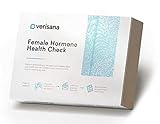
- ✅ HORMONAL HEALTH: Libido, menstruation, fertility and many more aspects can be impacted by your hormone levels.
- ✅ COMPREHENSIVE: Everything included – sample instruction, test tubes and a bag for return shipment. Scientific analysis and laboratory report via web portal included in the price – see pictures for sample report with all 5 hormones.
- ✅ SYMPTOMS: Symptoms for hormonal imbalances could be fatigue, physical exhaustion, depression / depressive mood swings, sleeping disorders, menstrual and abdominal pain, nervousness, anxiety.
- ✅ SIMPLICITY: Easy hormone test to do at home – once you get your salivary test kit, take the sample and send it back to our lab.
- PLEASE NOTE: Due to regulatory reasons, this test is currently not available in NY/NJ/RI/MD, Canada or in the Outlying Territories of the US. Must be at least 18 & over to take the test.
Where it can add value is in reducing guesswork and cognitive load. Instead of manually charting temperatures and symptoms, users receive an integrated view that highlights when their body appears to be entering a fertile phase and when it has likely passed.
Perimenopause: pattern recognition when cycles stop making sense
Perimenopause is arguably where Clair’s continuous model is most compelling. As cycles become irregular and hormone fluctuations grow more chaotic, calendar‑based tracking becomes increasingly unreliable.
Users in this transition often report unexplained sleep disruption, elevated resting heart rate, night sweats, and mood variability long before periods change dramatically. Clair’s strength lies in correlating those experiences with physiological trends over months, helping users see that symptoms are not random even if cycles are.
This does not diagnose perimenopause or replace blood testing for estradiol or FSH. It does, however, offer a way to document changes over time, which can be valuable both for personal understanding and for more informed conversations with clinicians.
Daily readiness, mood, and training alignment
Beyond reproductive milestones, hormonal fluctuations influence energy, recovery, appetite, and stress tolerance. Clair’s platform appears positioned to translate inferred cycle phases into practical guidance around exercise intensity, workload, and recovery expectations.
In this sense, it overlaps with devices like Oura or Whoop, but with cycle phase as the primary organizing lens rather than a secondary annotation. A user might see why high‑intensity workouts feel harder in the late luteal phase or why HRV rebounds earlier in the follicular phase.
These insights are inherently individualized and trend‑based. They are most useful when viewed over weeks, not days, and when users resist the temptation to treat recommendations as rules rather than context.
Hormonal literacy and longitudinal self‑knowledge
Perhaps Clair’s most understated use case is education. By making hormonal rhythms visible through everyday data, it encourages users to build intuition about how their bodies respond to sleep, stress, nutrition, and life changes.
This longitudinal perspective is difficult to achieve with episodic testing or symptom logging alone. Over time, users may begin to recognize early signals of imbalance or transition, even if Clair cannot label those changes clinically.
The limitation is that interpretation still matters. Without clear communication about uncertainty, there is a risk that users over‑attribute cause or expect answers the system is not designed to provide, underscoring the importance of thoughtful onboarding and transparent confidence ranges.
Who benefits most from these insights
Clair’s health insights are best suited to users who want ongoing awareness rather than definitive answers. It rewards patience, consistency, and a willingness to engage with trends rather than chasing single data points.
For women navigating cycle changes, fertility planning, or the early stages of perimenopause, it offers a form of visibility that existing wearables only gesture toward. Whether that visibility feels empowering or insufficient will ultimately depend on how closely its inferred signals align with lived experience across diverse bodies and hormonal realities.
Limitations, Caveats, and What Clair Cannot Yet Do
As compelling as Clair’s promise is, its value depends just as much on understanding its boundaries as its capabilities. The system is deliberately positioned as a contextual awareness tool, not a diagnostic instrument, and several important limitations follow from that choice.
Hormones are inferred, not directly measured
Clair does not measure estrogen, progesterone, or luteinizing hormone directly in blood, saliva, or sweat. Instead, it infers hormonal states from downstream physiological signals such as temperature dynamics, heart rate variability, resting heart rate, and sleep architecture.
This distinction matters because hormonal influence is indirect and probabilistic. Two users in the same cycle phase can show very different physiological responses, and Clair’s models can only estimate likelihood, not confirm absolute hormone levels.
For users accustomed to lab reports with numerical hormone values, this can feel like a conceptual downgrade. Clair trades biochemical precision for continuity and convenience, which is powerful for trend tracking but inherently limited for point‑in‑time certainty.
Cycle irregularity and hormonal conditions remain challenging
Clair performs best when a user’s cycle exhibits some degree of regularity, even if that regularity includes predictable variation. Highly irregular cycles, recent postpartum shifts, recovery from hormonal contraception, or conditions such as PCOS can introduce noise that slows model confidence.
In these cases, the wearable may require significantly longer baseline periods before its insights stabilize. Early outputs may feel vague or conservative, not because the system is failing, but because the data simply does not support strong inference yet.
Importantly, Clair cannot currently diagnose or differentiate underlying endocrine disorders. It may surface patterns that prompt medical conversations, but it cannot explain why those patterns exist.
Not a fertility monitor or medical substitute
Despite its focus on reproductive hormones, Clair is not positioned as a fertility treatment device or contraceptive tool. Ovulation timing, fertile window predictions, and luteal phase confirmation are presented as probabilistic context, not actionable guarantees.
This distinction is critical for users trying to conceive or avoid pregnancy. While the insights may align with other tracking methods over time, Clair should not replace ovulation tests, ultrasound monitoring, or clinician‑guided fertility care.
Similarly, it cannot replace bloodwork for diagnosing perimenopause, thyroid dysfunction, or estrogen dominance. Any interpretation that carries clinical weight still requires professional evaluation.
Accuracy depends on consistency, fit, and real‑world wear
Like all wrist‑based wearables, Clair’s data quality depends on how it is worn. Strap tension, wrist anatomy, skin temperature variation, and nighttime movement can all influence signal fidelity.
Missed nights, inconsistent wear during sleep, or frequent device removal reduce model confidence. This is not unique to Clair, but the impact is amplified when the system relies on subtle longitudinal shifts rather than large acute changes.
Battery life and charging behavior also matter. If the device requires frequent charging that interrupts overnight wear, users may inadvertently undermine the very data Clair relies on most.
Limited visibility into confidence and uncertainty—for now
One of the more subtle challenges is how uncertainty is communicated. While Clair emphasizes trends, users may still interpret visualizations as definitive, especially when phase labels or recommendations are presented cleanly.
Without clearly surfaced confidence intervals or probability ranges, there is a risk of over‑trust. This places a heavy burden on onboarding and in‑app education to reinforce that hormonal inference is a spectrum, not a verdict.
Advanced users may wish for deeper access to raw metrics or model confidence scores, which are not yet central to the experience.
Early regulatory and clinical validation status
Clair currently operates in a wellness classification rather than as a regulated medical device. That allows for faster iteration but also means its claims are not yet supported by large‑scale peer‑reviewed clinical trials.
While its underlying sensors and physiological markers are well established, the specific models translating those signals into hormone‑related insights remain in early validation phases. Broader population studies, including diverse ages, body types, and hormonal backgrounds, will be essential to build trust.
Until that data is publicly available, Clair should be viewed as an emerging technology rather than a settled scientific authority.
It cannot yet explain the “why” behind every pattern
Clair excels at surfacing correlations, but causation often remains opaque. A drop in HRV during the luteal phase may be hormonally influenced, stress‑related, nutritional, or all three simultaneously.
The system does not currently disentangle these drivers in a way that feels personalized beyond general guidance. Users looking for prescriptive answers may find the insights illuminating but incomplete.
This reinforces the idea that Clair is best used as a mirror rather than a map. It reflects patterns back to the user, but it does not yet chart a definitive course forward.
Emotional and cognitive load is real
Finally, more insight is not always more empowering. For some users, continuous hormonal context can heighten anxiety or encourage over‑monitoring of normal fluctuations.
Clair assumes a level of self‑trust and interpretive restraint that not every user will bring to the experience. Without thoughtful pacing and framing, even well‑designed insights can become overwhelming.
This does not negate its value, but it does narrow the audience to those who are comfortable living with informed ambiguity rather than clear answers.
Regulatory Status, Clinical Partnerships, and What Validation Will Make or Break Clair
The tension between insight and ambiguity naturally leads to the question of accountability. When a wearable begins to speak the language of hormones, cycles, and fertility-adjacent decisions, regulatory posture and clinical grounding stop being abstract concerns and become central to trust.
💰 Best Value

- GET PREGNANT FASTER with Clearblue Advanced Digital Ovulation Tests [1] DOUBLE YOUR CHANCES of getting pregnant [2] in your first cycle
- OVER 99% ACCURATE at detecting the luteinizing hormone (LH) surge
- EASY-TO-READ RESULTS: a clear, digital results screen with a ‘smiley face’ which indicates High and Peak Fertility days, allowing you to confidently plan intimate moments
- #1 OB-GYN RECOMMENDED OVULATION BRAND and #1 MOST-TRUSTED OVULATION TEST IN THE USA by American shoppers, according to the 2025 BrandSpark American Trust Study
- DETECTS FERTILITY HORMONES: the Advanced Digital Ovulation Tests tracks 2 key fertility hormones, luteinizing hormone (LH) and estrogen (E3G) unlike other tests which detects LH only
Wellness-first classification and what that enables
Clair is currently positioned as a wellness device rather than a regulated medical product. This classification allows it to move faster on hardware iteration, software updates, and algorithm refinement without waiting for lengthy regulatory approvals.
For users, that translates into quicker feature evolution and a lower barrier to entry. It also means that Clair cannot legally diagnose conditions, confirm ovulation, or replace laboratory hormone testing.
The regulatory line Clair cannot afford to blur
Non-invasive hormone inference sits close to regulated territory, even if it does not cross it outright. The moment insights begin to influence fertility decisions, contraceptive confidence, or symptom management for clinical conditions, scrutiny increases sharply.
Clair’s long-term credibility will depend on how carefully it frames outputs as probabilistic trends rather than definitive readings. Overpromising precision before validation would be far more damaging than moving slowly and conservatively.
Why clinical partnerships matter more than certifications
Formal regulatory clearance is only one axis of legitimacy. Equally important are visible partnerships with academic institutions, women’s health clinics, or endocrinology research groups that can independently evaluate Clair’s models.
Third-party studies using real-world wear data, correlated against blood or saliva hormone panels, will carry far more weight than internal white papers. Transparency around study design, sample size, and limitations will matter as much as headline accuracy numbers.
Population diversity is the real validation challenge
Hormonal patterns are profoundly individual, shaped by age, contraception use, postpartum status, perimenopause, body composition, and chronic stress. Models trained on narrow datasets risk being precise for some users and misleading for others.
Validation that only reflects young, eumenorrheic users would undermine Clair’s broader ambitions. Demonstrating reliability across life stages and hormonal realities is likely the single hardest technical and scientific hurdle ahead.
What “accuracy” actually means for a device like Clair
Unlike glucose or heart rate, hormones are not being measured directly here. Accuracy must be framed as concordance with expected hormonal phases, sensitivity to meaningful changes, and stability over time rather than lab-grade equivalence.
The most compelling validation would show that Clair reliably detects transitions such as follicular to luteal shifts, stress-related suppression patterns, or recovery trends, even if it never claims exact hormone concentrations.
How this compares to blood tests and existing wearables
At-home hormone testing kits offer biochemical specificity but are episodic, invasive, and expensive at scale. Traditional wearables offer continuous data but stop short of hormonal interpretation.
Clair’s promise lives in the space between: continuous, passive sensing paired with hormone-aware modeling. Validation must prove that this middle ground is not just more convenient, but meaningfully informative.
Trust will be built through restraint, not ambition
The devices that succeed in women’s health tend to be the ones that respect complexity rather than trying to simplify it away. Clair’s willingness to acknowledge uncertainty, publish limitations, and invite independent scrutiny will determine whether it earns long-term trust.
In a category historically shaped by under-researched bodies and overconfident claims, credibility is not won by saying more. It is won by proving, carefully and repeatedly, what the technology can actually support.
Who Clair Is Really For—and Whether This Is a Breakthrough or an Early‑Stage Promise
By this point, it should be clear that Clair is not trying to be a hormone lab on your wrist. It is attempting something more subtle and, if executed well, potentially more impactful: turning continuous physiological signals into usable hormonal context.
That ambition immediately defines who Clair makes sense for, and just as importantly, who it does not.
The ideal Clair user: informed, curious, and willing to engage with nuance
Clair is best suited for women who already understand that hormonal health is dynamic, individualized, and rarely reducible to a single number. If you are currently using a smartwatch, Oura Ring, or Whoop and feel that temperature, HRV, and sleep data hint at hormonal shifts without ever naming them, Clair is clearly speaking to you.
This is also a device for users who want longitudinal insight rather than moment-to-moment answers. Clair’s value compounds over weeks and months, as baseline patterns emerge and deviations become interpretable within the context of cycle phase, stress load, or recovery.
It is less compelling for someone looking for instant fertility confirmation, diagnostic certainty, or clinical decision-making without additional medical input. Clair is designed to inform awareness and behavior, not to replace testing or care.
Where Clair fits across life stages
For menstruating users with relatively regular cycles, Clair’s promise is clearest. Detecting phase transitions, luteal stability, or stress-related disruptions could meaningfully improve cycle literacy, training adaptation, and symptom anticipation.
Perimenopausal and postpartum users may ultimately benefit even more, but this is where the technology must prove itself. Hormonal variability is higher, patterns are less predictable, and algorithmic confidence is harder to earn.
If Clair can demonstrate robustness in these populations, it would differentiate itself sharply from cycle-tracking apps that quietly assume hormonal regularity. Until then, these users should view Clair as an exploratory tool rather than a definitive guide.
How this differs from the wearables women already own
Most mainstream wearables already collect the raw signals Clair relies on: skin temperature, heart rate, HRV, respiratory trends, sleep architecture, and activity load. The difference is not hardware alone, but interpretive intent.
Apple, Samsung, and Fitbit surface cycle predictions and retrospective insights, but hormones remain largely implicit. Clair’s entire software experience is built around hormonal interpretation, not as a feature but as the organizing principle.
If successful, this reframing could make familiar data feel newly actionable. If not, Clair risks feeling like a specialized layer on top of insights users already receive elsewhere.
Comfort, wearability, and the reality of daily use
Non-invasive hormone modeling only works if the device is worn consistently. Clair’s physical design, materials, and sensor-skin interface therefore matter as much as its algorithms.
Early impressions suggest a form factor optimized for overnight and all-day wear, prioritizing stability and comfort over statement aesthetics. This aligns with its function, but long-term adherence will depend on battery life, charging friction, and how invisible the device feels during real life.
If Clair demands behavioral accommodation from the user, its data advantage erodes quickly.
Is this a breakthrough, or the start of one?
Scientifically, Clair represents a meaningful shift in direction rather than a finished solution. It treats hormones as patterns to be inferred over time, not substances to be sampled sporadically.
That framing is both its strength and its vulnerability. When models are well-trained and responsibly constrained, they can reveal trends no blood test ever could. When they are not, they risk over-interpreting noise with unwarranted confidence.
At launch, Clair should be viewed as an early-stage promise with breakthrough potential, not a breakthrough fully realized.
The real test: usefulness, not novelty
The question that ultimately matters is not whether Clair can estimate hormonal states, but whether those estimates change outcomes. Does the user train differently, manage stress earlier, anticipate symptoms more accurately, or feel more in control of her health?
If Clair can consistently support better decisions without overstating certainty, it will earn a place alongside, not instead of, existing wearables and testing methods.
If it cannot, it will join a long list of well-intentioned FemTech products that mistook complexity for clarity.
What Clair gets right, even before full validation
Perhaps Clair’s most important contribution is cultural rather than technical. It treats women’s hormonal health as worthy of continuous, high-resolution attention, not as an edge case or calendar reminder.
By designing a device that assumes variability, acknowledges uncertainty, and builds around interpretation rather than absolutes, Clair is aligning itself with how biology actually works.
Whether it becomes a category-defining product or a foundation others build upon will depend on evidence. But the direction it points the industry toward already feels overdue.
In that sense, Clair is not yet the final answer. It is a serious, thoughtful attempt at asking better questions—and for women’s health wearables, that alone marks real progress.