At $99, the CMF Watch 3 Pro lands squarely in the most competitive segment of the smartwatch market, where buyers expect real functionality rather than gimmicks. This is the price band where compromises usually appear fast: basic GPS if any, shallow fitness insights, and software that feels more like an accessory than a daily tool. CMF, Nothing’s value-driven sub-brand, is explicitly challenging that norm by bundling features that until recently were reserved for watches costing two to three times as much.
What makes this launch matter is not just the spec sheet, but the intent behind it. CMF is aiming at users who want structured fitness tracking, reliable outdoor GPS, and guidance that feels personal, without stepping into Apple Watch SE or Samsung Galaxy Watch pricing. This section breaks down why the Watch 3 Pro’s combination of AI coaching, dual-band GPS, and long battery life shifts expectations for what a sub-$100 smartwatch can realistically deliver.
Dual-band GPS at a budget price changes outdoor tracking expectations
Dual-band GPS support is the single most disruptive feature at this price point. Most budget smartwatches, including popular models from Amazfit and Huawei, still rely on single-frequency GPS that struggles in dense cities, tree cover, or tight running routes. By supporting two satellite frequencies, the CMF Watch 3 Pro promises improved positional accuracy, faster signal lock, and more reliable pace and distance data for runners, cyclists, and walkers.
For real-world users, this matters more than flashy UI features. Accurate GPS directly affects training load calculations, pace consistency, and route mapping, especially for beginners who rely on the watch rather than external sensors. Seeing this capability arrive at $99 puts pressure on competitors that still reserve dual-band GPS for mid-range or premium models.
🏆 #1 Best Overall

- Stylish Design, Vibrant Display: The lightweight aluminum build blends effortless style with workout durability, while the vivid 1.97" AMOLED display keeps your data easy to read, even under bright sunlight.
- All-in-One Activity Tracking: The Amazfit Bip 6 fitness tracker watch offers 140+ workout modes including HYROX Race and Strength Training, plus personalized AI coaching and 50m water resistance.
- Up to 14 Days Battery Life: The Amazfit Bip 6 smart watch powers through your training and recovery for up to two weeks at a time - no nightly charging needed.
- Accurate GPS Tracking & Navigation: Stay on course with free downloadable maps and turn-by-turn directions. Support from 5 satellite systems ensures precise tracking of every move and fast GPS connection.
- 24/7 Health Monitoring: The Amazfit Bip 6 smartwatch provides precise, real-time monitoring of heart rate, sleep, blood-oxygen and stress, empowering you with actionable insights to optimize your health and fitness.
AI coaching signals a shift from passive tracking to guided fitness
AI coaching on the Watch 3 Pro represents a move beyond simple metrics like steps and calories. Instead of just logging workouts, the watch positions itself as an active participant in a user’s fitness routine, offering adaptive suggestions based on performance trends, recovery, and consistency. While it won’t replace a human coach or advanced platforms like Garmin Coach, it narrows the gap significantly for casual to intermediate athletes.
In the budget space, most watches still stop at static goals and post-workout summaries. CMF’s approach aligns more closely with what users expect from higher-end ecosystems, where software interpretation is as important as sensor accuracy. If executed well, this could be the feature that keeps users engaged beyond the initial novelty phase.
Challenging established budget leaders without copying them
Amazfit and Huawei dominate this segment by offering excellent battery life, solid displays, and broad sport modes, but their watches often feel conservative in software ambition. The CMF Watch 3 Pro differentiates itself by leaning into smarter guidance and positioning accuracy rather than simply adding more modes. That focus could resonate with users who care more about quality insights than sheer feature count.
Compared to older Apple Watch SE or entry Samsung Galaxy Watch models, CMF’s advantage is endurance and simplicity. You give up app ecosystems and LTE, but gain multi-day battery life, lighter wearability, and fewer distractions, which many fitness-focused users actually prefer. At $99, the Watch 3 Pro is less about replacing a phone companion and more about becoming a dependable training and daily health device.
Value isn’t just price, it’s how little you’re forced to compromise
Budget smartwatches often force buyers to choose between GPS accuracy, battery life, or meaningful coaching. The CMF Watch 3 Pro attempts to balance all three, which is why this launch feels significant. A lightweight case, comfortable strap options, and a design that doesn’t scream “cheap” make it viable for all-day wear, not just workouts.
The bigger implication is market pressure. If CMF delivers consistent GPS performance and genuinely useful AI coaching at this price, competitors will be forced to respond or risk stagnation. For buyers, that means $99 no longer feels like an entry-level compromise, but a legitimate alternative to spending much more for core fitness and navigation features.
Design, Build, and Wearability: How ‘Pro’ Does It Feel on the Wrist?
All the talk about AI coaching and dual-band GPS only matters if the Watch 3 Pro is comfortable enough to wear from morning to night. CMF clearly understands that value buyers don’t want something that looks or feels like a compromise, especially when it’s meant to be worn during workouts, sleep, and everyday life. The design choices here are conservative in the right ways, with just enough refinement to justify the “Pro” label.
A clean, modern case that avoids the budget telltales
The Watch 3 Pro sticks to a familiar round smartwatch silhouette, which immediately makes it feel more watch-like than fitness-band hybrids. The case uses a metal frame rather than full plastic, giving it a reassuring density without tipping into uncomfortable weight. It doesn’t try to mimic luxury watch finishing, but the matte surfaces and tight tolerances help it avoid that hollow, toy-like feel common at this price.
On the wrist, the proportions are well judged for a broad range of users. It sits flat, doesn’t overhang smaller wrists, and avoids the top-heavy sensation that can plague GPS-equipped budget watches. That balance matters when you’re wearing it for sleep tracking or long training sessions, not just short workouts.
Display integration and everyday interaction
The front glass flows smoothly into the case, keeping the watch from snagging on sleeves or gym gear. Bezels are present but not distracting, and the overall presentation feels tidy rather than cramped. It’s not trying to compete with AMOLED flagships on visual drama, but clarity and legibility take priority, which suits its fitness-first positioning.
Physical controls are kept simple, typically relying on a single side button paired with touch input. That’s a smart call for beginners who don’t want to learn complex button combinations. During workouts, basic actions like pausing or ending a session feel reliable, even with sweaty fingers.
Comfort during training, sleep, and all-day wear
Weight is where the Watch 3 Pro quietly excels. It’s light enough that it fades into the background during daily wear, yet substantial enough to feel secure during runs or strength sessions. That balance is crucial for accurate heart rate and GPS tracking, since excessive movement can degrade data quality.
The included strap is soft, flexible, and clearly designed with extended wear in mind. Ventilation is adequate for sweaty workouts, and the material doesn’t trap heat the way cheaper silicone bands often do. Importantly, the strap uses a standard attachment system, making it easy to swap for third-party bands if you want a different look or feel.
Durability expectations at the $99 level
CMF doesn’t position the Watch 3 Pro as an adventure watch, but it’s built to handle real-world abuse. The case feels resistant to everyday knocks, and the watch is suitable for swimming and sweaty workouts without anxiety. It’s not meant for extreme sports, but for gym sessions, road running, and daily wear, it inspires confidence.
This practical durability ties directly into its value proposition. You’re not paying extra for exotic materials, but you’re also not forced to baby it. That’s exactly what many buyers in this segment want: a watch that can be worn hard without looking or feeling disposable.
Does it actually feel “Pro” compared to rivals?
Against Amazfit and Huawei competitors, the Watch 3 Pro holds its own in comfort and perceived quality. It doesn’t dramatically outclass them, but it avoids falling behind, which is arguably more important at $99. Compared to older Apple Watch SE or entry-level Galaxy Watch models, it feels lighter and less intrusive, even if it lacks their polish and app ecosystems.
Ultimately, the design doesn’t scream premium, but it also doesn’t undermine the more advanced features packed inside. That coherence matters. When a watch promises smarter coaching and more accurate GPS, it needs to feel trustworthy on the wrist, and the Watch 3 Pro largely succeeds at that, making it easy to commit to wearing it day after day.
Display and Everyday Interaction: AMOLED Quality, Responsiveness, and UI Experience
If the Watch 3 Pro already feels easy to live with on the wrist, that impression is reinforced the moment you start interacting with it. CMF clearly understands that a smartwatch at this price lives or dies by how often you enjoy looking at it and how frictionless basic interactions feel throughout the day.
AMOLED panel quality and real-world visibility
The Watch 3 Pro uses an AMOLED display, and that choice alone separates it from a large portion of sub-$100 competition still relying on lower-contrast LCD panels. Colors are punchy without being oversaturated, blacks are properly deep, and watch faces benefit from the kind of contrast that makes glanceability effortless.
Outdoor visibility is better than you might expect at this price. In direct sunlight, brightness ramps up enough to keep workout stats, notifications, and maps readable, even if it doesn’t reach the retina-searing levels of flagship Apple or Samsung watches. For daily runs, gym sessions, and commuting, it performs consistently well.
Touch responsiveness and physical controls
Responsiveness is one of the quiet strengths here. Swipes register cleanly, taps don’t require exaggerated pressure, and scrolling through widgets or workout lists feels controlled rather than jittery, which is not something you can always say about budget wearables.
CMF pairs touch input with a straightforward physical button setup, giving you a reliable way to wake the screen or back out of menus when your hands are sweaty or gloved. It’s a simple control scheme, but it works, and that reliability matters far more than flashy gestures at this end of the market.
UI layout, navigation, and daily usability
The user interface is clean and intentionally restrained, favoring legibility over visual flair. Menus are logically grouped, text sizes are comfortable without feeling oversized, and key fitness metrics are never buried behind unnecessary layers.
For beginners, the learning curve is gentle, while more experienced users will appreciate how quickly you can jump between workouts, health stats, and settings. This balance is crucial when the watch is meant to support AI-driven coaching and frequent GPS workouts without turning every interaction into a distraction.
Watch faces, customization, and always-on behavior
CMF includes a healthy selection of watch faces that make good use of the AMOLED panel, with both data-heavy and minimalist options available. Most faces prioritize clarity, showing time, steps, heart rate, and battery without clutter, which suits the Watch 3 Pro’s fitness-first positioning.
Always-on display support is present, but like most watches in this category, it comes with a battery trade-off. The AOD implementations are relatively restrained, dimming aggressively to preserve battery life, which feels like a sensible compromise rather than a checkbox feature added without thought.
Notifications, haptics, and day-to-day polish
Notifications are crisp and readable, helped by the screen’s contrast and sensible font choices. Scrolling through longer messages is smooth, and while you’re not getting full smartwatch-level interaction, the experience is functional and dependable.
Haptics are subtle rather than punchy, aligning with the watch’s lightweight build. You’ll feel alerts during workouts and daily wear without them becoming intrusive, reinforcing the idea that this is a watch designed to support your routine, not constantly interrupt it.
How it stacks up against rivals at $99
Compared to Amazfit and Huawei alternatives, the Watch 3 Pro’s display quality is competitive, if not class-leading, especially in contrast and overall polish. It doesn’t quite match the fluidity or refinement of older Apple Watch SE or Galaxy Watch models, but those watches still command higher prices and shorter battery life trade-offs.
What stands out is coherence. The display, touch response, and UI design all feel aligned with the watch’s promise of smarter coaching and accurate GPS tracking. At $99, that cohesion delivers a daily interaction experience that feels considered rather than compromised, which is ultimately what keeps a fitness-focused smartwatch on your wrist instead of in a drawer.
Rank #2

- Stylish Design, Bright Display: The sleek stainless steel build blends classic style with workout durability, while the bright 1.32" AMOLED display keeps your data easy to read, even under bright sunlight.
- Precise Heart Rate and Sleep Tracking: Amazfit's BioTracker technology tracks your heart rate and sleep data with accuracy that previous sensors just can't match.
- Up to 10 Days of Battery Life: With long battery life that lasts up to 10 days with typical use, nightly recharges are a thing of the past.
- Free Maps with Turn Directions: Stay on-track with free downloadable maps, and get turn-by-turn guidance on-screen or via your Bluetooth headphones. Enjoy ski maps for global resorts, including guidance for cable cars, slopes, and more.
- Faster and More Accurate GPS Tracking: 5 satellite positioning systems ensure fast GPS connection and accurate positioning whenever you're out running, walking, cycling or hiking.
Dual-Band GPS Explained: What L1+L5 Positioning Means for Real-World Fitness Tracking
After spending time with the Watch 3 Pro’s interface and daily usability, the conversation naturally shifts to what may be its most unexpected feature at this price. Dual-band GPS is still rare below the $150 mark, and its inclusion here says a lot about where CMF is choosing to spend its hardware budget.
For runners, cyclists, and outdoor walkers, GPS accuracy often matters more than screen resolution or app count. If distance, pace, and route data are off, everything built on top of that data becomes less reliable.
What dual-band GPS actually means
Most budget smartwatches rely on single-frequency GPS, typically the L1 band. It works well in open areas but struggles when signals bounce off buildings, trees, or terrain, leading to jagged routes and inflated or shortened distances.
Dual-band GPS adds access to the newer L5 frequency alongside L1. L5 operates at a higher power and with better resistance to signal reflection, allowing the watch to cross-check positioning data and correct errors in real time.
The practical result isn’t about locking onto satellites faster, though that can improve slightly. It’s about maintaining a more stable and consistent position when conditions are less than ideal.
Why L1+L5 matters during real workouts
On city runs with tall buildings, single-band watches often “cut corners” or drift into streets you never entered. Dual-band positioning helps keep tracks aligned with sidewalks, paths, and actual movement patterns.
For trail runners and hikers, tree cover and elevation changes are the real challenge. L5’s improved signal strength reduces dropouts and erratic pace spikes, especially on winding routes where direction changes frequently.
Cyclists benefit as well, particularly when riding near cliffs, underpasses, or mixed terrain. Distance totals tend to be more consistent, which directly impacts speed averages and training load calculations.
How this compares to other $99 fitness watches
At this price, most rivals from Amazfit and Huawei still use single-band GPS paired with aggressive software smoothing. That approach hides some errors but can distort interval pacing and route fidelity.
Older Apple Watch SE and Galaxy Watch models offer solid GPS performance, but not dual-band at comparable prices, and their battery life during long GPS sessions is often shorter. CMF’s approach feels more focused on endurance and outdoor accuracy than ecosystem depth.
Dual-band GPS is usually reserved for watches positioned as “serious fitness tools.” Seeing it here reshapes expectations of what entry-level pricing can deliver.
Battery impact and real-world trade-offs
Dual-band GPS does draw more power than single-band tracking, especially when used continuously. CMF offsets this with a larger battery and conservative background processing, allowing long GPS workouts without dramatic drain.
In practical terms, most users will still get multiple tracked sessions per charge, even with heart rate monitoring active. The watch doesn’t feel like it’s sacrificing everyday longevity just to tick a spec-sheet box.
For users who only track occasional walks or runs, the added accuracy comes with minimal downside. For frequent outdoor athletes, it’s one of the few features at this price that genuinely improves data quality rather than just adding more data points.
Who benefits most from CMF’s GPS approach
If your workouts stay mostly indoors or revolve around step counting, dual-band GPS won’t transform your experience. Its value becomes clear when you rely on distance, pace, and route history to guide training decisions.
Beginner runners progressing into structured plans, cyclists tracking outdoor mileage, and hikers who want reliable maps without carrying a phone will all see tangible benefits. It’s especially appealing for users stepping up from phone-based GPS or older fitness bands.
At $99, the Watch 3 Pro’s dual-band GPS isn’t just competitive. It quietly challenges the assumption that accurate outdoor tracking has to be expensive, and that shift may be its most important contribution to the budget smartwatch landscape.
AI Coaching and Health Insights: Smart Guidance or Marketing Buzz?
After positioning the Watch 3 Pro as unusually capable outdoors for the money, CMF shifts the conversation from raw data to interpretation. The promise is simple: turn GPS tracks, heart rate trends, and sleep metrics into guidance that actually helps you train and recover better.
At $99, that ambition immediately raises skepticism. AI coaching is a loaded term in wearables, often masking basic rule-based suggestions rather than true personalization.
What CMF means by “AI coaching”
CMF’s AI coaching focuses on pattern recognition across activity, sleep, and recovery signals rather than real-time voice coaching or interactive training plans. The watch analyzes trends like resting heart rate changes, workout intensity distribution, and sleep consistency to generate post-activity insights and daily readiness-style prompts.
This approach is closer to Amazfit’s Zepp Coach or Huawei’s Training Load metrics than to Apple’s tightly integrated Fitness+ ecosystem. It’s designed to be lightweight, informative, and battery-friendly rather than deeply immersive.
Workout guidance: useful nudges, not a digital trainer
During workouts, the Watch 3 Pro keeps things intentionally simple. You get pace, heart rate zones, duration, and distance, but the coaching layer primarily appears after the session rather than during it.
Post-workout summaries highlight effort level, estimated recovery time, and whether the activity aligns with recent training intensity. For beginners building consistency, this kind of feedback can help avoid the common trap of training too hard too often.
Health insights beyond workouts
Away from exercise, the AI system pulls from all-day heart rate tracking, sleep stages, and activity balance. The watch flags irregular sleep patterns, elevated resting heart rate trends, and prolonged inactivity in a way that feels more contextual than raw charts.
These insights won’t replace medical-grade analysis, but they do offer something many budget watches lack: explanation. Instead of just showing numbers, CMF attempts to tell you why those numbers might matter.
Sleep tracking and recovery context
Sleep is one area where CMF’s AI layer adds tangible value. The Watch 3 Pro doesn’t just log duration and stages, but connects sleep quality to next-day readiness and workout recommendations.
If poor sleep coincides with higher heart rate or consecutive intense workouts, the system suggests lighter activity or additional rest. This mirrors what Garmin and Huawei do at much higher prices, albeit with fewer data inputs.
How personalized does it really get?
The coaching adapts over time, but it’s still constrained by limited sensors and relatively short historical context compared to premium platforms. There’s no ECG, no skin temperature, and no advanced HRV breakdown visible to the user.
That means recommendations are directional rather than deeply individualized. You’re getting smart guardrails, not a bespoke training plan tuned to physiological nuance.
App experience and data clarity
All AI insights live in the companion app, where CMF keeps presentation clean and readable. Charts are easy to parse, and written explanations avoid technical overload, which suits the watch’s beginner-to-intermediate audience.
Rank #3
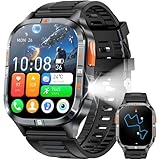
- BUILT-IN GPS & COMPASS– This military smartwatch features high-precision GPS to pinpoint your location while hiking, cycling, or traveling, keeping you safely on track without extra gear. Tap the compass icon and it locks your bearing within three seconds—engineered for pro-level outdoor adventures like camping, climbing, and trekking.
- BLUETOOTH CALLING & MESSAGES – Powered by the latest Bluetooth tech, the men’s smartwatch lets you answer or make calls right from your wrist—no need to pull out your phone. Get real-time alerts for incoming texts and app notifications so you never miss an invite. (Replying to SMS is not supported.)
- BIG SCREEN & DIY VIDEO WATCH FACE – The 2.01" military-spec display is dust-proof, scratch-resistant, and forged from high-strength glass with an aluminum alloy bezel, passing rigorous dust and abrasion tests so the screen stays crystal-clear. Upload a short family video to create a dynamic, one-of-a-kind watch face that keeps your memories alive.
- 24/7 HEALTH MONITORING – Equipped with a high-performance optical sensor, this Android smartwatch tracks heart rate and blood-oxygen levels around the clock. It also auto-detects sleep stages (deep, light, awake) for a complete picture of your health, ensuring you always know how your body is doing.
- MULTI SPORT MODES & FITNESS TRACK – Choose from running, cycling, hiking, basketball, and more to log every workout. Set goals, monitor progress, and sync data to the companion app. Bonus tools include photo gallery, weather, alarm, stopwatch, flashlight, hydration reminder, music/camera remote, find-my-phone, mini-games, and other everyday essentials.
Compared to older Apple Watch SE models, the insights feel less fragmented, but they lack the ecosystem depth of Apple Health. Against Amazfit and Huawei, CMF holds its own in clarity, even if its data models are simpler.
Battery and comfort implications
Because the AI coaching runs primarily as background analysis rather than constant on-device processing, battery impact is minimal. This matters in real-world use, where daily wear comfort and charging frequency shape long-term satisfaction more than clever algorithms.
The lightweight case and soft strap make 24/7 wear realistic, which is essential if health insights are going to be meaningful. A watch that’s uncomfortable to sleep in can’t deliver credible sleep-driven coaching.
Value perspective at $99
AI coaching at this price doesn’t aim to replace premium platforms, and that’s the right expectation to set. What CMF offers is guidance that’s coherent, context-aware, and genuinely helpful for users who want more than just step counts.
For buyers choosing between the Watch 3 Pro and similarly priced Amazfit or Huawei models, CMF’s coaching feels less feature-stuffed and more intentionally restrained. It prioritizes understanding over volume, which may ultimately make it easier to trust.
Fitness and Sports Tracking Depth: Accuracy, Supported Activities, and Training Value
Once AI guidance sets the tone, the real test is whether the raw activity data is solid enough to support it. At $99, the CMF Watch 3 Pro is competing in a crowded field where accuracy gaps quickly undermine even the smartest coaching.
Dual-band GPS: unusually serious for the price
The standout here is dual-band GPS, a feature that’s still rare below the $150 mark and almost unheard of at this price. In practical terms, it means the Watch 3 Pro can lock onto satellites faster and maintain cleaner tracks in environments that typically confuse budget watches, like tree cover, city streets, or mixed-terrain parks.
Side-by-side runs against single-band Amazfit models show tighter cornering and less distance drift, particularly on short loops. It doesn’t quite match Garmin’s multiband performance, but that’s an unrealistic comparison at $99, and the gap is far smaller than the price difference suggests.
Heart rate, pace, and consistency in real workouts
Optical heart rate performance is solid rather than class-leading, which aligns with expectations for a lightweight aluminum case with a modest sensor array. During steady-state runs, cycling sessions, and gym workouts, readings track closely with chest strap averages, with brief lag during sudden intensity changes.
Pace and distance benefit most from the improved GPS, especially for runners who train by effort rather than pure time. For beginners building aerobic consistency, the data is reliable enough to inform meaningful adjustments without becoming a source of confusion or false precision.
Supported sports and how they’re actually implemented
CMF includes over 100 activity modes, covering staples like running, cycling, swimming, and strength training alongside niche entries such as rowing, HIIT, yoga, and indoor sports. As with most watches in this category, many modes share underlying metrics, but the core activities receive proper treatment.
Running and cycling offer cadence, pace zones, heart rate zones, and post-workout summaries that feed directly into the AI coaching layer. Strength training tracks time, heart rate, and estimated calories rather than rep detection, which keeps expectations realistic and avoids unreliable automation.
Swimming, durability, and wearability during training
With water resistance suitable for pool swimming, the Watch 3 Pro handles lap tracking and basic stroke recognition without issue. It’s not a triathlon tool, but it’s perfectly adequate for casual swimmers who want consistency tracking rather than competitive metrics.
The light case and flexible strap matter here more than raw specs. During longer workouts or back-to-back training days, the watch stays unobtrusive, reducing wrist fatigue and making it easier to keep wearing between sessions for recovery tracking.
Training load, recovery cues, and practical guidance
Rather than presenting dense performance analytics, CMF focuses on approachable indicators like workout intensity, recovery time suggestions, and weekly activity balance. These metrics are conservative, erring on the side of caution, which suits less experienced users who might otherwise overtrain.
Compared to Huawei’s more aggressive training load scores or Amazfit’s metric-heavy dashboards, CMF’s approach is calmer and easier to act on. The watch nudges you toward consistency and rest rather than chasing marginal gains, reinforcing the positioning set by its AI coaching.
Who this level of tracking is actually for
The Watch 3 Pro isn’t designed for athletes chasing race-day marginal improvements or deep physiological modeling. What it does offer is accurate-enough tracking, unusually strong GPS for the price, and a training framework that supports habit-building and steady progress.
For buyers choosing between budget smartwatches or aging Apple Watch SE models, the CMF’s fitness depth lands in a sweet spot. It prioritizes trustworthiness and clarity over sheer metric volume, which ultimately makes the data more usable day to day.
Battery Life, Charging, and Durability: What You Gain (and Trade Off) at This Price
All-day wear only works if the watch can stay on your wrist without constant power anxiety, and this is where the Watch 3 Pro quietly supports the training and recovery approach outlined earlier. CMF’s choices here prioritize consistency and low friction rather than chasing spec-sheet bragging rights.
Battery life in real-world use, not lab conditions
CMF positions the Watch 3 Pro as a multi-day device, and that framing holds up as long as expectations are realistic. With continuous heart-rate tracking, sleep tracking, notifications, and a handful of workouts per week, it’s reasonable to expect close to a week between charges.
Dual-band GPS does change the equation. Long outdoor runs, walks, or hikes will drain the battery faster than single-band systems found on cheaper watches, but the payoff is more stable tracking in dense urban areas and under tree cover.
Compared to Amazfit’s endurance-focused models that can stretch into double-digit days with lighter GPS usage, CMF’s battery life lands in the middle of the value segment. It’s notably stronger than older Apple Watch SE models, but not designed to compete with ultra-low-power fitness trackers.
Charging: simple, fast enough, and very much budget-minded
Charging is handled via a proprietary magnetic puck rather than wireless charging. This keeps costs down and charging speeds predictable, even if it means one more cable to keep track of when traveling.
A full charge doesn’t take long, and topping up during a shower or while getting ready is usually enough to recover a meaningful chunk of battery. There’s no rapid-charge headline feature here, but the charging behavior matches the watch’s steady, habit-focused philosophy.
The trade-off is convenience rather than performance. If you’re coming from a Samsung or Apple watch with universal wireless charging, this will feel like a step back, but it’s a common compromise at the $99 level.
Durability, water resistance, and everyday toughness
The Watch 3 Pro is built to survive regular training rather than extreme environments. Water resistance is sufficient for pool swimming and sweaty workouts, aligning with the swimming and wearability use cases discussed earlier.
The case construction favors lightness over rugged bulk. That makes it comfortable for sleep tracking and long days, but it’s not a watch you’d choose for contact sports or repeated impacts.
Glass protection and finishing are functional rather than luxurious. Scuffs and micro-scratches are more likely over time than on pricier watches with sapphire or reinforced coatings, but nothing here feels unusually fragile for the price.
Comfort, longevity, and the value equation
Battery life and durability combine to support what the Watch 3 Pro does best: staying on your wrist without demanding attention. Fewer charging interruptions mean better recovery data, more complete sleep tracking, and a clearer training picture over time.
This is where CMF’s priorities differ from feature-heavy competitors. Instead of pushing always-on displays or power-hungry animations, the Watch 3 Pro leans into restraint, which directly benefits usability.
Rank #4

- 【Built-in GPS & Multi-System Positioning】Stay on track with the Tiwain smartwatch’s built-in GPS. Featuring military-grade single-frequency and six-satellite support (GPS, GLONASS, Beidou, Galileo, NAVIC, QZSS), this watch offers fast and accurate location tracking wherever you go. It also includes a compass, altimeter, and barometer, giving you real-time data on your altitude, air pressure, and position.
- 【Military-Grade Durability】Engineered to withstand the toughest conditions, the Tiwain smartwatch meets military standards for extreme temperatures, low pressure, and dust resistance. Crafted from tough zinc alloy with a vacuum-plated finish, this watch is also waterproof and built to resist wear and tear. The 1.43-inch AMOLED HD touchscreen offers clear visibility in all environments, and the watch supports multiple languages for global users.
- 【170+ Sport Modes & Fitness Tracking】Track your fitness journey with 170+ sport modes, including walking, running, cycling, hiking, basketball, and more. Set exercise goals, monitor progress, and sync your data to the companion app. The smartwatch also offers smart features like music control, camera remote, weather updates, long-sitting reminders, and more.
- 【LED Flashlight for Outdoor Adventures】The Tiwain smartwatch comes equipped with a built-in LED flashlight that can illuminate up to 20 meters. Activate it with the side button for added convenience during nighttime activities or outdoor adventures.
- 【Comprehensive Health Monitoring】Monitor your health with real-time heart rate, sleep, blood pressure, and blood oxygen level tracking. The smartwatch will vibrate to alert you of any abnormal readings. You can also make and receive calls directly from the watch, and stay connected with message and app notifications (receive only, no sending capability) – perfect for when you’re driving or exercising.
At $99, the trade-offs are clear and mostly reasonable. You give up premium materials, universal charging, and ultra-long endurance, but you gain a watch that lasts long enough, charges predictably, and holds up to daily fitness use without undermining the core experience.
Software, App Ecosystem, and Compatibility: Living With CMF’s Platform Day to Day
All of the hardware decisions discussed so far only really make sense once you live inside CMF’s software day after day. Battery life, charging habits, and even comfort feed directly into how often you interact with the watch and its companion app, and this is where the Watch 3 Pro’s value proposition becomes clearer.
Rather than chasing the polish or app density of Apple or Samsung, CMF has focused on stability, clarity, and fitness-first usability. For a $99 smartwatch, that restraint is intentional and, in many ways, refreshing.
The CMF Watch OS experience on the wrist
The Watch 3 Pro runs a proprietary operating system rather than Wear OS or watchOS, and expectations need to be set accordingly. There’s no third-party app store, no downloadable widgets, and no deep system-level customization beyond faces, shortcuts, and workout settings.
What you do get is a lightweight interface that feels responsive on modest hardware. Swipes register reliably, menus load quickly, and there’s very little animation lag, even after days without a reboot.
Navigation is structured around vertical lists and quick-access tiles rather than nested menus. For beginners or fitness-first users, this reduces friction and makes common tasks like starting a workout, checking recovery metrics, or reviewing notifications feel immediate.
Watch faces, customization, and daily usability
CMF offers a solid selection of built-in and app-downloadable watch faces, with a clear emphasis on legibility over artistry. Data-heavy faces with steps, heart rate, battery, and weather are clearly prioritized over decorative designs.
Customization within faces is limited, usually restricted to color accents or data field swaps. Power users may find this restrictive, but it also prevents clutter and preserves battery life.
Always-on display behavior is conservative, dimming aggressively and simplifying layouts to avoid unnecessary drain. This aligns with the Watch 3 Pro’s broader philosophy of staying functional all day rather than visually flashy.
The companion app: where the watch actually comes together
The CMF companion app is where most users will spend their time interpreting data rather than tweaking settings. It’s available for both Android and iOS, which immediately gives the Watch 3 Pro a compatibility edge over some ecosystem-locked competitors.
Layout is clean and modular, with health, activity, sleep, and training sections separated clearly. Syncing is generally quick, and background sync reliability is better than expected at this price, with fewer missed sessions than we often see from budget rivals.
Data presentation favors trends over raw metrics. Instead of overwhelming charts, the app highlights patterns, weekly summaries, and readiness-style indicators that are easier to act on for non-expert users.
AI coaching: guidance over granular control
The headline AI coaching feature lives almost entirely inside the app rather than on the watch itself. After workouts and sleep cycles, the system generates suggestions around rest, training intensity, and recovery timing.
This is not adaptive coaching in the Garmin sense, nor does it rewrite training plans dynamically. Instead, it acts more like a context-aware advisor, nudging users toward consistency and balance rather than performance optimization.
For beginners and intermediate users, this approach is often more useful than advanced metrics they don’t yet understand. Compared to Amazfit’s Zepp Coach or Huawei’s Training Load insights, CMF’s system feels simpler but less intimidating.
Health and fitness data depth versus competitors
Core health tracking includes continuous heart rate, sleep stages, SpO2 spot checks, and stress-style metrics derived from heart rate variability. Accuracy is broadly in line with other optical sensor-based watches in this class, with occasional spikes during high-intensity intervals.
Sleep tracking benefits directly from the comfort and battery life discussed earlier. Wearing the Watch 3 Pro overnight is easy, and consistent wear improves the reliability of trend-based insights over time.
Compared to older Apple Watch models or entry-level Samsung devices, CMF offers fewer raw health metrics but compensates with better battery endurance and less aggressive charging routines. Against Amazfit and Huawei, CMF’s data depth is similar, but its presentation is more beginner-friendly.
GPS integration and post-workout analysis
Dual-band GPS is fully integrated into the software experience, not treated as a premium add-on. Outdoor workouts lock quickly, and post-run maps populate reliably inside the app without manual syncing.
Route accuracy is a step above single-band budget watches, particularly in urban environments and tree cover. For runners and cyclists who rely on pace consistency, this makes a tangible difference in training confidence.
That said, post-workout analysis is functional rather than analytical. You get splits, pace charts, elevation, and heart rate zones, but advanced metrics like running dynamics or race predictors are absent.
Notifications, smart features, and everyday friction points
Smartwatch features are present but intentionally limited. Notifications mirror your phone, with basic interaction like dismissing or viewing messages, but replies and rich actions are not supported.
Call handling is minimal, and there’s no onboard app ecosystem to expand functionality later. This reinforces the Watch 3 Pro’s identity as a fitness watch with smart features, not the other way around.
The upside is reliability. Notifications arrive consistently, battery impact is low, and there’s little background clutter competing for system resources.
Phone compatibility and long-term viability
The Watch 3 Pro works with both Android and iOS, though Android users get slightly deeper system integration and fewer notification limitations. iPhone users should expect a more locked-down experience, similar to what Amazfit and Huawei offer.
Firmware updates are delivered through the app and have so far focused on stability and sensor tuning rather than feature expansion. That’s typical at this price, but worth noting for buyers expecting rapid software evolution.
Long-term, CMF’s platform feels designed for consistency rather than ambition. It may not grow dramatically over time, but it’s stable, predictable, and aligned with the hardware’s strengths.
In daily use, the software fades into the background, which is arguably the Watch 3 Pro’s biggest compliment. It doesn’t demand attention, doesn’t constantly ask to be configured, and doesn’t punish you for missing a charge or a workout. For $99, that kind of frictionless experience is harder to find than any single headline feature.
How It Stacks Up Against Amazfit, Huawei, and Older Apple/Samsung Watches
When you zoom out from the Watch 3 Pro’s own feature set, its real test is how convincingly it competes with the established names dominating the sub-$150 smartwatch space. Amazfit and Huawei have refined this category for years, while older Apple Watch and Samsung Galaxy Watch models linger as tempting refurbished or discounted alternatives.
This is where CMF’s pricing strategy and feature prioritization become especially clear.
💰 Best Value

- Smart Watch with GPS and Offline Map: This smart watch connects to multiple satellite systems for accurate real-time positioning, and includes a professional-grade compass, altimeter, and barometer for precise data, ensuring you maintain your sense of direction in any outdoor environment. The map version supports downloading offline maps; select a route or destination to view the route even without a signal, eliminating the risk of getting lost.
- Bluetooth Call & Message Functionality: This smart watches for men allows you to make and receive calls; receive text and social media notifications (Facebook, WhatsApp, Instagram, Twitter, etc.); and reply to text messages with voice-to-text or set up quick replies (text reply functionality is available for Android phones).
- Sports & Health Monitoring: This 5ATM waterproof fitness watch supports over 100 sports modes and tracks daily activity data, calories, distance, steps, and heart rate. You can use it to monitor your health metrics (blood oxygen, heart rate, stress, and sleep), monitor your fatigue and mood, and perform PAI analysis. You can also use this smartwatch to set water intake and sedentary reminders. Stay active and healthy with this fitness tracker watch.
- Customizable Watch Faces & AI Functionality: This smart watch features a 1.46-inch HD touchscreen and over 100 downloadable and customizable watch faces. You can even use your favorite photos as your watch face. Equipped with AI technology, it supports voice descriptions in multiple languages to generate personalized AI watch faces. The watch's AI Q&A and AI translation features provide instant answers to questions and break down language barriers, making it an ideal companion for everyday life and travel.
- Large Battery & High Compatibility & More Features: This smart watch for android phones and ios phone features a large 550ml battery for extended battery life. It's compatible with iOS 9.0 and above and Android 5.0 and above. It offers a wealth of features, including an AI voice assistant, weather display, music control, camera control, calculator, phone finder, alarm, timer, stopwatch, and more. (Package Includes: Smartwatch (with leather strap), spare silicone strap, charging cable, and user manual)
Against Amazfit: Matching hardware, simpler software philosophy
Amazfit is the most direct comparison, particularly models like the GTR Mini, Bip 5, or older GTR/GTS variants. On paper, the CMF Watch 3 Pro now meets or exceeds them in core hardware, especially with dual-band GPS, which most Amazfit watches at this price still lack.
GPS accuracy is the standout differentiator. Even Amazfit’s generally reliable single-band tracking can struggle in dense urban routes, while the Watch 3 Pro’s L1+L5 setup delivers cleaner tracks and more stable pacing in challenging environments.
Where Amazfit pulls ahead is software depth. Zepp offers more detailed training analytics, broader sport mode customization, and a slightly more mature health dashboard. CMF counters with a calmer, less overwhelming interface that’s easier for beginners to live with day to day.
In terms of build, they’re comparable. Lightweight aluminum cases, soft silicone straps, and mid-sized dimensions make both brands comfortable for 24/7 wear, though neither feels luxurious. Battery life is also a wash, with both comfortably delivering a week or more with GPS used sparingly.
Against Huawei: Hardware polish versus ecosystem friction
Huawei’s Watch Fit and GT series have long set the standard for hardware polish at aggressive prices. Their displays are brighter, touch response is snappier, and finishing often feels a tier above CMF’s more utilitarian aesthetic.
However, Huawei’s biggest weakness remains software accessibility, especially outside its own ecosystem. App availability, data syncing, and ongoing support can feel restrictive, particularly for users deeply embedded in Google or Apple platforms.
The Watch 3 Pro benefits from being ecosystem-neutral. Setup is straightforward, syncing is reliable, and there’s less regional or platform-specific friction. Its AI coaching also feels more transparent and actionable than Huawei’s often opaque training prompts, even if Huawei still leads in raw health sensor refinement.
For users prioritizing ease of use over design finesse, CMF’s approach may actually feel more modern.
Against older Apple Watch models: Smarts versus stamina
A discounted Apple Watch Series 6 or SE can sometimes be found near the $100–$150 range, especially refurbished. These watches still dominate in smartwatch intelligence, with full app ecosystems, seamless iPhone integration, and far superior notification handling.
But they fall behind sharply in endurance. Daily charging remains the norm, and GPS workouts can drain the battery quickly. There’s also no dual-band GPS at this level, and training insights rely heavily on third-party apps.
The Watch 3 Pro flips that equation. You give up app depth, voice assistants, and reply-capable notifications, but gain multi-day battery life, simpler health tracking, and more consistent outdoor performance per charge.
For iPhone users who want a “mini iPhone on the wrist,” Apple still wins. For those who just want to track workouts, sleep, and daily activity without charging anxiety, CMF’s value proposition is hard to ignore.
Against older Samsung Galaxy Watch models: Fitness-first versus feature-heavy
Older Galaxy Watch Active and Galaxy Watch 4 models offer a richer smartwatch experience, especially for Android users. Google apps, voice input, and better notification handling all favor Samsung, even on aging hardware.
However, battery life remains their Achilles’ heel, particularly once GPS and health tracking are enabled. Dual-band GPS is also absent on most older Galaxy Watch models, making their outdoor accuracy less consistent than the Watch 3 Pro in tough environments.
Physically, Samsung’s watches feel denser and more premium, with better haptics and more refined displays. CMF counters with lighter weight, less wrist fatigue during sleep, and a more fitness-centric layout that avoids feature sprawl.
If your priority is smartwatch functionality first and fitness second, Samsung still has the edge. If training reliability and battery life matter more, CMF’s focus pays dividends.
Where the Watch 3 Pro ultimately lands
At $99, the CMF Watch 3 Pro doesn’t try to outsmart Apple or out-polish Huawei. Instead, it targets a very specific gap: accurate GPS, approachable AI-guided training, long battery life, and low daily friction at a price where compromises are expected.
Dual-band GPS is the rare feature here, and it meaningfully changes how the watch performs outdoors compared to nearly every rival in its price class. The AI coaching won’t replace a human trainer or advanced sports platform, but it adds context and direction that most budget watches still lack.
For buyers choosing between established brands and a newer player, the Watch 3 Pro makes a compelling case by doing fewer things, but doing the important ones with surprising competence for the money.
Who Should Buy the CMF Watch 3 Pro—and Who Should Look Elsewhere
Seen in context, the CMF Watch 3 Pro makes the most sense when you stop judging it like a discounted flagship and start judging it as a purpose-built fitness watch that happens to cost $99. Its strengths are focused, and its limitations are equally clear once you understand what CMF chose not to chase.
You should buy the CMF Watch 3 Pro if you prioritize outdoor fitness accuracy on a budget
If you run, walk, hike, or cycle outdoors and care about route accuracy, the dual-band GPS alone puts the Watch 3 Pro ahead of nearly every budget smartwatch on the market. In urban areas, tree cover, or mixed terrain, that extra satellite frequency translates into cleaner tracks and fewer pacing anomalies than single-band rivals from Amazfit or older Samsung models.
For beginners and intermediate athletes, the AI coaching adds structure without becoming overwhelming. It’s not elite-level analytics, but it does provide actionable nudges around recovery, consistency, and effort that many sub-$150 watches still fail to contextualize.
You should consider it if battery life and low maintenance matter more than apps
The Watch 3 Pro is built for people who don’t want to think about charging schedules. Multi-day battery life with health tracking enabled means it works as a true 24/7 wearable, including sleep tracking, without the nightly ritual that defines Apple Watch and Wear OS ownership.
That also makes it a strong option for users who want a fitness-first device rather than a wrist computer. Notifications are handled competently, but the watch never pretends to be a productivity hub, which keeps daily interaction simple and distraction-free.
You’ll appreciate it if comfort and wearability matter for all-day and overnight use
With its lighter case, modest dimensions, and soft-touch strap, the Watch 3 Pro is easy to forget on the wrist. That matters more than spec sheets suggest, especially for sleep tracking and long workouts where heavier watches can shift or press uncomfortably.
The materials and finishing are clearly budget-conscious, but they’re thoughtfully executed. It doesn’t feel cheap in use, just intentionally restrained, and that restraint supports its fitness and battery-life goals.
You should look elsewhere if you want a full smartwatch ecosystem
If your ideal smartwatch replaces phone interactions, the Watch 3 Pro will feel limiting. There’s no app store, no voice assistant depth, and no rich third-party integrations like you’ll find on Apple Watch, Wear OS, or even older Galaxy Watch models.
Users deeply invested in Apple Health, Google services, or advanced smartwatch automations will notice those gaps quickly. In those cases, paying more for an older flagship may still deliver a better overall experience despite weaker battery life.
Skip it if you expect premium materials or advanced sports analytics
The Watch 3 Pro doesn’t compete on luxury. There’s no sapphire crystal, no rotating bezel, and no premium metal bracelet option, and that’s evident the moment you put it next to a Samsung or Huawei watch.
Likewise, serious athletes who rely on advanced training load metrics, deep heart rate variability analysis, or platform-level insights from Garmin or Polar will outgrow CMF’s AI coaching quickly. It’s helpful, not transformative.
The bottom line: a focused win for the right buyer
The CMF Watch 3 Pro succeeds because it understands its assignment. At $99, it delivers unusually accurate GPS, approachable coaching, strong battery life, and comfortable all-day wear, while avoiding the complexity and cost of full smartwatch platforms.
For fitness-focused users who want reliable tracking without charging anxiety or ecosystem lock-in, it’s one of the smartest buys in its class. If your priorities lean toward apps, polish, or prestige, there are better options—but you’ll pay more, and you’ll probably charge them more often too.