If you’re looking at kids smartwatches, chances are you want three things at once: a way to stay connected, reassurance about your child’s safety, and something your child will actually enjoy wearing. The DokiWatch S is designed to sit right at that intersection, offering basic smartwatch features for kids with a headline twist that sets it apart from most rivals: built-in Amazon Alexa.
At its core, the DokiWatch S is a child-first smartwatch that replaces the need for a smartphone. It lets kids communicate, learn, and get help through their wrist, while parents stay firmly in control through a companion app. This section breaks down what the DokiWatch S actually is, how Alexa works on a kids watch, and whether that combination makes sense for real families rather than sounding good on a spec sheet.
By the end, you should have a clear sense of who this watch is for, what problems it solves day to day, and where it fits compared to more fitness-focused options like Fitbit Ace or safety-led devices like Garmin Bounce and Xplora.
So what exactly is the DokiWatch S?
The DokiWatch S is a cellular-enabled smartwatch made specifically for children, typically in the early elementary to pre-teen age range. Instead of pairing with a child’s phone, it connects to its own SIM plan, allowing calls, voice messages, and data features directly from the watch.
🏆 #1 Best Overall
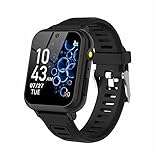
- 👍⌚【Muti-Functional Smart Watch for Kids】Kids smart watch with selfie-cam, 39 puzzle games, torch, MP3 player, voice recorder, pedometer, alarm, stopwatch, calculator, theme, screensaver select, backlight time, audiobooks, learn card, habit tracker, silent profile, five country language, ringtone volume etc.
- 👍⌚【Fun Selfie-Cam & Video】Kids touchscreen smart watch supports such as camera and video perfectly. Children usually use "VCRS + magic cameras" to record every happy moment in their lives. Set your favorite photo as wallpapers. Kids watch is capable of store 10000+ HD photos or 6+ hours video.
- 👍⌚【Easy to Use】No SIM Card Required. The watch for kids don't have call function, don’t need to download app, all the functions are built-in the kids watch, very easy to operate for kids. We also provide SD memory cards Built-in this kids smart watch, helps your child download MP3 children's songs, pictures and videos.
- 👍⌚【Longer Lasting Battery】Kids watch built in re-chargeable battery, the working time can be 3-7 days (varies with use and other factors), this kids smart watch has excellent battery life allows for uninterrupted fun throughout the day and night, and USB cable included (About 2 hours charging fully).
- 👍⌚【Our Forever Guarantee】Smart watch for kids using environmentally friendly silicone material, soft and comfortable, leaving no trace. Please fully charge the kids smart watch before first use. And we provide 90 days money-back, 1 year warranty and life-time friendly customer service. If you have any questions, please contact us in time. We will solve the problem for you as soon as possible.
Physically, it’s built to survive kid life. The case is lightweight plastic with softened edges, the strap is silicone and flexible enough for smaller wrists, and the overall size is chunky but not oversized for children. It’s designed more like a durable toy-watch hybrid than a slim adult smartwatch, which works in its favor for comfort and durability.
On the wrist, it functions as a communication tool first and a smartwatch second. Time display, alarms, basic activity tracking, and reminders are all there, but the emphasis is on staying in touch and giving kids a sense of independence without handing them a full smartphone.
How Alexa works on a kids smartwatch
The defining feature of the DokiWatch S is Alexa built directly into the watch. Kids can press a button and ask Alexa questions out loud, just as they would with an Echo speaker at home. Typical uses include homework questions, simple math help, spelling, fun facts, jokes, weather updates, and setting reminders.
Importantly, this is a limited, child-appropriate version of Alexa. Kids can’t shop, make purchases, or access unrestricted content. Parents control Alexa access through Amazon’s parental controls and the Doki app, and voice interactions are tied to a parent-managed Amazon account.
In real-world use, Alexa on the wrist is less about novelty and more about convenience. For kids who are naturally curious or constantly asking questions, it becomes a quick learning tool rather than a distraction. For parents, it can replace the need to hand over a phone just to look something up.
What Alexa cannot do on the DokiWatch S
Alexa on the DokiWatch S is not the same as having a smart speaker or tablet. It doesn’t support video, social media, or open-ended browsing, and it doesn’t turn the watch into a mini smartphone. There’s no screen-based web access, and interactions stay short and voice-driven.
This limitation is intentional and, for many parents, reassuring. The watch doesn’t encourage endless scrolling or passive consumption. Once a question is answered, the interaction ends, which keeps screen time and distraction in check.
Safety, privacy, and parental control basics
From a parent’s perspective, the DokiWatch S is built around control and oversight. Parents manage contacts, approve who the child can call or message, and can monitor usage through the companion app. Location tracking is also part of the ecosystem, allowing parents to check where the watch is throughout the day.
Voice interactions with Alexa are governed by Amazon’s existing kids and family privacy framework, combined with Doki’s own controls. This means parents can review settings, limit features, and decide how much access their child has, rather than leaving the watch fully open-ended.
While no connected device is completely risk-free, the DokiWatch S is clearly positioned as a closed system. It prioritizes known contacts, controlled features, and transparency over flexibility, which aligns with what most parents expect from a first wearable.
How it compares to other kids smartwatches
Compared to fitness-heavy options like Fitbit Ace, the DokiWatch S is less about steps and sleep metrics and more about communication and learning. Against devices like Garmin Bounce or Xplora, it stands out by offering Alexa rather than focusing purely on GPS and calling.
That makes it particularly appealing for families already using Alexa at home. Kids who are familiar with voice assistants tend to pick it up quickly, while parents benefit from a consistent ecosystem rather than introducing yet another app or platform.
Who the DokiWatch S is best suited for
The DokiWatch S works best for younger kids who aren’t ready for a phone but want more independence. It’s especially well-suited for ages where curiosity is high, routines are still forming, and parents want a balance between learning, safety, and communication.
For older, fitness-focused kids or those needing advanced sports tracking, other watches may make more sense. But for families prioritizing controlled connectivity and a gentle introduction to smart tech, the DokiWatch S fills a very specific and practical role.
Design, Comfort, and Durability: How the DokiWatch S Wears on a Child’s Wrist
Once you’ve decided that the DokiWatch S fits your family’s needs from a features and safety perspective, the next question is far more practical: will your child actually want to wear it every day. Design, comfort, and durability matter more with kids than with almost any other wearable category, because a watch that feels awkward or fragile will quickly end up forgotten in a backpack or drawer.
Doki has clearly leaned toward a child-first design philosophy here, prioritizing wearability and resilience over trying to mimic an adult smartwatch.
Size, shape, and overall look
The DokiWatch S is compact and deliberately chunky in a way that suits younger wrists. The case is wider than a traditional watch but not oversized, striking a balance between screen readability and comfort for small arms. It looks like a kids smartwatch rather than a shrunken Apple Watch, which helps manage expectations for both parents and children.
The rounded case edges and soft contours are intentional. There are no sharp lines or exposed metal edges that could dig into the wrist during play, and the watch sits flat enough to avoid feeling top-heavy. For younger kids especially, this makes a noticeable difference during long wear.
Visually, the design is playful without being overly toy-like. Bright color options and simple on-screen graphics make it feel approachable, but it still looks “real” enough that kids are more likely to treat it as something valuable rather than disposable.
Comfort for all-day wear
Comfort is one of the DokiWatch S’s stronger points. The strap is made from soft, flexible silicone that bends easily around smaller wrists and doesn’t require much break-in time. It’s light enough that most kids stop noticing it after a short period, which is exactly what you want from a daily wearable.
The strap length and multiple adjustment holes allow it to fit a wide range of wrist sizes. Parents of younger children won’t feel like the watch is sliding around, while older kids still have room to grow before needing a replacement. The buckle is simple and secure, designed so kids can’t easily remove it accidentally but can still take it off with help.
Importantly, the materials are skin-friendly. During everyday use, including warm weather and active play, the watch doesn’t tend to trap heat or moisture excessively. That reduces the risk of irritation, which is a common reason kids stop wearing smartwatches altogether.
Screen and interaction from a child’s perspective
The touchscreen is sized for small fingers, not adult hands. Icons are large, menus are spaced out, and interactions rely more on tapping than precise swipes. This works well for younger children who are still developing fine motor control.
Brightness is sufficient for outdoor use, which matters for kids checking the time or responding to prompts while outside. Indoors, the display remains clear without being harsh on the eyes. It’s not designed for immersive media consumption, but for quick glances, voice interactions with Alexa, and simple tasks, it does the job well.
Because Alexa plays such a central role in the DokiWatch S experience, the physical design supports frequent voice use. The microphone placement works reliably when the watch is worn normally, and kids don’t need to hold it awkwardly close to their mouth to be understood.
Durability and kid-proofing
Kids are not gentle with technology, and the DokiWatch S is built with that reality in mind. The casing feels solid, with a slightly rubberized finish that helps absorb minor bumps and drops. It’s clearly designed to survive being knocked against desks, playground equipment, and door frames.
The watch is water-resistant enough for everyday life, including hand washing, splashes, and light rain. Parents should still treat it as a smartwatch rather than a swim watch, but it doesn’t require constant vigilance around sinks or spills. That level of protection is essential for younger kids who forget to take devices off.
The strap attachment points are sturdy, reducing the risk of the watch popping off during rough play. Over time, this matters just as much as screen durability, since lost watches are far more common than broken screens in this age group.
How it holds up to daily routines
In real-world use, the DokiWatch S fits naturally into a child’s daily routine. It’s comfortable enough to wear through school hours, sturdy enough for recess, and light enough that it doesn’t interfere with play. That consistency helps parents rely on features like location tracking and communication without constantly reminding their child to put the watch back on.
The physical design also supports the watch’s role as a learning and communication tool rather than a distraction. Because it doesn’t look or feel like a mini smartphone, kids are less tempted to fidget with it constantly. Interactions tend to be intentional, such as asking Alexa a question or checking in with a parent.
For families considering this as a first wearable, the design strikes a reassuring middle ground. It feels durable and practical enough for everyday childhood chaos, while still being comfortable and appealing enough that kids actually want to keep it on their wrist.
Core Smartwatch Features: Calling, Messaging, GPS Tracking, and Safety Tools
Once the DokiWatch S is on a child’s wrist all day, the practical features matter far more than novelty. This is where it behaves less like a toy and more like a genuine family communication device, with tools designed to keep kids reachable without giving them full smartphone freedom.
Calling: controlled, clear, and parent-approved
Calling is one of the DokiWatch S’s strongest everyday features, especially for younger children who aren’t ready for a phone. The watch supports two-way voice calls using a built-in speaker and microphone, with audio quality that’s clear enough for normal conversation indoors and outdoors.
Parents control who can call the watch through the companion app, creating a trusted contact list that blocks unknown numbers by default. This keeps communication predictable and prevents spam or unwanted calls, which is a key difference compared to handing a child a basic phone.
Calls can be initiated from the watch with a few taps, and incoming calls are hard to miss thanks to vibration and audible alerts. For most families, this replaces the need for a phone during school pickups, after-school activities, or quick check-ins.
Messaging: simple voice notes and text, not social feeds
Messaging on the DokiWatch S is intentionally limited, which will be a positive for many parents. Kids can send and receive short voice messages and basic text messages with approved contacts, all routed through the parental app rather than open messaging platforms.
Voice messages are particularly well-suited for younger users who may struggle with typing on a small screen. They also feel more personal and are easier for kids to use quickly without getting distracted.
There are no social media apps, no group chats with strangers, and no internet-based messaging services. Compared to devices like the Fitbit Ace or Garmin Bounce, the DokiWatch S leans more heavily into communication rather than fitness, making it a better fit for families who prioritize staying in touch.
GPS tracking: real-time location with practical accuracy
Location tracking is central to the DokiWatch S experience, and it performs reliably for everyday parenting needs. The watch uses a combination of GPS, Wi‑Fi positioning, and cellular data to show a child’s location on a map within the companion app.
In real-world use, location updates are generally accurate enough to confirm whether a child is at school, a friend’s house, or on the way home. It’s not designed for precision tracking down to a few feet, but it’s comparable to other kids-focused wearables in its price range.
Rank #2

- 【Muti-Functional Smart Watch for Kids】Kids smart watch features with selfie camera, games, music, alarm clock, calendar, calculator, pedometer, timer, stopwatch, album, recorder, flashlight, theme, wallpapers, volume adjustment etc, which is designed to keep kids entertained while supporting their growth with educational functions
- 【Games & Music】 kids smart watch has 26 puzzle games, helps kids learn through playing also can effectively exercise children's reaction ability and hand-eye coordination. Meanwhile, parents can set the game time to prevent children from being addicted. In addition, the kids smartwatch has Music player. You can connect to the computer via USB, add your favorite music to the "My Music" folder
- 【Capture and Explore with Camera】Equipped with a 300,000-pixel camera, pop big head sticker shooting, kids can take photos and videos, capture record every wonderful moment in their lives, enhancing the quality of captured memories, and inspiring a budding interest in photography and creativity. Also can set your favorite photo as wallpapers. Kids watch is capable of store 10000+ HD photos or 6+ hours video
- 【Educational Toy for Kids】The kids smart watch has 13 alarms clock, helping kids build time management skills. This kids watches also includes 10 audiobooks and 104 learning cards that traditional watches don't have. Designed to spark a love for reading and enhance word and picture recognition, it makes learning fun and engaging for kids. Perfect toy for kids age 4 5 6 7 8 9
- 【Long Lasting Battery & Easy to Use】Kids watch built in rechargeable battery, the working time can be 3-7 days (varies with use and other factors), this kids smart watch has excellent battery life allows for uninterrupted fun throughout the day and night, and USB cable included (About 2 hours charging fully). No need to connect phones or download APP, all the functions are built-in the kids watch, very easy to operate for kids.
Parents can request location updates manually or rely on periodic refreshes, though more frequent tracking will have an impact on battery life. This trade-off is common across all GPS-enabled kids watches and worth keeping in mind for long school days.
Geofencing and alerts: passive safety without constant checking
One of the more reassuring tools for parents is geofencing. You can set virtual boundaries around locations like home or school, and the app will notify you when your child enters or leaves those areas.
This reduces the need to constantly open the app and check the map. Instead, safety becomes more passive, with alerts acting as prompts only when something changes.
Geofencing works best when zones are sized generously rather than tightly drawn. Like most kids wearables, the DokiWatch S is more reliable at recognizing general movement than pinpoint transitions.
SOS and emergency features: designed for simplicity under stress
The SOS function is built for moments when a child needs help quickly. By pressing and holding a dedicated on-screen command, the watch can alert pre-selected emergency contacts and share the child’s current location.
The process is simple enough for young children to remember, which is crucial in stressful situations. Parents receive immediate notifications through the app, allowing for faster response.
While no wearable replaces supervision or emergency services, this feature adds an extra layer of reassurance for families navigating school commutes or independent play.
School mode and usage controls: minimizing distractions
To prevent the watch from becoming a distraction during class, parents can enable school mode through the app. This limits functionality during set hours, typically allowing only emergency features while blocking calls and messages.
Schedules can be customized by day, which is useful for different school routines or extracurricular activities. This level of control helps position the DokiWatch S as a safety tool rather than a toy.
Compared to more fitness-oriented options like Garmin Bounce, the DokiWatch S focuses less on activity goals and more on behavioral boundaries. For many parents, that balance feels more appropriate for younger age groups.
How these features work together day to day
What makes the DokiWatch S effective is how these tools combine into a consistent daily experience. Kids learn that the watch is for checking in, getting help, and staying connected, not endless tapping or scrolling.
For parents, the companion app becomes a single dashboard for communication, location awareness, and safety settings. It’s not overloaded with data, which makes it easier to use regularly rather than only when something feels wrong.
Taken as a whole, these core features position the DokiWatch S closer to devices from Xplora than fitness-first alternatives. It’s built for families who want visibility and communication first, with technology staying firmly in the background.
Alexa on a Kids Smartwatch: What Alexa Can Do on the DokiWatch S (and What It Can’t)
With communication, location tracking, and school controls already in place, the DokiWatch S adds one more layer to the daily experience: Alexa voice access. For parents, this raises a fair question about usefulness versus distraction, especially on a device meant for younger children.
Unlike a smart speaker sitting in a living room, Alexa on the DokiWatch S is tightly scoped. It’s designed to assist with simple tasks, not to turn the watch into a miniature Echo or an open-ended entertainment device.
How Alexa works on the DokiWatch S
Alexa is activated through a voice command, allowing children to ask questions without navigating menus or typing. This hands-free interaction suits the watch’s small display and keeps usage intuitive for kids who may still be learning to read fluently.
In real-world use, Alexa responds well to clear, simple requests. The microphone placement and speaker volume are tuned for close-range use, which helps prevent accidental activation and keeps interactions relatively private.
Because Alexa relies on an internet connection, voice features only work when the watch has cellular data or a stable Wi‑Fi connection. If connectivity drops, Alexa simply won’t respond, rather than offering partial or cached answers.
What Alexa can do for kids day to day
On the DokiWatch S, Alexa excels at quick, practical help. Kids can ask for the time, set simple reminders, check the weather before heading outside, or ask general knowledge questions like animal facts or homework-related curiosities.
Timers and alarms are particularly useful for routines. Children can set reminders for homework, screen breaks, or bedtime without needing a parent to intervene, reinforcing independence in a controlled way.
Alexa can also tell jokes, riddles, and age-appropriate trivia. This adds a bit of fun, but the interaction remains short-form, avoiding the extended engagement you’d see on a tablet or phone.
What Alexa cannot do on the DokiWatch S
Just as important are the limitations. Alexa on the DokiWatch S cannot make purchases, control smart home devices, or access adult-oriented skills. There’s no shopping, no voice ordering, and no integration with household routines.
Music playback is limited and not designed to replace a streaming device. There’s no deep browsing, no playlists tied to personal accounts, and no long listening sessions that drain battery or distract from schoolwork.
Alexa also doesn’t override parental controls. If school mode is active, voice interactions are restricted along with other non-essential functions, keeping the watch aligned with classroom expectations.
Privacy and parental control considerations
Voice interactions are a sensitive topic for many families, and the DokiWatch S approaches this with a child-first framework. Parents manage permissions through the companion app, including whether Alexa is enabled at all.
Alexa interactions are tied to a kids-focused profile rather than a full adult Amazon account. This reduces exposure to inappropriate content and limits data use compared to a standard Alexa device.
It’s still important for parents to understand that voice queries are processed in the cloud. While this is standard for voice assistants, families who prefer zero voice data collection may choose to disable Alexa entirely, which does not impact the watch’s core safety features.
Is Alexa actually useful on a kids smartwatch?
In practice, Alexa feels more like a convenience feature than a headline one. It shines in moments where a child wants a quick answer or reminder without needing to call or message a parent.
Compared to devices like Fitbit Ace or Garmin Bounce, which avoid voice assistants altogether, the DokiWatch S offers a more interactive experience. At the same time, it remains more restrained than open platforms, keeping it closer in spirit to Xplora’s communication-first approach.
For younger kids, typically ages six to nine, Alexa can feel empowering without being overwhelming. Older children may find it limited, but by that stage, many families are already considering more advanced wearables or phones.
Battery life and performance impact
Using Alexa does have a small impact on battery life, but it’s not dramatic. Occasional voice queries won’t noticeably shorten a full day of use, especially compared to GPS tracking or frequent calling.
The watch’s hardware is clearly optimized for brief interactions rather than constant listening. Alexa isn’t always on in the background, which helps preserve battery and reduces unintended activation.
This balance keeps the DokiWatch S focused on being worn comfortably all day. The lightweight case, soft strap, and modest screen size reinforce that this is still a kids watch first, not a voice assistant with a wrist attached.
How this compares to other kids wearables
Most kids smartwatches avoid voice assistants entirely, prioritizing simplicity and battery life. The DokiWatch S stands out by offering Alexa without crossing into excess functionality.
It doesn’t compete with full smartwatches or home assistants, and that’s intentional. By limiting what Alexa can do, the watch stays aligned with parental expectations around safety, cost control, and daily usability.
For families curious about voice assistants but hesitant to introduce a phone or smart speaker, the DokiWatch S offers a measured middle ground. Alexa is present when helpful, and invisible when it’s not needed.
Parental Controls, Privacy, and Data Security: How Safe Is Alexa for Children?
Once Alexa enters the picture, most parents understandably shift from convenience to caution. The DokiWatch S leans into this reality by treating Alexa as a tightly supervised feature rather than a free-roaming assistant, which is an important distinction in the kids smartwatch space.
The result is an experience that feels closer to a child-safe extension of Alexa, not the same version you’d find on a phone or Echo speaker. That difference underpins how parental controls, privacy safeguards, and data handling work on the DokiWatch S.
How Alexa is limited on the DokiWatch S
Alexa on the DokiWatch S operates within Amazon’s Kids experience, meaning it’s designed to filter responses and block categories that aren’t appropriate for children. Kids can ask questions, set reminders, hear simple facts, or check the weather, but they can’t shop, access social media, or trigger smart home purchases.
There’s no open web browsing, no third-party skill free-for-all, and no exposure to ads. This keeps interactions predictable and reduces the risk of a child stumbling into content that feels fine on an adult device but questionable on a watch.
Rank #3

- 【Perfect Smart Watch for Kids】The smart watch for kids with sleep monitor, heart rate, blood oxygen, stress,100+ sport modes, DIY dial, voice assistant, SOS, music, sedentary/drink water reminder, alarm clock, Torch, class mode, camera, games, storybook, voice recorder, learn card, calculator, pedometer, multi-languages, bluetooth call and many other functions. This is an excellent gift for boys and girls for birthdays, Easter, Christmas, holidays, and vacations.
- 【24/7 Health Guardian】Smartly monitors heart rate, blood oxygen, sleep and stress levels around the clock. Analyzes sleep stages (light/deep) using a 2,000+ pediatric health database to generate actionable insights. Triggers vibration alerts for abnormal data, helping parents detect risks like exercise overload or sleep disorders in real time.
- 【1.85" Interactive Display & Growth Rewards System】Features a vibrant HD touchscreen with 100+ personalized watch faces (regularly updated) and custom photo dials to capture precious moments. Exclusive "Reward Coins" system: Kids earn virtual coins by completing fitness goals or learning cards or specific tasks, which can be redeemed for games/audiobooks or other rewards - making life fun while cultivating self-discipline.
- 【Study Focus Mode & SOS】Parents can block distractions during class via app scheduling (minute-level precision). This allows children to concentrate on their tasks at school. In an emergency, kids can press and hold the side button for 3 seconds to activate the SOS alarm to attract the attention of people around them and get help.
- 【IP68 Waterproof & Durability】This kids watch built with a sturdy stainless steel case(1.5-meter drop tested) and IP68 waterproofing for storms/pool play. Smart Watch for Kids Teens Automatically counts steps, distance, calories burned, and active minutes and Supports 100+ sports modes.
Just as importantly, Alexa doesn’t replace the core functions of the watch. Calling, messaging, GPS tracking, and SOS features remain firmly under parental control through the companion app, not through voice commands.
Parental control layers: Doki app meets Amazon Kids
The DokiWatch S uses a two-layer approach to parental oversight. Core watch functions are managed through Doki’s parent app, where guardians approve contacts, define safe zones, review location history, and decide when communication features are active.
Alexa-specific controls live in the parent’s Amazon account via Amazon Kids. From there, parents can review voice activity, delete recordings, set daily usage limits, or turn Alexa off entirely on the watch if they choose.
This separation may sound complex, but in practice it gives parents clearer boundaries. Doki handles the smartwatch and safety side, while Amazon manages voice interactions, which mirrors how many families already use Alexa at home.
Voice recordings and data handling
A common concern is whether the DokiWatch S is “always listening.” It isn’t. Alexa only activates when the child uses the wake word, and there’s no passive recording in the background.
When Alexa is used, voice recordings are sent to Amazon’s servers for processing, just like on other Alexa-enabled devices. Parents can access, listen to, or delete these recordings at any time from their Amazon account.
On the Doki side, data such as location, call logs, and messages are stored and transmitted to support the watch’s core safety features. This is standard for GPS-enabled kids wearables, and the DokiWatch S doesn’t introduce new categories of data simply because Alexa is present.
Privacy compared to other kids smartwatches
Compared to devices like Garmin Bounce or Fitbit Ace, which avoid microphones and voice assistants entirely, the DokiWatch S naturally carries a slightly higher privacy footprint. That’s the trade-off for interactive voice features.
However, when compared to more open platforms like giving a child a smartphone, the DokiWatch S is far more contained. There’s no app store, no social feeds, and no uncontrolled communication channels.
Against competitors like Xplora, which focus heavily on calling and messaging but skip voice assistants, the DokiWatch S offers more engagement without fundamentally changing the privacy equation. Parents who are comfortable with Alexa in the home will likely find the watch version less intrusive, not more.
Control over when and where Alexa works
Parents can decide when Alexa is available by combining screen-time rules in the Doki app with usage limits in Amazon Kids. This means Alexa can be disabled during school hours, bedtime, or study periods.
Because Alexa isn’t central to the watch’s operation, turning it off doesn’t cripple the device. The watch continues to function as a communication and safety tool, which is reassuring for parents who want flexibility as their child grows.
This also makes the DokiWatch S adaptable over time. Alexa can be a novelty and learning aid at age six, then gradually restricted or removed as habits and needs change.
Real-world safety implications for younger users
For younger children, the biggest safety advantage is that Alexa answers questions without requiring internet browsing or typing. A child asking how tall a giraffe is or what time soccer practice starts isn’t exposed to search results or suggested content.
At the same time, the watch’s small screen, modest speaker, and brief interaction model naturally limit overuse. This isn’t a device a child will sit with for hours, which reduces both screen-time concerns and data exposure.
In daily wear, Alexa feels more like a helper than a distraction. That balance aligns well with the DokiWatch S’s lightweight build, comfortable strap, and all-day wearability, reinforcing its role as a practical kids watch rather than a data-hungry gadget.
Is Alexa on a kids watch a risk or a reasonable compromise?
Whether Alexa feels safe enough ultimately depends on family comfort with voice assistants in general. The DokiWatch S doesn’t attempt to convince skeptical parents; instead, it provides clear opt-outs and visible controls.
For families already using Alexa at home, the watch version is arguably a gentler introduction. It offers fewer features, stricter filters, and more obvious parental oversight than most household Alexa devices.
For parents who prefer zero microphones on their child’s wrist, alternatives like Garmin Bounce or Fitbit Ace may still feel like a better fit. But for those seeking a middle ground between silence and smartphones, the DokiWatch S handles Alexa with more restraint than its headline feature might suggest.
Battery Life, Charging, and Real-World Daily Use at School and Home
Battery performance is where kids smartwatches quietly succeed or fail, and the DokiWatch S fits neatly into the expectations parents should have for a connected, LTE-enabled child wearable with voice features. After discussing Alexa’s restrained role, it’s important to look at how that connectivity affects daily reliability.
This is not a “charge once a week and forget it” device, but it is predictable. In real family use, that predictability matters more than headline numbers.
How long the DokiWatch S lasts in everyday use
With location tracking enabled, occasional voice calls, and light Alexa interactions, the DokiWatch S comfortably lasts a full school day and into the evening. Most families will see roughly a day to a day and a half before charging becomes necessary.
Alexa does have an impact, but it’s modest when used as intended. Short questions, reminders, or quick answers don’t drain the battery dramatically, while frequent voice queries or repeated GPS check-ins will shorten runtime.
Compared to fitness-focused options like Fitbit Ace, battery life is shorter, but that’s the tradeoff for cellular connectivity and calling. Against rivals like Xplora or Garmin Bounce, the DokiWatch S lands squarely in the middle of the pack.
School-day performance: set it and trust it
During a typical school day, the watch’s battery drain is steady and controlled. When class mode or school-safe settings are enabled, background activity is limited, helping the watch conserve power while remaining reachable for emergencies.
Parents checking location a few times during the day won’t notice a sudden drop. This consistency helps avoid the anxiety of seeing a low-battery alert before pickup time.
For younger kids, the smaller screen and restrained app experience work in the battery’s favor. There’s simply less to do that would keep the display or radios active for long stretches.
After-school use at home and on the move
Once homework, playtime, and extracurriculars begin, battery usage naturally increases. Voice calls with parents, short video messages, and the occasional Alexa question add up, but not alarmingly so.
Most families will find the watch still has enough charge to get through dinner and evening routines. By bedtime, it feels natural to treat the DokiWatch S like brushing teeth or packing a school bag: something that goes on the charger overnight.
This rhythm makes sense for a kids smartwatch and avoids the frustration of midday charging or surprise shutdowns.
Charging method and how kid-friendly it really is
The DokiWatch S uses a simple magnetic charging connection rather than a fragile plug-in port. This design choice matters more than it sounds, especially for younger children who aren’t gentle with cables.
Charging from low to full typically takes around two hours. That’s short enough to fit into evening routines and long enough that the watch isn’t constantly being topped up throughout the day.
Because the charger snaps into place, kids can learn to dock it themselves without much supervision. That small step toward independence is something many parents appreciate.
Comfort, wearability, and battery confidence on the wrist
The lightweight case and soft strap help ensure the watch stays on all day, which indirectly supports better battery habits. A watch left in a backpack is useless, no matter how long it lasts.
The size feels appropriate for elementary-age wrists, and the materials are comfortable enough that kids don’t ask to take it off during class or play. Fewer removals mean fewer missed charges or forgotten devices.
From a durability standpoint, it’s designed to handle everyday bumps, sweat, and handwashing. Parents should still expect to remove it for swimming or long water exposure, which conveniently aligns with charging time.
What battery life tells you about long-term ownership
Over weeks of use, the DokiWatch S establishes a routine rather than demanding attention. Parents quickly learn what drains it faster and adjust settings accordingly, whether that’s reducing GPS pings or limiting Alexa usage on busy days.
This adaptability ties back to the broader theme of the watch growing with a child. As needs change, battery behavior changes too, without suddenly becoming unreliable.
For families comparing options, the DokiWatch S doesn’t win on endurance alone. What it offers instead is dependable, understandable battery performance that fits real school days and real households without constant micromanagement.
App Ecosystem and Setup Experience: The Doki App, SIM Requirements, and Ongoing Costs
After a few days of living with the DokiWatch S on a child’s wrist, the experience naturally shifts from hardware confidence to software trust. This is where most parents decide whether a kids smartwatch feels empowering or exhausting.
Rank #4

- 【All in One Smart Watch for Kids】Kids smart watch with selfie-cam, MP3 player, voice recorder, habit tracking, games, pedometer, flashlight, alarm, stopwatch, calculator, theme, screensaver select, parental control, silent profile, time format, volume, etc. Which can bring convenience, fun and unprecedented new experience to children's lives.
- 【Upgrade Kids Watch】As the fun kids smart watch, with 39 games to choose from kids. These games are more playable and suitable for children of multiple ages. That can effectively exercise kids logical thinking ability, reaction ability and hand-eye coordination. It is a gift for 4-12 year old boys and girls. There are Habits Tracking and Parental Control that traditional watches don't have.
- 【HD Selfie-Camera & Video】The kids touchscreen smartwatch not only has camera and video support, but also has amazing HD pixels. Children can take photos and record videos, capture record every wonderful moment in their lives. With pop big head sticker shooting, children can take some hilarious photos with family or friends. The first step in training a child to be a photographer.
- 【Powerful Battery Life】Kids watch built-in rechargeable battery that lasts more than 7 days on a full charge, the battery of this girls watch is upgraded to 500mA, allows kids to play anywhere, anytime, and is equipped with a USB cable. Let the children enjoy a happy playtime and give them a good childhood!
- 【Great Gift for Kids】Our kids watches is designed with a durable aluminum frame design and a 1.54 inch IPS HD touch screen, it's easier to operate for kids. This watch introduces a fun function: habit tracking, cultivating children's good habits. Perfect birthday, Christmas, festival, and holiday gifts for boys and girls aged 6~10. We provide friendly customer service.
Everything funnels through the Doki app, which acts as the control center for setup, communication, safety features, and Alexa permissions. It’s a familiar model if you’ve looked at Xplora or Garmin Bounce, but the execution here has a few important differences.
Getting started with the Doki app
Setup begins with installing the Doki app on a parent’s phone and creating a guardian account. Pairing the watch is guided step by step, with clear prompts that don’t assume technical knowledge or prior experience with wearables.
The initial process includes adding approved contacts, setting basic safety rules, and confirming the child’s profile. It typically takes about 10–15 minutes from unboxing to first call, assuming the SIM is already active.
The app interface favors large icons and plain language over dense menus. That design choice makes it less intimidating for parents who just want the essentials working without digging through settings.
Daily app use and parental controls
Once set up, the Doki app becomes part of a light daily routine rather than something that demands constant attention. Parents use it to check location, review messages, manage contacts, and adjust features like school mode or quiet hours.
Contact controls are strict by default. Only approved numbers can call or message the watch, which significantly reduces spam or unwanted interactions.
Location tracking is functional rather than flashy, with real-time updates and location history available. It’s not as granular as Garmin’s fitness-focused maps, but it’s accurate enough for school commutes, playdates, and peace of mind.
How Alexa is managed inside the app
Alexa integration is one of the DokiWatch S’s headline features, and the app plays a crucial role in making it appropriate for kids. Parents control whether Alexa is enabled at all, and when it can be used.
Alexa on the DokiWatch S is intentionally limited. Kids can ask questions, set reminders, check the weather, and interact with basic skills, but they can’t shop, make calls, or access unrestricted content.
The app allows parents to mute Alexa during school hours or at night. This prevents distractions while preserving the novelty and usefulness of voice interaction at appropriate times.
Privacy considerations with Alexa and data handling
For families wary of voice assistants, the DokiWatch S takes a more conservative approach than a full Echo device. Voice interactions are processed through Amazon’s child-friendly framework, not an open adult account.
Parents don’t need to link a personal Alexa device at home for the watch to function. This separation helps limit cross-device data sharing and keeps the child’s usage more contained.
That said, this is still an internet-connected device with a microphone. Parents who prefer zero cloud-based voice interaction may want to disable Alexa entirely, which the app makes easy to do.
SIM requirements and connectivity expectations
The DokiWatch S requires a cellular SIM to unlock its core features, including calling, messaging, GPS tracking, and Alexa. Wi‑Fi alone isn’t enough for daily use outside the house.
Doki supports nano-SIM cards and works with many local carriers, depending on region. Parents can either purchase a SIM through Doki’s recommended plans or source one independently if they’re comfortable checking compatibility.
Cellular performance in real-world use is stable, provided coverage is decent. In weaker signal areas, location updates slow down first, while calls usually remain usable.
Understanding monthly costs and long-term value
Beyond the upfront price of the watch, families should budget for a monthly data plan. Costs vary by country and provider, but most land in the low monthly range typical for kids smartwatches.
There are no surprise software unlock fees for core safety features, which is an important distinction from some competitors. What you pay monthly is largely for connectivity, not functionality.
Over time, this makes the DokiWatch S easier to justify as a predictable expense rather than a subscription-heavy ecosystem. Parents know what they’re committing to, which helps with long-term planning.
How the app experience compares to competitors
Compared to Fitbit Ace, the Doki app feels more communication-focused and less fitness-driven. That aligns better with younger kids who need contact and safety features more than step charts.
Against Garmin Bounce, Doki trades advanced activity tracking for simpler setup and voice interaction. The inclusion of Alexa gives it a conversational edge that some kids find more engaging.
Versus Xplora, the Doki app is slightly less polished visually but easier to navigate for first-time smartwatch parents. It prioritizes clarity over customization, which many families will prefer in day-to-day use.
How the DokiWatch S Compares to Fitbit Ace, Garmin Bounce, and Xplora
When parents start comparing kids smartwatches side by side, the differences usually come down to three things: communication freedom, safety controls, and how much the watch asks of a child day to day. The DokiWatch S sits in a very different lane from Fitbit Ace, Garmin Bounce, and Xplora, even though they’re often cross-shopped.
Rather than positioning itself as a fitness-first tracker or a gamified step counter, Doki focuses on communication and voice interaction. Alexa is a big part of that, but it’s not the only distinction worth weighing.
DokiWatch S vs Fitbit Ace: communication vs fitness
Fitbit Ace is best understood as a simplified fitness tracker with smart features layered on top. It tracks steps, sleep, and basic activity goals, but it does not support cellular calling, voice messaging, or independent communication.
The DokiWatch S, by contrast, is a true standalone smartwatch. With a SIM installed, kids can make voice calls, send voice messages, and use Alexa without needing a phone nearby.
From a physical perspective, Fitbit Ace is slimmer and lighter, with a softer, band-first design that feels more like a traditional fitness bracelet. DokiWatch S is thicker and more watch-like, housing a speaker, microphone, and cellular radio, which adds bulk but enables far more functionality.
For parents of younger children who mainly want movement encouragement and minimal digital exposure, Fitbit Ace feels intentionally limited. For families who want a way to stay in touch throughout the day, Fitbit Ace simply doesn’t compete with what Doki offers.
DokiWatch S vs Garmin Bounce: simplicity vs sport tracking
Garmin Bounce is built around activity tracking, GPS-based challenges, and Garmin’s well-established fitness ecosystem. It’s durable, water-resistant, and excellent for kids who enjoy structured goals and outdoor play.
DokiWatch S trades that athletic depth for simplicity and voice-first interaction. Setup is faster, the app is less data-heavy, and kids don’t need to understand metrics to use it confidently.
In real-world wear, Garmin Bounce feels more rugged and slightly larger on the wrist, with a stiffer strap designed for sports. DokiWatch S is more comfortable for all-day wear, especially for smaller wrists, thanks to a softer strap and lighter feel despite its thicker case.
The biggest difference is interaction style. Garmin Bounce relies on taps, swipes, and menus, while Doki lets kids speak naturally using Alexa or voice messages. For younger kids or those not yet comfortable reading menus, that can make daily use feel far less intimidating.
DokiWatch S vs Xplora: voice assistant vs gamified ecosystem
Xplora is one of Doki’s closest competitors in terms of purpose. Both offer calling, messaging, GPS tracking, and school-safe controls, but they take very different philosophical approaches.
Xplora leans heavily into gamification, rewarding steps with in-app currency and encouraging activity through structured challenges. DokiWatch S avoids that entirely, focusing instead on communication and practical daily use.
Alexa is the clearest divider here. Xplora relies on pre-set functions and app-driven interactions, while Doki allows kids to ask questions, set reminders, and control simple tasks with their voice. For many kids, that feels more natural and less like “earning” access to features.
Visually, Xplora’s app and watch interface are more polished and customizable. Doki’s interface is plainer, but also faster to understand, which matters for parents setting it up and kids using it independently.
Privacy and parental control differences that matter
All four platforms emphasize child safety, but they implement it differently. Fitbit Ace limits exposure by limiting features, while Garmin Bounce keeps interactions largely inside its ecosystem.
DokiWatch S and Xplora both allow real communication, which makes parental controls more critical. Doki’s approach with Alexa is restrictive by design, with no shopping, no smart home control, and no access to adult content.
Parents can disable Alexa entirely on DokiWatch S, something that’s harder to replicate in platforms that build engagement through rewards or challenges. That flexibility makes Doki easier to adapt as a child grows or as family comfort levels change.
Which type of family each watch suits best
DokiWatch S makes the most sense for families who want a communication-first device that feels modern but controlled. It’s especially well suited to younger kids who benefit from voice interaction and simple navigation.
💰 Best Value

- All-Day Activity Tracking: BIGGERFIVE BRAVE 2 Smart Watch for Kids Teens Automatically counts steps, distance, calories burned, and active minutes. Supports 80 sports modes like walking, running, cycling, basketball, and more.
- Without/With APP: BIGGERFIVE kids fitness tracker watch can be used seperately without APP and phone. But with APP, you could explore more functions. Compatible with Android 6.0+ and iOS 9.0+ smartphones.
- Comprehensive Health Monitoring: Monitors real-time heart rate and tracks sleep patterns to promote your child's well-being.
- Customizable Watch Face &1.8" HD Touch Screen:Our kids smartwatch boasts a 1.8" HD touch screen and offers 100+ exquisite cloud dials in APP BIGGERFIVE. Elevate personal style with custom dials using your kids' own photos and ignite their creativity!
- Puzzle Games under Parents' Control: 5 built-in puzzle games can help train your child's reaction ability and calculation ability. You could restrict your child from playing games at school in the BIGGERFIVE APP (supports also lock game all the time).
Fitbit Ace is better for families who want a screen-light introduction to wearables with almost no communication risk. Garmin Bounce fits active kids who enjoy sports and structured goals more than messaging.
Xplora works well for parents who like activity incentives and don’t mind a more complex ecosystem. Doki stands out by staying focused on what many parents care about most: staying connected, without turning the watch into a game console or fitness scoreboard.
Age Suitability and Use Cases: Is the DokiWatch S Right for Your Child?
All of those platform differences come into sharper focus when you start thinking about age and day-to-day use. The DokiWatch S isn’t trying to grow with a child from preschool to middle school in the way a Fitbit or Garmin might. Instead, it’s very clearly designed around a specific stage of childhood where communication, reassurance, and simplicity matter most.
Best age range: early elementary, roughly 5 to 9 years old
In real-world use, the DokiWatch S feels most appropriate for younger kids who are just starting to spend short periods of time away from their parents. That typically means kindergarten through early elementary school, when kids can talk confidently but may not read fluently or navigate complex menus.
Alexa plays a big role here. Being able to say “What time is it?”, “Set a reminder to bring my backpack,” or “Call Mom” lowers the learning curve dramatically. For a six-year-old, voice interaction is often more intuitive than tapping through icons or typing messages.
Physically, the watch matches that age group as well. The case is lightweight, the silicone strap is soft and flexible, and it sits flat on smaller wrists without sliding around. It’s comfortable enough for all-day wear, including school hours, without feeling bulky or toy-like.
A first “independence” watch, not a mini smartphone
The strongest use case for the DokiWatch S is as a child’s first connected device. It’s ideal for situations like walking to a nearby friend’s house, being picked up by a different caregiver, or starting school bus routines.
Parents can call or message their child directly, while kids can reach out without needing to unlock a phone or navigate apps. Location tracking adds peace of mind, but it’s not framed as constant surveillance, which tends to matter more to families at this stage.
Importantly, the watch doesn’t push kids toward constant interaction. There are no social feeds, no open app store, and no pressure to “do more” with it. That makes it easier to set boundaries early and avoid screen habits that are hard to unwind later.
How Alexa changes usability for younger kids
On the DokiWatch S, Alexa is less about novelty and more about accessibility. Kids use it for simple questions, reminders, and basic tasks, not for entertainment binges or smart home control.
Because Alexa is heavily restricted, it doesn’t open doors to shopping, external skills, or unfiltered web content. In practice, this makes it feel closer to a voice-powered helper than a general-purpose assistant.
For kids who struggle with reading, spelling, or fine motor control, this can be genuinely empowering. It allows them to use the watch independently, which is often the entire reason parents buy a kids smartwatch in the first place.
When the DokiWatch S may feel limiting
As kids approach the later elementary years, some will start to outgrow what the DokiWatch S offers. Older children often want more customization, fitness challenges, games, or peer-based features, which is where devices like Xplora or Garmin Bounce start to feel more engaging.
Typing longer messages on the DokiWatch S is also less comfortable for older kids who are used to full keyboards. While voice works well, it’s not always ideal in noisy environments or shared spaces.
Battery life is another practical consideration. The watch is built for daily use, not multi-day adventures, which is perfectly fine for younger kids who charge nightly but less ideal for older children with packed schedules.
Use cases where the DokiWatch S really shines
The DokiWatch S works best for families prioritizing safety, communication, and ease of use over activity tracking or gamification. It’s particularly well suited for first-time smartwatch families who want something that feels modern but not overwhelming.
It also fits well in households already comfortable with Alexa, as parents intuitively understand how voice assistants behave and what limitations to expect. Even without that familiarity, setup and daily management remain straightforward.
For children who need reassurance, reminders, and a simple way to stay connected, the DokiWatch S feels thoughtfully matched to their needs. It’s not trying to be everything, and for the right age group, that restraint is exactly what makes it effective.
Final Verdict: Strengths, Weaknesses, and Whether the DokiWatch S Is a Smart Buy
Taken as a whole, the DokiWatch S feels deliberately focused. It doesn’t try to compete with fitness-heavy or gamified kids wearables, and it doesn’t pretend to be a miniature smartphone either.
Instead, it positions itself as a safe, voice-first communication tool with just enough smart features to feel modern. For many families, that clarity of purpose will matter more than a long spec list.
Where the DokiWatch S gets it right
The biggest strength of the DokiWatch S is how naturally Alexa fits into a child-friendly environment. Voice commands lower the barrier to use, especially for younger kids who can’t read well or struggle with touchscreens.
Because Alexa is tightly restricted, parents don’t have to worry about shopping, random skills, or open-ended internet access. In daily use, it functions more like a talking helper for reminders, questions, and simple tasks than a traditional smart assistant.
Communication and safety are also handled well. Calling, messaging, GPS location, and geofencing are front and center, and the companion app keeps parental controls easy to understand without constant tweaking.
From a wearability standpoint, the watch is comfortable and lightweight enough for all-day use. The materials feel durable rather than premium, but that’s exactly what you want for a device designed to survive playgrounds and backpacks.
Where it falls short
The same simplicity that makes the DokiWatch S appealing for younger kids can make it feel restrictive over time. There’s limited room for personalization, and very little in the way of motivation or progression as kids get older.
Battery life is serviceable but not standout. Nightly charging becomes part of the routine, which is manageable for most families but worth noting if your child is often away from a charger.
Fitness and activity tracking are basic. Parents comparing it to Garmin Bounce or Fitbit Ace will notice the lack of detailed metrics, challenges, or long-term activity goals.
How it compares to other kids smartwatches
Against Xplora models, the DokiWatch S feels simpler and more voice-driven, with fewer social or reward-based features. Xplora often appeals more to older kids who enjoy goals and interaction.
Compared to Garmin Bounce or Fitbit Ace, the DokiWatch S is far less fitness-focused. Those watches are better for active kids who enjoy tracking steps and competing with themselves.
What sets the DokiWatch S apart is Alexa. No other mainstream kids smartwatch integrates a voice assistant this cleanly while keeping parental controls tight and predictable.
Privacy, safety, and parental peace of mind
Privacy-conscious parents will appreciate that Alexa on the DokiWatch S operates within clear boundaries. Voice interactions are limited in scope, and parents retain control over contacts, usage, and features through the app.
The watch avoids the common pitfall of giving kids too much autonomy too early. It keeps communication filtered, location sharing intentional, and functionality focused on real needs.
For families worried about screens, social pressure, or online exposure, this approach feels reassuring rather than restrictive.
Who should buy the DokiWatch S
The DokiWatch S makes the most sense for younger children, roughly ages five to nine, especially as a first smartwatch. It’s ideal for parents who want easy communication, location awareness, and a gentle introduction to smart tech.
It’s also a strong fit for kids who benefit from voice interaction, whether due to age, learning differences, or confidence. Alexa becomes a tool for independence rather than distraction.
Families expecting advanced fitness tracking, multi-day battery life, or deep customization may want to look elsewhere.
Bottom line
The DokiWatch S succeeds because it knows exactly what it is. It’s a safety-first kids smartwatch with a carefully controlled Alexa experience that genuinely helps younger children use the device on their own.
It won’t grow with your child forever, and it’s not the most feature-rich option on the market. But for its target age group, it delivers clarity, reassurance, and real-world usefulness at a level many competitors miss.
If your priority is a simple, safe smartwatch that helps your child stay connected without opening unnecessary doors, the DokiWatch S is a smart and sensible buy.