Hormones quietly shape how you feel, recover, sleep, train, and handle stress, yet they remain one of the least visible parts of personal health tracking. Most people only see hormone data after a doctor orders a blood test, weeks after something already feels off. Eli Health’s Hormometer is trying to change that gap by turning hormone monitoring into something closer to a daily, at-home habit rather than an occasional clinical event.
Instead of sitting on your wrist or finger, the Hormometer lives in your routine. It’s a saliva-based testing system paired with an app, designed to track key hormones repeatedly over time. The promise isn’t instant diagnosis or medical treatment, but trend-level insight into how your internal chemistry shifts day to day, which is a fundamentally different goal than most consumer wearables.
This section breaks down what the Hormometer actually is, how saliva hormone tracking works, which hormones Eli Health focuses on, and where this approach fits realistically within the broader wearable ecosystem. Understanding those fundamentals is essential before deciding whether this represents a genuine leap forward or a niche tool with clear constraints.
A wearable without a wrist: how the Hormometer works
The Hormometer isn’t a traditional wearable in the Apple Watch or Oura Ring sense. There’s no screen, no optical sensors, and no continuous passive tracking. Instead, it’s best described as a connected hormone testing platform that relies on disposable saliva assays and a smartphone app.
🏆 #1 Best Overall

- EMPOWER PERIMENOPAUSE TEST - Take charge of your hormones with this at-home kit tracking FSH, LH, PdG & E1G. Get a clear view of hormonal shifts in your late 30s & 40s, aka perimenopause. Identify options for relief from symptoms like insomnia, mood swings, tension, fatigue, bloating, irregular cycles, hot flashes, hair loss & vaginal dryness—common during perimenopause. Feel more like yourself with insight into what’s happening inside your body.
- E1G TESTING RESULTS - Track changes in your estrogen levels with E1G testing using our menopause test kit at home to personalize your solutions. During perimenopause, estrogen levels may spike up contributing to symptoms like bloating, and then as you approach menopause, estrogen levels may drop significantly resulting in hot flashes, mood swings, joint pain, and vaginal dryness.
- MEASURE YOUR PDG LEVEL - Our Empower Perimenopause at-home test measures PdG, a key marker of progesterone. Reduced progesterone levels are often the first hormonal shift in early perimenopause and manifests in the first symptoms many women 35+ experience, such as waking up at 2-3am, fatigue, tension, short luteal phase, and heavier and more frequent periods.
- TRACK YOUR FSH LEVELS - Understand your ovarian reserve and transition into menopause. Our kit includes 3 FSH tests to monitor fluctuations to help you navigate this important phase with confidence. Increasing FSH levels may indicate movement towards the menopause transition.
- TEST YOUR LH LEVELS - Get insights into ovulation patterns and hormonal balance during perimenopause. The LH test empowers you to stay informed about your body’s natural rhythms. LH levels may increase as your body tries harder to ovulate each cycle and you progress towards menopause.
Users collect a small saliva sample using Eli Health’s test strip system, typically at specific times of day depending on the hormone being measured. The strip is then analyzed using the Hormometer reader, which interprets the biochemical reaction and sends the data to the Eli Health app. Results are delivered within minutes, not days, emphasizing immediacy and repeatability.
This design choice matters. Hormones fluctuate hourly and daily, and Eli’s approach prioritizes longitudinal patterns over single-point precision. It’s closer in philosophy to daily glucose checks than to annual lab panels.
Why saliva, not blood?
Saliva-based hormone testing isn’t new, but its move into consumer hardware is. Saliva reflects the unbound, bioavailable fraction of certain hormones, which is often the biologically active portion influencing tissues. Blood tests typically measure total hormone levels, including hormone bound to proteins that may not be immediately active.
For hormones like cortisol and progesterone, salivary testing is widely used in research and clinical contexts, particularly for tracking diurnal rhythms and stress responses. Cortisol, for example, follows a strong daily pattern that saliva captures well when timing is consistent.
That said, saliva testing has limits. It’s more sensitive to contamination, timing errors, hydration, and user technique. It’s also not interchangeable with blood testing for diagnosing endocrine disorders. Eli Health positions the Hormometer as a trend-tracking tool, not a diagnostic replacement, and that distinction is crucial.
Which hormones the Hormometer measures, and why they matter
At launch, Eli Health focuses on cortisol and progesterone, with estradiol planned as part of its broader roadmap. Cortisol is central to stress, sleep quality, recovery, immune function, and energy regulation. Seeing how cortisol rises and falls across days or weeks can help users connect stress, training load, caffeine, or sleep habits with physiological response.
Progesterone plays a key role in menstrual cycle tracking, fertility awareness, and symptom pattern recognition. Unlike calendar-based cycle apps, hormone data offers a more personalized and dynamic view of what the body is actually doing, not what it’s expected to do.
The emphasis here isn’t on absolute numbers in isolation. Eli’s software leans heavily into visual trends, cycle overlays, and contextual explanations, helping users interpret changes without needing a medical background.
Accuracy, validation, and how cautious consumers should be
Eli Health states that its assays are lab-validated and benchmarked against reference methods, but it’s important to frame what that means in consumer terms. Validation typically refers to analytical accuracy under controlled conditions, not clinical equivalence to blood diagnostics across all use cases.
In practice, this means the Hormometer can reliably detect changes and patterns when used consistently, but small day-to-day fluctuations shouldn’t be over-interpreted. Timing, consistency, and adherence to instructions matter far more here than they do with passive wearables.
For users expecting medical-grade answers or definitive hormone “scores,” this may feel underwhelming. For users interested in observing how lifestyle inputs correlate with physiological outputs, it’s a much better fit.
Where the Hormometer fits in the wearable ecosystem
The Hormometer occupies a space that traditional wearables can’t easily reach. Optical sensors estimate stress and recovery indirectly through heart rate variability, skin temperature, and sleep metrics. Eli Health is measuring the chemical signals underneath those proxies.
That doesn’t make it a replacement for a smartwatch or ring. There’s no activity tracking, no notifications, and no passive data stream. Instead, it complements existing devices by adding biochemical context to metrics users already watch closely.
Viewed realistically, Eli Health’s Hormometer feels less like a mainstream wearable breakthrough and more like an early but meaningful step toward biochemical self-tracking. It’s best suited for highly engaged users willing to test regularly, think in trends rather than absolutes, and accept that hormone data is informative, not prescriptive.
How Saliva-Based Hormone Testing Works (And How It Differs From Blood Tests)
To understand what Eli Health’s Hormometer is actually measuring, it helps to zoom out from the device itself and look at the biology underneath. Saliva-based hormone testing isn’t new, but applying it to frequent, at-home tracking is where things get more interesting—and more nuanced.
What’s in saliva, and why it matters
Hormones circulate through the bloodstream in two forms: bound and unbound. Most hormone molecules in blood are attached to carrier proteins, which makes them biologically inactive until they detach and reach target tissues.
Saliva primarily contains the unbound, or “free,” fraction of certain hormones. This free fraction is what actually interacts with receptors in the body, making saliva a closer proxy for immediate biological activity rather than total hormone supply.
That distinction is crucial. Blood tests typically report total hormone levels, while saliva reflects what’s available for use at that moment.
How the Hormometer captures hormone data
Eli Health’s system uses single-use saliva test cards that the user wets with saliva at specific times of day. Those cards contain biochemical assay strips designed to react to specific hormones, producing a measurable signal that’s read by the Hormometer.
The device itself isn’t a continuous sensor like a smartwatch. It’s a reader, capturing and digitizing the result of a chemical reaction that’s already happened on the strip.
This approach avoids many of the engineering challenges that make real-time biochemical wearables so difficult, but it also means accuracy depends heavily on correct sampling technique.
Which hormones Eli Health is measuring
At launch, Eli Health focuses on cortisol and progesterone. These hormones were chosen deliberately because they have well-studied saliva correlations and meaningful day-to-day variability.
Cortisol follows a strong daily rhythm and responds quickly to stress, sleep disruption, and training load. Progesterone plays a central role in menstrual cycle regulation and has more gradual, trend-based changes.
Notably, Eli is not attempting to measure everything at once. Hormones like estrogen and testosterone are far more challenging to assess accurately via saliva at consumer-grade sensitivity, especially outside controlled lab conditions.
Why saliva testing enables frequent tracking
Traditional blood testing is invasive, expensive, and logistically inconvenient. That makes it poorly suited for observing short-term fluctuations or longitudinal trends without clinical supervision.
Saliva testing, by contrast, can be done daily or even multiple times per day with minimal friction. This frequency is what allows users to see patterns emerge over weeks rather than relying on isolated snapshots.
The tradeoff is that saliva tests prioritize consistency over absolute precision. Used sporadically, they’re easy to misinterpret. Used regularly, they can reveal directional changes that blood tests often miss between appointments.
How saliva and blood results differ in practice
A common source of confusion is when saliva and blood values don’t “match.” That mismatch isn’t necessarily an error—it’s often a reflection of what each method measures.
Blood tests are better for diagnosing deficiencies, disorders, or clinically abnormal ranges. Saliva tests are better at showing how hormone availability shifts with behavior, stress, sleep, or cycle phase.
For example, cortisol may appear normal in a single blood draw while showing a flattened daily curve in saliva testing, which can be more relevant for understanding fatigue or recovery patterns.
Timing, consistency, and user behavior
Saliva hormone levels are highly sensitive to timing. Eating, drinking, brushing teeth, exercise, and even minor stressors can skew results if sampling instructions aren’t followed carefully.
Eli Health addresses this by emphasizing consistent test timing and trend visualization rather than standalone numbers. The system is designed to answer “is this changing?” rather than “is this good or bad?”
This is a very different mindset from clinical diagnostics, and users who treat it like a lab report risk drawing the wrong conclusions.
Why this isn’t a replacement for blood testing
Despite its appeal, saliva testing has clear limits. It cannot diagnose endocrine disorders, confirm fertility status, or replace physician-ordered labs.
What it can do is add biochemical context to daily life—something no smartwatch sensor can currently provide. In that sense, it occupies a complementary role rather than a competitive one.
Understanding this distinction is key to evaluating the Hormometer fairly. It’s not trying to bring the clinic into your pocket. It’s trying to make hormone dynamics visible enough to learn from them.
Which Hormones the Hormometer Measures—and Why They Matter for Daily Health
Once you accept that the Hormometer is about trends rather than diagnosis, the next logical question is what it’s actually tracking. Eli Health has deliberately started with a narrow hormone panel, focusing on markers that fluctuate meaningfully day to day and can be reasonably assessed through saliva.
This restraint is important. Hormones don’t all behave well outside a lab, and measuring too many at once would increase noise rather than insight.
Cortisol: the daily stress and recovery signal
Cortisol is the Hormometer’s headline biomarker, and for good reason. It follows a strong circadian rhythm, rising sharply after waking and tapering throughout the day, which makes it well suited to repeated saliva sampling.
From a daily health perspective, cortisol is less about “stress” in the psychological sense and more about load management. Training volume, sleep debt, calorie restriction, illness, and emotional strain all show up here, often before you consciously feel burned out.
Rank #2

- Ultra-Accurate Semi-Quantitative FSH:Our FSH test strips measure 0–50 mIU/mL, providing more precise results than standard menopause test kits for women for better insight into hormone levels.
- For Fertility & Menopause Tracking:Ideal for women trying to conceive or with irregular periods and premenopausal symptoms. Use this perimenopause test kit at home to check your menopause test anytime.
- Results You Can Act On:High FSH may indicate reduced ovarian reserve or menopause. Track trends and consult your doctor with confidence using our hormone test kit for women.
- Fast, Easy & Private Testing:Just dip, wait 10 minutes, and read. Get accurate results quickly—no clinic visit required, all in the privacy of your home.
- Track Hormone Changes Over Time:Use regularly to observe hormone patterns. This empowers you to manage fertility goals or menopause progression with confidence.
For athletes and biohackers, trends in morning cortisol or a flattened daily curve can hint at under-recovery. For non-athletes, persistently elevated or blunted patterns may explain fatigue, poor sleep quality, or difficulty maintaining energy across the day.
Progesterone: cycle awareness beyond calendars
Progesterone is the second hormone currently supported, and it’s particularly relevant for menstruating users. Unlike many consumer health tools that infer cycle phases indirectly, progesterone offers a biochemical signal of what phase the body is actually in.
In saliva, progesterone reflects the free hormone available to tissues, which matters for mood stability, sleep quality, and perceived calm. Rising levels after ovulation are normal, while consistently low or erratic patterns can correlate with cycle irregularities or heightened stress sensitivity.
This doesn’t replace fertility testing or clinical hormone panels, but it can add context to symptoms that are often dismissed or normalized. When paired with cycle tracking and subjective notes, progesterone trends can help users understand why certain weeks feel dramatically different from others.
Why Eli hasn’t launched with “everything”
Notably absent at launch are hormones like estrogen, testosterone, thyroid hormones, or insulin. That’s not an oversight; it reflects the technical and biological reality of saliva testing.
Some hormones don’t correlate well between saliva and blood, while others fluctuate so rapidly or exist in such low concentrations that consumer-grade testing becomes unreliable. Eli Health has indicated plans to expand its panel over time, but only where saliva-based measurement can deliver consistent, interpretable trends.
This conservative approach may disappoint users expecting a full endocrine dashboard, but it also signals scientific caution. In hormone tracking, fewer reliable signals are more useful than a crowded screen of questionable data.
What these hormones can—and can’t—tell you day to day
Cortisol and progesterone are best understood as context providers. They don’t tell you whether something is “wrong,” but they can explain why a workout felt harder than expected, why sleep suddenly deteriorated, or why motivation dipped without an obvious cause.
They’re also highly individual. Two people can have very different absolute values and still be perfectly healthy, which is why the Hormometer emphasizes personal baselines and directional change rather than population ranges.
This makes the system most valuable for users willing to log consistently, reflect on behavior, and resist the urge to self-diagnose. Treated as a learning tool rather than a medical verdict, these hormones offer a window into physiological patterns that wearables alone still can’t capture.
Accuracy, Validation, and the Science: What’s Proven, What’s Promising, What’s Missing
Understanding what the Hormometer gets right, where it’s still emerging, and what remains unproven is essential before treating its data as anything more than directional insight. Hormone tracking sits at the intersection of biochemistry, sensor technology, and user behavior, and that combination demands a higher evidentiary bar than step counts or heart rate trends.
Saliva as a biological signal: solid science, narrow scope
Saliva-based hormone testing isn’t experimental in itself. For certain hormones, particularly cortisol and progesterone, salivary concentrations correlate reasonably well with the unbound, biologically active fraction found in blood.
This matters because saliva reflects what tissues are actually exposed to, not total hormone levels bound to carrier proteins. That’s why salivary cortisol has long been used in stress research, circadian rhythm studies, and clinical screening for disorders like Cushing’s syndrome.
However, that validity is hormone-specific. Saliva works best for steroid hormones that diffuse passively into oral fluid, which is precisely why Eli’s initial panel is limited. The science supports cortisol and progesterone here, but it does not generalize to the entire endocrine system.
What Eli Health has validated so far
Eli Health states that the Hormometer’s saliva tests have been analytically validated against laboratory reference methods, typically enzyme-linked immunoassays used in clinical and research settings. In practical terms, this means the test can detect hormones within a defined concentration range and produce repeatable results under controlled conditions.
Internal validation data suggests acceptable agreement with lab assays when samples are collected correctly and tested within the expected physiological ranges. This supports the device’s use for trend tracking rather than single-point diagnosis.
What’s notably absent, at least publicly, are large, peer-reviewed studies demonstrating real-world accuracy across diverse users, cycles, stress states, and collection environments. That doesn’t mean the data is unreliable, but it does mean independent scrutiny is still limited.
Accuracy in context: trends beat spot checks
Hormones fluctuate hour to hour, day to day, and across weeks, often more than users expect. A single cortisol reading can be influenced by sleep timing, caffeine, exercise, or even anxiety about taking the test itself.
The Hormometer’s real strength lies in repeated measurements taken under consistent conditions. Over time, these readings can reveal rising or falling baselines, altered daily patterns, or unusual spikes that align with lifestyle changes or symptoms.
This is why Eli’s app deemphasizes population “normal ranges” and focuses instead on personal trendlines. From a scientific standpoint, this is the correct choice, but it requires patience and disciplined use from the wearer.
How this compares to blood testing
Blood panels remain the gold standard for clinical decision-making. They offer higher absolute precision, broader hormone coverage, and established diagnostic thresholds that saliva testing simply doesn’t replicate.
What blood tests lack is frequency. Most people test hormones a few times a year at best, often only when something feels wrong. The Hormometer trades depth for cadence, offering frequent, low-friction snapshots that can contextualize how someone feels between lab visits.
Used together, these approaches can be complementary. Used interchangeably, they can lead to confusion or misplaced confidence.
Regulatory status and medical boundaries
The Hormometer is positioned as a wellness device, not a medical diagnostic tool. It is not FDA-cleared for diagnosing hormonal disorders, fertility issues, or endocrine disease, and its data should not be used to adjust medication or treatment without professional guidance.
This distinction isn’t unique to Eli. Nearly all consumer hormone and metabolic trackers operate in this same regulatory category, but it’s especially important here given how seriously users may take hormone data.
Eli’s messaging generally reflects this boundary, emphasizing education, awareness, and self-understanding rather than clinical authority.
What’s still missing from the science
The largest gap is independent, peer-reviewed research conducted outside the company’s internal validation pipeline. Longitudinal studies showing how accurately Hormometer trends map to real physiological changes across months or years would significantly strengthen its credibility.
There’s also limited data on how variables like oral health, hydration, food residue, or user collection technique affect results in uncontrolled daily use. These factors matter more for saliva than for blood and could introduce noise if not well managed.
Finally, broader hormone panels remain aspirational. Until additional salivary biomarkers can be shown to correlate reliably with meaningful physiological outcomes, expansion should be viewed cautiously rather than assumed.
A measured step forward, not a clinical revolution
From a scientific perspective, the Hormometer is neither snake oil nor a breakthrough that replaces lab testing. It sits in a growing middle ground: consumer-accessible biology that is informative when used correctly and misleading when overinterpreted.
For users who understand its limitations and commit to consistent tracking, the accuracy is sufficient to reveal patterns that traditional wearables can’t touch. For those expecting definitive answers or medical-grade certainty, the science simply isn’t there yet.
That tension, between promise and proof, defines the Hormometer today.
From Test Strip to App Insight: User Experience, Workflow, and Data Interpretation
If the Hormometer’s scientific value depends on consistent, careful use, then the day-to-day experience matters as much as the underlying biochemistry. Eli’s system lives or dies on whether ordinary users can reliably collect saliva, scan a strip, and understand what the resulting numbers actually mean without overreacting to normal biological noise.
This is where the Hormometer feels less like a traditional wearable and more like a hybrid between at-home diagnostics and a data-first health app.
The daily workflow: simple, but not passive
Using the Hormometer starts with a single-use saliva test strip, which the user places in their mouth for a short collection period. There’s no blood, lancet, or device attached to the body, but the process still demands attention to timing, cleanliness, and consistency.
Eli recommends testing at the same time each day, typically in the morning, before eating, drinking, brushing teeth, or using oral hygiene products. This isn’t arbitrary: salivary hormone levels fluctuate rapidly throughout the day, and small behavioral differences can meaningfully affect readings.
After collection, the strip is inserted into the Hormometer reader, a compact handheld device that optically analyzes the strip. The reader then syncs with the Eli Health app over Bluetooth, transferring raw data for processing.
From start to finish, the workflow takes a few minutes, but it is not a background activity. Compared to a smartwatch that passively logs heart rate or sleep, this is a deliberate ritual, closer to weighing food or doing finger-prick glucose testing.
Hardware design and real-world usability
The Hormometer reader itself is small and lightweight, designed to live in a bathroom drawer or travel pouch rather than on the wrist. There’s no screen, no buttons to navigate, and no haptic feedback, which keeps the hardware focused but also means the app carries the entire user interface burden.
Build quality feels functional rather than premium, with plastic construction that prioritizes portability over luxury. That’s not necessarily a drawback in this category, but it reinforces that this is a measurement tool, not a lifestyle accessory.
Rank #3

- 6-IN-1 HEALTH TEST KIT: P, E, TSH, FSH, LH and Visceral Fat Measurement.
- SINGLE SAMPLE OF BLOOD, EASY TO USE: Collect a single sample of blood with a painless at home finger prick test. Then send your sample back to a 3rd party CAP and CLIA accredited lab in the pre-paid envelope provided.
- FAST ACCURATE RESULTS: Receive your results on the Choose Health App in 5-10 days.
- PERSONALIZED RECOMMENDATIONS: The recommendations provided are backed by clinical evidence and personalized to your results, your current diet, exercise, and lifestyle habits.
- (Product only sold and useable in the United States)
Battery life is measured in weeks rather than days, since the reader is only active during brief scanning sessions. Charging is infrequent, and the device doesn’t demand the kind of daily power management that frustrates many wearable users.
App onboarding and data context
Once the data hits the app, Eli’s software becomes the real product. Onboarding walks users through what each hormone represents, why saliva is used, and how to avoid common collection errors, which is essential given how easy it is to misinterpret hormone data.
Rather than emphasizing absolute values, the app centers on personal baselines. Early readings are used to establish a normal range for that individual, and subsequent results are framed as deviations from that baseline rather than as standalone “good” or “bad” numbers.
This approach reflects the scientific reality discussed earlier. For most hormones, especially cortisol and progesterone, intra-individual trends are far more informative than population averages.
How hormone results are visualized
Eli avoids dense lab-style reports in favor of simplified trend charts and contextual explanations. Users see daily values plotted over time, often paired with short interpretive notes that explain whether a change is likely within expected biological variation.
Importantly, the app resists the temptation to assign diagnoses or prescriptive advice. You won’t see alerts telling you that your hormones are “imbalanced” or that you need to take supplements, which helps prevent anxiety-driven misuse.
That said, the clarity comes at a cost. Advanced users looking for raw concentrations, confidence intervals, or deeper statistical breakdowns may find the presentation overly abstracted.
Interpreting trends without overinterpreting meaning
The most valuable insight the Hormometer offers is pattern recognition. Over weeks, users may notice how cortisol responds to poor sleep, travel, or sustained stress, or how progesterone shifts across different phases of the menstrual cycle.
What it does not do well is explain why those patterns exist or what to do about them beyond general lifestyle awareness. The app can highlight correlations, but it cannot distinguish causation, nor can it account for confounding factors like illness, oral inflammation, or inconsistent sampling technique.
This is where the risk of overinterpretation creeps in. Without medical context, it’s easy for users to attribute mood changes, fatigue, or performance dips to small hormone fluctuations that are actually within normal physiological range.
Fit within the broader wearable ecosystem
Unlike smartwatches or rings, the Hormometer does not integrate deeply with existing fitness platforms. There’s limited cross-referencing with sleep, heart rate variability, or activity data, which could otherwise help contextualize hormone trends.
For quantified-self enthusiasts, this means the Hormometer functions as a parallel data stream rather than a unified dashboard. Some users will appreciate the focus; others may find the lack of integration a missed opportunity.
Still, as a non-wearable health device, it avoids common comfort and durability concerns entirely. There’s nothing to wear overnight, no skin contact, and no ongoing sensor drift from sweat or motion.
Who the experience works for—and who it doesn’t
The Hormometer’s user experience rewards patience, consistency, and curiosity. Users who enjoy structured routines and long-term trend analysis will likely find the workflow manageable and even satisfying.
Those expecting instant insights, passive tracking, or actionable health directives may feel underwhelmed. Hormone data, especially when responsibly framed, asks more of the user than step counts or sleep scores.
In that sense, the Hormometer isn’t trying to replace wearables. It complements them, offering a slower, more reflective form of self-measurement that only makes sense if the user is willing to meet it on its own terms.
How the Hormometer Fits Into the Wearable Ecosystem (Apple Watch, Oura, Whoop, and Beyond)
Seen through the lens of mainstream wearables, the Hormometer occupies an unusual but increasingly relevant niche. It doesn’t compete on passive sensing, battery life, or all-day comfort because it’s not worn at all, yet it targets a biological layer that wrist- and finger-based devices can only infer indirectly.
Where smartwatches and rings focus on physiological proxies like heart rate variability, skin temperature, and sleep staging, Eli Health is measuring endocrine signals directly. That distinction shapes how, and how well, the Hormometer fits into an existing wearable stack.
Complement, Not Replacement, for Smartwatches
Devices like Apple Watch, Garmin, and Fitbit excel at continuous monitoring of movement, cardiovascular metrics, and increasingly, overnight vitals. They are optimized for pattern recognition across thousands of data points per day, not for biochemical specificity.
The Hormometer slots in as a periodic, intentional measurement layered on top of that baseline. Instead of replacing metrics like HRV or resting heart rate, it can help explain why those metrics shift during different phases of the menstrual cycle, periods of chronic stress, or recovery plateaus.
In practical terms, users are expected to mentally connect the dots rather than rely on automated synthesis. As of now, there is no native Apple Health integration that merges hormone readings with activity or sleep data into a single timeline.
Oura and Whoop: Context Without Chemistry
Oura Ring and Whoop already position themselves as recovery-first platforms, emphasizing readiness scores, strain balance, and sleep quality. Both increasingly acknowledge hormonal influences, especially for menstrual cycle tracking, but they infer endocrine changes from secondary signals.
The Hormometer offers something these platforms lack: direct measurement of cortisol and progesterone from saliva. That makes it possible, at least in theory, to validate whether a low readiness score aligns with elevated stress hormones or luteal-phase progesterone shifts rather than poor sleep alone.
However, without tight software integration, this remains a manual correlation exercise. Users must compare trends across apps, which limits accessibility but may appeal to experienced quantified-self users who are already comfortable interpreting multi-source data.
Why Saliva-Based Hormones Don’t Fit the Wearable Mold
Traditional wearables are built around continuous sensors: optical heart rate LEDs, accelerometers, temperature sensors, and increasingly electrical or bioimpedance-based measurements. Saliva hormone testing doesn’t scale that way, because it requires deliberate sampling under controlled conditions.
Cortisol and progesterone also fluctuate throughout the day, influenced by circadian rhythm, food intake, oral health, and acute stress. That makes them poorly suited to passive, always-on tracking, but well suited to structured routines where timing and consistency are prioritized.
In this sense, the Hormometer behaves more like a personal lab instrument than a wearable accessory. Its value depends less on industrial design or materials and more on user compliance and biological literacy.
Software Experience and Data Silos
The Eli Health app is functional and visually restrained, focusing on trend lines rather than scores or gamification. It avoids the simplification strategies used by Whoop or Oura, which may be reassuring for users wary of overconfident health algorithms.
That restraint comes at a cost in interoperability. Without robust exports to Apple Health, Google Health Connect, or third-party analytics platforms, hormone data remains siloed within Eli Health’s ecosystem.
For users accustomed to unified dashboards that blend sleep, training load, and recovery into a single narrative, this fragmentation may feel limiting. For others, it reinforces the idea that hormone data deserves slower, more deliberate interpretation.
Where the Hormometer Makes the Most Sense Today
The Hormometer fits best into a multi-device setup where wearables handle continuous physiological monitoring and saliva testing adds periodic biochemical checkpoints. Athletes, biohackers, and cycle-aware users can use it to test hypotheses rather than seek definitive diagnoses.
It is less well suited to users who want frictionless automation or expect hormonal insights to be translated into daily recommendations. Unlike a smartwatch that nudges behavior in real time, the Hormometer asks users to pause, reflect, and contextualize.
Within the broader wearable ecosystem, that makes it an outlier by design. Whether that feels like a breakthrough or a barrier depends largely on how much responsibility the user is willing to take for interpreting their own biology.
Practical Use Cases: Who Will Benefit Most From At-Home Hormone Tracking
Understanding where the Hormometer fits requires accepting its deliberate friction. This is not a background sensor quietly logging data from your wrist, but a tool that rewards intentional sampling and longitudinal thinking.
For the right users, that trade-off unlocks insights no smartwatch can currently provide. For others, it will feel unnecessarily demanding.
Cycle-Aware Women and Menstrual Health Tracking
One of the clearest use cases is menstrual cycle monitoring beyond calendar-based predictions. By measuring hormones like progesterone and cortisol from saliva, the Hormometer can help users observe real biochemical shifts across the luteal and follicular phases rather than inferring them from temperature or heart rate variability alone.
This can be particularly valuable for users with irregular cycles, those coming off hormonal contraception, or anyone trying to understand why energy, sleep, or mood changes don’t line up neatly with app predictions. It does not replace clinical fertility testing, but it can add context that most cycle apps lack.
For users already comfortable tracking basal body temperature or cervical signs, saliva testing fits naturally into an existing routine. For everyone else, the learning curve is real.
High-Training Athletes and Recovery-Focused Biohackers
Athletes operating near the edge of overtraining often rely on proxies like resting heart rate, HRV, or perceived exertion. Cortisol adds a biochemical layer to that picture, offering clues about cumulative stress that wearables can only estimate indirectly.
Used sparingly, the Hormometer can help test whether persistent fatigue is driven by training load, poor sleep, or broader life stress. It is most useful when paired with training logs and recovery metrics rather than viewed in isolation.
Rank #4
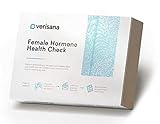
- ✅ HORMONAL HEALTH: Libido, menstruation, fertility and many more aspects can be impacted by your hormone levels.
- ✅ COMPREHENSIVE: Everything included – sample instruction, test tubes and a bag for return shipment. Scientific analysis and laboratory report via web portal included in the price – see pictures for sample report with all 5 hormones.
- ✅ SYMPTOMS: Symptoms for hormonal imbalances could be fatigue, physical exhaustion, depression / depressive mood swings, sleeping disorders, menstrual and abdominal pain, nervousness, anxiety.
- ✅ SIMPLICITY: Easy hormone test to do at home – once you get your salivary test kit, take the sample and send it back to our lab.
- PLEASE NOTE: Due to regulatory reasons, this test is currently not available in NY/NJ/RI/MD, Canada or in the Outlying Territories of the US. Must be at least 18 & over to take the test.
This is not a daily readiness score generator. Instead, it functions as a spot check that can validate or challenge assumptions made from wearable data.
People Navigating Chronic Stress and Burnout
For users dealing with long-term stress, cortisol patterns can feel abstract when discussed in articles or therapy sessions. Seeing trends over weeks can make stress more tangible, especially when paired with lifestyle changes like improved sleep hygiene or workload adjustments.
That said, cortisol is highly sensitive to timing, sleep debt, illness, and even anticipation of the test itself. The Hormometer works best here when used consistently and interpreted cautiously, not as a verdict on whether someone is “too stressed.”
Users prone to health anxiety should approach with care. Hormone tracking can clarify patterns, but it can also amplify worry if numbers are viewed without context.
Data-Literate Health Enthusiasts and Quantified-Self Users
The Hormometer is particularly well suited to users who enjoy hypothesis-driven self-experimentation. Those already tracking sleep stages, glucose responses, or training load will appreciate adding a biochemical dimension to their datasets.
Its value increases when users ask specific questions, such as how travel affects stress hormones or whether a new training block changes baseline cortisol. It is less helpful when used passively or without a clear purpose.
Because data exports and integrations are limited, this group may feel constrained by the app’s ecosystem. Still, for users comfortable working within silos, the signal itself may be worth the inconvenience.
Users Working Alongside Clinicians or Coaches
In some cases, the Hormometer can act as a bridge between subjective symptoms and clinical conversations. Trends in saliva hormones can help frame discussions with endocrinologists, gynecologists, or performance coaches, even if the data itself is not diagnostic.
It is most effective when clinicians understand the limitations of saliva testing and use it as supplementary context rather than evidence. Users hoping to self-diagnose or bypass medical care will likely be disappointed.
This collaborative use case depends less on the device and more on the sophistication of the support network around it.
Who Should Probably Skip It for Now
Users expecting effortless automation, real-time nudges, or simple readiness scores will find the Hormometer frustrating. It demands consistency, attention to protocol, and patience with slow-moving trends.
Those who struggle with routine adherence or who already feel overwhelmed by health data may be better served by wearables that translate physiology into actionable guidance. Likewise, anyone seeking definitive answers about hormonal disorders should prioritize clinical testing.
For everyone else, the Hormometer occupies a narrow but meaningful niche. It is not a mass-market wearable replacement, but for specific users, it offers a rare window into biology that has largely remained locked behind lab doors.
Limitations, Risks, and Misinterpretation: What the Hormometer Can’t Tell You
The Hormometer’s appeal lies in making hormone data visible, but visibility does not equal clarity. As with any early-stage health technology, understanding where the signal ends and speculation begins is essential to using it responsibly.
Saliva Is Not Blood, and That Distinction Matters
Saliva testing measures free, unbound hormone fractions rather than total circulating levels typically reported in blood work. This can be useful for observing trends, but it also means results are not directly comparable to standard lab reference ranges.
Hormones like cortisol translate reasonably well between saliva and serum, while others show more variability depending on flow rate, oral health, and timing. Users expecting lab-grade equivalence will misread what the device is capable of delivering.
Precision Depends Heavily on Sampling Discipline
Unlike passive wearables, the Hormometer’s accuracy is only as good as the user’s adherence to protocol. Eating, brushing teeth, caffeine, alcohol, recent exercise, and even mild dehydration can skew saliva hormone readings.
Missed timing windows or inconsistent collection conditions introduce noise that looks like physiological change. Without strict routines, it becomes difficult to distinguish real hormonal shifts from sampling artifacts.
Hormones Fluctuate Faster Than Most People Expect
Daily, hourly, and situational swings are normal for hormones like cortisol, progesterone, and estradiol. A single elevated or suppressed reading often reflects transient stress, poor sleep, or circadian timing rather than a meaningful baseline change.
This creates a risk of overinterpreting short-term movement. The Hormometer is designed for longitudinal patterns, not moment-to-moment decision-making, and using it otherwise invites false conclusions.
Limited Hormone Panel, Limited Physiological Context
The device tracks a narrow set of hormones, which means large portions of endocrine function remain invisible. Thyroid hormones, insulin, testosterone (depending on configuration), and upstream regulators are not captured.
Without this broader context, users may attribute symptoms or performance changes to the wrong hormonal driver. The absence of a signal is not the same as hormonal balance.
Not a Diagnostic Tool, Even When Trends Look Convincing
Eli Health positions the Hormometer as informational rather than medical, and that distinction is important. Pattern recognition does not replace diagnostic thresholds, imaging, or clinician interpretation.
Self-diagnosing adrenal dysfunction, cycle disorders, or hormonal deficiencies based on saliva trends alone can delay proper care. The data may support a clinical conversation, but it should not attempt to resolve it.
Psychological Load and Data Anxiety Are Real Risks
For some users, seeing hormone data can increase health awareness. For others, it amplifies stress, especially when readings fluctuate without clear explanations.
Fixating on “good” or “bad” hormone days can create a feedback loop where stress about the data alters the very hormones being measured. This risk is higher for users already prone to health anxiety or obsessive tracking.
Software Interpretation Is Still Shallow
The app presents raw values and basic trend visualizations, but it offers limited guidance on what to do with that information. There are no adaptive insights comparable to readiness scores, recovery metrics, or coaching layers found in mature wearable ecosystems.
Without strong educational scaffolding, users are left to interpret complex endocrine signals on their own. This places a cognitive burden on the user rather than the software.
Consumables, Cost, and Practical Friction
Each test requires a physical strip, introducing ongoing cost and logistical friction absent from sensor-based wearables. Skipping tests to save supplies breaks continuity, reducing the value of longitudinal analysis.
This model rewards consistency but penalizes casual use. For many users, that tradeoff will limit long-term adherence.
Integration Gaps Limit System-Level Insight
Hormones do not operate in isolation, yet the Hormometer currently sits apart from sleep, activity, glucose, and heart rate variability data streams. Without robust integrations, correlating cause and effect requires manual effort.
Advanced users may accept this siloed approach, but mainstream wearable users accustomed to unified dashboards may find the experience fragmented.
What It Can’t Tell You, No Matter How Long You Use It
The Hormometer cannot explain why a hormone is changing, only that it appears to be. It cannot confirm disease, optimize treatment, or replace clinical judgment.
What it offers is pattern visibility, not answers. Used with that constraint firmly in mind, it can be informative; used without it, it risks becoming misleading.
Regulatory Status, Clinical Credibility, and How to Read Eli Health’s Claims
After understanding what the Hormometer can and cannot tell you, the next critical question is whether its measurements are medically meaningful or merely informational. This is where regulatory framing, validation language, and scientific nuance matter more than marketing polish.
Is the Hormometer FDA-Cleared or a Medical Device?
Eli Health positions the Hormometer as a wellness product, not a diagnostic medical device. That distinction is deliberate and has real implications for how the product is regulated, tested, and marketed in the U.S.
As of now, the Hormometer is not FDA-cleared for diagnosing, treating, or managing disease. Instead, it falls under the FDA’s general wellness category, which allows consumer health tools to measure or trend biological signals as long as they avoid medical claims.
This does not mean the technology is unscientific. It means the company is legally constrained from saying the data can diagnose hormonal disorders, replace lab testing, or guide treatment decisions.
What “Clinically Validated” Means in This Context
Eli Health uses language around clinical validation and lab correlation, which deserves careful reading. In this context, validation typically refers to analytical validation, not clinical outcomes validation.
Analytical validation asks whether the saliva test reliably detects a hormone at certain concentrations and whether repeated tests produce consistent results. It does not ask whether acting on those results improves health outcomes.
💰 Best Value

- GET PREGNANT FASTER with Clearblue Advanced Digital Ovulation Tests [1] DOUBLE YOUR CHANCES of getting pregnant [2] in your first cycle
- OVER 99% ACCURATE at detecting the luteinizing hormone (LH) surge
- EASY-TO-READ RESULTS: a clear, digital results screen with a ‘smiley face’ which indicates High and Peak Fertility days, allowing you to confidently plan intimate moments
- #1 OB-GYN RECOMMENDED OVULATION BRAND and #1 MOST-TRUSTED OVULATION TEST IN THE USA by American shoppers, according to the 2025 BrandSpark American Trust Study
- DETECTS FERTILITY HORMONES: the Advanced Digital Ovulation Tests tracks 2 key fertility hormones, luteinizing hormone (LH) and estrogen (E3G) unlike other tests which detects LH only
Clinical outcomes validation, the gold standard for medical devices, would require trials showing that Hormometer-guided decisions lead to better diagnosis, treatment, or symptom improvement. That level of evidence is not claimed here.
Saliva Hormone Testing: Accepted, but Context-Dependent
Saliva testing for certain hormones is well-established in research and clinical settings, particularly for cortisol and progesterone. Saliva reflects the free, biologically active fraction of some hormones rather than total circulating levels measured in blood.
That distinction is important. Salivary levels can be highly sensitive to timing, stress, hydration, oral health, and recent food intake, making strict sampling protocols essential.
Blood testing remains the clinical gold standard for diagnosing endocrine disorders, especially for hormones like estrogen and testosterone. Saliva-based testing is better suited for observing trends over time rather than determining absolute clinical status.
Accuracy Versus Precision: A Subtle but Crucial Difference
Consumer hormone tracking often emphasizes accuracy, but precision may be the more relevant metric here. Precision refers to whether the device can reliably detect changes in the same user under similar conditions.
Even if a salivary reading does not perfectly match a blood value, it can still be useful if it consistently rises and falls in response to real physiological shifts. This is where longitudinal tracking has potential value.
However, this usefulness depends on strict consistency in testing conditions. Variability introduced by timing errors or lifestyle factors can overwhelm the signal the device is trying to detect.
How to Interpret the Hormones It Measures
Eli Health focuses on hormones like cortisol, progesterone, and estrogen metabolites, all of which play significant roles in stress regulation, reproductive health, and circadian rhythm alignment. These hormones fluctuate naturally across the day and across the menstrual cycle.
Seeing a spike or dip on a given day does not imply dysfunction. In many cases, it reflects normal physiology responding to sleep, workload, or emotional state.
The value lies in pattern recognition across weeks or months, not in reacting to individual readings. Treating daily values as verdicts rather than signals is where users can go wrong.
Marketing Claims Versus Practical Reality
Eli Health’s public-facing language emphasizes empowerment, insight, and visibility rather than diagnosis or optimization. That framing is appropriate for a product at this stage, but it requires user restraint.
Phrases like “understand your hormones” or “track what’s happening beneath the surface” should be read as informational, not corrective. The device does not explain causality or prescribe action.
If a claim sounds like it promises clarity, control, or optimization, it should be mentally translated into “provides data that may prompt questions.” That is a safer and more accurate interpretation.
How This Fits Into the Broader Wearable Health Landscape
Compared to established wearables that track heart rate, sleep, or activity, the Hormometer operates in a more fragile regulatory and scientific space. Hormones are slower-moving, noisier, and harder to contextualize without clinical background.
Mainstream wearables benefit from decades of validation and clear physiological relationships. Hormone tracking is earlier in its consumer-facing lifecycle, with fewer guardrails and less consensus.
This does not make the Hormometer illegitimate, but it does place more responsibility on the user to interpret data conservatively and in context.
What Would Strengthen Its Clinical Credibility Over Time
Clear publication of peer-reviewed studies comparing Hormometer results to standardized lab assays would significantly strengthen trust. Transparent error ranges, variability data, and real-world adherence studies would also help.
Deeper collaboration with clinicians and clearer guidance for when users should seek blood testing or medical advice would reduce misinterpretation risk. These steps are common as health technologies mature.
For now, the Hormometer occupies an in-between space: more biologically ambitious than most wearables, but not yet anchored to the clinical standards that would make its data actionable in medical settings.
Is the Hormometer a Breakthrough or a Niche Tool? Verdict for Early Adopters vs. Mainstream Users
At this point, the Hormometer’s value hinges less on whether saliva-based hormone sensing is possible and more on who is prepared to use it responsibly. The technology opens a new category in consumer health, but it does not yet behave like a mature, low-friction wearable.
Seen through that lens, it can be both a breakthrough and a niche tool, depending on the user’s expectations, tolerance for ambiguity, and willingness to contextualize imperfect data.
For Early Adopters, Biohackers, and Quantified-Self Users
For analytically minded users, the Hormometer is genuinely compelling. It offers something that smartwatches and rings simply cannot: direct biochemical signals related to stress, circadian rhythm, and reproductive health, measured repeatedly over time rather than inferred indirectly.
This audience is already comfortable working with trends instead of absolutes. They understand that saliva cortisol or progesterone data is about directionality, timing, and personal baselines, not clinical thresholds or diagnoses.
In practice, the Hormometer functions more like a lab-adjacent tool than a wearable. The daily ritual of saliva sampling, strip handling, and app logging requires consistency and patience, but that friction is acceptable to users who already track sleep stages, HRV, glucose, or ketones.
For this group, the Hormometer is best viewed as an experimental layer added on top of existing health data. When combined with sleep timing, training load, menstrual cycle tracking, or subjective mood notes, the hormone trends can add meaningful context rather than standalone answers.
For Health-Conscious Consumers and Lifestyle Optimizers
For mainstream users accustomed to passive tracking, the Hormometer may feel demanding. It does not sit on the wrist, run silently in the background, or deliver instant, intuitive feedback.
Hormone levels also do not change in neat daily arcs the way steps or heart rate do. Missed samples, inconsistent timing, or stress-related noise can make the data feel confusing or even contradictory without careful interpretation.
This is where expectations matter most. If a user hopes for clear recommendations, alerts, or optimization guidance, the Hormometer will likely disappoint. It provides data, not decisions, and it assumes the user will remain cautious rather than reactive.
For motivated consumers who want deeper self-awareness and are willing to learn, it can still be useful. But it demands a level of engagement closer to reading lab results than checking a smartwatch dashboard.
Scientific Ambition vs. Everyday Usability
From a health tech perspective, the Hormometer’s ambition is ahead of its ergonomics. Saliva testing is non-invasive and biologically relevant, but it is inherently more variable than optical or electrical sensing.
Unlike a watch with a known battery life, sensor placement, and continuous sampling, the Hormometer’s reliability depends on user behavior. Timing, hydration, food intake, and adherence all influence results, and the app cannot fully correct for those variables.
That makes it less “wearable” in the conventional sense and more of a portable diagnostic-style tool. This is not a flaw, but it does place it outside the expectations most consumers have for modern health devices.
Breakthrough Category, Early-Stage Product
Conceptually, Eli Health is pushing consumer health in an important direction. Hormones are foundational to sleep, stress, metabolism, and reproductive health, and bringing even partial visibility into that system is a meaningful advance.
Practically, the Hormometer is still early. Its value emerges over weeks and months, not days, and only when users resist the urge to over-interpret individual readings.
As validation improves, guidance becomes clearer, and software matures, this category could move closer to mainstream adoption. Today, it remains a tool for people who want to explore physiology rather than optimize it.
The Bottom Line
The Hormometer is a breakthrough in intent and scope, but a niche tool in execution. It is not a replacement for blood testing, not a diagnostic device, and not a passive wellness tracker.
For early adopters and data-literate users, it offers rare biological insight and a chance to observe hormone rhythms that were previously invisible outside clinical labs. For mainstream users seeking simplicity and clarity, it may feel opaque and demanding.
If you approach it as an experimental window into your biology rather than a source of answers, the Hormometer can be valuable. If you expect certainty, guidance, or optimization, it is better seen as a glimpse of where consumer health tech may eventually go, rather than where it is today.