Most smartwatch health features stop at awareness. They tell you your heart rate is elevated, your sleep was fragmented, or your activity dipped this week, then quietly hand the responsibility back to you to interpret what any of that means. Empirical Health exists specifically to close that gap between data collection and actual medical care.
At its core, Empirical Health is a clinician-led digital health platform that turns everyday wearable metrics into something closer to an ongoing medical relationship. Instead of treating smartwatch data as lifestyle trivia, the platform frames it as longitudinal health evidence that licensed physicians actively review, interpret, and respond to.
The Android and Wear OS launch matters because it opens this model to a far larger population of smartwatch users who until now have been limited to wellness dashboards rather than clinical insight. What follows is a look at how Empirical Health works, what makes it different, and why it represents a meaningful shift in what smartwatch health tracking can realistically deliver.
From passive tracking to active medical oversight
Empirical Health connects directly to data generated by supported smartwatches, pulling in metrics like resting heart rate, heart rate variability, sleep duration and consistency, respiratory trends, activity levels, and weight-related data where available. This information is analyzed over time rather than in isolation, which is critical for identifying patterns that matter medically rather than day-to-day noise.
🏆 #1 Best Overall
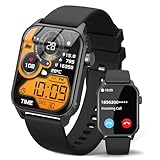
- 【1.83" HD Display & Customizable Watch Faces】Immerse yourself in a vibrant 1.83-inch IPS display, boasting a sharp resolution of 240*284 for crystal-clear visuals. Effortlessly personalize your smart watch with a wide array of customizable watch faces to suit your personal style for every occasion—whether trendy, artistic, or minimalist—ideal for casual, sporty, or professional. Its sleek, modern design complements any outfit, blending technology and fashion seamlessly for everyday wear
- 【120 Sports Modes & Advanced Health Tracking】Our TK29 smart watches for women men come equipped with 120 sports modes, allowing you to effortlessly track a variety of activities such as walking, running, cycling, and swimming. With integrated heart rate and sleep monitors, you can maintain a comprehensive overview of your health, achieve your fitness goals, and maintain a balanced, active lifestyle with ease. Your ideal wellness companion (Note: Step recording starts after exceeding 20 steps)
- 【IP67 Waterproof & Long-Lasting Battery】Designed to keep up with your active lifestyle, this smartwatch features an IP67 waterproof rating, ensuring it can withstand splashes, sweat, and even brief submersion, making it perfect for workouts, outdoor adventures, or rainy days. Its reliable 350mAh battery offering 5-7 days of active use and up to 30 days in standby mode, significantly reducing frequent charging. Ideal for all-day wear, whether you’re at the gym, outdoors, or simply on the go
- 【Stay Connected Anytime, Anywhere】Stay informed and in control with Bluetooth call and music control features. Receive real-time notifications for calls, messages, and social media apps like Facebook, WhatsApp, Twitter, and Instagram directly on your smartwatch. Easily manage calls, control your music playlist, and stay updated without needing to reach for your phone. Perfect for work, workouts, or on-the-go, this watch keeps you connected and never miss important updates wherever you are
- 【Multifunction & Wide Compatibility】Seamlessly handle heart rate monitoring, sleep tracking, and enjoy conveniences like camera/music control, Seamlessly handle heart rate monitoring, sleep tracking, and more-all directly from your wrist. This 1.83 inches HD smartwatch is compatible with iPhone (iOS 9.0+) & Android (5.0+), ensuring smooth daily connectivity and convenience throughout your day. More than just a timepiece, it’s a stylish, all-in-one wearable for smarter, healthier living
What distinguishes the platform is that these trends are reviewed by real physicians, not just algorithms. Users are paired with a licensed doctor who monitors their data longitudinally and can flag concerning changes, contextualize anomalies, and explain what is clinically relevant versus what is normal variation.
This turns a Wear OS watch from a passive sensor into a remote monitoring device that supports preventive care. The watch remains comfortable and unobtrusive in daily wear, while the heavier clinical interpretation happens in the background.
How clinician-led care actually works inside the app
Empirical Health is not an emergency service or a replacement for in-person care, and it does not attempt to be. Instead, it operates as an ongoing health oversight layer, similar in spirit to concierge or preventive medicine models, but driven by continuous data rather than annual checkups.
Users can message their assigned physician through the app to ask questions about trends, symptoms, or changes they’ve noticed in their data. Doctors can proactively reach out if they see patterns that suggest elevated cardiovascular risk, chronic stress, sleep-related concerns, or activity decline that warrants attention.
Because this interaction is grounded in wearable data collected during normal daily life, the advice tends to be more specific and personalized than generic wellness tips. It is also documented, traceable, and tied to real clinical accountability, which is where Empirical Health separates itself from coaching-style platforms.
Why Wear OS and Android support changes the equation
Until now, clinically oriented wearable health services have largely revolved around Apple Health and the Apple Watch ecosystem. Wear OS users, even those with capable hardware offering solid battery life, reliable heart rate sensors, and comfortable all-day wear, have typically been confined to fitness-first platforms.
By landing on Android, Empirical Health taps into a diverse hardware landscape that includes Google Pixel Watch, Samsung Galaxy Watch, and other Wear OS devices already worn by millions. This makes clinician-backed health monitoring accessible without forcing users to switch phones, watches, or ecosystems.
For Android users who value openness and choice, this is significant. It signals that medically credible wearable health services are no longer tied to a single hardware or software gatekeeper.
How it compares to Google Fit, Fitbit, and other health ecosystems
Google Fit and Fitbit excel at data aggregation, trend visualization, and habit-building. They are polished, battery-efficient, and deeply integrated into Android and Wear OS, but they stop short of clinical interpretation. Their insights are algorithmic, generalized, and intentionally non-diagnostic.
Empirical Health sits on top of this data layer rather than competing with it directly. It uses the same underlying metrics but reframes them within a medical context, adding human judgment, accountability, and the ability to escalate concerns appropriately.
Compared to Apple Health equivalents, Empirical Health offers similar longitudinal analysis but differs in emphasis. Instead of acting primarily as a data vault that external providers may or may not use, it embeds the physician directly into the experience, making the smartwatch a front-end for preventive care rather than just record-keeping.
What users actually get in day-to-day use
In practical terms, using Empirical Health does not change how you wear or charge your watch. Battery life, comfort, and durability remain dependent on the hardware you already own, and the app works quietly in the background once connected.
The difference shows up over weeks and months, as patterns emerge and are explained in plain language by a medical professional. For users who want more than alerts and charts, but less than constant appointments, this middle ground is where Empirical Health is positioning itself.
Rather than promising miracles or diagnostics, it offers something more realistic and arguably more valuable: continuous context, informed oversight, and a clearer signal amid the noise of wearable health data.
Why the Android and Wear OS Launch Matters for Smartwatch Health
Until now, medically guided smartwatch health has largely been an Apple-first experience. By arriving on Android and Wear OS, Empirical Health shifts that balance and brings physician-connected insights to a far broader and more diverse user base.
This matters not just because Android has more users globally, but because Wear OS spans radically different hardware philosophies. From minimalist Pixel Watches to large, multi-day Samsung Galaxy Watches and rugged outdoor models, the platform reflects how people actually live with smartwatches day to day.
Breaking the Apple-centric model of clinical-grade wearables
Apple Watch has dominated serious health conversations because it tightly controls hardware, software, and APIs. That control makes regulatory approvals and clinical workflows easier, but it also excludes anyone outside Apple’s ecosystem.
Empirical Health’s Android launch challenges the assumption that medical-grade smartwatch services must be vertically integrated. It proves that credible, doctor-backed interpretation can exist on an open platform, even when hardware capabilities, sensors, and update cycles vary by manufacturer.
Leveraging Wear OS without compromising battery life or comfort
One reason many Android users have been wary of advanced health platforms is battery anxiety. Wear OS watches already juggle high-resolution displays, LTE options, and dense sensor arrays, and adding a “medical” layer raises concerns about constant background processing.
Empirical Health is architected to sit quietly on top of existing health data streams rather than aggressively sampling new ones. In real-world use, this means no meaningful impact on daily battery life, no change in how often you charge, and no effect on the watch’s physical comfort or wearability.
Turning fragmented hardware choice into a strength
Wear OS watches vary widely in size, materials, and intended use. Some favor slim profiles and lightweight aluminum cases for all-day comfort, while others prioritize stainless steel builds, sapphire glass, or larger cases to support outdoor durability and bigger batteries.
By focusing on longitudinal data trends rather than moment-to-moment gimmicks, Empirical Health benefits from this diversity. A user wearing a 40mm lifestyle watch and another wearing a 47mm endurance-focused model can both receive meaningful medical context, even if their daily usage patterns and charging habits differ.
Android’s openness enables deeper medical integration
Android’s permissions model and background service flexibility allow Empirical Health to operate more like a health platform than a simple companion app. Data flows reliably from Google Fit, Fitbit, and supported OEM health layers without forcing users into a single branded silo.
More importantly, this openness allows physician review workflows to be built around the data rather than constrained by it. Doctors see consistent summaries and trends, even when patients switch watches, upgrade hardware, or temporarily use multiple devices.
Raising the baseline for what Wear OS health should deliver
For years, Wear OS health features have been judged primarily on sensor accuracy, UI polish, and feature checklists. Steps, sleep scores, heart rate charts, and readiness metrics became the standard currency of value.
Empirical Health subtly reframes that value proposition. The launch signals that the next competitive layer for smartwatch health on Android is not another metric, but interpretation, accountability, and clinical relevance layered on top of the hardware people already trust on their wrists.
Why this matters for everyday users, not just health enthusiasts
Most smartwatch owners are not trying to self-diagnose or optimize every biomarker. They want reassurance, early signals when something changes, and guidance on when data actually matters.
By making medically grounded oversight available on Android and Wear OS, Empirical Health lowers the barrier between passive tracking and informed care. For users who chose Android for flexibility and choice, this launch validates that openness does not have to come at the expense of serious health credibility.
How Empirical Health Works: Turning Wear OS Data into Medical Insight
Empirical Health builds directly on the idea introduced earlier: wearable data only becomes truly valuable when it is interpreted in context and tied to accountable care. On Android and Wear OS, the platform acts as a translation layer between consumer-grade sensors and clinical reasoning, without forcing users to abandon the watches they already wear daily.
Rather than positioning itself as another dashboard of scores, Empirical Health treats smartwatch data as longitudinal evidence. The system is designed around continuity, trend analysis, and physician oversight, not moment-to-moment optimization or gamified health nudges.
From wrist to platform: how Wear OS data is ingested
At the foundation is Empirical Health’s integration with Android’s health data ecosystem. The app pulls from Google Fit, Fitbit, and supported OEM health services, capturing heart rate, heart rate variability where available, sleep duration and stages, activity levels, and basic cardiovascular trends.
Rank #2
![Apple Watch Series 11 [GPS 46mm] Smartwatch with Jet Black Aluminum Case with Black Sport Band - M/L. Sleep Score, Fitness Tracker, Health Monitoring, Always-On Display, Water Resistant](https://m.media-amazon.com/images/I/312K597M2uL._SL160_.jpg)
- HYPERTENSION NOTIFICATIONS — Apple Watch Series 11 can spot signs of chronic high blood pressure and notify you of possible hypertension.*
- KNOW YOUR SLEEP SCORE — Sleep score provides an easy way to help track and understand the quality of your sleep, so you can make it more restorative.
- EVEN MORE HEALTH INSIGHTS — Take an ECG anytime.* Get notifications for a high and low heart rate, an irregular rhythm,* and possible sleep apnea.* View overnight health metrics with the Vitals app* and take readings of your blood oxygen.*
- STUNNING DESIGN — Thin and lightweight, Series 11 is comfortable to wear around the clock — while exercising and even when you’re sleeping, so it can help track your key metrics.
- A POWERFUL FITNESS PARTNER — With advanced metrics for all your workouts, plus features like Pacer, Heart Rate Zones, training load, Workout Buddy powered by Apple Intelligence from your nearby iPhone,* and more. Series 11 also comes with three months of Apple Fitness+ free.*
Because the data flows through standardized Android health APIs, Empirical Health remains largely hardware-agnostic. A Pixel Watch user with a compact 41mm case and daily charging habits feeds the same core data model as someone wearing a larger, multi-day endurance watch, even if their sampling rates or sensor stacks differ slightly.
This matters for real-world wearability. Users do not need to change straps, charging routines, or watch sizes to “optimize” for the service. Empirical Health adapts to how the watch is worn, not the other way around.
Cleaning, normalizing, and prioritizing real signals
Raw smartwatch data is noisy, especially when collected during daily life rather than controlled conditions. Empirical Health applies normalization and quality checks before anything reaches a physician, filtering out gaps caused by loose straps, overnight charging, or inconsistent wear.
Instead of surfacing every spike or dip, the platform emphasizes trends over time. Changes in resting heart rate baselines, sustained sleep disruption, or deviations from a user’s personal activity patterns carry more weight than isolated anomalies.
This approach contrasts sharply with many native smartwatch apps that emphasize daily scores. Empirical Health is less concerned with whether yesterday was a “good” or “bad” day and more focused on whether the trajectory warrants attention.
What doctors actually see when reviewing Wear OS data
A defining feature of Empirical Health is that licensed physicians review user data, not algorithms alone. Doctors are presented with structured summaries rather than raw charts, highlighting trends, flagged changes, and relevant context from the user’s profile.
Crucially, the interface is designed to be consistent regardless of which watch generated the data. Whether a user switches from a stainless steel lifestyle watch on a leather strap to a rugged sport model with a silicone band, the physician view remains stable and clinically legible.
This consistency allows medical professionals to focus on interpretation rather than device-specific quirks. It also enables continuity of care if a user upgrades hardware, rotates watches, or temporarily stops wearing one device.
The user experience: feedback that feels medical, not motivational
For users, Empirical Health does not behave like a typical fitness companion app. There are no celebratory animations, streaks, or aggressive prompts to close rings. Feedback arrives as clear explanations, written in plain language, often tied to physician review or follow-up.
When something appears stable, users are told that explicitly. When a trend is concerning, the explanation focuses on what changed, why it may matter, and what next steps are appropriate, including whether further monitoring or a clinical conversation is recommended.
This tone is intentional. Empirical Health is designed to reduce anxiety from over-monitoring while still providing early signals when patterns shift in meaningful ways.
How this differs from Google Fit, Fitbit, and Apple’s health model
Google Fit and Fitbit excel at data collection, visualization, and habit formation. They provide accessible insights, broad compatibility, and polished software experiences, but they stop short of medical interpretation. Responsibility for acting on the data remains entirely with the user.
Apple’s health ecosystem goes further with features like ECGs, irregular rhythm notifications, and physician-facing health records integration. However, even there, ongoing physician review of day-to-day wearable data is not the default experience.
Empirical Health occupies a different space. It does not try to replace existing platforms or add new sensors. Instead, it layers clinical accountability on top of data users are already generating, transforming consumer wearables into inputs for real medical oversight.
Why Wear OS makes this model viable at scale
Wear OS devices vary widely in design, battery life, materials, and comfort. Some prioritize slim cases and polished finishing for all-day wear, while others favor larger housings and extended battery life for outdoor use. Empirical Health’s model works precisely because it does not demand uniform hardware behavior.
Android’s flexibility allows the app to run background processes reliably, sync data without aggressive power restrictions, and maintain continuity even when users change devices. This makes long-term monitoring feasible without compromising daily usability or watch comfort.
In practice, this means Empirical Health fits into real lives. Users wear their watches how they want, charge them when convenient, and still receive medically meaningful insight grounded in trends rather than perfection.
The Role of Real Doctors: What ‘Clinically Backed’ Actually Means Here
What changes with Empirical Health is not the data itself, but who is accountable for interpreting it. Instead of raw metrics flowing only to dashboards, selected trends are reviewed by licensed physicians who contextualize wearable signals against real clinical thresholds and population norms. That human layer is what gives “clinically backed” its practical meaning here.
Physician review, not automated diagnosis
Empirical Health does not position its doctors as issuing instant diagnoses based on a single elevated heart rate or poor sleep score. The model is longitudinal, with physicians reviewing patterns over time to determine whether deviations are likely benign, situational, or worth a closer look. This mirrors how clinicians think in practice, where trend stability often matters more than isolated readings.
Importantly, alerts are filtered before they reach a doctor, reducing noise from imperfect wear, missed charges, or atypical days. That helps avoid the common wearable problem of false urgency, where users are nudged toward anxiety rather than clarity.
Asynchronous care designed around wearable realities
Unlike telehealth visits that require scheduling and live interaction, Empirical Health’s physician involvement is largely asynchronous. Doctors review incoming data in the background and surface guidance only when a threshold for concern is crossed. For users, this fits naturally with how Wear OS watches are worn, charged, and occasionally forgotten without breaking the monitoring model.
This approach also respects battery life and comfort trade-offs across devices. Whether a user wears a slim stainless steel watch daily or a larger sport-focused model intermittently, the clinical review adapts to the data that realistically arrives, rather than demanding perfect compliance.
What doctors can and cannot do through the platform
The physicians involved are not replacing a primary care provider, and Empirical Health is careful about that boundary. Doctors can flag concerning trends, recommend follow-up, suggest lifestyle adjustments, or advise when formal medical evaluation is warranted. They do not prescribe medication, manage acute symptoms, or provide emergency care through the app.
That distinction matters because it keeps the service grounded in preventative care and early detection. It also aligns with regulatory expectations around consumer health platforms, avoiding the gray zone where wellness apps overreach into unsupervised medical practice.
Clinical accountability versus consumer responsibility
In most smartwatch ecosystems, responsibility stops with the user, who must decide whether a chart or notification is meaningful. Empirical Health shifts part of that burden to clinicians, who are professionally accountable for interpreting the data they review. This does not eliminate user responsibility, but it does rebalance it in a way that feels closer to real healthcare.
For Wear OS users accustomed to rich data but limited guidance, this is a meaningful shift. The watch remains a consumer device, but the insight derived from it carries medical context that dashboards alone cannot provide.
Privacy, licensing, and trust considerations
Clinically backed also implies adherence to healthcare data standards, including secure handling of personal health information. Physician review requires licensed practitioners operating within defined jurisdictions, which naturally limits availability but strengthens credibility. For users, that trade-off favors trust over scale.
In practice, this means Empirical Health feels less like a feature add-on and more like a service relationship. The smartwatch becomes an input, not the product, and the doctor’s role is to decide when that input deserves attention rather than applause for perfect rings.
Supported Wear OS Devices, Data Sources, and Platform Compatibility
If clinicians are going to be accountable for interpreting wearable data, the quality and consistency of that data becomes non-negotiable. Empirical Health’s Android launch reflects that reality, with a deliberately narrow but sensible approach to supported Wear OS hardware and health data sources rather than a blanket “works with everything” promise.
This section is less about marketing checkboxes and more about understanding which watches generate clinically useful signals, how those signals move through Android’s health stack, and where limitations still exist.
Current Wear OS device support
At launch, Empirical Health is optimized for modern Wear OS 3 and Wear OS 4 devices that expose continuous, high-fidelity health metrics through Google’s health APIs. In practical terms, that means recent Google Pixel Watch models and newer Samsung Galaxy Watch generations form the core supported hardware.
Rank #3

- Bluetooth Call and Message Alerts: Smart watch is equipped with HD speaker, after connecting to your smartphone via bluetooth, you can answer or make calls, view call history and store contacts through directly use the smartwatch. The smartwatches also provides notifications of social media messages (WhatsApp, Twitter, Facebook, Instagram usw.) So that you will never miss any important information.
- Smart watch for men women is equipped with a 320*380 extra-large hd full touch color screen, delivering exceptional picture quality and highly responsive touch sensitivity, which can bring you a unique visual and better interactive experience, lock screen and wake up easily by raising your wrist. Though “Gloryfit” app, you can download more than 102 free personalised watch faces and set it as your desktop for fitness tracker.
- 24/7 Heart Rate Monitor and Sleep Tracker Monitor: The fitness tracker watch for men has a built-in high-performance sensor that can record our heart rate changes in real time. Monitor your heart rate 26 hours a day and keep an eye on your health. Synchronize to the mobile phone app"Gloryfit", you can understand your sleep status(deep /light /wakeful sleep) by fitness tracker watch develop a better sleep habit and a healthier lifestyle.
- IP68 waterproof and 110+ Sports Modes: The fitness tracker provides up to 112+ sports modes, covering running, cycling, walking, basketball, yoga, football and so on. Activity trackers bracelets meet the waterproof requirements for most sports enthusiasts' daily activities, such as washing hands or exercising in the rain, meeting daily needs (note: Do not recommended for use in hot water or seawater.)
- Multifunction and Compatibility: This step counter watch also has many useful functions, such as weather forecast, music control, sedentary reminder, stopwatch, alarm clock, timer, track female cycle, screen light time, find phone etc. The smart watch with 2 hrs of charging, 5-7 days of normal use and about 30 days of standby time. This smart watches for women/man compatible with ios 9.0 and android 6.2 and above devices.
These watches matter because of their sensor maturity rather than their brand names. Pixel Watch devices, with their Fitbit-derived optical heart rate arrays, skin temperature sensing during sleep, and strong sleep staging accuracy, provide the kind of longitudinal data physicians can actually review with confidence.
Samsung’s Galaxy Watch line adds breadth, particularly with ECG capability, blood oxygen tracking, and robust activity detection across different body types and wearing styles. The hardware itself is consumer-grade, but the consistency of data capture, especially during sleep and daily wear, is what makes it usable in a clinical review context.
Older Wear OS 2 devices and budget-tier models with sporadic heart rate sampling or limited background tracking are generally not a focus. Empirical Health’s model assumes near-continuous wear, decent battery life for overnight tracking, and sensors that hold up under real-world conditions like movement, sweat, and imperfect fit.
What health data Empirical Health actually uses
Not every metric your smartwatch records is clinically relevant, and Empirical Health does not treat them equally. The platform prioritizes trends over isolated data points, which naturally elevates certain signals.
Resting heart rate, heart rate variability trends, sleep duration and regularity, overnight oxygen saturation patterns, activity consistency, and deviations from a user’s personal baseline form the backbone of physician review. These are areas where wearables have demonstrated reasonable reliability when assessed over weeks or months rather than minutes.
Metrics like step counts, workout calories, or single-session performance stats still exist in the background, but they are secondary. They help contextualize lifestyle patterns rather than drive medical insight on their own.
Importantly, Empirical Health does not rely on raw ECG traces or momentary alerts as diagnostic tools. Even on watches that support ECG recording, those readings are treated as supporting context, not standalone evidence, reinforcing the platform’s preventative rather than diagnostic role.
Integration with Android health platforms
On Android, Empirical Health sits on top of Google’s evolving health infrastructure rather than replacing it. Data flows through Google Health Connect, which aggregates inputs from Fitbit, Samsung Health, and other compatible apps into a standardized layer.
This architecture matters for two reasons. First, it reduces friction for users who are already invested in Fitbit or Samsung Health ecosystems and do not want to abandon familiar dashboards. Second, it allows Empirical Health to remain hardware-agnostic at the data level, even if device support is selective.
From a usability standpoint, the setup process is straightforward. Users authorize data access once, and ongoing sync happens quietly in the background, without the constant permissions juggling that plagued earlier Android health apps.
Battery life, wear consistency, and real-world usability
Clinical review depends as much on how people actually wear their watches as on sensor specs. Empirical Health implicitly favors watches that can survive a full day and night without charging, or at least support predictable charging routines that do not break sleep tracking.
Pixel Watch and Galaxy Watch devices are not battery champions, but their charging speeds and software efficiency make overnight wear practical for most users. Lightweight cases, smooth casebacks, and flexible straps also matter more here than premium materials or finishing.
A beautifully machined stainless steel case means little if the watch is uncomfortable enough to be removed at night. Empirical Health’s value proposition assumes daily, habitual wear, not occasional fitness sessions or weekend-only use.
What is notably not supported, and why that matters
Empirical Health’s Android presence should not be confused with universal Android smartwatch support. Devices running heavily customized forks of Wear OS, fitness-focused platforms with limited API access, or watches that silo health data away from Health Connect are unlikely to integrate meaningfully.
This excludes some rugged sports watches and fashion-led smartwatches that prioritize design over sensor quality. While those devices may track activity competently, they often lack the depth or consistency required for clinician review.
The restraint here is intentional. By limiting compatibility to platforms that meet a minimum data reliability threshold, Empirical Health avoids diluting its medical credibility. In contrast to many wellness apps that chase user numbers, this approach signals that the service is built around clinical usefulness first, and ecosystem expansion second.
How this compares to Google Fit, Fitbit, and Apple Health equivalents
Google Fit and Fitbit excel at personal insight and motivation but stop short of medical interpretation. They present trends and scores, leaving the user to decide what deserves concern or follow-up.
Empirical Health uses much of the same underlying data but changes who is responsible for interpretation. Instead of algorithmic nudges or generic explanations, a licensed clinician reviews patterns and contextualizes them against health norms and risk factors.
Apple Health remains the gold standard for deep health integration, but it is tightly bound to Apple Watch hardware and iOS. Empirical Health’s arrival on Wear OS closes part of that gap for Android users, offering something closer to Apple’s medical ambitions without requiring a platform switch.
For Wear OS owners who have long had capable sensors but limited clinical guidance, platform compatibility here is not just a technical detail. It is the difference between owning a data-rich gadget and participating in a service that treats that data as part of an ongoing health relationship.
Features Users Actually Get: Reports, Messaging, Monitoring, and Interventions
Once compatibility and data quality are established, the experience shifts from passive tracking to something that feels closer to a clinical service layered on top of a smartwatch. Empirical Health does not replace your Wear OS health apps; it reframes them as data collection tools feeding a medically supervised workflow.
What users actually receive can be grouped into four practical pillars: clinician-authored reports, secure messaging, longitudinal monitoring, and targeted interventions. Each one builds on the last, moving from insight to action rather than stopping at awareness.
Clinician-Reviewed Health Reports
The most tangible output is a structured health report generated after a clinician reviews your wearable data over time. These reports typically cover trends in heart rate, heart rate variability, activity levels, sleep patterns, and irregular signals that may warrant attention.
Unlike algorithm-driven summaries in Google Fit or Fitbit, the language here is interpretive rather than descriptive. The clinician explains what a deviation might mean in context, how confident that interpretation is given the data quality, and whether it aligns with known risk factors like age, medications, or self-reported symptoms.
Reports are written for patients, not physicians, but they avoid the oversimplification common in consumer wellness apps. For Wear OS users accustomed to charts without conclusions, this shift alone materially changes how usable their smartwatch data becomes.
Secure Messaging With Real Clinicians
Empirical Health’s messaging feature is where the platform most clearly departs from traditional wearable ecosystems. Users can ask follow-up questions about their reports, clarify whether a pattern is concerning, or provide context that sensors cannot capture, such as stress, illness, or recent lifestyle changes.
Responses come from licensed medical professionals, not coaches or automated systems. This matters for credibility, but it also shapes tone; messages tend to be cautious, evidence-based, and explicit about uncertainty rather than definitive or alarmist.
The asynchronous nature of messaging fits well with smartwatch-driven data, which accumulates gradually. Instead of booking appointments for borderline issues, users can address concerns early, reducing both anxiety and unnecessary escalation.
Ongoing Monitoring That Respects Real-World Wear
Monitoring within Empirical Health is longitudinal by design. Clinicians look for sustained changes rather than reacting to single-day anomalies, acknowledging that smartwatch data is influenced by fit, battery life, skin contact, and daily routines.
This approach implicitly rewards comfortable, consistently worn devices. Wear OS watches with good strap ergonomics, stable sensors, and all-day battery life produce cleaner data, which in turn leads to more confident clinical interpretation.
For users, this means fewer false alarms and less pressure to “optimize” every metric. The system is built to tolerate missed nights, drained batteries, and imperfect wear, reflecting how people actually use smartwatches in daily life.
Rank #4
![Apple Watch Series 11 [GPS 42mm] Smartwatch with Rose Gold Aluminum Case with Light Blush Sport Band - S/M. Sleep Score, Fitness Tracker, Health Monitoring, Always-On Display, Water Resistant](https://m.media-amazon.com/images/I/31J+F-pXaWL._SL160_.jpg)
- HYPERTENSION NOTIFICATIONS — Apple Watch Series 11 can spot signs of chronic high blood pressure and notify you of possible hypertension.*
- KNOW YOUR SLEEP SCORE — Sleep score provides an easy way to help track and understand the quality of your sleep, so you can make it more restorative.
- EVEN MORE HEALTH INSIGHTS — Take an ECG anytime.* Get notifications for a high and low heart rate, an irregular rhythm,* and possible sleep apnea.* View overnight health metrics with the Vitals app* and take readings of your blood oxygen.*
- STUNNING DESIGN — Thin and lightweight, Series 11 is comfortable to wear around the clock — while exercising and even when you’re sleeping, so it can help track your key metrics.
- A POWERFUL FITNESS PARTNER — With advanced metrics for all your workouts, plus features like Pacer, Heart Rate Zones, training load, Workout Buddy powered by Apple Intelligence from your nearby iPhone,* and more. Series 11 also comes with three months of Apple Fitness+ free.*
Targeted Interventions, Not Generic Health Advice
When intervention is appropriate, Empirical Health focuses on specificity. Recommendations may include lifestyle adjustments, prompts to seek in-person care, or guidance on what symptoms to watch for, all grounded in the user’s own data patterns.
These are not treatment plans or diagnoses delivered through an app. Instead, they function as informed next steps, designed to bridge the gap between passive tracking and traditional healthcare without overstepping regulatory or clinical boundaries.
Compared to the motivational nudges of Fitbit or the self-directed insights of Google Fit, this intervention model feels more conservative but also more trustworthy. It prioritizes doing the right amount of something, rather than doing something at all costs.
What You Do Not Get, by Design
Equally important is what Empirical Health intentionally avoids. There are no real-time alerts pushing users to check their watch constantly, no gamified scores tied to compliance, and no automated diagnoses presented as fact.
This restraint aligns with the platform’s medical positioning. By focusing on periodic review, human interpretation, and clear communication, Empirical Health treats the smartwatch as a medical data source, not a digital conscience.
For Wear OS users seeking legitimacy rather than novelty, these feature choices clarify the service’s purpose. It is less about squeezing more features out of your watch, and more about finally giving its data somewhere credible to go.
Empirical Health vs Google Fit, Fitbit, and Apple Health: Medical Legitimacy Compared
The design restraint described above becomes more meaningful when Empirical Health is placed alongside the health platforms most smartwatch owners already know. Google Fit, Fitbit, and Apple Health all excel at collecting data, but their relationship to medicine remains indirect, shaped more by consumer wellness than clinical accountability.
Empirical Health approaches the same sensor streams from a different starting point. Instead of asking what insights can be automated at scale, it asks what data a physician can reasonably review, interpret, and stand behind.
Google Fit: A Data Hub Without a Clinical Endpoint
Google Fit functions primarily as an aggregation layer. It pulls in heart rate, activity, sleep, and third‑party metrics from Wear OS watches and Android phones, standardizing them into a clean, accessible timeline.
What it does not provide is interpretation anchored to medical responsibility. Trends are visualized, goals are set, and insights are framed as informational rather than advisory, leaving users to decide what matters and when to act.
From a legitimacy standpoint, Google Fit is intentionally non‑medical. It avoids clinical claims, offers no professional review, and positions itself as a personal health log rather than a bridge to care, which keeps it safe but also limits its usefulness when something feels genuinely wrong.
Fitbit: Wellness Coaching With Light Clinical Signaling
Fitbit sits one step closer to healthcare, but still firmly on the consumer side. Its readiness scores, stress metrics, sleep stages, and occasional heart rhythm notifications feel proactive, especially on devices with solid sensors and comfortable all‑day wear.
However, Fitbit’s insights are algorithmic and generalized. Even features like irregular rhythm notifications or SpO2 trends are framed as signals to “talk to your doctor,” not as outputs that a clinician has already evaluated.
The result is a system that feels supportive but ambiguous. Fitbit can raise awareness, but it cannot contextualize whether a deviation matters for you, given your history, wear consistency, or comorbid factors, which often leads to anxiety rather than clarity.
Apple Health: Strong Clinical Infrastructure, Closed Ecosystem
Apple Health sets the benchmark for medical integration in wearables. Its HealthKit framework, FDA‑cleared features like ECG and AFib history, and tight partnerships with health systems give it real clinical credibility.
Crucially, Apple has invested in workflows that allow physicians to receive structured data and patients to share records securely. When paired with Apple Watch hardware known for sensor stability, comfort, and battery reliability, the system can support serious longitudinal monitoring.
The limitation is access. Apple Health’s clinical depth is inseparable from Apple’s hardware and platform, leaving Android and Wear OS users without an equivalent path to physician‑reviewed smartwatch data.
Empirical Health: Clinical Accountability Without Owning the Hardware
Empirical Health differentiates itself by separating medical legitimacy from device ownership. It does not need to control the operating system or manufacture the watch to create accountability, because its legitimacy comes from licensed physicians reviewing real data.
Instead of issuing alerts or scores, Empirical Health creates a documented relationship between user data and medical interpretation. That human review, even when periodic rather than continuous, is what shifts the platform out of the wellness category and into something closer to care support.
For Wear OS users, this is a meaningful shift. A well‑fitting watch with reliable heart rate sensors, stable sleep tracking, and all‑day battery life becomes more valuable not because it unlocks more charts, but because its data can now be clinically contextualized.
Why This Difference Matters in Daily Use
In practice, the distinction shows up in how users engage with their watch. Google Fit and Fitbit encourage frequent checking, optimization, and goal chasing, which works well for fitness but poorly for long‑term health confidence.
Empirical Health, like Apple Health at its best, encourages periodic review and reflection. The watch fades into the background, worn comfortably through normal routines, while its data quietly accumulates into something meaningful enough to merit professional attention.
For Android users who have long had capable hardware but no medically grounded destination for their data, Empirical Health does not replace existing platforms. It reframes them, turning Wear OS from a self‑tracking tool into the front end of a legitimate health conversation.
Privacy, Data Handling, and Regulatory Context: HIPAA, Trust, and Transparency
Once smartwatch data crosses the line from self-tracking into physician review, privacy stops being a background concern and becomes foundational. Empirical Health’s arrival on Android and Wear OS is not just about clinical insight, but about whether users can trust where their data goes, who sees it, and under what legal obligations.
This is where Empirical Health deliberately separates itself from mainstream wearable platforms that were never designed to operate inside regulated healthcare environments.
From Consumer Data to Protected Health Information
Most smartwatch platforms treat health metrics as consumer data governed by platform privacy policies rather than healthcare law. Heart rate, sleep stages, and activity trends may feel medical, but when processed by Google Fit or Fitbit alone, they are not automatically considered protected health information.
Empirical Health changes that status by placing licensed physicians in the loop. Once a doctor reviews, documents, or communicates about your smartwatch data, it becomes part of a medical context, triggering healthcare-grade data handling expectations rather than consumer-tech norms.
This shift matters because it reframes your Wear OS watch from a lifestyle device into a data source feeding a regulated clinical workflow.
HIPAA Compliance and Why It Actually Matters
Empirical Health operates under HIPAA, the U.S. framework governing how protected health information is stored, transmitted, and accessed. That means encryption at rest and in transit, strict access controls, audit trails, and legal accountability if data is mishandled.
For users, this translates into a different kind of trust relationship. Unlike fitness platforms that can change data usage terms with product strategy shifts, HIPAA-covered entities are constrained by law, not just policy language.
It also means your smartwatch data is not being quietly repurposed for advertising models, engagement optimization, or behavioral profiling.
💰 Best Value
![Apple Watch Series 11 [GPS 42mm] Smartwatch with Jet Black Aluminum Case with Black Sport Band - S/M. Sleep Score, Fitness Tracker, Health Monitoring, Always-On Display, Water Resistant](https://m.media-amazon.com/images/I/31ybzrJZckL._SL160_.jpg)
- HYPERTENSION NOTIFICATIONS — Apple Watch Series 11 can spot signs of chronic high blood pressure and notify you of possible hypertension.*
- KNOW YOUR SLEEP SCORE — Sleep score provides an easy way to help track and understand the quality of your sleep, so you can make it more restorative.
- EVEN MORE HEALTH INSIGHTS — Take an ECG anytime.* Get notifications for a high and low heart rate, an irregular rhythm,* and possible sleep apnea.* View overnight health metrics with the Vitals app* and take readings of your blood oxygen.*
- STUNNING DESIGN — Thin and lightweight, Series 11 is comfortable to wear around the clock — while exercising and even when you’re sleeping, so it can help track your key metrics.
- A POWERFUL FITNESS PARTNER — With advanced metrics for all your workouts, plus features like Pacer, Heart Rate Zones, training load, Workout Buddy powered by Apple Intelligence from your nearby iPhone,* and more. Series 11 also comes with three months of Apple Fitness+ free.*
Data Minimization and Purpose-Limited Use
A notable aspect of Empirical Health’s approach is restraint. The platform is not trying to ingest every possible sensor stream or generate constant alerts that keep users checking their phones.
Instead, it focuses on longitudinal trends that are clinically interpretable, reviewed periodically by physicians rather than mined continuously by algorithms. This minimizes unnecessary data exposure while maximizing relevance.
In practical terms, your watch can be worn comfortably all day, with good battery life and stable background syncing, without becoming a surveillance device that demands attention.
Transparency Over Black-Box Scoring
Many wearable health platforms rely on proprietary scores, readiness metrics, or risk indicators that users cannot interrogate. These can be motivating, but they also obscure how conclusions are reached and whether they are clinically meaningful.
Empirical Health avoids this by anchoring interpretation to documented physician review. When insights are delivered, they are framed as medical observations rather than algorithmic judgments.
For Wear OS users accustomed to graphs without context, this transparency shifts the experience from performance tracking to informed understanding.
Android, Wear OS, and Platform-Level Trust Gaps
Android users are rightly skeptical about data handling, given the ecosystem’s history of fragmentation and varied privacy standards across devices and manufacturers. Empirical Health does not rely on OEM-specific promises, because its compliance obligations sit above the hardware layer.
Whether you are wearing a slim, lightweight Pixel Watch for sleep comfort or a larger, sport-oriented Wear OS watch with multi-day battery life, the data pipeline into Empirical Health follows the same regulated path.
That consistency matters more than brand, sensors, or case materials when medical credibility is the goal.
What This Means for Everyday Users
For the user, privacy is not just about avoiding breaches. It is about confidence that wearing a smartwatch 24/7 will not create unintended consequences years later.
Empirical Health’s regulatory posture makes it easier to wear your device passively, trust the data flow, and engage only when there is something worth discussing with a professional.
In a landscape where many health features feel experimental, this legal and ethical grounding is what makes the platform feel durable rather than trendy.
Who Empirical Health Is (and Isn’t) For: Real-World Use Cases and Limitations
Taken together, Empirical Health’s emphasis on regulatory rigor, physician involvement, and passive data capture naturally narrows its ideal audience. This is not a mass-market wellness app trying to gamify daily activity, and that distinction is critical to understanding its real-world value.
Ideal for Health-Conscious Wear OS Users Seeking Medical Context
Empirical Health makes the most sense for Wear OS users who already wear their watch nearly all day and night. If your Pixel Watch, Galaxy Watch, or other Wear OS device is already part of your routine for sleep tracking, resting heart rate, and general activity, Empirical adds clinical interpretation rather than additional tracking burden.
These users tend to value comfort, battery life, and unobtrusive wearability over flashy features. A slim watch that disappears on the wrist during sleep is often more useful here than a bulky sports watch with extreme metrics, because consistency of data matters more than peak sensor performance.
For people managing long-term health questions, such as cardiovascular risk, unexplained fatigue, sleep quality issues, or post-illness monitoring, having a physician review longitudinal wearable data can provide reassurance or prompt timely follow-up. This is where Empirical’s Android availability materially changes the Wear OS landscape.
Not a Replacement for Primary Care or Acute Diagnosis
Empirical Health is not designed to replace a primary care physician, emergency services, or in-person diagnostics. It does not diagnose conditions, prescribe medication, or intervene in acute situations based on smartwatch alerts.
If you are looking for immediate answers, real-time alarms, or automated “you are sick” notifications, this platform may feel deliberately restrained. That restraint reflects clinical reality, not missing features.
The service is best viewed as a bridge between everyday biometric data and traditional healthcare, not a shortcut around it.
Limited Appeal for Performance Athletes and Gamified Fitness Fans
Users who thrive on readiness scores, recovery percentages, training load graphs, or competitive fitness challenges may find Empirical Health understated. There are no badges, streaks, or algorithmic scores to optimize day-to-day performance.
While Empirical can ingest activity and heart rate data, it does not attempt to coach workouts or maximize athletic output. Platforms like Fitbit, Garmin, or training-focused ecosystems remain better suited for users whose primary goal is performance optimization.
Empirical’s strength lies in interpretation over motivation, which is a meaningful but narrower use case.
Android Users Who Want More Than Google Fit Can Offer
Google Fit and similar Android-native platforms excel at data aggregation but stop short of clinical interpretation. They tell you what happened, not what it might mean.
Empirical Health occupies the gap between raw metrics and medical care by adding licensed physician review. For Android users who have long lacked an Apple Health–style clinical integration layer, this is one of the first credible attempts to close that gap.
The value is not in replacing Google Fit, but in contextualizing it through a medical lens that the platform itself cannot provide.
Practical Limitations to Understand Up Front
Empirical Health depends on consistent data collection, which means wearing your watch regularly and keeping background syncing enabled. If your device struggles with battery life, unreliable sensors, or frequent disconnections, the experience will degrade.
It also assumes a tolerance for delayed insights rather than instant feedback. Physician review takes time, and meaningful patterns often emerge over weeks or months, not days.
Finally, availability may be shaped by geography, insurance alignment, or regulatory constraints, which can limit access compared to consumer-first health apps.
The Right Tool for the Right Expectations
Empirical Health is best understood as a quiet, long-term companion rather than an always-on coach. It rewards patience, consistency, and a willingness to engage with healthcare professionals when warranted.
For Wear OS users who want their smartwatch to feel less like a gadget and more like a medically credible health instrument, Empirical offers something genuinely different. Its Android arrival does not redefine what a smartwatch can measure, but it meaningfully redefines what those measurements can responsibly be used for.