For people who rely on a continuous glucose monitor every hour of every day, an FDA recall escalation isn’t just regulatory paperwork. It’s a signal that something serious enough has happened to change how the agency views risk, accountability, and potential harm in the real world.
In this case, the FDA’s decision to escalate the recall of certain Freestyle Libre 3 CGMs follows reports linking device failures to seven deaths. That number alone understandably raises alarm, but the more important question for users is what this escalation actually changes, what it says about the devices involved, and what it means for day‑to‑day safety if you’re wearing — or thinking about wearing — a CGM.
What follows breaks down the recall escalation in plain terms: how the FDA classifies recalls, which Libre 3 units are affected, what kinds of failures were reported, what Abbott is doing in response, and what CGM users should do right now to protect themselves without panic or guesswork.
What “recall escalation” means in FDA terms
When the FDA escalates a recall, it isn’t announcing a new problem so much as reclassifying how dangerous the existing one may be. Recalls are grouped into three categories, with Class I being the most serious, reserved for situations where a device could cause serious injury or death.
🏆 #1 Best Overall
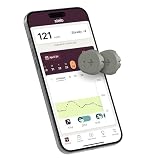
- ✅ For people NOT using insulin, ages 18 years and older
- ❌ Don’t use if: On insulin, on dialysis, or have problematic hypoglycemia
- YOUR SUCCESS, OUR COMMITMENT: If your biosensor fails before the 15-day wear time is up,[2] we will replace it for free. [3]
- PRODUCT SUPPORT: Provided by Stelo through SteloBot, which can be accessed via the Stelo app by going to Settings > Contact. SteloBot virtual support assistant is available 24/7, and live agent support available during regular business hours
- PERSONALIZED INSIGHTS: Understand your glucose patterns and how your glucose reacts to food, activity, and sleep
By escalating this action, the FDA is signaling that the potential harm from the affected Freestyle Libre 3 sensors is no longer considered theoretical or low risk. The agency has reviewed adverse event data and determined that the failure modes reported could, under certain conditions, contribute to life‑threatening outcomes if users rely on inaccurate or missing glucose readings.
For CGM users, this matters because FDA classification influences everything from how aggressively Abbott must notify customers to how insurers, clinicians, and regulators treat the device going forward.
Which Freestyle Libre 3 devices are actually affected
Not every Libre 3 sensor in circulation is included, and that distinction is critical. The recall applies to specific production lots of Freestyle Libre 3 sensors, identified by lot numbers and manufacturing dates rather than the entire product line.
This is common in medical device recalls, especially for wearables produced at massive scale. A change in manufacturing equipment, calibration processes, or component sourcing can affect a limited run without impacting later or earlier batches.
Users need to check their sensor packaging or Abbott account details carefully. Relying on hearsay or assuming all Libre 3 sensors are unsafe can lead to unnecessary disruption in glucose management, which itself carries risk.
The reported failures and how they can become dangerous
According to FDA and manufacturer disclosures, the core issue involves sensors providing inaccurate glucose readings or failing to alert users properly during hypoglycemic or hyperglycemic events. In some reports, readings appeared stable or within range when blood glucose levels were not.
For people using CGMs to guide insulin dosing, overnight monitoring, or automated insulin delivery systems, that kind of failure can have cascading effects. A missed low can mean no corrective action taken. A falsely normal reading can delay treatment. Over time, trust in the data can become misplaced.
The seven deaths referenced by the FDA are associated with adverse event reports where CGM performance may have played a role. Importantly, these reports do not automatically establish direct causation, but they do indicate scenarios where device behavior may have contributed to fatal outcomes.
Why this is a bigger deal than past CGM recalls
CGMs sit in a unique category of health wearables. Unlike step counters or heart rate trackers, their data is often used to make immediate medical decisions, multiple times a day, without confirmatory fingerstick checks.
The escalation underscores how much responsibility regulators now place on wearable health tech that blurs the line between consumer electronics and medical infrastructure. As CGMs integrate more deeply with smartphones, smartwatches, and insulin pumps, the tolerance for silent failures drops dramatically.
This action also sends a broader message to the wearable industry: reliability, alert integrity, and software behavior are just as safety‑critical as hardware defects.
What Abbott is doing in response
Abbott has acknowledged the issue and is working with the FDA as part of the recall process. The company is notifying affected users, distributors, and healthcare providers, and offering guidance on identifying impacted sensors.
In most recall scenarios like this, Abbott may provide replacement sensors, updated instructions, or software adjustments depending on the root cause. The company has emphasized that the recall is limited in scope and that the Libre 3 system overall remains approved and widely used.
Still, recall escalations often lead to deeper internal audits, manufacturing changes, and increased post‑market surveillance, which can affect supply, customer support timelines, and user confidence in the short term.
What CGM users should do immediately
If you use the Freestyle Libre 3, the first step is verification, not removal. Check whether your sensor lot number is included in the recall before making changes to your diabetes management routine.
If your sensor is affected, follow Abbott’s instructions precisely and consult your healthcare provider about temporary alternatives or confirmatory fingerstick testing. Do not ignore symptoms just because your CGM data looks normal, especially if something feels off physically.
For users not affected by the recall, this is still a reminder to treat CGM data as powerful but not infallible. Understanding device limitations, alert settings, and backup strategies remains essential.
What this means for trust in health wearables
This recall escalation doesn’t mean CGMs are unsafe as a category, but it does reinforce that trust in health wearables has to be earned continuously, through transparency, rapid response, and regulatory oversight.
As CGMs become smaller, more comfortable, and more integrated with watches and phones, their invisibility can work against them. When something goes wrong, it may not be immediately obvious, especially during sleep or periods of low awareness.
For users, the takeaway isn’t fear. It’s informed vigilance — knowing how recalls work, how to check your device, and how to balance convenience with safety in a world where wearables increasingly guide critical health decisions.
Which Freestyle Libre 3 Devices Are Affected: Models, Lot Numbers, and Manufacturing Windows
Understanding whether your specific sensor is part of the recall hinges on three things: the exact Libre model, the lot number printed on the packaging, and when that sensor was manufactured. The FDA escalation makes clear that this is not a system‑wide failure of Libre 3, but a targeted action tied to defined production runs.
Only Freestyle Libre 3 sensors are included
The recall applies exclusively to Freestyle Libre 3 continuous glucose monitoring sensors. Other Abbott CGMs, including Freestyle Libre 2, Libre 2 Plus, and Libre 14‑day systems, are not part of this FDA action.
That distinction matters because the Libre 3 uses a redesigned sensor with a thinner profile, shorter warm‑up time, and continuous real‑time Bluetooth transmission rather than on‑demand scans. Those design changes improve comfort and day‑to‑day usability, but they also mean Libre 3 has unique hardware and firmware characteristics compared to earlier models.
Lot numbers, not retail channels, determine risk
The FDA and Abbott have emphasized that recall eligibility is determined by lot number, not where you bought the sensor or when you started wearing it. Sensors purchased directly from Abbott, through pharmacies, mail‑order suppliers, or diabetes clinics can all be affected if they come from the same manufacturing batches.
Each Libre 3 sensor box has a lot number printed on the outer packaging and on the sensor applicator label. This lot number is the primary identifier Abbott is using to determine whether a unit falls under the recall.
Manufacturing windows tied to the reported failures
According to FDA recall documentation, the affected Libre 3 sensors were manufactured during specific production windows identified through Abbott’s internal quality review. These windows correspond to periods when certain sensors may have produced inaccurate low‑glucose readings or failed to alert users appropriately.
The FDA has not described the issue as a software bug alone, nor as a universal hardware defect. Instead, the language points to a combination of sensor performance variability and manufacturing controls during defined timeframes, which is why only certain lots are included.
How to check your sensor step by step
If you are currently wearing a Libre 3 sensor, do not remove it preemptively. Start by checking the lot number on your sensor box or applicator and compare it against Abbott’s official recall list.
Abbott has published a searchable lookup tool and customer support hotline specifically for this recall. The FDA’s recall notice links directly to these resources, and both are updated as new information becomes available.
What if you no longer have the box?
For users who discarded the packaging, Abbott can often confirm lot information using order history, pharmacy records, or shipment data. This is particularly relevant for users who receive sensors automatically through subscription programs or insurance‑managed supply chains.
If confirmation isn’t immediately possible, Abbott and the FDA recommend increased vigilance, confirmatory fingerstick testing when readings don’t match symptoms, and direct consultation with a healthcare provider rather than abrupt discontinuation.
Why this recall remains “limited” despite its seriousness
Although the FDA escalation cites seven reported deaths, the recall still affects a relatively small subset of Libre 3 production compared to the total number of sensors in use worldwide. Millions of Libre 3 sensors remain in circulation without being included in the recall.
Rank #2

- HSA/FSA eligible. No prescription needed.
- 24/7 GLUCOSE TRACKING. See your glucose response to food, exercise, sleep, and other lifestyle factors via the Lingo app.
- OPTIMIZE YOUR NUTRITION. Discover which foods work for you and those that don't. The Lingo app shows you how specific meals and other factors impact your glucose, so you can learn from your insights and build healthier habits.
- NAVIGATE PREDIABETES WITH A NEW VIEW OF YOU. More time in healthy glucose range is linked to lower diabetes risk. Three out of four users with prediabetes say Lingo was effective in helping to achieve their health goals¹.
- HEALTHY GLUCOSE SUPPORTS HEART HEALTH. What you eat matters to your glucose and your heart. Keeping your glucose in a healthy range (70–140 mg/dL) more often can help protect your heart from heart disease²⁻⁴.
That limited scope reflects how modern medical device recalls often work: regulators focus on traceable manufacturing data rather than broad model bans. For users, that means clarity comes not from headlines, but from checking the exact identifiers on the device you wear every day.
What Went Wrong: Reported Failures, Inaccurate Readings, and How They Can Become Life-Threatening
The FDA’s escalation shifts the focus from a narrow product inconvenience to a safety-critical failure mode. What makes this recall different is not a single catastrophic defect, but a chain of smaller breakdowns that can compound quickly when users rely on a CGM for real-time treatment decisions.
In the cases cited by regulators, inaccurate readings were not just “off” by a few points. They were directionally wrong or delayed enough to mask dangerous glucose extremes at precisely the moments when users needed reliable alerts.
Inaccurate readings that move in the wrong direction
The most concerning reports involve sensors displaying glucose values that suggested stability or improvement while blood glucose was actually falling or rising rapidly. For someone managing insulin dosing, that mismatch can delay treatment during hypoglycemia or prompt corrective insulin during an unrecognized low.
Libre 3 sensors, like all CGMs, measure glucose in interstitial fluid rather than directly from blood. A small lag is expected, but the FDA notes that affected sensors may have shown excessive delay or erratic tracking that exceeded safe performance expectations.
When “no alert” is the most dangerous failure
Several adverse event reports point not just to wrong numbers, but to missed or late alerts. The Libre 3’s defining advantage is its real-time Bluetooth streaming and automatic alarms without scanning, which means users trust it to warn them even during sleep.
If a sensor underestimates how quickly glucose is dropping, the low-glucose alert may never trigger. In real-world use, that can mean a person sleeps through a severe hypoglycemic episode with no warning at all.
Compression lows and signal instability under real-world wear
The FDA has not limited the issue to user error, but real-world wear conditions matter. Libre 3’s ultra-thin profile and adhesive design make it comfortable and discreet, yet pressure on the sensor during sleep or prolonged sitting can temporarily distort readings.
Normally, these “compression lows” are short-lived and recognizable. In affected lots, reports suggest the sensor did not recover reliably, continuing to transmit misleading data instead of stabilizing once pressure was relieved.
Manufacturing variability, not a universal defect
Regulators have been careful to avoid framing this as a design-wide failure. The recall targets specific production windows, pointing to manufacturing controls, sensor chemistry consistency, or assembly tolerances rather than the Libre 3 platform itself.
That distinction matters for users because it explains why millions of sensors function normally while a small subset behaves unpredictably. It also explains why the FDA elevated the recall class without pulling the product entirely from the market.
Why these failures can escalate to fatal outcomes
CGMs increasingly act as the “primary instrument” for diabetes management, especially for users who dose insulin without routine fingerstick confirmation. When readings are wrong and alerts fail, decisions are made on false confidence.
In the FDA’s reporting, the seven deaths are not attributed to a single mechanical break, but to scenarios where inaccurate or missing CGM data plausibly delayed life-saving intervention. That is the threshold at which a wearable shifts from being imperfect technology to a regulated medical risk.
The hidden risk of trust in seamless wearables
Libre 3’s strength is also its vulnerability. Its long battery life, automatic data flow, and minimal user interaction reduce friction, but they also reduce moments when users pause to question the data.
When a health wearable fades into the background, errors can go unnoticed longer. The FDA escalation underscores that even well-designed, comfortable, and widely trusted devices must still be treated as fallible tools, not infallible guardians.
The Seven Reported Deaths: What the FDA and Abbott Have (and Haven’t) Confirmed So Far
Against that backdrop of trust, automation, and manufacturing variability, the most unsettling element of the recall is the FDA’s confirmation that seven deaths have been reported in connection with affected Freestyle Libre 3 sensors.
These cases are the reason the agency elevated the recall to its most serious category. But they are also widely misunderstood, in part because both the FDA and Abbott have been careful—and limited—in what they will definitively say.
What the FDA is officially confirming
The FDA has confirmed that it received seven death reports associated with the recalled Libre 3 production lots through its adverse event reporting systems. These reports describe situations where CGM data was inaccurate, unavailable, or failed to trigger alerts during critical glucose events.
Importantly, the FDA is not stating that the device directly caused death in a mechanical sense. Instead, the agency’s language focuses on a “reasonable possibility” that device failure or malfunction contributed to delayed treatment, missed intervention, or inappropriate dosing decisions.
That distinction matters. Under FDA standards, a recall escalation does not require proof of causation beyond doubt, only credible evidence that a device failure could lead to serious injury or death under real-world conditions.
What Abbott has acknowledged—and what it hasn’t
Abbott has publicly acknowledged the seven reported deaths but has not confirmed a direct causal link between the Libre 3 sensor and any individual outcome. The company’s statements emphasize that the reports are based on limited information, often submitted without full clinical context, medical history, or independent verification.
Abbott has also pointed out that people using CGMs often have complex health profiles, including hypoglycemia unawareness, advanced diabetes, or concurrent conditions that raise baseline risk. From a regulatory standpoint, that does not negate the reports, but it does complicate attribution.
What Abbott has not disclosed are detailed case narratives, timelines, or specific failure modes tied to each death. That level of transparency is uncommon during active recalls and investigations, but it leaves users with unanswered questions about exactly how these scenarios unfolded.
What is known about the scenarios involved
Based on FDA summaries and Abbott’s technical explanations, the deaths were not linked to sensor detachment, skin reactions, or physical breakage. Instead, they appear tied to inaccurate glucose readings, missed alerts, or loss of signal during periods when users relied on the CGM as their primary monitoring tool.
Several reports reference severe hypoglycemia or hyperglycemia where caregivers or users were not alerted in time. In some cases, readings reportedly remained within a normal or safe range despite dangerous underlying glucose levels.
This aligns with the broader failure pattern described in the recall: sensors that do not recover properly after compression or pressure, continuing to transmit misleading data rather than correcting themselves once conditions normalize.
Why the number “seven” matters, even without definitive causation
In absolute terms, seven deaths among millions of distributed sensors is statistically rare. But FDA recall classifications are not driven by frequency alone; they are driven by severity and plausibility.
A wearable that can plausibly contribute to even a small number of fatal outcomes through silent failure crosses a regulatory threshold. Especially when that wearable is designed for continuous, unsupervised use and marketed as a replacement for frequent fingerstick testing.
The FDA’s escalation signals that, in these cases, the margin for error was not theoretical. It was real enough, under foreseeable use, to warrant the strongest warning short of removing the product from the market entirely.
What remains unknown—and why that uncertainty persists
Neither the FDA nor Abbott has confirmed whether all seven deaths involved the same specific failure mode, the same lot range, or the same usage patterns. It is also unclear how many involved sleep, physical pressure, connectivity issues, or user reliance without backup checks.
There is no public confirmation of whether fingerstick verification could have altered outcomes in these cases, or whether users had received prior warning signs of sensor instability. Those details are often missing from adverse event reports, which rely on voluntary submissions rather than controlled investigations.
That uncertainty is uncomfortable, but it is also typical. FDA reporting systems are designed to detect safety signals, not to reconstruct every clinical decision leading up to an outcome.
Rank #3

- HSA/FSA eligible. No prescription needed.
- 24/7 GLUCOSE TRACKING. See your glucose response to food, exercise, sleep, and other lifestyle factors via the Lingo app.
- OPTIMIZE YOUR NUTRITION. Discover which foods work for you and those that don't. The Lingo app shows you how specific meals and other factors impact your glucose, so you can learn from your insights and build healthier habits
- NAVIGATE PREDIABETES WITH A NEW VIEW OF YOU. More time in healthy glucose range is linked to lower diabetes risk. Three out of four users with prediabetes say Lingo was effective in helping to achieve their health goals¹.
- HEALTHY GLUCOSE SUPPORTS HEART HEALTH. What you eat matters to your glucose and your heart. Keeping your glucose in a healthy range (70–140 mg/dL) more often can help protect your heart from heart disease²⁻⁴.
Why the FDA still acted decisively
Despite these unknowns, the FDA determined that the pattern of reports, combined with confirmed sensor performance issues in specific manufacturing windows, justified immediate escalation. From a safety perspective, waiting for perfect clarity would have meant accepting preventable risk.
This is especially true for CGMs like Libre 3, which prioritize comfort, small size, long battery life, and minimal user interaction. Those strengths encourage continuous wear and deep trust, but they also mean failures can persist unnoticed longer than with more hands-on devices.
The FDA’s action reflects a broader regulatory reality: when a health wearable becomes infrastructure for daily survival, even rare failures demand outsized attention.
Immediate Action Guide for Users: How to Check Your Sensor, Reduce Risk, and Stay Safe Right Now
The FDA’s escalation changes how Libre 3 users should think about day-to-day risk management. This is not a call for panic or abandonment, but it does mean users should shift from passive trust to active verification until affected sensors are identified and replaced.
What follows is a practical, step-by-step safety checklist designed for real-world use, including overnight wear, smartwatch alerts, and everyday reliance on CGM-driven decisions.
Step 1: Identify whether your Libre 3 sensor may be affected
Start with the physical packaging or the Libre 3 app’s sensor information screen. The recall applies only to specific lot numbers and manufacturing windows, not every Libre 3 sensor in circulation.
Abbott has published affected lot ranges through its customer support channels and is updating that list as investigations continue. If you no longer have the box, Abbott can often identify the lot via serial data tied to your account.
If your sensor falls within an affected range, do not wait for failure symptoms. Contact Abbott immediately for a replacement and follow their instructions for continued use or removal.
Step 2: Treat CGM readings as provisional, not absolute
Until you are certain your sensor is not affected, reintroduce fingerstick verification for any reading that would change behavior. That includes dosing insulin, correcting a low, or dismissing a low alert because “it doesn’t feel right.”
This is especially important for flat-line readings, sudden drops without symptoms, or values that remain low or high longer than expected. The reported failures involve inaccurate readings, not complete sensor shutdowns, which makes blind trust riskier.
If your CGM reading and fingerstick result do not match closely, defer to the fingerstick and assume the sensor may be compromised.
Step 3: Be extra cautious during sleep and periods of pressure
Several CGM accuracy issues across brands are associated with compression, such as sleeping on the sensor or tight clothing pressing against it. Libre 3’s ultra-thin profile improves comfort but also makes it easier to forget the sensor is under load.
Avoid sleeping directly on the sensor side and be alert to overnight low alerts that resolve quickly when you change position. If you wake to repeated overnight lows without symptoms, confirm with a fingerstick before treating aggressively.
For caregivers monitoring children or dependent adults overnight, consider setting more conservative alert thresholds and verifying suspicious alarms manually.
Step 4: Watch for warning signs of sensor instability
In the days before a sensor failure, users often report subtle clues rather than dramatic errors. These can include delayed updates, readings that lag behind symptoms, frequent signal dropouts, or values that feel “smoothed over” compared to normal patterns.
Libre 3’s strong battery life and low-maintenance design mean you may not interact with the app often, so make a habit of checking trend graphs at least a few times per day. Erratic trend behavior matters more than a single bad number.
If instability appears suddenly in a sensor that previously behaved well, that change itself is a reason to verify externally.
Step 5: Check your phone, app, and smartwatch setup
Ensure your Libre 3 app is fully updated and that background permissions are enabled so alerts are not delayed or suppressed. Connectivity issues can mask sensor problems by making failures look like phone glitches.
If you rely on smartwatch alerts, confirm that low and urgent-low notifications are mirroring correctly and vibrating or sounding as expected. A silent alert during sleep can be as dangerous as an inaccurate reading.
Do not assume missed alerts are a software quirk. Treat them as a safety signal until proven otherwise.
Step 6: Know when to stop using a sensor
Remove the sensor and contact Abbott if you experience repeated unexplained lows, readings that contradict fingerstick results, or alerts that do not resolve with position changes and verification. The FDA escalation underscores that prolonged use of a faulty sensor is not a safe experiment.
If you are sick, pregnant, hypoglycemia-unaware, or managing insulin without backup supervision, your tolerance for uncertainty should be lower. In these cases, reverting temporarily to fingersticks or an alternative CGM may be the safer choice.
Do not attempt to “ride out” a questionable sensor just to avoid waste or inconvenience.
Step 7: Document and report issues, even if no harm occurs
If you encounter a suspected sensor failure, report it both to Abbott and through the FDA’s MedWatch system. These reports are how patterns emerge, and they directly influence how quickly regulators escalate action.
Include details about lot number, duration of use, symptoms, and whether fingerstick checks were performed. Even near-misses matter in the context of a device designed for continuous, unsupervised wear.
For users and caregivers alike, reporting is not paperwork. It is part of the safety ecosystem that protects everyone using health wearables at scale.
Abbott’s Response and Corrective Actions: Software Fixes, Replacements, and Communication Gaps
After urging users to treat unexplained readings and missed alerts as immediate safety signals, the obvious next question is what Abbott itself has done in response. The FDA’s escalation to a Class I recall indicates regulators believe Abbott’s corrective actions, while real, have not fully mitigated the risk for all users.
Abbott’s response has centered on software changes, targeted sensor replacements, and revised guidance to users. Where the process has faltered is not the existence of fixes, but how clearly and consistently those fixes have been communicated to the people wearing the devices every day.
Software updates aimed at alert reliability
Abbott has acknowledged that some Libre 3 failures were tied not to glucose chemistry, but to how sensor data was processed and transmitted to the smartphone app. In affected scenarios, sensors could either underreport glucose levels or fail to deliver urgent low alerts in time, particularly during sleep or when connectivity was unstable.
To address this, Abbott released app updates intended to improve alert delivery, background operation, and error handling when data streams are interrupted. These updates are designed to reduce the risk of missed alarms rather than recalibrate glucose accuracy itself.
For users, this places unusual weight on software hygiene. A CGM worn on the body is only as safe as the phone’s operating system permissions, Bluetooth stability, battery health, and app version, a dependency chain that many users were not explicitly warned about before the recall.
Sensor replacements and lot-based corrections
Abbott has also offered free sensor replacements for specific Libre 3 lots identified as higher risk. These replacements are typically handled through customer support after users report symptoms, inaccurate readings, or device errors.
Rank #4

- [Complete Starter Kit] - CareSens N Diabetes Testing Kit includes 1 blood glucose meter, 100 blood sugar test trips, 1 lancing device, 100 lancets, and a traveling case to provide you with the most affordable and convenient way for blood sugar testing. Our blood sugar test kit saves up to 250 tests and has a battery life of 1000 tests.
- [Small Sample Size] - CareSens N Plus Blood Sugar Monitor requires only a small blood sample size of 0.5 μL, making finger pricking easy and painless. CareSens N Diabetes Test Strip is auto coded and automatically recognizes the batch code encrypted on CareSens N Blood Glucose Test Strip.
- [Fast Results] - CareSens N Blood Glucose Meter provides fast results in just 5 seconds, making blood sugar testing fast and convenient. Our Glucometer Kit comes with a handy traveling case that can hold all your diabetes testing kit so that you can measure your blood sugar at the comfort of your home or anywhere else.
- [Easy to use] – CareSens N Blood Glucose Monitor kit is very simple and easy-to-use, making blood sugar testing easy for all. Our lightweight Blood Sugar Monitor has a simple design to make diabetes testing easy-to-understand and hassle-free.
- [Customer Service] - CareSens N Diabetes Testing Kit has a dedicated customer service team to provide you the best service to any issues or problems you're having! Our goal is to help you Sense Ahead of your Diabetes and Care for those you love. Your satisfaction is our number one priority. If you have any questions or concerns about your glucometer with strips and lancets – please contact us at any time.
Critically, this has not been a universal pull-back of all Libre 3 sensors on the market. The recall is corrective rather than a blanket removal, meaning many users are still wearing devices that Abbott considers safe, even as the FDA flags the overall issue as life-threatening in worst-case scenarios.
That distinction matters. A Class I recall does not mean every unit is defective, but it does mean failure modes have been severe enough that Abbott is required to act aggressively when problems are reported.
Revised instructions, warnings, and safety language
In parallel, Abbott has updated user-facing materials to reinforce when fingerstick confirmation is required and when a sensor should be removed. This includes stronger language around symptoms that do not match readings and alerts that do not behave as expected.
What stands out is that many of these warnings reflect real-world behaviors users had already adopted informally. Longtime CGM users often cross-check during illness, compression lows, or unusual patterns, but newer Libre 3 users may have assumed the system was more autonomous than it truly is.
The FDA escalation suggests that earlier instructions did not sufficiently convey how quickly a software or alert failure could turn dangerous, especially for insulin-dependent users or those with hypoglycemia unawareness.
Where communication fell short for everyday users
One of the most persistent criticisms surrounding this recall is not what Abbott did, but how users learned about it. Many first encountered the issue through media reports or FDA databases rather than direct, proactive outreach.
Emails, in-app notifications, and app store update notes were not always explicit about safety implications. For a device that runs continuously, silently, and often overnight, subtle messaging can be indistinguishable from routine maintenance.
In the wearable world, where users are accustomed to frequent firmware and app updates, safety-critical changes need unmistakable framing. A glucose sensor is not a smartwatch complication or battery optimization tweak, and the communication should reflect that difference.
What this response signals for trust in health wearables
Abbott remains one of the most influential companies in continuous glucose monitoring, and Libre 3 is still widely prescribed and used. The recall does not erase its benefits, but it does expose how thin the margin for error is when software, hardware, and human physiology intersect.
For users, the lesson is that “approved” does not mean “hands-off.” Even mature, popular health wearables require active oversight, updates, and skepticism when something feels wrong.
For the industry, the FDA’s escalation sends a clear message: software-driven medical wearables will be judged not just on innovation and convenience, but on how transparently companies respond when the system fails under real-world conditions.
How This Impacts Trust in CGMs and Health Wearables: Lessons for the Wider Wearables Industry
The FDA’s decision to escalate the Freestyle Libre 3 recall lands at a sensitive moment for health wearables. CGMs are no longer niche medical tools; they are always-on companions that shape daily decisions, sleep, exercise, and insulin dosing with minimal friction.
When a device that users rely on dozens of times a day is linked, even indirectly, to deaths, trust becomes the core issue. Not just trust in one product, but trust in the broader promise that health wearables are safe, dependable, and transparent when things go wrong.
CGMs sit in a different trust category than most wearables
Unlike a smartwatch heart-rate sensor or a fitness tracker’s sleep score, a CGM directly informs medication decisions. For insulin-dependent users, a missed low-glucose alert is not a data error; it can be life-threatening.
That distinction matters for how recalls are perceived. Consumers may forgive step-count inaccuracies or battery drain regressions, but they expect near-zero tolerance for silent failures in devices that guide insulin dosing, especially overnight.
The Libre 3 recall reinforces that CGMs occupy a unique space between consumer tech and life-sustaining medical equipment. As CGMs shrink in size, improve comfort, and offer phone-only operation, the psychological perception of risk can fade even as the stakes remain high.
Software reliability is now as critical as sensor accuracy
One of the most important lessons from this recall is that modern CGMs are software products as much as they are sensors. Alerts, Bluetooth connectivity, background app behavior, and operating system compatibility are no longer secondary features; they are the safety system.
Libre 3’s appeal has always been its small footprint, factory calibration, and discreet wearability. But those benefits depend entirely on a stable software chain, from sensor firmware to phone OS updates to notification permissions that users may not revisit for months.
For the wider wearables industry, this is a warning that software regressions can carry medical consequences. Fast release cycles, silent updates, and vague changelogs may be acceptable in consumer electronics, but they are incompatible with safety-critical wearables.
FDA escalation shifts expectations for transparency
An FDA escalation does more than raise the recall classification. It publicly reframes the issue from a technical defect to a potential safety hazard with real-world harm.
For users, this can feel jarring, especially if they were previously told to continue using the device with minor precautions. Trust erodes fastest when the perceived severity of a risk changes after the fact.
For manufacturers, the message is clear: early, unambiguous communication is not optional. Waiting for post-market surveillance data to accumulate before sounding alarms may meet regulatory minimums, but it fails consumer expectations in an era of real-time health data.
The ripple effect across health wearables
Even users of competing CGMs or non-glucose health wearables are paying attention. High-profile recalls shape how people interpret alerts, firmware updates, and safety notices across the entire category.
This matters as more wearables move toward medical-grade claims. Blood pressure estimation, atrial fibrillation detection, sleep apnea alerts, and metabolic tracking are all converging toward decisions that can influence treatment or prompt emergency care.
The Libre 3 recall underscores that trust is cumulative. Each incident makes users more cautious, more skeptical of “set it and forget it” marketing, and more likely to demand clarity about limitations and failure modes.
What responsible trust should look like going forward
Healthy trust in CGMs and health wearables is not blind confidence. It is informed reliance built on clear instructions, visible safeguards, and honest acknowledgment of edge cases where technology can fail.
For users, this means continuing to treat CGMs as decision-support tools, not infallible authorities. Cross-checking unexpected readings, maintaining backup meters, and paying attention to alert behavior are part of safe use, not signs of mistrust.
For the industry, the lesson is deeper. Comfort, size, battery life, and sleek app design matter, but they cannot come at the expense of resilience, redundancy, and unmistakable safety communication when failures emerge.
What to Watch Next: Ongoing FDA Oversight, Potential Expansions, and User Reporting
As the recall moves into a higher-risk category, attention shifts from what went wrong to what happens next. FDA escalations rarely end the conversation; they typically widen it, bringing deeper scrutiny of manufacturing, software behavior, and how risks were communicated to users in real time.
For people wearing a Libre 3 today, this phase matters as much as the initial recall notice. Oversight now becomes more dynamic, with updates arriving through regulators, the manufacturer, and the app ecosystem that delivers glucose data day and night.
How FDA oversight is likely to evolve
Once a recall is escalated, the FDA often requests additional data beyond the original incident reports. That can include expanded adverse event reviews, deeper analysis of device logs, and audits of how alerts, signal loss, or delayed readings behaved in real-world conditions.
It is also common for the agency to monitor whether corrective actions are actually changing outcomes. If Abbott’s fixes are software-based, regulators will look closely at update adoption rates, compatibility with different phones, and whether battery life, Bluetooth stability, or background app behavior introduces new failure modes.
Importantly, escalation does not automatically mean enforcement action is finished. The FDA can revise recall scope, update risk language, or require additional warnings if new patterns emerge.
Possibility of expanded recall scope
At this stage, users should be prepared for the recall to evolve rather than assume it is static. Additional Libre 3 production lots, manufacturing windows, or regional distributions could be added if ongoing analysis links them to similar failures.
In some cases, what starts as a hardware or sensor chemistry issue broadens to include app-side behavior, such as missed alerts during sleep, delayed data refresh, or incorrect trend arrows under specific conditions. Because Libre 3 relies heavily on continuous Bluetooth transmission to a phone rather than a dedicated reader, software reliability is inseparable from device safety.
That means even users whose sensors are not currently listed should watch for updates closely, especially if they use older phones, aggressive battery optimization settings, or operating systems that limit background connectivity.
What to watch from Abbott in the coming weeks
Manufacturers under escalated recall pressure tend to communicate more frequently, but also more narrowly. Users should expect highly specific instructions tied to serial numbers, lot codes, or app versions rather than broad reassurance.
Key signals to look for include revised guidance on when to confirm readings with a fingerstick, changes to alert thresholds or behavior, and updates that affect sensor warm-up time, signal stability, or data gaps. Even small changes in how alerts are delivered can materially affect daily usability and safety.
Transparency also matters. Clear explanations of failure modes, not just what to do but why it matters, will be a strong indicator of whether trust can be rebuilt.
Why user reporting now plays an outsized role
At this phase, user-submitted reports are no longer background noise; they actively shape regulatory decisions. The FDA’s MedWatch system allows users and caregivers to report inaccurate readings, missed alerts, sensor dropouts, or clinical harm, even if they are unsure whether the device was the sole cause.
These reports help regulators identify patterns that may not appear in clinical trials or controlled testing. Seemingly minor issues, like repeated overnight signal loss or alerts failing during rapid glucose changes, can become significant when aggregated across thousands of users.
For consumers, reporting is not about assigning blame. It is a way to make sure lived experience feeds back into oversight, especially for devices designed to be worn continuously and trusted during sleep, exercise, and illness.
What users should monitor in daily use right now
Beyond official notices, users should pay close attention to how their Libre 3 behaves in everyday wear. Unexpected trends, delayed readings, frequent disconnects, or alerts that arrive late or not at all are signals worth documenting.
Comfort, adhesive performance, and sensor placement may seem secondary, but they influence signal consistency and wear time. A sensor that loosens early or shifts during sleep can affect accuracy, especially during rapid glucose changes.
Until oversight stabilizes, maintaining a backup glucose meter and treating CGM data as decision support rather than absolute truth remains a practical safety measure. In a recall environment, vigilance is not overreaction; it is part of responsible use.
Bottom Line for Consumers: Should You Keep Using Libre 3, Switch Devices, or Wait?
With the recall now escalated and linked to reported deaths, the practical question for users is no longer abstract. It is about day-to-day risk management, personal health stability, and how much uncertainty you can reasonably tolerate from a device that informs insulin dosing, alarms during sleep, and decisions made under stress.
There is no single answer that fits everyone. The right move depends on how your Libre 3 has been performing, how dependent you are on real-time alerts, and whether you have immediate access to alternatives or backup tools.
If your Libre 3 has been reliable and you have strong backups
For users who have not experienced signal dropouts, delayed readings, or missed alerts, and who consistently confirm with a fingerstick before major treatment decisions, continuing to use Libre 3 may be reasonable in the short term. The FDA has not ordered users to stop using the device outright, and Abbott continues to supply sensors while corrective actions are evaluated.
That said, this is not a “set it and forget it” moment. Treat CGM data as guidance, not ground truth, especially overnight or during rapid glucose changes, and keep a calibrated blood glucose meter within reach at all times.
If you rely on smartwatch alerts or phone notifications, verify that alarms trigger promptly and consistently. Missed alerts, even once, should be documented and reported, as they are central to the safety concerns driving the recall escalation.
If you depend heavily on alerts or have noticed irregular behavior
If Libre 3 is your primary safeguard against hypoglycemia, especially during sleep, exercise, or illness, the tolerance for uncertainty is much lower. Repeated signal loss, delayed trend updates, or alerts that arrive late or not at all are not inconveniences in this context; they are risk amplifiers.
For these users, switching to an alternative CGM, even temporarily, may offer peace of mind and more predictable protection. Devices from other manufacturers have different sensor designs, alert pipelines, and app ecosystems, which can matter if the reported failures are tied to specific Libre 3 hardware or software pathways.
This is particularly relevant for caregivers managing children, older adults, or anyone with impaired hypoglycemia awareness. In those cases, reliability often outweighs convenience, size, or app polish.
If you are newly prescribed or considering Libre 3 right now
For new users, waiting is a defensible option. The recall escalation suggests unresolved questions about failure modes, and clarity tends to improve only after corrective actions, updated labeling, or revised manufacturing controls are in place.
Starting on a CGM is as much about building trust as it is about learning the interface. Beginning that journey amid uncertainty can undermine confidence, even if the device ultimately proves safe for most users.
If access or insurance coverage limits your options, have a clear discussion with your healthcare provider about risks, alternatives, and what additional safeguards to put in place during the early weeks of use.
What “waiting” actually means in a recall environment
Waiting does not mean doing nothing. It means watching for FDA updates, Abbott communications, and any changes in device instructions, app behavior, or replacement programs.
It also means paying attention to whether Abbott addresses root causes with specificity. Vague assurances are less meaningful than detailed explanations of what failed, how it was corrected, and how users can verify improved performance in real-world wear.
Historically, trust in health wearables is rebuilt not by silence, but by transparency and measurable change. Users should expect that standard here.
The bigger takeaway for CGM users
This episode underscores a hard truth about modern health wearables: convenience and miniaturization bring complexity, and complexity increases the stakes when something goes wrong. A device worn 24/7, relied on during sleep, and integrated into insulin decisions must be held to a higher bar than typical consumer tech.
For now, Libre 3 users should focus on vigilance, redundancy, and clear-eyed decision-making rather than panic. Whether you continue, switch, or wait, the safest path is the one that prioritizes consistent data, timely alerts, and your ability to verify readings when it matters most.
In a recall like this, the most responsible choice is not blind loyalty or knee-jerk abandonment. It is informed use, honest assessment of risk, and a willingness to adjust as new information emerges.