The Fitbit Blaze refuses to quietly fade away, even though it debuted back in early 2016 at a time when the very idea of a “fitness smartwatch” was still being figured out. You still see it pop up in searches, resale listings, and forum questions because it sits at a strange crossroads: more watch-like than classic Fitbits, but far simpler than modern smartwatches. For buyers today, that odd positioning is exactly what makes it worth re‑examining.
If you’re researching the Blaze now, you’re probably weighing a used or refurbished unit against a newer Inspire, Charge, Versa, or a low-cost smartwatch from Amazon. This section looks at why the Blaze attracted attention in the first place, how it fit into Fitbit’s lineup historically, and why some people still find it appealing despite its age. Understanding that context makes it easier to judge whether its compromises are dealbreakers or hidden advantages.
Where the Blaze Sat in Fitbit’s 2016 Lineup
When the Blaze launched, Fitbit’s range was dominated by small bands like the Charge HR and Surge, with a heavy emphasis on step counting and heart rate. The Blaze was Fitbit’s first serious attempt at something that looked like a watch you’d wear all day, not just a tracker you tolerated at the gym. It used a removable core design seated inside a metal frame, paired with interchangeable straps in leather, steel, or elastomer.
Dimensionally, it wore large for its time, with a square 1.25-inch color LCD and thick bezels, but it felt intentional rather than accidental. The aluminum frame gave it a sturdier, more premium feel than Fitbit’s plastic bands, even if the finishing was utilitarian rather than refined. In 2016, that alone made it stand out.
🏆 #1 Best Overall
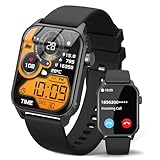
- 【1.83" HD Display & Customizable Watch Faces】Immerse yourself in a vibrant 1.83-inch IPS display, boasting a sharp resolution of 240*284 for crystal-clear visuals. Effortlessly personalize your smart watch with a wide array of customizable watch faces to suit your personal style for every occasion—whether trendy, artistic, or minimalist—ideal for casual, sporty, or professional. Its sleek, modern design complements any outfit, blending technology and fashion seamlessly for everyday wear
- 【120 Sports Modes & Advanced Health Tracking】Our TK29 smart watches for women men come equipped with 120 sports modes, allowing you to effortlessly track a variety of activities such as walking, running, cycling, and swimming. With integrated heart rate and sleep monitors, you can maintain a comprehensive overview of your health, achieve your fitness goals, and maintain a balanced, active lifestyle with ease. Your ideal wellness companion (Note: Step recording starts after exceeding 20 steps)
- 【IP67 Waterproof & Long-Lasting Battery】Designed to keep up with your active lifestyle, this smartwatch features an IP67 waterproof rating, ensuring it can withstand splashes, sweat, and even brief submersion, making it perfect for workouts, outdoor adventures, or rainy days. Its reliable 350mAh battery offering 5-7 days of active use and up to 30 days in standby mode, significantly reducing frequent charging. Ideal for all-day wear, whether you’re at the gym, outdoors, or simply on the go
- 【Stay Connected Anytime, Anywhere】Stay informed and in control with Bluetooth call and music control features. Receive real-time notifications for calls, messages, and social media apps like Facebook, WhatsApp, Twitter, and Instagram directly on your smartwatch. Easily manage calls, control your music playlist, and stay updated without needing to reach for your phone. Perfect for work, workouts, or on-the-go, this watch keeps you connected and never miss important updates wherever you are
- 【Multifunction & Wide Compatibility】Seamlessly handle heart rate monitoring, sleep tracking, and enjoy conveniences like camera/music control, Seamlessly handle heart rate monitoring, sleep tracking, and more-all directly from your wrist. This 1.83 inches HD smartwatch is compatible with iPhone (iOS 9.0+) & Android (5.0+), ensuring smooth daily connectivity and convenience throughout your day. More than just a timepiece, it’s a stylish, all-in-one wearable for smarter, healthier living
A Fitness-First Watch Before Smartwatches Took Over
The Blaze arrived before always-on OLED displays, ECG sensors, blood oxygen tracking, or app ecosystems became expected. Its core focus was fitness basics done reliably: steps, distance, calories, sleep tracking, and continuous heart rate via Fitbit’s PurePulse sensor. GPS was connected rather than built-in, meaning it borrowed location data from your phone during runs.
What mattered then, and still matters now, is that Fitbit’s algorithms were already among the best for casual fitness users. Sleep tracking, automatic activity recognition, and clear weekly trends were strengths in 2016 and remain readable today through the Fitbit app. For beginners, the Blaze never overwhelmed with data, which is something many modern wearables struggle with.
Smart Features That Were Deliberately Limited
Calling the Blaze a smartwatch was always a stretch, and Fitbit knew it. Notifications were basic, with call, text, and calendar alerts displayed on-screen but no replies or voice input. There was no app store, no music storage, and no contactless payments.
Viewed today, those omissions look glaring, but they also explain why some people still tolerate the Blaze. Battery life of around five days was normal in real-world use, far outlasting most budget smartwatches even now. The interface stayed fast and predictable because it was never overloaded with features.
Design Choices That Aged Better Than Expected
A decade later, the Blaze’s design is still polarizing but not obsolete. The square screen and thick borders look dated next to modern Fitbits, yet the physical buttons and angled screen remain practical for workouts. It’s readable outdoors, responsive enough for swipes, and doesn’t rely on finicky touch gestures alone.
Comfort is another quiet strength. At roughly 44 grams without the strap, it’s light enough for sleep tracking while still feeling substantial on the wrist. The interchangeable strap system also means you can dress it up or down, something many newer budget trackers still don’t allow.
Why the Blaze Still Shows Up in Buying Decisions Today
The Blaze survives in conversations largely because of price and purpose. On the used market, it often costs less than a new Inspire or Luxe, yet offers a larger screen and more traditional watch feel. For users who want basic fitness tracking, long battery life, and a simple interface without subscriptions or complexity, that trade-off can make sense.
It also appeals to people stepping back from smartwatch fatigue. Compared to modern wearables that demand constant interaction, updates, and charging, the Blaze feels restrained. That restraint is not for everyone, but for a narrow group of users, it’s exactly the point.
Design, Build Quality, and Wearability: The Blaze’s Modular Watch-Like Approach
What made the Blaze feel different in its own era—and still unusual now—was Fitbit’s decision to treat it less like a sealed gadget and more like a watch head that snapped into a frame. That design philosophy sits directly between fitness tracker and traditional wristwatch, and it defines how the Blaze wears, ages, and holds value today.
A Core Module Surrounded by a Watch Frame
At the heart of the Blaze is a removable central module housing the display, sensors, and electronics. This module clips into a metal or polymer frame that also anchors the strap, giving the Blaze a more traditional watch silhouette than Fitbit’s bands-first designs.
In practice, this meant you could swap frames and straps without tools, changing both the look and feel of the device. While Fitbit discontinued official accessory support years ago, third-party frames and bands are still easy to find, especially on resale marketplaces.
Materials, Finishing, and Perceived Quality
The standard Blaze shipped with an aluminum frame and a soft elastomer strap, and the metal still holds up surprisingly well. It lacks the refined chamfering or bead-blasted finishes you’d see on modern watches, but it doesn’t feel cheap or toy-like.
The screen is protected by a flat glass panel that sits slightly recessed within the frame. It’s not sapphire and will scratch over time, but that recess offers real-world protection against desk knocks and gym equipment.
Dimensions, Weight, and Wrist Presence
Physically, the Blaze is large by tracker standards but moderate by smartwatch norms. The case measures roughly 42 x 33 mm with a thickness around 12 mm, giving it a broad, square footprint without excessive bulk.
At about 44 grams without the strap, it strikes a balance between presence and comfort. It feels more substantial than an Inspire or Charge, yet far lighter than steel-bodied smartwatches, making it wearable for sleep tracking without constant awareness on the wrist.
Straps, Fit, and Long-Term Comfort
The modular strap system remains one of the Blaze’s strongest design decisions. Standard straps taper cleanly into the frame, avoiding the awkward “fitness band” look that dates many older trackers.
Comfort is generally excellent for all-day wear, with the weight distributed across the frame rather than concentrated at the sensor module. Breathability depends on strap choice, and swapping to nylon or perforated silicone makes a noticeable difference for workouts and warm climates.
Buttons, Controls, and Workout Practicality
Unlike touch-only trackers, the Blaze uses physical buttons on both sides of the case. These buttons are shallow but responsive, and they remain usable with sweat, gloves, or cold fingers.
For workouts, this matters more than it seems. Starting, pausing, and ending activities is more reliable than on newer budget trackers that rely entirely on swipes or taps, and that reliability contributes directly to the Blaze’s enduring usability.
Durability and Real-World Aging
The Blaze is not a rugged watch, but it’s tougher than it looks. It handles daily wear, gym use, and light impacts well, provided the glass isn’t abused.
Water resistance is limited to splash and sweat, not swimming, which is a meaningful drawback by modern standards. Still, many used units remain fully functional years later, suggesting the underlying build quality was more conservative than flashy.
How the Design Holds Up in Today’s Market
Viewed through a modern lens, the Blaze’s design feels intentional rather than outdated. It doesn’t chase ultra-thin profiles or edge-to-edge displays, but it offers clarity, stability, and modularity that many entry-level wearables still lack.
For buyers considering a used or refurbished unit, the physical design remains one of the strongest reasons to choose it. The Blaze may not look modern, but it still looks like a watch—and for many users, that distinction continues to matter.
Display, Interface, and Day-to-Day Usability in 2026
Moving from the physical design into daily interaction, the Blaze’s screen and interface define much of how it feels to live with today. This is where its age is most apparent, but also where its original priorities still make sense for certain users.
Display Technology and Readability
The Fitbit Blaze uses a color LCD touchscreen with a 272 x 340 resolution, framed by a thick bezel that feels unmistakably mid-2010s. By modern standards, it’s low-resolution and lacks the deep contrast of OLED panels found on current Fitbits and budget smartwatches.
That said, readability remains a strong point indoors and in most overcast outdoor conditions. Brightness is adequate rather than punchy, and while direct sunlight can wash out colors, text and metrics remain legible with a slight wrist adjustment.
Touch Responsiveness and Gesture Control
Touch response is slower than what users expect in 2026, but it’s consistent and predictable. Swipes register reliably, taps don’t require exaggerated pressure, and the UI rarely misinterprets inputs.
The lack of an always-on display means you rely on wrist-raise or a button press to wake the screen. Wrist-raise works reasonably well for walking and casual movement, but it’s less reliable during workouts or when seated.
User Interface Design and Navigation Logic
Fitbit’s early interface design is simple to the point of austerity. Swiping left or right cycles through core metrics like steps, heart rate, calories, and workouts, while vertical swipes handle notifications and quick actions.
There’s no app ecosystem, no widgets, and no customization beyond watch faces. In 2026, this feels restrictive, but it also means there’s very little learning curve, even for first-time wearable users.
Watch Faces and Customization Limits
Watch face options are basic and largely frozen in time. Most emphasize large numerals and straightforward stat layouts, prioritizing glanceability over style or data density.
Customization is limited to color accents and layout selection, with no third-party faces or complications. For users accustomed to modern Fitbit or Wear OS devices, this will feel like a step back, but minimalists may appreciate the lack of clutter.
Notifications and Smartwatch Functions
The Blaze supports basic smartphone notifications for calls, texts, and app alerts when paired with a compatible phone. Notifications are read-only, displayed as plain text, with no emoji support and no ability to reply or interact.
In daily use, this works best as a passive awareness tool rather than a communication hub. If your expectations are limited to seeing who’s calling or whether a message can wait, it still does the job.
Software Support and Compatibility in 2026
As of 2026, the Blaze remains compatible with the Fitbit app, but it sits firmly in legacy territory. There are no new features, no firmware evolution, and occasional syncing quirks depending on phone OS updates.
Android compatibility tends to be more forgiving than iOS, where background syncing and notification reliability can vary. For prospective buyers, this dependency on aging software support is one of the most important practical considerations.
Rank #2
![Apple Watch Series 11 [GPS 46mm] Smartwatch with Jet Black Aluminum Case with Black Sport Band - M/L. Sleep Score, Fitness Tracker, Health Monitoring, Always-On Display, Water Resistant](https://m.media-amazon.com/images/I/312K597M2uL._SL160_.jpg)
- HYPERTENSION NOTIFICATIONS — Apple Watch Series 11 can spot signs of chronic high blood pressure and notify you of possible hypertension.*
- KNOW YOUR SLEEP SCORE — Sleep score provides an easy way to help track and understand the quality of your sleep, so you can make it more restorative.
- EVEN MORE HEALTH INSIGHTS — Take an ECG anytime.* Get notifications for a high and low heart rate, an irregular rhythm,* and possible sleep apnea.* View overnight health metrics with the Vitals app* and take readings of your blood oxygen.*
- STUNNING DESIGN — Thin and lightweight, Series 11 is comfortable to wear around the clock — while exercising and even when you’re sleeping, so it can help track your key metrics.
- A POWERFUL FITNESS PARTNER — With advanced metrics for all your workouts, plus features like Pacer, Heart Rate Zones, training load, Workout Buddy powered by Apple Intelligence from your nearby iPhone,* and more. Series 11 also comes with three months of Apple Fitness+ free.*
Battery Impact of the Display Experience
The modest LCD and restrained feature set contribute to respectable battery life even today. Most well-maintained units still deliver four to five days of use, assuming notifications are enabled and workouts are tracked a few times per week.
There’s no fast charging, and battery degradation varies widely on the used market. Still, compared to modern budget smartwatches that struggle to clear two days, the Blaze’s efficiency remains quietly competitive.
Everyday Usability for Modern Lifestyles
In 2026, the Blaze works best as a focused fitness watch with light smart features rather than a full smartwatch. It handles timekeeping, activity tracking, and basic alerts without demanding constant interaction.
For users who value simplicity, physical buttons, and a screen that shows only what matters, the Blaze remains usable despite its age. Its limitations are obvious, but so is its intent, and that clarity continues to define the day-to-day experience.
Fitness and Activity Tracking: What the Blaze Still Does Well (and Where It Falls Short)
With everyday usability established, the Blaze’s long-term relevance really hinges on its core purpose: tracking movement, workouts, and basic health metrics. This is where its age shows most clearly, but also where Fitbit’s early strengths still carry surprising weight.
Daily Activity Tracking: Steps, Calories, and Movement
At its foundation, the Blaze remains a reliable step counter. In side-by-side testing against newer Fitbit models and phone-based tracking, step counts tend to land within an acceptable margin, especially for walking and general daily movement.
Calories burned are estimated using Fitbit’s older algorithms, which rely heavily on heart rate and activity type. They’re directionally useful rather than precise, but for users focused on trends over time instead of absolute accuracy, the data still holds value.
The hourly movement reminders and daily step goals feel dated in presentation but remain effective nudges. If your fitness routine revolves around staying generally active rather than optimizing performance, the Blaze still covers the basics competently.
Heart Rate Monitoring: Consistent, but Not Sophisticated
The Blaze uses Fitbit’s early-generation PurePulse optical heart rate sensor. For steady-state activities like walking, light jogging, or gym machines, readings are reasonably stable and align closely with chest strap averages after warm-up.
Where it struggles is during rapid intensity changes or high-impact workouts. Interval training, HIIT, and weightlifting often produce delayed or smoothed readings that lag behind real exertion.
There’s also no ECG, no irregular rhythm detection, and no advanced heart health insights. Compared to modern Fitbits or even entry-level competitors, this is strictly baseline heart rate tracking without diagnostic ambition.
Exercise Modes and Workout Tracking
The Blaze includes a limited but practical set of exercise modes: Run, Bike, Weights, Treadmill, and a few general-purpose options. These can be launched manually from the watch, with real-time stats displayed clearly on the square LCD.
Auto exercise recognition exists, but it’s less refined than on later Fitbit models. Walks are detected fairly reliably, while other activities often require manual correction in the app afterward.
For casual workouts, the experience is frictionless and unintimidating. For structured training plans or sport-specific metrics, the Blaze feels immediately out of its depth.
Connected GPS: Functional, but Inconvenient by Modern Standards
One of the Blaze’s headline features at launch was connected GPS, relying on a paired smartphone for route tracking. When the phone connection is stable, distance and pace data are accurate enough for recreational running or walking.
The downside is obvious in 2026. You must carry your phone, keep Bluetooth stable, and tolerate occasional dropouts that fragment route maps.
Compared to today’s watches with onboard multi-band GPS, this feels clumsy. Still, for users already running with a phone, it remains usable rather than obsolete.
Sleep Tracking: Simple, Trend-Focused, and Still Useful
Sleep tracking is one of the Blaze’s quiet strengths. It automatically detects sleep duration and provides time-in-bed, awakenings, and basic sleep stage estimates via the Fitbit app.
There’s no Sleep Score, no readiness metrics, and no recovery insights layered on top. What you get instead is long-term consistency, which can be valuable for users tracking habits rather than chasing optimization.
Comfort plays a role here as well. The Blaze’s relatively slim case and soft elastomer strap make overnight wear tolerable, though the sharp-edged frame is more noticeable than on modern rounded designs.
What’s Missing: Modern Health Metrics You Won’t Get
From a 2026 perspective, the Blaze lacks nearly every health feature users now take for granted. There’s no SpO2 tracking, no skin temperature trends, no stress scores, and no readiness or recovery metrics.
Women’s health tracking exists only at the app level and requires manual input. There’s also no fall detection, no safety alerts, and no wellness coaching beyond basic goal reminders.
These omissions don’t make the Blaze unusable, but they firmly define its ceiling. It’s a tracker for activity awareness, not holistic health monitoring.
Accuracy Versus Expectations on the Used Market
Accuracy on any used Blaze depends heavily on unit condition. Optical heart rate sensors can degrade, straps may affect fit, and battery wear can interrupt longer activity tracking sessions.
Buyers considering refurbished or secondhand units should temper expectations accordingly. The Blaze performs best when used consistently, worn snugly, and treated as a trend-tracking tool rather than a precision instrument.
For beginners or budget-conscious users upgrading from a basic band, the experience can still feel like a meaningful step up. For anyone coming from a modern smartwatch, the limitations will be immediately apparent.
Heart Rate Tracking, Health Metrics, and Accuracy Expectations Today
The Blaze sits at an interesting inflection point in Fitbit’s history, arriving just as optical heart rate was becoming mainstream but before today’s multi-sensor health arms race. That context matters, because what it measures well has more to do with consistency and habit tracking than medical-grade insight.
PurePulse Heart Rate: Continuous, but Generationally Limited
The Blaze uses Fitbit’s first-generation PurePulse optical heart rate sensor, built around green LEDs and basic motion compensation. In its day, this enabled always-on heart rate without a chest strap, which was a major usability win for casual users.
In 2026 terms, the sensor is slow to respond to rapid heart rate changes and struggles during high-intensity intervals or activities with lots of wrist movement. Steady-state cardio like walking, elliptical sessions, and casual cycling remain its strongest use cases.
Fit and strap tension matter more than with modern trackers. The Blaze’s angular case and flatter caseback make correct positioning essential, especially for users with smaller wrists or looser aftermarket bands.
Resting Heart Rate and Long-Term Trends
Where the Blaze still holds up is resting heart rate tracking over time. When worn consistently, it can establish a reliable baseline and show gradual changes tied to fitness, illness, or lifestyle shifts.
This works because Fitbit’s strength has always been data smoothing and trend visualization rather than raw sensor precision. Even with older hardware, the app can still surface meaningful long-term patterns.
However, don’t expect granular insights like heart rate variability trends or recovery indicators. Those simply weren’t part of the Blaze’s data model, and software updates can’t bridge that gap.
Workout Heart Rate Zones and Real-World Use
The Blaze supports basic heart rate zones during tracked workouts, displayed on-screen in real time. This is useful for beginners learning effort levels, especially during treadmill or gym sessions.
Accuracy drops during interval training, weightlifting, or outdoor runs with frequent pace changes. Spikes and dips are common, and the lack of onboard GPS further limits performance analysis.
For users focused on calorie burn estimates and general effort awareness, the data is serviceable. For training-driven users, it will feel blunt and sometimes misleading.
Rank #3

- Bluetooth Call and Message Alerts: Smart watch is equipped with HD speaker, after connecting to your smartphone via bluetooth, you can answer or make calls, view call history and store contacts through directly use the smartwatch. The smartwatches also provides notifications of social media messages (WhatsApp, Twitter, Facebook, Instagram usw.) So that you will never miss any important information.
- Smart watch for men women is equipped with a 320*380 extra-large hd full touch color screen, delivering exceptional picture quality and highly responsive touch sensitivity, which can bring you a unique visual and better interactive experience, lock screen and wake up easily by raising your wrist. Though “Gloryfit” app, you can download more than 102 free personalised watch faces and set it as your desktop for fitness tracker.
- 24/7 Heart Rate Monitor and Sleep Tracker Monitor: The fitness tracker watch for men has a built-in high-performance sensor that can record our heart rate changes in real time. Monitor your heart rate 26 hours a day and keep an eye on your health. Synchronize to the mobile phone app"Gloryfit", you can understand your sleep status(deep /light /wakeful sleep) by fitness tracker watch develop a better sleep habit and a healthier lifestyle.
- IP68 waterproof and 110+ Sports Modes: The fitness tracker provides up to 112+ sports modes, covering running, cycling, walking, basketball, yoga, football and so on. Activity trackers bracelets meet the waterproof requirements for most sports enthusiasts' daily activities, such as washing hands or exercising in the rain, meeting daily needs (note: Do not recommended for use in hot water or seawater.)
- Multifunction and Compatibility: This step counter watch also has many useful functions, such as weather forecast, music control, sedentary reminder, stopwatch, alarm clock, timer, track female cycle, screen light time, find phone etc. The smart watch with 2 hrs of charging, 5-7 days of normal use and about 30 days of standby time. This smart watches for women/man compatible with ios 9.0 and android 6.2 and above devices.
Calorie Burn and Activity Metrics: Directionally Correct, Not Surgical
Calorie estimates on the Blaze combine heart rate, activity type, duration, and user profile data. As with most wearables, the numbers are best viewed as comparative rather than absolute.
Over time, trends like “more active than last month” or “higher burn on cardio days” remain useful. Day-to-day precision is far less reliable, especially if heart rate tracking is inconsistent.
Step counting, floors climbed, and active minutes remain broadly accurate, though the altimeter is less sensitive than modern implementations. These metrics still support basic goal-setting and accountability.
Health Metrics You Simply Won’t See
It’s important to be explicit about what the Blaze cannot measure. There’s no blood oxygen tracking, no skin temperature sensing, and no heart rate variability analysis.
There are also no alerts for irregular heart rhythms or cardio fitness estimates like VO2 max. These absences reflect both hardware limitations and Fitbit’s earlier focus on activity rather than health diagnostics.
For users comparing the Blaze to even entry-level modern trackers, this is the most significant point of divergence.
Accuracy Expectations for Buyers in 2026
Anyone considering a Blaze today should recalibrate what “accurate” means in context. This is not a device for optimizing performance, managing health conditions, or extracting deep physiological insight.
It is accurate enough for awareness: how active you are, how often you move, whether your resting heart rate trends up or down, and how your sleep and activity patterns evolve over time.
If you approach the Blaze as a lifestyle tracker rather than a health instrument, its limitations become easier to accept. The trouble starts only when it’s asked to behave like a modern smartwatch or advanced fitness watch, which it was never designed to be.
Smartwatch Features and App Ecosystem: How ‘Smart’ the Blaze Really Is
If the previous section framed the Blaze as a lifestyle tracker rather than a health instrument, its smartwatch side reinforces that positioning even more clearly. The Blaze was never meant to compete head-on with the Apple Watch or Android Wear devices of its era, let alone today’s budget smartwatches.
What Fitbit offered instead was a controlled, simplified layer of “smart” features designed to sit lightly on top of fitness tracking. That design philosophy still defines the experience in 2026, for better and for worse.
Notifications: Basic, Reliable, and Frozen in Time
The Blaze supports smartphone notifications for calls, texts, calendar events, and app alerts, delivered via Bluetooth from your phone. You can see who’s calling or read the first line or two of a message, but interaction stops there.
There’s no replying, no quick responses, and no on-device actions. Notifications are strictly glanceable, functioning more like a digital pager than a communications tool.
In daily use, reliability is actually decent once paired, but the experience feels stark compared to even entry-level trackers today. If your expectation is simply to not miss a call while your phone is in a bag or across the room, it still works.
Apps: Technically Present, Practically Limited
Fitbit marketed the Blaze as supporting apps, but this needs heavy qualification. The “apps” are essentially lightweight widgets like Weather, Timer, Alarm, FitStar (now defunct), and basic exercise shortcuts.
There is no true third-party app ecosystem in the modern sense. You won’t find Spotify, Google Maps, messaging clients, or productivity tools, and you never could.
Even when it launched, Fitbit’s app platform was intentionally constrained to preserve battery life and simplicity. In 2026, that limitation feels absolute rather than philosophical.
Watch Faces and Customization: Surface-Level Personalization
One area where the Blaze still offers some enjoyment is watch face customization. Users can choose between digital and analog faces, some with fitness stats embedded, others focused on a cleaner clock aesthetic.
The color touchscreen helps here, and the rectangular display—measuring roughly 1.25 inches diagonally—still looks presentable. Resolution and brightness are modest by modern standards, but indoors it remains perfectly readable.
Customization stops at faces and bands, though. There’s no deep layout control, no complication system, and no modular redesign like you’d see on newer Fitbit models.
Music Controls, But No Music
The Blaze includes basic music controls for your phone, allowing play, pause, skip, and volume adjustment. This works with most standard music apps via Bluetooth and remains one of the more useful “smart” features during workouts.
However, there’s no onboard storage, no streaming support, and no offline playback. You still need your phone nearby at all times.
Compared to modern trackers that now offer Spotify controls or limited offline syncing, this feels dated but not useless. It simply reinforces the Blaze’s dependence on the phone for anything beyond fitness tracking.
What’s Missing Matters More Than What’s Included
There’s no GPS, no NFC for contactless payments, no voice assistant, and no microphone or speaker. These omissions dramatically shape how “smart” the Blaze feels in real-world use.
Navigation, tap-to-pay, voice replies, and hands-free interaction are all off the table. Even many sub-$100 trackers now offer at least one of these features.
The Blaze also lacks Wi‑Fi, relying entirely on Bluetooth, which further limits background syncing and independence.
Fitbit App Ecosystem: The Real Smart Layer Lives on Your Phone
The Fitbit smartphone app has always been where the Blaze does its real work. Activity logs, sleep breakdowns, heart rate trends, goals, and social challenges all live here.
In 2026, the app itself remains modern and polished, but Blaze owners are accessing a reduced subset of features. Advanced health metrics, readiness scores, stress tracking, and newer insights simply don’t populate due to hardware limits.
Still, for basic dashboards, historical trends, and goal accountability, the app does a lot of heavy lifting. This is where the Blaze feels more capable than its on-device experience suggests.
Compatibility and Ongoing Support Realities
The Blaze remains compatible with current versions of iOS and Android through the Fitbit app, but it exists in maintenance mode. Firmware updates are rare to nonexistent, and no new features are coming.
That stability cuts both ways. What works today will likely keep working, but nothing will improve or expand.
For refurbished or second-hand buyers, this predictability can actually be reassuring, as long as expectations are firmly grounded.
How “Smart” Is Smart Enough in 2026?
Judged as a smartwatch, the Blaze is undeniably limited. It doesn’t replace your phone, streamline communication, or meaningfully automate daily tasks.
Judged as a fitness tracker with a color screen and basic notifications, it still clears a low but defined bar. The trouble only arises when it’s evaluated by modern smartwatch standards rather than the hybrid category it helped define.
Understanding that distinction is key to deciding whether the Blaze’s version of “smart” still fits into your life today.
Battery Life, Charging, and Long-Term Ownership Realities
If the Blaze’s software experience feels frozen in time, its battery behavior reinforces that sense of predictability. Power management was one of Fitbit’s historical strengths, and this is an area where the Blaze still holds up better than you might expect, with some important caveats for 2026 buyers.
Rank #4
![Apple Watch Series 11 [GPS 42mm] Smartwatch with Rose Gold Aluminum Case with Light Blush Sport Band - S/M. Sleep Score, Fitness Tracker, Health Monitoring, Always-On Display, Water Resistant](https://m.media-amazon.com/images/I/31J+F-pXaWL._SL160_.jpg)
- HYPERTENSION NOTIFICATIONS — Apple Watch Series 11 can spot signs of chronic high blood pressure and notify you of possible hypertension.*
- KNOW YOUR SLEEP SCORE — Sleep score provides an easy way to help track and understand the quality of your sleep, so you can make it more restorative.
- EVEN MORE HEALTH INSIGHTS — Take an ECG anytime.* Get notifications for a high and low heart rate, an irregular rhythm,* and possible sleep apnea.* View overnight health metrics with the Vitals app* and take readings of your blood oxygen.*
- STUNNING DESIGN — Thin and lightweight, Series 11 is comfortable to wear around the clock — while exercising and even when you’re sleeping, so it can help track your key metrics.
- A POWERFUL FITNESS PARTNER — With advanced metrics for all your workouts, plus features like Pacer, Heart Rate Zones, training load, Workout Buddy powered by Apple Intelligence from your nearby iPhone,* and more. Series 11 also comes with three months of Apple Fitness+ free.*
Real-World Battery Life: Then vs. Now
When new, Fitbit rated the Blaze for up to five days of use, a figure that was realistic with heart rate tracking enabled and a handful of workouts per week. In daily wear, most owners landed closer to four days, depending on screen brightness and notification volume.
Years later, battery aging becomes the dominant variable. Well-kept units often deliver two to three days of runtime, while heavily used examples can dip closer to 36 hours, especially if continuous heart rate tracking and frequent notifications are enabled.
Compared to modern Fitbits like the Charge series or Inspire line, the Blaze’s endurance no longer looks exceptional, but it still outpaces most budget smartwatches with always-on color displays. For users who dislike nightly charging, that alone may keep it in the conversation.
Charging System and Practical Friction
The Blaze uses a proprietary snap-in charging cradle that aligns via exposed contacts on the back of the watch body. It’s secure and relatively fast for its era, typically taking around 1 to 2 hours for a full charge from near empty.
The downside is long-term logistics. Replacement chargers are no longer officially sold by Fitbit, so second-hand buyers are reliant on third-party cables of mixed quality, and losing the original charger can become an unnecessary headache.
There’s also no form of fast charging by modern standards. A quick 10-minute top-up won’t rescue you before a workout, so charging needs to be a planned, routine behavior rather than an opportunistic one.
Battery Degradation and Replacement Reality
Unlike traditional watches with serviceable movements or even some modular smartwatches, the Blaze’s battery is sealed and not user-replaceable. Official battery replacement programs never existed, and third-party replacements require disassembly that most owners will not attempt.
This means battery health directly dictates the remaining lifespan of the device. A Blaze with poor endurance isn’t economically sensible to repair, especially given the low resale and refurbished pricing in 2026.
For used buyers, battery condition should be treated as a primary purchasing factor, not a footnote. If the seller can’t demonstrate multi-day battery life, the value proposition collapses quickly.
Always-On Display Absence: A Hidden Advantage
The Blaze lacks an always-on display, relying instead on wrist raise and tap-to-wake gestures. While this feels dated compared to newer AMOLED Fitbits, it plays a significant role in preserving battery life.
In practice, the gesture detection remains surprisingly reliable, and the LCD panel, while dimmer and less contrast-rich than modern screens, sips power conservatively. For users coming from an Apple Watch or Wear OS device, the reduced screen activity can feel refreshingly low-maintenance.
This design choice aligns with the Blaze’s original hybrid positioning and continues to pay dividends for battery longevity, even as the hardware ages.
Long-Term Ownership Costs and Wear-and-Tear
From a durability standpoint, the Blaze’s aluminum frame holds up well, and cosmetic wear tends to be the bigger issue rather than structural failure. The glass can scratch, but it’s no more fragile than contemporary budget trackers.
Straps are another consideration. The Blaze uses a proprietary band system, and while third-party options remain available, quality varies significantly. Worn or stiff bands can impact comfort and skin contact, which in turn affects heart rate accuracy and daily wearability.
Over years of ownership, the real cost isn’t money but inconvenience. Managing aging batteries, sourcing chargers, and living within static software constraints requires a tolerance for friction that modern devices largely eliminate.
Who Battery Reality Favors in 2026
The Blaze’s battery profile still works best for users with simple routines: step tracking, casual workouts, and passive heart rate monitoring without constant screen interaction. It’s less forgiving for heavy notification users or those expecting smartwatch-like engagement.
For existing owners with healthy batteries, there’s little immediate pressure to upgrade purely on endurance grounds. For buyers considering a refurbished unit, battery life is the single most important differentiator between a bargain and a frustration.
Understanding these ownership realities upfront is essential. The Blaze can still be a dependable companion, but only if its aging power system aligns with your expectations and tolerance for legacy hardware.
Fitbit Blaze vs Modern Alternatives: New Fitbits, Budget Smartwatches, and Used Options
Once you accept the Blaze’s battery aging, static software, and hybrid limitations, the next logical question is what you gain or lose by choosing it over something newer. In 2026, the Blaze no longer competes head-on with current smartwatches, but it still occupies a narrow space between basic trackers and full-featured wearables.
The comparison is less about specs and more about philosophy: simplicity versus capability, legacy reliability versus modern convenience.
Compared to New Fitbits: Charge, Inspire, and Versa Lines
Against modern Fitbit trackers like the Inspire 3 or Charge 6, the Blaze immediately shows its age in health depth. Newer Fitbits add SpO2 trends, skin temperature variation, stress scoring, and far more refined sleep analytics, all powered by updated sensors and machine-learning models.
Daily usability is also dramatically improved on newer models. AMOLED displays are brighter outdoors, touch response is faster, and device navigation feels frictionless compared to the Blaze’s button-driven, menu-heavy interface.
That said, the Blaze still feels more watch-like on the wrist than most current trackers. Its square aluminum case, physical presence, and swappable frame-and-band system give it a visual weight that the slim Inspire and Charge models lack, which still matters to users who want something that looks like a watch rather than a band.
Price changes the equation. A used Blaze often costs less than half of a new Charge, and for basic step tracking, heart rate monitoring, and simple workouts, the day-to-day results are not radically different. The trade-off is future-proofing, since newer Fitbits continue to receive software updates while the Blaze is frozen in time.
Compared to Modern Fitbit Smartwatches: Versa and Sense
When placed next to a Versa 4 or Sense 2, the Blaze’s hybrid nature becomes more obvious. Modern Fitbit smartwatches offer GPS, richer notifications, on-device workouts, and deeper integration with Fitbit Premium insights.
Comfort is another differentiator. Newer Versa models are thinner, lighter, and better balanced on smaller wrists, whereas the Blaze’s thicker case and sharper edges can feel dated during sleep or all-day wear.
However, simplicity can still be a virtue. The Blaze avoids many of the background processes and constant screen wake-ups that shorten battery life on newer Fitbit watches. For users who found Versa or Sense models overwhelming or distracting, the Blaze’s limited scope can feel calming rather than restrictive.
Compared to Budget Smartwatches from Xiaomi, Amazfit, and Others
The strongest competition for the Blaze today comes not from Fitbit, but from sub-$100 smartwatches by brands like Amazfit, Redmi, and Huawei. These devices offer color AMOLED screens, multi-band GPS, multi-week battery life, and dozens of sport modes at aggressive prices.
On paper, the Blaze cannot compete. Its LCD screen looks dated, GPS requires a phone, and its fitness metrics are far less granular than modern budget offerings.
Where the Blaze still holds an edge is software maturity and ecosystem stability. Fitbit’s app remains more polished than many budget-brand platforms, with clearer trends, fewer translation quirks, and more intuitive data presentation. For beginners, that clarity can outweigh raw feature count.
Build quality also deserves mention. The Blaze’s aluminum frame and solid button still feel robust compared to the plastic-heavy construction common in cheaper smartwatches, especially after years of real-world wear.
Compared to Other Used or Refurbished Wearables
For buyers shopping used, the Blaze competes with older Apple Watches, early Samsung Galaxy Watches, and previous-generation Fitbits like the Ionic or Versa 2. Each comes with trade-offs.
An older Apple Watch offers vastly superior smartwatch functionality but demands daily charging and ongoing iPhone compatibility considerations. Early Galaxy Watches bring better screens and rotating bezels but suffer from declining software support.
Within Fitbit’s own back catalog, the Blaze remains one of the simplest and most durable options. It lacks GPS and advanced sensors, but it also avoids some of the battery degradation and screen burn-in issues seen on early AMOLED Fitbit models.
Who the Blaze Still Makes Sense For
In 2026, the Fitbit Blaze only makes sense for a very specific type of user. It works best for someone who wants basic fitness tracking, minimal notifications, and a watch-like form factor without paying modern smartwatch prices.
It also suits users who value long battery intervals over features, and who are comfortable managing legacy hardware quirks like aging batteries and discontinued software.
💰 Best Value
![Apple Watch Series 11 [GPS 42mm] Smartwatch with Jet Black Aluminum Case with Black Sport Band - S/M. Sleep Score, Fitness Tracker, Health Monitoring, Always-On Display, Water Resistant](https://m.media-amazon.com/images/I/31ybzrJZckL._SL160_.jpg)
- HYPERTENSION NOTIFICATIONS — Apple Watch Series 11 can spot signs of chronic high blood pressure and notify you of possible hypertension.*
- KNOW YOUR SLEEP SCORE — Sleep score provides an easy way to help track and understand the quality of your sleep, so you can make it more restorative.
- EVEN MORE HEALTH INSIGHTS — Take an ECG anytime.* Get notifications for a high and low heart rate, an irregular rhythm,* and possible sleep apnea.* View overnight health metrics with the Vitals app* and take readings of your blood oxygen.*
- STUNNING DESIGN — Thin and lightweight, Series 11 is comfortable to wear around the clock — while exercising and even when you’re sleeping, so it can help track your key metrics.
- A POWERFUL FITNESS PARTNER — With advanced metrics for all your workouts, plus features like Pacer, Heart Rate Zones, training load, Workout Buddy powered by Apple Intelligence from your nearby iPhone,* and more. Series 11 also comes with three months of Apple Fitness+ free.*
For anyone seeking advanced health metrics, strong smartwatch features, or guaranteed long-term support, modern alternatives are clearly better. The Blaze is no longer competitive in the mainstream, but as a low-cost, low-distraction fitness watch, it still has a narrow but legitimate place in today’s wearable landscape.
Who the Fitbit Blaze Still Makes Sense For (and Who Should Avoid It)
Seen through a 2026 lens, the Fitbit Blaze sits firmly in legacy territory, but that doesn’t automatically make it obsolete. Its usefulness now depends almost entirely on expectations, tolerance for aging tech, and the price paid on the used or refurbished market.
This is not a watch you buy to explore what modern wearables can do. It is a watch you buy because you already know what you want it to do, and what you’re happy to live without.
Beginner Fitness Users Who Want Simplicity
The Blaze still works for first-time fitness tracker users who want step counts, basic heart-rate tracking, sleep logging, and simple activity modes without drowning in metrics. The interface is straightforward, the touchscreen is readable indoors and outdoors, and the Fitbit app still presents trends clearly for casual users.
There’s no GPS, no training load, and no readiness scoring, but that simplicity can actually reduce friction for beginners. For someone who just wants to move more and see progress over weeks rather than obsess over data points, the Blaze remains approachable.
Users Who Prioritize Battery Life Over Features
Even with natural battery aging, most well-kept Blaze units still manage several days between charges. That alone sets it apart from older Apple Watches and many budget smartwatches that demand daily charging.
The lack of a high-resolution AMOLED screen, constant background apps, or GPS works in the Blaze’s favor here. If charging anxiety is a bigger concern than feature depth, the Blaze’s restrained design still pays dividends.
Watch-Like Wearers Who Dislike “Gadget” Aesthetics
Physically, the Blaze remains one of Fitbit’s most watch-like designs. The aluminum frame, raised display module, and interchangeable bands give it more wrist presence than band-style trackers and fewer visual distractions than modern smartwatches.
It wears comfortably for most wrist sizes, with a balanced weight and a case profile that doesn’t feel toy-like. For users who want something that looks closer to a traditional digital watch than a mini smartphone, the Blaze still lands in a sweet spot.
Budget-Conscious Buyers Shopping Used or Refurbished
At the right price, typically well under modern entry-level smartwatch territory, the Blaze can still make financial sense. Its build quality has aged better than many cheap new devices, especially ultra-low-cost smartwatches with weak software and unreliable sensors.
As long as buyers accept discontinued hardware realities, including no warranty and potential battery wear, the value equation can still work. The key is paying legacy prices, not nostalgia premiums.
Who Should Avoid the Fitbit Blaze Entirely
Anyone seeking advanced health tracking should look elsewhere immediately. There’s no blood oxygen monitoring, no ECG, no skin temperature trends, and no meaningful recovery or stress analysis by modern standards.
Smartwatch users will also find the Blaze extremely limited. Notifications are basic, app support is minimal, and there’s no voice assistant, contactless payments, or rich third-party ecosystem to speak of.
Users Concerned About Long-Term Support and Compatibility
While the Fitbit app remains stable, the Blaze itself is long discontinued, and future compatibility is never guaranteed. Software updates are effectively frozen, and syncing quirks or account changes may eventually impact usability.
iPhone and Android users who want assurance that their device will remain fully supported for years should avoid legacy hardware entirely. The Blaze works today, but it lives on borrowed time.
Performance-Oriented Athletes and Data-Driven Users
Runners, cyclists, and structured training enthusiasts will quickly hit the Blaze’s ceiling. Without built-in GPS, advanced metrics, or detailed workout analysis, it simply can’t support serious performance tracking.
Even entry-level modern Fitbits or budget sports watches outperform the Blaze in this area. If fitness is a central hobby rather than a lifestyle nudge, this is the wrong tool for the job.
Style-Focused Buyers Expecting Modern Fit and Finish
Despite its aluminum construction, the Blaze’s display resolution, bezels, and UI clearly show their age. Compared to newer Fitbits or contemporary smartwatches, it lacks visual polish and smoothness.
Those who care about screen quality, fluid animations, and refined materials will likely be disappointed. The Blaze looks solid, but it no longer looks modern.
Verdict: Is the Fitbit Blaze Worth Buying or Using Today?
Taken as a whole, the Fitbit Blaze sits firmly in legacy territory, but that does not automatically make it obsolete. Its relevance today depends entirely on expectations, price, and whether you see it as a basic activity companion rather than a modern smartwatch or serious training tool.
The Blaze was never meant to be cutting-edge, and judged by 2026 standards, it clearly isn’t. Yet its core strengths—simplicity, comfort, and Fitbit’s familiar ecosystem—still hold a narrow but legitimate appeal.
When the Fitbit Blaze Still Makes Sense
The Blaze can still work for casual users who want step tracking, basic heart rate data, sleep monitoring, and gentle reminders to move. For someone upgrading from no wearable at all, it remains easy to understand and unintimidating.
It also makes sense for users already embedded in the Fitbit app who value long-term trends over advanced metrics. Even with frozen software, historical data, daily activity summaries, and goal tracking continue to function reliably.
Used as a daily wear device, the Blaze remains comfortable thanks to its lightweight aluminum frame and flexible strap system. Battery life of four to five days, assuming reasonable battery health, is still respectable compared to many modern smartwatches.
Buying One Today: Price Is Everything
The Fitbit Blaze is only worth considering at true legacy pricing. That generally means inexpensive used or refurbished units where expectations are calibrated to age, not original retail positioning.
Paying anything close to the cost of a modern Fitbit Inspire, Charge, or Versa model is a mistake. Newer devices offer better sensors, sharper displays, stronger app support, and far more future-proof software.
Battery condition should be treated as the deciding factor when buying used. A worn battery can quickly turn a “good deal” into an exercise in frustration.
Using One You Already Own
If you already have a working Fitbit Blaze, there is little reason to abandon it unless your needs have changed. As a passive lifestyle tracker, it remains dependable and unobtrusive.
The Blaze still excels at what Fitbit originally did best: encouraging consistent movement, visualizing daily habits, and promoting awareness rather than optimization. For many users, that is still enough.
That said, it is wise to mentally prepare for eventual compatibility issues. The Blaze works today, but it should be viewed as a stopgap, not a long-term platform.
How It Stacks Up Against Modern Alternatives
Compared to newer Fitbits, the Blaze feels slow, visually dated, and limited in health insights. Even entry-level models now include SpO2 tracking, better sleep analysis, onboard GPS options, and smoother interfaces.
Against budget smartwatches, the Blaze loses on features but often wins on comfort and Fitbit’s cleaner app experience. It remains more focused than many cheap, feature-stuffed alternatives with poor software support.
In short, modern devices offer more capability, but not always more clarity. The Blaze’s appeal lies in its restraint.
Final Recommendation
The Fitbit Blaze is not a smart buy for most people shopping fresh in today’s market. Its aging hardware, frozen software, and limited health features make it a niche option rather than a competitive one.
However, at the right price, and for the right user, it can still deliver meaningful value. As a simple, comfortable activity tracker with a familiar ecosystem, the Blaze remains usable—even if it is unmistakably a product of its time.
If you view it as a basic fitness watch with smartwatch styling rather than a modern smartwatch, expectations align and disappointment is avoided. The Fitbit Blaze is no longer relevant for where wearables are going, but it can still serve where fitness habits quietly begin.