If you have been waiting for the moment when the Fitbit Versa 4 finally makes sense on price alone, this is it. At $119.95, the Versa 4 has dropped to a level that fundamentally changes how it should be judged in today’s smartwatch market, especially for buyers who want reliable fitness tracking without stepping into Apple Watch or Garmin pricing.
This isn’t just a “nice discount” or seasonal promo noise. It is a price that repositions the Versa 4 from an awkwardly priced midrange option into one of the strongest value-focused fitness smartwatches you can buy right now, provided you understand what you are and are not getting.
What follows puts that $119.95 figure into real context: how the Versa 4 has been priced historically, why this drop is genuinely significant, and how the value equation shifts when you compare it to current alternatives rather than its launch promises.
Launch pricing vs real-world value erosion
The Fitbit Versa 4 launched at $229.95, squarely targeting the mainstream smartwatch buyer who wanted a lighter, simpler alternative to Apple Watch and Galaxy Watch models. At that price, it was expected to compete not just on health tracking, but also on app support, smart features, and perceived longevity within Google’s evolving Fitbit ecosystem.
🏆 #1 Best Overall

- Get inspired and stay accountable with Versa 4 + Premium - learn when to work out or recover, see real-time stats during exercise and find new ways to keep your routine fresh and fun.Operating temperature: -14° to 113°F. Radio transceiver: Bluetooth 5.0.Maximum operating altitude : 28,000 feet (8,534 m).
- Built for better fitness results: Daily Readiness Score(1), built-in GPS and workout intensity map, Active Zone Minutes, all-day activity tracking and 24/7 heart rate, 40+ exercise modes and automatic exercise tracking, water resistant to 50 meters
- Tools to measure and improve sleep quality: personalized Sleep Profile(1), daily sleep stages & Sleep Score, smart wake alarm and do not disturb mode. Compatibility-Apple iOS 15 or higher, Android OS 9 or higher
- Maintain a healthy body and mind: daily Stress Management Score, reflection logging, SpO2(2), health metrics dashboard(3), guided breathing sessions, menstrual health tracking and mindfulness content
- Designed for fitness & beyond: on-wrist Bluetooth calls, texts and phone notifications(4), customizable clock faces, Fitbit Pay(5), Amazon Alexa built-in(6), Google Wallet & Maps (Google Maps Android only, coming Spring 2023 to iOS), 6+ day battery(7)
In practice, the Versa 4 struggled to justify that launch price. The removal of third-party apps, limited smartwatch interactions, and a stronger emphasis on fitness over “smart” features made it feel expensive next to similarly priced rivals, especially as Apple Watch SE discounts became more common.
This slow burn of value erosion is important, because it explains why earlier discounts into the $150–$170 range never quite felt compelling enough. The Versa 4 was cheaper, but not cheap enough to reset expectations.
Why $119.95 is meaningfully different from previous discounts
Dropping below $120 is not just psychological; it is strategic. This price undercuts the Apple Watch SE by a wide margin, sits comfortably below most Galaxy Watch models even on sale, and aligns more closely with entry-level Garmin fitness watches that often lack a touchscreen or AMOLED display.
Historically, the lowest widely available price for the Versa 4 hovered around the $130–$140 mark, often briefly and with limited stock. $119.95 represents the first time the Versa 4 has consistently landed in true budget smartwatch territory without compromising new-in-box status or warranty coverage.
At this level, buyers are no longer asking whether it competes feature-for-feature with higher-end smartwatches. Instead, the question becomes whether it delivers dependable health tracking, strong battery life, and day-to-day comfort for less than the cost of a fitness tracker plus upgrades.
What you are effectively paying for at this price
At $119.95, the Versa 4’s core strengths finally align with its cost. You are paying for Fitbit’s mature health platform, including accurate heart rate tracking, sleep staging, SpO2 monitoring, stress metrics, and built-in GPS, all housed in a lightweight aluminum case that is comfortable for 24/7 wear.
Battery life remains a standout at this price, with real-world use stretching to five to six days depending on GPS usage, something neither Apple Watch nor Galaxy Watch can approach. The 40mm case size, slim profile, and soft silicone strap make it easy to forget on the wrist, which directly benefits sleep and recovery tracking.
You are not paying for a robust app ecosystem, deep notification interactivity, or cellular options. At $119.95, those omissions feel like conscious trade-offs rather than deal-breakers.
How this price reframes comparisons with Apple, Samsung, and Garmin
Against the Apple Watch SE, the Versa 4 clearly loses on app depth, performance, and long-term software ambition. But it wins decisively on battery life, simplicity, and compatibility with both Android and iOS, without forcing you into daily charging.
Compared to Galaxy Watch models, especially Wear OS-based options, the Versa 4 offers a calmer, more focused experience. There is less screen polish and fewer smart tricks, but also fewer distractions and significantly better endurance for fitness-first users.
Versus Garmin’s entry-level watches like the Venu Sq or Forerunner 55, the Versa 4 stands out with its AMOLED display, touch-first interface, and Fitbit’s approachable data presentation. Garmin still wins for advanced training metrics and offline reliability, but at this price, the Versa 4 feels more balanced for everyday users.
Who this all-time low is actually for
This $119.95 deal makes the most sense for first-time smartwatch buyers, Fitbit ecosystem loyalists, and anyone upgrading from an older Charge or Versa model who wants GPS and a bigger screen without a learning curve. It is also a smart buy for Android users who want to avoid Wear OS battery anxiety.
It is less compelling for power users who rely on third-party apps, music storage, or advanced sports analytics. If you already own a recent Apple Watch, Galaxy Watch, or higher-end Garmin, this is not an upgrade; it is a lateral move toward simplicity.
At this price, the Versa 4 stops being a compromise and starts being a conscious choice. That distinction is what makes $119.95 a true all-time low in terms of value, not just dollars.
What the Fitbit Versa 4 Still Does Exceptionally Well in 2026
At $119.95, the Versa 4’s strengths matter more than its omissions. What keeps it relevant in 2026 is not that it tries to compete with modern flagship smartwatches, but that it continues to execute the fundamentals of health-focused wearables with unusual consistency at this price.
Battery life that reshapes how you actually use a smartwatch
Even four years on, the Versa 4’s battery endurance remains one of its biggest differentiators. Real-world use still lands comfortably around five to six days with notifications, continuous heart rate tracking, and regular workouts, which is something Apple Watch SE and most Galaxy Watch models still cannot approach.
This endurance changes behavior. You wear it to bed without planning charging windows, you use GPS without worrying about killing the battery, and you stop treating the watch like another device that constantly demands attention.
Health and wellness tracking that prioritizes clarity over volume
Fitbit’s core strength has always been translating raw data into something readable, and the Versa 4 continues to benefit from that philosophy. Heart rate trends, sleep stages, SpO2, resting heart rate, and activity intensity minutes are presented in a way that feels actionable rather than overwhelming.
The Daily Readiness Score, while still tied partly to Fitbit Premium, remains one of the more intuitive recovery indicators on the market. For beginners and intermediate users, it provides enough context to guide training and rest without drifting into the complexity seen on Garmin’s higher-end models.
Sleep tracking that remains class-leading for the price
Sleep tracking is where the Versa 4 still punches above its weight. The combination of lightweight aluminum case, slim profile, and soft silicone strap makes it easy to wear overnight, which directly improves data consistency.
Fitbit’s sleep stage detection and long-term trend tracking continue to be among the most reliable in mainstream wearables. Even in 2026, few devices under $150 deliver this level of overnight insight without sacrificing comfort or battery life.
GPS fitness tracking that covers the needs of most users
The built-in GPS is not athlete-grade, but it remains dependable for runs, walks, cycling, and outdoor workouts. Distance tracking is generally consistent, route mapping is clear in the Fitbit app, and satellite lock times are reasonable for a watch in this category.
For casual runners and fitness-focused users, this level of GPS performance is sufficient. You are not getting advanced pacing metrics, offline maps, or multi-band accuracy, but at $119.95, the Versa 4 delivers the essentials without cutting corners that would undermine trust.
A display and design that still feel modern on the wrist
The 1.58-inch AMOLED display holds up well against newer budget smartwatches. Colors remain vibrant, brightness is strong enough for outdoor workouts, and touch responsiveness is still solid for day-to-day navigation.
Physically, the Versa 4 strikes a rare balance. At roughly 40 grams with the strap, it is light enough for all-day and all-night wear, while the aluminum case gives it more durability and polish than plastic-heavy competitors. The quick-release strap system also makes swapping bands easy without pushing users toward proprietary accessories.
Cross-platform compatibility that quietly adds long-term value
One of the Versa 4’s most underrated strengths in 2026 is its ability to work equally well with Android and iOS. You get notifications, health syncing, and full app support regardless of phone brand, which is something Apple still does not offer and Samsung limits.
For users who may switch phones over the lifespan of the watch, this flexibility matters. At this price, buying a smartwatch that does not lock you into a single mobile ecosystem is a meaningful advantage, not a footnote.
A focused software experience that avoids smartwatch fatigue
Fitbit OS on the Versa 4 remains intentionally narrow, and that restraint works in its favor. There are fewer apps, limited third-party integrations, and minimal notification interactivity, but the interface is fast, stable, and rarely distracting.
For users who primarily want health tracking, workouts, and basic notifications, this simplicity becomes a feature. You spend more time moving and less time managing the watch itself, which aligns perfectly with the audience this deal targets.
Long-term wearability that aligns with its all-time low price
At $119.95, expectations shift, and the Versa 4 clears that bar comfortably. The materials, comfort, battery longevity, and health tracking accuracy suggest a device designed to be worn daily for years, not replaced annually.
This is where the deal becomes genuinely compelling. The Versa 4 is not merely cheaper; it remains good at the things that matter most to fitness-first users, making this all-time low feel like long-term value rather than a short-term compromise.
Health & Fitness Tracking at This Price: Accuracy, Metrics, and Fitbit Premium Reality
What ultimately justifies the Versa 4 at this all-time low is not the screen or the software polish, but the depth and reliability of its health tracking. At $119.95, the question is no longer whether it competes with flagship smartwatches, but whether it still delivers trustworthy data you can actually use over months and years.
This is where Fitbit’s long-running focus on health metrics continues to pay off, even as the hardware itself remains intentionally conservative.
Rank #2

- Get inspired and stay accountable with Versa 4 + Premium - learn when to work out or recover, see real-time stats during exercise and find new ways to keep your routine fresh and fun.Operating temperature: -14° to 113°F.
- Built for better fitness results: Daily Readiness Score(1), built-in GPS and workout intensity map, Active Zone Minutes, all-day activity tracking and 24/7 heart rate, 40+ exercise modes and automatic exercise tracking, water resistant to 50 meters
- Tools to measure and improve sleep quality: personalized Sleep Profile(1), daily sleep stages & Sleep Score, smart wake alarm and do not disturb mode
- Maintain a healthy body and mind: daily Stress Management Score, reflection logging, SpO2(2), health metrics dashboard(3), guided breathing sessions, menstrual health tracking and mindfulness content
- Designed for fitness & beyond: on-wrist Bluetooth calls, texts and phone notifications(4), customizable clock faces, Fitbit Pay(5), Amazon Alexa built-in(6), Google Wallet & Maps (Google Maps Android only, coming Spring 2023 to iOS), 6+ day battery(7)
Heart rate and sleep tracking: Still Fitbit’s strongest hand
The Versa 4 uses Fitbit’s multi-path optical heart rate sensor, and in real-world use it remains one of the more consistent performers in its price bracket. During steady-state workouts like walking, cycling, and treadmill runs, heart rate tracking closely mirrors chest strap data with minimal lag or dropouts.
Sleep tracking is where the Versa 4 continues to outperform many budget rivals. Automatic sleep detection is reliable, sleep stages are clearly segmented, and overnight heart rate variability trends are stable enough to be useful rather than noisy. The lightweight 40-gram build and soft strap also matter here, as comfort directly impacts overnight wear compliance.
At this price, you are getting sleep data that is meaningfully better than what you’ll find on most sub-$150 smartwatches, including several entry-level Galaxy Watch and generic fitness watch alternatives.
Activity tracking and GPS accuracy for everyday training
The built-in GPS on the Versa 4 is not elite, but it is dependable for its intended audience. Outdoor runs and walks typically lock within a reasonable timeframe, with route tracking that stays consistent unless you are running through dense urban environments or heavy tree cover.
Distance and pace accuracy land in a “good enough for training consistency” zone rather than precision athlete territory. For beginners and intermediate users focused on progress over perfection, that distinction matters. You can trust trends and comparisons over time, which is exactly what most users at this price point need.
Fitbit’s automatic exercise recognition also works quietly in the background, logging walks and runs without requiring constant manual input. Compared to Garmin’s more detailed training metrics or Apple’s richer workout customization, Fitbit’s approach is simpler, but it reduces friction for users who just want their activity tracked without micromanagement.
Health metrics beyond the basics: What you get and what you don’t
Beyond heart rate and sleep, the Versa 4 tracks blood oxygen saturation during sleep, resting heart rate trends, breathing rate, skin temperature variation, and daily activity metrics like steps and active zone minutes. These are presented clearly in the Fitbit app, with long-term graphs that make patterns easy to spot.
However, it’s important to be realistic about limitations. There is no ECG, no body composition analysis, and no advanced training readiness metrics. If you are comparing this to an Apple Watch SE or Garmin Venu Sq, those gaps may matter depending on your priorities.
At $119.95, the trade-off feels appropriate. The Versa 4 focuses on metrics that most users can actually act on, rather than overwhelming you with data that requires interpretation or additional hardware.
The Fitbit Premium question: Value add or unnecessary upsell?
No discussion of Fitbit health tracking is complete without addressing Fitbit Premium. The Versa 4 works perfectly well without it, but some of the deeper insights, particularly around sleep scores, readiness-style guidance, and long-term health reports, sit behind the subscription.
For deal-focused buyers, this is where expectations need to be set correctly. Fitbit Premium enhances interpretation, not raw data collection. You still get accurate heart rate, sleep stages, GPS tracking, and activity logging without paying monthly.
At this price, many users will find the free experience sufficient, especially if they are upgrading from a basic tracker. Premium becomes more appealing if you are motivated by guided programs and narrative-style health insights, but it is not required to justify the Versa 4 as a purchase at this discount.
How it stacks up against Apple, Samsung, and Garmin at similar prices
When compared to the Apple Watch SE, the Versa 4 gives up smartwatch power and app depth in exchange for dramatically better battery life and a more passive health tracking experience. For iPhone users who want minimal charging and less interaction, that trade-off can make sense at this price.
Against Samsung’s Galaxy Watch models, Fitbit wins on simplicity and battery longevity, but loses on display quality and smartwatch features. Samsung’s health tracking has improved, but sleep and long-term trend clarity still favor Fitbit for many users.
Garmin’s entry-level watches offer superior GPS accuracy and training tools, but often lack the comfort, sleep tracking polish, and cross-platform ease that the Versa 4 delivers. At $119.95, the Fitbit positions itself as the most balanced option for users who value health insights over performance metrics.
Who the Versa 4’s health tracking is best for at $119.95
This deal makes the most sense for users who want reliable, low-friction health tracking without committing to a heavy smartwatch ecosystem. Beginners, casual runners, walkers, and anyone prioritizing sleep and daily wellness over performance training will get the most value here.
If you want advanced sports metrics, offline music, or deep smartwatch functionality, this is not the right tool. But if your goal is consistent, comfortable, and trustworthy health tracking at a price that undercuts most mainstream competitors, the Versa 4’s health feature set feels appropriately focused rather than compromised.
Battery Life, Display, and Day-to-Day Wearability: Living With the Versa 4 Long Term
Once you move past feature lists and spec comparisons, the Versa 4’s real value at $119.95 shows up in how easy it is to live with every day. Battery endurance, screen usability, and physical comfort are the areas where Fitbit has quietly optimized the experience for long-term ownership rather than short-term wow factor.
Battery life that actually changes how you use the watch
Fitbit rates the Versa 4 for up to six days of battery life, and in real-world use that estimate is largely honest. With continuous heart rate tracking, sleep tracking every night, notifications enabled, and three to four GPS workouts per week, most users will see between four and five days per charge.
That kind of endurance fundamentally alters daily behavior compared to Apple Watch SE or Galaxy Watch models, which still require near-daily charging. You stop thinking about battery management and start treating the Versa 4 more like a passive health companion than a device you must actively maintain.
Charging itself is quick and predictable, with a full top-up taking roughly 90 minutes. More importantly, the charging cadence lines up well with real routines, such as topping up while showering or during a desk session, rather than forcing overnight charging that disrupts sleep tracking.
AMOLED display: clear, efficient, and purpose-built
The Versa 4 uses a 1.58-inch AMOLED panel that prioritizes legibility over flashiness. Brightness is strong enough for outdoor runs and walks, with automatic adjustment that avoids the battery drain common on more aggressive always-on displays.
Resolution and color saturation are good rather than class-leading, but the display works well for its intended purpose. Health metrics, workout screens, and notifications remain easy to read at a glance, which matters more for fitness tracking than cinematic visuals.
The always-on display option is available, but enabling it cuts battery life roughly in half. Most long-term users will leave it off and rely on wrist-raise, which is responsive and consistent enough to avoid frustration.
Comfort, dimensions, and all-day wearability
At 40.5 x 40.5 x 11.2mm and weighing just under 40 grams with the strap, the Versa 4 sits comfortably in the sweet spot between a fitness tracker and a traditional smartwatch. It feels lighter and less intrusive than most aluminum-cased competitors, particularly during sleep.
The aluminum case has a soft, matte finish that resists fingerprints and doesn’t feel cold against the skin. While it lacks the premium density of stainless steel watches, it also avoids the wrist fatigue that can come with heavier designs.
The included silicone Infinity Band is flexible, breathable, and secure during workouts, with a pin-and-tuck closure that keeps excess strap neatly out of the way. For long-term wear, this design proves more comfortable than traditional buckle systems, especially overnight.
Durability and real-world resilience
The Versa 4 is water resistant to 50 meters, making it suitable for swimming, showers, and sweaty workouts without concern. In extended testing, the case and screen hold up well to daily knocks, though the glass will show micro-scratches over time if worn unprotected.
There is no sapphire or hardened crystal here, which is expected at this price point. A simple screen protector is a worthwhile addition for users who are hard on their gear or work in more physical environments.
Buttons and haptics remain reliable over time, with the single side button offering consistent feedback. Fitbit’s restrained approach to physical controls helps avoid accidental presses while maintaining usability during workouts.
Living with Fitbit OS day after day
Fitbit OS on the Versa 4 is intentionally limited, and that restraint benefits long-term usability. Navigation is simple, animations are smooth, and system slowdowns are rare even after months of use.
Notifications are handled cleanly, with just enough interaction to dismiss or respond with preset replies on Android. The lack of third-party apps and music storage will bother power users, but for health-focused owners it reduces distractions and preserves battery life.
Software updates arrive quietly and tend to focus on stability rather than headline features. That slower evolution means the Versa 4 feels largely the same six months in as it did on day one, which many users will appreciate.
Rank #3

- Learn to manage stress, sleep better and live healthier with Sense 2—our most advanced health and fitness smartwatch.Human Interface Input: Touchscreen
- Manage stress and live healthier: all-day stress detection with cEDA and daily Stress Management Score, ECG app for atrial fibrillation assessment(1), irregular heart rhythm notifications(2), SpO2(3), health metrics dashboard(4), mindfulness content
- Measure and improve sleep quality: personalized Sleep Profile(5), daily sleep stages & Sleep Score, smart wake alarm and do not disturb mode
- Enhance activity: built-in GPS and workout intensity map, Daily Readiness Score(5), Active Zone Minutes, all-day activity tracking and 24/7 heart rate, 40+ exercise modes and automatic exercise tracking, water resistant to 50 meters
- Designed for all-day wear: on-wrist Bluetooth calls, texts and phone notifications(6), customizable clock faces, Fitbit Pay(7), Amazon Alexa built-in(8), Google Wallet & Maps (Google Maps on Android only, coming Spring 2023 to iOS), 6+ day battery(9)
Why long-term comfort matters at this price
At $119.95, the Versa 4’s biggest advantage isn’t a single standout spec but the absence of daily friction. Fewer charges, lighter weight, and a calm software experience combine into a watch that integrates easily into everyday life.
This is where cheaper smartwatches often fail, offering impressive spec sheets but wearing poorly over time. The Versa 4 avoids that trap by focusing on comfort, endurance, and clarity rather than chasing features it cannot execute well at this price point.
What You Give Up at $119.95: Missing Smart Features, App Limits, and Google’s Strategy
The Versa 4’s calm, low-friction experience does not come for free. Hitting an all-time low of $119.95 means accepting clear trade-offs, especially if you are coming from a more traditional smartwatch or expect deep platform extensibility.
None of these omissions are hidden, but they matter depending on how you expect to use a watch day to day. Understanding them upfront is the difference between feeling like you scored a steal and feeling like you settled.
No true app ecosystem, and that is intentional
The biggest concession is the near-total absence of third-party apps. Fitbit removed support for most downloadable apps on the Versa 4, leaving only core system functions and a small set of built-in tools.
You will not find Spotify offline playback, navigation apps, productivity tools, or niche fitness add-ons. For users accustomed to the Apple Watch or Galaxy Watch, this can feel restrictive almost immediately.
That limitation also explains why the watch feels stable months later. There is little running in the background, fewer updates that break things, and no creeping performance decay tied to app bloat.
Smartwatch features stop at the basics
Notifications are readable and reliable, but interaction is minimal. Android users get quick replies, while iPhone users are limited to viewing and dismissing alerts, with no voice dictation or advanced controls.
There is no onboard music storage, no LTE option, and no voice assistant beyond basic Google services for things like alarms and timers. Payments are also absent, which may surprise users coming from even midrange competitors.
At $119.95, this positions the Versa 4 closer to a health-first wearable than a true smartwatch, even if the square AMOLED display and aluminum case suggest otherwise.
GPS and fitness tools without the extras
Built-in GPS is accurate enough for runs and walks, but mapping remains basic. You get distance, pace, and post-workout route viewing in the Fitbit app, not on the watch itself.
There is no breadcrumb navigation, no route guidance, and no training load metrics aimed at serious athletes. Garmin’s entry-level watches clearly outperform the Versa 4 for structured training and outdoor-focused users.
For casual runners, gym users, and anyone tracking general activity, the Versa 4 still delivers consistent data without overwhelming dashboards or metrics that require interpretation.
Google’s fingerprints are visible, but restrained
The Versa 4 sits in an awkward middle ground within Google’s hardware strategy. It benefits from Google-owned Fitbit health algorithms and tight Android integration, but it does not receive the full Wear OS experience reserved for the Pixel Watch line.
This separation is deliberate. Fitbit-branded watches are positioned as simpler, longer-lasting health companions, while Wear OS devices handle apps, voice assistants, and smart features.
Buying the Versa 4 at this price means opting into that strategy. You are choosing battery life measured in days and predictable behavior over platform ambition and rapid feature expansion.
Materials and hardware reflect the savings
The aluminum case is lightweight and comfortable, but finishing is utilitarian rather than refined. There is no sapphire crystal, no rotating crown, and no premium strap included out of the box.
The silicone band is soft and breathable for workouts, though many users eventually replace it for comfort or aesthetics. Standard 20mm sizing makes that easy, but it is an added cost to consider.
None of this feels cheap, but it is clearly engineered to hit a price ceiling rather than compete with flagship designs.
Who these compromises will frustrate most
If you want your watch to replace your phone for music, payments, navigation, or quick interactions, the Versa 4 will disappoint regardless of price. Even at $119.95, those expectations are better met by an Apple Watch SE or Galaxy Watch when discounted.
If, however, your priority is reliable health tracking, long battery life, and a device that fades into the background after the first week, these omissions become far less painful.
The Versa 4 does not try to be everything. At its all-time low, the question is not what it lacks, but whether the things it deliberately avoids are the ones you would actually use.
Versa 4 vs Apple Watch SE, Galaxy Watch FE, and Garmin Venu Sq: Deal-Driven Comparisons
At $119.95, the Versa 4 stops competing on features and starts competing on friction. It asks how much smartwatch complexity you actually want to live with day after day, and how much you are willing to pay to avoid it.
That framing matters when lining it up against the Apple Watch SE, Galaxy Watch FE, and Garmin Venu Sq, all of which are frequently discounted but rarely this low.
Versa 4 vs Apple Watch SE: Battery life versus ecosystem power
The Apple Watch SE remains the most capable smartwatch in this price-adjacent group, but it carries a structural cost. Even at sale prices around $189 to $229, it still demands nightly charging and full buy-in to the iPhone ecosystem.
By contrast, the Versa 4’s six-day battery life fundamentally changes how the watch fits into daily life. You can wear it for sleep tracking, workouts, and passive health monitoring without planning your charging schedule around it.
Health tracking is where the gap narrows. Fitbit’s sleep staging, resting heart rate trends, and readiness-style insights are more approachable than Apple’s data-heavy Health app, especially for beginners.
If you want app depth, messaging, and phone replacement features, the Apple Watch SE earns its higher price. If you want a watch that feels invisible after the first week, the Versa 4’s discount is far more compelling.
Versa 4 vs Galaxy Watch FE: Simplicity versus smartwatch muscle
Samsung’s Galaxy Watch FE is positioned as an affordable Wear OS entry point, usually hovering around $179 to $199. It delivers a sharper AMOLED display, rotating UI elements, and far deeper app support than the Versa 4.
That extra capability comes with trade-offs. Battery life typically lands around one to two days, and the experience is best on Samsung phones, where features like advanced health metrics and payments are fully enabled.
The Versa 4 feels deliberately restrained next to it. There is no app store to manage, no background processes draining power, and no learning curve beyond basic navigation.
For Android users who want a smartwatch first and a fitness tracker second, the Galaxy Watch FE makes sense when discounted. For those prioritizing health tracking consistency and battery endurance at the lowest possible price, the Versa 4 is the cleaner buy.
Versa 4 vs Garmin Venu Sq: Fitbit polish versus Garmin durability
Garmin’s Venu Sq occupies a similar fitness-first lane, often discounted into the $129 to $159 range depending on the model. It offers excellent GPS reliability, physical buttons that work well with sweaty hands, and Garmin’s reputation for durability.
Rank #4
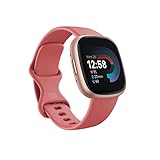
- Get inspired and stay accountable with Versa 4 + Premium - learn when to work out or recover, see real-time stats during exercise and find new ways to keep your routine fresh and fun
- Built for better fitness results: Daily Readiness Score(1), built-in GPS and workout intensity map, Active Zone Minutes, all-day activity tracking and 24/7 heart rate, 40+ exercise modes and automatic exercise tracking, water resistant to 50 meters
- Tools to measure and improve sleep quality: personalized Sleep Profile(1), daily sleep stages & Sleep Score, smart wake alarm and do not disturb mode
- Maintain a healthy body and mind: daily Stress Management Score, reflection logging, SpO2(2), health metrics dashboard(3), guided breathing sessions, menstrual health tracking and mindfulness content
- Designed for fitness & beyond: on-wrist Bluetooth calls, texts and phone notifications(4), customizable clock faces, Fitbit Pay(5), Amazon Alexa built-in(6), Google Wallet & Maps (Google Maps Android only, coming Spring 2023 to iOS), 6+ day battery(7)
Where Garmin can feel overwhelming is in presentation. Metrics are deep but less guided, and insights often require interpretation rather than explanation.
The Versa 4 flips that experience. Fitbit’s app translates raw data into habits and trends, making it easier to act on without feeling like you need a training plan.
Battery life is comparable between the two, and both are comfortable, lightweight watches with polymer cases and silicone straps. The difference is philosophical: Garmin is built for people who already train, while Fitbit is built for people trying to train more consistently.
Compatibility, payments, and daily friction
Platform lock-in is a quiet deal-breaker in this category. The Apple Watch SE only works with iPhones, while the Galaxy Watch FE strongly favors Android, particularly Samsung devices.
The Versa 4 and Garmin Venu Sq are platform-agnostic, working reliably on both iOS and Android with minimal feature loss. That flexibility matters if you change phones or want to avoid ecosystem commitments.
Payments and media are where the Versa 4 concedes ground. There is no onboard music storage and no contactless payments, omissions that competitors often include but charge more for.
At $119.95, those absences feel intentional rather than stingy. You are not paying for features that add complexity, drain battery, or go unused after the novelty fades.
Which deal actually holds long-term value
Discounts can blur comparisons, but price still shapes expectations. The Apple Watch SE and Galaxy Watch FE remain better smartwatches even on sale, yet they ask more of you in charging, setup, and attention.
The Versa 4, at its all-time low, asks almost nothing beyond being worn. Its comfort, battery life, and health tracking reliability hold up long after the excitement of a deal wears off.
For buyers who want a dependable fitness companion rather than a miniature phone, this price shifts the Versa 4 from compromise to calculated choice.
Who Should Buy the Fitbit Versa 4 at This Price — And Who Shouldn’t
At $119.95, the Versa 4 stops being a “consider if discounted” smartwatch and becomes a clear value-led recommendation for the right buyer. The key is understanding whether its simplicity aligns with how you actually plan to use a smartwatch day to day.
Buy it if you want reliable health tracking without smartwatch overhead
If your priority is daily health metrics you will actually check and act on, the Versa 4 is unusually strong at this price. Heart rate tracking, sleep staging, SpO2 trends, stress tracking, and daily readiness-style insights are all presented in plain language rather than buried in performance graphs.
This is especially compelling for beginners or returning fitness users who want consistency more than precision tuning. You put it on, it tracks quietly in the background, and the app nudges behavior rather than demanding interpretation.
Buy it if battery life and comfort matter more than features
The Versa 4 remains one of the easiest smartwatches to live with long term. Its slim polymer case, light weight, and soft silicone strap make it comfortable for 24/7 wear, including sleep, which is where much of its value lies.
Battery life of around five to six days with GPS used sparingly means charging fades into the background. Compared to Apple Watch SE or Galaxy Watch models that require near-daily charging, this alone can determine whether a watch stays on your wrist or in a drawer.
Buy it if you want GPS fitness tracking without training complexity
Built-in GPS makes the Versa 4 far more than a step counter, especially at this price. Outdoor walks, runs, and rides are tracked accurately enough for pace, distance, and route mapping without carrying your phone.
Where it differs from Garmin is intent. The Versa 4 focuses on activity consistency and recovery awareness, not race prep or advanced performance metrics. For many users, that balance is healthier and more sustainable.
Buy it if you want platform flexibility and low daily friction
The Versa 4 works reliably on both iOS and Android with no major feature loss. That matters if you plan to switch phones or simply want to avoid being locked into Apple or Samsung’s ecosystem.
Notifications are clear, syncing is stable, and the software experience stays out of your way. At this price, not having to think about compatibility or long-term platform commitment adds real value.
Skip it if you want smartwatch features beyond fitness
If you expect your watch to replace your phone for payments, music, or apps, the Versa 4 will disappoint. There is no contactless payment support and no onboard music storage, and the app ecosystem is intentionally minimal.
Apple Watch SE and Galaxy Watch FE are far better choices for smart features, but even on sale they demand more frequent charging and more attention. This is a trade-off, not a flaw, but it needs to be intentional.
Skip it if you are a data-driven or competitive athlete
Runners training for events, cyclists chasing performance gains, or athletes who rely on advanced metrics like VO2 max trends, training load, or recovery modeling will outgrow the Versa 4 quickly.
Garmin’s entry-level watches cost more, but they justify it with depth, customization, and long-term training tools. If performance analysis is your primary motivation, the Versa 4’s friendly simplicity becomes a limitation.
Skip it if you already own a recent Fitbit
If you are upgrading from a Versa 3 or Sense-generation Fitbit, the jump is modest. You gain a slightly refined interface and physical button return, but core tracking and daily experience are largely unchanged.
At this price, the Versa 4 is outstanding for new buyers or those coming from older trackers. As an incremental upgrade, it makes less sense unless battery health or hardware wear is forcing the move.
Who this deal is really for
The Versa 4 at $119.95 is best viewed as a long-term wellness companion, not a budget smartwatch compromise. It suits people who want to move more, sleep better, and understand their health patterns without turning fitness into a second job.
For that audience, this all-time low price doesn’t just make the Versa 4 affordable, it makes it hard to justify paying more unless you genuinely need the extras.
Fitbit Ecosystem Considerations: Android vs iPhone, Data Lock-In, and Upgrade Paths
Once you accept the Versa 4 as a wellness-first device rather than a miniature phone, the ecosystem question becomes the most important long-term consideration. At $119.95, the hardware value is obvious, but how it fits into your phone, your data history, and your future upgrades will determine whether this is a smart buy or a short-term win.
Android vs iPhone: A rare case of platform neutrality
One of the Versa 4’s biggest strengths is that it behaves almost identically on Android and iPhone. Notifications, health tracking, sleep analysis, and daily readiness features work the same regardless of platform, with no meaningful feature lockouts.
On Android, you gain slightly better notification handling, including the ability to reply to messages with preset responses. On iPhone, that interaction layer disappears, but the core experience remains intact, which is more than can be said for most non-Apple watches.
This neutrality matters at this price point because it lowers the risk of switching phones later. Unlike Apple Watch or Galaxy Watch, the Versa 4 does not force you into a single mobile ecosystem to remain usable.
Where Google ownership helps, and where it still feels unfinished
Fitbit now sits under Google’s umbrella, and the Versa 4 reflects a transitional phase rather than a fully unified ecosystem. Google Maps and Google Wallet are absent here, and while Google accounts are now required, the software experience remains distinctly Fitbit rather than “Wear OS Lite.”
The upside is battery life. With a slim aluminum case, lightweight build, and simple AMOLED display, the Versa 4 consistently delivers five to six days of real-world use, something Wear OS rivals at this price simply cannot match.
💰 Best Value

- Inspire 3 is the tracker that helps you find your energy, do what you love and feel your best. All you have to do is wear it.Operating temperature: 0° to 40°C
- Move more: Daily Readiness Score(1), Active Zone Minutes, all-day activity tracking and 24/7 heart rate, 20+ exercise modes, automatic exercise tracking and reminders to move
- Stress less: always-on wellness tracking, daily Stress Management Score, mindfulness sessions, relax breathing sessions, irregular heart rhythm notifications(2), SpO2(3), menstrual health tracking, resting heart rate and high/low heart rate notifications
- Sleep better: automatic sleep tracking, personalized Sleep Profile(1), daily detailed Sleep Score, smart wake vibrating alarm, sleep mode
- Comfortably connected day and night: calls, texts & smartphone app notifications(4), color touchscreen with customizable clock faces, super lightweight and water resistant to 50 meters, up to 10 day battery life(5)
The downside is uncertainty. Google has been clear that Fitbit will continue, but the long-term direction still favors Pixel Watch at the high end, leaving Versa buyers with excellent stability today but limited expansion tomorrow.
Data lock-in: Fitbit is friendly, but not frictionless
Fitbit’s health data presentation remains one of the best for beginners and casual users. Sleep stages, heart rate trends, stress tracking, and activity minutes are easy to understand and actionable without feeling overwhelming.
Exporting your data is possible, but it is not seamless. If you eventually move to Apple Health, Garmin Connect, or another platform, historical continuity becomes messy, especially for long-term trends like sleep or resting heart rate.
This is not unique to Fitbit, but it is worth acknowledging. Buying the Versa 4 is a soft commitment to staying within Fitbit’s ecosystem for at least a few years if you want your health history to remain meaningful.
Fitbit Premium: optional, but strategically nudging
At $119.95, the hardware feels like a steal, but Fitbit Premium sits quietly in the background. The watch works perfectly well without it, offering full activity tracking, sleep scores, and heart rate insights.
Premium becomes tempting over time, adding deeper sleep analytics, guided programs, and readiness context. It is not required, but it is designed to feel like a natural next step once you are invested.
For some buyers, this subscription model offsets the low upfront cost. For others, it is still cheaper over three years than paying flagship smartwatch prices upfront, especially if you never subscribe.
Upgrade paths: where Versa 4 fits in the bigger picture
If you buy the Versa 4 now, your most natural future upgrades remain within Fitbit’s lineup. That likely means a Sense-series device for added sensors like ECG and skin temperature, or potentially a Pixel Watch if you migrate toward smart features later.
What you do not get is a clear ladder within the Versa family itself. The Versa 4 feels like a refinement, not a stepping stone toward something more powerful in the same form factor.
This makes the current deal especially important. At full price, the lack of upward mobility is harder to justify. At $119.95, it becomes a low-risk entry point into fitness tracking without locking you into an expensive upgrade cycle.
How this compares to Apple, Samsung, and Garmin ecosystems
Apple Watch SE offers a stronger app ecosystem and deeper iPhone integration, but it comes with daily charging and total lock-in to iOS. If you switch phones, your watch becomes unusable.
Samsung’s Galaxy Watch FE mirrors that problem on Android, with excellent features but shorter battery life and a heavier software footprint that demands more attention.
Garmin sits at the opposite extreme, with exceptional data ownership and long-term athlete tools, but higher prices, bulkier cases, and a steeper learning curve. For many buyers at this price, Garmin’s strengths are theoretical rather than practical.
The Versa 4 occupies a narrow but valuable middle ground. It sacrifices ambition in exchange for consistency, cross-platform flexibility, and a calm, low-maintenance ownership experience.
Why ecosystem fit matters more than specs at this price
At $119.95, the Versa 4’s biggest advantage is not a single feature, but how little it asks of you over time. It is light on the wrist, easy to live with, and unlikely to become obsolete the moment you change phones or routines.
For buyers who want health tracking to blend into daily life rather than dominate it, that ecosystem stability turns this deal from a budget compromise into genuine long-term value.
If you want a watch that grows into a powerful smart device or training tool, this is not the right ecosystem. But if you want a reliable health companion that stays out of your way, the Versa 4’s ecosystem remains one of its most underappreciated strengths at this all-time low price.
Final Verdict: Is the Fitbit Versa 4 at $119.95 a Smart Long-Term Buy or a Budget Compromise?
Seen in the context of ecosystem stability, battery life, and day-to-day comfort, this all-time low price reframes the Versa 4 entirely. What felt underwhelming at launch pricing becomes far more compelling when it costs less than many fitness bands with screens.
At $119.95, the question is no longer whether the Versa 4 competes with flagship smartwatches. It is whether it delivers enough calm, reliable value to justify wearing every day for the next few years.
Why this price changes the Versa 4’s value equation
This is the lowest price the Versa 4 has ever reached, and it undercuts most mainstream smartwatch competitors by a meaningful margin. At this level, you are paying primarily for Fitbit’s health platform, multi-day battery life, and lightweight aluminum case, not for bleeding-edge smartwatch features.
The hardware still holds up well for daily wear. The 40mm case is slim, light, and comfortable on smaller and larger wrists alike, the AMOLED display is bright and legible outdoors, and the soft silicone strap remains one of the more wearable options for sleep tracking.
When you factor in five to six days of real-world battery life, built-in GPS, and dependable heart rate and sleep tracking, the Versa 4 stops feeling like a compromised smartwatch and starts feeling like a very complete fitness-first watch at a bargain price.
Where the compromises are real, and why they may not matter
There is no avoiding the Versa 4’s limitations. App support is minimal, music controls are basic, and smartwatch interactions are intentionally restrained compared to Apple Watch or Galaxy Watch models.
However, those same limitations are what allow the Versa 4 to remain simple, fast, and power-efficient. There is less software overhead, fewer notifications demanding attention, and a far lower chance of the watch feeling sluggish two years down the line.
If you expect your watch to replace your phone, this will feel restrictive. If you want health metrics, activity tracking, and gentle smart features that work quietly in the background, those compromises become strengths.
Who should buy the Versa 4 at $119.95
This deal makes the most sense for first-time smartwatch buyers, casual runners, gym-goers, and anyone focused on improving daily health habits without committing to a complex platform. It is also a smart choice for users who value cross-platform compatibility and do not want their watch tied permanently to one phone brand.
It is especially well suited to people who care about sleep tracking, step consistency, heart rate trends, and overall wellness rather than structured training plans or advanced athletic analytics.
For these buyers, the Versa 4 offers a low-cost, low-friction entry into long-term health tracking that is unlikely to feel outdated or annoying over time.
Who should skip it, even at this price
If you want a smartwatch that evolves through apps, third-party services, and deep phone integration, the Apple Watch SE or Galaxy Watch ecosystem will serve you better, even with the trade-offs in battery life and platform lock-in.
Likewise, if you are a data-driven athlete planning structured training, Garmin’s entry-level watches remain the better long-term tool, despite their higher cost and bulkier designs.
At $119.95, the Versa 4 is no longer trying to win those buyers over. It is offering a different philosophy entirely.
The bottom line
At its all-time low price, the Fitbit Versa 4 is not a budget compromise in the way cheap smartwatches often are. It is a deliberately simplified, fitness-focused watch that finally costs what its feature set and long-term usability justify.
You are not buying future-proof innovation or ecosystem ambition. You are buying comfort, consistency, strong health tracking, and a battery that lets you forget about charging for days at a time.
For buyers who want a reliable health companion rather than a miniature smartphone on the wrist, $119.95 turns the Versa 4 into one of the safest, smartest smartwatch deals available right now.