The Fitbit Versa Lite Edition was never meant to be a do-everything smartwatch, and understanding that is the key to judging it fairly. It launched as a stripped-back, more affordable entry point into Fitbit’s ecosystem, aimed squarely at people who wanted reliable activity and health tracking without the complexity, cost, or distractions of higher-end smartwatches. If you’ve ever felt overwhelmed by app stores, voice assistants, or daily charging routines, the Versa Lite’s original appeal makes a lot of sense.
This review looks at the Versa Lite through that original intent and through today’s reality. You’ll get clarity on what Fitbit intentionally left out, what still holds up surprisingly well, and where age and newer competitors have caught up or moved past it. The goal is to help you decide whether this model still deserves a spot on your wrist or whether your money is better spent elsewhere.
A deliberately simplified smartwatch
At its core, the Versa Lite Edition was designed as a “fitness-first smartwatch,” not a mini smartphone. You get core Fitbit tracking like steps, calories, active minutes, sleep stages, and continuous heart rate monitoring, all wrapped in a lightweight aluminum case with a square touchscreen. Notifications from your phone are supported, but interaction is minimal, keeping the experience intentionally passive rather than distracting.
Fitbit removed several features found on the regular Versa to hit a lower price point. There’s no built-in GPS, no music storage or playback, and no Wi‑Fi for faster syncing. Even buttons were reduced to a single side button, reinforcing the idea that this was meant to be worn and glanced at, not constantly fiddled with.
🏆 #1 Best Overall
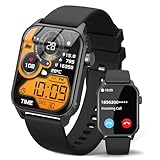
- 【1.83" HD Display & Customizable Watch Faces】Immerse yourself in a vibrant 1.83-inch IPS display, boasting a sharp resolution of 240*284 for crystal-clear visuals. Effortlessly personalize your smart watch with a wide array of customizable watch faces to suit your personal style for every occasion—whether trendy, artistic, or minimalist—ideal for casual, sporty, or professional. Its sleek, modern design complements any outfit, blending technology and fashion seamlessly for everyday wear
- 【120 Sports Modes & Advanced Health Tracking】Our TK29 smart watches for women men come equipped with 120 sports modes, allowing you to effortlessly track a variety of activities such as walking, running, cycling, and swimming. With integrated heart rate and sleep monitors, you can maintain a comprehensive overview of your health, achieve your fitness goals, and maintain a balanced, active lifestyle with ease. Your ideal wellness companion (Note: Step recording starts after exceeding 20 steps)
- 【IP67 Waterproof & Long-Lasting Battery】Designed to keep up with your active lifestyle, this smartwatch features an IP67 waterproof rating, ensuring it can withstand splashes, sweat, and even brief submersion, making it perfect for workouts, outdoor adventures, or rainy days. Its reliable 350mAh battery offering 5-7 days of active use and up to 30 days in standby mode, significantly reducing frequent charging. Ideal for all-day wear, whether you’re at the gym, outdoors, or simply on the go
- 【Stay Connected Anytime, Anywhere】Stay informed and in control with Bluetooth call and music control features. Receive real-time notifications for calls, messages, and social media apps like Facebook, WhatsApp, Twitter, and Instagram directly on your smartwatch. Easily manage calls, control your music playlist, and stay updated without needing to reach for your phone. Perfect for work, workouts, or on-the-go, this watch keeps you connected and never miss important updates wherever you are
- 【Multifunction & Wide Compatibility】Seamlessly handle heart rate monitoring, sleep tracking, and enjoy conveniences like camera/music control, Seamlessly handle heart rate monitoring, sleep tracking, and more-all directly from your wrist. This 1.83 inches HD smartwatch is compatible with iPhone (iOS 9.0+) & Android (5.0+), ensuring smooth daily connectivity and convenience throughout your day. More than just a timepiece, it’s a stylish, all-in-one wearable for smarter, healthier living
Designed for everyday comfort and long wear
Physically, the Versa Lite was built to disappear on the wrist. The case is slim and lightweight, the edges are softly rounded, and the silicone strap is flexible enough for all-day wear, including sleep. This comfort-first design made it especially appealing to users new to wearables or anyone sensitive to bulky watches.
The AMOLED display, while modest by modern standards, remains one of the Versa Lite’s strengths. It’s bright, colorful, and easy to read indoors, with always-on disabled to preserve battery life. Durability is practical rather than rugged, with swim-proofing for pool sessions but no pretensions of being an adventure watch.
Battery life over features
One of the Versa Lite’s defining design goals was reducing charging anxiety. Fitbit advertised up to four days of battery life, and in real-world mixed use, that was largely achievable thanks to the lack of power-hungry features like GPS and music streaming. For casual users, this meant charging once or twice a week instead of nightly, a meaningful quality-of-life benefit.
This trade-off was intentional. Fitbit prioritized consistency and reliability over headline features, betting that many users would prefer fewer functions if it meant better battery life and simpler daily use.
Built to onboard users into the Fitbit ecosystem
More than anything, the Versa Lite Edition was an entry ticket to Fitbit’s software experience. The real value was never just the watch itself, but the Fitbit app, with its clear dashboards, trend tracking, and health insights that are easy to understand even for beginners. Syncing is seamless on both Android and iOS, and setup takes only a few minutes.
This also meant accepting Fitbit’s ecosystem limitations. Advanced insights, guided programs, and deeper health analytics increasingly sit behind Fitbit Premium, which adds an ongoing cost. The Versa Lite was designed when this model was still evolving, and today that context matters when evaluating its long-term value.
How its original mission holds up today
Viewed through a modern lens, the Versa Lite feels very focused, and in some ways, dated. Budget smartwatches now commonly include GPS, blood oxygen tracking, and longer battery life at similar prices, while newer Fitbit models offer more sensors and smoother performance. The Lite’s slower processor and limited feature set are more noticeable now than they were at launch.
That said, its original mission hasn’t completely aged out. For users who want basic health tracking, dependable battery life, and a clean, non-overwhelming experience, the Versa Lite still reflects a clear design philosophy. The real question is no longer what it was designed to be, but whether that design still makes sense given today’s alternatives, which is where the rest of this review heads next.
Design, Comfort, and Everyday Wearability
If the Versa Lite’s feature set feels intentionally restrained, its physical design follows the same philosophy. Fitbit aimed for something neutral, friendly, and easy to live with, rather than a statement piece or a tech-heavy gadget competing for attention on your wrist.
Clean, approachable design that avoids smartwatch bulk
The Versa Lite uses a compact, softly squared case that sits closer to a fitness tracker than a traditional watch. At roughly 40mm wide with rounded edges, it looks less imposing than many budget smartwatches, especially on smaller wrists.
The aluminum case keeps weight down, which is immediately noticeable during all-day wear. It doesn’t have the premium feel of stainless steel, but it also avoids feeling cheap, striking a practical middle ground for its original price bracket.
Display and visibility in daily use
The color touchscreen is bright enough for indoor use and casual outdoor viewing, though direct sunlight can still require a wrist tilt or shade. Bezels are thicker than on newer Fitbit models, which makes the display feel smaller than its actual size.
For first-time smartwatch users, the simple watch faces and uncluttered layout work in its favor. You’re not overwhelmed with data at a glance, which aligns with the Versa Lite’s beginner-friendly positioning.
Comfort during workouts, sleep, and long days
Light weight is the Versa Lite’s biggest comfort advantage. It’s easy to forget you’re wearing it, which matters for sleep tracking and 24/7 heart rate monitoring.
The included silicone band is soft and flexible, with enough ventilation to avoid excessive sweat buildup during light workouts. During longer sessions or hot weather, it’s comfortable but not exceptional, similar to most fitness-focused bands in this category.
Fit, sizing, and strap considerations
Fitbit includes both small and large band options in the box, covering most wrist sizes without needing immediate accessories. The band attachment system is proprietary, not standard 20mm, which limits third-party strap options compared to more open platforms.
That said, swapping bands is quick and tool-free. Fitbit’s own accessory ecosystem is broad, though pricing can feel high relative to the watch’s current market value.
Physical controls and everyday interaction
There’s a single side button used for navigation and shortcuts, backed up by touch gestures. Responsiveness is acceptable, but the slower processor shows itself through occasional lag when waking the screen or switching menus.
This doesn’t break the experience, but it reinforces that this is a basic smartwatch, not something built for rapid interaction or heavy app use.
Durability and wear-and-tear over time
With a 5 ATM water resistance rating, the Versa Lite handles swimming, showers, and sweat without concern. The aluminum case resists corrosion well, though it can pick up small dings more easily than steel.
The display glass is reasonably scratch-resistant for everyday life, but it’s not hardened to the level seen on newer models. Long-term users often end up adding a screen protector, especially if the watch is worn during work or travel.
How it feels as an everyday companion today
Taken as a whole, the Versa Lite remains easy to live with. It doesn’t snag on sleeves, doesn’t feel top-heavy, and doesn’t demand attention, which suits users who want passive tracking rather than constant interaction.
Compared to newer Fitbit models and budget competitors, it looks simpler and slightly dated. Still, for users prioritizing comfort, low-profile design, and all-day wearability over modern aesthetics, its physical design holds up better than its spec sheet might suggest.
Display Quality and Basic Interaction Experience
Living with the Versa Lite day to day, the screen becomes one of the most noticeable reminders of its age and its positioning as a pared-back Fitbit. It’s functional and friendly, but clearly designed around simplicity rather than visual flair or speed.
Screen type, size, and real-world clarity
The Versa Lite uses a color LCD rather than AMOLED, and that choice defines much of the experience. Colors look pleasant indoors, but they lack the deep contrast and punch you’ll see on newer Fitbit models like the Versa 3 or Sense.
Outdoors, readability is acceptable but not outstanding. In bright sunlight, you’ll often find yourself angling your wrist or shading the screen with your hand, especially when checking stats mid-walk or run.
Resolution is modest by today’s standards, yet text remains legible thanks to Fitbit’s clean interface design. Icons are simple, fonts are large, and nothing feels overly cramped, which suits beginners who value clarity over density.
Brightness control and always-on limitations
Brightness adjusts automatically, and there’s no always-on display option here. That keeps battery life consistent, but it also means the screen is black unless you raise your wrist or tap it.
Wrist-raise detection works reasonably well, though it’s not instant. There’s a slight delay that becomes noticeable once you’ve used faster, newer wearables, especially when you just want to glance at the time.
For casual users, this isn’t a dealbreaker. But anyone coming from an AMOLED Fitbit or even a modern budget smartwatch will feel the difference almost immediately.
Touch responsiveness and gesture navigation
Basic swipes and taps work reliably, but they aren’t particularly fast. Swiping between stats, notifications, and quick settings sometimes comes with a momentary pause, especially if the watch has been idle.
This reinforces the Versa Lite’s role as a glanceable tracker rather than a device meant for frequent interaction. You can do what you need to do, but it’s not something you’ll want to fiddle with constantly.
Fitbit’s gesture-based navigation is straightforward, which helps offset the slower response. New users typically adapt quickly, and there’s very little learning curve involved.
Watch faces and customization options
Watch face options are relatively limited compared to full Versa or Sense models, and many faces prioritize simplicity over data density. Most display time, steps, and maybe heart rate, but advanced complications are rare.
Customization exists, but it’s shallow. You can change colors or layouts within certain faces, yet power users may find it restrictive.
For the target audience, this is mostly a positive. Fewer choices reduce confusion, and the cleaner faces make the screen easier to read at a glance.
Notifications and basic interactions
Notifications appear clearly with readable text and simple vibration alerts. Scrolling through longer messages works fine, but replying isn’t supported, reinforcing the Lite’s fitness-first identity.
Rank #2
![Apple Watch Series 11 [GPS 46mm] Smartwatch with Jet Black Aluminum Case with Black Sport Band - M/L. Sleep Score, Fitness Tracker, Health Monitoring, Always-On Display, Water Resistant](https://m.media-amazon.com/images/I/312K597M2uL._SL160_.jpg)
- HYPERTENSION NOTIFICATIONS — Apple Watch Series 11 can spot signs of chronic high blood pressure and notify you of possible hypertension.*
- KNOW YOUR SLEEP SCORE — Sleep score provides an easy way to help track and understand the quality of your sleep, so you can make it more restorative.
- EVEN MORE HEALTH INSIGHTS — Take an ECG anytime.* Get notifications for a high and low heart rate, an irregular rhythm,* and possible sleep apnea.* View overnight health metrics with the Vitals app* and take readings of your blood oxygen.*
- STUNNING DESIGN — Thin and lightweight, Series 11 is comfortable to wear around the clock — while exercising and even when you’re sleeping, so it can help track your key metrics.
- A POWERFUL FITNESS PARTNER — With advanced metrics for all your workouts, plus features like Pacer, Heart Rate Zones, training load, Workout Buddy powered by Apple Intelligence from your nearby iPhone,* and more. Series 11 also comes with three months of Apple Fitness+ free.*
Dismissing notifications and checking call alerts is intuitive. However, the lack of quick replies or deeper interaction means your phone still does most of the heavy lifting.
Compared to newer Fitbits and budget smartwatches from brands like Amazfit or Xiaomi, the Versa Lite feels more passive. That’s either a limitation or a benefit, depending on whether you want fewer distractions on your wrist.
How it compares today
Against newer Fitbit models, the display and interaction experience is clearly a step behind. AMOLED panels, faster processors, and always-on options make even entry-level current devices feel more responsive and modern.
That said, the Versa Lite still delivers a clean, readable interface that avoids overwhelming first-time users. If you value simplicity, battery-friendly behavior, and basic visibility over polish, it remains usable.
As a value proposition, the screen experience only makes sense if the price is low. At heavy discounts, it’s acceptable; at anything close to newer models, the dated display and slower interaction are hard to justify.
Health and Fitness Tracking: What You Get (and What’s Missing)
After the pared-back screen and notification experience, the Versa Lite’s priorities become clearer once you dig into health and fitness. This is where Fitbit traditionally shines, and even this simplified model delivers the core tracking that made the brand popular in the first place.
Everyday activity tracking fundamentals
At its core, the Versa Lite covers the basics reliably. Steps, distance, calories burned, and Active Zone Minutes (formerly active minutes) are tracked automatically throughout the day without any user input.
Heart rate is measured continuously via Fitbit’s optical sensor, and while it’s not as advanced as newer generations, it’s stable for resting heart rate trends and general workout intensity. For casual users, the data is consistent enough to spot patterns over time, which is what matters most at this level.
The watch is light, compact, and comfortable for all-day wear, which directly improves tracking accuracy. Its aluminum case and soft silicone strap make it easy to forget you’re wearing it, especially overnight.
Sleep tracking: a strong point for beginners
Sleep tracking is one of the Versa Lite’s biggest strengths. It automatically tracks sleep duration and breaks it down into light, deep, and REM stages when worn overnight.
The Fitbit app presents this data in a clean, approachable way that’s easy to understand even if you’ve never looked at sleep metrics before. You don’t need to dig through charts or tweak settings; it just works in the background.
What’s missing are newer insights like sleep scores with advanced coaching or SpO2-based oxygen variation tracking. You still get useful trend data, but not the deeper analysis found on newer Fitbit models.
Workout tracking without GPS complexity
The Versa Lite supports a range of exercise modes including walking, running, cycling, treadmill, weights, yoga, and swimming. Automatic exercise detection works well for common activities like walks and runs, starting tracking after a few minutes of movement.
However, there is no built-in GPS and no connected GPS through your phone. That means outdoor runs and rides won’t show maps or pace-by-location data, only time, heart rate, and estimated distance.
For beginners or indoor-focused users, this isn’t a dealbreaker. If you care about routes, splits, or accurate outdoor pace, this limitation alone makes the Versa Lite feel outdated compared to even budget trackers today.
Swim tracking and durability
The Versa Lite is swim-proof with 50 meters of water resistance, making it suitable for pool sessions, showers, and general water exposure. Swim tracking records duration and estimated calories but avoids overly detailed metrics.
There’s no physical button, which can make starting or stopping workouts with wet fingers a bit frustrating. Still, for casual swimmers or those who want basic activity logging rather than performance analysis, it’s adequate.
Build quality holds up well over time, and the lightweight case doesn’t feel fragile despite its thin profile. It’s clearly designed for daily life rather than rugged training.
Health insights and what you don’t get
Beyond heart rate and sleep, health features are minimal. There’s no blood oxygen tracking, no ECG, no skin temperature trends, and no stress or mindfulness sensor beyond basic guided breathing sessions.
You do get Fitbit’s Cardio Fitness Score estimate in the app, which gives a rough VO2 max-style benchmark. It’s useful for long-term trend awareness but shouldn’t be treated as a precise performance metric.
Female health tracking is supported through the app, though it relies on manual input and phone-based interaction rather than watch-side tools.
Fitbit app experience and subscription reality
The Versa Lite benefits heavily from Fitbit’s software ecosystem. The app is one of the most beginner-friendly platforms available, with clear graphs, daily summaries, and gentle nudges rather than aggressive coaching.
That said, some deeper insights are locked behind Fitbit Premium. While the watch functions perfectly without a subscription, users may feel they’re only seeing part of the picture unless they pay monthly.
Compared to newer Fitbits, the Lite still syncs smoothly, but it lacks newer health dashboards and advanced summaries that modern devices surface more prominently.
How it stacks up against newer and cheaper alternatives
Against current Fitbit models like the Inspire 3 or Versa 4, the Versa Lite falls behind on health sensors alone. Even entry-level trackers now offer SpO2, better sleep scoring, and longer battery life in smaller bodies.
Budget competitors from Xiaomi, Amazfit, and Huawei often include built-in GPS, blood oxygen tracking, and more sport modes at similar or lower prices. Their apps may be less polished, but the hardware gap is obvious.
The Versa Lite still works if you want simple, passive tracking with minimal setup and a familiar Fitbit interface. But in pure health and fitness capability, it no longer sets the standard it once did.
Smart Features and App Ecosystem Limitations
After looking at health tracking and how the Versa Lite compares to newer devices, the limitations on the “smartwatch” side become more apparent. This is where Fitbit’s cost-cutting decisions most directly affect daily usability.
Notifications and daily convenience
The Versa Lite handles basic smartphone notifications reliably, showing calls, texts, calendar alerts, and app notifications from your phone. Notifications are readable on the color touchscreen, but you can’t reply, dismiss with preset responses, or take action directly from the watch.
This one-way interaction is fine if you just want a wrist-based heads-up. If you expect even light interaction like quick replies on Android or call handling, the Versa Lite quickly feels dated.
No voice assistant, payments, or onboard music
Unlike the standard Versa models, the Lite Edition removes several headline smart features entirely. There’s no Alexa or Google Assistant support, no NFC for contactless payments, and no onboard music storage.
You can control music playing on your phone, but you can’t store playlists or connect Bluetooth headphones directly. For casual users this may be acceptable, but it clearly positions the Versa Lite closer to a fitness tracker than a true smartwatch.
Fitbit OS and the shrinking app gallery
The Versa Lite runs Fitbit OS, which remains simple and approachable but has aged noticeably. Animations are smooth, navigation is straightforward, and performance is stable, but the platform lacks depth.
Third-party apps are extremely limited, and many older Fitbit apps have stopped receiving updates or disappeared entirely. What’s left tends to be basic utilities like timers, weather, and a handful of simple watch faces.
Watch faces and customization
Customization is present but modest. You can choose from a range of digital and analog watch faces, with options to show steps, heart rate, and calories on the main screen.
Advanced complications, deep layout control, or rich animated faces are not part of the experience. The display looks good for the price, but customization feels functional rather than expressive.
Phone compatibility and syncing reliability
The Versa Lite works with both Android and iOS, and setup remains one of Fitbit’s strengths. Pairing is quick, syncing is generally reliable, and firmware updates happen quietly in the background.
Rank #3

- Bluetooth Call and Message Alerts: Smart watch is equipped with HD speaker, after connecting to your smartphone via bluetooth, you can answer or make calls, view call history and store contacts through directly use the smartwatch. The smartwatches also provides notifications of social media messages (WhatsApp, Twitter, Facebook, Instagram usw.) So that you will never miss any important information.
- Smart watch for men women is equipped with a 320*380 extra-large hd full touch color screen, delivering exceptional picture quality and highly responsive touch sensitivity, which can bring you a unique visual and better interactive experience, lock screen and wake up easily by raising your wrist. Though “Gloryfit” app, you can download more than 102 free personalised watch faces and set it as your desktop for fitness tracker.
- 24/7 Heart Rate Monitor and Sleep Tracker Monitor: The fitness tracker watch for men has a built-in high-performance sensor that can record our heart rate changes in real time. Monitor your heart rate 26 hours a day and keep an eye on your health. Synchronize to the mobile phone app"Gloryfit", you can understand your sleep status(deep /light /wakeful sleep) by fitness tracker watch develop a better sleep habit and a healthier lifestyle.
- IP68 waterproof and 110+ Sports Modes: The fitness tracker provides up to 112+ sports modes, covering running, cycling, walking, basketball, yoga, football and so on. Activity trackers bracelets meet the waterproof requirements for most sports enthusiasts' daily activities, such as washing hands or exercising in the rain, meeting daily needs (note: Do not recommended for use in hot water or seawater.)
- Multifunction and Compatibility: This step counter watch also has many useful functions, such as weather forecast, music control, sedentary reminder, stopwatch, alarm clock, timer, track female cycle, screen light time, find phone etc. The smart watch with 2 hrs of charging, 5-7 days of normal use and about 30 days of standby time. This smart watches for women/man compatible with ios 9.0 and android 6.2 and above devices.
iPhone users should be aware that notification handling is more restricted due to iOS limitations, with fewer customization options compared to Android. This isn’t unique to Fitbit, but it further reinforces the Lite’s passive role.
Battery life versus smart functionality trade-offs
One upside to the stripped-back smart features is battery life. With notifications enabled and regular activity tracking, the Versa Lite typically lasts four days, sometimes longer if you reduce screen wake-ups.
Adding richer smart features would likely reduce that endurance, but as it stands, the watch prioritizes longevity over interaction. For users who dislike charging frequently, this trade-off may actually work in the Versa Lite’s favor.
Where the ecosystem feels dated today
Compared to modern Fitbit devices and even budget smartwatches from competitors, the Versa Lite’s ecosystem feels frozen in time. Fitbit has shifted its software focus toward newer models, and the Lite doesn’t benefit from recent interface updates or feature rollouts.
You still get a clean, beginner-friendly experience, but not a growing one. If you value future updates, expanding app support, or evolving smart features, the Versa Lite’s ecosystem will feel increasingly restrictive over time.
Battery Life, Charging, and Long-Term Reliability
The Versa Lite’s restrained feature set doesn’t just shape how it feels to use day to day, it also defines how often you’ll need to think about charging and how well it holds up over time. For many casual users, this ends up being one of its most practical strengths.
Real-world battery endurance
In everyday use, the Fitbit Versa Lite consistently delivers around four days of battery life. That estimate assumes 24/7 wear with heart-rate tracking enabled, sleep tracking active, and a steady flow of notifications throughout the day.
Lighter users can stretch that closer to five days by limiting notifications and reducing how often the screen wakes. Heavier use, such as frequent manual workouts or lots of screen interactions, tends to pull it back toward three to four days, which is still competitive for a budget-focused smartwatch.
This longevity stands out precisely because the Versa Lite avoids power-hungry features. There’s no onboard GPS, no always-on display, and no app ecosystem running in the background, all of which helps keep energy drain predictable and slow.
Charging speed and convenience
Charging is handled via Fitbit’s proprietary cradle-style charger, which snaps onto the back of the watch securely. A full charge from empty takes roughly two hours, which feels reasonable but not especially fast by modern standards.
There’s no quick top-up mode, so short charging sessions won’t meaningfully extend battery life. This encourages a routine where you charge the watch every few days rather than daily, often while showering or working at a desk.
The downside is charger dependency. If you lose the cable, replacements aren’t as common or as cheap as standard USB-based solutions, which matters more for a device likely to be used for years rather than upgraded quickly.
Battery longevity over months and years
Lithium-ion battery aging is unavoidable, and the Versa Lite is no exception. Over long-term use, most owners will notice a gradual reduction in maximum battery life after a year or two, especially if the watch is frequently charged from very low percentages.
Because the Versa Lite is sealed and not designed for battery replacement, this aging directly impacts the usable lifespan of the device. Once endurance drops to the point where daily charging is required, the core appeal of the Lite model starts to erode.
That said, the lower power demands of the hardware do work in its favor. Compared to feature-rich smartwatches, the Versa Lite tends to degrade more slowly, simply because it places less strain on the battery day to day.
Durability and hardware reliability
Physically, the Versa Lite is lightweight and comfortable, but its aluminum case and glass display are clearly built to a price. It handles daily wear, workouts, and sleep tracking without issue, but it doesn’t feel particularly rugged or premium.
The water resistance is sufficient for swimming and showering, and long-term exposure to sweat hasn’t proven problematic in normal use. Button reliability is generally solid, though the single side button lacks the reassuring tactility found on newer Fitbit models.
Strap durability is another consideration. The included silicone band is comfortable and flexible, but it can show wear, stretching, or discoloration over time. Fortunately, standard Versa-compatible bands are easy to find and relatively affordable.
Software stability and long-term support
From a reliability standpoint, the software is stable precisely because it’s no longer evolving. Syncing remains dependable, crashes are rare, and the interface behaves predictably because it hasn’t changed much in years.
The trade-off is support longevity. Fitbit’s focus has shifted toward newer devices and deeper integration with its current platform direction, meaning the Versa Lite is unlikely to receive meaningful updates or optimizations going forward.
For buyers who value consistency and don’t expect new features, this static software state can actually be reassuring. For anyone hoping their watch will grow or improve over time, it reinforces the Versa Lite’s status as a product anchored firmly in the past.
Fitbit App Experience and Ecosystem in 2026
While the Versa Lite itself feels frozen in time, the Fitbit app is very much still alive and central to how the watch makes sense in 2026. In many ways, the app now does more of the heavy lifting than the hardware, which shapes whether the Versa Lite feels usable or outdated day to day.
For better or worse, buying a Versa Lite today is really a decision about buying into Fitbit’s ecosystem rather than the watch alone. The experience lives and dies by how comfortable you are with that ecosystem as it exists now.
Fitbit app basics: simple, clean, and still beginner-friendly
The Fitbit app remains one of the easiest health platforms for casual users to understand. Steps, active minutes, sleep, and heart rate are presented clearly, with minimal setup and little risk of overwhelming new users.
For Versa Lite owners, the app feels well-matched to the hardware. You’re not constantly reminded of missing features, and the dashboards focus on exactly what the watch can measure reliably.
Navigation is stable and familiar, especially for long-time Fitbit users. The design hasn’t changed dramatically, which makes onboarding straightforward for first-time smartwatch buyers who just want things to work.
Health and fitness tracking in context
The Versa Lite feeds the app with core data: daily steps, distance, calories burned, continuous heart rate, basic sleep stages, and manually started workouts. This information is logged consistently and displayed in long-term trends that remain one of Fitbit’s strengths.
Sleep tracking, in particular, still holds up well. Even with older hardware, the sleep duration and consistency insights feel accurate enough to be genuinely useful for improving habits.
What you don’t get are advanced metrics like readiness scores, training load analysis, ECG, skin temperature trends, or stress tracking from newer Fitbit devices. The app will show these sections, but they remain locked or empty, which can occasionally feel like walking past closed doors.
Fitbit Premium: optional, but increasingly pushed
In 2026, Fitbit Premium is deeply integrated into the app experience. Many insights, guided programs, and detailed breakdowns sit behind the subscription, regardless of which Fitbit you use.
With the Versa Lite, Premium adds structure rather than new raw data. You’ll see more contextual explanations of your sleep, general wellness guidance, and access to video workouts that don’t rely on on-watch features.
For casual users, Premium is not essential. In fact, the free experience aligns better with the Lite’s simplicity, while Premium can feel mismatched when the watch itself can’t support many of the platform’s more advanced tools.
Device management and day-to-day usability
Syncing between the Versa Lite and the app remains reliable, even years after launch. Bluetooth connections are stable, data uploads are quick, and background syncing rarely fails.
Watch customization through the app is limited but functional. You can still change watch faces, reorder apps, and adjust notifications, though the selection feels dated compared to newer Fitbit models.
Notification handling is basic and unchanged. You’ll see alerts for calls, texts, and app notifications, but you can’t interact meaningfully with them, and compatibility varies slightly between Android and iOS.
Ecosystem limitations and platform direction
Fitbit’s broader ecosystem has moved on, and the Versa Lite sits at the edge of it rather than the center. New features, deeper Google service integration, and health innovations are clearly designed for newer hardware.
This doesn’t break the Versa Lite experience, but it does cap it permanently. The app will continue to evolve, while the watch remains static, widening the gap over time.
Rank #4
![Apple Watch Series 11 [GPS 42mm] Smartwatch with Rose Gold Aluminum Case with Light Blush Sport Band - S/M. Sleep Score, Fitness Tracker, Health Monitoring, Always-On Display, Water Resistant](https://m.media-amazon.com/images/I/31J+F-pXaWL._SL160_.jpg)
- HYPERTENSION NOTIFICATIONS — Apple Watch Series 11 can spot signs of chronic high blood pressure and notify you of possible hypertension.*
- KNOW YOUR SLEEP SCORE — Sleep score provides an easy way to help track and understand the quality of your sleep, so you can make it more restorative.
- EVEN MORE HEALTH INSIGHTS — Take an ECG anytime.* Get notifications for a high and low heart rate, an irregular rhythm,* and possible sleep apnea.* View overnight health metrics with the Vitals app* and take readings of your blood oxygen.*
- STUNNING DESIGN — Thin and lightweight, Series 11 is comfortable to wear around the clock — while exercising and even when you’re sleeping, so it can help track your key metrics.
- A POWERFUL FITNESS PARTNER — With advanced metrics for all your workouts, plus features like Pacer, Heart Rate Zones, training load, Workout Buddy powered by Apple Intelligence from your nearby iPhone,* and more. Series 11 also comes with three months of Apple Fitness+ free.*
For users who want a “set it and forget it” tracker, this isn’t a dealbreaker. For anyone hoping their device will grow with software updates, the ecosystem now makes that limitation more visible.
Compatibility and cross-platform considerations
The Fitbit app still works well on both Android and iOS, and the Versa Lite doesn’t strongly favor one platform over the other. Setup remains painless, and basic functionality is consistent across phones.
However, deeper integrations with voice assistants, smart home controls, or productivity tools are absent. Compared to modern budget smartwatches, the Versa Lite feels intentionally disconnected from broader phone ecosystems.
That isolation can be a positive for users who want fewer distractions. It can also feel restrictive if you expect smartwatch-like convenience beyond fitness tracking.
How the ecosystem affects overall value in 2026
The Fitbit app is the main reason the Versa Lite is still usable today. It keeps the data meaningful, the experience stable, and the daily routine simple.
At the same time, the ecosystem highlights the watch’s age more clearly than ever. You’re constantly aware that newer Fitbits unlock more of the same app, often for only a modest increase in price.
For first-time users who value clarity over features, the app helps the Versa Lite remain approachable. For anyone comparing options closely, it also makes a strong case for spending slightly more on a newer Fitbit that better matches where the ecosystem is headed.
How the Versa Lite Edition Compares to Newer Fitbits and Budget Alternatives
With the ecosystem context in mind, the Versa Lite’s position becomes clearer when you place it next to Fitbit’s current lineup and today’s crowded budget tracker market. What once felt like a stripped-down smartwatch now sits closer to the high end of basic fitness bands.
Versa Lite vs newer Fitbit smartwatches
Compared to the Versa 4 or Sense 2, the Versa Lite feels decisively dated the moment you start using it. Newer Fitbits add built-in GPS, slimmer and brighter displays, longer battery life, and much deeper integration with Fitbit Premium insights.
The Lite also lacks physical side buttons, relying on an older touch-only navigation system that feels slower and less reliable than the haptic buttons used on current models. Over long-term use, this affects daily comfort more than specs alone suggest, especially during workouts or quick interactions.
Where newer Fitbits feel optimized for both fitness and everyday convenience, the Versa Lite stays firmly in fitness-first territory. It tracks steps, sleep, heart rate, and basic workouts well, but it doesn’t try to replace your phone in any meaningful way.
How it stacks up against Inspire and Charge series
When compared to the Inspire 3 or Charge 6, the Versa Lite loses its original advantage of having a larger, smartwatch-style screen. The Inspire 3 delivers similar health tracking with dramatically better battery life in a lighter, more discreet body.
The Charge 6 goes further, offering GPS, Google services, physical buttons, and more advanced sensors in a slimmer band-style design. Despite the smaller screen, it often feels more modern and responsive in daily use than the Versa Lite.
If your priority is pure health tracking per dollar, Fitbit’s newer bands offer more capability and longer support. The Versa Lite only makes sense here if you strongly prefer a square watch shape over a band form factor.
Versa Lite vs modern budget smartwatches
Budget smartwatches from brands like Amazfit, Xiaomi, and Huawei now undercut the Versa Lite while offering features it simply doesn’t have. Built-in GPS, week-long battery life, always-on displays, and broader sport modes are common at similar or lower prices.
However, those devices often rely on less refined apps with confusing data presentation and weaker long-term software consistency. Fitbit still wins on clarity, especially for sleep tracking and habit-building over months rather than weeks.
This creates a trade-off rather than a clear winner. The Versa Lite offers a calmer, more structured experience, while budget rivals deliver more features but less polish in how the data is explained and used.
Comfort, materials, and daily wear compared
Physically, the Versa Lite remains comfortable thanks to its lightweight aluminum case and soft silicone strap. At 40 mm, it wears easily on smaller wrists and never feels bulky, even during sleep.
Newer Fitbits have refined this further with slimmer profiles and better vibration motors that feel more precise. Budget smartwatches vary widely here, with some feeling surprisingly premium and others noticeably cheaper in finishing and strap quality.
In day-to-day wear, the Versa Lite still feels fine, but it no longer stands out. It blends into the background rather than impressing, which may be exactly what some users want.
Value comparison in today’s market
The Versa Lite only makes sense at a significantly reduced price. At anything close to its original retail cost, newer Fitbits or feature-rich budget alternatives offer better long-term value.
If found cheaply, it delivers reliable health tracking, a friendly app, and a smartwatch-like shape without overwhelming complexity. That combination still has appeal for beginners and casual users.
But if you are choosing between models on a store shelf today, the comparison highlights just how far entry-level wearables have progressed. The Versa Lite works, but it no longer defines the category it once helped create.
Who the Fitbit Versa Lite Edition Still Makes Sense For Today
Seen in the right light, the Versa Lite is no longer about chasing features or future-proofing. It is about fitting into very specific use cases where simplicity, comfort, and Fitbit’s software strengths matter more than specs on a box.
For most shoppers, it should not be a default recommendation anymore. But for a narrower group of buyers, it can still be a sensible, low-friction choice.
First-time fitness tracker users who want structure, not stats
If you have never used a fitness tracker before, the Versa Lite still offers one of the gentlest introductions available. Steps, sleep stages, resting heart rate, and basic activity tracking are presented clearly, without dashboards that feel overwhelming or overly technical.
The absence of GPS, advanced training metrics, or performance-focused tools can actually be a benefit here. You are encouraged to build habits like daily movement and consistent sleep rather than obsess over pace charts or recovery scores.
For beginners who just want to understand their routine and gradually improve it, the Versa Lite’s restraint works in its favor.
Users who prioritize sleep tracking and daily health trends
Sleep tracking remains one of Fitbit’s strongest areas, and the Versa Lite taps directly into that ecosystem. Sleep stages, nightly duration, and long-term trends are easy to interpret, even for users who rarely open health apps.
The lightweight aluminum case and compact 40 mm size also make it comfortable enough to wear overnight without second thoughts. At roughly 38 grams with the silicone strap, it rarely feels intrusive during sleep.
If your primary goal is understanding how well you rest, rather than tracking runs or gym sessions, the Versa Lite still delivers reliable insights.
People who want smartwatch convenience without smartwatch complexity
The Versa Lite looks like a smartwatch, but it behaves more like a fitness tracker with a touch screen. Notifications, basic apps, timers, alarms, and music controls are present, but they never demand much attention.
There is no app store to manage extensively, no cellular setup, and no complicated menus to learn. For users who want glanceable information rather than a mini phone on their wrist, this simpler approach can be refreshing.
It is especially appealing to people who found devices like the Apple Watch or Wear OS watches distracting or unnecessarily complex.
Smaller wrists and comfort-focused buyers
Physically, the Versa Lite remains a good option for smaller wrists or anyone sensitive to bulky wearables. The rounded aluminum case sits flat, the edges are smooth, and the standard silicone strap is flexible without feeling flimsy.
While newer Fitbits have refined vibration motors and case thickness, the Versa Lite still holds up well in all-day comfort. It works equally well as a daytime accessory and a sleep tracker, without needing to be taken off.
If comfort is a higher priority than features, the Versa Lite remains competitive.
💰 Best Value
![Apple Watch Series 11 [GPS 42mm] Smartwatch with Jet Black Aluminum Case with Black Sport Band - S/M. Sleep Score, Fitness Tracker, Health Monitoring, Always-On Display, Water Resistant](https://m.media-amazon.com/images/I/31ybzrJZckL._SL160_.jpg)
- HYPERTENSION NOTIFICATIONS — Apple Watch Series 11 can spot signs of chronic high blood pressure and notify you of possible hypertension.*
- KNOW YOUR SLEEP SCORE — Sleep score provides an easy way to help track and understand the quality of your sleep, so you can make it more restorative.
- EVEN MORE HEALTH INSIGHTS — Take an ECG anytime.* Get notifications for a high and low heart rate, an irregular rhythm,* and possible sleep apnea.* View overnight health metrics with the Vitals app* and take readings of your blood oxygen.*
- STUNNING DESIGN — Thin and lightweight, Series 11 is comfortable to wear around the clock — while exercising and even when you’re sleeping, so it can help track your key metrics.
- A POWERFUL FITNESS PARTNER — With advanced metrics for all your workouts, plus features like Pacer, Heart Rate Zones, training load, Workout Buddy powered by Apple Intelligence from your nearby iPhone,* and more. Series 11 also comes with three months of Apple Fitness+ free.*
Android and iPhone users who value Fitbit’s app consistency
Compatibility remains broad, working reliably with both Android and iOS devices. Fitbit’s app experience is largely identical across platforms, which is not always true for budget smartwatch brands.
Data sync is stable, historical trends are easy to access, and the app encourages long-term engagement rather than short bursts of activity. This consistency matters for users who plan to wear a tracker for months or years, not just during a fitness kick.
Even today, many cheaper alternatives struggle to match this level of polish and long-term reliability.
Buyers finding it at a deep discount or secondhand
Price is the deciding factor that determines whether the Versa Lite makes sense at all. At a steep discount or on the secondhand market, it becomes a reasonable entry point into Fitbit’s ecosystem.
At full or near-full retail pricing, it is difficult to justify over newer Fitbits like the Inspire or Charge series, which offer more sensors and better battery efficiency. Feature-rich budget smartwatches may also offer better headline value, even if their software is weaker.
The Versa Lite only earns its place when the cost reflects its age and limitations.
Who should skip it entirely
If you want GPS tracking, advanced workout modes, music storage, or any sense of future-proofing, the Versa Lite is not the right choice. Even within Fitbit’s own lineup, it has been overtaken by more capable and better-supported models.
Performance-focused users, runners, and anyone comparing spec lists will quickly run into its ceiling. In those cases, the calm experience becomes a constraint rather than a benefit.
The Versa Lite still makes sense, but only when chosen deliberately, with clear expectations and the right price attached.
Final Verdict: Is the Fitbit Versa Lite Edition Worth Buying or Best Avoided?
By this point, it should be clear that the Fitbit Versa Lite Edition is not a bad device, but it is a very specific one. Its value depends almost entirely on who you are, what you expect from a smartwatch, and how much you are paying for it today.
Viewed through a modern lens, the Versa Lite is less a “smartwatch bargain” and more a simplified health companion that happens to look like a smartwatch. That distinction matters when deciding whether it belongs on your wrist in 2026.
What the Versa Lite Still Gets Right
The Versa Lite’s biggest strength remains its ease of use. The interface is friendly, the touchscreen is responsive enough for daily navigation, and there is very little learning curve for first-time users.
Comfort is another quiet win. The lightweight aluminum case, slim profile, and soft silicone strap make it easy to wear all day and all night, which is essential for sleep tracking and consistent step data.
Battery life also holds up better than many cheap smartwatch alternatives. Getting four days with notifications, sleep tracking, and basic activity monitoring feels realistic in daily use, not just on paper.
Where It Now Feels Dated
The absence of built-in GPS is the Versa Lite’s most limiting omission. Any outdoor walks or runs rely on your phone, which undercuts the freedom many people expect from a watch-shaped device.
Its fitness tracking depth is also basic by today’s standards. You get steps, heart rate, sleep, and general activity trends, but not the richer training insights offered by newer Fitbit models.
Smartwatch features are minimal. There is no onboard music, no app ecosystem worth exploring, and limited notification interaction, making it more of a tracker than a true smartwatch.
Fitbit Ecosystem: Still a Strong Reason to Consider It
Despite the hardware’s age, Fitbit’s software remains a major selling point. The app is clean, stable, and genuinely useful for building long-term habits rather than chasing daily streaks.
Sleep tracking, in particular, is still among Fitbit’s strongest areas. Even with fewer sensors than newer models, the Versa Lite delivers readable sleep stages and trends that casual users can understand.
If you already trust Fitbit’s app and prefer its calmer approach to health data, the Versa Lite still plugs neatly into that ecosystem without friction.
How It Compares to Newer Fitbit Models
Compared to the Inspire and Charge series, the Versa Lite feels less capable despite its larger screen. Newer trackers offer better sensors, longer battery life, and more future-proof software support in smaller, cheaper packages.
The Charge line, in particular, makes the Versa Lite hard to justify at anything close to its original price. You gain GPS, more advanced health metrics, and a clearer upgrade path for not much more money.
Within Fitbit’s current lineup, the Versa Lite only makes sense as a discounted alternative, not as a recommended starting point.
Versa Lite vs Cheap Smartwatch Alternatives
Against unknown-brand budget smartwatches, the Versa Lite wins on software stability and data reliability. Notifications work consistently, syncing is dependable, and the app experience does not feel rushed or unfinished.
However, many budget watches now offer GPS, larger displays, and longer battery life, even if their health data is less refined. For spec-focused buyers, those alternatives may look more appealing on a comparison chart.
The Versa Lite prioritizes trust and simplicity over features, which is either a relief or a dealbreaker depending on your expectations.
Who Should Still Buy the Versa Lite Today
The Versa Lite makes sense for casual fitness users who want basic tracking without complexity. If your goals are daily steps, heart rate awareness, and better sleep habits, it still delivers.
It is also a reasonable choice for first-time smartwatch buyers who value comfort and simplicity over experimentation. The watch does not overwhelm, distract, or demand constant interaction.
Most importantly, it only makes sense at a deep discount or secondhand price. At the right cost, its limitations feel acceptable rather than frustrating.
Who Should Avoid It Completely
If you want GPS, structured workouts, music playback, or performance insights, the Versa Lite will disappoint quickly. It simply was not designed for that level of engagement.
Anyone planning to keep a device for several years should also look elsewhere. Newer Fitbits and even mid-range alternatives offer better long-term value and support.
If you are comparing it against modern trackers at similar prices, the Versa Lite is no longer competitive.
Bottom Line
The Fitbit Versa Lite Edition is a calm, comfortable, and reliable fitness companion that has aged gracefully in feel, but not in features. It still excels as a wearable you forget you are wearing, quietly tracking your day and night.
As a full-price purchase, it is best avoided. As a discounted entry into Fitbit’s ecosystem for casual users with modest expectations, it remains a defensible, if narrow, choice.
Buy it only if the price reflects its age, and your needs align with its simplicity. Otherwise, Fitbit’s newer models offer a clearer path forward with fewer compromises.