The Fitbit Versa exists in an unusual but still relevant corner of the smartwatch market. It’s not trying to be an Apple Watch competitor, and it’s not a stripped-down fitness band either. Instead, the Versa line was designed to sit right in the middle: approachable, fitness-first, and smartwatch-capable without dragging users into a complex or expensive ecosystem.
If you’re looking at the Versa today, chances are you’re weighing simplicity against capability. You want solid health tracking, good battery life, and a comfortable watch you can wear all day, but you don’t necessarily want LTE plans, app overload, or daily charging anxiety. This section is about clarifying exactly where the Versa fits within Fitbit’s current lineup, what it still does well, and where newer Fitbit models have moved the goalposts.
How the Versa Fits Between Fitbit Trackers and Sense Models
Within Fitbit’s lineup, the Versa has historically served as the brand’s core smartwatch. It sits above fitness trackers like the Charge and Inspire, offering a larger display, onboard apps, music controls, and a more traditional watch form factor. At the same time, it stays more streamlined and accessible than Fitbit’s flagship Sense series.
Compared to the Fitbit Sense, the Versa prioritizes everyday fitness tracking over experimental health sensors. You won’t find advanced stress hardware like EDA scans or skin temperature trend analysis on older Versa models, but you still get the essentials: continuous heart rate tracking, sleep stages, SpO2 (model-dependent), and robust activity tracking. For many users, that trade-off results in a simpler, more reliable daily experience.
🏆 #1 Best Overall
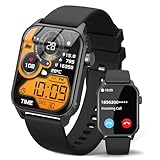
- 【1.83" HD Display & Customizable Watch Faces】Immerse yourself in a vibrant 1.83-inch IPS display, boasting a sharp resolution of 240*284 for crystal-clear visuals. Effortlessly personalize your smart watch with a wide array of customizable watch faces to suit your personal style for every occasion—whether trendy, artistic, or minimalist—ideal for casual, sporty, or professional. Its sleek, modern design complements any outfit, blending technology and fashion seamlessly for everyday wear
- 【120 Sports Modes & Advanced Health Tracking】Our TK29 smart watches for women men come equipped with 120 sports modes, allowing you to effortlessly track a variety of activities such as walking, running, cycling, and swimming. With integrated heart rate and sleep monitors, you can maintain a comprehensive overview of your health, achieve your fitness goals, and maintain a balanced, active lifestyle with ease. Your ideal wellness companion (Note: Step recording starts after exceeding 20 steps)
- 【IP67 Waterproof & Long-Lasting Battery】Designed to keep up with your active lifestyle, this smartwatch features an IP67 waterproof rating, ensuring it can withstand splashes, sweat, and even brief submersion, making it perfect for workouts, outdoor adventures, or rainy days. Its reliable 350mAh battery offering 5-7 days of active use and up to 30 days in standby mode, significantly reducing frequent charging. Ideal for all-day wear, whether you’re at the gym, outdoors, or simply on the go
- 【Stay Connected Anytime, Anywhere】Stay informed and in control with Bluetooth call and music control features. Receive real-time notifications for calls, messages, and social media apps like Facebook, WhatsApp, Twitter, and Instagram directly on your smartwatch. Easily manage calls, control your music playlist, and stay updated without needing to reach for your phone. Perfect for work, workouts, or on-the-go, this watch keeps you connected and never miss important updates wherever you are
- 【Multifunction & Wide Compatibility】Seamlessly handle heart rate monitoring, sleep tracking, and enjoy conveniences like camera/music control, Seamlessly handle heart rate monitoring, sleep tracking, and more-all directly from your wrist. This 1.83 inches HD smartwatch is compatible with iPhone (iOS 9.0+) & Android (5.0+), ensuring smooth daily connectivity and convenience throughout your day. More than just a timepiece, it’s a stylish, all-in-one wearable for smarter, healthier living
Versa as Fitbit’s “Goldilocks” Smartwatch
The Versa line was built to be comfortable first and flashy second. With a lightweight aluminum case, rounded edges, and a compact footprint, it’s easier to wear 24/7 than many full-featured smartwatches. Case sizes typically land around the 40–41mm range, which works well for smaller wrists and anyone who dislikes bulky wearables during sleep.
That comfort translates directly into better health data. Fitbit’s strength has always been long-term trends rather than moment-to-moment metrics, and the Versa encourages that by being unobtrusive enough to forget you’re wearing it. Battery life, often stretching several days instead of one, reinforces this philosophy and clearly separates the Versa from more power-hungry smartwatch platforms.
What the Versa Prioritizes—and What It Deliberately Avoids
The Versa focuses on fitness and wellness first, notifications second, and apps last. You can read messages, see calls, control music, and run a small selection of third-party apps, but the experience is intentionally limited. There’s no deep app ecosystem, no full voice assistant integration on older models, and no expectation that you’ll interact with it constantly throughout the day.
This restraint is a feature, not a flaw, for the target audience. Fitbit designed the Versa for people who want insights into their activity, sleep, and overall health without turning their wrist into a second phone. If you’re coming from a traditional watch or a basic tracker, the Versa feels like a natural upgrade rather than a lifestyle change.
Where the Versa Stands Today in a Crowded Market
In today’s landscape, the Versa occupies a quieter space than it once did. Competition from affordable Apple Watch SE models, Garmin’s fitness watches, and even Fitbit’s own newer releases has shifted attention away from the Versa name. However, its core appeal hasn’t disappeared, especially for users already invested in the Fitbit app and community.
For first-time smartwatch buyers, casual exercisers, and anyone who values battery life and comfort over app density, the Versa still represents a clear philosophy. It’s a smartwatch that doesn’t demand much from you, while still delivering consistent, easy-to-understand health and fitness insights. Understanding that positioning is key before diving deeper into its design, tracking accuracy, and real-world usability.
Design, Case Size, and Everyday Comfort: How the Versa Wears in Real Life
That low-demand philosophy carries directly into how the Fitbit Versa looks and feels on your wrist. Unlike smartwatches that announce themselves as miniature phones, the Versa is designed to fade into the background of daily life, whether you’re working, exercising, or sleeping. Its physical design prioritizes comfort and approachability over flash or technical bravado.
Case Shape, Materials, and Overall Aesthetic
The Versa uses a softly squared case with rounded corners, a shape that splits the difference between a traditional rectangular fitness tracker and a circular sports watch. It feels intentionally neutral, avoiding the rugged cues of Garmin’s fitness watches and the jewelry-adjacent polish of an Apple Watch. That neutrality makes it easy to wear in more situations than you might expect from a fitness-first device.
Most Versa models use an aluminum case, which keeps weight down while still feeling solid enough for everyday wear. The finish is typically matte rather than glossy, helping hide fingerprints and minor scuffs over time. It doesn’t feel luxurious in the way high-end smartwatches do, but it also doesn’t feel cheap, which is an important distinction at this price point.
The physical controls are minimal, usually limited to a single side button or pressure-sensitive haptic area depending on the generation. This keeps the case clean and reduces accidental presses, though it can take some getting used to if you prefer rotating crowns or multiple buttons for workouts.
Case Size and Wrist Presence
The Versa’s case size lands in a comfortable middle ground, generally around the low-40mm range when measured corner to corner. On smaller wrists, it wears flatter and less top-heavy than many full-featured smartwatches. On larger wrists, it may look slightly understated, but rarely awkward or toy-like.
Thickness is modest, which plays a bigger role in comfort than diameter alone. The Versa slides under shirt cuffs easily and doesn’t dig into the back of the wrist during desk work. This slim profile is one of the reasons many users find it easier to wear all day and all night compared to bulkier competitors.
Weight is another quiet win. The aluminum case and lightweight construction mean the Versa barely registers after a few minutes, especially when paired with the standard silicone band. That matters not just for daily wear, but for sleep tracking, where heavier watches often become intrusive.
Strap Design and Long-Term Comfort
Out of the box, the Versa ships with a soft-touch silicone strap designed for exercise and sweat resistance. It’s flexible, breathable enough for most workouts, and easy to clean after runs or gym sessions. For many users, it’s comfortable enough to wear continuously without irritation.
Fitbit’s proprietary strap attachment system is secure and quick to swap, though it does limit you to Fitbit-compatible bands. The upside is that official and third-party options are widely available, including woven fabric, leather-style, and metal mesh alternatives. Changing straps can dramatically alter how the Versa feels, especially for office wear or sleep.
For all-day use, the watch’s light weight and curved case back help prevent pressure points. During sleep, the Versa is noticeably less obtrusive than larger smartwatches, reinforcing Fitbit’s strength in overnight health tracking. This is one of the areas where the Versa quietly outperforms more powerful devices simply by being easier to live with.
Display Integration and Everyday Interaction
The touchscreen sits flush within the case, contributing to the Versa’s clean lines and minimizing sharp edges. Bezels are present and visible, but not distracting, especially once you stop comparing it side-by-side with newer, edge-to-edge displays. In daily use, the screen feels well-proportioned rather than cramped.
Because the Versa doesn’t encourage constant interaction, you’re not swiping and tapping all day long. Glanceable information like time, steps, heart rate, and notifications are easy to check without lingering. This reinforces the sense that the watch is there to support your routine, not interrupt it.
Outdoor visibility is generally good, though not class-leading. In bright sunlight, you may need to tilt your wrist slightly to get the best contrast, but it remains readable during walks, runs, and casual outdoor use.
Durability and Daily Wear Considerations
The Versa is built to handle everyday life rather than extreme conditions. It’s water-resistant enough for swimming, showers, and sweaty workouts, making it suitable for most fitness routines. You don’t need to baby it, but it’s also not designed for serious adventure sports or harsh environments.
The aluminum case can pick up small marks over time, particularly if you’re rough on your devices. That said, the matte finishes tend to age gracefully, and the watch rarely looks battered unless it’s taken repeated knocks. For a device meant to be worn constantly, this balance between durability and comfort feels intentional.
Ultimately, the Versa’s design isn’t about making a statement. It’s about staying out of your way, fitting into your life, and being comfortable enough that you don’t feel the urge to take it off. That everyday wearability is a core reason the Versa still resonates with users who value consistency and comfort over cutting-edge hardware.
Display Quality and Controls: AMOLED vs LCD, Brightness, and Touch Experience
Living with the Versa day in and day out reinforces how central the display is to its overall appeal. This is not a watch you interact with constantly, but when you do glance at it, the screen needs to be clear, responsive, and unobtrusive. Fitbit’s display choices across the Versa lineup reflect that philosophy, prioritizing readability and efficiency over visual flash.
AMOLED vs LCD: What You’re Actually Getting
One of the most important distinctions within the Versa family is the shift from LCD on the original Versa to AMOLED on later models like the Versa 2 and beyond. The LCD panel on the original Versa is perfectly serviceable, with good color accuracy and consistent brightness, but it lacks the deep blacks and contrast that make modern smartwatch screens feel more premium. Side by side with an AMOLED-equipped Versa, the older LCD immediately looks flatter and more backlit.
AMOLED transforms the experience in subtle but meaningful ways. Blacks are genuinely black, which makes watch faces look cleaner and notifications easier to parse at a glance. It also enables features like always-on display without the same battery penalty you’d expect from an LCD, reinforcing the Versa’s role as a watch first and a screen second.
Brightness and Outdoor Visibility
Brightness is tuned for everyday usability rather than headline-grabbing numbers. Indoors, the display is comfortably legible at lower brightness levels, which helps preserve battery life and reduces eye fatigue. In most lighting conditions, you rarely think about the screen at all, which is exactly the point.
Outdoors, especially under direct sunlight, the Versa is readable but not exceptional. AMOLED models handle contrast better, while the LCD version relies more on brute brightness, meaning you may need to adjust your wrist angle during runs or walks. Compared to Garmin’s transflective displays, which excel in harsh sunlight, the Versa trades a bit of outdoor clarity for richer colors and better indoor aesthetics.
Touch Responsiveness and Gesture Control
The touchscreen experience is straightforward and generally reliable. Swipes register cleanly, taps feel accurate, and the interface is forgiving enough that you don’t need pixel-perfect inputs during workouts. This is especially noticeable when you’re sweaty or moving, where some budget smartwatches struggle with false touches or lag.
That said, the touch layer isn’t as fast or fluid as an Apple Watch or Samsung Galaxy Watch. Animations are simpler, and there’s a slight delay when opening apps or scrolling long lists. In practice, this rarely feels frustrating because Fitbit’s software design minimizes deep navigation, keeping most interactions shallow and purpose-driven.
Physical Controls and Practical Usability
The Versa relies primarily on touch, supported by a single side button rather than a rotating crown or multi-button layout. This button is used for waking the screen, backing out of menus, and quickly accessing key functions. It’s well-placed and easy to find by feel, which matters more than you might expect during workouts or half-asleep mornings.
Compared to watches with multiple physical buttons, the Versa is less ideal for users who train heavily in cold weather or with gloves. However, for casual fitness tracking and daily wear, the simplified control scheme keeps the watch approachable and unintimidating. It aligns with Fitbit’s broader goal of lowering the barrier to consistent use.
Watch Faces, Text Clarity, and Information Density
Fitbit’s watch faces are designed around clarity rather than customization overload. Text is crisp, icons are large enough to read quickly, and complications like steps, heart rate, and battery status don’t feel cramped. AMOLED models benefit particularly here, as thin fonts and subtle color accents pop without looking busy.
Information density is intentionally conservative. You won’t see the same level of granular data on the main screen as you would on a Garmin, but what is shown is immediately understandable. For users who want reassurance rather than analysis on their wrist, this balance works in the Versa’s favor.
Rank #2
![Apple Watch Series 11 [GPS 46mm] Smartwatch with Jet Black Aluminum Case with Black Sport Band - M/L. Sleep Score, Fitness Tracker, Health Monitoring, Always-On Display, Water Resistant](https://m.media-amazon.com/images/I/312K597M2uL._SL160_.jpg)
- HYPERTENSION NOTIFICATIONS — Apple Watch Series 11 can spot signs of chronic high blood pressure and notify you of possible hypertension.*
- KNOW YOUR SLEEP SCORE — Sleep score provides an easy way to help track and understand the quality of your sleep, so you can make it more restorative.
- EVEN MORE HEALTH INSIGHTS — Take an ECG anytime.* Get notifications for a high and low heart rate, an irregular rhythm,* and possible sleep apnea.* View overnight health metrics with the Vitals app* and take readings of your blood oxygen.*
- STUNNING DESIGN — Thin and lightweight, Series 11 is comfortable to wear around the clock — while exercising and even when you’re sleeping, so it can help track your key metrics.
- A POWERFUL FITNESS PARTNER — With advanced metrics for all your workouts, plus features like Pacer, Heart Rate Zones, training load, Workout Buddy powered by Apple Intelligence from your nearby iPhone,* and more. Series 11 also comes with three months of Apple Fitness+ free.*
How the Display Fits the Versa’s Bigger Picture
Taken as a whole, the Versa’s display and controls reinforce its identity as a fitness-first smartwatch that values comfort and consistency. It doesn’t chase the brightest screen or the fastest refresh rate, but it delivers a viewing experience that feels calm and reliable. Whether you’re checking your heart rate after a workout or glancing at a notification in a meeting, the screen supports the moment without demanding attention.
This restrained approach won’t satisfy users coming from flagship smartwatches with ultra-smooth interfaces and edge-to-edge glass. But for the Versa’s target audience, the display does exactly what it needs to do, blending into daily life while remaining clear, responsive, and easy to trust.
Health Tracking Core: Heart Rate, Sleep, Stress, and Wellness Metrics Explained
Once the screen fades into the background and the Versa settles into daily wear, health tracking becomes the watch’s real center of gravity. Fitbit’s long-standing strength has never been flashy hardware specs, but the way its sensors, algorithms, and app presentation work together over weeks and months. The Versa is designed to be worn constantly, and its health metrics only make sense when viewed through that long-term lens.
24/7 Heart Rate Tracking: Consistency Over Complexity
At the core of the Versa’s health suite is continuous optical heart rate tracking. The sensor prioritizes steady, all-day data collection rather than ultra-high-frequency sampling during short bursts, which aligns with Fitbit’s focus on trends rather than moment-to-moment analysis. In real-world use, resting heart rate readings tend to stabilize after a few days of wear and become one of the Versa’s most reliable metrics.
During workouts, heart rate accuracy is solid for steady-state activities like walking, jogging, cycling, and gym sessions. Rapid changes in intensity, such as intervals or HIIT, can introduce slight lag compared to chest straps or higher-end Garmin watches, but this is typical for wrist-based optical sensors in this class. For most users, the data is more than sufficient to guide effort levels and track cardiovascular progress over time.
One advantage of the Versa’s slim, lightweight case is consistent skin contact. The watch doesn’t shift around much during daily movement or sleep, which helps reduce erratic heart rate spikes caused by poor fit. Comfort here directly supports data quality, and it’s an area where the Versa quietly outperforms bulkier smartwatches.
Sleep Tracking: One of the Versa’s Strongest Assets
Sleep tracking is where the Versa genuinely stands out in its price range. The watch automatically detects sleep without manual activation and breaks it down into light, deep, and REM stages, along with total duration and restlessness. Over multiple nights, these patterns become more informative than any single sleep score.
Fitbit’s Sleep Score system translates complex data into a single, easy-to-understand number, which works well for users who want guidance rather than medical-level detail. Trends such as inconsistent bedtimes, short REM phases, or frequent awakenings are surfaced clearly in the app without overwhelming charts. This makes it easier to connect daily habits to sleep quality.
The Versa’s slim profile and soft strap options also matter here. It’s comfortable enough to wear overnight without feeling like a piece of tech strapped to your wrist, which increases compliance. A sleep tracker only works if you forget it’s there, and the Versa generally succeeds at that.
Stress Tracking and Mindfulness: Simplified, Not Diagnostic
Stress tracking on the Versa relies on heart rate variability trends, resting heart rate changes, and guided user input rather than constant real-time alerts. Fitbit presents this data cautiously, framing it as stress management rather than stress detection. That distinction matters, as the Versa is better at highlighting patterns than diagnosing causes.
The stress management score, where available, combines physiological signals with mindfulness activity and sleep quality. It’s a broad indicator rather than a precise measurement, but it works well as a daily check-in. If your score dips consistently, the app nudges you toward breathing exercises or short mindfulness sessions rather than sounding alarms.
Guided breathing sessions are simple but effective, using gentle haptic feedback and on-screen pacing. The lack of aggressive notifications helps keep the Versa from feeling judgmental or intrusive. For users new to wellness tracking, this softer approach often encourages long-term engagement rather than burnout.
Wellness Metrics: SpO2, Activity Trends, and Health Signals
Depending on the specific Versa model, additional wellness metrics like blood oxygen saturation (SpO2) are tracked passively, typically during sleep. Fitbit uses this data to show nightly averages and long-term trends rather than real-time readings. It’s useful for spotting changes over weeks, especially when viewed alongside sleep quality and resting heart rate.
Daily activity metrics such as steps, active minutes, and calorie burn are presented in a way that emphasizes consistency. Fitbit’s Active Zone Minutes system, based on heart rate zones, encourages moderate to vigorous activity without forcing rigid workout plans. This is particularly appealing for users who prefer walking, light cardio, or mixed routines.
What’s notably absent is deep physiological interpretation. The Versa doesn’t attempt advanced training readiness scores or recovery analytics like higher-end Garmin watches. Instead, it focuses on gentle signals that something may be improving or slipping, leaving the user to decide how to respond.
The Fitbit App: Where the Data Actually Makes Sense
All of this health data lives or dies by the Fitbit app, and it remains one of the Versa’s strongest companions. Metrics are layered logically, with high-level insights up top and deeper details available if you choose to dig. You’re rarely forced into graphs you don’t understand or metrics you didn’t ask for.
The app’s emphasis on weekly and monthly trends reinforces the Versa’s long-game philosophy. Improvements in resting heart rate, sleep consistency, or activity levels feel rewarding because they’re clearly visualized over time. This makes the Versa especially appealing for users focused on habit-building rather than performance optimization.
Some advanced insights are locked behind Fitbit Premium, which can feel limiting depending on expectations. However, the core health tracking experience remains intact without a subscription, and most users will still get meaningful value from the free tier alone.
Health Tracking in Everyday Life
Taken together, the Versa’s health tracking is less about precision at the extremes and more about reliability in daily life. It excels when worn consistently, quietly collecting data and surfacing patterns that are easy to understand and act on. The watch doesn’t demand attention, but it rewards users who check in regularly.
For health-focused consumers who want clear signals rather than constant analysis, this approach feels deliberate rather than lacking. The Versa may not satisfy data-hungry athletes or biohackers, but for the majority of users aiming to move more, sleep better, and manage stress, its health tracking remains one of the most approachable and cohesive experiences in the mid-range smartwatch market.
Fitness and Workout Tracking: Accuracy, GPS Performance, and Sport Modes
The same philosophy that defines the Versa’s health tracking carries directly into workouts. Fitbit prioritizes consistency, approachability, and long-term usefulness over chasing elite-level metrics, which shapes how the Versa behaves once you start moving. For most users, that balance feels intentional rather than compromised.
Workout Detection and Core Metrics Accuracy
Automatic exercise recognition remains one of the Versa’s most reliable strengths. Walks, runs, bike rides, elliptical sessions, and general workouts are detected quickly, usually within the first 10 minutes, and logged cleanly without manual input.
Heart rate accuracy during steady-state cardio is solid for a wrist-based optical sensor. During brisk walks, treadmill runs, and moderate outdoor cycling, readings generally track within a few beats of chest strap benchmarks, provided the watch is worn snugly and positioned correctly on the wrist.
Where the Versa shows limitations is during rapid intensity changes. Interval training, HIIT circuits, and strength sessions with frequent wrist movement can cause brief lag or smoothing in heart rate graphs. This is typical of mid-range smartwatches and not unique to Fitbit, but it reinforces that the Versa is built for consistency, not lab-grade precision.
GPS Performance: Reliable, Not Performance-Grade
GPS performance depends heavily on which Versa you’re using. Versa models with built-in GPS, such as the Versa 3 and Versa 4, deliver reliable but unspectacular location tracking, while earlier versions rely entirely on connected phone GPS.
On GPS-equipped models, satellite lock usually takes under a minute in open areas. Distance accuracy for runs and walks is generally close enough for training consistency, with small deviations appearing in dense urban areas, tree cover, or tight turns.
Route mapping in the Fitbit app is clean and easy to interpret, even if it lacks advanced overlays or breadcrumb navigation. Compared to Garmin watches, GPS tracks look slightly smoothed and occasionally cut corners, but they remain more than sufficient for recreational runners and walkers tracking pace, distance, and effort trends over time.
Sport Modes and Workout Variety
Fitbit offers a broad range of exercise modes, covering running, walking, cycling, swimming, treadmill workouts, strength training, yoga, golf, and general cardio. You can store a limited number of shortcuts on the watch itself, which keeps on-device navigation fast and uncluttered.
Each sport mode focuses on the essentials. You’ll see time, heart rate zones, calories, pace or speed where applicable, and distance for GPS-based activities. Advanced metrics like running power, ground contact time, or stroke efficiency are intentionally absent.
For swimmers, the Versa tracks pool swims accurately, recognizing laps and duration with minimal errors. Open-water swimming is supported on GPS-enabled models, though accuracy again prioritizes consistency rather than elite-level detail.
Strength Training and Gym Workouts
Strength training is supported but clearly not the Versa’s primary focus. Repetition counting is basic and can be inconsistent during complex lifts or supersets, often requiring manual correction in the app afterward.
What the Versa does well is session logging. Time spent lifting, heart rate response, and overall exertion are captured reliably, giving users a useful overview of workout load without forcing detailed interaction mid-session.
For casual gym-goers or those mixing strength work into broader fitness routines, this level of tracking feels sufficient. Dedicated lifters or data-driven athletes will likely want more granular tools.
Rank #3

- Bluetooth Call and Message Alerts: Smart watch is equipped with HD speaker, after connecting to your smartphone via bluetooth, you can answer or make calls, view call history and store contacts through directly use the smartwatch. The smartwatches also provides notifications of social media messages (WhatsApp, Twitter, Facebook, Instagram usw.) So that you will never miss any important information.
- Smart watch for men women is equipped with a 320*380 extra-large hd full touch color screen, delivering exceptional picture quality and highly responsive touch sensitivity, which can bring you a unique visual and better interactive experience, lock screen and wake up easily by raising your wrist. Though “Gloryfit” app, you can download more than 102 free personalised watch faces and set it as your desktop for fitness tracker.
- 24/7 Heart Rate Monitor and Sleep Tracker Monitor: The fitness tracker watch for men has a built-in high-performance sensor that can record our heart rate changes in real time. Monitor your heart rate 26 hours a day and keep an eye on your health. Synchronize to the mobile phone app"Gloryfit", you can understand your sleep status(deep /light /wakeful sleep) by fitness tracker watch develop a better sleep habit and a healthier lifestyle.
- IP68 waterproof and 110+ Sports Modes: The fitness tracker provides up to 112+ sports modes, covering running, cycling, walking, basketball, yoga, football and so on. Activity trackers bracelets meet the waterproof requirements for most sports enthusiasts' daily activities, such as washing hands or exercising in the rain, meeting daily needs (note: Do not recommended for use in hot water or seawater.)
- Multifunction and Compatibility: This step counter watch also has many useful functions, such as weather forecast, music control, sedentary reminder, stopwatch, alarm clock, timer, track female cycle, screen light time, find phone etc. The smart watch with 2 hrs of charging, 5-7 days of normal use and about 30 days of standby time. This smart watches for women/man compatible with ios 9.0 and android 6.2 and above devices.
Real-World Usability During Workouts
Comfort plays a major role in how usable the Versa feels during exercise. The lightweight aluminum case, modest thickness, and soft silicone strap make it easy to wear for long sessions without wrist fatigue or hot spots.
The AMOLED display remains legible outdoors, even during midday runs, and touch responsiveness is generally reliable with sweaty fingers. Physical buttons on newer Versa models improve usability during workouts compared to older touch-only designs.
Battery life also supports regular training without anxiety. Even with frequent GPS sessions, most users can expect several days of use before charging, which encourages consistent wear rather than strategic power management.
How the Versa Compares for Fitness-Focused Buyers
Placed against Apple Watch and Samsung Galaxy Watch models, the Versa trades depth for clarity. You lose advanced training metrics, third-party fitness app ecosystems, and deeper customization, but gain a simpler, less demanding experience.
Compared to Garmin’s entry-level fitness watches, the Versa feels more lifestyle-oriented and less performance-driven. Garmin still leads on GPS accuracy and sport-specific analytics, but Fitbit excels at presenting fitness data in a way that feels encouraging rather than overwhelming.
For users who value reliable tracking, gentle accountability, and an interface that stays out of the way, the Versa’s fitness and workout tracking remains one of the most approachable options in its price range.
Software Experience and App Ecosystem: Fitbit OS, Premium Features, and Limitations
After looking at how the Versa performs during workouts, the broader software experience becomes the next deciding factor. Fitbit’s approach has always prioritized approachability over power-user depth, and that philosophy carries through the watch interface, companion app, and wider ecosystem.
Fitbit OS on the Wrist: Simple, Consistent, and Purpose-Built
Fitbit OS is intentionally restrained, and that restraint is a feature rather than a flaw for many users. Navigation is straightforward, with swipe-based access to stats, workouts, notifications, and quick settings, and the learning curve is minimal even for first-time smartwatch owners.
Day-to-day interactions feel reliable rather than flashy. Animations are smooth, menus are logically arranged, and the interface rarely overwhelms you with options or nested settings, which makes the Versa easy to live with as an all-day wearable.
That simplicity does come with trade-offs. Multitasking is limited, background app behavior is tightly controlled, and you never get the sense that the Versa is trying to replace your phone in the way an Apple Watch or Galaxy Watch might.
Notifications, Smart Features, and Daily Use
Notification handling is functional and predictable. You can receive alerts from most apps, read full messages on the screen, and perform basic actions like dismissing or sending canned replies on Android.
iPhone users should expect a more limited experience. You can view notifications, but interaction is restricted due to iOS limitations, and there’s no voice dictation or rich reply support.
Beyond notifications, smart features remain modest. You get alarms, timers, weather, calendar alerts, and basic media controls, but no true voice assistant on newer models and no deep smart home integrations, reinforcing the Versa’s fitness-first identity.
The Fitbit App: Where the Real Value Lives
While the on-watch experience is clean, the Fitbit smartphone app is where the Versa truly comes into its own. Available on both iOS and Android, it serves as the central hub for health data, trends, and long-term insights.
Data presentation is one of Fitbit’s strongest advantages. Steps, heart rate, sleep, activity minutes, and workouts are displayed in a way that’s easy to interpret at a glance, with weekly and monthly views that highlight progress without requiring manual analysis.
This emphasis on clarity makes the app especially appealing for users who want guidance and motivation rather than spreadsheets of metrics. Even compared to more advanced platforms, Fitbit’s app often feels more welcoming and less clinical.
Fitbit Premium: What’s Locked Behind the Paywall
Fitbit Premium is tightly woven into the software experience, and it’s important to understand what you gain and what you don’t. A free trial is usually included, after which Premium becomes a monthly or annual subscription.
Premium unlocks deeper sleep analysis, including detailed sleep stages and sleep profiles, as well as guided workouts, mindfulness sessions, and personalized insights. For users focused on habit-building, stress management, and general wellness, these features add meaningful value.
However, core tracking remains usable without Premium. Steps, heart rate, GPS workouts, basic sleep tracking, and health trends are still available, which means the Versa doesn’t feel crippled if you choose not to subscribe.
App Store and Third-Party Ecosystem Limitations
The Fitbit app gallery exists, but it’s limited in both size and ambition. Most available apps are simple utilities like weather alternatives, timers, or basic fitness tools, rather than full-featured third-party platforms.
There’s no Spotify offline playback, no robust navigation apps, and no expansive fitness app ecosystem comparable to Apple’s or Google’s. What you get is functional, but rarely exciting.
This limitation reinforces the Versa’s role as a focused fitness and wellness device rather than a general-purpose smartwatch. If you expect to customize your watch with niche apps or advanced integrations, the ecosystem will feel restrictive.
Platform Compatibility and the Google Transition
The Versa works with both Android and iOS, and setup is generally painless on either platform. Syncing is stable, firmware updates are straightforward, and data consistency across devices is a strong point.
That said, Fitbit’s gradual integration into Google’s ecosystem introduces some uncertainty. Account migration to Google is now standard, and while this hasn’t disrupted core functionality, it does signal a long-term shift that may eventually affect features, app support, or platform priorities.
For now, the experience remains familiar and stable, but buyers should be aware that Fitbit OS is no longer evolving as aggressively as it once did, especially compared to Wear OS or watchOS.
Software Strengths and Real-World Trade-Offs
In everyday use, the Versa’s software feels dependable and low-maintenance. It rarely demands attention, updates happen quietly in the background, and the interface stays out of your way while still capturing meaningful health data.
The downside is a clear ceiling on capability. Power users, tech enthusiasts, and those who want their watch to act as a miniature smartphone will quickly hit the platform’s limits.
For fitness-focused users who value clarity, consistency, and an ecosystem that encourages healthy habits without complexity, the software experience remains one of the Versa’s most defining characteristics.
Battery Life and Charging: Real-World Endurance Compared to Rivals
That restrained, fitness-first software approach pays off most clearly in battery life. With fewer background processes, no always-on LTE, and a lightweight app environment, the Versa is designed to sip power rather than chase smartphone-level functionality.
In daily use, that translates into a very different ownership rhythm than most mainstream smartwatches.
How Long the Fitbit Versa Lasts in Everyday Use
In real-world conditions, the Fitbit Versa typically delivers around five to six days of battery life on a single charge. This assumes 24/7 wear with continuous heart-rate tracking, sleep tracking enabled, several notifications per day, and three to four GPS workouts spread across the week.
Dial things back slightly by reducing screen wake-ups or shortening GPS sessions, and it’s not hard to stretch closer to a full week. For users coming from an Apple Watch or Galaxy Watch, that endurance feels immediately liberating.
GPS, Display, and the Real Cost of Workouts
GPS activity is the single biggest battery drain on the Versa. Long outdoor runs or walks will noticeably chip away at remaining charge, but not to an alarming degree for typical fitness routines.
Rank #4
![Apple Watch Series 11 [GPS 42mm] Smartwatch with Rose Gold Aluminum Case with Light Blush Sport Band - S/M. Sleep Score, Fitness Tracker, Health Monitoring, Always-On Display, Water Resistant](https://m.media-amazon.com/images/I/31J+F-pXaWL._SL160_.jpg)
- HYPERTENSION NOTIFICATIONS — Apple Watch Series 11 can spot signs of chronic high blood pressure and notify you of possible hypertension.*
- KNOW YOUR SLEEP SCORE — Sleep score provides an easy way to help track and understand the quality of your sleep, so you can make it more restorative.
- EVEN MORE HEALTH INSIGHTS — Take an ECG anytime.* Get notifications for a high and low heart rate, an irregular rhythm,* and possible sleep apnea.* View overnight health metrics with the Vitals app* and take readings of your blood oxygen.*
- STUNNING DESIGN — Thin and lightweight, Series 11 is comfortable to wear around the clock — while exercising and even when you’re sleeping, so it can help track your key metrics.
- A POWERFUL FITNESS PARTNER — With advanced metrics for all your workouts, plus features like Pacer, Heart Rate Zones, training load, Workout Buddy powered by Apple Intelligence from your nearby iPhone,* and more. Series 11 also comes with three months of Apple Fitness+ free.*
A one-hour GPS workout usually costs around 10–15 percent, meaning you can log multiple outdoor sessions before battery anxiety sets in. The absence of power-hungry features like offline maps or streaming music helps keep consumption predictable.
Charging Speed and Practicality
Charging is handled via Fitbit’s proprietary cradle, which snaps securely onto the back of the watch. It’s not as elegant as magnetic USB-C solutions from Apple or Samsung, but it’s stable and compact enough for travel.
A full charge takes roughly one to two hours depending on remaining battery level. Topping up during a shower or while getting ready in the morning is often enough to get through another day or two, even if you forgot to charge overnight.
How It Stacks Up Against Apple, Samsung, and Garmin
Compared to the Apple Watch Series models, which still require daily or near-daily charging, the Versa is in a completely different endurance class. Apple’s richer app ecosystem and tighter iPhone integration come at a steep battery cost.
Samsung’s Galaxy Watch lineup fares slightly better than Apple but still struggles to break two days with GPS and health tracking enabled. Garmin’s fitness-focused watches are the closest competitors here, with many models matching or exceeding the Versa’s endurance, though often at a higher price or with a more utilitarian design.
Battery Longevity as a Lifestyle Feature
What matters most isn’t just raw battery numbers, but how they shape daily habits. The Versa is easy to wear continuously, making it well-suited for sleep tracking, recovery insights, and long-term health trend analysis without frequent interruptions.
For users who value consistency over features, and who don’t want charging to be part of their daily routine, the Versa’s battery performance remains one of its strongest and most practical advantages in the mid-range smartwatch category.
Smart Features and Daily Usability: Notifications, Payments, and Voice Assistants
Strong battery life only matters if the watch is genuinely useful between charges, and this is where the Fitbit Versa’s smart features come into play. Rather than trying to replicate a phone on your wrist, the Versa focuses on essentials that reduce friction throughout the day without draining power or demanding constant interaction.
It’s a more restrained philosophy than Apple or Samsung’s approach, and for many fitness-first users, that restraint is exactly what keeps the Versa feeling approachable rather than overwhelming.
Notifications: Simple, Reliable, and Purposefully Limited
The Versa handles notifications well, provided expectations are realistic. Calls, texts, calendar alerts, and app notifications arrive promptly, with clear vibration cues that are easy to notice during workouts or daily activity.
On Android, you can reply to messages using quick responses or voice dictation, which works reliably for short replies. iPhone users are limited to viewing notifications only, a restriction imposed by Apple rather than Fitbit, and one that remains a key consideration for iOS buyers.
Notifications are readable on the AMOLED display, with adjustable text size and sensible truncation for longer messages. You won’t be scrolling through email threads or Slack conversations in depth, but for triage-level awareness, the Versa performs consistently.
Notification Management and Focus
Fitbit’s app-level notification controls are straightforward and refreshingly uncluttered. You can enable or disable alerts on a per-app basis, set do-not-disturb schedules, and control whether notifications wake the screen.
This simplicity contributes to the Versa’s strong battery performance, but it also means fewer advanced tools. There’s no deep focus mode automation, no context-aware filtering, and no notification actions beyond basic replies on supported platforms.
For users who want fewer interruptions rather than more customization, the balance feels intentional rather than limiting.
Fitbit Pay: Convenient, But Not Universal
Fitbit Pay is built into the Versa and works reliably once set up. Payments are authorized using an on-watch PIN, which you typically only need to re-enter after removing the watch, striking a good balance between security and convenience.
In supported regions and with compatible banks, tap-to-pay works quickly and discreetly. It’s especially useful during runs or gym sessions when carrying a wallet or phone isn’t practical.
The caveat is bank support, which still lags behind Apple Pay and Google Wallet in many countries. Prospective buyers should check compatibility before assuming Fitbit Pay can replace their physical cards.
Voice Assistants: Helpful in Short Bursts
Depending on the specific Versa model and region, voice assistant support includes Amazon Alexa and, on newer iterations, Google Assistant. Setup is straightforward, and voice recognition is generally accurate for simple commands.
Use cases are intentionally narrow: setting timers, checking the weather, controlling smart home devices, or starting a workout. You’re not composing messages, searching the web, or managing complex routines directly from the watch.
The assistant integrates cleanly without dominating the experience, which again aligns with Fitbit’s battery-conscious design choices.
Apps and the Fitbit Ecosystem
The Versa supports third-party apps, but the ecosystem remains modest compared to Apple’s App Store or Google Play on Wear OS. Core utilities like Spotify control, weather, alarms, and timers are present, but niche or professional apps are scarce.
Music support focuses on playback control rather than full independence. You can manage tracks on your phone, but offline storage and streaming options are limited, reinforcing the Versa’s role as a companion rather than a standalone device.
For fitness, health, and daily basics, the available apps cover most needs, but power users may feel constrained.
Daily Wearability and Interaction
The Versa’s lightweight aluminum case and soft-touch strap make it comfortable for all-day and overnight wear, which is critical given its emphasis on continuous health tracking. Physical buttons or haptic controls provide reliable navigation even with sweaty hands or gloves.
Screen wake gestures are generally responsive, though not as instant as Apple’s implementation. Touch responsiveness is solid, and the interface prioritizes large targets and minimal layers.
In everyday use, the Versa rarely demands attention, which is arguably its biggest usability strength.
Smart Features in Context
Taken together, the Versa’s smart features feel carefully curated rather than underpowered. It covers notifications, payments, and voice control well enough to reduce phone dependency, but stops short of trying to replace it.
This approach won’t satisfy users looking for deep app ecosystems, rich messaging tools, or full smartwatch independence. But for fitness-focused buyers who value battery life, comfort, and low-maintenance usability, the Versa’s restrained smart feature set fits naturally into daily routines without becoming a distraction.
Fitbit Versa vs Key Alternatives: Charge, Sense, Apple Watch SE, and Garmin Venu Sq
Viewed in context, the Versa sits at the center of Fitbit’s lineup, balancing smartwatch form factor with fitness-first priorities. It becomes more meaningful when compared against the devices shoppers are most likely to cross-shop at similar prices or within the same ecosystem. Each alternative shifts the balance between simplicity, health depth, and smartwatch ambition in a different direction.
Fitbit Versa vs Fitbit Charge
The most common internal comparison is between the Versa and the Charge series, especially for first-time Fitbit buyers. The Charge is fundamentally a fitness tracker with a narrow, band-style design, while the Versa is a true watch-shaped wearable meant to replace a daily wristwatch.
On the wrist, the Versa feels more substantial but remains lightweight thanks to its aluminum case and slim profile. The larger display makes workouts, notifications, and sleep stats easier to read at a glance, particularly during exercise.
Functionally, health and fitness tracking overlap heavily, including heart rate, sleep stages, SpO2 trends, and guided workouts. The Versa adds app support, a more navigable interface, and better interaction with notifications, which matters if you want something that feels like more than a tracker.
💰 Best Value
![Apple Watch Series 11 [GPS 42mm] Smartwatch with Jet Black Aluminum Case with Black Sport Band - S/M. Sleep Score, Fitness Tracker, Health Monitoring, Always-On Display, Water Resistant](https://m.media-amazon.com/images/I/31ybzrJZckL._SL160_.jpg)
- HYPERTENSION NOTIFICATIONS — Apple Watch Series 11 can spot signs of chronic high blood pressure and notify you of possible hypertension.*
- KNOW YOUR SLEEP SCORE — Sleep score provides an easy way to help track and understand the quality of your sleep, so you can make it more restorative.
- EVEN MORE HEALTH INSIGHTS — Take an ECG anytime.* Get notifications for a high and low heart rate, an irregular rhythm,* and possible sleep apnea.* View overnight health metrics with the Vitals app* and take readings of your blood oxygen.*
- STUNNING DESIGN — Thin and lightweight, Series 11 is comfortable to wear around the clock — while exercising and even when you’re sleeping, so it can help track your key metrics.
- A POWERFUL FITNESS PARTNER — With advanced metrics for all your workouts, plus features like Pacer, Heart Rate Zones, training load, Workout Buddy powered by Apple Intelligence from your nearby iPhone,* and more. Series 11 also comes with three months of Apple Fitness+ free.*
If your priority is maximum simplicity, longer battery life, and minimal wrist presence, the Charge still makes sense. If you want fitness tracking without giving up the look and usability of a watch, the Versa is the more rounded option.
Fitbit Versa vs Fitbit Sense
The Sense represents Fitbit’s most health-ambitious smartwatch, and the differences become clear quickly. While the Versa focuses on core metrics, the Sense adds advanced sensors like ECG, EDA stress scans, and skin temperature variation tracking.
In daily wear, both watches feel similar, with comparable dimensions, materials, and comfort for 24/7 use. The Sense does not dramatically change the smartwatch experience, but it does expand the depth of health insights for users who want more clinical-style data.
The trade-off is cost and complexity. Many of the Sense’s headline features are only useful if you actively engage with health trends and are comfortable interpreting more detailed data.
For most fitness-focused users, the Versa delivers the same day-to-day experience without pushing into overkill territory. The Sense is best suited to those who explicitly want advanced health monitoring rather than better general fitness tracking.
Fitbit Versa vs Apple Watch SE
Comparing the Versa to the Apple Watch SE highlights two very different philosophies. The Apple Watch SE is a full smartwatch first, with fitness as one of several pillars, while the Versa is fitness-first with selective smart features layered on top.
The Apple Watch SE offers a far richer app ecosystem, smoother animations, deeper messaging tools, and tighter integration with iPhone features. It also feels more powerful in daily interactions, especially for users who want to respond to messages, install third-party apps, or rely on wrist-based utilities.
Battery life is where the Versa pushes back decisively. The Fitbit can last multiple days between charges, making sleep tracking and continuous heart rate monitoring feel effortless rather than managed.
For iPhone users who want the most capable smartwatch experience and don’t mind daily charging, the Apple Watch SE is the stronger all-around device. For users who prioritize battery life, passive health tracking, and a lower-maintenance routine, the Versa remains the more relaxed and fitness-oriented choice.
Fitbit Versa vs Garmin Venu Sq
The Garmin Venu Sq targets a similar buyer to the Versa but approaches fitness from a more performance-oriented angle. Garmin’s strengths lie in GPS accuracy, training metrics, and structured workout analysis, particularly for runners and cyclists.
In terms of design, both watches use lightweight materials and rectangular displays, but the Versa feels more lifestyle-friendly, while the Venu Sq leans utilitarian. Garmin’s interface is data-dense, which appeals to athletes but can feel less approachable for casual users.
Battery life is competitive on both, though Garmin’s GPS-heavy usage tends to drain faster during frequent outdoor workouts. Fitbit counters with better sleep tracking insights and a more intuitive presentation of long-term health trends.
If your workouts are structured, outdoor-focused, and performance-driven, the Venu Sq offers deeper training tools. If your fitness routine is broader and you value comfort, simplicity, and passive health insights, the Versa aligns more naturally with everyday use.
Which One Fits the Versa Buyer Best
Across these comparisons, the Versa consistently stands out as the most balanced option rather than the most specialized. It avoids the minimalism of a tracker, the clinical depth of the Sense, the complexity of Apple’s ecosystem, and the performance focus of Garmin.
That middle ground is exactly where its appeal lies. The Versa works best for users who want reliable fitness tracking, good battery life, and smartwatch conveniences without committing to daily charging, dense metrics, or a steep learning curve.
Who the Fitbit Versa Is (and Isn’t) For: Value, Longevity, and Buying Advice
After comparing the Versa to Apple, Garmin, and Fitbit’s own lineup, its position becomes clear. The Versa isn’t trying to win spec battles or replace your phone—it’s designed to quietly support healthier habits over months and years, not hours and notifications.
This final question isn’t about features alone. It’s about whether the Versa’s approach to fitness, software, and ownership actually fits how you live day to day.
The Ideal Fitbit Versa Buyer
The Versa makes the most sense for health-focused users who want consistency over intensity. If your goals center on daily activity, sleep quality, stress awareness, and maintaining routines rather than chasing performance metrics, the Versa fits naturally into that lifestyle.
It’s especially well suited to first-time smartwatch buyers and people upgrading from a basic fitness tracker. The interface is approachable, the data presentation is clear, and the watch rarely demands attention unless something meaningful is happening.
Users who value battery life and low maintenance will also appreciate the Versa. Charging every four to six days, wearing it overnight without discomfort, and rarely needing to tinker with settings makes it easy to keep on your wrist continuously, which is where Fitbit’s health insights are strongest.
Who Should Look Elsewhere
The Versa is not the right choice for athletes who want deep training analytics. If you care about VO2 max trends, recovery time calculations, advanced running dynamics, or mapping every outdoor workout, Garmin’s ecosystem is far better suited to that mindset.
It’s also not ideal for users who want a true smartwatch replacement. App selection is limited, voice assistants are basic, and interactions remain intentionally simple compared to Apple Watch or Samsung Galaxy Watch models.
Power users who enjoy customizing watch behavior, automations, and third-party apps may find the Versa restrictive over time. Fitbit’s strength is focus and restraint, but that same restraint can feel limiting if you expect a miniature phone on your wrist.
Value in 2026: What the Versa Still Gets Right
From a hardware standpoint, the Versa remains a comfortable, lightweight watch that works well for all-day wear. The rectangular case sits flat on the wrist, the aluminum body keeps weight down, and the soft silicone straps are breathable enough for sleep tracking and workouts without irritation.
Battery longevity continues to be one of its biggest advantages. Even as competitors add features, few mid-range smartwatches offer the same balance of color display, health tracking, and multi-day endurance without compromise.
Fitbit’s health platform is where long-term value really shows. Trends in sleep, resting heart rate, activity consistency, and stress become more meaningful over time, and the Versa encourages that long-view approach better than most devices in its price range.
Longevity, Software Support, and the Fitbit Ecosystem
One realistic consideration is Fitbit’s evolving software direction under Google. Features roll out slowly, and the platform prioritizes stability over rapid innovation, which can be a positive or negative depending on expectations.
Core health tracking remains reliable, but some advanced insights require a Fitbit Premium subscription. While the watch works perfectly without it, buyers should be aware that deeper sleep analysis and readiness-style insights may sit behind a paywall.
In terms of durability, the Versa holds up well to daily wear, sweat, and casual water exposure. It’s not a rugged sports watch, but for gym sessions, swimming, and everyday life, it’s built to last if treated reasonably.
Buying Advice: Which Versa Makes Sense
If you’re buying new, focus on the most recent Versa generation still officially supported by Fitbit. Newer models benefit from longer software support, better sensors, and more stable performance over time.
Older Versa models can still be good value on the used market, but only if priced accordingly. Battery health, future updates, and missing features become real trade-offs once prices creep too close to newer alternatives.
If your budget stretches toward the Fitbit Sense or a Garmin Venu, be honest about whether you’ll actually use the extra features. For many users, the Versa delivers 90 percent of the daily value with fewer distractions.
Final Verdict: A Calm, Capable Fitness Companion
The Fitbit Versa succeeds because it knows exactly what it is. It’s not the most powerful smartwatch, the most athletic training tool, or the most customizable wearable—and it doesn’t need to be.
For users who want reliable health tracking, strong battery life, comfortable all-day wear, and a gentle push toward better habits, the Versa remains a smart and sensible choice. It rewards consistency, not obsession, and that’s precisely why it continues to resonate with so many everyday fitness users.