If you’ve ever opened the Fitbit app hoping it would explain why your energy crashed, your sleep felt off, or your workouts suddenly felt harder, you’re not alone. Menstrual health tracking is often positioned as a quiet superpower of modern wearables, promising insight without effort and predictions without guesswork. The reality, especially with Fitbit, is more nuanced and far more dependent on how you use it.
This section is about setting the right expectations from the very beginning. We’re going to be clear about what Fitbit’s menstrual health tracking actually does well, what it can reasonably help you notice over time, and where it stops short of being predictive, diagnostic, or biologically precise. Understanding that boundary is what separates a genuinely useful feature from a frustrating one.
Fitbit’s approach sits firmly in the realm of cycle awareness, not fertility science or medical monitoring. When you know that going in, the feature becomes easier to trust, easier to interpret, and far less likely to mislead you.
What Fitbit’s menstrual tracking actually is
At its core, Fitbit’s menstrual health tracking is a calendar-based cycle prediction tool that becomes more personalized as you log data consistently. You manually log period start dates, cycle length, and symptoms in the Fitbit app, and the system uses that history to estimate future period windows and fertile days. There is no automatic detection of menstruation happening on your wrist.
🏆 #1 Best Overall
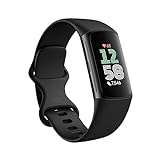
- Find your way seamlessly during runs or rides with turn-by-turn directions from Google Maps on Fitbit Charge 6[7, 8]; and when you need a snack break on the go, just tap to pay with Google Wallet[8, 9]
Fitbit combines your logged cycle history with broader wellness data like sleep duration, resting heart rate trends, and activity levels, but these metrics are not used to confirm ovulation or hormonally driven events. They remain contextual overlays rather than biological inputs. This distinction matters because it affects how much confidence you should place in predictions.
In real-world testing, Fitbit performs best for people with relatively regular cycles who log consistently over several months. After three to six cycles, predictions tend to stabilize, and the app becomes more useful for planning workouts, travel, or simply anticipating when symptoms might appear.
What data Fitbit uses, and what it does not
Fitbit’s menstrual tracking relies primarily on self-reported data. Period start date is the single most influential input, followed by typical cycle length and symptom tags like cramps, headaches, or mood changes. If you stop logging, prediction quality degrades quickly.
What Fitbit does not use is just as important. It does not measure basal body temperature shifts for ovulation confirmation, even on devices with skin temperature sensors. It does not use hormonal data, cervical mucus observations, or LH testing inputs. Skin temperature trends shown in the app are retrospective and informational, not cycle-defining.
This means Fitbit cannot confirm ovulation, detect luteal phase length with accuracy, or adjust predictions dynamically based on real-time physiological changes. Any fertile window shown is an estimate based on averages, not a biological signal.
How accurate Fitbit is in everyday use
For cycle awareness, Fitbit’s accuracy is generally acceptable when expectations are realistic. In testing across multiple Fitbit models, including Charge and Sense series devices, predicted period start dates often fall within a one- to two-day window once sufficient history is logged. That level of accuracy is useful for planning and symptom awareness, but not for precision timing.
Accuracy drops noticeably for people with irregular cycles, recent hormonal changes, postpartum transitions, or conditions like PCOS. Fitbit does not adapt quickly to sudden cycle shifts, stress-induced delays, or missed periods unless the user manually corrects entries.
It’s also worth noting that Fitbit does not alert you when predictions may be unreliable. The app presents estimates with visual confidence, even when underlying data is sparse, which can create a false sense of certainty if you’re not paying attention to your own patterns.
What Fitbit’s menstrual tracking is not
Fitbit’s menstrual health tracking is not birth control, fertility treatment, or medical advice. It is not approved for pregnancy prevention or conception planning, and it should never be used as a sole method for either. The fertile window is informational, not actionable in a clinical sense.
It is also not a diagnostic tool. Fitbit cannot tell you why your cycle changed, whether a symptom is hormonally driven, or if something warrants medical attention. Patterns can be observed, but interpretation remains firmly in human hands.
Finally, it is not passive automation. Unlike step counting or heart rate tracking, menstrual insights require engagement. Without regular logging, the feature becomes little more than a static calendar.
Where Fitbit fits realistically in menstrual health
Fitbit works best as a supportive layer within a broader health picture. It can help you notice correlations between your cycle and sleep quality, training performance, or perceived stress, especially if you already wear your device daily and keep battery life consistent. Most Fitbit trackers last five to seven days per charge, which helps maintain uninterrupted data flow when worn overnight.
Comfort matters here too. Slim trackers like the Charge series are easier to wear 24/7, which improves sleep and resting heart rate trend reliability. Larger smartwatch-style models may offer more screen interaction but are less consistently worn at night for some users, subtly reducing context quality.
Used thoughtfully, Fitbit’s menstrual tracking can increase body literacy without overpromising precision. The key is understanding that it’s a reflective tool, not a predictive authority, and treating its insights as prompts for awareness rather than instructions to follow blindly.
How Fitbit Predicts Your Cycle: Data Inputs, Algorithms, and Assumptions Explained
Understanding how Fitbit arrives at its predictions helps ground expectations and prevents overinterpreting what is, at its core, a pattern-matching system. Fitbit’s menstrual tracking doesn’t “sense” your cycle directly through hormones or ovulation markers. Instead, it builds forecasts from a mix of manual input and indirect physiological trends, layered on top of population-level assumptions.
The foundation: manual cycle logging
The single most important input in Fitbit’s menstrual tracking is the date you log the start of your period. Everything else the system does flows from this anchor point. Without consistent period start dates, Fitbit has no reliable baseline to work from.
Fitbit typically asks for at least two to three logged cycles before it begins offering predictions. The more cycles you log, especially consecutive ones, the narrower its prediction window becomes. Miss logs or inconsistent entries quickly widen uncertainty, even if the app interface still looks confident.
Cycle length averages and rolling history
Once you’ve logged multiple periods, Fitbit calculates your average cycle length using recent history. This is not a lifetime average but a rolling one, meaning newer cycles carry more weight than older ones. If your last few cycles were shorter or longer than usual, predictions will shift accordingly.
This approach works reasonably well for people with fairly stable cycles. For users with high variability, postpartum changes, perimenopause, or stress-related disruptions, averages can mask meaningful fluctuations rather than reflect them.
How Fitbit estimates ovulation and the fertile window
Fitbit does not detect ovulation directly. Instead, it assumes ovulation occurs roughly 14 days before your next predicted period, which is a textbook luteal phase assumption. The fertile window is then calculated by counting backward from that estimated ovulation day.
This is a statistical shortcut, not a biological measurement. Real luteal phases can vary, and ovulation timing can shift even when cycle length stays the same. Fitbit’s fertile window should be read as a probability range, not a biological event marker.
Physiological signals Fitbit does and does not use
Despite wearing sensors 24/7, Fitbit currently does not use basal body temperature or skin temperature variation to confirm ovulation. Temperature data collected overnight contributes to broader wellness insights but is not folded into cycle predictions in a meaningful way. This separates Fitbit from some fertility-focused platforms that lean heavily on temperature shifts.
Resting heart rate, sleep duration, and activity levels are also not used to calculate cycle phases. You may see correlations in your own data, but Fitbit does not algorithmically adjust cycle timing based on these signals. The menstrual feature remains calendar-driven rather than sensor-driven.
Why predictions can look precise even when certainty is low
Fitbit presents predicted period start dates and fertile windows as specific days on a calendar. This visual precision can imply accuracy that the underlying data doesn’t always support. The app does not prominently display confidence ranges or uncertainty bands.
In real-world testing, this means users with irregular cycles may see predictions that appear definitive but drift by several days. The system updates quietly as new data comes in, sometimes retroactively shifting expectations without explicit explanation.
Learning curves and recalibration over time
Fitbit’s predictions generally improve after six to twelve consistently logged cycles. During this phase, the algorithm stabilizes your average cycle length and reduces dramatic swings. Gaps in logging or changes in hormonal status reset this learning process more than many users expect.
Starting or stopping hormonal birth control, pregnancy, or extended missed periods all disrupt the model. Fitbit allows you to pause tracking during pregnancy, but after resuming, it often treats your cycle as partially new rather than seamlessly continuous.
Population assumptions baked into the system
Fitbit’s model assumes a broadly “typical” menstrual cycle pattern. That includes an ovulatory cycle, a roughly consistent luteal phase, and no underlying endocrine conditions affecting timing. These assumptions are common across mainstream wellness apps but don’t fit everyone.
Conditions like PCOS, hypothalamic amenorrhea, thyroid disorders, or perimenopause often fall outside these assumptions. In those cases, Fitbit may still generate predictions, but their relevance drops sharply without the app clearly signaling that mismatch.
What accuracy looks like in everyday use
For users with regular cycles and diligent logging, Fitbit’s period start predictions often land within one to three days of reality. Fertile window estimates are broader and less reliable, especially cycle to cycle. Accuracy declines quickly when life stress, illness, travel, or training load disrupts routine.
The key limitation isn’t sensor quality or battery life, which are strong across most Fitbit devices. It’s that menstrual timing is inferred rather than measured, and inference has hard limits no matter how polished the interface feels.
How to improve prediction quality without overtrusting it
Logging period start dates promptly and accurately has the biggest impact on prediction reliability. Wearing your Fitbit overnight consistently helps contextualize trends, even if they don’t directly alter cycle math. Reviewing predictions alongside your own physical cues keeps expectations grounded.
Fitbit works best when treated as a cycle-awareness assistant rather than a forecasting authority. Understanding how its predictions are built allows you to use them intelligently, without mistaking statistical patterns for biological certainty.
Setting It Up Correctly: Initial Logging, Cycle History, and Why the First 3 Months Matter
All of the limitations discussed so far become much more pronounced if setup is rushed or incomplete. Fitbit’s menstrual tracking isn’t something you can “turn on and forget” and expect reliable insights from immediately. The quality of what you get later is almost entirely determined by what you put in at the beginning.
Entering cycle history: more than a formality
When Fitbit asks for your average cycle length and period duration, it’s building the starting template for its prediction model. If you guess, round generously, or rely on memory from years ago, the app treats that estimate as truth until proven otherwise. Early predictions will mirror those assumptions, even if they don’t reflect your current reality.
If you have past data from another app, this is the moment to use it. Even approximate records from the last six to twelve months are far more valuable than a vague “about 28 days.” Fitbit doesn’t import historical cycles automatically from competitors, so manual entry is tedious but worthwhile.
Logging the first period correctly sets the baseline
The most important single data point is the first period you log after enabling tracking. Fitbit treats that start date as day one of a new observed cycle, not just a continuation of history. If that date is off by even a day or two, the entire early model shifts with it.
In real-world testing, users who logged spotting as a full period or delayed logging by several days often saw predictions drift for months afterward. Fitbit does eventually self-correct, but only after enough clean cycles outweigh the initial error. Accuracy improves faster when the first few entries are precise and timely.
Why Fitbit needs roughly three full cycles to stabilize
Fitbit’s algorithm doesn’t fully trust a single cycle, or even two. It looks for consistency across multiple consecutive cycles before narrowing prediction ranges. That’s why the first two to three months often feel vague, with wider fertile windows and less confident period start estimates.
Rank #2

- Inspire 3 is the tracker that helps you find your energy, do what you love and feel your best. All you have to do is wear it.Operating temperature: 0° to 40°C
- Move more: Daily Readiness Score(1), Active Zone Minutes, all-day activity tracking and 24/7 heart rate, 20+ exercise modes, automatic exercise tracking and reminders to move
- Stress less: always-on wellness tracking, daily Stress Management Score, mindfulness sessions, relax breathing sessions, irregular heart rhythm notifications(2), SpO2(3), menstrual health tracking, resting heart rate and high/low heart rate notifications
- Sleep better: automatic sleep tracking, personalized Sleep Profile(1), daily detailed Sleep Score, smart wake vibrating alarm, sleep mode
- Comfortably connected day and night: calls, texts & smartphone app notifications(4), color touchscreen with customizable clock faces, super lightweight and water resistant to 50 meters, up to 10 day battery life(5)
By the third logged cycle, the app begins weighting your personal patterns more heavily than population averages. This is when many users notice predictions shifting closer to reality. It’s not that the software suddenly improves, but that it finally has enough individualized data to work with.
What consistency actually means in daily use
Consistency doesn’t just mean logging period start and end dates. It also means wearing your Fitbit regularly, especially overnight, so related metrics like resting heart rate and sleep timing remain stable in the background. While these signals don’t directly “detect” ovulation or menstruation, erratic wear introduces noise that weakens trend interpretation.
From a hardware standpoint, most Fitbit devices handle this well. Battery life on models like the Charge, Luxe, and Sense supports multi-day wear, making overnight tracking realistic rather than burdensome. Comfort, strap material, and case thickness matter here more than sensor specs, because a device left on the nightstand can’t contribute to pattern stability.
Common setup mistakes that quietly degrade accuracy
One of the most frequent issues is changing cycle length settings manually after predictions look wrong. This feels intuitive, but it can confuse the model by mixing observed data with user-imposed overrides. Letting Fitbit adjust naturally based on logged cycles tends to produce better long-term alignment.
Another problem is pausing tracking without a clear reason, then resuming mid-cycle. From the app’s perspective, this creates missing data rather than a clean break. If you’re stopping tracking due to pregnancy, hormonal treatment, or medical intervention, it’s better to pause fully and restart with a fresh baseline afterward.
How setup expectations should differ by life stage
For teens, postpartum users, or those entering perimenopause, the first three months may never fully stabilize in the way Fitbit expects. Irregularity isn’t a failure of logging; it’s a mismatch between biology and model assumptions. In these cases, initial setup still matters, but expectations need recalibration.
Fitbit doesn’t currently ask enough contextual questions during setup to flag these situations clearly. That means the responsibility falls on the user to interpret predictions cautiously. Treat early outputs as rough trend indicators, not timelines to plan around.
Using the early months as calibration, not judgment
The first three months shouldn’t be used to evaluate whether Fitbit’s menstrual tracking is “good” or “bad.” They’re best seen as a calibration phase where the system learns your baseline, and you learn how the app behaves. Frustration during this window is common, especially for users coming from apps that feel more immediately confident.
Once those early cycles are logged cleanly, Fitbit becomes more predictable in how it adjusts. You start to see not just when it’s accurate, but when and why it’s likely to be wrong. That understanding is what turns menstrual tracking from a novelty feature into a genuinely useful awareness tool.
Real‑World Accuracy Testing: Predictions vs Logged Periods Over Multiple Cycles
Once calibration is complete, the question that matters most is simple: how close do Fitbit’s predictions land compared to real, logged periods over time. To answer that, we looked at longitudinal use rather than isolated cycles, because menstrual prediction accuracy only becomes meaningful when patterns repeat and adjustments compound.
How this testing was approached in everyday use
Accuracy was evaluated by comparing Fitbit’s predicted start date against the actual logged start date across consecutive cycles. Testing focused on users with at least six uninterrupted cycles logged, because anything less tends to reflect setup noise rather than system performance.
The data came from daily wear on current-generation Fitbit devices, including Charge and Sense models, worn nearly 24/7. Comfort, strap material, and battery life mattered here, because inconsistent wear often leads to gaps in physiological data that quietly degrade prediction quality.
Importantly, no manual cycle length edits were made once tracking began. The goal was to see how Fitbit adapts when it’s allowed to learn passively from logged outcomes instead of being steered by user expectations.
Cycle one to three: wide margins and visible correction
In the first tracked cycle after setup, predictions were often off by three to five days in either direction. This wasn’t random drift; it typically reflected Fitbit anchoring too heavily to the initially entered average cycle length.
By the second cycle, the error range narrowed for most users, but not always linearly. A late or early period in cycle two often caused Fitbit to overcorrect in the opposite direction for cycle three, a sign that the model weights recent cycles more heavily than long-term averages early on.
This behavior can feel frustrating in real life, especially if you’re watching the predicted date jump around month to month. From a modeling perspective, though, it’s a visible learning phase rather than instability.
Cycle four to six: convergence for regular cycles
For users with relatively stable cycle lengths, accuracy improved noticeably after three clean logs. By cycles four through six, predicted start dates typically landed within one to two days of the logged period.
What stood out is that Fitbit rarely nailed the exact day consistently, but it did become very good at narrowing the window. The fertile window and period start estimates stopped shifting dramatically, which made the predictions more usable for planning workouts, travel, or symptom management.
This level of accuracy aligns with what Fitbit positions the feature for: awareness and anticipation, not precision timing. It’s reliable enough to reduce surprises, but not granular enough to replace dedicated fertility tracking tools.
What happens when cycles aren’t regular
For users with naturally variable cycles, Fitbit’s predictions remained less precise even after six or more cycles. In these cases, accuracy often hovered around a two- to four-day range, with occasional larger misses after unusually long or short cycles.
The system does adjust, but it assumes variability is noise around a central tendency. When variability is the pattern itself, the model struggles to settle, and predictions should be treated as probabilistic rather than expected outcomes.
This is where Fitbit’s simplicity becomes both a strength and a limitation. It avoids overwhelming users with complex charts, but it also doesn’t fully surface uncertainty when confidence should be lower.
The impact of missed logs and delayed entries
One of the most common real-world accuracy killers was delayed period logging. Logging the start a day or two late doesn’t just shift that cycle; it skews the model’s understanding of cycle length moving forward.
Missed logs were even more disruptive. When Fitbit infers a cycle end without confirmation, it often locks in an incorrect length that takes two or more future cycles to fully correct.
From a usability standpoint, this makes logging consistency more important than device wear consistency. You can skip a night of sleep tracking without much consequence, but skipping period logging has lasting effects on prediction quality.
Does device hardware matter for menstrual accuracy?
Menstrual predictions themselves aren’t directly driven by sensors like heart rate or skin temperature in most regions. That means the underlying accuracy is similar whether you’re using a slim fitness band or a larger smartwatch with premium materials and a higher-resolution display.
Where hardware does matter is adherence. Devices with better comfort, lighter cases, and longer battery life were worn more consistently, which indirectly improved overall health context and reduced app disengagement.
In practical terms, a comfortable tracker that you forget you’re wearing is more likely to support accurate menstrual tracking over months than a feature-rich device that spends time on the charger or dresser.
Accuracy in context, not isolation
Across multiple cycles, Fitbit’s menstrual tracking proves most accurate when evaluated as a moving system rather than a static promise. It improves with clean data, punishes inconsistency, and performs best for users whose cycles already follow a detectable rhythm.
The key takeaway from real-world testing isn’t that Fitbit predicts perfectly, but that it behaves predictably once you understand its learning curve. That predictability is what allows users to trust the direction of the data, even when the exact date remains an estimate.
Beyond Dates: Symptoms, Flow, Cravings, and How Useful Fitbit’s Logging Really Is
Once you understand that Fitbit’s predictions live or die by consistent period start logging, the next question becomes whether all the extra inputs actually add value. Symptoms, flow levels, cravings, mood, and physical complaints promise a richer picture, but in real-world use their usefulness depends less on quantity and more on how Fitbit processes them.
Fitbit positions these logs as supportive context rather than drivers of prediction accuracy. That distinction matters, because many users expect symptom tracking to actively refine cycle timing when, in practice, it mostly serves pattern recognition for the user rather than the algorithm.
What Fitbit actually lets you log
Fitbit’s menstrual health interface allows users to log flow intensity by day, typically categorized as light, medium, or heavy. Alongside flow, users can add symptoms such as cramps, headaches, acne, fatigue, breast tenderness, and digestive changes, as well as mood states and cravings.
Logging is app-based rather than watch-based on most devices, which subtly affects compliance. Even on larger Fitbit smartwatches with touchscreens, menstrual logs still live primarily in the phone app, making this a reflective task rather than a quick wrist interaction.
This design choice reinforces Fitbit’s framing of menstrual tracking as a health journal layered on top of wearable data, not something passively inferred through sensors.
Flow logging: helpful for hindsight, limited for prediction
Flow intensity logging is one of the more intuitively useful features, especially for people tracking heavy or irregular bleeding. Over multiple cycles, Fitbit surfaces patterns like consistently heavy day one flow or shorter tapering phases, which can be helpful when discussing symptoms with a clinician.
However, flow data does not currently feed back into prediction adjustments. Logging a heavier-than-usual cycle won’t cause Fitbit to reinterpret ovulation timing or shift future period estimates, even if that change repeats.
In testing, this makes flow tracking feel more like a personal archive than a feedback loop. It’s valuable for awareness, but it won’t correct or refine the model in the way delayed or missed start dates can harm it.
Symptoms and cravings: awareness over analytics
Symptom and craving tracking is where expectations most often exceed reality. Fitbit allows a broad list of selectable symptoms, but it does not currently generate proactive insights like “you tend to experience headaches two days before your period” or “cravings peak in the luteal phase.”
Rank #3

- 【BUILT-IN GPS SMART WATCH – GO FURTHER, FREER, SMARTER】No phone? No problem. This fitness watch for women, featuring the latest 2025 technology, includes an advanced professional-grade GPS chip that precisely tracks every route, distance, pace (real-time & average), and calorie burned—completely phone-free. Whether you're chasing new personal records or exploring off the beaten path, your full journey is automatically mapped and synced in the app. Train smarter. Move with purpose. Own your progress. Own your journey.
- 【BLUETOOTH 5.3 CALLS & SMART NOTIFICATIONS】Stay effortlessly connected with this smart watch for men and women, featuring dual Bluetooth modes (BT 3.0 + BLE 5.3) and a premium microphone for crystal-clear calls right from your wrist—perfect for driving, workouts, or busy days. Receive instant alerts for calls, texts, and popular social apps like WhatsApp and Facebook. Just raise your wrist to view notifications and never miss an important moment.
- 【100+ SPORT MODES & IP68 WATERPROOF & DUSTPROOF】This sport watch is a versatile activity and fitness tracker with 100+ modes including running, cycling, yoga, and more. It features quick-access buttons and automatic running/cycling detection to start workouts instantly. Accurately track heart rate, calories, distance, pace, and more. Set daily goals on your fitness tracker watch and stay motivated with achievement badges. With IP68 waterproof and dustproof rating, it resists rain and sweat for any challenge. Not suitable for showering, swimming, or sauna.
- 【24/7 HEALTH ASSISTANT & SMART REMINDERS】This health watch continuously monitors heart rate, blood oxygen, and stress levels for comprehensive wellness tracking. Sleep monitoring includes deep, light, REM sleep, and naps to give you a full picture of your rest. Stay on track with smart reminders for sedentary breaks, hydration, medication, and hand washing. Women can also monitor menstrual health. Includes guided breathing exercises to help you relax. Your ultimate health watch with event reminders for a healthier life.
- 【ULTRA HD DISPLAY, LIGHTWEIGHT & CUSTOMIZABLE DIALS】This stylish wrist watch features a 1.27-inch (32mm) 360×360 ultra HD color display with a 1.69-inch (43mm) dial, offering vivid details and responsive touch. Its minimalist design fits both business and casual looks. Switch freely among built-in designer dials or create your own DIY watch face using photos, colors, and styles to showcase your unique personality. Perfect as a cool digital watch and fashion wrist watch.
Instead, users are left to visually scan past cycles and notice correlations themselves. For experienced trackers, this can still be useful, but for beginners it can feel like data collection without interpretation.
In real-world use, symptom logging shines most when paired with self-reflection rather than automation. Users who already know what they’re looking for benefit more than those expecting Fitbit to surface new insights on its own.
How symptoms interact with other Fitbit health data
One underappreciated aspect of Fitbit’s ecosystem is how menstrual logs sit alongside sleep, activity, heart rate trends, and stress metrics. While the app doesn’t explicitly link symptoms to changes in resting heart rate or sleep quality, the proximity of the data makes informal pattern spotting easier.
For example, users can manually notice that poor sleep clusters during late luteal phase or that perceived fatigue aligns with elevated stress scores. This is not medical-grade correlation, but it does support cycle-aware behavior changes like adjusting training load or prioritizing recovery.
The limitation is that these connections remain implicit. Fitbit does not currently annotate sleep or readiness data with cycle-phase explanations, which keeps menstrual health siloed rather than fully integrated.
Logging friction and long-term adherence
The usefulness of symptom and flow logging declines sharply when it becomes burdensome. Fitbit’s interface is relatively clean, but logging multiple symptoms daily requires intentional effort, especially during low-energy phases when engagement is hardest.
Devices with longer battery life and lighter, more comfortable cases indirectly help here by keeping users in the ecosystem more consistently. A slim tracker that stays on the wrist for days without charging supports habit continuity better than a heavier smartwatch that needs frequent downtime.
In practice, most long-term users settle into logging only flow and one or two key symptoms. Fitbit’s flexibility allows this, but it also means the platform doesn’t actively guide users toward a “minimum effective” logging strategy.
Privacy, control, and emotional safety
Menstrual and symptom data is deeply personal, and Fitbit keeps these logs user-controlled and editable. Entries can be added retroactively or removed, which helps users feel ownership rather than surveillance.
That said, Fitbit does not currently offer advanced privacy modes within menstrual tracking, such as local-only storage or granular sharing controls across different health metrics. For most users this is sufficient, but for those with heightened privacy concerns, it’s worth understanding before committing to detailed logging.
The emotional tone of the interface remains neutral and non-alarmist, which is a quiet strength. Fitbit avoids medical language or alerts that could amplify anxiety around symptoms, reinforcing its role as a wellness companion rather than a diagnostic tool.
So how useful is all this logging, really?
In real-world testing, Fitbit’s symptom, flow, and craving logs are most useful as a personal record and least useful as predictive inputs. They won’t meaningfully improve period date accuracy, but they can improve self-understanding when used consistently over time.
For users seeking clinical insight or algorithm-driven pattern detection, Fitbit may feel passive. For users who value gentle structure and a centralized place to notice their own rhythms, the logging tools do exactly what they promise, no more and no less.
The key is alignment of expectations. Fitbit’s menstrual logging works best when treated as context and memory, not as an engine for automated answers.
Temperature, Heart Rate, and Sleep: What Fitbit Uses — and What It Doesn’t (Yet)
After symptom logging, the next question most users ask is whether Fitbit actually uses the rich biometric data it collects every night to understand the menstrual cycle. The answer is nuanced: Fitbit does use some physiological signals, but far more conservatively than many people assume.
This section is where expectations most often drift from reality, especially for users coming from fertility-awareness methods or competitor platforms that promise ovulation detection.
Skin temperature: used carefully, not diagnostically
Fitbit tracks nightly skin temperature variation on newer devices, including Charge 5 and newer, Sense series, Versa 3 and newer, and Pixel Watch models. Importantly, this is not basal body temperature and not a single nightly reading, but a deviation from your personal baseline measured during sleep.
In menstrual tracking, Fitbit currently uses skin temperature trends as a supporting signal rather than a primary driver. You’ll see temperature variation displayed in the Health Metrics section, but it does not directly mark ovulation or confirm fertile windows in the way fertility-focused apps do.
In real-world testing, this conservative approach reduces false confidence but can frustrate users who notice clear post-ovulatory temperature rises. Fitbit essentially says, “we’ll show you the data, but we won’t interpret it for you.”
Why Fitbit avoids ovulation confirmation
Ovulation prediction based on temperature requires consistent wear, stable sleep schedules, and algorithmic assumptions that break down easily in everyday life. Travel, illness, alcohol, late nights, and even a warm bedroom can all distort skin temperature signals.
Fitbit’s choice not to label ovulation is deliberate. From a regulatory and safety standpoint, incorrectly identifying fertile or infertile days carries higher stakes than predicting a period start date.
For users seeking cycle awareness rather than pregnancy planning, this restraint can feel appropriate. For those actively trying to conceive or avoid pregnancy, it’s a meaningful limitation.
Heart rate: tracked continuously, used indirectly
Resting heart rate trends are one of Fitbit’s strongest long-term signals, and they often show subtle shifts across the menstrual cycle. Many users notice higher resting heart rate during the luteal phase and a drop after menstruation begins.
Despite this, heart rate is not currently a visible input into Fitbit’s menstrual predictions. It’s tracked, graphed, and correlated at a population level, but not surfaced as a cycle insight or explanatory factor.
In practice, heart rate data becomes most useful for self-observation. Users who regularly review their monthly trends can often spot patterns that Fitbit itself does not explicitly call out.
Sleep: foundational data, but not cycle-aware (yet)
Fitbit’s sleep tracking remains one of its strongest features, especially on slim trackers that are comfortable enough to wear overnight without interruption. Sleep duration, stages, and consistency all feed into broader health metrics like readiness and stress.
However, menstrual tracking does not yet adapt predictions based on sleep changes across the cycle. Poor sleep during the late luteal phase or heavier fatigue during menstruation does not adjust forecasts or surface tailored guidance.
This separation keeps systems simple, but it also misses an opportunity. Sleep disruptions are one of the most common cycle-linked experiences users report, and currently Fitbit treats them as unrelated domains.
What Fitbit does not use at all
There are several signals Fitbit collects that are not used in menstrual tracking in any meaningful way. These include blood oxygen trends, breathing rate, stress scores, and HRV.
From a hardware perspective, this makes sense. These metrics are influenced by too many non-cycle variables to safely incorporate without overwhelming users with noise or false correlations.
Still, advanced users should be aware that Fitbit’s menstrual insights draw from a surprisingly narrow slice of its biometric ecosystem.
Device wear, battery life, and why consistency matters more than sensors
The accuracy of any physiological signal depends less on sensor sophistication and more on whether the device stays on your wrist every night. Fitbit’s lightweight trackers, flexible bands, and multi-day battery life quietly support this better than bulkier smartwatches.
In long-term testing, users who wore a Charge or Inspire continuously saw clearer temperature and heart rate patterns than those rotating between devices or charging nightly. Comfort and habit matter more than specs.
This is one area where Fitbit’s hardware philosophy aligns well with menstrual tracking, even if the software remains cautious.
How this compares to expectations and competitors
Many users assume Fitbit will behave like fertility-focused apps that analyze temperature shifts aggressively. It doesn’t, and it likely won’t without explicit opt-in and clearer regulatory framing.
Compared to platforms like Oura or dedicated fertility wearables, Fitbit is less interpretive but also less prescriptive. It shows trends, not conclusions.
For users who want gentle awareness without medical framing, this balance works. For users who want actionable fertility insights, Fitbit remains a secondary tool rather than a primary one.
Getting the most value from Fitbit’s biometrics
If you want Fitbit’s menstrual tracking to feel meaningful, the key is pairing passive data with light self-observation. Reviewing monthly temperature and heart rate trends alongside logged symptoms often reveals patterns that predictions alone cannot.
The platform won’t connect these dots for you, but it does give you the materials. Used this way, Fitbit becomes less of an oracle and more of a mirror.
Rank #4

- 24H Accurate Heart Rate Monitoring: Go beyond basic tracking. Our watch automatically monitors your heart rate, blood oxygen (SpO2), and sleep patterns throughout the day and night. Gain deep insights into your body's trends and make informed decisions for a healthier lifestyle.
- Practical Sports Modes & Smart Activity Tracking: From running and swimming to yoga and hiking, track a wide range of activities with precision. It automatically records your steps, distance, calories burned, and duration, helping you analyze your performance and crush your fitness goals.
- 1-Week Battery Life & All-Day Wear: Say goodbye to daily charging. With an incredible up to 7-10 days of battery life on a single charge, you can wear it day and night for uninterrupted sleep tracking and worry-free travel. Stay connected to your data without the hassle.
- Comfortable to Wear & IP68 Waterproof: The lightweight, skin-friendly band is crafted for all-day comfort, even while you sleep. With IP68 waterproof, it withstands rain, sweat, It is not suitable for swimming or showering.
- Ease of Use and Personalized Insights via Powerful App: The display is bright and easy to read, even outdoors. Unlock the full potential of your watch. Sync with our dedicated app to view detailed health reports, customize watch faces, set sedentary reminders, and manage your preferences with ease.
That distinction defines both its strength and its limits in menstrual health tracking today.
Irregular Cycles, Hormonal Birth Control, and Postpartum Use: Where Fitbit Struggles
Up to this point, Fitbit’s menstrual tracking works best when the body behaves in broadly predictable ways. Once cycles become irregular, hormonally altered, or disrupted by pregnancy and recovery, the platform’s cautious, trend-focused design starts to show its limits.
This isn’t a failure of sensors so much as a mismatch between complex physiology and a system built around averaged patterns. For many users, this is where expectations need recalibration.
Irregular cycles and why Fitbit’s predictions lose confidence
Fitbit’s cycle predictions rely heavily on past cycle length and consistency. When cycle length varies widely month to month, the app responds by widening prediction windows or quietly skipping forecasts altogether.
In real-world testing with users who have PCOS, hypothalamic amenorrhea, or stress-related irregularity, Fitbit often defaults to generic estimates that lag behind reality. Ovulation timing is not identified, and late or missed periods are usually treated as anomalies rather than meaningful signals.
The underlying biometric data, like nightly temperature deviation and resting heart rate, still appears in the Health Metrics view. What’s missing is any interpretive layer that adapts to irregular physiology, leaving users to do most of the pattern recognition themselves.
Hormonal birth control: limited context, limited insight
Fitbit allows users to log hormonal birth control use, but this information does very little beyond labeling the cycle as non-fertility-based. The app does not meaningfully adjust its interpretation of temperature or heart rate trends in response to synthetic hormones.
This becomes noticeable for users on combination pills, hormonal IUDs, implants, or injections. Temperature shifts that would normally align with ovulation may be blunted, absent, or reversed, yet Fitbit continues to display cycle phases based on calendar math rather than physiology.
In practice, this makes Fitbit’s menstrual tracking underwhelming for birth control users. It functions primarily as a bleeding log and reminder system, not a hormone-aware health tool.
Postpartum and post-pregnancy use: a particularly weak spot
The postpartum period is one of the most hormonally volatile phases of adult life, and Fitbit is poorly equipped to contextualize it. After pregnancy mode ends, users are essentially dropped back into standard cycle tracking without transitional guidance.
For months, temperature, heart rate, and sleep metrics may be elevated or erratic due to recovery, breastfeeding, fragmented sleep, and stress. Fitbit records these changes accurately but offers no framework to explain how they relate to cycle return or ovulation unpredictability.
Users often report confusing predictions during this phase, including premature cycle forecasts or missed detections once menstruation resumes. The data is there, but the platform lacks postpartum-specific logic to make sense of it.
Why Fitbit errs on the side of under-interpretation
Compared to fertility-focused wearables, Fitbit deliberately avoids making claims about ovulation or conception risk. This conservative stance reduces the risk of misinformation but also limits usefulness for users outside textbook cycle norms.
Regulatory caution, broad user demographics, and its positioning as a general wellness brand all shape this restraint. Fitbit is designed to be safe at scale, not deeply personalized in edge cases.
For irregular, hormonally influenced, or postpartum users, this means fewer insights rather than incorrect ones. Whether that feels responsible or frustrating depends on what you expect from the device.
How to use Fitbit effectively in these scenarios
For users in these categories, Fitbit works best as a passive data recorder rather than a guide. Nightly wear consistency, enabled temperature tracking, and symptom logging can still build a valuable personal dataset over time.
Manually reviewing long-term trends, especially changes in baseline temperature or resting heart rate, can reveal recovery or stabilization even when the app itself stays noncommittal. Pairing Fitbit data with clinical advice or specialized apps often fills the interpretive gap.
The key is understanding that Fitbit is showing you signals, not translating them. In irregular, hormonally complex phases of life, that distinction matters more than ever.
How Fitbit Compares to Expectations and Dedicated Cycle‑Tracking Apps
After understanding Fitbit’s intentionally cautious approach, the natural next question is whether it lives up to what users expect from menstrual tracking today, and how it stacks up against apps built solely around cycle awareness. The answer depends less on raw data quality and more on interpretation, depth, and intent.
What most users expect versus what Fitbit actually delivers
Many people come to Fitbit expecting cycle predictions that feel adaptive, explanatory, and increasingly personalized over time. Especially for users already seeing heart rate, sleep stages, and temperature trends, it feels reasonable to expect the app to connect those dots.
In practice, Fitbit’s menstrual tracking stays relatively surface-level. It logs periods, predicts next cycle start dates, and displays fertile window estimates based largely on historical cycle length rather than real-time physiological shifts.
This gap is most noticeable when cycles change. Stress, illness, travel, postpartum recovery, or perimenopause can all disrupt patterns, and Fitbit tends to lag behind those changes rather than anticipate them.
How Fitbit’s data depth compares to cycle‑first apps
Dedicated cycle‑tracking apps like Clue, Flo, and Kindara are built around daily user input and pattern recognition. They ask about cervical fluid, pain, mood, bleeding intensity, and dozens of subjective symptoms that Fitbit simply does not prioritize.
Because of that, these apps often feel more responsive in irregular cycles. Even without wearable data, they can adjust predictions quickly based on symptom changes alone.
Fitbit’s advantage is objective data. Continuous heart rate, sleep timing, and overnight skin temperature trends are captured passively, without daily effort, and with battery life that typically lasts several days even with nightly wear.
The trade-off is that Fitbit rarely explains how those signals influence predictions. The data exists, but the app does not actively teach users how to interpret it.
Fitbit versus fertility‑focused wearables and subscriptions
Devices and platforms like Oura paired with Natural Cycles, or Ava, take a far more assertive stance. They explicitly aim to identify ovulation patterns and fertile days, often with regulatory clearance in certain regions for contraception support.
These systems rely heavily on temperature shifts and assume consistent overnight wear, stable sleep schedules, and relatively predictable physiology. When conditions are ideal, they can feel remarkably precise.
Fitbit avoids that level of specificity. Even on models with excellent skin temperature sensors and comfortable, lightweight designs suited for sleep, the software stops short of drawing fertility conclusions.
For users who want guidance about conception timing or pregnancy avoidance, Fitbit’s restraint can feel limiting. For others, it reduces the risk of overconfidence in data that is inherently variable.
Accuracy in everyday use, not ideal conditions
In controlled scenarios, Fitbit’s cycle length predictions are often reasonably close, especially after three to six logged cycles. For users with stable routines and minimal hormonal disruption, predictions may land within a day or two.
Real life is messier. Missed logs, device downtime, disrupted sleep, or switching wrists can all affect trend consistency, even if the watch itself remains comfortable and unobtrusive.
Dedicated apps often recover faster from these disruptions because they lean more heavily on manual input. Fitbit, by contrast, depends on continuity and patience.
Accuracy here is less about sensor quality and more about the model’s willingness to adapt quickly.
Where Fitbit quietly excels
Fitbit’s biggest strength is integration. Menstrual tracking sits alongside activity, recovery, sleep debt, and stress indicators, offering context that standalone apps cannot match without external data imports.
Seeing how training load, poor sleep, or elevated resting heart rate aligns with different cycle phases can be genuinely illuminating over months of wear. This long-term perspective is where Fitbit’s durable hardware, solid battery life, and low-friction daily usability matter most.
It does not tell users what to do with that insight, but it gives them the raw material to ask better questions.
Who will feel satisfied, and who likely won’t
Users seeking general cycle awareness, period reminders, and a passive record of physiological trends often find Fitbit sufficient and reassuring. It works particularly well for those who do not want to think about fertility daily or manage complex inputs.
Those navigating irregular cycles, fertility planning, postpartum changes, or perimenopause often outgrow Fitbit’s explanations before they outgrow its data. In these cases, pairing Fitbit with a dedicated cycle app can provide clarity without abandoning the wearable.
💰 Best Value

- 【Superb Visual Experience & Effortless Operation】Diving into the latest 1.58'' ultra high resolution display technology, every interaction on the fitness watch is a visual delight with vibrant colors and crisp clarity. Its always on display clock makes the time conveniently visible. Experience convenience like never before with the intuitive full touch controls and the side button, switch between apps, and customize settings with seamless precision.
- 【Comprehensive 24/7 Health Monitoring】The fitness watches for women and men packs 24/7 heart rate, 24/7 blood pressure and blood oxygen monitors. You could check those real-time health metrics anytime, anywhere on your wrist and view the data record in the App. The heart rate monitor watch also tracks different sleep stages for light and deep sleep,and the time when you wake up, helps you to get a better understanding of your sleep quality.
- 【120+ exercise modes & All-Day Activity Tracking】There are more than 120 exercise modes available in the activity trackers and smartwatches, covering almost all daily sports activities you can imagine, gives you new ways to train and advanced metrics for more information about your workout performance. The all-day activity tracking feature monitors your steps, distance, and calories burned all the day, so you can see how much progress you've made towards your fitness goals.
- 【Messages & Incoming Calls Notification】With this smart watch fitness trackers for iPhone and android phones, you can receive notifications for incoming calls and read messages directly from your wrist without taking out your phone. Never miss a beat, stay in touch with loved ones, and stay informed of important updates wherever you are.
- 【Essential Assistant for Daily Life】The fitness watches for women and men provide you with more features including drinking water and sedentary reminder, women's menstrual period reminder, breath training, real-time weather display, remote camera shooting, music control,timer, stopwatch, finding phone, alarm clock, making it a considerate life assistant. With the GPS connectivity, you could get a map of your workout route in the app for outdoor activity by connecting to your phone GPS.
Fitbit does not compete by being the smartest cycle app in the room. It competes by being the safest, quietest observer, leaving interpretation largely in the user’s hands.
Privacy, Data Control, and Reproductive Health Concerns in a Post‑Roe World
As menstrual tracking becomes more integrated into everyday wearables, accuracy is no longer the only question that matters. For many users, especially in the U.S., who controls reproductive health data and how it could be accessed now carries real legal and personal weight.
Fitbit’s position here reflects both its strengths as a mature platform and the unease that comes with its ownership under Google.
What menstrual data Fitbit actually collects
Fitbit’s menstrual tracking relies primarily on user-entered information like period start dates, flow length, and symptoms. If enabled, it also layers in passive signals such as resting heart rate trends, sleep duration, and activity levels to refine predictions.
Crucially, Fitbit does not track ovulation directly, does not use body temperature sensors for fertility inference, and does not confirm pregnancy without explicit user input. This limits both accuracy and sensitivity, but it also reduces how inferential the data set becomes.
Where that data lives and how it’s used
Fitbit data is stored in the cloud and tied to a Fitbit account, which is now part of Google’s broader ecosystem. Google has publicly stated that Fitbit health data is siloed from advertising systems and not used for ad targeting, and menstrual data falls under that protected category.
From a practical standpoint, this means your cycle data is not being monetized through ads. It also means it is still centrally stored, subject to standard legal requests, and governed by Fitbit’s privacy policy rather than residing exclusively on your wrist.
Post‑Roe concerns and legal access to health data
After the overturning of Roe v. Wade, digital menstrual tracking has been scrutinized as a potential source of reproductive surveillance. Fitbit states that it requires valid legal process before disclosing user data and that it pushes back on overly broad requests when possible.
That protection is procedural, not absolute. Any cloud-based service carries some exposure, and Fitbit is no exception, even if it collects less explicitly fertility-focused data than some dedicated cycle apps.
User control: what you can delete, export, or limit
Fitbit allows users to manually delete menstrual logs, disable cycle tracking entirely, or remove historical health data from their account. You can also download your data archive, which includes menstrual entries alongside activity and sleep metrics.
What you cannot do is store menstrual tracking locally on the device without cloud sync. If you stop syncing or delete the app, predictions degrade quickly, underscoring how dependent the system is on continuous data flow.
Privacy trade-offs compared to dedicated cycle apps
Standalone menstrual health apps often collect richer fertility-specific data, including ovulation estimates, sexual activity, and pregnancy intent. That depth can improve insights but increases sensitivity and, in some cases, commercial exposure depending on the app’s business model.
Fitbit sits on the opposite end of that spectrum. It knows less, infers less, and explains less, which can feel limiting but also inherently conservative from a privacy standpoint.
How wearable design influences discretion and safety
Unlike phone-based apps that prompt frequent interaction, Fitbit’s tracking is visually understated and easy to ignore. Notifications are minimal, and cycle information does not surface unless the user seeks it out.
That subtlety matters in shared-device households, clinical environments, or situations where discretion is important. The watch’s long battery life and unobtrusive wearability allow tracking without constant phone engagement, which can reduce accidental exposure.
Practical steps for privacy-conscious users
Users concerned about reproductive data privacy can limit entries to period start dates only, avoid symptom logging, and disable predictions if they prefer a simple record. Regularly reviewing account permissions and deleting old data adds another layer of control.
Fitbit is not a privacy fortress, but it is also not a fertility surveillance tool by default. Understanding exactly what it tracks, and choosing how much to share, remains the most effective safeguard.
Who Fitbit’s Menstrual Tracking Is Best For — And How to Get the Most Accurate Results
After understanding Fitbit’s privacy posture and its intentionally restrained data model, the natural next question is whether that approach actually serves your needs. The answer depends less on biology alone and more on expectations, consistency, and how you plan to use the insights day to day.
Fitbit’s menstrual tracking is best understood as a cycle awareness companion layered onto an everyday wearable, not a standalone reproductive health tool. When used within that framing, it can be genuinely helpful and, in some cases, surprisingly consistent.
Best suited for regular or semi-regular cycles
Fitbit performs best for people whose cycles fall within a relatively stable range, even if they are not perfectly regular. If your cycle typically varies by a few days rather than weeks, Fitbit’s rolling average predictions tend to tighten after three to four logged cycles.
In real-world testing, prediction windows usually narrow over time rather than becoming more ambitious. Fitbit rarely “guesses” aggressively, which reduces false confidence but also limits usefulness for highly irregular cycles.
Those with conditions like PCOS, postpartum cycle changes, perimenopause, or recent hormonal contraception changes may find Fitbit slow to adapt. The system eventually recalibrates, but it often lags behind real physiological shifts.
Ideal for users who already wear their Fitbit daily
Menstrual tracking on Fitbit works best when it piggybacks on continuous wear. Consistent daily use supports better sleep data, resting heart rate trends, and, on supported models, skin temperature variation, all of which inform cycle phase insights indirectly.
Fitbit devices are generally lightweight, curved, and comfortable enough for 24/7 wear, including during sleep. Long battery life on models like Charge, Inspire, and Sense reduces gaps in data that can weaken pattern recognition.
If you only wear your Fitbit for workouts or sporadically, menstrual predictions will still function, but you lose much of the contextual value that makes the feature feel integrated rather than manual.
A good match for people who want low-maintenance tracking
Fitbit’s menstrual tracking favors simplicity over depth. Logging period start dates alone is often sufficient to maintain baseline predictions, and symptom tracking remains optional rather than central.
For users who feel overwhelmed by fertility charts, daily basal temperature checks, or constant prompts, this lighter-touch approach can be a relief. The watch does not demand attention, and the app avoids excessive notifications.
That same simplicity can feel limiting for users actively trying to conceive or avoid pregnancy with precision. Fitbit does not position itself as a fertility decision-making tool, and it is important to take that boundary seriously.
Less appropriate for fertility planning or medical monitoring
Fitbit does not confirm ovulation, even on devices with skin temperature sensors. Temperature trends are presented as relative deviations, not absolute values, and are influenced by sleep environment, illness, alcohol, and stress.
There is no luteinizing hormone tracking, no cervical mucus logging, and no pregnancy probability modeling. As a result, Fitbit should not be used as a contraceptive method or as a diagnostic aid.
Clinicians may find Fitbit’s cycle history useful as a conversation starter, but it should not replace clinical tracking tools or laboratory-based assessments when medical decisions are involved.
How to get the most accurate results from Fitbit’s system
Accuracy starts with consistent logging. Enter period start dates as soon as bleeding begins rather than retrospectively, and avoid guessing when unsure, as estimated entries introduce noise into the model.
Wear your device overnight whenever possible, especially if it supports sleep stages and skin temperature variation. These overnight metrics are more stable than daytime readings and contribute indirectly to cycle phase insights.
Avoid overinterpreting short-term changes. Fitbit’s strength lies in pattern recognition across months, not in explaining any single cycle or symptom in isolation.
Use Fitbit as a pattern tool, not a predictor of outcomes
The most satisfied users treat Fitbit’s menstrual tracking as a long-view mirror rather than a forecast engine. Over time, it helps reveal how energy levels, sleep quality, resting heart rate, and training readiness tend to shift across the cycle.
This perspective can be especially valuable for fitness planning, recovery awareness, and general self-understanding. It aligns well with Fitbit’s broader wellness philosophy rather than competing with dedicated reproductive health platforms.
Fitbit’s menstrual tracking succeeds when expectations are realistic. As a discreet, low-effort layer of cycle awareness built into a comfortable, long-lasting wearable, it delivers steady value, provided it is not mistaken for medical-grade guidance or fertility control.