The Fossil Q Marshal arrived at a very specific moment in smartwatch history, when Android Wear was still trying to convince traditional watch buyers that a touchscreen didn’t have to look like a gadget. Fossil wasn’t chasing athletes or quantified-self obsessives here; it was targeting people who already liked the idea of a substantial steel watch and wanted smart features without abandoning familiar proportions, weight, and visual presence. If you’re looking at the Q Marshal today, chances are you’re drawn to that same promise and wondering how much of it still holds up in 2026.
This was Fossil’s answer to a growing frustration with early smartwatches that felt disposable, plasticky, or aggressively tech-forward. The Q Marshal was meant to be worn like a conventional field or pilot-style watch, swapped onto leather or steel straps, and paired with both casual and office wear without explanation. Understanding that intent is crucial, because many of its strengths and weaknesses make sense only when you see what Fossil was prioritizing at the time.
What follows is not a nostalgia piece, but a reality check: why the Q Marshal existed, what compromises Fossil knowingly made, and how those decisions age in a world of faster chips, brighter screens, and health-first wearables.
A Fashion Watch Brand Translating Its DNA to Android Wear
Fossil entered the smartwatch space from a very different angle than Samsung, LG, or Motorola. The Q Marshal was designed by a company whose core competence was case design, materials, and wearability, not silicon optimization or software ecosystems. That’s why the watch feels overbuilt by smartwatch standards, with a thick stainless steel case, drilled lugs, and a reassuring heft that mimics traditional tool watches more than consumer electronics.
🏆 #1 Best Overall
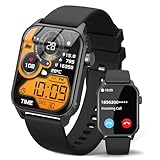
- 【1.83" HD Display & Customizable Watch Faces】Immerse yourself in a vibrant 1.83-inch IPS display, boasting a sharp resolution of 240*284 for crystal-clear visuals. Effortlessly personalize your smart watch with a wide array of customizable watch faces to suit your personal style for every occasion—whether trendy, artistic, or minimalist—ideal for casual, sporty, or professional. Its sleek, modern design complements any outfit, blending technology and fashion seamlessly for everyday wear
- 【120 Sports Modes & Advanced Health Tracking】Our TK29 smart watches for women men come equipped with 120 sports modes, allowing you to effortlessly track a variety of activities such as walking, running, cycling, and swimming. With integrated heart rate and sleep monitors, you can maintain a comprehensive overview of your health, achieve your fitness goals, and maintain a balanced, active lifestyle with ease. Your ideal wellness companion (Note: Step recording starts after exceeding 20 steps)
- 【IP67 Waterproof & Long-Lasting Battery】Designed to keep up with your active lifestyle, this smartwatch features an IP67 waterproof rating, ensuring it can withstand splashes, sweat, and even brief submersion, making it perfect for workouts, outdoor adventures, or rainy days. Its reliable 350mAh battery offering 5-7 days of active use and up to 30 days in standby mode, significantly reducing frequent charging. Ideal for all-day wear, whether you’re at the gym, outdoors, or simply on the go
- 【Stay Connected Anytime, Anywhere】Stay informed and in control with Bluetooth call and music control features. Receive real-time notifications for calls, messages, and social media apps like Facebook, WhatsApp, Twitter, and Instagram directly on your smartwatch. Easily manage calls, control your music playlist, and stay updated without needing to reach for your phone. Perfect for work, workouts, or on-the-go, this watch keeps you connected and never miss important updates wherever you are
- 【Multifunction & Wide Compatibility】Seamlessly handle heart rate monitoring, sleep tracking, and enjoy conveniences like camera/music control, Seamlessly handle heart rate monitoring, sleep tracking, and more-all directly from your wrist. This 1.83 inches HD smartwatch is compatible with iPhone (iOS 9.0+) & Android (5.0+), ensuring smooth daily connectivity and convenience throughout your day. More than just a timepiece, it’s a stylish, all-in-one wearable for smarter, healthier living
At roughly 46mm in diameter and well over 14mm thick, the Q Marshal was unapologetically large even by mid-2010s norms. Fossil leaned into that scale to create space for Android Wear hardware while maintaining proportions that wouldn’t look out of place next to a mechanical chronograph or field watch. On-wrist, it feels closer to a conventional Fossil Nate or Machine than a piece of tech, which was exactly the point.
This design-first approach also explains the conservative display choice. The flat tire-style LCD screen wasn’t about innovation; it was about cost control and acceptable readability at the time, even if it sacrificed deep blacks and long-term efficiency compared to OLED panels. Fossil prioritized delivering a familiar watch silhouette over pushing display technology.
Android Wear as a Notification Companion, Not a Fitness Device
When the Q Marshal launched, Android Wear was primarily a notification-forward platform. The expectation was that your phone handled the heavy lifting, while the watch surfaced alerts, basic interactions, and voice commands. The Q Marshal fits squarely into that philosophy, offering vibration alerts, Google Assistant access, and glanceable information rather than deep standalone functionality.
Health tracking was present, but it was never the headline feature. A basic accelerometer enabled step counting, and heart rate monitoring was included more as a checkbox than a differentiator. There was no GPS, no advanced workout metrics, and no pretense that this was a sports watch. Fossil assumed buyers cared more about knowing who was calling or messaging than about closing activity rings.
This context matters today because it frames expectations. The Q Marshal was never meant to compete with a Garmin, nor even a modern Wear OS fitness-first device. Its strengths lie in passive daily use, not active performance tracking.
Compromises That Made Sense Then, and Age Predictably Now
Internally, the Q Marshal relied on Qualcomm’s Snapdragon Wear 2100 platform, which was already modest at launch and feels unmistakably dated today. Fossil made a calculated trade-off, accepting slower app launches and occasional stutters in exchange for stable thermals and all-day battery targets under light use. In 2016, that was an acceptable balance for a watch meant to feel dependable rather than cutting-edge.
Battery life expectations were similarly grounded. The Q Marshal was designed to get through a workday with notifications, occasional interactions, and nighttime charging, not to last multiple days. Fossil even leaned into the ritual of daily charging as part of smartwatch ownership, rather than trying to redefine it.
Seen through this lens, the Q Marshal’s limitations aren’t accidents; they’re the result of clear priorities. Fossil aimed to build a smartwatch that traditional watch wearers wouldn’t immediately reject, even if that meant conceding speed, efficiency, and future-proofing. As we move deeper into this review, that context will help explain which parts of the Q Marshal still make sense on the used market, and which feel firmly anchored to the era it came from.
Design, Case Dimensions, and Wearability: A Traditional Watch First
Those priorities Fossil set internally become most obvious the moment you pick up the Q Marshal. This is a smartwatch that was designed to look like a watch first and behave like a computer second, even if that meant embracing proportions and materials that feel conservative by modern Wear OS standards.
Rather than chasing thinness or minimalism, Fossil leaned heavily into traditional watch cues. The result is a piece that still blends into a conventional watch collection far more naturally than many contemporary smartwatches.
Case Design and Materials
The Q Marshal uses a stainless steel case with a distinctly industrial profile, complete with pronounced lugs, a wide fixed bezel, and a single large crown-style button on the right side. It feels closer to a rugged field or pilot watch than a piece of consumer electronics, which was very much the point.
Finishing varies by model, with brushed steel, black ion-plated, and darker gunmetal options available. The finishing quality is solid rather than luxurious, but the steel construction gives the watch real heft and a reassuring sense of durability that plastic-bodied competitors never matched.
Dimensions: Big Then, Still Big Now
At roughly 46mm in diameter and around 14mm thick, the Q Marshal was considered large even in 2016. On the wrist in 2026, it still reads as a sizable watch, particularly given its broad bezel and short but chunky lugs.
Weight is another factor to consider. At approximately 95 grams without a strap, the Q Marshal has noticeable mass, especially when paired with a steel bracelet. For larger wrists, this contributes to its traditional tool-watch feel; for smaller wrists, it can quickly feel overbearing.
Display Integration and Bezel Presence
The 1.4-inch circular display sits well below the bezel edge, creating a deep-set look that mimics the proportions of a conventional dial. This design choice helps hide the screen’s age, especially when using darker watch faces, but it also emphasizes how much of the front surface is non-display.
Compared to modern smartwatches that maximize screen-to-body ratio, the Q Marshal looks intentionally old-school. That works in its favor aesthetically, but it does make interactions feel more cramped, particularly for touch inputs near the edge of the display.
Straps, Lugs, and Customization
One of the Q Marshal’s enduring strengths is its use of standard 22mm lugs. This allows it to accept virtually any third-party strap, from leather and canvas to rubber and steel, without adapters or proprietary connectors.
This flexibility significantly improves long-term wearability. Owners can easily swap out aging original straps or tailor the look toward casual, dress, or tool-watch aesthetics, which helps the Q Marshal feel less dated on the wrist even as its internals age.
Comfort in Daily Wear
Despite its size, the Q Marshal wears better than the raw numbers suggest, provided your wrist can support it. The lugs curve downward reasonably well, helping the case sit flat rather than teetering on top of the wrist.
That said, this is not a lightweight or forget-it’s-there smartwatch. During long workdays, sleep tracking, or extended typing sessions, the weight and thickness become noticeable, especially compared to modern aluminum or composite Wear OS watches.
Water Resistance and Durability Expectations
Fossil rated the Q Marshal at IP67, meaning it can handle rain, handwashing, and brief submersion, but nothing more demanding. This reinforces its identity as a daily companion rather than a fitness or adventure watch.
In real-world use, the steel case holds up well to knocks and scuffs, often aging more gracefully than painted or plastic alternatives. However, the lack of serious water resistance and the exposed charging contacts on the back limit how carefree you can be with it compared to newer devices.
Aesthetic Longevity in 2026
Design is arguably where the Q Marshal has aged best. While its internals and software clearly belong to an earlier generation, its visual language still aligns with traditional watchmaking rather than tech trends.
For buyers considering a used or refurbished unit today, this matters. The Q Marshal doesn’t scream “obsolete gadget” on the wrist, but it does demand acceptance of its size, weight, and old-school ergonomics, all of which were deliberate choices rather than design oversights.
Display, Controls, and Day-to-Day Interaction
If the Q Marshal’s external design has aged more gracefully than expected, the moment you wake the screen you’re reminded exactly when this watch was conceived. Interaction is still perfectly usable, but it reflects early Android Wear priorities rather than the refined, efficiency-focused approach of modern Wear OS devices.
Display Quality and Readability
The Fossil Q Marshal uses a 1.39-inch IPS LCD with a 360 x 360 resolution, a standard specification for Android Wear watches of its era. Pixel density is adequate rather than impressive, and while text remains readable, icons and watch face complications lack the crispness you’ll find on modern OLED panels.
Brightness is sufficient indoors and acceptable outdoors in shade, but direct sunlight quickly exposes the limits of the LCD panel. There is no ambient always-on display in the modern sense; instead, Fossil relied on a low-power ambient mode that dims the screen heavily, reducing legibility but conserving battery.
Color reproduction is decent but flat by today’s standards. Blacks are closer to dark gray, and contrast suffers compared to OLED-based Wear OS watches, which affects glanceability more than outright usability.
Touch Responsiveness and Interface Flow
Touch input is accurate, but not fast. Swipes and taps register reliably, yet animations often stutter or hesitate, especially when notifications stack up or Google Assistant is invoked.
This is partly a hardware limitation and partly a software one. The Snapdragon Wear 2100 chipset was already modest when new, and in 2026 it feels unmistakably slow, particularly for users accustomed to modern Wear OS or Apple Watch responsiveness.
That said, basic tasks like checking notifications, dismissing alerts, and launching a single app remain workable. The experience rewards patience rather than rapid interaction.
Physical Controls and Ergonomics
The Q Marshal features a single physical button positioned at 3 o’clock, styled like a traditional crown but without rotation or scrolling functionality. It wakes the display, opens the app list, and acts as a back button depending on context.
While limited compared to modern rotating crowns or multi-button layouts, the button placement feels natural given the watch’s traditional case design. The downside is that all scrolling relies on touch, which becomes tedious during longer menus or message threads.
The lack of tactile navigation options also highlights how far smartwatch ergonomics have evolved. What once felt acceptable now feels like an obvious bottleneck in daily use.
Tilt-to-Wake, Notifications, and Practical Use
Tilt-to-wake works, but inconsistently. Sometimes the screen wakes instantly; other times it lags just long enough to miss a quick glance, which subtly undermines the watch’s utility as an information companion.
Notifications remain one of the Q Marshal’s strengths, assuming you’re using a compatible Android phone. Alerts are clearly displayed, vibration is strong, and notification cards are easy to dismiss, even if scrolling through multiple alerts feels sluggish.
Replying to messages using voice dictation is still possible, but response times are slow and reliability depends heavily on current Wear OS support and Google services compatibility in 2026.
Battery Impact of Interaction Choices
Display behavior and interaction style have a direct impact on battery life. Frequent screen wake-ups, high brightness settings, and heavy notification traffic can drain the battery well before the end of the day.
Most owners historically adapted by reducing screen-on time and disabling unnecessary alerts. That remains the reality now, especially with aging batteries in used or refurbished units.
Rank #2
![Apple Watch Series 11 [GPS 46mm] Smartwatch with Jet Black Aluminum Case with Black Sport Band - M/L. Sleep Score, Fitness Tracker, Health Monitoring, Always-On Display, Water Resistant](https://m.media-amazon.com/images/I/312K597M2uL._SL160_.jpg)
- HYPERTENSION NOTIFICATIONS — Apple Watch Series 11 can spot signs of chronic high blood pressure and notify you of possible hypertension.*
- KNOW YOUR SLEEP SCORE — Sleep score provides an easy way to help track and understand the quality of your sleep, so you can make it more restorative.
- EVEN MORE HEALTH INSIGHTS — Take an ECG anytime.* Get notifications for a high and low heart rate, an irregular rhythm,* and possible sleep apnea.* View overnight health metrics with the Vitals app* and take readings of your blood oxygen.*
- STUNNING DESIGN — Thin and lightweight, Series 11 is comfortable to wear around the clock — while exercising and even when you’re sleeping, so it can help track your key metrics.
- A POWERFUL FITNESS PARTNER — With advanced metrics for all your workouts, plus features like Pacer, Heart Rate Zones, training load, Workout Buddy powered by Apple Intelligence from your nearby iPhone,* and more. Series 11 also comes with three months of Apple Fitness+ free.*
The Q Marshal encourages deliberate, minimal interaction rather than constant engagement. For some users, that’s a tolerable compromise; for others, it feels restrictive.
Living With the Interface in 2026
Using the Fossil Q Marshal today requires recalibrated expectations. It functions best as a notification viewer and occasional smart companion, not a device you actively interact with throughout the day.
Compared to modern Wear OS watches, everything takes longer and feels heavier, from waking the display to launching apps. However, for users drawn to its traditional design and willing to accept its limitations, the interaction model remains serviceable rather than frustrating.
The key is understanding that the Q Marshal was designed to complement a smartphone, not replace it. That philosophy still defines its day-to-day usability, for better and for worse.
Hardware and Performance: Snapdragon 2100 Realities in 2026
All of the interaction limitations described so far ultimately trace back to the Fossil Q Marshal’s internal hardware. What once felt merely “acceptable for a first-generation Android Wear watch” now defines the watch’s ceiling in 2026, and understanding that hardware context is essential before considering one on the used market.
At the heart of the Q Marshal is Qualcomm’s Snapdragon Wear 2100 platform, a chipset that debuted in 2016 and was already conservative even by the standards of its time.
Snapdragon Wear 2100: What It Was Built For
The Snapdragon 2100 was designed to prioritize power efficiency over raw performance. It uses a quad-core ARM Cortex-A7 CPU clocked at up to 1.2GHz, paired with an Adreno 304 GPU that was never intended for heavy graphical workloads.
In period, this made sense. Android Wear was focused on glanceable cards, basic voice commands, and background syncing rather than full apps or animations.
In 2026, that design philosophy feels increasingly mismatched with modern Wear OS expectations. Even simple UI animations, notification transitions, and app loading sequences can push the chip to its limits.
RAM and Storage Constraints
The Q Marshal ships with 512MB of RAM and 4GB of internal storage, with roughly half of that storage available to the user after system files. This was standard at launch, but it is now one of the watch’s most significant bottlenecks.
Limited RAM means aggressive background app killing. Switching between watch faces, notifications, and a running app often triggers reloads rather than seamless multitasking.
Storage fills up quickly once Google services cache data, leaving little room for additional watch faces or apps. Most owners in 2026 will want to keep installations minimal to avoid further slowdowns.
Day-to-Day Performance in Real Use
In practical terms, performance is best described as functional but fragile. Simple tasks like checking notifications, dismissing cards, or glancing at the time work reliably, provided you move at the watch’s pace.
Launching apps introduces noticeable delays. Google Assistant requests often pause before listening, and voice dictation may lag long enough to disrupt natural speech.
Animations can stutter, especially after a full day of notifications and background syncing. A restart often improves responsiveness, a ritual familiar to long-time Android Wear users.
Thermals, Stability, and Aging Components
The Q Marshal’s stainless steel case helps dissipate heat better than plastic-bodied contemporaries, but sustained use can still warm the case noticeably. This is most apparent during charging, software updates, or extended voice interaction.
Thermal throttling isn’t obvious, but performance degradation over time suggests the system pulls back under load. Combined with aging internal components, many refurbished units feel slower now than they did when new.
Stability remains acceptable if expectations are managed. Crashes are rare, but freezes and unresponsive moments still occur, particularly when the watch is pushed beyond basic notification handling.
Sensors, Connectivity, and Hardware Omissions
The Q Marshal includes an accelerometer and gyroscope for basic motion detection, but lacks a heart rate sensor, GPS, NFC, or cellular connectivity. These omissions define its role more as a smart notification watch than a health or fitness device.
Bluetooth performance remains stable when paired with modern Android phones, though initial pairing and re-syncing can be slower than on newer Wear OS models.
Wi-Fi is present but rarely used intentionally in 2026, as many background services no longer benefit from it due to software support limitations.
Comparing the 2100 to Modern Wearable Chips
Against modern Snapdragon Wear 4100-series or Exynos-based Wear OS chips, the 2100 is outclassed in every measurable way. Newer watches feel instant where the Q Marshal feels hesitant, even for the same tasks.
What’s important is not just speed, but headroom. Modern chips handle updates, background services, and richer watch faces without compounding slowdowns over the day.
The Q Marshal has no such buffer. Performance early in the day is noticeably better than late afternoon, especially on units with original batteries.
What This Hardware Means for Buyers in 2026
The Snapdragon 2100 defines the Q Marshal as a limited-purpose device. It works best when treated as a timepiece first, notification screen second, and smart device a distant third.
Buyers considering a used or refurbished unit should not expect performance improvements through software tweaks alone. The hardware ceiling is fixed, and every interaction reflects that reality.
For users drawn to the Marshal’s industrial design and traditional proportions, the hardware can still be tolerated. For anyone expecting modern smartwatch responsiveness, this chipset is the watch’s most immovable constraint.
Software Experience and Support Status: Android Wear Then vs Wear OS Now
With the hardware limitations clearly defined, the Fossil Q Marshal’s software experience is where its age becomes most apparent. This watch was designed around Android Wear 1.x and later received incremental updates, but it fundamentally belongs to a very different software era than today’s Wear OS devices.
Understanding what Android Wear was trying to be in 2016 is essential to judging how the Q Marshal behaves in 2026.
Android Wear as the Q Marshal Was Designed to Use It
When the Q Marshal launched, Android Wear prioritized glanceable information, card-based notifications, and voice-driven interactions. The interface assumed short sessions, minimal animation, and relatively simple watch faces, which aligned well with the Snapdragon 2100’s limited performance headroom.
Swiping through notification cards, checking the weather, or responding to messages with canned replies felt acceptable at the time. The watch was never meant to host complex apps or run persistent background services.
That design philosophy is why the Q Marshal still functions at all today. Android Wear’s original lightweight structure places fewer demands on aging hardware than modern Wear OS builds would.
Update History and Where Software Support Ended
The Fossil Q Marshal received updates through the Android Wear 2.x transition, bringing features like standalone app menus and improved notification controls. However, it never advanced into the modern Wear OS rebrand era that introduced deeper Google integration and richer visuals.
As of 2026, the Q Marshal no longer receives security patches, feature updates, or official bug fixes. Fossil ended support years ago, and Google’s backend services have gradually moved on.
This does not brick the watch, but it does mean compatibility is frozen in time. What works now will likely keep working until a service is deprecated, at which point there is no path forward.
Compatibility With Modern Android Phones
Pairing the Q Marshal with a current Android phone is still possible using the Wear OS companion app, but the experience is slower and less reliable than with newer watches. Initial setup can take multiple attempts, particularly on phones running the latest Android versions.
Once paired, basic notification mirroring, call alerts, and app notifications function as expected. Sync delays are more common, and occasional disconnects require manual reconnection.
The watch is effectively unusable with iPhones in 2026. Even when pairing succeeds, functionality is so limited and unstable that it cannot be recommended for iOS users.
App Support, Google Services, and What No Longer Works
App availability is one of the Q Marshal’s biggest casualties of time. Many Wear OS apps have dropped support for older Android Wear versions, and some no longer appear in the Play Store for the device at all.
Rank #3

- Bluetooth Call and Message Alerts: Smart watch is equipped with HD speaker, after connecting to your smartphone via bluetooth, you can answer or make calls, view call history and store contacts through directly use the smartwatch. The smartwatches also provides notifications of social media messages (WhatsApp, Twitter, Facebook, Instagram usw.) So that you will never miss any important information.
- Smart watch for men women is equipped with a 320*380 extra-large hd full touch color screen, delivering exceptional picture quality and highly responsive touch sensitivity, which can bring you a unique visual and better interactive experience, lock screen and wake up easily by raising your wrist. Though “Gloryfit” app, you can download more than 102 free personalised watch faces and set it as your desktop for fitness tracker.
- 24/7 Heart Rate Monitor and Sleep Tracker Monitor: The fitness tracker watch for men has a built-in high-performance sensor that can record our heart rate changes in real time. Monitor your heart rate 26 hours a day and keep an eye on your health. Synchronize to the mobile phone app"Gloryfit", you can understand your sleep status(deep /light /wakeful sleep) by fitness tracker watch develop a better sleep habit and a healthier lifestyle.
- IP68 waterproof and 110+ Sports Modes: The fitness tracker provides up to 112+ sports modes, covering running, cycling, walking, basketball, yoga, football and so on. Activity trackers bracelets meet the waterproof requirements for most sports enthusiasts' daily activities, such as washing hands or exercising in the rain, meeting daily needs (note: Do not recommended for use in hot water or seawater.)
- Multifunction and Compatibility: This step counter watch also has many useful functions, such as weather forecast, music control, sedentary reminder, stopwatch, alarm clock, timer, track female cycle, screen light time, find phone etc. The smart watch with 2 hrs of charging, 5-7 days of normal use and about 30 days of standby time. This smart watches for women/man compatible with ios 9.0 and android 6.2 and above devices.
Google Assistant technically exists on supported firmware, but response times are slow and voice recognition reliability is inconsistent. Assistant features introduced in recent years, including smarter routines and device control, are absent.
Google Fit still tracks basic steps via the accelerometer, but without a heart rate sensor or GPS, health data is minimal. Fitness apps designed around modern sensor arrays simply do not translate well to the Marshal’s hardware.
Notifications, Stability, and Daily Usability in 2026
Notifications remain the Q Marshal’s strongest software feature. Text messages, emails, calendar alerts, and app notifications display clearly on the large circular screen, and vibration strength is adequate for daily wear.
That said, notification-heavy days expose performance issues. Scrolling through long message threads or clearing stacked alerts can trigger lag or brief freezes, especially later in the day as memory pressure builds.
Crashes are uncommon, but the system occasionally becomes unresponsive enough to require a restart. This is not catastrophic, but it is a reminder that the software is operating at the edge of what the hardware can sustain.
Wear OS Today and How Far the Gap Has Grown
Modern Wear OS watches emphasize fluid animations, health tracking, payments, offline music, and deep ecosystem integration. These features assume faster processors, more RAM, and ongoing software optimization.
The Q Marshal cannot participate in this evolution. It lacks the hardware for modern Wear OS builds and the software support to bridge the gap, leaving it functionally anchored in a 2016–2017 mindset.
What once felt simple now feels sparse. Compared to current Wear OS devices, the Marshal’s software experience is narrower, slower, and increasingly isolated from Google’s wearable ecosystem.
Security, Longevity, and Realistic Expectations
From a security standpoint, the absence of updates means vulnerabilities are unpatched. While the risk is lower for a watch than a phone, it is still a consideration for users handling sensitive notifications.
Battery life is also indirectly affected by aging software. Background processes that were never optimized for long-term use can contribute to inconsistent standby drain, especially on original batteries.
The Q Marshal’s software is stable enough for light, predictable use. It is not resilient enough for users who expect continuous improvement, evolving features, or long-term platform support.
Battery Life, Charging, and Long-Term Aging Concerns
If the software places a ceiling on what the Fossil Q Marshal can do today, battery life defines how comfortably you can live within those limits. This was never a multi-day smartwatch even when new, and time has only narrowed its margin for error.
Real-World Battery Life: Then vs. Now
When it launched, the Q Marshal was marketed as an “all-day” Android Wear watch, and that description was mostly accurate in 2016. With the always-on display disabled, moderate notifications, and limited app usage, it could stretch from morning to bedtime with roughly 15–20 percent remaining.
Fast forward to 2026, and expectations must be reset. Most surviving units—especially those on their original battery—now deliver somewhere between 10 and 14 hours of mixed use, with heavier notification days pulling that number down quickly.
Always-on display is the first casualty. Enabling it on an aged Q Marshal almost guarantees an early afternoon charge, making it impractical unless the watch is worn only for short, predictable windows.
Standby Drain and Inconsistent Behavior
One of the more frustrating aspects of long-term ownership is standby inconsistency. Two days with identical usage patterns can produce very different battery outcomes, a symptom of both aging cells and background Wear OS processes that were never optimized for long-term stability.
Idle drain overnight is particularly noticeable. Losing 20–30 percent while sitting untouched on a bedside table is not unusual, which further erodes confidence in all-day reliability.
This unpredictability reinforces the sense that the Q Marshal is best treated as a daytime accessory rather than a device you trust to be ready at a moment’s notice.
Charging System and Daily Practicality
The Q Marshal uses Fossil’s proprietary magnetic charging puck, a common solution for Android Wear watches of its era. Alignment is simple, but the connection is not especially strong, and it is easy to knock the watch off the charger without realizing it.
Charging speed was average even when new. Expect roughly 75–90 minutes for a full charge today, assuming the charger and cable are still in good condition.
Replacement chargers are available on the secondary market, but quality varies widely. Third-party pucks can work, but inconsistent magnet strength and heat management introduce additional risk for an already aging battery.
Battery Aging, Degradation, and Replacement Reality
The Q Marshal’s stainless steel case and solid build quality have aged better than its internal components. Unfortunately, the battery is sealed and not designed for easy replacement, and Fossil no longer supports official battery service for this model.
Some third-party repair shops will attempt a battery swap, but success depends heavily on technician skill and parts availability. Costs often approach or exceed the value of the watch itself, making replacement hard to justify unless the watch has personal or aesthetic significance.
As batteries degrade, users may also notice sudden shutdowns around 20–30 percent remaining. This is a classic lithium-ion aging symptom and a clear sign that capacity has diminished beyond predictable use.
Heat, Charging Cycles, and Long-Term Wear
Thermal management was never a strength of early Android Wear hardware, and the Q Marshal is no exception. Heavy notification bursts, app updates, or extended charging sessions can cause noticeable warmth, which accelerates long-term battery wear.
Repeated shallow charge cycles—topping up multiple times per day to compensate for short battery life—further compound degradation. Over time, this creates a feedback loop where shorter endurance demands more charging, which in turn shortens endurance further.
This is not unique to the Q Marshal, but it is more pronounced here due to the age of the platform and the lack of modern battery optimization.
What This Means for Buyers in 2026
For prospective buyers considering a used or refurbished Fossil Q Marshal, battery condition should be the primary deciding factor. Cosmetic wear, straps, and even minor screen marks matter less than whether the watch can reliably survive a normal workday.
Sellers rarely disclose battery health, and there is no built-in diagnostic tool to verify capacity. Buying sight unseen is a gamble, and return policies matter more here than with almost any modern smartwatch.
In practical terms, the Q Marshal now fits best into a niche role: a style-forward smartwatch for short daily wear, notifications, and timekeeping, rather than a device you rely on from morning to night. Battery life alone makes that distinction unavoidable, and understanding it upfront prevents disappointment later.
Features That Still Matter (and Those That Haven’t Aged Well)
Once you accept the battery limitations outlined above, the Fossil Q Marshal becomes easier to judge on its remaining merits. Some of its core features still hold up surprisingly well in 2026, while others clearly belong to an earlier phase of the smartwatch experiment.
Design, Materials, and Physical Presence
The Q Marshal’s stainless steel case remains one of its strongest assets. At roughly 46mm wide with traditional lugs and a solid mid-case, it wears like a conventional tool watch rather than a piece of disposable tech.
The finishing is competent rather than luxurious, but brushing and polishing have aged better than plastic-backed rivals from the same era. On the wrist, it still looks intentional, especially when paired with a leather strap or mesh bracelet instead of the original silicone.
Standard Lugs and Strap Flexibility
Fossil’s decision to use standard 22mm lugs continues to pay dividends. Strap compatibility is effectively unlimited, allowing owners to refresh the watch’s look even if the electronics are clearly from another time.
This also helps offset cosmetic wear on used units. A new strap can make a heavily worn Q Marshal feel far less tired than its internals suggest.
Display Quality and Readability
The circular LCD display is serviceable but unremarkable by modern standards. Resolution is sufficient for notifications and watch faces, though blacks lack the depth and efficiency of OLED panels used today.
Outdoor visibility is acceptable in bright conditions, but backlight usage contributes further to battery strain. It is usable, but no longer impressive, and feels like a clear generational gap when compared side by side with modern Wear OS or Apple Watch displays.
Physical Buttons and Daily Control
The three-button layout remains practical, especially for users who prefer tactile input over touch gestures. Scrolling through notifications or launching apps via buttons is still more reliable than tapping a small screen with damp or gloved fingers.
What’s missing is a rotating crown or haptic feedback, both of which have become standard for improving precision and reducing screen reliance. The buttons work, but they feel like an early solution to a problem later solved more elegantly.
Rank #4
![Apple Watch Series 11 [GPS 42mm] Smartwatch with Rose Gold Aluminum Case with Light Blush Sport Band - S/M. Sleep Score, Fitness Tracker, Health Monitoring, Always-On Display, Water Resistant](https://m.media-amazon.com/images/I/31J+F-pXaWL._SL160_.jpg)
- HYPERTENSION NOTIFICATIONS — Apple Watch Series 11 can spot signs of chronic high blood pressure and notify you of possible hypertension.*
- KNOW YOUR SLEEP SCORE — Sleep score provides an easy way to help track and understand the quality of your sleep, so you can make it more restorative.
- EVEN MORE HEALTH INSIGHTS — Take an ECG anytime.* Get notifications for a high and low heart rate, an irregular rhythm,* and possible sleep apnea.* View overnight health metrics with the Vitals app* and take readings of your blood oxygen.*
- STUNNING DESIGN — Thin and lightweight, Series 11 is comfortable to wear around the clock — while exercising and even when you’re sleeping, so it can help track your key metrics.
- A POWERFUL FITNESS PARTNER — With advanced metrics for all your workouts, plus features like Pacer, Heart Rate Zones, training load, Workout Buddy powered by Apple Intelligence from your nearby iPhone,* and more. Series 11 also comes with three months of Apple Fitness+ free.*
Performance and Responsiveness
Powered by the Snapdragon Wear 2100, the Q Marshal now feels slow in everyday use. App launches, voice actions, and UI transitions often exhibit noticeable lag, especially after background updates or notification bursts.
This does not make the watch unusable, but it does demand patience. In 2026 terms, performance is one of the clearest reminders that this hardware predates modern Wear OS optimization.
Software Experience and Long-Term Support
Software support is effectively frozen. While some units received Wear OS updates in the past, there are no meaningful improvements coming, and Google Assistant reliability has declined over time.
Basic notifications, alarms, timers, and watch faces still function, which is enough for light use. Advanced integrations, smart replies, and modern app ecosystems are either limited or no longer supported, especially when paired with newer Android phones.
Health and Fitness Tracking Limitations
This is where age shows most clearly. The Q Marshal lacks a heart rate sensor, GPS, and any serious fitness tracking capabilities by modern standards.
Step counting and basic movement tracking work, but accuracy and insight are minimal. For users who care about health data, sleep tracking, or workout metrics, the Q Marshal simply cannot compete with even entry-level smartwatches sold today.
Connectivity, Water Resistance, and Practical Durability
Bluetooth and Wi-Fi connectivity are stable enough for notifications and syncing, though pairing quirks are more common with newer smartphones. There is no NFC for contactless payments, which further limits daily utility.
IP67 water resistance still offers peace of mind for handwashing or rain, but it was never intended for swimming or extended water exposure. As seals age, even that modest protection should be treated cautiously on used units.
Taken together, the Fossil Q Marshal’s feature set reflects a smartwatch designed first as a stylish companion, not a data-driven wearable. In that narrow role, some elements still work remarkably well, while others now feel firmly anchored to the mid-2010s.
Living With a Fossil Q Marshal Today: Real-World Usability in 2026
Approached with the right expectations, daily life with the Fossil Q Marshal in 2026 is less about pushing boundaries and more about understanding its original intent. This was a smartwatch designed to look and wear like a traditional steel sports watch first, with smart features layered on rather than leading the experience.
Used that way, its remaining strengths and frustrations become very clear within the first few days.
Day-to-Day Wearability and Comfort
Physically, the Q Marshal still feels substantial on the wrist. The roughly 46mm stainless steel case, wide lugs, and flat tire-style bezel give it a tool-watch presence that many modern smartwatches have abandoned in favor of lighter, sleeker designs.
That mass is both a benefit and a drawback. It wears securely and feels durable, but at over 80 grams without a strap, it can feel heavy during long days or when sleeping, especially compared to modern aluminum or resin-bodied alternatives.
Standard 22mm lug spacing remains a quiet advantage. Swapping to a lighter nylon or silicone strap dramatically improves comfort and makes the watch far more livable in 2026 than its original steel bracelet ever did.
Battery Life and Charging Reality
Battery life is one of the biggest compromises today. A healthy unit will typically last a full day with notifications, occasional screen wakes, and minimal app use, but very few will stretch into a second day reliably.
Aging lithium cells are the wildcard on the used market. Some refurbished units perform acceptably, while others struggle to reach bedtime without topping up, especially if Wi-Fi or ambient display features are enabled.
Charging remains straightforward thanks to Fossil’s magnetic puck, but it is slow by modern standards. Expect around an hour to an hour and a half for a full charge, assuming the battery itself is still in decent condition.
Notifications, Calls, and Everyday Smart Functions
For basic smartwatch duties, the Q Marshal still does the essentials well enough. Notifications from messaging apps, email, and calendar alerts come through clearly on the large LCD, and vibration strength remains surprisingly effective.
Interacting with those notifications is where age shows. Voice replies are unreliable, canned responses feel dated, and touch input can lag during busy notification bursts.
Call handling works in a limited sense, as the built-in microphone allows call answering, but there is no speaker. In practice, this means it functions more as a notification relay than a true wrist-based communication device.
Compatibility With Modern Phones in 2026
Pairing with modern Android phones is still possible, but it requires patience. The Wear OS app continues to support legacy devices, yet setup hiccups, permission conflicts, and occasional sync drops are more common than they were years ago.
Once paired, day-to-day stability is acceptable for light use. Heavy notification loads, frequent app syncing, or background updates tend to expose the watch’s limited memory and aging processor.
iPhone users should largely avoid the Q Marshal. iOS compatibility was always constrained, and in 2026 the experience is too compromised to recommend beyond curiosity or nostalgia.
Durability, Aging Hardware, and Long-Term Reliability
Build quality remains one of the Q Marshal’s strongest assets. The stainless steel case, mineral crystal, and tactile physical buttons generally hold up well, even after years of wear.
The bigger concern is internal aging. Batteries, charging contacts, and haptic motors are the most common failure points, and replacement options are limited outside of donor units.
Water resistance should be treated conservatively. While the IP67 rating still offers splash protection, seals degrade over time, and submersion is a risk not worth taking on a nearly decade-old smartwatch.
Who This Watch Still Makes Sense For
Living with the Fossil Q Marshal in 2026 only makes sense for a very specific type of user. If you value traditional watch aesthetics, want basic notifications, and enjoy the feel of a substantial steel case, it can still satisfy in a way many modern wearables do not.
For anyone expecting health tracking, seamless performance, multi-day battery life, or ongoing software evolution, daily use will feel limiting very quickly. In those cases, even budget modern smartwatches offer a dramatically better experience for similar money.
The Q Marshal now functions best as a stylistic bridge between analog watches and early smartwatches, rather than a practical all-rounder. Treated as such, its quirks feel manageable rather than frustrating.
Used and Refurbished Buying Advice: What to Check Before You Buy
If the Fossil Q Marshal still appeals to you despite its age, buying used or refurbished is the only sensible route in 2026. That path can be rewarding, but only if you know exactly where the risks lie and what to inspect before committing.
Battery Health Is the Single Most Important Factor
Battery degradation is the defining limitation of the Q Marshal today. Even when new, the 400 mAh cell was good for roughly a full day of mixed use, and most surviving units now fall well short of that.
Ask sellers for real-world battery estimates rather than percentage health claims. A unit that struggles to reach 10–12 hours with notifications enabled will quickly become frustrating, especially since battery replacement is not officially supported and requires specialist repair or donor parts.
Charging Ring and Contact Wear
Fossil’s early Android Wear models are notorious for charging ring issues, and the Q Marshal is no exception. Inspect photos closely for lifting, discoloration, or uneven gaps around the charging rings on the back of the case.
If possible, confirm that the watch charges reliably when placed on the puck without needing to be repositioned. Intermittent charging usually worsens over time and is one of the most common reasons these watches become unusable.
Screen Condition and Display Aging
The 1.5-inch LCD panel is robust, but not immune to age-related issues. Look for signs of image retention, uneven backlighting, or yellowing around the edges, especially on heavily used units.
Minor surface scratches on the mineral crystal are common and mostly cosmetic. Deeper gouges or cracks, however, are not easily repaired and significantly reduce both usability and resale value.
Buttons, Crown Feel, and Haptics
The Q Marshal relies heavily on its three physical buttons for navigation, and their condition matters more than it might on modern touch-centric watches. Each button should feel distinct, springy, and consistent, without grinding or sticking.
Weak or inconsistent vibration feedback is another red flag. The haptic motor is a known wear item, and while a failing motor does not render the watch unusable, it undermines notifications and alarms in daily use.
Software State and Reset Readiness
Before buying, confirm that the watch can be fully factory reset and successfully paired to a modern Android phone. Some second-hand units remain tied to old Google accounts or fail during setup due to corrupted firmware states.
💰 Best Value
![Apple Watch Series 11 [GPS 42mm] Smartwatch with Jet Black Aluminum Case with Black Sport Band - S/M. Sleep Score, Fitness Tracker, Health Monitoring, Always-On Display, Water Resistant](https://m.media-amazon.com/images/I/31ybzrJZckL._SL160_.jpg)
- HYPERTENSION NOTIFICATIONS — Apple Watch Series 11 can spot signs of chronic high blood pressure and notify you of possible hypertension.*
- KNOW YOUR SLEEP SCORE — Sleep score provides an easy way to help track and understand the quality of your sleep, so you can make it more restorative.
- EVEN MORE HEALTH INSIGHTS — Take an ECG anytime.* Get notifications for a high and low heart rate, an irregular rhythm,* and possible sleep apnea.* View overnight health metrics with the Vitals app* and take readings of your blood oxygen.*
- STUNNING DESIGN — Thin and lightweight, Series 11 is comfortable to wear around the clock — while exercising and even when you’re sleeping, so it can help track your key metrics.
- A POWERFUL FITNESS PARTNER — With advanced metrics for all your workouts, plus features like Pacer, Heart Rate Zones, training load, Workout Buddy powered by Apple Intelligence from your nearby iPhone,* and more. Series 11 also comes with three months of Apple Fitness+ free.*
It is worth verifying the Wear OS version installed and whether the watch completes initial updates without overheating or crashing. Setup problems at this stage usually indicate deeper reliability issues.
Compatibility Expectations in 2026
The Q Marshal should only be considered by Android users, ideally running a relatively clean version of Android without aggressive background task restrictions. Even then, expect occasional sync drops and delayed notifications.
Avoid listings that suggest iPhone compatibility as a selling point. While technically possible, the experience is severely limited and no longer realistic for daily use.
Case Size, Weight, and Strap Considerations
At 46 mm with a thick stainless steel case, the Q Marshal wears large and heavy by modern standards. Make sure you are comfortable with its substantial wrist presence, especially if you are coming from slimmer contemporary smartwatches or traditional mechanical watches.
The good news is strap compatibility. Standard 22 mm lugs mean replacements are easy to source, and swapping to a lighter leather or nylon strap can noticeably improve long-term comfort.
Pricing Reality and Value Thresholds
In 2026, the Q Marshal only makes sense below a very clear price ceiling. As a general rule, once pricing approaches that of entry-level modern Wear OS or fitness-focused watches, the value proposition collapses.
A well-kept unit with a healthy battery, working charging rings, and original accessories can still feel satisfying at the right price. Anything expensive enough to make you hesitate should prompt you to look at newer alternatives instead.
Fossil Q Marshal vs Modern Alternatives: Who Should Still Consider It
With the practical ownership checks out of the way, the bigger question is whether the Q Marshal still earns a place on your wrist when stacked against today’s smartwatches. The answer depends less on raw capability and more on what kind of smartwatch experience you actually want in 2026.
How the Q Marshal Stacks Up Against Modern Wear OS Watches
Compared to current Wear OS watches from Samsung, Google, or even Fossil’s later generations, the Q Marshal feels mechanically and digitally dated. Its Snapdragon Wear 2100 platform struggles with modern app expectations, longer animations, and background processes that newer chips handle effortlessly.
Battery life is the most obvious divider. Where modern Wear OS models routinely deliver a full day and often stretch to two with mixed use, the Q Marshal still demands nightly charging and sometimes earlier if notifications are heavy or GPS is triggered accidentally.
Display technology has also moved on. The Q Marshal’s LCD screen remains legible indoors but lacks the brightness, contrast, and outdoor visibility of modern AMOLED panels, and it never quite disappears into the dial the way newer always-on displays do.
Fitness and Health Tracking: A Clear Generational Gap
This is where age becomes impossible to ignore. The Q Marshal offers basic step tracking and occasional heart rate readings, but accuracy and consistency fall well short of modern expectations.
There is no SpO2 monitoring, no sleep tracking worth relying on, and no meaningful workout guidance. Even entry-level fitness watches from brands like Amazfit, Huawei, or Xiaomi now deliver far richer health insights with dramatically better battery life.
If fitness tracking is a priority rather than a curiosity, the Q Marshal simply does not compete.
Build Quality and Wrist Presence vs Modern Design Trends
Where the Q Marshal still holds its ground is in physical construction. The stainless steel case, deep-set display, and traditional crown-and-pusher layout feel closer to a conventional watch than many modern smartwatches that lean into minimalist or sporty aesthetics.
At 46 mm and notably thick, it wears larger than most contemporary options, especially compared to slimmer Wear OS and Apple Watch designs. For some wrists this is a drawback, but for others it is precisely the appeal, offering a bold, masculine presence that feels deliberate rather than tech-first.
Strap versatility remains a quiet advantage. Standard 22 mm lugs allow the Q Marshal to blend convincingly into a traditional watch rotation with leather or fabric straps, something many modern proprietary systems make more difficult.
Software Experience vs Today’s Expectations
Modern smartwatches prioritize seamlessness. Faster wake times, reliable notifications, better voice assistants, and tighter ecosystem integration are now baseline features rather than luxuries.
The Q Marshal delivers a more manual, sometimes temperamental experience. Notifications may arrive late, Google Assistant is limited by both hardware and software age, and occasional stutters remind you that this was designed for a very different era of Android Wear.
That said, for users who value simple notifications, timekeeping, and light interaction over constant engagement, the reduced pace can feel oddly refreshing rather than frustrating.
Who the Q Marshal Still Makes Sense For
The Q Marshal remains a viable choice for Fossil fans who prioritize design continuity and want a smartwatch that looks and feels like a traditional timepiece first. It also suits collectors or enthusiasts curious about early Android Wear hardware and willing to accept its limitations.
It can work for secondary or occasional use, such as a desk watch, travel backup, or style-driven accessory rather than a primary fitness or productivity tool. In these roles, its shortcomings are easier to forgive.
Budget-conscious buyers considering the used market may also find value, provided the price stays well below modern entry-level alternatives and the unit is in excellent functional condition.
Who Should Look Elsewhere Without Hesitation
If you want reliable all-day battery life, accurate health tracking, or ongoing software support, modern smartwatches outperform the Q Marshal across the board. Even affordable current models offer smoother performance, better sensors, and fewer ownership compromises.
Users coming from recent Apple Watch, Galaxy Watch, or Pixel Watch models are likely to find the Q Marshal frustrating rather than charming. The performance gap is immediately noticeable, and patience becomes a requirement rather than a virtue.
For most buyers in 2026, newer devices simply make more sense. The Q Marshal is no longer a general recommendation, but rather a niche one, defined by design taste, price sensitivity, and realistic expectations rather than technological leadership.
Final Verdict: Is the Fossil Q Marshal Worth Buying in 2026?
By the time you reach this point, the Q Marshal’s position should be clear: this is not a forgotten gem waiting to be rediscovered, nor is it a smartwatch that has aged gracefully by modern standards. Instead, it occupies a narrow but honest niche, defined by design appeal, historical context, and sharply limited expectations.
The Short Answer
For most people in 2026, the Fossil Q Marshal is not a sensible primary smartwatch purchase. Its aging Snapdragon Wear 2100 chipset, short real-world battery life, and frozen Android Wear software stack make it fundamentally outclassed by even budget Wear OS and fitness-focused alternatives.
However, if you approach it as a style-first, legacy wearable and pay the right price, it can still make sense in very specific circumstances.
What the Q Marshal Still Does Well
Even a decade on, the Q Marshal’s physical design remains its strongest asset. The 46 mm stainless steel case, solid weight, and traditional round profile give it a presence on the wrist that many modern smartwatches, with their thinner aluminum shells, struggle to replicate.
Comfort is also better than its size suggests, particularly on leather or aftermarket straps, and Fossil’s finishing still holds up well on clean examples. As a notification mirror, basic timepiece, and occasional interaction device, it remains functional, if slow.
There is also value in its simplicity. With no aggressive fitness nudges, minimal background activity, and limited app ecosystem, wearing the Q Marshal can feel calmer and more watch-like than modern always-on smartwatches.
Where Time Has Clearly Passed It By
Performance is the Q Marshal’s biggest weakness in 2026. App launches are slow, animations stutter, and multitasking is best avoided altogether. These limitations are not bugs; they are the reality of early Android Wear hardware running software that no longer receives meaningful optimization or support.
Battery life remains a daily concern, often struggling to reach a full day with notifications enabled, and replacement batteries are not officially supported. Health and fitness tracking is rudimentary and inaccurate by modern standards, lacking the sensors and algorithms users now take for granted.
Compatibility is another practical issue. While it can still pair with Android phones, long-term reliability depends heavily on software versions, and future OS changes may further erode stability.
Used Market Value: The Deciding Factor
Whether the Q Marshal is “worth it” comes down almost entirely to price. At very low used or refurbished prices, it can be an interesting design-led wearable or collector’s piece with genuine wrist presence.
At anything approaching the cost of modern entry-level smartwatches, it makes little sense. Devices from current Fossil lines, Samsung, or even fitness-first brands deliver better battery life, smoother performance, and ongoing support for not much more money.
Condition also matters. Scratched cases, degraded batteries, or unreliable charging contacts quickly turn the Q Marshal from charming to frustrating.
The Final Call
The Fossil Q Marshal was designed to bridge traditional watchmaking aesthetics with early smartwatch functionality, and judged in that historical context, it largely succeeded. In 2026, it should be viewed as a legacy device rather than a competitive one.
If you are a Fossil enthusiast, a smartwatch historian, or someone who values design and occasional notifications over performance and longevity, the Q Marshal can still earn a place in your collection. For everyone else, it is best appreciated as a snapshot of where smartwatches once were, not where they are today.
Approached with realistic expectations and a modest budget, it can still be enjoyable. Approached as a modern smartwatch replacement, it will almost certainly disappoint.