The initial headlines made it sound abrupt and final: Fossil quits smartwatches, Wear OS loses a major partner, platform stability in question. If you’re a current Fossil smartwatch owner or someone considering a Wear OS device outside of Samsung or Google, that framing understandably triggers concern about support, updates, and whether you’re buying into a shrinking ecosystem.
The reality is more nuanced, and more revealing about the state of Wear OS than the headlines suggest. Fossil did announce a clear strategic exit from building new smartwatches, but it did not declare an immediate abandonment of its existing products, nor did Google signal a retreat from Wear OS itself.
To understand why this matters—and who it actually affects—you have to separate what Fossil explicitly said, what it carefully avoided saying, and what this decision implies for Google’s platform strategy going forward.
What Fossil Actually Confirmed
Fossil Group confirmed that it will no longer develop or release new smartwatches running Wear OS. This applies across its entire portfolio, including Fossil-branded devices and licensed fashion brands like Michael Kors, Skagen, Diesel, and Emporio Armani.
🏆 #1 Best Overall
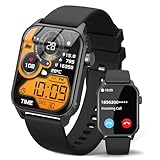
- 【1.83" HD Display & Customizable Watch Faces】Immerse yourself in a vibrant 1.83-inch IPS display, boasting a sharp resolution of 240*284 for crystal-clear visuals. Effortlessly personalize your smart watch with a wide array of customizable watch faces to suit your personal style for every occasion—whether trendy, artistic, or minimalist—ideal for casual, sporty, or professional. Its sleek, modern design complements any outfit, blending technology and fashion seamlessly for everyday wear
- 【120 Sports Modes & Advanced Health Tracking】Our TK29 smart watches for women men come equipped with 120 sports modes, allowing you to effortlessly track a variety of activities such as walking, running, cycling, and swimming. With integrated heart rate and sleep monitors, you can maintain a comprehensive overview of your health, achieve your fitness goals, and maintain a balanced, active lifestyle with ease. Your ideal wellness companion (Note: Step recording starts after exceeding 20 steps)
- 【IP67 Waterproof & Long-Lasting Battery】Designed to keep up with your active lifestyle, this smartwatch features an IP67 waterproof rating, ensuring it can withstand splashes, sweat, and even brief submersion, making it perfect for workouts, outdoor adventures, or rainy days. Its reliable 350mAh battery offering 5-7 days of active use and up to 30 days in standby mode, significantly reducing frequent charging. Ideal for all-day wear, whether you’re at the gym, outdoors, or simply on the go
- 【Stay Connected Anytime, Anywhere】Stay informed and in control with Bluetooth call and music control features. Receive real-time notifications for calls, messages, and social media apps like Facebook, WhatsApp, Twitter, and Instagram directly on your smartwatch. Easily manage calls, control your music playlist, and stay updated without needing to reach for your phone. Perfect for work, workouts, or on-the-go, this watch keeps you connected and never miss important updates wherever you are
- 【Multifunction & Wide Compatibility】Seamlessly handle heart rate monitoring, sleep tracking, and enjoy conveniences like camera/music control, Seamlessly handle heart rate monitoring, sleep tracking, and more-all directly from your wrist. This 1.83 inches HD smartwatch is compatible with iPhone (iOS 9.0+) & Android (5.0+), ensuring smooth daily connectivity and convenience throughout your day. More than just a timepiece, it’s a stylish, all-in-one wearable for smarter, healthier living
This was not a pause, a product gap year, or a wait-and-see approach tied to a specific chipset or Wear OS version. Fossil described the decision as a strategic realignment away from smartwatches toward its core strengths in traditional watches, leather goods, and jewelry, alongside selective digital experiments that do not involve full smartwatch platforms.
Crucially, Fossil framed this as a business decision driven by market dynamics, not a technical failure of Wear OS itself. Rising development costs, compressed margins, and intense competition from vertically integrated players were cited as underlying pressures.
What Fossil Did Not Announce
Fossil did not announce the immediate end of software support for existing smartwatches. The company stated it would continue to support current devices “for the next few years,” including warranty coverage, security updates where applicable, and customer service.
That wording is deliberately vague, but it aligns with how Fossil has historically handled end-of-line devices. Owners should not expect major new Wear OS feature upgrades, but basic functionality, bug fixes, and compatibility maintenance are not being pulled overnight.
Fossil also did not announce a shutdown of its companion apps or cloud services. This matters because daily usability—notifications, health data syncing, and basic configuration—depends far more on app continuity than on headline OS updates.
What This Was Not: A Wear OS Collapse Signal
The announcement was not accompanied by any statement from Google suggesting reduced investment in Wear OS. In fact, Google’s current strategy already reflects a different ecosystem shape than the one Fossil helped build during the Wear OS 2 era.
Wear OS has been consolidating around fewer, deeper partnerships rather than a broad field of fashion-brand hardware. Samsung, Google’s own Pixel Watch line, and a small number of specialized manufacturers now define the platform’s direction.
Fossil’s role had already diminished in practical terms. Its last major releases relied on aging Qualcomm silicon, modest battery life often limited to a single day in real-world use, and incremental health tracking that lagged behind competitors in accuracy and efficiency.
Why the Headline Still Matters
Even if Fossil’s exit doesn’t spell the end of Wear OS, it does mark the end of a specific era. Fossil was the primary bridge between traditional watch aesthetics and Google’s smartwatch platform, offering slimmer cases, lighter wear, and familiar design language that appealed to watch-first buyers.
For consumers who valued that blend—classic dimensions, stainless steel cases, interchangeable straps, and a less overtly “tech” look—the options on Wear OS are now narrower. The platform is becoming more performance-driven and vertically integrated, with fewer experiments in fashion-led hardware.
That shift doesn’t automatically weaken Wear OS, but it does change who it’s for. Understanding that distinction is essential before interpreting Fossil’s exit as either a warning sign or a non-event, and it sets the stage for evaluating what this means for Google, remaining partners, and buyers choosing a smartwatch today.
Why Fossil Mattered to Wear OS More Than the Sales Numbers Suggest
Fossil’s importance to Wear OS was never primarily about unit volume. It was about ecosystem texture: the range of designs, price points, and retail contexts in which Wear OS showed up for everyday buyers who were not explicitly shopping for a “tech product.”
That distinction matters because platforms live or die not just by flagship devices, but by how naturally they appear across different lifestyles and buying moments.
Fossil Was Wear OS’s Design Translator
For most of the Wear OS 2 era, Fossil Group functioned as Google’s unofficial design layer. Fossil, Skagen, Michael Kors, Diesel, and Emporio Armani watches all shared common internals, but expressed radically different aesthetics, case dimensions, and wrist presence.
These watches were often thinner, lighter, and closer to traditional 40–44 mm watch proportions than competitors. Stainless steel cases, conventional lugs, real leather straps, and restrained finishing made Wear OS feel watch-first rather than gadget-forward.
That mattered for comfort and daily wearability. A Fossil Gen 5 on a leather strap wore more like a mid-market automatic than a mini smartphone, even if battery life rarely stretched beyond a long day.
Retail Reach Google Never Built Itself
Fossil also brought Wear OS into physical retail environments Google could not easily replicate. Department stores, outlet malls, airport shops, and fashion boutiques exposed Wear OS to buyers who were not comparing chipsets or reading spec sheets.
In those settings, Wear OS competed less with Apple Watch and more with quartz fashion watches. The value proposition was familiarity: classic styling, interchangeable straps, and just enough smart functionality to justify the upgrade.
This kind of exposure doesn’t always convert to enthusiast sales, but it expands platform legitimacy. It told consumers that Wear OS was something you could buy alongside a traditional watch, not only from an electronics brand.
A Buffer Against Platform Narrowing
Fossil’s presence also softened the perception of Wear OS as a single-vendor or tech-centric platform. Even when Samsung and Google were driving core software decisions, Fossil’s hardware diversity suggested openness and optionality.
Without Fossil, the visual and experiential range of Wear OS hardware contracts sharply. Pixel Watch emphasizes Google’s design language and health algorithms, while Samsung prioritizes performance, sensors, and ecosystem lock-in with Galaxy phones.
What disappears is the middle ground: watches that prioritize aesthetics first, accept trade-offs in battery life or performance, and exist primarily as lifestyle objects with smart features layered on top.
Why This Loss Hits Developers and Buyers Differently
From a developer perspective, Fossil mattered because it represented a large installed base of “normal” users. These were not early adopters, but people who used notifications, step tracking, and basic apps without pushing hardware limits.
That kind of user base stabilizes platforms. It rewards reliability, consistent app behavior, and backward compatibility more than experimental features.
For buyers, especially watch-first consumers, Fossil’s exit removes a familiar on-ramp. Choosing Wear OS now increasingly means choosing into a specific ecosystem vision rather than selecting a watch that happens to be smart.
This does not weaken Wear OS technically, but it changes its emotional center of gravity. The platform becomes more focused, more optimized, and less stylistically forgiving, which reshapes who feels invited to buy in the first place.
Inside Fossil’s Smartwatch Strategy Failure: Hardware, Margins, and Platform Dependence
Fossil’s exit looks abrupt from the outside, but structurally it was years in the making. Once the platform narrowed toward fewer, more vertically integrated players, Fossil’s smartwatch business was exposed as unusually fragile.
The company’s value proposition relied on design breadth and retail reach, not on owning critical technology layers. That works when platforms are permissive and margins are forgiving, but Wear OS gradually became neither.
Hardware Without Differentiation Became a Cost Center
Fossil’s smartwatch hardware followed a predictable formula: Qualcomm reference silicon, standard AMOLED displays, aluminum or stainless steel cases, and aggressively thin profiles to preserve analog-watch proportions. The result looked good on the wrist, wore comfortably, and fit under a cuff, but it rarely stood out technically.
Battery life was the most visible compromise. Many Fossil Wear OS models struggled to clear a full day with always-on display enabled, particularly once heart-rate tracking, GPS, or third-party apps entered the mix.
As competitors pushed larger batteries, dual-core architectures, and custom power management, Fossil stayed constrained by case dimensions optimized for style rather than endurance. That trade-off made sense for fashion-first buyers, but it increasingly clashed with consumer expectations shaped by Apple Watch and Samsung Galaxy Watch.
Reference Platforms Meant Limited Control and Slower Improvement
Because Fossil did not control its silicon roadmap, sensor stack, or core software layer, iteration cycles were slow and reactive. Improvements in performance or efficiency arrived only when Qualcomm and Google delivered them first.
This left Fossil unable to solve platform pain points independently. Laggy UI, thermal throttling, and inconsistent battery drain were problems Fossil could not meaningfully address through industrial design or materials alone.
Rank #2
![Apple Watch Series 11 [GPS 46mm] Smartwatch with Jet Black Aluminum Case with Black Sport Band - M/L. Sleep Score, Fitness Tracker, Health Monitoring, Always-On Display, Water Resistant](https://m.media-amazon.com/images/I/312K597M2uL._SL160_.jpg)
- HYPERTENSION NOTIFICATIONS — Apple Watch Series 11 can spot signs of chronic high blood pressure and notify you of possible hypertension.*
- KNOW YOUR SLEEP SCORE — Sleep score provides an easy way to help track and understand the quality of your sleep, so you can make it more restorative.
- EVEN MORE HEALTH INSIGHTS — Take an ECG anytime.* Get notifications for a high and low heart rate, an irregular rhythm,* and possible sleep apnea.* View overnight health metrics with the Vitals app* and take readings of your blood oxygen.*
- STUNNING DESIGN — Thin and lightweight, Series 11 is comfortable to wear around the clock — while exercising and even when you’re sleeping, so it can help track your key metrics.
- A POWERFUL FITNESS PARTNER — With advanced metrics for all your workouts, plus features like Pacer, Heart Rate Zones, training load, Workout Buddy powered by Apple Intelligence from your nearby iPhone,* and more. Series 11 also comes with three months of Apple Fitness+ free.*
Even comfort-driven wins, like slimmer cases or lighter bracelets, could not compensate for perceived technical stagnation. Over time, Fossil watches began to feel like aesthetic shells around a platform advancing elsewhere.
Margins Were Structurally Thin in a Price-Sensitive Category
Smartwatches already operate on tighter margins than traditional watches, and Fossil’s position made that worse. Licensing fees, Wear OS compliance costs, Qualcomm chip pricing, and retailer margins left little room for profit.
Unlike Apple or Samsung, Fossil could not amortize R&D across phones, tablets, and services. Each smartwatch generation had to stand on its own financially, while competing against subsidized ecosystems.
Discounting became common within months of launch. That trained consumers to wait, compressed margins further, and undermined the perception of long-term product confidence.
Platform Dependence Amplified Every Strategic Risk
Fossil’s smartwatch strategy assumed Wear OS would remain broadly partner-driven, with multiple brands contributing volume and identity. As Google and Samsung deepened their control, that assumption eroded.
Wear OS updates increasingly prioritized hardware features Fossil did not have, or health integrations Fossil could not differentiate. When the platform shifted, Fossil absorbed the downside without sharing in the upside.
This dependence also affected support expectations. Buyers looked to Fossil for updates and fixes, but Fossil itself relied on Google’s timelines, creating a credibility gap that was difficult to explain at retail.
Fashion Scale Could Not Offset Ecosystem Gravity
Fossil’s real strength was distribution: department stores, outlet malls, airport retail, and fashion-conscious buyers who were smartwatch-curious but not tech-obsessed. For years, that scale masked underlying weaknesses.
As smartwatches matured, buyers became more informed. Health accuracy, update longevity, battery consistency, and ecosystem integration mattered more than interchangeable straps or familiar case silhouettes.
Once those criteria dominated purchase decisions, Fossil’s advantages stopped converting into sustainable volume. The business did not collapse suddenly; it simply ran out of strategic room to maneuver.
Why This Was a Strategic Exit, Not a Product Failure
Individual Fossil smartwatches were rarely bad products. They were comfortable, attractive, and approachable, with materials and finishing that felt more like watches than gadgets.
The failure was systemic. Fossil was caught between a platform it did not control and competitors that could afford to treat hardware as a loss leader.
When Google’s own Pixel Watch became the platform’s reference device, Fossil’s role as a stylistic interpreter lost strategic relevance. Exiting was less an admission of defeat than an acknowledgment that the middle ground it occupied no longer existed at scale.
What Fossil’s Exit Signals About the Current State of Wear OS
Fossil’s decision to step away does not mean Wear OS is collapsing, but it does confirm that the platform has entered a more centralized, less forgiving phase. Where early Wear OS thrived on variety and experimentation, today it rewards deep platform integration, long software horizons, and vertical control.
That shift changes who can realistically compete. It also changes what Wear OS means for buyers, especially those who valued brand diversity as a hedge against ecosystem risk.
Wear OS Is Consolidating, Not Expanding
Fossil’s exit highlights how Wear OS has narrowed around a small number of committed players rather than broadening its bench. In practical terms, that means Google, Samsung, and a handful of specialist brands now define the platform’s future.
Samsung benefits from scale, silicon influence, and tight integration with Galaxy phones, while Google sets the reference experience through Pixel Watch hardware. For everyone else, the cost of keeping pace has risen sharply, both financially and organizationally.
This is consolidation driven by economics, not by lack of interest. Wear OS increasingly favors companies that can amortize software, sensors, and support across massive product ecosystems.
Platform Priorities Now Favor Vertical Integration
Recent Wear OS evolution has prioritized features that assume deep hardware-software alignment. Custom chipsets, advanced health sensors, continuous background tracking, and tightly managed power profiles are no longer optional differentiators.
Fossil’s watches, while well-designed and comfortable on the wrist, relied on off-the-shelf Qualcomm platforms with limited influence over update cadence or feature access. As a result, battery life variability, delayed updates, and inconsistent health features became structural issues rather than fixable flaws.
This is where Wear OS quietly stopped being a neutral platform. It became an advantage multiplier for companies that already control phones, services, and silicon.
What This Means for Current Fossil Smartwatch Owners
For existing Fossil owners, the immediate concern is not device failure but long-term relevance. Watches will continue to function, and Google services will not suddenly disappear, but software updates will slow and eventually stop.
Security patches, compatibility optimizations with new Android versions, and refinements to health tracking accuracy are unlikely to keep pace with active Wear OS brands. Over time, this affects daily usability more than headline features, from notification reliability to battery efficiency and app stability.
Fossil’s exit reinforces a hard truth of smartwatches: longevity is dictated more by platform commitment than by hardware materials, finishing quality, or initial comfort.
The Disappearing Middle of the Wear OS Market
Fossil once occupied a crucial middle ground between tech-first watches and fashion-led accessories. Its cases wore well, dimensions were familiar to traditional watch buyers, and strap options made the watches feel personal rather than utilitarian.
That middle ground is shrinking. Today’s Wear OS buyer is increasingly forced to choose between ecosystem-optimized devices like the Pixel Watch or Galaxy Watch, and niche products that trade mass appeal for specialization.
Fossil’s exit signals that being “good enough at everything” is no longer sustainable when software support and health accuracy dominate purchasing decisions.
Implications for Google’s Wear OS Strategy
From Google’s perspective, losing Fossil simplifies the ecosystem but raises responsibility. Fewer partners mean fewer points of failure, but also fewer buffers if consumer trust erodes.
Wear OS now lives or dies on Google’s ability to deliver consistent updates, long-term support, and clear differentiation from Apple’s watchOS beyond Android compatibility. The Pixel Watch is no longer just a showcase; it is the platform’s proof point.
If Google executes well, consolidation can strengthen Wear OS. If it falters, there are fewer partners left to absorb missteps or maintain visibility in mainstream retail.
What Prospective Wear OS Buyers Should Take Away
Fossil’s departure should recalibrate expectations rather than trigger panic. Wear OS is not disappearing, but it is becoming more opinionated about who it is for.
Buyers should now weigh platform alignment as heavily as design, comfort, or materials. Battery consistency, update timelines, health feature roadmaps, and phone integration matter more than brand heritage or case aesthetics.
The headline is not that Wear OS is weaker, but that it demands commitment. Fossil chose not to make that bet, and that choice reshapes the platform for everyone who remains.
Rank #3

- Bluetooth Call and Message Alerts: Smart watch is equipped with HD speaker, after connecting to your smartphone via bluetooth, you can answer or make calls, view call history and store contacts through directly use the smartwatch. The smartwatches also provides notifications of social media messages (WhatsApp, Twitter, Facebook, Instagram usw.) So that you will never miss any important information.
- Smart watch for men women is equipped with a 320*380 extra-large hd full touch color screen, delivering exceptional picture quality and highly responsive touch sensitivity, which can bring you a unique visual and better interactive experience, lock screen and wake up easily by raising your wrist. Though “Gloryfit” app, you can download more than 102 free personalised watch faces and set it as your desktop for fitness tracker.
- 24/7 Heart Rate Monitor and Sleep Tracker Monitor: The fitness tracker watch for men has a built-in high-performance sensor that can record our heart rate changes in real time. Monitor your heart rate 26 hours a day and keep an eye on your health. Synchronize to the mobile phone app"Gloryfit", you can understand your sleep status(deep /light /wakeful sleep) by fitness tracker watch develop a better sleep habit and a healthier lifestyle.
- IP68 waterproof and 110+ Sports Modes: The fitness tracker provides up to 112+ sports modes, covering running, cycling, walking, basketball, yoga, football and so on. Activity trackers bracelets meet the waterproof requirements for most sports enthusiasts' daily activities, such as washing hands or exercising in the rain, meeting daily needs (note: Do not recommended for use in hot water or seawater.)
- Multifunction and Compatibility: This step counter watch also has many useful functions, such as weather forecast, music control, sedentary reminder, stopwatch, alarm clock, timer, track female cycle, screen light time, find phone etc. The smart watch with 2 hrs of charging, 5-7 days of normal use and about 30 days of standby time. This smart watches for women/man compatible with ios 9.0 and android 6.2 and above devices.
Wear OS Is Shrinking, Not Dying: Consolidation Around Fewer, Stronger Players
Seen in isolation, Fossil’s exit reads like another chapter in Wear OS decline. Placed in context, it looks more like a structural reset that has been unfolding for several years, accelerating as software, silicon, and health credibility became non-negotiable.
Wear OS is losing breadth, but it is gaining definition. The platform is narrowing around brands that can afford deep integration, long-term support commitments, and the operational discipline to ship reliable health features at scale.
From Many Brands to a Few Anchors
At its peak, Wear OS thrived on variety. Fossil Group brands, Mobvoi, Skagen, Misfit, and others filled store shelves with different case sizes, materials, strap options, and price points, even if the underlying experience was largely the same.
That diversity masked a weakness. Most partners relied heavily on Google for software direction while lacking the internal teams to meaningfully differentiate battery life, sensors, or long-term update cadence.
Today, the ecosystem is consolidating around a small number of anchors. Google’s Pixel Watch defines the reference experience, Samsung’s Galaxy Watch line drives volume and hardware innovation, and a handful of specialists like Mobvoi or Xiaomi operate on the margins with specific value propositions.
Why Consolidation Favors Execution Over Aesthetics
Fossil’s strength was industrial design. Its watches wore like real watches, with familiar lug widths, comfortable case profiles, and finishing that felt closer to mid-range traditional watches than fitness gadgets.
But modern smartwatch buyers increasingly prioritize execution details that are invisible on a spec sheet. Overnight battery consistency, heart rate accuracy during workouts, sleep tracking reliability, and predictable software updates now outweigh case material or dial design for most users.
Brands that cannot control both hardware and software struggle here. Consolidation favors players who design sensors, tune algorithms, and manage update pipelines in-house, even if it means fewer stylistic options for consumers.
What This Means for Platform Stability
A smaller Wear OS ecosystem is paradoxically more stable if the remaining players are committed. Fewer devices mean fewer chipsets to support, fewer edge cases for updates, and clearer priorities for Google’s engineering teams.
This is why the Pixel Watch matters more now than ever. It is not just a consumer product, but a signal to developers, health partners, and buyers that Wear OS has a long-term roadmap tied directly to Google’s own hardware incentives.
Samsung’s continued investment reinforces this stability. Its Galaxy Watches bring aggressive hardware iteration, strong battery life for the category, and mainstream retail visibility that keeps Wear OS relevant beyond enthusiast circles.
The Trade-Off: Less Choice, Clearer Expectations
For consumers, consolidation comes with a cost. There are fewer case shapes, fewer fashion-first designs, and fewer brands that feel like traditional watchmakers rather than tech companies.
In exchange, expectations are clearer. Buyers know which brands will receive multi-year updates, which watches will gain new health features, and which ecosystems are actively maintained rather than passively supported.
This clarity matters for anyone spending several hundred dollars on a device meant to be worn daily. A stable platform with fewer but stronger players reduces the risk of silent abandonment, even if it limits stylistic experimentation.
Why Fossil’s Exit Fits This Pattern
Fossil did not fail because Wear OS collapsed. It exited because the cost of staying competitive rose faster than its core strengths could compensate.
Keeping pace now requires custom silicon optimization, ongoing health validation, regulatory navigation, and years-long software commitments. For a brand rooted in design, licensing, and seasonal product cycles, that investment no longer aligned with its business model.
In that sense, Fossil’s departure is not a warning of imminent platform failure. It is evidence that Wear OS has crossed a threshold where only deeply invested players can justify staying in the game.
What This Means for Existing Fossil Smartwatch Owners: Support, Updates, and Longevity
For current Fossil smartwatch owners, the implications are practical rather than abstract. Fossil’s exit does not mean devices suddenly stop working, but it does change expectations around updates, feature growth, and long-term relevance in a rapidly evolving Wear OS ecosystem.
Understanding where support realistically ends, and what remains usable long after official backing fades, is key to deciding whether to hold on, upgrade, or plan an exit of your own.
Software Updates: Maintenance, Not Momentum
Fossil has committed to honoring existing support obligations, which typically means security patches and bug fixes for a limited period tied to each model’s original launch window. What owners should not expect is major new Wear OS versions, platform-level feature expansions, or aggressive health upgrades going forward.
In practical terms, most recent Fossil Gen 6 and later models will remain stable for daily use, but they are unlikely to see the same multi-year OS progression now promised by Google for Pixel Watch or Samsung for Galaxy Watch. The software experience will slowly freeze in time while the broader Wear OS platform moves on.
This matters because Wear OS updates increasingly deliver more than cosmetic changes. New health algorithms, deeper Fitbit integration, battery efficiency gains, and app-level improvements tend to assume active vendor participation, something Fossil is no longer positioned to provide.
Security and App Compatibility: The Slow Creep of Obsolescence
Security updates are the least visible but most important form of support. Fossil owners can expect basic security maintenance in the near term, but over time gaps will emerge as Google and app developers target newer API levels.
Initially, this shows up as subtle friction. Apps may stop updating, new watch faces fail to install, or companion apps require newer Android versions that strain older Wear OS builds. The watch still tells time, tracks steps, and mirrors notifications, but the ecosystem around it gradually narrows.
This is not unique to Fossil, but Fossil’s exit accelerates the timeline. Without an active manufacturer pushing compatibility testing and fixes, owners become dependent on Google’s baseline support alone, which historically prioritizes first-party and flagship partners.
Hardware Longevity: Still a Watch on Your Wrist
The physical watch itself does not suddenly lose value. Fossil’s strengths were always in case design, materials, and wearability, and those qualities remain intact.
Most Fossil smartwatches feature stainless steel cases, familiar 42–44 mm sizing, standard 20 mm or 22 mm strap compatibility, and restrained finishing that blends easily into daily wear. Comfort, balance on the wrist, and strap versatility remain strong, especially compared to more overtly tech-forward designs.
Battery health will ultimately be the limiting factor. Wear OS watches already operate close to the edge on endurance, and lithium cell degradation is unavoidable. Expect usable battery life for two to three years with careful charging habits, but replacement options will become increasingly scarce once official service infrastructure winds down.
Health and Fitness Tracking: Functional but Frozen
Core tracking features such as heart rate monitoring, sleep tracking, step counting, and basic workouts will continue to function as they do today. These rely on on-device sensors and Google’s platform services rather than Fossil-exclusive software.
What will stagnate is accuracy refinement and feature depth. Advanced health metrics, regulatory-cleared features, and evolving insights increasingly depend on continuous validation and algorithm updates. Fossil watches will not meaningfully close the gap with newer Pixel or Galaxy models in this area.
For casual fitness tracking and general wellness awareness, this is unlikely to be a deal-breaker. For users who care deeply about training metrics, health trends, or long-term data quality, the limitations will become more noticeable over time.
Warranty, Repairs, and Resale Reality
Fossil has indicated it will continue to honor existing warranties, which provides short-term reassurance for recent purchases. Beyond that window, repairs and replacements become less predictable, particularly for electronic components rather than cosmetic parts like straps or clasps.
Resale value is already affected. Fossil smartwatches will depreciate faster now that the brand’s platform future is closed, regardless of condition. Buyers in the secondary market price in software stagnation aggressively.
Rank #4
![Apple Watch Series 11 [GPS 42mm] Smartwatch with Rose Gold Aluminum Case with Light Blush Sport Band - S/M. Sleep Score, Fitness Tracker, Health Monitoring, Always-On Display, Water Resistant](https://m.media-amazon.com/images/I/31J+F-pXaWL._SL160_.jpg)
- HYPERTENSION NOTIFICATIONS — Apple Watch Series 11 can spot signs of chronic high blood pressure and notify you of possible hypertension.*
- KNOW YOUR SLEEP SCORE — Sleep score provides an easy way to help track and understand the quality of your sleep, so you can make it more restorative.
- EVEN MORE HEALTH INSIGHTS — Take an ECG anytime.* Get notifications for a high and low heart rate, an irregular rhythm,* and possible sleep apnea.* View overnight health metrics with the Vitals app* and take readings of your blood oxygen.*
- STUNNING DESIGN — Thin and lightweight, Series 11 is comfortable to wear around the clock — while exercising and even when you’re sleeping, so it can help track your key metrics.
- A POWERFUL FITNESS PARTNER — With advanced metrics for all your workouts, plus features like Pacer, Heart Rate Zones, training load, Workout Buddy powered by Apple Intelligence from your nearby iPhone,* and more. Series 11 also comes with three months of Apple Fitness+ free.*
For owners, this shifts the mindset from investment to utilization. The value proposition is no longer future-proofing but extracting remaining utility from a device that still performs its core functions well today.
Should Fossil Owners Upgrade or Wait?
The answer depends on expectations rather than fear. If your Fossil smartwatch meets your needs, holds a charge comfortably through the day, and runs the apps you rely on, there is no urgency to replace it.
If you are expecting new features, longer battery life, tighter phone integration, or expanding health capabilities, waiting will not improve the situation. Fossil’s exit makes it clear that meaningful evolution will come from Pixel Watch and Samsung Galaxy Watch lines going forward.
In that sense, Fossil owners are not abandoned, but they are standing on stable ground that is no longer being extended. The watch you own today is effectively the watch you will own for the rest of its usable life.
Should Prospective Buyers Still Consider Wear OS Watches in 2026?
Fossil’s exit naturally raises a larger question that goes beyond brand loyalty: whether Wear OS itself remains a sound platform choice heading into 2026. The short answer is yes, but with narrower guardrails and a very different risk profile than Wear OS buyers faced even three years ago.
What has changed is not the viability of Wear OS, but who it is really for and which manufacturers now matter.
Wear OS Is No Longer Broad — It Is Concentrated
Wear OS has clearly transitioned from a wide partner ecosystem to a concentrated one. In practical terms, this means Google and Samsung are now the platform’s center of gravity, with smaller contributions from brands like Mobvoi and select regional manufacturers.
This consolidation has upsides. Software updates arrive faster, core apps are better optimized, and hardware-software integration is tighter on Pixel Watch and Galaxy Watch models than anything Fossil ever shipped. The downside is reduced stylistic diversity and fewer price tiers that feel fully first-party supported.
For buyers, this means Wear OS is no longer a “brand-agnostic” smartwatch platform. You are buying into a specific execution of Wear OS, not a flexible ecosystem where many watchmakers can compete equally.
If You Want the Best Wear OS Experience, Brand Choice Matters More Than Ever
In 2026, not all Wear OS watches are created equal, even if they run similar software versions on paper. Pixel Watch models benefit from Google-first features, faster access to platform-level changes, and deeper integration with Android services like Assistant, Wallet, and health APIs.
Samsung’s Galaxy Watch line, meanwhile, offers superior hardware maturity. Displays are brighter and more durable, cases are slimmer for their screen size, battery life is more predictable, and comfort during 24-hour wear is generally better thanks to refined lug geometry and lighter alloys.
What you lose compared to the Fossil era is aesthetic experimentation. Traditional case proportions, multi-layer dials, and mechanical-watch-inspired finishing are less common. What you gain is reliability, polish, and a much clearer software roadmap.
Battery Life and Performance Are Finally Predictable — Within Limits
One of the persistent criticisms of Wear OS during Fossil’s peak years was inconsistency. Battery life varied wildly by brand, performance degraded unevenly over time, and thermal throttling was common in slim fashion cases.
That has improved meaningfully. Modern Wear OS watches built around Samsung silicon deliver a reliable full day and often closer to 36 hours with moderate use, including sleep tracking. Performance is smoother, animations are stable, and background health tracking no longer feels like a gamble.
This does not make Wear OS a multi-day endurance platform. If battery longevity is your top priority, alternatives still exist. But the unpredictability that once plagued Fossil-era Wear OS is largely gone on current flagship models.
Health and Fitness Tracking Is Now a Core Platform Strength — If You Buy the Right Watch
Wear OS health capabilities have quietly matured, largely because Google now treats them as platform-critical rather than optional. Continuous heart rate tracking, improved sleep staging, skin temperature trends, and evolving health insights are actively maintained on Pixel and Galaxy watches.
This is where Fossil’s departure matters most for buyers. Health algorithms require ongoing validation, sensor calibration, and regulatory attention. Brands no longer investing in the platform cannot keep pace here, even if the hardware is competent.
For prospective buyers who care about long-term data continuity, training insights, or future health features, sticking to watches that sit at the core of Google’s update strategy is essential. Wear OS can deliver this, but only through a small number of committed manufacturers.
Design, Materials, and Wearability Still Lag Traditional Watch Appeal
Wear OS remains function-first in 2026. Cases are typically aluminum or stainless steel, finishing is clean but utilitarian, and straps are optimized for comfort rather than visual drama. Weight distribution has improved, but most models still feel like technology objects rather than jewelry.
This is where Fossil’s absence is felt emotionally rather than technically. Fossil understood proportion, dial texture, and how a smartwatch should sit under a cuff. No current Wear OS leader prioritizes that same fashion-first sensibility.
If visual identity and traditional watch aesthetics matter deeply, Wear OS may feel narrower and more utilitarian than it once did. Buyers need to be comfortable prioritizing function and ecosystem over style variety.
Who Should Still Buy Wear OS in 2026 — And Who Should Not
Wear OS remains a strong choice for Android users who want tight phone integration, dependable app support, and improving health features, and who are willing to buy from the platform’s core manufacturers. Pixel Watch and Galaxy Watch models represent stable, long-term investments by smartwatch standards.
It is a weaker choice for buyers who value brand diversity, fashion-driven design, or experimenting with smaller watchmakers. Those buyers once found Wear OS appealing precisely because Fossil and its partner brands existed.
Fossil’s exit does not signal the collapse of Wear OS. It signals that Wear OS has grown up, narrowed its focus, and chosen depth over breadth. For some buyers, that makes the platform safer than ever. For others, it makes the decision clearer that their priorities now lie elsewhere.
How Google’s Own Pixel Watch Changes the Power Balance of the Ecosystem
Fossil’s exit cannot be separated from the fact that Google is no longer just a platform provider. With Pixel Watch, Google has moved decisively into the role of first-party hardware leader, and that fundamentally reshapes incentives for every other Wear OS brand.
What once looked like a neutral operating system available to many stylistic interpretations is now anchored around Google’s own reference product. That shift brings stability for some buyers, but it also narrows the strategic oxygen available to partners like Fossil.
From Platform Steward to Direct Competitor
Before Pixel Watch, Google needed Fossil and Samsung to prove Wear OS could succeed at retail. Fossil supplied design credibility, wide distribution, and price segmentation, while Samsung supplied scale and technical execution.
Pixel Watch changes that balance. Google now controls the industrial design, chipset roadmap alignment, health features via Fitbit, and the update cadence, which means partner brands are no longer just collaborators but competitors selling adjacent products on the same shelf.
For a fashion-led brand like Fossil, that is a much harder position to justify internally. The upside of differentiation shrinks when Google owns the default Wear OS experience.
Pixel Watch as the De Facto Wear OS Reference Device
In practical terms, Pixel Watch has become the reference implementation for Wear OS. New features, UI behaviors, health APIs, and Assistant capabilities consistently arrive there first, and sometimes exclusively for long stretches.
This has consequences for consumer expectations. Buyers now assume that the smoothest performance, most reliable battery optimization, and longest software support will be found on Pixel hardware, not on third-party watches that rely on Qualcomm timelines and Google goodwill.
For Fossil, whose watches already struggled with battery endurance and thermal constraints, competing against a vertically integrated Google product became less defensible each year.
Why This Accelerates Consolidation Rather Than Collapse
It is tempting to read Fossil’s departure as a sign that Wear OS is weakening. In reality, it reflects consolidation around fewer, more tightly aligned players.
💰 Best Value
![Apple Watch Series 11 [GPS 42mm] Smartwatch with Jet Black Aluminum Case with Black Sport Band - S/M. Sleep Score, Fitness Tracker, Health Monitoring, Always-On Display, Water Resistant](https://m.media-amazon.com/images/I/31ybzrJZckL._SL160_.jpg)
- HYPERTENSION NOTIFICATIONS — Apple Watch Series 11 can spot signs of chronic high blood pressure and notify you of possible hypertension.*
- KNOW YOUR SLEEP SCORE — Sleep score provides an easy way to help track and understand the quality of your sleep, so you can make it more restorative.
- EVEN MORE HEALTH INSIGHTS — Take an ECG anytime.* Get notifications for a high and low heart rate, an irregular rhythm,* and possible sleep apnea.* View overnight health metrics with the Vitals app* and take readings of your blood oxygen.*
- STUNNING DESIGN — Thin and lightweight, Series 11 is comfortable to wear around the clock — while exercising and even when you’re sleeping, so it can help track your key metrics.
- A POWERFUL FITNESS PARTNER — With advanced metrics for all your workouts, plus features like Pacer, Heart Rate Zones, training load, Workout Buddy powered by Apple Intelligence from your nearby iPhone,* and more. Series 11 also comes with three months of Apple Fitness+ free.*
Google no longer needs a wide array of mid-tier partners to prove Wear OS viability. Pixel Watch establishes credibility, Samsung extends reach globally, and smaller players are increasingly marginalized unless they bring something truly unique in hardware or sensors.
This mirrors what happened in smartphones, where Android did not fail as brands exited, but instead coalesced around fewer dominant manufacturers.
The Cost: Reduced Design Diversity and Brand Expression
The tradeoff is felt most clearly in design variety. Pixel Watch prioritizes ergonomic comfort, smooth curves, and lightweight materials, but it expresses a single design philosophy.
Fossil offered multiple case sizes, traditional lugs, steel heft, and dial designs that referenced mechanical watchmaking. Pixel Watch, for all its refinement, does not attempt to fill that role.
As Google’s influence grows, Wear OS becomes more coherent and predictable, but also more homogeneous. For buyers who valued choice and visual identity, that is a real loss.
What This Means for Long-Term Support and Buyer Confidence
From a consumer perspective, Pixel Watch’s dominance brings clearer signals about longevity. Software updates, security patches, and health feature expansion are now easier to predict because Google’s incentives are fully aligned with its own hardware.
This is reassuring for buyers worried about platform abandonment. It is less reassuring for owners of discontinued Fossil watches, whose update paths now depend entirely on legacy commitments rather than future product strategy.
Ultimately, Pixel Watch tilts Wear OS away from being an open fashion-driven playground and toward being a tightly managed ecosystem with clear winners. That clarity is exactly what pushed Fossil out, and exactly what gives remaining buyers more certainty about where the platform is heading.
The Bigger Industry Pattern: Why Traditional Watch Brands Struggle in Smartwatches
Fossil’s exit is not an isolated misstep or a uniquely bad execution of Wear OS. It fits a broader pattern that has played out repeatedly over the past decade, as traditional watch companies discover that smartwatches obey a completely different set of economic and technical rules than analog timepieces.
The skills that make a brand successful in mechanical or quartz watches do not translate cleanly into long-term success in connected devices. In many cases, they actively work against it.
Smartwatches Are Software Products Wearing Hardware
At their core, smartwatches are software platforms first and objects second. The user experience is driven by operating system cadence, app support, health algorithms, cloud services, and phone integration more than by case finishing or dial aesthetics.
Traditional watch brands excel at industrial design, materials, proportions, and tactile quality. They are far less equipped to manage multi-year software roadmaps, security updates, API changes, and health feature validation.
For Fossil, every Wear OS update meant dependency on Google timelines, Qualcomm silicon cycles, and Android phone behavior outside its control. That is manageable for a tech-first company, but brutally inefficient for a brand structured around seasonal fashion launches and multi-year hardware reuse.
Margins Collapse When Hardware Becomes a Commodity
In traditional watches, brands protect margins through movement selection, finishing, materials, and storytelling. A steel case with a reliable automatic movement can be profitable for years with minimal change.
Smartwatches invert that logic. Displays, batteries, sensors, and chipsets depreciate quickly, while software expectations rise annually. The bill of materials climbs, but pricing power remains capped by Apple Watch, Samsung, and now Pixel Watch.
Fossil was caught in the middle: unable to out-spec tech giants on health sensors or battery life, yet unable to charge premium pricing based on brand cachet alone. Steel cases, leather straps, and classic lug designs do not offset weaker processors or shorter update windows in the smartwatch market.
Update Lifecycles Clash With Watch Ownership Culture
Mechanical watch buyers are accustomed to longevity. A well-made watch can be worn for decades with routine servicing, and even quartz watches often outlive fashion cycles.
Smartwatches operate on a three-to-five-year relevance curve at best. Batteries degrade, software support ends, and compatibility breaks as phones evolve.
For a brand like Fossil, whose customer base expects durability and continuity, this creates a trust gap. Even when hardware build quality was solid and wear comfort was excellent, buyers increasingly questioned how long their watch would remain useful, not how well it was made.
Health and Sensors Have Become the Real Differentiators
Early smartwatches competed on design, notifications, and basic fitness tracking. That era is over. Today’s buying decisions hinge on heart rate accuracy, ECG, skin temperature, sleep staging, workout analytics, and integration with health platforms.
These capabilities demand massive R&D investment, regulatory expertise, and data science teams. Apple and Samsung built these competencies over a decade. Google is now doing the same through Pixel Watch and Fitbit integration.
Traditional watch brands simply cannot justify that level of investment for a product category that represents a fraction of their overall business. Without proprietary health advantages, they are left competing on looks alone, which is no longer enough.
Fashion-Driven Release Cycles Don’t Match Platform Economics
Fossil’s historical strength was variety. Multiple case sizes, different lug styles, steel bracelets, mesh straps, leather options, and seasonal colorways made its smartwatch lineup feel familiar to watch enthusiasts.
But Wear OS development rewards focus, not breadth. Each additional SKU increases testing complexity, update delays, and support costs. Google’s Pixel Watch strategy deliberately avoids this, prioritizing a single design optimized for comfort, sensor placement, and battery efficiency.
As the platform matures, Wear OS increasingly favors tightly integrated hardware-software combinations. That environment penalizes brands built around wide catalogs and rapid cosmetic iteration.
The Quiet Exit of Many Traditional Players
Fossil’s decision feels abrupt because it was one of the last large, visible traditional watch groups still fully committed to Wear OS. In reality, many others exited earlier or retreated to hybrids and basic fitness devices.
TAG Heuer remains an exception, but even there, volumes are small and the strategy leans heavily on luxury branding rather than platform influence. Most fashion and heritage brands have concluded that smartwatches dilute focus without delivering sustainable returns.
Fossil’s announcement simply makes explicit what the market has been signaling for years.
Why This Matters Beyond Fossil
This pattern reinforces that Wear OS is no longer designed to be a broad canvas for watch brands to express identity. It is becoming an optimized, vertically aligned ecosystem where success depends on deep platform integration and long-term software ownership.
For consumers, this explains why design diversity shrinks even as software stability improves. It also clarifies why future Wear OS watches will increasingly resemble Pixel Watch or Samsung Galaxy Watch in priorities, if not appearance.
Fossil’s exit is not a failure of smartwatches, nor a sign that Wear OS is collapsing. It is a confirmation that the smartwatch era belongs to companies built around software, sensors, and ecosystems, not those rooted in traditional watchmaking economics.
Understanding that distinction is key to making confident buying decisions going forward, and to interpreting platform shifts without mistaking consolidation for decline.