Garmin Connect has always been positioned as the serious, no-subscription-needed alternative in the fitness platform world, especially for endurance athletes who already invested heavily in hardware. The introduction of Garmin Connect Premium marks a strategic shift, not toward paywalled data, but toward paid interpretation layered on top of the existing ecosystem. If you already understand your Training Load charts, HRV trends, and recovery metrics, this new tier is Garmin’s attempt to act more like a coach than a dashboard.
This paid tier is built around AI-driven insights that synthesize your existing data into context-aware explanations, forward-looking guidance, and behavior nudges. The core promise is not more metrics, but clearer answers to questions like why performance dipped, what to adjust this week, and whether your current trajectory supports your goals. Understanding exactly what changes and what stays free is critical before deciding if this subscription earns a place alongside your watch.
The core idea behind Garmin Connect Premium
Garmin Connect Premium is an optional subscription that sits on top of the standard Garmin Connect app without removing or restricting any existing features. All raw data collection, historical charts, and core training metrics remain fully available to free users. The premium tier focuses on interpretation, personalization, and narrative-style insights generated through machine learning models trained on large-scale Garmin user data.
Rather than replacing traditional metrics like VO2 max, Training Readiness, or Body Battery, the AI layer contextualizes them across longer time horizons. It looks for patterns between sleep consistency, training stress, recovery markers, and performance outcomes, then explains those relationships in plain language. This is designed to reduce the cognitive load of interpreting complex graphs without dumbing down the underlying physiology.
🏆 #1 Best Overall

- Stylish Design, Vibrant Display: The lightweight aluminum build blends effortless style with workout durability, while the vivid 1.97" AMOLED display keeps your data easy to read, even under bright sunlight.
- All-in-One Activity Tracking: The Amazfit Bip 6 fitness tracker watch offers 140+ workout modes including HYROX Race and Strength Training, plus personalized AI coaching and 50m water resistance.
- Up to 14 Days Battery Life: The Amazfit Bip 6 smart watch powers through your training and recovery for up to two weeks at a time - no nightly charging needed.
- Accurate GPS Tracking & Navigation: Stay on course with free downloadable maps and turn-by-turn directions. Support from 5 satellite systems ensures precise tracking of every move and fast GPS connection.
- 24/7 Health Monitoring: The Amazfit Bip 6 smartwatch provides precise, real-time monitoring of heart rate, sleep, blood-oxygen and stress, empowering you with actionable insights to optimize your health and fitness.
What you actually pay for
The subscription unlocks a set of AI-powered insights that appear throughout the app, including daily summaries, weekly trend analysis, and goal-aware coaching prompts. These insights adapt based on your sport profile, training volume, and device capabilities, whether you’re using a Forerunner, Fenix, Epix, Venu, or Edge cycling computer. Importantly, the AI does not create new sensor data; it reframes what your devices already collect.
Garmin positions this as a premium coaching layer rather than a feature bundle. There are no exclusive workouts, no locked health metrics, and no hardware-dependent upsells baked into the tier. That distinction matters, especially for long-time Garmin users who chose the platform to avoid subscriptions tied to basic functionality.
How AI insights differ from free Garmin analytics
In the free version of Garmin Connect, insight is largely user-driven. You are expected to interpret charts, trends, and numerical scores, even when Garmin provides brief explanations. Premium shifts that burden by proactively highlighting cause-and-effect relationships, such as how inconsistent sleep timing is limiting aerobic gains or why HRV suppression aligns with recent intensity stacking.
The AI also emphasizes trajectory rather than snapshots. Instead of telling you that today’s Training Readiness is low, it explains whether that low score is a short-term fluctuation or part of a declining recovery trend. For athletes managing high volume or complex training blocks, this temporal framing is where the subscription delivers most of its value.
Who benefits most, and who likely won’t
Garmin Connect Premium is best suited to athletes who train frequently, track consistently, and already generate a large volume of data. Endurance runners, triathletes, cyclists, and hybrid athletes juggling strength and cardio will gain the most from pattern recognition across weeks and months. The AI becomes more useful as your dataset grows and your training decisions carry higher stakes.
Casual users, step counters, or those who already rely heavily on a human coach may see limited incremental value. If you rarely look beyond daily summaries or prefer manual analysis, the premium insights may feel redundant. Garmin has been careful not to force this tier on users who are content with the platform as-is.
How it compares to Fitbit Premium and Whoop
Unlike Fitbit Premium, which gates readiness scores, wellness reports, and some health insights behind a paywall, Garmin keeps its foundational metrics free. The premium tier is additive rather than restrictive, preserving Garmin’s long-standing value proposition. Compared to Whoop, which bundles hardware and subscription into a single coaching-centric experience, Garmin offers flexibility for athletes who already own devices and want optional guidance.
The philosophical difference is subtle but important. Whoop tells you what to do based on recovery and strain, while Garmin Connect Premium explains why certain patterns are emerging and how they relate to your goals. For data-literate athletes, that explanatory depth may be more empowering than prescriptive commands.
Why Garmin Introduced a Subscription: Platform Economics, AI Costs, and Strategic Shift
Seen in context, the premium tier is less a philosophical pivot than a pragmatic response to how Garmin Connect is now being used. As the platform shifts from static dashboards to continuous, personalized interpretation, the underlying cost structure changes in ways that one-time hardware margins no longer fully cover.
The hidden cost of AI-driven interpretation
Traditional Garmin analytics are largely deterministic. Metrics like VO2 max, Training Load, HRV Status, and Body Battery rely on well-established physiological models that run efficiently on-device or via lightweight cloud processing.
AI-driven insights operate differently. Generating narrative explanations, longitudinal pattern detection, and context-aware recommendations requires persistent cloud compute, large-scale model inference, and frequent data reprocessing across weeks or months of history.
Unlike firmware features, these systems incur ongoing variable costs per active user. Every additional insight layer scales compute demand, storage, and model maintenance in a way that a free, unlimited tier would struggle to sustain without trade-offs elsewhere.
Why hardware sales alone no longer fund the platform
Garmin still sells premium hardware with strong margins, but device lifecycles have lengthened. Many users now keep a Forerunner, Fenix, or Epix for three to five years, while expecting software improvements to continue throughout ownership.
At the same time, Garmin Connect has expanded into a full training platform with web dashboards, historical analysis, third-party integrations, and multi-sport planning tools. Maintaining that ecosystem for millions of active users is materially different from supporting a simple companion app.
A subscription allows Garmin to fund ongoing platform evolution without accelerating device replacement cycles or reducing feature depth on existing watches.
Protecting the core Garmin value proposition
Notably, Garmin avoided placing core metrics behind the paywall. Training Readiness, acute load, sleep scores, HRV trends, and activity analytics remain fully accessible, preserving trust with long-time users.
This is a strategic choice. Garmin’s brand equity is built on the idea that once you buy the hardware, your data and baseline insights are yours, regardless of age or price tier.
By positioning Premium as interpretive rather than foundational, Garmin reduces backlash while still monetizing advanced usage patterns.
Responding to competitive pressure without copying rivals
The broader market has normalized subscriptions. Whoop is subscription-first, Fitbit Premium gates meaningful insights, and Apple continues to invest heavily in services tied to its ecosystem.
Garmin’s response is deliberately asymmetric. Instead of bundling access or restricting metrics, it offers optional cognitive support layered on top of existing analytics, aimed squarely at experienced athletes rather than lifestyle users.
This lets Garmin compete on depth rather than accessibility, reinforcing its positioning as a performance-first platform rather than a wellness subscription.
From metrics to meaning: a strategic evolution
For years, Garmin’s strength was measurement. The challenge now is not data collection but decision fatigue, especially for athletes juggling high training volume, cross-training, and recovery constraints.
The premium tier reflects an acknowledgment that even advanced users benefit from structured interpretation. AI insights act as a translator between complex physiological signals and real-world training choices, without removing user agency.
Strategically, this moves Garmin Connect from a passive data repository toward an active performance companion, while keeping the final call firmly in the athlete’s hands.
Why the subscription is optional by design
Garmin understands its audience includes engineers, coaches, and self-directed athletes who prefer raw data. For them, the free version remains intentionally complete.
The subscription exists for users who want time-efficient synthesis rather than deeper spreadsheets. That optionality is central to Garmin’s long-term platform health, allowing monetization without alienation.
In that sense, Garmin Connect Premium is less about charging for data and more about charging for interpretation at scale.
How Garmin’s AI Insights Actually Work: Data Inputs, Models, and Personalisation Logic
Garmin’s premium AI layer builds directly on the philosophy outlined above: interpretation without obfuscation. Rather than replacing existing metrics, it sits on top of Garmin Connect’s long-established physiological models and reframes them into context-aware guidance.
Understanding how this works requires looking at three layers: what data goes in, how it is modelled, and how the output becomes personalised rather than generic.
The data foundation: more signals than most platforms can leverage
Garmin’s advantage starts with sheer data density. AI insights draw from continuous heart rate, HRV trends, sleep staging, respiration rate, SpO2 (where supported), body temperature deviation, training load, acute-to-chronic workload ratios, recovery time, and activity-specific metrics like power, pace, and cadence.
Unlike platforms that rely heavily on self-reported inputs, most of this data is passively collected across the entire day. That matters because the models are trained on longitudinal patterns, not single workouts or isolated nights of sleep.
Device compatibility also plays a role. Higher-end watches with multiband GPS, on-device running dynamics, and more frequent HRV sampling feed richer inputs into the AI layer, while entry-level devices still benefit but with less granularity.
Built on existing physiology models, not a black-box reboot
Garmin is not discarding its established algorithms in favour of a single opaque AI model. The premium insights build on familiar constructs like Training Status, Training Readiness, Body Battery, Acute Load, and Recovery Time.
What changes is how those systems are cross-referenced. Instead of viewing each metric in isolation, the AI evaluates interaction effects, such as how suppressed HRV combined with rising training load and declining sleep efficiency historically affected your performance or injury risk.
This approach keeps the system interpretable. Advanced users can still trace recommendations back to known physiological principles rather than accepting unexplained outputs.
Pattern recognition across your personal history
The most meaningful shift happens at the personalisation layer. Garmin’s AI does not compare you primarily to population averages but to your own historical responses under similar conditions.
If your past data shows that performance degrades when intensity exceeds a certain threshold during sleep-restricted weeks, the system learns that pattern. Future recommendations will reflect that individual response rather than a generic “reduce load” message.
This is where long-term Garmin users benefit most. The more seasons, training blocks, and recovery cycles the platform has observed, the more precise its predictions become.
Contextual awareness beyond workouts
A key limitation of earlier Connect insights was their workout-centric bias. The AI layer expands context by weighting non-training stressors more explicitly.
Elevated resting heart rate combined with poor sleep, travel-related disruptions, or prolonged low Body Battery trends can influence guidance even if recent workouts look manageable on paper. This mirrors how experienced coaches think, adjusting plans based on life stress rather than just training stress.
Importantly, these adjustments are advisory. The system suggests modifications but does not automatically alter training plans unless the user opts in.
Natural-language synthesis, not metric replacement
One visible change with the premium tier is how insights are delivered. Instead of dashboards and charts alone, users receive plain-language explanations that reference multiple metrics simultaneously.
Crucially, the raw data remains accessible. The AI explains why it is suggesting a lighter session or extended recovery window, often pointing directly to HRV trends, accumulated load, or sleep debt.
For data-driven users, this is less about simplification and more about time efficiency. The system does in seconds what many athletes already do manually by scanning multiple tabs.
Rank #2

- Stylish Design, Bright Display: The sleek stainless steel build blends classic style with workout durability, while the bright 1.32" AMOLED display keeps your data easy to read, even under bright sunlight.
- Precise Heart Rate and Sleep Tracking: Amazfit's BioTracker technology tracks your heart rate and sleep data with accuracy that previous sensors just can't match.
- Up to 10 Days of Battery Life: With long battery life that lasts up to 10 days with typical use, nightly recharges are a thing of the past.
- Free Maps with Turn Directions: Stay on-track with free downloadable maps, and get turn-by-turn guidance on-screen or via your Bluetooth headphones. Enjoy ski maps for global resorts, including guidance for cable cars, slopes, and more.
- Faster and More Accurate GPS Tracking: 5 satellite positioning systems ensure fast GPS connection and accurate positioning whenever you're out running, walking, cycling or hiking.
Why this differs from Fitbit Premium and Whoop
Fitbit Premium tends to gate insights by locking deeper interpretation behind the paywall, often with limited transparency around underlying calculations. Whoop goes further, making subscription access foundational rather than optional.
Garmin’s AI approach is structurally different. The premium tier enhances interpretation but leaves core metrics, historical charts, and performance models untouched in the free version.
This distinction matters for trust. Users can validate AI guidance against the same underlying data they have always had access to, rather than being asked to accept conclusions they cannot independently verify.
Limitations and edge cases Garmin doesn’t fully solve
AI insights are only as good as the data they receive. Inconsistent wear, frequent device changes, or gaps in overnight tracking reduce model confidence and can lead to conservative recommendations.
There are also sport-specific limitations. Endurance disciplines with highly polarised training, such as ultra running or stage racing, may see guidance that errs on the side of caution compared to what experienced athletes know they can tolerate.
Garmin’s system also remains physiologically focused. Psychological readiness, motivation, and competitive context are still difficult to model accurately, even with advanced AI.
Who the personalisation logic truly benefits
The premium AI layer is most effective for athletes training frequently enough to generate meaningful patterns but busy enough to value synthesis over manual analysis. That typically means committed recreational athletes, masters athletes managing recovery, and multi-sport users balancing competing demands.
Highly coached athletes may find overlap with existing support structures, while casual users may not generate enough signal density to justify the cost.
In practice, Garmin’s AI insights work best as a second opinion. They provide a structured, data-backed perspective that complements, rather than replaces, human judgment.
What You Get With Premium vs Free Garmin Connect: Feature-by-Feature Analysis
With the context around Garmin’s AI philosophy established, the practical question becomes where the line is actually drawn between free and premium. Garmin has been careful to avoid removing features users already rely on, instead layering interpretation and automation on top of an already mature platform.
What follows is a feature-by-feature breakdown of what stays free, what moves into the premium tier, and where the real value—or lack of it—emerges for different types of users.
Core activity tracking and historical data access
All fundamental activity recording remains fully free. This includes GPS tracking, heart rate data, pace, power, elevation, lap breakdowns, training load, intensity minutes, and sport-specific metrics tied to compatible devices.
Crucially, historical data access is unchanged. Multi-year charts, activity archives, and personal records remain visible and exportable without restriction, which preserves Garmin’s reputation as a long-term data steward rather than a gatekeeper.
Premium does not unlock new raw metrics here. Instead, it focuses on summarising patterns across weeks or months, highlighting trends that already exist in the charts but require time and experience to interpret manually.
Training status, load, and readiness metrics
Garmin’s established performance models stay free. Training Status, Acute Load, Load Focus, VO2 max estimates, HRV Status, and Training Readiness remain exactly as they were before the premium tier launch.
These metrics continue to update daily on-device and in the app, maintaining Garmin’s edge over competitors that hide readiness scoring behind subscriptions. For experienced athletes, this ensures continuity and avoids disrupting established training workflows.
Premium builds on this foundation by contextualising changes. Instead of simply showing that Training Readiness dropped or HRV dipped, the AI layer explains likely contributors and suggests practical adjustments based on recent behaviour.
Daily suggested workouts and training plans
Daily Suggested Workouts remain free for supported watches, including run and bike sessions that adapt to training load and recovery status. Garmin Coach plans also stay fully accessible without subscription.
Premium enhances this area through narrative guidance rather than structural changes. The AI may explain why a particular workout was suggested, how it fits into recent load trends, and what to watch for during execution.
This distinction matters. Free users still get the workouts, while premium users get coaching-style context that reduces guesswork, especially for those less confident interpreting physiological feedback.
Sleep tracking and recovery insights
Sleep duration, stages, sleep score, and overnight HRV remain free, along with long-term sleep trends. Garmin’s sleep tracking continues to operate without paywall friction, which contrasts sharply with Fitbit Premium’s gated sleep analytics.
Premium adds interpretive overlays. These include explanations linking sleep quality to training outcomes, recovery scores, and next-day readiness, as well as highlighting patterns such as cumulative sleep debt or inconsistent bedtimes.
The underlying data does not change, but the AI reduces the cognitive load required to connect sleep behaviour with performance consequences, particularly for users juggling training with work or family demands.
Health monitoring and wellness trends
Resting heart rate, stress tracking, Body Battery, respiration, hydration logging, and menstrual cycle tracking remain free. Garmin’s health ecosystem continues to function as a comprehensive baseline without subscription pressure.
Premium focuses on longitudinal interpretation. Rather than flagging isolated anomalies, the AI highlights subtle shifts that persist over time, such as rising baseline stress or declining recovery resilience.
This is where premium can quietly add value for masters athletes or users managing illness risk, as gradual changes are easier to miss when scanning daily dashboards.
AI-generated insights and narrative summaries
This is the true center of the premium tier. Free Garmin Connect shows numbers, charts, and status labels, while premium translates those into written insights tailored to the individual’s recent behaviour.
These summaries often span multiple domains, connecting training load, sleep, stress, and recovery into a single explanation. The goal is not prediction, but interpretation grounded in Garmin’s existing models.
Importantly, these insights are transparent. Users can cross-check conclusions against visible data, reinforcing trust rather than replacing analytical thinking with opaque recommendations.
Automation, prioritisation, and time savings
Free users retain full control but must do more of the analytical work themselves. Reviewing trends across weeks, identifying correlations, and deciding when to back off or push remains a manual process.
Premium effectively acts as a prioritisation engine. It surfaces what changed, why it matters, and what action is most likely appropriate, reducing the time spent navigating menus and charts.
For data-literate athletes, this may feel redundant. For time-poor but committed users, the automation can meaningfully improve adherence and consistency without dumbing down the experience.
Platform compatibility and device dependency
The premium tier does not unlock device-exclusive metrics. All AI insights are derived from data already captured by supported Garmin watches, bike computers, and accessories.
Higher-end devices still provide richer inputs, such as training load ratio, advanced running dynamics, or multi-band GPS accuracy, which indirectly improves AI output quality. Entry-level devices will generate simpler insights due to reduced signal density.
Battery life, durability, and comfort remain hardware-dependent rather than subscription-driven, reinforcing Garmin’s traditional value proposition of buying better hardware instead of renting functionality.
What Garmin deliberately leaves out of premium
There is no removal of third-party integrations, no export restrictions, and no limitation on platform access across mobile and web. Garmin also avoids locking competitive features like segments, challenges, or social tools behind the paywall.
Equally important, premium does not attempt to replace coaching relationships or prescribe rigid training doctrine. The AI avoids absolute directives, instead framing guidance as probabilistic and adjustable.
This restraint may frustrate users expecting dramatic new features, but it aligns with Garmin’s broader ecosystem philosophy and reduces the risk of over-reliance on algorithmic authority.
Training Intelligence Deep Dive: AI Coaching, Load Interpretation, and Performance Forecasting
Garmin’s premium tier becomes most tangible once you move beyond dashboards and into training decisions. This is where the platform stops behaving like a passive archive and starts acting like an interpretive layer, translating raw physiological and workload data into contextual guidance.
The shift is not about inventing new metrics, but about changing how existing ones are combined, weighted, and surfaced at the moment they are most relevant. For experienced Garmin users, this will feel less like a new feature set and more like a new way of reading familiar signals.
AI coaching: contextual guidance rather than rigid plans
At its core, AI coaching in Garmin Connect Premium is not a replacement for Garmin Coach plans or third-party structured training. Instead, it operates as a continuous feedback system that reacts to what you actually did, not what the calendar said you should do.
The AI reviews recent sessions, recovery status, sleep consistency, and longer-term load trends to generate adaptive guidance. This typically appears as short, situational prompts such as suggesting intensity adjustments, highlighting accumulating fatigue, or reinforcing when current training is aligned with recent performance gains.
Crucially, the language remains probabilistic rather than prescriptive. You are told what is likely to be beneficial or risky based on your recent patterns, not instructed to execute a specific workout with fixed paces or power targets.
For athletes already using structured plans, this acts as a second layer of oversight. It helps answer whether the plan is still appropriate given real-world stress, travel, illness, or missed sessions, areas where static schedules often fall short.
Rank #3
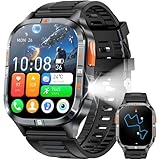
- BUILT-IN GPS & COMPASS– This military smartwatch features high-precision GPS to pinpoint your location while hiking, cycling, or traveling, keeping you safely on track without extra gear. Tap the compass icon and it locks your bearing within three seconds—engineered for pro-level outdoor adventures like camping, climbing, and trekking.
- BLUETOOTH CALLING & MESSAGES – Powered by the latest Bluetooth tech, the men’s smartwatch lets you answer or make calls right from your wrist—no need to pull out your phone. Get real-time alerts for incoming texts and app notifications so you never miss an invite. (Replying to SMS is not supported.)
- BIG SCREEN & DIY VIDEO WATCH FACE – The 2.01" military-spec display is dust-proof, scratch-resistant, and forged from high-strength glass with an aluminum alloy bezel, passing rigorous dust and abrasion tests so the screen stays crystal-clear. Upload a short family video to create a dynamic, one-of-a-kind watch face that keeps your memories alive.
- 24/7 HEALTH MONITORING – Equipped with a high-performance optical sensor, this Android smartwatch tracks heart rate and blood-oxygen levels around the clock. It also auto-detects sleep stages (deep, light, awake) for a complete picture of your health, ensuring you always know how your body is doing.
- MULTI SPORT MODES & FITNESS TRACK – Choose from running, cycling, hiking, basketball, and more to log every workout. Set goals, monitor progress, and sync data to the companion app. Bonus tools include photo gallery, weather, alarm, stopwatch, flashlight, hydration reminder, music/camera remote, find-my-phone, mini-games, and other everyday essentials.
Compared to platforms like Whoop, which frame guidance almost entirely around recovery readiness, Garmin’s AI coaching remains training-centric. It cares more about how yesterday’s load affects tomorrow’s adaptation than about enforcing rest at all costs.
Training load interpretation: from numbers to narrative
Garmin has long provided some of the most detailed load metrics in the consumer wearable space, including acute load, load focus, and chronic load trends. The challenge has always been interpretation, particularly for multi-sport athletes juggling running, cycling, strength, and endurance work.
Premium reframes load as a story rather than a chart. The AI examines not just how much load you accumulated, but how that load was distributed across intensity zones and how it compares to your recent baseline.
Instead of simply stating that load is “high” or “low,” insights explain why. For example, the system may flag that anaerobic contribution has spiked relative to the past two weeks, or that endurance volume has drifted downward despite stable total load.
This narrative approach is especially useful during build phases, where the risk is not just overtraining but misdirected training. It becomes easier to see when intensity creep is undermining aerobic development, or when recovery weeks are not actually reducing stress meaningfully.
Importantly, the AI does not override Garmin’s existing Training Status or Acute Load warnings. It layers interpretation on top, helping users understand whether a “maintaining” or “strained” label is transient noise or a meaningful signal.
Performance forecasting: probabilistic, not predictive
Performance forecasting in Garmin Connect Premium builds on existing race time predictions and VO2 max trends, but with more contextual framing. Rather than presenting single-point estimates, the AI emphasizes directionality and confidence.
Forecasts are influenced by training consistency, recent intensity balance, and recovery markers such as sleep quality and heart rate variability trends. If data quality is compromised, such as irregular wear or missing sessions, the system explicitly reflects lower confidence in its projections.
This approach avoids one of the common pitfalls seen in other platforms, where aggressive predictions can create false expectations. Garmin’s forecasts are intentionally conservative, designed to inform pacing and planning rather than promise personal bests.
For endurance athletes, this is most valuable during taper and peaking phases. Subtle cues about readiness, stability, or lingering fatigue can inform whether to maintain volume, sharpen intensity, or prioritise recovery without second-guessing the entire training block.
Compared to Fitbit Premium, which often frames performance insights in lifestyle terms, Garmin’s forecasting remains performance-driven and sport-specific. It assumes the user cares about output and progression, not just general wellness.
How device quality shapes AI accuracy
While premium does not gate features by device tier, the quality of AI insights is inherently linked to data fidelity. Watches with multi-band GPS, advanced heart rate sensors, and longer battery life provide cleaner inputs, particularly during long or high-intensity sessions.
For runners and cyclists, consistent power data, reliable pace tracking, and accurate elevation gain materially improve load calculations. This, in turn, sharpens the AI’s ability to detect meaningful changes versus day-to-day noise.
Strength training and indoor sessions remain a relative weak spot, as with most wearable platforms. The AI can incorporate session duration and perceived intensity, but without precise mechanical load data, interpretation remains more general.
Comfort and wear compliance also matter. Devices that are comfortable enough for 24/7 wear produce better recovery and sleep data, which directly feeds into coaching and forecasting accuracy.
Who benefits most, and who may not
Garmin Connect Premium’s training intelligence is most valuable for athletes who train frequently but lack the time or inclination to perform weekly data audits. It reduces cognitive load by highlighting what changed, what matters, and what may need adjustment.
Self-coached endurance athletes, particularly those balancing multiple sports or variable schedules, stand to gain the most. The AI acts as a consistency check, catching trends that are easy to miss when fatigue accumulates gradually.
Highly experienced athletes who already interpret TrainingPeaks-style metrics or work closely with a human coach may find the insights confirmatory rather than transformative. In these cases, premium is more about convenience than capability.
What Garmin avoids is just as important as what it delivers. The platform does not attempt to out-coach professionals or replace disciplined self-analysis, but it meaningfully narrows the gap between raw data and informed decision-making.
Recovery, Sleep, and Readiness Insights: Where AI Adds (and Doesn’t Add) Value
After training load and performance trends, recovery is where Garmin Connect Premium’s AI shifts from descriptive analytics into more interpretive territory. This is also where expectations need careful calibration, because Garmin has been offering recovery metrics for years, long before any paid tier existed.
What changes with premium is not the raw data itself, but how that data is contextualised, prioritised, and explained across days rather than single snapshots.
Sleep analysis: interpretation over invention
Garmin’s sleep tracking remains fundamentally the same at a sensor level. Sleep stages, duration, restlessness, overnight heart rate variability, and respiration are already available in the free version, provided the device is worn overnight and fits well enough to maintain optical heart rate contact.
The premium AI layer focuses on pattern recognition rather than nightly scoring. Instead of telling you that last night’s sleep was “fair” or “good,” it highlights deviations from your recent baseline and connects those changes to training load, late workouts, alcohol markers, or travel-induced schedule shifts.
Where this helps is in reducing false confidence. A long sleep duration paired with suppressed HRV or elevated resting heart rate is flagged as incomplete recovery, even if the sleep score itself looks acceptable.
Where it doesn’t help is in magically fixing sensor limitations. Wrist-based sleep staging is still an estimate, particularly for light versus REM differentiation, and the AI does not attempt to overcorrect or reinterpret ambiguous data.
Readiness: synthesis, not a new metric
Garmin’s Readiness Score has always been an aggregate of sleep, recovery time, training load, stress, and recent activity. Premium does not introduce a new readiness framework, but it does alter how that score is explained and projected.
The AI focuses on causal chains. Instead of simply stating that readiness is low, it identifies the primary contributors, such as cumulative anaerobic load over the past 72 hours or a downward HRV trend across multiple nights.
This matters for decision-making. Knowing that low readiness is driven by poor sleep consistency versus training overload leads to very different adjustments, even if the numerical score is identical.
What the AI does not do is override athlete intent. If you choose to train hard on a low-readiness day, the system records the outcome rather than attempting to block or discourage the session.
Recovery time guidance: smarter context, same physiology
Recovery time estimates have long been one of Garmin’s most misunderstood metrics. They are not prescriptions, but approximations based on autonomic stress and recent load.
Premium improves how these estimates are framed. The AI explains whether recovery time is extended due to unusually high intensity, insufficient sleep, or elevated baseline stress, rather than presenting a single countdown clock.
However, the underlying physiology model remains unchanged. The AI does not incorporate subjective soreness, musculoskeletal strain, or external life stress unless it manifests in measurable biomarkers.
For strength-focused athletes or those in physically demanding jobs, this remains a blind spot, and premium does little to close it.
HRV trends: where Garmin’s AI is at its best
Heart rate variability has become the cornerstone of modern recovery analysis, and Garmin’s long-term HRV baselines are among the most stable in the industry when wear compliance is high.
The premium AI excels at detecting slow-moving changes rather than day-to-day noise. It flags sustained HRV suppression, unusually rapid rebounds, or volatility that suggests accumulating fatigue rather than productive overload.
This is where Garmin differentiates itself from simpler wellness platforms. Rather than reacting to single-night dips, the AI focuses on trajectory, which aligns more closely with how endurance adaptations actually occur.
Compared to Whoop, Garmin’s approach is less prescriptive but more transparent. You see why the system is concerned, not just that it is.
Stress, Body Battery, and the limits of inference
Stress tracking and Body Battery are familiar Garmin concepts, and premium does not redefine them. What it adds is narrative layering, explaining how daytime stress drains overnight recovery capacity or why Body Battery fails to recharge fully despite adequate sleep duration.
This is helpful for identifying lifestyle contributors that are otherwise easy to dismiss, such as frequent low-level stress that never spikes high enough to feel obvious.
The limitation is that stress remains a proxy. Optical heart rate variability cannot distinguish emotional stress from dehydration, illness, or caffeine intake, and the AI does not attempt to guess which is which.
As a result, insights are best treated as prompts for reflection rather than definitive diagnoses.
How this compares to Fitbit Premium and Whoop
Fitbit Premium leans heavily on wellness narratives, often prioritising accessibility over depth. Garmin’s premium recovery insights are more technical, assuming the user understands concepts like HRV baselines and training load.
Whoop, by contrast, centres its entire platform around recovery scoring and behavioural nudges. Garmin’s AI is less opinionated, offering explanation without enforcement.
For athletes who want autonomy and context rather than daily behavioural instructions, Garmin’s approach feels more respectful. For users seeking clear green-or-red guidance, it may feel understated.
Rank #4

- 【Built-in GPS & Multi-System Positioning】Stay on track with the Tiwain smartwatch’s built-in GPS. Featuring military-grade single-frequency and six-satellite support (GPS, GLONASS, Beidou, Galileo, NAVIC, QZSS), this watch offers fast and accurate location tracking wherever you go. It also includes a compass, altimeter, and barometer, giving you real-time data on your altitude, air pressure, and position.
- 【Military-Grade Durability】Engineered to withstand the toughest conditions, the Tiwain smartwatch meets military standards for extreme temperatures, low pressure, and dust resistance. Crafted from tough zinc alloy with a vacuum-plated finish, this watch is also waterproof and built to resist wear and tear. The 1.43-inch AMOLED HD touchscreen offers clear visibility in all environments, and the watch supports multiple languages for global users.
- 【170+ Sport Modes & Fitness Tracking】Track your fitness journey with 170+ sport modes, including walking, running, cycling, hiking, basketball, and more. Set exercise goals, monitor progress, and sync your data to the companion app. The smartwatch also offers smart features like music control, camera remote, weather updates, long-sitting reminders, and more.
- 【LED Flashlight for Outdoor Adventures】The Tiwain smartwatch comes equipped with a built-in LED flashlight that can illuminate up to 20 meters. Activate it with the side button for added convenience during nighttime activities or outdoor adventures.
- 【Comprehensive Health Monitoring】Monitor your health with real-time heart rate, sleep, blood pressure, and blood oxygen level tracking. The smartwatch will vibrate to alert you of any abnormal readings. You can also make and receive calls directly from the watch, and stay connected with message and app notifications (receive only, no sending capability) – perfect for when you’re driving or exercising.
Who actually benefits from recovery AI
The biggest gains appear for athletes training frequently while juggling work, family, and inconsistent schedules. The AI surfaces slow degradation patterns that are easy to miss when fatigue builds incrementally.
It is also valuable for athletes returning from illness or injury, where HRV and sleep trends can quietly signal readiness before subjective confidence returns.
Those already tracking recovery manually or working with a coach who reviews HRV and sleep data weekly will see fewer surprises. In those cases, premium mainly saves time rather than adding new understanding.
The recovery AI is best viewed as a translator, not a physician or a coach. It explains what the data is already saying, clearly and consistently, but it does not change the underlying story.
Hardware Dependency and Device Compatibility: Which Garmin Watches Benefit Most
The usefulness of Garmin Connect’s new premium AI layer is tightly bound to the quality, continuity, and breadth of data your watch can produce. While the subscription lives in software, the insights it generates are only as good as the sensors, sampling frequency, and wear consistency of the hardware on your wrist.
This means the premium tier does not level the playing field across Garmin’s lineup. In practice, it widens the gap between older or entry-level devices and Garmin’s recent multi-sensor watches, where the AI has enough context to spot subtle trends rather than restate the obvious.
Why sensor depth matters more than raw performance metrics
Garmin’s AI insights rely heavily on longitudinal signals like overnight HRV, sleep stage distribution, resting heart rate drift, stress load, and activity-to-recovery ratios. These are not burst metrics captured during workouts, but background measurements that depend on all-day and all-night wear.
Devices without native HRV tracking, advanced sleep staging, or continuous stress measurement can still subscribe, but the AI’s vocabulary becomes limited. The platform can describe training load changes, but it loses its ability to connect those changes meaningfully to recovery or lifestyle factors.
In other words, the premium tier amplifies data richness rather than compensating for its absence. If your watch only captures part of the physiological picture, the AI fills in with caution rather than conjecture.
Modern flagship watches: where the premium tier feels native
Recent high-end models like the Fenix 7 series, Epix (Gen 2), Forerunner 955 and 965, Enduro 2, and tactix 7 benefit most from the premium layer. These watches combine Garmin’s latest Elevate optical heart rate sensor with multi-band GPS, advanced sleep tracking, and robust recovery metrics.
Their larger cases and higher-capacity batteries also support consistent overnight wear, which is critical for HRV trend stability. Comfort matters here; lighter titanium or polymer builds and well-contoured casebacks reduce the temptation to remove the watch at night, preserving data continuity.
On these devices, the AI can draw links between training blocks, travel-induced sleep disruption, heat exposure, and gradual changes in recovery capacity. The insights feel additive rather than redundant because the underlying dataset is already dense and reliable.
Upper-midrange devices: meaningful, but narrower insight
Watches like the Forerunner 255 and 265, Venu 3, Vivoactive 5, and Instinct 2 sit in a middle ground. They offer HRV status, solid sleep tracking, and daily stress metrics, but often lack the full suite of training readiness or endurance-focused context found in the flagships.
For these users, the AI tends to focus more on recovery consistency, sleep debt, and stress accumulation rather than nuanced training adaptation. This is still valuable, especially for recreational runners and hybrid fitness users balancing structured workouts with general wellness.
Battery life and comfort remain strong on most of these models, particularly the Forerunner and Instinct lines, which supports continuous wear. The premium tier adds clarity, but it does not unlock a fundamentally new understanding of training the way it can on the top-end devices.
Older and entry-level watches: diminishing returns
Entry-level models and older generations, including early Venu, Vivoactive, and legacy Forerunner units, see the least benefit. Many lack overnight HRV tracking or use older optical sensors with higher noise during sleep.
In these cases, the AI often reiterates trends the user could already infer from basic graphs: training load up, sleep down, recovery impacted. Without fine-grained recovery signals, the insights become descriptive rather than interpretive.
That does not make the subscription useless, but it does make it harder to justify. The premium tier cannot retroactively upgrade sensor fidelity or compensate for gaps in nightly wear.
Chest straps, accessories, and why they matter less than you think
Garmin’s ecosystem of chest straps, power meters, and cycling sensors improves workout accuracy, but their impact on premium AI insights is secondary. The AI is far more influenced by passive, 24-hour data than by precise heart rate during a single interval session.
Using a chest strap will refine training load calculations, which can subtly improve context, but it will not replace missing sleep or HRV data. Similarly, cycling power data enriches performance analysis but does little for recovery interpretation if off-bike metrics are sparse.
For premium insights, consistency beats precision. A slightly noisier optical sensor worn every night outperforms perfect data captured only during workouts.
Who should consider upgrading hardware before subscribing
Users on older devices who are intrigued by the AI explanations may want to pause before subscribing and consider whether a hardware upgrade would unlock more value. Moving from a basic wellness watch to a modern Forerunner or Fenix-class device fundamentally changes the depth of insight available.
For athletes already considering a hardware refresh, the premium tier makes more sense as a companion rather than a standalone upgrade. The software shines when it has enough physiological texture to work with.
Conversely, if your current watch already supports HRV status, advanced sleep tracking, and daily stress, the premium tier slots naturally into your existing workflow. In that scenario, the question is not compatibility, but how much interpretation you want Garmin to do on your behalf.
Real-World Use Cases: Endurance Athletes, Recreational Trainers, and Data Power Users
With hardware capability and data consistency established, the real question becomes how the premium tier behaves once it meets different types of users. Garmin’s AI-driven layer does not deliver a single universal benefit; its value changes dramatically depending on training volume, structure, and how much interpretation the user already does themselves.
What follows are not idealized marketing scenarios, but realistic patterns observed when similar insight-driven platforms are layered on top of Garmin’s existing metrics.
Endurance athletes: Multi-week load management and recovery arbitration
For endurance athletes training 8–15 hours per week, the premium tier is most useful as a narrative layer over long-term trends rather than a day-to-day instruction engine. These users already understand Training Load, Acute Load, HRV Status, and Body Battery, but the AI’s strength lies in stitching those signals together across weeks.
Instead of simply flagging that load is high and HRV is suppressed, premium insights attempt to explain why those patterns are occurring and how they relate to recent decisions. A typical insight might connect a run block with rising anaerobic load, truncated sleep, and a delayed HRV rebound, then frame the risk as cumulative rather than acute.
This matters most during build phases, altitude exposure, heat adaptation blocks, or travel-heavy race calendars. The AI is not replacing a coach, but it does act as a second set of eyes that never forgets what you did ten days ago.
Where endurance athletes may feel friction is specificity. The insights tend to stay conservative, often reinforcing recovery when a seasoned athlete might knowingly push through fatigue. For self-coached athletes without a formal training plan, however, that conservatism can prevent slow-burn overreaching that Garmin’s standard graphs only reveal after the fact.
Recreational trainers: Pattern recognition over prescriptive coaching
For recreational runners, cyclists, and gym-focused users training three to six times per week, premium insights often feel more immediately helpful. These users typically generate enough data to reveal patterns but lack the experience to interpret conflicting signals.
Here, the AI excels at contextual explanations rather than optimization. It might highlight that strength sessions combined with poor sleep are driving elevated stress despite modest cardio load, or that weekend long sessions are impacting weekday readiness more than expected.
Importantly, the premium tier does not suddenly turn Garmin into a guided coaching platform like Fitbit Premium or Apple Fitness+. There are no workout videos or behavior nudges framed as lifestyle coaching. Instead, the value lies in answering the question “why does this week feel harder than last week?” using the user’s own physiology.
For recreational users prone to either overtraining or undertraining, this interpretive layer can meaningfully improve consistency. It does not demand more training, but it often encourages better timing and spacing of effort.
Data power users: Reducing cognitive load, not increasing insight depth
Power users who already live inside Garmin Connect dashboards may find the premium tier both appealing and slightly redundant. These users understand metrics like training load ratio, HRV baselines, sleep staging limitations, and sensor error margins.
For them, the AI does not unlock new data. Instead, it reduces the mental overhead of constantly reconciling metrics across screens. The insight summaries function as a compression layer, distilling dozens of charts into a coherent explanation.
This can be especially useful during high-volume phases or periods of disrupted routine, where manually interpreting data becomes time-consuming. That said, power users are also the most likely to notice when insights feel obvious or overly cautious.
If you already trust your own judgment more than algorithmic guidance, the premium tier may feel like a convenience rather than a necessity. Its value scales with how much time you want to spend analyzing versus training.
Strength-focused and hybrid athletes: Context without specificity
Garmin has historically been cardio-first, and the premium AI layer does not fundamentally change that bias. Strength training is better contextualized in terms of recovery impact, stress, and sleep disruption, but not deeply analyzed in terms of progression or technique.
For hybrid athletes balancing lifting with endurance work, premium insights can be helpful in identifying interference effects. The AI may surface patterns where heavy lower-body lifting suppresses running readiness more than expected, or where late evening gym sessions degrade sleep quality.
However, it will not replace a strength program or provide meaningful hypertrophy guidance. Its role is interpretive rather than instructional, and users expecting gym-specific intelligence may be disappointed.
Who gains the least: Casual users and inconsistent wearers
Users who train sporadically, skip sleep tracking, or treat their Garmin as an occasional activity logger will extract minimal value from the premium tier. The AI depends on continuity, and without it, insights revert to surface-level observations.
In these cases, the free version of Garmin Connect already communicates most of what can be known. Premium insights cannot infer intent or compensate for missing physiological context.
For this group, the subscription risks feeling like a solution in search of a problem rather than a meaningful upgrade.
💰 Best Value

- Smart Watch with GPS and Offline Map: This smart watch connects to multiple satellite systems for accurate real-time positioning, and includes a professional-grade compass, altimeter, and barometer for precise data, ensuring you maintain your sense of direction in any outdoor environment. The map version supports downloading offline maps; select a route or destination to view the route even without a signal, eliminating the risk of getting lost.
- Bluetooth Call & Message Functionality: This smart watches for men allows you to make and receive calls; receive text and social media notifications (Facebook, WhatsApp, Instagram, Twitter, etc.); and reply to text messages with voice-to-text or set up quick replies (text reply functionality is available for Android phones).
- Sports & Health Monitoring: This 5ATM waterproof fitness watch supports over 100 sports modes and tracks daily activity data, calories, distance, steps, and heart rate. You can use it to monitor your health metrics (blood oxygen, heart rate, stress, and sleep), monitor your fatigue and mood, and perform PAI analysis. You can also use this smartwatch to set water intake and sedentary reminders. Stay active and healthy with this fitness tracker watch.
- Customizable Watch Faces & AI Functionality: This smart watch features a 1.46-inch HD touchscreen and over 100 downloadable and customizable watch faces. You can even use your favorite photos as your watch face. Equipped with AI technology, it supports voice descriptions in multiple languages to generate personalized AI watch faces. The watch's AI Q&A and AI translation features provide instant answers to questions and break down language barriers, making it an ideal companion for everyday life and travel.
- Large Battery & High Compatibility & More Features: This smart watch for android phones and ios phone features a large 550ml battery for extended battery life. It's compatible with iOS 9.0 and above and Android 5.0 and above. It offers a wealth of features, including an AI voice assistant, weather display, music control, camera control, calculator, phone finder, alarm, timer, stopwatch, and more. (Package Includes: Smartwatch (with leather strap), spare silicone strap, charging cable, and user manual)
Decision lens: Interpretation versus autonomy
Ultimately, Garmin Connect’s premium tier is best understood as an interpretation service layered onto an already dense dataset. It does not outperform experienced self-analysis, nor does it provide hands-on coaching.
Its strongest use case is for athletes who want validation, pattern recognition, and longitudinal context without constantly interrogating charts. If you value autonomy and already trust your internal sense of fatigue more than any algorithm, the premium tier will feel optional.
If, however, you want Garmin to not just measure your body but explain it back to you in plain language, this is where the subscription earns its place.
How Garmin Connect Premium Compares to Fitbit Premium, Whoop, and Other AI Fitness Platforms
Viewed through the lens of interpretation versus autonomy, Garmin Connect Premium lands in a very different place than most subscription-based fitness platforms. It is not trying to replace training literacy or lock users into a closed coaching model, and that distinction becomes clearer when compared directly to Fitbit Premium, Whoop, and newer AI-first ecosystems.
Garmin Connect Premium vs Fitbit Premium
Fitbit Premium has long framed itself as a wellness-first subscription, emphasizing habit formation, stress reduction, and guided programs over performance nuance. Its AI-driven insights tend to focus on consistency streaks, readiness prompts, and general health signals rather than sport-specific adaptation.
Garmin Connect Premium, by contrast, assumes the user already trains with intent. Its insights are layered onto metrics like Training Load Ratio, HRV Status, acute versus chronic fatigue, and sport-specific workloads, which makes its AI interpretations more contextual but also less forgiving of inconsistent data.
The difference shows up clearly in recovery guidance. Fitbit may suggest a lighter day based on poor sleep and elevated stress, while Garmin’s premium insights will attempt to explain how that sleep disruption interacts with recent anaerobic load, intensity distribution, and upcoming sessions already on the calendar.
For endurance athletes, this makes Garmin’s approach more actionable. For general wellness users, Fitbit’s softer, more motivational framing often feels more approachable and less demanding.
Garmin Connect Premium vs Whoop
Whoop remains the most direct philosophical counterpoint to Garmin’s model. Where Garmin treats hardware as the primary product and software as a companion, Whoop treats the platform as the product and the hardware as a data collection tool.
Whoop’s AI insights are prescriptive by design. Daily Strain targets, recovery scores, and behavioral recommendations are intended to shape decisions directly, often down to sleep timing, alcohol intake, and training intensity for that day.
Garmin Connect Premium is notably less assertive. Its AI surfaces correlations and trend-based explanations but rarely tells the athlete what they must do. A low readiness day might come with context about accumulated fatigue or poor sleep efficiency, but the decision to train hard or back off remains with the user.
For athletes who want external accountability and simplified decision-making, Whoop’s model is more hands-on. For those who already plan training blocks and understand periodization, Garmin’s approach respects existing structure rather than overriding it.
Garmin Connect Premium vs Oura and recovery-first platforms
Oura and similar recovery-centric platforms prioritize sleep architecture, overnight physiology, and long-term health markers over training performance. Their AI insights are strongest when interpreting subtle shifts in resting heart rate, HRV baselines, and circadian alignment.
Garmin Connect Premium uses many of the same raw signals but frames them differently. Sleep and HRV are interpreted primarily in terms of their impact on training readiness and recovery capacity, not overall wellness optimization.
This distinction matters for users who train daily. Oura may flag improving resilience or declining recovery without tying it to specific training stimuli, while Garmin’s premium insights attempt to link those changes back to volume, intensity, and timing of recent workouts.
For non-athletes or users focused on longevity and sleep quality alone, Oura’s platform often feels more coherent. For athletes balancing recovery with performance goals, Garmin’s framing aligns more closely with how they already think about their bodies.
Garmin Connect Premium vs Apple Fitness+ and ecosystem-driven AI
Apple Fitness+ operates in a different category altogether. Its value lies in guided content, polished UX, and tight integration with Apple’s broader health ecosystem, not in deep physiological interpretation.
While Apple has begun introducing more adaptive insights across Health and WatchOS, these remain largely descriptive rather than diagnostic. Garmin Connect Premium goes further by attempting to explain why metrics are changing, not just that they are.
However, Apple’s strength is accessibility. For users who value convenience, seamless device integration, and coach-led workouts, Fitness+ delivers immediate utility. Garmin’s premium tier requires engagement with data, trends, and longitudinal context to unlock its value.
The key differentiator: Athlete-led interpretation
What ultimately separates Garmin Connect Premium from its competitors is restraint. The AI is designed to interpret rather than instruct, to surface patterns rather than enforce behavior.
This makes it less compelling for users who want daily answers handed to them, but more attractive for athletes who already understand training theory and want a second layer of analysis validating or challenging their intuition.
In that sense, Garmin’s premium tier feels less like a coach and more like an analyst quietly sitting beside your training log, pointing out connections you might have missed without taking control of the plan itself.
Is Garmin Connect Premium Worth Paying For? Value Verdict, Ideal Subscribers, and Who Should Skip It
All of this brings the discussion to a practical question Garmin users rarely had to ask before: does paying for Connect actually change how you train, recover, or make decisions day to day.
Garmin’s free platform has long been one of the most comprehensive in wearables, so the premium tier doesn’t win by locking away basic metrics. Its value hinges on whether AI-driven interpretation adds clarity, reduces guesswork, or meaningfully improves confidence in how you use the data you already generate.
The value proposition in plain terms
Garmin Connect Premium does not replace your training plan, your coach, or your own judgment. It sits on top of existing metrics like Training Load, HRV Status, Body Battery, sleep stages, and recovery time, and attempts to explain how those signals interact over time.
If the free version tells you what happened, the premium tier focuses on why it likely happened and what patterns are emerging. That distinction matters most to users who already understand the fundamentals and want better context, not simpler answers.
From a cost perspective, the subscription is easier to justify if you train frequently and consistently. The more data you generate across weeks and months, the more the AI has to work with, and the more nuanced its interpretations become.
Who gets the most value from Garmin Connect Premium
Endurance athletes are the clearest fit. Runners, cyclists, triathletes, and hybrid athletes logging structured volume will benefit most from trend-based insights that connect training intensity, recovery markers, and performance readiness.
Self-coached athletes sit squarely in the target audience. If you build your own plans, adjust weekly load manually, or respond to fatigue signals intuitively, premium insights act as a second set of eyes rather than a prescriptive system.
Data-driven users who already check HRV trends, acute load ratios, and sleep consistency will appreciate the consolidation. Instead of bouncing between charts, the AI highlights relationships, such as recurring low readiness after late intensity or cumulative fatigue after multi-day blocks.
When the free version is still enough
For many Garmin owners, the free tier remains more than sufficient. Casual exercisers, gym-focused users, and those training fewer than four days per week will see limited incremental value from deeper interpretation.
If you mostly glance at Body Battery, step counts, or sleep scores without acting on nuance, premium insights may feel redundant. The AI can surface patterns, but it cannot manufacture relevance where training load is low or inconsistent.
Users who already work closely with a human coach may also find overlap. A good coach will often contextualize fatigue, performance plateaus, and recovery more effectively than an automated system, especially when factoring in life stress and race calendars.
Who should actively skip the subscription
Athletes who prefer highly directive guidance may be disappointed. Garmin’s AI does not tell you exactly what workout to do tomorrow or when to rest in absolute terms, and it avoids hard prescriptions by design.
If you want a platform that makes decisions for you, adjusts sessions automatically, or pushes daily behavioral prompts, alternatives like Whoop or Fitbit Premium may feel more satisfying. Garmin assumes the user wants interpretation, not instruction.
Privacy-conscious users may also hesitate. While Garmin’s data handling is generally conservative compared to consumer wellness platforms, the premium tier does rely on deeper cloud-based analysis, which some users will simply prefer to avoid.
How it compares on value against rivals
Compared to Whoop, Garmin Connect Premium is less emotionally engaging but more grounded in training structure. Whoop excels at recovery storytelling and habit reinforcement, while Garmin stays closer to traditional sports science and load management.
Against Fitbit Premium, Garmin’s advantage is depth and relevance for athletes. Fitbit’s insights are broader and more lifestyle-oriented, whereas Garmin’s are narrower but more actionable for performance-focused users.
The key difference is that Garmin does not turn its core platform into a paywall. You are paying for interpretation, not access, which makes the subscription easier to justify for advanced users and easier to ignore for everyone else.
Long-term usability and real-world impact
In long-term use, the premium tier shines most during periods of change. Training ramps, return-from-injury phases, heat adaptation blocks, or stressful life periods are where pattern recognition becomes genuinely useful.
The insights are not always novel, but they are often timely. Seeing correlations laid out clearly can reinforce good decisions or prompt earlier adjustments before fatigue becomes obvious in performance.
Importantly, the system improves with consistency rather than novelty. This is not a feature you subscribe to for a month and exhaust, but one that gradually earns its place if you train year-round.
Final verdict
Garmin Connect Premium is not a must-have, and that is arguably its greatest strength. It respects the intelligence of its user base and avoids undermining the already robust free platform.
For serious, self-directed athletes who value context over commands, it offers meaningful analytical depth that can sharpen decision-making and reduce blind spots. For everyone else, Garmin Connect remains one of the best free fitness platforms available, with no pressure to upgrade.
The premium tier does not change what your Garmin can measure. It changes how clearly you understand what those measurements are trying to tell you, and for the right user, that distinction is worth paying for.