Garmin has spent the better part of a decade swimming against the tide on display technology, doubling down on memory-in-pixel panels while rivals chased visual wow-factor with OLED. That strategy made sense for endurance athletes who value battery life, always-on readability, and rugged reliability over cinematic colors. But several converging shifts in Garmin’s own lineup, supplier technology, and buyer expectations have suddenly made Micro‑LED not just plausible, but strategically attractive for a future Fenix 8.
If you’re wondering whether this is hype or a genuine inflection point, this section is about separating wishful thinking from real signals. We’ll unpack why Micro‑LED aligns unusually well with the Fenix philosophy, how Garmin’s recent hardware decisions quietly paved the way, and why the timing now looks far better than it did even two years ago.
Garmin’s display strategy has already fractured, by design
For years, Fenix meant transflective MIP, while AMOLED was reserved for lifestyle-adjacent models like Venu and, more recently, Epix. That clean split is gone. With Fenix 7 Pro and Epix Pro coexisting at the top end, Garmin has effectively admitted there is no single “correct” display for a flagship multisport watch anymore.
This fragmentation matters because it gives Garmin internal justification to experiment. Micro‑LED would not be replacing MIP or AMOLED overnight; it would sit above them as a technical halo, potentially exclusive to a high-end Fenix 8 variant, much like sapphire and solar once were.
🏆 #1 Best Overall

- Stylish Design, Vibrant Display: The lightweight aluminum build blends effortless style with workout durability, while the vivid 1.97" AMOLED display keeps your data easy to read, even under bright sunlight.
- All-in-One Activity Tracking: The Amazfit Bip 6 fitness tracker watch offers 140+ workout modes including HYROX Race and Strength Training, plus personalized AI coaching and 50m water resistance.
- Up to 14 Days Battery Life: The Amazfit Bip 6 smart watch powers through your training and recovery for up to two weeks at a time - no nightly charging needed.
- Accurate GPS Tracking & Navigation: Stay on course with free downloadable maps and turn-by-turn directions. Support from 5 satellite systems ensures precise tracking of every move and fast GPS connection.
- 24/7 Health Monitoring: The Amazfit Bip 6 smartwatch provides precise, real-time monitoring of heart rate, sleep, blood-oxygen and stress, empowering you with actionable insights to optimize your health and fitness.
Micro‑LED solves Garmin’s biggest historical objections to OLED
Garmin’s reluctance around OLED has always been practical, not ideological. Burn-in risk, outdoor readability in harsh sunlight, and battery drain during long GPS sessions were all legitimate concerns for ultrarunners, mountaineers, and expedition users.
Micro‑LED addresses each of these points on paper. It offers per-pixel emissive control like OLED, but with far higher peak brightness, dramatically better efficiency at sustained luminance, and no organic material to degrade over time. In other words, it promises AMOLED-level visuals without forcing Garmin to compromise on always-on data fields, multi-day tracking, or long-term durability.
The solar charging story is quietly changing
One underappreciated factor is Garmin’s evolving solar strategy. Power Glass has improved incrementally, but it has also hit diminishing returns, especially once AMOLED entered the Fenix family via Epix. Micro‑LED’s efficiency profile could reduce Garmin’s reliance on solar as a headline feature, or allow solar to play a supporting role rather than carrying battery life expectations alone.
A brighter, more efficient display could also enable smarter solar usage scenarios, where harvested energy offsets peak brightness moments instead of merely extending idle time. That kind of system-level optimization fits Garmin’s engineering culture far better than chasing raw screen vibrancy.
Supply chains and yields are no longer science fiction
Two or three years ago, Micro‑LED was still trapped in lab demos, trade-show prototypes, and astronomical per-panel costs. That has changed. Yields are improving, pixel transfer techniques are maturing, and smaller-format panels suitable for wearables are finally entering serious pre-production discussions across the industry.
Garmin doesn’t need Apple-level volumes to justify Micro‑LED, which is crucial. A niche, ultra-premium Fenix 8 SKU priced above current sapphire models could absorb higher component costs while giving Garmin a technological differentiator no direct rival currently offers.
The Fenix buyer is now ready for visual ambition
Perhaps the most human reason Micro‑LED is suddenly viable is that the Fenix audience itself has evolved. Today’s Fenix buyer often wears the watch 24/7, expects rich mapping, detailed training graphs, and legible notifications, and compares it not just to Suunto or COROS, but to Apple Watch Ultra.
Micro‑LED would allow Garmin to elevate maps, navigation overlays, and data density without sacrificing glanceability in full sun or comfort during week-long wear. That combination aligns perfectly with a flagship that’s expected to feel uncompromising on the wrist, whether you’re pacing a marathon, navigating alpine terrain, or wearing it to dinner after the workout.
This is about future-proofing the Fenix name
At its core, the Fenix line has always represented Garmin’s answer to “what comes next” in outdoor and multisport wearables. Adopting Micro‑LED wouldn’t just be a spec bump; it would be a signal that Garmin intends to define the next decade of high-end sports watches rather than defend the last one.
Nothing here suggests a guaranteed launch, and Garmin remains characteristically silent. But when you line up the technical readiness, market positioning, and internal product logic, Micro‑LED no longer feels like a moonshot. It feels like a calculated next step, waiting for the right moment to surface.
Micro‑LED Explained for Garmin Power Users: How It Differs from MIP and AMOLED
If Micro‑LED really is Garmin’s next display leap, understanding what it changes requires grounding it against the two screen technologies Garmin users already live with every day. For long‑time Fenix owners, this isn’t about chasing prettier pixels for their own sake, but about whether a new display paradigm actually improves training, navigation, battery life, and real‑world wear.
At a technical level, Micro‑LED is neither an evolution of MIP nor a variant of AMOLED. It is an entirely different class of display that, if executed correctly, could collapse the traditional trade‑offs Garmin users have learned to accept.
MIP: The endurance-first baseline Garmin built its reputation on
Memory‑in‑Pixel (MIP) displays have been the backbone of the Fenix line for years because they align almost perfectly with outdoor priorities. They are reflective rather than emissive, using ambient light to remain legible in full sun while sipping power at an almost comical rate compared to smartphones.
For endurance athletes, MIP’s strengths are obvious. You get always‑on visibility, weeks of battery life, excellent contrast in bright environments, and zero anxiety about leaving the backlight off during long runs, rides, or multi‑day expeditions.
The downsides are equally familiar. Color depth is limited, refresh rates are slow, mapping details can feel coarse, and dense data fields start to blur together as Garmin packs more metrics onto the screen. As the software experience has grown richer, MIP has increasingly felt like the constraint rather than the enabler.
AMOLED: Visual richness with energy consequences
Garmin’s newer AMOLED-equipped lines, including Epix and Venu, flipped the visual experience almost overnight. AMOLED is self‑emissive, delivering deep blacks, saturated colors, high resolution, and smooth animations that make maps, charts, and widgets dramatically more readable indoors and at night.
For users wearing their watch 24/7, AMOLED also feels more modern in daily life. Notifications are clearer, watch faces can be genuinely expressive, and UI transitions finally match the complexity of Garmin’s software ecosystem.
The trade‑off, however, is power. Even with aggressive brightness management and optional always‑on modes, AMOLED watches still consume more energy, particularly outdoors where brightness must be pushed hard. For Fenix‑class buyers accustomed to solar-assisted longevity and expedition battery modes, that compromise remains difficult to swallow.
Micro‑LED: Self‑emissive without the traditional penalties
Micro‑LED sits conceptually between MIP and AMOLED while borrowing strengths from both. Like AMOLED, each pixel emits its own light, meaning true blacks, extreme contrast, and sharp resolution. Unlike AMOLED, Micro‑LED uses inorganic LEDs, which are far more efficient at high brightness and far more resistant to burn‑in and long‑term degradation.
In practical terms, a Micro‑LED Fenix could deliver full‑color, high‑density maps that remain legible in direct alpine sun without cranking brightness to battery‑draining extremes. Nighttime readability would improve dramatically without relying on heavy backlighting, and always‑on watch faces could be genuinely useful rather than symbolic.
This is where the technology becomes especially relevant for Garmin. Micro‑LED’s efficiency curve favors exactly the conditions where outdoor watches struggle most: bright daylight, prolonged usage, and static data displays that remain visible for hours.
What Micro‑LED could unlock for mapping, data density, and training screens
Garmin’s mapping engine has quietly become one of the most sophisticated in wearables, but it is visually constrained by current displays. Trail contours, elevation shading, route overlays, and heat maps are all present, yet often flattened by limited contrast or resolution.
A Micro‑LED panel would allow finer cartographic detail without sacrificing glanceability. Thinner route lines, clearer contour separation, and higher-contrast turn prompts could make on‑wrist navigation meaningfully safer and faster when you’re fatigued or moving at speed.
The same applies to training data. More pixels mean cleaner graphs, better spacing between fields, and fewer compromises when displaying multi‑metric workout screens. For power users running structured intervals or monitoring endurance metrics mid‑session, this is not cosmetic—it’s functional clarity.
Battery life expectations: Not magic, but a meaningful shift
Micro‑LED will not turn a Fenix into a month‑long AMOLED watch with no trade‑offs. Physics still applies. However, it could narrow the gap far more than most users expect, especially when paired with Garmin’s aggressive power management and optional solar layers.
Because Micro‑LED remains efficient at high brightness, outdoor usage becomes less costly than on AMOLED. Static data screens, which dominate most workouts, are also a best‑case scenario for Micro‑LED efficiency. In a Fenix context, that could mean always‑on clarity without abandoning multi‑week battery expectations.
If Garmin reserves Micro‑LED for a sapphire, solar‑equipped Fenix 8 variant, the battery equation becomes even more compelling. The display stops being the limiting factor, and overall endurance returns to being dictated by GPS modes and sensor usage rather than screen anxiety.
Durability, longevity, and why Garmin would trust it
Garmin’s flagship buyers abuse their watches. They scrape rock faces, endure temperature swings, sweat saltwater, and expect their devices to look acceptable years later. Display longevity matters as much as brightness.
Micro‑LED’s inorganic structure gives it a major advantage here. There is no burn‑in risk comparable to OLED, color stability is significantly better over time, and peak brightness does not degrade at the same rate. For a watch designed to be worn daily for half a decade, this aligns perfectly with Garmin’s durability ethos.
Paired with sapphire crystal, steel or titanium bezels, and rugged case construction, Micro‑LED would feel less like an experimental feature and more like a long‑term investment in the watch’s usable lifespan.
The trade-offs Garmin power users should realistically expect
The biggest compromise is cost. Micro‑LED panels remain expensive, particularly at small sizes with high yields. A Micro‑LED Fenix 8 would almost certainly sit above current sapphire pricing, pushing firmly into ultra‑premium territory.
There is also complexity. Manufacturing challenges mean early panels may be limited in size or resolution options, potentially influencing case dimensions or bezel thickness. Garmin would likely mitigate this with conservative industrial design rather than radical form-factor changes.
Finally, software optimization will matter. Micro‑LED’s benefits are only realized if Garmin tunes brightness curves, UI contrast, and power profiles specifically for the technology. The good news is that Garmin’s control over both hardware and software gives it a better chance than most to get this right.
In context, Micro‑LED is not about replacing MIP or AMOLED across Garmin’s lineup. It is about creating a new top tier, one where endurance, clarity, and visual sophistication no longer compete with each other. For Fenix power users who have waited years for that convergence, the appeal is obvious.
What a Micro‑LED Fenix 8 Could Look Like: Screen Brightness, Resolution, and Always‑On Behavior
If Micro‑LED is Garmin’s attempt to collapse the long‑standing trade‑off between endurance and visual quality, the display behavior of a hypothetical Fenix 8 is where that philosophy would be most visible day to day. This is not about making a Fenix look like an Epix for the sake of showroom appeal, but about redefining how information is delivered in harsh, uncontrolled environments.
Rather than thinking of Micro‑LED as “brighter AMOLED,” it is more accurate to see it as a new middle ground that borrows selectively from Garmin’s transflective MIP heritage while finally matching the legibility expectations set by modern OLED panels.
Outdoor brightness that goes beyond AMOLED limits
Micro‑LED’s headline advantage is peak brightness, and this is where a Fenix 8 could meaningfully pull away from both current Fenix MIP models and the Epix AMOLED line. In controlled lab conditions, Micro‑LED panels are capable of sustaining brightness levels well beyond 2,000 nits without the aggressive thermal throttling that constrains OLED at small sizes.
Translated to real-world use, that would mean map lines, breadcrumb trails, and data fields that remain crisp under direct alpine sun or reflective snow glare, without relying on transflective tricks or inverted color schemes. For endurance athletes who train at midday rather than dawn, this is a practical upgrade, not a cosmetic one.
Rank #2

- Stylish Design, Bright Display: The sleek stainless steel build blends classic style with workout durability, while the bright 1.32" AMOLED display keeps your data easy to read, even under bright sunlight.
- Precise Heart Rate and Sleep Tracking: Amazfit's BioTracker technology tracks your heart rate and sleep data with accuracy that previous sensors just can't match.
- Up to 10 Days of Battery Life: With long battery life that lasts up to 10 days with typical use, nightly recharges are a thing of the past.
- Free Maps with Turn Directions: Stay on-track with free downloadable maps, and get turn-by-turn guidance on-screen or via your Bluetooth headphones. Enjoy ski maps for global resorts, including guidance for cable cars, slopes, and more.
- Faster and More Accurate GPS Tracking: 5 satellite positioning systems ensure fast GPS connection and accurate positioning whenever you're out running, walking, cycling or hiking.
Just as important is how brightness scales. Micro‑LED can modulate output at the pixel level with high efficiency, allowing Garmin to maintain excellent contrast at moderate brightness levels instead of forcing the panel to operate near its ceiling.
Resolution without sacrificing endurance-first design
Resolution is where Garmin’s design conservatism is likely to show, even with Micro‑LED in play. Rather than chasing smartphone-like pixel densities, a Micro‑LED Fenix 8 would likely target a modest but meaningful step up from current Fenix resolutions, optimized for glanceable data rather than media consumption.
Expect sharper typefaces, smoother map contours, and better anti-aliasing on complex watch faces, especially on larger 47mm and 51mm cases. The goal would be clarity at speed, not visual excess that compromises battery life or UI responsiveness.
There is also a physical constraint to consider. Early Micro‑LED yields at small sizes may limit extreme resolutions, and Garmin has historically prioritized bezel strength, button placement, and antenna performance over edge-to-edge glass. Any resolution increase would need to fit within those proven industrial design boundaries.
Always-on behavior that finally feels uncompromised
Always-on display performance is arguably where Micro‑LED could have the biggest psychological impact for Fenix loyalists. Current AMOLED-based Garmin watches handle always-on competently, but with visible dimming, simplified faces, and occasional lag when waking the full UI.
Micro‑LED changes that equation. Because each pixel emits light independently with far lower idle power draw than OLED, Garmin could maintain a true always-on experience with minimal visual compromise. That means full-color watch faces, persistent complications, and readable data fields without the constant sense that the watch is “holding back” to save power.
For daily wear, this matters as much as battery life. A Fenix that always looks fully awake aligns better with the expectations of users who wear their watch 24/7, from training to office to sleep tracking.
Battery impact and real-world endurance expectations
The obvious question is whether all of this visual sophistication undermines Garmin’s defining advantage: multi-week battery life. Based on current Micro‑LED efficiency curves, there is reason to believe it would not.
In low-motion, data-heavy scenarios like hiking, navigation, or time-only display, Micro‑LED can operate closer to MIP-like consumption levels than AMOLED. During high-refresh activities such as mapping or workouts, power draw would rise, but likely remain below what Epix-class AMOLED panels demand at equivalent brightness.
The net result would probably be a Fenix 8 that still comfortably clears two weeks in smartwatch mode, with GPS-heavy users seeing endurance figures that sit closer to current Fenix Solar models than to Epix. Garmin would almost certainly tune profiles aggressively, prioritizing predictable longevity over headline brightness numbers.
How this reshapes daily usability
Taken together, brightness, resolution, and always-on behavior would fundamentally change how a Fenix feels in everyday use. Maps become something you glance at rather than stop to interpret. Data fields remain readable at awkward wrist angles. The watch looks equally at home under a suit cuff or strapped over a jacket sleeve.
Crucially, none of this requires Garmin to abandon its core values around durability, button-driven control, or long-term wearability. Sapphire crystal, titanium bezels, and glove-friendly buttons still make sense here, with Micro‑LED acting as an enabling layer rather than a design driver.
If Garmin executes this correctly, a Micro‑LED Fenix 8 would not just be the best-looking Fenix yet. It would be the first one where display technology finally disappears into the background, letting the watch do what it has always done best: deliver information reliably, anywhere, without drama.
Battery Life Implications: Could Micro‑LED Deliver AMOLED Clarity Without Killing Fenix Endurance?
The moment Garmin moves away from memory-in-pixel, battery life becomes the first and loudest concern. Fenix buyers tolerate a lot, including thickness and weight, but they do not forgive compromised endurance. Any Micro‑LED Fenix 8 would live or die on whether it preserves that trust.
What makes this conversation different from the Epix transition is that Micro‑LED is not simply “another bright screen.” It behaves fundamentally differently at the pixel level, and that changes the power equation in ways that play directly to how Fenix watches are actually used.
Why Micro‑LED power behavior suits Garmin’s usage patterns
Unlike AMOLED, Micro‑LED pixels emit light independently without requiring a continuous backplane drive or organic emissive layers. When displaying static, high-contrast elements like time, metrics, or breadcrumb navigation, only the active pixels consume meaningful power. The rest of the screen effectively idles.
That usage profile maps closely to a Fenix owner’s reality. Long stretches of always-on time display, occasional wrist raises, frequent but brief glances during activities, and only intermittent high-motion rendering such as panning maps or scrolling widgets.
In those conditions, Micro‑LED can behave closer to MIP than AMOLED, especially if Garmin leans into restrained color palettes and dark UI themes rather than chasing smartphone-like visuals.
Always-on display without the AMOLED tax
Always-on display is where AMOLED hurts endurance most. Even at low refresh rates, the panel must continuously energize large portions of the screen, and brightness ramps up quickly outdoors.
Micro‑LED’s advantage is that an always-on mode does not require dimming the entire panel uniformly. A Micro‑LED Fenix could keep essential data fields illuminated at high clarity while allowing secondary pixels to remain fully off. That means legibility without the constant background drain.
For users who keep always-on enabled 24/7, including during sleep tracking, this could be the single biggest quality-of-life improvement over both Epix and current Fenix Solar models.
High-intensity scenarios: mapping, workouts, and navigation
The hardest test comes during GPS-heavy activities with maps, routing prompts, and frequent screen updates. This is where AMOLED-based Epix models see the sharpest battery drop, especially at peak brightness.
Micro‑LED would still draw more power in these scenarios than MIP, but likely less than AMOLED at equivalent visibility. Critically, brightness efficiency scales better, meaning Garmin could hit outdoor readability targets without running the panel at its electrical limits.
The likely outcome is not identical endurance to today’s Fenix 7 Solar during max-load activities, but a smaller gap than many expect, especially if paired with larger batteries or incremental solar charging support.
Smartwatch mode expectations: what seems realistic
Based on current Micro‑LED efficiency data and Garmin’s conservative tuning philosophy, a Micro‑LED Fenix 8 clearing two weeks in smartwatch mode feels plausible rather than optimistic. That assumes always-on enabled, notifications active, and daily health tracking running continuously.
For GPS-focused users, endurance would probably land closer to Fenix Solar than Epix, particularly in multi-band GNSS modes where display efficiency becomes a secondary factor compared to radio and sensor draw.
Garmin’s strength has always been predictable battery behavior rather than best-case lab numbers. Expect profiles that prioritize consistency, even if it means capping peak brightness below Micro‑LED’s theoretical maximum.
Thermal efficiency and long-term battery health
One under-discussed benefit of Micro‑LED is reduced heat generation compared to AMOLED at high brightness. Lower thermal load matters in a watch designed to be worn tightly against the skin for days at a time.
Less heat means less stress on internal components and, over years, better battery longevity. For a flagship multisport watch expected to last through multiple training cycles and firmware generations, that matters as much as day-one endurance.
This also aligns with Garmin’s reputation for devices that age slowly, both physically and electrically, rather than chasing annual upgrade pressure.
The role of solar: complementary, not redundant
If Garmin does pursue Micro‑LED, solar charging does not automatically disappear from the equation. In fact, Micro‑LED’s lower idle draw could make solar contributions more meaningful, not less.
Even modest solar input could offset always-on display costs during outdoor use, particularly for hikers, climbers, and expedition athletes who spend hours in direct light. That synergy is harder to achieve with AMOLED, where baseline consumption is simply higher.
A Micro‑LED Fenix 8 Solar would make conceptual sense, even if the gains are incremental rather than transformative.
What this means for Fenix buyers weighing Epix
For buyers currently torn between Epix’s visual appeal and Fenix’s endurance, Micro‑LED represents a genuine middle path rather than a compromise. You get clarity and contrast approaching AMOLED without fully abandoning the battery philosophy that defines the Fenix line.
That changes purchasing logic. Instead of choosing between beauty and longevity, users could reasonably expect both, alongside the rugged materials, button-driven control, and all-day comfort that keep Fenix watches relevant beyond pure spec comparisons.
If Garmin executes Micro‑LED correctly, battery life would stop being the limiting factor in display innovation. It would become the quiet enabler that finally lets Fenix evolve without betraying its core identity.
Outdoor and Endurance Use Cases: Sunlight Visibility, Mapping, Night Modes, and Harsh Environments
If Micro‑LED is where Garmin takes the Fenix 8, its real impact won’t be judged indoors or on spec sheets, but in the exact environments where Fenix watches earn their reputation. Sun-baked ridgelines, white snowfields, night navigation, and weeks of abuse are where display technology either proves itself or becomes a liability.
This is where Micro‑LED could quietly outperform both Garmin’s legacy MIP panels and its newer AMOLED approach in ways that matter to endurance users rather than showroom demos.
Rank #3
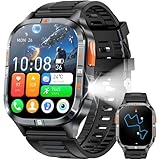
- BUILT-IN GPS & COMPASS– This military smartwatch features high-precision GPS to pinpoint your location while hiking, cycling, or traveling, keeping you safely on track without extra gear. Tap the compass icon and it locks your bearing within three seconds—engineered for pro-level outdoor adventures like camping, climbing, and trekking.
- BLUETOOTH CALLING & MESSAGES – Powered by the latest Bluetooth tech, the men’s smartwatch lets you answer or make calls right from your wrist—no need to pull out your phone. Get real-time alerts for incoming texts and app notifications so you never miss an invite. (Replying to SMS is not supported.)
- BIG SCREEN & DIY VIDEO WATCH FACE – The 2.01" military-spec display is dust-proof, scratch-resistant, and forged from high-strength glass with an aluminum alloy bezel, passing rigorous dust and abrasion tests so the screen stays crystal-clear. Upload a short family video to create a dynamic, one-of-a-kind watch face that keeps your memories alive.
- 24/7 HEALTH MONITORING – Equipped with a high-performance optical sensor, this Android smartwatch tracks heart rate and blood-oxygen levels around the clock. It also auto-detects sleep stages (deep, light, awake) for a complete picture of your health, ensuring you always know how your body is doing.
- MULTI SPORT MODES & FITNESS TRACK – Choose from running, cycling, hiking, basketball, and more to log every workout. Set goals, monitor progress, and sync data to the companion app. Bonus tools include photo gallery, weather, alarm, stopwatch, flashlight, hydration reminder, music/camera remote, find-my-phone, mini-games, and other everyday essentials.
Sunlight visibility without compromise
Traditional Fenix models built their following on transflective MIP displays that become clearer as sunlight increases. That behavior is still unmatched for passive visibility, but it comes at the cost of color depth, resolution, and detailed cartography.
Micro‑LED changes the equation by being emissive while retaining extreme brightness headroom. In theory, a Micro‑LED Fenix 8 could hit significantly higher peak nits than AMOLED while avoiding the washout and thermal throttling that plague OLED panels in sustained direct sun.
For trail runners and mountaineers, this matters during quick glances rather than prolonged viewing. If Garmin can tune Micro‑LED brightness scaling aggressively, users may get near-MIP readability at noon while retaining rich color and sharp contrast when clouds roll in or light fades.
Mapping clarity at a glance, not a stare
Garmin’s onboard maps have become increasingly detailed, with shaded relief, contour lines, land cover overlays, and routable trails. On MIP, this information is functional but visually dense, often requiring longer glances or zooming.
AMOLED improves this dramatically, but at the expense of battery life when maps are kept active for hours. Micro‑LED could offer a middle ground: higher pixel density and contrast than MIP, with less power penalty during static map viewing than AMOLED.
For ultra runners, bikepackers, and ski tourers, this translates to faster decision-making. Being able to distinguish trail forks, elevation shading, and route lines instantly reduces cognitive load when fatigue is high and conditions are deteriorating.
Night modes that respect dark adaptation
Night use is where display philosophy matters as much as raw specs. Garmin’s current red-shift night mode works well on MIP and AMOLED, but OLED’s emissive nature can still feel intense at close range, especially inside a tent or bivy.
Micro‑LED offers finer per-pixel luminance control without the glow halo often associated with OLED at very low brightness. If implemented properly, a Micro‑LED night mode could deliver genuinely dim, uniform illumination that preserves night vision without sacrificing legibility.
For expedition use, naval navigation, or long winter nights, that subtle improvement can significantly reduce eye strain and sleep disruption. This is an area where Garmin’s conservative software tuning could pair well with more advanced hardware.
Cold, heat, and altitude resilience
Environmental extremes expose weaknesses in display tech quickly. LCD-based MIP panels can slow in extreme cold, while AMOLED can suffer brightness inconsistency and higher power draw in both heat and cold.
Micro‑LED is inherently more stable across temperature ranges because it does not rely on organic compounds. In alpine conditions or high-altitude expeditions, this could mean consistent response times, stable brightness, and fewer display artifacts when temperatures swing rapidly.
Combined with lower heat generation under high brightness, a Micro‑LED Fenix 8 could be more comfortable during summer ultras while remaining dependable on glaciated routes where battery chemistry is already under stress.
Physical durability and real-world abuse
Garmin designs Fenix watches to survive impacts, vibration, and pressure changes that would destroy consumer smartwatches. Any Micro‑LED implementation would need to meet the same bar, likely paired with sapphire crystal, reinforced bezels, and water resistance suitable for diving and heavy rain.
Micro‑LED panels are typically more robust than OLED due to their inorganic structure. If Garmin can integrate this without increasing thickness or compromising shock resistance, it would reinforce the Fenix identity as a tool rather than a fragile screen strapped to the wrist.
Comfort also matters here. Lower thermal output during long GPS sessions reduces skin irritation, especially when the watch is cinched tight over multiple days, wet sleeves, or layered clothing.
Why this matters more than resolution numbers
For endurance athletes, the best display is the one that disappears. It gives information instantly, works in every condition, and never forces trade-offs between visibility and battery survival.
A Micro‑LED Fenix 8 wouldn’t just be about looking better than MIP or lasting longer than AMOLED in isolation. It would be about collapsing those choices into a single experience that supports long missions, uncertain weather, and fatigue-driven mistakes.
If Garmin gets this right, Micro‑LED wouldn’t feel like a flashy upgrade. It would feel like the natural evolution of what the Fenix line has always tried to be: readable anywhere, reliable everywhere, and designed for people who don’t get to choose their conditions.
Hardware and Design Speculation: Case Sizes, Sapphire, Solar Integration, and Durability Trade‑offs
If Micro‑LED is the display breakthrough, the physical execution is where Garmin would either validate the idea or quietly limit it to a halo product. Fenix buyers care deeply about dimensions, weight, and real-world wearability, and any next‑gen screen has to slot into the established case architecture without undermining what already works.
Garmin’s challenge would be delivering new display hardware while preserving the modularity that defines the Fenix family: multiple sizes, multiple materials, and clear use‑case differentiation.
Case sizes and thickness: where Micro‑LED could help or hurt
A Micro‑LED panel theoretically enables thinner display stacks than both MIP with front‑light layers and AMOLED with polarizers. In practice, early Micro‑LED implementations often require additional substrate reinforcement, which could offset those gains.
If Garmin follows precedent, expect the familiar 42 mm, 47 mm, and 51 mm case sizes to remain, with the 47 mm likely acting as the launch platform. This size offers the best balance between battery capacity, wrist comfort, and thermal headroom for a new display driver.
The risk is thickness creep. Fenix users already accept bulk in exchange for endurance, but pushing beyond the current Fenix 7 Pro dimensions would start to encroach on Epix territory in all the wrong ways. A Micro‑LED Fenix 8 that is thinner or even fractionally lighter would signal that the technology is mature enough for mainstream deployment.
Sapphire crystal and optical clarity trade‑offs
A Micro‑LED Fenix 8 would almost certainly ship with sapphire crystal as standard, not just on higher trims. Sapphire’s scratch resistance aligns with the premium positioning, but it introduces optical challenges that matter more with emissive displays.
Garmin has historically tuned its anti‑reflective coatings for MIP readability rather than deep contrast. With Micro‑LED, internal reflections, light scatter, and haze become more visible, especially at off‑axis angles in bright sun.
If Garmin can improve multi‑layer AR coatings without sacrificing impact resistance, sapphire could actually amplify Micro‑LED’s strengths: sharper edges, higher perceived contrast, and improved legibility through polarized sunglasses. If not, there’s a risk the display advantage gets muted in the exact environments Fenix owners care about most.
Solar integration: compatibility or compromise?
Solar charging is one of the biggest unanswered questions around a Micro‑LED Fenix 8. Garmin’s current Power Glass relies on transparent photovoltaic layers that already reduce contrast and color purity on MIP panels.
Layering solar tech over a Micro‑LED display could negate some of its efficiency and brightness gains. The more aggressive the solar overlay, the more light absorption and optical interference it introduces.
Garmin could respond in three ways. The first is limiting Micro‑LED to non‑solar models, positioning them as performance‑first rather than expedition‑first. The second is offering solar only on larger case sizes where battery capacity offsets reduced panel efficiency. The third, and most ambitious, would involve a redesigned solar layer optimized for emissive displays, though this would raise cost and manufacturing complexity significantly.
Bezel materials, weight, and impact resistance
The bezel does more than protect the glass; it defines how a Fenix survives edge impacts, ice strikes, and repeated abrasion. Titanium and steel options are almost guaranteed to continue, but Micro‑LED’s durability profile could influence material choices.
Unlike AMOLED, Micro‑LED does not suffer from burn‑in or organic degradation, but the individual diodes are still susceptible to point‑impact damage if shock is transmitted directly through the crystal. This could push Garmin toward thicker bezels or slightly raised sapphire lips, especially on adventure‑focused variants.
Weight distribution also matters. A heavier bezel paired with a lighter display stack could actually improve balance on the wrist, reducing rotational movement during running or technical scrambling. That kind of subtle ergonomic win would matter more to serious users than a headline weight number.
Buttons, seals, and water resistance realities
Any Micro‑LED Fenix 8 would still need to meet Garmin’s existing water resistance standards, likely 10 ATM or higher. The display change shouldn’t affect that directly, but tighter internal tolerances could complicate sealing around buttons and sensors.
Garmin’s five‑button interface is non‑negotiable for its core audience. Capacitive shortcuts or touch‑only interactions would undermine usability with gloves, cold fingers, or mud‑covered hands.
If Micro‑LED reduces internal heat buildup, it could actually improve long‑term seal integrity by lowering thermal expansion cycles during charging and prolonged GPS use. That’s an invisible durability upgrade, but one that aligns perfectly with the Fenix philosophy.
Durability versus repairability and cost
The final trade‑off is one Garmin rarely discusses publicly: serviceability. Micro‑LED panels are currently more expensive and harder to replace than AMOLED equivalents, especially at small sizes with high pixel density.
A cracked Micro‑LED Fenix 8 could be significantly costlier to repair, pushing Garmin toward more aggressive replacement programs rather than screen swaps. For buyers who keep their watches for five or more years, that matters.
If Garmin positions Micro‑LED as the ultimate Fenix expression, users may accept that risk. But the hardware design will need to justify it through tangible gains in comfort, resilience, and longevity, not just a spec‑sheet leap that looks good at launch but complicates ownership down the line.
Rank #4

- 【Built-in GPS & Multi-System Positioning】Stay on track with the Tiwain smartwatch’s built-in GPS. Featuring military-grade single-frequency and six-satellite support (GPS, GLONASS, Beidou, Galileo, NAVIC, QZSS), this watch offers fast and accurate location tracking wherever you go. It also includes a compass, altimeter, and barometer, giving you real-time data on your altitude, air pressure, and position.
- 【Military-Grade Durability】Engineered to withstand the toughest conditions, the Tiwain smartwatch meets military standards for extreme temperatures, low pressure, and dust resistance. Crafted from tough zinc alloy with a vacuum-plated finish, this watch is also waterproof and built to resist wear and tear. The 1.43-inch AMOLED HD touchscreen offers clear visibility in all environments, and the watch supports multiple languages for global users.
- 【170+ Sport Modes & Fitness Tracking】Track your fitness journey with 170+ sport modes, including walking, running, cycling, hiking, basketball, and more. Set exercise goals, monitor progress, and sync your data to the companion app. The smartwatch also offers smart features like music control, camera remote, weather updates, long-sitting reminders, and more.
- 【LED Flashlight for Outdoor Adventures】The Tiwain smartwatch comes equipped with a built-in LED flashlight that can illuminate up to 20 meters. Activate it with the side button for added convenience during nighttime activities or outdoor adventures.
- 【Comprehensive Health Monitoring】Monitor your health with real-time heart rate, sleep, blood pressure, and blood oxygen level tracking. The smartwatch will vibrate to alert you of any abnormal readings. You can also make and receive calls directly from the watch, and stay connected with message and app notifications (receive only, no sending capability) – perfect for when you’re driving or exercising.
Software and UI Potential: Mapping Detail, Watch Faces, Data Density, and Garmin OS Constraints
All of the hardware trade‑offs discussed so far only pay off if Garmin’s software stack can actually exploit them. A Micro‑LED Fenix 8 wouldn’t just be a brighter or sharper Fenix; it would quietly challenge long‑standing assumptions baked into Garmin OS, from map rendering to how much information can realistically live on a single screen.
Mapping clarity and real‑world navigation gains
Mapping is where Micro‑LED could deliver its most immediate and least controversial upgrade. Higher peak brightness, deeper contrast, and finer pixel control would make contour lines, trails, and POIs easier to parse at a glance, especially in harsh alpine sun or snow glare where MIP displays already perform well but lack visual separation.
More importantly, Micro‑LED could allow Garmin to increase map detail density without sacrificing legibility. Thinner trail lines, more nuanced elevation shading, and clearer differentiation between route layers and base maps would benefit hikers and ultrarunners who rely on wrist‑based navigation rather than phone pairing.
This doesn’t require new mapping data, only more confident rendering. Garmin already has excellent cartography; Micro‑LED simply gives it a canvas where that data doesn’t need to be simplified as aggressively to remain readable during movement.
Data density without AMOLED compromises
One of Garmin’s historical advantages over Apple and Wear OS watches is data density. A Fenix can show four, six, or even eight metrics on a single screen without feeling cluttered, largely because MIP displays maintain clarity at low power and in full sun.
Micro‑LED could preserve that advantage while removing some of the visual compromises of MIP. Higher resolution would allow smaller fonts, finer dividers, and more precise graphing without the “pixel shimmer” that sometimes appears on dense MIP layouts during motion.
Crucially, Micro‑LED doesn’t force Garmin into AMOLED‑style design choices. There’s no need for oversized fonts, heavy contrast blocks, or battery‑hungry animations. The data‑first philosophy that defines the Fenix experience could remain intact, just rendered with greater precision.
Watch faces: subtle evolution, not a visual reboot
A Micro‑LED Fenix 8 would inevitably invite more complex watch faces, but Garmin is unlikely to chase the expressive, animated style seen on Apple Watch or Samsung Galaxy Watch. The audience simply values legibility and endurance too highly.
What changes is refinement. Analog faces could use smoother hand motion and sharper indices without draining battery. Digital faces could layer complications more cleanly, with improved anti‑aliasing and better low‑light readability during night training or sleep tracking.
Garmin may also use Micro‑LED to improve always‑on behavior. If power efficiency holds, always‑on faces could remain fully readable without aggressive dimming, narrowing one of the few experiential gaps between Garmin’s outdoor watches and traditional mechanical tool watches in daily wear.
Touch, buttons, and interface restraint
Micro‑LED doesn’t inherently demand more touch interaction, and Garmin will be careful not to undermine its five‑button interface. Touch can remain optional for maps and scrolling, while buttons continue to dominate during workouts, navigation, and cold‑weather use.
That said, higher display responsiveness and clarity could allow subtler UI cues. Finer highlight states, clearer focus indicators, and more readable contextual menus would make the interface feel more modern without increasing complexity.
This kind of UI evolution matters for comfort and confidence in the field. When you’re fatigued, wearing gloves, or moving quickly, visual clarity often matters more than feature depth.
Garmin OS constraints and the real bottleneck
The biggest limiting factor may not be the display at all, but Garmin OS itself. Garmin’s software is stable, efficient, and deeply optimized for endurance, but it evolves slowly compared to smartphone‑derived platforms.
Micro‑LED could expose those constraints. If the OS doesn’t scale UI elements dynamically or support higher refresh rates intelligently, some of the display’s potential could go unused. Garmin will need to update its UI frameworks, not just drop in new hardware.
The upside is that Garmin controls its entire stack. If Micro‑LED is reserved for a true flagship Fenix 8 variant, Garmin can justify deeper OS‑level refinements without fragmenting the lineup or compromising battery life on lower‑tier models.
What this means for daily usability and long‑term value
In daily wear, a Micro‑LED Fenix 8 could feel less like a rugged sports computer and more like a refined, high‑end instrument. Better indoor readability, richer glanceable data, and improved always‑on behavior would make it more pleasant during workdays without softening its adventure credentials.
For long‑term owners, software adaptability will matter as much as hardware durability. If Garmin builds Micro‑LED support in a forward‑looking way, the watch could age more gracefully as maps, metrics, and training features grow more complex over time.
Ultimately, Micro‑LED wouldn’t redefine Garmin’s software philosophy. It would amplify it. The question isn’t whether Garmin can make a stunning display, but whether it can unlock just enough of that potential to meaningfully improve how athletes and explorers interact with their data, day after day, year after year.
Where a Micro‑LED Fenix 8 Would Sit in Garmin’s Lineup vs Epix, Enduro, and Apple Watch Ultra
If Micro‑LED is the amplifier of Garmin’s philosophy rather than a reinvention, then its placement in the lineup becomes strategic rather than cosmetic. Garmin doesn’t need another display option; it needs a halo product that justifies the engineering effort and avoids cannibalizing models that already sell well.
A Micro‑LED Fenix 8 would almost certainly sit above today’s Fenix and Epix as a distinct flagship tier, not a wholesale replacement. Think of it less as “the new Fenix” and more as the most uncompromising expression of what a Fenix can be.
Fenix vs Epix: ending the display fork in the lineup
Right now, Fenix and Epix are separated almost entirely by display philosophy. Fenix uses transflective MIP for endurance and sunlight clarity, while Epix leans into AMOLED for vibrancy and indoor usability.
Micro‑LED gives Garmin a way to collapse that split at the very top. A Micro‑LED Fenix 8 could match Epix‑level contrast and color while retaining closer‑to‑MIP efficiency in always‑on scenarios, effectively becoming the “best of both” option for buyers who currently agonize between the two.
That wouldn’t kill Epix. Instead, Epix would remain the premium AMOLED choice at a lower price point, lighter on the wrist, with slightly shorter battery life but a familiar UI cadence that doesn’t demand OS‑level reinvention.
Where this leaves the Enduro line
Enduro exists for a very specific athlete: ultrarunners and expedition users who prioritize battery life above all else. A Micro‑LED Fenix 8 wouldn’t replace Enduro, because even marginal efficiency losses matter when you’re chasing weeks, not days.
If anything, Micro‑LED could reinforce Enduro’s identity. Garmin could keep Enduro on ultra‑optimized MIP, with fewer pixels, lower refresh, and extreme power profiles, while positioning Micro‑LED Fenix as the “maximum capability” watch rather than the “maximum endurance” one.
Physically, this also matters. Enduro’s lighter weight and nylon strap bias are deliberate, whereas a Micro‑LED Fenix 8 would likely lean into premium materials like titanium, sapphire, and a more substantial case that prioritizes durability and thermal management over gram‑counting.
Apple Watch Ultra: different answers to the same question
On paper, a Micro‑LED Fenix 8 would be Garmin’s clearest answer yet to the Apple Watch Ultra. Both would represent their brand’s most advanced wearable, built with titanium cases, sapphire glass, dual‑frequency GPS, and a focus on outdoor reliability.
In practice, they would still feel fundamentally different on the wrist. Apple’s Ultra is a powerful extension of the iPhone, with fluid animations, dense notifications, and strong app ecosystems, but its battery life remains measured in days, not weeks.
A Micro‑LED Fenix 8 would double down on independence. Offline maps, button‑first control, glove‑friendly usability, and predictable battery behavior under continuous GPS load would remain core strengths, even as the display closes the visual gap with Apple.
Price, positioning, and the risk Garmin is willing to take
Garmin has historically been conservative with pricing jumps, but Micro‑LED would test that restraint. A true Micro‑LED Fenix 8 would almost certainly sit above current Fenix 7 Pro and Epix Pro pricing, potentially becoming Garmin’s first four‑figure mainstream sports watch in some regions.
That risk only makes sense if Garmin treats it as a low‑volume, high‑prestige model. Limited sizes, fewer SKUs, and a clear message that this is the pinnacle rather than the default choice would protect the rest of the lineup from feeling obsolete overnight.
Crucially, it would also signal that Garmin sees the high‑end multisport watch market evolving. Not toward lifestyle smartwatches, but toward instruments that are as visually refined as they are functionally uncompromising, with Micro‑LED acting as the bridge rather than the distraction.
Cost, Manufacturing Reality, and Launch Timing: Why Micro‑LED Is Hard—and Why Garmin Might Try Anyway
If Micro‑LED were simply a better AMOLED, Garmin would already be shipping it. The reality is that this is one of the most complex display transitions the consumer electronics industry has attempted, and smartwatches sit at the very edge of what is currently feasible at scale.
For a company like Garmin, which prioritizes long product cycles, predictable reliability, and global availability, adopting Micro‑LED would be less about chasing headlines and more about proving that the technology can survive real‑world abuse on wrists that see sweat, cold, heat, impact, and weeks of continuous use.
The brutal economics of Micro‑LED at watch scale
Micro‑LED panels are fundamentally different from AMOLED or MIP displays in how they are built. Instead of organic compounds or reflective layers, Micro‑LED relies on millions of microscopic inorganic LEDs that must be precisely transferred and bonded onto a backplane, with near‑perfect yields.
At smartphone or TV sizes, this is already expensive. At smartwatch sizes, where pixel density must be extremely high and defects are far more visible, yields drop sharply, driving costs up in a way that even Apple has reportedly struggled to justify.
For Garmin, that means a Micro‑LED Fenix 8 would almost certainly carry a display bill of materials several times higher than current AMOLED Epix or MIP Fenix panels. This isn’t a marginal upgrade; it’s a step change that ripples through pricing, margins, and long‑term support commitments.
💰 Best Value

- Smart Watch with GPS and Offline Map: This smart watch connects to multiple satellite systems for accurate real-time positioning, and includes a professional-grade compass, altimeter, and barometer for precise data, ensuring you maintain your sense of direction in any outdoor environment. The map version supports downloading offline maps; select a route or destination to view the route even without a signal, eliminating the risk of getting lost.
- Bluetooth Call & Message Functionality: This smart watches for men allows you to make and receive calls; receive text and social media notifications (Facebook, WhatsApp, Instagram, Twitter, etc.); and reply to text messages with voice-to-text or set up quick replies (text reply functionality is available for Android phones).
- Sports & Health Monitoring: This 5ATM waterproof fitness watch supports over 100 sports modes and tracks daily activity data, calories, distance, steps, and heart rate. You can use it to monitor your health metrics (blood oxygen, heart rate, stress, and sleep), monitor your fatigue and mood, and perform PAI analysis. You can also use this smartwatch to set water intake and sedentary reminders. Stay active and healthy with this fitness tracker watch.
- Customizable Watch Faces & AI Functionality: This smart watch features a 1.46-inch HD touchscreen and over 100 downloadable and customizable watch faces. You can even use your favorite photos as your watch face. Equipped with AI technology, it supports voice descriptions in multiple languages to generate personalized AI watch faces. The watch's AI Q&A and AI translation features provide instant answers to questions and break down language barriers, making it an ideal companion for everyday life and travel.
- Large Battery & High Compatibility & More Features: This smart watch for android phones and ios phone features a large 550ml battery for extended battery life. It's compatible with iOS 9.0 and above and Android 5.0 and above. It offers a wealth of features, including an AI voice assistant, weather display, music control, camera control, calculator, phone finder, alarm, timer, stopwatch, and more. (Package Includes: Smartwatch (with leather strap), spare silicone strap, charging cable, and user manual)
Why Garmin’s use case is harder than Apple’s
Apple’s Micro‑LED ambitions, widely reported but still unrealized in shipping products, focus on thinness, brightness, and visual impact. Garmin’s priorities are less forgiving.
A Fenix‑class watch must sustain high brightness in direct sunlight without thermal throttling, survive sapphire crystal thickness that would choke off weaker emitters, and maintain consistent performance during multi‑day GPS activities where battery drain is both predictable and non‑negotiable.
Micro‑LED theoretically excels here, with higher efficiency and no burn‑in risk, but only if the driver electronics, thermal paths, and power management are tuned for endurance rather than spectacle. That kind of optimization takes time, and it favors companies willing to accept slower rollouts in exchange for reliability.
Manufacturing scale, yields, and why volumes would be limited
Even if Garmin sources Micro‑LED panels from a third‑party supplier rather than building in‑house, volumes would be constrained. Yields improve with scale, but Garmin’s flagship multisport watches already sell in far smaller numbers than mass‑market smartwatches.
The most realistic scenario is a deliberately limited Micro‑LED Fenix 8 variant. One or two case sizes, titanium only, sapphire only, and a clear positioning as the technological halo product rather than the default Fenix replacement.
This approach mirrors how Garmin has historically introduced new technologies, such as solar Power Glass and multi‑band GPS, refining them over one or two generations before pushing them deeper into the lineup once costs stabilize.
Pricing reality and what buyers should realistically expect
If a Micro‑LED Fenix 8 exists, it will not be priced like a current Fenix 7 Pro. Between display cost, thermal design changes, and likely tighter manufacturing tolerances, a meaningful price premium is unavoidable.
In practical terms, this would place it closer to luxury mechanical watch pricing than mainstream sports watch territory. Titanium casework, premium finishing, and bundled high‑end straps would need to justify that number on the wrist, not just on a spec sheet.
For buyers, the value proposition would hinge less on raw features and more on longevity. A display that remains legible, efficient, and visually consistent after years of sun exposure, cold starts, and long expeditions changes the ownership equation in a way few smartwatch features do.
Launch timing: why this is more likely later than sooner
Nothing about Micro‑LED suggests a rushed launch. Even optimistic industry timelines point to limited consumer availability first, followed by gradual expansion as yields improve and costs fall.
For Garmin, that likely means any Micro‑LED Fenix 8 would arrive later in the product cycle, possibly as a distinct edition rather than the standard launch model. This would allow Garmin to continue shipping MIP and AMOLED variants without disruption while quietly validating Micro‑LED in the field.
That patience aligns with Garmin’s broader strategy. The company rarely bets the core of its lineup on unproven technology, but it has shown a willingness to experiment at the high end when the upside justifies the risk.
Why Garmin might take the leap anyway
Despite the challenges, Micro‑LED offers something uniquely aligned with Garmin’s identity. It promises the sunlight legibility of MIP, the contrast and color of AMOLED, and the durability of inorganic materials, all while potentially improving battery efficiency rather than sacrificing it.
For a brand built on trust in extreme conditions, that combination is compelling. A Micro‑LED Fenix 8 would not be about flashy animations or lifestyle appeal, but about building the most readable, reliable, and future‑proof display Garmin has ever put on a wrist.
If Garmin believes Micro‑LED can deliver that without compromising endurance or durability, the cost and complexity start to look less like obstacles and more like the price of staying ahead in a market where flagship multisport watches are no longer judged only by what they track, but by how confidently they perform everywhere you take them.
What This Would Mean for the High‑End Sports Watch Market If Garmin Gets Micro‑LED Right
If Garmin successfully executes a Micro‑LED Fenix 8, the impact would extend far beyond a single flagship launch. It would redraw the hierarchy of display technology in high‑end sports watches and force competitors to rethink long‑standing trade‑offs between visibility, battery life, and durability.
Right now, the market accepts compromise as normal. You choose MIP for endurance and sunlight clarity, or AMOLED for visual richness and modern UI appeal, knowing each comes with clear drawbacks.
Micro‑LED, if delivered as promised, challenges the idea that those compromises are inevitable.
A New Display Benchmark for Serious Sports Watches
A well‑implemented Micro‑LED panel would effectively collapse Garmin’s current display segmentation. Instead of deciding between Fenix Solar MIP and Fenix AMOLED variants, buyers could get a single screen that performs across conditions without caveats.
For endurance athletes and expedition users, that matters more than specs on a comparison chart. Always‑on clarity in alpine glare, fast glanceability during intervals, and deep contrast for night navigation could coexist with multi‑week battery life and cold‑weather reliability.
If Garmin achieves that balance, Micro‑LED becomes the new reference point for what a no‑compromise sports watch display looks like. MIP would start to feel legacy, and AMOLED would feel lifestyle‑first rather than performance‑first.
Pressure on Apple, Samsung, and the Wider Industry
Apple is widely expected to adopt Micro‑LED eventually, but its priorities differ. The Apple Watch optimizes for daily charging, high refresh rates, and rich animations, not week‑long GPS expeditions or solar‑assisted longevity.
If Garmin gets there first in a rugged, always‑on, endurance‑focused device, it would flip the usual script where consumer smartwatches debut new display tech and sports watches inherit it later. That alone would be a notable shift in industry dynamics.
For brands like Suunto, Polar, and COROS, the pressure would be even more direct. Competing on software features or price becomes harder when Garmin can credibly claim the most advanced, most efficient display in the category.
Raising Expectations Around Longevity and Ownership Value
Micro‑LED’s inorganic structure brings another, subtler change: expectations around lifespan. Burn‑in resistance, stable brightness over years, and reduced degradation from UV exposure align closely with how high‑end Garmin watches are actually used.
A Fenix is not a two‑year upgrade device for many owners. It’s worn daily, knocked against rock, exposed to salt water, snow, and heat, and expected to keep performing for half a decade or more.
If the display becomes the most durable component rather than the most vulnerable, it reinforces Garmin’s long‑standing value proposition. Higher upfront cost starts to feel justified when the watch ages more like a mechanical tool than disposable electronics.
Redefining the Meaning of “Flagship”
A Micro‑LED Fenix 8 would likely sit above existing models in price and positioning, at least initially. But it would also redefine what flagship means in the sports watch space.
Instead of adding more metrics, more sensors, or more niche activities, the leap would be experiential. Better readability in every environment. Fewer compromises in always‑on usage. Greater confidence that the watch you buy today will feel current years from now.
That kind of upgrade is harder to market in bullet points, but it’s exactly the sort of change experienced users notice immediately once it’s on their wrist.
The Risk of Getting It Wrong
None of this is guaranteed. Early Micro‑LED implementations could struggle with yield limitations, uneven brightness, or higher power draw than projected. Even small regressions in battery life or outdoor legibility would undermine the entire premise.
Garmin’s conservative rollout approach suggests it understands those risks. A limited‑edition or late‑cycle Fenix variant would allow the company to refine the technology without destabilizing its core lineup.
If Garmin waits until Micro‑LED genuinely outperforms both MIP and AMOLED in real‑world use, the payoff could be significant.
Why This Matters More Than Another Sensor Upgrade
Heart rate accuracy, GPS precision, and training algorithms continue to evolve, but gains there are increasingly incremental. Displays, on the other hand, shape every interaction you have with a watch.
A Micro‑LED Fenix 8 would not just track your performance better. It would change how confidently and comfortably you rely on your watch in all conditions, from daily training to remote adventures.
If Garmin gets Micro‑LED right, it won’t simply launch a better Fenix. It could establish a new long‑term standard for what premium sports watches are expected to deliver, and in doing so, widen the gap between devices designed to look good on a charger and those built to be trusted everywhere else.