Garmin’s announcement cycle this week landed with a familiar mix of buzzwords, rugged imagery, and social media hype, but the actual substance is more interesting than the headlines suggest. This isn’t a single blockbuster watch launch so much as a strategic update that reinforces where Garmin is investing: durability at the extreme end of its tactical lineup, and long-term ecosystem growth by pulling younger athletes into its platforms earlier.
If you’re scanning spec sheets wondering whether you need to upgrade immediately, this is the section that matters. Below, we’ll strip away the marketing language and explain what Garmin really released, who it’s for, and why these moves matter far beyond a single product cycle.
Tactix 8 gets Cerakote — and that’s more than a cosmetic tweak
The headline update for Garmin’s tactical crowd is the introduction of a Cerakote-finished Tactix 8 variant. Cerakote isn’t just a fancy coating; it’s a ceramic-based finish widely used in firearms and aerospace applications for its abrasion resistance, corrosion protection, and ability to withstand sustained abuse without showing wear.
On a watch like the Tactix, this matters because the user profile is fundamentally different from a Fenix or Epix buyer. These watches are worn in environments where steel and even DLC coatings eventually show scars, glare is a problem, and cosmetic damage can quickly turn into functional wear. Cerakote’s matte, non-reflective properties reinforce the Tactix line’s military positioning while also improving long-term durability in real-world field use.
🏆 #1 Best Overall
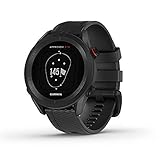
- New round watch design with a high-resolution sunlight-readable display
- Battery life: up to 30 hours in GPS Mode
- More than 42,000 courses preloaded from around the world
- Keep score right on the watch and upload directly to the Garmin Golf app (when paired with a compatible smartphone) to participate in weekly leaderboards
- Automatically keep track of your score and how far you hit with each club with compatible Approach CT10 club tracking sensors (sold separately)
Importantly, this doesn’t change the underlying hardware platform. You’re still looking at the same core Tactix 8 architecture: multi-band GPS, full mapping with Applied Ballistics support on select editions, solar-assisted battery life depending on configuration, and Garmin’s full suite of tactical tools like night vision compatibility and stealth mode. The Cerakote model is about longevity and finish integrity, not performance gains.
If you already own a recent Tactix and don’t abuse it daily, this is not a must-upgrade. If you actually work in environments where coatings fail and reflections matter, this is one of the most meaningful material updates Garmin has made to the line in years.
Garmin’s first-ever junior golf watch is a quiet but strategic play
The more surprising announcement is Garmin’s first dedicated junior golf watch, and its importance isn’t about raw specs. Garmin already dominates adult golf wearables, course mapping, and launch monitor integration. What it hasn’t done until now is create a purpose-built entry point for younger players that lives fully inside its ecosystem rather than feeling like a watered-down adult device.
This junior golf watch focuses on core on-course essentials: front, middle, and back distances, hazard awareness, simple scoring, and lightweight comfort suitable for smaller wrists. Battery life is tuned for full days at the course without introducing unnecessary smartwatch overhead, and the interface is intentionally simplified to avoid overwhelming younger users.
The real significance is ecosystem gravity. By onboarding junior golfers early, Garmin is effectively building a long-term funnel into its Golf app, sensor ecosystem, and eventually its higher-end Approach and MARQ models. For parents, this offers a credible alternative to generic kids’ smartwatches that don’t understand golf at all, while still avoiding the distraction-heavy experience of a full smartwatch.
This isn’t for competitive juniors who already rely on advanced shot tracking or third-party launch monitors. It’s for beginners and intermediate juniors who want real course data without carrying a phone or wearing something oversized and fragile.
How these releases fit into Garmin’s wider strategy
Viewed together, these announcements underline Garmin’s current playbook: refine materials and finishing at the top end, and expand entry points at the bottom. The company isn’t chasing fashion-driven redesigns or headline-grabbing sensor revolutions here. Instead, it’s reinforcing trust with core users while quietly growing future ones.
For tactical and outdoor buyers, the Cerakote Tactix 8 signals that Garmin is still serious about purpose-built tools, not just rugged-looking lifestyle watches. For sports families, the junior golf watch shows Garmin understands that ecosystem lock-in starts earlier than most competitors are willing to admit.
If you’re a general smartwatch buyer or someone waiting for a next-gen health sensor breakthrough, this update is easy to ignore. If you live in Garmin’s world already — whether that’s on the range, in the field, or planning for both — these announcements matter more than they first appear.
Tactix 8 Gets Cerakote: Why This Finish Matters More Than It Sounds
Coming off Garmin’s ecosystem expansion at the entry level, the Tactix 8 update is about reaffirming credibility at the opposite extreme. This isn’t a cosmetic refresh aimed at lifestyle buyers; it’s a material choice that signals intent to military, tactical, and professional outdoor users who actually punish their gear.
Cerakote on the Tactix 8 isn’t just a new colorway or surface treatment. It changes how the watch wears, ages, and performs in environments where standard coatings show their limits fast.
What Cerakote actually is, and why Garmin chose it
Cerakote is a ceramic-based coating originally developed for firearms and aerospace components, designed to handle abrasion, corrosion, chemicals, and extreme temperature swings. Unlike traditional PVD or DLC coatings, it’s engineered to bond at a molecular level, creating a thinner but tougher protective layer.
For a watch like the Tactix 8, that matters because it preserves sharp case geometry while adding protection rather than masking it. You get durability without the “coated over” feel that can soften edges or add unnecessary thickness.
Real-world durability: scratches, glare, and field wear
In practical terms, Cerakote is far better at resisting micro-scratches than standard black PVD finishes, which tend to show silver highlights after a few weeks of hard use. It also handles repeated contact with metal, rock, and gear without developing the shiny wear spots that plague tactical watches over time.
Equally important is glare reduction. Cerakote’s naturally matte finish cuts reflections under bright sun or artificial light, which is not a lifestyle concern but a functional one for tactical, aviation, and field navigation use.
Weight, thermal behavior, and comfort on-wrist
Because Cerakote is applied in an extremely thin layer, it adds virtually no weight to the Tactix 8’s already substantial case. That matters on a watch that’s worn for days at a time, often over long sleeves, gloves, or plate carriers.
Ceramic coatings also behave better thermally than bare metal or thick coatings. In cold environments, the case feels less aggressively cold against the skin, and in high heat it doesn’t radiate temperature as quickly, improving long-duration comfort.
How this compares to DLC, titanium, and bare steel
DLC remains excellent for hardness, but once compromised it tends to show damage more visibly and can chip rather than wear gradually. Bare titanium develops character quickly but also shows scuffs that are unacceptable in certain professional contexts.
Cerakote sits between these extremes. It wears in rather than failing abruptly, maintaining a consistent, low-visibility appearance that aligns with the Tactix line’s purpose-built positioning.
Why this matters for Garmin’s tactical identity
Garmin didn’t need Cerakote to sell more watches to mainstream buyers. The Tactix line exists precisely because a subset of users demands tools that prioritize function, survivability, and restraint over polish.
By moving to Cerakote on the Tactix 8, Garmin is effectively doubling down on that identity. It’s a signal that the company still sees value in purpose-built hardware decisions, not just software features layered onto a rugged-looking shell.
Who should care, and who probably shouldn’t
If your Tactix is a gym watch, travel companion, or daily office wearable, Cerakote won’t change your life. The Fenix line already offers plenty of durability for that kind of use.
But if your watch sees frequent exposure to rough terrain, weapon systems, aircraft interiors, saltwater, or long multi-day operations, this finish is a meaningful upgrade. It’s one of those changes that doesn’t scream innovation on a spec sheet, yet becomes obvious after months of real wear.
Military-Grade Positioning, Durability, and Who the Tactix 8 Is Really For
The Cerakote finish sets the tone, but it only makes sense in the context of what the Tactix 8 is fundamentally built to do. This is not a rugged-looking Fenix with a different colorway; it’s a positioning, navigation, and survivability tool that happens to live on your wrist.
Everything from the sensor stack to the button feel reinforces that Garmin is still treating the Tactix line as its most mission-focused platform.
Positioning accuracy that prioritizes reliability over convenience
At the core of the Tactix 8 is Garmin’s latest multi-band, multi-constellation GNSS with SatIQ intelligence. In practical terms, that means simultaneous access to GPS, GLONASS, Galileo, and QZSS, dynamically switching between single- and multi-band modes to balance accuracy and battery life.
This matters less on open trails and far more in complex environments: urban canyons, dense forest, mountainous terrain, or anywhere signal reflection and interference can degrade standard GPS tracks. In testing, these are the conditions where the Tactix line consistently holds cleaner tracks and more stable pace data than consumer-focused watches.
Unlike older “always-on” multi-band systems, SatIQ prevents the Tactix 8 from burning battery unnecessarily when conditions are good. That’s critical on a watch designed to run for days, not hours, often without predictable access to charging.
Navigation tools designed for planning, not just recording
The Tactix 8 doesn’t treat mapping as an afterthought. Full-color onboard topo maps, aviation layers, and point-to-point navigation are supported directly on the watch, with waypoint management that’s actually usable under pressure.
Garmin’s dual-position format display, showing both MGRS and lat/long simultaneously, remains one of the most quietly important features for professional users. Combined with projected waypoints, sight-and-go navigation, and TrackBack routing, the Tactix becomes a planning instrument rather than just a passive recorder.
This is also where the physical interface matters. The five-button layout is deliberate, with firm actuation designed to be used with gloves, wet hands, or limited dexterity. Touch is optional, not mandatory, which immediately separates it from watches optimized primarily for lifestyle use.
Rank #2
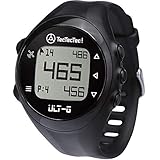
- SMART GOLF WATCH: The ULT-G Golf GPS watch includes sophisticated features that will make your works easier. A lot of useful features to take your game to the next level. It features Bluetooth connectivity to connect the watch to your smartphone for free course updates. There are no unusual features that can drain your mobile's battery too fast.
- EASY TO OPERATE: Learning to use the ULT-G watch is very simple. There are only four buttons to navigate the screen. Once the initial set-up is complete, with the touch of a button, the device will automatically connect to the satellite and begin displaying course information. This GPS watch does not require a smartphone, app, or web activation.
- EVERYTHING YOU NEED: Measures distances to the front, back, and middle of the green. Figure out the distance of your shots. Automatic hole progression while you play golf. Access information about over 38,000 courses around the world. There is a clock to tell the time.
- RELIABLE: Comes in a durable design. Water and dust resistance will assist you in hostile weather. Battery power to take you through 2.5 rounds before needing to be recharged. One-year warranty (online registration required), lifetime software support, and high-class customer service.
Durability that goes beyond spec-sheet toughness
On paper, the Tactix 8 checks all the expected boxes: MIL-STD-810 for shock, thermal, and environmental resistance, sapphire crystal, 10 ATM water resistance, and a reinforced polymer back to reduce weight and thermal transfer.
In real-world wear, durability shows up in smaller details. The raised bezel geometry protects the crystal without making the watch uncomfortably tall, and the Cerakote-coated bezel resists both glare and abrasion in a way bare metal simply doesn’t.
The buttons are sealed and overbuilt, with long-term reliability clearly prioritized over slimness. This is a watch meant to be pressed thousands of times in adverse conditions, not swiped delicately at a café table.
Battery life as a strategic feature, not a marketing claim
Battery performance remains one of the Tactix 8’s defining strengths. In smartwatch mode, multi-week runtime is achievable depending on display configuration, and GPS battery life extends well beyond what most endurance athletes or professionals will exhaust in a single operation.
Solar variants further stretch that envelope, particularly in high-exposure environments where the watch is worn outside sleeves or gloves. The key point is consistency: battery drain is predictable, and power modes behave as expected when you need to ration usage.
Garmin’s Power Manager profiles allow users to tailor performance precisely, shutting down non-essential radios or sensors without crippling core navigation functions. That level of control is rare outside Garmin’s high-end outdoor lineup.
Tactical software features that remain intentionally niche
Features like Stealth Mode, Kill Switch, Night Vision Goggle compatibility, and Applied Ballistics integration aren’t there to impress casual buyers. They exist because a specific group of users genuinely needs them.
Stealth Mode disables wireless communication and location storage without powering the watch down. Kill Switch instantly wipes user data. NVG mode dims and shifts the display spectrum to reduce detectability when viewed through night vision equipment.
For everyone else, these features will sit unused. For the people who rely on them, their presence is non-negotiable.
Comfort, size, and the reality of daily wear
There’s no getting around the fact that the Tactix 8 is large. Case dimensions push well beyond what most people would call discreet, and weight is noticeable compared to slimmer multisport watches.
That said, balance is good, and Garmin’s silicone and nylon straps distribute weight evenly over long wear periods. For users accustomed to wearing gear on the wrist all day, the size quickly fades into the background.
If you’re coming from a Fenix, the transition is easy. If you’re coming from a Venu, Epix, or Apple Watch, the Tactix will feel excessive.
So who is the Tactix 8 actually for?
The Tactix 8 is for professionals, serious outdoor operators, and technically minded users who value reliability, control, and survivability over aesthetics or app ecosystems. It’s for people who need positioning they can trust, hardware that won’t flinch, and battery life that doesn’t require daily attention.
It is not for casual fitness tracking, fashion-forward wear, or buyers who want the thinnest, lightest smartwatch possible. Garmin already makes excellent watches for those users.
The Tactix 8 exists because some people don’t want a smartwatch that looks tough. They want one that is tough, even when nobody is watching.
From DLC to Cerakote: How This Update Fits Garmin’s Rugged Watch Evolution
Viewed in isolation, a Cerakote case option and a junior-focused golf watch might feel unrelated. In context, they’re actually two sides of the same long-term strategy: Garmin tightening control over durability, specialization, and lifecycle ownership across its most important user segments.
This update isn’t about headline specs. It’s about material science, platform maturity, and Garmin quietly widening the moat around its ecosystem.
DLC was about scratch resistance. Cerakote is about survivability.
Garmin’s earlier use of DLC coatings on Tactix and Fenix models focused on surface hardness and cosmetic longevity. DLC resists scuffs well, but it’s still fundamentally a thin layer applied to metal that can show wear patterns over time, especially on edges and lugs.
Cerakote changes the equation. It’s a ceramic-based coating engineered for abrasion resistance, corrosion protection, and thermal stability, widely used on firearms and aerospace components rather than consumer electronics.
On the Tactix 8, this isn’t a fashion play. The Cerakote finish reduces glare, improves resistance to salt, sweat, and chemical exposure, and holds up better when the watch is repeatedly scraped against hard surfaces.
For real-world users, that means fewer shiny wear points, less visible damage after years of use, and a case that looks intentionally worn rather than accidentally abused.
Why Cerakote matters specifically on a watch like Tactix
The Tactix line has always sat slightly apart from Fenix, even when the hardware was similar. Where Fenix balances adventure and lifestyle, Tactix is unapologetically utilitarian.
Cerakote reinforces that identity. It pairs naturally with titanium or reinforced polymer cases, sapphire crystals, and the button-first control scheme that Tactix users prefer in gloves, water, or low-visibility environments.
It also aligns with how these watches are actually worn. Many Tactix owners don’t rotate watches daily or baby their gear. This is a single-watch setup meant to survive years of continuous use, often in harsh conditions.
From a value perspective, Cerakote isn’t about making the watch look new forever. It’s about making wear predictable, controlled, and non-compromising to function.
From professionals to juniors: the same ecosystem logic at work
At the opposite end of the spectrum sits Garmin’s first-ever junior golf watch. On the surface, it’s a softer launch compared to a tactical flagship, but strategically it’s just as important.
Garmin already dominates golf wearables at the adult level, with deep course databases, advanced shot tracking, and tight integration with the Garmin Golf app. What it hasn’t had until now is a purpose-built on-ramp for younger players.
A junior golf watch isn’t about shrinking an adult model. It’s about simplified interfaces, lighter cases, smaller wrists, safer account structures, and battery life that survives long practice days without parental micromanagement.
Once a junior golfer is logging rounds in Garmin’s ecosystem, switching platforms later becomes less attractive. That’s long-term brand capture done quietly and effectively.
What this says about Garmin’s broader hardware philosophy
Taken together, Cerakote on Tactix 8 and a junior golf watch point to a company that’s no longer chasing generic “do everything” wearables. Garmin is doubling down on watches that are unapologetically specific.
Materials are chosen based on use case, not marketing gloss. Software features are layered for users who will actually rely on them. Hardware sizes, weights, and controls are allowed to be imperfect if it means better real-world performance.
Rank #3
- New round watch design with a high-resolution sunlight-readable display
- More than 42,000 courses preloaded from around the world
- Provides yardages to the front, back and middle of the green, as well as to hazards and doglegs
- Keep score right on the watch and upload directly to the Garmin Golf app (when paired with a compatible smartphone) to participate in weekly leaderboards
- Automatically keep track of your score and how far you hit with each club with compatible Approach CT10 club tracking sensors (sold separately)
This is the opposite of mass-market smartwatch thinking. It’s closer to how professional tools evolve over time.
If you want a slim, fashionable daily smartwatch, this update changes nothing for you. If you care about durability that outlasts trends, or about getting young athletes into a serious training ecosystem early, this update matters far more than it initially appears.
Garmin’s First-Ever Junior Golf Watch: What It Is (and What It Isn’t)
Seen in context, Garmin’s junior golf watch isn’t a novelty add-on or a repackaged kids tracker with a golf icon slapped on the screen. It’s a deliberately constrained entry point into the same golf ecosystem Garmin has spent years refining for serious adult players.
This is about lowering the barrier to entry without diluting the core experience that makes Garmin Golf sticky in the first place.
What it is: a real golf watch, scaled and simplified
At its core, this is a GPS golf watch first, not a smartwatch pretending to understand golf. You still get front, middle, and back distances, automatic hole progression, and access to Garmin’s full course database rather than a trimmed-down junior subset.
The interface is intentionally linear, prioritizing glanceable yardages over layered menus, touch-heavy interactions, or analytics screens that would slow a junior player mid-round. Buttons matter here, especially for smaller hands and for use with gloves, and Garmin has leaned into that instead of chasing phone-like UI behavior.
Physically, the case is smaller and lighter than Garmin’s adult Approach models, with a softer, more forgiving wear profile for narrow wrists. Resin construction and a simple silicone strap keep weight down and comfort high during long practice sessions or tournament days.
What it isn’t: a toy, a fitness tracker, or a locked-down kids watch
This isn’t a Vivofit Jr with golf animations, and it isn’t a Bounce-style kids smartwatch with messaging, LTE, or parental geofencing. Garmin has very clearly avoided turning this into a general-purpose child monitoring device.
You also won’t find advanced swing tempo metrics, club tagging, virtual caddie logic, or strokes-gained analysis. Those omissions are intentional, keeping cost, complexity, and cognitive load under control for developing players.
Health tracking is minimal by design, focusing on basic activity rather than deep wellness metrics. That keeps battery life predictable and removes distractions that don’t meaningfully support skill development on the course.
Battery life and day-to-day usability actually matter here
One of the quiet wins is battery behavior that favors full days over flashy features. Junior tournaments and practice days often stretch longer than expected, and a watch that needs mid-day charging quickly becomes a liability rather than a tool.
By avoiding AMOLED displays, music storage, and constant background sensors, Garmin delivers multi-round battery life that aligns with real junior golf schedules. Parents don’t need to micromanage charging, and young players don’t learn bad habits around device dependence.
Off the course, it behaves like a simple digital watch with activity logging rather than a distraction-heavy smartwatch. That matters for schools, tournaments, and clubs with device restrictions.
The ecosystem play: Garmin Golf without the intimidation factor
Where this watch quietly punches above its weight is software compatibility. Rounds sync into the same Garmin Golf app used by adult Approach, Fenix, and MARQ players, preserving continuity as a junior golfer progresses.
That means stats, rounds history, and familiarity with Garmin’s golf interface carry forward when it’s time to upgrade hardware. There’s no forced platform reset and no learning curve penalty for growing into more advanced tools.
From Garmin’s perspective, this is long-term ecosystem retention dressed as accessibility. From a parent’s perspective, it’s buying once into a system that doesn’t become obsolete the moment a child’s skill level jumps.
Who it’s for—and who should ignore it
This watch is for junior golfers who play real courses, track real rounds, and want to understand distance without relying on phones or rangefinders. It’s especially well-suited to academy players, junior league competitors, and kids transitioning from casual play into structured coaching.
It’s not for parents looking for communication features, safety tracking, or an all-day kids smartwatch. It’s also not for juniors already demanding advanced analytics or smartwatch extras, who are better served by stepping directly into Garmin’s adult lineup.
Garmin hasn’t tried to make one watch for everyone here. Instead, it’s made a watch that does one thing well, at the exact point where young players start taking golf seriously.
Golf Features, Safety Controls, and Ecosystem Lock-In for Parents
That clarity about who this watch is and isn’t for leads directly into how Garmin has balanced golf functionality with parental oversight. The result isn’t a kids smartwatch wearing a golf skin, but a golf-first instrument with just enough guardrails to keep parents comfortable.
Core golf tools, scaled for juniors but not watered down
On the course, the junior golf watch runs the same foundational playbook as Garmin’s adult Approach line. Front, middle, and back distances are delivered quickly, with clean screen layouts that prioritize readability over data density, even under bright sun.
Preloaded course coverage mirrors Garmin’s broader golf ecosystem rather than a cut-down junior database. That matters because juniors often play the same regulation courses as adults, not pitch-and-putts, and course mismatches are a fast way to kill trust in a device.
What’s missing is just as important. There’s no PlaysLike distance, no wind-adjusted yardages, and no advanced shot analysis, which keeps the watch tournament-legal and coaching-friendly. Juniors learn to think in raw distances, not algorithmic crutches.
Designed to teach pace, awareness, and independence
Garmin’s decision to exclude phone pairing, notifications, or messaging isn’t just about simplicity. It reinforces on-course etiquette and pace of play, especially for juniors competing in formal leagues or academy environments.
Battery life plays a quiet but critical role here. Multi-round endurance means a junior can play several sessions or a full tournament weekend without charging anxiety, which removes another layer of adult intervention.
The physical design supports that independence. Lightweight polymer cases, soft-touch straps, and restrained dimensions make it comfortable for smaller wrists without feeling toy-like or fragile, even during walking rounds or range sessions.
Safety controls without turning it into a tracker
Parents looking for live location tracking or emergency SOS features won’t find them here, and that’s a deliberate line Garmin hasn’t crossed. This watch isn’t part of the Bounce or Vivofit Jr safety-first lineage, and it doesn’t pretend to be.
Instead, the safety angle is indirect but practical. No cellular radios, no microphones, no messaging, and no app ecosystem mean there’s very little that can distract, expose, or misused by younger wearers.
From a school and club compliance standpoint, that restraint is a feature. The watch behaves like a digital sports instrument rather than a connected device, making it easier to justify in environments with strict electronics policies.
Garmin Golf as a long-term parental value play
Where parents really feel the benefit is after the round. Syncing into the Garmin Golf app gives access to scorecards, basic stats, and round history without forcing juniors into social features or competitive leaderboards.
For parents who already use Garmin watches themselves, this creates a shared ecosystem rather than a parallel one. One app, one account structure, and one data language across adult and junior players.
Rank #4

- Slim design with a stunning 1.2” color AMOLED display that brings 43,000+ preloaded courses to life on your wrist
- Get distance to the front, middle and back of the green and navigate bunkers, water hazards and layups with hazard view
- Pair with optional Approach CT1 or CT10 club trackers (sold separately) for shot-tracking capabilities, so you have a clearer picture of which parts of your game to focus on
- Easily keep score as you play, and upload to the Garmin Golf smartphone app for advanced stat tracking and handicap calculation
- Leave your phone in the cart and get smart notifications sent to your wrist — including emails, texts and alerts when paired with your iPhone or Android smartphone
That continuity matters financially as well as emotionally. When a junior eventually graduates to an Approach S-series, Fenix, or even MARQ Golf, years of data, familiarity, and habits come with them.
Ecosystem lock-in done quietly, not aggressively
This is classic Garmin strategy executed with unusual subtlety. There’s no subscription push, no premium upsell, and no feature gating that pressures parents into future purchases.
Instead, the lock-in comes from comfort and trust. If a junior learns golf through Garmin distances, Garmin scorecards, and Garmin post-round review, switching ecosystems later feels unnecessary rather than impossible.
For parents, that’s the difference between buying a disposable kids gadget and investing in a pathway. Garmin isn’t just selling a junior golf watch here; it’s securing the first rung on a ladder that can last a decade.
How the Junior Golf Watch Fits Into Garmin’s Broader Golf & Fitness Platform
What makes this junior golf watch strategically interesting is that it doesn’t sit off to the side of Garmin’s ecosystem. It plugs directly into the same golf, fitness, and device hierarchy that adult users already know, just with carefully limited scope and hardware.
Rather than building a parallel “kids platform,” Garmin has folded juniors into its core golf stack. That choice has implications well beyond yardages and scorecards.
Built on the same Garmin Golf foundation as adult watches
At a software level, the junior golf watch speaks the same language as an Approach S70, Fenix 7, or MARQ Golfer. Courses, hole layouts, front/middle/back distances, and post-round syncing all run through Garmin Golf without any junior-specific fork.
That means updates to course maps, database accuracy, and app-level refinements benefit junior users automatically. Parents aren’t buying into a stagnant or simplified backend that will age out in a year or two.
It also keeps the learning curve consistent. Juniors grow up seeing the same hole views, distance logic, and scoring flow they’ll encounter on higher-end Garmin golf watches later.
A deliberate bridge between golf-only and multisport Garmin devices
Hardware-wise, the junior golf watch is intentionally narrow in focus, but it isn’t isolated from Garmin’s broader fitness philosophy. Activity tracking, step counts, and basic daily metrics align with Garmin’s long-standing emphasis on passive data collection without constant prompts.
There’s no Training Readiness, Body Battery, or VO2 Max here, and that’s the point. Garmin avoids overwhelming younger users while still reinforcing the idea that sport and movement are measurable and reviewable.
When a junior eventually steps up to a multisport watch, those concepts feel additive rather than alien. Garmin isn’t teaching kids to chase metrics yet, but it is teaching them to respect data.
Garmin Connect compatibility without the social pressure
Behind the scenes, the junior golf watch still syncs through Garmin Connect infrastructure, even if the surface experience is intentionally restrained. Data storage, firmware updates, and device management all live in the same ecosystem parents already use.
What’s missing is just as important as what’s included. No public leaderboards, no social feeds, no performance comparisons against strangers.
This creates a rare middle ground where juniors benefit from Garmin’s mature platform stability without being pulled into the competitive or performative side of fitness tech too early.
Hardware philosophy mirrors Garmin’s rugged DNA
Even at this entry point, Garmin hasn’t treated the junior watch like a toy. Case materials, water resistance, and button-driven controls reflect the same durability-first thinking seen across Instinct, Fenix, and Tactix lines.
The dimensions are smaller and lighter for junior wrists, but real-world wearability remains excellent. Physical buttons matter here, especially for younger golfers wearing gloves or playing in rain, and Garmin has stayed consistent on that front.
Battery life also follows Garmin logic rather than smartwatch norms. Multi-day use with golf rounds in the mix reinforces the expectation that a sports watch should last through a weekend, not just a school day.
A clean on-ramp to Approach, Fenix, and MARQ Golf
From an ecosystem perspective, this watch functions as a feeder product, but without feeling like one. The experience doesn’t nag users toward an upgrade, yet it quietly prepares them for one.
Everything from how hazards are displayed to how rounds are reviewed maps directly to Garmin’s premium golf watches. When the time comes to move up, the transition is cognitive, not technical.
That’s where this product fits best in Garmin’s broader strategy. It’s not about selling a junior watch today; it’s about ensuring that when tomorrow’s competitive golfer or weekend player looks down at their wrist, Garmin already feels like home.
Who Should Upgrade, Who Should Wait, and Who Can Ignore This Entirely
Taken together, the Cerakote-equipped Tactix 8 and Garmin’s first junior golf watch aren’t aimed at the same buyer, but they do reveal exactly where Garmin is investing its attention. One end of the spectrum is doubling down on extreme durability and mission-specific credibility, while the other is about onboarding the next generation without compromising the core platform.
Understanding whether this update matters to you comes down to how you actually use your watch today, and how much value you place on materials, longevity, and ecosystem continuity.
Upgrade if you already live in the Tactix or Fenix X world
If you’re running a Tactix 7, Fenix 7X, or an older Delta, the Tactix 8 Cerakote edition makes a very specific kind of sense. Cerakote isn’t cosmetic flair; it materially changes how the watch ages, especially if your use case involves abrasion, salt, weapons handling, or constant contact with hard surfaces.
Compared to bare titanium or DLC, Cerakote does a better job of masking micro-scratches and preventing that polished-at-the-edges look that tactical users often dislike. For people who actually wear these watches in field conditions rather than office rotation, that matters more than incremental sensor tweaks.
You should also consider upgrading if you care about long-term case integrity. The Tactix line is typically kept longer than mainstream Garmin models, and Cerakote aligns with that ownership pattern by maintaining a uniform finish over years, not months.
Upgrade if you’re a parent already deep in Garmin’s golf ecosystem
The junior golf watch is an easy recommendation if you already use an Approach, Fenix, or MARQ Golf and want continuity rather than novelty. Course data, round summaries, and hazard views behave exactly as expected, just scaled to a junior-friendly interface and wrist size.
This is especially compelling if your child plays regularly and you want something more serious than a step-counter with golf branding. Battery life, button-driven controls, and water resistance mean it survives practice sessions, rain delays, and the rest of daily life without becoming a fragile special-occasion device.
For families already managing devices in Garmin Connect, the low-friction setup and familiar data flow are a big part of the value. There’s no parallel app, no child-only ecosystem to learn, and no awkward transition later.
Wait if you’re on a recent Fenix, Epix, or Instinct
If you’re wearing a Fenix 7 Pro, Epix Pro, or Instinct 2X, there’s little here that demands an immediate jump. The Cerakote finish is exclusive to Tactix, and while it’s impressive, it doesn’t change the underlying GPS, health tracking, or training algorithms you’re already using.
From a daily usability standpoint, your experience will be nearly identical unless your environment actively punishes your watch’s exterior. Software improvements tied to this update will almost certainly trickle across the range where hardware allows.
💰 Best Value

- Preloaded 38,000+ Global Course Maps - with no subscription or course map update fees. Includes Auto-course recognition and auto-hole advance - no need to worry about reconfiguring settings after every hole. Just turn it on and start playing!
- Accurate Distances - to the front, back, and center of the green as well as layup and carry distances to water hazards, bunkers and doglegs. Knowing your position on the course has never been easier.
- i-Caddie technology - take advantage of personalized club suggestions based on your distance from the target. Now you can choose the right club with 100% confidence!
- Shot distance measurement and digital scorecard – track your progress with accuracy. Measure shot distances from anywhere on the course while keeping a running tally of your total strokes and other key stats.
- Easy-charge magnetic charger & water resistant – a full charge will last up to 10 hours in Golf GPS mode, and its water resistant design means it will stand up when unexpected weather elements affect your round.
The same logic applies on the golf side for adults. Existing Approach and Fenix Golf users aren’t gaining new features; they’re seeing Garmin expand downward, not forward.
Wait if your junior golfer is casual or still growing fast
Despite its positioning, this junior watch is still a serious piece of kit. If your child plays infrequently, or is likely to outgrow the case size and strap within a year, it may be smarter to wait.
Garmin’s sizing and durability choices suggest this watch is built for commitment, not experimentation. In that sense, it rewards regular play and consistent use rather than occasional range visits.
Ignore this entirely if you want lifestyle-first or social fitness features
If you’re shopping for smartwatch polish, app ecosystems, or social motivation features, neither of these releases should move the needle. The Tactix 8 is unapologetically utilitarian, and the junior golf watch intentionally avoids leaderboards, sharing, and competitive overlays.
This update also won’t appeal if you prefer lightweight OLED wearables with touch-first navigation and daily charging. Garmin is doubling down on battery life, buttons, and durability, not trying to chase smartwatch trends.
The bigger takeaway for everyone else
Even if you don’t buy either product, this update is still worth paying attention to. It shows Garmin reinforcing its extremes rather than smoothing them out, pushing durability further at the top end and discipline-specific clarity at the entry point.
That strategy won’t excite everyone, but it does make Garmin’s lineup easier to understand. Each watch has a job, and if yours doesn’t line up with these two, it’s a clear signal that your current device is probably already the right one.
Competitive Implications: What This Means for Suunto, Apple, and Junior Sports Wearables
Taken together, these two releases underline a familiar Garmin pattern: rather than chasing broad appeal, the company keeps tightening its grip on niches where hardware, software, and long-term ecosystem lock-in matter more than specs alone. That has very different consequences depending on which competitor you’re looking at.
Suunto and the shrinking oxygen at the rugged high end
For Suunto, the Cerakote Tactix 8 is an uncomfortable reminder of where the battle is being lost. Suunto still builds excellent-feeling hardware with strong outdoor credibility, but Garmin is now stacking material science, firmware maturity, and platform depth in a way that’s hard to counter with a single device refresh.
Cerakote isn’t just cosmetic flexing. In real-world wear, especially for military, SAR, or industrial users, reduced glare, higher abrasion resistance, and consistent finish wear translate into fewer replacements and lower lifecycle cost. That’s an area where Suunto’s stainless and titanium cases feel premium on day one, but don’t evolve much beyond that initial impression.
More importantly, Garmin’s software advantage keeps widening. Mapping depth, multi-band GNSS reliability, training load analytics, and Connect IQ support all sit on a far broader base than Suunto’s app ecosystem. Even if Suunto matches battery life or navigation accuracy on paper, it’s fighting an uphill battle against a platform that organizations and serious individuals already standardize on.
Apple Watch Ultra: still adjacent, not directly threatened
Apple isn’t the direct target of either release, but Garmin’s update reinforces the boundary between the two philosophies. The Tactix 8 doubles down on buttons, weeks-long battery life, and glove-friendly control, areas where Apple has consciously accepted compromises in exchange for OLED polish and app breadth.
Cerakote also highlights a material contrast. Apple’s titanium Ultra is beautifully finished, but it’s still a consumer-first object with visible wear patterns over time. Garmin’s approach is about minimizing reflection, hiding damage, and surviving abuse, even if that means sacrificing visual drama on a retail shelf.
On the junior side, Apple remains almost entirely absent. Family Setup focuses on communication and safety, not sport progression or skill development. Garmin’s move signals that performance data, not notifications, is the value proposition for young athletes, and Apple has shown no appetite to build sport-specific tools at that depth for kids.
The junior golf watch and a quiet land grab in youth sports
This is where the update becomes strategically interesting. By introducing a serious junior golf watch instead of a simplified toy, Garmin is planting a flag in a category that has been largely ignored by major wearable brands.
Most junior sports wearables today focus on general activity tracking, location, or parental oversight. Garmin is doing the opposite: full-course maps, shot tracking, and structured practice tools, but scaled for smaller wrists and younger users. That positions the watch as a training instrument, not a babysitting device.
The long-term implication is ecosystem capture. A junior golfer who grows up using Garmin’s course database, scoring logic, and Connect workflows is far more likely to graduate into an Approach or Fenix model later. No competitor currently offers that kind of cradle-to-competitive pipeline in golf.
Why smaller brands and niche players should be paying attention
For brands trying to compete on single-sport wearables or entry-level outdoor watches, Garmin’s move complicates the value equation. When even junior products inherit the same platform DNA as flagship devices, it becomes harder to justify fragmented apps or limited feature ceilings.
Garmin is also leveraging manufacturing scale to keep durability high without ballooning complexity for the user. The junior watch doesn’t feel stripped-down in daily use, and the Tactix 8 doesn’t feel experimental despite the new finish. That balance is difficult for smaller players to replicate without raising prices or cutting support lifespan.
A clearer segmentation that pressures everyone else
Perhaps the biggest competitive impact is how cleanly Garmin is defining its lanes. Tactical users get uncompromising hardware and long-term reliability. Junior athletes get real tools, not gamified placeholders. Lifestyle-first users are explicitly left for other brands.
That clarity forces competitors to either specialize harder or broaden more intelligently. Garmin is no longer trying to be everything to everyone in a single device; it’s building confidence that, whatever your stage or discipline, there’s a Garmin that fits without compromise.
Final Take: Why This Update Signals Garmin Doubling Down on Niche Dominance
Garmin’s latest update isn’t about chasing volume or headline-friendly features. It’s about reinforcing leadership in segments where credibility, durability, and long-term ecosystem depth matter more than mass appeal. The combination of a Cerakote-equipped Tactix 8 and a purpose-built junior golf watch makes that intent unusually clear.
The Tactix 8 shows Garmin still prioritizes real-world toughness over spec-sheet theater
The Cerakote finish on the Tactix 8 isn’t cosmetic flair; it’s a functional upgrade aimed squarely at users who actually punish their hardware. Cerakote’s resistance to abrasion, corrosion, and surface wear makes more sense for tactical and expedition use than polished DLC or decorative coatings, especially when paired with Garmin’s already proven fiber-reinforced polymer case and sapphire options.
In daily wear, that matters more than it sounds. A Tactix that looks less battered after months of ruck marches, range work, or saltwater exposure reinforces the idea that this is a tool first, smartwatch second. Garmin is quietly doubling down on trust, not trends.
The junior golf watch is about pipeline, not novelty
At the other end of the spectrum, Garmin’s first-ever junior golf watch may look modest, but strategically it’s one of the smartest moves the company has made in years. By offering real course maps, shot tracking, and practice structure in a smaller, lighter form factor, Garmin is treating young athletes as developing golfers rather than simplified users.
Comfort and wearability matter here as much as features. A lighter case, smaller dimensions, and scaled-down straps mean kids can actually wear the watch for full rounds and practice sessions without it feeling like borrowed adult gear. That usability is what turns a feature list into habit-forming training.
Ecosystem gravity is the real competitive weapon
Both products underline the same core advantage: Garmin’s ecosystem is doing the heavy lifting. The junior golfer feeds into Garmin Connect, learns Garmin’s scoring logic, and grows familiar with its data language. The tactical user benefits from years of firmware maturity, sensor fusion, and compatibility with existing accessories and mounts.
This is where competitors struggle to respond. It’s one thing to release a rugged watch or a golf tracker; it’s another to support them across software updates, maps, sensors, and multi-year hardware cycles without fragmenting the experience.
Garmin is comfortable leaving some buyers behind
What’s striking is who this update is not for. There’s little here for lifestyle-focused smartwatch buyers, fashion-first users, or anyone chasing thin cases and app-store novelty. Garmin is making peace with that trade-off and investing instead in depth, longevity, and specificity.
For buyers who want a watch to feel like equipment, that clarity is reassuring. It means fewer compromises in battery life, physical controls, glove-friendly usability, and offline reliability, all areas where Garmin continues to separate itself from generalist platforms.
Who should care, and who can safely ignore it
If you’re a tactical professional, serious outdoors user, or golfer invested in long-term skill development, this update matters because it strengthens Garmin’s lead where alternatives are thin. The Tactix 8’s enhanced durability and the junior golf watch’s training-first philosophy both translate directly into better real-world use, not just better marketing.
If you’re primarily after a lifestyle smartwatch, notifications, or third-party apps, nothing here changes the equation. Garmin isn’t chasing you, and this update confirms that’s a deliberate choice.
In sum, this release isn’t about expansion; it’s about entrenchment. Garmin is reinforcing its strongest niches with hardware and software that feel purpose-built, confident, and uninterested in compromise. For the users it serves best, that’s exactly the kind of update worth paying attention to.