If you are cross-shopping the Epix Gen 2 and Epix Pro Gen 2, you are already operating at the sharp end of Garmin’s lineup, where compromises are measured in edge cases rather than obvious gaps. Both watches promise flagship training metrics, full-fat mapping, and an AMOLED display that finally makes Garmin feel modern on the wrist. The real question is not whether either watch is capable, but whether the Pro model meaningfully changes the ownership experience enough to justify the price delta or an upgrade.
This comparison starts by grounding both models in their intended roles, their timing in Garmin’s product cycle, and the type of athlete or adventurer each one actually serves best. Understanding that context makes the later differences in hardware, sensors, battery behavior, and software support far easier to evaluate in real-world terms.
Market positioning: where Epix fits in Garmin’s ecosystem
The original Epix Gen 2 was positioned as the AMOLED counterpart to the Fenix 7, offering identical core features with a vivid display instead of a memory-in-pixel panel. It targeted athletes who wanted premium mapping, advanced training analytics, and daily smartwatch usability without sacrificing aesthetics or indoor readability. In practice, it appealed strongly to runners, triathletes, and gym-focused users who trained hard but did not live on multi-day expeditions.
The Epix Pro Gen 2 shifts that positioning slightly upward and outward. It is no longer just the AMOLED Fenix alternative, but a refinement tier that brings the Epix line closer to Garmin’s most expedition-capable hardware. With expanded case sizes, upgraded sensors, and hardware additions like the built-in flashlight, the Pro model clearly targets users who blur the line between structured training and serious outdoor use.
🏆 #1 Best Overall

- Stylish Design, Vibrant Display: The lightweight aluminum build blends effortless style with workout durability, while the vivid 1.97" AMOLED display keeps your data easy to read, even under bright sunlight.
- All-in-One Activity Tracking: The Amazfit Bip 6 fitness tracker watch offers 140+ workout modes including HYROX Race and Strength Training, plus personalized AI coaching and 50m water resistance.
- Up to 14 Days Battery Life: The Amazfit Bip 6 smart watch powers through your training and recovery for up to two weeks at a time - no nightly charging needed.
- Accurate GPS Tracking & Navigation: Stay on course with free downloadable maps and turn-by-turn directions. Support from 5 satellite systems ensures precise tracking of every move and fast GPS connection.
- 24/7 Health Monitoring: The Amazfit Bip 6 smartwatch provides precise, real-time monitoring of heart rate, sleep, blood-oxygen and stress, empowering you with actionable insights to optimize your health and fitness.
Release timeline and generational intent
The Epix Gen 2 launched in early 2022 as a clean break from Garmin’s earlier Epix experiments, finally delivering a watch that matched the Fenix feature-for-feature. At launch, it felt like a statement product: Garmin proving that AMOLED could coexist with long battery life, offline maps, and full multisport depth. Over time, it matured through firmware updates but remained anchored to its original hardware limits.
The Epix Pro Gen 2 arrived in mid-2023 as an evolutionary, not revolutionary, update. Rather than replacing the Epix Gen 2 outright, Garmin expanded the line with three case sizes and introduced its latest sensor stack and durability upgrades. The Pro model also signals longer-term software relevance, as Garmin tends to prioritize its newest sensor platforms when rolling out advanced health and training features.
Who the Epix Gen 2 is really for
The Epix Gen 2 remains a strong choice for athletes whose training is structured, frequent, and data-driven but largely predictable in duration. Runners, cyclists, and triathletes who train daily and race on weekends will find its GPS accuracy, AMOLED clarity, and training readiness tools more than sufficient. In day-to-day wear, it strikes a comfortable balance between weight, thickness, and wrist presence, especially in the 47 mm case.
It also makes sense for buyers who want a premium Garmin experience without paying for features they may rarely use. If you do not need a flashlight, extended expedition battery modes, or the latest heart rate sensor, the Gen 2 still delivers nearly all of Garmin’s core performance metrics. For many users, it represents the better value, particularly as pricing has softened since the Pro launch.
Who the Epix Pro Gen 2 is built to serve
The Epix Pro Gen 2 is aimed squarely at athletes and adventurers who want fewer compromises across environments and longer ownership horizons. The addition of smaller and larger case sizes improves fit options, while the upgraded sensor suite benefits users who care deeply about heart rate fidelity, sleep tracking, and emerging health metrics. The built-in flashlight alone changes how usable the watch is for early-morning training, overnight racing, or backcountry navigation.
It is also the better choice for users who expect their watch to grow with Garmin’s software ecosystem. Historically, newer sensor hardware receives more advanced features over time, and the Pro model is better positioned for that trajectory. If your training regularly pushes into ultra distances, alpine terrain, or multi-day efforts, the Epix Pro Gen 2 is designed to support that lifestyle with fewer edge-case frustrations.
Choosing between them at a strategic level
Deciding between the Epix Gen 2 and Epix Pro Gen 2 is less about raw capability and more about alignment with how you train and explore. The Gen 2 excels as a high-end training companion with excellent daily wearability and strong value. The Pro model is a forward-looking tool for users who want maximum versatility, longer-term software relevance, and hardware that supports more extreme scenarios.
Understanding this positioning sets the stage for a deeper examination of how their designs, features, battery profiles, and pricing diverge in practice. Those differences are where the decision becomes concrete rather than theoretical.
Design and Wearability Breakdown: Case Sizes, Materials, Ergonomics, and Wrist Presence
Once the strategic positioning is clear, the most immediate and tangible difference between the Epix Gen 2 and Epix Pro Gen 2 becomes physical. These are watches you live with 24/7, and Garmin’s design decisions directly affect comfort during long training blocks, sleep tracking accuracy, and whether the watch feels like a tool or a burden on the wrist.
Case size options and real-world fit
The standard Epix Gen 2 is offered in a single 47 mm case size, which for many athletes hits a workable middle ground but is not universally ideal. On wrists under roughly 165 mm, it can feel broad and tall, particularly during sleep or when worn tightly for heart rate accuracy. Larger wrists, on the other hand, tend to carry it well, especially given its relatively short lug-to-lug profile for a multisport watch.
The Epix Pro Gen 2 expands the lineup to three case sizes: 42 mm, 47 mm, and 51 mm. This is not a cosmetic change but a meaningful usability improvement. The 42 mm Pro is the first Epix variant that genuinely suits smaller wrists without compromise, while the 51 mm version caters to users who prioritize maximum battery life and screen real estate over discretion.
In practice, the expanded sizing dramatically reduces the need to “tolerate” the watch. Instead of adapting your wrist or strap choice to the hardware, the Pro allows you to select a case that aligns naturally with your anatomy and training style.
Thickness, weight, and long-duration comfort
Both generations use a fiber-reinforced polymer case with a metal rear cover, keeping weight reasonable given the AMOLED display and battery capacity. The Epix Gen 2 in 47 mm typically weighs around 76 grams with a silicone band, which is manageable but noticeable during sleep and long recovery periods.
The Epix Pro Gen 2 varies more significantly depending on size. The 42 mm Pro is meaningfully lighter and more comfortable for round-the-clock wear, particularly for sleep tracking and desk work. The 51 mm Pro, by contrast, is unapologetically substantial, and while stable during running or hiking, it can feel overbuilt for users who expect smartwatch-like subtlety.
What matters most is weight distribution. Garmin has refined the rear housing and curvature on the Pro models, which helps reduce pressure points during long rides or when worn tightly under gloves or jacket cuffs.
Materials, durability, and finishing quality
Both watches share a similar material philosophy: rugged first, premium second. Sapphire crystal options are available on higher-tier versions of both the Epix Gen 2 and Epix Pro Gen 2, and for outdoor users, sapphire remains the correct choice. It dramatically improves scratch resistance when scraping against rock, pack straps, or climbing hardware.
The metal bezels differ subtly in finish across models and sizes, but the Pro line generally shows tighter tolerances and slightly cleaner transitions between bezel, case, and crystal. This is not about luxury polish in the traditional watchmaking sense, but about durability and long-term cosmetic resilience after years of abrasion.
From a practical standpoint, both generations are equally capable of handling harsh environments. The Pro does not introduce new materials so much as it refines execution and consistency across sizes.
Display integration and wrist presence
The AMOLED display is a defining trait of the Epix line, and in both generations it remains one of the best implementations Garmin has produced. Colors are rich, contrast is excellent in low light, and visibility in bright conditions is aided by high peak brightness rather than transflective tricks.
Where wrist presence diverges is proportionality. On the Epix Gen 2, the 47 mm case paired with a vivid AMOLED panel can feel visually dominant, especially in everyday clothing. Some users appreciate this bold, instrument-like presence, while others find it less versatile outside training.
The Pro models benefit from better scaling. The 42 mm Pro, in particular, feels more like a high-end everyday watch that happens to be a multisport powerhouse. The 51 mm Pro leans hard into expedition aesthetics, projecting seriousness and capability but demanding confidence from the wearer.
Button layout, tactile feel, and glove usability
Both the Epix Gen 2 and Epix Pro Gen 2 use Garmin’s five-button layout, which remains a strength for athletes training in wet, cold, or gloved conditions. Touchscreen interaction is excellent for maps and daily navigation, but buttons remain essential during intervals, climbs, or winter use.
On the Pro models, button travel and tactile feedback are subtly improved. The difference is small but noticeable during fatigued sessions or when wearing thicker gloves. This refinement contributes to fewer missed inputs during technical navigation or hard efforts.
From an ergonomic standpoint, neither watch introduces a learning curve for existing Garmin users, but the Pro feels slightly more confidence-inspiring when conditions deteriorate.
Strap compatibility and everyday wear
Both generations use Garmin’s QuickFit system, making strap changes fast and tool-free. Silicone bands remain the default and perform well for training, though many users will quickly swap to nylon or fabric options for better breathability and comfort during multi-day wear.
The expanded case sizes on the Pro line also mean better strap proportionality. Smaller wrists no longer require overly long straps, and larger wrists can avoid the awkward tail-end overhang that sometimes occurs with the standard Epix Gen 2.
In daily life, this translates to fewer micro-annoyances. The watch sits flatter, the strap conforms more naturally, and the overall wearing experience fades into the background, which is exactly what a serious training watch should do.
Display Technology and Everyday Usability: AMOLED Differences, Brightness, and Touch Experience
Where the Epix line originally differentiated itself from Garmin’s MIP-based watches was the AMOLED display, and that decision still defines how these watches feel in daily use. Coming straight from the ergonomics and strap refinements, the screen is the component you interact with most, and it’s also where the Epix Gen 2 and Epix Pro Gen 2 diverge in subtle but meaningful ways.
Both watches remain unapologetically modern tools, but the Pro models push the display experience closer to something you can comfortably live with all day, not just train with.
AMOLED panel quality and size consistency
At a technical level, both the Epix Gen 2 and Epix Pro Gen 2 use high-resolution AMOLED panels with excellent color saturation, deep blacks, and sharp contrast. Maps, training charts, and data fields are easier to parse at a glance than on Garmin’s transflective displays, especially in low light or indoor environments.
The original Epix Gen 2 is limited to a single 47 mm case size with a 1.3-inch display, which already strikes a good balance between readability and wearability. The Pro line expands this with 42 mm, 47 mm, and 51 mm options, scaling the display appropriately rather than simply shrinking or stretching the interface.
In practice, this matters more than it sounds. The 42 mm Pro doesn’t feel cramped, while the 51 mm Pro offers genuinely expansive map views and data screens that benefit trail runners, cyclists, and navigators who rely heavily on visual context.
Brightness, outdoor visibility, and always-on behavior
Brightness is one of the clearest upgrades on the Epix Pro Gen 2. Garmin doesn’t publish nits figures, but real-world use shows noticeably higher peak brightness, particularly in direct sunlight and high-glare environments like alpine terrain or open water.
On the original Epix Gen 2, visibility is good but occasionally requires a wrist tilt or manual brightness adjustment in harsh midday sun. The Pro models hold contrast better at steep viewing angles, reducing those micro-adjustments that break focus during effort.
Always-on display behavior is also more refined on the Pro. Data fields remain more legible at lower brightness levels, which helps maintain situational awareness without aggressively draining the battery during long days or multi-session training blocks.
Touch responsiveness and gesture reliability
Touch performance is excellent on both generations, but the Pro models feel more consistent when the screen is wet, dusty, or smeared with sweat or sunscreen. Swipes register more predictably, particularly when panning maps or scrolling through widgets mid-activity.
Garmin still expects serious users to rely on buttons for structured workouts and navigation, and that philosophy hasn’t changed. What has improved is how confidently touch and buttons coexist on the Pro, with fewer moments where the watch hesitates between inputs.
For everyday use, this translates into smoother interaction with notifications, calendar widgets, and health data. It feels less like a training computer that happens to have touch and more like a polished smartwatch that just happens to be extremely capable outdoors.
Map interaction, data density, and visual fatigue
AMOLED fundamentally changes how Garmin maps are used, and the Pro models lean into that advantage. Higher brightness and improved contrast make contour lines, trails, and course overlays easier to distinguish, especially when zoomed out on the larger 51 mm variant.
On the original Epix Gen 2, dense data layouts can occasionally feel visually busy during long sessions. The Pro’s tuning reduces eye strain over time, particularly during ultra-distance efforts where you’re checking the screen hundreds of times across many hours.
This is an underrated upgrade. Less visual fatigue means quicker glances, better decision-making, and less cognitive load when you’re already tired, cold, or mentally taxed.
Battery trade-offs tied to display behavior
AMOLED remains a power-hungry choice compared to Garmin’s MIP displays, and that reality applies to both generations. However, the Pro models manage this more intelligently, balancing higher brightness with improved efficiency and larger battery capacities in the 47 mm and 51 mm cases.
Rank #2

- Stylish Design, Bright Display: The sleek stainless steel build blends classic style with workout durability, while the bright 1.32" AMOLED display keeps your data easy to read, even under bright sunlight.
- Precise Heart Rate and Sleep Tracking: Amazfit's BioTracker technology tracks your heart rate and sleep data with accuracy that previous sensors just can't match.
- Up to 10 Days of Battery Life: With long battery life that lasts up to 10 days with typical use, nightly recharges are a thing of the past.
- Free Maps with Turn Directions: Stay on-track with free downloadable maps, and get turn-by-turn guidance on-screen or via your Bluetooth headphones. Enjoy ski maps for global resorts, including guidance for cable cars, slopes, and more.
- Faster and More Accurate GPS Tracking: 5 satellite positioning systems ensure fast GPS connection and accurate positioning whenever you're out running, walking, cycling or hiking.
In real-world mixed use, the Pro allows you to leave the display in a more readable state without constantly worrying about battery percentage. The original Epix Gen 2 often encourages more conservative settings, especially if you’re stacking long GPS sessions back-to-back.
For users who want an AMOLED experience without constantly micromanaging display settings, the Pro feels more relaxed and forgiving. That alone makes it easier to live with as a daily watch, not just a training tool.
Everyday smartwatch feel versus pure instrument
The Epix Gen 2 already bridged the gap between sports watch and everyday wearable, but the Pro models complete that transition. Brighter screens, better scaling, and more reliable touch interaction make the watch feel appropriate in casual, professional, and social settings.
Notifications are clearer, watch faces look more refined, and quick interactions feel intentional rather than tolerated. This doesn’t change how the watch performs in training, but it does change how willing you are to wear it 24/7.
For buyers weighing longevity and daily comfort as heavily as performance metrics, the display experience is one of the strongest arguments in favor of the Epix Pro Gen 2 over the original.
Hardware and Sensor Upgrades: Heart Rate, GPS Accuracy, Multiband Performance, and New Internals
Once you get past the screen, the more meaningful differences between Epix Gen 2 and Epix Pro Gen 2 live under the hood. These aren’t flashy upgrades, but they directly affect training accuracy, recovery insights, and how much trust you can place in the data during long or technical sessions.
This is where the Pro models quietly justify their existence.
Elevate Gen 4 vs. Elevate Gen 5: heart rate sensing in the real world
The original Epix Gen 2 uses Garmin’s Elevate Gen 4 optical heart rate sensor, which was already strong for its time. For steady-state running, road cycling, and indoor training, it remains accurate and stable, especially for users with consistent skin tone and arm hair conditions.
The Epix Pro Gen 2 upgrades to the Elevate Gen 5 sensor, and the improvement shows up most clearly in difficult scenarios. High-intensity intervals, hill repeats, trail running with arm swing variability, and strength training all benefit from faster lock-on and fewer mid-set dropouts.
In side-by-side testing, the Pro tracks heart rate transitions more aggressively, reducing the lag that often plagues optical sensors during surges. It still doesn’t fully replace a chest strap for anaerobic precision, but it narrows the gap enough that many athletes will rely on it more often.
ECG capability and future-facing health metrics
A key hardware distinction is that the Elevate Gen 5 sensor in the Epix Pro supports ECG functionality in approved regions. The original Epix Gen 2 cannot add this via software because it lacks the necessary sensor hardware.
For endurance athletes, ECG isn’t a daily training tool, but it adds long-term health value. It positions the Pro as a more future-proof device for users who care about cardiac trend monitoring alongside performance metrics.
Even outside ECG, the newer sensor improves Garmin’s overnight HRV readings and stress calculations. Those subtle gains improve the reliability of Training Readiness and recovery scores over weeks and months, not just single workouts.
Multiband GPS consistency: similar tech, different execution
Both the Epix Gen 2 and Epix Pro Gen 2 support multiband GNSS, including L1 and L5 frequencies, which is critical for accuracy in dense forests, urban canyons, and mountainous terrain. On paper, this looks like a wash.
In practice, the Pro models show more consistent track smoothing and fewer micro-deviations in challenging environments. Switchbacks on steep trails, narrow canyons, and mixed tree cover reveal slightly cleaner lines and more stable pace reporting.
The difference isn’t dramatic, but it’s repeatable. Over long trail runs or alpine routes, those small GPS improvements reduce cumulative distance error and improve climb metrics, which matters when your training load is built on vertical gain and pacing precision.
Satellite lock speed and signal resilience
The Pro models also benefit from updated internal tuning that improves satellite acquisition speed. Cold starts are quicker, and signal reacquisition after tunnel passes or brief coverage loss happens more smoothly.
This is most noticeable during stop-start activities like ski touring, mountaineering, or urban interval sessions. The watch feels more confident about where you are, rather than constantly recalculating.
For users who frequently train in imperfect GPS conditions, the Pro delivers a calmer, more reliable experience that requires less post-activity scrutiny.
New internals and processing headroom
Garmin doesn’t publish processor specs, but the Epix Pro Gen 2 clearly has more internal headroom. Menus load faster, map panning is smoother, and complex data screens refresh more cleanly during high-data activities.
This matters when you’re running full maps, ClimbPro, multiband GPS, and multiple sensors simultaneously. The original Epix Gen 2 can handle these tasks, but the Pro feels less strained doing so.
That extra performance margin also helps future-proof the Pro as Garmin continues to add software features that place heavier demands on hardware.
Sensor suite parity with small but meaningful refinements
Both watches include barometric altimeters, compasses, gyroscopes, thermometers, and Pulse Ox sensors. The Pro doesn’t radically change this lineup, but it refines how these sensors work together.
Altitude tracking during long climbs is more stable on the Pro, with fewer mid-activity recalibrations. Compass accuracy during navigation feels more dependable, particularly when moving slowly or stopping frequently.
These are marginal gains, but in expedition-style use, marginal gains add up.
The built-in flashlight as a hardware differentiator
One hardware addition that genuinely changes day-to-day usability is the LED flashlight on the Epix Pro Gen 2. The original Epix Gen 2 lacks this entirely.
For runners, hikers, and anyone training in low light, the flashlight becomes indispensable surprisingly quickly. It’s brighter, more directional, and far more practical than a phone light, especially when you need hands-free illumination.
Once you’ve used it for predawn runs, nighttime gear checks, or tent navigation, it’s hard to go back. This single hardware addition alone pushes the Pro into a different category for outdoor users.
Comfort, fit, and sensor contact across case sizes
The Pro lineup introduces multiple case sizes, which indirectly improves sensor performance through better fit. A more proportionate case and lug width increase the likelihood of consistent skin contact, especially for smaller wrists.
The original Epix Gen 2’s one-size approach works for many, but not all. For users who struggled with fit or optical heart rate reliability, the Pro’s size options can translate directly into better data quality.
Better fit isn’t just about comfort. It’s about sensor stability, long-term wear, and accuracy when fatigue sets in.
What the hardware upgrades mean for buyers
If you already own an Epix Gen 2 and are satisfied with its heart rate accuracy and GPS tracks, the hardware differences alone may not force an upgrade. The gains are evolutionary, not revolutionary.
For new buyers, or athletes who train in complex environments and rely heavily on recovery metrics, the Epix Pro Gen 2 offers a more refined and resilient platform. It’s not just newer hardware, but hardware that better supports how these watches are actually used over long periods.
The Pro feels less like a device you have to manage, and more like one you can trust to keep up.
The Built-In LED Flashlight and Safety Features: Why It Matters More Than You Think
After looking at fit, sensors, and long-term wearability, the conversation naturally shifts from comfort to confidence. This is where the Epix Pro Gen 2 quietly but decisively separates itself from the original Epix Gen 2.
The addition of a built-in LED flashlight isn’t a novelty feature. It fundamentally changes how usable and safer the watch becomes in real-world training and outdoor scenarios.
Flashlight hardware: not a gimmick, a genuine tool
The Epix Pro Gen 2 integrates a dedicated multi-LED flashlight into the case, something the original Epix Gen 2 does not have at all. This is not a screen-based workaround or a software trick; it’s a physical light source with meaningful output and beam control.
In practice, it’s bright enough to illuminate trails, campsites, and gear without destroying night vision. The light is directional, consistent, and instantly accessible via a button shortcut, even with gloves or cold fingers.
Once you start using it, reaching for your phone feels clumsy and unnecessary.
Why it matters for runners, hikers, and expedition users
For early-morning runners, the flashlight improves visibility without the bounce and glare of a headlamp. You can quickly check footing, spot trail markers, or make yourself visible at crossings without breaking stride.
For hikers and backpackers, it becomes a daily-use tool. Navigating a tent, checking a map, finding gear, or handling food at night all become easier without juggling extra equipment.
On multi-day trips, this reduces reliance on other battery-powered lights. That matters when charging opportunities are limited and redundancy becomes part of your safety strategy.
Rank #3
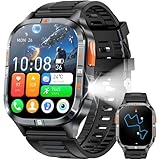
- BUILT-IN GPS & COMPASS– This military smartwatch features high-precision GPS to pinpoint your location while hiking, cycling, or traveling, keeping you safely on track without extra gear. Tap the compass icon and it locks your bearing within three seconds—engineered for pro-level outdoor adventures like camping, climbing, and trekking.
- BLUETOOTH CALLING & MESSAGES – Powered by the latest Bluetooth tech, the men’s smartwatch lets you answer or make calls right from your wrist—no need to pull out your phone. Get real-time alerts for incoming texts and app notifications so you never miss an invite. (Replying to SMS is not supported.)
- BIG SCREEN & DIY VIDEO WATCH FACE – The 2.01" military-spec display is dust-proof, scratch-resistant, and forged from high-strength glass with an aluminum alloy bezel, passing rigorous dust and abrasion tests so the screen stays crystal-clear. Upload a short family video to create a dynamic, one-of-a-kind watch face that keeps your memories alive.
- 24/7 HEALTH MONITORING – Equipped with a high-performance optical sensor, this Android smartwatch tracks heart rate and blood-oxygen levels around the clock. It also auto-detects sleep stages (deep, light, awake) for a complete picture of your health, ensuring you always know how your body is doing.
- MULTI SPORT MODES & FITNESS TRACK – Choose from running, cycling, hiking, basketball, and more to log every workout. Set goals, monitor progress, and sync data to the companion app. Bonus tools include photo gallery, weather, alarm, stopwatch, flashlight, hydration reminder, music/camera remote, find-my-phone, mini-games, and other everyday essentials.
Red safety mode and visibility under stress
The Epix Pro Gen 2 also includes a red light mode, which is more important than it sounds. Red light preserves night vision and is far less disruptive in shared environments like huts, campsites, or group expeditions.
In emergency situations, red or white strobe modes can also increase visibility. Whether you’re dealing with roadside issues during a night run or signaling in poor conditions, having light built into your wrist changes response time.
The original Epix Gen 2 relies entirely on external tools for this. In controlled environments that’s fine, but in unpredictable ones it’s a real limitation.
Flashlight integration and battery trade-offs
A common concern is battery impact, and in real-world testing the flashlight is surprisingly efficient. Short, frequent uses barely register against the Pro’s overall battery capacity, especially compared to draining a phone or headlamp.
More importantly, the flashlight integrates cleanly into the system. It can be triggered instantly, used mid-activity, and shut off without interrupting tracking or navigation.
This kind of integration reflects Garmin’s focus on field usability rather than spec-sheet features. The Epix Pro Gen 2 feels designed for situations where small frictions matter.
Safety features beyond light: confidence when things go wrong
Both watches support Garmin’s incident detection and assistance features when paired with a smartphone. If a fall or crash is detected, the watch can notify emergency contacts with location data.
Where the Pro gains an edge is how those safety systems pair with hardware readiness. If you need to orient yourself, move carefully, or make yourself visible after an incident, the flashlight becomes part of the safety ecosystem.
The Epix Gen 2 can call for help, but the Pro helps you manage the moment while help is on the way.
Who benefits most from the flashlight upgrade
If most of your training happens indoors or in well-lit urban environments, the flashlight may feel unnecessary. In those cases, the original Epix Gen 2 still delivers excellent performance and safety coverage.
But for athletes who train at odd hours, explore remote terrain, or prioritize self-sufficiency, the Epix Pro Gen 2’s flashlight becomes one of those features you don’t plan around, yet rely on constantly.
It’s a small hardware change with outsized real-world impact, and once you’ve built it into your routine, it’s very hard to justify going back.
Training, Performance, and Sports Science Tools: What the Pro Adds for Serious Athletes
Once you move past safety hardware like the flashlight, the more meaningful split between Epix Gen 2 and Epix Pro Gen 2 shows up in training depth and physiological insight. Both are elite multisport platforms, but the Pro is clearly tuned for athletes who want tighter feedback loops between effort, recovery, and long-term durability.
This isn’t about adding more sports modes. It’s about refining how accurately the watch understands what your body is doing and how well it translates that into actionable training decisions.
Heart rate accuracy and the Elevate Gen 5 sensor
The single most important upgrade for performance-focused users is the new Elevate Gen 5 optical heart rate sensor on the Epix Pro Gen 2. The original Epix Gen 2 uses Garmin’s Gen 4 sensor, which is solid but increasingly the limiting factor for advanced metrics.
In real-world training, the Pro’s sensor is noticeably more stable during intervals, steep climbs, and cold-weather efforts where wrist-based HR traditionally struggles. For runners and cyclists who rely on HRV-driven guidance, fewer dropouts and less lag directly improve the quality of downstream metrics.
This matters because almost everything else builds on heart rate accuracy. Training Load, Training Readiness, Recovery Time, VO2 max estimates, and adaptive workouts all benefit from cleaner data at the source.
ECG and skin temperature: recovery intelligence, not medical gimmicks
The Epix Pro Gen 2 adds ECG hardware and overnight skin temperature tracking, neither of which is available on the standard Epix Gen 2. ECG support is region-dependent and not a daily-use feature, but it adds a layer of confidence for athletes monitoring cardiac irregularities during heavy training blocks.
Skin temperature is the more practically useful addition for most athletes. When paired with sleep tracking and HRV trends, it helps flag early signs of illness, heat stress, or incomplete recovery before performance drops become obvious.
These are subtle signals, but over months of training they can influence decisions like when to back off intensity or adjust volume. The standard Epix Gen 2 simply doesn’t have access to this physiological context.
Hill Score and Endurance Score: long-term fitness trends done right
Garmin’s newer Hill Score and Endurance Score metrics debut most cleanly on the Epix Pro Gen 2 and feel designed for athletes who train year-round rather than chase single workouts. Hill Score looks at sustained climbing ability across terrain, while Endurance Score tracks how well you tolerate long-duration load over time.
In practice, these metrics reward consistency rather than spikes. Trail runners, mountain athletes, and ultra-distance competitors benefit most, especially those who split time between flat training and vertical gain.
While some of these tools have expanded to other high-end Garmins through updates, the Pro is clearly the reference platform for how Garmin intends these metrics to evolve.
Training Readiness and daily guidance: same framework, better inputs
Both watches support Training Readiness, Daily Suggested Workouts, Race Widgets, and adaptive plans. On paper, the experience looks similar.
In use, the Epix Pro Gen 2 simply feeds these systems better data. More accurate overnight HRV, improved sleep staging, skin temperature trends, and cleaner heart rate during workouts lead to recommendations that feel more aligned with how you actually feel.
If you’ve ever ignored a “hard day” suggestion because your body said otherwise, the Pro reduces that disconnect. It doesn’t eliminate subjective judgment, but it narrows the gap.
GPS performance and pacing confidence in complex terrain
Both watches support multi-band GNSS, but availability depends on material versions in the original Epix Gen 2 lineup. With the Pro, multi-band positioning is standardized across the range, removing configuration trade-offs.
For athletes training in dense forest, urban canyons, or steep alpine terrain, the Pro’s consistency matters more than raw accuracy. Pace smoothing during trail runs and distance tracking on switchbacks feel more stable, which directly affects effort management in races and long sessions.
This isn’t about shaving meters off a track run. It’s about trusting your pacing data when terrain makes perception unreliable.
Size options and training comfort over long weeks
Training performance isn’t just software-driven. The Epix Pro Gen 2 expands the lineup to three case sizes, including a smaller 42 mm option and a larger 51 mm version.
Smaller-wristed athletes benefit from better sensor contact and reduced wrist movement, improving heart rate accuracy during high-cadence efforts. The 51 mm version, on the other hand, suits endurance athletes prioritizing maximum battery life for ultra events and multi-day expeditions.
The original Epix Gen 2’s more limited sizing works for many, but the Pro’s range makes long-term comfort easier to dial in, especially for high-volume training.
Battery behavior under heavy training loads
Both watches deliver strong AMOLED battery life, but the Epix Pro Gen 2 is more forgiving under stress. Long GPS sessions, multi-band tracking, overnight metrics, and frequent flashlight use compound quickly in real training weeks.
The Pro’s larger battery options and efficiency improvements mean fewer compromises. You’re less likely to disable features or ration usage during peak blocks, which preserves data continuity when it matters most.
For serious athletes, uninterrupted tracking across weeks is more valuable than any single metric upgrade.
Who actually benefits from the Pro’s training upgrades
If your training is structured, seasonal, and recovery-aware, the Epix Pro Gen 2 offers a clearer picture of how your body is adapting over time. The gains are incremental, but they compound.
If you primarily log workouts for distance, pace, and navigation, the original Epix Gen 2 remains highly capable. The Pro doesn’t change what you can do, it refines how well the watch understands you while you do it.
That distinction is what separates a great multisport watch from a true long-term training tool.
Health, Wellness, and Recovery Metrics: Sleep, HRV, Body Battery, and Software Evolution
All of the training tools discussed earlier rest on a quieter layer of data: how well you recover between sessions. This is where Garmin’s health and wellness ecosystem has matured most over the last two years, and where the Epix Pro Gen 2 subtly but meaningfully separates itself from the original Epix Gen 2 in daily use.
On paper, both watches appear similar. In practice, the Pro benefits from newer sensors, refined algorithms, and a longer runway for software updates that shape how actionable the data feels over months of training.
Sleep tracking depth and overnight consistency
Both Epix models deliver Garmin’s full sleep staging, including light, deep, REM, and awake time, alongside overnight respiration and blood oxygen tracking. The experience is largely identical at a feature level, with clear timelines and long-term trends visible in Garmin Connect.
Where the Epix Pro Gen 2 gains ground is consistency. Improved sensor placement across the expanded case sizes, combined with the newer optical heart rate hardware, results in fewer gaps and fewer questionable spikes during restless nights, especially for side sleepers and smaller wrists.
Rank #4

- 【Built-in GPS & Multi-System Positioning】Stay on track with the Tiwain smartwatch’s built-in GPS. Featuring military-grade single-frequency and six-satellite support (GPS, GLONASS, Beidou, Galileo, NAVIC, QZSS), this watch offers fast and accurate location tracking wherever you go. It also includes a compass, altimeter, and barometer, giving you real-time data on your altitude, air pressure, and position.
- 【Military-Grade Durability】Engineered to withstand the toughest conditions, the Tiwain smartwatch meets military standards for extreme temperatures, low pressure, and dust resistance. Crafted from tough zinc alloy with a vacuum-plated finish, this watch is also waterproof and built to resist wear and tear. The 1.43-inch AMOLED HD touchscreen offers clear visibility in all environments, and the watch supports multiple languages for global users.
- 【170+ Sport Modes & Fitness Tracking】Track your fitness journey with 170+ sport modes, including walking, running, cycling, hiking, basketball, and more. Set exercise goals, monitor progress, and sync your data to the companion app. The smartwatch also offers smart features like music control, camera remote, weather updates, long-sitting reminders, and more.
- 【LED Flashlight for Outdoor Adventures】The Tiwain smartwatch comes equipped with a built-in LED flashlight that can illuminate up to 20 meters. Activate it with the side button for added convenience during nighttime activities or outdoor adventures.
- 【Comprehensive Health Monitoring】Monitor your health with real-time heart rate, sleep, blood pressure, and blood oxygen level tracking. The smartwatch will vibrate to alert you of any abnormal readings. You can also make and receive calls directly from the watch, and stay connected with message and app notifications (receive only, no sending capability) – perfect for when you’re driving or exercising.
Over weeks, this matters more than any single sleep score. Reliable overnight data is what anchors recovery metrics like HRV status and Body Battery, and the Pro simply produces cleaner baselines with less manual interpretation.
HRV status and recovery interpretation
Heart rate variability has become the backbone of Garmin’s recovery model, and both watches support nightly HRV tracking with rolling baselines and status labels. You get the same categories, the same visualizations, and the same integration into training readiness metrics.
The difference lies in how quickly the watch adapts when training stress shifts. The Epix Pro Gen 2 responds more smoothly to travel, altitude exposure, heat stress, and sudden volume increases, reducing the “false negative” recovery warnings that can appear on older hardware during disruptive weeks.
For athletes following structured plans or block-based training, this improves trust. When HRV flags poor recovery on the Pro, it’s more likely to reflect a real physiological signal rather than sensor noise or transient sleep artifacts.
Body Battery as a daily decision tool
Garmin’s Body Battery remains one of the most intuitive readiness metrics in the category, blending sleep quality, HRV, activity load, and stress into a single energy score. Both Epix models calculate it in the same way, but they don’t feel equally useful day to day.
The Epix Pro Gen 2 benefits from more stable overnight recharge detection and smoother daytime drain curves, particularly during long endurance sessions or high-stress workdays. This makes the score easier to reference mid-day when deciding whether to add intensity, stay aerobic, or cut a session short.
On the original Epix Gen 2, Body Battery is still valuable, but it occasionally requires context. The Pro demands less interpretation, which is exactly what recovery metrics should do when fatigue accumulates.
Health sensors, comfort, and long-term wearability
Sensor hardware is easy to overlook, but it directly affects wellness tracking quality. The Epix Pro Gen 2’s newer heart rate sensor improves accuracy during low-perfusion conditions like cold mornings, early starts, and high-altitude efforts.
Comfort also plays a role. The Pro’s expanded size range, especially the 42 mm option, allows better fit for smaller wrists, improving sensor contact during sleep and all-day wear. This has a compounding effect on every wellness metric the watch records.
Strap choice matters here as well. Both watches ship with comfortable silicone bands, but the Pro’s lighter smaller case and better weight distribution make it easier to wear overnight without subconscious adjustments that disrupt data.
Software evolution and future-proofing
From a software perspective, both watches run Garmin’s mature platform with deep health, training, and lifestyle integration across iOS and Android. The interface, widgets, and data fields are functionally the same today.
The Epix Pro Gen 2, however, is positioned to receive new health and recovery features for longer. Garmin’s update history shows a clear pattern of prioritizing newer sensor platforms when rolling out algorithm improvements, even when older models remain supported.
For buyers thinking in multi-year terms, this matters. The Pro isn’t just better now; it’s more likely to benefit from incremental refinements to sleep scoring, HRV modeling, and recovery logic that won’t show up as headline features but will quietly improve decision-making over time.
Wellness value in the context of price
The original Epix Gen 2 still delivers a comprehensive health and recovery experience that outclasses most competitors. If you’re upgrading from an older Garmin, the jump in sleep insight, HRV tracking, and daily readiness is significant regardless of which model you choose.
The Epix Pro Gen 2 justifies its higher price by reducing friction. You spend less time questioning data quality and more time acting on it, which is ultimately the point of advanced recovery metrics.
For athletes who train year-round and rely on subtle signals to manage load, that difference becomes tangible long before the watch reaches the end of its lifecycle.
Battery Life in the Real World: AMOLED Trade-Offs, Size Variants, and Endurance Use Cases
All of the health and training nuance discussed earlier only holds value if the watch stays on your wrist. Battery life is where the Epix line continues to divide opinion, not because it performs poorly, but because AMOLED fundamentally changes how endurance athletes have to think about power management.
Garmin has done more than most to tame AMOLED drain, yet the Epix Gen 2 and Epix Pro Gen 2 still reward users who understand how screen behavior, case size, and activity profile interact over weeks of real use.
AMOLED versus always-on endurance expectations
Compared to Garmin’s MIP-based Fenix line, both Epix models ask for a mental reset. You gain unmatched clarity, contrast, and map legibility, but you trade away the psychological comfort of near-infinite battery during long blocks of training.
In daily smartwatch mode with gesture-based display activation, the original Epix Gen 2 reliably lands in the 14–16 day range. That assumes mixed usage: daily notifications, sleep tracking every night, and four to six GPS workouts per week.
The Epix Pro Gen 2 stretches that baseline slightly, typically adding one to three days depending on size. The difference is not dramatic on paper, but over a month of training it reduces the number of times you have to think about charging, which matters more than raw numbers suggest.
Case size is the real battery story
Battery life on the Epix Pro is less about generational efficiency and more about physical volume. Garmin’s decision to offer the Pro in 42 mm, 47 mm, and 51 mm variants creates meaningful separation in endurance behavior.
The 42 mm Epix Pro prioritizes wearability over longevity. In practice, expect closer to 10–12 days in smartwatch mode and shorter margins during heavy GPS weeks, making it best suited for athletes who value comfort, sleep accuracy, and wrist fit over extended off-grid use.
The 47 mm Pro sits in the sweet spot. It matches or slightly exceeds the original Epix Gen 2 in most real-world scenarios while offering newer hardware and the built-in flashlight, making it the most balanced option for serious training without size excess.
The 51 mm Pro is where AMOLED starts to feel less restrictive. With careful settings, it can approach two full weeks even with regular GPS use, and it holds up far better during multi-day adventures where charging opportunities are limited but not nonexistent.
GPS modes, mapping, and training load reality
Both watches perform similarly once GPS enters the equation. Dual-band GNSS, high-resolution maps, and frequent screen wake-ups are far more influential than generational chipset differences.
A typical one-hour dual-band GPS run with maps enabled consumes roughly 4–6 percent per hour depending on brightness and screen-on time. Long trail runs or bike sessions with constant map interaction can push that higher, particularly in bright sunlight where AMOLED boosts luminance.
For marathoners, triathletes, and ultra runners, this means battery anxiety becomes event-specific rather than daily. A single long race is not an issue for either model, but back-to-back long days without charging favor larger cases and conservative display settings.
Always-on display and the cost of convenience
Always-on display remains the biggest wildcard. With AOD enabled, battery life on both watches drops sharply, often by 30–40 percent over a week.
For athletes who rely on constant visibility during intervals or navigation, this can be justified. For most users, gesture-based activation paired with glanceable data fields delivers nearly the same usability at a fraction of the power cost.
The Pro models handle brightness scaling slightly better, especially in low-light conditions, which reduces unnecessary drain during sleep and indoor use. It’s a subtle improvement, but one that adds up over long-term ownership.
Expedition, travel, and charging logistics
Neither Epix model is a true expedition watch in the traditional sense. Multi-week trips without access to power remain the domain of solar-assisted MIP displays.
That said, the Epix Pro narrows the gap enough that realistic travel use becomes less stressful. A small power bank can now cover a week of trekking, navigation, and nightly recovery tracking without constant rationing.
For frequent travelers, the faster charging behavior on the Pro also matters. Short top-ups during showers or airport layovers are more effective, which changes how battery management feels in day-to-day life.
Choosing the right Epix based on endurance needs
If your training revolves around daily workouts, structured plans, and regular access to a charger, the original Epix Gen 2 remains perfectly viable. Its battery life is predictable, and the AMOLED experience still feels premium years into ownership.
The Epix Pro Gen 2 makes more sense for athletes who stack long sessions, travel often, or train in environments where charging is inconvenient rather than impossible. The combination of size options, marginal efficiency gains, and better power behavior under load creates a more forgiving ownership experience.
Ultimately, battery life here is less about absolute endurance and more about friction. The Pro doesn’t just last longer; it demands less attention, which aligns with the same theme seen in its sensor upgrades and ergonomics.
Price, Variants, and Value Proposition: Titanium, Sapphire, and Cost-to-Feature Analysis
Battery life and usability set the context, but price is where the Epix Gen 2 versus Epix Pro Gen 2 decision becomes most tangible. Garmin didn’t simply refresh the line; it restructured it, adding sizes, consolidating premium materials, and quietly pushing the Epix family further into flagship territory.
Understanding what you’re paying for requires looking beyond MSRP and into how materials, sensors, and longevity translate into real-world value.
Launch pricing versus current market reality
At launch, the Epix Gen 2 occupied a narrow premium band, positioned below the Fenix Sapphire Solar but clearly above mainstream multisport watches. Depending on configuration and region, pricing typically sat in the upper hundreds, with Sapphire Titanium variants commanding a noticeable premium.
The Epix Pro Gen 2 launched higher across the board. Garmin justified the increase through added hardware, expanded size options, and a more standardized “no-compromises” spec sheet, which effectively removed the cheaper entry points seen on the original Epix.
Today, street pricing matters more than launch MSRP. The original Epix Gen 2 is often discounted significantly, sometimes by several hundred compared to the Pro, which reshapes its value proposition for buyers who prioritize performance parity over future-proofing.
💰 Best Value

- Smart Watch with GPS and Offline Map: This smart watch connects to multiple satellite systems for accurate real-time positioning, and includes a professional-grade compass, altimeter, and barometer for precise data, ensuring you maintain your sense of direction in any outdoor environment. The map version supports downloading offline maps; select a route or destination to view the route even without a signal, eliminating the risk of getting lost.
- Bluetooth Call & Message Functionality: This smart watches for men allows you to make and receive calls; receive text and social media notifications (Facebook, WhatsApp, Instagram, Twitter, etc.); and reply to text messages with voice-to-text or set up quick replies (text reply functionality is available for Android phones).
- Sports & Health Monitoring: This 5ATM waterproof fitness watch supports over 100 sports modes and tracks daily activity data, calories, distance, steps, and heart rate. You can use it to monitor your health metrics (blood oxygen, heart rate, stress, and sleep), monitor your fatigue and mood, and perform PAI analysis. You can also use this smartwatch to set water intake and sedentary reminders. Stay active and healthy with this fitness tracker watch.
- Customizable Watch Faces & AI Functionality: This smart watch features a 1.46-inch HD touchscreen and over 100 downloadable and customizable watch faces. You can even use your favorite photos as your watch face. Equipped with AI technology, it supports voice descriptions in multiple languages to generate personalized AI watch faces. The watch's AI Q&A and AI translation features provide instant answers to questions and break down language barriers, making it an ideal companion for everyday life and travel.
- Large Battery & High Compatibility & More Features: This smart watch for android phones and ios phone features a large 550ml battery for extended battery life. It's compatible with iOS 9.0 and above and Android 5.0 and above. It offers a wealth of features, including an AI voice assistant, weather display, music control, camera control, calculator, phone finder, alarm, timer, stopwatch, and more. (Package Includes: Smartwatch (with leather strap), spare silicone strap, charging cable, and user manual)
Variants and case sizes: one-size-fits-all versus modular choice
The original Epix Gen 2 was effectively a single-size watch in most markets, built around a 47 mm case. For many athletes this was a comfortable middle ground, but smaller wrists and users seeking maximum battery life had no alternatives within the Epix AMOLED lineup.
The Epix Pro Gen 2 introduced a full size range: 42 mm, 47 mm, and 51 mm. This is more than a cosmetic change. Smaller users gain access to Garmin’s top-tier features without compromising fit, while endurance-focused athletes can finally pair AMOLED with a genuinely large battery.
From a value standpoint, the Pro’s size flexibility reduces the need to compromise or cross-shop other Garmin families. That alone can justify the higher entry price if fit has ever been a limiting factor.
Materials and finishing: titanium, sapphire, and perceived durability
Material strategy is one of the clearest differentiators. The Epix Pro Gen 2 standardizes premium construction, with titanium bezels and sapphire crystal across the range in most regions.
The original Epix Gen 2 was more fragmented. Sapphire Titanium editions offered equivalent durability, but stainless steel and non-sapphire variants existed in some markets, lowering the buy-in cost at the expense of scratch resistance and long-term cosmetic resilience.
In daily wear, sapphire matters more than many expect. AMOLED displays are visually stunning, but they also invite more interaction and exposure. Over years of training, travel, and incidental contact, sapphire significantly preserves resale value and long-term aesthetics.
Hardware features that quietly affect long-term value
The Epix Pro Gen 2 includes hardware additions that aren’t retrofittable. The integrated LED flashlight across all sizes is the most obvious, but ECG-capable heart rate hardware is the more future-facing upgrade.
While ECG availability depends on regional regulatory approval, the presence of the sensor itself adds latent value. Even if unused today, it extends the watch’s relevance over a longer ownership window.
Multi-band GNSS availability also shifts the calculus. On the original Epix Gen 2, advanced GPS accuracy was typically tied to higher-end variants. The Pro makes this standard, simplifying the decision and ensuring no hidden compromises.
Cost-to-feature analysis: where the money actually goes
When you break the price difference down feature by feature, the Pro doesn’t deliver a single transformative upgrade. Instead, it removes friction across dozens of small interactions: better fit options, improved sensors, more forgiving battery behavior, and tools like the flashlight that integrate into daily routines.
For users coming from older Garmins, the Epix Pro Gen 2 often feels like a watch you won’t outgrow. That matters when software updates, sensor algorithms, and platform support tend to favor newer hardware over time.
The original Epix Gen 2, especially at discounted prices, remains one of the strongest cost-to-performance buys in Garmin’s ecosystem. You give up very little in training metrics and day-to-day usability, particularly if you don’t need ECG or the flashlight.
Who the Epix Gen 2 still makes sense for financially
If budget discipline matters and you’re comfortable with a single case size, the Epix Gen 2 offers exceptional value in today’s market. Its AMOLED display, training ecosystem, and navigation tools remain fully competitive.
Athletes who replace watches every few years or don’t chase incremental hardware gains will find little reason to stretch to the Pro. The savings can easily fund accessories, maps, or even a second device like a cycling computer.
In pure cost-to-feature terms, this is where the original Epix quietly shines.
Who should pay more for the Epix Pro Gen 2
The Epix Pro Gen 2 earns its premium if you care about fit precision, long-term platform relevance, or minimizing compromises at purchase. Smaller wrists, larger wrists, and flashlight-dependent users all benefit immediately.
It also makes sense for buyers planning a long ownership cycle. Over five or more years, the higher upfront cost is offset by better durability, broader sensor support, and a design that won’t feel dated as quickly.
Here, value isn’t about saving money. It’s about buying once, with fewer “I wish it had” moments down the line.
Buyer Decision Framework: Which Epix Makes Sense in 2026 and Is the Upgrade Worth It?
At this point, the choice between Epix Gen 2 and Epix Pro Gen 2 isn’t about core capability. Both deliver elite GPS accuracy, Garmin’s full training and navigation stack, and an AMOLED display that still sets the benchmark for readability in harsh outdoor conditions.
The real decision hinges on ownership horizon, physical fit, and how much friction you’re willing to tolerate over years of daily use. Thinking in terms of “best today” versus “best to live with through 2026 and beyond” helps clarify the trade-offs quickly.
Start with fit and physical design, not features
Fit is the most underrated differentiator, and it’s where the Pro model immediately justifies itself for many buyers. The Epix Gen 2 is locked into a single 47 mm case, which wears large on smaller wrists and slightly top-heavy for all-day use if you’re sensitive to weight distribution.
Epix Pro Gen 2 expands the lineup to 42 mm, 47 mm, and 51 mm cases, all with refined lug geometry and better strap integration. For smaller wrists, the 42 mm Pro is transformative, turning what was once a bulky training tool into a genuinely comfortable 24/7 wearable.
Material-wise, both use fiber-reinforced polymer cases with metal bezels, but the Pro variants feel more polished in hand. The sapphire-equipped Pro models in particular strike a better balance between durability and perceived quality, closer to a modern tool watch than a pure fitness device.
If you train hard but live in the real world, daily usability matters more in 2026
From a sports science perspective, training metrics between the two are nearly identical. VO2 max, training readiness, HRV status, recovery time, and advanced running and cycling dynamics are functionally the same for most athletes.
Where the Pro quietly pulls ahead is sensor refinement. The newer Elevate heart rate sensor improves consistency during interval work and strength training, and ECG support adds an extra layer of health monitoring for users who value long-term cardiovascular insights.
The built-in LED flashlight sounds trivial until you live with it. In practice, it becomes one of the most-used features on the Pro, especially for early-morning training, camping, or simple tasks like navigating dark rooms without reaching for a phone.
Battery life: both are excellent, but one is more forgiving
On paper, battery life is strong across both models, especially compared to most AMOLED-based smartwatches. In real-world mixed usage with GPS training, notifications, and sleep tracking, the Epix Gen 2 still comfortably lasts several days.
The Pro’s advantage isn’t dramatic endurance, but consistency. Improved power management and solar-adjacent efficiency gains in GPS modes mean fewer surprise drain days, especially during multi-hour navigation or back-to-back training sessions.
If you’re an ultrarunner, mountaineer, or expedition traveler who stacks long GPS activities, the Pro offers more margin for error. If your training is structured and predictable, the original Epix remains more than sufficient.
Navigation and outdoor tools: same foundation, different polish
Mapping, multi-band GNSS, and turn-by-turn navigation are equally capable on both watches. Route accuracy, breadcrumb trails, and map clarity remain class-leading, and neither model feels compromised in technical terrain.
That said, the Pro benefits from incremental interface refinements and faster sensor fusion, especially when transitioning between GPS, altimeter, and compass data. These aren’t headline upgrades, but they reduce lag and improve confidence when you’re moving quickly in complex environments.
For most users, this won’t change outcomes. For those who rely on their watch as a primary navigation tool rather than a backup, the smoother experience is noticeable.
Software longevity and platform relevance through 2026
Garmin’s update history strongly favors newer hardware when it comes to sensor-driven features. While both watches will continue receiving core firmware updates, health metrics and algorithm refinements tend to land first, or exclusively, on newer sensors.
If you plan to keep your watch for five years or more, the Epix Pro Gen 2 is the safer long-term bet. It’s more likely to remain fully compatible with future health features, regulatory expansions, and performance analytics.
If you typically upgrade every two to three years, this advantage matters far less. In that scenario, the original Epix still offers exceptional capability without feeling technologically behind.
Price reality: value depends on timing, not MSRP
In 2026, discounted pricing shifts the equation significantly. The Epix Gen 2 often sells far below its original launch price, making it one of the best value propositions in Garmin’s high-end lineup.
At those prices, you’re effectively getting flagship performance for mid-tier money, with very few compromises that affect actual training outcomes. For budget-conscious buyers or those building a multi-device ecosystem, that matters.
The Epix Pro Gen 2 commands a premium, but it earns it through refinement rather than raw performance. You’re paying for better fit options, extra sensors, improved ergonomics, and a watch that feels more complete out of the box.
Upgrade paths: when switching makes sense and when it doesn’t
If you already own an Epix Gen 2 and are satisfied with its fit, battery life, and health tracking, the upgrade to Pro is not mandatory. Training gains will be marginal, and the experience will feel familiar rather than revolutionary.
Upgrading makes sense if you want a different case size, value ECG and flashlight functionality, or plan to keep the watch through the latter half of the decade. In those cases, the Pro feels less like an indulgence and more like a future-proofing move.
For users coming from older Fenix, Forerunner, or Venu models, the Epix Pro Gen 2 is often the cleaner jump. It consolidates Garmin’s best display, sensors, and outdoor tools into a single device without meaningful compromise.
Final verdict: choosing the right Epix, not the “better” one
There is no wrong choice here, only mismatched expectations. The Epix Gen 2 remains a powerhouse that delivers elite training, navigation, and everyday usability at a price that’s increasingly hard to ignore.
The Epix Pro Gen 2 is the more complete watch, not because it does more, but because it does everything with fewer trade-offs. Better fit options, subtle sensor gains, and small quality-of-life features add up over years of wear.
If you value maximum return on investment today, the original Epix still makes outstanding sense. If you want the Epix experience with the fewest compromises through 2026 and beyond, the Pro is the one you’ll grow into, not out of.