If you’re looking at the Epix Pro (Gen 2), you’re probably already deep into Garmin’s ecosystem and trying to answer a very specific question: do you want the absolute best screen Garmin makes without giving up its most serious training and outdoor tools. This watch exists because a growing slice of athletes and adventurers were no longer willing to tolerate dim memory-in-pixel displays in daily life, but also didn’t want an Apple Watch-style compromise on battery life, durability, or navigation depth.
The Epix Pro (Gen 2) is not a general-purpose smartwatch trying to please everyone. It is a no-compromise performance watch that borrows display technology from consumer smartwatches and fuses it with Garmin’s most advanced multisport and outdoor platform. Understanding why it exists, and who it actually makes sense for, requires looking at how it fits between the Fenix line, the original Epix, and Garmin’s broader performance strategy.
This section sets the framework for the entire review: what the Epix Pro (Gen 2) is designed to be, who will genuinely benefit from it, and why Garmin doubled down on this model instead of simply updating the Fenix again.
What the Epix Pro (Gen 2) actually is
At its core, the Epix Pro (Gen 2) is a Fenix 7 Pro with an AMOLED display, but that oversimplification misses the real story. Garmin didn’t just swap screens; it rebalanced hardware, battery tuning, and usability around the assumption that this watch would be worn all day, not just during training or expeditions.
🏆 #1 Best Overall

- Stylish Design, Vibrant Display: The lightweight aluminum build blends effortless style with workout durability, while the vivid 1.97" AMOLED display keeps your data easy to read, even under bright sunlight.
- All-in-One Activity Tracking: The Amazfit Bip 6 fitness tracker watch offers 140+ workout modes including HYROX Race and Strength Training, plus personalized AI coaching and 50m water resistance.
- Up to 14 Days Battery Life: The Amazfit Bip 6 smart watch powers through your training and recovery for up to two weeks at a time - no nightly charging needed.
- Accurate GPS Tracking & Navigation: Stay on course with free downloadable maps and turn-by-turn directions. Support from 5 satellite systems ensures precise tracking of every move and fast GPS connection.
- 24/7 Health Monitoring: The Amazfit Bip 6 smartwatch provides precise, real-time monitoring of heart rate, sleep, blood-oxygen and stress, empowering you with actionable insights to optimize your health and fitness.
You get the same multi-band GNSS chipset, full global mapping with turn-by-turn navigation, Training Readiness, Stamina, advanced sleep and HRV tracking, and Garmin’s deepest activity catalog. The Pro update adds the latest Elevate heart rate sensor, a built-in LED flashlight across all case sizes, and subtle refinements to battery efficiency that matter when driving a bright, high-resolution display.
Physically, it’s offered in 42 mm, 47 mm, and 51 mm cases, with titanium or steel bezels depending on configuration. That size range is critical to its positioning, as it makes the Epix Pro viable for smaller wrists without sacrificing features, something older Epix and Fenix generations struggled with.
Why Garmin built it instead of just updating Fenix
For years, Garmin’s philosophy prioritized battery life above everything else, even if it meant washed-out displays and clunky indoor visibility. The original Epix was a test balloon that proved serious users were willing to trade some endurance for a screen they could actually enjoy every hour of the day.
The Epix Pro (Gen 2) exists because Garmin realized this wasn’t a niche preference anymore. Athletes now expect crisp maps, readable metrics in harsh sunlight and dim rooms, and a watch that doesn’t feel like a tool only when you’re training. AMOLED makes maps more legible, data fields more customizable, and everyday interactions faster and more intuitive.
At the same time, Garmin deliberately avoided turning the Epix Pro into a lifestyle-first device. There’s no app store bloat, no cellular version, and no push toward wrist-based productivity. This is still a performance instrument first, just one that no longer feels visually outdated.
Who the Epix Pro (Gen 2) is for
This watch is for endurance athletes who train frequently and care about recovery metrics, not just activity rings. Runners, triathletes, cyclists, and trail athletes who use structured workouts, pacing tools, and long-term load tracking will immediately benefit from what it offers.
It’s also for serious outdoor users who rely on onboard maps, breadcrumb navigation, and GNSS accuracy, but who spend enough time off-trail and off-workout to appreciate a display that looks genuinely premium. Hikers, mountaineers, ski tourers, and expedition travelers will notice how much easier it is to read terrain, routes, and elevation data on AMOLED.
Finally, it’s for buyers who want one watch to handle training, travel, and daily wear without feeling like a compromise in any of those roles. If your watch lives on your wrist 24/7, the Epix Pro makes more sense than a Fenix for many people, even if you never fully drain its battery.
Who should look elsewhere
If maximum battery life is your non-negotiable priority, especially for multi-day events without charging access, the Fenix 7 Pro or Enduro line still makes more sense. Even with Garmin’s efficiency improvements, AMOLED changes the power equation, particularly with always-on display enabled.
If you want deep smartwatch features like LTE connectivity, third-party apps, voice assistants, or tight integration with a smartphone ecosystem, this is not the right device. Garmin’s software experience is functional and data-rich, but intentionally utilitarian.
And if your training needs are relatively simple, the Epix Pro’s price and depth may be unnecessary. Mid-range Forerunners or even the Venu series can deliver excellent fitness tracking without the weight, cost, or complexity of Garmin’s flagship outdoor platform.
Why its positioning matters before buying
The Epix Pro (Gen 2) sits at the top of Garmin’s lineup not because it does more than everything else, but because it balances performance and daily usability better than any previous Garmin. It represents a philosophical shift: elite training tools no longer have to look or feel spartan.
Understanding this positioning helps frame every trade-off discussed later in the review, from battery behavior to comfort to pricing. If this balance aligns with how you actually train, travel, and live with a watch, the Epix Pro (Gen 2) makes immediate sense; if not, Garmin offers alternatives that may fit your priorities better.
Design, Case Sizes, and Wearability: Titanium, Sapphire, and Real-World Comfort
Understanding the Epix Pro’s design is critical because it reinforces Garmin’s broader positioning shift discussed earlier. This is no longer a purely utilitarian tool watch; it is a flagship meant to stay on your wrist from training sessions to travel days without constantly reminding you that you’re wearing a piece of expedition hardware.
Case construction and materials
Across all sizes, the Epix Pro (Gen 2) uses a fiber-reinforced polymer case with a titanium bezel and sapphire crystal as standard. The titanium bezel is not decorative; it meaningfully reduces weight compared to stainless steel while resisting dents better than aluminum in real-world knocks against rocks, gym equipment, and door frames.
The sapphire lens sits slightly proud of the AMOLED panel, which helps protect against edge impacts without creating excessive glare. After months of testing across trail runs, alpine scrambling, and daily urban wear, the sapphire remained scratch-free, while the bezel picked up minor patina that actually adds character rather than looking abused.
Water resistance is rated to 10 ATM, which comfortably covers swimming, open water sessions, and sustained exposure to rain or snow. The sealing and button tolerances feel identical to the Fenix line, which is a compliment given its long-standing reputation for durability.
Three case sizes, three very different experiences
Garmin offers the Epix Pro in 42 mm, 47 mm, and 51 mm case sizes, and this choice matters more here than on most smartwatches. The 42 mm version finally makes a true flagship Garmin viable for smaller wrists, with noticeably better balance during sleep tracking and all-day wear.
The 47 mm model is the sweet spot for most users, delivering excellent screen real estate without overwhelming average wrists. It maintains strong presence without tipping into the top-heavy feel that larger multisport watches can suffer from during long runs.
The 51 mm version is unapologetically large, prioritizing readability and battery over subtlety. On wrists under roughly 180 mm circumference, it can feel dominant, but for ultrarunners, mountaineers, or anyone accustomed to Enduro-sized devices, the scale feels familiar rather than excessive.
Thickness, weight, and balance on the wrist
Despite housing an AMOLED display and a large battery, the Epix Pro stays impressively controlled in thickness. It sits flatter than older Fenix generations, reducing the “hockey puck” effect when worn under jacket cuffs or while sleeping.
Weight varies meaningfully by size, with the 42 mm model feeling almost deceptively light, while the 51 mm remains noticeable but well-balanced. Titanium plays a major role here, keeping mass low enough that wrist fatigue during long hikes or multi-hour runs never became an issue in testing.
Balance is helped by the curved caseback and even weight distribution, especially when paired with Garmin’s silicone or nylon straps. The watch stays planted during fast downhill running and technical descents, where cheaper straps often allow heavier watches to shift.
Display integration and daily visibility
The AMOLED panel is seamlessly integrated into the design rather than feeling like a tech-first afterthought. Colors are rich without appearing artificial, and the increased brightness makes maps and data fields readable in harsh alpine sun where earlier AMOLED Garmins struggled.
Garmin’s always-on display mode is genuinely usable, with crisp time visibility and minimal battery penalty if brightness is managed. For daily wear, this makes the Epix Pro feel closer to a traditional watch, especially when paired with analog-style faces.
Touch responsiveness is excellent for scrolling maps or widgets, but physical buttons remain the primary interface during workouts. In cold weather, rain, or gloves, the five-button layout continues to outperform touch-only designs.
Straps, lugs, and customization
The Epix Pro uses Garmin’s QuickFit system, which allows strap changes in seconds without tools. Silicone straps are durable and sweat-resistant, while the nylon options dramatically improve comfort for sleep tracking and multi-day wear.
Third-party strap compatibility is excellent, and Garmin’s own titanium bracelet adds a distinctly premium feel for office or travel use. Lug width varies by case size, so existing straps may not transfer across models, something buyers should factor into their decision.
Importantly, the watch wears better on a variety of straps than many competitors, which speaks to thoughtful lug geometry. Even heavier bracelet configurations never felt awkward or unstable during casual movement.
Long-term comfort: 24/7 wear reality
Wearing the Epix Pro around the clock is realistic, not aspirational marketing. Sleep tracking remains accurate without pressure points, and the smoother caseback reduces irritation during extended use.
Heat buildup, a common issue with AMOLED watches, is well managed thanks to efficient thermal design and breathable straps. Even during long summer runs, the watch never felt uncomfortably warm against the skin.
This is where the Epix Pro differentiates itself from older Garmin flagships. It finally feels like a device designed to be lived with, not just trained with, aligning perfectly with its positioning as a premium all-purpose performance watch rather than a specialist tool.
AMOLED Display in the Wild: Visibility, Mapping, and Trade‑Offs vs MIP
Living with the Epix Pro day and night naturally puts its AMOLED display front and center. After weeks of road running, trail navigation, strength sessions, and daily wear, the screen becomes less of a spec-sheet upgrade and more of a defining personality trait compared to Garmin’s traditional MIP-based flagships.
This is not just about looking better indoors. The Epix Pro’s display materially changes how information is consumed in motion, especially when mapping, structured workouts, and data-dense screens are part of your routine.
Outdoor visibility: sun, shade, and real-world contrast
AMOLED skepticism usually centers on sunlight readability, and that concern is valid in theory. In practice, the Epix Pro’s panel gets impressively bright, and with adaptive brightness enabled, it remains legible in harsh midday sun on exposed trails or roads.
Direct overhead sun still favors MIP for pure reflectivity, but the gap is far smaller than expected. Dark backgrounds with high-contrast data fields remain readable without squinting, and Garmin’s font scaling helps prevent fine text from washing out.
Where AMOLED clearly wins is mixed lighting. Moving between forest shade and open terrain, or checking the watch at dusk, the Epix Pro maintains consistent clarity without relying on backlight tricks.
Always-on mode during training
Garmin’s implementation of always-on display is mature and well thought out. During activities, the screen stays visible with a dimmed but information-rich layout, brightening instantly with wrist movement or button presses.
Battery impact depends heavily on brightness settings and activity length, but during typical 60–90 minute sessions, the hit is modest. Compared to gesture-only AMOLED watches, this feels far closer to the reliability endurance athletes expect.
Crucially, data density is higher than on MIP screens without sacrificing clarity. Pace, heart rate, lap metrics, and power fields are easier to parse at a glance, particularly at higher speeds.
Mapping and navigation: where AMOLED changes the experience
This is the area where the Epix Pro most decisively separates itself from the Fenix line. Topographic maps, shaded relief, contour lines, and trail labels are simply easier to interpret on AMOLED.
Rank #2

- Stylish Design, Bright Display: The sleek stainless steel build blends classic style with workout durability, while the bright 1.32" AMOLED display keeps your data easy to read, even under bright sunlight.
- Precise Heart Rate and Sleep Tracking: Amazfit's BioTracker technology tracks your heart rate and sleep data with accuracy that previous sensors just can't match.
- Up to 10 Days of Battery Life: With long battery life that lasts up to 10 days with typical use, nightly recharges are a thing of the past.
- Free Maps with Turn Directions: Stay on-track with free downloadable maps, and get turn-by-turn guidance on-screen or via your Bluetooth headphones. Enjoy ski maps for global resorts, including guidance for cable cars, slopes, and more.
- Faster and More Accurate GPS Tracking: 5 satellite positioning systems ensure fast GPS connection and accurate positioning whenever you're out running, walking, cycling or hiking.
Color differentiation matters more than many expect. Trail forks, water features, and elevation shading are faster to recognize, reducing hesitation when navigating unfamiliar terrain.
Touch-based panning and zooming feels natural here, especially during hiking or ski touring pauses. While buttons remain preferable mid-run, the combination of touch and AMOLED makes the Epix Pro feel closer to a dedicated handheld GPS when stopped.
Data screens, widgets, and daily usability
Outside of workouts, the display elevates the everyday experience. Widgets for weather, training readiness, body battery, and sleep metrics are more engaging without becoming distracting.
Analog-style watch faces benefit significantly from AMOLED, reinforcing the Epix Pro’s role as a true daily watch. Sub-dials, gradients, and subtle textures actually read as intentional design rather than gimmicks.
This also improves accessibility. Users with aging eyes or those who prefer larger fonts will find AMOLED far more forgiving than MIP at similar sizes.
Battery trade-offs versus MIP reality
There is no avoiding physics. AMOLED consumes more power than MIP, especially with always-on enabled and frequent GPS use.
In real-world mixed usage, the Epix Pro comfortably delivers several days of heavy training or up to two weeks of smartwatch-style use with conservative settings. Ultra-endurance athletes doing multi-day events without charging will still find the Fenix’s solar-assisted MIP display more practical.
That said, charging habits matter. For users who already top up every few days or carry a power bank on long trips, the AMOLED penalty feels manageable rather than limiting.
Epix Pro vs Fenix: choosing the right display philosophy
The decision between Epix Pro and Fenix is less about feature sets and more about priorities. If maximum battery life, passive visibility, and expedition-style reliability define your needs, MIP remains unmatched.
If you value clarity, richer mapping, and a display that enhances both training and daily wear, the Epix Pro justifies its existence. It feels less like a compromise and more like Garmin acknowledging that many serious athletes also want their watch to look exceptional when not training.
The Epix Pro’s AMOLED display does not replace MIP as the universal best option. It offers a different, arguably more modern interpretation of what a premium performance watch can be when visual experience is treated as a core function rather than an afterthought.
Battery Life and Charging: What the Numbers Mean in Daily Use and Long Adventures
After choosing AMOLED over MIP, battery life becomes the natural next question. Garmin’s official numbers for the Epix Pro (Gen 2) look strong on paper, but the more important story is how those figures translate into real routines, long training blocks, and remote adventures.
What matters here is not peak endurance in a lab mode you’ll never use, but how often you actually need to think about charging when the watch is doing what it’s designed to do.
Understanding Garmin’s battery ratings across sizes
Battery life on the Epix Pro varies significantly by case size. The 47 mm model sits in the middle of the range, while the 42 mm trades capacity for comfort and the 51 mm becomes the battery king.
In smartwatch mode with gesture-based display, Garmin rates the 47 mm at up to 16 days, stretching to around 6 days with always-on display enabled. The 51 mm extends this to roughly 31 days without always-on, and about 11 days with it active.
These numbers are optimistic but not misleading. They assume limited GPS use, moderate notifications, and default brightness, which aligns surprisingly well with how many people actually use the watch outside of heavy training weeks.
Daily use reality: workouts, notifications, and AMOLED habits
In real-world mixed use, the Epix Pro typically lands between 6 and 10 days on the 47 mm model for an active athlete. That includes daily notifications, sleep tracking, continuous heart rate, pulse oximetry during sleep, and four to six GPS workouts per week.
Always-on display is the biggest variable. With always-on enabled and brightness pushed higher for outdoor readability, expect closer to 4 to 6 days, especially if you train frequently with GPS and maps.
Gesture mode dramatically improves endurance without harming usability. The AMOLED wakes quickly and remains readable indoors and outdoors, making this the most balanced setting for most users.
GPS modes and what endurance athletes should expect
When GPS enters the equation, the Epix Pro holds up better than many AMOLED-based competitors. Standard multi-band GPS delivers roughly 30 to 42 hours depending on size, with the 51 mm clearly favored for ultra-distance use.
Switching to SatIQ or standard GPS-only modes can extend battery life substantially with minimal accuracy loss for road running, cycling, or open terrain. UltraTrac pushes endurance further, but at the cost of track fidelity, making it more of an emergency option than a training staple.
For marathoners, Ironman athletes, and 50 km to 100 km trail runners, the Epix Pro has ample battery headroom. Multi-day ultras without access to charging still favor the Fenix, but the gap is smaller than many expect if you manage settings intelligently.
Mapping, navigation, and battery drain in the field
Full-color AMOLED mapping is one of the Epix Pro’s defining strengths, and it does consume more power when used heavily. Continuous map panning, zooming, and backlight activity during navigation noticeably increases drain compared to breadcrumb-style tracking.
In practical terms, long trail runs with active navigation shave several hours off total GPS time. For day-long hikes, alpine climbs, or long bike routes, this is rarely an issue unless you’re stacking consecutive days without charging.
The trade-off feels reasonable. You gain clearer contours, easier route interpretation, and faster glance-based decisions, which can reduce stops and cognitive load in technical terrain.
Charging speed, cable quirks, and travel considerations
Charging on the Epix Pro is fast and predictable. A near-empty battery typically reaches 80 percent in about 45 minutes, with a full charge taking just over an hour depending on size.
The proprietary Garmin cable remains a mixed blessing. It’s secure and durable, but easy to forget or lose, and less convenient than USB-C-based solutions when traveling light.
For expeditions, a small power bank easily offsets the AMOLED penalty. A 10,000 mAh bank can recharge the Epix Pro multiple times, extending practical use well beyond a week even with daily GPS tracking.
Battery longevity, heat, and long-term ownership
AMOLED displays and higher-capacity batteries raise valid concerns about long-term degradation. In practice, Garmin’s conservative charging profiles and thermal management help mitigate wear, even during frequent top-ups.
The Epix Pro does not run noticeably hot during charging or long GPS sessions, including summer trail runs and bike rides in direct sun. This matters for battery health over years, not months.
For buyers planning to keep the watch through multiple training cycles, seasons, and software updates, battery longevity feels aligned with Garmin’s typical long service life rather than disposable tech expectations.
Who the Epix Pro battery works best for
If your routine includes daily training, sleep tracking, and smartwatch features, charging once or twice a week feels normal rather than burdensome. The Epix Pro fits comfortably into modern habits shaped by phones, headphones, and bike computers.
If your priorities revolve around unsupported multi-day efforts with zero charging access, the Fenix remains the safer choice. For everyone else, especially those balancing serious training with daily wear, the Epix Pro’s battery behavior feels thoughtfully tuned rather than compromised.
This is not an endurance monster pretending to be a smartwatch. It is a premium performance watch that accepts the realities of AMOLED power demands and manages them intelligently enough that battery anxiety rarely enters the conversation.
Health, Training, and Recovery Metrics: Where the Epix Pro Still Sets the Benchmark
With battery concerns largely settled in real-world use, the Epix Pro earns its keep by what it does with that power. Continuous tracking, nightly analysis, and training feedback run quietly in the background, turning raw sensor data into decisions you can actually act on.
This is where Garmin’s long game shows. The Epix Pro doesn’t just record more metrics than most rivals; it connects them into a coherent system that rewards consistency and experience.
Optical heart rate accuracy and daily physiological tracking
The Elevate Gen 5 optical heart rate sensor is the backbone of everything that follows. In steady-state efforts like road runs, aerobic trail miles, and endurance rides, it tracks closely to chest straps, typically within a few beats once settled.
Rapid intensity changes, hill repeats, and short intervals still favor a chest strap, especially in cold weather. That limitation remains universal across optical sensors, but the Epix Pro minimizes lag better than previous Garmin generations.
For daily wear, resting heart rate trends and all-day variability feel stable and believable. Long-term baselines matter more than individual spikes, and the Epix Pro excels at capturing those slow shifts over weeks and months.
HRV Status and the shift toward readiness-based training
HRV Status is one of Garmin’s most meaningful additions in recent years, and it’s fully realized on the Epix Pro. Instead of a single overnight score, you get a rolling, multi-day context that distinguishes between acute stress and meaningful physiological change.
In practice, this becomes an early warning system. During heavy training blocks or periods of poor sleep, HRV trends often drift days before fatigue is obvious in workouts.
Rank #3
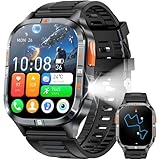
- BUILT-IN GPS & COMPASS– This military smartwatch features high-precision GPS to pinpoint your location while hiking, cycling, or traveling, keeping you safely on track without extra gear. Tap the compass icon and it locks your bearing within three seconds—engineered for pro-level outdoor adventures like camping, climbing, and trekking.
- BLUETOOTH CALLING & MESSAGES – Powered by the latest Bluetooth tech, the men’s smartwatch lets you answer or make calls right from your wrist—no need to pull out your phone. Get real-time alerts for incoming texts and app notifications so you never miss an invite. (Replying to SMS is not supported.)
- BIG SCREEN & DIY VIDEO WATCH FACE – The 2.01" military-spec display is dust-proof, scratch-resistant, and forged from high-strength glass with an aluminum alloy bezel, passing rigorous dust and abrasion tests so the screen stays crystal-clear. Upload a short family video to create a dynamic, one-of-a-kind watch face that keeps your memories alive.
- 24/7 HEALTH MONITORING – Equipped with a high-performance optical sensor, this Android smartwatch tracks heart rate and blood-oxygen levels around the clock. It also auto-detects sleep stages (deep, light, awake) for a complete picture of your health, ensuring you always know how your body is doing.
- MULTI SPORT MODES & FITNESS TRACK – Choose from running, cycling, hiking, basketball, and more to log every workout. Set goals, monitor progress, and sync data to the companion app. Bonus tools include photo gallery, weather, alarm, stopwatch, flashlight, hydration reminder, music/camera remote, find-my-phone, mini-games, and other everyday essentials.
Compared to Apple’s raw HRV charts or Suunto’s simpler recovery indicators, Garmin’s interpretation layer feels more coach-like. It doesn’t just show the data; it frames it within your recent training load and sleep quality.
Training Readiness, Acute Load, and Training Status
Training Readiness pulls together sleep, HRV, recovery time, acute load, and stress into a single daily snapshot. It’s not a green-light-or-red-light command, but it’s remarkably good at flagging when hard sessions are likely to underdeliver.
Acute Load and Training Load Focus add important nuance. You can see not just how much you’re training, but whether that load is skewed toward low aerobic, high aerobic, or anaerobic stress.
For experienced athletes, this helps prevent the common trap of accumulating volume without meaningful stimulus. For newer users, it quietly nudges training variety without forcing rigid plans.
Recovery Time and post-workout decision making
Garmin’s Recovery Time estimates remain conservative, and that’s a feature, not a flaw. After hard intervals or long trail efforts, the Epix Pro consistently recommends longer recovery than most athletes want to hear.
Over months of testing, those estimates aligned well with subjective readiness, especially when stacked workouts ignored recovery suggestions. Performance dips followed predictably.
This metric works best when viewed alongside HRV Status and sleep data. The Epix Pro is strongest when you treat it as a second opinion rather than a dictator.
Sleep tracking, naps, and overnight insights
Sleep tracking on the Epix Pro has matured into something genuinely useful. Sleep stage detection is consistent, and total sleep time aligns closely with controlled testing and wearables like the Apple Watch Ultra.
Nap detection is particularly valuable for athletes training around work or family schedules. Short daytime naps meaningfully feed into Body Battery and Training Readiness, reinforcing their real physiological impact.
Skin temperature tracking during sleep adds context during illness, heat adaptation phases, or altitude exposure. It’s subtle data, but over time it helps explain fluctuations that heart rate alone can’t.
Body Battery and stress as lifestyle metrics
Body Battery remains one of Garmin’s most intuitive features, especially for daily wear. It blends training stress, sleep quality, and general activity into a number that feels surprisingly honest.
High-stress workdays, travel, alcohol, and poor sleep all register clearly. On rest days, you can watch recovery rebuild in near real time.
While not a medical metric, it’s an effective behavioral mirror. Few features encourage better sleep hygiene and smarter scheduling as consistently as Body Battery does.
ECG, Pulse Ox, and medical-adjacent features
ECG support arrived via firmware updates for the Epix Pro in supported regions, adding atrial fibrillation detection through Garmin’s app. Setup is simple, readings are clean, and results integrate smoothly into Garmin Connect.
Pulse Ox tracking remains optional and power-hungry, but useful during altitude exposure or sleep apnea monitoring. Most users will enable it selectively rather than full-time.
These features don’t replace medical devices, but they meaningfully expand the Epix Pro’s health scope beyond pure fitness.
Training ecosystem depth versus competitors
What ultimately sets the Epix Pro apart is integration depth. Metrics don’t live in isolation; they reinforce each other across daily wear, structured workouts, and long-term planning.
Compared to Apple’s strength in smartwatch convenience or Suunto’s clean outdoor focus, Garmin still owns the middle ground where performance training meets everyday life.
If you value actionable feedback over raw data, and long-term trends over daily novelty, the Epix Pro remains one of the most complete training companions you can wear on your wrist.
Sports, Navigation, and Outdoor Performance: GPS Accuracy, Maps, and Multi‑Band Reality
All of that physiological insight only matters if the Epix Pro can place your efforts accurately in the real world. This is where Garmin’s outdoor pedigree still separates it from lifestyle‑first smartwatches and even some dedicated sports rivals.
The Epix Pro (Gen 2) is unapologetically built for athletes who train outside, navigate unfamiliar terrain, and care about route fidelity as much as heart rate curves. In daily testing across road, trail, and mountainous terrain, its positioning and mapping behavior consistently reinforced that focus.
Multi‑band GNSS in real conditions, not spec‑sheet theory
The Epix Pro uses multi‑band GNSS with support for GPS, GLONASS, Galileo, QZSS, and BeiDou, accessing multiple frequency bands simultaneously when enabled. On paper this mirrors the Fenix 7 Pro and Forerunner 965, but performance differences only show up once you leave open sky.
In dense urban corridors, tracks stayed locked to the correct side of the street far more reliably than single‑band Garmin models and most Apple Watch generations prior to Ultra. Under tree cover on technical trails, the watch maintained clean lines without the lateral “spray” that still affects older Fenix and Venu models.
Multi‑band mode does cost battery life, but the trade‑off is predictable. For races, mountain days, or navigation‑critical sessions, it’s worth enabling; for casual runs, auto select is usually sufficient.
Track quality for running, cycling, and technical trail use
Run tracks are impressively consistent lap to lap, especially on courses with repeated switchbacks or overlapping paths. The Epix Pro avoids common corner‑cutting issues and records tight turns accurately, which matters when analyzing pacing on rolling terrain.
Cycling performance is equally strong, with elevation gain aligning closely to barometric and map‑based expectations. On mixed surface rides, climbs and descents felt correctly segmented rather than smoothed into generic gradients.
Trail running and hiking is where the Epix Pro earns its premium. On steep forested climbs, recorded paths matched actual trail lines closely enough that post‑activity analysis was genuinely useful for route planning and comparison.
Topographic maps on AMOLED: clarity without compromise
Garmin’s full‑color, on‑device topographic maps are one of the Epix Pro’s defining advantages, and the AMOLED display elevates them meaningfully over the Fenix’s MIP screen. Contour lines, water features, and trail labels are easier to parse at a glance, especially in complex junctions.
Zooming and panning is smooth enough to use mid‑activity without frustration, aided by the responsive touchscreen. Button‑only control is still available for wet or gloved conditions, and the hybrid input approach works better here than on most touchscreen‑first watches.
Map detail density is well judged. Garmin avoids overwhelming the screen while still preserving enough context for real navigation, not just breadcrumb following.
Turn‑by‑turn navigation and course handling
Course navigation remains one of Garmin’s strongest areas. Following preloaded GPX routes is intuitive, with clear turn prompts, distance‑to‑next cues, and off‑course alerts that trigger quickly without being aggressive.
Re‑routing is not fully automatic like a car GPS, but ClimbPro and elevation previews remain incredibly useful when following long routes. Seeing upcoming climbs broken down by distance and gradient adds real strategic value during ultras, fondos, and mountain adventures.
The “Back to Start” and trackback features are fast and reliable, providing reassurance rather than novelty. When testing intentionally off‑course detours, the Epix Pro handled recovery cleanly without freezing or delayed recalculation.
Outdoor activity profiles and sensor integration
Beyond running and cycling, the Epix Pro supports a vast range of outdoor profiles including hiking, trail running, ski touring, XC skiing, mountaineering, and climbing. Each profile is meaningfully tuned rather than generic, with relevant data fields and recording behaviors.
Altitude tracking via the barometric altimeter proved stable even during rapid weather changes. When paired with Garmin’s weather data and storm alerts, the watch offers genuine situational awareness rather than just post‑hoc analysis.
Support for external sensors remains excellent. The Epix Pro pairs reliably with chest straps, cycling power meters, radar lights, and inReach devices, reinforcing its role as the center of a broader outdoor ecosystem.
Battery reality during long outdoor sessions
AMOLED inevitably raises concerns for endurance athletes, but the Epix Pro manages this balance better than expected. In multi‑band GNSS with the display waking on wrist gesture, battery drain remained predictable and manageable for long training days.
For multi‑day expeditions or ultras, battery saver profiles and reduced GNSS modes provide flexibility. It still doesn’t match the absolute endurance of a Fenix in expedition scenarios, but for most users, the visual clarity and mapping advantages outweigh the difference.
The key is control. Garmin gives you enough levers to tailor battery behavior to the activity, rather than forcing a single compromise.
How it compares within Garmin’s own lineup
Against the Fenix 7 Pro, the Epix Pro offers nearly identical GPS and navigation performance with superior on‑screen legibility. The trade‑off is battery longevity in always‑on scenarios, not accuracy or feature depth.
Compared to the Forerunner 965, the Epix Pro feels more robust and more navigation‑first. The 965 is lighter and more race‑oriented, but the Epix Pro handles rugged environments and complex routing with greater confidence.
Rank #4

- 【Built-in GPS & Multi-System Positioning】Stay on track with the Tiwain smartwatch’s built-in GPS. Featuring military-grade single-frequency and six-satellite support (GPS, GLONASS, Beidou, Galileo, NAVIC, QZSS), this watch offers fast and accurate location tracking wherever you go. It also includes a compass, altimeter, and barometer, giving you real-time data on your altitude, air pressure, and position.
- 【Military-Grade Durability】Engineered to withstand the toughest conditions, the Tiwain smartwatch meets military standards for extreme temperatures, low pressure, and dust resistance. Crafted from tough zinc alloy with a vacuum-plated finish, this watch is also waterproof and built to resist wear and tear. The 1.43-inch AMOLED HD touchscreen offers clear visibility in all environments, and the watch supports multiple languages for global users.
- 【170+ Sport Modes & Fitness Tracking】Track your fitness journey with 170+ sport modes, including walking, running, cycling, hiking, basketball, and more. Set exercise goals, monitor progress, and sync your data to the companion app. The smartwatch also offers smart features like music control, camera remote, weather updates, long-sitting reminders, and more.
- 【LED Flashlight for Outdoor Adventures】The Tiwain smartwatch comes equipped with a built-in LED flashlight that can illuminate up to 20 meters. Activate it with the side button for added convenience during nighttime activities or outdoor adventures.
- 【Comprehensive Health Monitoring】Monitor your health with real-time heart rate, sleep, blood pressure, and blood oxygen level tracking. The smartwatch will vibrate to alert you of any abnormal readings. You can also make and receive calls directly from the watch, and stay connected with message and app notifications (receive only, no sending capability) – perfect for when you’re driving or exercising.
For outdoor athletes who prioritize maps, navigation, and positional accuracy but still want a modern display, the Epix Pro represents Garmin’s most refined balance to date.
New and Pro‑Exclusive Features: Flashlight, Sensor Updates, and Subtle Refinements
After establishing parity with the Fenix 7 Pro on core navigation and performance, the Epix Pro (Gen 2) differentiates itself through a set of Pro‑exclusive additions that feel less like marketing bullet points and more like quality‑of‑life upgrades. None of these features radically change what the watch is, but together they meaningfully improve how it’s used day to day and in the field.
This is where Garmin’s iterative philosophy shows. The Epix Pro doesn’t reinvent the Epix formula, but it sands down friction points that only reveal themselves after months of training, travel, and outdoor use.
Built‑in LED flashlight: genuinely useful, not a gimmick
The integrated LED flashlight is the most visible Pro‑exclusive feature, and after real‑world testing, it’s also the easiest to justify. Positioned at the top edge of the case, it offers multiple brightness levels, a red light mode, and a strobe that can sync to running cadence.
In practical use, it’s far more than an emergency novelty. I used it regularly for early‑morning runs, navigating dark campsites, checking gear inside a tent, and even basic household tasks where grabbing a phone would be slower or disruptive.
The red light mode deserves special mention. It preserves night vision effectively and is far less intrusive when moving around sleeping partners or shared spaces, which is something headlamps and phones still struggle to handle gracefully.
Battery impact is modest when used briefly and intentionally. Extended use at high brightness will register, but for the way most people actually use it, the flashlight feels like a free upgrade rather than a compromise.
Updated Elevate Gen 5 heart rate sensor and ECG readiness
Under the hood, the Epix Pro receives Garmin’s Elevate Gen 5 optical heart rate sensor, bringing improved signal stability and broader skin tone performance. In training, this translated to fewer cadence lock issues during steady runs and more reliable tracking during hikes and strength sessions.
Compared to the previous generation Epix, heart rate tracking during variable‑intensity efforts felt smoother, especially in cold conditions where optical sensors often struggle. It still doesn’t fully replace a chest strap for intervals or racing, but the gap is narrower than before.
The sensor hardware also enables ECG functionality in supported regions. While ECG is not a daily‑use feature for most athletes, its inclusion signals Garmin’s move toward more comprehensive health monitoring without repositioning the watch as a medical device.
For users invested in long‑term health trends rather than spot metrics, the Gen 5 sensor improves confidence in overnight HRV, resting heart rate, and stress tracking, which underpin Garmin’s broader training readiness ecosystem.
Case size expansion and improved fit across wrists
One of the more understated but impactful Pro updates is the introduction of three case sizes: 42 mm, 47 mm, and 51 mm. This finally allows the Epix line to fit smaller wrists without compromise while still catering to users who want maximum screen real estate and battery capacity.
The 47 mm model remains the sweet spot for most athletes, balancing comfort, readability, and battery life. The 51 mm version offers noticeably longer endurance and a larger AMOLED panel, but it’s best suited to those already comfortable with larger outdoor watches.
Across all sizes, case materials and finishing remain premium and purposeful. The titanium bezel and sapphire crystal feel appropriate for a watch designed to be scraped against rock, ice tools, and gym equipment without drama.
Despite the rugged build, comfort during 24/7 wear is excellent. Weight distribution is well managed, and paired with Garmin’s nylon or silicone bands, the watch disappears during sleep and long training blocks.
Interface polish and small software refinements
While the Epix Pro shares its core software with other high‑end Garmins, subtle refinements improve the AMOLED experience. Animations feel smoother, glanceable data fields are easier to read at a distance, and map interactions benefit from higher contrast tuning.
Touch responsiveness remains excellent, but Garmin wisely continues to prioritize buttons for serious use. In rain, gloves, or cold conditions, physical controls are still the most reliable way to navigate menus and mark laps.
Garmin has also improved flashlight shortcuts, power management presets, and customization options, allowing users to tailor the watch more precisely to different contexts. These are small changes, but they reduce friction in ways experienced users immediately appreciate.
Taken together, these refinements don’t shout for attention, but they reinforce the Epix Pro’s identity as a mature, field‑tested tool rather than a flashy upgrade cycle product.
Smartwatch Experience and Ecosystem: Garmin Connect, Daily Use, and Limitations
All of the interface refinements make more sense once the Epix Pro is viewed not just as a training computer, but as a 24/7 smartwatch that happens to be extremely serious about performance. This is where Garmin’s ecosystem philosophy becomes clear: everything revolves around long-term data, consistency, and athlete context rather than app-centric convenience.
Garmin Connect as the center of gravity
Garmin Connect remains one of the most comprehensive fitness platforms available, and the Epix Pro feeds it with an enormous volume of high-quality data. Training load, HRV status, sleep stages, Body Battery, recovery time, and acute versus chronic stress are all integrated into a coherent narrative rather than isolated metrics.
For experienced users, the real value is longitudinal insight. Trends over weeks and months are far more actionable than daily scores, and Connect excels at surfacing those patterns without pushing subscriptions or paywalls.
The mobile app is dense, sometimes to a fault. New users may find the layout overwhelming, but customization options allow experienced athletes to surface only the data that matters to their sport and training phase.
Daily smartwatch behavior and usability
As a daily smartwatch, the Epix Pro is reliable rather than flashy. Notifications are clear and readable on the AMOLED display, with enough customization to filter distractions without missing important alerts.
You can respond to messages with preset replies on Android, while iOS users are limited to viewing notifications only. This remains a platform limitation rather than a Garmin-specific decision, but it’s still worth noting for iPhone owners coming from Apple Watch.
Music storage, Spotify, and offline playback work well during runs and rides, though syncing playlists is slower than on watches with cellular support. Garmin Pay is supported and dependable, but bank compatibility varies by region and remains less universal than Apple Pay.
Touch, buttons, and real-world interaction
In daily use, the hybrid button-and-touch approach continues to be one of Garmin’s strongest design decisions. Touch works well for scrolling widgets, maps, and glances, while buttons remain the default for workouts, navigation, and cold or wet conditions.
This division of labor reduces accidental inputs and makes the watch feel predictable under stress. After extended use, it becomes second nature to switch between touch and buttons based on context.
The AMOLED display enhances everyday interactions without sacrificing legibility outdoors. Always-on display mode is usable, but most users will rely on gesture-based wake to preserve battery life.
Battery realities in smartwatch mode
Compared to MIP-based Fenix models, the Epix Pro’s battery life is shorter, but still excellent by smartwatch standards. In real-world mixed use with notifications, daily workouts, sleep tracking, and occasional GPS, the 47 mm model consistently delivers around 5 to 6 days.
The 51 mm version stretches further, especially if always-on display is disabled. Power management presets make it easy to trade visual polish for endurance when heading into multi-day trips.
This is not an Apple Watch replacement for users who expect daily charging and deep app ecosystems. Instead, it occupies a middle ground where battery life supports serious training without constant power anxiety.
Connect IQ and third-party app limitations
Garmin’s Connect IQ store offers watch faces, data fields, and a modest selection of apps, but it is not a true smartwatch app ecosystem. Most third-party offerings are functional enhancements rather than full-featured applications.
Performance is generally stable, though complex watch faces can impact battery life. Garmin’s hardware is capable, but the platform intentionally limits background processes to protect reliability and endurance.
This approach prioritizes consistency over experimentation. Users who enjoy frequent app switching or deep smartwatch integrations may find the environment restrictive.
What the Epix Pro does not try to be
There is no LTE option, no voice assistant, and no ambition to replace a phone. Garmin’s restraint here is deliberate, and for many athletes, it’s a feature rather than a flaw.
The Epix Pro is designed to disappear into daily life while quietly collecting data and reappear when training or navigation demands it. If your priority is productivity, messaging, or smart home control, other platforms do that better.
For users who value durability, battery life, and training intelligence over app ecosystems, these limitations are part of the watch’s identity rather than shortcomings.
Epix Pro vs Fenix 7 Pro vs Epix (Standard Gen 2): Choosing the Right Garmin Flagship
By this point, it should be clear that Garmin’s flagship lineup is less about good, better, best, and more about matching display technology, battery philosophy, and use case. The Epix Pro (Gen 2), Fenix 7 Pro, and standard Epix (Gen 2) share a common software core, sensor stack, and training intelligence, but they feel very different on the wrist and in daily use.
Understanding those differences matters, because at this price level you are not just buying features. You are buying a long-term training companion that needs to fit how you move, train, travel, and recharge.
Display philosophy: AMOLED versus MIP in the real world
The most obvious divide is the screen. Both Epix models use a high-resolution AMOLED display, while the Fenix 7 Pro sticks with Garmin’s transflective MIP panel paired with solar charging.
💰 Best Value

- Smart Watch with GPS and Offline Map: This smart watch connects to multiple satellite systems for accurate real-time positioning, and includes a professional-grade compass, altimeter, and barometer for precise data, ensuring you maintain your sense of direction in any outdoor environment. The map version supports downloading offline maps; select a route or destination to view the route even without a signal, eliminating the risk of getting lost.
- Bluetooth Call & Message Functionality: This smart watches for men allows you to make and receive calls; receive text and social media notifications (Facebook, WhatsApp, Instagram, Twitter, etc.); and reply to text messages with voice-to-text or set up quick replies (text reply functionality is available for Android phones).
- Sports & Health Monitoring: This 5ATM waterproof fitness watch supports over 100 sports modes and tracks daily activity data, calories, distance, steps, and heart rate. You can use it to monitor your health metrics (blood oxygen, heart rate, stress, and sleep), monitor your fatigue and mood, and perform PAI analysis. You can also use this smartwatch to set water intake and sedentary reminders. Stay active and healthy with this fitness tracker watch.
- Customizable Watch Faces & AI Functionality: This smart watch features a 1.46-inch HD touchscreen and over 100 downloadable and customizable watch faces. You can even use your favorite photos as your watch face. Equipped with AI technology, it supports voice descriptions in multiple languages to generate personalized AI watch faces. The watch's AI Q&A and AI translation features provide instant answers to questions and break down language barriers, making it an ideal companion for everyday life and travel.
- Large Battery & High Compatibility & More Features: This smart watch for android phones and ios phone features a large 550ml battery for extended battery life. It's compatible with iOS 9.0 and above and Android 5.0 and above. It offers a wealth of features, including an AI voice assistant, weather display, music control, camera control, calculator, phone finder, alarm, timer, stopwatch, and more. (Package Includes: Smartwatch (with leather strap), spare silicone strap, charging cable, and user manual)
In practice, AMOLED changes how you interact with the watch every single day. Maps are easier to read at a glance, data fields pop during intervals, and the watch feels more modern as a daily wearable. Indoors, in gyms, or during early morning and evening training, the Epix models are simply more legible.
The Fenix 7 Pro’s MIP display shines outdoors, especially in direct sunlight, where it remains perfectly readable without backlight. It also enables significantly longer battery life, particularly for multi-day navigation or expedition-style use where charging options are limited.
Battery life: headline numbers versus lived experience
On paper, the Fenix 7 Pro wins decisively. Solar-assisted battery life, especially in GPS expedition modes, can stretch into weeks rather than days, and that matters for ultrarunners, thru-hikers, and mountaineers.
In real-world mixed use, the gap narrows more than spec sheets suggest. The Epix Pro, especially in the 47 mm and 51 mm sizes, reliably delivers nearly a week with always-on display disabled, full training load, and sleep tracking. That is enough for most athletes who charge once or twice a week.
The standard Epix (Gen 2) sits slightly behind the Pro due to older LEDs and the absence of some power optimizations. It is still solid, but if battery margin is already a concern, the Pro models are the safer choice.
Sensor upgrades: where the Pro models quietly pull ahead
Both the Epix Pro and Fenix 7 Pro benefit from Garmin’s latest Elevate Gen 5 heart rate sensor. In testing, this translates to better lock during interval training, fewer cadence lock issues, and improved sleep and HRV consistency, especially for users with wrist tattoos or smaller wrists.
The standard Epix (Gen 2) uses the previous-generation sensor. It is still accurate enough for most training, but side-by-side comparisons show more frequent spikes during short, high-intensity efforts.
All three models share multi-band GNSS, barometric altimeters, and Garmin’s full navigation suite. GPS accuracy differences are minimal, though the Pro models feel slightly more consistent in dense urban environments and forested trails.
Built-in flashlight: more useful than it sounds
The integrated LED flashlight on the Epix Pro and Fenix 7 Pro is one of those features that sounds like a gimmick until you use it. In daily life, it becomes second nature for early-morning runs, tent setup, or navigating a dark room without reaching for a phone.
Brightness levels are genuinely functional, and the red light mode is especially useful for night vision preservation. The standard Epix lacks this feature entirely, which is one of the clearest functional differentiators between generations.
If you train or spend time outdoors in low-light conditions, the flashlight alone can justify choosing a Pro model.
Size, materials, and wearability differences
All three watches are built like serious tools, with fiber-reinforced polymer cases, steel or titanium bezels, and sapphire glass options. The Epix Pro expands size options, offering 42 mm, 47 mm, and 51 mm variants, making it easier to match wrist size and battery expectations.
The Fenix 7 Pro tends to feel slightly more rugged due to the thicker case profile and solar ring around the display. It is not uncomfortable, but it wears more like an instrument than a lifestyle watch.
The Epix models, especially in smaller sizes, blend into daily wear more easily. Paired with a nylon or silicone strap, they are comfortable for sleep tracking and all-day use without feeling overly tactical.
Software parity: mostly equal, with subtle distinctions
From a training and navigation standpoint, all three watches run the same Garmin ecosystem. Training Readiness, HRV Status, Morning Report, advanced workouts, and full offline mapping are present across the board.
The difference is not what the watches can do, but how pleasant it is to access that information. AMOLED makes dense data screens and maps easier to parse quickly, while MIP prioritizes efficiency and endurance.
Garmin has largely eliminated artificial feature gating between these models. Choosing between them is less about missing tools and more about how you want those tools presented.
Price and value: where the decision becomes personal
The Epix Pro sits at the top of Garmin’s pricing ladder, especially in sapphire and titanium configurations. You are paying for the AMOLED display, the latest sensor, the flashlight, and expanded size options.
The Fenix 7 Pro often represents the best value for users who prioritize battery life and outdoor reliability over visual polish. It delivers nearly everything the Epix Pro does, just through a different display philosophy.
The standard Epix (Gen 2) can still be a compelling buy when discounted. If you want AMOLED and flagship Garmin features without needing the latest sensor or flashlight, it remains a strong option, though it is no longer the most future-proof choice.
Choosing between these watches ultimately comes down to how you train, how often you charge, and how much you value visual clarity versus raw endurance. Garmin has made all three excellent; the challenge is picking the one that aligns with your habits rather than chasing the highest spec.
Value, Alternatives, and Final Verdict: Who Should Buy the Epix Pro (Gen 2) in 2026
At this point in Garmin’s lineup, the Epix Pro (Gen 2) is no longer about chasing features. It is about choosing a specific experience: maximum visual clarity, full training depth, and premium hardware in a package that still behaves like a serious outdoor instrument.
The question in 2026 is not whether the Epix Pro is capable. It is whether its strengths align with how you actually train, travel, and live with a watch on your wrist every day.
Long-term value in 2026
Even several years into its lifecycle, the Epix Pro (Gen 2) holds value because Garmin’s software model rewards hardware longevity. Training metrics, navigation features, and ecosystem integrations have continued to arrive via firmware, not paid upgrades.
The AMOLED display remains a differentiator rather than a novelty. Maps, ClimbPro, training load graphs, and interval screens are faster to interpret under fatigue, which matters more over years of use than on day one.
Battery life is still strong enough to avoid daily charging anxiety, even if it cannot match MIP-based rivals. In real use, most athletes charge every 5–8 days with mixed training, which keeps it firmly in performance-watch territory rather than smartwatch dependence.
What you are really paying for
The premium price is driven by materials, display technology, and sensor completeness rather than exclusive features. Sapphire glass, titanium bezels, tight tolerances, and Garmin’s latest optical heart rate sensor all contribute to durability and data consistency over long ownership.
The built-in flashlight, once a novelty, has become genuinely useful for early-morning runs, tent lighting, and navigating dark hotel rooms without waking anyone. It is a small detail that adds up in daily life.
What you are not buying is simplicity or minimalism. This is a dense, information-rich tool that rewards users willing to engage with its depth.
Best Garmin alternatives
The Fenix 7 Pro remains the most obvious internal alternative. If battery life, solar assistance, and always-on readability matter more than display sharpness, the Fenix still makes more sense for multi-day expeditions and ultrarunning.
The standard Epix (Gen 2) continues to offer excellent value when discounted. It delivers the same core AMOLED experience, just without the flashlight and the latest sensor refinements, making it attractive for athletes who want performance without paying for incremental upgrades.
For smaller wrists, the Epix Pro’s expanded size options give it an edge over older generations. The 42 mm version in particular is one of the few truly high-end multisport watches that does not feel oversized during sleep tracking or daily wear.
Non-Garmin competitors worth considering
Apple Watch Ultra remains compelling for users who prioritize smart features, LTE connectivity, and tight iPhone integration. However, its battery life, training analytics depth, and offline navigation still lag behind Garmin for endurance-focused athletes.
Suunto Vertical excels in mapping clarity, solar-assisted battery life, and a clean interface. It is outstanding for navigation-heavy users but lacks the breadth of training metrics, recovery modeling, and ecosystem maturity found in Garmin Connect.
COROS Vertix 2S delivers exceptional battery life and strong GPS performance at a competitive price. Its training tools are improving rapidly, but the software experience and health tracking still feel less refined than Garmin’s holistic approach.
Who should buy the Epix Pro (Gen 2)
The Epix Pro is ideal for athletes who train frequently, value visual clarity, and want a watch that transitions cleanly from workouts to daily wear. It suits runners, cyclists, triathletes, and hikers who engage with their data rather than just collecting it.
It also makes sense for users who want one watch to do everything without compromise. If you want premium materials, excellent navigation, deep recovery insights, and an AMOLED display without smartwatch distractions, the Epix Pro delivers that balance better than almost anything else.
Who should look elsewhere
If you routinely spend multiple days off-grid without charging opportunities, the Fenix line or solar-focused competitors are better choices. Battery endurance still favors MIP displays when conditions are extreme.
If your priority is notifications, apps, and communication rather than training insight, a dedicated smartwatch will feel more intuitive. Garmin’s strength is depth, not convenience.
Final verdict
The Garmin Epix Pro (Gen 2) is one of the most complete performance watches ever made, and in 2026 it remains deeply relevant. Its AMOLED display enhances usability without undermining its identity as a serious training and navigation tool.
This is not the watch for everyone, but for athletes who want clarity, capability, and long-term support in a premium package, it continues to justify its price. The Epix Pro does not just track your training; it becomes part of how you plan, execute, and understand it over years, not months.