If you are comparing the Epix Pro (Gen 2) and the Fenix 7 Pro, you are not choosing between a “better” or “worse” Garmin. You are choosing between two watches that share almost the same performance DNA but deliver it in very different ways once they are on your wrist, in the sun, on the trail, or glowing on your nightstand.
Both models sit at the top of Garmin’s multisport lineup, with identical training metrics, navigation tools, multi-band GPS, LED flashlight, and full outdoor mapping. The decision comes down to how you want to see your data, how long you need the watch to run without charging, and what kind of environments you actually spend time training in.
What follows is a practical verdict, not a spec sheet recap. This is about who each watch fits best in real-world use, where their strengths show up daily, and where the compromises actually matter once the novelty wears off.
Choose the Epix Pro (Gen 2) if your watch doubles as a daily smartwatch
The Epix Pro is for athletes who want flagship Garmin performance but also care deeply about screen quality, visual polish, and everyday usability. Its AMOLED display is the most immediate difference, offering smartphone-level contrast, deep blacks, and crisp color that makes maps, workouts, and health data easier to parse at a glance, especially indoors or in low light.
🏆 #1 Best Overall

- Stylish Design, Vibrant Display: The lightweight aluminum build blends effortless style with workout durability, while the vivid 1.97" AMOLED display keeps your data easy to read, even under bright sunlight.
- All-in-One Activity Tracking: The Amazfit Bip 6 fitness tracker watch offers 140+ workout modes including HYROX Race and Strength Training, plus personalized AI coaching and 50m water resistance.
- Up to 14 Days Battery Life: The Amazfit Bip 6 smart watch powers through your training and recovery for up to two weeks at a time - no nightly charging needed.
- Accurate GPS Tracking & Navigation: Stay on course with free downloadable maps and turn-by-turn directions. Support from 5 satellite systems ensures precise tracking of every move and fast GPS connection.
- 24/7 Health Monitoring: The Amazfit Bip 6 smartwatch provides precise, real-time monitoring of heart rate, sleep, blood-oxygen and stress, empowering you with actionable insights to optimize your health and fitness.
For runners, gym users, and cyclists training mostly in urban or suburban environments, the Epix Pro simply feels more modern. Workouts look better, data fields are clearer, and the watch is more enjoyable to interact with during the day, whether you are checking Body Battery, HRV status, or glancing at notifications.
The trade-off is battery life, but it is rarely a deal-breaker for this audience. In always-on mode, the Epix Pro typically lasts around 6 days, stretching closer to 10–16 days with gesture-based display use depending on size. For anyone charging once or twice a week and not heading into multi-day backcountry trips, that compromise is easy to live with.
From a wearability standpoint, the Epix Pro also feels slightly more lifestyle-friendly. The vivid screen pairs well with metal or leather straps, the interface feels less utilitarian, and the watch transitions more naturally from training to office to evening wear. If you want one watch that feels premium all the time, this is the one Garmin designed for you.
Choose the Fenix 7 Pro if battery life and outdoor visibility matter more than visuals
The Fenix 7 Pro is built for athletes and adventurers who prioritize endurance, reliability, and legibility in harsh conditions. Its memory-in-pixel display is not flashy, but it excels where AMOLED can struggle: direct sunlight, snow glare, and long days where you do not want to think about battery percentages.
For ultrarunners, thru-hikers, mountaineers, and expedition-style users, the Fenix 7 Pro’s battery advantage is decisive. With weeks of smartwatch use and dramatically longer GPS endurance, especially with solar-assisted models, this is the watch you trust when charging options are uncertain or nonexistent.
The MIP screen also has a functional advantage for navigation-heavy use. Maps remain visible without waking the display, and data fields are always readable in bright conditions with no risk of glare or washout. It is a quieter, more tool-like experience that aligns with serious outdoor training.
Aesthetically, the Fenix 7 Pro leans into its instrument roots. It looks and feels like a piece of expedition equipment, particularly on silicone or nylon bands. If you value durability, restraint, and long-term reliability over visual flair, the Fenix fits that mindset better.
The short answer for most buyers deciding between the two
If your training happens mostly near home, you charge regularly, and you want your Garmin to feel as advanced as the phone in your pocket, the Epix Pro is the more satisfying watch day to day. Its display changes how you interact with Garmin’s software in a way that feels immediately tangible.
If your training pushes into long-duration events, remote terrain, or multi-day adventures where battery life and sunlight readability are non-negotiable, the Fenix 7 Pro remains the more purpose-driven choice. It is less dramatic, but more dependable when conditions are demanding.
Price differences fluctuate depending on size and sales, but at MSRP the two watches often sit close enough that the decision should not be cost-driven. This is a lifestyle and usage decision first, and understanding that distinction is what prevents buyer’s remorse with either model.
Display Technology Explained: AMOLED (Epix Pro) vs. MIP Solar (Fenix 7 Pro) in Real-World Use
With the buying decision framed around lifestyle and training demands, the display becomes the most immediate and emotionally obvious difference between the Epix Pro and the Fenix 7 Pro. You notice it the second you lift your wrist, and it quietly shapes how you interact with the watch every day afterward.
This is not a spec-sheet distinction. AMOLED versus memory-in-pixel fundamentally changes visibility, battery behavior, navigation usability, and even how “modern” the watch feels during daily wear.
AMOLED on the Epix Pro: visual richness and interface clarity
The Epix Pro’s AMOLED panel is bright, high-contrast, and richly saturated, closer to a premium smartphone than a traditional sports watch. Data fields, maps, training graphs, and widgets all look sharper and more legible at a glance, especially indoors or in low-light conditions.
In daily smartwatch use, this matters more than many athletes expect. Notifications are clearer, watch faces look genuinely attractive rather than utilitarian, and Garmin’s increasingly dense training metrics feel easier to parse without squinting or slowing down mid-run.
Garmin mitigates AMOLED’s traditional weaknesses well. The Epix Pro offers an always-on mode that dims intelligently, wakes instantly with wrist movement, and avoids the jarring “black screen” moments common on older OLED watches. In practice, it feels responsive rather than power-hungry.
Sunlight, glare, and outdoor visibility
Direct sunlight is where AMOLED becomes more situational. The Epix Pro is very bright for an OLED panel, and in most conditions it remains readable, but harsh midday sun, snowfields, or reflective terrain can still introduce glare that requires wrist repositioning.
The Fenix 7 Pro’s MIP display does the opposite. It becomes more legible as ambient light increases, remaining crisp and readable under direct sun, snow glare, or desert conditions with zero effort. There is no brightness ramping, no screen waking, and no visual fluctuation.
For athletes who spend hours navigating in exposed environments, that consistency matters. The display never asks for attention, and that aligns with the Fenix’s more instrument-like personality.
Always-on data vs. interaction-driven displays
One of the most underrated differences shows up during navigation and long activities. On the Fenix 7 Pro, maps, breadcrumb trails, and data fields are always visible without touching the watch or raising your wrist deliberately.
This is especially noticeable when hiking with poles, cycling, or wearing gloves. You glance down, the information is already there, and you move on.
The Epix Pro relies more on interaction. While wrist gestures work well, and touch is responsive, it is still a more active relationship with the display. For many users this feels modern and intuitive, but it does require engagement rather than passive visibility.
Battery implications tied directly to display choice
Display technology drives battery behavior more than any other component here. The Epix Pro’s AMOLED screen is the single biggest reason it cannot match the Fenix 7 Pro’s multi-week endurance, even though Garmin has optimized it impressively.
In real-world use, the Epix Pro easily handles daily training, sleep tracking, and frequent GPS workouts with weekly charging. That is more than sufficient for most runners, gym users, and even marathon training blocks.
The Fenix 7 Pro stretches far beyond that. Its MIP display sips power, enabling dramatically longer GPS sessions and extended smartwatch life, further boosted by solar charging in compatible models. When charging access is limited or unpredictable, this difference stops being theoretical.
Size, resolution, and perceived sharpness
On paper, both watches come in similar case sizes, but the Epix Pro’s higher pixel density makes smaller text and complex screens feel cleaner. Training Readiness, HRV status, and map labels benefit noticeably from the added resolution.
The Fenix 7 Pro’s display looks flatter and less vivid, but it remains perfectly legible and information-dense. It prioritizes clarity over beauty, which aligns with its purpose-driven design.
Neither choice is objectively better here. It comes down to whether you prefer visual polish or visual restraint when consuming large amounts of data on the wrist.
Aesthetic impact and daily wear perception
The display also changes how the watch fits into daily life outside training. The Epix Pro feels more like a premium smartwatch, especially on leather or metal bands, and transitions more easily from gym to office to casual wear.
The Fenix 7 Pro looks like a piece of equipment at all times. Its display reinforces that identity, particularly on silicone or nylon straps, and that can be either reassuring or limiting depending on your personal style.
For users who want one watch to replace both a training tool and a daily smartwatch, the Epix Pro’s AMOLED display gives it an edge in perceived refinement. For those who want their watch to look unapologetically rugged, the Fenix’s screen reinforces that intent.
Who each display is really built for
The Epix Pro’s AMOLED display rewards athletes who interact frequently with their watch, train closer to home, and value visual clarity in everyday use. It makes Garmin’s software feel more alive and lowers the friction of engaging with detailed metrics.
The Fenix 7 Pro’s MIP solar display is built for endurance, predictability, and environmental resilience. It prioritizes legibility over flair and battery life over aesthetics, which matters most when the watch becomes a safety and navigation tool rather than just a training companion.
Understanding this difference is key. You are not choosing between good and bad screens, but between two philosophies of how a high-end sports watch should behave when conditions, priorities, and environments change.
Battery Life & Charging Reality: Daily Wear, Training Weeks, and Ultra-Endurance Scenarios
The philosophical split between AMOLED and MIP doesn’t end with how the screen looks. It directly dictates how these watches behave when worn continuously, trained hard, and pushed into long, unpredictable environments where charging access is limited or nonexistent.
This is where the Epix Pro and Fenix 7 Pro stop feeling like aesthetic alternatives and start behaving like fundamentally different tools.
Quoted specs vs lived battery life
On paper, both watches post impressive numbers, but they achieve them in very different ways. The Epix Pro relies on aggressive power management to support its AMOLED display, while the Fenix 7 Pro leans on a low-energy MIP panel supplemented by solar charging.
In real daily use, the Epix Pro typically lands in the 6–10 day range with always-on display enabled, frequent notifications, and regular training. Turning always-on off stretches that closer to 12–16 days, but that requires behavioral compromises that many users won’t maintain long-term.
Rank #2

- Stylish Design, Bright Display: The sleek stainless steel build blends classic style with workout durability, while the bright 1.32" AMOLED display keeps your data easy to read, even under bright sunlight.
- Precise Heart Rate and Sleep Tracking: Amazfit's BioTracker technology tracks your heart rate and sleep data with accuracy that previous sensors just can't match.
- Up to 10 Days of Battery Life: With long battery life that lasts up to 10 days with typical use, nightly recharges are a thing of the past.
- Free Maps with Turn Directions: Stay on-track with free downloadable maps, and get turn-by-turn guidance on-screen or via your Bluetooth headphones. Enjoy ski maps for global resorts, including guidance for cable cars, slopes, and more.
- Faster and More Accurate GPS Tracking: 5 satellite positioning systems ensure fast GPS connection and accurate positioning whenever you're out running, walking, cycling or hiking.
The Fenix 7 Pro, under similar conditions, routinely delivers 14–18 days without solar contribution and can push beyond three weeks with meaningful sun exposure. Crucially, it achieves this without changing how you interact with the watch.
Training weeks: GPS, sensors, and compounding drain
Once you move beyond casual daily wear into structured training weeks, battery divergence becomes more obvious. Multiple GPS sessions, music playback, pulse oximetry, and mapping compound faster on the Epix Pro because the display is always the dominant energy consumer.
A runner or cyclist training five to seven days per week will usually need to top up the Epix Pro every 5–7 days, especially if maps are used mid-activity. Charging is fast and painless, but it becomes a predictable part of the routine.
The Fenix 7 Pro absorbs the same workload with noticeably less anxiety. Long GPS sessions barely dent the battery, and solar input during outdoor activities meaningfully slows depletion, even if it doesn’t fully recharge the watch.
Always-on display vs glance-based efficiency
The Epix Pro’s always-on AMOLED fundamentally changes how you consume data, but it comes at a cost. Even when dimmed, that panel is drawing power continuously, and the more you interact with widgets, maps, and training screens, the more visible the drain becomes.
The Fenix 7 Pro’s MIP display behaves differently. It’s effectively static when not updating, consuming almost no power, and becomes more efficient the brighter your environment gets.
This difference is subtle day-to-day, but over a week of training or travel, it adds up quickly and shifts how confident you feel leaving home without a charger.
Ultra-endurance modes and expedition scenarios
For ultra runners, thru-hikers, mountaineers, and multi-day adventure racers, the Fenix 7 Pro is operating in its natural habitat. Expedition mode, extended GPS profiles, and solar-assisted runtime can stretch battery life into weeks rather than days.
In UltraTrac or expedition tracking, the Fenix 7 Pro becomes less of a smartwatch and more of a low-power navigation instrument. That predictability matters when battery is tied directly to safety and route-finding.
The Epix Pro can still handle ultras and long events, but it requires deliberate configuration and realistic expectations. You’ll likely disable always-on display, reduce sensor sampling, and plan for mid-event charging if the activity exceeds 24–36 hours.
Charging behavior, cables, and real-world convenience
Both watches use Garmin’s proprietary charging cable, and both charge quickly from low to full. The Epix Pro benefits more from short, frequent top-ups due to its higher baseline consumption.
The Fenix 7 Pro rewards infrequent charging and tolerates neglect better. You can throw it in a pack, forget the cable for a weekend trip, and still come home with battery to spare.
For users who travel often, spend time outdoors, or simply dislike managing another device that needs frequent charging, that difference changes the ownership experience more than spec sheets suggest.
Who battery life actually favors in practice
The Epix Pro’s battery life is best suited to athletes who train regularly but return home often, charge opportunistically, and value the interaction benefits of AMOLED enough to accept shorter intervals between charges. It behaves like a high-performance smartwatch that happens to be extremely capable outdoors.
The Fenix 7 Pro behaves like a purpose-built instrument that tolerates abuse, time, and environmental unpredictability with minimal attention. Its battery life doesn’t demand changes in behavior, which is exactly why endurance athletes trust it in remote and high-stakes scenarios.
Design, Case Sizes, and Wearability: How the Pro Models Feel on the Wrist Over Long Days
Once battery strategy is clear, the next deciding factor is how these watches physically live on your wrist from dawn workouts to late-night recovery tracking. Epix Pro (Gen 2) and Fenix 7 Pro share a design language, but their display technology and construction choices create subtle yet meaningful differences in daily wear.
Shared design DNA, different visual personalities
At a glance, both watches look unmistakably “Garmin Pro.” You get a rugged, tool-watch aesthetic with five physical buttons, reinforced lugs, and a raised bezel designed to protect the display during impacts.
The Epix Pro looks more refined and modern when the screen is active. The AMOLED panel gives it a polished, almost luxury-smartwatch presence that stands out indoors and in low light.
The Fenix 7 Pro leans fully into instrument-first design. Its memory-in-pixel display and visible solar ring signal function over flair, even when the watch is sitting idle on your wrist.
Case sizes and fit across different wrists
Both watches are offered in 42 mm, 47 mm, and 51 mm case sizes, which is critical for dialing in comfort over long days. The 42 mm models suit smaller wrists and daily wear, while the 47 mm hits a sweet spot for most athletes balancing readability and comfort.
The 51 mm versions are purpose-built for endurance and navigation. They offer the largest screens and batteries, but they are unmistakably large and feel best on broader wrists or when worn over sleeves during outdoor pursuits.
Thickness is similar on paper, but the Epix Pro tends to feel slightly denser due to the AMOLED stack. The Fenix 7 Pro spreads its weight more evenly, which becomes noticeable during all-day wear.
Weight, balance, and long-duration comfort
Weight differences are modest but perceptible. Depending on size and materials, the Epix Pro generally comes in a few grams heavier than the equivalent Fenix 7 Pro.
During short workouts, this doesn’t matter. Over 12 to 16 hours of continuous wear, especially during hiking, travel, or ultra events, the Fenix’s lighter feel and flatter balance can reduce wrist fatigue.
The Epix Pro still wears well, but its presence is more noticeable when sleeping with the watch or wearing it tightly for heart rate accuracy.
Materials, finishing, and durability cues
Both lines use fiber-reinforced polymer cases with stainless steel or titanium bezels, depending on the variant. Sapphire glass options are available on both, and they add scratch resistance with minimal weight penalty.
The Epix Pro’s glossy display surface feels more premium but also shows smudges and reflections more readily. The Fenix 7 Pro’s matte display hides wear better and maintains legibility even when dusty, wet, or scratched.
From a durability standpoint, both are extremely tough. The difference is more about how “used” the watch looks after months of hard wear.
Display impact on real-world wearability
The AMOLED display on the Epix Pro changes how the watch feels during everyday life. Menus are easier to read at a glance, data fields pop, and indoor visibility is unmatched.
In bright sunlight, both are legible, but the Fenix 7 Pro requires less wrist movement and no brightness ramp-up. That matters when you’re wearing gloves, gripping poles, or navigating under fatigue.
If you interact with your watch frequently throughout the day, the Epix Pro feels more engaging. If you want information without interaction, the Fenix 7 Pro feels more natural.
Straps, lugs, and all-day adjustability
Both watches use Garmin’s QuickFit strap system, with 20 mm, 22 mm, or 26 mm widths depending on case size. Swapping straps takes seconds and dramatically changes comfort and style.
Silicone straps are excellent for training but can trap heat during long days. Nylon or woven options improve breathability and reduce pressure points, especially on multi-day adventures.
Because both watches sit relatively tall on the wrist, strap choice plays a bigger role in comfort than many users expect.
Sleeping, recovery, and 24/7 wear considerations
For users who track sleep, HRV, and recovery metrics nightly, size selection matters more than model choice. A 51 mm watch, regardless of display type, can feel intrusive during sleep.
The Epix Pro’s brighter screen can be distracting if you check the time at night, though settings mitigate this. The Fenix 7 Pro’s dimmer, always-on display is less disruptive in dark environments.
If 24/7 wear is central to your training approach, smaller case sizes amplify comfort more than any spec advantage.
Rank #3
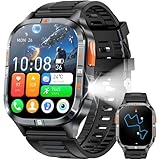
- BUILT-IN GPS & COMPASS– This military smartwatch features high-precision GPS to pinpoint your location while hiking, cycling, or traveling, keeping you safely on track without extra gear. Tap the compass icon and it locks your bearing within three seconds—engineered for pro-level outdoor adventures like camping, climbing, and trekking.
- BLUETOOTH CALLING & MESSAGES – Powered by the latest Bluetooth tech, the men’s smartwatch lets you answer or make calls right from your wrist—no need to pull out your phone. Get real-time alerts for incoming texts and app notifications so you never miss an invite. (Replying to SMS is not supported.)
- BIG SCREEN & DIY VIDEO WATCH FACE – The 2.01" military-spec display is dust-proof, scratch-resistant, and forged from high-strength glass with an aluminum alloy bezel, passing rigorous dust and abrasion tests so the screen stays crystal-clear. Upload a short family video to create a dynamic, one-of-a-kind watch face that keeps your memories alive.
- 24/7 HEALTH MONITORING – Equipped with a high-performance optical sensor, this Android smartwatch tracks heart rate and blood-oxygen levels around the clock. It also auto-detects sleep stages (deep, light, awake) for a complete picture of your health, ensuring you always know how your body is doing.
- MULTI SPORT MODES & FITNESS TRACK – Choose from running, cycling, hiking, basketball, and more to log every workout. Set goals, monitor progress, and sync data to the companion app. Bonus tools include photo gallery, weather, alarm, stopwatch, flashlight, hydration reminder, music/camera remote, find-my-phone, mini-games, and other everyday essentials.
Style versatility beyond training
The Epix Pro transitions more easily into casual or office settings. Its vibrant display and polished finish help it pass as a premium smartwatch rather than pure sports equipment.
The Fenix 7 Pro looks unapologetically functional. It pairs best with outdoor gear, technical apparel, and situations where ruggedness is part of the appeal.
Neither is a dress watch, but the Epix Pro comes closer to blending into everyday life without announcing itself as a navigation tool.
Visibility, Navigation, and Outdoor Performance: Maps, Sunlight Readability, and Adventure Use
Where the Epix Pro and Fenix 7 Pro truly separate is not in raw feature availability, but in how those features behave once you’re outside, moving, and relying on the watch as a tool rather than a screen.
Both are fully capable adventure watches with identical mapping data, GNSS hardware, and navigation software. The difference is how confidently you can read, interpret, and interact with that information in changing environments.
AMOLED vs MIP in real outdoor conditions
The Epix Pro’s AMOLED display is immediately striking when viewing maps, elevation profiles, and data fields. Trails, contour lines, and waypoints pop with color contrast that makes quick glances genuinely faster, especially in shaded forests or overcast conditions.
The Fenix 7 Pro’s memory-in-pixel display trades that vibrancy for consistency. In direct sunlight, it remains legible without any brightness boost, wrist flick, or power draw, which matters when you’re hours into a climb or trying to conserve battery on a multi-day route.
In practice, the Epix Pro excels when visual clarity is the priority, while the Fenix 7 Pro excels when predictability matters more than visual punch.
Sunlight readability and eye fatigue over long days
Under harsh midday sun, both watches are readable, but they behave differently. The Fenix 7 Pro looks the same at noon as it does at dawn, relying on ambient light rather than fighting it.
The Epix Pro compensates with brightness, which works well but introduces a subtle trade-off. Over long days, especially on snow, sand, or exposed alpine terrain, the brighter AMOLED can contribute to more eye fatigue compared to the softer, paper-like look of the MIP screen.
For users who spend entire days navigating outdoors, the Fenix display tends to disappear into the background, while the Epix remains visually present.
Mapping detail, panning, and route following
Both watches offer full-color topographic maps, turn-by-turn navigation, ClimbPro, and dynamic routing. Functionally, there is no feature gap between them.
Where the Epix Pro gains ground is map readability at a glance. Zooming, panning, and identifying junctions feels faster because fine details stand out more clearly, especially when moving at speed on a trail run or bike.
On the Fenix 7 Pro, maps require slightly more attention, but once your eyes adjust, they are perfectly usable and often easier to read in bright conditions without backlight interference.
Buttons, touch input, and gloves
Both watches use Garmin’s five-button layout with optional touchscreen input. In theory, they are equal.
In practice, the Fenix 7 Pro encourages button-first navigation, which is ideal in rain, cold, or while wearing gloves. The screen is always readable without interaction, so buttons feel like a natural extension of the interface.
The Epix Pro’s touchscreen is more tempting because the display invites interaction, but touch responsiveness can drop in heavy rain or winter conditions, pushing you back to buttons anyway.
GNSS performance and confidence in the backcountry
Both watches share the same multi-band GNSS chipset with excellent track accuracy in forests, canyons, and urban environments. Route fidelity, elevation tracking, and breadcrumb reliability are effectively identical.
The difference is confidence perception rather than accuracy. Seeing your position clearly on an AMOLED map can feel more reassuring, while trusting a MIP display to quietly keep working without draining power can feel safer over long distances.
Neither is more accurate; they simply communicate that accuracy differently.
Night navigation and low-light usability
At night, the Epix Pro is undeniably superior for visual clarity. Maps and data fields are easier to interpret without squinting, and night mode can be tuned to preserve night vision while remaining readable.
The Fenix 7 Pro relies more heavily on backlight in darkness, which works but feels utilitarian rather than elegant. Its advantage is restraint, as it never becomes overly bright or distracting during quick checks.
Both benefit from the built-in LED flashlight found on the Pro models, which becomes indispensable for camp tasks, early starts, and emergency visibility.
Battery implications during navigation-heavy use
Navigation amplifies the battery differences between these two watches. Continuous map use with the Epix Pro’s AMOLED display will noticeably reduce runtime, especially at higher brightness levels.
The Fenix 7 Pro handles long navigation sessions with less battery anxiety, making it better suited to multi-day hikes, ultra-distance events, or trips where charging options are limited.
If navigation is occasional, the Epix Pro’s battery trade-off is manageable. If navigation is central to your use case, the Fenix’s efficiency becomes a tangible advantage.
Which one works better when adventure is the priority
The Epix Pro feels like a high-resolution navigation computer on your wrist. It shines when clarity, speed of interpretation, and visual engagement matter most.
The Fenix 7 Pro feels like a tool designed to be forgotten until needed. It prioritizes reliability, endurance, and legibility in any condition without demanding attention.
Both are elite outdoor watches, but their displays shape how you experience the same terrain, the same maps, and the same journey.
Training, Sports, and Performance Features: What’s Identical — and Why That Matters
Once you move past how each watch shows information, the training engine underneath is effectively the same. This is where the Epix Pro (Gen 2) and Fenix 7 Pro converge, and for many athletes, this parity matters more than display technology ever will.
If you’re choosing between them based purely on what they can measure, analyze, and guide during training, there’s no hidden performance tier to unlock by picking one over the other.
Identical sport profiles and multisport depth
Both watches support the same expansive list of sport profiles, spanning road and trail running, track, cycling, pool and open-water swimming, triathlon, strength training, skiing, climbing, paddling, and niche outdoor activities. Custom multisport modes behave the same, with identical transition handling and data field flexibility.
In real-world use, this means a triathlete, trail runner, or mixed-discipline athlete will see the same activity options, the same metrics, and the same post-workout analysis regardless of which model is on their wrist.
Training metrics, load tracking, and readiness are fully shared
Training Readiness, Acute Load, Load Ratio, Training Status, VO2 max, race predictions, and performance condition all work identically on both watches. The algorithms pulling from heart rate, HRV, sleep, and activity history are the same generation and updated in parallel through Garmin’s firmware releases.
From a coaching and planning standpoint, neither watch offers deeper insight than the other. Your recovery advice, intensity distribution, and long-term trend analysis will match almost line-for-line.
Advanced running and cycling dynamics are unchanged
Both models support running dynamics from the wrist, including cadence, stride length, ground contact time balance (with compatible accessories), vertical oscillation, and running power. Cycling metrics like FTP estimation, power zones, stamina tracking, and ClimbPro behave the same on-device and in Garmin Connect.
This matters because it removes any concern that one watch is “more serious” than the other for performance analysis. If you train with power, structured workouts, or pacing strategies, either watch integrates seamlessly.
Rank #4

- 【Built-in GPS & Multi-System Positioning】Stay on track with the Tiwain smartwatch’s built-in GPS. Featuring military-grade single-frequency and six-satellite support (GPS, GLONASS, Beidou, Galileo, NAVIC, QZSS), this watch offers fast and accurate location tracking wherever you go. It also includes a compass, altimeter, and barometer, giving you real-time data on your altitude, air pressure, and position.
- 【Military-Grade Durability】Engineered to withstand the toughest conditions, the Tiwain smartwatch meets military standards for extreme temperatures, low pressure, and dust resistance. Crafted from tough zinc alloy with a vacuum-plated finish, this watch is also waterproof and built to resist wear and tear. The 1.43-inch AMOLED HD touchscreen offers clear visibility in all environments, and the watch supports multiple languages for global users.
- 【170+ Sport Modes & Fitness Tracking】Track your fitness journey with 170+ sport modes, including walking, running, cycling, hiking, basketball, and more. Set exercise goals, monitor progress, and sync your data to the companion app. The smartwatch also offers smart features like music control, camera remote, weather updates, long-sitting reminders, and more.
- 【LED Flashlight for Outdoor Adventures】The Tiwain smartwatch comes equipped with a built-in LED flashlight that can illuminate up to 20 meters. Activate it with the side button for added convenience during nighttime activities or outdoor adventures.
- 【Comprehensive Health Monitoring】Monitor your health with real-time heart rate, sleep, blood pressure, and blood oxygen level tracking. The smartwatch will vibrate to alert you of any abnormal readings. You can also make and receive calls directly from the watch, and stay connected with message and app notifications (receive only, no sending capability) – perfect for when you’re driving or exercising.
Structured workouts, training plans, and race tools
Daily Suggested Workouts, Garmin Coach plans, PacePro strategies, and course-based pacing are shared features with identical logic and customization. Syncing workouts from TrainingPeaks or building sessions manually works the same way on both platforms.
During workouts, prompts, alerts, and target zones feel familiar across both watches. The only experiential difference is how those instructions look on the screen, not how they function.
Sensor accuracy and health tracking parity
The Epix Pro and Fenix 7 Pro use the same Elevate Gen 5 optical heart rate sensor, multi-band GNSS chipset, barometric altimeter, compass, and pulse oximetry hardware. GPS accuracy, elevation gain consistency, and heart rate reliability during steady-state efforts are effectively indistinguishable.
Daily health metrics such as sleep stages, HRV status, Body Battery, stress tracking, and respiration are generated from the same sensor inputs and algorithms. Over weeks of wear, trends align closely enough that swapping watches won’t disrupt long-term data continuity.
Strength training, recovery tools, and daily usability
Strength workouts, rep counting, muscle maps, recovery time estimates, and post-exercise summaries behave the same on both watches. For gym-focused users, the experience is identical, including how exercises are edited, logged, and reviewed afterward.
Day-to-day usability also aligns, from notifications and music storage to Garmin Pay and safety features like incident detection. Comfort is similar as well, with shared case sizes, button layouts, and strap compatibility influencing fit more than model choice.
Why this feature parity is more important than it sounds
Because the training stack is identical, your decision isn’t about performance capability but about how you want to interact with that capability. Garmin has deliberately positioned these watches as equals in function, separating them by display philosophy and battery priorities rather than athletic potential.
For buyers comparing specs line by line, this clarity is valuable. You’re not choosing between a “better training watch” and a lesser one, but between two interpretations of the same elite performance tool.
Health, Recovery, and 24/7 Metrics: Sleep, HRV, and Long-Term Athlete Monitoring
Because the Epix Pro and Fenix 7 Pro share the same training engine, the real question in health and recovery tracking isn’t what they measure, but how consistently and comfortably you live with those measurements over weeks and months. This is where display behavior, battery strategy, and nightly wear start to matter more than raw specs.
Sleep tracking: identical data, different overnight experience
Sleep tracking is functionally identical across both watches, covering sleep stages, sleep score, respiration rate, overnight SpO2, skin temperature deviation, and nightly HRV averages. The algorithms, scoring logic, and insights in Garmin Connect are the same, so trends remain fully interchangeable if you switch models.
Where they diverge is in how the watches behave on your wrist overnight. The Epix Pro’s AMOLED display is off by default during sleep, but even in its lowest-power state it consumes more energy than the Fenix 7 Pro’s memory-in-pixel screen.
In practical terms, that means the Fenix 7 Pro is easier to wear 24/7 without thinking about charge timing. If you’re disciplined about charging during showers or desk time, the Epix Pro is fine, but the Fenix is more forgiving for true round-the-clock tracking.
HRV Status and recovery readiness over long timelines
Garmin’s HRV Status feature relies on uninterrupted overnight data collected over rolling multi-week windows. Since both watches use the same Elevate Gen 5 sensor and sampling rates, HRV baselines, strain flags, and recovery indicators match closely in day-to-day use.
The difference emerges in battery headroom. The Fenix 7 Pro can comfortably log HRV every night for multiple weeks without altering usage habits, especially in solar-equipped models. The Epix Pro can do the same, but only if you’re attentive to charging frequency and screen settings.
For athletes who view HRV trends as a long-term coaching tool rather than a daily curiosity, the lower cognitive load of the Fenix matters. You’re less likely to miss nights of data due to an unexpected low-battery warning.
Body Battery, stress, and all-day physiological load
Body Battery, all-day stress tracking, and respiration are calculated continuously in the background and behave identically on both devices. The insight quality depends more on how consistently you wear the watch than on which model you choose.
Comfort plays a subtle role here. Case sizes, weight, and materials are the same across equivalent sizes, but the Epix Pro’s brighter screen can feel more noticeable during late-night movements or low-light environments unless display gestures are tuned carefully.
The Fenix 7 Pro’s always-on MIP display is less intrusive in dark rooms and during sleep, which can make it feel more like a traditional instrument than a smart device. That matters for users sensitive to distractions.
Training Readiness, recovery time, and decision support
Training Readiness, recovery time, and suggested workouts are driven by the same inputs: sleep quality, HRV, acute load, and recent intensity. There is no scoring or logic advantage to either watch.
What changes is how often you interact with those insights. The Epix Pro’s AMOLED screen makes morning reports, widgets, and glanceable graphs more visually engaging, especially indoors or at the gym. The Fenix prioritizes readability in all conditions over visual richness.
If you frequently review recovery data mid-day or during structured training blocks, the Epix Pro feels more like a modern analytics dashboard. If you mostly check readiness once in the morning and train outdoors, the Fenix’s clarity and battery endurance feel more aligned with the task.
Long-term athlete monitoring and data continuity
Both watches are equally capable of supporting multi-year training histories, performance condition tracking, and seasonal load analysis. Garmin Connect treats them as interchangeable nodes in the same ecosystem.
The deciding factor for long-term monitoring is reliability through routine, not feature depth. The Fenix 7 Pro’s extended battery life reduces the chance of gaps in overnight data, while the Epix Pro rewards users who value screen quality enough to manage charging more actively.
Neither choice limits your physiological insight. The distinction lies in whether you want your recovery tool to disappear into the background, or to present that data in the most visually refined way Garmin currently offers.
Controls, Interface, and User Experience: Touchscreen vs. Buttons in Harsh Conditions
The difference between the Epix Pro and Fenix 7 Pro becomes most obvious the moment you start interacting with them mid-activity. Both use Garmin’s five-button layout, but only the Epix Pro invites you to treat the screen itself as a primary input surface.
That distinction sounds minor on a spec sheet, yet it has real consequences when sweat, gloves, rain, cold, or fatigue enter the equation.
Button layout and physical interaction
At a hardware level, the two watches are effectively identical. Each uses the same five-button configuration with textured metal pushers, consistent spacing, and a firm, tactile click that works well even with numb fingers or winter gloves.
In trail running, open-water swimming, or winter hiking, buttons remain the most reliable way to start laps, mark waypoints, or scroll data pages. Neither watch has an advantage here, and both are among the best in the category for glove-friendly control.
Where they diverge is how often you can avoid the buttons altogether.
Touchscreen behavior during training
The Epix Pro’s AMOLED touchscreen changes how you navigate day-to-day. Scrolling widgets, panning maps, zooming into charts, or reviewing post-workout graphs is simply faster and more intuitive by touch, especially indoors or at rest.
Garmin’s software allows touch to be disabled automatically during activities, which is how most serious athletes will run the Epix Pro outdoors. When touch is enabled mid-activity, it’s useful for map exploration during pauses, but it’s still less precise than buttons once sweat or rain builds up.
The Fenix 7 Pro also has touch, but it feels more supplementary. Its MIP display doesn’t encourage constant interaction, and most users end up relying on buttons nearly all the time.
Cold, wet, and high-stress scenarios
In harsh conditions, the Fenix 7 Pro feels purpose-built. Wet fingers, heavy rain, snow, and mud have no impact on usability when everything is button-driven, and the always-on display ensures you never need to wake the screen to confirm data.
The Epix Pro remains perfectly usable in these environments, but it demands more discipline. You’ll want touch fully locked during activities, gestures tuned conservatively, and brightness managed to avoid accidental inputs or unnecessary battery drain.
For mountaineering, multi-day trekking, or ultra-distance racing where interaction must be deliberate and mistake-proof, the Fenix’s more restrained interface feels calmer and more predictable.
Map navigation and data review
Off the clock, the Epix Pro has a clear advantage. Touch-driven map panning, zooming, and route inspection feels closer to using a phone or cycling head unit, and the AMOLED panel makes contour lines, trails, and POIs easier to parse at a glance.
On the Fenix 7 Pro, map navigation is slower and more methodical. Button-based zooming and scrolling work reliably, but reviewing complex routes or heatmaps takes more time and patience.
💰 Best Value

- Smart Watch with GPS and Offline Map: This smart watch connects to multiple satellite systems for accurate real-time positioning, and includes a professional-grade compass, altimeter, and barometer for precise data, ensuring you maintain your sense of direction in any outdoor environment. The map version supports downloading offline maps; select a route or destination to view the route even without a signal, eliminating the risk of getting lost.
- Bluetooth Call & Message Functionality: This smart watches for men allows you to make and receive calls; receive text and social media notifications (Facebook, WhatsApp, Instagram, Twitter, etc.); and reply to text messages with voice-to-text or set up quick replies (text reply functionality is available for Android phones).
- Sports & Health Monitoring: This 5ATM waterproof fitness watch supports over 100 sports modes and tracks daily activity data, calories, distance, steps, and heart rate. You can use it to monitor your health metrics (blood oxygen, heart rate, stress, and sleep), monitor your fatigue and mood, and perform PAI analysis. You can also use this smartwatch to set water intake and sedentary reminders. Stay active and healthy with this fitness tracker watch.
- Customizable Watch Faces & AI Functionality: This smart watch features a 1.46-inch HD touchscreen and over 100 downloadable and customizable watch faces. You can even use your favorite photos as your watch face. Equipped with AI technology, it supports voice descriptions in multiple languages to generate personalized AI watch faces. The watch's AI Q&A and AI translation features provide instant answers to questions and break down language barriers, making it an ideal companion for everyday life and travel.
- Large Battery & High Compatibility & More Features: This smart watch for android phones and ios phone features a large 550ml battery for extended battery life. It's compatible with iOS 9.0 and above and Android 5.0 and above. It offers a wealth of features, including an AI voice assistant, weather display, music control, camera control, calculator, phone finder, alarm, timer, stopwatch, and more. (Package Includes: Smartwatch (with leather strap), spare silicone strap, charging cable, and user manual)
If you frequently plan routes on the watch itself or review training data without reaching for your phone, the Epix Pro’s interface feels more modern and less friction-heavy.
Daily wear, gestures, and cognitive load
Outside of training, the Epix Pro behaves more like a traditional smartwatch. Gesture wake, fluid animations, and touch navigation make checking notifications, calendar items, or health widgets feel immediate and familiar.
The trade-off is attention. The bright AMOLED display invites interaction, which some users will love and others may find distracting, especially in low-light environments or during recovery-focused periods.
The Fenix 7 Pro asks less of you. Its interface feels more like an instrument panel than a screen begging to be touched, which aligns well with athletes who want their watch to deliver information without demanding engagement.
Which control scheme fits which athlete
If you value speed, visual clarity, and intuitive interaction when reviewing data, navigating maps, or using the watch as a daily companion, the Epix Pro’s touchscreen-first experience adds genuine quality-of-life benefits.
If you prioritize certainty under pressure, minimal distractions, and a control system that behaves the same way regardless of environment, the Fenix 7 Pro’s button-centric experience remains the safer and more focused choice.
Both watches offer the same depth of features. The difference lies in whether you want your watch to feel like a responsive interface you actively engage with, or a dependable tool that stays out of the way until you need it.
Durability, Materials, and Build Quality: Sapphire, Titanium, and Everyday Toughness
Once you move past how each watch behaves in use, the next question is how they hold up when the environment stops being friendly. Both the Epix Pro (Gen 2) and Fenix 7 Pro are built as serious instruments first, but the materials and visual presence subtly reinforce their different personalities.
Case construction and size options
Both lines are offered in three sizes—42 mm, 47 mm, and 51 mm—allowing smaller wrists to access the same sensors and features without compromise. Case construction is identical across the families: a fiber-reinforced polymer body paired with a metal rear cover for structural rigidity and sensor stability.
The difference isn’t structural so much as perceptual. The Epix Pro, especially in smaller sizes, wears closer to a premium smartwatch, while the Fenix 7 Pro presents itself unapologetically as expedition equipment.
Sapphire vs standard glass in real use
Both watches are available with either Corning Gorilla Glass or sapphire crystal, depending on configuration and price tier. Sapphire is the clear choice for users who scrape past rock, ice tools, bike racks, or gym equipment on a regular basis, as it is dramatically more resistant to micro-scratches over time.
In day-to-day wear, sapphire keeps both displays looking new longer, but it matters more on the Epix Pro. The AMOLED panel’s deep blacks and high contrast make even small surface scratches more noticeable, whereas the Fenix 7 Pro’s transflective display tends to visually mask minor wear.
Titanium and stainless steel bezels
Both models offer stainless steel or titanium bezels, with titanium significantly reducing weight while maintaining strength. The machining and finishing are clean and purposeful rather than decorative, with sharp edges softened just enough to avoid discomfort during long sessions.
Titanium models feel noticeably better balanced during ultraruns or all-day hikes, particularly in the 51 mm versions. Stainless steel adds reassuring heft but can feel overbuilt for users prioritizing comfort over visual presence.
Buttons, seals, and environmental resistance
The five-button layout is shared across both watches and remains one of Garmin’s strongest hardware advantages. Buttons are large, glove-friendly, and sealed to withstand mud, saltwater, sweat, and repeated high-pressure use without becoming mushy or inconsistent.
Water resistance is rated at 10 ATM on both, which covers swimming, surf exposure, and sustained rain without concern. More importantly, the sealing inspires confidence during long events where temperature swings, sweat saturation, and repeated immersion would quickly expose weaker designs.
Weight, comfort, and long-term wear
On paper, weights are nearly identical between comparable Epix Pro and Fenix 7 Pro configurations, especially when matched for case size and bezel material. In practice, the Epix Pro can feel slightly more top-heavy because the AMOLED display and glass stack draw attention upward, while the Fenix 7 Pro feels flatter and more utilitarian on the wrist.
For 24/7 wear, sleep tracking, and recovery metrics, both remain comfortable with Garmin’s silicone and nylon bands. Users sensitive to bulk often prefer the 42 mm and 47 mm variants regardless of model, as the 51 mm versions are unmistakably large tools rather than subtle accessories.
Everyday toughness versus visual refinement
Neither watch is fragile, but they telegraph durability differently. The Fenix 7 Pro looks ready to be knocked around, which makes owners less precious about it during rough work or unpredictable conditions.
The Epix Pro is just as robust, but its vibrant display and more polished aesthetic can make wearers more conscious of impacts. That perception doesn’t change its actual resilience, but it does influence how confidently users treat it as a disposable tool versus a premium object they want to keep pristine.
Pricing, Value, and Buying Advice: Choosing the Right Pro Watch for Your Lifestyle
After weighing durability, comfort, and on-wrist feel, the buying decision ultimately comes down to how much you value display quality versus battery longevity, and how those priorities translate into daily use. The Epix Pro (Gen 2) and Fenix 7 Pro sit at the very top of Garmin’s multisport range, and neither is positioned as a compromise product.
Price positioning and lineup overlap
At launch and through most retail cycles, the Epix Pro and Fenix 7 Pro are priced remarkably close when matched for case size and materials. Sapphire glass, titanium bezels, and solar charging on the Fenix can nudge prices upward, but there is no clear “budget” winner between the two.
This parity means the display technology is effectively what you are paying for. The Epix Pro’s AMOLED screen commands its premium through visual clarity and indoor legibility, while the Fenix 7 Pro justifies its price with unmatched endurance and solar-assisted efficiency.
Discount cycles tend to affect both models similarly, so waiting for sales rarely changes the core value equation. If price alone is the deciding factor, choosing based on availability or preferred size often makes more sense than chasing marginal savings.
Long-term value and ownership costs
Both watches offer identical training features, mapping capabilities, sensors, and software updates, so feature longevity is equal. Garmin’s update cadence typically supports flagship models for several years, and there is no indication that one platform will age faster than the other.
Battery longevity over the life of the watch does tilt slightly in favor of the Fenix 7 Pro. Less frequent charging cycles can help preserve battery health long term, especially for users who regularly log multi-hour GPS activities.
From a resale perspective, both models hold value well, but the Fenix line historically enjoys slightly broader demand due to its reputation as the default “do everything” Garmin. That said, AMOLED adoption continues to grow, and the Epix Pro no longer feels like a niche alternative.
Who should buy the Epix Pro (Gen 2)
The Epix Pro is the better choice for athletes who interact with their watch constantly throughout the day. Indoor training, gym sessions, city running, and daily smartwatch use benefit enormously from the high-contrast AMOLED display.
Mapping and navigation are especially compelling on the Epix Pro. Trail contours, turn prompts, and data fields are easier to interpret at a glance, reducing the cognitive load when fatigued or moving quickly.
If you charge your watch every few days anyway and want your training watch to double as a premium everyday wearable, the Epix Pro delivers a more modern, visually engaging experience without sacrificing performance credibility.
Who should buy the Fenix 7 Pro
The Fenix 7 Pro remains the superior tool for athletes who prioritize autonomy over aesthetics. Ultra runners, expedition hikers, and cyclists on multi-day routes benefit from the MIP display’s efficiency and solar-assisted runtime.
Outdoor visibility is another strength. In harsh sunlight, the Fenix display remains readable without backlight activation, reinforcing its reputation as a purpose-built instrument rather than a lifestyle smartwatch.
For users who view their watch as equipment first and an accessory second, the Fenix 7 Pro’s understated screen and utilitarian feel align better with that mindset.
Size, materials, and wearability value
Because pricing scales with size and materials, choosing the right case diameter is one of the most important value decisions. The 42 mm and 47 mm versions suit most wrists and offer the best balance of comfort and battery life.
Titanium bezels reduce weight and resist corrosion, while sapphire glass adds scratch resistance for users who are hard on their gear. Stainless steel variants offer excellent durability but can feel excessive for smaller wrists or all-day wear.
Strap choice also impacts perceived value. Garmin’s silicone bands are durable and versatile, but nylon options significantly improve comfort for sleep tracking and long training blocks.
Final buying advice
There is no wrong choice between the Epix Pro and Fenix 7 Pro, only a better alignment with how you train and live. If you want the best screen Garmin has ever put on a sports watch and are willing to trade some battery headroom, the Epix Pro is the more satisfying daily companion.
If your priority is endurance, reliability, and minimal charging even during demanding outdoor use, the Fenix 7 Pro remains the benchmark multisport tool. Choose the one that matches your habits, not the one that looks best on a spec sheet, and either watch will serve as a capable, long-term training partner.