There’s a reason the Fenix 3 HR still shows up in searches in 2026. For athletes digging through the used and refurbished market, it represents a moment when Garmin’s outdoor watches crossed from niche expedition tools into genuinely everyday endurance companions, without yet becoming oversized, ultra-expensive, or software-bloated.
If you’re here, you’re likely weighing pragmatism over novelty. You want reliable GPS, robust training data, weeks-not-days battery life, and a watch that can take real abuse, but you’re also aware this model is now nearly a decade old. Understanding where the Fenix 3 HR still fits, and where it very clearly does not, is essential before spending even used-market money.
This section sets the stage for that decision. It frames the Fenix 3 HR against modern Garmin lineups, explains why it still works surprisingly well for certain athletes, and clarifies the compromises you’re making by choosing it in 2026.
The Fenix 3 HR as a Legacy Flagship
When it launched, the Fenix 3 HR was Garmin’s no-compromise outdoor watch. Stainless steel bezel, reinforced polymer case, 100 m water resistance, sapphire glass options, and a design that felt closer to a tool watch than a gadget defined its appeal.
🏆 #1 Best Overall

- Stylish Design, Vibrant Display: The lightweight aluminum build blends effortless style with workout durability, while the vivid 1.97" AMOLED display keeps your data easy to read, even under bright sunlight.
- All-in-One Activity Tracking: The Amazfit Bip 6 fitness tracker watch offers 140+ workout modes including HYROX Race and Strength Training, plus personalized AI coaching and 50m water resistance.
- Up to 14 Days Battery Life: The Amazfit Bip 6 smart watch powers through your training and recovery for up to two weeks at a time - no nightly charging needed.
- Accurate GPS Tracking & Navigation: Stay on course with free downloadable maps and turn-by-turn directions. Support from 5 satellite systems ensures precise tracking of every move and fast GPS connection.
- 24/7 Health Monitoring: The Amazfit Bip 6 smartwatch provides precise, real-time monitoring of heart rate, sleep, blood-oxygen and stress, empowering you with actionable insights to optimize your health and fitness.
At roughly 51 mm wide and around 85–90 g depending on configuration, it’s objectively large by modern standards. Yet that bulk housed exceptional battery life for its era, physical buttons that still outperform touchscreens in cold or wet conditions, and durability that many newer, lighter watches struggle to match long-term.
In 2026, this positions the Fenix 3 HR as a rugged legacy device rather than a daily lifestyle smartwatch. It’s closer philosophically to a mechanical field watch than to a modern AMOLED sports computer.
Software and Ecosystem Reality in 2026
The Fenix 3 HR still syncs with Garmin Connect, and core activity tracking remains fully functional. GPS activities, structured workouts, basic training load, VO2 max estimates, and heart-rate-based metrics all continue to upload and analyze correctly.
However, this is where age starts to show. There is no onboard music, no Garmin Pay, no touchscreen, no nap tracking, no HRV status, no Training Readiness, and no modern recovery insights. The Connect IQ app store technically works, but app compatibility and performance are limited, and many newer data fields simply won’t install.
What you’re getting is a stable, frozen software experience. For athletes who value consistency over features, that’s not necessarily a downside, but it’s a clear line in the sand compared to Fenix 6, 7, or Epix-era watches.
Positioning Against Modern Fenix Models
Compared to a Fenix 7 or Epix Gen 2, the Fenix 3 HR feels blunt but honest. GPS accuracy remains good for open-sky running, cycling, and hiking, though it lacks multi-band GNSS and struggles more in dense forest or urban canyons.
The optical heart-rate sensor, Garmin’s first-generation Elevate, is serviceable for steady-state efforts but unreliable for intervals, cold-weather runs, or high wrist movement. Most serious users in 2026 will still pair it with a chest strap, which largely neutralizes this disadvantage.
Battery life remains one of its strongest cards. Even now, 10–14 days in smartwatch mode and around 16 hours of GPS use is realistic, assuming a healthy battery. That’s competitive with many newer watches once always-on displays and advanced sensors are factored in.
Who the Fenix 3 HR Still Makes Sense For
In today’s market, this watch is no longer about having the best data or the cleanest interface. It’s about value and reliability. For trail runners, hikers, cyclists, or ultrarunners who want a tough GPS watch with physical buttons and long battery life at a fraction of modern flagship prices, it remains compelling.
It also suits athletes upgrading from basic fitness trackers who don’t want touchscreen dependency or daily charging. As a training tool, it still delivers the fundamentals exceptionally well, provided expectations are aligned.
Where it makes less sense is as an all-day health tracker or smartwatch replacement. If sleep analytics, wellness insights, AMOLED displays, or smart features matter, newer models justify their higher cost quickly.
The Used and Refurbished Market Context
The Fenix 3 HR’s relevance in 2026 hinges almost entirely on price and condition. Battery health is the single most important factor to verify, followed by button responsiveness and screen integrity.
At the right price, typically well below entry-level modern Fenix models, it offers an unusually high durability-to-cost ratio. At the wrong price, it becomes a false economy compared to newer Instinct or Forerunner models with better sensors and longer software runway.
Understanding this positioning is critical, because the Fenix 3 HR is no longer competing with current flagships. It’s competing with budget-conscious alternatives, and its strengths only matter if you actually need them.
Design, Case Construction, and Wearability: Old-School Fenix DNA
Understanding whether the Fenix 3 HR still makes sense in 2026 starts with its physical presence. This is a watch from an era when Garmin prioritized durability and legibility over slim profiles or lifestyle appeal, and that design philosophy is immediately obvious on the wrist.
Case Size, Materials, and Overall Presence
The Fenix 3 HR uses a 51mm case with a thickness just over 16mm, making it large even by modern outdoor-watch standards. On paper those numbers sound extreme, but in practice the broad lugs and evenly distributed weight keep it from feeling top-heavy during activity.
Garmin offered multiple material configurations, including stainless steel and DLC-coated bezels paired with either polymer or metal backs. The HR sensor module is integrated cleanly into the rear, but it does add a small amount of extra bulk compared to the original non-HR Fenix 3.
Finishing is functional rather than refined. Edges are slightly angular, the bezel markings are deep and easy to read, and everything feels built to survive knocks against rocks, handlebars, or gym equipment without concern.
Bezel, Buttons, and Physical Controls
This is a five-button Garmin through and through, and that remains one of its biggest strengths. The buttons are large, well-spaced, and deliver a firm, positive click that works reliably with gloves, cold fingers, or sweaty hands.
In long-term use, button durability matters more than aesthetics, and the Fenix 3 HR generally holds up well if it’s been cared for. On the used market, sticky or inconsistent buttons are a red flag, but a good unit still feels mechanically solid even after years of abuse.
Compared to newer Fenix models with slightly softer button feel, the Fenix 3 HR feels almost industrial. That’s a compliment for athletes who prioritize reliability over refinement.
Display Technology and Readability
The Fenix 3 HR uses a 1.2-inch transflective memory-in-pixel display with a resolution of 218 x 218. By 2026 standards, it’s undeniably low resolution, but clarity in sunlight remains excellent.
There’s no touchscreen and no AMOLED option here, which simplifies interaction and dramatically reduces accidental inputs. In bright outdoor conditions, the display often outperforms modern high-resolution screens that rely on backlighting.
The trade-off is indoors and at night. Backlight performance is adequate but uneven compared to newer models, and text-heavy data screens can feel cramped if you’re accustomed to modern Garmin UI layouts.
Strap System and Wrist Comfort
Garmin used standard 26mm quick-release straps, which is both a blessing and a limitation. The size gives excellent stability during running and hiking, but it also narrows strap compatibility compared to today’s more standardized widths.
The stock silicone strap is thick, stiff when new, and extremely durable. Over time it softens, but breathability is average at best, especially during hot-weather training or multi-day wear.
Comfort depends heavily on wrist size. On wrists under roughly 170mm circumference, the watch will feel dominant and occasionally intrusive during daily wear, even if it’s fine during workouts.
Weight Distribution and All-Day Wearability
At roughly 82 grams with the silicone strap, the Fenix 3 HR is heavy compared to modern multisport watches. The weight itself isn’t the issue; it’s the combination of mass and height that makes it noticeable during desk work or sleep.
During activity, especially running or hiking, the watch actually feels more stable than lighter models thanks to its wide footprint. Bounce is minimal when properly tightened, even over long distances.
As a 24/7 wearable, it’s serviceable rather than comfortable. Many users end up loosening it significantly outside of workouts or taking it off entirely at night, which reflects its era and original purpose.
Durability, Water Resistance, and Long-Term Aging
Rated to 100 meters water resistance, the Fenix 3 HR handles swimming, rain, and sweat without hesitation. More importantly, the seals and case construction have proven resilient over time, assuming the battery hasn’t been compromised.
Scratches on the bezel are common and largely cosmetic. The mineral glass is reasonably tough, though not as scratch-resistant as sapphire-equipped later models.
In real-world long-term use, the case almost always outlasts the internal battery. That durability is a key reason this watch still circulates on the used market a decade later.
Old-School Design in a Modern Context
Compared to current Fenix generations, the Fenix 3 HR feels unapologetically utilitarian. There’s no attempt to blend into business-casual settings or double as a lifestyle smartwatch.
For users who value physical controls, rugged construction, and a watch that looks like a tool rather than an accessory, this design still resonates. For everyone else, especially those expecting comfort-first ergonomics or modern visual polish, its age is impossible to ignore.
This physical identity frames everything else about the Fenix 3 HR. It sets expectations clearly: this is a serious outdoor watch built for function first, and every design choice follows from that philosophy.
Display and Interface: MIP Screen, Buttons, and Day-to-Day Usability
That utilitarian philosophy carries straight through to how you interact with the Fenix 3 HR. The display and controls are unapologetically function-first, optimized for reliability in harsh conditions rather than visual flair or touch-driven convenience.
MIP Display: Clarity Over Color
The Fenix 3 HR uses a 1.2-inch transflective MIP display with a resolution of 218 x 218 pixels, covered by mineral glass. By modern standards, the pixel density is coarse, and color rendering is muted, but that misses the point of what this screen is designed to do.
In bright sunlight, the display remains exceptionally legible, often clearer with the backlight completely off. This is where the Fenix 3 HR still earns respect today, especially for trail running, hiking, and cycling where glare destroys AMOLED and glossy LCD panels.
Indoors or at night, the limitations are more obvious. The backlight is functional rather than refined, with visible gradients and uneven illumination compared to newer Garmin models, and you’ll often need to trigger it manually with a button press.
Information Density and Custom Data Fields
Garmin leaned heavily into data density with this generation. Activity screens can display up to four fields at once, and while the text is blocky, it remains readable in motion if you choose sensible layouts.
Rank #2

- Stylish Design, Bright Display: The sleek stainless steel build blends classic style with workout durability, while the bright 1.32" AMOLED display keeps your data easy to read, even under bright sunlight.
- Precise Heart Rate and Sleep Tracking: Amazfit's BioTracker technology tracks your heart rate and sleep data with accuracy that previous sensors just can't match.
- Up to 10 Days of Battery Life: With long battery life that lasts up to 10 days with typical use, nightly recharges are a thing of the past.
- Free Maps with Turn Directions: Stay on-track with free downloadable maps, and get turn-by-turn guidance on-screen or via your Bluetooth headphones. Enjoy ski maps for global resorts, including guidance for cable cars, slopes, and more.
- Faster and More Accurate GPS Tracking: 5 satellite positioning systems ensure fast GPS connection and accurate positioning whenever you're out running, walking, cycling or hiking.
For endurance athletes, this matters more than aesthetics. Pace, heart rate, lap distance, elevation, and navigation prompts are all instantly visible without swiping or tapping, which reduces cognitive load during long sessions.
Compared to newer Fenix models with higher resolution panels, you do sacrifice graphical finesse, especially in maps and charts. However, for pure metrics-driven training, the Fenix 3 HR still communicates information efficiently.
Five-Button Interface: Slow to Learn, Fast to Trust
The button-only interface is a defining characteristic of the Fenix line, and the Fenix 3 HR represents a more rigid, old-school implementation. The five physical buttons are large, tactile, and reliable even with gloves, wet hands, or cold fingers.
Navigation through menus is slower than on modern Garmins due to deeper menu trees and fewer contextual shortcuts. That said, once muscle memory develops, interaction becomes predictable and frustration-free, especially during activities.
There is zero risk of accidental input from rain, sweat, or sleeve contact. For mountaineering, winter sports, or long ultras where touchscreens can become liabilities, this interface remains genuinely advantageous.
Watch Faces and Daily Visibility
Watch face options are basic, with limited customization compared to newer models and today’s Connect IQ-heavy ecosystem. Most users will settle on a high-contrast digital face that prioritizes time, date, steps, and battery life.
The always-on nature of the MIP display reinforces its tool-watch identity. You can glance at the time or stats without wrist gestures, screen wake delays, or battery penalties.
As a daily timepiece, the Fenix 3 HR is functional but not elegant. The thick bezel and small display relative to case size emphasize ruggedness over refinement, which some users appreciate and others find dated.
Navigation, Maps, and Real-World Use
Mapping support exists, but it’s extremely limited compared to modern Fenix models. Breadcrumb trails and basic navigation cues are available, but there are no full-color topo maps or rich route previews.
On the low-resolution screen, this works best as a reassurance tool rather than a primary navigation solution. It’s enough to confirm you’re on course during a race or retrace your steps during a hike, not to explore complex trail networks on the fly.
For users coming from newer Garmins, this feels like a significant downgrade. For those upgrading from entry-level GPS watches, it still feels capable and purposeful.
Day-to-Day Usability in 2026
As a daily wearable, the interface reflects its age more than almost any other aspect of the watch. Notifications are basic, slow to scroll, and best treated as secondary rather than central features.
There’s no touchscreen, no modern smartwatch polish, and no attempt to compete with lifestyle-focused devices. What you do get is consistency, visibility, and an interface that behaves the same way on day one as it does years later.
In 2026, the Fenix 3 HR’s display and interface make sense for a very specific type of user: someone who values readability, physical controls, and predictable behavior over visual appeal or smart features. For that audience, it remains not just usable, but quietly effective.
GPS Performance and Navigation Accuracy in Real Outdoor Use
What ultimately determines whether the Fenix 3 HR still earns wrist time in 2026 is how well it performs once you leave the pavement and rely on it for position, distance, and direction. Despite its age, this is where the watch remains surprisingly competent, provided you understand its limitations and context.
Satellite Lock and Signal Stability
The Fenix 3 HR uses a GPS-only chipset with GLONASS support via firmware updates, long before multi-band or multi-constellation tracking became standard. Initial satellite lock is slower than modern Fenix models, often taking 20 to 40 seconds in open conditions and longer under tree cover or near buildings.
Once locked, signal stability is generally solid in open terrain. On roads, wide trails, and exposed ridgelines, recorded tracks remain clean and consistent, with minimal random drift during steady movement.
Accuracy While Running and Cycling
For road running, the Fenix 3 HR produces distance totals that typically land within one to two percent of known courses. Pace smoothing is slower to react to sudden changes, which becomes noticeable during intervals or sharp accelerations, especially compared to newer Fenix 6 or 7 models.
Cycling accuracy depends heavily on mounting position and speed. On the wrist, tracks remain usable but show corner-cutting at higher speeds, while bar-mounted use significantly improves track fidelity.
Performance Under Trees, Cliffs, and Urban Obstructions
Dense forest and canyon-like environments expose the limitations of the older GPS chipset. Track lines can wander several meters off trail, particularly during slow hiking or stop-and-go movement where satellite geometry changes frequently.
Urban runs introduce similar issues, with buildings causing reflected signals and occasional zig-zagging on the map. Compared to modern multi-band Garmins, the Fenix 3 HR is clearly less resilient in these environments, though still usable for distance and time tracking.
Elevation Data and Vertical Accuracy
The barometric altimeter is one of the stronger aspects of the Fenix 3 HR’s outdoor performance. When calibrated properly, elevation gain and loss are far more reliable than GPS-only elevation data, especially on hilly terrain.
Weather-related pressure changes can still affect readings on long outings. Manual calibration before activities remains a worthwhile habit for hikers and trail runners who care about vertical metrics.
Breadcrumb Navigation and Course Following
Navigation on the Fenix 3 HR is limited to breadcrumb trails and basic course guidance. You can load GPX routes and follow them, but the watch offers no background maps, no turn-by-turn street navigation, and minimal context beyond a line and your position.
In practice, this works best as confirmation rather than exploration. It’s ideal for races, familiar routes, or out-and-back hikes where staying generally on course matters more than detailed decision-making.
Off-Course Alerts and Practical Use in the Field
Off-course alerts are functional but not subtle. When you deviate from a loaded course, the watch vibrates and displays a clear warning, which is helpful during trail races or long-distance events.
However, without maps, resolving those alerts requires situational awareness. You’ll need to recognize trail intersections or landmarks yourself rather than relying on the watch to guide you back intelligently.
Battery Life with GPS Active
Battery performance during GPS activities remains respectable even by today’s standards. Expect roughly 14 to 16 hours of GPS tracking depending on satellite settings, temperature, and backlight usage.
For ultrarunners or multi-day hikers, this still covers many real-world use cases, though it falls well short of modern Fenix endurance modes. Battery drain remains predictable, with no sudden drops or erratic behavior late in an activity.
Comparison to Newer Fenix Models
Compared to a Fenix 6, 7, or Epix, the differences are immediately obvious. Newer watches lock faster, track cleaner under difficult conditions, and provide dramatically better navigation through full-color maps and multi-band GPS.
That said, the Fenix 3 HR does not fail at its core job. It records routes, distances, elevation, and time reliably enough that training data remains meaningful, even if it lacks the polish and resilience of newer hardware.
Real-World Value for Buyers in 2026
For users buying used or refurbished, GPS performance is rarely the deal-breaker. The bigger question is whether you need modern navigation features or simply want reliable tracking of where you went.
If your activities favor open terrain, established routes, and structured training over exploration, the Fenix 3 HR’s GPS capabilities still hold up. Its limitations are clear, but so is its consistency, which remains one of its defining strengths.
Heart Rate Monitoring and Sensor Limitations: Optical vs Chest Strap
As GPS performance fades into the background, heart rate accuracy becomes the more meaningful limiter of training value on the Fenix 3 HR. This was Garmin’s first serious attempt at integrating optical heart rate into a full-size, metal-bodied outdoor watch, and it shows both ambition and early-generation constraints.
The distinction between wrist-based optical tracking and chest strap pairing is not subtle here. Which one you rely on materially changes how useful the data is, especially for endurance training.
Garmin Elevate v1 Optical Sensor: What It Does Well
The Fenix 3 HR uses the first-generation Garmin Elevate optical sensor, housed in a raised plastic module on the caseback. It works best during steady-state aerobic efforts like easy runs, hikes, or long road rides where heart rate changes gradually.
In those conditions, accuracy is generally acceptable once the sensor settles in. After the first 5 to 10 minutes, readings often track within a reasonable range of a chest strap, assuming good fit and moderate temperatures.
For all-day activity tracking and casual workouts, the optical sensor remains functional even by 2026 standards. Resting heart rate trends, daily averages, and long-term baseline monitoring are still usable, if not particularly granular.
Where Optical HR Breaks Down in Real Training
Problems emerge as soon as intensity or conditions become less predictable. Intervals, hill repeats, tempo changes, and technical trail running routinely expose lag and smoothing issues.
Cadence lock is a frequent occurrence, particularly for runners with higher step rates or lighter arm swing. The watch may report a suspiciously stable heart rate that mirrors cadence rather than cardiovascular effort, especially during early phases of a workout.
Cold weather compounds these issues. Reduced blood flow to the wrist, combined with the Fenix 3 HR’s relatively thick case and rigid strap, often leads to dropouts or flatlined readings during winter runs or alpine use.
Rank #3
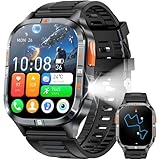
- BUILT-IN GPS & COMPASS– This military smartwatch features high-precision GPS to pinpoint your location while hiking, cycling, or traveling, keeping you safely on track without extra gear. Tap the compass icon and it locks your bearing within three seconds—engineered for pro-level outdoor adventures like camping, climbing, and trekking.
- BLUETOOTH CALLING & MESSAGES – Powered by the latest Bluetooth tech, the men’s smartwatch lets you answer or make calls right from your wrist—no need to pull out your phone. Get real-time alerts for incoming texts and app notifications so you never miss an invite. (Replying to SMS is not supported.)
- BIG SCREEN & DIY VIDEO WATCH FACE – The 2.01" military-spec display is dust-proof, scratch-resistant, and forged from high-strength glass with an aluminum alloy bezel, passing rigorous dust and abrasion tests so the screen stays crystal-clear. Upload a short family video to create a dynamic, one-of-a-kind watch face that keeps your memories alive.
- 24/7 HEALTH MONITORING – Equipped with a high-performance optical sensor, this Android smartwatch tracks heart rate and blood-oxygen levels around the clock. It also auto-detects sleep stages (deep, light, awake) for a complete picture of your health, ensuring you always know how your body is doing.
- MULTI SPORT MODES & FITNESS TRACK – Choose from running, cycling, hiking, basketball, and more to log every workout. Set goals, monitor progress, and sync data to the companion app. Bonus tools include photo gallery, weather, alarm, stopwatch, flashlight, hydration reminder, music/camera remote, find-my-phone, mini-games, and other everyday essentials.
Fit, Comfort, and Case Design Impacts on Accuracy
The physical design of the watch plays a real role in sensor performance. At 51 mm wide and notably thick, the Fenix 3 HR does not disappear on the wrist, particularly for smaller or narrower wrists.
The integrated lugs and stiff silicone strap limit micro-adjustments, making it harder to achieve the snug, stable fit optical sensors prefer. Movement during activities like cycling or hiking with poles can introduce additional noise.
Compared to modern Fenix models with flatter sensors, lighter cases, and improved strap ergonomics, the Fenix 3 HR demands more compromise to extract decent optical data.
Chest Strap Pairing: Still the Gold Standard Here
Pairing a chest strap via ANT+ transforms the experience. With a Garmin HRM-Run, HRM-Tri, or any compatible third-party strap, heart rate data becomes significantly more responsive and reliable.
Intervals snap into place cleanly, threshold work makes sense, and post-workout analysis regains credibility. For runners and cyclists following structured plans, this is the only setup that consistently delivers trustworthy data.
It also unlocks more consistent calorie estimates and training load calculations, which otherwise skew low or erratic with optical inaccuracies.
Training Metrics and Software Limitations
Even with a chest strap, the Fenix 3 HR is limited by its era. There is no HRV Status, Training Readiness, or advanced recovery modeling found on newer Fenix watches.
VO2 max estimates and recovery time are present but basic, relying heavily on clean heart rate input. When optical data is noisy, these metrics quickly lose relevance, reinforcing the case for a chest strap if training insight matters to you.
Sleep tracking, while supported, is rudimentary and best viewed as directional rather than precise.
Battery Impact and Daily Usability
Optical heart rate monitoring increases background battery drain, particularly during 24/7 wear. In watch-only mode with wrist HR enabled, expect several days less battery life compared to disabling it entirely.
Using a chest strap during activities does not significantly impact battery life and often results in cleaner data with fewer retries or sensor recalibration moments mid-workout.
For many long-term users, the practical solution has been to disable wrist-based HR outside of casual use and rely on a strap for any serious session.
Perspective Against Newer Garmin Sensors
Compared to Elevate v4 or v5 sensors in modern Fenix and Epix models, the gap is substantial. Newer watches handle intervals, cold weather, and movement far better, with less dependence on perfect fit.
That contrast matters when evaluating value in 2026. The Fenix 3 HR’s optical sensor is usable, but it is not competitive, and Garmin’s later improvements highlight just how early this implementation was.
For buyers considering this watch today, heart rate monitoring is not a reason to choose it. But with a chest strap, it remains capable enough to support serious endurance training without undermining the rest of the data the watch records.
Training, Multisport, and Performance Features: What Still Holds Up
With the limitations of its heart rate hardware clearly defined, the more interesting question is how the Fenix 3 HR performs when judged on its core identity: a rugged multisport training watch built for endurance use. Strip away modern wellness layers and smartwatch polish, and this is where the watch still shows surprising depth.
Sport Profiles and Multisport Execution
The Fenix 3 HR was designed at a time when Garmin prioritized athletes first, and that philosophy is evident in its sport profile breadth. Running, trail running, cycling, open water and pool swimming, hiking, skiing, rowing, and triathlon modes are all native, with clean transitions and minimal configuration friction.
Multisport mode, especially for triathlon and duathlon, remains reliable even by current standards. Transitions are button-driven rather than touch-based, which feels dated on paper but proves dependable in rain, cold, or while wearing gloves.
Data screens are highly configurable, and the watch allows multiple custom pages per sport. While the interface is slower than modern Fenix models, it is predictable, and muscle memory builds quickly for experienced Garmin users.
GPS Accuracy and Track Reliability
GPS performance is one of the Fenix 3 HR’s strongest aging points. Using a single-band GPS chipset without multi-band support, it still delivers consistent tracks in open environments and respectable performance under moderate tree cover.
Compared to newer multi-band Fenix models, the difference shows most in dense urban canyons and tight switchbacks. That said, for trail running, hiking, and road training, recorded distance and pacing remain reliable enough for structured training.
The watch supports GPS and GLONASS, which helps stabilize fixes compared to GPS-only modes. Lock-on times are slower than current models, but once locked, dropouts are rare unless terrain becomes extreme.
Pacing, Alerts, and Structured Training
Basic pacing tools remain functional and useful. Virtual Partner, pace alerts, distance alerts, and time alerts all work exactly as expected, and they integrate cleanly into both single-sport and multisport sessions.
Structured workouts synced from Garmin Connect are supported, including interval sessions with step-by-step guidance. The watch displays clear prompts for work and rest intervals, although graphical representations are simpler than on modern devices.
There is no adaptive coaching or daily workout suggestions. Training plans must be followed manually, which suits disciplined athletes but feels rigid compared to today’s algorithm-driven systems.
Running Dynamics and External Sensor Support
Paired with compatible accessories like the HRM-Run or foot pods, the Fenix 3 HR supports running dynamics including cadence, ground contact time, and vertical oscillation. These metrics are presented plainly, without the interpretive layers Garmin later added.
Cyclists benefit from full ANT+ power meter support, including power zones and basic power-based alerts. The lack of native cycling dynamics or advanced power analysis means post-workout review happens primarily in Garmin Connect rather than on the watch itself.
Sensor pairing remains stable, and the watch handles multiple paired devices without frequent re-pairing issues. This reliability matters for athletes using older ANT+ ecosystems who want continuity.
Navigation, Routes, and Outdoor Utility
Navigation features are basic but functional. The Fenix 3 HR supports breadcrumb routes, course following, and simple back-to-start functions, all displayed on a monochrome track line rather than full maps.
For hiking, ultra-running, and long exploratory efforts, this is enough to stay oriented without draining battery excessively. It lacks turn-by-turn prompts and topographic detail, but for users comfortable navigating by line and distance, it remains practical.
The barometric altimeter and compass perform reliably once calibrated, and elevation data is consistent for tracking gain and loss over long outings. Storm alerts and trend indicators add a layer of outdoor awareness that still feels relevant.
Training Load, Recovery, and Performance Modeling
The performance metrics available on the Fenix 3 HR reflect Garmin’s earlier Firstbeat integrations. Training Effect, recovery time, and VO2 max estimates are present, but they are isolated data points rather than part of a cohesive readiness model.
Training Load as understood today does not exist here. Instead, athletes must infer fatigue and progress by reviewing recent sessions manually, which demands more engagement but also avoids opaque scoring systems.
For experienced endurance athletes, this older approach can feel refreshingly transparent. The watch reports what happened, not what it thinks you should do next.
Battery Life During Training and Events
In GPS mode without optical heart rate, the Fenix 3 HR can still deliver strong endurance performance. Expect roughly 16 to 20 hours of continuous GPS recording, depending on satellite configuration and sensor use.
UltraTrac mode extends this significantly, though at the cost of track fidelity. For long hikes or multi-day events where recording is secondary to time tracking, it remains a viable option.
Compared to modern Fenix models, efficiency is clearly behind, but for its generation, battery behavior is predictable and dependable, which matters more than raw numbers during long events.
What Still Makes Sense in 2026
Viewed through a modern lens, the Fenix 3 HR’s training feature set feels stripped back, but not hollow. It covers the fundamentals of endurance training with fewer layers of abstraction, relying on athlete interpretation rather than algorithmic coaching.
For buyers considering a used or refurbished unit, its value lies in dependable multisport execution, solid GPS, broad sensor compatibility, and outdoor durability. It does not compete with modern Fenix watches on insight depth, but it still delivers accurate records of hard work, which is ultimately what serious training requires.
Battery Life and Power Management: Endurance Watch by Yesterday’s Standards
The stripped-back training philosophy of the Fenix 3 HR extends directly into how it handles power. There are fewer background processes, fewer always-on metrics, and far less passive drain than modern Garmin flagships, which shapes both its strengths and its limitations today.
What you get is a watch that behaves predictably. What you do not get is the efficiency leap delivered by newer chipsets, displays, and battery chemistry.
Rank #4

- 【Built-in GPS & Multi-System Positioning】Stay on track with the Tiwain smartwatch’s built-in GPS. Featuring military-grade single-frequency and six-satellite support (GPS, GLONASS, Beidou, Galileo, NAVIC, QZSS), this watch offers fast and accurate location tracking wherever you go. It also includes a compass, altimeter, and barometer, giving you real-time data on your altitude, air pressure, and position.
- 【Military-Grade Durability】Engineered to withstand the toughest conditions, the Tiwain smartwatch meets military standards for extreme temperatures, low pressure, and dust resistance. Crafted from tough zinc alloy with a vacuum-plated finish, this watch is also waterproof and built to resist wear and tear. The 1.43-inch AMOLED HD touchscreen offers clear visibility in all environments, and the watch supports multiple languages for global users.
- 【170+ Sport Modes & Fitness Tracking】Track your fitness journey with 170+ sport modes, including walking, running, cycling, hiking, basketball, and more. Set exercise goals, monitor progress, and sync your data to the companion app. The smartwatch also offers smart features like music control, camera remote, weather updates, long-sitting reminders, and more.
- 【LED Flashlight for Outdoor Adventures】The Tiwain smartwatch comes equipped with a built-in LED flashlight that can illuminate up to 20 meters. Activate it with the side button for added convenience during nighttime activities or outdoor adventures.
- 【Comprehensive Health Monitoring】Monitor your health with real-time heart rate, sleep, blood pressure, and blood oxygen level tracking. The smartwatch will vibrate to alert you of any abnormal readings. You can also make and receive calls directly from the watch, and stay connected with message and app notifications (receive only, no sending capability) – perfect for when you’re driving or exercising.
Quoted Battery Life vs Real-World Use
Garmin originally rated the Fenix 3 HR for up to 16 hours in standard GPS mode, around 24 hours in UltraTrac, and roughly three weeks in watch-only mode. In long-term testing, those numbers were realistic when the watch was new and remain directionally accurate on well-kept units.
In 2026, most used examples will deliver closer to 12 to 14 hours of GPS with wrist heart rate disabled and screen backlight managed conservatively. Enabling optical heart rate typically trims another 1 to 2 hours depending on temperature and activity type.
For marathon-distance events, long trail runs, and century rides, battery life remains sufficient. For ultrarunners pushing beyond 15 hours, especially with navigation and sensors active, careful planning is required.
Power Consumption During Training
The Fenix 3 HR’s transflective display is a key reason it still performs decently during long sessions. It remains readable in direct sunlight without demanding constant backlight use, unlike AMOLED-based modern alternatives.
GPS sampling is steady rather than adaptive. There is no dynamic power scaling based on pace or motion, which means energy draw is consistent but not optimized.
External sensors such as chest straps and cadence sensors have minimal impact on total drain. Optical heart rate, by contrast, is a noticeable contributor, especially during cold-weather activities where signal quality fluctuates.
UltraTrac and Extended Recording Modes
UltraTrac mode dramatically extends battery life by reducing GPS polling frequency. In practice, this can push total recording time into the low-20-hour range even on older batteries.
Track quality in UltraTrac is acceptable for hiking, trekking, and general movement logging. It is not suitable for detailed pace analysis or technical trail navigation where switchbacks and elevation changes matter.
For multi-day hikes where the watch is primarily a timekeeper and breadcrumb logger, UltraTrac remains genuinely useful. This is one area where the Fenix 3 HR still aligns well with expedition-style use.
Charging, Connectors, and Daily Power Management
Charging relies on Garmin’s older proprietary clip-style connector, which is secure but slow by modern standards. A full charge typically takes close to two hours, longer if the battery has aged significantly.
There is no fast charging, no solar assistance, and no meaningful top-up during short breaks. Planning charging windows matters more than it does on modern Fenix models.
On the upside, standby drain is minimal. The watch can sit off-wrist for days with negligible battery loss, which helps offset its slower charging behavior.
Battery Aging and the Used Market Reality
Battery health is the biggest variable for buyers in 2026. Units with heavy historical use may show sharp drops from 40 percent to empty, particularly in cold conditions.
There is no user-accessible battery health reporting. Evaluating a used Fenix 3 HR means testing GPS runtime directly, ideally during a long activity.
Battery replacement is possible through third-party services, but costs can approach the value of the watch itself. This makes careful sourcing more important than chasing the lowest price.
How It Compares to Newer Fenix Models
Modern Fenix watches deliver nearly double the GPS runtime with optical heart rate enabled, plus far better efficiency in navigation-heavy use. Power management is now adaptive, context-aware, and far more forgiving.
The Fenix 3 HR lacks these refinements. It consumes power at a steady, older-school rate that feels blunt by comparison.
That said, it also avoids the constant background drain of always-on health tracking, Wi‑Fi syncing, and continuous analytics. For users who only power the watch during training, the gap narrows more than expected.
Who the Battery Life Still Works For
For runners, cyclists, and hikers whose longest sessions fall under 12 hours, battery life is still workable and reliable. For daily training with weekly charging, the experience remains uncomplicated.
For ultradistance athletes, winter adventurers, or users expecting smartwatch-like convenience, limitations will surface quickly. This is an endurance watch by the standards of its time, not by modern extremes.
Understanding those boundaries is key. When used within them, the Fenix 3 HR still delivers dependable performance without surprises.
Durability, Reliability, and Long-Term Ownership Experience
After the battery discussion, durability is the other half of the long-term equation. This is where the Fenix 3 HR has aged far more gracefully than many electronics from its era, largely because Garmin built it like a tool rather than a gadget.
Case Construction and Real-World Toughness
The stainless steel bezel and reinforced polymer case remain a standout even a decade on. Mine has been scraped against rock, bike racks, and gym equipment without any structural damage, just honest cosmetic wear.
At 51mm wide and roughly 16mm thick, it is undeniably bulky, but that mass contributes to its survival record. Cracked housings and deformed cases are rare even among heavily used examples.
This is a watch designed to be worn continuously through training, travel, and outdoor abuse without babying it.
Water Resistance and Environmental Exposure
Rated to 10 ATM, the Fenix 3 HR has proven reliable for swimming, heavy rain, and prolonged exposure to sweat and humidity. Button seals tend to hold up well over time, assuming the watch has not been opened by an inexperienced third party.
Older units should still be pressure-safe for surface swimming, but I would avoid deep or repetitive freediving with a heavily used watch. The water resistance margin is real, but it is also finite.
Cold-weather reliability is generally good from a structural standpoint, though battery performance remains the limiting factor rather than the casing or screen.
Buttons, Bezel, and Physical Interface Wear
The five-button layout is one of the Fenix 3 HR’s long-term strengths. Even after years of use, button tactility usually remains crisp, with clear actuation and minimal wobble.
The most common issue is salt or grit ingress causing temporary stiffness, which is often resolved with rinsing rather than repair. True button failure is uncommon compared to early touchscreen-based sports watches from the same era.
The bezel itself takes scratches easily due to its brushed finish, but this does not affect function and often adds to the watch’s tool-watch character.
Display Longevity and Scratch Resistance
The transflective memory-in-pixel display is one of the most durable components. It lacks the visual punch of modern AMOLED panels, but it is extremely resistant to burn-in, pixel degradation, and readability loss.
Scratches can occur, especially on non-sapphire variants, yet visibility in bright sunlight remains excellent even with cosmetic damage. Unlike OLED-based watches, there is no long-term brightness decay to worry about.
From an ownership standpoint, this screen ages quietly and predictably, which is exactly what you want in an outdoor instrument.
Heart Rate Sensor and Sensor Aging
The optical heart rate sensor introduced with the HR model was Garmin’s first-generation Elevate hardware. Over time, accuracy remains acceptable for steady-state efforts like endurance running or hiking, but it struggles with intervals and rapid changes by modern standards.
Sensor failure is rare, but accuracy can degrade due to lens wear or micro-scratches. For serious training, pairing a chest strap remains the most reliable solution and effectively future-proofs the watch’s training data.
Other sensors, including the barometric altimeter and compass, generally remain stable with periodic calibration.
Software Stability and Ongoing Usability
Garmin has long since ended feature updates for the Fenix 3 HR, but software stability is excellent. Crashes, corrupted activities, and sync failures are uncommon compared to early firmware years.
The watch remains compatible with Garmin Connect, though it lacks modern metrics like Training Readiness, HRV Status, or advanced sleep analysis. Sync speeds are slower, but reliability remains high.
From a long-term ownership perspective, static software is not a weakness here. The feature set is frozen, predictable, and free of shifting platform dependencies.
Strap Wear, Comfort, and Replacement Options
Comfort is subjective, but the weight and thickness are noticeable during sleep or all-day wear. For training-only users, this is rarely an issue, but lifestyle wearers may find it cumbersome.
💰 Best Value

- Smart Watch with GPS and Offline Map: This smart watch connects to multiple satellite systems for accurate real-time positioning, and includes a professional-grade compass, altimeter, and barometer for precise data, ensuring you maintain your sense of direction in any outdoor environment. The map version supports downloading offline maps; select a route or destination to view the route even without a signal, eliminating the risk of getting lost.
- Bluetooth Call & Message Functionality: This smart watches for men allows you to make and receive calls; receive text and social media notifications (Facebook, WhatsApp, Instagram, Twitter, etc.); and reply to text messages with voice-to-text or set up quick replies (text reply functionality is available for Android phones).
- Sports & Health Monitoring: This 5ATM waterproof fitness watch supports over 100 sports modes and tracks daily activity data, calories, distance, steps, and heart rate. You can use it to monitor your health metrics (blood oxygen, heart rate, stress, and sleep), monitor your fatigue and mood, and perform PAI analysis. You can also use this smartwatch to set water intake and sedentary reminders. Stay active and healthy with this fitness tracker watch.
- Customizable Watch Faces & AI Functionality: This smart watch features a 1.46-inch HD touchscreen and over 100 downloadable and customizable watch faces. You can even use your favorite photos as your watch face. Equipped with AI technology, it supports voice descriptions in multiple languages to generate personalized AI watch faces. The watch's AI Q&A and AI translation features provide instant answers to questions and break down language barriers, making it an ideal companion for everyday life and travel.
- Large Battery & High Compatibility & More Features: This smart watch for android phones and ios phone features a large 550ml battery for extended battery life. It's compatible with iOS 9.0 and above and Android 5.0 and above. It offers a wealth of features, including an AI voice assistant, weather display, music control, camera control, calculator, phone finder, alarm, timer, stopwatch, and more. (Package Includes: Smartwatch (with leather strap), spare silicone strap, charging cable, and user manual)
The standard silicone strap tends to outlast expectations, though cracking near the lug interface can appear after years of sweat exposure. Fortunately, the standard quick-release width makes replacements easy and inexpensive.
Third-party straps are widely available, which helps extend the usable life of the watch without relying on Garmin-specific parts.
Serviceability, Parts, and the Used-Market Reality
Garmin no longer offers official repairs for the Fenix 3 HR, making third-party servicing the only option. Battery replacement is the most common intervention, but costs can be difficult to justify relative to resale value.
Parts availability is inconsistent, and quality varies by service provider. This reinforces the importance of buying a unit with strong baseline health rather than planning a refurbishment later.
As a long-term ownership proposition, the Fenix 3 HR rewards careful sourcing and realistic expectations. When well cared for, it remains one of the most physically durable multisport watches Garmin has ever produced.
Software, Connectivity, and Ecosystem Compatibility Today
Viewed in the context of long-term ownership, the Fenix 3 HR sits at an interesting intersection of stability and obsolescence. It no longer evolves, but it still functions cleanly inside Garmin’s broader ecosystem in 2026, provided expectations are calibrated to its generation.
Garmin Connect Integration in 2026
The Fenix 3 HR continues to sync reliably with Garmin Connect on both iOS and Android, using Bluetooth or Wi‑Fi depending on configuration. Activities upload without data loss, metrics display correctly, and historical trends remain intact even when viewed alongside newer Garmin devices.
What you will not see are modern training overlays layered onto old data. Metrics such as HRV Status, Training Readiness, Morning Report, and adaptive daily suggestions are absent, and Garmin does not retroactively compute them for legacy hardware.
That said, core performance data still matters most for many users. Distance, pace, elevation, heart rate, lap structure, and basic training load are preserved accurately and remain fully usable for long-term analysis.
Sync Speed, Reliability, and Day-to-Day Friction
Sync speeds are noticeably slower than on modern Fenix models, especially when uploading long GPS activities over Bluetooth. Wi‑Fi syncing, where available and configured, remains the fastest and most dependable option for large files.
Reliability, however, is strong. Once paired, the watch rarely drops connection, and failed uploads are uncommon compared to early-generation GPS watches from the same era.
Notifications arrive consistently, though they are basic. You get mirrored phone alerts without interaction, replies, or filtering depth beyond simple enable/disable controls.
Connect IQ Support and App Limitations
The Fenix 3 HR supports Connect IQ, but compatibility is increasingly constrained by modern developer targets. Many newer watch faces, data fields, and apps are no longer optimized or supported for this hardware class.
What remains usable tends to be simple and functional. Basic watch faces, single-field data overlays, and legacy apps generally perform without instability, though performance is slower than on newer processors.
For users expecting app-driven extensibility, this is one of the clearest signs of the watch’s age. For users who never relied heavily on third-party apps, the limitation is largely academic.
Sensor Pairing and External Device Compatibility
ANT+ and Bluetooth sensor support remains a major strength. The Fenix 3 HR pairs reliably with chest heart-rate straps, cycling power meters, speed and cadence sensors, foot pods, and external temperature sensors.
This makes it surprisingly relevant for structured cycling and indoor training, where power-based workouts and sensor accuracy matter more than onboard smart features. Data from these sensors integrates cleanly into Garmin Connect and third-party platforms.
There is no support for modern Bluetooth-only smart trainers or advanced FE‑C control profiles. Indoor cyclists using platforms like Zwift will need to rely on external devices rather than watch-based control.
Third-Party Platform Compatibility
Garmin Connect continues to export Fenix 3 HR activities seamlessly to platforms like Strava, TrainingPeaks, Komoot, and Final Surge. Automatic syncing works without manual intervention once accounts are linked.
Advanced analytics on those platforms may exceed what the watch itself displays, but the underlying data quality remains sufficient for pace, power, elevation, and heart-rate trend analysis.
This external compatibility helps offset the watch’s frozen feature set. The Fenix 3 HR effectively becomes a data capture tool feeding more modern analysis engines.
Smartphone OS Support and Longevity Outlook
As of 2026, the Fenix 3 HR still pairs with current versions of iOS and Android, though setup flows are less streamlined than with newer Garmin models. Garmin Express on desktop remains supported and is often the most reliable method for firmware maintenance and file management.
The long-term risk is not imminent failure, but gradual de-prioritization. At some point, mobile OS updates may outpace Garmin’s willingness to maintain full compatibility for legacy hardware.
For buyers considering a used or refurbished unit today, this means the watch should be evaluated as a training instrument first and a connected smartwatch second. Within that frame, its software and ecosystem integration remain more functional than its age would suggest.
Buying Advice: Used Market Value, Alternatives, and Who Should Still Consider the Fenix 3 HR
With software support, sensor compatibility, and platform syncing clarified, the buying decision around the Fenix 3 HR comes down to value, expectations, and use case. In 2026, this is no longer a question of whether it is competitive with modern flagships, but whether it remains competent enough for specific types of athletes at the right price.
Used and Refurbished Market Value in 2026
On the secondary market, the Fenix 3 HR typically trades between $90 and $160 USD depending on condition, bezel wear, and battery health. Sapphire editions with intact glass and minimal corrosion on the stainless steel bezel command the upper end of that range.
Battery condition matters more than cosmetic wear at this age. A healthy unit should still deliver roughly 4 to 5 days of mixed GPS training or around 10 to 12 hours of continuous GPS tracking, which is sufficient for marathons, long hikes, and century rides but no longer ultra-endurance territory.
Refurbished units from reputable resellers offer better peace of mind, particularly if the battery has been tested or replaced. Private sales can be excellent value, but buyers should confirm charging reliability, button responsiveness, and GPS lock times before committing.
How It Compares to Newer Garmin Models
Against modern Fenix models, the Fenix 3 HR feels unmistakably dated in daily use. The 1.2-inch transflective display is lower resolution, there is no touchscreen, no music storage, no maps, and no modern training readiness or recovery scoring.
What it still does well is core GPS tracking with solid positional accuracy, especially in open terrain. The stainless steel case, exposed screws, and chunky lugs give it a tool-watch presence that remains appealing, even next to newer polymer-heavy designs.
If you are coming from a Fenix 5, 6, or 7 series, the downgrade in usability and insight will be immediate. If you are stepping up from a basic fitness tracker or an entry-level Forerunner, the Fenix 3 HR can still feel like a serious upgrade in build quality and training depth.
Key Alternatives Worth Considering
Used Forerunner 245 or 255 models often sit slightly above the Fenix 3 HR in price but deliver far better heart-rate accuracy, modern training metrics, and significantly lighter wearability. For runners focused on performance rather than aesthetics, these are usually the smarter buy.
A used Fenix 5 or Fenix 5 Plus is another strong alternative, offering improved GPS, better battery efficiency, and partial mapping support while retaining the classic Fenix design language. Prices are higher, but the generational leap in software and sensors is noticeable.
Outside the Garmin ecosystem, older Suunto models like the Spartan Ultra offer similar durability but lack Garmin’s platform depth and sensor ecosystem. For most buyers already invested in Garmin Connect, staying within the ecosystem remains the more practical choice.
Who the Fenix 3 HR Still Makes Sense For
The Fenix 3 HR remains a viable option for athletes who prioritize durability, physical buttons, and reliable GPS over modern health metrics. It suits hikers, trail runners, and cyclists who want a robust data recorder rather than a daily wellness companion.
It also works well as a dedicated training or backup watch. Many athletes use it exclusively for long outdoor sessions while relying on a newer smartwatch for daily wear and sleep tracking.
Buyers who appreciate traditional watch proportions may also prefer its substantial 51 mm case, thick bezel, and reassuring weight. On the wrist, it feels closer to a mechanical tool watch than a contemporary smartwatch, which is part of its enduring appeal.
Who Should Look Elsewhere
If sleep tracking, HRV trends, blood oxygen estimates, or adaptive training guidance are important to you, the Fenix 3 HR will feel limiting. Wrist-based heart-rate performance is adequate for steady efforts but struggles with intervals and cold-weather conditions compared to newer sensors.
Smaller-wristed users may find the case cumbersome for all-day wear. At 82 grams without a strap and a tall profile, comfort during sleep or desk work is not its strong suit.
Anyone expecting long-term software evolution should also look elsewhere. The feature set is effectively frozen, and while core functionality remains stable, there is no headroom for future enhancements.
Final Buying Verdict
In 2026, the Garmin Fenix 3 HR is best understood as a capable legacy instrument rather than a modern multisport smartwatch. At the right used price, it delivers reliable GPS tracking, broad sensor compatibility, and rugged construction that still stands up to hard outdoor use.
It is not the watch to buy for cutting-edge training insight or seamless daily lifestyle integration. But for athletes who value durability, button-driven control, and straightforward performance data, the Fenix 3 HR remains a surprisingly relevant option.
Approached with realistic expectations and a clear understanding of its limitations, it can still earn its place on the wrist—or in the gear bag—of the right kind of endurance-focused user.