Nearly a decade after its 2017 debut, the Garmin Fenix 5 occupies a strange but still relevant corner of the sports watch market. Many athletes looking at it in 2026 are not chasing the latest sensors or AMOLED screens, but trying to answer a more practical question: is this once-flagship multisport watch still good enough for serious training today if the price is right?
That question matters because the Fenix 5 was built for long-term abuse in a way many newer, lighter watches are not. Stainless steel bezels, reinforced polymer cases, sapphire glass options, and physical buttons designed for cold, wet hands gave it a reputation for durability that has largely held up over time. What has changed is the surrounding ecosystem, the expectations around health tracking, and how much performance you can now buy for far less money.
This section sets the stage for evaluating the Fenix 5 as it exists in 2026, not as it was reviewed at launch. The goal is to understand where it still holds real-world value, where it shows its age, and what type of athlete should realistically consider one today before we dive deeper into performance, training features, and long-term ownership.
Positioning in Garmin’s Lineup Today
In 2026, the Fenix 5 sits several generations behind current Fenix models, the Epix line, and even mid-range watches like the Forerunner 255 and Instinct 2. It lacks newer hardware such as multi-band GNSS, optical SpO2, ECG-capable sensors, and advanced sleep or recovery analytics that are now standard across much of Garmin’s range.
🏆 #1 Best Overall

- Stylish Design, Vibrant Display: The lightweight aluminum build blends effortless style with workout durability, while the vivid 1.97" AMOLED display keeps your data easy to read, even under bright sunlight.
- All-in-One Activity Tracking: The Amazfit Bip 6 fitness tracker watch offers 140+ workout modes including HYROX Race and Strength Training, plus personalized AI coaching and 50m water resistance.
- Up to 14 Days Battery Life: The Amazfit Bip 6 smart watch powers through your training and recovery for up to two weeks at a time - no nightly charging needed.
- Accurate GPS Tracking & Navigation: Stay on course with free downloadable maps and turn-by-turn directions. Support from 5 satellite systems ensures precise tracking of every move and fast GPS connection.
- 24/7 Health Monitoring: The Amazfit Bip 6 smartwatch provides precise, real-time monitoring of heart rate, sleep, blood-oxygen and stress, empowering you with actionable insights to optimize your health and fitness.
However, it still delivers core multisport functionality that has not fundamentally changed. Structured workouts, VO2 max estimates, race pace guidance, barometric altitude, breadcrumb navigation, and robust activity profiles remain intact and usable. For athletes focused on training execution rather than lifestyle insights, the gap is narrower than the spec sheet suggests.
Software Support and Platform Longevity
Garmin has effectively ended feature updates for the Fenix 5, but it continues to sync reliably with Garmin Connect on both iOS and Android. Activities upload quickly, third-party platform integration remains seamless, and core metrics are still calculated consistently. The watch does not feel abandoned so much as frozen in time.
What you do not get are newer Connect features retrofitted onto the device. Body Battery refinements, Training Readiness, HRV Status, advanced sleep staging, and adaptive daily workout suggestions are absent. If those insights are central to how you manage training load in 2026, the Fenix 5 will feel limited rather than simply older.
Hardware That Has Aged Unevenly
Physically, the Fenix 5 has aged better than many consumer electronics. The 47 mm case, 22 mm quick-release strap system, and transflective MIP display still make sense for outdoor use, especially in bright conditions. Button-driven navigation remains a strength for winter sports, trail running, and long hikes where touchscreens struggle.
Internally, the GPS chipset is the clearest reminder of its age. Accuracy is generally solid for open-sky running and riding, but tree cover, urban canyons, and switchback-heavy trails expose its limitations compared to modern multi-band receivers. For most recreational and even competitive training, the data is usable, but not class-leading by current standards.
Battery Life in Real 2026 Conditions
Battery life was a headline feature at launch, and it remains one of the Fenix 5’s selling points, with an important caveat. When new, it offered roughly two weeks in smartwatch mode and around 24 hours of GPS tracking. In 2026, real-world endurance depends heavily on battery health, which varies widely on the used market.
Well-kept units can still manage multi-day hikes or several long training sessions between charges. Worn batteries, however, may struggle to hit double-digit GPS hours, making pre-purchase condition checks critical. There is no practical battery replacement path through Garmin, so longevity is a calculated risk.
Market Value and Who It Still Makes Sense For
The Fenix 5’s relevance today is almost entirely tied to price. At deep discounts or reasonable second-hand prices, it offers a level of build quality and training depth that newer budget watches cannot match. At inflated resale prices, it is quickly overshadowed by newer mid-tier models with better sensors and longer software futures.
It makes the most sense for athletes who prioritize durability, physical controls, and proven training tools over wellness features and cutting-edge accuracy. Trail runners, hikers, and endurance athletes who want a tough, no-nonsense GPS watch for structured training can still extract meaningful value from it in 2026, provided expectations are calibrated to its age.
Design, Case Sizes, and Wearability: Old-School Tool Watch Done Right
If the Fenix 5 still earns its place on wrists in 2026, it is largely because of its physical design. Where newer watches chase slimness or lifestyle appeal, the Fenix 5 doubles down on being a purpose-built instrument. That intent is obvious the moment you pick it up.
A True Tool Watch Aesthetic
The Fenix 5 looks more like a traditional outdoor watch than a modern smartwatch. The exposed metal bezel, angular lugs, and prominent buttons give it a functional, almost militaristic presence that aligns more with dive and field watches than consumer electronics.
This design has aged well precisely because it never tried to be fashionable. It still looks appropriate on a trail, in a bike cockpit, or clipped to a pack, and it avoids the plasticky feel that dates many mid-range sports watches from the same era.
Materials and Case Construction
Garmin used fiber-reinforced polymer for the case body, paired with a stainless steel bezel and steel rear cover. Sapphire glass was available on higher-end variants, while standard models used mineral glass that remains surprisingly resilient with reasonable care.
In real-world use, the case construction inspires confidence. It shrugs off knocks against rocks, door frames, and gym equipment, and the bezel tends to pick up cosmetic scuffs long before the screen shows meaningful damage, which is exactly how a tool watch should age.
Case Sizes and Wrist Fit
The standard Fenix 5 comes in a 47mm case, with the Fenix 5S at 42mm and the Fenix 5X at a massive 51mm. This range was unusually inclusive for its time and remains one of the series’ strengths on the used market.
The 47mm model strikes the best balance for most users, offering strong readability without overwhelming average wrists. The 5S is still one of the better options for smaller wrists in the rugged multisport category, while the 5X is best reserved for users who prioritize mapping and battery over comfort.
Thickness, Weight, and Long-Term Comfort
At roughly 15.5mm thick, the Fenix 5 is not subtle. It sits tall on the wrist and will catch on jacket cuffs and backpack straps, particularly during daily wear outside training.
That said, weight distribution is well managed. Once paired with the right strap and properly tightened, it remains comfortable during long runs, rides, and even ultra-distance events, where stability matters more than slimness.
Button Layout and Tactile Usability
The five-button layout is one of the Fenix 5’s enduring strengths. Each button has a firm, deliberate click that works reliably with gloves, wet hands, or cold fingers, an advantage that touch-driven designs still struggle to match.
Over years of use, these buttons hold up well mechanically. It is not uncommon to find heavily used units where the case shows wear, but the buttons still register inputs consistently, reinforcing the watch’s reputation for durability.
Straps, Lugs, and Customization
QuickFit straps were already mature by the time the Fenix 5 launched, and they remain a highlight today. Swapping between silicone for training and nylon or leather for daily wear takes seconds and does not require tools.
Third-party strap compatibility is excellent, which helps modernize the watch visually. A well-chosen strap can make the Fenix 5 feel less dated and significantly improve comfort for all-day wear.
Display Integration and Legibility
The 1.2-inch transflective display is framed by a wide bezel, which some may see as wasted space. In practice, that bezel protects the screen and reinforces the watch’s rugged character.
Readability remains excellent in bright conditions, and the screen’s lower resolution compared to modern AMOLED watches is a non-issue for training data. The design prioritizes clarity over flash, which aligns with the watch’s core purpose.
Everyday Wear Versus Dedicated Training Use
As a daily smartwatch, the Fenix 5 feels bulky by modern standards. It is noticeable during sleep tracking and may be overkill for users who want something discreet at the office.
As a dedicated training and outdoor watch, however, its wearability makes sense. The size, weight, and controls all serve functional goals, and for athletes who treat their watch as equipment rather than jewelry, the Fenix 5’s design still feels honest and purposeful.
Display, Controls, and Day-to-Day Usability (Buttons Over Touch)
Living with the Fenix 5 day in and day out reinforces a design philosophy that feels increasingly rare in 2026. This is a watch built around physical interaction and visual clarity, prioritizing reliability over spectacle in a way that still resonates with serious users.
Transflective Display: Aging Gracefully, Not Chasing Trends
The Fenix 5 uses a 1.2-inch transflective memory-in-pixel display with a resolution that looks modest on paper today. In practice, it remains extremely effective for what this watch is meant to do: present data clearly in all lighting conditions with minimal battery impact.
Direct sunlight is where this display still shines, often outperforming newer AMOLED watches that rely on brightness boosts and aggressive power management. For trail running, hiking, or cycling, the ability to glance down without wrist gymnastics or screen wake delays remains a genuine advantage.
Indoors and at night, the backlight is functional rather than elegant. It is even, readable, and predictable, but it lacks the polish of newer Garmin panels, and the bluish tone can feel dated if you are coming from a Fenix 7 or Epix.
Five Buttons, Zero Guesswork
Garmin’s five-button layout is central to the Fenix 5’s long-term usability. Each button has a defined role, and after a short learning curve, navigation becomes muscle memory rather than conscious effort.
In real training conditions, this matters more than most buyers expect. Rain, sweat, mud, gloves, and cold all expose the weaknesses of touchscreens, while the Fenix 5 simply keeps responding with the same tactile certainty it had on day one.
Long-term durability is another quiet strength here. Even heavily used units typically retain crisp button feedback, which speaks both to the mechanical design and to Garmin’s conservative approach to materials and tolerances.
User Interface: Dense, Logical, and Built for Athletes
The interface reflects Garmin’s older design language, with layered menus and text-heavy screens. It is not visually modern, but it is consistent, fast, and designed around efficiency rather than aesthetics.
Data fields are easy to customize, and the watch handles complex activity profiles without feeling sluggish. Compared to newer models, animations are minimal and transitions are abrupt, but that also means fewer distractions during workouts.
There is a learning curve, particularly for users coming from Apple Watch or AMOLED-based Garmins. Once learned, however, the interface fades into the background, which is exactly what a training-focused watch should do.
Notifications, Smart Features, and Daily Friction
As a smartwatch, the Fenix 5 covers the basics but no more. Notifications are readable and reliable, but interaction is limited to dismissing or ignoring them, and there is no touch input or on-watch keyboard.
There is no Garmin Pay, no onboard microphone or speaker, and no attempt to compete with lifestyle-focused smartwatches. In daily use, this reduces friction for some users and highlights limitations for others, depending on expectations.
For athletes who want their watch to stay out of the way during the workday and come alive during training, this balance still works. For users seeking a wrist-based extension of their phone, the Fenix 5 will feel constrained.
Comfort, Visibility, and All-Day Practicality
At 47 mm with a thick case and wide bezel, the Fenix 5 is always present on the wrist. It distributes weight well, especially on silicone or nylon straps, but it is not discreet and never pretends to be.
The payoff is durability and screen protection. The raised bezel and recessed display mean fewer worries about knocks, scratches, or rough handling, which is especially relevant when buying used.
Day-to-day usability ultimately reflects the watch’s priorities. The Fenix 5 is comfortable enough for continuous wear, but it truly excels when worn as equipment rather than an accessory, a distinction that remains central to its appeal years after launch.
GPS, Sensors, and Accuracy: How the Fenix 5 Still Performs in the Field
After living with the Fenix 5 as an all-day watch, the real test begins once you step outside and start recording. This is where Garmin’s priorities have always been clearest, and where the Fenix 5, despite its age, continues to justify its reputation as serious training equipment.
The sensor suite is simpler than modern flagships, but it is also mature, predictable, and well understood. For athletes who care more about repeatable data than cutting-edge specs, that still matters in 2026.
GPS Performance: Reliable, Not Revolutionary
The Fenix 5 uses a single-band GPS chipset with support for GPS and GLONASS (and later firmware adding Galileo). There is no multi-band or SatIQ-style intelligence here, and that immediately defines expectations.
In open terrain, accuracy remains very good. Runs on roads, bike rides, and hikes in rolling terrain typically produce clean tracks with minimal wandering, and distance totals line up closely with known routes and bike computers.
Where the Fenix 5 shows its age is in challenging environments. Dense tree cover, deep valleys, and urban canyons expose occasional track smoothing, corner-cutting, and slight drift that newer multi-band watches handle better.
For most runners and cyclists, this does not meaningfully impact training data. Pace averages, lap splits, and distance trends remain consistent enough for structured plans and long-term analysis.
Rank #2

- Stylish Design, Bright Display: The sleek stainless steel build blends classic style with workout durability, while the bright 1.32" AMOLED display keeps your data easy to read, even under bright sunlight.
- Precise Heart Rate and Sleep Tracking: Amazfit's BioTracker technology tracks your heart rate and sleep data with accuracy that previous sensors just can't match.
- Up to 10 Days of Battery Life: With long battery life that lasts up to 10 days with typical use, nightly recharges are a thing of the past.
- Free Maps with Turn Directions: Stay on-track with free downloadable maps, and get turn-by-turn guidance on-screen or via your Bluetooth headphones. Enjoy ski maps for global resorts, including guidance for cable cars, slopes, and more.
- Faster and More Accurate GPS Tracking: 5 satellite positioning systems ensure fast GPS connection and accurate positioning whenever you're out running, walking, cycling or hiking.
Compared to modern Fenix 7 or Epix models, the difference is most visible rather than catastrophic. You may see a cleaner line on newer devices, but the Fenix 5 rarely produces data that is unusable or misleading.
Position Lock and Real-World Responsiveness
Satellite acquisition times are slower than current-generation Garmins, but still reasonable. Cold starts usually take 20–40 seconds, while warm starts are faster if the watch has synced recently.
In race or workout scenarios, this means you need to be slightly more patient before pressing start. Once locked, however, the signal is generally stable, and dropouts are uncommon outside of very difficult terrain.
Pace responsiveness is adequate but not instantaneous. Short intervals or sharp changes in speed can lag slightly compared to newer chipsets, especially when relying on GPS pace rather than lap or averaged metrics.
For runners focused on intervals, pairing the Fenix 5 with a footpod or using lap-based pacing improves consistency. Cyclists using speed sensors will largely bypass this limitation altogether.
Heart Rate Accuracy: Acceptable with Caveats
The Fenix 5 uses Garmin’s Elevate optical heart rate sensor from an earlier generation. It works best during steady-state efforts and daily activity tracking, and less well during rapid intensity changes.
On easy runs and long aerobic sessions, heart rate trends align reasonably well with chest strap data. Spikes and dropouts are occasional but not excessive for an older optical sensor.
High-intensity intervals, hill repeats, and cold-weather workouts expose its weaknesses. Lag during surges and occasional underreporting are common, particularly for athletes with darker skin tones, tattoos, or slimmer wrists.
Garmin’s continued support for ANT+ and Bluetooth chest straps is crucial here. With an external sensor, the Fenix 5 delivers reliable heart rate data that remains fully usable for structured training and analysis.
Altitude, Barometer, and Outdoor Sensors
The barometric altimeter is one of the Fenix 5’s enduring strengths. Elevation gain and loss on hikes, trail runs, and mountain rides are generally accurate, especially when calibrated regularly.
Weather-related pressure changes can still affect readings, but this is true even on newer watches. Manual calibration before big outings helps maintain consistency.
The compass and gyroscope are responsive and accurate enough for navigation and bearing checks. While the Fenix 5 lacks modern map overlays, these sensors remain valuable for breadcrumb navigation and backtracking.
For hikers and backpackers, the sensor suite still supports core outdoor use cases well, even if it lacks newer features like ClimbPro or advanced course insights.
Distance, Pace, and Training Data Consistency
The most important metric for many athletes is not absolute accuracy, but consistency over time. This is where the Fenix 5 continues to perform strongly.
Recorded distances remain repeatable across similar routes, and pace trends are stable enough to support long-term training analysis. When paired with external sensors, data quality improves further.
Garmin Connect still interprets Fenix 5 data cleanly, with no compatibility issues for VO2 max estimates, training load, recovery time, or intensity minutes. The watch may not generate the newest metrics, but the fundamentals are intact.
For athletes following structured plans, the Fenix 5 delivers the inputs needed to make informed decisions, even if it does not offer the deeper context provided by newer models.
Accuracy in 2026 Terms: What to Expect
Measured against today’s standards, the Fenix 5 is no longer best-in-class for raw accuracy. Multi-band GNSS, improved optical sensors, and smarter algorithms have moved the goalposts.
Measured against real-world needs, it remains dependable equipment. It tracks where you went, how far you traveled, and how hard you worked with enough fidelity to support serious training.
If your priorities include navigating tight urban routes, racing through dense forests, or relying exclusively on wrist-based heart rate for intervals, newer models are objectively better. If your priorities are durability, consistency, and proven performance, the Fenix 5 still earns its place in the field.
Training Metrics, Sports Modes, and Fitness Features Explained Today
Where the Fenix 5 continues to justify its reputation is not in headline-grabbing features, but in the depth and reliability of its core training ecosystem. Garmin’s philosophy at the time prioritized physiological modeling and multisport flexibility, and much of that foundation remains relevant in 2026.
This watch still speaks the language of structured training, load management, and endurance adaptation. If you understand what it offers and what it does not, the Fenix 5 can remain a highly capable training companion.
VO2 Max, Training Load, and Recovery Time
The Fenix 5 supports Garmin’s first-generation VO2 max estimation for running and cycling when paired with a power meter. While the algorithms have evolved significantly since, trend tracking remains the real value here rather than the absolute number.
Training Load is calculated using EPOC-based analysis, giving a rolling view of how demanding recent sessions have been. In practice, this still works well for avoiding sudden spikes in volume or intensity.
Recovery Time recommendations are conservative and easy to understand, even if they lack the nuance of modern readiness scores. For athletes managing fatigue manually, these estimates remain useful guardrails rather than strict prescriptions.
Training Status and Performance Condition
Training Status on the Fenix 5 categorizes your workload as productive, maintaining, overreaching, or unproductive. The absence of HRV-based context means this metric relies more heavily on recent activity and heart rate response.
Performance Condition offers a real-time snapshot early in a workout, comparing current effort against baseline fitness. While simple, it can be surprisingly effective for identifying off days before digging too deep into a session.
These tools are less refined than current-generation Garmin insights, but they still encourage self-awareness and disciplined training habits.
Structured Workouts and Training Plans
The Fenix 5 supports structured workouts for running, cycling, swimming, and strength sessions through Garmin Connect. Intervals, target zones, and step-by-step prompts are all handled directly on the watch.
Garmin Coach plans introduced later and are not fully supported natively, but manual workout creation remains flexible. For athletes following coach-prescribed or self-built plans, this limitation is manageable rather than restrictive.
Workout execution on the watch is clear and reliable, aided by physical buttons that remain preferable in wet, cold, or gloved conditions.
Multisport and Triathlon Capabilities
Triathlon mode is one of the Fenix 5’s enduring strengths. Seamless sport transitions, customizable data screens, and reliable lap handling make it fully capable for race day use.
Swimming support includes pool and open water modes, with stroke detection, SWOLF, and distance tracking. While open water GPS accuracy lags behind newer chipsets, it remains consistent enough for training and long-course racing.
For multisport athletes who do not need advanced race pacing or course-specific analytics, the Fenix 5 still covers the essentials with confidence.
Running Metrics and Advanced Sensor Pairing
When paired with a compatible chest strap like the HRM-Run or HRM-Tri, the Fenix 5 unlocks advanced running dynamics including cadence, ground contact time, and vertical oscillation. These metrics are presented cleanly in Garmin Connect.
On their own, these numbers do not make you faster, but they are valuable for identifying inefficiencies or monitoring form changes during heavy training blocks. The watch does not interpret these metrics as deeply as modern models, leaving analysis largely to the athlete.
This sensor-based approach reflects the Fenix 5’s era, favoring external accuracy and modularity over all-in-one wrist-based estimation.
Cycling Metrics and Power Support
The Fenix 5 supports ANT+ and Bluetooth power meters, speed sensors, cadence sensors, and smart trainers. Power-based training metrics such as FTP estimation and power zones function as expected.
It does not support Cycling Dynamics beyond basic power data, nor does it offer advanced climb analytics. However, as a head unit alternative for endurance rides or bikepacking, it remains competent.
Battery endurance in GPS mode supports long rides without anxiety, particularly when sensor connectivity reduces reliance on GPS for speed and cadence.
Strength Training and Activity Profiles
Strength training profiles allow manual rep counting, rest timers, and exercise labeling. This system feels dated and requires more user input than modern implementations.
For athletes who treat strength work as supplemental rather than central, it gets the job done. Those seeking detailed load tracking or automated exercise recognition will find the experience limited.
Additional sport profiles cover trail running, skiing, rowing, hiking, and custom activities, reinforcing the Fenix 5’s versatility even today.
Health Tracking in Context
Health features on the Fenix 5 are basic by current standards. Step tracking, sleep duration, resting heart rate, and intensity minutes are included, but there is no Body Battery, HRV status, or advanced sleep staging.
These metrics are best viewed as background context rather than decision-making tools. They provide continuity in Garmin Connect without competing with dedicated health-focused wearables.
For athletes primarily concerned with training performance, this simpler approach may actually reduce noise rather than limit insight.
Garmin Connect and Long-Term Data Value
One of the Fenix 5’s quiet strengths is its continued compatibility with Garmin Connect. Historical data remains fully usable, searchable, and comparable alongside newer devices.
Training trends, personal records, and activity summaries remain intact, preserving years of performance history. This continuity is a major advantage for athletes considering a used or secondary device.
Rank #3
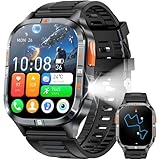
- BUILT-IN GPS & COMPASS– This military smartwatch features high-precision GPS to pinpoint your location while hiking, cycling, or traveling, keeping you safely on track without extra gear. Tap the compass icon and it locks your bearing within three seconds—engineered for pro-level outdoor adventures like camping, climbing, and trekking.
- BLUETOOTH CALLING & MESSAGES – Powered by the latest Bluetooth tech, the men’s smartwatch lets you answer or make calls right from your wrist—no need to pull out your phone. Get real-time alerts for incoming texts and app notifications so you never miss an invite. (Replying to SMS is not supported.)
- BIG SCREEN & DIY VIDEO WATCH FACE – The 2.01" military-spec display is dust-proof, scratch-resistant, and forged from high-strength glass with an aluminum alloy bezel, passing rigorous dust and abrasion tests so the screen stays crystal-clear. Upload a short family video to create a dynamic, one-of-a-kind watch face that keeps your memories alive.
- 24/7 HEALTH MONITORING – Equipped with a high-performance optical sensor, this Android smartwatch tracks heart rate and blood-oxygen levels around the clock. It also auto-detects sleep stages (deep, light, awake) for a complete picture of your health, ensuring you always know how your body is doing.
- MULTI SPORT MODES & FITNESS TRACK – Choose from running, cycling, hiking, basketball, and more to log every workout. Set goals, monitor progress, and sync data to the companion app. Bonus tools include photo gallery, weather, alarm, stopwatch, flashlight, hydration reminder, music/camera remote, find-my-phone, mini-games, and other everyday essentials.
While new metrics introduced on later watches will not retroactively appear, the Fenix 5 does not feel orphaned within Garmin’s ecosystem.
What Still Matters in 2026
In modern terms, the Fenix 5 delivers foundational training intelligence rather than predictive insights. It expects the athlete to interpret data, not outsource judgment to algorithms.
For disciplined endurance athletes who value consistency, physical controls, and robust multisport support, these features remain genuinely useful. The watch’s age shows in what it lacks, not in how well it executes the fundamentals.
Understanding this distinction is key to appreciating what the Fenix 5 still offers today.
Battery Life and Charging: Endurance Watch Standards vs Modern Expectations
If the Fenix 5 feels conservative in its health metrics and training automation, its battery philosophy follows the same pattern. Garmin built this watch around predictable endurance rather than aggressive power-saving tricks or attention-grabbing headline numbers.
That approach made sense in 2017, and it still largely holds up in 2026, provided expectations are framed correctly.
Real-World Battery Life in Daily Training
In smartwatch mode with notifications enabled, daily step tracking, and occasional backlight use, the Fenix 5 typically delivers around 10 to 12 days on a healthy battery. This assumes one to two GPS activities per week rather than daily long sessions.
For runners and cyclists training four to six hours per week with GPS and optical heart rate, real-world battery life usually lands closer to 7 to 9 days. That figure aligns well with what many endurance athletes experienced when the watch was new, assuming the battery has not significantly degraded.
Used units vary here. A well-kept Fenix 5 can still meet these numbers, but heavily used examples may drop a few days, particularly if the optical heart rate sensor is active around the clock.
GPS Endurance for Long Sessions
In full GPS mode with wrist-based heart rate, the Fenix 5 reliably delivers around 20 to 24 hours of continuous tracking. For most marathoners, ultrarunners, long-distance cyclists, and day hikers, this remains more than sufficient.
UltraTrac mode can extend that significantly, but with obvious compromises to track fidelity. In practice, UltraTrac feels best suited for multi-day hikes where route context matters more than pace or distance accuracy.
What’s notably absent by modern standards is multi-band GNSS or dynamic power management. Compared to newer Fenix or Forerunner models, the Fenix 5 trades peak accuracy and efficiency for a simpler, more predictable GPS experience.
Charging Experience and Practical Annoyances
The Fenix 5 uses Garmin’s older proprietary charging cable rather than USB-C or wireless solutions. Charging from empty to full typically takes just under two hours, which is reasonable given the battery capacity.
The cable itself is functional but dated. The clip-style connection can loosen over time, and replacement cables are something most long-term Garmin users end up owning more than once.
There is no fast charging, no solar assist, and no trickle charging during activity. What you get instead is consistency: charge it once a week, and it rarely surprises you mid-session.
Battery Longevity and Aging Considerations
Battery aging is the biggest variable for buyers in 2026. Unlike newer Garmin models with more aggressive efficiency gains, the Fenix 5 relies heavily on its original battery health.
After seven to nine years, most original units will show some degradation, particularly if they were frequently charged from very low levels. Expect reduced smartwatch-mode longevity before GPS endurance becomes a limiting factor.
Garmin does not officially support user-replaceable batteries, but third-party replacements are possible if you’re willing to trade water resistance certainty for extended lifespan. For some users, that calculus makes sense; for others, it does not.
How It Compares to Modern Expectations
By today’s standards, the Fenix 5’s battery life is good rather than exceptional. Newer Fenix, Enduro, and Instinct models last longer, recharge faster, and manage power more intelligently during mixed-use weeks.
However, compared to mainstream smartwatches and many AMOLED-based sports watches, the Fenix 5 still feels refreshingly low-maintenance. You are not planning daily charging around workouts or worrying about overnight drain.
For athletes who value predictable endurance over cutting-edge efficiency, the Fenix 5’s battery behavior remains one of its most quietly satisfying traits, even as the market moves on.
Software, Maps, and Garmin Ecosystem Support in 2026
If battery life defines whether an older multisport watch is usable day to day, software support determines whether it still feels relevant. In 2026, the Garmin Fenix 5 sits firmly in “legacy but functional” territory, and understanding what that actually means requires separating stability from stagnation.
Garmin has long been conservative about feature backporting, and the Fenix 5 is now well past the point of receiving meaningful new capabilities. What it does have, however, remains reliable, predictable, and deeply integrated into Garmin’s still-dominant ecosystem.
Firmware Status and Update Reality
The Fenix 5 is effectively frozen from a firmware perspective. Major updates ended years ago, and any changes since have been limited to bug fixes or backend compatibility adjustments rather than user-facing features.
That sounds worse than it feels in practice. The watch’s core software was already mature by the time updates stopped, and in 2026 it remains stable with very few crashes, freezes, or sync issues.
You should not expect newer Garmin features like Training Readiness, HRV Status, Morning Report, adaptive daily workouts, or improved sleep staging. What you get instead is a clean, no-nonsense interface focused on activities, navigation, and data recording.
User Interface and Daily Navigation
The button-only interface is unchanged and unapologetically utilitarian. Five physical buttons control everything, which remains a strength for cold weather, gloves, rain, and sweaty conditions.
Menus feel slower and more layered than on modern Garmins with faster processors, but muscle memory develops quickly. Once configured, most users rarely dive deep into settings during daily use.
Watch faces and widgets are basic by modern standards, with limited customization and simpler data density. That said, visibility in bright sunlight remains excellent thanks to the transflective display, and there is no performance penalty for always-on visibility.
Mapping Capabilities in a Modern Context
This is where expectations need careful calibration. The standard Fenix 5 does not include onboard maps; only breadcrumb trail navigation and course following are supported.
For runners and cyclists following preloaded GPX routes, this still works well. You get turn alerts, distance to next point, and off-course warnings, but no visual map context or rerouting.
The Fenix 5X was the model that introduced full-color onboard maps, and that distinction matters enormously in 2026. If mapping is central to your use case, the base Fenix 5 feels limited compared to even midrange modern outdoor watches.
Course Navigation and Real-World Use
Despite its limitations, breadcrumb navigation remains surprisingly effective for structured training and known routes. For trail runners, ultra athletes, and bikepackers following planned courses, it gets the job done without draining battery excessively.
Where it struggles is spontaneous exploration. There is no ability to browse points of interest, recalculate routes, or visually interpret terrain on the fly.
In practice, many long-time users pair the Fenix 5 with phone-based mapping apps for planning and discovery, using the watch as a durable, low-power execution tool once the route is set.
Garmin Connect in 2026
Garmin Connect remains one of the strongest reasons the Fenix 5 is still viable. Despite the watch’s age, it syncs cleanly with the current version of the app and web platform.
Activity uploads, training load tracking, VO2 max estimates, recovery time, and historical data all continue to function as expected. Garmin has done a commendable job of ensuring older devices don’t get locked out of the ecosystem.
That said, some newer analytics simply don’t populate for Fenix 5 activities. You’ll see gaps where newer watches show richer context, which can be frustrating if you’re comparing data across devices.
Training Metrics: What Still Works and What Doesn’t
The Fenix 5 still supports foundational performance metrics like VO2 max, training status, training effect, recovery time, and race predictors. These remain useful for endurance athletes who understand their limitations.
What’s missing are the more nuanced readiness and health overlays introduced in later generations. There’s no body battery, no HRV-based trend analysis, and no adaptive training logic that responds dynamically to stress and sleep.
For athletes following structured plans from a coach or external platform, this matters less. For self-coached users relying on the watch to guide decisions, the Fenix 5 feels increasingly blunt.
Connect IQ App Store Longevity
Connect IQ support technically still exists, but this is one of the more visible aging points. Many newer watch faces and apps are no longer optimized for older hardware.
Simple data fields, basic watch faces, and utility apps generally still work fine. More complex apps can feel sluggish or unsupported, and future compatibility is not guaranteed.
In reality, most Fenix 5 owners in 2026 stick to Garmin’s native screens. The watch was never about app experimentation, and leaning into that mindset avoids frustration.
Phone Compatibility and Sync Stability
The Fenix 5 remains compatible with modern Android and iOS devices, including current Bluetooth standards. Sync reliability is generally excellent, with fewer dropouts than some newer watches overloaded with background processes.
Smart notifications are basic but dependable. You can read alerts, dismiss them, and stay informed without turning the watch into a distraction.
There is no voice assistant, no calls, and no rich messaging interaction. For many endurance athletes, that restraint is a feature rather than a flaw.
Garmin Ecosystem Lock-In and Long-Term Value
Perhaps the most important point in 2026 is that Garmin still supports its older hardware at the platform level. Your data history remains intact, your activities count toward long-term trends, and the Fenix 5 doesn’t feel artificially deprecated.
Rank #4

- 【Built-in GPS & Multi-System Positioning】Stay on track with the Tiwain smartwatch’s built-in GPS. Featuring military-grade single-frequency and six-satellite support (GPS, GLONASS, Beidou, Galileo, NAVIC, QZSS), this watch offers fast and accurate location tracking wherever you go. It also includes a compass, altimeter, and barometer, giving you real-time data on your altitude, air pressure, and position.
- 【Military-Grade Durability】Engineered to withstand the toughest conditions, the Tiwain smartwatch meets military standards for extreme temperatures, low pressure, and dust resistance. Crafted from tough zinc alloy with a vacuum-plated finish, this watch is also waterproof and built to resist wear and tear. The 1.43-inch AMOLED HD touchscreen offers clear visibility in all environments, and the watch supports multiple languages for global users.
- 【170+ Sport Modes & Fitness Tracking】Track your fitness journey with 170+ sport modes, including walking, running, cycling, hiking, basketball, and more. Set exercise goals, monitor progress, and sync your data to the companion app. The smartwatch also offers smart features like music control, camera remote, weather updates, long-sitting reminders, and more.
- 【LED Flashlight for Outdoor Adventures】The Tiwain smartwatch comes equipped with a built-in LED flashlight that can illuminate up to 20 meters. Activate it with the side button for added convenience during nighttime activities or outdoor adventures.
- 【Comprehensive Health Monitoring】Monitor your health with real-time heart rate, sleep, blood pressure, and blood oxygen level tracking. The smartwatch will vibrate to alert you of any abnormal readings. You can also make and receive calls directly from the watch, and stay connected with message and app notifications (receive only, no sending capability) – perfect for when you’re driving or exercising.
That continuity adds real value for users already invested in Garmin sensors, bike computers, scales, and training plans. The Fenix 5 slots into that ecosystem without friction.
As a standalone smartwatch, it shows its age. As a durable, focused node in Garmin’s endurance-first ecosystem, it still makes sense, provided you accept its software ceiling and plan your usage accordingly.
Durability, Reliability, and Long-Term Ownership Experience
Longevity is where the Fenix 5 still earns its reputation, and it ties directly into why Garmin’s ecosystem support matters so much for older hardware. This is a watch that was designed to be worn hard, not rotated like a fashion piece or replaced every two years. In 2026, many units are well past their original warranty period yet still functioning as dependable training tools.
Case Construction and Materials Over Time
The Fenix 5’s fiber-reinforced polymer case with stainless steel or DLC-coated steel bezel has proven remarkably resilient. Scratches and scuffs are common, especially on the bezel, but they are cosmetic rather than structural and tend to add a tool-watch patina rather than detract from usability.
The sapphire variants age even better, with glass that often looks nearly untouched after years of trail use, gym sessions, and travel. Standard Gorilla Glass models can pick up micro-scratches, but they rarely impact readability or touch durability since the Fenix 5 relies on physical buttons rather than a touchscreen.
Buttons, Seals, and Water Resistance
Physical buttons are one of the Fenix 5’s biggest long-term advantages. They remain usable with gloves, sweat, and cold fingers, and they avoid the wear patterns that plague early touch-enabled sports watches.
Over time, button stiffness can increase slightly, particularly on watches exposed to salt water or fine dust. Regular rinsing after ocean swims or dusty trail runs significantly extends button life, and most long-term failures reported by owners are linked to neglect rather than design flaws.
The 10 ATM water resistance rating has aged well. Swimming, rain, snow, and repeated submersion rarely cause issues, making the Fenix 5 far more trustworthy than many modern lifestyle-oriented smartwatches that rely on touchscreens and thinner seals.
Battery Degradation and Realistic Expectations
Battery longevity is the most meaningful long-term compromise. After seven to nine years of use, most original batteries show noticeable capacity loss, particularly during GPS-heavy activities.
In practical terms, a well-used Fenix 5 may deliver closer to 8–10 hours of GPS tracking instead of the original 14–24 hours, depending on the variant. For marathon runners, hikers, and daily trainers, this is usually sufficient, but ultrarunners and multi-day adventurers will need to plan charging more carefully.
Garmin does not officially support user-replaceable batteries, but third-party replacements are widely available. A professional battery swap can effectively reset the watch’s usable lifespan, though it should be factored into the true cost of buying used.
Sensor Reliability and Accuracy Over Time
The Fenix 5’s GPS performance remains consistent rather than cutting-edge. It lacks modern multi-band GNSS, but its tracks are generally stable, with predictable drift in dense urban areas or heavy tree cover.
The optical heart rate sensor shows its age most clearly. It works acceptably for steady-state efforts but struggles with intervals, cold weather, and rapid intensity changes. Most serious users pair the watch with a chest strap, which bypasses this limitation entirely and restores accuracy to modern standards.
Barometric altimeter and compass reliability remains strong, provided occasional manual calibration is performed. Long-term users report that sensor drift is more about maintenance habits than component failure.
Straps, Comfort, and Wearability After Years of Use
Comfort has aged better than expected for a watch of this size and weight. The 47 mm case is undeniably chunky by modern standards, but its curved lugs and balanced weight distribution prevent it from feeling top-heavy during long runs or hikes.
Silicone straps tend to be the first component to fail. Cracking, stretching, and loss of elasticity are common after years of sweat and UV exposure, but replacements are inexpensive and widely available due to Garmin’s standard quick-release system.
Once paired with a fresh strap, many older Fenix 5 units feel surprisingly renewed on the wrist. This is one of the small ownership details that makes long-term use feel practical rather than compromised.
Failure Modes and What Typically Goes Wrong
The most common long-term issues are battery degradation, worn straps, and cosmetic bezel damage. Catastrophic failures are rare, and full device deaths usually trace back to water intrusion from damaged seals or poorly executed battery replacements.
Software stability is excellent for a watch of this age. Crashes, freezes, and data corruption are uncommon, largely because the platform is no longer evolving rapidly. In many ways, the Fenix 5 benefits from being “finished” software.
Garmin’s lack of formal repair support for older models is a limitation, but the secondary market has stepped in with parts, tutorials, and service options. Owners willing to treat the watch as a maintainable tool rather than a disposable device are rewarded.
Ownership Value in 2026
As a long-term investment, the Fenix 5 behaves more like a mechanical tool watch than a modern smartwatch. It does not chase features, but it endures, provided expectations are aligned with its generation.
For buyers considering a used or discounted unit, durability remains a strong argument. The key is evaluating battery health, button feel, and sensor functionality before purchase.
The Fenix 5 will not age gracefully for users who want constant feature expansion. For those who value reliability, physical controls, and a watch that keeps working long after the hype cycle moves on, long-term ownership remains one of its strongest assets.
Fenix 5 vs Newer Garmins: Practical Differences You’ll Actually Notice
When comparing the Fenix 5 to newer Garmin models, the gap is less about core capability and more about refinement. The fundamentals that made the Fenix line popular are still present, but newer watches layer convenience, efficiency, and sensor sophistication on top. Whether those differences matter depends heavily on how you actually use the watch, not how spec sheets read.
Display and Interface: Visibility vs Polish
The Fenix 5 uses an older-generation transflective MIP display with lower resolution and smaller data fields compared to current Fenix, Epix, or Forerunner models. In bright sunlight, it remains excellent, but indoors and at dusk it looks noticeably dimmer and more utilitarian.
Newer Garmins offer higher-resolution MIP panels or AMOLED options with smoother animations and clearer mapping detail. The practical difference is readability density rather than accuracy; you will see fewer metrics per screen on the Fenix 5 without scrolling, especially during complex workouts.
Button-only navigation on the Fenix 5 remains a strength for cold, wet, or gloved use. Touchscreens on newer models add convenience for maps and menus, but they do not replace buttons for endurance conditions.
GPS Accuracy and Satellite Handling
The Fenix 5 relies on single-band GPS with optional GLONASS, which was competitive in its era and remains usable today. In open terrain, pace stability and distance accuracy are still solid for road running, cycling, and hiking.
Where newer Garmins pull ahead is in challenging environments. Multi-band GNSS, better antennas, and improved algorithms mean newer models hold tracks more tightly in cities, forests, and steep terrain.
In practice, this shows up as cleaner tracks and fewer pace spikes rather than dramatic distance errors. If your training depends on highly precise pacing in difficult conditions, newer hardware is meaningfully better.
Heart Rate, Health Sensors, and Training Depth
The Fenix 5’s optical heart rate sensor is serviceable but dated. It performs best at steady aerobic efforts and struggles more with intervals, cadence lock, and cold-weather vasoconstriction.
Newer Garmins use significantly improved sensors with better filtering and reliability, especially for wrist-based interval training. For athletes who rely heavily on wrist heart rate without a chest strap, this alone can justify upgrading.
Health tracking is where the generational gap becomes obvious. The Fenix 5 lacks Body Battery, advanced sleep staging, HRV status, training readiness, and morning reports. These are not performance-critical features, but they change how frequently users interact with the watch outside workouts.
Training Metrics: Still Capable, Less Context
Core metrics like VO2 max, training load, recovery time, and race predictors are present on the Fenix 5 and remain useful. Structured workouts, multisport modes, and advanced run dynamics with external sensors still work as intended.
What’s missing is context layering. Newer Garmins combine HRV trends, sleep quality, recent stress, and illness detection to adjust recommendations automatically.
The Fenix 5 presents raw metrics without interpretation. For experienced athletes who self-coach, this is often sufficient. For users who want guidance and adaptive feedback, newer models feel more supportive.
Battery Life and Efficiency
Battery life is one area where the Fenix 5 still holds its own, especially in GPS-only modes. Even with some battery degradation, many units can still manage long runs, all-day hikes, and multi-day tracking with conservative settings.
Newer Garmins improve efficiency through better chipsets and power management rather than drastically larger batteries. Features like solar charging, AMOLED displays, and multi-band GPS can actually reduce battery life if used aggressively.
In real terms, the Fenix 5 feels predictable. You charge it, you use it, and it behaves consistently. Newer watches offer more options, but also more ways to drain the battery faster if you are not careful.
Mapping, Navigation, and Storage
The Fenix 5 introduced onboard mapping to the mainstream Fenix line, but the experience now feels basic. Map redraws are slower, zooming is clunkier, and storage limits restrict regional coverage.
Newer models offer faster processors, smoother panning, and better integration with route-based guidance. Turn prompts are clearer, and elevation profiles are more informative mid-activity.
For occasional navigation, the Fenix 5 still works. For frequent trail exploration or course-based racing, newer Garmins reduce friction enough to matter.
Software Support and Ecosystem Longevity
The Fenix 5 is effectively frozen in time from a software perspective. Bugs are rare, but features will not expand, and Connect IQ app compatibility is increasingly limited.
Newer Garmins benefit from ongoing updates, new metrics, and better third-party support. This matters most if you enjoy experimenting with data fields, apps, or evolving training tools.
That said, the stability of the Fenix 5 is part of its appeal. It does what it does, consistently, without surprises.
Build Quality, Wearability, and Materials
Physically, the Fenix 5 still feels premium. Stainless steel bezels, reinforced polymer cases, and sapphire options hold up well, and dimensions remain wearable by modern standards.
Newer Garmins refine weight distribution, bezel finishing, and strap integration. Titanium and lighter materials improve comfort, especially for 24/7 wear.
On the wrist, the Fenix 5 feels like a serious tool watch. Newer models feel more ergonomic and lifestyle-friendly, but not necessarily tougher.
💰 Best Value

- Smart Watch with GPS and Offline Map: This smart watch connects to multiple satellite systems for accurate real-time positioning, and includes a professional-grade compass, altimeter, and barometer for precise data, ensuring you maintain your sense of direction in any outdoor environment. The map version supports downloading offline maps; select a route or destination to view the route even without a signal, eliminating the risk of getting lost.
- Bluetooth Call & Message Functionality: This smart watches for men allows you to make and receive calls; receive text and social media notifications (Facebook, WhatsApp, Instagram, Twitter, etc.); and reply to text messages with voice-to-text or set up quick replies (text reply functionality is available for Android phones).
- Sports & Health Monitoring: This 5ATM waterproof fitness watch supports over 100 sports modes and tracks daily activity data, calories, distance, steps, and heart rate. You can use it to monitor your health metrics (blood oxygen, heart rate, stress, and sleep), monitor your fatigue and mood, and perform PAI analysis. You can also use this smartwatch to set water intake and sedentary reminders. Stay active and healthy with this fitness tracker watch.
- Customizable Watch Faces & AI Functionality: This smart watch features a 1.46-inch HD touchscreen and over 100 downloadable and customizable watch faces. You can even use your favorite photos as your watch face. Equipped with AI technology, it supports voice descriptions in multiple languages to generate personalized AI watch faces. The watch's AI Q&A and AI translation features provide instant answers to questions and break down language barriers, making it an ideal companion for everyday life and travel.
- Large Battery & High Compatibility & More Features: This smart watch for android phones and ios phone features a large 550ml battery for extended battery life. It's compatible with iOS 9.0 and above and Android 5.0 and above. It offers a wealth of features, including an AI voice assistant, weather display, music control, camera control, calculator, phone finder, alarm, timer, stopwatch, and more. (Package Includes: Smartwatch (with leather strap), spare silicone strap, charging cable, and user manual)
Value Gap: Where the Decision Really Lands
The practical differences between the Fenix 5 and newer Garmins are cumulative rather than transformational. No single feature makes the Fenix 5 obsolete, but each generation reduces friction and adds context.
For buyers focused on core training, durability, and physical controls, the Fenix 5 still delivers the essentials at a fraction of the cost. For those who want richer health insights, smoother navigation, and sensor accuracy without accessories, newer Garmins justify their premium.
Understanding which differences you will actually notice day to day is more important than chasing the newest model.
Who Should Still Buy the Fenix 5 (and Who Shouldn’t)
By this point, the trade-offs should be clear. The Fenix 5 sits in a narrow but still meaningful lane in 2026, defined less by what it once represented and more by how you plan to use it now.
Endurance Athletes Who Prioritize Core Training Over New Metrics
If your training revolves around pace, distance, elevation, heart rate trends, and structured workouts, the Fenix 5 still covers the fundamentals extremely well. GPS accuracy remains solid for running, cycling, and hiking, and the watch handles long activities reliably without battery anxiety.
For triathletes, the multisport mode is stable and predictable, even if transitions and data screens feel dated compared to newer Garmins. You won’t get modern training readiness or recovery scores, but you will get consistent data you can trust week after week.
This is especially true for athletes who already understand their bodies and don’t rely on algorithmic coaching to make decisions.
Button-First Users and Cold-Weather Athletes
The five-button interface remains one of the Fenix 5’s biggest strengths. In rain, snow, gloves, or mud, it is simply more dependable than touch-based systems.
For mountaineers, winter runners, and hikers who operate in harsh conditions, the physical controls and robust casing still feel purpose-built. The stainless steel bezel and thick case construction inspire confidence in environments where lighter watches feel disposable.
It wears like a traditional tool watch, not a fitness accessory, and that matters to some users.
Buyers Entering the Garmin Ecosystem on a Budget
At current used or discounted prices, the Fenix 5 offers access to Garmin’s core ecosystem without the premium cost. You still get Garmin Connect, activity history, training load tracking, external sensor support, and ANT+ compatibility.
For cyclists pairing power meters, runners using chest straps, or hikers relying on breadcrumb navigation, the experience remains functional and familiar. It’s a practical entry point for users who want to learn Garmin’s workflow before committing to a newer flagship.
As long as expectations are aligned, the value proposition is still strong.
Users Who Prefer Stability Over Constant Updates
Some athletes don’t want features changing mid-season. The frozen software state of the Fenix 5 means no surprise UI changes, no shifting metrics, and no new battery-draining background features.
What you set up today will behave the same six months from now. For long-term training plans or event preparation, that predictability can be an advantage rather than a limitation.
This watch rewards routine and familiarity.
Who Should Not Buy the Fenix 5
If you care deeply about health tracking beyond basic heart rate and sleep duration, the Fenix 5 will feel incomplete. There is no pulse oximetry, no body battery, no HRV status, and sleep insights are rudimentary by modern standards.
Athletes who train by recovery metrics or rely on adaptive coaching will miss what newer Garmins provide. Likewise, anyone sensitive to wrist-based heart rate accuracy during intervals will notice the older sensor’s limitations.
Navigation-Heavy and Exploration-Focused Users
For runners and hikers who frequently load routes, follow complex courses, or explore unfamiliar terrain, the navigation experience shows its age. Course guidance works, but it requires more attention and patience than newer devices.
If mapping clarity, climb-focused metrics, and intuitive rerouting matter to you, newer Fenix or Forerunner models reduce friction in ways that add up quickly over long days outdoors.
This is where the generational gap is felt most clearly.
Smartwatch-Oriented Users and Daily Wear Seekers
As a daily smartwatch, the Fenix 5 is utilitarian at best. Notifications are basic, music storage is limited or nonexistent depending on the variant, and Connect IQ support continues to shrink.
The weight and thickness, while acceptable for training, can feel bulky for all-day office wear or sleep tracking. Newer Garmins are thinner, lighter, and more adaptable to mixed-use lifestyles.
If you want one watch to seamlessly blend fitness, health, and everyday convenience, this is not the right generation.
The Used-Market Reality Check
The Fenix 5 only makes sense at the right price and condition. Battery degradation is the biggest risk, so buying from a reputable seller or confirming battery health matters more than cosmetic wear.
Scratches on the bezel are common and largely cosmetic, but screen condition and button responsiveness are critical. At a steep enough discount, the Fenix 5 becomes a compelling training tool; at inflated prices, it quickly loses relevance next to newer midrange Garmins.
Ultimately, this is not a watch you buy to feel current. It’s one you buy because its limitations align with how you actually train and live.
Used Market Pricing, Value for Money, and Final Verdict
All of the trade-offs outlined so far ultimately converge on one question: what does the Fenix 5 cost you today, and what do you realistically get in return in 2026? This is no longer a flagship conversation. It’s a value and longevity assessment.
Current Used Market Pricing in 2026
On the secondhand market, the Fenix 5 family typically lands in a wide but predictable range. Standard Fenix 5 units in good condition often trade around the lower end of the spectrum, while Sapphire and Fenix 5X variants still command a noticeable premium due to materials, screen durability, and mapping support.
Condition matters more than configuration. A well-cared-for standard Fenix 5 with a healthy battery is worth more in practice than a scratched-up Sapphire model with degraded endurance.
Boxes, original charging cables, and a recent battery replacement can meaningfully increase real-world value. Private sales without verification should be discounted heavily to account for battery uncertainty and button wear.
What “Good Value” Actually Looks Like
The Fenix 5 only makes sense when it undercuts modern alternatives by a large margin. At the right price, you are getting a stainless steel or DLC-coated steel case, a fiber-reinforced polymer chassis, a 47 mm presence that still feels purposeful on the wrist, and physical buttons that remain reliable in rain, gloves, and cold.
GPS accuracy for steady-state efforts remains solid. Battery life, when healthy, still supports long trail runs, century rides, and multi-day hiking with disciplined settings.
What you are not buying is software momentum. Feature updates have effectively stopped, Connect IQ support is thinner, and Garmin’s modern training ecosystem has moved well beyond what this hardware can deliver.
Value Compared to Newer Garmin Models
This is where buyers need to be brutally honest with themselves. A discounted Forerunner 255, 265, or even a used Fenix 6 offers dramatically better sensors, clearer mapping, improved GPS chipsets, and far more refined recovery insights.
Those watches feel lighter on the wrist, recover faster after activities, and integrate more smoothly into Garmin’s current platform. Over a two- to three-year ownership window, they often provide better value despite a higher upfront cost.
The Fenix 5 only wins when budget is tightly capped and the core training features are enough. Once prices creep too close to newer models, the value proposition collapses quickly.
Who the Fenix 5 Still Makes Sense For
The Fenix 5 remains a viable option for experienced athletes who understand exactly what they need and what they can ignore. If your training revolves around pace, distance, elevation, and time-on-feet, the fundamentals are still here.
It also suits hikers, ultrarunners, and endurance cyclists who prioritize durability, button-driven control, and predictable battery behavior over cutting-edge analytics. As a secondary watch or a rugged backup, it still performs reliably.
What it does not suit are athletes chasing optimization, recovery metrics, or seamless daily wear. Those users will outgrow it almost immediately.
Long-Term Ownership Considerations
Battery health is the single biggest limiter of future usability. Even a good unit today may only have a few strong years left unless serviced, which is increasingly difficult and rarely cost-effective.
Software stability is not a concern, but stagnation is. What you see now is essentially what you will have for the remainder of ownership.
From a comfort standpoint, the weight and thickness are noticeable compared to modern Garmins. For training sessions it fades into the background, but for sleep tracking or all-day wear, it feels like a tool rather than an accessory.
Final Verdict
The Garmin Fenix 5 is no longer a smart buy by default, but it can still be a smart buy with intention. At the right used price, in good condition, it remains a durable, dependable multisport watch that covers the fundamentals exceptionally well.
It is best viewed as a purpose-built training instrument, not a lifestyle smartwatch and not a platform for future features. If you accept its age, understand its limitations, and secure it at a meaningful discount, it can still serve you faithfully for years.
For most buyers, though, the market has moved on. The Fenix 5 earns its place today not through innovation, but through honesty, toughness, and the kind of reliability that only reveals itself after thousands of hard-earned miles.