The Garmin Fenix 5S sits in an unusual but still meaningful place in Garmin’s ecosystem: it is old enough to be deeply discounted, yet robust and capable enough that many athletes still rely on it daily. If you are searching for a compact, premium-feeling multisport GPS watch rather than the latest AMOLED showpiece, the 5S remains a reference point for what Garmin’s high-end outdoor watches used to prioritize. Understanding where it fits today is less about specs on paper and more about how Garmin’s priorities have shifted since its release.
When the Fenix 5 series launched, it represented Garmin’s clearest statement that one watch could credibly serve trail runners, triathletes, hikers, and everyday users without compromise. The 5S was especially important because it brought the full Fenix experience into a smaller, lighter case that didn’t overwhelm slimmer wrists. That positioning still matters today, particularly for users who find newer Fenix and Epix models physically or financially excessive.
This section explains how the Fenix 5S compares to modern Garmin lines, what it gives up versus newer models, and why it still appeals to a specific type of buyer in 2026.
Where the Fenix 5S Originally Sat
The Fenix 5S was the smallest and lightest member of the Fenix 5 family, with a 42 mm case, stainless steel bezel, and a 1.1-inch transflective MIP display. It was designed for serious training and outdoor navigation without the bulk that defined earlier Fenix generations. At the time, it competed directly with watches like the Suunto Spartan Sport Wrist HR and Polar V800, while offering broader multisport depth.
🏆 #1 Best Overall

- Stylish Design, Vibrant Display: The lightweight aluminum build blends effortless style with workout durability, while the vivid 1.97" AMOLED display keeps your data easy to read, even under bright sunlight.
- All-in-One Activity Tracking: The Amazfit Bip 6 fitness tracker watch offers 140+ workout modes including HYROX Race and Strength Training, plus personalized AI coaching and 50m water resistance.
- Up to 14 Days Battery Life: The Amazfit Bip 6 smart watch powers through your training and recovery for up to two weeks at a time - no nightly charging needed.
- Accurate GPS Tracking & Navigation: Stay on course with free downloadable maps and turn-by-turn directions. Support from 5 satellite systems ensures precise tracking of every move and fast GPS connection.
- 24/7 Health Monitoring: The Amazfit Bip 6 smartwatch provides precise, real-time monitoring of heart rate, sleep, blood-oxygen and stress, empowering you with actionable insights to optimize your health and fitness.
Unlike Garmin’s Forerunner line, which focused on performance-first plastics, the 5S leaned heavily into durability and premium materials. Sapphire glass options, a reinforced polymer case, and a solid metal bezel gave it a tool-watch feel that appealed to users who wanted one device for training, travel, and everyday wear. This design philosophy still defines the Fenix name today.
How It Compares to Modern Fenix and Epix Models
Compared to the Fenix 6, Fenix 7, and Epix Gen 2, the Fenix 5S is clearly behind in raw capability. You miss out on multi-band GNSS, solar charging, touchscreen navigation, advanced training readiness metrics, and vastly improved heart rate sensors. Battery life is also shorter, particularly in GPS mode, reflecting the efficiency gains Garmin has made over the years.
What you gain, however, is simplicity and size. The 5S is noticeably slimmer and lighter than modern Fenix watches, especially the Fenix 7S Solar, and far less top-heavy than the Epix with its AMOLED panel. For users who prioritize comfort during long runs, sleep tracking, or all-day wear, this difference is not trivial.
Positioning Against Forerunner, Instinct, and Venu
Within Garmin’s current lineup, the Fenix 5S sits somewhere between older Forerunner flagships and the rugged Instinct line. It offers far more outdoor navigation, mapping support, and multisport depth than Instinct models, while feeling more durable and premium than Forerunner watches from the same era. Even today, it feels like a true “do everything” watch rather than a single-sport specialist.
Against Venu or Venu Sq models, the contrast is even sharper. The 5S lacks AMOLED visuals and smartwatch polish, but it delivers vastly superior training tools, button-based reliability, and outdoor usability. If your priority is fitness depth over lifestyle features, the Fenix 5S remains clearly differentiated.
Software Support and Ecosystem Reality
Garmin has largely moved on from the Fenix 5 series in terms of major feature updates. You still receive stability improvements, GPS updates, and full Garmin Connect compatibility, but newer training metrics and UI refinements are locked to later hardware. That said, the core experience remains intact and reliable.
Importantly, Garmin Connect itself continues to evolve in ways that benefit older watches. Activity analysis, long-term training load trends, and third-party integrations still work seamlessly, ensuring the 5S does not feel abandoned in daily use.
Who the Fenix 5S Still Makes Sense For
Today, the Fenix 5S is best viewed as a value-driven entry into Garmin’s premium outdoor category rather than a cutting-edge flagship. It suits experienced athletes who understand their training needs, want physical buttons, dependable GPS, and a compact case, and are willing to trade modern polish for durability and price.
If you want the latest health metrics, AMOLED visuals, or smartwatch-first features, Garmin’s newer models or Apple’s ecosystem will serve you better. But if your goal is a smaller, serious multisport tool with proven reliability and strong real-world wearability, the Fenix 5S still holds a distinct and defensible position in Garmin’s lineup.
Design, Case Dimensions, and Wearability: A True Compact Fenix
Understanding who the Fenix 5S is for starts with its physical design. After discussing where it still fits in Garmin’s ecosystem, the watch’s compact proportions and traditional Fenix construction explain why it continues to attract a specific, loyal audience even years later.
This is not a downsized lifestyle watch pretending to be rugged. It is a full-featured Fenix, deliberately engineered to fit smaller wrists without diluting the platform’s core durability or outdoor credibility.
Case Size, Thickness, and On-Wrist Presence
The Fenix 5S uses a 42 mm case diameter, which at launch made it one of the very few truly compact multisport GPS watches with full navigation support. In an era dominated by 47 mm and 51 mm tool-watch proportions, this size remains its defining advantage.
Thickness sits just under 15 mm, which is still chunky by everyday watch standards but reasonable for a steel-bezel outdoor GPS watch with a transflective display. On wrists under roughly 17 cm, it wears planted and purposeful rather than oversized or top-heavy.
The lug-to-lug length is short enough that the case rarely overhangs, even on narrow wrists. This contributes significantly to long-session comfort during runs, hikes, and sleep tracking.
Materials, Bezel Options, and Durability
Garmin offered the Fenix 5S in stainless steel, DLC-coated steel, and sapphire variants, depending on configuration. The steel bezel gives it a genuine tool-watch feel, closer to traditional sports watches than most plastic-bodied fitness devices.
The bezel finishing is clean rather than decorative, with engraved markings that age well and resist wear. After years of use, minor scuffs tend to look earned rather than ugly, which suits the watch’s utilitarian character.
Sapphire models dramatically improve scratch resistance for users who spend time scrambling on rock or navigating dense trail environments. The trade-off is slightly reduced display contrast, though in real-world outdoor use the difference is modest.
Display Size and Readability Trade-Offs
The 5S uses a 1.1-inch, 218 x 218 transflective memory-in-pixel display. By modern standards, the resolution and screen size feel restrained, especially compared to newer AMOLED Garmins or Apple Watch models.
In bright outdoor conditions, however, the display remains highly legible with minimal backlight use. For navigation screens, data fields, and breadcrumb tracks, clarity matters more than visual flair, and the 5S still performs well here.
The smaller screen does mean denser data layouts during workouts. Users accustomed to larger Fenix or Epix displays may need to simplify data pages to maintain glanceable readability at speed.
Buttons, Controls, and Cold-Weather Usability
Like all Fenix models of its generation, the 5S relies exclusively on a five-button layout. There is no touchscreen, which today feels dated to some users but remains a major advantage in wet, cold, or gloved conditions.
Button travel is firm and consistent, even after long-term use. During trail runs, ski tours, or rain-heavy hikes, physical controls prove far more reliable than touch-based interfaces.
The compact case does not compromise button spacing. Accidental presses are rare, and the watch remains easy to operate mid-activity without breaking stride.
Weight Distribution and Long-Term Comfort
Weight varies by version, but the standard stainless steel Fenix 5S comes in around 67 grams with strap. That is not light compared to modern polymer Forerunners, but the mass is well balanced.
The watch sits low enough on the wrist to avoid excessive movement during running, especially when paired with the included silicone strap. For multi-hour activities, pressure points are minimal as long as strap tension is properly set.
For daily wear and sleep tracking, the 5S is noticeably more comfortable than larger Fenix variants. This is where its compact design continues to pay dividends over time.
Strap System and Wearing Versatility
The Fenix 5S uses Garmin’s QuickFit 20 mm strap system, making strap changes fast and secure. Silicone straps handle sweat and water exposure well, while leather or nylon options make the watch easier to wear in casual or office settings.
Because of the smaller case, third-party straps tend to look proportionate rather than oversized. This makes the 5S one of the few serious multisport watches that can convincingly pass as an everyday watch with the right strap choice.
While it will never disappear under a shirt cuff, it feels far less intrusive than larger adventure watches, reinforcing its role as a true all-day, all-activity device.
Design Perspective in Today’s Market
Placed alongside newer Fenix 7S or Epix Pro models, the Fenix 5S looks more utilitarian and less refined. Bezel thickness, screen-to-case ratio, and overall visual polish have all improved in later generations.
That said, the core design has aged better than many competitors from the same era. There are no unnecessary curves, glossy accents, or fashion-driven elements that now feel dated.
For users prioritizing compact size, physical controls, and a traditional outdoor watch aesthetic, the Fenix 5S remains one of the most thoughtfully proportioned GPS multisport watches Garmin has ever produced.
Display, Interface, and Everyday Usability
Display Technology and Readability
The Fenix 5S uses a transflective memory-in-pixel display, measuring 1.1 inches with a 218 x 218 resolution. By modern AMOLED standards it looks subdued, but in outdoor use this screen type remains exceptionally practical.
In direct sunlight, visibility is excellent without needing aggressive backlight levels. For trail runs, cycling, or hiking at midday, the screen becomes clearer rather than washing out, which is something OLED-based watches still struggle to match.
Indoors or at night, the backlight does its job without excessive glow. It is evenly lit, configurable by activity, and predictable, which matters more than visual drama when you are checking pace splits or navigation prompts mid-session.
Sapphire vs Standard Glass Considerations
Depending on the variant, the Fenix 5S was offered with either chemically strengthened glass or sapphire crystal. Sapphire dramatically improves scratch resistance and suits the watch’s tool-oriented personality, especially for users wearing it daily.
The trade-off is slightly reduced contrast, particularly in low light. In practice, this only becomes noticeable side-by-side with the standard lens, and it rarely affects usability during workouts or navigation.
For buyers considering used or refurbished units today, sapphire-equipped models tend to age better cosmetically. If long-term durability matters more than marginal clarity, sapphire remains the safer choice.
Button-Based Interface and Control Logic
The Fenix 5S relies entirely on a five-button layout, with no touchscreen support. While this feels dated compared to newer Garmins or Apple Watches, it remains superior in wet, cold, or gloved conditions.
Menu navigation is consistent and logical once learned, with dedicated buttons for back, up, down, start, and light. Muscle memory develops quickly, making it easy to operate mid-run or during a climb without looking at the watch.
Compared to newer Garmin interfaces, animations are simpler and transitions slower. However, the reliability of physical input often outweighs speed or visual polish for serious outdoor use.
Menus, Widgets, and Daily Navigation
The widget-based system provides quick access to steps, heart rate, weather, calendar, training status, and body metrics. Scrolling is linear rather than swipe-driven, which can feel slower but avoids accidental inputs.
Customization depth is still strong, allowing users to reorder widgets, configure data screens, and tailor alerts. For a watch of its age, the level of control remains impressive and functionally complete.
Garmin’s older menu structure is denser than what newer models offer, requiring more button presses to reach certain settings. Once set up, however, most users rarely need to revisit deeper menus.
Everyday Smartwatch Features
Smart notifications for calls, texts, and app alerts are supported on both Android and iOS, though interaction is limited. Android users can send canned responses, while iOS users are restricted to viewing notifications only.
Rank #2

- Stylish Design, Bright Display: The sleek stainless steel build blends classic style with workout durability, while the bright 1.32" AMOLED display keeps your data easy to read, even under bright sunlight.
- Precise Heart Rate and Sleep Tracking: Amazfit's BioTracker technology tracks your heart rate and sleep data with accuracy that previous sensors just can't match.
- Up to 10 Days of Battery Life: With long battery life that lasts up to 10 days with typical use, nightly recharges are a thing of the past.
- Free Maps with Turn Directions: Stay on-track with free downloadable maps, and get turn-by-turn guidance on-screen or via your Bluetooth headphones. Enjoy ski maps for global resorts, including guidance for cable cars, slopes, and more.
- Faster and More Accurate GPS Tracking: 5 satellite positioning systems ensure fast GPS connection and accurate positioning whenever you're out running, walking, cycling or hiking.
There is no onboard music storage, Garmin Pay, or voice assistant support. These omissions are more noticeable today, especially for users coming from newer Fenix or Venu models.
As a daily smartwatch, the 5S prioritizes function over convenience. It works best for users who value fitness and outdoor capability first, with notifications acting as a secondary benefit rather than a core feature.
Maps, Navigation, and On-Screen Guidance
Unlike the larger Fenix 5X, the 5S does not include full onboard mapping. Navigation is limited to breadcrumb trails, course following, and directional prompts.
For structured routes and basic navigation, this is still effective, particularly on known trails or during races. The small screen size means zooming and panning would have been compromised even with maps, making Garmin’s omission understandable.
For users who rely heavily on cartographic detail, this remains one of the clearest functional limitations of the 5S in today’s context.
Battery Impact on Daily Usability
The low-power display plays a major role in the watch’s endurance. Even with notifications enabled and regular activity tracking, multi-day battery life remains realistic.
Screen-on time is minimal compared to touchscreen watches, which helps preserve battery during long GPS sessions. This reinforces the Fenix 5S’s identity as a watch designed to be worn continuously rather than charged daily.
In everyday use, the display and interface choices directly support reliability and longevity rather than visual appeal. That philosophy remains consistent throughout the watch’s user experience.
Sports, Fitness, and Training Features: Still a Multisport Powerhouse?
After living with the Fenix 5S as a daily watch and navigation tool, its core identity becomes clear the moment you start logging activities. This is where Garmin’s priorities have always been strongest, and despite its age, the 5S still feels purpose-built for serious training rather than casual activity tracking.
What follows is less about flashy features and more about whether the fundamentals still hold up against modern expectations.
Multisport Depth and Activity Profiles
The Fenix 5S supports an impressively broad range of activity profiles, including running, trail running, cycling, swimming (pool and open water), triathlon, hiking, climbing, rowing, skiing, snowboarding, and strength training. For a compact watch, the breadth rivals even many current mid-tier Garmin models.
Triathletes in particular benefit from true multisport mode, allowing seamless transitions between swim, bike, and run with a single button press. The experience is straightforward, reliable, and free from the lag or missed transitions that can plague touchscreen-based competitors.
Custom activity profiles remain one of Garmin’s quiet strengths. You can tailor data screens, alerts, auto-lap behavior, and sensor pairings per sport, which makes the watch adaptable across very different training disciplines without feeling cluttered.
Training Metrics and Performance Analytics
The Fenix 5S introduced many of Garmin’s now-familiar performance metrics, and most still remain relevant today. VO2 max estimates, training status, training load, recovery time, race predictor, and aerobic/anaerobic training effect are all present.
While newer Garmin watches refine these metrics with more context and cleaner visualizations, the underlying data quality on the 5S remains strong. For runners and cyclists who train with intent, the watch still provides actionable feedback rather than vague wellness scores.
One limitation is the absence of newer metrics like Body Battery, HRV Status, Training Readiness, or acute load focus. Their absence doesn’t break the training experience, but it does mean the 5S feels more performance-centric and less lifestyle-oriented compared to current Garmin offerings.
Heart Rate Accuracy and Sensor Support
The Elevate optical heart rate sensor used in the Fenix 5S is several generations old, and that shows most clearly during high-intensity intervals or rapid pace changes. For steady-state efforts, hiking, or long aerobic runs, accuracy remains generally reliable.
For structured training, pairing an external chest strap dramatically improves data quality. The watch supports ANT+ heart rate monitors, cycling power meters, cadence sensors, speed sensors, and foot pods, reinforcing its role as a serious training tool rather than a self-contained fitness tracker.
Cyclists will appreciate native power support, FTP tracking, and compatibility with smart trainers, even if the on-watch analytics lack the polish of Garmin’s newer Edge cycling computers or modern Fenix models.
GPS Performance and Outdoor Tracking
GPS accuracy is one of the Fenix 5S’s enduring strengths. The watch uses GPS and GLONASS, delivering consistent tracks in open terrain and acceptable performance under tree cover or around buildings.
Compared to modern multi-band GNSS watches, the 5S can struggle slightly in dense urban environments or narrow valleys. That said, for trail running, hiking, and endurance events, its track fidelity remains more than sufficient for pacing, distance accuracy, and post-activity analysis.
Elevation data comes from a barometric altimeter, which is still preferable to GPS-only elevation for outdoor sports. When properly calibrated, ascent and descent figures are reliable enough for mountain training and long hikes.
Strength Training and Indoor Workouts
Strength training support on the Fenix 5S is functional but basic by today’s standards. The watch can count reps, identify exercises, and track rest time, but accuracy varies and editing sets post-workout is often necessary.
Indoor workouts like treadmill running, indoor cycling, and rowing are supported, with manual calibration options to improve distance accuracy over time. These modes are practical rather than polished, reinforcing that the watch is optimized for outdoor and endurance-focused athletes first.
There is no guided strength or adaptive workout library built into the watch itself. Structured workouts can be created in Garmin Connect and synced over, but the experience feels utilitarian rather than motivational.
Durability Under Training Load
The Fenix 5S’s stainless steel or sapphire construction contributes directly to its reliability during heavy training blocks. Sweat, rain, saltwater swims, and repeated button presses over long sessions never feel like they push the watch beyond its comfort zone.
At 42mm, the case sits securely on smaller wrists, which helps maintain optical heart rate contact during movement. For runners with narrow wrists, this alone can make the 5S more consistent than larger, heavier Fenix models.
The 100-meter water resistance rating supports pool training, open water swims, and triathlon use without concern, aligning with Garmin’s reputation for overbuilt sports hardware.
Battery Life During Training Weeks
Battery performance ties directly into the training experience. In GPS mode, the Fenix 5S delivers roughly 10 to 13 hours depending on settings, which is enough for marathons, long trail runs, and most day-long hikes.
During a typical training week with multiple GPS sessions, the watch can still last several days between charges. This reduces friction compared to watches that demand near-daily charging, especially during high-volume periods.
Ultra-endurance athletes and multi-day adventurers will find the battery limiting compared to larger Fenix models or newer Enduro-style watches. For most users, however, the trade-off for a smaller case is reasonable and predictable.
How It Stacks Up Today
Viewed in isolation, the Fenix 5S remains a highly capable multisport watch with a clear performance-first mindset. What it lacks in modern wellness features, AMOLED displays, or smart conveniences, it compensates for with depth, durability, and consistency.
Against newer Garmin models, the gap is more about refinement than raw capability. Compared to many Apple, Polar, or Suunto watches in the same used or discounted price range, the 5S still stands out for multisport flexibility and outdoor reliability.
For athletes who value training data, sensor support, and a compact yet rugged build, the Fenix 5S continues to justify its reputation as a serious tool rather than a lifestyle accessory.
GPS, Sensors, and Real‑World Accuracy in 2026
After battery life and physical durability, positioning accuracy is where the age of the Fenix 5S becomes most apparent, but also where its core strengths still show through. Even in 2026, the watch remains fundamentally reliable for training, navigation, and structured outdoor use, provided expectations are set correctly.
This is not a modern multi-band, dual-frequency GPS watch, and it does not pretend to be one. Instead, it relies on a mature single-band GPS engine backed by solid firmware tuning and strong sensor fusion.
Satellite Systems and GPS Performance
The Fenix 5S supports GPS and GLONASS, with Galileo added via firmware updates later in its lifecycle. In practice, GPS+GLONASS remains the most stable configuration, especially in mixed terrain.
Lock-on times in 2026 are still respectable, typically 20 to 40 seconds with a clear view of the sky. Cold starts are slower than on newer Garmins with multi-band chips, but not meaningfully disruptive for most training sessions.
In open environments such as roads, tracks, and rolling trails, distance accuracy remains very consistent. Recorded tracks generally align well with mapped paths, with minimal drift over long runs or rides.
Urban, Forest, and Mountain Accuracy
In urban canyons and dense forest, the limitations of single-band GPS become more visible. Track smoothing can clip corners or slightly widen switchbacks, especially when compared directly to modern Fenix 7 or Epix models using dual-frequency GNSS.
That said, the Fenix 5S performs better than many older or mid-range watches from the same era. Garmin’s filtering prioritizes consistency over hyper-reactive point plotting, which keeps pace and distance data usable even when positional fidelity dips.
For mountain hiking and trail running, elevation gain and route shape remain dependable as long as GPS reception is not completely compromised. It is still a trustworthy navigation tool for marked routes, breadcrumb trails, and course following.
Open Water Swimming and Multisport Transitions
Open water swim tracking is functional but clearly dated by 2026 standards. GPS tracks can wander during longer swims, particularly in choppy water or when sighting frequently.
Distance accuracy is acceptable for recreational and training use but may frustrate competitive triathletes who expect near-perfect swim files. Newer Garmin models with refined swim algorithms and improved antenna design do noticeably better here.
Multisport transitions, however, remain smooth and reliable. The watch still handles triathlon mode cleanly, with consistent timing and sensor handoffs between swim, bike, and run.
Rank #3
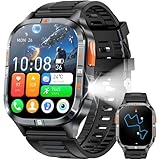
- BUILT-IN GPS & COMPASS– This military smartwatch features high-precision GPS to pinpoint your location while hiking, cycling, or traveling, keeping you safely on track without extra gear. Tap the compass icon and it locks your bearing within three seconds—engineered for pro-level outdoor adventures like camping, climbing, and trekking.
- BLUETOOTH CALLING & MESSAGES – Powered by the latest Bluetooth tech, the men’s smartwatch lets you answer or make calls right from your wrist—no need to pull out your phone. Get real-time alerts for incoming texts and app notifications so you never miss an invite. (Replying to SMS is not supported.)
- BIG SCREEN & DIY VIDEO WATCH FACE – The 2.01" military-spec display is dust-proof, scratch-resistant, and forged from high-strength glass with an aluminum alloy bezel, passing rigorous dust and abrasion tests so the screen stays crystal-clear. Upload a short family video to create a dynamic, one-of-a-kind watch face that keeps your memories alive.
- 24/7 HEALTH MONITORING – Equipped with a high-performance optical sensor, this Android smartwatch tracks heart rate and blood-oxygen levels around the clock. It also auto-detects sleep stages (deep, light, awake) for a complete picture of your health, ensuring you always know how your body is doing.
- MULTI SPORT MODES & FITNESS TRACK – Choose from running, cycling, hiking, basketball, and more to log every workout. Set goals, monitor progress, and sync data to the companion app. Bonus tools include photo gallery, weather, alarm, stopwatch, flashlight, hydration reminder, music/camera remote, find-my-phone, mini-games, and other everyday essentials.
Optical Heart Rate and External Sensor Support
The Fenix 5S uses Garmin’s Elevate optical heart rate sensor from an earlier generation. On smaller wrists, where the watch sits securely, it can still deliver surprisingly stable heart rate data during steady-state running and cycling.
High-intensity intervals, hill repeats, and cold-weather training expose its limitations. Spikes, lag, and occasional dropouts are more common than on modern sensors, especially during rapid effort changes.
Pairing a chest strap remains the best solution, and the 5S supports ANT+ heart rate monitors, cycling power meters, speed and cadence sensors, and running dynamics pods. With external sensors, data quality is still excellent by today’s standards.
Barometric Altimeter, Compass, and Environmental Sensors
Altitude tracking remains one of the Fenix 5S’s quiet strengths. The barometric altimeter delivers consistent elevation gain and loss data, particularly on long hikes and mountain runs.
Manual calibration improves accuracy, especially when starting from known trailheads or sea level. Automatic calibration works well but can drift slightly during fast-moving weather systems.
The three-axis compass and gyroscope remain reliable for navigation tasks, route following, and backtracking. Temperature readings, as with most wrist-based sensors, are heavily influenced by body heat and are best viewed as trend indicators rather than absolute values.
Sensor Fusion and Training Data Reliability
What keeps the Fenix 5S relevant is how well Garmin integrates its sensors into usable training metrics. Pace, distance, elevation, and effort trends remain internally consistent, which matters more than perfect point-by-point accuracy for long-term training analysis.
VO2 max estimates, training load, and recovery metrics are stable when external heart rate sensors are used. Without them, optical heart rate variability can introduce noise, particularly for advanced athletes tracking marginal gains.
In 2026, the Fenix 5S still produces data you can trust for structured training blocks, performance tracking, and outdoor navigation. It does not match the precision of Garmin’s latest hardware, but it remains far from obsolete in real-world use.
Battery Life and Charging: What to Expect from an Aging Fenix
All of the sensor consistency and training reliability discussed above ultimately depend on one thing: whether the Fenix 5S can stay powered long enough to support your routine. Battery life was a key selling point when this watch launched, but age and usage patterns now play a much larger role than the original spec sheet suggests.
Original Battery Ratings vs Real-World Use in 2026
When new, the Fenix 5S was rated for up to 9 days in smartwatch mode, roughly 14 hours of GPS tracking, and up to 35 hours in UltraTrac. Those numbers were always conservative estimates, assuming minimal backlight use and limited notifications.
In real-world use today, a well-kept unit typically delivers 4 to 6 days of smartwatch use with daily activity tracking and notifications enabled. Add three to five GPS workouts per week, and most users will be charging every 3 to 4 days.
GPS-only activities usually land between 8 and 11 hours depending on satellite conditions, temperature, and sensor load. Cold weather, wrist-based heart rate, GLONASS, and frequent backlight activation all shorten that window noticeably.
Battery Degradation Is the Defining Variable
The single biggest wildcard with the Fenix 5S in 2026 is battery health. Units that have seen years of daily charging cycles can lose 20 to 40 percent of their original capacity, sometimes more.
You may notice faster percentage drops after workouts, uneven battery reporting, or sharper declines below 20 percent. These are normal signs of lithium-ion aging rather than software bugs.
Garmin does not officially support user-replaceable batteries, and professional replacement is rarely cost-effective given the watch’s current market value. Buyers should factor battery condition heavily when shopping used or refurbished.
GPS Efficiency Compared to Modern Garmins
Even at its best, the Fenix 5S is less efficient than newer Garmin models. It lacks modern low-power GNSS chipsets, multi-band GPS, and adaptive sampling optimizations found in watches like the Fenix 7S or Forerunner 265.
That means longer activities draw proportionally more power, especially trail runs and hikes with frequent elevation changes. Navigation with maps, constant compass use, and route recalculations further increase drain.
For marathon training, daily runs, or multi-hour hikes, battery life remains workable. For ultra-distance events, multi-day trekking, or long cycling adventures, newer models are dramatically better suited.
Charging Experience: Functional but Dated
Charging is handled via Garmin’s older proprietary clip, not USB-C or wireless charging. Alignment is secure but fiddly, and the cable is easy to misplace if you travel often.
A full charge typically takes between 90 minutes and two hours depending on battery health. Charging speeds are slower than modern Garmins, and there is no fast-charge capability for last-minute top-ups.
The upside is reliability. The charging contacts are durable, corrosion-resistant, and less failure-prone than some early-generation magnetic docks.
Power Management and Practical Tips
The Fenix 5S still offers solid power controls if you’re willing to manage them. Reducing backlight brightness, shortening timeout duration, disabling Pulse Ox-style features it never had, and limiting smartphone notifications all extend battery life meaningfully.
Using GPS-only instead of GPS plus GLONASS can add an extra hour or two to long activities. External heart rate straps also reduce wrist sensor load slightly during workouts.
These optimizations won’t turn the Fenix 5S into a modern endurance monster, but they can make the difference between finishing a long session comfortably or watching the battery dip into red territory mid-activity.
How It Stacks Up Against Today’s Alternatives
Compared to current Garmin models, battery life is the Fenix 5S’s most obvious weakness. Even Garmin’s midrange Forerunner watches now outperform it in both smartwatch and GPS endurance.
Against Apple Watch models, however, the Fenix 5S still holds an advantage for multi-day use and outdoor GPS tracking. Apple’s ecosystem is more polished, but daily charging remains unavoidable.
Suunto and Polar watches from the same era perform similarly, but newer versions from both brands also surpass the Fenix 5S in efficiency. In short, the battery is acceptable, predictable, and manageable, but it is no longer competitive at the premium level.
For buyers considering the Fenix 5S today, battery life should be viewed as sufficient rather than impressive. It supports structured training and outdoor use reliably, but it demands more planning and more frequent charging than modern alternatives.
Outdoor Navigation and Adventure Tools: Mapping, Routing, and Reliability
With battery expectations set realistically, the Fenix 5S’s outdoor navigation tools are where its long-term value still becomes clear. This is a watch built before touchscreens and AMOLED displays reshaped expectations, and it relies on proven fundamentals rather than visual flair.
For hikers, trail runners, mountaineers, and backcountry travelers who value dependability over polish, the Fenix 5S remains a capable navigation companion when used within its design limits.
GPS Accuracy and Satellite Performance
The Fenix 5S uses a single-frequency GPS chipset with optional GLONASS support, typical of high-end outdoor watches from its generation. In open terrain, track accuracy remains strong, with clean lines and minimal wandering during steady movement.
In forests, canyons, and urban edges, accuracy is slightly less refined than modern multi-band Garmins, but still reliable enough for navigation and activity analysis. Track smoothing is conservative, which helps preserve realistic distance and elevation profiles on longer outings.
Cold starts are slower than newer watches, especially after long periods without use, but once locked, signal stability is dependable. For most outdoor users, the limitation is precision at the margins rather than outright failure.
Mapping: Breadcrumbs, Not Full Cartography
It’s important to be clear about expectations: the Fenix 5S does not support full onboard topographic maps. Navigation is breadcrumb-based, displaying tracks, routes, and waypoints over a simple line-and-arrow interface.
For following GPX routes on trails, ski tours, or ultraruns, this is often sufficient. The high-contrast transflective display remains readable in direct sunlight, and the physical buttons make zooming and panning usable even with gloves.
Compared to newer Fenix models with full-color mapping, POI search, and turn previews, the experience feels basic. However, it is also fast, stable, and rarely confusing in the field.
Course Following, Routing, and Waypoints
Course navigation is one of the Fenix 5S’s enduring strengths. Preloaded routes sync reliably from Garmin Connect, and the watch provides clear off-course alerts and distance-to-next metrics.
Waypoints can be marked manually during an activity, which is useful for water sources, camps, or key trail junctions. TracBack routing works well for retracing paths, though it lacks the intelligence and rerouting logic found on newer devices.
There is no dynamic on-watch route creation, and recalculation is minimal. This watch expects planning to happen before you head out, not improvisation once you’re deep in the backcountry.
Altitude, Barometer, and Compass Reliability
The Fenix 5S includes Garmin’s ABC sensor suite: altimeter, barometer, and compass. Elevation data is generally accurate when auto-calibration is enabled, especially for long mountain days where GPS-only altitude would drift.
The barometer supports storm alerts, which can still be genuinely useful during multi-hour outings in variable conditions. Compass accuracy is solid once calibrated, and the button-based interface avoids accidental misinputs that plague touch-driven designs.
These sensors contribute to the watch’s reputation for trustworthiness. When conditions worsen or visibility drops, the data remains consistent rather than flashy.
Durability in Real Outdoor Use
Physically, the Fenix 5S is built for punishment despite its smaller case. The stainless steel bezel protects the display edges well, and the recessed screen design reduces the risk of direct impacts.
Button feel remains crisp even after years of dust, sweat, and cold exposure, which is a meaningful advantage over touch-focused competitors. Water resistance is reliable for rain, snow, and shallow immersion, though it lacks the depth ratings of dedicated dive watches.
Rank #4

- 【Built-in GPS & Multi-System Positioning】Stay on track with the Tiwain smartwatch’s built-in GPS. Featuring military-grade single-frequency and six-satellite support (GPS, GLONASS, Beidou, Galileo, NAVIC, QZSS), this watch offers fast and accurate location tracking wherever you go. It also includes a compass, altimeter, and barometer, giving you real-time data on your altitude, air pressure, and position.
- 【Military-Grade Durability】Engineered to withstand the toughest conditions, the Tiwain smartwatch meets military standards for extreme temperatures, low pressure, and dust resistance. Crafted from tough zinc alloy with a vacuum-plated finish, this watch is also waterproof and built to resist wear and tear. The 1.43-inch AMOLED HD touchscreen offers clear visibility in all environments, and the watch supports multiple languages for global users.
- 【170+ Sport Modes & Fitness Tracking】Track your fitness journey with 170+ sport modes, including walking, running, cycling, hiking, basketball, and more. Set exercise goals, monitor progress, and sync your data to the companion app. The smartwatch also offers smart features like music control, camera remote, weather updates, long-sitting reminders, and more.
- 【LED Flashlight for Outdoor Adventures】The Tiwain smartwatch comes equipped with a built-in LED flashlight that can illuminate up to 20 meters. Activate it with the side button for added convenience during nighttime activities or outdoor adventures.
- 【Comprehensive Health Monitoring】Monitor your health with real-time heart rate, sleep, blood pressure, and blood oxygen level tracking. The smartwatch will vibrate to alert you of any abnormal readings. You can also make and receive calls directly from the watch, and stay connected with message and app notifications (receive only, no sending capability) – perfect for when you’re driving or exercising.
In extended outdoor use, reliability matters more than novelty. The Fenix 5S earns trust by behaving predictably day after day.
How It Compares to Modern Outdoor Watches
Against newer Garmin Fenix and Epix models, the 5S clearly lacks mapping depth, GNSS sophistication, and visual clarity. Multi-band GPS, solar charging, and real-time rerouting are transformative upgrades that the 5S cannot match.
Compared to Apple Watch models, the Fenix 5S still offers superior offline navigation reliability and button-driven usability in harsh conditions. Apple’s maps are prettier and smarter, but less dependable when battery life, gloves, or weather become limiting factors.
Relative to older Suunto and Polar watches, the Fenix 5S remains competitive in navigation stability and sensor accuracy. Its advantage lies in Garmin’s ecosystem maturity and long-standing emphasis on outdoor-first reliability rather than experimental features.
Smartwatch Features and Ecosystem: What You Gain and What You Miss
After establishing its credibility as a dependable outdoor tool, the Fenix 5S shifts into a more nuanced role when judged as a smartwatch. This is where its age becomes more apparent, but also where Garmin’s priorities are laid bare.
Notifications and Daily Smartwatch Basics
The Fenix 5S delivers core smartwatch functions without trying to imitate a phone on your wrist. Notifications for calls, texts, emails, and app alerts come through reliably, with full previews on Android and limited interaction on iOS.
There is no touchscreen, no microphone, and no speaker, so interaction is strictly read-only. In practice, this reinforces the watch’s tool-like character rather than feeling like a limitation during training or outdoor use.
Garmin Connect: The Real Center of Gravity
What the Fenix 5S gains in longevity comes largely from the Garmin Connect ecosystem. Activity data, health trends, training load, and recovery metrics are still well-organized and easy to analyze years after launch.
Garmin Connect’s web and mobile platforms remain among the most robust in endurance sports. Even compared to newer watches, the historical data continuity and training-focused insights remain a strong reason to stay within Garmin’s orbit.
Connect IQ Apps, Watch Faces, and Customization
The Fenix 5S supports Garmin’s Connect IQ store, allowing custom watch faces, data fields, and limited third-party apps. Performance is acceptable, but storage and processing constraints mean heavier apps can feel sluggish or impractical.
Customization is best used to refine data presentation rather than expand functionality. Simple watch faces, sensor-driven data fields, and lightweight widgets suit the hardware far better than ambitious app installs.
What’s Missing by Modern Standards
Several smartwatch features common today are absent or underdeveloped here. There is no onboard music storage, no Garmin Pay, no LTE, and no safety features like incident detection or live tracking baked into the watch itself.
Health tracking is also more basic, with no Pulse Ox, Body Battery, or advanced sleep insights found on newer Garmins. For athletes focused on training rather than lifestyle metrics, this may be acceptable, but it is a clear generational gap.
Platform Compatibility and Long-Term Support Reality
The Fenix 5S works reliably with both iOS and Android, though Android users benefit from richer notification handling. Pairing stability remains solid, and sync reliability is still good despite the watch’s age.
That said, firmware updates have largely plateaued, and meaningful new features should not be expected. What you gain instead is stability; what you miss is future-proofing compared to current Fenix, Epix, or even mid-range Forerunner models.
Everyday Wearability and Ecosystem Value
As a daily watch, the 5S benefits from its compact 42 mm case, manageable weight, and understated design. It fits comfortably under sleeves, works well with standard QuickFit straps, and avoids the visual bulk of larger outdoor watches.
Within Garmin’s ecosystem, the Fenix 5S still feels like a serious instrument rather than a lifestyle gadget. The tradeoff is intentional simplicity, where reliability, battery predictability, and training focus take precedence over convenience features.
Durability, Materials, and Long‑Term Ownership Considerations
If there is one area where the Fenix 5S continues to justify its original premium positioning, it is physical resilience. Even by modern Garmin standards, this is a watch built to absorb years of outdoor abuse rather than a few upgrade cycles.
Case Construction and Materials
The Fenix 5S uses a fiber‑reinforced polymer case with a stainless steel rear cover, topped by a steel bezel that takes the brunt of impacts. This hybrid construction keeps weight reasonable while preserving structural rigidity, especially around the lugs and button housings.
Compared to newer Fenix models that offer titanium or DLC-coated finishes, the 5S feels slightly more utilitarian. The upside is that scuffs and wear tend to look honest rather than fragile, aligning more with tool watch expectations than luxury polish.
Glass Options and Scratch Resistance
Most Fenix 5S units shipped with chemically strengthened mineral glass, while higher-priced variants offered sapphire crystal. The sapphire version dramatically improves scratch resistance and is the one to prioritize on the used market if durability is a concern.
Mineral glass units are more prone to micro-scratches over time, especially for climbers or trail runners brushing against rock. That said, the recessed bezel design still provides decent protection, and outright shattering is rare.
Water Resistance and Environmental Sealing
Rated to 10 ATM, the Fenix 5S is suitable for swimming, open water training, and heavy rain exposure without concern. Gasket integrity has proven durable over time, with few reports of moisture ingress even after years of use.
This is not a dive watch, but for triathletes and outdoor athletes, the sealing remains more than sufficient. Long-term owners should still avoid hot showers and saunas, as thermal cycling is more damaging than water pressure itself.
Buttons, Bezel Wear, and Mechanical Longevity
The five-button layout is one of the Fenix line’s enduring strengths, especially in cold or wet conditions. On the 5S, the buttons have firm tactile feedback and generally hold up well, though heavy users may notice slight softening after several years.
Bezel edges will pick up nicks and scratches, particularly on stainless steel versions without coating. Functionally this is inconsequential, and many owners view the worn bezel as part of the watch’s character rather than a flaw.
Straps, Lugs, and Daily Comfort Over Time
QuickFit strap compatibility is a major advantage for long-term ownership. Silicone straps can be swapped in seconds, and third-party options are widely available at reasonable prices.
The 42 mm case and shorter lug-to-lug length make the 5S more comfortable long-term than larger Fenix models, especially for smaller wrists. Even after extended daily wear, pressure points and wrist fatigue are minimal compared to bulkier outdoor watches.
Battery Aging and Service Reality
Battery degradation is the single most important long-term consideration. A new Fenix 5S offered up to nine days in smartwatch mode, but older units may now deliver noticeably less, particularly if GPS is used frequently.
Garmin does not offer user-replaceable batteries, and official replacement services can be costly relative to the watch’s current market value. Prospective buyers should factor battery health into pricing expectations and accept that this is a finite-lifespan device.
Software Stability Versus Obsolescence
With firmware development largely complete, the Fenix 5S benefits from mature, stable software. Bugs are rare, crashes are uncommon, and performance is predictable, which is not always true of newer feature-heavy models.
The downside is increasing obsolescence as Garmin Connect evolves around newer hardware. While core functions remain fully usable today, long-term compatibility depends more on Garmin’s backend support than on the watch itself.
Repairability, Resale, and Value Retention
Physical repair options are limited outside of strap replacement and cosmetic fixes. Screen replacements and battery servicing typically require Garmin intervention or third-party specialists, which may not always be economical.
Resale value has stabilized rather than collapsed, particularly for sapphire versions in good condition. This makes the Fenix 5S a relatively safe second-hand purchase, provided expectations are aligned with its age and support status.
Ownership Perspective in 2026
Viewed as a long-term tool rather than a disposable gadget, the Fenix 5S holds up impressively. Its durability, conservative design, and physical controls give it a longer usable life than many touchscreen-driven competitors.
What ultimately limits ownership is not build quality, but aging battery chemistry and the slow march of platform evolution. For buyers comfortable with those realities, the hardware itself remains far from obsolete.
Comparisons: Fenix 5S vs Newer Garmin Models and Key Rivals
Placing the Fenix 5S in today’s landscape inevitably highlights how far multisport watches have progressed, but it also clarifies where Garmin’s older design still makes practical sense. The key question is not whether newer watches are better, but whether those improvements meaningfully change the experience for your specific use case.
Fenix 5S vs Fenix 6S and 7S
The most immediate difference moving from the 5S to the 6S or 7S is battery life. Newer models roughly double endurance thanks to more efficient processors, improved GPS chipsets, and larger batteries, which matters most for frequent GPS users or multi-day trips.
Mapping and navigation are also significantly improved on newer generations. The 5S supports breadcrumb navigation and basic mapping, but the 6S and especially the 7S add more detailed maps, faster redraws, and better on-watch route management.
The 7S introduces touchscreen input layered on top of physical buttons, solar charging options, and multi-band GNSS. None of these are essential for core training, but they do meaningfully improve usability and positioning accuracy in dense terrain.
Fenix 5S vs Epix (Gen 2) and AMOLED Garmins
Compared to the Epix Gen 2 or Venu-series AMOLED watches, the Fenix 5S feels utilitarian and restrained. Its transflective display prioritizes outdoor visibility and battery conservation over visual impact, which some users still prefer for long sessions and bright conditions.
AMOLED models offer richer maps, smoother UI animations, and more smartwatch-like polish. They also introduce more charging anxiety, particularly for users accustomed to leaving a Fenix-style watch off the charger for a week or more.
For users focused on endurance and outdoor reliability rather than aesthetics, the Fenix 5S still aligns more closely with traditional tool-watch priorities.
Fenix 5S vs Forerunner 255 and 265
Garmin’s midrange Forerunners highlight how age rather than tier defines the 5S’s limitations. Even lighter and cheaper Forerunners now offer multi-band GPS, newer heart rate sensors, and deeper training readiness metrics.
What the Fenix 5S retains is build quality. The steel bezel, reinforced case, and sapphire glass options provide a level of durability and visual gravitas that plastic-bodied Forerunners cannot replicate.
💰 Best Value

- Smart Watch with GPS and Offline Map: This smart watch connects to multiple satellite systems for accurate real-time positioning, and includes a professional-grade compass, altimeter, and barometer for precise data, ensuring you maintain your sense of direction in any outdoor environment. The map version supports downloading offline maps; select a route or destination to view the route even without a signal, eliminating the risk of getting lost.
- Bluetooth Call & Message Functionality: This smart watches for men allows you to make and receive calls; receive text and social media notifications (Facebook, WhatsApp, Instagram, Twitter, etc.); and reply to text messages with voice-to-text or set up quick replies (text reply functionality is available for Android phones).
- Sports & Health Monitoring: This 5ATM waterproof fitness watch supports over 100 sports modes and tracks daily activity data, calories, distance, steps, and heart rate. You can use it to monitor your health metrics (blood oxygen, heart rate, stress, and sleep), monitor your fatigue and mood, and perform PAI analysis. You can also use this smartwatch to set water intake and sedentary reminders. Stay active and healthy with this fitness tracker watch.
- Customizable Watch Faces & AI Functionality: This smart watch features a 1.46-inch HD touchscreen and over 100 downloadable and customizable watch faces. You can even use your favorite photos as your watch face. Equipped with AI technology, it supports voice descriptions in multiple languages to generate personalized AI watch faces. The watch's AI Q&A and AI translation features provide instant answers to questions and break down language barriers, making it an ideal companion for everyday life and travel.
- Large Battery & High Compatibility & More Features: This smart watch for android phones and ios phone features a large 550ml battery for extended battery life. It's compatible with iOS 9.0 and above and Android 5.0 and above. It offers a wealth of features, including an AI voice assistant, weather display, music control, camera control, calculator, phone finder, alarm, timer, stopwatch, and more. (Package Includes: Smartwatch (with leather strap), spare silicone strap, charging cable, and user manual)
If your priorities skew toward training metrics and running performance, newer Forerunners are objectively stronger. If you want a compact watch that still feels like a piece of equipment, the 5S holds its ground.
Fenix 5S vs Apple Watch Ultra and Series Models
Against Apple Watch models, the Fenix 5S represents a fundamentally different philosophy. Garmin emphasizes autonomy, physical controls, and endurance, while Apple prioritizes ecosystem integration, apps, and health data breadth.
The Apple Watch Ultra surpasses the 5S in display quality, heart rate responsiveness, and smart features, but still lags in battery life during extended GPS use. Daily charging remains the trade-off for Apple’s software advantages.
For iPhone users who want a smartwatch that occasionally tracks workouts, Apple wins easily. For athletes who want a watch that happens to handle notifications, the Fenix approach remains compelling.
Fenix 5S vs Polar and Suunto Rivals
Polar’s Vantage series offers excellent training load analytics and sleep tracking, but historically lags Garmin in navigation and ecosystem depth. Suunto watches often match or exceed the Fenix 5S in outdoor navigation, particularly with heatmaps and route planning.
Where Garmin still dominates is platform maturity. Garmin Connect’s device compatibility, third-party support, and accessory ecosystem give the 5S a longer functional lifespan than similarly aged Polar or Suunto models.
If structured training metrics are your priority, Polar remains attractive. If route-based adventure is central, Suunto may appeal, but the Fenix 5S still offers the most balanced all-round experience.
Fenix 5S vs COROS Pace and Apex Models
COROS watches undercut the Fenix 5S on price while outperforming it in battery efficiency and GPS longevity. Their simplified software and lighter builds appeal to runners and climbers who want minimal overhead.
What COROS lacks is depth outside performance tracking. Music support, advanced smartwatch features, and ecosystem polish remain weaker compared to Garmin, especially on older COROS models.
The Fenix 5S feels heavier and slower by comparison, but also more versatile as a daily-wear device beyond training.
Value Perspective Across the Market
In pure specifications, the Fenix 5S no longer competes with modern watches released in the last two to three years. It competes on durability, compact sizing, button-driven control, and second-hand value.
For buyers who want a smaller, premium-feeling multisport watch without paying modern flagship prices, the 5S still occupies a narrow but legitimate niche. Its relevance depends less on features and more on whether its strengths align with how you actually train and live with a watch.
Value in Today’s Market: Pricing, Who Should Buy It, and Who Shouldn’t
Seen in the context of everything above, the Fenix 5S no longer competes as a feature-for-feature alternative to modern flagships. Its value today is almost entirely dictated by price, condition, and how well its particular strengths still line up with your training and daily use.
Current Pricing and What You’re Really Paying For
New retail stock of the Fenix 5S is increasingly rare, and when it does appear it’s often overpriced relative to newer Garmin models. The real market is refurbished and second-hand, where pricing typically sits well below modern midrange watches.
At these lower prices, you’re paying for a premium stainless steel case, sapphire glass on many variants, full-button control, and Garmin’s mature multisport and navigation software. The materials and finishing still feel closer to a mechanical tool watch than a disposable tech product, which matters for long-term wear.
Battery health becomes the critical variable. A well-kept unit can still deliver around a week of smartwatch use or 10–12 hours of GPS tracking, but heavily used examples may fall short, and battery replacement is neither cheap nor simple.
Who the Fenix 5S Still Makes Sense For
The Fenix 5S remains a strong choice for athletes who want a compact, rugged multisport watch and actively dislike touchscreen interfaces. Its 42 mm case, solid lug structure, and secure strap system work well on smaller wrists without sacrificing durability or button usability in gloves or rain.
It also suits outdoor users who rely on breadcrumb navigation, altimeter data, and route following rather than full-color maps. For hiking, trail running, ski touring, and general adventure training, the core tools still work reliably and without distraction.
Value-focused buyers who appreciate build quality will also find appeal here. Compared to plasticky midrange watches, the Fenix 5S still wears like a premium object, holds up well to daily abuse, and integrates cleanly with Garmin Connect, ANT+ sensors, and third-party platforms.
Who Should Probably Look Elsewhere
If you care about smartwatch responsiveness, modern UI animations, or seamless phone integration, the Fenix 5S will feel dated. Notifications are functional but basic, music storage is limited, and there’s no touch interaction to speed things up.
Athletes focused on advanced training metrics should also pause. Newer Garmins offer Body Battery refinements, improved sleep staging, HRV trends, daily suggested workouts, and better optical heart rate accuracy that the 5S simply can’t match through software updates.
Finally, buyers expecting long-term software support should be realistic. While Garmin’s ecosystem gives the 5S a longer usable life than many competitors, it is no longer a priority device, and future features will remain out of reach.
Fenix 5S vs Buying a Newer Garmin Instead
This is where the value equation tightens. Models like the Forerunner 255, Instinct 2, or even a used Fenix 6S offer better battery life, faster processors, and more refined health tracking at only a modest price premium.
What those watches don’t always replicate is the specific combination of compact size, metal construction, and classic Fenix feel. If those traits matter more to you than cutting-edge metrics, the 5S can still justify its place.
If not, spending slightly more for a newer generation will usually deliver better longevity and fewer compromises.
The Bottom Line on Value
The Fenix 5S is no longer a default recommendation, but it remains a rational purchase in the right circumstances. At the right price, in good condition, and for users who value durability, buttons, and a smaller premium case, it still delivers honest utility.
Its relevance today isn’t about chasing modern features. It’s about whether a well-built, compact multisport watch with proven software fits your training better than something newer, shinier, and less focused.
Final Verdict: Does the Garmin Fenix 5S Still Make Sense?
Viewed in isolation, the Fenix 5S is clearly a product of its time. Viewed in context, especially against today’s crowded midrange, it still occupies a narrow but legitimate niche.
This is not a watch you buy to keep up with Garmin’s latest metrics or smartwatch tricks. It’s a watch you buy because its physical design, reliability, and button-driven outdoor focus still align with how you train and live.
What the Fenix 5S Still Gets Right
The core strengths that defined the Fenix line are fully intact here. The 42mm stainless steel case, 20mm strap width, and relatively compact lug-to-lug make it one of the few true multisport GPS watches that fits smaller wrists without compromise.
Build quality remains a standout. The steel bezel, optional sapphire crystal, 10 ATM water resistance, and precise button feel give it the kind of durability and confidence that many lighter polymer watches still struggle to match.
For outdoor navigation and structured training, it remains dependable. GPS accuracy is consistent, breadcrumb navigation is reliable, ANT+ sensor support is broad, and Garmin Connect continues to handle data syncing, analysis, and third-party integration cleanly.
Where Age Is Impossible to Ignore
Battery life, once competitive, now feels merely adequate. Around a week of smartwatch use or roughly 14 hours of GPS tracking means more frequent charging than newer Garmins, especially if you train daily or spend time navigating.
The optical heart rate sensor is serviceable but dated. It’s fine for steady aerobic efforts, but interval work, cold-weather training, and wrist movement expose its limitations compared to newer Elevate generations.
The software experience also reflects its era. Menus are functional rather than fluid, widgets are static, and there’s no music storage, touch input, or advanced recovery intelligence to smooth the daily experience.
Daily Wearability and Long-Term Ownership
As an everyday watch, the Fenix 5S still wears well. Its size, weight, and classic tool-watch aesthetics make it easier to live with than larger Fenix variants, especially under sleeves or during sleep.
Comfort is excellent with the silicone strap, and the 20mm lug width opens the door to aftermarket options that can dress it up or down. The screen is not large by modern standards, but it remains readable in all lighting thanks to the transflective display.
Long-term ownership depends heavily on expectations. Garmin’s ecosystem keeps it usable, but feature growth has effectively stopped, and resale value hinges on condition and price rather than future-proofing.
Who the Fenix 5S Still Makes Sense For
This watch still makes sense for athletes who prioritize physical durability, compact dimensions, and button-based control over software sophistication. Trail runners, hikers, climbers, and endurance athletes who don’t need the latest health insights will find it quietly capable.
It’s also a smart buy for value-focused shoppers who find it at the right price. In the used or discounted market, a clean Fenix 5S can undercut newer models while still delivering reliable multisport performance.
If you want a premium-feeling Garmin that behaves more like a serious instrument than a smartwatch, the 5S remains one of the smallest and most refined options Garmin has ever made.
The Final Call
The Garmin Fenix 5S no longer competes on innovation, but it doesn’t need to. Its relevance today comes from thoughtful proportions, excellent build quality, and a training-first philosophy that hasn’t aged as badly as its spec sheet suggests.
Buy it with clear eyes, realistic expectations, and a good deal, and it still rewards you with years of dependable use. In a market obsessed with what’s new, the Fenix 5S quietly proves that getting the fundamentals right can carry a watch much further than expected.