In 2026, the Garmin Fenix lineup has splintered into clearly defined tiers, and that actually makes it easier to understand where the Fenix 6X still belongs. Buyers looking at this watch today are rarely chasing the newest tech for its own sake; they are comparing durability, battery life, mapping reliability, and long-term training features against newer Fenix, Epix, and Forerunner models, often with price firmly in mind. This section frames the Fenix 6X as a mature tool in a modern lineup, not a relic, and explains exactly where it still makes sense.
If you are researching the Fenix 6X now, chances are you want to know two things: what you give up by not buying a Fenix 7, 7 Pro, or Epix Gen 2, and what you still gain by choosing a proven flagship at a lower cost. The answers are nuanced, especially for endurance athletes and outdoor users who care more about reliability than headline specs. Understanding that nuance is key to deciding whether the 6X is still a smart buy or simply outdated for your needs.
Positioning the Fenix 6X Against Newer Fenix Generations
The Fenix 6X sits as the last pre-touch, pre-solar-everywhere generation of Garmin’s flagship outdoor watches. It uses button-only navigation, which many trail runners, mountaineers, and winter athletes still prefer for consistency in rain, gloves, and cold conditions. In practice, the interface is slower than the touch-enabled Fenix 7 and Epix models, but it is also extremely predictable and hard to misoperate in harsh environments.
From a hardware standpoint, the 6X lacks multi-band GNSS and the newer Elevate v4/v5 heart rate sensors found in later models. GPS accuracy is still very solid for single-band tracking, especially in open terrain, but dense urban canyons and steep mountain switchbacks reveal the gap compared to Fenix 7 Pro or Epix Pro models. For most trail runners, hikers, and ultra athletes, the difference shows up in corner smoothing rather than outright distance errors.
🏆 #1 Best Overall

- Stylish Design, Vibrant Display: The lightweight aluminum build blends effortless style with workout durability, while the vivid 1.97" AMOLED display keeps your data easy to read, even under bright sunlight.
- All-in-One Activity Tracking: The Amazfit Bip 6 fitness tracker watch offers 140+ workout modes including HYROX Race and Strength Training, plus personalized AI coaching and 50m water resistance.
- Up to 14 Days Battery Life: The Amazfit Bip 6 smart watch powers through your training and recovery for up to two weeks at a time - no nightly charging needed.
- Accurate GPS Tracking & Navigation: Stay on course with free downloadable maps and turn-by-turn directions. Support from 5 satellite systems ensures precise tracking of every move and fast GPS connection.
- 24/7 Health Monitoring: The Amazfit Bip 6 smartwatch provides precise, real-time monitoring of heart rate, sleep, blood-oxygen and stress, empowering you with actionable insights to optimize your health and fitness.
Battery Life as a Defining Strength in 2026
Battery endurance remains one of the strongest arguments for the Fenix 6X, even years after release. With its large 51 mm case and non-AMOLED display, it consistently outlasts Epix models and remains competitive with newer Fenix watches when solar charging is excluded. Real-world use still delivers multi-week smartwatch battery life and well over 50 hours of GPS tracking in conservative modes.
For athletes training for ultras, multi-day hikes, or expedition-style adventures, this battery behavior is still more important than faster processors or prettier screens. The lack of solar charging is a disadvantage on paper, but in practice the predictable drain curve of the 6X makes it easier to plan charging intervals. Many users upgrading from Forerunner or Venu models still find the 6X liberating in how rarely it needs attention.
Training Metrics and Software Longevity
Garmin’s software support has allowed the Fenix 6X to age better than many competitors from the same era. Core metrics like VO2 max, Training Load, Training Status, PacePro, ClimbPro, Body Battery, and advanced sleep tracking are all still present and usable in 2026. While newer watches offer HRV Status, Training Readiness, and more refined recovery insights, the fundamentals on the 6X remain accurate and actionable.
For structured training, especially running, cycling, and triathlon, the Fenix 6X continues to integrate seamlessly with Garmin Connect and third-party platforms. The watch still supports ANT+ and Bluetooth sensors, structured workouts, and course-based navigation with turn prompts. What you lose is refinement, not capability, and that distinction matters when evaluating value.
Mapping, Navigation, and Outdoor Reliability
Full-color onboard maps remain one of the Fenix 6X’s most compelling features in the used and discounted market. TopoActive maps, course following, point-to-point routing, and basic round-trip routing still work well for hiking, trail running, and backcountry travel. The processor is slower than newer models, but once a route is loaded, navigation reliability remains excellent.
Durability also continues to justify the Fenix name here. The stainless steel or titanium bezel, reinforced polymer case, and thick mineral or sapphire glass give the 6X a reassuringly tool-like feel on the wrist. This is a watch designed to be knocked against rock, gear, and trail debris without constant worry, something that still resonates with outdoor-first users.
Smartwatch Features and Daily Wear Trade-Offs
As a daily smartwatch in 2026, the Fenix 6X feels functional rather than modern. Notifications, music storage, Garmin Pay, and basic app support are all present, but responsiveness and screen clarity lag behind AMOLED-equipped Epix and Venu models. There is no voice assistant, no LTE, and no rapid UI animations, which may or may not matter depending on expectations.
Comfort is also a consideration, as the 51 mm case is unapologetically large and heavy by modern standards. For larger wrists and those accustomed to expedition watches, it wears securely and balances well on a nylon or silicone strap. Smaller-wristed users may find it excessive for all-day wear compared to lighter Forerunner or Fenix 7S options.
Who the Fenix 6X Still Makes Sense For
In 2026, the Fenix 6X still fits best for endurance athletes and outdoor users who prioritize battery life, physical buttons, and mapping over cutting-edge sensors. It is particularly compelling for buyers finding it at a significant discount, where it undercuts newer Fenix and Epix models by a wide margin. For these users, the watch remains a dependable training partner rather than a tech showcase.
Those who should skip it are athletes who want the most accurate GPS in challenging environments, advanced recovery metrics, or a brighter AMOLED display for daily smartwatch use. Garmin’s newer Fenix Pro, Epix Pro, and even upper-tier Forerunner models clearly surpass the 6X in these areas. The decision ultimately comes down to whether proven endurance and durability matter more than modern refinement.
Design, Size & Wearability: Living With the 51mm Fenix 6X Long-Term
Moving from feature relevance into daily reality, the Fenix 6X’s design is where its age and intent become most obvious. This is a watch that prioritizes endurance, visibility, and physical resilience over subtlety, and that trade-off defines how it feels on the wrist months or years down the line.
Case Dimensions and Wrist Presence
At 51 mm wide and roughly 14.9 mm thick, the Fenix 6X is unapologetically large, even by modern adventure-watch standards. On wrists under about 17 cm, the lugs extend close to the edge of the arm, which can make the watch feel dominant rather than integrated. For larger wrists, the proportions make more sense and the watch sits flat and secure rather than top-heavy.
The upside of this size is immediate legibility. The 1.4-inch transflective display remains easy to read at a glance, especially during navigation or long activities when quick data checks matter more than aesthetics.
Materials, Finishing, and Tool-Watch Character
The reinforced polymer case keeps weight manageable, while the stainless steel or titanium bezel adds structural rigidity and impact protection. Finishing is utilitarian rather than refined, with brushed metal surfaces that hide scuffs well but will still show honest wear over time. After years of use, most Fenix 6X units develop a patina that feels earned rather than neglected.
Sapphire glass variants dramatically improve scratch resistance for daily wear, especially for users who treat the watch as a true do-everything tool. Mineral glass models are still tough, but more likely to show hairline marks if worn continuously during work and training.
Weight, Balance, and Long-Term Comfort
Depending on configuration, the Fenix 6X weighs between roughly 82 and 93 grams with strap attached. That is heavy compared to modern Forerunners or even newer Fenix models, and you feel it most during sleep tracking or all-day desk wear. During activities, however, the mass actually helps stabilize the watch, reducing bounce on the wrist during running or hiking.
Balance improves significantly with softer straps. Silicone works well for training, while nylon or hook-and-loop bands distribute weight better for multi-day wear and sleep, making the watch feel less intrusive.
Button-Driven Interface and Physical Usability
Five physical buttons remain one of the Fenix 6X’s strongest ergonomic advantages. In rain, cold, gloves, or sweat-heavy conditions, button navigation is reliable in ways touchscreens still struggle to match. Long-term users tend to develop muscle memory quickly, making navigation feel fast despite the older UI.
Button stiffness holds up well over time, with minimal mushiness even after years of exposure to dust, salt, and water. This contributes to the sense that the watch is built for environments, not just workouts.
Strap Compatibility and Customization
The 26 mm QuickFit strap system gives the 6X excellent versatility. Garmin’s own straps are durable, but third-party nylon and elastic options often improve comfort for daily wear, especially for users sensitive to pressure points. Strap swaps are tool-free and secure, which encourages adapting the watch to different use cases rather than living with a single setup.
For long-term owners, this adaptability helps offset the watch’s bulk. A well-chosen strap can make the difference between tolerating the size and genuinely enjoying it.
All-Day Wear, Sleep Tracking, and Lifestyle Reality
As a 24/7 wearable, the Fenix 6X is more commitment than convenience. It is noticeable during sleep, particularly for side sleepers, and some users will choose to remove it at night despite its strong battery life. That said, those accustomed to large mechanical dive watches or expedition timepieces often adjust quickly.
In daily life, the design reads clearly as an outdoor instrument rather than a lifestyle smartwatch. It pairs better with technical clothing and casual wear than formal settings, reinforcing its identity as a performance-first device rather than an all-occasion accessory.
Durability Over Years, Not Months
Long-term wear highlights the Fenix 6X’s core strength: structural integrity. Water resistance, case rigidity, and bezel protection remain reliable even after repeated exposure to sweat, rain, mud, and saltwater. This durability is a major reason the watch still holds value on the secondary market in 2026.
Cosmetic wear accumulates, but functional degradation is rare. For users who value a watch that looks used because it is used, the Fenix 6X’s design continues to justify its size and weight long after newer, sleeker models enter the conversation.
Display & Interface: MIP Readability, Buttons, and Everyday Usability
After living with the Fenix 6X for years, the display and interface reveal just how intentionally utilitarian this watch is. Garmin designed it to be readable, controllable, and dependable in conditions where touchscreens and glossy visuals often fail. In 2026, that design philosophy feels conservative—but still highly effective for the right user.
Memory-in-Pixel Display: Visibility Over Visual Flair
The Fenix 6X uses a 1.4-inch Memory-in-Pixel (MIP) display with a 280 x 280 resolution, which prioritizes clarity in sunlight over color saturation or contrast. Outdoors, especially in direct sun, it remains easier to read than many newer AMOLED-based watches that rely on brightness boosts and aggressive power management. For trail running, hiking, skiing, and navigation-heavy activities, this remains one of its strongest attributes.
Color reproduction is muted and blacks are more gray than true black, which becomes noticeable indoors. In low light, the backlight is functional rather than elegant, and sapphire-equipped models can introduce additional glare at certain angles. Still, for endurance use where quick glances matter more than visual polish, the display does its job with consistency.
Maps, Data Fields, and Real-World Readability
Topographic maps on the Fenix 6X are detailed enough for navigation, but they demand realistic expectations. The MIP panel does not deliver the crispness or zoom fluidity of newer Epix or Fenix 8 AMOLED models, and small trail labels can require intentional focus rather than casual glances. That said, breadcrumb routes, elevation contours, and course guidance remain reliable and legible in motion.
Custom data fields benefit from the large physical screen size. Up to eight fields can be displayed without becoming unreadable, which is still impressive for long-course triathletes and ultra runners. The advantage here is not resolution, but information density without visual clutter.
Five-Button Interface: Old-School, Still Superior
Garmin’s five-button layout is one of the Fenix 6X’s enduring strengths. In rain, snow, mud, or with gloves on, it remains more reliable than any touch-first interface. Each button has a firm, mechanical click, and after long-term use, muscle memory makes navigation fast and nearly subconscious.
There is no touchscreen, which some buyers in 2026 will see as a drawback. In practice, for performance use, this is often a benefit rather than a limitation. Accidental inputs are rare, and the interface never becomes unusable due to sweat, water, or cold.
Menu Logic and Software Aging
The interface logic is classically Garmin: deep, layered, and sometimes overwhelming at first. Experienced Garmin users will feel immediately at home, while newcomers should expect a learning curve. Once configured, daily interaction becomes minimal, which suits endurance athletes who prefer set-and-forget setups.
Compared to newer models, menu animations are slower and transitions less fluid. This is not a dealbreaker, but it is noticeable side-by-side with a Fenix 7 Pro or Epix Gen 2. The watch never feels unstable or laggy, just clearly from an earlier hardware generation.
Everyday Use: Notifications, Controls, and Practical Limits
As a daily smartwatch, the Fenix 6X is competent but not indulgent. Notifications are readable, but replies are limited and interaction is basic, especially for iOS users. There is no microphone, no speaker, and no voice assistant, reinforcing that this is a training instrument first.
Rank #2

- Stylish Design, Bright Display: The sleek stainless steel build blends classic style with workout durability, while the bright 1.32" AMOLED display keeps your data easy to read, even under bright sunlight.
- Precise Heart Rate and Sleep Tracking: Amazfit's BioTracker technology tracks your heart rate and sleep data with accuracy that previous sensors just can't match.
- Up to 10 Days of Battery Life: With long battery life that lasts up to 10 days with typical use, nightly recharges are a thing of the past.
- Free Maps with Turn Directions: Stay on-track with free downloadable maps, and get turn-by-turn guidance on-screen or via your Bluetooth headphones. Enjoy ski maps for global resorts, including guidance for cable cars, slopes, and more.
- Faster and More Accurate GPS Tracking: 5 satellite positioning systems ensure fast GPS connection and accurate positioning whenever you're out running, walking, cycling or hiking.
Music controls, Garmin Pay, and basic widgets work reliably, but they are not central to the experience. The interface encourages intentional use rather than constant interaction, which many endurance-focused users still prefer in 2026.
Context in Today’s Garmin Lineup
Compared to newer AMOLED-based Epix models, the Fenix 6X sacrifices visual impact for battery efficiency and outdoor readability. Against newer MIP-based Fenix 7 variants, it lacks touchscreen support and solar efficiency gains but retains the same core usability principles. Forerunner models feel lighter and faster in daily interaction, but less robust in button feel and environmental confidence.
For buyers considering the Fenix 6X today, the display and interface remain a strong match for outdoor-first training. If your priorities lean toward aesthetics, indoor use, or smartwatch-style interaction, newer models are easier to live with. If your priorities are reliability, sunlight readability, and control in harsh conditions, the Fenix 6X still earns its place on the wrist.
Battery Life Reality Check: Smartwatch Mode, GPS, and Ultra-Endurance Use
Battery performance is where the Fenix 6X still earns genuine respect, especially when viewed through the lens of endurance-first design rather than modern smartwatch expectations. Its always-on MIP display, button-driven interface, and conservative background processes were engineered to minimize drain long before AMOLED screens became the norm. In 2026, that design philosophy continues to matter for athletes who prioritize uptime over visual flair.
Smartwatch Mode: What “21 Days” Actually Looks Like
Garmin rated the Fenix 6X for up to 21 days in smartwatch mode, and in real-world use that number remains achievable with realistic caveats. With 24/7 heart rate, sleep tracking, notifications enabled, and no GPS activity, most users still see 16 to 19 days on a healthy battery. Turning off Pulse Ox entirely, or limiting it to sleep, nudges that closer to the advertised figure.
Battery aging does matter now. Units that are five or six years old may lose several days of standby time, but even a degraded battery typically delivers 12 to 14 days, which remains strong by current standards. Compared to AMOLED-based Epix models that often need charging every 5 to 7 days, the Fenix 6X still feels refreshingly low-maintenance.
Standard GPS Tracking: Still Built for Long Days
In standard GPS mode with wrist-based heart rate, the Fenix 6X was rated for up to 60 hours, and that figure holds up surprisingly well. In mixed terrain trail runs and hikes, real-world tracking typically lands in the 45 to 55 hour range depending on satellite conditions, sensor usage, and temperature. Cold weather does reduce efficiency, but the larger 6X case helps buffer against extreme drops.
GPS accuracy remains solid, though it lacks the multi-band precision found on newer Fenix 7 Pro or Epix Pro models. In open terrain, tracks are clean and consistent, while dense forest or steep canyons show more smoothing and occasional drift. For most endurance athletes, the tradeoff between absolute accuracy and extended runtime is still very reasonable.
Music, Sensors, and Battery Drain Tradeoffs
On-device music playback is one of the fastest ways to drain the battery, and the Fenix 6X is no exception. Expect GPS plus music to reduce battery life to roughly 15 hours, sometimes less with high volume and Bluetooth instability. This is fine for long training runs, but not ideal for ultra-distance racing unless paired with careful power management.
External sensors like chest straps and foot pods have a minimal impact on battery life. Pulse Ox, however, remains the most power-hungry background feature and offers limited training value for most users. Disabling it outside of sleep tracking is one of the easiest ways to preserve battery health over multi-day efforts.
UltraTrac and Expedition Modes: Where the 6X Still Shines
UltraTrac mode extends GPS tracking well beyond standard limits by reducing sampling frequency. In practice, this allows 100+ hours of recorded activity, making it viable for multi-day hikes, adventure racing, or fastpacking trips. Track fidelity drops noticeably, but distance and elevation data remain usable for broad navigation and effort tracking.
Expedition mode pushes endurance even further, enabling weeks of low-power GPS logging with limited interaction. This is not a mode most users engage with often, but its presence reinforces the Fenix 6X’s roots as an expedition-capable instrument rather than a lifestyle wearable. Few modern smartwatches, even in 2026, can match this level of autonomy without solar assistance.
Charging, Longevity, and Daily Practicality
Charging is done via Garmin’s older proprietary cable, which is slower than modern USB-C-based systems but consistent and reliable. A full charge typically takes under three hours, even on older units. There is no fast charging, but the infrequency of charging largely offsets that limitation.
From a long-term ownership perspective, the Fenix 6X’s battery life reduces charging cycles, which helps preserve battery health over years of use. This is one reason many endurance athletes still prefer it over more visually advanced models. If your training involves long blocks away from power or frequent multi-hour GPS sessions, the Fenix 6X continues to offer a level of battery confidence that newer, flashier watches sometimes struggle to match.
GPS Accuracy & Sensors: Real-World Tracking for Running, Trails, and Mountains
Battery longevity only matters if the data you collect over those long sessions is trustworthy. That’s where the Fenix 6X still earns its reputation, delivering consistent, predictable tracking that aligns well with its endurance-first design philosophy. While it lacks some of the latest signal tricks found in newer models, its real-world accuracy remains more than sufficient for serious training and navigation in 2026.
GPS Performance: Proven, Not Cutting-Edge
The Fenix 6X uses Sony’s low-power GPS chipset paired with multi-GNSS support, including GPS, GLONASS, and Galileo. In open environments, road running, and rolling terrain, tracks are clean and stable, with minimal pace fluctuation once the signal locks in. Initial satellite acquisition is quick, especially when synced regularly with Garmin Connect.
In dense forest, steep valleys, or urban corridors, the limitations of single-frequency GPS become more apparent. You’ll occasionally see corner-cutting on switchbacks or slight drift near cliff faces, particularly compared to newer dual-band Fenix 7 or Epix models. That said, distance totals and average pace typically remain within acceptable margins for training and racing decisions.
Trail Running and Mountain Use: Consistency Over Precision
On technical trails, the Fenix 6X prioritizes track continuity rather than hyper-precise line placement. This works well for long mountain days where understanding overall progress, elevation gain, and route adherence matters more than centimeter-level accuracy. When paired with breadcrumb navigation and onboard maps, the GPS trace is reliable enough to stay oriented even when conditions deteriorate.
For ultra-distance trail races or multi-day alpine routes, the watch’s GPS stability over time becomes more important than peak accuracy. The Fenix 6X excels here, rarely dropping signal entirely and maintaining usable data even after 20+ hours of continuous recording. This reliability is one reason it remains trusted by mountain athletes years after launch.
Elevation, Barometer, and Altitude Accuracy
The barometric altimeter is one of the Fenix 6X’s strongest sensors when properly calibrated. Elevation gain and loss data is generally accurate and repeatable, especially when auto-calibration is enabled at the start of activities. Compared to GPS-only elevation, the difference is noticeable on rolling terrain and sustained climbs.
Weather shifts can influence barometric readings over long outings, particularly during storms or rapid pressure changes. For mountaineers and hikers, manually calibrating elevation at known waypoints significantly improves confidence in ascent totals. In practice, the 6X’s elevation data remains competitive with newer models for most users.
Wrist Heart Rate and Training Sensors
The Fenix 6X uses Garmin’s Elevate v3 optical heart rate sensor. For steady-state efforts like easy runs, long climbs, and hiking, it performs reliably with minimal dropouts. During intervals, sprints, or cold-weather sessions, accuracy can lag behind chest straps, especially early in workouts.
Serious runners and cyclists will still benefit from pairing an external heart rate strap. The watch supports ANT+ and Bluetooth sensors seamlessly, and external connections have negligible impact on battery life. For long-term training analysis, this pairing significantly improves data quality without sacrificing endurance.
Pulse Ox, Compass, and Environmental Sensors
Pulse Ox tracking is included but remains situational at best. Overnight acclimation trends at altitude can be mildly informative, but spot checks during the day are inconsistent and battery-intensive. For most athletes, it’s best viewed as an optional metric rather than a core training tool.
The three-axis compass and thermometer function as expected, with the caveat that wrist-based temperature readings are heavily influenced by body heat. When used in navigation mode or during hiking profiles, compass accuracy is solid once calibrated, contributing to the Fenix 6X’s dependable backcountry usability.
Mapping Accuracy and Navigation Confidence
The Fenix 6X includes full-color topo maps with turn prompts and course guidance. While screen resolution and refresh rate feel dated next to AMOLED or higher-res MIP displays, map accuracy is not compromised. GPS positioning aligns well with trails and roads, making it practical for route following rather than casual visualization.
Re-routing is slower than on newer processors, but the system remains predictable. For planned courses, especially ultra routes or long hikes, navigation reliability matters more than interface polish, and this is where the Fenix 6X still holds its ground.
How It Compares in 2026
Compared to modern dual-band Garmin models, the Fenix 6X is objectively less precise in challenging signal environments. Watches like the Fenix 7 Pro, Epix Gen 2, or Forerunner 965 deliver tighter tracks and more stable instant pace in cities and deep valleys. However, those gains are incremental rather than transformational for most endurance athletes.
What the Fenix 6X offers instead is consistency, sensor stability, and a known performance profile. If you value dependable tracking over the latest accuracy enhancements, and especially if you prioritize long battery life and rugged reliability, its GPS and sensor suite still meet the demands of serious outdoor training today.
Training Metrics & Performance Tools: What Still Holds Up—and What Feels Dated
Where the Fenix 6X really differentiates itself—even years after launch—is in the depth and stability of its training metrics. Coming off the navigation and sensor discussion, this is where Garmin’s ecosystem maturity becomes most apparent. The watch may lack newer headline features, but its core performance analytics remain robust, coherent, and dependable in daily training.
Core Training Metrics: Still Fundamentally Strong
The Fenix 6X supports Garmin’s classic performance stack: VO2 max estimates, Training Status, Training Load, Training Load Focus, aerobic/anaerobic effect, recovery time, and race predictors. These metrics are powered by Firstbeat algorithms that, while not the newest generation, remain highly usable when paired with consistent heart rate data.
In real-world use, trends matter more than absolute numbers, and this is where the 6X still delivers. VO2 max changes track fitness shifts logically over training blocks, and Training Status generally reflects fatigue and adaptation well for runners, cyclists, and triathletes following structured plans.
Training Load Focus, which breaks effort into low aerobic, high aerobic, and anaerobic zones, continues to be a practical tool for self-coached athletes. It’s not prescriptive, but it provides clear feedback when intensity balance drifts too far in one direction.
Heart Rate–Driven Insights: Reliable, If Not Cutting-Edge
Using Garmin’s Elevate Gen 3 optical heart rate sensor, the Fenix 6X performs best during steady-state efforts. Long runs, endurance rides, hikes, and aerobic base sessions produce clean, stable heart rate data that supports accurate load calculations.
During intervals or rapid pace changes, the sensor shows its age. Lag is noticeable compared to newer Elevate Gen 4 and 5 sensors, particularly for short VO2 max repeats or hill sprints. Pairing a chest strap significantly improves data quality and unlocks the watch’s full training potential, especially for serious athletes.
Rank #3
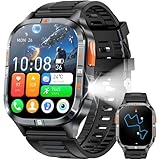
- BUILT-IN GPS & COMPASS– This military smartwatch features high-precision GPS to pinpoint your location while hiking, cycling, or traveling, keeping you safely on track without extra gear. Tap the compass icon and it locks your bearing within three seconds—engineered for pro-level outdoor adventures like camping, climbing, and trekking.
- BLUETOOTH CALLING & MESSAGES – Powered by the latest Bluetooth tech, the men’s smartwatch lets you answer or make calls right from your wrist—no need to pull out your phone. Get real-time alerts for incoming texts and app notifications so you never miss an invite. (Replying to SMS is not supported.)
- BIG SCREEN & DIY VIDEO WATCH FACE – The 2.01" military-spec display is dust-proof, scratch-resistant, and forged from high-strength glass with an aluminum alloy bezel, passing rigorous dust and abrasion tests so the screen stays crystal-clear. Upload a short family video to create a dynamic, one-of-a-kind watch face that keeps your memories alive.
- 24/7 HEALTH MONITORING – Equipped with a high-performance optical sensor, this Android smartwatch tracks heart rate and blood-oxygen levels around the clock. It also auto-detects sleep stages (deep, light, awake) for a complete picture of your health, ensuring you always know how your body is doing.
- MULTI SPORT MODES & FITNESS TRACK – Choose from running, cycling, hiking, basketball, and more to log every workout. Set goals, monitor progress, and sync data to the companion app. Bonus tools include photo gallery, weather, alarm, stopwatch, flashlight, hydration reminder, music/camera remote, find-my-phone, mini-games, and other everyday essentials.
Heart Rate Variability is present but limited to indirect use through stress tracking and Body Battery. Unlike newer Garmins, there is no dedicated overnight HRV Status metric, which means deeper recovery insights require interpretation rather than being clearly summarized.
Pace, Power, and Performance for Runners
For runners, the Fenix 6X remains a highly capable training companion. Pace stability is good in open environments, and auto lap consistency is reliable across varied terrain. Track mode is included, though without the refinements seen on later Forerunner and Fenix generations.
Running power is supported via Garmin’s native wrist-based estimates. While useful for trend analysis, wrist-based power here lacks the refinement and responsiveness of newer algorithms. Serious power-based runners will still want a foot pod like the Stryd for more actionable data.
Race time predictions are conservative but generally realistic when training data is consistent. They’re best viewed as long-term indicators rather than taper-week targets.
Strength, Cross-Training, and Multisport Use
The Fenix 6X excels in multisport flexibility. Triathlon mode, custom multisport profiles, open water swimming, and extensive activity customization make it well-suited for athletes who mix disciplines regularly.
Strength training support includes rep counting and muscle group identification, but accuracy is inconsistent. This hasn’t improved significantly over the years, and the experience feels dated compared to newer watches that better integrate strength metrics into overall training load.
For hiking, skiing, and backcountry activities, the watch’s training tools take a back seat to duration, elevation gain, and effort tracking. In these contexts, its battery life and durability matter more than granular performance metrics, and the Fenix 6X remains excellent.
Recovery, Sleep, and Readiness: Where Age Shows Most
Sleep tracking is serviceable but basic by modern standards. Sleep stages are generally accurate enough to spot poor nights, but insights lack depth. There’s no Sleep Score breakdown as refined as newer models, and recovery recommendations feel generic.
Body Battery remains one of the more useful holistic metrics, combining stress, sleep, and activity into a single score. While not scientifically rigorous, it often aligns well with perceived fatigue, especially during heavy training weeks.
What’s missing in 2026 is Training Readiness and Morning Report-style summaries. These newer features synthesize data more clearly and reduce cognitive load, something the Fenix 6X simply doesn’t offer.
Battery Life as a Performance Tool
Battery life underpins everything the Fenix 6X does well. With its large 51mm case and solar-free but efficient MIP display, it can handle weeks of training without micromanagement. Expect roughly 20–21 days in smartwatch mode and 60+ hours of GPS, depending on settings.
For ultra runners, expedition hikers, and stage race athletes, this endurance enables uninterrupted data collection across entire training blocks. Newer AMOLED watches may be flashier, but they often require compromises in usage or frequent charging.
What Still Matters—and What Feels Behind
The Fenix 6X’s training tools still excel at long-term fitness tracking, structured endurance training, and multisport consistency. Its metrics are stable, predictable, and deeply integrated into Garmin Connect, which remains one of the strongest platforms in the industry.
What feels dated is not accuracy, but presentation and synthesis. Newer Garmins surface insights faster and contextualize recovery more intelligently. The 6X asks more from the user, rewarding those who understand their data but offering less hand-holding for those who don’t.
Mapping, Navigation & Outdoor Features: Strengths That Keep It Relevant
Where the Fenix 6X truly separates itself from lifestyle-first smartwatches is outdoors. Even in 2026, its navigation stack feels purpose-built rather than adapted, especially for athletes and hikers who spend long days away from roads, power outlets, and cell coverage.
Full-Color Topo Mapping That’s Still Genuinely Usable
The Fenix 6X includes onboard topographic maps with full turn-by-turn navigation, something that remains rare outside Garmin’s higher-end lines. Trails, contour lines, water features, and points of interest are all rendered clearly on the transflective MIP display, which prioritizes visibility over visual flair.
While the screen isn’t as sharp or vibrant as newer AMOLED models, it’s easier to read in direct sunlight and during long sessions. In real-world use, especially while moving quickly on trail, clarity matters more than color depth.
Course Navigation, Back-to-Start, and Confidence in Remote Terrain
Course following remains one of the Fenix 6X’s strongest assets. Load GPX routes from Garmin Connect or third-party platforms like Komoot and AllTrails, and the watch reliably provides turn prompts, off-course alerts, and distance-to-next cues.
Back to Start, TracBack, and straight-line navigation tools add a layer of safety that feels increasingly important the further you venture from known terrain. These features aren’t flashy, but they work consistently, even hours into an activity when fatigue sets in.
ClimbPro and Elevation Data: Still Excellent for Mountain Athletes
ClimbPro remains one of Garmin’s most practical endurance tools, and the Fenix 6X supports it without compromise. When following a course, climbs are broken down into segments with gradient, remaining ascent, and distance clearly displayed.
Combined with the barometric altimeter, elevation data is stable and reliable across long efforts. For trail runners, alpine hikers, and cyclists in mountainous regions, this alone can justify choosing the 6X over more fitness-focused watches.
Multi-Band GPS Isn’t Here—but Accuracy Is Still Strong
The Fenix 6X predates Garmin’s multi-band GNSS, and that’s the one technical gap worth acknowledging. In dense forests, deep valleys, or urban canyons, newer watches like the Fenix 7 Pro or Epix Pro can produce cleaner tracks.
That said, real-world accuracy remains more than sufficient for training and navigation. With GPS, GLONASS, and Galileo support, the 6X delivers consistent pacing, distance, and route tracking, especially when paired with smart recording intervals.
Outdoor Profiles That Go Far Beyond Running and Hiking
Garmin didn’t treat outdoor sports as an afterthought here. The Fenix 6X supports ski resort maps, backcountry skiing, MTB dynamics, open-water swimming, expedition mode, and even basic avalanche-related metrics through Connect IQ integrations.
For golfers, the preloaded course maps and PlaysLike distance remain surprisingly capable. These features reinforce that the 6X was designed as a true multisport tool, not a runner’s watch with extras bolted on.
Sensors, Durability, and Trust Over Time
The sensor suite remains robust, including a barometric altimeter, compass, thermometer, and pulse oximetry for altitude acclimation. In long-term use, these sensors prove reliable rather than cutting-edge, which is often preferable in remote environments.
The 51mm case, steel or titanium bezel, and sapphire options contribute to a watch that shrugs off scrapes, cold, and vibration. For users who value durability and predictability over the latest features, the Fenix 6X still earns trust the old-fashioned way: by not failing when it matters.
Smartwatch Features & Ecosystem: Notifications, Music, Pay, and Daily Use
After establishing trust in the Fenix 6X as a navigation and training tool, the next question is how well it holds up when worn all day. Garmin has never chased the “wrist computer” vision of Apple or Samsung, but the 6X still delivers a competent, purpose-built smartwatch experience that supports an active lifestyle rather than distracting from it.
This section is where expectations matter most. In 2026 terms, the Fenix 6X is not modern in the app-centric sense, but it remains functional, stable, and well integrated within Garmin’s ecosystem.
Notifications: Reliable, Readable, and Purposefully Limited
Smartphone notifications on the Fenix 6X are handled in Garmin’s traditional, no-nonsense way. Alerts for calls, texts, calendar events, and third-party apps arrive promptly and are easy to read on the large 51mm display, even during movement or low-light conditions.
Android users can send canned responses directly from the watch, while iPhone users are limited to viewing and dismissing notifications. That gap hasn’t changed, and it’s something to accept upfront if cross-platform messaging is important.
What the Fenix 6X does well is restraint. Notifications don’t overwhelm workouts, maps, or navigation screens, and vibration strength is strong enough to notice through gloves or jacket layers without feeling intrusive.
Music Storage and Playback: Functional, Not Seamless
The Fenix 6X supports offline music storage and playback, including Spotify, Deezer, and Amazon Music, alongside locally loaded MP3 files. Paired with Bluetooth headphones, it allows phone-free training, which is still genuinely useful for long runs or rides.
Setup and syncing are slower than on newer Garmin models, and significantly less polished than Apple Watch or Wear OS alternatives. Large playlists take time to transfer, and managing music is best done patiently over Wi-Fi rather than expecting quick updates.
In practice, once music is loaded, playback is stable and battery impact is predictable. For endurance athletes who want background audio rather than a full media hub, the implementation does its job without compromising training reliability.
Rank #4

- 【Built-in GPS & Multi-System Positioning】Stay on track with the Tiwain smartwatch’s built-in GPS. Featuring military-grade single-frequency and six-satellite support (GPS, GLONASS, Beidou, Galileo, NAVIC, QZSS), this watch offers fast and accurate location tracking wherever you go. It also includes a compass, altimeter, and barometer, giving you real-time data on your altitude, air pressure, and position.
- 【Military-Grade Durability】Engineered to withstand the toughest conditions, the Tiwain smartwatch meets military standards for extreme temperatures, low pressure, and dust resistance. Crafted from tough zinc alloy with a vacuum-plated finish, this watch is also waterproof and built to resist wear and tear. The 1.43-inch AMOLED HD touchscreen offers clear visibility in all environments, and the watch supports multiple languages for global users.
- 【170+ Sport Modes & Fitness Tracking】Track your fitness journey with 170+ sport modes, including walking, running, cycling, hiking, basketball, and more. Set exercise goals, monitor progress, and sync your data to the companion app. The smartwatch also offers smart features like music control, camera remote, weather updates, long-sitting reminders, and more.
- 【LED Flashlight for Outdoor Adventures】The Tiwain smartwatch comes equipped with a built-in LED flashlight that can illuminate up to 20 meters. Activate it with the side button for added convenience during nighttime activities or outdoor adventures.
- 【Comprehensive Health Monitoring】Monitor your health with real-time heart rate, sleep, blood pressure, and blood oxygen level tracking. The smartwatch will vibrate to alert you of any abnormal readings. You can also make and receive calls directly from the watch, and stay connected with message and app notifications (receive only, no sending capability) – perfect for when you’re driving or exercising.
Garmin Pay: Convenient, but Bank Support Matters
Garmin Pay works as expected on the Fenix 6X, allowing contactless payments without carrying a phone or wallet. It’s secure, quick at the terminal, and well suited for post-run coffee stops or mid-ride refuels.
The limitation is bank compatibility, which varies widely by region. In 2026, support is broader than at launch but still not universal, so checking local bank support is essential before treating this as a core feature.
When supported, Garmin Pay integrates smoothly into daily use. When unsupported, it becomes a non-factor rather than a partial solution.
Connect IQ and App Ecosystem: Depth Over Flash
The Fenix 6X runs on Garmin’s Connect IQ platform, which offers watch faces, data fields, widgets, and apps. The ecosystem is deep, especially for endurance sports, navigation tools, and niche outdoor metrics.
Performance is best with lightweight widgets and data fields rather than complex third-party apps. Heavy watch faces or poorly optimized add-ons can slow menus and impact battery life, particularly compared to newer hardware.
Where Connect IQ shines is customization. Athletes can tailor data screens, recovery metrics, and daily summaries in ways that still surpass many modern smartwatches focused on general wellness rather than performance.
Daily Health Tracking and Wearability
Worn 24/7, the Fenix 6X tracks steps, floors climbed, sleep stages, resting heart rate, stress, Body Battery, and Pulse Ox during sleep. These metrics are mature rather than cutting-edge, but trends remain consistent and actionable.
Sleep tracking accuracy is adequate, though not class-leading by 2026 standards. The real value comes from long-term data continuity within Garmin Connect, especially for users with years of historical training and health metrics.
Despite its size, the 51mm case distributes weight well, especially on the titanium versions. With a nylon or soft silicone strap, all-day comfort is better than expected, though smaller wrists may still find it excessive for sleep use.
Battery Life in Real Daily Use
Battery performance remains one of the Fenix 6X’s strongest everyday advantages. Even several years after release, it comfortably delivers multiple days of smartwatch use with frequent GPS sessions, notifications, and occasional music playback.
Expect around two weeks of use without GPS, and roughly 60 hours in standard GPS mode depending on settings. Compared to AMOLED-based watches like the Epix, this endurance still feels liberating for users who dislike frequent charging.
Battery aging is something to consider on the secondary market. Well-maintained units still perform strongly, but heavily used examples may show reduced capacity, making condition and usage history important buying factors.
Garmin Connect: The Anchor of the Experience
The real smartwatch value of the Fenix 6X lives in Garmin Connect rather than on the watch itself. Data presentation, training trends, recovery insights, and long-term performance analysis are still among the best in the industry.
Garmin continues to support the platform aggressively, even as hardware generations move on. While the 6X no longer receives major feature updates, it remains fully compatible with current versions of the app and ecosystem.
For athletes already invested in Garmin sensors, training plans, or historical data, this continuity is a powerful reason the Fenix 6X still feels relevant in daily use.
Living With the Fenix 6X in 2026
As a smartwatch, the Fenix 6X prioritizes reliability, battery life, and outdoor readiness over polish and convenience. It won’t replace a modern lifestyle smartwatch, but it also won’t demand constant attention or charging.
For users who want a dependable, low-maintenance companion that blends training, navigation, and basic smart features into one rugged package, it remains surprisingly competent. The key is understanding that its strengths lie in support, not spectacle, and daily use reflects that philosophy clearly.
Durability & Reliability Over Years: Build Quality, Failures, and Longevity
Living with the Fenix 6X long term reinforces a core truth about Garmin’s older flagship designs: they were built to be worn hard, not replaced quickly. For users still considering the 6X in 2026, durability and reliability are arguably more important than raw feature parity with newer models.
Case Construction and Real-World Abuse
The Fenix 6X uses a fiber-reinforced polymer case with a stainless steel or titanium bezel, depending on the variant. In daily wear and outdoor use, this combination has proven far more resilient than it looks on paper, especially around impact zones like the bezel and lugs.
Scratches on the bezel are common after years of use, particularly on steel versions, but they tend to be cosmetic rather than structural. The underlying case rarely shows cracking or deformation, even on watches that have seen trail running, scrambling, or repeated pack strap abrasion.
The physical buttons are one of the quiet strengths of the 6X. Compared to touchscreen-heavy designs, these mechanical buttons continue to register reliably in rain, snow, sweat, and gloves, with very few long-term failure reports when compared to touch-first competitors.
Display and Lens Durability
Most Fenix 6X units ship with either Corning Gorilla Glass DX or sapphire crystal on higher-end models. The sapphire versions in particular age exceptionally well, often showing little more than light scuffing after years of wear.
Gorilla Glass models are more prone to micro-scratches, especially for users who climb or work outdoors. That said, the transflective display remains readable even with surface wear, and cosmetic damage rarely affects usability.
Unlike AMOLED displays found on newer Garmin models, the memory-in-pixel screen on the 6X has proven extremely resistant to burn-in or long-term brightness degradation. Many multi-year units still look functionally identical to how they did at launch.
Water Resistance and Environmental Exposure
Rated to 10 ATM, the Fenix 6X has consistently delivered reliable water resistance for swimming, rain-heavy ultras, and everyday exposure. Failures related to water ingress are uncommon and typically linked to physical damage rather than seal degradation alone.
Long-term users who regularly swim or train in saltwater report minimal corrosion when basic rinsing habits are followed. The charging port, while exposed, holds up well if kept clean and dry, though it remains one of the few areas that benefits from routine inspection.
Temperature resilience is another strength. Cold-weather battery drain exists, as with any lithium-powered device, but the watch itself remains stable in sub-freezing conditions where touchscreen watches often struggle.
Straps, Comfort, and Wear Points
Garmin’s QuickFit strap system has aged well, both mechanically and ergonomically. Silicone straps can stretch or discolor over time, but replacements are inexpensive and widely available, including third-party options.
The lugs and strap attachment points rarely show structural wear, even after years of strap swaps. This is an important consideration for buyers looking at heavily used units, as it suggests the core chassis tends to outlast its accessories.
At 51mm, the 6X is undeniably large, and long-term comfort depends heavily on wrist size and strap choice. That said, the curved caseback and balanced weight distribution help it sit more securely than its dimensions suggest, even during multi-hour efforts.
Electronics, Sensors, and Long-Term Reliability
The optical heart rate sensor on the Fenix 6X is no longer class-leading, but it remains stable and consistent over time. Sensor degradation is rare, and most accuracy complaints stem from fit or activity type rather than hardware failure.
GPS reliability has held up well, with multi-GNSS support continuing to deliver consistent track quality years later. While newer dual-band chipsets outperform it in dense urban or canyon environments, the 6X’s antenna design remains dependable for trail and mountain use.
Internal storage, altimeter, compass, and barometer components show strong longevity, with very few widespread reports of sensor failure. Calibration drift can occur, particularly with the barometric altimeter, but software recalibration usually resolves it.
Battery Longevity and Replacement Reality
Battery degradation is the most meaningful long-term reliability factor for any aging smartwatch, and the Fenix 6X is no exception. Units that were charged conservatively and not left at full charge for extended periods tend to retain impressive endurance even after several years.
Heavily used examples may see noticeable drops in GPS runtime, which is especially relevant for ultrarunners and hikers relying on extended tracking. Unlike some newer sealed designs, battery replacement is technically possible but not officially supported by Garmin, making professional service or careful DIY the only options.
💰 Best Value

- Smart Watch with GPS and Offline Map: This smart watch connects to multiple satellite systems for accurate real-time positioning, and includes a professional-grade compass, altimeter, and barometer for precise data, ensuring you maintain your sense of direction in any outdoor environment. The map version supports downloading offline maps; select a route or destination to view the route even without a signal, eliminating the risk of getting lost.
- Bluetooth Call & Message Functionality: This smart watches for men allows you to make and receive calls; receive text and social media notifications (Facebook, WhatsApp, Instagram, Twitter, etc.); and reply to text messages with voice-to-text or set up quick replies (text reply functionality is available for Android phones).
- Sports & Health Monitoring: This 5ATM waterproof fitness watch supports over 100 sports modes and tracks daily activity data, calories, distance, steps, and heart rate. You can use it to monitor your health metrics (blood oxygen, heart rate, stress, and sleep), monitor your fatigue and mood, and perform PAI analysis. You can also use this smartwatch to set water intake and sedentary reminders. Stay active and healthy with this fitness tracker watch.
- Customizable Watch Faces & AI Functionality: This smart watch features a 1.46-inch HD touchscreen and over 100 downloadable and customizable watch faces. You can even use your favorite photos as your watch face. Equipped with AI technology, it supports voice descriptions in multiple languages to generate personalized AI watch faces. The watch's AI Q&A and AI translation features provide instant answers to questions and break down language barriers, making it an ideal companion for everyday life and travel.
- Large Battery & High Compatibility & More Features: This smart watch for android phones and ios phone features a large 550ml battery for extended battery life. It's compatible with iOS 9.0 and above and Android 5.0 and above. It offers a wealth of features, including an AI voice assistant, weather display, music control, camera control, calculator, phone finder, alarm, timer, stopwatch, and more. (Package Includes: Smartwatch (with leather strap), spare silicone strap, charging cable, and user manual)
For buyers in 2026, battery health matters more than cosmetic condition. A clean-looking watch with reduced runtime may be less valuable than a visibly worn unit that still delivers near-original endurance.
Software Stability and Aging Hardware
While the Fenix 6X no longer receives major firmware features, its software has matured into a stable, low-bug platform. Crashes, data corruption, and sync failures are uncommon compared to early-generation smartwatch hardware.
Garmin Connect compatibility remains strong, and core features like activity tracking, navigation, and sensor pairing continue to work reliably. The watch does feel slower when navigating menus compared to newer processors, but performance degradation over time is minimal.
This stability contributes directly to longevity. The Fenix 6X behaves more like a finished tool than an evolving gadget, which many endurance athletes prefer once their training systems are dialed in.
What Fails First and What Rarely Does
Across long-term ownership reports, straps, batteries, and cosmetic bezel wear are the most common aging points. These are expected, manageable, and largely external to the watch’s core function.
What rarely fails is the fundamental tracking engine: GPS logging, activity recording, and sensor integration. For a watch designed around training reliability rather than novelty, this matters more than surface-level aging.
Viewed in 2026, the Fenix 6X stands out as a device that was engineered for endurance in both sport and lifespan. Its durability is not theoretical or marketing-driven; it is proven through years of consistent use in demanding environments.
Buyer Relevance Analysis: Who Should Buy the Fenix 6X Today—and Better Alternatives to Consider
By this point, the Fenix 6X has established itself as a durable, stable training instrument rather than a bleeding-edge smartwatch. That distinction is key when deciding whether it still makes sense in 2026.
This is no longer a watch you buy for what it might become through updates. It is a watch you buy for what it already does well—and has proven it can keep doing.
Who the Fenix 6X Still Makes Sense For
The Fenix 6X remains highly relevant for endurance athletes who prioritize long battery life, physical controls, and mapping over display flash or smartwatch polish. Ultrarunners, trail runners, hikers, mountaineers, and expedition-style users still benefit from its large battery, robust GPS logging, and reliable navigation tools.
If your activities regularly exceed 15–20 hours with GPS enabled, the 6X’s real-world endurance remains a core strength. Even in 2026, few watches at typical secondary-market prices can match its combination of runtime and mapping without compromises.
It also suits athletes who train by feel and data trends rather than chasing the latest metrics. Core Garmin features like training load, recovery time, VO2 max, structured workouts, pace guidance, and navigation remain accurate and consistent.
Buyers Who Benefit Most From the Secondary Market
Value-focused buyers are where the Fenix 6X shines today. On the used market, pricing often undercuts newer Fenix and Epix models by a wide margin while retaining most of the functionality that actually affects training outcomes.
For athletes upgrading from a Forerunner 645, 735XT, or older Fenix 3 or 5 series, the jump in battery life, mapping, sensor support, and build quality is still substantial. The learning curve is minimal if you are already embedded in the Garmin ecosystem.
It is also a strong option for athletes who want a single watch for training, adventure, and daily wear without worrying about babying it. The steel or DLC-coated bezel, reinforced polymer case, and sapphire options have aged better than many slimmer, lighter designs.
Who Should Probably Skip the Fenix 6X in 2026
If AMOLED display quality matters to you, the Fenix 6X will feel dated immediately. Its memory-in-pixel screen prioritizes visibility and efficiency over vibrancy, which is ideal outdoors but underwhelming indoors.
Athletes heavily invested in newer metrics like HRV status trends, training readiness scores, or advanced sleep coaching will find the 6X lacking. While it tracks sleep and recovery, it does not surface insights with the same depth or clarity as newer Garmin platforms.
Smaller-wristed users should also think carefully. The 6X’s 51mm case and substantial lug-to-lug presence wear large, especially for daily use outside of training.
Fenix 6X vs Newer Fenix Models
Compared to the Fenix 7X, the core experience is similar but less refined. GPS accuracy is excellent on both, but newer multi-band models hold signal better in dense urban or canyon-like terrain.
Battery life on the 6X remains competitive, but solar-assisted charging on the 7X adds meaningful flexibility for long expeditions. Interface speed, touch support, and metric depth are all improved on newer hardware.
If pricing is close, the newer watch is easier to recommend. If the 6X is significantly cheaper, the performance gap may not justify the extra cost for many athletes.
Fenix 6X vs Epix (AMOLED)
The Epix targets a different kind of user. Its AMOLED display transforms maps, data screens, and smartwatch visuals, but battery life takes a hit when using always-on mode or extended GPS sessions.
For road runners, gym users, and daily smartwatch wearers, the Epix often feels more modern and polished. For ultrarunners and backcountry users, the Fenix 6X’s endurance-first design still aligns better with long, power-constrained outings.
This becomes a lifestyle decision as much as a technical one. The Epix is easier to live with day-to-day; the 6X is easier to trust when things go long.
Fenix 6X vs Forerunner Alternatives
High-end Forerunners like the 955 or 965 offer lighter weight, excellent GPS accuracy, and most modern training metrics. They outperform the 6X in comfort for long runs and provide faster software responsiveness.
What they lack is the tank-like build, metal bezel protection, and expedition-level battery confidence. If your activities lean heavily toward trail, mountains, or multi-day use, the Fenix still has an edge.
If your training is mostly structured running or triathlon with occasional adventures, a Forerunner may be the smarter and more comfortable choice.
Daily Wear and Long-Term Ownership Considerations
As a daily watch, the Fenix 6X is utilitarian rather than elegant. It pairs best with casual or technical clothing and feels oversized under tight sleeves or formal wear.
Comfort is good for its size, especially with a nylon or fabric strap swap, but it never disappears on the wrist. That presence is part of its identity and part of its trade-off.
From a longevity perspective, the Fenix 6X benefits from having already survived its early software years. What you see today is largely what you will get long-term, and that predictability has value.
Bottom Line: Is the Fenix 6X Still Worth Buying?
In 2026, the Garmin Fenix 6X is no longer aspirational—it is practical. It remains a highly capable performance watch for athletes who need endurance, reliability, and navigation more than novelty.
It is best viewed as a proven tool rather than a future-proof platform. If you can find one with strong battery health at a sensible price, it still delivers real-world performance that newer watches often charge significantly more to match.
For buyers who understand its limits and value its strengths, the Fenix 6X continues to earn its place on the wrist—quietly, consistently, and without needing to prove anything anymore.