Garmin’s Fenix line has always been the company’s no-compromise answer for athletes and adventurers who want one watch to cover training, navigation, and daily wear. If you’re comparing the Fenix 7 and Fenix 6 today, you’re likely trying to understand not just what’s newer, but how much Garmin’s priorities shifted between generations and whether those changes matter for how you actually use a watch.
This comparison isn’t about incremental spec bumps on paper. It’s about understanding where each model landed in Garmin’s evolution, how long Garmin intended each to stay relevant, and what kind of user each watch was originally built for. That context matters more than raw feature lists when deciding whether to upgrade or buy discounted older hardware.
Release timing and generational intent
The Fenix 6 family launched in late 2019, replacing the Fenix 5 Plus and setting a new baseline for what a premium multisport watch should deliver. At the time, it introduced larger displays across the range, solar-assisted battery options, Power Manager modes, and deeper training analytics, positioning it as Garmin’s most capable outdoor watch yet.
The Fenix 7 arrived in early 2022, roughly two and a half years later, which is a long development window in Garmin terms. That gap is important because it gave Garmin time to rethink interaction, battery strategy, and everyday usability rather than just adding sensors. The Fenix 7 wasn’t meant to invalidate the Fenix 6 overnight, but to modernize the platform for the next several years of software updates and sensor-driven features.
🏆 #1 Best Overall

- Stylish Design, Vibrant Display: The lightweight aluminum build blends effortless style with workout durability, while the vivid 1.97" AMOLED display keeps your data easy to read, even under bright sunlight.
- All-in-One Activity Tracking: The Amazfit Bip 6 fitness tracker watch offers 140+ workout modes including HYROX Race and Strength Training, plus personalized AI coaching and 50m water resistance.
- Up to 14 Days Battery Life: The Amazfit Bip 6 smart watch powers through your training and recovery for up to two weeks at a time - no nightly charging needed.
- Accurate GPS Tracking & Navigation: Stay on course with free downloadable maps and turn-by-turn directions. Support from 5 satellite systems ensures precise tracking of every move and fast GPS connection.
- 24/7 Health Monitoring: The Amazfit Bip 6 smartwatch provides precise, real-time monitoring of heart rate, sleep, blood-oxygen and stress, empowering you with actionable insights to optimize your health and fitness.
How Garmin positioned the Fenix 6 in its lineup
When the Fenix 6 was current, it sat at the absolute top of Garmin’s consumer range, above Forerunner models and alongside niche variants like MARQ. It was designed for athletes who trained seriously but also spent long days hiking, climbing, or navigating with maps, and who valued durability as much as performance metrics.
In practical terms, the Fenix 6 was Garmin’s “do everything with buttons” watch. Physical controls, excellent battery life for its time, rugged materials, and reliable mapping made it ideal for cold-weather use, gloves, and remote environments. Even today, it remains aligned with users who prefer tactile controls, predictable behavior, and proven hardware over newer interface ideas.
How the Fenix 7 reshaped Garmin’s flagship strategy
With the Fenix 7, Garmin subtly shifted the line from being purely expedition-focused to being more versatile for daily life without sacrificing toughness. The addition of a touchscreen alongside the traditional buttons signaled that Garmin wanted the Fenix to work just as well for scrolling maps, checking stats at a desk, or navigating menus casually as it does on a trail.
The Fenix 7 also became the reference platform for Garmin’s latest solar charging improvements, new sensor hardware, and longer-term software support. In Garmin’s hierarchy, it effectively replaced the Fenix 6 as the base for innovation, with features often debuting on Fenix 7 before filtering to other lines. That makes it the safer long-term investment for buyers who care about future updates and ecosystem longevity.
Model families and lineup overlap
Both generations were offered in multiple case sizes and materials, reinforcing Garmin’s strategy of letting users choose fit and finish without changing core capabilities. The Fenix 6 came in 6S, 6, and 6X variants, while the Fenix 7 evolved that into 7S, 7, and 7X, with clearer differentiation around battery life and solar performance.
Importantly, Garmin has continued selling some Fenix 6 models well into the Fenix 7 era, often at aggressive discounts. This creates intentional overlap in the lineup, where the Fenix 6 acts as a value-driven flagship alternative, while the Fenix 7 occupies the premium, forward-looking tier. Understanding this overlap helps explain why the two watches can feel closer than their generation gap suggests, yet still target different buyer priorities.
Design, Case Sizes, Materials, and Wearability in Daily and Outdoor Use
Moving from lineup strategy into physical reality, the most immediate differences between Fenix 6 and Fenix 7 show up the moment you put them on your wrist. On paper they look similar, but in daily wear, long training sessions, and multi-day outdoor use, the refinements in the Fenix 7 become more noticeable over time rather than all at once.
Overall design language and visual presence
Both generations stick to Garmin’s unmistakable Fenix design: a round, tool-watch aesthetic with exposed lugs, a pronounced bezel, and an emphasis on function over fashion. The Fenix 6 already leaned heavily into this rugged identity, and the Fenix 7 keeps it intact rather than reinventing it.
What changes subtly is refinement. The Fenix 7 looks slightly cleaner around the bezel and display, with less visual bulk despite similar dimensions. In practice, this makes the Fenix 7 feel more at home with everyday clothing, while the Fenix 6 still reads more like a dedicated adventure instrument first and a daily watch second.
Case sizes and how they actually fit different wrists
Both families offer three core sizes, but how they wear is not identical. The Fenix 6 lineup includes 6S (42 mm), 6 (47 mm), and 6X (51 mm), while the Fenix 7 mirrors this with the 7S, 7, and 7X at the same nominal diameters.
Despite matching numbers, the Fenix 7 models feel slightly more balanced on the wrist. Weight distribution is improved, especially on the larger 7X, which reduces the top-heavy sensation that some users noticed with the 6X during long runs or all-day wear.
For smaller wrists, the 7S remains one of the few serious multisport watches that doesn’t feel oversized. It maintains full feature parity while staying genuinely wearable for sleep tracking and daily use, something that was already true on the 6S but feels more comfortable on the 7S due to incremental ergonomics.
Materials, bezel options, and durability differences
Material choices remain familiar but are executed slightly differently. Both generations offer fiber-reinforced polymer cases with stainless steel or titanium bezels, along with Gorilla Glass or sapphire crystal options depending on the model.
On the Fenix 7, Garmin tightened tolerances and finishing, particularly on titanium models. The bezels feel more precisely machined, and scratches tend to be less visually distracting over time. Sapphire models on both generations remain the best choice for rock, ice, and gear-heavy environments, though they slightly reduce solar efficiency where applicable.
Water resistance remains 10 ATM across both generations, and in real-world testing there’s no meaningful durability gap. If you’ve trusted a Fenix 6 in alpine, desert, or marine conditions, the Fenix 7 does not ask you to rethink that trust.
Solar lens integration and display impact
Solar charging exists on both generations, but its physical implementation affects wearability more on the Fenix 7. The Fenix 6 Solar models introduced the concept but had a more visible solar ring that slightly impacted display clarity.
The Fenix 7 Solar and Sapphire Solar models integrate the solar layer more cleanly into the lens. The display looks sharper, contrast is improved, and reflections are reduced. In daily use, this matters more than raw solar charging gains, especially indoors or during quick glances at stats.
Buttons, touchscreen, and physical interaction
The biggest tactile difference is the addition of a touchscreen on the Fenix 7. Importantly, Garmin did not remove or soften the five-button layout, which remains unchanged in placement and feel compared to the Fenix 6.
In outdoor use, buttons still dominate. Gloves, rain, sweat, and cold conditions favor physical controls, and the Fenix 7 behaves just like the Fenix 6 when touch is disabled. In daily life and map-heavy activities, the touchscreen significantly improves usability, especially for scrolling maps, moving pins, or navigating widgets without repeated button presses.
The Fenix 6, by contrast, feels more deliberate and slower in casual interaction. Some users prefer this predictability, but once you’ve used touch-enabled mapping on the Fenix 7, going back can feel unnecessarily rigid.
Weight, comfort, and long-session wearability
Weight differences between comparable models are small on paper but noticeable over time. The Fenix 7 shaves a few grams in key areas and distributes mass more evenly across the case and strap attachment points.
For endurance athletes, this shows up during long runs, ultras, or multi-hour hikes where arm swing fatigue and pressure points become more apparent. Sleep tracking is also more comfortable on the Fenix 7, particularly in the larger case sizes that previously felt intrusive overnight.
Straps, lug compatibility, and daily flexibility
Both generations use Garmin’s QuickFit strap system, making straps interchangeable across models of the same size. Silicone remains the default, but nylon, leather, and metal options are widely available.
Where the Fenix 7 improves daily wear is subtle flexibility. The watch feels less stiff against the wrist when typing, driving, or working at a desk. This doesn’t come from a new strap system, but from minor case contouring that reduces pressure during wrist extension.
From trail to office: everyday presence
The Fenix 6 is unapologetically an outdoor watch that you can wear daily. The Fenix 7 is a daily watch that happens to be extremely capable outdoors.
That distinction matters if you plan to wear the watch 24/7. The Fenix 7 blends more easily into everyday life without losing the visual and physical cues that make the Fenix line trusted in demanding environments. For users who live in their watch rather than just train with it, this evolution in wearability may be one of the most meaningful upgrades in the entire comparison.
Display Technology Explained: Solar vs Non‑Solar, Sapphire Options, and Touchscreen Impact
Once the watch is on your wrist all day, display behavior becomes just as important as case shape or weight. The Fenix 7 doesn’t radically change Garmin’s core screen philosophy, but it refines nearly every variable that affects visibility, durability, and how you actually interact with maps and data in motion.
MIP displays: same foundation, different execution
Both the Fenix 6 and Fenix 7 use memory‑in‑pixel (MIP) displays rather than AMOLED. This means always‑on visibility, excellent sunlight readability, and minimal battery drain during long activities.
Where the Fenix 7 improves is contrast tuning and backlight uniformity. In side‑by‑side use, data fields appear slightly crisper, and low‑angle sunlight glare is better controlled, particularly on larger case sizes.
Resolution remains similar across equivalent sizes, so this is not a leap in sharpness. It is a refinement in legibility, especially when scanning metrics mid‑run or reading topo labels while moving.
Solar vs non‑solar: how much does it really matter?
Garmin offers both generations in solar and non‑solar variants, but the solar experience is meaningfully different between the Fenix 6 and Fenix 7. The Fenix 7 introduces Power Glass with a redesigned solar ring that captures more light without dimming the active display area.
In real‑world use, this translates to noticeably better battery extension during outdoor training. Multi‑day hikes, long cycling weeks, or consistent midday runs benefit the most, while indoor training sees little difference.
On the Fenix 6 Solar, solar charging felt more like a bonus. On the Fenix 7 Solar, it becomes part of a battery strategy, especially if you train outdoors several hours per week.
Sapphire glass: durability vs brightness trade‑offs
Both generations offer sapphire crystal options, typically bundled with premium case materials. Sapphire dramatically improves scratch resistance, which matters if you climb, scramble, or regularly brush the watch against rock, metal, or gym equipment.
The trade‑off remains brightness. Sapphire models reflect slightly more light and appear marginally dimmer than standard Gorilla Glass, especially in flat lighting conditions.
On the Fenix 7, this penalty is reduced thanks to improved backlight tuning. Sapphire is still a durability-first choice, but it is less of a readability compromise than it was on the Fenix 6.
Touchscreen impact: the defining display upgrade
The single biggest display-related difference is touch support on the Fenix 7. This does not replace buttons; it complements them.
Rank #2

- Stylish Design, Bright Display: The sleek stainless steel build blends classic style with workout durability, while the bright 1.32" AMOLED display keeps your data easy to read, even under bright sunlight.
- Precise Heart Rate and Sleep Tracking: Amazfit's BioTracker technology tracks your heart rate and sleep data with accuracy that previous sensors just can't match.
- Up to 10 Days of Battery Life: With long battery life that lasts up to 10 days with typical use, nightly recharges are a thing of the past.
- Free Maps with Turn Directions: Stay on-track with free downloadable maps, and get turn-by-turn guidance on-screen or via your Bluetooth headphones. Enjoy ski maps for global resorts, including guidance for cable cars, slopes, and more.
- Faster and More Accurate GPS Tracking: 5 satellite positioning systems ensure fast GPS connection and accurate positioning whenever you're out running, walking, cycling or hiking.
Touch is automatically disabled during activities by default, preserving reliable button control in rain, sweat, or gloves. Outside activities, touch transforms daily usability, from scrolling widgets to moving around maps with pinch and drag gestures.
For navigation, the difference is dramatic. Panning a map, dropping a pin, or following a complex route is significantly faster and less mentally taxing on the Fenix 7 than on the button-only Fenix 6.
Cold, wet, and gloved use
Garmin’s decision to keep full button functionality matters in harsh conditions. In winter hiking, alpine starts, or heavy rain, the Fenix 7 behaves just like the Fenix 6.
Touch becomes an optional convenience, not a liability. You can disable it entirely if you prefer the older interaction style, which makes the transition easier for long-time Fenix users.
Everyday visibility and desk use
In daily life, touch subtly changes how often you engage with the watch. Checking calendar items, scrolling sleep data, or skimming notifications feels quicker and more natural on the Fenix 7.
The Fenix 6 remains perfectly usable, but it demands more intentional interaction. Over time, that friction adds up, especially if the watch is worn as a true 24/7 device rather than only during training.
Which display configuration makes sense?
If you prioritize maximum battery life for outdoor training, the Fenix 7 Solar offers a clearer return than solar did on the Fenix 6. If scratch resistance matters more than absolute brightness, sapphire is a safer long‑term choice on either generation, with fewer downsides on the newer model.
For users upgrading from a Fenix 6, the touchscreen alone can justify the move if you rely on maps or use the watch heavily outside workouts. For first‑time buyers choosing between generations, the Fenix 7’s display ecosystem simply feels more modern, flexible, and better aligned with how people actually use a premium multisport watch today.
Controls and Usability: Buttons vs Touch, Menu Navigation, and Real‑World Training Scenarios
With display differences already setting the tone, the way you actually interact with the Fenix 7 versus the Fenix 6 is where the generational gap becomes tangible. Controls dictate not just convenience, but confidence during training, navigation, and long days outdoors.
Five buttons remain the backbone
Both watches retain Garmin’s five‑button layout, and that consistency matters more than it sounds. Start, stop, lap, back, and directional navigation work exactly the same on the Fenix 7 as they do on the Fenix 6.
For experienced Garmin users, there is no relearning curve. Muscle memory built over years of interval sessions or race mornings transfers cleanly, which is critical when fatigue or stress sets in.
What the touchscreen really adds on the Fenix 7
The touchscreen on the Fenix 7 is not a replacement for buttons, but a parallel input method layered on top. You can scroll widgets, swipe through data screens, and interact with maps in a way that feels closer to a modern smartwatch.
Garmin was careful with implementation. Touch is automatically disabled during activities by default, preserving reliable button control in rain, sweat, or gloves. Outside activities, touch transforms daily usability, from scrolling widgets to moving around maps with pinch and drag gestures.
Menu navigation and system logic
Garmin’s menu structure is broadly similar between generations, but the Fenix 7 feels faster and less nested. Touch allows you to scroll long lists, adjust settings, and move between widgets without repeated button presses.
On the Fenix 6, deep menu dives are more deliberate. It is not confusing, but it does demand attention, especially when adjusting data fields or toggling sensors before a workout.
Over weeks of use, the difference shows up in small moments. Making quick tweaks becomes frictionless on the Fenix 7, while the Fenix 6 encourages a “set it once and leave it” approach.
Navigation and mapping under real pressure
For navigation, the difference is dramatic. Panning a map, dropping a pin, or following a complex route is significantly faster and less mentally taxing on the Fenix 7 than on the button‑only Fenix 6.
On the Fenix 6, map interaction works, but it feels mechanical. Zooming, scrolling, and inspecting turns requires repeated button inputs, which can interrupt rhythm during trail runs or bikepacking.
The touchscreen on the Fenix 7 makes mid‑route decisions easier. When trails fork unexpectedly or routes overlap, the ability to quickly drag the map can prevent wrong turns without stopping movement.
Training scenarios: running, cycling, and structured workouts
During running workouts, both watches perform similarly once an activity is started. Buttons remain the safest way to mark laps, pause sessions, or advance intervals, and Garmin’s choice to keep touch off during workouts reinforces that reliability.
Pre‑run setup is where the Fenix 7 gains time. Selecting a workout, reviewing pacing targets, or checking elevation profiles is quicker with touch, particularly when wearing the watch all day and starting sessions spontaneously.
Cyclists benefit in a similar way. Adjusting data screens, reviewing ClimbPro segments, or zooming the map mid‑ride is easier on the Fenix 7, especially when paired with a handlebar mount where touch gestures feel natural.
Cold, wet, and gloved use
Garmin’s decision to keep full button functionality matters in harsh conditions. In winter hiking, alpine starts, or heavy rain, the Fenix 7 behaves just like the Fenix 6.
Touch becomes an optional convenience, not a liability. You can disable it entirely if you prefer the older interaction style, which makes the transition easier for long‑time Fenix users.
The Fenix 6 never asks you to think about this at all, which some purists still appreciate. There is something reassuring about a system that never changes behavior based on context.
Everyday visibility and desk use
In daily life, touch subtly changes how often you engage with the watch. Checking calendar items, scrolling sleep data, or skimming notifications feels quicker and more natural on the Fenix 7.
The Fenix 6 remains perfectly usable, but it demands more intentional interaction. Over time, that friction adds up, especially if the watch is worn as a true 24/7 device rather than only during training.
At a desk or on the couch, the Fenix 7 behaves more like a modern smartwatch without sacrificing the rugged, tool‑watch identity that defines the Fenix line.
Learning curve and long‑term usability
For new Garmin users, the Fenix 7 is simply easier to live with. Touch lowers the barrier to exploring features like body battery trends, training readiness, or route planning.
For Fenix 6 owners, the learning curve is minimal because buttons still do everything. Touch just reduces effort where it makes sense, rather than forcing a new interaction model.
This hybrid control approach is arguably the most important usability upgrade between generations. It does not chase trends, but it does modernize the experience in ways that feel purposeful during real training and everyday wear.
Battery Life and Charging: Solar Gains, Power Management, and Multi‑Day Adventure Use
Once you move past screens and controls, battery behavior is where the generational gap between Fenix 6 and Fenix 7 becomes most obvious. Both are built for long training weeks and extended trips, but the way they achieve that endurance—and how much flexibility you get along the way—has changed meaningfully.
Garmin did not simply chase bigger batteries. Instead, the Fenix 7 combines efficiency gains, new power profiles, and far more effective solar charging to stretch runtime in ways that matter during real outdoor use.
Baseline battery life: similar on paper, different in practice
At a spec-sheet level, the Fenix 7 and Fenix 6 look closer than many expect. In standard smartwatch mode, a Fenix 7 offers roughly 18 days, compared to around 14 days on the Fenix 6 in comparable case sizes.
GPS mode shows a similar pattern. Expect roughly 57 hours on the Fenix 7 versus around 36 hours on the Fenix 6, with some variation depending on whether you use multi-band GNSS, music playback, or connected features.
In everyday training, that gap feels bigger than the numbers suggest. The Fenix 7 drains more predictably, especially when you mix workouts, navigation, notifications, and sleep tracking across the week.
Solar charging: no longer a niche feature
Solar was available on select Fenix 6 models, but it always felt like a bonus rather than a strategy. The Power Glass layer helped slow battery drain in bright conditions, yet it rarely extended trips in a meaningful way.
Rank #3
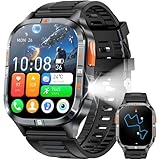
- BUILT-IN GPS & COMPASS– This military smartwatch features high-precision GPS to pinpoint your location while hiking, cycling, or traveling, keeping you safely on track without extra gear. Tap the compass icon and it locks your bearing within three seconds—engineered for pro-level outdoor adventures like camping, climbing, and trekking.
- BLUETOOTH CALLING & MESSAGES – Powered by the latest Bluetooth tech, the men’s smartwatch lets you answer or make calls right from your wrist—no need to pull out your phone. Get real-time alerts for incoming texts and app notifications so you never miss an invite. (Replying to SMS is not supported.)
- BIG SCREEN & DIY VIDEO WATCH FACE – The 2.01" military-spec display is dust-proof, scratch-resistant, and forged from high-strength glass with an aluminum alloy bezel, passing rigorous dust and abrasion tests so the screen stays crystal-clear. Upload a short family video to create a dynamic, one-of-a-kind watch face that keeps your memories alive.
- 24/7 HEALTH MONITORING – Equipped with a high-performance optical sensor, this Android smartwatch tracks heart rate and blood-oxygen levels around the clock. It also auto-detects sleep stages (deep, light, awake) for a complete picture of your health, ensuring you always know how your body is doing.
- MULTI SPORT MODES & FITNESS TRACK – Choose from running, cycling, hiking, basketball, and more to log every workout. Set goals, monitor progress, and sync data to the companion app. Bonus tools include photo gallery, weather, alarm, stopwatch, flashlight, hydration reminder, music/camera remote, find-my-phone, mini-games, and other everyday essentials.
The Fenix 7’s solar implementation is far more effective. Garmin increased the solar surface area and improved efficiency, making it possible to genuinely offset GPS usage during long daylight activities.
On multi-day hikes or bikepacking trips, solar-equipped Fenix 7 models can gain measurable runtime when exposed consistently to sun. It will not replace a power bank, but it can mean finishing a route without rationing features.
Power management and activity-specific efficiency
The Fenix 7 benefits heavily from Garmin’s refined power profiles. You can see estimated battery impact in real time when adjusting GPS accuracy, map detail, backlight behavior, or sensor usage before an activity.
This transparency changes how you plan long efforts. Instead of guessing whether a watch will survive a 20-hour ultra or a weekend expedition, you can dial in settings with clear expectations.
The Fenix 6 offers fewer knobs and less feedback. It still lasts a long time, but it feels more like flying blind when you push it toward the edge of its capacity.
Multi-band GNSS and battery trade-offs
One reason battery life remains strong on the Fenix 7 is choice. Multi-band GNSS improves accuracy in dense forests, canyons, and urban terrain, but you are not forced to use it all the time.
Switching back to standard GPS dramatically improves endurance, especially for long trail runs or stage races. This flexibility allows the Fenix 7 to scale from precise navigation to endurance-focused tracking more gracefully than the Fenix 6.
The Fenix 6 lacks multi-band support entirely, which simplifies decisions but limits accuracy in challenging environments. For many users, that trade-off remains acceptable, but it is no longer state of the art.
Charging behavior and cable practicality
Both watches rely on Garmin’s proprietary charging cable, and neither supports wireless charging. Charging speed is broadly similar, with a full charge taking a couple of hours from near empty.
Where the Fenix 7 improves is efficiency between charges rather than faster top-ups. Fewer emergency charges during the week make daily wear simpler, especially if you track sleep and wear the watch around the clock.
For expedition use, the reduced need to charge is more valuable than marginal gains in charging speed. Carrying one small battery pack instead of two is a real-world difference.
Music, maps, and battery realism
Music playback remains one of the fastest ways to drain both watches. The Fenix 7 manages this slightly better, but long runs with offline music and GPS will still require planning.
Mapping, surprisingly, is less punishing than many expect. The Fenix 7’s improved processor and efficiency mean zooming, panning, and rerouting have a smaller battery penalty than on the Fenix 6.
For users who navigate frequently—especially cyclists and hikers—the Fenix 7 simply feels less anxious to use. You stop thinking about battery as a constraint and start using the watch as intended.
Who actually benefits from the battery upgrade
If your training fits within daily or every-other-day charging habits, the Fenix 6 remains sufficient. Its battery life is still excellent by smartwatch standards and more than enough for most workouts.
The Fenix 7 shines for athletes who stack long sessions, travel frequently, or spend multiple days away from outlets. Solar support, smarter power management, and efficiency gains combine into a more forgiving device.
For expedition-style use, stage races, or serious outdoor navigation, battery life is no longer just a spec. On the Fenix 7, it becomes an enabler rather than a limitation.
Sensors and Performance Tracking: Heart Rate, GPS Accuracy, and Training Metrics Compared
Battery life only matters if the data you collect is worth keeping, and this is where the Fenix 7 quietly pulls away. Garmin didn’t just stretch runtime between charges; it used the extra efficiency to power a more advanced sensor stack and more ambitious performance analytics. The result is tracking that feels both more precise and more forgiving in real-world conditions.
Optical heart rate sensor and daily health tracking
The Fenix 6 uses Garmin’s Elevate Gen 3 optical heart rate sensor, while the Fenix 7 moves to the newer Elevate Gen 4 module. In practice, the newer sensor locks on faster at the start of workouts and holds steadier during interval sessions, hill repeats, and cold-weather runs.
Wrist-based heart rate is still wrist-based heart rate, and neither watch replaces a chest strap for sprint intervals or weight training. That said, the Fenix 7 shows fewer mid-run spikes and dropouts, especially when worn snugly during long efforts where sweat and arm movement tend to confuse older sensors.
For 24/7 wear, the difference is subtle but meaningful. Resting heart rate, stress tracking, and sleep data feel more consistent on the Fenix 7, with fewer unexplained anomalies. If you wear your watch around the clock, this consistency feeds directly into more reliable recovery and readiness metrics.
GPS accuracy and multi-band positioning
The most important sensor upgrade in the Fenix 7 is GPS, particularly on Sapphire Solar models that support multi-band GNSS. The Fenix 6 relies on single-band GPS with optional GLONASS or Galileo, which is accurate enough for open areas but can struggle in dense forests, cities, or steep terrain.
Multi-band GPS on the Fenix 7 significantly improves track fidelity in difficult environments. Runs through city streets show cleaner corners, mountain hikes stick closer to the trail, and elevation changes are captured with more confidence. This isn’t about prettier maps; it’s about trust when you’re navigating unfamiliar ground.
Not all Fenix 7 models include multi-band, which matters for buyers comparing prices. Even the non–multi-band Fenix 7 models still benefit from newer satellite algorithms and faster signal acquisition than the Fenix 6, making everyday GPS use feel quicker and less finicky.
Elevation, barometer, and navigation reliability
Both watches use a barometric altimeter and compass for elevation and navigation data, but the Fenix 7 refines how these sensors work together. Auto-calibration is more reliable, and sudden weather changes are less likely to throw off elevation readings during long activities.
For hikers and climbers, this means fewer questionable elevation spikes and more believable ascent totals at the end of the day. Combined with improved GPS tracks, the Fenix 7 delivers navigation data that requires less post-activity second-guessing.
The practical difference shows up during use, not just in graphs. Course following, turn prompts, and off-course alerts feel more confident on the Fenix 7, reinforcing its role as a true navigation tool rather than just a fitness tracker with maps.
Training metrics and performance analytics
Garmin’s core training metrics—VO2 max, training load, recovery time, and training status—exist on both watches, but the Fenix 7 expands how that data is interpreted. Newer metrics like Training Readiness and improved Daily Suggested Workouts pull from sleep, HRV, and stress data to create a more complete picture of how ready you are to train.
The Fenix 6 still offers strong performance analysis, but it relies more heavily on workout history alone. The Fenix 7 adds context, accounting for poor sleep, accumulated fatigue, or high stress before recommending hard sessions.
For endurance athletes training consistently, this shift is noticeable. The Fenix 7 feels less like a post-workout analyst and more like a coach that adjusts as your life interferes with your training plan.
Heart rate variability and recovery insights
Heart rate variability tracking is more deeply integrated on the Fenix 7, particularly during sleep. Nightly HRV trends feed directly into readiness and recovery metrics, making rest days and easy days feel more justified by data rather than guesswork.
On the Fenix 6, HRV is present but less visible and less actionable. You get recovery time estimates, but fewer explanations for why the watch is advising restraint or intensity.
If you’re serious about long-term progression and injury avoidance, the Fenix 7’s recovery insights feel more mature. They don’t replace coaching, but they do reduce the number of times you push hard on a day your body clearly isn’t ready.
Real-world performance: running, cycling, and outdoor use
For runners, the Fenix 7’s cleaner GPS tracks and steadier heart rate data improve pace accuracy and post-run analysis, especially on complex routes. Track mode accuracy is also improved, making interval sessions more trustworthy without manual correction.
Cyclists benefit from stronger GPS stability and better handling of sensor-heavy setups, including power meters and radar. The Fenix 7 maintains connections more reliably during long rides with multiple paired devices.
For hikers and expedition users, the combination of multi-band GPS, improved elevation data, and better power efficiency changes how confidently you can rely on the watch. The Fenix 6 still works, but the Fenix 7 feels designed for being depended on rather than merely consulted.
In short, the Fenix 6 delivers solid, proven performance tracking that remains more than adequate for most users. The Fenix 7 builds on that foundation with more accurate sensors, smarter interpretation of data, and tracking you’re less likely to question after the activity ends.
Rank #4

- 【Built-in GPS & Multi-System Positioning】Stay on track with the Tiwain smartwatch’s built-in GPS. Featuring military-grade single-frequency and six-satellite support (GPS, GLONASS, Beidou, Galileo, NAVIC, QZSS), this watch offers fast and accurate location tracking wherever you go. It also includes a compass, altimeter, and barometer, giving you real-time data on your altitude, air pressure, and position.
- 【Military-Grade Durability】Engineered to withstand the toughest conditions, the Tiwain smartwatch meets military standards for extreme temperatures, low pressure, and dust resistance. Crafted from tough zinc alloy with a vacuum-plated finish, this watch is also waterproof and built to resist wear and tear. The 1.43-inch AMOLED HD touchscreen offers clear visibility in all environments, and the watch supports multiple languages for global users.
- 【170+ Sport Modes & Fitness Tracking】Track your fitness journey with 170+ sport modes, including walking, running, cycling, hiking, basketball, and more. Set exercise goals, monitor progress, and sync your data to the companion app. The smartwatch also offers smart features like music control, camera remote, weather updates, long-sitting reminders, and more.
- 【LED Flashlight for Outdoor Adventures】The Tiwain smartwatch comes equipped with a built-in LED flashlight that can illuminate up to 20 meters. Activate it with the side button for added convenience during nighttime activities or outdoor adventures.
- 【Comprehensive Health Monitoring】Monitor your health with real-time heart rate, sleep, blood pressure, and blood oxygen level tracking. The smartwatch will vibrate to alert you of any abnormal readings. You can also make and receive calls directly from the watch, and stay connected with message and app notifications (receive only, no sending capability) – perfect for when you’re driving or exercising.
Mapping, Navigation, and Outdoor Features: What Actually Improved on the Fenix 7
Where the Fenix 7 most clearly distances itself from the Fenix 6 is in how confidently it handles the outdoors. This isn’t just about adding features on a spec sheet, but about reducing friction when you’re navigating unfamiliar terrain, managing long days outside, or making decisions on the move.
If you’ve ever felt that the Fenix 6 was powerful but occasionally clumsy in real-world navigation, the Fenix 7 directly addresses those pain points.
Multi-band GPS and real-world positioning accuracy
The single biggest hardware upgrade for outdoor use is the introduction of multi-band GNSS on higher-tier Fenix 7 models. In practical terms, this means the watch can pull satellite signals across multiple frequencies, dramatically reducing errors caused by tree cover, rock faces, and dense urban environments.
On the Fenix 6, GPS accuracy is generally good in open conditions but can degrade in forests, narrow valleys, or city streets. Tracks often drift near switchbacks or cut corners on tight trails, which matters if you rely on breadcrumb accuracy rather than just distance totals.
With the Fenix 7, track lines are cleaner and altitude changes align better with the terrain you actually covered. For trail runners, mountaineers, and backcountry hikers, this improves both confidence and safety, especially when navigating complex routes where small errors compound.
Touchscreen mapping: convenience without sacrificing control
The addition of a touchscreen is more than a lifestyle upgrade; it fundamentally changes how usable maps feel mid-activity. Panning, zooming, and exploring a route on the Fenix 7 is faster and far less frustrating, particularly when stopped briefly on a climb or at a trail junction.
Garmin smartly allows the touchscreen to be disabled during activities, preserving the button-driven reliability that Fenix users expect in rain, snow, or with gloves. This hybrid control system is one of the Fenix 7’s most underrated improvements, because it adapts to the environment instead of forcing one input method.
On the Fenix 6, navigating maps using buttons alone works, but it’s slow and mentally taxing. You tend to avoid interacting with maps unless absolutely necessary, whereas the Fenix 7 invites more frequent checks without breaking flow.
Improved mapping detail and route awareness
Both watches support full-color topo maps, ski maps, and course navigation, but the Fenix 7 benefits from smoother rendering and quicker redraws. Scrolling across large map areas feels more responsive, even when zoomed out.
The Fenix 7 also handles on-the-fly route recalculation more gracefully. If you stray from a course, the watch is quicker to suggest a way back or continue forward, which reduces the stop-start decision-making that can sap energy on long outings.
Turn-by-turn alerts are clearer and more timely on the Fenix 7, particularly when paired with improved GPS accuracy. On the Fenix 6, alerts sometimes trigger late or slightly out of position, which can lead to second-guessing at intersections.
SatIQ and smarter power management for long adventures
Garmin’s SatIQ technology is one of the Fenix 7’s most practical upgrades for expedition users. Instead of forcing you to choose between accuracy and battery life, the watch dynamically adjusts satellite modes based on signal quality.
In open terrain, the Fenix 7 conserves power by scaling back, then automatically ramps up accuracy when conditions become challenging. The Fenix 6 requires manual GPS mode selection, which works but demands more planning and compromise.
This smarter power management pairs well with the Fenix 7’s improved battery efficiency, especially on Solar models. For multi-day hikes or ultra-distance events, the difference isn’t just theoretical; it can mean finishing with enough battery for navigation when it matters most.
ClimbPro and elevation data that’s easier to trust
ClimbPro exists on both generations, but it’s noticeably more usable on the Fenix 7. Elevation profiles update more smoothly, remaining ascent figures are more stable, and transitions between climbs feel more accurate.
On the Fenix 6, elevation data can fluctuate, particularly in rolling terrain or under heavy cover. This doesn’t ruin the feature, but it does reduce confidence when pacing long climbs.
The Fenix 7’s combination of improved barometric accuracy and GPS precision makes ClimbPro feel less like a rough estimate and more like a reliable pacing tool for structured mountain efforts.
Outdoor-specific usability and daily wear considerations
From a hardware perspective, both watches share the same rugged design language, materials, and water resistance, but the Fenix 7’s usability upgrades matter when worn all day outdoors. The touchscreen is responsive even with sweaty fingers, while the button layout remains unchanged and familiar.
Comfort over long days is similar between generations, but the Fenix 7’s quicker interactions reduce how often you need to stop, remove gloves, or mentally reset while navigating. Over hours or days, those small savings add up.
The Fenix 6 still delivers competent navigation and mapping for most users. The Fenix 7, however, feels like a watch designed for people who regularly rely on maps and GPS as decision-making tools, not just post-activity records.
Software, Smart Features, and Ecosystem Support: Updates, Longevity, and App Compatibility
All of the hardware and navigation gains on the Fenix 7 are amplified by what Garmin has done on the software side. This is where the generational gap becomes clearer over time, especially if you care about long-term updates, newer training features, and how well the watch keeps pace with Garmin’s evolving ecosystem.
Garmin OS maturity and update cadence
Both the Fenix 6 and Fenix 7 run Garmin’s proprietary OS, but they are no longer on equal footing when it comes to feature rollouts. The Fenix 7 continues to receive major firmware updates that introduce new training metrics, UI refinements, and activity profiles, while the Fenix 6 has largely shifted into maintenance mode.
In practical terms, the Fenix 6 still gets bug fixes and stability updates, but new headline features almost always land on the Fenix 7 first, if they arrive on the older watch at all. Garmin has a track record of supporting flagship models for several years, yet the Fenix 7 is clearly positioned as the platform Garmin is building forward on.
If you plan to keep your watch for four or five years, this matters. The Fenix 7 is far more likely to feel current deep into its lifespan, whereas the Fenix 6 is approaching the point where its software experience will slowly freeze in time.
User interface, touch integration, and day-to-day interactions
The Fenix 7’s software is designed around optional touch input, and it shows. Scrolling through widgets, panning maps, setting waypoints, and scrubbing elevation profiles all feel faster and more intuitive, without forcing you to abandon buttons when conditions get rough.
On the Fenix 6, the interface relies entirely on buttons, which remains reliable but slower for data-heavy tasks. Simple actions like browsing maps or editing data screens mid-activity take more steps, and the watch feels more like a traditional instrument than a modern smart device.
Importantly, the Fenix 7 lets you fully disable touch during activities or enable it selectively for maps only. That flexibility means you get the benefits of touch without sacrificing control in rain, cold, or technical terrain.
Training features, health metrics, and feature exclusivity
Both watches offer Garmin’s core training ecosystem, including Training Status, Training Load, VO2 max, Body Battery, and advanced sleep tracking. For most runners and cyclists, the baseline experience remains strong on both generations.
Where the gap opens is in newer metrics and refinements. The Fenix 7 has received updated Training Readiness, HRV Status, Morning Report enhancements, and expanded recovery insights that are either limited or unavailable on the Fenix 6.
These features don’t replace structured coaching, but they do provide more context around fatigue and readiness, especially for athletes balancing training with work and travel. Over time, the Fenix 7’s data feels more actionable, while the Fenix 6 remains solid but static.
Garmin Connect, Connect IQ, and app compatibility
Both the Fenix 6 and Fenix 7 integrate seamlessly with Garmin Connect on iOS and Android, syncing activities, health data, routes, and workouts without friction. The core app experience is identical, and historical data transfers cleanly if you upgrade from one to the other.
The difference lies in future compatibility. New Connect IQ watch faces, data fields, and apps increasingly target newer hardware, and while many still support the Fenix 6, performance and feature parity are not guaranteed long term.
Developers tend to optimize for higher-resolution displays, faster processors, and touch input, all of which favor the Fenix 7. If customization and third-party apps matter to you, the newer watch offers a more future-proof canvas.
Smartwatch features and daily convenience
As smartwatches, neither Fenix model competes directly with an Apple Watch or Galaxy Watch, but both cover essentials well. Notifications are reliable, music storage works offline with Bluetooth headphones, and Garmin Pay is supported on both generations.
The Fenix 7’s interface makes these features feel less buried. Managing music, checking calendar events, or responding to prompts during workouts takes fewer inputs, which improves usability during busy days or travel.
Battery efficiency also plays a role here. The Fenix 7’s smarter power management means you can leave features like Pulse Ox, continuous tracking, and frequent GPS use enabled without constantly micromanaging battery settings.
Long-term value and ecosystem longevity
The Fenix 6 remains a capable watch within Garmin’s ecosystem, and for buyers finding it at a significant discount, the software limitations may be acceptable. It still syncs reliably, supports core metrics, and delivers the experience Garmin is known for.
💰 Best Value

- Smart Watch with GPS and Offline Map: This smart watch connects to multiple satellite systems for accurate real-time positioning, and includes a professional-grade compass, altimeter, and barometer for precise data, ensuring you maintain your sense of direction in any outdoor environment. The map version supports downloading offline maps; select a route or destination to view the route even without a signal, eliminating the risk of getting lost.
- Bluetooth Call & Message Functionality: This smart watches for men allows you to make and receive calls; receive text and social media notifications (Facebook, WhatsApp, Instagram, Twitter, etc.); and reply to text messages with voice-to-text or set up quick replies (text reply functionality is available for Android phones).
- Sports & Health Monitoring: This 5ATM waterproof fitness watch supports over 100 sports modes and tracks daily activity data, calories, distance, steps, and heart rate. You can use it to monitor your health metrics (blood oxygen, heart rate, stress, and sleep), monitor your fatigue and mood, and perform PAI analysis. You can also use this smartwatch to set water intake and sedentary reminders. Stay active and healthy with this fitness tracker watch.
- Customizable Watch Faces & AI Functionality: This smart watch features a 1.46-inch HD touchscreen and over 100 downloadable and customizable watch faces. You can even use your favorite photos as your watch face. Equipped with AI technology, it supports voice descriptions in multiple languages to generate personalized AI watch faces. The watch's AI Q&A and AI translation features provide instant answers to questions and break down language barriers, making it an ideal companion for everyday life and travel.
- Large Battery & High Compatibility & More Features: This smart watch for android phones and ios phone features a large 550ml battery for extended battery life. It's compatible with iOS 9.0 and above and Android 5.0 and above. It offers a wealth of features, including an AI voice assistant, weather display, music control, camera control, calculator, phone finder, alarm, timer, stopwatch, and more. (Package Includes: Smartwatch (with leather strap), spare silicone strap, charging cable, and user manual)
The Fenix 7, however, aligns better with where Garmin is heading. Ongoing software development, broader feature support, and deeper integration with evolving training and health tools give it a longer runway.
If you view your watch as a long-term training partner rather than a disposable gadget, the software trajectory alone is a strong argument for choosing the Fenix 7 or upgrading from a Fenix 6 that’s starting to feel dated.
Pricing, Current Market Value, and Which Models Offer the Best Bang for Your Buck
With software longevity and usability covered, the buying decision inevitably narrows to price and real-world value. This is where the gap between the Fenix 6 and Fenix 7 has widened the most over time, not because the older watch suddenly became bad, but because the market around it has shifted.
Original MSRP vs today’s street prices
At launch, the Fenix 6 and Fenix 7 families occupied similar premium territory. Depending on size and materials, both generations originally spanned from the high hundreds to well over a thousand dollars for sapphire and solar variants.
Today, the Fenix 7 still commands premium pricing, but discounts are common through major retailers and seasonal sales. The Fenix 6, by contrast, is no longer sold new by Garmin and has largely transitioned into the clearance, refurbished, and second-hand market.
What the Fenix 7 typically costs now
Current Fenix 7 pricing depends heavily on size and glass type. Standard Gorilla Glass models usually sit meaningfully below sapphire editions, while solar variants carry a consistent premium.
As a general rule, the Fenix 7 and 7S are the most affordable entry points, while the Fenix 7X Solar Sapphire remains the most expensive due to its larger case, built-in flashlight, and maximum battery capacity. Even so, sales frequently narrow the gap enough that stepping up to sapphire glass or solar charging feels justifiable rather than indulgent.
Fenix 6 pricing and availability realities
The Fenix 6 is now primarily a value play. New-in-box units still surface occasionally, but most buyers will encounter refurbished models, open-box returns, or well-kept used examples.
Prices vary widely based on condition, accessories, and whether the watch includes sapphire glass. In many regions, a clean Fenix 6 Pro can cost roughly half of a comparable new Fenix 7, which explains why it remains attractive to budget-conscious endurance athletes.
Cost vs capability: where the value gap really sits
On paper, the Fenix 6 still delivers excellent GPS accuracy, strong battery life, full-color mapping, and Garmin’s core training metrics. For runners, cyclists, and hikers who don’t care about touch input, multiband GPS, or newer health insights, it can feel like a steal.
The Fenix 7 earns its higher price through accumulated refinements rather than one headline feature. Touch-enabled mapping, faster performance, improved GPS reliability in tough terrain, better battery efficiency, and ongoing software support all add up in daily use, especially for navigation-heavy or multi-sport athletes.
Materials and durability relative to price
Both generations share the same fundamental build philosophy: fiber-reinforced polymer cases, steel or titanium bezels, and excellent water resistance. There is no downgrade in durability when choosing the cheaper Fenix 6.
That said, sapphire glass models in the Fenix 7 line are easier to justify today because the price delta over standard glass has narrowed. If you are hard on gear or regularly scrape rock, ice, or gym equipment, sapphire remains one of the smartest long-term value upgrades.
Battery value over the lifespan of the watch
Battery degradation matters more on a used or refurbished Fenix 6. Even with conservative charging habits, an older battery may no longer deliver its original endurance, especially during long GPS activities.
The Fenix 7’s improved power management and newer battery chemistry make its higher upfront cost easier to rationalize if you plan to keep the watch for several years. Solar variants further tilt the math in favor of longevity for outdoor-heavy users.
Which Fenix models make the most financial sense
For buyers on a tight budget who still want mapping, music, and serious training tools, a well-priced Fenix 6 Pro remains one of Garmin’s strongest value buys, provided you are comfortable with older hardware and uncertain long-term software support.
For most active users shopping new, the standard Fenix 7 offers the best balance of price, features, and future compatibility. It delivers nearly everything that makes the series great without pushing into diminishing returns territory.
If navigation, battery life, and durability are top priorities, the Fenix 7X Solar Sapphire justifies its cost for expedition use, ultrarunning, and multi-day adventures. It is expensive, but it replaces multiple tools and holds its value better than most wearables.
Upgrade guidance for current Fenix 6 owners
If your Fenix 6 still meets your needs and battery health is solid, upgrading purely for performance gains is not mandatory. The value proposition improves dramatically if you want touch-based mapping, better GPS consistency in dense terrain, or longer software relevance.
For owners already considering a battery replacement, resale, or repair, the price gap to a discounted Fenix 7 often shrinks enough that upgrading becomes the smarter financial move. In that context, the newer watch is less about luxury and more about extending usability into Garmin’s next software cycle.
Upgrade Guidance: Who Should Stick With the Fenix 6 and Who Should Move to the Fenix 7
At this point in the comparison, the differences between Fenix 6 and Fenix 7 are less about raw capability and more about how you use the watch day to day. Both are serious multisport tools, but they age very differently depending on your training volume, navigation needs, and tolerance for older hardware.
The guidance below is intentionally practical, focusing on real-world ownership rather than spec-sheet one-upmanship.
Who Should Stick With the Fenix 6
If your Fenix 6 is still delivering reliable battery life and tracking accuracy, there is no urgent functional reason to upgrade. Core Garmin strengths like advanced training metrics, full-color maps, music storage, and multisport support remain excellent on the Fenix 6 Pro models.
Runners and cyclists who train primarily in open environments will see minimal performance gains from the newer GPS hardware. In flat terrain or urban settings with good sky visibility, the Fenix 6’s GPS accuracy is still more than sufficient for pace, distance, and structured workouts.
Button-only control is another reason some users prefer the Fenix 6. In wet conditions, winter gloves, or open-water transitions, physical buttons remain the most reliable interface, and the Fenix 6 experience is entirely optimized around that control scheme.
From a comfort and wearability perspective, the Fenix 6 still holds up well. Case dimensions, weight, and balance are comparable to the Fenix 7 equivalents, and the stainless steel and titanium builds age gracefully with everyday wear.
Budget-conscious buyers should also strongly consider sticking with or buying into the Fenix 6. On the used or discounted market, it offers exceptional value if you are comfortable with older sensors and a shorter remaining software lifespan.
Who Should Move to the Fenix 7
If navigation plays a central role in your training or adventures, the Fenix 7 is a meaningful upgrade. Touchscreen mapping transforms how you interact with routes, making panning, zooming, and on-the-fly navigation adjustments faster and more intuitive than button-only control.
Athletes training in forests, mountains, or dense urban corridors will benefit from the Fenix 7’s multi-band GPS support. The improvement is most noticeable during technical trail runs, steep switchbacks, and narrow valleys where the Fenix 6 can struggle with track consistency.
Battery longevity is another strong reason to move forward. Even ignoring solar models, the Fenix 7’s power efficiency is better across GPS modes, and solar variants extend usable battery life enough to matter on multi-day trips without charging access.
Health and recovery tracking is more refined on the Fenix 7. The newer heart rate sensor improves reliability during intervals and variable-intensity efforts, while software features like Training Readiness pull more context into a single, actionable score.
Long-term ownership also favors the Fenix 7. Garmin’s software updates increasingly prioritize newer hardware, and buying into the current generation extends compatibility with future training metrics, mapping improvements, and ecosystem integrations.
Fenix 6 Owners on the Fence
If you are satisfied with your Fenix 6 but noticing early battery decline, unreliable GPS in difficult terrain, or frustration navigating maps mid-activity, the Fenix 7 addresses those pain points directly. In these cases, the upgrade feels corrective rather than indulgent.
The decision becomes especially clear if you are considering repair costs or battery replacement. When resale value is factored in, the net cost of moving to a discounted Fenix 7 often makes more sense than investing further in aging hardware.
If none of those issues resonate, holding onto a functioning Fenix 6 is still a rational choice. It remains a capable training companion and does not suddenly become obsolete simply because a newer model exists.
Bottom Line: Choosing the Right Generation
The Fenix 6 is best for athletes who want maximum value, prefer button-driven control, and are satisfied with proven Garmin performance at a lower cost. It excels as a dependable workhorse rather than a cutting-edge tool.
The Fenix 7 is the better choice for users who rely on navigation, train in challenging environments, or plan to keep their watch for several more years. Its combination of touch-based mapping, stronger GPS performance, and longer software relevance makes it the safer long-term investment.
Ultimately, neither choice is wrong. The right decision depends on whether your current watch feels like a trusted partner or a limiting factor in how you train and explore.