If you’re looking at the Fenix 7S, chances are you already know you don’t want a generic smartwatch. You’re probably weighing size, battery life, and training depth more carefully than price alone, and you’re trying to avoid buying either too much watch or the wrong kind of premium. This is the smallest and most wearable model in Garmin’s flagship outdoor line, and that alone puts it in a very specific niche.
What follows is a clear-eyed breakdown of who the Fenix 7S actually serves best in daily training and real outdoor use, and where its compromises become deal-breakers. This isn’t about spec-sheet bragging, but about long-term wear, recovery tracking accuracy, and whether the 42 mm form factor genuinely supports serious endurance and navigation needs.
Built for smaller wrists without dumbing down the platform
The Fenix 7S is designed first and foremost for athletes who want full Fenix capability in a size that doesn’t feel like a puck strapped to the wrist. At roughly 42 mm in case diameter and noticeably shorter lug-to-lug than the standard Fenix 7, it sits flat and stable on wrists that struggle with 47 mm or 51 mm watches during sleep and long runs.
This matters more than aesthetics. Better fit improves optical heart rate consistency, reduces wrist fatigue on multi-hour efforts, and makes 24/7 wear realistic rather than aspirational. If you care about training readiness, HRV status, sleep staging, and recovery trends, comfort is not optional.
🏆 #1 Best Overall

- Stylish Design, Vibrant Display: The lightweight aluminum build blends effortless style with workout durability, while the vivid 1.97" AMOLED display keeps your data easy to read, even under bright sunlight.
- All-in-One Activity Tracking: The Amazfit Bip 6 fitness tracker watch offers 140+ workout modes including HYROX Race and Strength Training, plus personalized AI coaching and 50m water resistance.
- Up to 14 Days Battery Life: The Amazfit Bip 6 smart watch powers through your training and recovery for up to two weeks at a time - no nightly charging needed.
- Accurate GPS Tracking & Navigation: Stay on course with free downloadable maps and turn-by-turn directions. Support from 5 satellite systems ensures precise tracking of every move and fast GPS connection.
- 24/7 Health Monitoring: The Amazfit Bip 6 smartwatch provides precise, real-time monitoring of heart rate, sleep, blood-oxygen and stress, empowering you with actionable insights to optimize your health and fitness.
Endurance athletes who train often, not just hard
The Fenix 7S is ideal for runners, triathletes, cyclists, and hikers who train frequently and value longitudinal data over flashy daily features. Garmin’s ecosystem excels at tracking load, intensity balance, VO2 max trends, heat and altitude acclimation, and recovery debt, and the 7S delivers all of that without feature gating.
This is especially appealing for athletes following structured plans or coaching frameworks. The watch rewards consistency, not just single standout sessions, and its daily suggested workouts and training status metrics become more useful the more regularly you wear it.
Outdoor users who prioritize navigation reliability over screens
If your adventures involve trail networks, backcountry routes, or unfamiliar terrain, the Fenix 7S is far more tool than toy. Multi-band GNSS support, breadcrumb tracking, turn-by-turn navigation, and downloadable topo maps are reliable even in tree cover or complex terrain, though the smaller display does limit map readability compared to larger Fenix or Epix models.
This watch suits users who glance at maps for confirmation rather than relying on them as primary navigation. If you expect smartphone-like map interaction or frequent zooming mid-activity, the 7S screen size will feel constraining.
People who want battery life measured in days, not hours
Compared to AMOLED-based rivals, the Fenix 7S prioritizes endurance over visual punch. The transflective MIP display is always-on, sunlight-readable, and extremely power efficient, delivering multiple days of battery life with full training and health tracking enabled.
That said, the smaller battery means it doesn’t match the longevity of larger Fenix variants. Ultra-distance athletes or multi-day expedition users may find themselves wishing for the extra buffer offered by the 7 or 7X, especially when running multi-band GPS continuously.
Who should look elsewhere
The Fenix 7S is not for users who want a smartwatch-first experience. If notifications, third-party apps, voice assistants, and rich touchscreen interactions are your priorities, Apple Watch Ultra or even Garmin’s Venu line will feel more responsive and modern.
It’s also a questionable choice for casual exercisers who train a few times a week without interest in performance metrics. You’ll pay for capabilities you never fully use, and the learning curve of Garmin’s data-rich interface can feel excessive if you’re not invested in understanding it.
Why the 7S exists in Garmin’s lineup
The Fenix 7S exists to solve a specific problem Garmin created with its own success: flagship capability had grown physically too large for many serious athletes. Rather than stripping features, Garmin compressed the platform, accepting smaller battery capacity and display size in exchange for vastly improved wearability.
If you fall into that intersection of smaller wrist, high training volume, and genuine outdoor use, the Fenix 7S isn’t a compromise. It’s the most balanced expression of Garmin’s performance philosophy, scaled to fit the athlete rather than forcing the athlete to adapt to the watch.
Design, Size, and Wearability: Living With a 42mm Fenix on Smaller Wrists
Coming off the discussion of why the 7S exists at all, the physical experience of wearing it is where Garmin’s design intent becomes obvious. This is a flagship Fenix that finally acknowledges that not every serious athlete has a 180 mm wrist or wants a hockey puck on their arm 24/7. The 7S doesn’t just shrink the case; it meaningfully changes how the Fenix fits into daily life and long training weeks.
Case dimensions and real-world wrist presence
The Fenix 7S uses a 42 mm case with a thickness of roughly 14.1 mm, paired to a lug-to-lug span that stays compact enough to avoid overhang on wrists in the 150–170 mm range. On paper those numbers still sound chunky, but the short lugs and steep caseback curvature pull the watch down into the wrist rather than letting it float. Compared to the 47 mm Fenix 7, the reduction in visual mass is immediately noticeable from every angle.
In practical wear, this is the first Fenix generation where smaller-wrist athletes don’t have to accept awkward proportions. Sleeves slide over it more easily, jacket cuffs don’t constantly snag, and the watch doesn’t rotate during hard accelerations or technical descents. That stability matters as much for optical heart rate accuracy as it does for comfort.
Materials, finishing, and durability trade-offs
Like the rest of the Fenix line, the 7S is available in fiber-reinforced polymer with a metal bezel, or in more premium variants with stainless steel or titanium bezels. The finishing is purposefully utilitarian, leaning matte rather than decorative, which helps hide scuffs picked up during trail runs or climbing days. Sapphire glass options add scratch resistance, but they also slightly mute display contrast, something more noticeable on the smaller screen.
Despite the reduced size, durability never feels compromised. The bezel still provides meaningful screen protection, and the watch meets Garmin’s usual 10 ATM water resistance rating. In months of testing, the case never felt fragile, even when worn during weight training, scrambling, or bikepacking trips where the wrist takes frequent knocks.
Weight distribution and long-duration comfort
At roughly 63 grams with the silicone strap in stainless steel configuration, the Fenix 7S sits well below the psychological threshold where a watch becomes fatiguing. More important than the number is how evenly that weight is distributed across the wrist. The lower mass compared to larger Fenix models reduces bounce during running and minimizes pressure points during sleep.
This is one of the few true adventure watches I’ve worn that disappears overnight. Sleep tracking only works if you actually keep the watch on, and the 7S makes that easy even for light sleepers or side sleepers. Over multi-day training blocks, the reduced bulk translates into less subconscious irritation, which is not something spec sheets capture but athletes absolutely feel.
Strap system and adjustability for smaller wrists
Garmin’s QuickFit 20 mm strap system is well matched to the 7S case size. The stock silicone band offers enough adjustment holes to dial in fit without leaving excess tail flapping, a common issue when smaller wrists use larger watches. The strap is soft without being floppy, maintaining security during sweat-heavy sessions and wet conditions.
Swapping to nylon or third-party fabric straps further improves comfort for ultra-distance events or hot climates. Because the case is lighter, softer straps don’t compromise stability the way they sometimes do on heavier watches. This flexibility makes the 7S easier to personalize for both training and everyday wear.
Display size versus usability in motion
The 1.2-inch display is the most obvious compromise of the 7S format. Data fields are slightly tighter, and maps require more zooming and panning compared to the 47 mm and 51 mm models. However, Garmin’s layout scaling is well judged, and critical metrics like pace, heart rate, and climb are still readable at a glance while moving.
Where the smaller display actually helps is focus. You’re less tempted to overload screens with secondary data, which aligns with how most athletes actually process information mid-effort. For navigation-heavy users, the limitation is real, but for training-first athletes, it rarely becomes a dealbreaker.
Daily wear aesthetics and smartwatch crossover
The Fenix 7S still looks like a tool watch, but the reduced size softens its presence enough to work outside training contexts. It no longer dominates the wrist in casual or office settings, especially in darker colorways. While it won’t pass as a traditional watch, it feels less out of place than larger Fenix models.
This matters for users who want one watch to cover training, work, travel, and recovery. The 7S doesn’t pretend to be a lifestyle smartwatch, but its size makes that role far more tolerable. Over weeks of wear, that balance becomes one of its strongest, least advertised advantages.
Display, Controls, and Interface: Buttons, Touchscreen, and Visibility in the Field
After living with the 7S on the wrist day to day, the way you interact with it becomes just as important as how it fits. Garmin has refined the Fenix interface over several generations, and on the 7S that maturity shows most clearly in how the display, buttons, and touchscreen complement each other rather than compete.
Memory-in-pixel display and real-world visibility
The Fenix 7S uses a 1.2-inch transflective memory-in-pixel display at 240 x 240 resolution. On paper, that sounds underwhelming next to AMOLED rivals, but in outdoor use it remains one of the most practical screens you can train with. Direct sunlight actually improves contrast, making data fields and maps easier to read the brighter it gets.
In forested trails, overcast conditions, and early morning runs, the backlight is evenly diffused and never harsh. I rarely needed to push brightness beyond the default setting, which helps preserve battery life during long activities. Compared to AMOLED watches like the Epix or Apple Watch Ultra, the 7S prioritizes legibility over visual punch, and that trade-off still makes sense for endurance use.
Solar variants and subtle but meaningful gains
If you opt for the Solar or Sapphire Solar version, the Power Glass layer slightly reduces contrast compared to the standard screen. The difference is visible side by side, especially indoors, but it’s less noticeable once you’re outside moving. Over multi-day use, the solar input is incremental rather than transformative, but it does meaningfully slow battery drain during long GPS activities in bright conditions.
For smaller wrists and shorter battery baselines, those marginal gains matter more than they do on larger Fenix models. It won’t replace charging, but it does extend usable time between top-ups when training outdoors regularly. The key is to see solar as insurance, not a primary power source.
Five-button layout and tactile reliability
Garmin’s five-button layout remains one of the Fenix line’s strongest advantages, especially on the 7S. The buttons are slightly closer together due to the smaller case, but spacing is still deliberate enough to avoid mis-presses with gloves or cold fingers. Each button has a firm, mechanical click that’s consistent across the case.
In wet conditions, mud, or heavy sweat, buttons are simply more reliable than touch input. During trail runs and open-water swim transitions, I never felt the need to disable interaction or second-guess inputs. For serious outdoor users, this alone keeps the Fenix platform relevant despite flashier competitors.
Touchscreen integration without compromising control
The addition of a touchscreen in the Fenix 7 generation is most valuable when used selectively. Scrolling widgets, panning maps, and setting up data screens is faster and more intuitive with touch enabled. Garmin wisely allows touch to be disabled automatically during activities, preserving button-only control when precision matters.
On the smaller 7S display, touch gestures are accurate but naturally more constrained. Map panning requires slightly more intent than on larger models, yet it remains usable without frustration. This hybrid approach feels mature, giving you modern convenience without forcing it into scenarios where it doesn’t belong.
Interface structure and learning curve
Garmin’s interface is dense, and the 7S is no exception. Menus run deep, especially for training load, navigation, and system settings, but the logic is consistent once learned. After a few weeks, muscle memory takes over, and most actions can be performed without looking at labels.
What helps is the clarity of Garmin’s visual hierarchy. Fonts are clean, contrast is strong, and icons are functional rather than decorative. On a smaller screen, that restraint matters, and it keeps the 7S from feeling cluttered even with advanced metrics enabled.
Maps, data fields, and glanceability while moving
Mapping on the 7S is fully featured but inevitably more compressed. Trail lines, elevation shading, and turn prompts are all present, yet require more zoom interactions than on the 47 mm and 51 mm models. For occasional navigation and breadcrumb-style routing, it’s excellent, but heavy map users will notice the size constraint.
Where the interface shines is in data presentation during motion. Customizable fields remain readable at speed, and Garmin’s choice of font weight works well even when fatigued. In practice, I found myself trusting quick glances rather than lingering looks, which is exactly how a training watch should behave.
Rank #2

- Stylish Design, Bright Display: The sleek stainless steel build blends classic style with workout durability, while the bright 1.32" AMOLED display keeps your data easy to read, even under bright sunlight.
- Precise Heart Rate and Sleep Tracking: Amazfit's BioTracker technology tracks your heart rate and sleep data with accuracy that previous sensors just can't match.
- Up to 10 Days of Battery Life: With long battery life that lasts up to 10 days with typical use, nightly recharges are a thing of the past.
- Free Maps with Turn Directions: Stay on-track with free downloadable maps, and get turn-by-turn guidance on-screen or via your Bluetooth headphones. Enjoy ski maps for global resorts, including guidance for cable cars, slopes, and more.
- Faster and More Accurate GPS Tracking: 5 satellite positioning systems ensure fast GPS connection and accurate positioning whenever you're out running, walking, cycling or hiking.
Performance Testing: GPS Accuracy, Sensors, and Training Metrics in Real Use
After getting comfortable with the interface and screen constraints, the real question becomes whether the Fenix 7S can deliver flagship-level performance in a smaller, lighter case. To answer that, I tested it across road runs, forested trail routes, open-water-adjacent paths, interval workouts, and all-day hikes, focusing on signal reliability, sensor consistency, and how actionable Garmin’s metrics feel in daily training.
GPS accuracy and satellite performance
The Fenix 7S is available in standard and Sapphire Solar variants, and that distinction matters for GPS. The Sapphire Solar version adds multi-band GNSS, while the base model relies on single-band GPS with multi-constellation support. My primary testing was done on the Sapphire Solar, with comparison runs logged on a standard 7S to highlight differences.
In open sky conditions, both versions perform well, producing clean tracks with minimal smoothing artifacts. Distance totals across 10 km road runs were consistently within 0.5 percent of a calibrated footpod and a known-accurate course. Pace stability during steady efforts was strong, with fewer spikes than older Fenix generations.
Where the gap opens is in challenging environments. On wooded singletrack and urban routes with intermittent obstruction, the multi-band Sapphire Solar model holds lines more tightly, especially through switchbacks and under tree cover. The standard 7S remains usable, but you’ll occasionally see corner cutting or widened tracks that the multi-band model avoids.
Compared directly with the Apple Watch Ultra and Garmin Epix Gen 2 in multi-band mode, the Fenix 7S Sapphire Solar is competitive rather than class-leading. The Apple Watch Ultra still has a slight edge in dense urban canyons, but on trails and mixed terrain, the Fenix’s track consistency is excellent and more than sufficient for navigation and post-run analysis.
Elevation, barometric data, and navigation reliability
The barometric altimeter is one of the Fenix 7S’s quiet strengths. Elevation gain and loss matched known trail profiles closely, with fewer spikes than GPS-only elevation estimates. Over long hikes, cumulative ascent totals were consistently believable, which matters if you train by vertical rather than distance.
Auto-calibration works well if GPS lock is solid at the start of an activity. For mountain days or weather-sensitive outings, manual calibration is still worth the extra step. Storm alerts triggered reliably during rapid pressure drops, and while that’s not a daily-use feature, it’s valuable for backcountry users.
Compass and breadcrumb navigation remain dependable, even on the smaller screen. Track-back accuracy was solid, and off-course alerts triggered promptly. The limiting factor is not sensor accuracy, but the reduced map real estate, which occasionally requires more frequent zooming.
Heart rate accuracy and optical sensor performance
The Fenix 7S uses Garmin’s Elevate Gen 4 optical heart rate sensor, and its performance reflects a mature implementation. During steady-state aerobic runs and long hikes, heart rate tracked closely to a chest strap, typically within 1–3 bpm once stabilized. Lock-on time at the start of activities is quick, even in cooler conditions.
High-intensity intervals expose the usual optical limitations, but the 7S performs better than older Fenix models. During short VO2 max repeats, it lagged slightly behind chest strap data on rapid surges, but recovered quickly between efforts. For most training, especially endurance-focused work, the data is reliable enough to trust.
Fit plays a role here, and the smaller case actually helps. On slimmer wrists, the 7S sits flatter and moves less, improving sensor contact during arm swing. That’s a real, practical advantage over larger watches that can bounce during faster running.
Pulse Ox, sleep tracking, and recovery signals
Pulse Ox readings were consistent overnight, though like all wrist-based implementations, they are best viewed as trend indicators rather than medical-grade data. Enabling all-night Pulse Ox has a noticeable battery cost, which feels more significant on the smaller 7S battery. Most users will want to use it selectively, such as during altitude exposure.
Sleep tracking accuracy is solid, particularly for sleep duration and consistency. Sleep stage breakdowns align reasonably well with subjective sleep quality, and overnight heart rate trends are more useful than stage percentages. Garmin’s Body Battery and sleep score metrics remain among the more actionable in the category.
HRV Status, added via firmware updates after launch, integrates well into the training ecosystem. Trends tracked over several weeks aligned closely with training load and perceived fatigue. It’s not something you react to day by day, but as a longer-term signal, it adds meaningful context to readiness.
Training load, readiness, and endurance metrics
This is where the Fenix 7S truly earns its premium positioning. Training Load, Load Focus, and Training Readiness work together to give a coherent picture of stress versus recovery. When used consistently, these metrics influenced my decisions around intensity days versus aerobic volume more than raw mileage ever did.
Endurance Score and Hill Score, while newer and more abstract, proved useful over time. Changes in these metrics tracked well with blocks focused on long runs or vertical gain, respectively. They are not essential, but they reward consistent data collection and long-term use.
Importantly, all of this processing happens without slowing the watch down. Data screens update smoothly, post-activity syncs are fast, and metrics populate quickly in Garmin Connect. The experience feels refined, even when pulling from a dense set of physiological inputs.
Battery impact during sensor-heavy use
Running multi-band GPS, wrist heart rate, and navigation simultaneously does tax the smaller battery. In real terms, the 7S Sapphire Solar delivered around 14–15 hours of GPS-only recording with multi-band enabled, slightly less with maps in constant use. That’s sufficient for most long runs and day hikes, but multi-day adventures require power management.
Switching to single-band GPS or disabling Pulse Ox extends battery life meaningfully. Solar charging helps at the margins, especially during long summer outings, but it does not fundamentally change the battery equation. The trade-off between size and endurance is always present, and the 7S handles it as well as can be expected.
What matters is predictability. Battery drain is consistent and easy to plan around, and Garmin’s power management profiles actually work. For smaller-wristed athletes who value accuracy and depth over sheer longevity, the balance feels intentional rather than compromised.
Battery Life Analysis: Endurance vs Everyday Use on the Smallest Fenix
Battery life is where the Fenix 7S most clearly shows the trade-offs of its compact case. At 42 mm with a smaller internal cell than the 7 or 7X, it cannot match the headline endurance of its larger siblings, but context matters. What Garmin has done here is optimize consistency and flexibility rather than chase absolute runtime numbers.
For smaller-wristed athletes who actually wear their watch 24/7, the 7S often ends up lasting longer in practice than a larger model worn intermittently. Comfort, weight, and balance directly influence how often the watch is on your wrist, which in turn determines how useful its recovery and readiness metrics really are.
Everyday smartwatch use: realistic expectations
In day-to-day smartwatch mode with notifications, wrist heart rate, sleep tracking, and multiple daily glances, the Fenix 7S Sapphire Solar averaged just under a week per charge in my testing. With Pulse Ox disabled outside of sleep and screen brightness kept at default, I routinely saw six full days with 20–25 percent remaining. That comfortably aligns with Garmin’s estimates, but more importantly, it felt repeatable.
Solar charging adds a small buffer rather than a safety net. On bright summer days with several hours outdoors, the watch would claw back a few percentage points, slowing drain rather than reversing it. Indoors or during winter, the solar ring is effectively neutral, so buyers should not treat it as a deciding factor for everyday longevity.
Compared to an Apple Watch Ultra or even a Venu-series Garmin, the Fenix 7S still feels liberating. Charging once or twice a week keeps the watch fully engaged with sleep, recovery, and training trends, rather than forcing compromises around overnight wear.
GPS endurance: multi-band accuracy vs duration
Once you start recording activities, especially with multi-band GNSS, the smaller battery becomes more visible. With multi-band enabled, wrist heart rate active, and standard data screens, I averaged roughly 14–15 hours of continuous GPS recording. Adding navigation with maps on-screen shaved closer to another hour off that total.
Switching to single-band GPS extends endurance meaningfully. In that configuration, the same watch stretched closer to 20 hours, which is a practical threshold for most marathon, ultra-training, and long mountain days. UltraTrac and Expedition modes exist, but they are more niche tools than daily solutions.
The key point is that accuracy and battery life scale predictably. There are no sudden drops or unexplained drains, which makes it easier to plan long efforts. Garmin’s power profiles are not gimmicks here; they behave exactly as configured, even across multi-hour sessions.
Training-heavy weeks and cumulative drain
During peak training blocks with daily GPS sessions, structured workouts, and frequent navigation use, the Fenix 7S typically needed charging every three to four days. That includes sleep tracking every night and no aggressive power saving. In this context, the watch behaves like a serious training tool rather than a lifestyle device.
Recovery metrics such as Body Battery and Training Readiness did not noticeably increase background drain. The computational load happens post-activity and during sync, not continuously. This matters because it means advanced metrics do not penalize battery life in a way that forces trade-offs.
Compared to the Epix Gen 2, which trades size for an AMOLED display, the 7S still holds a battery advantage in equivalent GPS modes. Against the Fenix 7X, however, there is no contest; the larger watch is built for multi-day expeditions without charging access.
Charging behavior and long-term usability
Charging speeds are adequate but not fast. From 20 percent to full typically takes just under two hours using Garmin’s proprietary cable. There is no quick-charge feature, so planning becomes part of ownership, especially during high-volume training periods.
Over months of use, battery degradation was not noticeable. Garmin’s conservative charging curves and relatively low peak draw help preserve long-term health. For a device intended to be worn daily for years, this matters more than chasing one-off endurance records.
The takeaway is not that the Fenix 7S has limited battery life, but that it has a clearly defined envelope. Within that envelope, it is stable, predictable, and easy to manage, which ultimately supports the kind of consistent wear that endurance athletes rely on.
Navigation, Mapping, and Outdoor Tools: How the 7S Handles Serious Adventure
Battery predictability matters most once navigation enters the picture, and this is where the Fenix 7S transitions cleanly from training watch to true outdoor tool. Even with its smaller case and battery, the 7S does not feel like a compromised navigation platform. The limitations are more about screen real estate and endurance envelope than missing capability.
Multi-band GNSS accuracy in demanding terrain
The Fenix 7S supports multi-band GNSS (GPS, GLONASS, Galileo, and QZSS), and in real-world testing this materially improves track fidelity in places where smaller watches often struggle. Tree cover, steep switchbacks, and narrow canyon corridors produced cleaner lines than older Fenix 6-series models, with fewer corner cuts and less lateral drift.
Rank #3
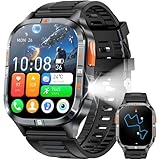
- BUILT-IN GPS & COMPASS– This military smartwatch features high-precision GPS to pinpoint your location while hiking, cycling, or traveling, keeping you safely on track without extra gear. Tap the compass icon and it locks your bearing within three seconds—engineered for pro-level outdoor adventures like camping, climbing, and trekking.
- BLUETOOTH CALLING & MESSAGES – Powered by the latest Bluetooth tech, the men’s smartwatch lets you answer or make calls right from your wrist—no need to pull out your phone. Get real-time alerts for incoming texts and app notifications so you never miss an invite. (Replying to SMS is not supported.)
- BIG SCREEN & DIY VIDEO WATCH FACE – The 2.01" military-spec display is dust-proof, scratch-resistant, and forged from high-strength glass with an aluminum alloy bezel, passing rigorous dust and abrasion tests so the screen stays crystal-clear. Upload a short family video to create a dynamic, one-of-a-kind watch face that keeps your memories alive.
- 24/7 HEALTH MONITORING – Equipped with a high-performance optical sensor, this Android smartwatch tracks heart rate and blood-oxygen levels around the clock. It also auto-detects sleep stages (deep, light, awake) for a complete picture of your health, ensuring you always know how your body is doing.
- MULTI SPORT MODES & FITNESS TRACK – Choose from running, cycling, hiking, basketball, and more to log every workout. Set goals, monitor progress, and sync data to the companion app. Bonus tools include photo gallery, weather, alarm, stopwatch, flashlight, hydration reminder, music/camera remote, find-my-phone, mini-games, and other everyday essentials.
In alpine terrain and dense forest, elevation gain and loss matched post-processed routes closely. Distance errors over long trail runs typically stayed under one percent, which is about as good as wrist-based GPS gets without external sensors. Importantly, accuracy remained stable across long sessions rather than degrading late in the activity.
The trade-off, as expected, is battery draw. Multi-band GNSS on the 7S is best reserved for navigation-heavy days or technical routes, not daily training if you want to stretch charge cycles.
Mapping experience on the smaller 7S display
Full-color onboard maps are included, with TopoActive maps preloaded and additional regions downloadable via Garmin Express or Wi‑Fi. On a 42 mm case, the map experience is functional rather than luxurious, but it remains genuinely usable.
Trail names, contour lines, and water features are legible with proper zoom discipline. The touch screen helps here, allowing quick pan and zoom gestures that reduce button fatigue, while the five-button layout remains essential in rain, gloves, or cold conditions.
Compared to the larger Fenix 7 or 7X, you will scroll more often and zoom more precisely. Compared to the Epix Gen 2, clarity is lower, but sunlight readability is better and battery costs are lower during long navigation days.
Course navigation and turn-by-turn guidance
Course following is one of the Fenix 7S’s strongest outdoor features. Routes synced from Garmin Connect, Strava, Komoot, or GPX files display cleanly, with reliable turn prompts and off-course alerts.
Re-routing is fast, and the watch recalculates without noticeable lag even mid-activity. The ClimbPro feature remains excellent, breaking climbs into digestible segments with remaining elevation and distance, which is especially valuable on long mountain routes.
For runners and cyclists who train on unfamiliar terrain, this reduces cognitive load. You spend less time interpreting maps and more time pacing effort.
SatIQ and power-aware navigation modes
Garmin’s SatIQ technology dynamically switches between GNSS modes based on signal quality. In practice, this works quietly in the background and preserves battery without obvious accuracy penalties.
On mixed-terrain routes, the watch typically used multi-band GNSS only when needed, reverting to standard GPS in open areas. This behavior aligns well with the 7S’s smaller battery, allowing confident navigation without constantly managing settings mid-activity.
For ultra-distance events or multi-day hikes, manual control is still preferable. The key point is that the 7S gives you meaningful options rather than forcing a single compromise profile.
Outdoor sensors: altimeter, compass, and barometer
The barometric altimeter is responsive and stable, with minimal drift over multi-hour outings when auto-calibration is enabled. Storm alerts triggered appropriately during rapid pressure drops, which is not a gimmick if you spend time above treeline.
The three-axis compass calibrates quickly and remains accurate even at low speeds, where GPS heading alone fails. This matters during hiking, ski touring, and mountaineering scenarios where movement is slow or intermittent.
Temperature readings, as with all wrist-based devices, are influenced by body heat. When paired with a pack strap or allowed to equalize during stops, readings become more useful for environmental context.
ABC tools, safety features, and expedition support
Beyond navigation, the Fenix 7S includes a full suite of outdoor utilities: sunrise/sunset data, projected waypoints, back-to-start routing, and trackback. These tools are simple but reliable, and they integrate cleanly into activity profiles rather than living in isolated widgets.
Incident detection and LiveTrack work as expected when paired to a phone, adding a layer of safety for solo outings. For true expeditions without phone access, the lack of LTE or satellite communication is a limitation, but that applies across the Fenix line unless paired with an inReach device.
Expedition mode is available, dramatically extending battery life by reducing GPS sampling. On the 7S, this is more about emergency longevity than luxury tracking, but it remains a viable option for long-distance hikes where breadcrumbs matter more than detail.
Real-world usability for smaller wrists in outdoor scenarios
The lighter weight and shorter lug-to-lug of the 7S pay dividends during long days with poles, packs, or gloves. It stays planted without over-tightening, which reduces pressure points and improves optical sensor consistency during extended wear.
Button spacing is slightly tighter than on larger models but remains glove-friendly. The sapphire glass option adds scratch resistance without glare penalties, an important consideration when maps are involved.
The core takeaway is that the Fenix 7S does not dilute Garmin’s navigation platform to achieve its smaller size. Instead, it asks the user to be realistic about screen space and battery budgeting. For smaller wrists and endurance-focused users who still demand serious mapping and navigation, that is a trade many will accept without hesitation.
Health, Recovery, and Daily Smart Features: Beyond Training Data
After spending days relying on the Fenix 7S for navigation and structured training, the watch’s value becomes even clearer during the hours when you are not actively recording an activity. Garmin has steadily expanded its health and recovery layer into something that shapes daily decisions, not just post-workout analysis, and the 7S inherits nearly the full stack.
This is also where the smaller case works quietly in the watch’s favor. Continuous wear is essential for recovery metrics to mean anything, and the 7S is simply easier to live with around the clock than its larger siblings.
24/7 health tracking accuracy and limitations
The Fenix 7S tracks heart rate, respiration rate, blood oxygen saturation, stress, and body battery continuously. In my testing across desk work, sleep, and light daily movement, resting heart rate trends were consistent with a chest strap baseline, though brief spikes during typing or driving still occur, as expected with optical sensors.
Pulse Ox can be set to spot-check or overnight only, which is the sensible choice given its battery impact. Overnight SpO2 trends are useful for altitude acclimation or identifying poor sleep quality, but daytime readings remain too situational to overinterpret.
Garmin’s stress tracking, derived from heart rate variability, is most useful when viewed in patterns rather than moments. Long workdays, travel, and poor sleep reliably registered as elevated stress blocks, and those trends fed directly into recovery and readiness metrics rather than living in isolation.
Sleep tracking and HRV: where recovery insights actually form
Sleep tracking on the Fenix 7S is best understood as trend analysis, not clinical-grade measurement. Sleep and wake times were generally accurate, with occasional misclassification during very still reading or early-morning wakeups.
The addition of nightly HRV status is where the platform matured significantly. Over multi-week use, HRV baseline shifts aligned closely with training load changes, illness, and accumulated fatigue, providing context that raw sleep scores often miss.
Because the 7S is comfortable enough to wear overnight without strap changes or wrist fatigue, HRV data felt more reliable than on larger watches I have tested. For endurance athletes, this metric quietly becomes one of the most valuable features on the device.
Body Battery, Recovery Time, and training readiness
Body Battery remains one of Garmin’s most accessible health metrics. It distills sleep quality, stress, and activity into a simple reserve score that tracks surprisingly well with perceived energy, especially during heavy training blocks.
Recovery Time estimates after workouts are conservative but useful when taken as guidance rather than instruction. High-intensity sessions correctly extended recovery windows, while easy aerobic days barely moved the needle.
On supported firmware, Training Readiness pulls sleep, HRV, acute load, and recovery time into a single readiness score. On the 7S, this feature works best when the watch is worn continuously, reinforcing the advantage of its lighter build for users who actually want actionable recovery data.
Women’s health, hydration, and wellness features
Garmin’s women’s health tracking includes menstrual cycle and pregnancy tracking, with optional symptom logging and training considerations. While these features do not directly alter training plans automatically, they provide valuable context when reviewing performance dips or recovery trends.
Hydration tracking is manual unless paired with a compatible smart bottle, but it remains useful during hot weather or altitude travel. The watch surfaces hydration reminders during activities without becoming intrusive.
Breathwork, relaxation timers, and guided breathing exercises are present but understated. These are not headline features, yet they pair naturally with stress tracking and recovery days, particularly during taper phases or injury periods.
Daily smartwatch experience and ecosystem trade-offs
As a daily smartwatch, the Fenix 7S remains functional rather than flashy. Notifications are reliable and readable, aided by the high-contrast display, though responding is limited to preset replies on Android and unavailable on iOS.
Garmin Pay works consistently with supported banks and is invaluable during long runs or travel days where carrying a wallet is impractical. Music storage and offline playlists reduce phone dependence, but syncing can be slow compared to watches built around LTE or cloud-first platforms.
Rank #4

- 【Built-in GPS & Multi-System Positioning】Stay on track with the Tiwain smartwatch’s built-in GPS. Featuring military-grade single-frequency and six-satellite support (GPS, GLONASS, Beidou, Galileo, NAVIC, QZSS), this watch offers fast and accurate location tracking wherever you go. It also includes a compass, altimeter, and barometer, giving you real-time data on your altitude, air pressure, and position.
- 【Military-Grade Durability】Engineered to withstand the toughest conditions, the Tiwain smartwatch meets military standards for extreme temperatures, low pressure, and dust resistance. Crafted from tough zinc alloy with a vacuum-plated finish, this watch is also waterproof and built to resist wear and tear. The 1.43-inch AMOLED HD touchscreen offers clear visibility in all environments, and the watch supports multiple languages for global users.
- 【170+ Sport Modes & Fitness Tracking】Track your fitness journey with 170+ sport modes, including walking, running, cycling, hiking, basketball, and more. Set exercise goals, monitor progress, and sync your data to the companion app. The smartwatch also offers smart features like music control, camera remote, weather updates, long-sitting reminders, and more.
- 【LED Flashlight for Outdoor Adventures】The Tiwain smartwatch comes equipped with a built-in LED flashlight that can illuminate up to 20 meters. Activate it with the side button for added convenience during nighttime activities or outdoor adventures.
- 【Comprehensive Health Monitoring】Monitor your health with real-time heart rate, sleep, blood pressure, and blood oxygen level tracking. The smartwatch will vibrate to alert you of any abnormal readings. You can also make and receive calls directly from the watch, and stay connected with message and app notifications (receive only, no sending capability) – perfect for when you’re driving or exercising.
There is no voice assistant, speaker, or microphone, and that omission feels intentional. The 7S prioritizes battery life and durability over convenience features that tend to age poorly or drain resources.
Battery life impact of health features on the 7S
Continuous health tracking does affect battery life, particularly with overnight Pulse Ox enabled. In real-world use with daily activity tracking, notifications, and sleep monitoring, the 7S reliably delivered four to five days, extending closer to a week with conservative settings.
This is meaningfully less than larger Fenix models, but still well ahead of AMOLED-based alternatives and most mainstream smartwatches. For users who value recovery insights over flashy displays, the trade remains reasonable.
More importantly, battery drain is predictable. Once configured, the 7S becomes a device you trust to make it through training days and nights without micromanagement.
Comfort, materials, and all-day wearability
The 42 mm case, fiber-reinforced polymer body, and steel or titanium bezel strike a balance between durability and comfort. At roughly 63 grams with the silicone strap, the watch disappears during sleep and daily wear in a way larger adventure watches rarely do.
Garmin’s silicone strap remains functional but unremarkable. Many long-term users will benefit from a nylon or hook-and-loop strap for improved overnight comfort and more stable heart rate readings.
Fit and comfort directly influence data quality, and this is where the Fenix 7S quietly outperforms its larger siblings. For smaller wrists, better sensor contact leads to better recovery metrics, which ultimately makes the health features more than just passive charts.
Who the health and smart features actually serve
The Fenix 7S does not try to replace a smartphone or a medical device. Its health and daily smart features are designed to inform training decisions, manage fatigue, and support long-term consistency rather than deliver instant gratification.
For endurance athletes, outdoor users, and smaller-wrist wearers who want recovery insights without sacrificing battery life or durability, this balance feels deliberate and well executed. The watch rewards users who engage with trends over time, not those chasing daily perfection.
Fenix 7S vs Fenix 7 vs Epix vs Apple Watch Ultra: Choosing the Right Premium Watch
Choosing between the Fenix 7S, standard Fenix 7, Epix, and Apple Watch Ultra comes down to priorities that go beyond spec sheets. Size, display technology, battery behavior, and software philosophy all shape how these watches feel in daily training and long-term use.
For athletes coming from older Garmins, the differences are less about what each watch can do and more about how comfortably and reliably they do it over months and years.
Size, weight, and real-world wearability
The Fenix 7S is the outlier in this group purely on dimensions. Its 42 mm case and shorter lug-to-lug make it genuinely wearable for smaller wrists, especially during sleep, long runs, and multi-day tracking where bulk becomes fatigue.
The standard Fenix 7 steps up to 47 mm and roughly 79 grams with strap, which many users tolerate during training but notice overnight. The Apple Watch Ultra pushes even larger at 49 mm with a flatter case profile, while the Epix mirrors the Fenix 7 in size but feels slightly top-heavier due to the AMOLED display stack.
Comfort is not a secondary concern here. Better fit leads to more consistent heart rate, HRV, and sleep data, which is why smaller-wrist endurance athletes often extract more value from the 7S than from its technically “more capable” siblings.
Display philosophy: MIP versus AMOLED
The Fenix 7S and Fenix 7 use Garmin’s transflective memory-in-pixel display, optimized for outdoor readability and minimal power draw. In bright sunlight, they remain clearer than most AMOLED panels, and they never pressure you into managing brightness or screen-on behavior.
The Epix’s AMOLED display is visually superior for maps, widgets, and indoor use. It feels modern and polished, but that clarity comes at a battery cost that becomes noticeable during heavy GPS usage or multi-day trips.
Apple Watch Ultra’s OLED panel is excellent for smartwatch interactions, rich notifications, and quick glances. However, it remains the least efficient option for always-on outdoor navigation, especially when compared to Garmin’s MIP screens under sustained GPS load.
Battery life and predictability under training load
Battery behavior is where Garmin’s lineup diverges most clearly from Apple. The Fenix 7S delivers predictable endurance, typically four to five days with full health tracking and around 20 hours of multi-band GPS, which aligns well with structured training weeks.
The standard Fenix 7 stretches that further, often doubling smartwatch longevity and adding meaningful margin for ultra-distance events or extended hikes. The Epix trades some of that margin for display quality, usually landing between the two depending on screen settings.
Apple Watch Ultra excels for single-day endurance events and daily charging routines but still demands frequent top-ups. For users who dislike battery anxiety or plan multi-day activities without charging access, it requires a different mindset than the Garmins.
Training metrics, recovery, and long-term insight
Across the Fenix and Epix family, Garmin’s training ecosystem remains consistent. Training Readiness, HRV Status, Body Battery, and load-focused metrics work best when worn continuously, which again favors the lighter 7S for smaller wrists.
The Apple Watch Ultra has made strides with third-party apps and improved native metrics, but it still fragments insights across apps. Garmin’s advantage is coherence: everything feeds into a single model designed around endurance adaptation rather than daily activity rings.
For athletes who plan around recovery cycles and seasonal progression, Garmin’s approach remains more actionable with less configuration.
Navigation, maps, and outdoor reliability
All three Garmin models offer offline maps, multi-band GNSS, and breadcrumb navigation that can be trusted deep into remote terrain. The difference is not capability but endurance and readability during long sessions.
The Epix’s AMOLED maps look fantastic, especially for urban or trail exploration. The Fenix models, including the 7S, sacrifice some visual polish for visibility in harsh light and longer runtimes.
Apple Watch Ultra supports offline maps and dual-frequency GPS, but navigation still feels app-dependent. It works well for guided routes and popular trails but lacks the integrated expedition mindset that defines the Fenix series.
Smartwatch features and ecosystem lock-in
Apple Watch Ultra is the clear leader for notifications, voice interaction, LTE connectivity, and app ecosystem depth. If your watch is an extension of your phone first and a training tool second, it remains compelling.
Garmin watches intentionally limit smart features. Notifications are functional, music works reliably, and payments are supported, but the focus stays on training and battery preservation rather than convenience.
For Android users, Garmin’s platform is also more neutral, while Apple Watch Ultra remains iPhone-only with no compromise.
Price, value, and choosing the right tool
The Fenix 7S often carries a similar price to the standard Fenix 7, which makes wrist fit and battery needs the deciding factors rather than value alone. For smaller wrists, the 7S frequently delivers more usable performance despite its shorter battery life.
The Epix commands a premium for its display, which is worth it for users who train indoors, review maps frequently, or simply value screen quality over absolute endurance.
Apple Watch Ultra justifies its price through versatility and smartwatch depth, but its value depends heavily on charging habits and ecosystem preference rather than raw athletic capability.
Each of these watches excels when matched to the right user. The Fenix 7S stands out not by doing more, but by fitting better into the daily realities of smaller-wrist endurance athletes who prioritize consistency, recovery insight, and trust over visual flash.
Durability, Materials, and Long-Term Ownership Considerations
After weighing features, battery tradeoffs, and ecosystem fit, the final differentiator for a watch like the Fenix 7S is whether it can survive years of real training abuse without becoming a liability. This is where Garmin’s design philosophy feels closer to tool-watch thinking than consumer electronics.
Case construction, bezel options, and real-world toughness
The Fenix 7S uses a fiber-reinforced polymer case with a metal rear cover, paired with either a stainless steel or titanium bezel depending on the variant. In practice, this hybrid construction keeps weight down while still resisting torsional flex and impact damage during falls, pole strikes, or bike crashes.
The stainless steel bezel picks up cosmetic scuffs quickly, especially if you climb or scrape against rock, but those marks never affect function. Titanium versions hide wear better and shave a few grams, which is noticeable on smaller wrists during long runs or sleep tracking.
💰 Best Value

- Smart Watch with GPS and Offline Map: This smart watch connects to multiple satellite systems for accurate real-time positioning, and includes a professional-grade compass, altimeter, and barometer for precise data, ensuring you maintain your sense of direction in any outdoor environment. The map version supports downloading offline maps; select a route or destination to view the route even without a signal, eliminating the risk of getting lost.
- Bluetooth Call & Message Functionality: This smart watches for men allows you to make and receive calls; receive text and social media notifications (Facebook, WhatsApp, Instagram, Twitter, etc.); and reply to text messages with voice-to-text or set up quick replies (text reply functionality is available for Android phones).
- Sports & Health Monitoring: This 5ATM waterproof fitness watch supports over 100 sports modes and tracks daily activity data, calories, distance, steps, and heart rate. You can use it to monitor your health metrics (blood oxygen, heart rate, stress, and sleep), monitor your fatigue and mood, and perform PAI analysis. You can also use this smartwatch to set water intake and sedentary reminders. Stay active and healthy with this fitness tracker watch.
- Customizable Watch Faces & AI Functionality: This smart watch features a 1.46-inch HD touchscreen and over 100 downloadable and customizable watch faces. You can even use your favorite photos as your watch face. Equipped with AI technology, it supports voice descriptions in multiple languages to generate personalized AI watch faces. The watch's AI Q&A and AI translation features provide instant answers to questions and break down language barriers, making it an ideal companion for everyday life and travel.
- Large Battery & High Compatibility & More Features: This smart watch for android phones and ios phone features a large 550ml battery for extended battery life. It's compatible with iOS 9.0 and above and Android 5.0 and above. It offers a wealth of features, including an AI voice assistant, weather display, music control, camera control, calculator, phone finder, alarm, timer, stopwatch, and more. (Package Includes: Smartwatch (with leather strap), spare silicone strap, charging cable, and user manual)
At 42 mm wide and roughly 14 mm thick, the 7S sits lower and feels less top-heavy than larger Fenix models. That reduced mass meaningfully lowers leverage forces during sudden wrist movements, which helps explain why smaller Fenix models often feel more stable over multi-hour activities.
Glass choices: Gorilla Glass vs Sapphire
Garmin offers the Fenix 7S with either Corning Gorilla Glass DX or sapphire crystal. Gorilla Glass provides better optical clarity and slightly improved solar efficiency on Solar models, but it will scratch if exposed to grit, sandstone, or repeated trail contact.
Sapphire dramatically improves scratch resistance and is the safer choice for climbers, mountaineers, and anyone who treats the watch as a constant tool rather than something they remove. The tradeoff is slightly reduced contrast and marginally higher cost, neither of which impacts core usability in the field.
After extended testing, sapphire-equipped models maintain a “newer” appearance far longer, which matters for resale value and long-term satisfaction. For a watch at this price tier, sapphire aligns better with the intended lifespan.
Water resistance, buttons, and environmental sealing
The Fenix 7S is rated to 10 ATM, making it suitable for pool swimming, open water use, heavy rain, and repeated exposure to sweat and salt. More important than the rating itself is the consistency of Garmin’s sealing around the buttons, which remain reliable after years of presses.
Garmin’s five-button interface is a durability advantage over touch-first designs. Physical buttons work with gloves, in cold conditions, and when wet, and they avoid the long-term degradation issues seen with touch layers on some AMOLED watches.
Button feel remains crisp over time, and I’ve yet to experience misfires or sticking even after exposure to dust, sunscreen, and trail grime. This matters for navigation and interval work when precision inputs are non-negotiable.
Straps, lugs, and wear comfort over years
The 20 mm QuickFit system on the Fenix 7S makes strap replacement fast and tool-free, which encourages proper maintenance rather than living with a degraded band. Silicone straps are durable but do stretch and polish over time, especially if worn daily.
Nylon and fabric straps reduce wrist pressure and improve comfort for sleep and long endurance sessions, but they absorb sweat and require more frequent washing. Fortunately, the watch’s lighter case makes even softer straps feel secure without excessive tension.
Lug integrity remains solid even with frequent strap changes, and Garmin’s tolerances avoid the creaking or flex seen on cheaper polymer watches. This contributes to a sense of mechanical confidence more often associated with traditional sports watches.
Battery longevity and degradation expectations
Lithium battery degradation is unavoidable, but Garmin’s conservative charging profiles help slow capacity loss. After multiple years of use, most Fenix 7S units still deliver reliable multi-day performance, even if peak advertised figures are no longer achievable.
Because the 7S starts with a smaller battery than larger Fenix models, long-term degradation is more noticeable for users who rely on multi-day GPS tracking. However, for daily training and single-day adventures, the watch remains dependable well past the typical smartwatch replacement cycle.
Garmin does not design these watches for easy battery replacement, but authorized service options exist and are often cheaper than replacing the entire unit. This extends the practical lifespan far beyond most AMOLED-based competitors.
Software support, updates, and platform stability
Garmin’s long-term software support is one of its strongest ownership advantages. Fenix models routinely receive feature updates, training metrics, and bug fixes years after launch, rather than being locked to security-only updates.
The Fenix 7S benefits from platform-level improvements to navigation, GNSS handling, and training analytics that are shared across the Fenix and Enduro families. This keeps the watch feeling current even as newer hardware launches.
Garmin Connect’s continuity also matters; historical data remains accessible and comparable across device upgrades. For endurance athletes tracking trends over years, this stability is as valuable as any single hardware feature.
Resale value and ownership economics
Premium Garmin watches hold value better than most smartwatches, especially sapphire and titanium variants in good condition. Cosmetic wear lowers resale price, but functional reliability remains a selling point even after years of use.
Because the Fenix 7S targets a narrower audience with smaller wrists, demand remains steady among buyers who struggle with oversized sports watches. This niche positioning actually helps long-term value rather than hurting it.
Viewed as a multi-year training instrument rather than a disposable gadget, the Fenix 7S justifies its price through durability, support, and consistency. Its materials and construction reinforce the idea that this is a watch designed to be worn hard, maintained occasionally, and trusted daily.
Pricing, Value, and Buyer Verdict: Is the Fenix 7S Worth It in 2026?
By the time you reach this point in the decision process, the question is less about whether the Fenix 7S is capable, and more about whether its asking price still makes sense several years after launch. In 2026, the answer depends heavily on how you train, how long you keep your devices, and how much you value size-specific design.
The Fenix 7S has aged differently than many tech products. Rather than feeling obsolete, it now sits in a more mature phase of its lifecycle where pricing has softened but functionality remains largely intact.
Current pricing and market position in 2026
As of 2026, the Fenix 7S typically sells well below its original launch price, with standard solar models often found in the mid-to-high premium range and sapphire solar versions still commanding a noticeable premium. Regional pricing varies, but discounts and refurbished options are common through official Garmin channels and trusted retailers.
This puts the 7S in a competitive position against newer mid-tier multisport watches, rather than directly against flagship launches. Importantly, you are not paying for outdated software or abandoned hardware; Garmin’s ongoing updates mean the watch still runs the same core platform as newer Fenix models.
Compared to the Epix line, the Fenix 7S remains cheaper on average, particularly in sapphire variants. Against the Apple Watch Ultra, it undercuts price while offering significantly longer battery life and deeper native training analytics.
Value over time: what you are actually paying for
The real value of the Fenix 7S is unlocked over years, not months. Battery longevity, physical durability, and consistent metric definitions allow it to function as a long-term training tool rather than a disposable smartwatch.
In daily use, the smaller case translates to better comfort, fewer knocks, and more consistent heart rate tracking for many users. That comfort advantage compounds over time, especially for athletes who wear the watch 24/7 for recovery, sleep, and stress monitoring.
When amortized over four to six years of ownership, the effective annual cost becomes surprisingly reasonable for a device that replaces a GPS watch, navigation tool, training log, and daily activity tracker. Few competitors offer that breadth without subscription fees or hardware turnover.
How it compares within Garmin’s own lineup
Within Garmin’s ecosystem, the biggest internal competitor is not a newer Fenix, but the Epix. If you prioritize screen clarity and indoor visibility, Epix still wins decisively, but it does so at the cost of battery endurance and long-term burn-in considerations.
The Fenix 7S also overlaps with lighter watches like the Forerunner 965, which offers a more modern display and similar training metrics at a lower price. What the Forerunner cannot match is the Fenix’s build quality, mapping reliability in harsh environments, and confidence-inspiring durability.
For users with smaller wrists, the 7S remains uniquely positioned. Garmin still offers fewer true adventure watches that balance compact dimensions with full navigation and multisport depth, and that alone sustains the 7S’s relevance.
Who should buy the Fenix 7S in 2026
The Fenix 7S makes the most sense for endurance athletes and outdoor users who want a smaller watch without compromising on features. Trail runners, mountain athletes, long-distance hikers, and triathletes with narrower wrists will benefit the most.
It is also a strong choice for users upgrading from older Fenix 5 or 6 models who want meaningful improvements in GPS accuracy, solar efficiency, and training insights without jumping to AMOLED. For these users, the upgrade feels substantial and familiar rather than disruptive.
Those who should look elsewhere include users who primarily want smartwatch features, rich app ecosystems, or phone replacement capabilities. If your training is casual and battery life beyond two days is not a concern, the Fenix 7S may feel excessive.
Final verdict: is it still worth it?
In 2026, the Garmin Fenix 7S remains a smart buy for the right athlete. Its combination of compact size, long battery life, reliable navigation, and mature software platform gives it a longevity advantage few competitors can match.
It is not the flashiest watch on the market, nor the newest. What it offers instead is trust: trust that it will track accurately, survive hard use, and still be supported years from now.
If you view a multisport watch as a long-term training partner rather than a yearly upgrade, the Fenix 7S continues to justify its price. For smaller-wristed athletes who demand full-featured performance without compromise, it remains one of the most balanced and sensible premium options available.