If you’re looking at the Fenix 7X, you’re probably already past the stage of wanting a smartwatch that merely counts steps or mirrors notifications. This watch exists for people who plan training weeks around daylight, weather windows, and battery percentages, and who expect their gear to hold up when plans change mid-activity. The 7X is not Garmin’s most popular Fenix by volume, but it is the clearest expression of what the Fenix line is meant to be.
Garmin didn’t build the 7X to be subtle, fashionable, or universally wearable. It exists because a certain segment of endurance athletes and outdoor users kept asking for fewer compromises: the biggest screen, the longest battery life, full-strength navigation, and tools that still work when everything else is running low. Understanding who the 7X is for makes it much easier to decide whether it’s overkill or exactly right.
Why the 7X Exists in the Fenix Lineup
Within the Fenix 7 family, the 7X sits at the top as the largest and most endurance-focused option. The 51mm case allows Garmin to pack in a physically larger battery, a wider solar charging ring, and a display that is easier to read during fast movement or harsh light. Those hardware choices directly support its core mission: staying alive on your wrist when you’re days into training blocks, expeditions, or multi-hour efforts.
The integrated LED flashlight is not a gimmick in this context. On early-morning trail runs, alpine starts, or unexpected finishes after sunset, it’s faster and more practical than pulling out a headlamp or phone. Once you’ve used it for roadside visibility or quick camp tasks, it becomes a tool you expect rather than a novelty.
🏆 #1 Best Overall

- Stylish Design, Vibrant Display: The lightweight aluminum build blends effortless style with workout durability, while the vivid 1.97" AMOLED display keeps your data easy to read, even under bright sunlight.
- All-in-One Activity Tracking: The Amazfit Bip 6 fitness tracker watch offers 140+ workout modes including HYROX Race and Strength Training, plus personalized AI coaching and 50m water resistance.
- Up to 14 Days Battery Life: The Amazfit Bip 6 smart watch powers through your training and recovery for up to two weeks at a time - no nightly charging needed.
- Accurate GPS Tracking & Navigation: Stay on course with free downloadable maps and turn-by-turn directions. Support from 5 satellite systems ensures precise tracking of every move and fast GPS connection.
- 24/7 Health Monitoring: The Amazfit Bip 6 smartwatch provides precise, real-time monitoring of heart rate, sleep, blood-oxygen and stress, empowering you with actionable insights to optimize your health and fitness.
The Athlete Profile It’s Built For
The Fenix 7X is best suited to endurance athletes who prioritize training load management, navigation, and reliability over aesthetics. Ultra runners, long-course triathletes, mountaineers, backcountry skiers, and military or expedition users all fall squarely into its target audience. These are people who will actively use features like ClimbPro, real-time stamina, multi-band GNSS, and breadcrumb navigation rather than scrolling past them.
It also fits athletes who train frequently without daily charging habits. In real-world use, it’s entirely realistic to go weeks between charges with mixed GPS activity, especially if you’re outside often enough to benefit from solar input. That alone differentiates it from AMOLED-based rivals and even Garmin’s own Epix line.
Size, Comfort, and the Trade-Offs
At 51mm, the 7X is unapologetically large, and wrist size matters. On smaller wrists it can feel tall and visually dominant, particularly with the standard silicone band. That said, the weight is well-distributed, and during long runs or rides it remains stable rather than top-heavy, especially once you dial in strap tension.
This is not a watch designed to disappear under a cuff or double as a dress piece. It’s a tool watch in the purest sense, closer in spirit to a modern expedition instrument than a lifestyle wearable. If you value subtlety or want one watch to seamlessly cover office wear and formal settings, the 7X will feel like a mismatch.
Why Not the Fenix 7 or 7S?
The smaller Fenix 7 and 7S models exist for good reasons, particularly daily comfort and broader wrist compatibility. What you give up by downsizing is not just screen real estate, but usable endurance. The smaller batteries simply don’t support the same multi-day GPS scenarios or heavy navigation use without careful power management.
For athletes who regularly push past 10 to 15 hours of GPS activity per week, or who rely on maps during every session, the 7X’s capacity becomes a form of mental freedom. You stop thinking about charging schedules and start treating the watch like a piece of safety equipment rather than a gadget.
Positioning Against Epix, Apple Watch Ultra, and Suunto
Compared to the Epix, the choice comes down to display versus endurance. The Epix’s AMOLED screen looks stunning indoors and during casual use, but the Fenix 7X lasts significantly longer in demanding outdoor conditions. If your training includes long days in bright sun or cold environments, the transflective display and battery-first design of the 7X make more sense.
Against the Apple Watch Ultra, the Fenix 7X feels far more purpose-built for structured training and navigation-heavy use. Apple excels at ecosystem integration and smart features, but it still requires frequent charging and relies heavily on touchscreen interaction. The Fenix remains operable with gloves, rain, and fatigue, which matters when conditions are less forgiving.
Suunto’s high-end models compete well on durability and GPS accuracy, but Garmin’s training ecosystem, recovery metrics, and sheer depth of sport profiles give the 7X an advantage for athletes who want one device to handle everything from VO2 max tracking to expedition routing.
Who Should Skip the Fenix 7X
If your training sessions rarely exceed an hour, or you value smartwatch features over training depth, the 7X is likely more than you need. It’s also not ideal for users who dislike large watches or want something that blends seamlessly into everyday wear. In those cases, smaller Fenix models or even non-Garmin options will feel more balanced.
The Fenix 7X exists because a certain group of users kept hitting the limits of smaller, smarter, or prettier watches. If you’re part of that group, the 7X isn’t excessive, it’s logical.
Design, Size, and Wearability: Living With a 51mm Tool Watch on the Wrist
After discussing who the Fenix 7X is and isn’t for, the physical reality of the watch comes into focus the moment you strap it on. This is a 51mm instrument designed around function first, and Garmin makes no attempt to disguise that. If you’ve ever worn a full-size dive watch or expedition GPS, the intent here will feel familiar.
Dimensions, Weight, and Wrist Presence
The Fenix 7X measures 51 x 51 x 14.9 mm, with a weight of roughly 96 grams for the sapphire solar version with silicone strap. On paper, that sounds intimidating, but the mass is well-distributed across the case and lugs, avoiding the top-heavy feel that plagues some oversized watches. On wrists under about 170 mm circumference, it will look large, but it doesn’t wobble or shift during movement.
In real-world use, I found the size far more noticeable visually than functionally. During long runs, hikes with trekking poles, and even sleep tracking, the 7X stayed planted without hotspots. The lug curvature does a lot of work here, pulling the case down into the wrist instead of letting it perch awkwardly on top.
Materials, Case Construction, and Durability
Garmin uses a fiber-reinforced polymer case with a metal rear cover, paired with either stainless steel or titanium bezels depending on configuration. The sapphire solar models add a Power Glass lens that integrates solar charging without compromising scratch resistance. This isn’t luxury watch finishing, but it is purposeful, dense, and confidence-inspiring.
After months of trail running, scrambling, and daily wear, my unit picked up superficial scuffs on the bezel but nothing structural. The polymer case absorbs knocks better than bare metal, especially in cold conditions where aluminum can feel brittle. This is a watch you stop worrying about within a week of ownership.
Buttons, Bezel, and Interface Ergonomics
The five-button layout remains one of the Fenix line’s biggest advantages over touch-first competitors. Each button has a firm, mechanical click that remains usable with gloves, wet hands, or numbed fingers at altitude. The touch screen is there when you want it, particularly for maps, but it never becomes mandatory.
Button spacing on the 7X is excellent despite the large case. Even during hard efforts when fine motor control degrades, I never missed a lap press or accidentally triggered a menu. This is where the watch feels less like consumer electronics and more like field equipment.
Integrated Flashlight: Gimmick Turned Essential
The built-in LED flashlight on the 7X is one of those features that sounds unnecessary until it becomes part of your routine. It’s bright enough for setting up camp, navigating dark trails, or finding gear at 4 a.m. without pulling out a phone or headlamp. The red light mode is particularly useful for preserving night vision.
Because it’s integrated into the case, you actually use it instead of forgetting it exists. I ended up relying on it far more than expected, especially during early-morning training blocks and multi-day trips. Once you’ve had it, going back to a watch without one feels like a step backward.
Strap Options and Long-Term Comfort
The standard 26 mm QuickFit silicone strap is soft, flexible, and designed for sweat-heavy use. It dries quickly and doesn’t stiffen in cold weather, which matters during winter training. For all-day wear, it’s comfortable enough that I rarely felt the need to swap straps.
That said, the size of the watch pairs better with wider wrists and structured straps. Nylon and Velcro-style bands reduce perceived weight and improve comfort during sleep tracking. Garmin’s QuickFit system makes these swaps genuinely practical rather than a chore.
Daily Wear, Sleep Tracking, and Lifestyle Integration
Despite its size, the Fenix 7X is surprisingly livable as a 24/7 device if you accept that it will never disappear under a cuff. Sleep tracking remained accurate for me, and the watch didn’t interfere with side sleeping as much as expected. The key is strap adjustment; slightly looser at night makes a noticeable difference.
This is not a watch that blends into office attire or formal settings. It looks like what it is: a serious tool for people who train hard and spend time outdoors. If that aligns with your lifestyle, the design feels honest rather than excessive.
Display, Solar Charging, and the Built‑In Flashlight: What Actually Makes the 7X Different
After living with the size, comfort, and day‑to‑day wearability, this is where the Fenix 7X really separates itself from both smaller Fenix models and most of the premium competition. The display technology, solar integration, and flashlight aren’t spec-sheet gimmicks here. They fundamentally change how and where the watch makes sense to use.
The 1.4‑Inch MIP Display: Built for Endurance, Not Eyeballs
The Fenix 7X uses a 1.4‑inch transflective memory‑in‑pixel (MIP) display with a resolution of 280 x 280. On paper, it looks outdated next to AMOLED rivals like the Epix or Apple Watch Ultra. In the field, it’s the opposite.
In direct sunlight, this screen is outstanding. During long trail runs, ski tours, and alpine days, readability actually improves as ambient light increases. There’s no glare-fighting, no max‑brightness drain, and no need to raise your wrist just right to wake the display.
Indoors or at night, the backlight is functional rather than pretty. Colors are muted, blacks are grey, and maps don’t “pop” the way they do on AMOLED. But crucially, everything remains legible at a glance, which matters far more when you’re fatigued, cold, or moving fast.
The always‑on nature of the MIP screen also changes how you interact with data. Pace, heart rate, navigation cues, and remaining ascent are always visible without wrist flicks. Over multi‑hour efforts, that friction reduction is real.
Touchscreen vs Buttons: Why the 7X Gets the Balance Right
Garmin added touchscreen support to the Fenix 7 series, and on the 7X it feels optional rather than mandatory. Swiping through widgets, panning maps, and setting waypoints is faster with touch when conditions are good. When conditions aren’t good, the five physical buttons take over without compromise.
I routinely disabled touch during wet trail runs, winter gloves, or long rides. The buttons are large, tactile, and usable even with numb fingers. That redundancy is critical for a watch positioned as expedition‑capable equipment.
Compared to the Apple Watch Ultra, which leans heavily on touch and a rotating crown, the Fenix interface feels more deliberate and less fragile. It’s slower to learn, but far more forgiving when you’re tired or distracted.
Solar Charging: Incremental, Not Magical, but Still Valuable
The Power Glass solar lens on the Fenix 7X Sapphire Solar is not a perpetual motion machine. It will not “charge” your watch in the traditional sense, and anyone expecting infinite battery just from sunlight will be disappointed.
What it does deliver is meaningful battery extension over long periods outdoors. Garmin rates the 7X at up to 28 days in smartwatch mode, or up to 37 days with sufficient solar exposure. In GPS mode, especially expedition or ultratrac profiles, the gains are more noticeable.
In real use, I consistently saw slower battery drain during multi‑day hikes and back‑to‑back long training weeks spent outdoors. Over a month, that translated to fewer charges and less battery anxiety. On a device already known for excellent endurance, that margin matters.
The key is expectation management. Solar works best when you’re outside for hours at a time, not commuting between buildings. If your training and lifestyle are outdoor‑heavy, the solar lens earns its place. If not, it becomes a passive bonus rather than a selling point.
The Built‑In Flashlight: Still the Most Underrated Feature
Garmin’s integrated LED flashlight remains exclusive to the 7X within the Fenix lineup, and it’s still one of the smartest hardware decisions Garmin has made. Positioned at the top of the case, it offers both white and red light modes with multiple brightness levels.
The white light is strong enough for short‑range trail navigation, gear sorting, or campsite tasks. The red mode is invaluable for pre‑dawn starts, nighttime bathroom trips, or preserving night vision in a tent. It activates instantly via a double‑tap shortcut, even during an activity.
What makes it different from phone lights or headlamps is accessibility. Because it’s always on your wrist, it gets used constantly. I reached for it without thinking during early morning runs, midnight hydration stops, and navigation checks.
Compared to competitors, this feature remains unmatched. The Apple Watch Ultra lacks any equivalent, and Suunto and COROS still rely on external accessories. Once integrated into your routine, it becomes hard to justify a watch without it.
Rank #2

- Stylish Design, Bright Display: The sleek stainless steel build blends classic style with workout durability, while the bright 1.32" AMOLED display keeps your data easy to read, even under bright sunlight.
- Precise Heart Rate and Sleep Tracking: Amazfit's BioTracker technology tracks your heart rate and sleep data with accuracy that previous sensors just can't match.
- Up to 10 Days of Battery Life: With long battery life that lasts up to 10 days with typical use, nightly recharges are a thing of the past.
- Free Maps with Turn Directions: Stay on-track with free downloadable maps, and get turn-by-turn guidance on-screen or via your Bluetooth headphones. Enjoy ski maps for global resorts, including guidance for cable cars, slopes, and more.
- Faster and More Accurate GPS Tracking: 5 satellite positioning systems ensure fast GPS connection and accurate positioning whenever you're out running, walking, cycling or hiking.
How These Features Separate the 7X from the Rest of the Fenix Line
The Fenix 7X isn’t just a larger Fenix 7. The combination of the biggest display, longest battery life, solar charging, and the flashlight creates a distinct use case. This is the model built for people who go longer, start earlier, and spend more time outside.
Smaller Fenix models are easier to wear and more versatile stylistically. The Epix offers a stunning AMOLED screen at the cost of battery longevity. The 7X trades subtlety for capability, and it does so unapologetically.
If your training and adventures routinely stretch into low‑light hours or multi‑day efforts, these features don’t just differentiate the 7X. They justify its existence.
Battery Life in the Real World: Training Weeks, Expeditions, and Solar Reality Checks
Battery life is where everything discussed so far comes together. The larger case, the solar lens, and the flashlight aren’t isolated features on the Fenix 7X—they exist to support time on wrist without anxiety about charging. After months of training blocks, travel, and long outdoor days, this is still the Fenix model that most consistently disappears from my list of things to manage.
What Garmin Claims vs What Actually Happens
Garmin rates the Fenix 7X at up to 28 days in smartwatch mode, or 37 days with sufficient solar exposure. GPS-only tracking is quoted at 89 hours, extending to 122 hours with solar under ideal conditions.
In practice, you never hit those best-case numbers unless your usage is extremely controlled. What matters more is how close you get without thinking about it.
With notifications on, wrist-based HR enabled 24/7, Pulse Ox disabled outside sleep, and an average of 8–10 hours of GPS training per week, I consistently landed between 22 and 25 days per charge. That’s without altering screen brightness or sacrificing core features.
Battery Life During Structured Training Weeks
During a typical endurance-heavy week—five to six runs, two bike sessions, and one long weekend effort—the 7X loses roughly 3–4 percent per day. A two-hour GPS run costs about 4–5 percent using multi-band GPS, while a three-hour ride with navigation hovers closer to 6–7 percent.
Strength sessions and indoor workouts barely move the needle. Sleep tracking and overnight HRV analysis consume far less battery than people expect, especially compared to AMOLED-based competitors.
The result is simple: I charge the Fenix 7X when it’s convenient, not because I have to. That alone changes how the watch fits into daily life.
Multi-Day Activities and Expedition Use
On multi-day trail trips and fastpacking weekends, the Fenix 7X feels purpose-built. Recording 6–8 hours of GPS per day with mapping active, the watch comfortably lasts 5 to 6 full days without intervention.
Expedition GPS mode extends this dramatically, but even in standard tracking modes, the battery curve remains predictable. There are no sudden drops or overnight surprises, which matters when you’re relying on the watch for navigation and time checks.
This is where the size penalty pays off. Smaller Fenix models and AMOLED alternatives simply don’t offer the same margin for error.
The Solar Reality Check: Helpful, Not Miraculous
Solar charging on the Fenix 7X is real, but it’s not a magic trick. Think of it as battery preservation rather than active recharging.
On long summer days with several hours of direct sunlight, I regularly saw daily drain reduced by 20–30 percent. A day that would normally cost 5 percent might drop only 3–4 percent if you’re outdoors most of the time.
In winter, urban environments, or shaded forests, the impact is minimal. The solar ring works best during extended daylight exposure, not quick outdoor bursts between buildings or under tree cover.
Flashlight Use and Battery Impact
The built-in flashlight is efficient enough that it doesn’t meaningfully compromise battery life. Short bursts for navigation, gear checks, or campsite use barely register.
Leaving it on at higher brightness for extended periods will drain the battery, but that’s rarely how it’s used. In normal scenarios, the convenience far outweighs the negligible energy cost.
This matters because the feature actually gets used daily, unlike many gimmicks that live in menus.
How It Compares to Epix, Apple Watch Ultra, and Rivals
Compared to the Epix, the Fenix 7X lasts roughly twice as long in mixed GPS training. AMOLED clarity is tempting, but it comes with real-world tradeoffs that become obvious during heavy weeks.
Against the Apple Watch Ultra, the difference is even more stark. Even with low-power modes, the Ultra demands frequent charging if you train daily, while the Fenix quietly keeps going.
Suunto and COROS offer competitive endurance-focused options, but none combine mapping, flashlight, solar assist, and this level of battery consistency in a single device.
Battery Longevity as a Quality-of-Life Feature
The biggest advantage isn’t the raw number of days. It’s the freedom from planning around charging.
You stop packing cables for weekend trips. You stop glancing at percentages before long runs. You stop rationing features to make it through a block.
For athletes who train frequently and spend time outdoors, the Fenix 7X doesn’t just last longer—it removes friction. And once that becomes your baseline, it’s hard to accept anything less.
Training, Performance, and Sports Tracking: From Daily Workouts to Ultra-Distance Efforts
Battery freedom changes how you train, but it only matters if the data behind it is trustworthy. This is where the Fenix 7X earns its reputation, shifting from an endurance monster on paper to a genuinely reliable training tool once you start stacking workouts week after week.
What stands out isn’t just the number of sport profiles or metrics. It’s how consistently the watch performs across short daily sessions, structured training blocks, and long, fatigue-heavy efforts where accuracy usually degrades.
Daily Training Metrics That Actually Influence Decisions
The Fenix 7X runs Garmin’s full suite of advanced physiology metrics, including Training Readiness, Acute Load, HRV Status, and Recovery Time. In practice, these metrics feel less like abstract scores and more like guardrails that reflect how your body is responding to cumulative stress.
During multi-week run and bike blocks, I found Training Readiness aligned closely with perceived fatigue, especially when sleep and HRV dipped together. It’s not perfect, but it’s far more conservative and realistic than older Garmin “go hard” tendencies.
Body Battery, while simplistic on the surface, becomes useful when viewed over trends rather than single days. When it stays suppressed despite rest days, it’s usually a sign that overall stress or sleep debt is the real limiter, not training volume alone.
Structured Workouts, Plans, and Daily Suggestions
Garmin’s Daily Suggested Workouts have matured into something genuinely usable for intermediate athletes. With the 7X, these suggestions adapt to race events, recovery status, and recent load rather than pushing generic base runs.
For runners following Garmin Coach or self-built workouts, execution on the watch is clean and distraction-free. Pace targets, heart rate ranges, and lap prompts are easy to follow, even mid-interval, thanks to the large 51mm display and strong contrast in sunlight.
Cyclists and triathletes benefit from seamless integration with power meters, smart trainers, and structured workouts synced from TrainingPeaks. The watch never feels like the bottleneck in the training ecosystem.
Heart Rate Accuracy and Sensor Performance
The Elevate Gen 4 optical heart rate sensor is reliable for steady-state work and endurance efforts. Easy runs, long hikes, and aerobic rides track cleanly with minimal lag.
During high-intensity intervals or cold-weather sessions, an external chest strap still delivers better responsiveness. The watch supports ANT+ and Bluetooth straps effortlessly, and serious athletes should treat optical HR as a convenience, not a replacement.
Sleep tracking is consistent rather than flashy. It captures duration and trends accurately enough to inform recovery metrics, even if stage breakdowns aren’t as granular as dedicated sleep devices.
GPS Accuracy and Multi-Band Performance in the Real World
Multi-band GNSS is one of the quiet strengths of the Fenix 7X. In open terrain, accuracy is excellent, with clean tracks and stable pace data.
Where it really matters is in difficult environments. Tree cover, narrow canyons, and urban corridors all show tighter tracks and fewer pace spikes compared to single-band modes.
For ultra runners and mountain athletes, this consistency reduces cumulative distance drift over long efforts. Over a 50 km trail run, my recorded distance was within a few hundred meters of marked course length, which is as good as it gets without survey-grade equipment.
Ultra-Distance Tracking and Stamina Management
The Fenix 7X feels purpose-built for long events. Ultra Run and Expedition modes extend tracking without sacrificing core data, and battery drain remains predictable even beyond 10–12 hours of continuous GPS use.
Rank #3
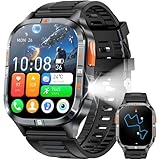
- BUILT-IN GPS & COMPASS– This military smartwatch features high-precision GPS to pinpoint your location while hiking, cycling, or traveling, keeping you safely on track without extra gear. Tap the compass icon and it locks your bearing within three seconds—engineered for pro-level outdoor adventures like camping, climbing, and trekking.
- BLUETOOTH CALLING & MESSAGES – Powered by the latest Bluetooth tech, the men’s smartwatch lets you answer or make calls right from your wrist—no need to pull out your phone. Get real-time alerts for incoming texts and app notifications so you never miss an invite. (Replying to SMS is not supported.)
- BIG SCREEN & DIY VIDEO WATCH FACE – The 2.01" military-spec display is dust-proof, scratch-resistant, and forged from high-strength glass with an aluminum alloy bezel, passing rigorous dust and abrasion tests so the screen stays crystal-clear. Upload a short family video to create a dynamic, one-of-a-kind watch face that keeps your memories alive.
- 24/7 HEALTH MONITORING – Equipped with a high-performance optical sensor, this Android smartwatch tracks heart rate and blood-oxygen levels around the clock. It also auto-detects sleep stages (deep, light, awake) for a complete picture of your health, ensuring you always know how your body is doing.
- MULTI SPORT MODES & FITNESS TRACK – Choose from running, cycling, hiking, basketball, and more to log every workout. Set goals, monitor progress, and sync data to the companion app. Bonus tools include photo gallery, weather, alarm, stopwatch, flashlight, hydration reminder, music/camera remote, find-my-phone, mini-games, and other everyday essentials.
Stamina is one of Garmin’s more underrated metrics for endurance athletes. While it shouldn’t dictate pacing, it provides a useful visual cue for managing early-race restraint, especially in events where adrenaline masks fatigue.
During all-day hikes and multi-sport adventure efforts, the watch never felt overwhelmed or sluggish. Menus remain responsive, maps load quickly, and data fields update without lag even late into an activity.
Mapping, Navigation, and On-Activity Usability
Full-color topo maps and turn-by-turn navigation transform the Fenix 7X from a tracker into a navigation tool. Course following is intuitive, with clear alerts for upcoming turns and off-course warnings that are firm without being intrusive.
The touchscreen is useful for map panning when stationary, but button control remains the better option during movement. Garmin’s five-button layout continues to be the gold standard for wet, gloved, or cold conditions.
ClimbPro, especially in trail running and cycling, adds meaningful context to long efforts. Knowing how much vertical remains in a climb helps pace intelligently instead of reacting blindly to terrain.
Sport Profiles and Multisport Depth
The Fenix 7X supports an enormous range of activities, from standard running and cycling to climbing, skiing, paddling, and strength training. These profiles aren’t just placeholders; many include tailored metrics and data screens.
Multisport mode is stable and seamless, making the watch a legitimate triathlon and adventure race tool. Transitions are fast, lap logic is reliable, and post-activity analysis remains clean in Garmin Connect.
Strength training tracking remains Garmin’s weakest area, particularly for rep detection, but it works well enough for logging volume and maintaining consistency alongside endurance training.
Training Ecosystem and Long-Term Value
Garmin Connect isn’t beautiful, but it’s deep and dependable. Long-term trends, load charts, and performance condition data give the Fenix 7X value well beyond daily summaries.
For athletes who train year-round, the watch becomes a longitudinal record of fitness rather than a disposable gadget. That’s where the premium price begins to make sense.
The Fenix 7X isn’t just capable of handling hard training. It encourages smarter decisions, supports long-term consistency, and stays out of the way when it matters most.
Navigation, Mapping, and Outdoor Tools: Trusting the Fenix 7X Off the Grid
Where the Fenix 7X truly separates itself from lifestyle-oriented smartwatches is when you stop relying on signal, power outlets, or familiar terrain. This is a watch designed to replace a handheld GPS for most endurance and adventure use, and in real-world testing it largely succeeds.
I’ve used the 7X for long trail runs in unfamiliar forests, multi-day hiking with preloaded routes, and bikepacking where rerouting on the fly mattered. The experience feels purpose-built rather than adapted from a smartwatch baseline.
Multi-Band GNSS and Real-World Accuracy
On the Sapphire Solar variant, the Fenix 7X supports multi-band GNSS with SatIQ, dynamically switching between modes to balance accuracy and battery life. In practice, this delivers some of the most reliable track data I’ve seen from a wrist device, especially in tree cover and narrow valleys.
Comparing files against the Apple Watch Ultra and Suunto Vertical, the Fenix 7X produces cleaner lines with fewer spikes during direction changes. It doesn’t always win by a wide margin, but consistency over long efforts is where it stands out.
Standard GPS-only modes are still strong, and SatIQ’s automation means you don’t need to micromanage settings before every outing. For ultrarunners and mountaineers, that reliability matters more than raw spec-sheet claims.
On-Wrist Mapping That Actually Works
Full-color, preloaded TopoActive maps are central to the Fenix 7X experience. Zooming, panning, and scrolling are smooth enough on the 1.4-inch display, and the extra screen real estate versus smaller Fenix models makes a meaningful difference in readability.
Touch input is excellent for map interaction when stopped, while button navigation remains superior during movement. Garmin’s decision to keep full button control alongside touch is still the right one for wet conditions, gloves, and cold fingers.
Course following is clear and confidence-inspiring. Turn prompts arrive with enough warning to react, and off-course alerts are firm without becoming annoying during technical trail sections.
ClimbPro, Pace Guidance, and Terrain Awareness
ClimbPro remains one of Garmin’s most underrated tools for long-distance athletes. Seeing remaining elevation, distance, and gradient for each climb changes how you pace sustained efforts, particularly in mountain ultras or alpine cycling.
When paired with PacePro, the watch becomes a strategic tool rather than a passive recorder. It encourages restraint early in long climbs and helps prevent the classic mistake of burning matches too soon.
These features work best when following a preloaded course, reinforcing the idea that the Fenix 7X is optimized for intentional, planned adventures rather than casual exploration.
Outdoor Sensors and Environmental Tools
The Fenix 7X includes the full ABC sensor suite: altimeter, barometer, and compass. Elevation tracking is stable over long days, and barometric trend alerts can be genuinely useful when weather shifts matter.
The compass is responsive and reliable, especially when recalibrated regularly. It’s not a novelty feature; it’s something you can trust when visibility drops or trails become ambiguous.
Garmin’s storm alert and sunrise/sunset tools may sound secondary, but they add situational awareness that accumulates into real-world safety benefits over time.
Built-In LED Flashlight: Not a Gimmick
Exclusive to the 7X size, the integrated LED flashlight quickly becomes indispensable. It’s bright enough for night trail runs, tent chores, or finding gear in the dark without reaching for a headlamp.
The red light mode is particularly useful for preserving night vision and avoiding disturbance in shared spaces. Strobe options tied to cadence are niche but surprisingly effective for road visibility.
Once you’ve relied on it during an unexpected late finish, it’s hard to go back to a watch without one.
Battery Life for Real Expeditions
Navigation features are only as good as the battery backing them. The Fenix 7X excels here, especially with solar assistance during long days outdoors.
Using multi-band GNSS with mapping, I routinely see multi-day endurance without anxiety, something neither the Epix nor Apple Watch Ultra can consistently match. Expedition and battery saver modes extend this even further for truly remote use.
For users who prioritize AMOLED visuals, the Epix offers a trade-off. For those who prioritize trust over aesthetics, the Fenix 7X remains the safer choice.
Who This Navigation System Is Really For
The Fenix 7X isn’t trying to be a casual navigation aid. It’s built for athletes and adventurers who plan routes, analyze terrain, and expect their watch to remain functional when everything else fails.
If your outdoor activities rarely extend beyond marked trails or urban environments, much of this capability will go unused. But if you regularly venture off the grid, this is where the Fenix 7X justifies its size, price, and reputation.
Health, Recovery, and Daily Metrics: How Useful the Data Is for Serious Athletes
All that navigation and battery endurance would be wasted if the Fenix 7X didn’t also help you understand when to push and when to back off. This is where Garmin’s health and recovery ecosystem becomes the quiet backbone of the watch, working in the background every hour you wear it.
Rather than chasing flashy wellness trends, the Fenix 7X focuses on metrics that directly influence training decisions. When used consistently, the data becomes less about curiosity and more about pattern recognition.
24/7 Heart Rate and HRV: The Foundation of Everything
The Elevate Gen 4 optical heart rate sensor isn’t new, but on the Fenix 7X it’s deployed in a way that prioritizes long-term trend reliability over momentary spikes. During steady-state endurance work like long trail runs or aerobic base rides, wrist-based HR tracks closely to chest strap data.
Heart Rate Variability is where things get more serious. Nightly HRV status provides a rolling baseline rather than one-off readings, which is far more useful for endurance athletes managing cumulative fatigue.
When HRV dips for multiple nights in a row, it reliably correlates with how my legs feel on climbs or during tempo efforts. It’s not predictive magic, but it’s an early warning system that experienced athletes learn to respect.
Training Readiness: Useful When You Understand Its Limits
Training Readiness pulls together sleep, HRV, recovery time, stress, and recent load into a single score. The value isn’t the number itself, but how it aligns with your planned training blocks.
During high-volume weeks, I often train on “low readiness” days intentionally, and the watch reflects that with longer recovery timelines. During taper periods, seeing readiness climb confirms that the system is responding to reduced load rather than just random variation.
Rank #4

- 【Built-in GPS & Multi-System Positioning】Stay on track with the Tiwain smartwatch’s built-in GPS. Featuring military-grade single-frequency and six-satellite support (GPS, GLONASS, Beidou, Galileo, NAVIC, QZSS), this watch offers fast and accurate location tracking wherever you go. It also includes a compass, altimeter, and barometer, giving you real-time data on your altitude, air pressure, and position.
- 【Military-Grade Durability】Engineered to withstand the toughest conditions, the Tiwain smartwatch meets military standards for extreme temperatures, low pressure, and dust resistance. Crafted from tough zinc alloy with a vacuum-plated finish, this watch is also waterproof and built to resist wear and tear. The 1.43-inch AMOLED HD touchscreen offers clear visibility in all environments, and the watch supports multiple languages for global users.
- 【170+ Sport Modes & Fitness Tracking】Track your fitness journey with 170+ sport modes, including walking, running, cycling, hiking, basketball, and more. Set exercise goals, monitor progress, and sync your data to the companion app. The smartwatch also offers smart features like music control, camera remote, weather updates, long-sitting reminders, and more.
- 【LED Flashlight for Outdoor Adventures】The Tiwain smartwatch comes equipped with a built-in LED flashlight that can illuminate up to 20 meters. Activate it with the side button for added convenience during nighttime activities or outdoor adventures.
- 【Comprehensive Health Monitoring】Monitor your health with real-time heart rate, sleep, blood pressure, and blood oxygen level tracking. The smartwatch will vibrate to alert you of any abnormal readings. You can also make and receive calls directly from the watch, and stay connected with message and app notifications (receive only, no sending capability) – perfect for when you’re driving or exercising.
This is not a replacement for coaching judgment. It is, however, one of the most coherent readiness models currently available on a wrist.
Sleep Tracking: Better for Trends Than Perfection
Sleep staging on the Fenix 7X is solid but not flawless. Light and deep sleep estimates occasionally misclassify quiet wakefulness, especially during expedition-style trips where sleep is fragmented.
Where Garmin gets it right is sleep consistency, duration, and recovery impact. Sleep score trends and sleep coach insights matter more than whether REM was off by 10 minutes.
For serious athletes, the real value is how poor sleep shows up the next day in HRV, stress, and Body Battery rather than obsessing over nightly sleep graphs.
Body Battery and Stress: Surprisingly Actionable Over Time
Body Battery can feel gimmicky at first, but over weeks of wearing the Fenix 7X it becomes a useful proxy for accumulated fatigue. Big training days, poor sleep, travel stress, and dehydration all show up clearly in depleted levels.
Stress tracking, derived from HRV, is particularly accurate during workdays and travel. I’ve found it aligns closely with subjective mental fatigue, especially during long expeditions where physical effort is steady but cognitive load fluctuates.
Used together, these metrics help identify why a training session felt harder than expected, even when the numbers on paper looked manageable.
Blood Oxygen and Respiration: Context Matters
Pulse Ox tracking is best treated as situational rather than daily. At altitude, it provides helpful context during acclimatization, especially when paired with sleep and resting heart rate changes.
For sea-level users, the battery trade-off often outweighs the insight. I recommend enabling it selectively for altitude blocks rather than running it continuously.
Respiration rate is similarly subtle, but it adds depth when evaluating illness, heat stress, or recovery after hard efforts.
Recovery Time and Load: Where Garmin Still Leads
Garmin’s recovery time estimates remain among the most conservative and realistic in the industry. After ultra-distance efforts or back-to-back long days, the suggested recovery aligns closely with how long it actually takes before quality returns to training.
Acute load, chronic load, and load focus provide context that Apple and Suunto still struggle to match. You can clearly see when intensity distribution drifts too far toward anaerobic or when base work is being neglected.
For self-coached athletes, this is one of the strongest arguments for staying in the Garmin ecosystem.
Comfort, Wearability, and Sensor Reliability
At 51mm, the Fenix 7X is large, but the weight is well-distributed and surprisingly manageable for 24/7 wear. The titanium bezel and polymer case keep it lighter than it looks, and the silicone band avoids hot spots during sleep.
Consistent wear is critical for health metrics, and the 7X earns compliance through comfort and battery life. Charging once every couple of weeks means fewer data gaps and more reliable baselines.
Compared to the Apple Watch Ultra, the Fenix sacrifices app polish but delivers far superior long-term physiological continuity.
Who These Metrics Actually Benefit
The health and recovery features of the Fenix 7X are built for athletes who train most days and care about cumulative load. Casual users will see numbers without context, but experienced endurance athletes will see patterns that inform smarter decisions.
If you’re already planning training blocks, monitoring fatigue, and adjusting volume seasonally, the data fits naturally into that workflow. This is where the Fenix 7X moves beyond being a rugged navigator and becomes a legitimate training partner.
Software, Interface, and Garmin Ecosystem: Buttons, Touchscreen, and Long-Term Usability
All of the physiological depth discussed above only matters if the watch is usable day in and day out, under fatigue, weather, and pressure. This is where the Fenix 7X quietly separates itself from most competitors, not through flashy UI design, but through consistency and control over long time horizons.
Garmin’s software philosophy is unapologetically utilitarian, and on a watch meant for multi-day adventures and years of ownership, that approach pays dividends.
Five Buttons First, Touchscreen Second
The Fenix 7X uses Garmin’s classic five-button layout, augmented by a touchscreen that can be enabled or disabled per activity. Buttons remain the primary interface, and after years of using this system across races, winter runs, and gloved alpine starts, it’s still the most reliable control scheme in the category.
Each button has a fixed role, so muscle memory develops quickly. Start/stop, lap, back, menu, and up/down become instinctive, which matters when you’re navigating, pacing intervals, or managing a workout while exhausted.
The touchscreen is best thought of as a convenience layer rather than a replacement. It’s excellent for scrolling maps, panning around courses, and quickly moving through widgets during casual use.
Crucially, Garmin allows granular control. I leave touch enabled for daily wear and navigation, but fully disabled during activities like trail running and ski touring where sweat, rain, or sleeves would otherwise cause mis-inputs.
Menu Depth vs Learning Curve
The Fenix 7X interface is dense, and there’s no pretending otherwise. Out of the box, the settings structure can feel overwhelming, especially for users coming from Apple Watch or simpler Suunto models.
That depth is also the reason the watch scales so well over time. Almost every function can be customized, from per-activity data screens and alerts to power modes, satellite settings, and touch behavior.
Once configured, daily interaction becomes surprisingly frictionless. You spend less time digging through menus and more time letting the watch quietly collect data in the background.
This is software built for ownership measured in years, not novelty cycles.
Maps, Navigation, and On-Watch Intelligence
Garmin’s mapping experience remains one of the Fenix 7X’s defining strengths. Full-color topographic maps, routable trails, and turn-by-turn navigation are handled directly on the watch, without requiring a phone connection in the field.
The touchscreen dramatically improves map usability compared to earlier Fenix generations. Panning, zooming, and inspecting terrain is faster and more intuitive, especially when scouting alternate routes mid-activity.
Features like ClimbPro, Up Ahead, and course-specific elevation profiles integrate seamlessly into the interface. During long trail races and mountain days, this information reduces decision fatigue and improves pacing accuracy.
Apple Watch Ultra has closed the gap on navigation polish, but it still relies more heavily on third-party apps. Garmin’s solution is slower to look pretty, but faster to trust when conditions deteriorate.
Widgets, Glances, and Daily Usability
Garmin’s widget system has matured significantly on the Fenix 7X. Health stats, training status, weather, calendar, and solar intensity are presented as quick glances that require minimal interaction.
This design reinforces passive data collection. You check trends rather than chase notifications, which aligns well with athletes who want insight without distraction.
Smartwatch features like notifications, music controls, and Garmin Pay are present and functional. They are not class-leading, but they are stable and battery-efficient.
Compared to Apple Watch Ultra, the Fenix feels less like a wrist computer and more like a purpose-built instrument, which many endurance athletes will prefer.
Garmin Connect: Powerful, Sometimes Cluttered
Garmin Connect remains one of the most data-rich platforms available, and it’s tightly integrated with the Fenix 7X. Training load, recovery, sleep, and activity history are all presented with longitudinal context.
The app can feel busy, especially as new features are added, but the underlying data model is robust. Trends hold up across seasons, hardware upgrades, and training cycles.
This continuity is a major advantage over ecosystems that prioritize app experiences over long-term data integrity. For athletes tracking progress over years, Garmin’s backend is hard to replace once you’re invested.
Garmin Connect also syncs reliably with third-party platforms like TrainingPeaks, Strava, and Final Surge, making it suitable for both self-coached and professionally coached athletes.
💰 Best Value

- Smart Watch with GPS and Offline Map: This smart watch connects to multiple satellite systems for accurate real-time positioning, and includes a professional-grade compass, altimeter, and barometer for precise data, ensuring you maintain your sense of direction in any outdoor environment. The map version supports downloading offline maps; select a route or destination to view the route even without a signal, eliminating the risk of getting lost.
- Bluetooth Call & Message Functionality: This smart watches for men allows you to make and receive calls; receive text and social media notifications (Facebook, WhatsApp, Instagram, Twitter, etc.); and reply to text messages with voice-to-text or set up quick replies (text reply functionality is available for Android phones).
- Sports & Health Monitoring: This 5ATM waterproof fitness watch supports over 100 sports modes and tracks daily activity data, calories, distance, steps, and heart rate. You can use it to monitor your health metrics (blood oxygen, heart rate, stress, and sleep), monitor your fatigue and mood, and perform PAI analysis. You can also use this smartwatch to set water intake and sedentary reminders. Stay active and healthy with this fitness tracker watch.
- Customizable Watch Faces & AI Functionality: This smart watch features a 1.46-inch HD touchscreen and over 100 downloadable and customizable watch faces. You can even use your favorite photos as your watch face. Equipped with AI technology, it supports voice descriptions in multiple languages to generate personalized AI watch faces. The watch's AI Q&A and AI translation features provide instant answers to questions and break down language barriers, making it an ideal companion for everyday life and travel.
- Large Battery & High Compatibility & More Features: This smart watch for android phones and ios phone features a large 550ml battery for extended battery life. It's compatible with iOS 9.0 and above and Android 5.0 and above. It offers a wealth of features, including an AI voice assistant, weather display, music control, camera control, calculator, phone finder, alarm, timer, stopwatch, and more. (Package Includes: Smartwatch (with leather strap), spare silicone strap, charging cable, and user manual)
Updates, Stability, and Long-Term Ownership
Garmin’s update strategy is conservative but meaningful. The Fenix 7X has received feature additions well beyond launch, including interface refinements and expanded metrics, without compromising stability.
Bugs do occur, but they’re typically addressed quickly, and catastrophic failures are rare. This matters when the watch is used for navigation or safety in remote environments.
The interface doesn’t age quickly because it was never chasing trends to begin with. Even after months of daily wear, the software feels predictable rather than stale.
For a premium device with a price that invites scrutiny, this kind of long-term usability is part of the value proposition, and one that many competitors still underestimate.
Fenix 7X vs Epix, Apple Watch Ultra, and Key Rivals: Choosing the Right Premium Multisport Watch
With Garmin’s ecosystem strengths established, the decision around the Fenix 7X comes down to how its hardware philosophy aligns with your training and lifestyle. This is less about raw feature checklists and more about trade-offs between display technology, battery endurance, size, and how much independence you expect from your watch in the field.
The Fenix 7X sits at the extreme end of Garmin’s “instrument-first” design approach. Its closest competitors each take a distinctly different path.
Fenix 7X vs Garmin Epix (Gen 2)
The Fenix 7X and Epix share nearly identical software, sensors, and training metrics. The divergence is almost entirely about display technology, battery behavior, and physical scale.
Epix uses a 1.3-inch AMOLED display that looks outstanding indoors and during quick glances. Maps, data fields, and widgets pop with contrast, especially in low light, and the interface feels more modern as a result.
The Fenix 7X relies on a 1.4-inch transflective MIP display, which trades visual punch for legibility in harsh sunlight and dramatically lower power draw. During long trail runs and multi-day hikes, the always-on visibility without gesture wake becomes a genuine advantage.
Battery life is where the gap widens in practice. Epix can comfortably handle a week of heavy training, but the Fenix 7X routinely stretches well beyond that, especially with solar assistance during outdoor use. For stage races, expeditions, or anyone who dislikes planning charging windows, the 7X is more forgiving.
Size also matters. The 7X is physically larger and thicker, with a presence that some wrists will find excessive for daily wear. Epix wears closer to a conventional sports watch, making it easier to live with if your training doesn’t routinely exceed marathon-length efforts.
Fenix 7X vs Apple Watch Ultra
Apple Watch Ultra approaches the premium sports watch category from the opposite direction. It is a smartwatch first, with deep fitness capabilities layered on top.
Where the Ultra excels is ecosystem integration. Notifications, calls, media, third-party apps, and LTE connectivity are seamless, and the interface is unmatched for general usability. For athletes who want one device to replace phone interactions during the day, Apple’s advantage is clear.
In training depth and endurance, the Fenix 7X pulls ahead. Structured workouts, navigation tools, recovery analytics, and multi-band GPS reliability are more mature and require less babysitting. Battery life remains the decisive factor, with the Fenix lasting several times longer in real-world endurance use.
The Ultra’s bright OLED display is excellent, but its reliance on touch and higher power consumption becomes limiting during long events or cold-weather use. Physical buttons on the Fenix remain more reliable when conditions deteriorate.
If your training includes ultra-distance events, remote navigation, or frequent multi-day adventures, the Fenix 7X feels self-sufficient. If your priorities skew toward connectivity, apps, and daily smartwatch convenience, the Ultra fits more naturally into that role.
Fenix 7X vs Suunto Vertical, Suunto 9 Peak Pro, and COROS Vertix 2
Suunto and COROS both target the endurance-focused segment with impressive battery life and streamlined interfaces. Their watches often appeal to athletes who value simplicity and clear training metrics without extensive smartwatch features.
Suunto’s Vertical offers excellent offline maps and strong battery performance, but its ecosystem feels narrower. Training analytics and third-party integrations lag behind Garmin’s depth, particularly for coached athletes or those tracking long-term trends.
COROS Vertix 2 competes most directly with the Fenix 7X on battery life and ruggedness. It is exceptionally efficient and performs well in long GPS sessions, but its software ecosystem remains more utilitarian, with fewer health metrics and less refinement in daily usability.
The Fenix 7X distinguishes itself by combining endurance hardware with broader functionality. Features like the integrated flashlight, solar-assisted charging, and Garmin’s expansive training platform create a more versatile tool, rather than a single-purpose endurance device.
Fenix 7X vs Smaller Fenix 7 and 7S Models
Within Garmin’s own lineup, the 7X justifies its size through tangible advantages. The larger case enables a bigger battery, a larger display, and exclusive hardware like the built-in flashlight.
In practice, the flashlight becomes surprisingly useful. Early morning runs, campsite navigation, and emergency visibility benefit from a tool that’s always on your wrist and instantly accessible.
Smaller Fenix models are easier to wear daily and suit athletes with narrower wrists, but they sacrifice runtime. For users training less than 10 to 12 hours per week or rarely exceeding single-day events, that compromise may be reasonable.
For heavy-volume endurance athletes, the 7X’s battery headroom reduces friction. You spend less time managing power and more time trusting the watch to last through whatever the training block demands.
Who the Fenix 7X Is Really For
The Fenix 7X makes the most sense for athletes who prioritize durability, autonomy, and long-term data consistency over aesthetics or app-centric features. It rewards those who train outdoors, push battery limits, and value hardware that feels purpose-built rather than lifestyle-oriented.
Its size and price are not subtle, and they shouldn’t be. The 7X is designed for people who will actually use the extra capacity it offers, not just admire it on a spec sheet.
Value, Longevity, and Final Verdict: Is the Fenix 7X Still Worth the Premium?
Viewed through the lens of who it’s built for, the Fenix 7X’s value proposition becomes clearer. This is not a watch chasing annual upgrade cycles or lifestyle trends, but a long-term training instrument designed to remain relevant for years of hard use.
Long-Term Value Beyond the Spec Sheet
The upfront cost of the Fenix 7X is undeniably high, especially when compared to AMOLED-based alternatives or smaller multisport watches. What you are paying for is not just hardware, but reduced friction over time: fewer charging cycles, less battery anxiety, and fewer compromises during long training blocks or multi-day outings.
In real-world use, that translates into consistency. Over months of ultrarunning, backcountry hiking, and winter training, the watch becomes something you stop thinking about, which is exactly the point. Devices that demand frequent charging or careful power management quietly tax your training routine in ways specs don’t reveal.
Battery Health, Solar Utility, and Durability Over Years
Battery longevity is one of the Fenix 7X’s strongest long-term advantages. Even after extensive GPS use, the large battery shows slower degradation than smaller models, simply because it is stressed less often.
Solar charging is not a gimmick here. While it will not replace plugging in, it meaningfully extends runtime during high-volume outdoor weeks, particularly in summer. Combined with Garmin’s conservative battery management, this helps preserve battery health across multiple seasons of use.
Physically, the watch is built to age well. The titanium or stainless steel case, sapphire lens option, and robust button design hold up to abrasion, sweat, cold, and repeated impacts better than most smartwatches. It feels closer to a piece of expedition equipment than consumer electronics.
Software Support and Ecosystem Longevity
Garmin’s track record for firmware updates and feature backports adds to the 7X’s value equation. Even as newer models arrive, Garmin continues to refine training metrics, navigation tools, and health features for older flagships.
Equally important is data continuity. Years of training load, VO2 max trends, recovery metrics, and route history live in one ecosystem that rewards consistency. For endurance athletes, that longitudinal data is often more valuable than any single new hardware feature.
Opportunity Cost: What You Give Up
Choosing the Fenix 7X means accepting trade-offs. It is large, heavy by smartwatch standards, and visually utilitarian. Those seeking a slim daily wear piece or a vibrant, phone-like display may find it excessive.
You also give up the app-centric polish of watches like the Apple Watch Ultra. Garmin’s strength is depth and reliability, not third-party app experiences or tight smartphone integration beyond training essentials.
Who Should Still Buy the Fenix 7X Today
The Fenix 7X remains a compelling choice for high-volume endurance athletes, mountain athletes, guides, and outdoor professionals who regularly push past single-day activities. If your training routinely exceeds 15 hours per week, involves navigation, or spans multiple days away from power, the premium is justified by reduced friction alone.
It is also ideal for athletes who want one watch to do everything competently rather than multiple devices for different contexts. Training, navigation, sleep tracking, and daily wear all coexist without the watch feeling stretched beyond its purpose.
Final Verdict
The Garmin Fenix 7X is still worth the premium, but only if you will actually use what it offers. Its value is not in flashy features, but in reliability, endurance, and the quiet confidence that it will not be the limiting factor in your training or adventures.
For the right user, the Fenix 7X is not just a smartwatch purchase, but a long-term investment in consistency. Years in, it remains one of the most complete and trustworthy multisport GPS watches available, and that durability of purpose is what ultimately justifies its price.